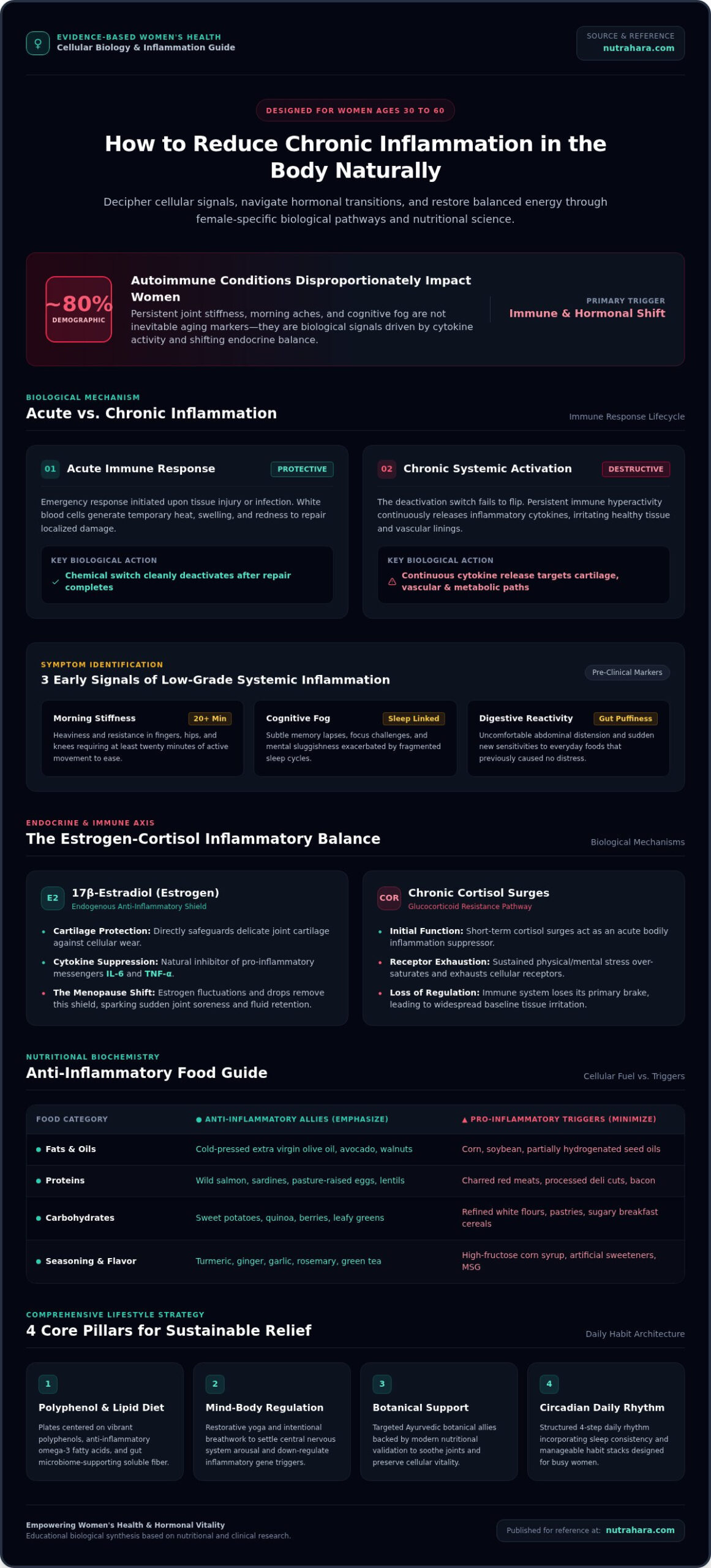
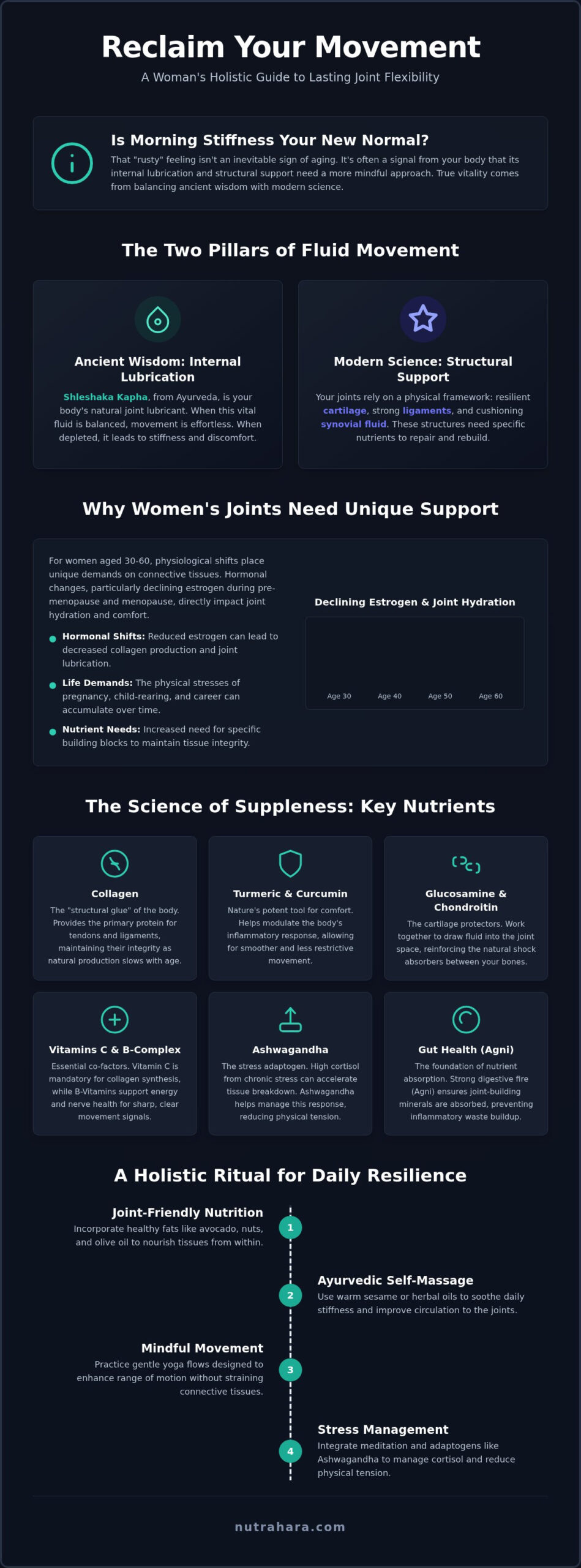
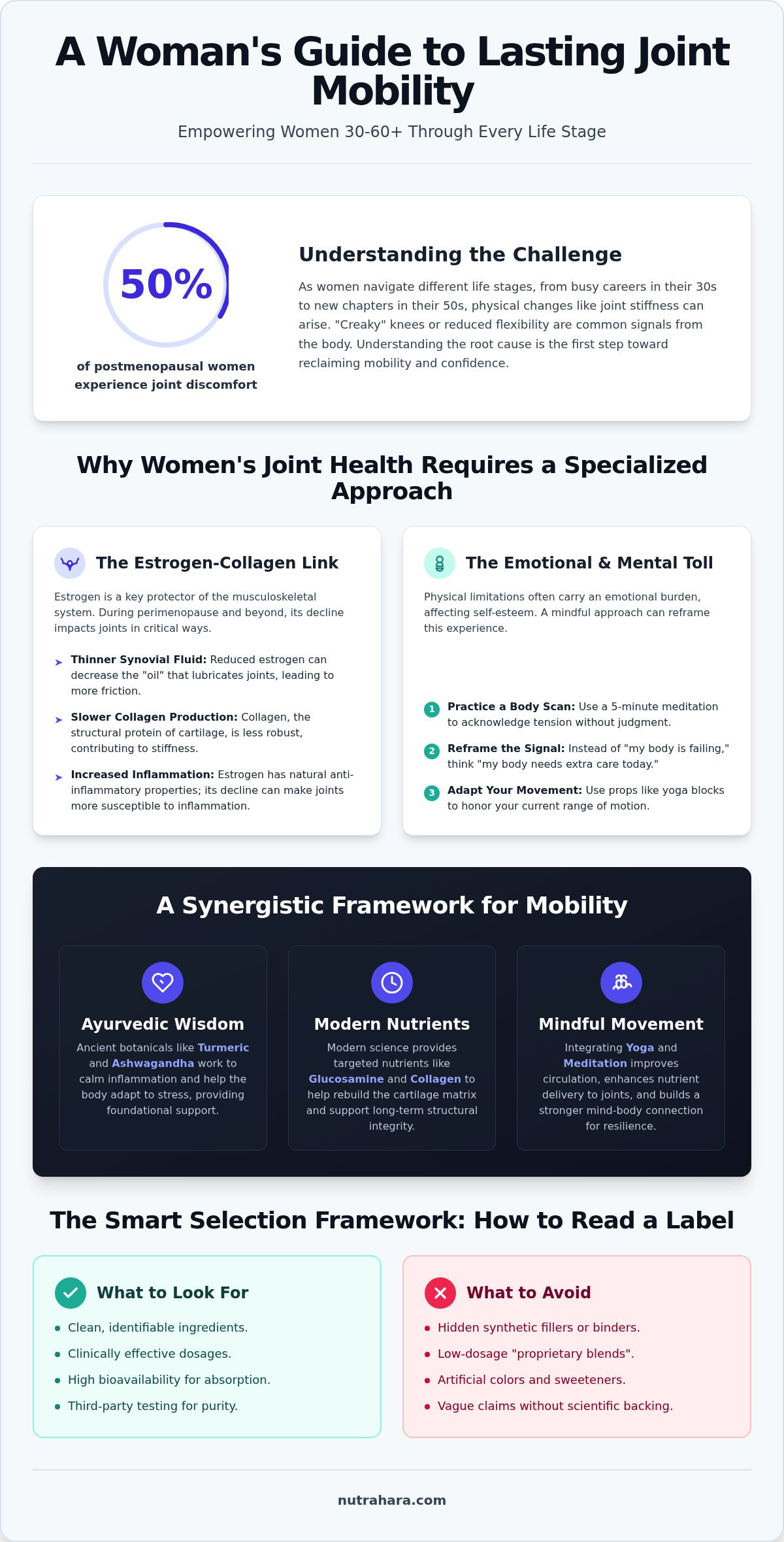
...
Categories
Articles

Joint Supplements for Women: Benefits and Limitations

Could supplements help you move more comfortably, or are they being asked to promise more than they can deliver? If stiffness is making workouts, yoga, or everyday movement feel harder, it’s understandable to look for support. Supplements for joint flexibility in women may be one part of a thoughtful care routine, but they can’t guarantee that surgery will be avoided.

What matters is understanding what the evidence suggests, what a supplement may support, and where its limits are. This guide compares common options, explains why movement and strength work remain important, and offers practical ways to assess product claims and safety. If you’re pregnant, breastfeeding, managing a health condition, or taking medication, check with a qualified healthcare professional before starting a supplement. A steady, informed approach can help you make choices that support confidence and mobility through every life stage.

Key Takeaways

  • Supplements may support comfort, but they can’t guarantee you’ll avoid surgery or replace medical care.
  • Assess supplements for joint flexibility in women by looking at ingredient-specific evidence and realistic outcomes.
  • Compare supplements with movement and strength work, choosing activities that suit your comfort and any clinical guidance.
  • Use a simple process to clarify your goal, review product labels, consider safety, and track changes in daily movement.
  • Learn how Nutrahara’s Joints & Knees Kit may fit into a broader, evidence-aware joint-care plan.

Can supplements for joint flexibility in women help avoid surgery?

If a sore or stiff joint makes it harder to walk, exercise, or enjoy everyday movement, it’s natural to wonder whether a supplement could change the need for surgery. Supplements for joint flexibility in women may be considered as one part of a wider joint-care plan, but they can’t guarantee surgery avoidance or replace a diagnosis and clinician-directed treatment.

Whether surgery is appropriate depends on the specific joint condition, symptoms, the effect on function, and an individual clinical assessment. A supplement intended to support general joint health isn’t a substitute for understanding what’s causing your symptoms or discussing treatment options with a qualified clinician.

What does joint flexibility mean in everyday life?

Flexibility describes how comfortably a joint moves through its available range. In everyday life, that could mean bending to tie your shoes, walking up stairs, reaching overhead, or moving through a yoga pose without undue restriction.

Flexibility is related to, but different from, mobility, strength, and pain. Mobility is your ability to move through a task; strength is the force your muscles can produce; pain is a sensation that can affect movement. These experiences can overlap, but stiffness alone doesn’t identify a particular condition.

Can a supplement determine whether surgery is needed?

No supplement should be presented as a reliable way to prevent or replace surgery. Supplements may be considered for potential support, but a clinician assesses the joint, symptoms, function, and available care options before advising on treatment. If you’re pregnant, breastfeeding, or taking medication, discuss supplement safety with an appropriate healthcare professional before use.

Joint-support claims are not promises about surgery outcomes. Evidence also needs careful interpretation: studies can differ in the ingredients, formulations, participants, and outcomes they examine. An overview of major clinical trials illustrates why findings for specific supplements should be considered in context, not treated as a prediction of what will happen for an individual woman.

Focus on what matters in your own life: which movements feel difficult, how symptoms affect daily activities, and whether your function is changing. Sharing these observations with a clinician can support a clearer conversation about next steps. Supplements may have a place in a considered routine alongside appropriate care, but they shouldn’t delay assessment or determine a surgery decision on their own.

How joint supplements may affect comfort, movement, and flexibility

Research on joint supplements doesn’t point to one effect that applies to every woman or every product. Findings depend on the ingredient, the people studied, the outcome measured, and the formulation used. Some studies, for example, look at pain or stiffness in people with osteoarthritis. A claim about everyday flexibility may not have been tested in the same way.

Evidence for one ingredient, dose, or formulation can’t validate every joint supplement or every claim made about it. Even if a study finds symptom support, that doesn’t show a supplement repairs cartilage, reverses joint disease, or prevents a procedure. When considering supplements for joint flexibility, ask what the research measured and whether that outcome matches your goal.

What should women know about collagen and joint support?

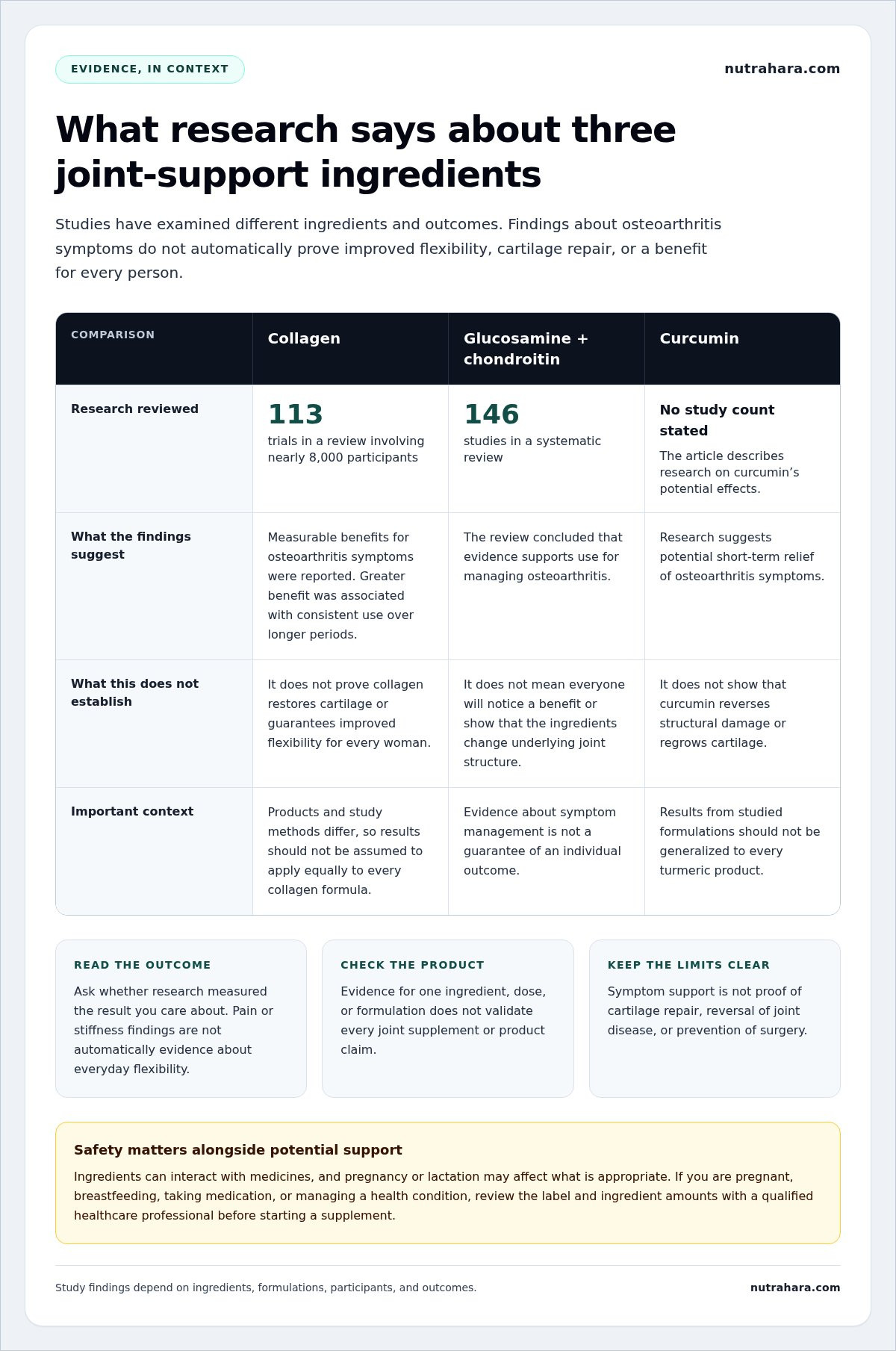
A 2026 review of 113 trials involving nearly 8,000 participants reported measurable benefits from collagen supplementation for osteoarthritis symptoms, with greater benefit associated with consistent use over longer periods. That finding relates to symptoms studied in people with osteoarthritis. It isn’t proof that collagen restores cartilage or guarantees improved flexibility for every woman. Products and study methods can differ, so results shouldn’t be assumed to apply equally to every collagen formula.

Nutrahara’s Premium Collagen Complex is one product to consider as part of a wider wellness routine. Review its current label and discuss the ingredients with a healthcare professional if you’re pregnant, breastfeeding, or taking medication.

How do turmeric and other commonly discussed ingredients compare?

Glucosamine and chondroitin have been examined in a 2025 systematic review covering 146 studies. The review concluded that evidence supports their use for managing osteoarthritis, but that doesn’t mean every person will notice a benefit or that these ingredients affect the underlying joint structure. Research on curcumin, turmeric’s active compound, suggests potential short-term relief of osteoarthritis symptoms. It doesn’t show that curcumin reverses structural damage or regrows cartilage, and results from studied formulations shouldn’t be generalized to every turmeric product.

“Natural” or traditional use alone doesn’t establish effectiveness or safety. Ingredients can interact with medicines, and pregnancy or lactation may affect what’s appropriate. Before starting a supplement, review its label and ingredient amounts with a qualified healthcare professional, especially if you take medication or have a health condition. This step helps keep potential symptom support in perspective.

Supplements versus movement and other joint-care approaches

Joint care isn’t an either-or choice between supplements and movement. Each has a different role, and the right mix depends on your diagnosis, symptoms, abilities, and circumstances. Supplements for joint flexibility in women may be considered for potential support, while movement and clinical care address other parts of a joint-care plan.

Approach Possible role Keep in mind
Supplements May offer ingredient-specific support for comfort. Evidence and safety vary by ingredient and product. They don’t replace diagnosis or treatment.
Movement Helps you practise everyday actions and maintain activity at a level that suits you. Choose forms and ranges that feel manageable and follow any clinician-provided restrictions.
Strength work Builds muscle capacity for tasks such as standing from a chair or climbing stairs. Adapt exercise to your current ability and symptoms.
Clinical care Supports diagnosis and guidance on treatment options. Your qualified care team can tailor recommendations to your condition and needs.

Where can yoga, strength, and gentle movement fit?

Begin with movements that feel comfortable, such as slowly bending and straightening a joint within an easy range, or practising a supported chair rise if it suits your ability. Strength-building can be adapted with a clinician or qualified exercise professional, especially if you have restrictions. Yoga may offer a mindful way to explore movement. Modify or skip poses that cause discomfort. Stop and seek guidance if activity brings concerning or worsening symptoms.

Meditation can create a pause, settle your attention, and support general wellbeing. It doesn’t change joint structure or replace care. A few quiet minutes focused on steady breathing may help you notice what feels comfortable as you approach movement.

When should a clinician guide the next step?

Arrange professional assessment for persistent, worsening, or function-limiting symptoms, such as difficulty with routine walking or household tasks. Diagnosis and treatment decisions belong with your qualified care team, who can consider your health history and goals. If a procedure has been recommended, don’t delay or cancel it in favour of supplements. Ask your care team how movement and any supplement you’re considering fit with their guidance.

There’s no universal ranking of these approaches. A thoughtful plan gives supplements, movement, strength work, and clinical care clear roles based on your needs.

A safe way to assess joint supplements for your life stage

Start with your needs, not a promise on a bottle. Use this sequence to assess supplements for joint flexibility in women:

  1. Clarify your goal. Name the daily activity you hope to support, such as walking comfortably or bending with less difficulty.
  2. Review the evidence. Look for research on the specific ingredient, amount, and outcome, rather than relying on broad claims about joint health.
  3. Consider safety. Review the exact product label with an appropriate healthcare professional, especially if your life stage, health, or medicines could affect what’s suitable.
  4. Track a realistic outcome. Note how the chosen activity feels over time, along with any unwanted effects. A supplement can’t guarantee a particular result.

For menstruating women, those approaching menopause, and post-menopausal women, supplement suitability still depends on individual health, medicines, and the product’s ingredients. Don’t assume that a change in life stage means a supplement is needed or that the same choice is right for everyone.

How can you evaluate a joint supplement label?

Read the current label for the full ingredient list, serving information, and amount of each ingredient. Compare those details with research on the specific ingredient, dose, and outcome. Evidence for one ingredient or dose doesn’t automatically apply to a different formula. Be cautious of vague proprietary descriptions that make amounts difficult to assess, guarantees, or promises to prevent surgery. If anything is unclear, review the label with a healthcare professional.

What should women consider during pregnancy or lactation?

If you’re pregnant, trying to conceive, or breastfeeding, get individualized professional guidance before starting a supplement. The same care applies if you take medication or manage a diagnosed condition. “Natural” doesn’t mean suitable for everyone, and needs can differ through menstruation, perimenopause, and after menopause. Share the product label and ingredient amounts with your healthcare professional so they can consider your circumstances.

A brief note of your goal, the product label, your medicines, and relevant health or life-stage details can make that conversation more useful. Nutrahara combines Ayurvedic principles with modern nutritional research. Explore Nutrahara’s women’s health supplements as you consider options for a safe, realistic routine.
Joint Supplements for Women: Benefits and Limitations

How Nutrahara’s Joints & Knees Kit may fit into a broader plan

A supplement can be one part of a joint-care routine, alongside movement that suits your abilities and appropriate clinical care. Nutrahara’s Joints & Knees Kit is a joint-focused bundle designed to support joint health, knee mobility, and body flexibility. These support goals aren’t a promise of a particular result, and the kit shouldn’t be viewed as a treatment or a way to prevent surgery.

What role can the Joints & Knees Kit play?

The kit is one option among supplements for joint flexibility in women, not a replacement for diagnosis, clinician guidance, or other care. Individual experiences can differ. Before choosing it, review the current product label and consider whether its information and stated support goals align with your needs. If you’re pregnant, breastfeeding, taking medication, or managing a health condition, seek individualized professional guidance before starting any supplement.

Clear expectations matter. A supplement’s stated focus on joint health, knee mobility, or flexibility doesn’t establish that it will change a condition’s course or affect whether a procedure is needed. Keep care decisions grounded in your symptoms and qualified clinical advice.

How can you build a supportive daily routine?

Choose an approach you can sustain and that respects how your body feels. Gentle movement within a comfortable range, gradual strength work suited to your ability, restorative yoga, and meditation may all have a place in general wellbeing. Follow any movement restrictions provided by your clinician, and seek guidance if activity causes concerning or worsening symptoms.

To understand how your routine feels, note a specific activity, such as walking or getting up from a chair, and whether comfort or ease changes over time. A short-term change alone doesn’t prove that a supplement caused it. Consider the whole picture, including activity, rest, symptoms, and any care you’re receiving.

Nutrahara combines Ayurvedic principles with modern nutritional research. The Joints & Knees Kit is designed to support joint health, knee mobility, and body flexibility. Review its current information and consider personal suitability before deciding. It can be part of a broader plan, with realistic expectations and your wellbeing at the centre.

Build a joint-care plan that supports your next steps

Supplements for joint flexibility in women may be one part of a broader routine, but they can’t guarantee surgery prevention or replace diagnosis and clinician-guided care. Evidence differs across ingredients and products, so focus on realistic support rather than promises. Movement and strength work suited to your comfort, alongside appropriate clinical guidance, can also play distinct roles in caring for your joints.

Before trying a supplement, clarify what you hope to support, review the product label, and consider your life stage, health conditions, and medicines with a qualified healthcare professional. This is especially important during pregnancy or lactation. Nutrahara’s Joints & Knees Kit is designed to support joint health, knee mobility, and body flexibility. Nutrahara brings Ayurvedic principles together with modern nutritional research, with thoughtful choices at the heart of its approach.

Take the next step at your own pace. Explore Nutrahara’s Joints & Knees Kit as you consider what may fit your broader joint-care plan. Your path to confident movement can be steady, informed, and shaped around you.

Frequently Asked Questions

Can supplements prevent joint surgery?

No supplement can reliably prevent or replace joint surgery. Whether surgery is appropriate depends on the diagnosis, symptoms, how joint function is affected, and an individual assessment by a qualified clinician. Supplements may be considered for potential symptom support, but they shouldn’t delay assessment or change a recommended treatment plan on their own. Discuss concerns and options with your care team, especially if pain or reduced function is affecting daily activities.

What supplements may support joint flexibility in women?

Research has examined ingredients such as collagen, glucosamine, chondroitin, and curcumin for joint-related outcomes. Findings vary by ingredient, formulation, studied population, and outcome, so evidence for one doesn’t validate every product. Some research suggests potential symptom support, particularly for osteoarthritis, but that isn’t proof of cartilage repair or improved flexibility for every person. Review the exact label and discuss suitability with a healthcare professional before starting.

Can collagen supplements improve joint mobility?

Collagen may support some osteoarthritis symptoms, but the evidence doesn’t guarantee improved mobility for an individual or show that collagen repairs cartilage. A 2026 review of 113 trials involving nearly 8,000 participants reported measurable benefits for osteoarthritis symptoms, particularly with consistent use over longer periods. The findings apply to the studies reviewed, not automatically to every collagen product or woman. Check the product label and seek professional advice if you have health concerns.

Is it safe to take joint supplements during pregnancy or while breastfeeding?

Ask a qualified healthcare professional before taking joint supplements during pregnancy or breastfeeding. Safety can depend on the specific ingredients, amounts, health circumstances, and other products or medicines you use. The same individualized review is sensible if you’re trying to conceive, managing a diagnosed condition, or taking medication. Don’t assume an ingredient is suitable simply because it’s described as natural. Bring the complete product label to your healthcare professional for review.

Can yoga and exercise help joint flexibility?

Gentle movement, suitable strength work, and adapted yoga can help you practise comfortable movement and support general wellbeing. Choose activities that match your ability, symptoms, and any restrictions from your clinician. For example, explore an easy range of motion rather than forcing a deep stretch. Meditation may support relaxation and body awareness, but it doesn’t change joint structure or replace treatment. Stop and seek guidance if movement causes concerning or worsening symptoms.

How long should I try a joint supplement before deciding whether it helps?

There isn’t one evidence-based trial period that applies to every supplement or person. Study durations and formulations differ, and some collagen research reports benefits with consistent use over longer periods, but that doesn’t establish a universal timeline. Before starting, choose a realistic activity to track, such as walking or climbing stairs, and follow professional guidance about use. Stop and seek advice if you experience unwanted effects, or if symptoms worsen or limit function.

Article by

Nutrahara Team

We are a dedicated collective of nutrition scientists and naturopaths at Nutrahara, committed to advancing women's health through the fusion of ancient Ayurveda science and cutting-edge nutrition research. Our mission is to empower you with clean, simple, and scientifically validated wellness solutions so you can live your healthiest life. Connect with us to stay updated on the latest developments in holistic women's health and nature-based research.

Disclaimer

This article is not a substitute for medical advice. Please consult a healthcare professional before starting any supplement, especially if pregnant, nursing, taking medication, or managing health conditions.

Categories
Articles

Chondroitin Benefits for Female Athletes: Evidence, Uses, and Safety

Could a joint supplement studied for arthritis meaningfully support your training, or is it being asked to do more than the evidence can show? That’s the central question behind chondroitin benefits for female athletes. If you run, lift, cycle, or practice yoga, it’s understandable to want support for comfortable movement while sorting confident supplement claims from research that applies to active women.

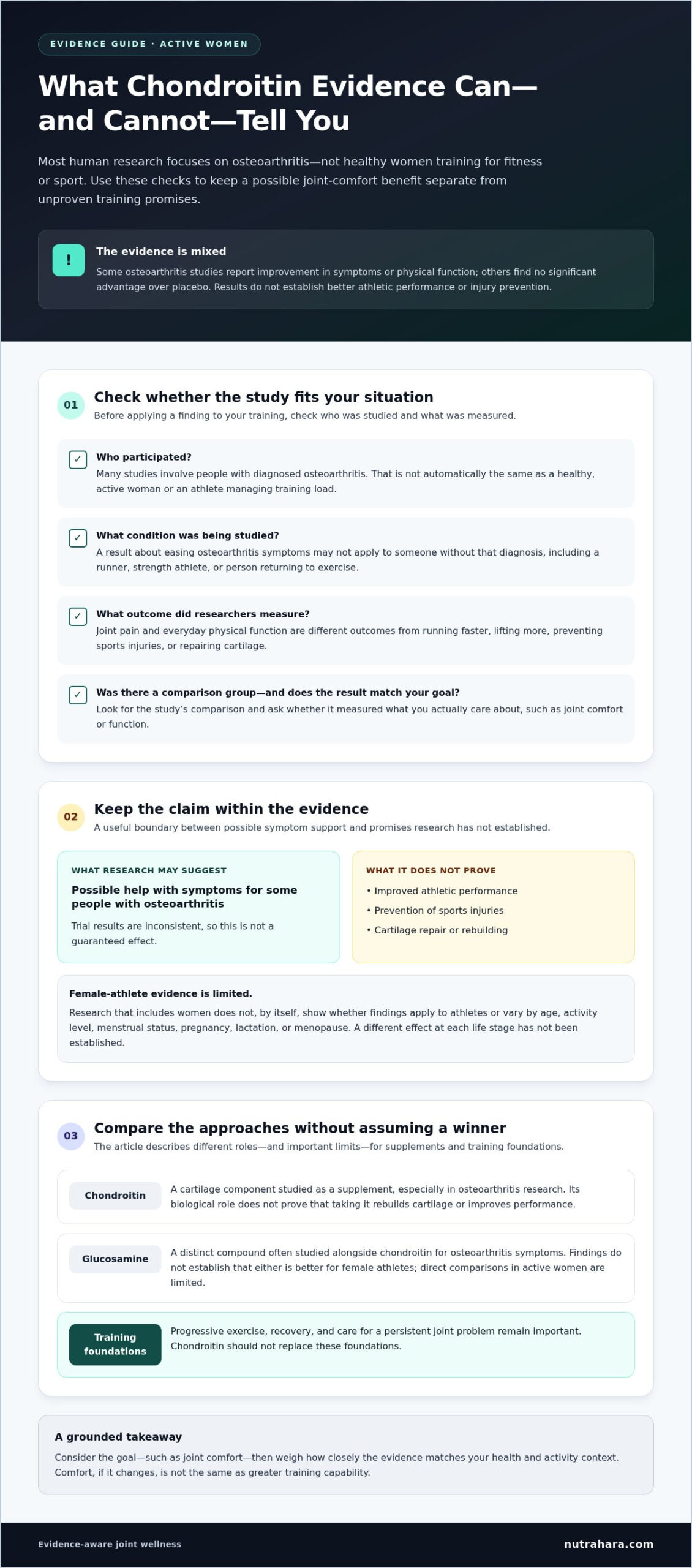
Research on chondroitin and osteoarthritis has mixed results, and studies focused specifically on female athletes are limited. Chondroitin isn’t a proven performance booster or injury-prevention strategy. This guide explains what the evidence suggests about joint comfort and function, where it falls short, and how chondroitin compares with practical foundations such as gradual training, strength work, and recovery. You’ll also learn what to consider around pregnancy, lactation, and medication use, and how yoga or meditation can fit into a balanced wellness routine. The goal is a clearer, calmer way to decide what supports your long-term mobility.

Key Takeaways

  • Set a clear goal for considering chondroitin, such as joint comfort, and don’t treat it as a performance enhancer or injury-prevention strategy.
  • Assess how well research on osteoarthritis applies to your own training and life stage; evidence focused on female athletes is limited.
  • Compare chondroitin with glucosamine and foundational habits like progressive strength training and recovery before choosing an approach.
  • Use an evidence-aware process to consider chondroitin benefits for female athletes, including checking safety with a qualified professional if you’re pregnant, lactating, managing a health condition, or taking medication.
  • Build a sustainable joint-wellness routine with gradual training, appropriate recovery, and a gentle yoga or meditation practice.

What Is Chondroitin, and What Might It Mean for Female Athletes?

Chondroitin sulfate is a substance naturally present in cartilage, the firm, flexible tissue that helps cushion the ends of bones where they meet in a joint. It’s also commonly studied as an ingredient in joint-health supplements. That biological role provides context, but it doesn’t prove that taking chondroitin rebuilds cartilage or improves athletic performance.

How Chondroitin Relates to Cartilage and Joint Health

Cartilage helps joints move smoothly and absorb some of the forces involved in walking, running, lifting, and jumping. Chondroitin is one of its components; a general overview of its structure and biological context is available in Chondroitin sulfate. Researchers studying oral supplements often assess symptoms or physical function, especially in people with osteoarthritis. Those outcomes are different from proving that a supplement repairs cartilage, prevents sports injuries, or helps an athlete run faster or lift more.

That distinction matters. Feeling more comfortable during everyday movement, if it occurs, isn’t the same as becoming more capable in training. Chondroitin shouldn’t be treated as a substitute for progressive exercise, recovery, or care for a persistent joint problem.

Why Female Athletes Need Evidence That Fits Their Situation

Research involving osteoarthritis doesn’t automatically show what chondroitin may do for a healthy, active woman. The participants, health conditions, and outcomes in those studies may differ from the experiences of women who run, lift weights, cycle, dance, or practice yoga without diagnosed joint disease. Evidence specifically focused on female athletes remains limited, so broad claims about the chondroitin benefits for female athletes can get ahead of what research establishes.

Women aged 30 to 60 aren’t one uniform group. Menstrual cycles, pregnancy, lactation, perimenopause, and menopause can shape a person’s health context and the questions she brings to training or supplement decisions. That doesn’t mean chondroitin has a proven, different effect at each life stage. It means the available evidence needs to be interpreted with care, rather than assuming findings apply equally to everyone.

A useful question is whether the research matches your health and activity context. Consider whether a study looked at people like you and measured the outcome you care about, such as joint comfort or function. Keeping that distinction in mind helps separate a possible joint-health benefit from unproven promises about performance, injury prevention, or cartilage repair.

What Does Research Say About Chondroitin and Joint Comfort?

Most human research on chondroitin has focused on people with osteoarthritis, not healthy women training for fitness or sport. Studies commonly assess symptoms such as joint pain and measures of physical function. Some report improvement, while others find no significant advantage over placebo. These findings can inform questions about joint comfort, but they don’t establish that chondroitin boosts performance or prevents sports injuries.

Why Osteoarthritis Findings May Not Apply to Every Athlete

People with osteoarthritis have a diagnosed joint condition, and research may aim to ease symptoms or improve everyday function. A runner with no diagnosis, a strength athlete managing training load, and someone returning to exercise after a break have different starting points and goals. The National Center for Complementary and Integrative Health summarizes the research on glucosamine and chondroitin, including the mixed results from osteoarthritis trials.

That inconsistency matters. A change in pain or daily function in an osteoarthritis study isn’t proof of improved athletic performance, protection from injury, or cartilage repair. The most supported conclusion is that chondroitin may help some people with osteoarthritis symptoms, but trial results are inconsistent and don’t establish a benefit for healthy, active women.

What We Know About Female-Specific Evidence

Evidence directly focused on female athletes is limited. Research on osteoarthritis may include women, but that alone doesn’t show whether findings apply to athletes, or whether outcomes differ by age, activity level, menstrual status, pregnancy, lactation, or menopause. Unless a study reports these details and examines them, it can’t answer every woman’s situation.

When considering the chondroitin benefits for female athletes, look beyond a headline. Note who participated, whether they had osteoarthritis, what outcome researchers measured, and whether there was a comparison group. Then ask whether that outcome matches your goal. Joint comfort is not the same as greater speed, strength, or injury resistance. Careful reading supports informed choices without dismissing the possibility that future research may become more relevant to active women.

Chondroitin Compared With Other Joint-Support Approaches

Chondroitin and glucosamine are distinct compounds often studied together for osteoarthritis symptoms. The National Center for Complementary and Integrative Health’s resource on glucosamine and chondroitin describes research on both, but findings don’t establish that one is better for female athletes. Direct comparisons in active women are limited, so choosing between them based on an assumed performance or injury-prevention advantage isn’t evidence-led.

Approach Intended role Evidence population Important limitation
Chondroitin May support joint comfort or function Primarily people with osteoarthritis Results are mixed; athlete-specific benefits aren’t established
Glucosamine Studied for osteoarthritis symptoms, often alongside chondroitin Primarily people with osteoarthritis Combination research doesn’t prove it’s superior for athletes
Progressive training and strength work Build capacity for the demands of exercise Relevant to active people Training should suit your current ability and health
Recovery and clinical care Support recovery and address persistent or concerning symptoms Individual needs vary Supplements can’t replace appropriate assessment or care

Supplements Alongside Training and Recovery

A supplement isn’t a protective shield against training-related injury. Joint wellness is better approached as part of a broader routine: increase training demands gradually, include strength work suited to your activity, and make space for rest and sleep. If discomfort persists or affects daily movement, consider appropriate clinical care rather than relying on a supplement alone.

Mobility work can help you tune in to how your body feels, though it shouldn’t be framed as a substitute for strength training or recovery. Try a gentle yoga sequence, adapting or stopping movements that cause pain. A few quiet minutes of meditation or steady breathing can also offer a calming pause to notice tension and stress. These practices may support awareness and wellbeing, but they don’t guarantee joint protection.

To assess the chondroitin benefits for female athletes, compare the evidence for your goal with the foundations of your training routine. Nutrahara’s Joints & Knees Kit is a general joint-health option positioned to support joint health, knee mobility, and flexibility.

How Can Female Athletes Evaluate Chondroitin Safely?

A thoughtful decision starts with your goal and personal health context, not a promise on a supplement label. Use these steps to assess whether chondroitin is worth discussing as part of your wellness routine.

  • 1. Define your goal. Are you hoping to support everyday joint comfort, move more comfortably, or improve athletic performance? These are different outcomes, and evidence for one doesn’t establish benefits for the others.
  • 2. Review the evidence and label. Check whether research studied people like you and measured the outcome you care about. Read the supplement label for the specific ingredients and amounts, and compare those details with the research rather than assuming every product is equivalent.
  • 3. Consider your health circumstances. Pregnancy, breastfeeding, a medical condition, or medication use can affect whether a supplement is suitable for you. Discuss chondroitin and the full product label with a qualified healthcare professional who understands your circumstances.
  • 4. Reassess your decision. If you and your healthcare professional decide to try a supplement, agree on what you’ll monitor and when you’ll review whether it makes sense to continue. Don’t interpret changes in training performance as proof of a supplement effect without considering other factors, such as training load and recovery.

Pregnancy, Lactation, and Medication Considerations

If you’re pregnant, planning for pregnancy, or breastfeeding, seek individualized professional guidance before using chondroitin or another supplement. Don’t rely on general statements about safety to determine what’s right for you. The same careful approach applies if you take medication or manage a health condition: share the ingredient list and ask a healthcare professional to consider your specific situation. There’s no need to make a rushed decision.

The evidence around chondroitin benefits for female athletes doesn’t establish a universal choice for women across different ages, training goals, or life stages. A clear goal, careful label review, and personalized guidance can help you decide with confidence, without treating a supplement as a replacement for appropriate care.

For a separate supplement option as you explore women’s wellness, view Nutrahara’s premium collagen supplement.

Chondroitin Benefits for Female Athletes: Evidence, Uses, and Safety

A Balanced Joint-Wellness Plan for Active Women

Lasting mobility is supported by more than a single ingredient. A thoughtful plan brings together training that suits your current ability, recovery, and evidence-aware supplement choices. Your needs may shift with age, menstrual changes, pregnancy, lactation, or menopause, so let your circumstances guide the pace and support you choose.

Everyday Habits That Support Long-Term Mobility

Try this training tip: When adding distance, resistance, or intensity, change one aspect of your routine at a time and notice how your body responds. Include strength exercises that match your activity, and allow room for rest. If you’re returning after a break or adapting exercise around a health concern, a qualified professional can help you choose an appropriate starting point.

For a gentle pause, sit comfortably, relax your shoulders, and take a few slow breaths, letting the exhale feel unhurried. Or try a simple yoga pose that feels steady and comfortable, such as a supported seated stretch. There’s no need to push into discomfort. These practices can help you pay attention to your body and settle your mind; they aren’t treatments for joint problems.

Notice everyday changes, such as whether stairs, a walk, or your usual training feel different. A brief note about activity and comfort can help you describe patterns to a healthcare professional. It can’t diagnose the cause, and persistent or concerning symptoms deserve appropriate care.

Choosing a Supportive Next Step

Chondroitin research primarily concerns osteoarthritis, so consider whether that evidence fits your own goal and health circumstances. It doesn’t establish that chondroitin improves athletic performance or prevents injuries. If you’re considering any supplement, weigh the available evidence alongside your training habits and individualized health guidance.

Nutrahara’s Joints & Knees Kit is a general joint-health option positioned to support joint health, knee mobility, and flexibility. Nutrahara brings principles of ancient Ayurveda science together with modern nutritional research as part of its approach to women’s wellness.

The question of chondroitin benefits for female athletes has no one-size-fits-all answer. Let your goals, life stage, and the quality of evidence shape your next step, and continue building a routine that supports strength, recovery, and confidence over time.

Choose Joint Support That Fits Your Journey

Chondroitin may support joint comfort for some people with osteoarthritis, but research doesn’t establish the same benefits for healthy female athletes or prove improved performance or injury prevention. The most useful question is whether the evidence fits your goal and health circumstances. A sustainable approach also makes room for progressive training, strength, recovery, and appropriate professional guidance.

Pregnancy, lactation, medication use, and other health considerations deserve individualized advice before adding a supplement. Understanding the limits of the chondroitin benefits for female athletes can help you make a decision with confidence, not pressure. Nutrahara’s Joints & Knees Kit is a general option positioned to support joint health, knee mobility, and flexibility, drawing on an approach that combines Ayurvedic principles with modern nutritional research.

Explore Nutrahara’s approach to women’s wellness, and keep building a thoughtful routine that supports your strength and mobility over time. Your wellness journey is yours to shape, one informed choice at a time.

Frequently Asked Questions

Does chondroitin help female athletes with joint pain?

It may help some people with osteoarthritis symptoms, but evidence is mixed and doesn’t establish the same effect in female athletes. Most studies focus on people with osteoarthritis rather than healthy, active women. Research on chondroitin benefits for female athletes is limited, so pain relief can’t be promised. Persistent pain, swelling, or reduced movement deserves individualized professional guidance, rather than relying on a supplement alone.

Can chondroitin improve athletic performance or prevent sports injuries?

No reliable evidence establishes chondroitin as a way to improve athletic performance or prevent sports injuries. Research into joint symptoms doesn’t demonstrate benefits for speed, strength, endurance, or injury risk. If you’re working toward a performance goal, build training progressively and make recovery part of your plan. A supplement shouldn’t be treated as protection that allows you to train through pain or increase your workload without care.

Is chondroitin evidence for osteoarthritis relevant to healthy athletes?

It can offer context about symptoms or function in people with osteoarthritis, but it doesn’t directly answer whether chondroitin benefits healthy athletes. The populations and goals differ: a study may assess comfort during daily activities rather than performance during training. Consider who participated and what researchers measured. Without evidence directly relevant to active women, osteoarthritis findings shouldn’t be taken as proof of an athletic benefit.

Is chondroitin safe during pregnancy or breastfeeding?

There isn’t enough information here to assure you that chondroitin is safe during pregnancy or breastfeeding. If you’re pregnant, planning a pregnancy, or lactating, seek individualized guidance from a qualified healthcare professional before using it. Share the full supplement label, including other ingredients, so they can consider your circumstances. Avoid relying on broad claims or assumptions about safety during these life stages.

Can chondroitin be taken with glucosamine or other supplements?

Chondroitin and glucosamine are often studied together, but that doesn’t show that a combination is suitable for every person or more helpful for athletes. Other supplements can add ingredients and complicate a decision, especially if you take medication or manage a health condition. Review the complete labels with a qualified healthcare professional, who can consider your health context rather than making a general assumption about combining products.

How should an active woman decide whether to try chondroitin?

Start by defining your goal, such as joint comfort or mobility, and separate it from goals like performance or injury prevention. Review whether the evidence matches your health and activity context, then consider the product label and personal circumstances. Ask a qualified professional for guidance if you’re pregnant, breastfeeding, taking medication, or managing a condition. If you choose to try it, reassess your experience without replacing progressive training, recovery, or appropriate care.

Article by

Nutrahara Team

We are a dedicated collective of nutrition scientists and naturopaths at Nutrahara, committed to advancing women's health through the fusion of ancient Ayurveda science and cutting-edge nutrition research. Our mission is to empower you with clean, simple, and scientifically validated wellness solutions so you can live your healthiest life. Connect with us to stay updated on the latest developments in holistic women's health and nature-based research.

Disclaimer

This article is not a substitute for medical advice. Please consult a healthcare professional before starting any supplement, especially if pregnant, nursing, taking medication, or managing health conditions.

Categories
Articles

Joint and Knee Kit for Active Women: A Smarter Buying Guide

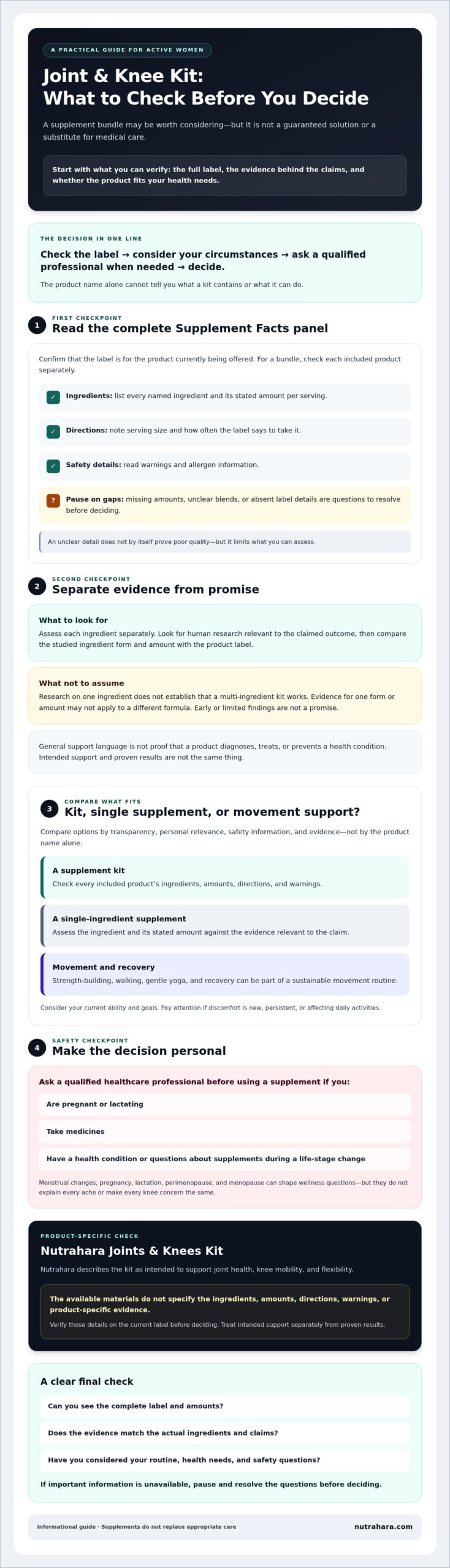
What if the most convincing promise on a joint supplement label is the very thing to question first? If you’re considering a joint and knee kit for active women, it’s reasonable to want support for movement without having to trust vague claims or undisclosed ingredients. A bundle may be worth considering, but it isn’t a guaranteed solution or a substitute for medical care.

Before you decide, check what’s inside, how much of each ingredient it provides, what evidence supports its claims, and whether it fits your health needs and life stage. Pregnancy, lactation, medicines, and health conditions are all reasons to ask a qualified healthcare professional about a supplement. This guide also looks at how supplements fit alongside sustainable habits such as strength-building, gentle yoga, and recovery, so you can assess a product as one part of your wider wellness routine.

Key Takeaways

  • Match your joint-support goals to your routine and life stage instead of assuming every knee concern has the same answer.
  • Use the full Supplement Facts panel to check ingredients, amounts, serving directions, and warnings before considering a joint and knee kit for active women.
  • Compare a bundle, a single-ingredient supplement, and movement support by transparency, personal relevance, safety information, and evidence.
  • Follow a simple decision process: review the label, consider your health circumstances, ask a qualified professional when needed, then decide.
  • Verify the details of Nutrahara’s Joints & Knees Kit and distinguish its intended support from proven results.

Joint and Knee Kit for Active Women: What Should It Support?

Active women may be building strength, training for a long walk, practicing yoga, or simply aiming to move comfortably through a busy day. Those routines and health needs vary. Menstrual changes, pregnancy, lactation, perimenopause, and menopause can shape wellness questions, but they don’t explain every ache or make every knee concern the same. Activity level, recovery, past injuries, and health conditions also matter.

Assess a joint and knee kit for active women by its contents and the evidence behind its claims, not by its name alone. Start by identifying what you hope to support, then check whether the product’s label, directions, and available evidence give you enough information to make an informed decision.

How activity, recovery, and life stage shape the decision

Strength training, walking, and yoga can each play a role in a movement routine. Recovery gives your body time to rest between activities. Consider what fits your current ability and goals, and pay attention if discomfort is new, persistent, or affecting daily activities. For background, Osteoarthritis is one condition associated with joint symptoms, but knee discomfort can have different causes and may need individual assessment.

If you’re pregnant or lactating, ask a qualified healthcare professional before using a supplement. Individual guidance is also sensible if you take medicines, have a health condition, or have questions about supplements during other life-stage changes.

What a supplement kit can, and cannot, promise

A joint and knee kit is a supplement bundle, but its name alone can’t tell you what it contains or what it can do. Confirm the contents on the current label before deciding. Nutrahara describes its Joints & Knees Kit as intended to support joint health, knee mobility, and flexibility. The available materials don’t specify the ingredients, amounts, directions, warnings, or product-specific evidence, so check those details before purchase.

General support language isn’t proof that a product diagnoses, treats, or prevents a health condition. Evidence for an ingredient doesn’t automatically establish that a complete kit provides a particular benefit. Supplements also don’t replace appropriate care or sustainable habits such as movement and recovery.

Personal stories can offer perspective, but they don’t replace clear label information or reliable evidence. Make your decision using details you can verify, and ask a qualified healthcare professional if you have safety questions.

How to Evaluate Ingredients and Evidence in a Joint and Knee Kit

A clear label is the starting point for comparing a joint and knee kit for active women. Locate the complete Supplement Facts panel and confirm that it reflects the product currently being offered. If you can’t see the full label, you can’t reliably assess the formula or compare its claims with relevant research.

A label-first checklist for comparing formulas

Make a simple record of the label details before comparing products. Don’t guess at amounts or assume a blend contains a particular ingredient in a useful quantity.

  • List each named ingredient and its stated amount per serving.
  • Check the serving size and directions, including how often the label says to take it.
  • Read warnings and allergen information, and note any quality details the brand provides.
  • Flag missing amounts, unclear blend descriptions, or absent label information as questions to resolve before deciding.

A proprietary blend or an unclear detail isn’t, by itself, proof of poor quality. It does limit what you can assess. Ask the seller for clarification, and consider pausing your decision if important information remains unavailable. For a bundle, check the label and directions for each included product, rather than treating the kit as one formula.

How to interpret research without overpromising

Assess each ingredient separately, then check whether the research matches the actual product. A study on one ingredient doesn’t establish that a multi-ingredient kit works. Evidence for a particular form or amount may not apply to a different formula. Look for human research relevant to the claimed outcome, and treat early or limited findings as preliminary rather than a promise.

The NIH Office of Dietary Supplements is a useful starting point for general information and fact sheets on ingredients it covers. Then verify the original research and compare its ingredient form and amount with the product label. General information about knee problems can also help frame your questions: Johns Hopkins Medicine outlines common causes of knee pain, which may include different issues requiring different responses.

Keep intended support separate from established guidance and marketing language. If a claim sounds like a guarantee or suggests a supplement can treat a condition, look for credible, product-specific substantiation rather than relying on the wording alone. Nutrahara describes its approach as combining Ayurvedic principles with modern nutritional research, but that philosophy doesn’t establish the ingredients or prove a specific benefit. Apply the same label-first, evidence-conscious approach when reviewing any women’s wellness product.

Kit, Single Supplement, or Movement Plan: Which Fits Your Needs?

There’s no universal best choice. A verified kit may be convenient if every included product suits your needs. A single-ingredient supplement may be easier to assess when you have a specific ingredient in mind. Movement support may be the most relevant starting point if your goal is to build a sustainable routine. Compare what you can verify, not what sounds most powerful.

Option Transparency Personal relevance Convenience Safety and evidence
Verified supplement kit Check the contents and full labels for every product. Consider whether each item fits your goals and circumstances. May group products together, but directions may differ. Review warnings and evidence for each ingredient and for any kit-specific claim.
Single-ingredient supplement Focus on one listed ingredient and its amount. May be easier to compare with a specific question or need. One product to assess, though directions still matter. Check the exact form, amount, safety details, and relevant research.
Movement support No supplement label to assess; clarify what any program includes. Can be adapted to your ability, schedule, and preferences. Requires time and a routine you can maintain. Choose appropriate activities and seek guidance if symptoms or health needs call for it.

When a bundle may be convenient

Convenience only counts after you confirm what the bundle contains, the serving size and directions for each product, and how the instructions fit together. More ingredients don’t automatically mean better support. Ask whether each item has a clear purpose for you and whether its safety information is available. Don’t assume a kit is cost-effective without current, comparable product and pricing details.

If you’re considering collagen separately, Nutrahara lists a Premium Collagen Complex. Its mention here doesn’t mean it’s included in any joint or knee kit, or establish that it’s suitable for your goals.

How movement habits fit into the decision

Supplements are only one possible part of a wellness routine. Build activity gradually, leave room for recovery, and choose movements that feel manageable for your current ability. Strength training, walking, or gentle yoga can each fit differently into a person’s routine. Meditation may support relaxation and mindful recovery, but yoga and meditation aren’t treatments for joint conditions or substitutes for medical care.

When assessing a joint and knee kit for active women, compare its practical fit with the movement habits you can sustain. Consider whether the product’s directions and safety information are clear, and whether the kit addresses a goal that matters to you. Choose an approach that feels informed, realistic, and appropriate for your circumstances.

Is a Joint and Knee Kit Safe for Your Health and Training Routine?

No supplement kit is automatically suitable or effective for every active woman. A formula may include ingredients that aren’t right for your health circumstances, and a product’s intended support isn’t proof that it will improve your training or resolve discomfort. Use a clear decision process: review the complete label, consider your health and medicines, ask a qualified healthcare professional if anything is unclear, then decide.

Questions to ask before starting a supplement

Check the verified label for every ingredient, amount, direction, and warning. Then consider whether you have ingredient sensitivities, an existing health condition, or medicines that could affect whether a supplement is appropriate. If you’re pregnant or lactating, speak with a qualified healthcare professional before starting one. Individual guidance is also sensible when you’re managing other health needs or changes related to menstruation, perimenopause, or menopause.

Use only the directions on the current product label. Don’t increase a serving or combine products based on assumptions; ask a professional first. If formula details, warnings, or quality information are missing, ask the manufacturer for clarification before purchasing. If you can’t get the information you need, waiting is a reasonable choice.

When movement discomfort calls for more than a supplement

A supplement shouldn’t be used to diagnose a problem or justify pushing through pain. New, worsening, persistent, severe, or function-limiting knee symptoms deserve individual clinical assessment, particularly if they interfere with ordinary movement or your training. A qualified professional can help you understand what next steps are appropriate for your situation.

In the meantime, consider adapting your activity rather than forcing a workout through concerning symptoms. Reduce or pause movements that aggravate discomfort, and seek qualified guidance about a suitable return to exercise. Yoga, meditation, and mindful breathing may be part of general wellbeing, but they don’t replace assessment or care. Consider a joint and knee kit for active women only as one possible part of a broader plan, not as injury prevention or a way to make painful exercise safe.

Before deciding, write down questions about ingredients, warnings, or fit for your circumstances and review them with a qualified healthcare professional. Clear information and personal guidance can help you make a choice with confidence.

Joint and Knee Kit for Active Women: A Smarter Buying Guide

How to Decide Whether Nutrahara’s Joints & Knees Kit Is Right for You

Nutrahara describes its Joints & Knees Kit as a bundle intended to support joint health, knee mobility, and flexibility. Those are intended uses, not proof of specific results. The available product information for this guide doesn’t confirm the kit’s ingredients, amounts, directions, warnings, or product-specific evidence. Review the current product page and label before deciding whether it suits your goals.

A practical checklist before you buy

Use this go/no-go check to assess the product on its details, not just its name. Pause if key information is missing or if you need professional advice before using supplements.

  • Contents: Can you confirm every product in the kit and see the full ingredient list and amounts?
  • Use: Are serving size, directions, warnings, and relevant safety details clear?
  • Personal fit: Does the verified formula match your goals and circumstances, including any medicines, health conditions, pregnancy, or lactation? If you’re unsure, discuss it with a qualified healthcare professional.
  • Evidence: Do product-specific claims have support relevant to the actual ingredients and formula, rather than only general claims about an ingredient category?
  • Alternatives: Have you compared the kit with a single supplement or a movement-focused approach without assuming a bundle is automatically the better fit?

If you can’t answer these questions from the available information, hold off and seek clarification before ordering. A complete label and clear evidence give you a firmer basis for deciding. It’s reasonable to wait until you can check the details that matter to you.

What Nutrahara should substantiate on the product page

Nutrahara positions its approach as combining Ayurvedic principles with modern nutritional research. That describes a philosophy; it doesn’t by itself confirm what this kit contains or demonstrate that a particular health benefit has been established. Look for the complete current label, clear safety and use information, and substantiation that matches each product-specific claim. Any quality statements should also be explained clearly. Customer feedback can add personal perspective, but it isn’t a substitute for evidence, and testimonials should be genuine, permissioned, and presented in context.

A joint and knee kit for active women may be worth considering if its verified contents and directions fit your needs, its claims are appropriately supported, and your safety questions are answered. To assess the current offering, review Nutrahara’s wellness products and check the kit details before ordering.

Choose Your Next Step with Clarity

A thoughtful choice starts with the details: confirm the full label, compare each ingredient with relevant evidence, and consider how the formula fits your health needs and life stage. A joint and knee kit for active women is one option to assess, not a guaranteed result or replacement for appropriate care. Sustainable movement, strength work, recovery, and practices such as yoga or meditation can also be part of your wider wellness routine.

Nutrahara describes its approach as combining Ayurvedic principles with modern nutritional research. Its Joints & Knees Kit is described as a bundle intended to support joint health, knee mobility, and flexibility, but those intended benefits aren’t proof of outcomes. Check the current product label and look for substantiation before deciding whether it’s right for you. If safety questions remain, ask a qualified healthcare professional.

For a considered next step, explore Nutrahara’s wellness products and review the current kit information before ordering. Make your choice at your own pace, guided by clear information and what feels right for your health needs.

Frequently Asked Questions

What should active women look for in a joint and knee kit?

Look for a complete, current label that names every included product and ingredient, gives amounts and serving directions, and explains relevant warnings. Check whether evidence supports the specific claims for the actual formula, rather than relying on broad promises. Nutrahara describes its Joints & Knees Kit as intended to support joint health, knee mobility, and flexibility, but verify its contents and product-specific evidence before deciding whether it fits your needs.

Do joint supplements improve knee mobility or flexibility?

Some ingredients have been studied for joint symptoms, but research findings vary, and they don’t establish that every supplement or bundle improves mobility or flexibility. Evidence about one ingredient may not apply to a different form, amount, or multi-ingredient formula. Treat a product’s intended support as distinct from a proven outcome, and consider supplements as one possible part of a broader wellness plan, not a replacement for appropriate care.

Can I take a joint supplement while pregnant or breastfeeding?

Ask a qualified healthcare professional before using a joint supplement during pregnancy or breastfeeding. Safety depends on the specific ingredients, amounts, your health circumstances, and other products or medicines you use. Don’t assume a supplement is suitable because it’s described as natural or because its label doesn’t mention pregnancy. Bring the complete product label to your healthcare professional so they can review the actual formula with you.

Should I choose a joint kit or a single supplement?

Choose based on transparency and personal fit, not the number of products in a bundle. A kit may be convenient if you can verify every product, serving direction, warning, and ingredient amount, and each item is relevant to you. A single supplement may be simpler to assess against a specific question. Compare evidence and safety details for either option, and ask a professional if you’re unsure.

Can yoga and exercise support joint health alongside supplements?

Yoga and appropriately tailored exercise can be part of an active wellness routine, while meditation may support relaxation and mindful recovery. Build activity gradually, allow time for recovery, and choose movements that suit your ability. These practices don’t replace medical care, and supplements can’t make it safe to push through concerning pain. If discomfort is persistent, worsening, severe, or limiting daily movement, seek individual clinical assessment.

How long does a joint and knee kit take to work?

There’s no reliable timeline to promise for a joint and knee kit. Effects, if any, may depend on the formula, the evidence for its ingredients, and individual circumstances. Nutrahara’s available product information doesn’t establish a product-specific timeframe or outcome. Check the current label and substantiation, follow only verified directions, and ask a healthcare professional about expectations and next steps, especially if knee symptoms persist or affect your activities.

Article by

Nutrahara Team

We are a dedicated collective of nutrition scientists and naturopaths at Nutrahara, committed to advancing women's health through the fusion of ancient Ayurveda science and cutting-edge nutrition research. Our mission is to empower you with clean, simple, and scientifically validated wellness solutions so you can live your healthiest life. Connect with us to stay updated on the latest developments in holistic women's health and nature-based research.

Disclaimer

This article is not a substitute for medical advice. Please consult a healthcare professional before starting any supplement, especially if pregnant, nursing, taking medication, or managing health conditions.
Categories
Articles

Turmeric for Chronic Inflammation: What the Evidence Can, and Cannot, Tell You

Could a golden spice meaningfully ease chronic inflammation, or are supplement claims getting ahead of the evidence? If persistent discomfort is disrupting your workouts, sleep, or everyday routines, it’s understandable to look for options like turmeric for chronic inflammation. Curcumin, a compound in turmeric, is studied for its possible effects on inflammation. But promising mechanisms and early findings don’t prove that a supplement will improve your symptoms.

This guide separates what research suggests from what it can’t yet tell us, including why results from food and concentrated supplements may differ. You’ll learn how to assess product claims and what to discuss with a healthcare professional, especially if you’re pregnant, breastfeeding, taking medication, or moving through menopause. We’ll also consider steady habits, such as movement, yoga, meditation, and nourishing meals, that can support general wellbeing without promising a cure. The goal is to help you make informed choices, not to dismiss your experience or offer a quick fix.

Key Takeaways

  • Symptoms alone can’t confirm chronic inflammation or reveal its cause. Note your concerns and discuss them with a qualified health professional.
  • Separate proposed curcumin mechanisms from human research and established clinical recommendations when weighing potential benefits.
  • Turmeric for chronic inflammation is not a guaranteed solution. Supplement effects may depend on the formulation and individual context.
  • Before considering a supplement, review its label and ask a clinician or pharmacist about medications, pregnancy, trying to conceive, or lactation.
  • Use a simple decision checklist: clarify your concern, assess the evidence, consider safety, and seek qualified advice.

Turmeric for Chronic Inflammation: What Does the Term Really Mean?

Inflammation is part of the body’s normal response to injury or infection. In the short term, it helps coordinate a response to a trigger, then generally settles as the body recovers. Chronic inflammation broadly refers to an inflammatory response that persists or continues inappropriately. It isn’t a diagnosis that can be confirmed from a symptom list, and the term alone doesn’t reveal what may be causing someone’s health concerns.

That distinction matters when evaluating turmeric for chronic inflammation. Turmeric is a plant-derived spice with a long history of culinary and traditional use. Curcumin is one of its compounds studied by researchers. They’re related, but not interchangeable. Research into a compound or biological mechanism doesn’t, on its own, show that eating turmeric or taking a supplement improves a health condition. The Turmeric overview provides background on the plant and summarizes the limits of medical evidence.

How is chronic inflammation different from short-term inflammation?

Short-term inflammation is typically connected to a specific trigger, such as an injury, while chronic inflammation describes a response that persists. Aches after exercise, fatigue, and digestive discomfort can have many possible explanations. They don’t establish that chronic inflammation is present or identify its cause. If a symptom persists, worsens, or concerns you, seek an individual medical assessment rather than trying to diagnose it from how you feel.

What is the difference between turmeric and curcumin?

Turmeric is the spice made from a plant’s rhizome, often used in cooking. Curcumin is one of its naturally occurring compounds, not another name for the whole spice. Foods containing turmeric and concentrated supplements aren’t automatically equivalent: the form, amount, and other ingredients may differ. Don’t assume a product contains a standardized amount of curcumin unless its label clearly verifies that information.

A useful starting point is to separate what a substance is from what research has shown it to do. This keeps traditional use, laboratory research, and demonstrated effects in people from being blurred together, and makes product claims easier to assess.

How Might Curcumin Affect Inflammation, and What Does Human Research Show?

Curcumin is studied for possible effects on processes related to inflammation and oxidative stress. Researchers ask whether it influences signaling pathways or other biological activity involved in the body’s response. These proposed mechanisms can help guide research, but they don’t establish that curcumin will ease symptoms or change the course of a health condition.

Promising biological mechanisms do not prove that a treatment is effective for people. Laboratory findings can show what happens in cells or other experimental models, while human studies examine outcomes in people. Evidence from one level can’t automatically stand in for another. The National Center for Complementary and Integrative Health offers an overview of the evidence for turmeric, including research limitations and safety considerations.

What do studies on curcumin and inflammation actually measure?

Some studies track biomarkers associated with inflammation; others measure symptoms or outcomes tied to a particular condition. A change in a biomarker doesn’t necessarily mean a person feels better or functions differently. To interpret a result, check who took part, what formulation was used, how long it was studied, and what outcomes researchers measured. Findings for one condition or preparation shouldn’t be generalized to all uses of turmeric for chronic inflammation.

Research has explored curcumin in areas such as osteoarthritis, metabolic health, and exercise-related muscle soreness. These are distinct research questions, not proof of a broad effect on chronic inflammation. Results may differ across studies, and evidence for a specific use doesn’t replace established clinical recommendations or individualized care.

Why can turmeric supplement findings differ from food use?

Turmeric in a meal and a concentrated supplement may differ in the amount and form of curcumin, as well as how the body absorbs it. Products can also vary in formulation, so evidence about one preparation doesn’t confirm the effects of another. Piperine, a compound found in black pepper, is sometimes included in supplements as an absorption-related formulation consideration. Its presence doesn’t guarantee a benefit or make every product equivalent.

For a fair comparison, check the product’s stated ingredients and formulation, then consider whether the research studied a similar preparation and population. Don’t assume that a supplement claim applies to your circumstances based on a proposed mechanism or a study in a different group. Weigh any potential benefit alongside practical limits and safety considerations.

Turmeric Supplements for Chronic Inflammation: Benefits, Limits, and Common Claims

Traditional use and scientific evidence answer different questions. A history of use can explain why turmeric interests researchers, but it doesn’t establish that a supplement is effective for every condition described as inflammatory. Likewise, findings about curcumin or one study product can’t automatically be applied to every retail supplement. Johns Hopkins Medicine discusses Curcumin’s anti-inflammatory properties alongside potential benefits and safety considerations.

Evidence lens What it may tell you What remains uncertain
Traditional use How turmeric has been used in food and wellness traditions. Traditional use alone doesn’t establish a clinical benefit.
Proposed mechanisms How curcumin might interact with biological processes studied in inflammation research. A plausible mechanism doesn’t prove an effect on symptoms or disease.
Human evidence What researchers observed with a particular formulation, population, and outcome. Results may not apply to other conditions, people, or products.

“Natural” doesn’t automatically mean effective, suitable, or risk-free. Broad marketing language can make distinct conditions sound as if they share one cause and one supplement solution. They don’t. Research on a specific condition is not proof of benefit for every inflammatory condition, and persistent symptoms deserve assessment by a qualified professional.

How can readers assess turmeric supplement claims?

Use the label as a starting point, not proof of effectiveness. Check whether it clearly states the ingredients and serving information. Then ask whether the claim refers to human research on a relevant condition and a similar formulation, and whether it explains the limits of that evidence. Be cautious about promises to “cure” a condition, guaranteed results, or benefits said to apply to everyone.

Study products can differ from retail products in formulation and composition. Even when a label is transparent, that doesn’t establish that a product matches one used in research or will produce the same outcome. Apply the same questions to each product: What does the label say? What evidence supports the specific claim? Does that evidence fit the condition and formulation being discussed?

Turmeric for Chronic Inflammation: What the Evidence Can, and Cannot, Tell You

Using Turmeric Thoughtfully: Safety Questions and Everyday Wellness Steps

Choosing whether to use a turmeric supplement is a personal decision, not a test of how committed you are to your wellbeing. Before considering turmeric for chronic inflammation, read the label, take stock of your health circumstances, and ask a qualified healthcare professional or pharmacist to review the product with you.

What should women consider before taking a turmeric supplement?

Check the ingredient list and serving information, then note your medications, health conditions, and other supplements. Don’t assume a plant-derived product is right for everyone. If you’re pregnant, trying to conceive, or breastfeeding, seek individualized advice before using a turmeric supplement.

Your life stage and symptoms can help shape the conversation. If you menstruate, you might keep a brief record of cycle timing and symptoms you want to discuss. During perimenopause or after menopause, note new or changing concerns and any care or medications you use. These notes don’t identify a cause, but they can help a clinician or pharmacist understand your circumstances and consider supplement safety. There isn’t a universal dose or product that can be assumed appropriate for every woman.

Bring the product label and a list of medications and supplements to your discussion. If you’re tracking symptoms, include when they occur and whether they change over time.

What daily habits can support general wellbeing?

Small, repeatable choices can support wellbeing alongside appropriate care. Adapt activity to your ability, energy, and circumstances. A comfortable walk or manageable strength activity can be a starting point. Build consistency gradually rather than pushing through pain or exhaustion. If movement causes concern, ask a healthcare professional what may be appropriate for you.

Gentle yoga can offer mindful movement, while meditation or a few quiet breaths may create a calming pause. These are optional wellbeing practices, not treatments for inflammation. Make space for rest after activity and a regular wind-down routine where possible. Choose habits you can return to as your needs and routines change.

Nutrahara offers women’s health supplements intended to support aspects of wellness such as skin, hair, nails, digestion, and brain function. Its approach combines principles of ancient Ayurveda with modern nutritional research. Explore Nutrahara’s women’s wellness supplements for product information, while remembering that it can’t replace advice tailored to your health and life stage.

A Balanced Next Step: Make an Informed Choice About Turmeric

Curcumin research offers questions worth exploring, not a guarantee that turmeric supplements will ease chronic symptoms. The evidence depends on the condition and formulation, while turmeric as a food is not automatically equivalent to a concentrated supplement. If you’re considering turmeric for chronic inflammation, clarify your concern, review the evidence, and discuss personal safety questions with a qualified healthcare professional, especially as your health needs change through pregnancy, lactation, or menopause.

Use a practical checklist before deciding: identify the concern you want to address, check whether the evidence relates to that concern and a similar formulation, read the product label, and ask a clinician or pharmacist about your circumstances. Keep established care in the conversation rather than treating a supplement as a substitute. Sustainable movement, restorative sleep, and practices such as yoga or meditation can support general wellness, but they don’t replace medical care.

Nutrahara’s Joints & Knees Kit is positioned around joint health and mobility. That product description does not establish that it contains turmeric or that it treats chronic inflammation. If you’re exploring women’s health supplements, review Nutrahara’s product information and discuss any questions about suitability with a qualified healthcare professional.

Take Your Next Wellness Step with Confidence

There’s no need to make a supplement decision based on a broad promise. Start with your specific concern, the evidence for the particular formulation, and advice that accounts for your health and life stage. If persistent symptoms are affecting your daily routine, discuss them with a qualified healthcare professional rather than relying on a supplement to identify or resolve the cause.

Nutrahara offers women’s health supplements developed around principles of Ayurveda and modern nutritional research, along with wellness e-books. Explore Nutrahara wellness resources to learn about its offerings, then make choices that fit your needs with the support of a qualified professional when appropriate.

Frequently Asked Questions

Is turmeric good for chronic inflammation?

Turmeric isn’t a proven solution for chronic inflammation. Curcumin, one compound in turmeric, has plausible biological mechanisms and is studied in people, but findings depend on the condition and the formulation researchers examined. They don’t show that turmeric treats every cause of persistent symptoms or replaces medical care. If symptoms continue or concern you, talk with a qualified healthcare professional about possible causes and suitable treatment options.

Can turmeric reduce inflammation in the body?

It’s possible that curcumin affects processes related to inflammation, but a proposed mechanism or change in a study measure doesn’t prove a meaningful benefit for every person. Research findings can’t be applied automatically across different conditions, turmeric-containing foods, and supplements. If you’re considering a concentrated supplement, review your personal health circumstances and the product with a clinician or pharmacist before starting.

How much turmeric should I take for chronic inflammation?

There isn’t a universal dose for turmeric for chronic inflammation. Products and formulations vary, and research findings don’t establish a suitable amount for every person or condition. Ask a qualified healthcare professional or pharmacist for guidance, and follow product directions only after the supplement has been reviewed for your circumstances. Turmeric used in food isn’t equivalent to a concentrated supplement. Pregnancy, lactation, medications, or health conditions call for individualized advice.

Is turmeric safe to take every day?

Daily turmeric supplement use can’t be assumed suitable for everyone. A concentrated product may differ from turmeric used in cooking, and ingredients and formulations vary. Read the label, then discuss the product with a qualified healthcare professional or pharmacist, particularly if you take medication, have a health condition, are pregnant, or are breastfeeding. They can help consider your circumstances; no general statement can guarantee a supplement is safe for you.

Can I take turmeric while pregnant or breastfeeding?

Turmeric used as a food ingredient isn’t the same as taking a concentrated supplement. If you’re pregnant or breastfeeding, seek individualized advice from your obstetric or other qualified healthcare professional before using a turmeric supplement. Don’t assume a product is safe or choose a dose based on general online guidance. Share the label and any other supplements or medications you use so your healthcare professional can consider your specific circumstances.

Can yoga and meditation help with chronic inflammation?

Yoga and meditation can be optional practices that support general wellbeing, gentle movement, relaxation, or stress management. They aren’t established cures for chronic inflammation and shouldn’t replace medical assessment or care. Choose a form of movement that feels accessible for your health and ability, and adapt it as needed. If movement causes pain or concern, ask a qualified healthcare professional what activities may be appropriate for you.

Article by

Nutrahara Team

We are a dedicated collective of nutrition scientists and naturopaths at Nutrahara, committed to advancing women's health through the fusion of ancient Ayurveda science and cutting-edge nutrition research. Our mission is to empower you with clean, simple, and scientifically validated wellness solutions so you can live your healthiest life. Connect with us to stay updated on the latest developments in holistic women's health and nature-based research.

Disclaimer

This article is not a substitute for medical advice. Please consult a healthcare professional before starting any supplement, especially if pregnant, nursing, taking medication, or managing health conditions.

Categories
Articles

Best Knee Mobility Supplements: A Woman’s Holistic Guide

Women account for approximately 60% of all osteoarthritis cases worldwide, and in the United States, women over 45 report frequent knee pain at twice the rate of men. As estrogen levels naturally shift through your thirties, forties, and fifties, morning knee stiffness can disrupt your favorite yoga flow, morning run, or daily walking routine. When persistent joint discomfort suddenly interrupts an active, health-conscious life, your frustration is completely valid. Finding targeted, clean supplements for knee joint mobility shouldn’t feel like an exhausting search through confusing labels, proprietary complexes, and endless marketing hype.

Every woman’s body moves through continuous physiological transitions, from reproductive years and postpartum recovery to the transformative phases of perimenopause and post-menopause. Throughout these stages, fluctuating hormones directly impact connective tissue resilience, fluid retention, and systemic inflammation. When your knees creak during deep squats or feel tight when stepping out of bed, your body isn’t failing; it’s simply sending an intelligent biological invitation for deeper, more conscious nourishment.

Restoring lasting joint freedom requires more than a temporary fix. It demands a holistic approach that nourishes cartilage, replenishes synovial fluid, and harmonizes inflammation and hormones. In this comprehensive guide, you will discover evidence-based nutrients, time-honored Ayurvedic botanicals, and gentle daily habits designed to bring ease back to every bend, squat, and step. Let’s explore how to support your knees naturally so you can move with comfort, strength, and radiant confidence through every stage of life.

Key Takeaways

  • Understand the distinct biological shifts, from declining estrogen to reduced synovial fluid, that cause knee stiffness in women between 30 and 60.
  • Discover clinically proven supplements for knee joint mobility that combine cartilage-rebuilding peptides with traditional anti-inflammatory botanicals.
  • Learn a simple four-step label reading method to identify clean, bioavailable formulations while avoiding low-potency fillers.
  • Combine restorative yoga poses and mindful joint-loading habits with targeted supplementation to accelerate joint lubrication and physical confidence.
  • Follow an empowering 30-day holistic roadmap to restore knee flexibility, comfort, and fluid movement for lifelong physical vitality.

Understanding Knee Joint Mobility: Why Women Experience Stiffness First

Knee joint mobility is far more than simple flexibility; it represents the fluid, frictionless articulation of bone against bone, cushioned by articular cartilage and bathed in rich synovial fluid. When this internal lubrication diminishes, everyday transitions become uncomfortable reminders of structural friction. Morning knee stiffness, that tight feeling when your feet first touch the floor, signals reduced synovial viscosity, heightened inflammation, and subtle cartilage thinning. While conventional fitness advice often reduces knee challenges to mechanical wear and tear, women encounter biological shifts that alter connective tissue behavior long before mechanical breakdown occurs.

For women aged 30 to 60, joint changes frequently mirror systemic shifts rather than simple muscular fatigue. When you begin understanding knee joint mobility, it becomes clear why clinical research links early joint vulnerability directly to female physiology. Instead of accepting morning creakiness as an inevitable sign of aging, view it as an intelligent biological signal calling for targeted internal nourishment and proactive lifestyle care.

The Anatomy of Knee Mobility and Cartilage Cushioning

Inside the knee capsule, three primary structures collaborate to sustain effortless movement:

  • Articular Cartilage: A glassy, rubbery connective tissue that caps the ends of the femur and tibia, absorbing shock during impact.
  • The Meniscus: Two crescent-shaped fibrocartilage pads that disperse body weight and stabilize rotational torque.
  • Synovial Fluid: A nutrient-dense, viscous liquid that reduces friction, feeds avascular cartilage, and washes away metabolic debris.

Muscular knee tightness usually softens after a brief warm-up, but true capsule stiffness feels deeply set inside the joint. Because articular cartilage lacks its own blood vessels, it relies entirely on the ebb and flow of healthy synovial fluid for cellular nutrients. This biological reality highlights why targeted, high-purity supplements for knee joint mobility are critical to supplying the exact bioactive peptides and sulfur compounds your chondrocytes require to thrive.

Hormonal Shifts, Collagen Depletion, and Female Joint Health

Mainstream joint discussions often overlook how female hormones govern connective tissue integrity. Estrogen acts as a natural joint protector; it promotes cartilage hydration, stimulates collagen synthesis, and blunts inflammatory cytokines. As estrogen fluctuates during the luteal phase, postpartum recovery, and especially perimenopause and menopause, articular tissues lose moisture and elastic recoil.

During these life stages, reduced natural collagen production leaves ligaments more lax and synovial membranes less hydrated. Introducing targeted structural support like Nutrahara’s Premium Collagen Complex helps nourish structural peptides while your hormonal environment evolves.

Consider Elena, a 48-year-old marathon runner and dedicated yogi from Colorado. “Six months into perimenopause, my knees felt bone-dry every morning. Downward Dog felt like grinding gravel, and I assumed my running years were over,” she recalls. “Once I addressed the hormonal connection with anti-inflammatory botanicals and high-quality collagen, the deep joint ache cleared. My joints finally regained their natural fluid glide.”

Top Clinically Studied Supplements for Knee Joint Mobility

Restoring fluid articulation requires a dual-action strategy. You must rebuild the physical joint architecture while soothing the enzymatic fire that breaks down healthy cartilage. Isolated compounds rarely resolve complex knee stiffness on their own; true joint comfort emerges when targeted structural builders pair with bioavailable botanical extracts. By supplying chondrocytes with restorative building blocks and calming inflammatory pathways simultaneously, you create the precise internal conditions needed for smooth, springy knee extension.

When selecting evidence-backed supplements for knee joint mobility, look for synergistic formulas that work across both structural regeneration and cellular comfort.

Structural Builders: Collagen, Glucosamine, and Chondroitin

Articular cartilage relies on a dense matrix of collagen fibers to distribute mechanical force across the knee capsule. Hydrolyzed collagen peptides deliver short-chain amino acids, particularly glycine, proline, and hydroxyproline, which stimulate chondrocytes to synthesize fresh extracellular matrix. To replenish connective tissue elasticity and support tendon stability during your workouts, consider adding Nutrahara’s Premium Collagen Complex to your morning routine.

Pairing collagen with glucosamine sulfate and chondroitin reinforces cartilage hydration. Glucosamine sulfate provides essential sulfur groups required to produce glycosaminoglycans, which pull water directly into the joint capsule to cushion high-impact steps. While clinical trials consistently validate glucosamine sulfate for restoring space within the joint, the cheaper glucosamine hydrochloride variant lacks this sulfur donor mechanism and shows notably weaker clinical outcomes.

Botanical Soothers: Turmeric, Boswellia, and Ayurvedic Wisdom

Calming joint inflammation protects delicate new cartilage fibers from premature breakdown. Modern clinical trials confirm what ancient Ayurvedic texts documented centuries ago: traditional tree resins and roots offer profound relief for stiff joints. Curcumin, the primary polyphenol in turmeric root, inhibits the pro-inflammatory COX-2 enzyme and suppresses NF-kB transcription. However, raw turmeric exhibits poor intestinal uptake; combining curcumin with piperine, the active constituent in black pepper, elevates its bioavailability significantly.

Boswellia serrata gum resin works alongside turmeric by supplying boswellic acids (notably AKBA), which selectively inhibit the 5-LOX enzyme. This targeted botanical duo calms joint throbbing without disrupting digestive comfort.

Synergistic Micronutrients: Vitamin D3, Magnesium, and MSM

Knee articulation relies on the strength of the underlying subchondral bone plate. Vitamin D3 coordinates mineral deposition, while magnesium balances calcium turnover so bone spurs don’t agitate surrounding connective bands. Methylsulfonylmethane (MSM) supplies bioavailable organic sulfur, reinforcing the disulfide cross-links that give cartilage its flexible resilience.

Nutrient Primary Action Mobility Benefit
Hydrolyzed Collagen Peptides Stimulates cartilage matrix synthesis Restores joint shock absorption and rebound
Glucosamine Sulfate Rebuilds proteoglycans Enhances synovial fluid depth and lubrication
Turmeric & Boswellia Inhibits COX-2 and 5-LOX pathways Soothes deep stiffness and post-walk aches
MSM (Organic Sulfur) Strengthens disulfide collagen bonds Improves knee flexion range and soft tissue ease

If daily stress exacerbates your physical tension and aches, integrating an adaptogen like Nutrahara’s Ashwagandha with Black Pepper can help modulate systemic stress responses, supporting physical resilience from the inside out.

How to Choose and Evaluate Knee Mobility Supplements Wisely

Walking down the supplement aisle or scrolling online wellness shops can feel dizzying. Dozens of shiny bottles make identical promises of effortless movement, yet their labels reveal stark differences in quality and biological activity. Making an informed choice means looking beyond front-of-bottle claims. To find trustworthy supplements for knee joint mobility, use a reliable four-step vetting framework:

  • Confirm Clinical Forms: Ensure active compounds match the exact chemical forms proven in trials, such as glucosamine sulfate rather than cheaper salt variants.
  • Verify Botanical Standardization: Check that herbal extracts list confirmed percentages of active constituents, not just plain powdered root.
  • Demand Clean Formulation: Choose capsules free from synthetic binders, artificial colorings, magnesium stearate, and microcrystalline cellulose.
  • Require Rigorous Testing: Look for brands that manufacture in FDA-registered facilities adhering to strict Current Good Manufacturing Practices (CGMPs) with verified third-party testing.

Reading Labels: Active Dosages vs. Inactive Fillers

A transparent Supplement Facts panel details the exact milligrams of every active constituent. Many commercial brands use “proprietary joint complexes” to hide minuscule doses of costly botanicals behind cheap bulking agents. When evaluating formulas, confirm that clinical thresholds are met; for example, therapeutic trials generally use 5 to 10 grams of hydrolyzed collagen peptides and standardized turmeric extracts containing 95% curcuminoids.

Avoid products packed with artificial dyes (like titanium dioxide or FD&C Yellow) and unnecessary chemical lubricants. Selecting an elegant, all-in-one synergistic blend avoids supplement fatigue, saving you from swallowing seven different single-ingredient pills every morning.

Assessing Quality, Purity, and Bioavailability Standards

High milligram numbers mean little if your body cannot absorb them. Potent botanical compounds must survive digestion and cross the intestinal barrier into systemic circulation. For instance, pairing curcumin with standardized piperine (black pepper extract) enhances cellular uptake by up to 2,000%, ensuring active polyphenols actually reach stiff knee capsules.

The Conscious Woman’s Joint Supplement Checklist

Before adding any mobility supplement to your daily regimen, verify it passes these five quality marks:

  • Does the label disclose specific standardized extract percentages?
  • Is the formula 100% free from synthetic fillers, artificial coatings, and common allergens?
  • Does the product incorporate clinically proven bioavailability enhancers like black pepper?
  • Is it manufactured in a certified CGMP compliant, FDA-registered facility?
  • Does the company prioritize women’s distinct structural and hormonal health needs?

Prioritizing purity safeguards your overall wellness progression. When you feed your joints clean, thoughtfully extracted nutrients, you give your body the exact tools needed to rebuild flexibility from within.

Best Knee Mobility Supplements: A Woman's Holistic Guide

Holistic Daily Practices to Amplify Joint Mobility and Flexibility

Targeted supplements supply the raw materials your knees crave, but movement acts as the biological pump that drives those nutrients into avascular cartilage. When you compress and decompress articular tissue through gentle exercise, you flush stagnant metabolic waste and pull freshly synthesized synovial fluid deep into the capsule. Pairing clean supplements for knee joint mobility with mindful movement creates an unbeatable synergy, turning passive supplementation into active, vibrant tissue restoration.

Restorative Yoga and Movement for Knee Longevity

Traditional yoga postures create open joint space without harsh, compressive impact. Integrating specific asanas releases muscular tension along the kinetic chain, particularly tight quadriceps and hamstrings that pull the patella out of optimal alignment:

  • Supported Bridge Pose (Setu Bandha Sarvangasana): Place a yoga block under your sacrum to strengthen glutes and hamstrings while relieving patellar pressure.
  • Legs-Up-the-Wall (Viparita Karani): Inverting your legs for ten minutes drains pooling lymphatic fluid from the lower extremities, soothing end-of-day knee puffiness.
  • Gentle Cycling and Swimming: Non-weight-bearing rhythmic motions circulate synovial lubrication smoothly across the joint line.

When practicing yoga, always prioritize joint comfort over aesthetic shape. Place a folded blanket beneath your knees during tabletop poses, and avoid folding beyond ninety degrees if deep flexion creates acute pinching.

Mind-Body Alignment: Meditation, Sleep, and Stress Reduction

Emotional tension manifests physically as joint stiffness. Sustained psychological stress keeps cortisol elevated, which accelerates connective tissue breakdown, amplifies systemic inflammation, and lowers your physical pain threshold. Practicing mindful breathwork shifts your autonomic nervous system from sympathetic fight-or-flight into parasympathetic rest-and-digest.

Carve out five minutes before bed for a simple grounding meditation. Inhale slowly for four counts, hold for two, and exhale gently for six. This rhythmic cadence relaxes guarding muscles around your hips and knees. Deep, uninterrupted sleep is equally vital, as human growth hormone peaks during stage-three non-REM sleep to coordinate nocturnal cartilage repair.

Anti-Inflammatory Nutrition and Hydration Tips

Daily dietary choices amplify your internal joint nourishment. Hydrate consistently with electrolyte-infused water to maintain synovial fluid volume, and load your plate with dark berries, leafy greens, wild-caught salmon, and cold-pressed extra virgin olive oil. For a deeper look at balancing female physiology naturally, explore The Ultimate Guide to Women’s Wellness Supplements.

Sarah, a 52-year-old high school teacher and avid hiker from Oregon, transformed her physical confidence by pairing nutrition with mindful movement. “Last year, my knees felt stiff and swollen after standing all day in class. Squatting down to garden was out of the question,” she shares. “Once I started taking targeted joint nutrients and committed to ten minutes of evening restorative yoga, everything shifted. Last weekend, I completed an eight-mile trail hike completely free from morning aches.”

Ready to reclaim light, effortless movement in your daily routine? Explore Nutrahara’s natural wellness solutions to nourish your joints with pure, clinically inspired botanicals today.

Building Your Personalized Knee Mobility Protocol with Nutrahara

Reclaiming smooth, effortless knee mobility is an intentional progression rather than an overnight cure. By uniting modern nutritional research with time-tested Ayurvedic principles, you can construct a daily protocol that directly addresses cartilage renewal, joint hydration, and muscular balance. Nutrahara’s Joints & Knees Kit embodies this philosophy, providing a comprehensive multi-action system designed specifically to support joint health, enhance knee mobility, and increase full-body flexibility across every stage of female life.

Biological remodeling requires patience and consistency. While anti-inflammatory botanicals often begin soothing daily tension within two to four weeks, structural cartilage rebuilding typically matures over eight to twelve weeks. Embracing this timeline gives you the confidence to trust your body’s restorative rhythm.

The Power of Synergistic Herbal and Nutritional Formulations

Combining complementary botanical extracts creates biochemical synergy that single-ingredient options cannot match. When structural building blocks like collagen work in tandem with traditional herbs, your chondrocytes receive comprehensive matrix support alongside targeted enzymatic protection. Nutrahara crafts every formula with 100% clean, natural ingredients, completely free from artificial additives, synthetic fillers, or unnecessary binders.

Because physical strain frequently intertwines with nervous system stress, pairing structural care with an adaptogen like Nutrahara’s Ashwagandha with Black Pepper supports cellular recovery, deep rest, and full-body vitality.

Step-by-Step Daily Routine for Sustainable Knee Freedom

A structured daily routine transforms scientific principles into simple, empowering habits:

  • Morning Nourishment: Start your day with a large glass of filtered water and your core structural nutrients, such as hydrolyzed collagen peptides and glucosamine, to replenish cartilage stores as you begin moving.
  • Midday Articulation: Break up long periods of sitting with two minutes of gentle knee circles or a brief ten-minute walk to actively circulate freshly stimulated synovial fluid.
  • Evening Recovery: Take your calming botanical soothers alongside a light meal, followed by five minutes of supported bridge pose or legs-up-the-wall to soothe daily tension.
  • Nighttime Restoration: Prioritize deep, restorative sleep to ensure nocturnal tissue repair proceeds undisturbed.

Investing in pure, clinically inspired supplements for knee joint mobility protects your connective tissues against ongoing age-related wear. When you choose conscious daily self-care, you give your joints the nourishment they deserve to stay agile, strong, and gracefully mobile for decades to come.

Step Confidently into Lifelong Joint Freedom

Knee stiffness doesn’t have to dictate your daily pace, quiet your yoga practice, or sideline your active passions. As your body navigates hormonal shifts from your thirties into your sixties, your joints simply require more thoughtful, intentional care. Lasting comfort begins when you address both sides of joint health: replenishing the physical cartilage matrix while calming persistent cellular inflammation.

Pairing daily low-impact movement with pure, clinically validated supplements for knee joint mobility restores the deep synovial cushioning your knees need to bend, squat, and walk with ease. You deserve clean formulations that honor your body’s natural wisdom rather than cutting corners with cheap fillers and hidden blends.

Take charge of your physical comfort today. Support your joint mobility with Nutrahara’s Joints & Knees Kit, a synergistic blend of time-honored Ayurvedic botanicals and modern nutritional research crafted specifically for women’s wellness. With consistent daily nourishment and gentle care, fluid, pain-free movement is entirely within your reach.

Frequently Asked Questions

How long does it take for knee mobility supplements to show noticeable results?

Most women notice initial improvements in morning comfort within two to four weeks, while full structural benefits appear after eight to twelve weeks. Fast-acting botanicals like turmeric and Boswellia calm inflammatory pathways relatively quickly. Rebuilding cartilage density and restoring synovial fluid depth with targeted supplements for knee joint mobility requires sustained daily use over several months to allow chondrocytes time to synthesize new collagen fibers.

Can collagen supplements really help restore stiff knee joints in women?

Yes, hydrolyzed collagen peptides provide the essential amino acids required to stimulate cartilage repair and reinforce tendon elasticity. Clinical studies show these low-molecular-weight peptides accumulate directly in joint cartilage, prompting chondrocytes to produce fresh extracellular matrix. For active women experiencing early morning tightness, adding clean collagen peptides helps rebuild the natural shock-absorbing cushion inside the knee capsule.

Is glucosamine or turmeric better for alleviating everyday knee joint stiffness?

Neither is superior on its own because they serve completely different, complementary biological roles. Glucosamine sulfate functions as a structural building block, hydrating cartilage matrix and maintaining synovial fluid viscosity. Turmeric provides potent curcuminoids that actively calm inflammatory enzymes like COX-2. Combining both creates powerful synergy: turmeric soothes immediate discomfort while glucosamine works behind the scenes to preserve long-term joint architecture.

Why do women in perimenopause and menopause experience sudden knee joint aches?

Sudden midlife knee stiffness is directly linked to declining estrogen levels. Estrogen protects female joints by maintaining cartilage hydration, stimulating collagen synthesis, and modulating inflammatory cytokines. When hormone levels fluctuate during perimenopause and drop after menopause, synovial fluid production slows down and connective tissues lose elasticity. This biological shift makes joints feel dry, tight, and vulnerable to sudden friction.

Can I take joint supplements safely alongside my daily multivitamin?

Yes, quality supplements for knee joint mobility are generally safe to pair with a standard multivitamin. In fact, essential micronutrients in multivitamins, such as zinc, vitamin C, and copper, act as necessary cofactors for collagen production. Just check product labels to avoid exceeding safe upper intake levels for fat-soluble vitamins like vitamin D, and space your intake across morning and evening meals.

What gentle exercises are safest for maintaining knee mobility with creaking joints?

Low-impact movements that don’t load the knee with excessive body weight are safest for creaking joints. Swimming, recumbent cycling, water aerobics, and restorative yoga poses like supported bridge gently circulate synovial fluid without compressive friction. Daily flat-ground walking in supportive shoes also encourages cartilage lubrication while building supportive strength in your quadriceps and calves without irritating sensitive joint capsules.

Do joint mobility supplements cause digestive upset or stomach irritation?

Clean, high-purity joint formulations rarely cause stomach irritation, especially when taken alongside balanced meals. Digestive upset typically stems from cheap synthetic binders, chemical fillers, or taking high doses of unstandardized herbs on an empty stomach. Selecting 100% clean formulas made without artificial additives and taking capsules with food ensures smooth, comfortable digestion and optimal nutrient absorption.

Article by

Nutrahara Team

We are a dedicated collective of nutrition scientists and naturopaths at Nutrahara, committed to advancing women's health through the fusion of ancient Ayurveda science and cutting-edge nutrition research. Our mission is to empower you with clean, simple, and scientifically validated wellness solutions so you can live your healthiest life. Connect with us to stay updated on the latest developments in holistic women's health and nature-based research.

Disclaimer

This article is not a substitute for medical advice. Please consult a healthcare professional before starting any supplement, especially if pregnant, nursing, taking medication, or managing health conditions.
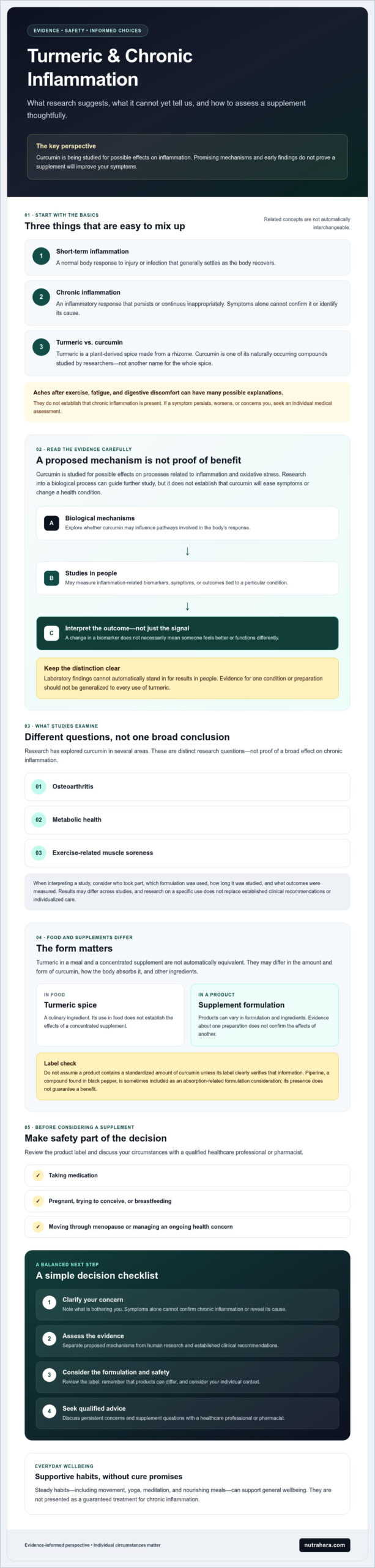
Categories
Articles

How to Reduce Inflammation in the Body Naturally: A Woman’s Guide

Nearly 80% of people diagnosed with autoimmune conditions are women, yet persistent joint stiffness, morning aches, and daily fatigue are still routinely brushed off as inevitable signs of aging. If fluctuating hormones have left you feeling weighed down by physical puffiness and stubborn brain fog, your symptoms are real physiological signals, not personal shortcomings. Learning how to reduce inflammation in the body naturally doesn’t require extreme detoxes or punishing regimens; it begins with working in harmony with your female biology.

Sorting through contradictory diet rules and fleeting wellness fads can feel exhausting when you simply want to wake up feeling light, capable, and refreshed. In this comprehensive guide, you’ll discover science-backed lifestyle habits, hormone-supportive nutrition, and clean botanical rituals that soothe chronic inflammation at its source. From mindful yoga practices that calm cellular stress pathways to targeted Ayurvedic herbal allies, here is your practical roadmap to reclaiming flexible joints, sharp mental focus, and lasting daily vitality.

Key Takeaways

  • Understand how shifting hormones across life stages influence cellular stress, helping you decode lingering joint stiffness, brain fog, and fatigue.
  • Discover how to reduce inflammation in the body naturally using a plate rich in vibrant polyphenols, omega-3 fatty acids, and microbiome-supporting fiber.
  • Harness restorative yoga, deep breathwork, and circadian sleep habits to calm your central nervous system and turn down inflammatory genetic triggers.
  • Identify clean botanical allies grounded in Ayurvedic tradition and modern nutritional validation to gently support joint comfort and vitality.
  • Implement a practical four-step daily rhythm with simple habit stacks tailored for busy women seeking sustainable, long-term balance.

Understanding Chronic Inflammation: How It Affects a Woman’s Body

Inflammation isn’t inherently an enemy; it’s a finely tuned survival mechanism. Yet for women aged 30 to 60, hormonal shifts, career demands, and family responsibilities can quietly turn a protective response into a persistent bodily drain. Understanding how to reduce inflammation in the body naturally begins with recognizing that your body isn’t working against you. Instead, it is sending vital biological feedback through lingering fatigue, tender joints, and unexpected bloating.

Acute vs. Chronic Inflammation: Knowing the Difference

Acute inflammation serves as your immune system’s emergency response team. When you roll an ankle during a morning run or catch a seasonal bug, immune cells rush to the site, generating heat, swelling, and redness to repair tissue. Once healing finishes, chemical signals turn the response off.

Chronic systemic inflammation occurs when that switch fails to flip. A closer look at the biological mechanisms of inflammation reveals that persistent immune activation prompts white blood cells to release cytokines continuously. Rather than repairing damaged tissue, these biochemical messengers slowly irritate healthy joints, vascular linings, and metabolic pathways. Long before clinical markers elevate, subtle signals often manifest throughout daily life:

  • Morning stiffness: A heaviness or resistance in the fingers, hips, and knees that takes twenty minutes of movement to ease.
  • Cognitive fog: Subtle memory lapses and difficulty focusing, often worsened by disrupted sleep cycles.
  • Digestive reactivity: Uncomfortable abdominal puffiness and sensitivity to foods that never previously caused distress.

The Female Hormonal Link: Estrogen, Cortisol, and Immune Balance

A woman’s immune system operates in constant dialogue with her endocrine system. Natural estrogen, specifically 17β-estradiol, acts as a potent endogenous anti-inflammatory agent. It buffers against cellular damage, protects delicate joint cartilage, and suppresses pro-inflammatory cytokines such as interleukin-6 (IL-6) and tumor necrosis factor-alpha (TNF-α).

During perimenopause and menopause, natural estrogen levels fluctuate unpredictably before dropping. Without this built-in cellular shield, many active women experience sudden joint soreness and fluid retention. Compounding this transition, chronic emotional or physical stress elevates circulating cortisol. While cortisol initially suppresses inflammation, prolonged surges exhaust cellular receptors, leading to glucocorticoid resistance. The immune system loses its natural regulator, driving widespread baseline irritation. Discovering how to reduce inflammation in the body naturally gives you the tools to restore hormonal calm, protect your connective tissues, and regain effortless daily energy.

Anti-Inflammatory Nutrition: What to Eat and What to Avoid

Every meal delivers biochemical information to your cells. When learning how to reduce inflammation in the body naturally, the goal isn’t restrictive dieting or punishing fasts. Rather, it centers on filling your plate with deep, restorative colors and essential fatty acids that actively calm immune hyperactivity while protecting cellular longevity.

Food Category Anti-Inflammatory Allies (Emphasize) Pro-Inflammatory Triggers (Minimize)
Fats & Oils Cold-pressed extra virgin olive oil, avocado, walnuts Corn, soybean, and partially hydrogenated seed oils
Proteins Wild salmon, sardines, pasture-raised eggs, lentils Charred red meats, processed deli cuts, bacon
Carbohydrates Sweet potatoes, quinoa, berries, leafy greens Refined white flours, pastries, sugary breakfast cereals
Flavor & Seasoning Turmeric, ginger, garlic, rosemary, green tea High-fructose corn syrup, artificial sweeteners, MSG

Pillar Foods That Soothe Cellular Stress

Nourishing your biology begins with colorful, unrefined produce and marine lipids. Clinical evidence highlights that regular consumption of anti-inflammatory foods dampens pro-inflammatory signaling molecules like interleukin-6. Aim for at least two 3-to-4-ounce servings of wild fatty fish each week to supply protective EPA and DHA omega-3s.

Pair these proteins with dark berries, rich in anthocyanins, and reach for a minimum of 25 grams of dietary fiber daily (21 grams if you’re over 51) to nourish gut flora. If bloating or fullness slows you down after nutrient-dense meals, supporting your gut with targeted digestive enzymes can improve breakdown, easing digestion and allowing tissues to absorb these soothing micronutrients efficiently.

Pro-Inflammatory Triggers to Limit Mindfully

Certain modern dietary staples silently accelerate systemic irritation. The American Heart Association advises women to limit added sugars to no more than 25 grams (6 teaspoons) per day, as excess refined sweeteners spike pro-inflammatory cytokines TNF-α and IL-6. Industrial seed oils, heavily processed baked goods, and nightly alcoholic drinks disrupt the gut barrier, allowing metabolic endotoxins into circulation.

Approach changes with grace rather than guilt. Swap soda for sparkling water infused with muddled berries, choose avocado oil for cooking over refined vegetable blends, and trade sweetened desserts for dark cocoa. Pairing these conscious plate upgrades with pure, targeted botanical care from Nutrahara creates a grounded foundation for lasting gut harmony and vibrant physical comfort.

Mind-Body Practices: Soothing Inflammation Through Movement and Rest

Pushing harder isn’t always the solution when physical tension mounts. While fitness builds vitality, excessive high-intensity workouts without adequate recovery elevate resting cortisol, triggering inflammatory flares in women already navigating hormonal fluctuations. Discovering how to reduce inflammation in the body naturally means balancing exertion with intentional restoration, allowing your immune system to reset and repair damaged connective tissue.

Yoga, Gentle Stretching, and Mindful Exercise

Your lymphatic system relies entirely on physical movement to circulate immune cells and clear metabolic debris. Gentle, fluid activities provide cellular decongestion without inducing physiological strain:

  • Restorative Yoga: Meta-analyses demonstrate that practicing hatha yoga, pranayama breathwork, and asanas 2 to 5 times weekly significantly downregulates pro-inflammatory cytokines IL-6 and TNF-α, directly calming the genetic master switch NF-κB.
  • Legs-Up-the-Wall (Viparita Karani): Resting in this passive inversion for 10 minutes encourages venous return, easing ankle puffiness and heavy legs.
  • Daily Brisk Walking: Meeting the public health recommendation of 150 to 300 minutes of weekly moderate aerobic activity increases heart rate variability and lubricates synovial joints without stressing delicate hormonal pathways.

As Elena, a 42-year-old marketing director and marathon runner, shares: “After battling constant joint stiffness and fatigue, swapping two weekly high-intensity runs for restorative yoga and daily walks finally calmed my inflammation. I regained my focus and felt lighter within three weeks.”

Meditation, Vagus Nerve Toning, and Deep Sleep

Physical rest directly shapes your molecular biology. Just 10 minutes of daily mindfulness meditation stimulates the vagus nerve, sending immediate calming acetylcholine signals down to spleen and gut tissues. Pairing this mental reset with nutritional foundations like Harvard Health’s guide to foods that fight inflammation provides comprehensive support for overworked cells.

Nighttime represents your body’s primary repair cycle. Restricting sleep below 7 hours triggers acute overnight surges in systemic high-sensitivity C-reactive protein (hs-CRP) and circulating IL-6. Establishing a sacred sleep window of 7 to 9 hours keeps your nocturnal inflammatory response grounded. To support healthy sleep architecture without grogginess, incorporating clean, non-habit-forming botanical support such as Restorasleep encourages the deep, restorative rest your nervous system requires to soothe systemic strain.

How to Reduce Inflammation in the Body Naturally: A Woman's Guide

Botanical Allies: Traditional Herbs and Supplements for Daily Vitality

Ancient Ayurvedic traditions and modern clinical nutrition share a core truth: whole-body balance relies on plant synergy. While dietary changes and restorative rest establish your baseline, targeted botanicals offer focused support for irritated tissues. For women wondering how to reduce inflammation in the body naturally without relying on synthetic quick fixes, clean herbal supplementation provides a proven path toward cellular renewal.

Ayurvedic Adaptogens and Antioxidant Botanicals

Adaptogenic herbs work dynamically with your neuroendocrine axis. Rather than forcing a singular biological reaction, adaptogens help recalibrate stress hormones, preventing the prolonged cortisol spikes that degrade tissue health. When choosing botanical remedies, bioavailability determines real-world efficacy:

  • Curcumin: Standardized extracts containing 95% curcuminoids inhibit the NF-κB genetic pathway, helping relieve physical joint aches and morning stiffness. Because whole turmeric powder contains just 1% to 6% curcumin, concentrated extracts deliver the therapeutic intensity required for cellular defense.
  • Piperine Synergy: Co-administering 5 mg to 20 mg of piperine (black pepper extract) with curcumin boosts intestinal absorption by up to 2,000%, ensuring active compounds reach systemic circulation.
  • Ashwagandha: Prized in Ayurveda, this root modulates circulating cortisol and stabilizes nervous fatigue. Choosing clean formulations like Ashwagandha with Black Pepper ensures rapid assimilation to support daily emotional equilibrium.

Structural Support: Collagen, Omega-3s, and Micronutrients

Hormonal transitions deplete structural proteins within joint capsules, pelvic ligaments, and skin matrices. Marine and bovine collagen peptides supply the specific amino acids, glycine and proline, needed to rebuild protective synovial fluid and reinforce cartilage lining.

Pairing these building blocks with hydrolyzed peptides in Premium Collagen Complex promotes supple joint movement while reducing morning discomfort. Adding activated B vitamins supports mitochondrial metabolism, transforming food into steady energy rather than pro-inflammatory cellular fatigue. Navigating these options becomes effortless when supported by an all-inclusive women’s wellness guide. To explore thoughtfully formulated, bioavailable botanicals designed to restore your vitality, visit Nutrahara today.

How to Build a Sustainable Anti-Inflammatory Daily Routine

Sustainable wellness rarely happens through radical overnight transformations. For busy women managing demanding careers, parenting, or changing midlife cycles, understanding how to reduce inflammation in the body naturally comes down to rhythmic, micro-habits. Stacking supportive practices onto your existing daily routines removes decision fatigue, turning anti-inflammatory care into an effortless act of daily restoration.

Morning-to-Night Anti-Inflammatory Flow

A four-step daily rhythm structures cellular renewal across your day without overwhelming your schedule:

  • Step 1 (Morning Awaken): Drink 16 ounces of warm water with fresh lemon to hydrate tissues and stimulate digestive bile. Pair this with five minutes of gentle spinal stretches before checking your phone.
  • Step 2 (Midday Mobilization): Take a brisk 10-minute walk after lunch to lower postprandial glucose surges. Step away from computer monitors to take four slow, diaphragmatic breaths that activate your vagus nerve.
  • Step 3 (Afternoon Grounding): Trade late-day espresso for steeped ginger or green tea, curbing cortisol spikes that disrupt evening recovery.
  • Step 4 (Evening Unwind): Dim bright overhead lights an hour before sleep. Spend five minutes in Child’s Pose or Legs-Up-the-Wall to encourage venous return and soothe accumulated muscle tension.

Tracking Your Progress and Honoring Your Journey

True biological healing unfolds in layers. Rather than seeking instant perfection, tune into subtle cellular wins over weeks and months:

  • Waking with supple, pain-free finger joints and light, fluid hips
  • Enjoying sustained afternoon stamina without brain fog or sugar crashes
  • Feeling a calm, settled digestive tract free from uncomfortable evening bloating

As Maya, 48, explains: “Habit-stacking a five-minute morning yoga stretch with clean botanical supplements completely shifted my mindset. I stopped chasing quick fixes, honored my pace, and my persistent knee stiffness gradually dissolved.”

Your physical vitality is a long-term progression, not a race. By pairing mindful daily movement with targeted, hormone-supportive supplements such as Blossombliss or Femmepower, you provide your body with the clean, bioavailable tools it needs to sustain lifelong vibrancy.

Reclaim Your Daily Vitality and Inner Balance

Mastering how to reduce inflammation in the body naturally isn’t about rigid perfection; it’s about listening to your biology with kindness. When you nourish your cells with anti-inflammatory whole foods, honor nervous system recovery through restorative movement, and protect your sleep, your body naturally recalibrates. Subtle shifts in your daily rhythm compound over time, transforming chronic aches into renewed strength, clarity, and ease.

You don’t have to navigate this path alone. To elevate your wellness journey with pure, targeted botanical care, explore Nutrahara’s natural supplements for women. Rooted in time-tested Ayurvedic wisdom and validated by modern clinical research, each bioavailable formula supports joint mobility and hormonal equilibrium without artificial additives. Trust your body’s innate wisdom, take one mindful step today, and step forward into radiant, lifelong vitality.

Frequently Asked Questions

What are the most common signs of chronic inflammation in women?

Common signs include persistent joint stiffness, chronic fatigue that sleep doesn’t resolve, digestive bloating, and sudden skin flares like adult acne or eczema. Women often experience these issues alongside hormonal shifts in their thirties, forties, and fifties. Fluid retention, recurrent headaches, and brain fog also signal that low-grade immune activation is lingering below the surface rather than resolving normally.

How quickly can natural lifestyle changes reduce systemic inflammation?

Noticeable biological improvements often begin within two to three weeks of adopting anti-inflammatory nutrition and daily restorative movement. Key inflammatory markers like hs-CRP can drop significantly across an eight to twelve-week window. If you’re learning how to reduce inflammation in the body naturally, consistency matters far more than speed. Better digestion, deeper sleep, and lighter morning joints usually appear first.

Can drinking warm lemon water or green tea really lower inflammation?

Yes, both beverages provide targeted biochemical support against cellular oxidative stress. Green tea delivers epigallocatechin gallate (EGCG), a potent polyphenol clinically proven to suppress pro-inflammatory cytokine activity. Warm lemon water provides vitamin C and encourages proper bile secretion, supporting gentle morning liver detoxification. While neither drink is a standalone cure, sipping them daily establishes a clean, hydrating foundation for cellular recovery.

Is high-intensity interval training (HIIT) bad if I have chronic inflammation?

HIIT isn’t inherently harmful, but overdoing intense training without adequate recovery spikes systemic cortisol and worsens existing tissue irritation. If your body already battles chronic inflammation or perimenopausal fatigue, intense anaerobic intervals can overburden your adrenals. Swapping high-impact circuits for low-impact strength training, yoga, and brisk walking keeps synovial joints mobile and calms inflammatory markers without triggering physical burnout.

What vitamins and minerals are most effective against systemic inflammation?

Vitamin D3, magnesium glycinate, omega-3 fatty acids, and active B-complex vitamins offer the strongest cellular protection. Magnesium dampens the release of C-reactive protein, while vitamin D modulates T-cell immune behavior to prevent runaway immune responses. Combining these micronutrients with clean, bioavailable botanical supplements supports tissue repair, enhances mitochondrial resilience, and sustains daily energy reserves across every stage of female life.

How does chronic psychological stress trigger physical inflammatory responses?

Chronic mental stress continually activates the sympathetic nervous system, prompting the adrenal glands to flood your bloodstream with cortisol. Over time, immune cells become resistant to cortisol’s normal regulatory signals, causing unchecked production of pro-inflammatory cytokines like IL-6. Understanding how to reduce inflammation in the body naturally requires addressing this mind-body connection through daily breathwork, meditation, and vagus nerve stimulation to restore true internal calm.

Can poor gut health and microbiome imbalance cause joint pain and stiffness?

Yes, an unbalanced microbiome directly impacts joint comfort through the gut-joint axis. When intestinal permeability increases, bacterial lipopolysaccharides leak into the bloodstream, triggering widespread immune activation. These inflammatory complexes travel through circulation and settle into synovial membranes, causing noticeable joint stiffness and tenderness. Nourishing your gut flora with diverse plant fiber, fermented foods, and targeted digestive enzymes soothes this underlying trigger.

Article by

Nutrahara Team

We are a dedicated collective of nutrition scientists and naturopaths at Nutrahara, committed to advancing women's health through the fusion of ancient Ayurveda science and cutting-edge nutrition research. Our mission is to empower you with clean, simple, and scientifically validated wellness solutions so you can live your healthiest life. Connect with us to stay updated on the latest developments in holistic women's health and nature-based research.

Disclaimer

This article is not a substitute for medical advice. Please consult a healthcare professional before starting any supplement, especially if pregnant, nursing, taking medication, or managing health conditions.

Categories
Articles

Natural Joint Support for Women: Mobility and Vitality

Did you know that 60% of people living with osteoarthritis are women, and over 21% of women in the United States currently manage the daily reality of arthritis? It’s deeply frustrating when the morning yoga flow you once found effortless is now met with lingering stiffness or a quiet fear that your mobility is fading. You’ve likely felt the confusion of choosing supplements that actually work while sensing that your body’s needs are shifting alongside your hormones. Finding effective natural joint support for women shouldn’t feel like a guessing game when your vitality is on the line.

We believe your health is a long-term progression that deserves a nurturing, science-backed approach. You’re about to discover how to reclaim your fluid movement by combining ancient Ayurvedic wisdom with the latest nutritional research. We’ll explore the vital link between estrogen and joint lubrication, provide actionable tips for your fitness routine, and show you how to maintain an active lifestyle through comprehensive solutions like the Joints & Knees Kit. It’s time to move with the confidence and grace you’ve always known.

Key Takeaways

  • Understand the vital role estrogen plays in protecting your joints and how hormonal changes during perimenopause affect your daily comfort.
  • Discover how the fusion of Ayurvedic wisdom and modern science creates a more effective path for natural joint support for women.
  • Learn why incorporating yoga and mindful movement is essential for maintaining synovial fluid and protecting your bone density as you age.
  • Gain actionable insights on timing your supplement ritual to ensure maximum absorption and long-term health progression.
  • Explore the benefits of a bundled approach to wellness, focusing on purity and the synergy of clinically validated ingredients.

Understanding the Unique Landscape of Women’s Joint Health

Women’s bodies operate on a complex hormonal rhythm that directly impacts physical structural health. It’s a biological reality that 60% of people with osteoarthritis are women. Many women in their 30s and 40s make the mistake of waiting for chronic pain before taking action. Gaining a deeper sense of Understanding Arthritis helps you see that joint health isn’t just about age; it’s about biology. Reframing your care as proactive longevity rather than reactive repair is an act of self-empowerment that protects your future mobility.

The Estrogen Connection: Why Hormones Matter for Mobility

Estrogen acts as a biological shield for your joints. It regulates synovial fluid production and maintains cartilage integrity. When levels fluctuate during life stages like postpartum or perimenopause, your joints may lose their natural lubrication. This hormonal shift often leads to increased inflammation and a feeling of “dryness” in the knees or hips. Understanding this connection allows you to approach natural joint support for women as a vital part of your hormonal health journey.

Identifying Early Signs of Joint Wear

Your body speaks in whispers before it shouts. Morning stiffness that lingers or a new “clicking” sound during yoga are early indicators of joint stress. Unlike muscle soreness, which peaks and fades within 48 hours, joint discomfort feels deep and persistent. Identifying these signs early helps you distinguish between temporary fatigue and the need for proactive structural support. Use the following checklist to assess your current joint health:

  • Stiffness: Do your joints feel “locked” for more than ten minutes after waking?
  • Range of Motion: Have you noticed a decrease in flexibility during familiar yoga poses?
  • Audible Cues: Do you hear frequent popping or grinding sounds in your knees or ankles?
  • Sensory Changes: Is there localized warmth or swelling after moderate exercise?

Listen to these subtle shifts. If you find your range of motion decreasing in a favorite meditation pose or feel deep warmth in your knees after a walk, it’s time to act. Implementing a strategy for natural joint support for women early can prevent the “wear and tear” narrative from becoming your reality. You deserve to move with grace and strength through every stage of life.

The Power of Fusion: Ayurvedic Wisdom Meets Modern Nutrients

The Nutrahara philosophy centers on the belief that ancient Ayurvedic science provides the vital missing link to modern nutrition. While contemporary research often focuses on isolated compounds, traditional wisdom understands how botanical synergies work within the body’s natural rhythms. This holistic approach is essential when seeking effective natural joint support for women, as it addresses both immediate inflammation and long-term structural integrity. By bridging these two worlds, we create formulas that respect your body’s innate intelligence while providing the clinical validation you expect.

Botanical Heroes: Turmeric and Boswellia

Curcumin, the active compound in Turmeric, remains the gold standard for natural inflammation management. It works at a molecular level to block multiple inflammatory pathways. However, the true secret to Curcumin lies in its bioavailability. Your body needs help absorbing these potent molecules. Just as we utilize black pepper in our Ashwagandha with Black Pepper to enhance nutrient uptake, our joint formulations prioritize how your body actually uses these botanicals. Boswellia Serrata, often called Indian Frankincense, complements this by specifically targeting the 5-LOX enzyme. By inhibiting this enzyme, Boswellia helps preserve cartilage and provides a faster sense of relief during your daily movements.

Structural Support: Collagen and Glucosamine

Maintaining your mobility requires more than just managing discomfort; it requires rebuilding the foundation. Type II Collagen acts as the essential “glue” for female joint integrity, providing the tensile strength your cartilage needs to stay resilient. We focus on natural sourcing and purity in our Premium Collagen Complex, ensuring you receive clean ingredients without the burden of artificial fillers. Glucosamine works alongside these proteins to support the repair of connective tissues that may have thinned over time.

It’s helpful to remember that health is a long-term progression. Rebuilding structural tissue doesn’t happen overnight. It typically takes a dedicated 90-day ritual for these nutrients to fully integrate into your system. As noted in an Arthritis overview from Johns Hopkins, understanding the mechanics of joint wear is the first step toward effective management. If you’re ready to commit to your long-term vitality, beginning a daily ritual with a targeted collagen formula is a gentle and powerful way to support your body’s natural repair processes.

Beyond the Bottle: Holistic Lifestyle Strategies for Longevity

While high-quality supplements provide the essential raw materials for repair, your daily habits determine how effectively your body utilizes those nutrients. Think of your joints like a well-crafted machine; even the best fuel requires regular movement to keep the internal parts gliding smoothly. This “motion is lotion” concept refers to the production of synovial fluid, the natural lubricant that protects your knees and hips from friction. For those seeking comprehensive natural joint support for women, integrating mindful movement is just as vital as the capsules in your morning ritual.

Yoga and Low-Impact Movement: Maintaining Fluidity

Maintaining this fluidity also extends to your environment; for instance, incorporating an electric standing desk Hong Kong into your workspace is a proactive way to keep your body in motion throughout the day and reduce the pressure on your lower joints.

Beyond your workspace, the quality of your rest is equally critical for joint recovery, as a supportive sleep surface helps reduce morning stiffness; for those seeking ergonomic solutions, you can discover Revotica Matrac és Bútorgyár for custom-sized mattresses tailored to your physical needs.

Yoga is a cornerstone of joint longevity, especially for women over 40 who are navigating hormonal shifts. Specific poses like Cat-Cow gently mobilize the spine and encourage fluid flow, while the Butterfly pose opens the hips without placing undue stress on the ligaments. To protect your structural integrity, always use props like blocks or bolsters to bring the floor to you. This allows you to build strength without overextending. A simple 10-minute morning routine can “grease the wheels” of your joints for the day ahead:

  • Cat-Cow: 5 slow rounds to wake up the spine.
  • Seated Butterfly: 1-2 minutes with a tall spine to open the pelvic region.
  • Gentle Circles: Rotate your wrists and ankles 10 times in each direction.

The Anti-Inflammatory Kitchen

Your diet acts as a powerful lever for systemic inflammation. A “Joint-Friendly” plate should be rich in Omega-3 fatty acids and vibrant antioxidants, which help douse the flames of discomfort at a cellular level. Focus on walnuts, flaxseeds, and deep-colored berries. Conversely, refined sugars and processed oils are known triggers for joint flares. Reducing these can significantly lower the inflammatory load on your body.

Consider the story of Sarah, a 52-year-old hiker who found her favorite trails becoming inaccessible due to persistent knee stiffness. By shifting to a plant-forward diet and incorporating FemmePower into her daily routine, she regained the mobility needed to summit her local peaks again last autumn. Her journey highlights that health is a personal, ongoing progression. Don’t forget the simplest habit of all: hydration. Since cartilage is approximately 80% water, staying hydrated ensures your joints maintain their natural cushioning and shock-absorption capabilities.

Crafting Your Natural Support Ritual: Practical Implementation

Building a daily ritual is the bridge between your wellness goals and tangible physical results. While understanding the science of natural joint support for women is the first step, consistent application is what transforms your mobility over time. We view health as a personal, ongoing journey rather than a destination. This means creating a routine that feels like a nurturing act of self-care rather than another chore on your to-do list. When you treat your body with this level of respect, you’ll find that your physical progression feels more natural and sustainable.

Consistency and Timing

Timing your intake can significantly influence how well your body absorbs these potent botanicals. Many of the ingredients we’ve discussed, such as Turmeric and Boswellia, are fat-soluble. This means they require a healthy fat source to cross the intestinal barrier effectively. Try taking your supplements alongside a breakfast that includes avocado, nuts, or a dash of olive oil. We recommend following the 30-day rule: give your body a full month of consistent use to begin noticing the subtle shifts in your morning flexibility. It’s about cumulative benefits, not instant fixes.

To make this habit stick, try the habit-stacking method. Pair your joint support ritual with an existing morning behavior, such as your daily meditation or your first glass of water. You can also stack your structural support with general wellness boosters like our Vitamin B Complex. This combination supports both your physical movement and the metabolic energy required for tissue repair. Small, intentional choices made daily lead to a lifetime of fluid movement and vitality.

Mind-Body Link in Pain Management

Your nervous system plays a silent but powerful role in how you experience joint discomfort. Chronic stress triggers the release of pro-inflammatory markers called cytokines. These proteins can heighten sensitivity and exacerbate the feeling of stiffness in your knees and hands. Meditation isn’t just for mental clarity; it’s a physiological tool to lower your inflammatory load. By calming your nervous system, you effectively turn down the volume on pain signals and improve your overall quality of life.

Try a simple body-scan meditation for five minutes each evening. Focus your breath into areas where you feel tension, such as your knees or lower back. This practice fosters a deeper connection with your body and reinforces the idea that healing is a long-term progression. When you support your joints through both nutrition and mindfulness, you create a resilient foundation for longevity. If you’re ready to start your journey toward effortless movement, explore our comprehensive joint health solutions today.

Natural Joint Support for Women: Mobility and Vitality

Empowering Your Journey with Nutrahara’s Natural Solutions

Choosing the right path for natural joint support for women can often feel overwhelming amidst a sea of generic options. Many brands offer isolated ingredients that ignore the complex, rhythmic nature of the female body. At Nutrahara, we believe your health isn’t a quick fix but a personal, ongoing journey toward lasting vitality. By choosing a system designed for your specific structural and hormonal needs, you’re investing in a future of fluid movement and renewed self-confidence. We’re here to act as your wise guide, providing the tools you need to move through every life stage with grace and strength.

The Joints & Knees Kit: A Comprehensive System

Our flagship Joints & Knees Kit offers a bundled approach that addresses both immediate comfort and long-term structural repair. While individual supplements often focus on a single symptom, this system creates a powerful synergy between mobility and flexibility. You’ll also receive our exclusive educational e-books. These resources act as a supportive partner in your wellness journey, offering practical guidance on yoga, meditation, and anti-inflammatory nutrition. The Joints & Knees Kit represents the ultimate fusion of Ayurvedic wisdom and modern clinical research.

Why Ancient Wisdom and Modern Science Win

The Nutrahara signature is built on centuries of traditional health philosophies, now validated by today’s most rigorous laboratory standards. We take immense pride in our promise of purity, providing clean formulas that are entirely free from artificial fillers or hidden additives. If you’re looking for targeted relief, you might choose an individual support option like FemmePower to manage daily inflammation. However, for women seeking a complete structural foundation, the kit provides a more holistic system for long-term health progression.

Your health is a journey of progression, and you’re worthy of the highest quality support. Stepping into your most confident, mobile self starts with a single, intentional choice to prioritize your structural integrity. Whether you’re deepening your yoga practice or simply enjoying a walk in nature, we’re dedicated to supporting your vitality with transparency and care. You don’t have to settle for lingering stiffness when a science-backed, natural path is within reach. Embrace the movement you love and protect your joints for the years to come.

Shop the Joints & Knees Kit to start your mobility journey today.

Step Into a Future of Fluid Movement

You now understand that your mobility is deeply connected to your hormonal lifecycle and the structural integrity of your joints. By merging the wisdom of Ayurveda with modern clinical research, you can move beyond simply managing stiffness to proactively protecting your vitality. True health is a long-term progression that rewards consistency. Whether you’re deepening your yoga practice or navigating the shifts of perimenopause, effective natural joint support for women provides the foundation you need to stay active and confident.

Our formulas prioritize clean ingredients and botanical synergy, ensuring your body receives only what it needs to thrive without artificial additives. You don’t have to let physical discomfort dictate your lifestyle or dampen your spirit. It’s time to honor your body’s resilience with a ritual that respects its unique biology and supports your personal health progression. Reclaim your mobility with the Nutrahara Joints & Knees Kit and embrace the active life you deserve. You’re worthy of a journey filled with strength, grace, and joy.

Frequently Asked Questions

What is the best natural joint support for women in perimenopause?

The best support for perimenopausal joints addresses the biological decline in estrogen, which serves as a natural lubricant and anti-inflammatory. Look for a science-backed fusion of Turmeric and Boswellia to manage systemic inflammation and support synovial fluid production. Nutrahara’s approach integrates these Ayurvedic botanicals with modern research to protect your structural integrity during this hormonal shift. Consistency with clean, natural ingredients helps manage the “dryness” often felt in the joints during this life stage.

How long does it take for natural joint supplements to start working?

Most natural joint supplements require a dedicated 30 to 90-day ritual to show significant results. While some botanical ingredients like Boswellia offer faster comfort by targeting specific inflammatory enzymes, structural repair is a long-term progression. Your body needs several weeks to integrate nutrients like collagen and glucosamine into thinned connective tissues. Committing to a daily ritual ensures these clean ingredients have the time they need to effectively rebuild your structural foundation and mobility.

Can yoga really help with joint pain or will it make it worse?

Yoga is highly effective for improving joint fluidity provided you choose low-impact poses and utilize props like blocks or bolsters. It encourages the production of synovial fluid, which “greases the wheels” of your knees and hips. It’s important to listen to your body’s whispers and avoid overextending your ligaments. Mindful movement helps maintain flexibility and bone density without the jarring impact of high-intensity exercise, making it a vital tool for lifelong vitality.

Is Turmeric better than Glucosamine for knee discomfort?

Neither is strictly “better” because they serve different biological roles in your health journey. Turmeric is the gold standard for managing immediate inflammation and calming discomfort at a molecular level. Glucosamine acts as a building block for cartilage repair and structural integrity. For effective natural joint support for women, a fusion of both is ideal. Turmeric manages the “fire” of inflammation while Glucosamine supports the long-term repair and resilience of your connective tissues.

Do I need to take collagen if I already eat a high-protein diet?

Yes, targeted collagen supplementation is beneficial even with a high-protein diet because Type II collagen is the primary structural protein in your cartilage. General dietary protein provides amino acids, but specific collagen peptides act as a specialized “glue” for your joints that regular protein sources may not provide in sufficient amounts. Using a clean, natural formula like our Premium Collagen Complex ensures your body has the exact materials needed to maintain female joint integrity and resilience.

What is the role of Boswellia in female joint health?

Boswellia Serrata, or Indian Frankincense, plays a crucial role by inhibiting the 5-LOX enzyme, which is a major pathway for joint inflammation. This botanical hero is particularly effective at preserving cartilage and reducing the breakdown of connective tissue. It works in synergy with Turmeric to provide faster relief and support easier movement. In the context of female health, it offers a gentle yet powerful way to manage discomfort without the need for artificial fillers.

Can meditation actually reduce the feeling of joint stiffness?

Meditation can significantly reduce the perception of joint stiffness by regulating your nervous system and lowering stress-induced inflammatory markers. Chronic stress triggers the release of cytokines, which can heighten pain signals and make joints feel tighter. By practicing mindful breathing or body scans, you effectively lower your body’s inflammatory load. This mind-body connection is a powerful tool for improving quality of life, helping you reclaim a sense of calm and control over your physical well-being.

Are there any side effects to taking natural joint kits daily?

Our natural joint kits are formulated with clean ingredients and no artificial additives, making them safe for daily use for most women. Because we prioritize purity and avoid synthetic fillers, the risk of side effects is minimal. It’s always wise to take your supplements with food to ensure optimal absorption and prevent digestive sensitivity. If you’re pregnant or nursing, we recommend checking with your healthcare provider to ensure any new ritual aligns with your specific health needs.

Article by

Nutrahara Team

We are a dedicated collective of nutrition scientists and naturopaths at Nutrahara, committed to advancing women's health through the fusion of ancient Ayurveda science and cutting-edge nutrition research. Our mission is to empower you with clean, simple, and scientifically validated wellness solutions so you can live your healthiest life. Connect with us to stay updated on the latest developments in holistic women's health and nature-based research.

Disclaimer

This article is not a substitute for medical advice. Please consult a healthcare professional before starting any supplement, especially if pregnant, nursing, taking medication, or managing health conditions.
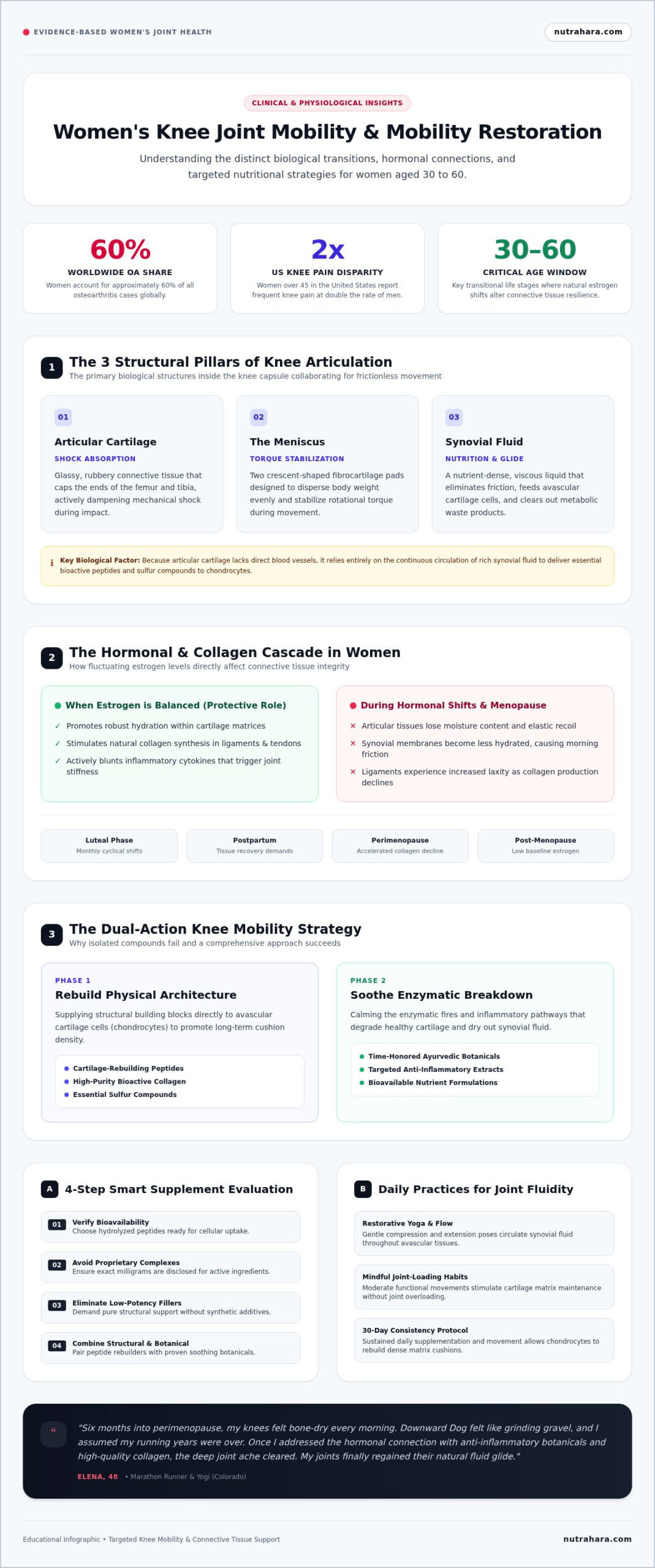
Categories
Articles

Joint Flexibility: A Holistic Guide for Women’s Vitality

What if the stiffness you feel every morning isn’t an inevitable sign of aging, but a signal that your body’s internal “structural glue” needs a more mindful approach? Many women between 30 and 60 find themselves hesitating before a yoga class or feeling “rusty” after sitting too long. It’s common to feel overwhelmed by the sheer volume of supplements for joint flexibility, especially with 2026 FDA warnings highlighting undeclared drugs in some common pain relief brands. You want to move with grace and independence, but you need a source you can trust.

We believe that true vitality comes from a harmony of ancient wisdom and modern science. You’ll soon discover how to reclaim your range of motion by balancing Shleshaka Kapha, the body’s natural joint lubricant, while supporting your bones with clinically validated nutrients. We’ll explore a holistic routine that includes high-purity collagen, anti-inflammatory Ashwagandha, and specific yoga practices designed to keep your movement fluid at every life stage. It’s time to stop worrying about your mobility and start nurturing the long-term health of your joints.

Key Takeaways

  • Learn the vital role of Shleshaka Kapha and how maintaining internal lubrication is the secret to fluid, effortless movement.
  • Identify the most effective supplements for joint flexibility, including how high-purity collagen acts as the structural glue for your connective tissues.
  • Understand how declining estrogen levels impact joint hydration and how to navigate the Vata stage of life with grace and resilience.
  • Discover a holistic ritual that combines joint-friendly nutrition, healthy fats, and the ancient practice of Ayurvedic self-massage to soothe daily stiffness.
  • Explore how merging ancient herbal wisdom with modern clinical validation creates a sustainable path toward lasting joint comfort and independence.

Understanding Joint Flexibility as a Mirror of Internal Harmony

To understand how your body moves, you must look beyond the surface of your skin. A flexible joint relies on three critical components: resilient cartilage to absorb shock, strong ligaments for stability, and synovial fluid to ensure smooth gliding. Ancient Ayurvedic wisdom views this lubrication as Shleshaka Kapha, the sub-dosha of Kapha that governs the moisture and cushioning of our joints. When this fluid is abundant, movement feels effortless. When it’s depleted, you experience the grinding stiffness that many women mistakenly accept as a natural part of aging.

Stiffness isn’t a life sentence. It’s often a signal that your body is facing a nutrient or elemental imbalance. Holistic joint flexibility is the synergy of structural support and fluid balance. If you find yourself searching for the right supplements for joint flexibility, it’s vital to address both the physical structure and the internal environment that allows those structures to thrive. Movement is a reflection of your internal state of harmony.

The Connection Between Gut Health and Joint Comfort

Your joints don’t exist in isolation; they depend entirely on your digestive fire, or Agni. If your Agni is weak, your body struggles to break down and absorb the joint-building minerals found in your diet. This leads to a buildup of metabolic waste, which can trigger systemic inflammation that settles in your knees, hips, and fingers. Understanding Digestive Enzymes and Weight Loss can help you see how improving your nutrient bioavailability is a foundational step in any mobility routine.

Why Women’s Joints Require a Unique Nutritional Strategy

Women between the ages of 30 and 60 face unique physiological shifts that directly impact their range of motion. From the demands of pregnancy to the hormonal fluctuations of menopause, our connective tissues are under constant pressure. Research into compounds like Glucosamine shows how supporting the amino sugar building blocks in our cartilage can help maintain that essential cushion. For women, choosing the right supplements for joint flexibility isn’t just about avoiding discomfort. It’s about maintaining the psychological freedom that comes with knowing your body can keep up with your active lifestyle, whether that’s a morning yoga flow or a walk through the park.

The Science of Suppleness: Key Supplements for Joint Flexibility

While a balanced lifestyle provides the foundation for movement, specific nutrients act as the building blocks for lasting resilience. Connective tissues require consistent nourishment to remain elastic and strong. When you integrate targeted supplements for joint flexibility, you’re providing your body with the raw materials needed to repair cartilage and maintain the “cushion” between your bones. This scientific approach ensures that your physical structure can support the fluid movement you cultivate on your yoga mat.

  • Collagen: Often described as the “structural glue” of the body, collagen is the primary protein in your tendons and ligaments. Supplementing with a high-quality Premium Collagen Complex helps maintain the integrity of these tissues as natural production slows with age.
  • Turmeric and Curcumin: These are nature’s most potent tools for managing daily comfort. Curcumin helps modulate the body’s inflammatory response, allowing for smoother, less restrictive movement.
  • Glucosamine and Chondroitin: These compounds are essential for cartilage health. They work in tandem to draw fluid into the joint space, reinforcing the natural shock absorbers that protect your skeletal system.
  • Vitamins C and B-Complex: Vitamin C is a mandatory co-factor for collagen synthesis. Meanwhile, a Vitamin B Complex supports metabolic energy and nerve health, ensuring that the signals for movement remain sharp and clear.

The Power of Adaptogens: Ashwagandha for Joint Stress

Chronic stress doesn’t just affect your mind; it manifests physically as tension and increased pain sensitivity. High cortisol levels can accelerate tissue breakdown and make joint stiffness feel more pronounced. Utilizing Ashwagandha with Black Pepper helps the body adapt to these stressors while reducing oxidative damage in joint tissues. Black pepper contains piperine, which acts as a bio-enhancer to significantly increase the absorption of both curcumin and adaptogens within the body. This synergy ensures that these supplements for joint flexibility are actually reaching the cells that need them most.

Ancient Herbs for Modern Mobility

Traditional Ayurvedic medicine has long relied on herbs like Boswellia, also known as Shallaki, to support joint comfort. Unlike synthetic options, these botanical extracts work with your body’s natural healing rhythms rather than overriding them. Purity is paramount when selecting these extracts. Choosing “clean” sources ensures that you aren’t introducing heavy metals or artificial additives into your system, which can hinder long-term wellness. If you’re ready to support your body’s natural grace, consider exploring how a holistic supplement routine can transform your daily movement.

The Hormonal Shift: Why Joint Stiffness Peaks in Menopause

Hormones dictate the landscape of a woman’s mobility from her thirties through her sixties. While menopause brings the “drying” Vata stage of life, earlier phases like pregnancy and lactation introduce distinct challenges. During pregnancy, the hormone relaxin softens ligaments to prepare the body for birth, often leading to joint laxity or a feeling of instability in the hips and knees. This over-flexibility requires mindful stability work. As we transition into perimenopause and menopause, the decline in estrogen reduces the hydration of synovial fluid, shifting the concern from laxity to restricted movement. This decline can lead to persistent stiffness that many women between 45 and 60 mistake for early arthritis.

Sarah, a 54-year-old yoga enthusiast, shares her experience: “I used to wake up feeling like my knees were made of glass. I was terrified I’d have to give up my morning walks. It wasn’t until I focused on hormonal harmony alongside my supplements for joint flexibility that the fluidity returned. Now, I move with the same ease I had in my thirties.” Sarah’s journey highlights that joint health for women isn’t a static goal; it’s a progression that requires different support at every life stage.

Protecting Your Range of Motion Throughout Life

Navigating these transitions requires a multi-layered approach that adapts to your current hormonal profile. Utilizing targeted support like BlossomBliss can help maintain equilibrium, whether you’re managing the laxity of the postpartum period or the dryness of menopause. After age 40, your body’s demand for collagen increases significantly because estrogen no longer shields your connective tissues from degradation. True hydration goes beyond drinking plain water. You must incorporate electrolytes and healthy fats to “oil” the body from the inside out, ensuring your supplements for joint flexibility have a hydrated environment to work within.

Bone Density vs. Joint Flexibility

In Ayurveda, the health of your joints is inextricably linked to Asthi Dhatu, or bone tissue. While many focus solely on bone density, the flexibility of the joint depends on the quality of the bone it’s anchored to. Supporting bone strength provides the necessary structural foundation for flexible movement during the post-menopausal years. Maintaining this “lubrication” is a lifelong commitment. By nourishing the Asthi Dhatu with minerals and supporting the Shleshaka Kapha with internal fats, you create a resilient system that resists the natural drying tendencies of the Vata stage of life.

A Holistic Ritual for Resilience: Yoga, Meditation, and Ayurvedic Care

True mobility is cultivated both on the plate and through intentional movement. While high-quality supplements for joint flexibility provide the structural foundation, your daily rituals ensure those nutrients reach their destination. Start with a “joint-friendly” plate rich in healthy fats like ghee and Omega-3s. These fats act as internal lubricants, supporting the Shleshaka Kapha we discussed earlier. Complement this internal care with Abhyanga, the Ayurvedic practice of self-massage. Using warm sesame or coconut oil on your knees and fingers each morning stimulates circulation and soothes the nervous system, preparing your body for the day ahead.

The mind plays a significant role in how we perceive physical restriction. Meditation helps lower the “pain threshold” by encouraging the body to shift from a stressed state into a restorative one. When your muscles relax, your joints face less compressive force. Use this three-minute “Joint Breath” script daily: sit quietly and close your eyes. Inhale deeply, visualizing a warm, golden light flowing into a specific area of stiffness. As you exhale, imagine any tension or “rust” leaving the joint. Repeat this for ten breath cycles, focusing on the sensation of space and ease being created within your body.

Yoga Poses to Boost Joint Circulation

Yoga is a powerful tool for maintaining range of motion without overtaxing the connective tissues. These three poses are particularly effective for women in the 30 to 60 age range:

  • Tadasana (Mountain Pose): This foundational pose improves alignment and ensures your weight is distributed evenly, reducing unnecessary pressure on the ankles and knees.
  • Uttanasana (Standing Forward Fold): A gentle fold stretches the entire posterior chain and encourages the flow of synovial fluid along the spine.
  • Sukhasana (Easy Pose): Sitting cross-legged with the support of a block or cushion allows the hips to open gently over time, preventing the tightness that often leads to lower back discomfort.

The Ayurvedic Evening Ritual for Mobility

End your day by preventing the buildup of Ama, or metabolic toxins, which often settle in the joint spaces. A nighttime soak in warm water with Epsom salts and a tablespoon of powdered ginger helps draw out impurities and relaxes the muscles. Consistency is the key to preventing joint capsules from “rusting” overnight. Avoid heavy or cold foods late in the evening, as these can dampen your digestive fire and lead to morning stiffness. To further support your body’s natural repair cycle while you sleep, consider adding Ashwagandha with Black Pepper to your evening routine to manage inflammation and promote deep, restorative rest.

Joint Flexibility: A Holistic Guide for Women's Vitality

Nourishing the Journey: Nutrahara’s Fusion of Science and Ancient Wisdom

Movement is a personal journey, not a fixed destination. At Nutrahara, we recognize that women’s bodies require a sophisticated approach that respects both biological shifts and the need for purity. We bridge the gap between high-potency clinical dosages and traditional Ayurvedic wisdom to create a sustainable path for your mobility. By combining scientific validation with clean, natural ingredients, we ensure that your supplements for joint flexibility work in harmony with your body’s natural intelligence.

Our Premium Collagen Complex serves as the ideal structural support for your joints. It provides the specific amino acids needed to reinforce the “structural glue” of your connective tissues, which often begins to weaken during the perimenopausal years. Repair requires energy. Our Vitamin B Complex plays a crucial role in metabolic energy, acting as the fuel your body uses for tissue repair and cellular turnover. This ensures that the building blocks you ingest are actually put to work where you need them most.

The Nutrahara Purity Promise

We believe you deserve to know exactly what goes into your body. Our commitment to transparency means we never use hidden fillers or artificial additives. Every formulation is crafted with the unique needs of women aged 30 to 60 in mind, addressing the specific hormonal and physical challenges of these life stages. Elena, a 48-year-old yoga practitioner, shares her experience: “I used to struggle with creaky knees during every sun salutation. Since starting my Nutrahara ritual, I’ve moved from stiffness to a state of pain-free yoga. It’s given me back my confidence on the mat.”

Your Next Steps Toward Fluidity

Integrating these tools into your life is as simple as adding your supplements to your morning tea or smoothie. View your flexibility as a long-term progression rather than a quick fix. It takes time for the body to hydrate and rebuild, but the result is a lasting sense of ease. Your mobility is a beautiful testament to your internal balance and the care you show yourself every day. For those looking to explore premium botanical options for physical comfort, Kratom Goat offers a selection of high-quality products. If you’re ready to support your body’s natural grace, explore our Premium Collagen Complex to see how we support your wellness journey at every age.

Your journey toward lasting mobility is a beautiful integration of internal hydration and structural resilience. By balancing your Shleshaka Kapha through mindful rituals and supporting your connective tissues during hormonal shifts, you’re doing more than just managing stiffness. You’re honoring your body’s long-term progression. True vitality doesn’t come from a single quick fix; it’s the result of a holistic routine that pairs ancient Ayurvedic wisdom with modern clinical research.

Choosing high-quality supplements for joint flexibility is an essential part of this path. Our formulas are crafted by Ayurvedic experts and modern nutritionists using 100% clean, natural ingredients specifically for women’s unique life stages. You don’t have to accept morning stiffness as your new normal. With the right support, you can maintain the independence and range of motion you need to keep enjoying your yoga practice and daily walks for years to come.

Ready to move with ease? Shop Nutrahara’s Premium Collagen Complex for lasting joint flexibility and reclaim your ease of movement today. You have the power to nurture your joints and move through every stage of life with grace and confidence.

Frequently Asked Questions

How long does it take for joint supplements to show results?

Most women notice a difference in their mobility within four to eight weeks of consistent use. Connective tissues like cartilage and ligaments have a slower metabolic rate than muscles; they require more time to absorb nutrients and rebuild. We view health as a long-term progression rather than a quick fix. Staying dedicated to your daily ritual ensures that these supplements for joint flexibility have the time they need to nourish your system from within.

Can yoga really improve joint flexibility if I’m already stiff?

Yoga is highly effective for stiff joints because it encourages the flow of Shleshaka Kapha, our natural internal lubricant. You don’t need to be flexible to start; the practice itself creates the suppleness. Gentle, weight-bearing poses help distribute synovial fluid across the joint surfaces. Over time, this consistent movement prevents the “rusting” sensation. Focus on alignment and breath rather than depth to safely reclaim your full range of motion.

What is the difference between occasional stiffness and something more serious?

What is the difference between occasional stiffness and something more serious?

Occasional stiffness, often called “morning rust,” typically dissipates within thirty minutes of movement or a warm shower. This is usually a sign of minor fluid thickening or elemental imbalance. However, if you experience persistent swelling, heat in the joint, or pain that prevents you from performing basic daily activities, it may indicate a more significant structural concern. Monitoring how your body responds to gentle stretching is a helpful way to gauge your progress. For those exploring natural ways to address more persistent discomfort, Relieve Therapeutics offers a comprehensive guide on supporting nerve health and physical comfort.

Neither is objectively better because they target different parts of the joint. Collagen acts as the structural glue for the tendons and ligaments that hold your joints together. Glucosamine focuses more on the cartilage cushion between the bones. For comprehensive support, many women find that a high-purity collagen, like our Premium Collagen Complex, provides the essential foundation needed for resilient connective tissues and overall ease of movement.

How does menopause specifically affect my joint health?

Menopause triggers a decline in estrogen, which acts as a natural anti-inflammatory and hydrating agent for your connective tissues. This transition often leads to increased dryness in the joints, a hallmark of the Vata stage of life. Without the protective effects of estrogen, your body’s demand for collagen and internal lubrication rises. Combining hormonal support with targeted supplements for joint flexibility helps maintain hydration and prevents the onset of chronic stiffness during these years.

Are Ayurvedic oil treatments safe for women with sensitive skin?

Ayurvedic oil treatments like Abhyanga are generally very safe for sensitive skin when you use pure, cold-pressed carrier oils. We recommend starting with organic sesame or coconut oil, which are free from the artificial fragrances and preservatives found in many commercial products. Always perform a small patch test on your inner arm first. Because Nutrahara prioritizes 100% clean, natural ingredients, our philosophy supports using only the simplest, most transparent elements for your skin.

Why do my joints feel stiffer in the morning compared to the evening?

Morning stiffness happens because synovial fluid thickens when you’re sedentary for long periods. During sleep, metabolic waste, or Ama, can also settle in the joint spaces. As you begin to move, your body temperature rises and the fluid “thins,” allowing for smoother gliding. This is why a short morning yoga flow or a warm Ayurvedic oil massage is so effective at clearing that initial restriction and setting a fluid tone for the day.

Can I take joint supplements alongside my daily multivitamin?

You can usually take joint support formulas alongside a multivitamin without any issues. Most joint-specific nutrients, such as collagen or turmeric, aren’t found in significant amounts in standard multis. It’s helpful to check for overlapping ingredients like Vitamin C or B-Complex, as these are often used as co-factors in our blends to enhance absorption. Maintaining a simple, transparent supplement routine ensures your body gets exactly what it needs for long-term health.

Article by

Nutrahara Team

We are a dedicated collective of nutrition scientists and naturopaths at Nutrahara, committed to advancing women's health through the fusion of ancient Ayurveda science and cutting-edge nutrition research. Our mission is to empower you with clean, simple, and scientifically validated wellness solutions so you can live your healthiest life. Connect with us to stay updated on the latest developments in holistic women's health and nature-based research.

Disclaimer

This article is not a substitute for medical advice. Please consult a healthcare professional before starting any supplement, especially if pregnant, nursing, taking medication, or managing health conditions.

Categories
Articles

Women’s Joint Health: 2026 Guide to Mobility & Vitality

Did you know that up to 50% of postmenopausal women experience regular joint stiffness or pain? Whether you’re in your 30s balancing a busy career or in your 50s embracing a new chapter, these physical changes can feel like a barrier to the active life you love. You might wake up with “creaky” knees or find that your favorite yoga poses are suddenly out of reach. It’s common to feel a sense of frustration or even fear about losing your mobility, especially when you’re unsure which joint health supplements for women actually provide clean, effective support.

We understand that you want to feel empowered and confident in your body’s strength without relying on harsh chemicals. You can reclaim your flexibility through a unique blend of Ayurvedic wisdom, modern nutritional science, and mindful movement. This guide will show you how to reduce inflammation and support your long-term health progression. We’ll preview the latest 2026 clinical research on botanical extracts, offer specific tips for daily vitality, and share inspiring testimonials from women who have successfully transformed their journey toward lasting mobility.

Key Takeaways

  • Understand the unique role estrogen plays in joint lubrication and why women require a specialized approach to hormonal and structural health.
  • Discover the synergy between ancient Ayurvedic adaptogens and modern nutrients to find the most effective joint health supplements for women.
  • Learn how integrating yoga and meditation can improve circulation and nutrient delivery to your joint capsules for enhanced flexibility.
  • Master the art of label reading to identify clean ingredients and avoid hidden synthetic fillers or low-dosage proprietary blends.
  • Explore a comprehensive framework for reclaiming your mobility through a balanced combination of targeted supplementation and mindful movement.

Why Women’s Joint Health Requires a Specialized Approach

Women’s bodies aren’t just smaller versions of men’s. Our joints face distinct challenges due to wider pelvic structures and the rhythmic ebb and flow of hormones. As your Wise Guide, we view these changes not as a series of problems to solve, but as a personal health progression to nurture. Understanding the biology behind your mobility is the first step toward feeling empowered in your body’s strength and reclaiming your active lifestyle.

Choosing the right joint health supplements for women becomes particularly crucial during the perimenopause window. This is when the body’s natural defense systems begin to shift, making proactive care essential for long-term vitality. By aligning your nutritional choices with your body’s unique cycles, you can move through life’s transitions with grace and confidence.

The Estrogen-Collagen Connection: Protecting the Matrix

Estrogen acts as a natural protector for our musculoskeletal system. It serves as a powerful anti-inflammatory and helps maintain the viscosity of synovial fluid, the “oil” that keeps our knees and hips moving smoothly. Synovial fluid acts as the body’s built-in shock absorber. When estrogen levels fluctuate, this fluid can thin, leading to increased friction within the joint capsule. This isn’t just a physical sensation; it’s a biological change that requires a nurturing response.

When estrogen levels decline during the transition from perimenopause to post-menopause, collagen production often slows down. This can lead to the “creaky” or stiff feeling many women report in the morning. Scientific research into Glucosamine and other targeted nutrients shows how we can support this matrix from within. Essentially, the estrogen-joint link means that maintaining hormonal balance is vital for preserving the structural integrity and long-term mobility of your cartilage.

Addressing the Emotional Weight of Physical Limitations

Physical stiffness often carries an emotional burden. When you can’t complete your favorite yoga flow or keep up with your daily walk, it affects your self-esteem and confidence. We believe in reframing these moments. Instead of seeing stiffness as a failure, view it as a gentle signal from your body to slow down and practice mindfulness. Incorporating high-quality Premium Collagen Complex alongside mindful movement can help bridge the gap between where you are and where you want to be.

Try these specific tips for managing the psychological stress of joint discomfort:

  • Practice a body scan: Use a five-minute meditation to acknowledge areas of tension without judgment, fostering a sense of calm.
  • Reframe the signal: Tell yourself, “My body is asking for extra care today,” rather than “My body is failing me.”
  • Adapt your flow: Use yoga bolsters or blocks to maintain your practice while honoring your current range of motion.

By combining meditation with effective joint health supplements for women, you create a holistic environment for healing. This approach ensures you aren’t just treating a symptom, but supporting your entire well-being as you progress on your wellness journey.

Ancient Wisdom Meets Modern Science: The Best Ingredients for Mobility

True vitality emerges when we honor the body’s internal fire, known in Ayurveda as Agni. This ancient philosophy teaches that a balanced gut is the gateway to health. Without strong digestion, even the most potent joint health supplements for women cannot be fully absorbed or utilized. By combining this traditional understanding of bio-availability with contemporary clinical research, we create a synergistic effect that addresses both immediate comfort and long-term structural integrity.

Modern wellness often forces a choice between fast-acting relief and long-term repair. We believe you deserve both. While botanical anti-inflammatories soothe the heat of daily movement, cartilage builders work quietly in the background to fortify your foundation. This dual approach ensures your personal health progression remains steady and supported.

The Power of Turmeric and Ashwagandha: Ayurvedic Heroes

Curcumin, the vibrant active compound in Turmeric, targets inflammatory pathways with remarkable precision. It works in harmony with your body’s natural chemistry to provide relief without the common side effects associated with synthetic alternatives. To truly calm the system, we pair this with Ashwagandha. This powerful adaptogen helps lower cortisol, the stress hormone that can trigger systemic inflammation in women. For those seeking deep, restorative support, our Ashwagandha with Black Pepper is formulated to ensure these botanical heroes are fully utilized by your body.

Modern Science: Glucosamine, Chondroitin, and Collagen

While botanicals soothe the fire, structural compounds like Glucosamine and Chondroitin act as the essential building blocks for your joints. They provide the necessary raw materials to help rebuild and protect cartilage that may have thinned over time. Insights regarding Glucosamine and chondroitin for OA highlight their role as foundational elements for maintaining mobility. Hydrolyzed collagen peptides complement this by supporting the elasticity of connective tissues. To nourish your matrix from the inside out, consider integrating a Premium Collagen Complex into your morning wellness ritual.

The Bioavailability Factor: Why Quality Matters

The difference between a generic supplement and a transformative one lies in the purity of the formula. Many mass-market products are crowded with synthetic fillers and binders that can actually hinder nutrient uptake. We prioritize clean sourcing, utilizing natural enhancers like black pepper extract to boost Curcumin absorption significantly. This commitment to quality is why so many women find success where other products have failed.

Take the story of Sarah, a 48-year-old yoga enthusiast who struggled with persistent knee stiffness. After switching to a clean, science-backed Ayurvedic blend, she noticed a shift. “I didn’t just get my flexibility back,” she told us, “I regained the confidence to step onto my mat every single morning.” Choosing high-quality women’s health supplements ensures your body receives only what it needs for a life of vibrant, unhindered movement.

Synergistic Relief: Integrating Yoga and Meditation with Supplementation

High-quality joint health supplements for women provide the essential raw materials for repair, but your body requires an efficient delivery system to move those nutrients where they’re needed most. Think of mindful movement as the transport network for your wellness. When your body is in a state of ‘flow’ and relaxation, your circulation improves and your nervous system shifts into a ‘rest and repair’ mode. This internal environment acts as a force-multiplier for your supplementation, ensuring that every milligram of nutrition reaches your joint capsules.

Yoga for Structural Integrity and Flexibility

Yoga acts as a natural pump for your joints. Since cartilage doesn’t have its own direct blood supply, it relies on the movement of synovial fluid to receive nutrition and flush out metabolic waste. Low-impact poses create a “squeeze and soak” effect. This process pushes old fluid out of the cartilage and allows nutrient-rich fluid to soak back in as you release the pose. Additionally, strengthening the muscles around your knees and hips takes the direct load off the joints themselves.

Try this 5-minute ‘Joint Liberation’ sequence to ease morning stiffness:

  • Cat-Cow (1 minute): Move with your breath to lubricate the spinal vertebrae and wake up the nervous system.
  • Butterfly Pose (2 minutes): Sit with the soles of your feet together. This opens the hips and encourages blood flow to the pelvic region.
  • Gentle Spinal Twist (2 minutes): While seated, rotate slowly to each side. This helps maintain the elasticity of the connective tissues supporting your core.

Pranayama, or conscious breathwork, further supports this process. Deep, rhythmic breathing reduces systemic inflammation by calming the body’s stress response. It’s a simple yet powerful tool for anyone serious about their long-term physical progression.

Meditation: The Mind-Body Connection in Pain Management

Chronic discomfort isn’t just a physical sensation; it’s a signal processed by your brain. Meditation helps lower the ‘pain volume’ by training the nervous system to remain calm. Scientific studies indicate that regular mindfulness can reduce the production of pro-inflammatory cytokines. These are the chemical messengers that tell your body to swell and ache. By managing your mental stress, you’re directly supporting the physical health of your joints.

For a daily practice, try a ‘Joint Gratitude’ body scan. Close your eyes and move your attention slowly from your toes to your neck. Instead of focusing on the discomfort, send a breath of appreciation to each joint for the years of support it has provided. This shift in perspective can be transformative.

“I used to focus entirely on the sharp ache in my knees every morning,” says Elena, 54. “Integrating a short mindfulness practice with my joint health supplements for women changed my entire outlook. The discomfort felt less like a threat and more like a signal to move gently. It gave me the confidence to get back to my daily walks without the fear of ‘overdoing it’.”

Women's Joint Health: 2026 Guide to Mobility & Vitality

The Selection Framework: Choosing Clean and Effective Supplements

Empowerment begins with transparency. When you’re searching for the best joint health supplements for women, the marketing on the front of the bottle matters much less than the facts on the back. Start by looking for red flags like proprietary blends. These often hide the exact dosages of active ingredients, making it difficult to know if you’re receiving a clinically effective amount. You should also avoid unnecessary synthetic binders and fillers, such as magnesium stearate or silicon dioxide, which add no nutritional value and may hinder absorption.

Purity is paramount for your long-term health progression. Always prioritize products that undergo third-party testing to verify they’re free from heavy metals and contaminants. Your choice should also reflect your current life stage. Menstruating women often benefit from botanical anti-inflammatories to manage cyclical stiffness, while post-menopausal women may require higher concentrations of structural compounds to compensate for declining estrogen levels. A tailored approach ensures you aren’t just taking a pill, but supporting your body’s specific biological needs.

The Nutrahara Quality Standards: Ancient Meets Modern

We believe your body deserves the purest elements nature provides. Our commitment to clean, non-GMO, and ethically sourced ingredients ensures that every formula aligns with your wellness values. A standardized extract is a botanical ingredient processed to ensure a specific, consistent concentration of active compounds in every dose. This scientific precision, combined with traditional wisdom, is what sets our formulas apart. To explore our broader philosophy on purity, read The Ultimate Guide to Women’s Wellness Supplements.

Building Your Mobility Stack: The All-in-One Approach

Synergy is the secret to effective supplementation. Combining ingredients like Turmeric and Boswellia serrata often produces better results than taking isolated vitamins because they target different inflammatory pathways simultaneously. To get the most out of your joint health supplements for women, pay attention to timing. Many active compounds are fat-soluble, so taking them with a healthy meal containing avocado or olive oil can significantly boost uptake. Don’t forget the supporting cast in your toolkit:

  • Vitamin D: Essential for calcium absorption and maintaining bone density.
  • Magnesium: Helps relax the muscles surrounding your joints, reducing tension and ache.
  • Consistent Routine: Take your supplements at the same time each day to maintain steady levels in your system.

By choosing formulas backed by rigorous standards, you can feel confident in your body’s strength and resilience. If you’re ready to simplify your routine with a science-backed, clean solution, explore the Nutrahara joint health collection today.

Stepping into Vitality: The Nutrahara Joints & Knees Solution

Reclaiming your mobility is a journey of small, intentional steps rather than a quick fix. We believe that true wellness isn’t just about the absence of discomfort; it’s about the presence of vitality and the freedom to move with joy. Finding the right joint health supplements for women shouldn’t be a source of stress. Instead, it should feel like a supportive partnership between your body and the nutrients you choose to nourish it with. Our philosophy centers on a long-term health progression, building strength from the inside out so you can remain active and independent through every life stage.

The Joints & Knees Kit: A Comprehensive System

Most solutions on the market offer a fragmented approach, forcing you to choose between soothing inflammation or supporting cartilage. The Nutrahara Joints & Knees Kit provides a pre-formulated system designed by experts who understand the synergy between Ayurvedic botanicals and modern nutritional science. This kit addresses the immediate need for comfort while providing the structural building blocks your body requires for lasting flexibility. It’s a convenient, all-in-one solution that removes the guesswork from your daily routine.

To support your overall well-being alongside targeted joint care, many women find that integrating BlossomBliss into their regimen enhances their systemic vitality. This comprehensive approach ensures that while you’re focusing on your knees and hips, your entire body receives the nurturing it deserves. By choosing a system rather than isolated ingredients, you’re investing in a more resilient version of yourself.

Your Path to Longevity: Confidence into Your 60s

Staying active as you age requires more than just the right supplements; it requires a commitment to a balanced lifestyle. Consistency is your most powerful tool. When you combine high-quality joint health supplements for women with daily movement and a supportive wellness community, you create a foundation for longevity that lasts for decades. Your wellness journey is a personal progression, and every day you step onto your yoga mat is an act of self-love.

Follow these actionable tips to maintain your momentum:

  • Prioritize daily movement: Even ten minutes of gentle stretching can keep your synovial fluid circulating and your joints lubricated.
  • Listen to your body: Adjust your activity levels based on your hormonal cycle and how your joints feel each morning.
  • Stay hydrated: Water is essential for maintaining the volume of the fluid that cushions your joints.

You have the power to define what your 60s and beyond will look like. By choosing clean, science-backed formulas and embracing mindful movement, you’re empowering yourself to live a life without physical limitations. We’re honored to act as your Wise Guide on this path, helping you move through the world with confidence, strength, and grace.

Your Journey to Lasting Mobility Starts Today

We’ve explored how the intersection of hormonal awareness, Ayurvedic wisdom, and modern science creates a foundation for strength. You now understand that supporting your joints is a long-term progression. It requires a harmony of clean nutrition and mindful movement like yoga to ensure your body remains resilient through every life stage. Finding the right joint health supplements for women is about choosing purity and synergy over synthetic fillers. It’s about honoring your body with ingredients that work with your biology rather than against it.

Nutrahara is here to act as your wise guide on this wellness path. Our Ayurvedic-inspired, clean-label formulas are designed specifically for women’s flexibility and are entirely free from artificial additives. By addressing both structural needs and inflammatory pathways, you can regain the freedom to live an active, unhindered life. Reclaim your mobility with the Nutrahara Joints & Knees Kit; Shop Now. You deserve to move through the world with confidence and joy. Trust in your body’s innate strength as you step into a future of vibrant, lasting vitality.

Frequently Asked Questions

How long does it take for joint health supplements to show results?

Consistency is the foundation of your personal health progression. Most women begin to notice a shift in their comfort levels within 4 to 12 weeks of daily use. While botanical anti-inflammatories may offer relief sooner, structural compounds like glucosamine require time to build up in your system. This period allows your body to effectively utilize the nutrients for long-term cartilage support and improved flexibility.

Can I take joint supplements if I am currently pregnant or lactating?

You should always consult with your primary healthcare provider before starting any new supplement regimen during pregnancy or lactation. While Nutrahara prioritizes clean, natural ingredients, the safety of specific botanical extracts like Ashwagandha requires professional medical guidance tailored to your unique health history. Your doctor can help you determine the best path for maintaining your mobility safely during these important life stages.

Is it better to take Turmeric or Glucosamine for knee pain?

Choosing between Turmeric and Glucosamine depends on whether you need immediate soothing or long-term structural repair. Turmeric targets inflammatory pathways to help calm daily discomfort. Glucosamine provides the raw materials necessary to help maintain the integrity of your cartilage. Using both together in joint health supplements for women creates a powerful synergy that addresses both the symptoms and the underlying structural needs; for those who wish to support high-performance athletic training, you can visit Muscle Works for specialized nutrition.

Most women tolerate high-quality natural supplements very well when they follow the recommended dosages. Nutrahara formulas are specifically designed to be gentle on the system by excluding artificial additives and synthetic fillers that often cause digestive upset. If you have a sensitive stomach, we suggest taking your botanicals with a meal to ensure a calm and comfortable experience as you build your strength.

Can yoga and meditation really help with severe joint stiffness?

Mindful movement and meditation serve as essential force-multipliers for your physical well-being. Yoga encourages the circulation of synovial fluid, which acts as a natural lubricant for your joint capsules. Meditation helps lower the production of pro-inflammatory cytokines, effectively turning down the pain volume in your nervous system. These practices empower you to take an active role in your recovery and long-term physical vitality.

What is the difference between Ayurvedic joint care and standard vitamins?

Ayurvedic joint care focuses on the whole body’s balance and the strength of your internal fire, or Agni. Standard vitamins often provide isolated nutrients that the body may struggle to absorb. In contrast, Ayurveda uses whole-herb extracts and adaptogens to address the root causes of inflammation. This traditional approach ensures that the nutrients in joint health supplements for women are fully utilized for lasting health.

How do I know if my joint pain is hormonal or related to exercise?

Hormonal joint discomfort often fluctuates in rhythm with your menstrual cycle or the transition into menopause. If you notice creaky knees that worsen during specific weeks or alongside other symptoms like hot flashes, it’s likely linked to declining estrogen levels. Exercise-related pain typically follows a specific physical activity or a sudden increase in your workout intensity and usually subsides with targeted rest; for those who run regularly, Run Complete offers specialized supplements to aid in training and recovery.

It’s best to take your supplements with a meal that contains healthy fats. Many active compounds, such as the Curcumin found in Turmeric, are fat-soluble. Taking them with food, such as a breakfast containing avocado or olive oil, significantly improves their absorption. This simple habit ensures your body receives the full benefit of the clean ingredients, supporting your journey toward unhindered movement and strength.

Article by

Nutrahara Team

We are a dedicated collective of nutrition scientists and naturopaths at Nutrahara, committed to advancing women's health through the fusion of ancient Ayurveda science and cutting-edge nutrition research. Our mission is to empower you with clean, simple, and scientifically validated wellness solutions so you can live your healthiest life. Connect with us to stay updated on the latest developments in holistic women's health and nature-based research.

Disclaimer

This article is not a substitute for medical advice. Please consult a healthcare professional before starting any supplement, especially if pregnant, nursing, taking medication, or managing health conditions.