Skip to the content

What if an enzyme marketed for bloating doesn’t address your particular digestive concern? Digestive enzymes for women can sound like a simple fix, especially when symptoms shift around menstruation, pregnancy, or menopause. It’s understandable to want clear answers, but enzymes act on specific nutrients. A supplement isn’t a universal solution for every digestive symptom.
Knowing the difference can help you make a more informed choice. This guide explains how enzymes help break down food, what evidence can and can’t tell us about over-the-counter supplements, and why new or persistent digestive changes deserve attention. You’ll also find practical points to consider before using a supplement, including during pregnancy or lactation or while taking medication. Everyday habits, from balanced meals to movement and stress-relieving practices such as yoga or meditation, can also support overall wellness. The aim isn’t to chase a quick fix, but to understand your body and choose a next step with confidence.
Key Takeaways
- Understand how digestive enzymes break down food and why supplements are a separate consideration from the enzymes your body produces.
- Learn why being a woman or experiencing a life-stage change doesn’t, by itself, establish a need for digestive enzymes for women.
- Compare the roles of enzyme supplements, everyday food-based habits, and clinician assessment. Enzymes and probiotics are not substitutes for one another.
- Use a thoughtful decision sequence: define your concern, consider your health context, seek qualified guidance when appropriate, and reassess.
- Notice symptom patterns, support your routine with movement and stress relief, and seek advice when needed.
What Are Digestive Enzymes, and What Role Do They Play?
Digestive enzymes are proteins that help break food components into smaller substances the body can absorb. Your body makes them as part of digestion, releasing different enzymes in places such as the mouth, stomach, and small intestine. Enzymes do not work alone: chewing, stomach movement, digestive fluids, and the coordinated activity of the digestive tract all contribute.
This distinction matters if you’re considering digestive enzymes for women. Enzymes your body produces naturally are not the same as enzyme supplements. A supplement may contain particular enzymes for particular food components, but that doesn’t mean everyone needs extra enzymes or that a blend can address every kind of digestive discomfort. The Digestive enzyme overview describes enzyme types and their roles in digestion.
How do enzymes help break down food?
Different enzymes act on different components of food, helping break larger molecules into smaller pieces that can be absorbed through the digestive tract. Digestion is a sequence of coordinated steps, not a single action triggered by one capsule. The body’s enzymes have specific roles in that process, and increasing enzyme activity isn’t automatically the same as improving digestion.
What do amylase, protease, and lipase do?
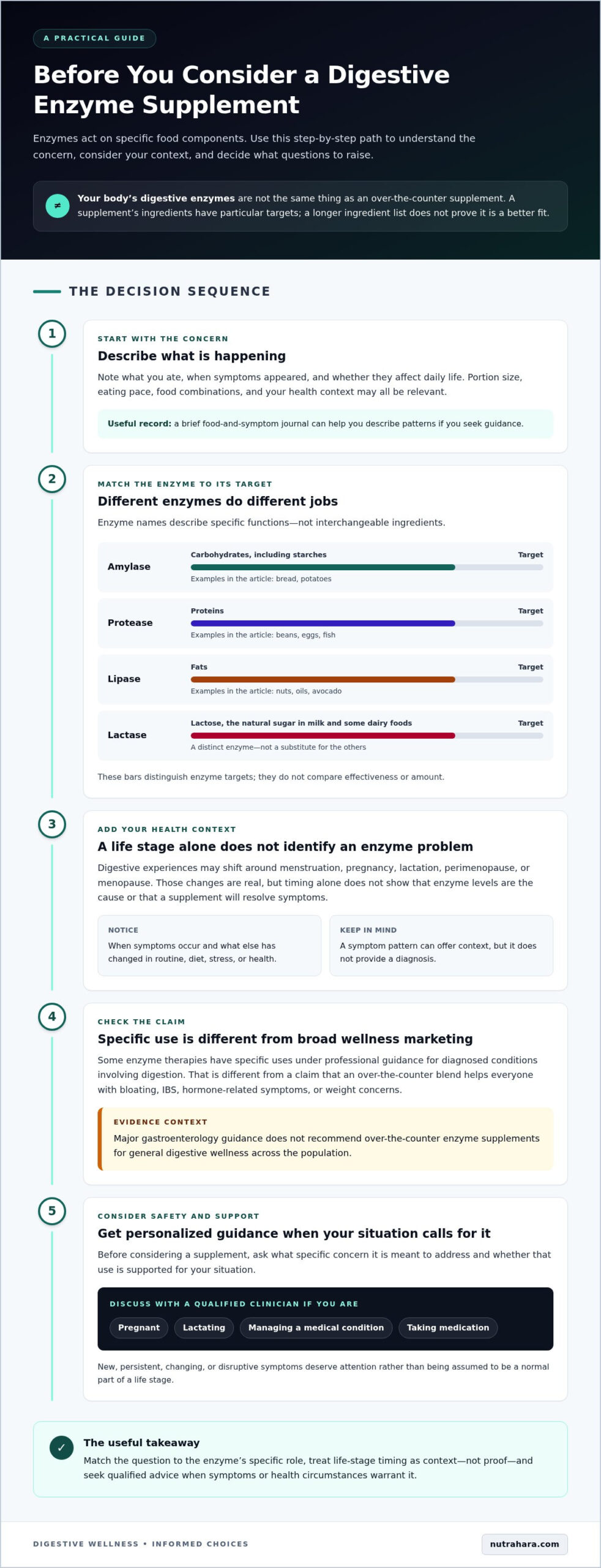
These names describe different enzyme functions, not interchangeable ingredients. Amylase helps digest carbohydrates, including starches, into smaller sugar units. Protease helps break proteins into smaller peptides and amino acids. Lipase helps break fats into components the body can absorb. Because meals contain a mix of nutrients, digestion involves more than one enzyme acting on a single kind of food.
- Amylase: Acts on carbohydrates such as starches found in foods like bread or potatoes.
- Protease: Acts on proteins found in foods such as beans, eggs, and fish.
- Lipase: Acts on fats present in foods such as nuts, oils, and avocado.
Lactase is another distinct enzyme. It helps digest lactose, the natural sugar in milk and some dairy foods. It isn’t a substitute for amylase, protease, or lipase; each enzyme has a different target.
As a practical first step, note what you ate and when symptoms appeared instead of assuming one enzyme explains them. Portion size, eating pace, food combinations, and your individual health context may all be relevant. A brief food and symptom journal can help you describe patterns if you seek guidance. Knowing the roles of different enzymes also makes it easier to read supplement labels without treating a longer ingredient list as proof that a product is a better fit.
Digestive Enzymes for Women: What Life Stage Can, and Cannot, Tell You
Being a woman, by itself, doesn’t establish a need for enzyme supplements. Enzymes have specific roles in digestion, but a claim that women need extra enzymes because of sex, hormones, or age is a separate claim that needs evidence of its own. Enzymes help break down particular food components; it has not been established that women as a group need over-the-counter enzyme supplements to support digestion.
That distinction can be useful during life changes. Some women notice digestive patterns shift around menstruation, pregnancy, lactation, perimenopause, or menopause. Those experiences are real, but they don’t show that enzyme levels are the cause or that supplements will resolve symptoms. Changes in routine, diet, stress, health conditions, and other factors may also play a role. When symptoms occur can offer context, but it does not provide a diagnosis.
Can hormones or life stages affect digestive experiences?
Hormonal shifts may coincide with changes in bowel habits or digestive comfort, but experiences vary. Pregnancy and postpartum life can bring changes in eating patterns, activity, and daily routines. Menopause can overlap with other changes in health and lifestyle. None of these stages, on its own, identifies an enzyme problem. Note when symptoms occur, what else has changed, and whether they affect your daily life.
If symptoms are new, persistent, or disruptive, discuss them with a qualified clinician instead of assuming they are a normal part of a life stage. This is particularly useful if symptoms are changing or you’re considering a supplement alongside other health needs. Notes on timing, meals, and symptoms can make that conversation more specific.
What does the evidence say about enzyme supplements?
Some enzyme therapies have specific uses under professional guidance for diagnosed conditions involving digestion. That differs from broad wellness marketing that suggests an over-the-counter blend will help everyone with bloating, IBS, hormone-related symptoms, or weight concerns. Major gastroenterology guidance does not recommend over-the-counter enzyme supplements for general digestive wellness across the population. A discussion of Digestive Enzyme Supplements also highlights why claims and evidence deserve careful attention.
Before considering a supplement, ask what specific concern it is meant to address and whether that use is supported for your situation. Take your life stage and health context into account, and seek personalized professional guidance if you’re pregnant, lactating, managing a medical condition, or taking medication. A product being available or labeled for women does not, by itself, show that it is appropriate for you.
Digestive enzymes for women are not a separate need simply because the person considering them is female. The more useful question is whether a specific enzyme has a relevant role in a specific, understood context. Keeping that in mind can help you respond to digestive changes with curiosity and care, without blaming yourself or rushing toward a one-size-fits-all answer.
Digestive Enzymes vs. Other Gut-Health Approaches: Compare the Purpose
Different approaches serve different purposes. A supplement, everyday eating habits, and a clinician’s assessment aren’t competing answers to the same question, and no single option suits every symptom. Use the comparison below to understand what each may contribute and where its limits lie.
| Approach | Purpose | Limit |
|---|---|---|
| Enzyme supplements | Provide specific enzymes that act on particular food components. | They aren’t a universal response to digestive symptoms, and a broad blend may not address the cause of a concern. |
| Food-based habits | Support regular nourishment and help you notice how eating patterns relate to your comfort. | Routine changes can’t diagnose or resolve every underlying cause. |
| Clinician assessment | Help evaluate symptoms in the context of your health, medications, and life stage. | It takes an individualized look; general online advice can’t replace that assessment. |
How are enzymes different from probiotics?
Enzymes help break down food components. Probiotics are live microorganisms. The terms describe different things with different functions, so probiotics aren’t a substitute for enzymes, and enzymes aren’t a substitute for probiotics. Neither category is automatically necessary for every woman. Before choosing a supplement, consider the question you’re trying to answer instead of assuming that products described as supporting “gut health” are interchangeable.
When is a food-first or clinical approach more appropriate?
For a practical starting point, take time for meals and stay hydrated in a way that fits your needs. Notice whether symptoms seem to follow particular foods, meal timing, or changes in your routine. A brief symptom diary can help organize your observations for you and a clinician, but it can’t identify a diagnosis on its own.
Seek qualified evaluation instead of self-treating indefinitely if symptoms persist, feel severe, or concern you. This applies whether you’re menstruating, pregnant, lactating, or going through menopause; life stage alone doesn’t explain every digestive change. Bring notes about what you experience and when to help make the conversation more useful.
Claims about digestive enzymes for women can also blur into claims about weight loss. Enzymes aren’t a weight-loss shortcut, and a supplement should not replace sustainable habits such as balanced meals, movement you enjoy, and restorative practices like yoga or meditation. Choose an approach based on your specific concern, not on a promise that one product can do everything.
How to Consider Digestive Enzyme Supplements Safely
Start with the concern, not the bottle. A supplement may be unnecessary, may not match your symptoms, or may need professional review in light of your health and medications. Use this sequence to make a more deliberate decision:
- Define the concern: Describe what you’re experiencing, when it happens, and how it affects daily life.
- Review your context: Consider your life stage, health conditions, medicines, and any other supplements you use.
- Seek qualified advice: Discuss a possible supplement with a clinician or pharmacist when your circumstances call for personalized guidance.
- Reassess: If you and a qualified professional decide to try it, follow the label and review whether it remains appropriate.
What should you consider before trying an enzyme supplement?
Before speaking with a clinician or pharmacist, write down your symptoms, when they occur, relevant meals, and any changes in your health or routine. A clear account keeps the discussion focused on your experience rather than a broad product claim. If you’re pregnant or lactating, have a medical condition, or take medication, seek personalized advice before starting a supplement. These factors can affect whether an ingredient is suitable or whether it might interact with your care.
Read the full ingredient label, including other active and inactive ingredients, and follow the product directions. “Natural” doesn’t mean risk-free, and a label can’t establish that a product is right for you. In the United States, dietary supplements are regulated as a category of food and aren’t FDA-approved for safety and effectiveness before they’re marketed. If you experience a concerning reaction, stop using the supplement and seek advice from a qualified professional.
What everyday habits support digestive wellness?
Simple routines can support overall well-being without promising to treat a symptom. When possible, sit down for meals, slow your pace, and pay attention to hunger and fullness. Drink fluids regularly in a way that suits your health needs. Gentle movement, such as a walk after a meal if comfortable, can fit naturally into an active routine. Yoga and meditation may support relaxation and mindful habits, but they aren’t enzyme therapies.
Keep brief notes on meals, symptoms, sleep, stress, and activity to help you notice patterns over time. Look for useful observations rather than proof that one food or life-stage change is the cause. Avoid eliminating whole food groups based only on a diary; restrictive changes can make balanced nourishment harder and may obscure what’s happening. If symptoms persist or interfere with daily life, take your notes to a qualified clinician instead of continuing to self-treat.
For a broader perspective on thoughtful supplement choices, explore Nutrahara’s women’s wellness supplements. The same steady approach applies to digestive enzymes for women: start with your needs, consider your full health context, and make changes with informed guidance.
A More Empowered Approach to Women’s Digestive Wellness
Digestive symptoms deserve curiosity, not self-blame. They don’t mean you’ve failed at eating well or need to find a perfect routine. Your body’s needs can shift across menstruation, pregnancy, lactation, perimenopause, and menopause, and one person’s experience won’t necessarily explain another’s. A thoughtful next step is to observe what’s happening and respond with patience instead of reaching for a quick fix.
How can women build sustainable wellness routines?
Choose manageable practices that fit your real life, including your energy, schedule, health, and life stage. Your routine might include making time for meals, choosing movement you enjoy, or protecting a regular wind-down period. Yoga and meditation are optional ways to bring mindful movement or calm into your day. They don’t need to be elaborate to feel worthwhile, and they aren’t treatments for digestive symptoms.
Consistency matters more than perfection. If a habit is hard to maintain, make it smaller or adapt it. A brief stretch after a long day or a few quiet breaths before a meal may feel more realistic than a complete lifestyle overhaul. Let your routine support confidence and well-being, rather than become another standard you feel you must meet.
When should you seek personalized guidance?
Consider speaking with a qualified clinician if digestive symptoms persist, worsen, or interfere with daily activities. Pregnancy and lactation are also reasons to seek individualized guidance before using supplements, since general wellness advice can’t determine what’s appropriate for your specific circumstances. You deserve support that considers the whole picture, not just one symptom or ingredient.
Keep a simple record to help you prepare: note when symptoms occur, relevant meals or routine changes, and how symptoms affect you. Use those observations to start a conversation, not to diagnose yourself or impose restrictive rules. If you’re considering digestive enzymes for women, let the specific reason, your health context, and qualified advice guide the decision.
A gentle checklist can make the next step feel manageable:
- Observe: Notice patterns in symptoms, meals, routines, and life-stage changes.
- Support: Choose nourishing habits and movement that feel sustainable for you.
- Seek guidance: Ask a qualified professional for help when symptoms persist or supplement questions involve pregnancy, lactation, a health condition, or medication.
Rather than comparing your experience with someone else’s, use your own observations to decide what support may be useful. A note about when symptoms arise or what has changed in your routine can be a practical starting point for a conversation with a qualified professional.
Nutrahara’s approach to women’s wellness draws on Ayurvedic principles alongside modern nutritional research as general wellness context, not as evidence that digestive enzymes produce a particular result. Let your own needs lead, and consider Nutrahara’s broader wellness perspective as one part of a personal, informed health journey.
Let Your Next Step Begin With Self-Trust
Your digestive wellness doesn’t need to follow someone else’s formula. Give yourself room to notice what your body is communicating, make thoughtful choices, and seek personalized guidance when you need it. If you’re considering digestive enzymes for women, let a specific concern and your individual health context guide the conversation, not pressure to try every new wellness trend.
Small, sustainable habits can be a meaningful foundation: nourish yourself consistently, choose movement that feels good, and make space for rest. Yoga or meditation may help you build moments of mindful calm if they suit your routine. Progress doesn’t have to be perfect to count. Confidence can grow as you learn what supports your well-being over time.
Nutrahara’s women’s wellness supplements focus on natural, clean ingredients. Explore that wider approach to self-care with Nutrahara’s women’s wellness approach.
Frequently Asked Questions
What do digestive enzymes do in the body?
Digestive enzymes help the body process food so nutrients can be absorbed. Your body makes these enzymes naturally: amylase acts on carbohydrates, protease on proteins, and lipase on fats. They work as part of a larger digestive process, not as a stand-alone fix. Occasional digestive discomfort alone doesn’t show that you need a supplement; consider the pattern and context before deciding what to do next.
Are digestive enzymes safe for women during pregnancy or breastfeeding?
There isn’t one safety answer for every pregnant or breastfeeding person. Suitability depends on the product’s specific ingredients and your health circumstances, so don’t assume “natural” means risk-free. Before using an enzyme supplement, review the label and discuss it with a qualified healthcare professional who knows your pregnancy or lactation context. Seek guidance for persistent or concerning symptoms rather than relying on a supplement to manage them.
Can digestive enzymes help with bloating?
Bloating can have different causes, and the symptom alone doesn’t establish that enzymes are needed. A specific enzyme may have a role in digesting a particular food component, but that doesn’t support a broad promise to relieve bloating. Notice whether the sensation follows a certain meal, eating pace, or routine change. If it persists, worsens, becomes painful, or disrupts daily activities, seek qualified advice.
Do women need digestive enzyme supplements as they get older?
No. Age or gender alone doesn’t establish a need for digestive enzymes for women. If your digestion changes with age or around menopause, consider the full picture instead of assuming a supplement is the answer. Note when the change began, any new medications or health concerns, and how symptoms affect daily life. A qualified clinician can help consider these details and whether further evaluation is appropriate.
What is the difference between digestive enzymes and probiotics?
Enzymes help break down food components, while probiotics are live microorganisms. They have different roles and aren’t interchangeable, so choosing one doesn’t automatically meet the purpose of the other. Neither type of supplement is essential for every person. For example, a product labeled for “gut health” may contain one category or the other, so check the ingredient panel and consider what specific need you’re trying to address.
Can yoga or meditation improve digestion?
Yoga and meditation can support a mindful wellness routine, but they aren’t treatments for digestive conditions or ways to increase enzyme activity. You might use gentle movement to stay active or take a few quiet breaths before eating to slow down and focus on your meal. Choose practices that feel comfortable for your body. If symptoms continue or interfere with everyday activities, seek qualified guidance rather than relying on these practices alone.
When should I talk to a healthcare professional about digestive symptoms?
Seek personalized advice if symptoms persist, worsen, recur, or interfere with everyday life. A clinician can consider your health history, medicines, eating patterns, and life stage instead of assuming one cause. It’s also wise to discuss a planned supplement if you’re pregnant, breastfeeding, managing a health condition, or taking medication. Bring notes about symptom timing and recent changes to help make the conversation more useful.
Disclaimer
This article is not a substitute for medical advice. Please consult a healthcare professional before starting any supplement, especially if pregnant, nursing, taking medication, or managing health conditions.