What if supporting collagen involves more than adding a powder to a drink? Collagen supplements provide collagen peptides, while collagen itself helps give structure to skin and connective tissues. They’re one option to consider, not a substitute for a balanced approach to wellness.
It’s understandable to want clear guidance when changes in skin, nails, or joint comfort shape how you feel in your body. The useful question isn’t simply whether collagen can help, but what it does, how supplements compare with other ways to support collagen, and what daily amounts mean in practical terms.
This guide explains collagen’s role, the difference between collagen peptides and amino acids, and how to think about suggested serving amounts. You’ll also find ways to support overall wellbeing through nourishing habits and movement, including yoga and meditation, so you can make choices that fit your health goals and daily routine. One woman’s real-life account: “I compare options and choose what suits me.”
Key Takeaways
- Understand how collagen supports skin and connective tissues, and what research suggests about potential benefits.
- Explore everyday ways to support collagen production alongside supplements as it changes with age.
- Learn how collagen peptides relate to protein and amino acids when comparing supplement options.
- Use the article’s daily-amount guidance to make sense of serving recommendations and choose an approach that fits your routine.
Collagen Benefits: What Does Collagen Do For You?
Collagen is a structural protein associated with skin, hair, nails, bones, and joints. Research explores whether collagen supplements may support some of these tissues.
Claimed Benefits Across the Body
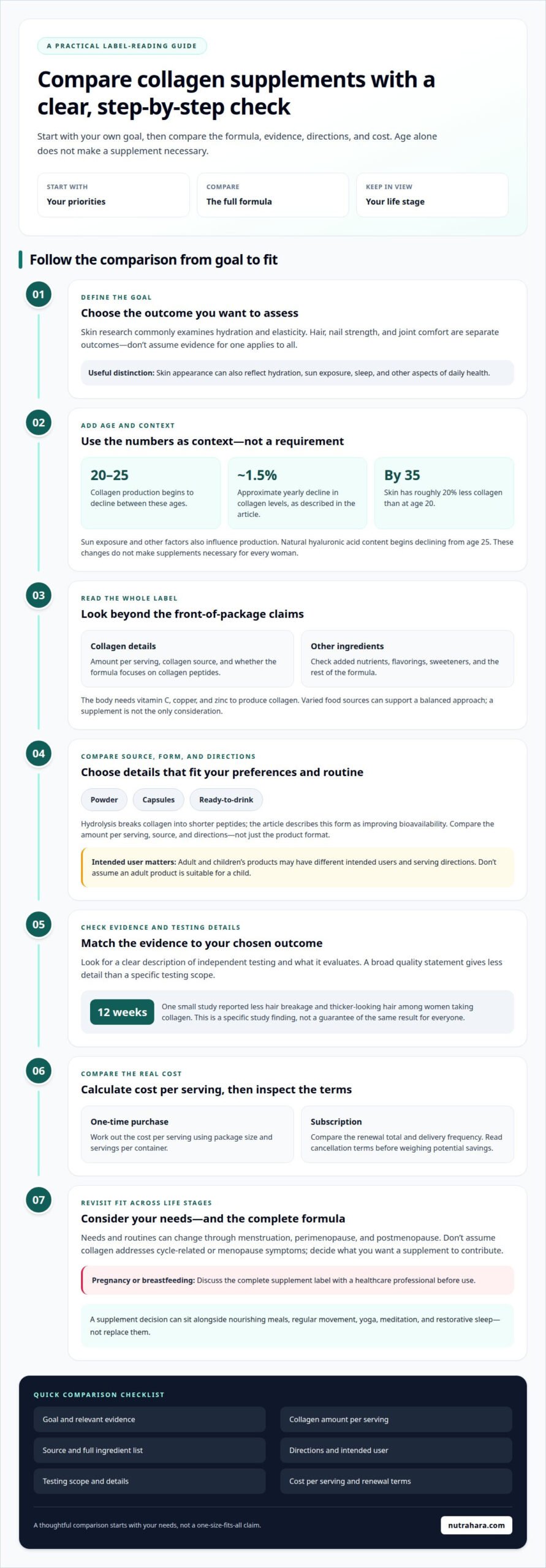
Type I and Type III collagen make up 90% of hair, skin, and nails; collagen accounts for about three-quarters of skin composition. These figures describe tissue structure, not a promise that supplements will change appearance. Proposed benefits include supporting skin, nails, bones, and joints. Compare a supplement’s stated purpose with your priority, rather than assuming every product addresses every concern.
Evidence for Supplement Effectiveness
According to the U.S. Environmental Protection Agency, eight studies used collagen hydrolysate at 2.5-10 g/day for 8-24 weeks to treat several skin conditions. One study found faster nail growth and fewer broken or chipped nails after 4 weeks of daily collagen supplements among women. Tissue structure alone doesn’t prove a supplement will change appearance. Read ingredient and allergen information. If pregnant, lactating, taking medication, or managing a condition, discuss use with a qualified health professional.
Possible Effects on Joints and Muscles
For joint support, studies suggest daily collagen supplementation may improve osteoarthritis pain and joint function after 3 to 5 months. Collagen is a protein, but it isn’t a replacement for strength training or balanced nutrition. In a small study, men taking collagen peptides during a 12-week strength-training program gained more muscle mass and strength than those who did not. That result concerns men, so it doesn’t establish the same outcome for women.
Timeline for Possible Benefits
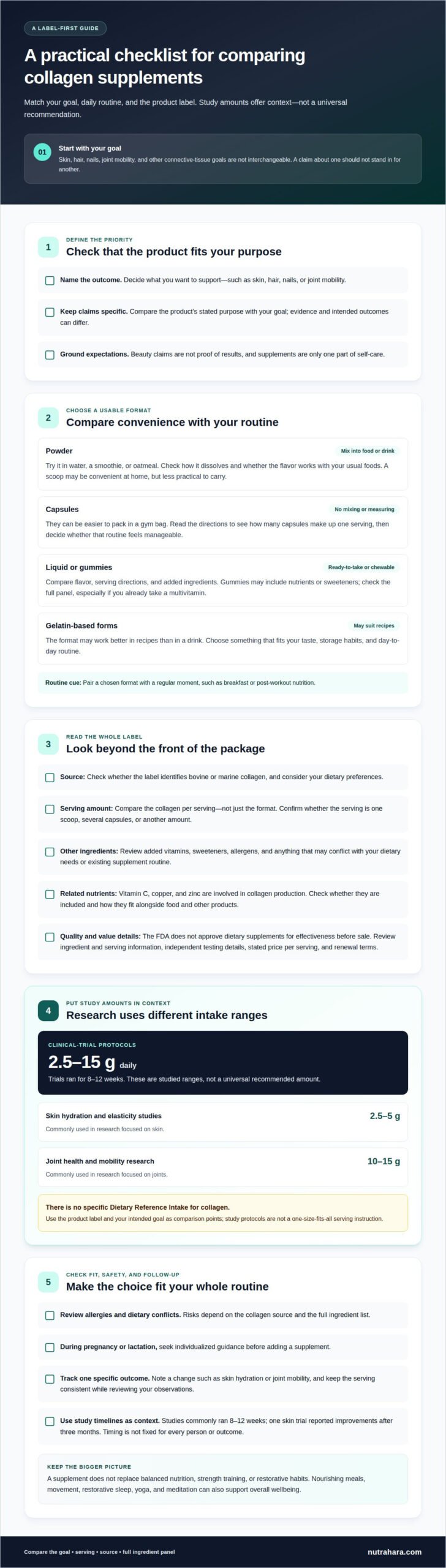
Timing depends on the outcome being studied. Studies suggest skin health or joint pain may improve in 8 to 12 weeks, while bone-health changes may take a year or more of daily use. These are different measures, so don’t judge a bone-related goal by the same timeline as skin. If tracking your response, choose one priority and note changes consistently alongside your usual routine.
Are supplements the only way to increase collagen?
No. Food and lifestyle habits support overall nutrition, while collagen production changes with age. Supplements are one option, not the only approach.
Age-Related Changes in Collagen Production
The body’s collagen production begins to decline in a person’s 20s. This gradual change may be relevant across menstruating, pre-menopausal, and post-menopausal life stages, but age alone doesn’t determine what support you need. Consider your personal priorities, such as skin care or maintaining an active routine, alongside nourishing food and regular movement.
Comparing Collagen Peptides, Gelatin, and Vegan Boosters
Collagen peptides are collagen-derived ingredients commonly sold as powders, which may be flavored or unflavored. The U.S. Government Publishing Office describes gelatin as collagen converted into a soluble form through combination with water. Vegan boosters don’t contain animal collagen; they provide nutrients intended to support the body’s own production. Compare ingredients and formats with your dietary preferences.
Food choices can support balanced nutrition. Include protein sources such as eggs, beans, or fish, along with vitamin C foods such as peppers, berries, or citrus. To build movement into your routine, pair a yoga session with a brief meditation afterward: sit comfortably and focus on each breath.
In the United States, dietary supplements are not regulated as drugs, so don’t assume a supplement has FDA approval to treat a condition. Review its ingredients and intended use.
To consider possible interactions, review the full formula alongside your medication and supplement list. A pharmacist can help assess ingredients, especially in combination formulas.
Collagen peptide supplements and amino acids
Collagen peptides are short chains of amino acids derived from collagen. Understanding their composition, processing, and digestion can help you assess what a serving contributes.
Amino Acids in Collagen Peptides
Amino acids are the building blocks of protein, and collagen peptides supply them in a collagen-derived pattern. A listed 14-gram serving of collagen peptide powder contains 12 grams of protein and 50 calories. Those figures describe one serving, not a complete picture of your daily protein intake. Compare the serving information with other protein foods in your meals, such as eggs, beans, or fish.
Collagen can contribute protein, but it shouldn’t automatically replace varied protein sources. Consider your overall eating pattern, especially if you exercise regularly or have specific nutritional needs.
How Hydrolysis Produces Collagen Peptides
Hydrolysis breaks larger collagen proteins into smaller peptide chains. That’s why a label may say “collagen peptides” or “hydrolyzed collagen.” The ingredient remains collagen-derived protein; hydrolysis describes its form, not a different food source. When comparing powders, check the ingredient name and serving information together instead of relying on front-label language alone.
For example, a powder listing collagen peptides as its ingredient makes the source easy to identify. Other ingredients can change the overall formula, so review the full label if you want a plain collagen option or need to avoid particular ingredients.
Collagen Peptide Absorption
Digestion breaks dietary proteins into amino acids and smaller peptides, which the body absorbs through the digestive tract. Hydrolysis prepares collagen as smaller chains before consumption, but it doesn’t mean every peptide travels unchanged to the skin, joints, or another target. The body uses absorbed building blocks according to its needs.
For a practical comparison, note the serving size, protein amount, and additional ingredients. Then add the powder to a meal or drink you already enjoy, such as a smoothie after strength training. This can make it easier to use consistently without treating a supplement as a substitute for balanced meals.
Recommended daily collagen amounts
There’s no single recommended amount for every woman. Collagen has no specific Dietary Reference Intake because the body produces it, so serving guidance varies by product and purpose.
Adults can safely consume between 2.5 and 15 grams of collagen per day. Many people take 1 to 2 tablespoons of collagen powder per day, but tablespoons measure volume, not weight. Check the product label for its serving size and collagen amount. A comparison table lists 3 Tbsp as the recommended daily amount for a collagen-peptides-with-hyaluronic-acid-and-vitamin-C product. That product-specific serving shouldn’t be treated as a universal target.
For a practical routine, follow the serving directions on the product you choose. If you use powder, stir it into a familiar drink or breakfast, such as a smoothie or oatmeal. Pairing it with an existing habit, like preparing breakfast or finishing a yoga session, can make daily use easier to remember. Keep the serving consistent as you assess whether it suits your routine.
Dosage and timing depend on the goal being studied. Research suggests possible skin-health or joint-pain effects may appear in 8 to 12 weeks, while bone-health changes may take a year or more of daily use. These timelines vary by outcome; they don’t establish a guaranteed result or a universal dose. Follow the label, and consider your full diet and any other supplements you take.
Before adding a collagen product to an established supplement routine, compare its serving with your other products. A simple note in your meal planner can help you track daily use and avoid accidentally doubling a similar ingredient. Explore collagen supplement options to find a format that fits your everyday wellness routine.

Nutrahara: Women’s Health Supplements
Nutrahara offers Women’s Health Supplements for women considering nutritional support as part of their broader wellbeing routine. Priorities can differ across menstruation, pregnancy, lactation, perimenopause, and post-menopause. Some women may focus on energy or sleep, while others explore support for hormonal balance. These concerns are personal, so choose products by their ingredients and intended use rather than expecting one supplement to address every need.
Nutrahara’s formulations combine principles of Ayurveda with modern nutritional research. For women balancing work, exercise, family life, or changing routines, supplements can be considered alongside nourishing meals, yoga, meditation, and rest. They don’t replace these daily foundations or individualized care during pregnancy, lactation, or other health circumstances.
If women’s wellness is part of your current health journey, explore Nutrahara’s supplements as one possible addition to your routine. Contact Nutrahara to discuss its Women’s Health Supplements.
Choose a Routine That Fits Your Life
Make your wellness goal practical. Before choosing collagen supplements, decide what matters most: a format you’ll enjoy, ingredients that fit your preferences, or a routine that feels easy to maintain. A clear priority makes product information easier to assess and helps you avoid adding something simply because it’s popular.
Consider how a new habit would fit around your meals, exercise, and rest. Your needs may shift through different life stages, so leave room to reassess what feels useful. A steady, thoughtful approach can build confidence in your choices without making one product the measure of your wellbeing.
If you’d like to explore your next step, contact Nutrahara to discuss collagen. Keep building a wellness routine that feels considered, sustainable, and truly your own.
Frequently Asked Questions
How does it work?
After you consume collagen, digestion breaks it down, and your body uses its components as needed. That process doesn’t direct them to a particular area, such as your skin or knees. Collagen supplements are one source of protein in your overall diet, not a targeted treatment. Keep balanced meals and regular exercise at the center of your routine.
Is taking collagen every day good for you?
Daily use may suit some people’s routines, but it isn’t essential for everyone. Follow the serving directions and consider your overall diet, health needs, and other supplements. If you’re pregnant, lactating, managing a health condition, or taking medication, discuss the ingredients with a qualified health professional. Treat collagen as one possible addition, not a replacement for nourishing meals or movement.
Best Collagen Products: Which Type Should You Choose?
Choose a type based on your dietary preferences, ingredient needs, and preferred format. Collagen peptides suit those who prefer a powder, while gelatin works in recipes where its texture fits. Vegan boosters contain no animal collagen and instead provide nutrients intended to support the body’s own production. Compare ingredients and serving directions, then choose a format that fits your routine.
Got Collagen Questions?
Start by identifying what you want to clarify: ingredients, serving directions, dietary fit, or how a product fits your routine. For example, note whether you want to know if a formula includes ingredients you already take. Clear, specific questions make product information easier to understand. For questions about Nutrahara’s offerings, contact Nutrahara and describe what you’re looking for.
Is there such a thing as too much collagen powder?
Taking more than a product’s serving directions can raise your overall intake without showing that the extra amount is useful. Measure powder according to its label instead of estimating by eye, and account for collagen in other products you use. If you have specific dietary or health needs, discuss the full ingredient list with a qualified health professional before adding another product.
What are collagen supplements, and what types are available?
Collagen supplements provide collagen or collagen-derived ingredients. Common formats include powders and capsules, with formulas based on collagen peptides or combined with other ingredients. Gelatin is another collagen-derived form used in foods, while vegan boosters don’t provide animal collagen. Check the ingredient list and serving directions to understand what a specific product contains.
Disclaimer
This article is not a substitute for medical advice. Please consult a healthcare professional before starting any supplement, especially if pregnant, nursing, taking medication, or managing health conditions.