

Categories
Articles

Chondroitin Benefits for Female Athletes: Evidence, Uses, and Safety

Could a joint supplement studied for arthritis meaningfully support your training, or is it being asked to do more than the evidence can show? That’s the central question behind chondroitin benefits for female athletes. If you run, lift, cycle, or practice yoga, it’s understandable to want support for comfortable movement while sorting confident supplement claims from research that applies to active women.

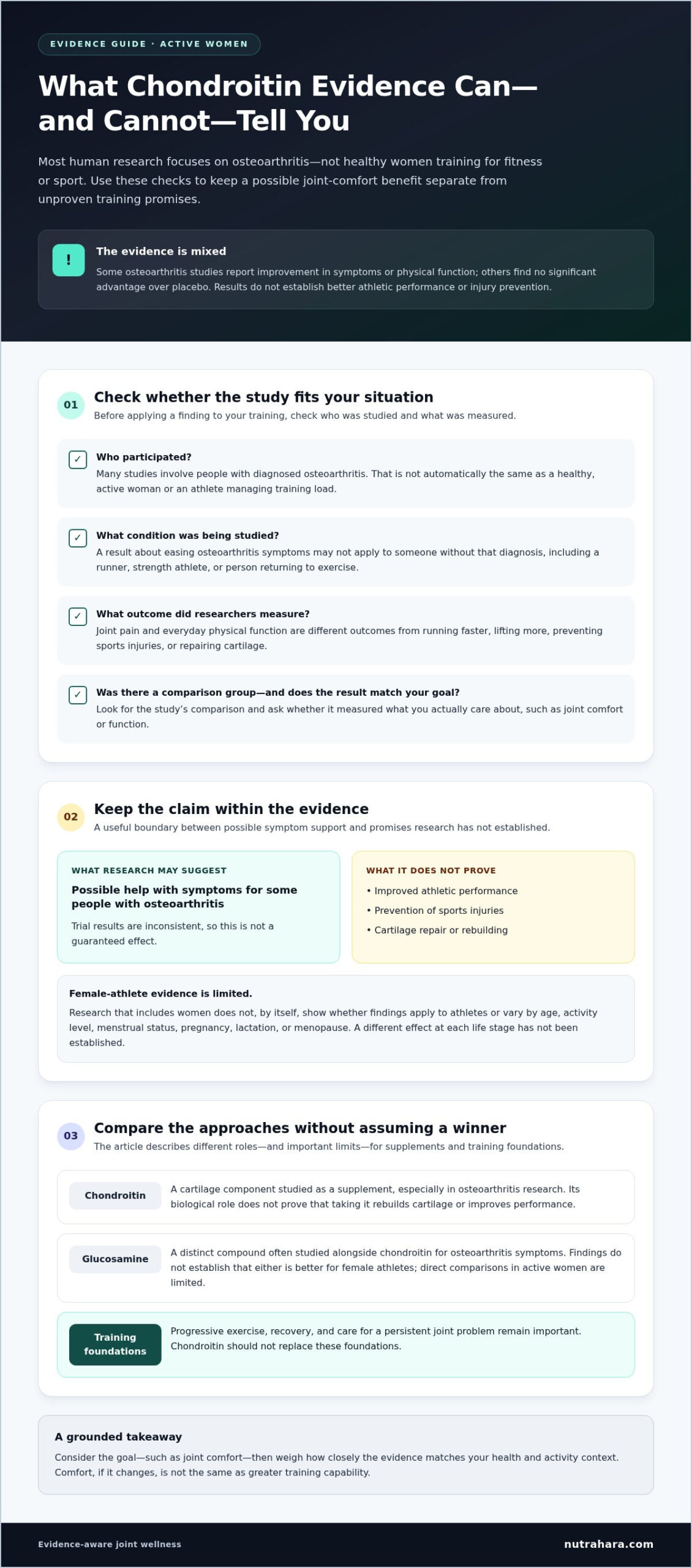
Research on chondroitin and osteoarthritis has mixed results, and studies focused specifically on female athletes are limited. Chondroitin isn’t a proven performance booster or injury-prevention strategy. This guide explains what the evidence suggests about joint comfort and function, where it falls short, and how chondroitin compares with practical foundations such as gradual training, strength work, and recovery. You’ll also learn what to consider around pregnancy, lactation, and medication use, and how yoga or meditation can fit into a balanced wellness routine. The goal is a clearer, calmer way to decide what supports your long-term mobility.

Key Takeaways

  • Set a clear goal for considering chondroitin, such as joint comfort, and don’t treat it as a performance enhancer or injury-prevention strategy.
  • Assess how well research on osteoarthritis applies to your own training and life stage; evidence focused on female athletes is limited.
  • Compare chondroitin with glucosamine and foundational habits like progressive strength training and recovery before choosing an approach.
  • Use an evidence-aware process to consider chondroitin benefits for female athletes, including checking safety with a qualified professional if you’re pregnant, lactating, managing a health condition, or taking medication.
  • Build a sustainable joint-wellness routine with gradual training, appropriate recovery, and a gentle yoga or meditation practice.

What Is Chondroitin, and What Might It Mean for Female Athletes?

Chondroitin sulfate is a substance naturally present in cartilage, the firm, flexible tissue that helps cushion the ends of bones where they meet in a joint. It’s also commonly studied as an ingredient in joint-health supplements. That biological role provides context, but it doesn’t prove that taking chondroitin rebuilds cartilage or improves athletic performance.

How Chondroitin Relates to Cartilage and Joint Health

Cartilage helps joints move smoothly and absorb some of the forces involved in walking, running, lifting, and jumping. Chondroitin is one of its components; a general overview of its structure and biological context is available in Chondroitin sulfate. Researchers studying oral supplements often assess symptoms or physical function, especially in people with osteoarthritis. Those outcomes are different from proving that a supplement repairs cartilage, prevents sports injuries, or helps an athlete run faster or lift more.

That distinction matters. Feeling more comfortable during everyday movement, if it occurs, isn’t the same as becoming more capable in training. Chondroitin shouldn’t be treated as a substitute for progressive exercise, recovery, or care for a persistent joint problem.

Why Female Athletes Need Evidence That Fits Their Situation

Research involving osteoarthritis doesn’t automatically show what chondroitin may do for a healthy, active woman. The participants, health conditions, and outcomes in those studies may differ from the experiences of women who run, lift weights, cycle, dance, or practice yoga without diagnosed joint disease. Evidence specifically focused on female athletes remains limited, so broad claims about the chondroitin benefits for female athletes can get ahead of what research establishes.

Women aged 30 to 60 aren’t one uniform group. Menstrual cycles, pregnancy, lactation, perimenopause, and menopause can shape a person’s health context and the questions she brings to training or supplement decisions. That doesn’t mean chondroitin has a proven, different effect at each life stage. It means the available evidence needs to be interpreted with care, rather than assuming findings apply equally to everyone.

A useful question is whether the research matches your health and activity context. Consider whether a study looked at people like you and measured the outcome you care about, such as joint comfort or function. Keeping that distinction in mind helps separate a possible joint-health benefit from unproven promises about performance, injury prevention, or cartilage repair.

What Does Research Say About Chondroitin and Joint Comfort?

Most human research on chondroitin has focused on people with osteoarthritis, not healthy women training for fitness or sport. Studies commonly assess symptoms such as joint pain and measures of physical function. Some report improvement, while others find no significant advantage over placebo. These findings can inform questions about joint comfort, but they don’t establish that chondroitin boosts performance or prevents sports injuries.

Why Osteoarthritis Findings May Not Apply to Every Athlete

People with osteoarthritis have a diagnosed joint condition, and research may aim to ease symptoms or improve everyday function. A runner with no diagnosis, a strength athlete managing training load, and someone returning to exercise after a break have different starting points and goals. The National Center for Complementary and Integrative Health summarizes the research on glucosamine and chondroitin, including the mixed results from osteoarthritis trials.

That inconsistency matters. A change in pain or daily function in an osteoarthritis study isn’t proof of improved athletic performance, protection from injury, or cartilage repair. The most supported conclusion is that chondroitin may help some people with osteoarthritis symptoms, but trial results are inconsistent and don’t establish a benefit for healthy, active women.

What We Know About Female-Specific Evidence

Evidence directly focused on female athletes is limited. Research on osteoarthritis may include women, but that alone doesn’t show whether findings apply to athletes, or whether outcomes differ by age, activity level, menstrual status, pregnancy, lactation, or menopause. Unless a study reports these details and examines them, it can’t answer every woman’s situation.

When considering the chondroitin benefits for female athletes, look beyond a headline. Note who participated, whether they had osteoarthritis, what outcome researchers measured, and whether there was a comparison group. Then ask whether that outcome matches your goal. Joint comfort is not the same as greater speed, strength, or injury resistance. Careful reading supports informed choices without dismissing the possibility that future research may become more relevant to active women.

Chondroitin Compared With Other Joint-Support Approaches

Chondroitin and glucosamine are distinct compounds often studied together for osteoarthritis symptoms. The National Center for Complementary and Integrative Health’s resource on glucosamine and chondroitin describes research on both, but findings don’t establish that one is better for female athletes. Direct comparisons in active women are limited, so choosing between them based on an assumed performance or injury-prevention advantage isn’t evidence-led.

Approach Intended role Evidence population Important limitation
Chondroitin May support joint comfort or function Primarily people with osteoarthritis Results are mixed; athlete-specific benefits aren’t established
Glucosamine Studied for osteoarthritis symptoms, often alongside chondroitin Primarily people with osteoarthritis Combination research doesn’t prove it’s superior for athletes
Progressive training and strength work Build capacity for the demands of exercise Relevant to active people Training should suit your current ability and health
Recovery and clinical care Support recovery and address persistent or concerning symptoms Individual needs vary Supplements can’t replace appropriate assessment or care

Supplements Alongside Training and Recovery

A supplement isn’t a protective shield against training-related injury. Joint wellness is better approached as part of a broader routine: increase training demands gradually, include strength work suited to your activity, and make space for rest and sleep. If discomfort persists or affects daily movement, consider appropriate clinical care rather than relying on a supplement alone.

Mobility work can help you tune in to how your body feels, though it shouldn’t be framed as a substitute for strength training or recovery. Try a gentle yoga sequence, adapting or stopping movements that cause pain. A few quiet minutes of meditation or steady breathing can also offer a calming pause to notice tension and stress. These practices may support awareness and wellbeing, but they don’t guarantee joint protection.

To assess the chondroitin benefits for female athletes, compare the evidence for your goal with the foundations of your training routine. Nutrahara’s Joints & Knees Kit is a general joint-health option positioned to support joint health, knee mobility, and flexibility.

How Can Female Athletes Evaluate Chondroitin Safely?

A thoughtful decision starts with your goal and personal health context, not a promise on a supplement label. Use these steps to assess whether chondroitin is worth discussing as part of your wellness routine.

  • 1. Define your goal. Are you hoping to support everyday joint comfort, move more comfortably, or improve athletic performance? These are different outcomes, and evidence for one doesn’t establish benefits for the others.
  • 2. Review the evidence and label. Check whether research studied people like you and measured the outcome you care about. Read the supplement label for the specific ingredients and amounts, and compare those details with the research rather than assuming every product is equivalent.
  • 3. Consider your health circumstances. Pregnancy, breastfeeding, a medical condition, or medication use can affect whether a supplement is suitable for you. Discuss chondroitin and the full product label with a qualified healthcare professional who understands your circumstances.
  • 4. Reassess your decision. If you and your healthcare professional decide to try a supplement, agree on what you’ll monitor and when you’ll review whether it makes sense to continue. Don’t interpret changes in training performance as proof of a supplement effect without considering other factors, such as training load and recovery.

Pregnancy, Lactation, and Medication Considerations

If you’re pregnant, planning for pregnancy, or breastfeeding, seek individualized professional guidance before using chondroitin or another supplement. Don’t rely on general statements about safety to determine what’s right for you. The same careful approach applies if you take medication or manage a health condition: share the ingredient list and ask a healthcare professional to consider your specific situation. There’s no need to make a rushed decision.

The evidence around chondroitin benefits for female athletes doesn’t establish a universal choice for women across different ages, training goals, or life stages. A clear goal, careful label review, and personalized guidance can help you decide with confidence, without treating a supplement as a replacement for appropriate care.

For a separate supplement option as you explore women’s wellness, view Nutrahara’s premium collagen supplement.
Chondroitin Benefits for Female Athletes: Evidence, Uses, and Safety

A Balanced Joint-Wellness Plan for Active Women

Lasting mobility is supported by more than a single ingredient. A thoughtful plan brings together training that suits your current ability, recovery, and evidence-aware supplement choices. Your needs may shift with age, menstrual changes, pregnancy, lactation, or menopause, so let your circumstances guide the pace and support you choose.

Everyday Habits That Support Long-Term Mobility

Try this training tip: When adding distance, resistance, or intensity, change one aspect of your routine at a time and notice how your body responds. Include strength exercises that match your activity, and allow room for rest. If you’re returning after a break or adapting exercise around a health concern, a qualified professional can help you choose an appropriate starting point.

For a gentle pause, sit comfortably, relax your shoulders, and take a few slow breaths, letting the exhale feel unhurried. Or try a simple yoga pose that feels steady and comfortable, such as a supported seated stretch. There’s no need to push into discomfort. These practices can help you pay attention to your body and settle your mind; they aren’t treatments for joint problems.

Notice everyday changes, such as whether stairs, a walk, or your usual training feel different. A brief note about activity and comfort can help you describe patterns to a healthcare professional. It can’t diagnose the cause, and persistent or concerning symptoms deserve appropriate care.

Choosing a Supportive Next Step

Chondroitin research primarily concerns osteoarthritis, so consider whether that evidence fits your own goal and health circumstances. It doesn’t establish that chondroitin improves athletic performance or prevents injuries. If you’re considering any supplement, weigh the available evidence alongside your training habits and individualized health guidance.

Nutrahara’s Joints & Knees Kit is a general joint-health option positioned to support joint health, knee mobility, and flexibility. Nutrahara brings principles of ancient Ayurveda science together with modern nutritional research as part of its approach to women’s wellness.

The question of chondroitin benefits for female athletes has no one-size-fits-all answer. Let your goals, life stage, and the quality of evidence shape your next step, and continue building a routine that supports strength, recovery, and confidence over time.

Choose Joint Support That Fits Your Journey

Chondroitin may support joint comfort for some people with osteoarthritis, but research doesn’t establish the same benefits for healthy female athletes or prove improved performance or injury prevention. The most useful question is whether the evidence fits your goal and health circumstances. A sustainable approach also makes room for progressive training, strength, recovery, and appropriate professional guidance.

Pregnancy, lactation, medication use, and other health considerations deserve individualized advice before adding a supplement. Understanding the limits of the chondroitin benefits for female athletes can help you make a decision with confidence, not pressure. Nutrahara’s Joints & Knees Kit is a general option positioned to support joint health, knee mobility, and flexibility, drawing on an approach that combines Ayurvedic principles with modern nutritional research.

Explore Nutrahara’s approach to women’s wellness, and keep building a thoughtful routine that supports your strength and mobility over time. Your wellness journey is yours to shape, one informed choice at a time.

Frequently Asked Questions

Does chondroitin help female athletes with joint pain?

It may help some people with osteoarthritis symptoms, but evidence is mixed and doesn’t establish the same effect in female athletes. Most studies focus on people with osteoarthritis rather than healthy, active women. Research on chondroitin benefits for female athletes is limited, so pain relief can’t be promised. Persistent pain, swelling, or reduced movement deserves individualized professional guidance, rather than relying on a supplement alone.

Can chondroitin improve athletic performance or prevent sports injuries?

No reliable evidence establishes chondroitin as a way to improve athletic performance or prevent sports injuries. Research into joint symptoms doesn’t demonstrate benefits for speed, strength, endurance, or injury risk. If you’re working toward a performance goal, build training progressively and make recovery part of your plan. A supplement shouldn’t be treated as protection that allows you to train through pain or increase your workload without care.

Is chondroitin evidence for osteoarthritis relevant to healthy athletes?

It can offer context about symptoms or function in people with osteoarthritis, but it doesn’t directly answer whether chondroitin benefits healthy athletes. The populations and goals differ: a study may assess comfort during daily activities rather than performance during training. Consider who participated and what researchers measured. Without evidence directly relevant to active women, osteoarthritis findings shouldn’t be taken as proof of an athletic benefit.

Is chondroitin safe during pregnancy or breastfeeding?

There isn’t enough information here to assure you that chondroitin is safe during pregnancy or breastfeeding. If you’re pregnant, planning a pregnancy, or lactating, seek individualized guidance from a qualified healthcare professional before using it. Share the full supplement label, including other ingredients, so they can consider your circumstances. Avoid relying on broad claims or assumptions about safety during these life stages.

Can chondroitin be taken with glucosamine or other supplements?

Chondroitin and glucosamine are often studied together, but that doesn’t show that a combination is suitable for every person or more helpful for athletes. Other supplements can add ingredients and complicate a decision, especially if you take medication or manage a health condition. Review the complete labels with a qualified healthcare professional, who can consider your health context rather than making a general assumption about combining products.

How should an active woman decide whether to try chondroitin?

Start by defining your goal, such as joint comfort or mobility, and separate it from goals like performance or injury prevention. Review whether the evidence matches your health and activity context, then consider the product label and personal circumstances. Ask a qualified professional for guidance if you’re pregnant, breastfeeding, taking medication, or managing a condition. If you choose to try it, reassess your experience without replacing progressive training, recovery, or appropriate care.

Article by

Nutrahara Team

We are a dedicated collective of nutrition scientists and naturopaths at Nutrahara, committed to advancing women's health through the fusion of ancient Ayurveda science and cutting-edge nutrition research. Our mission is to empower you with clean, simple, and scientifically validated wellness solutions so you can live your healthiest life. Connect with us to stay updated on the latest developments in holistic women's health and nature-based research.

Disclaimer

This article is not a substitute for medical advice. Please consult a healthcare professional before starting any supplement, especially if pregnant, nursing, taking medication, or managing health conditions.

Categories
Articles

Best Knee Mobility Supplements: A Woman’s Holistic Guide

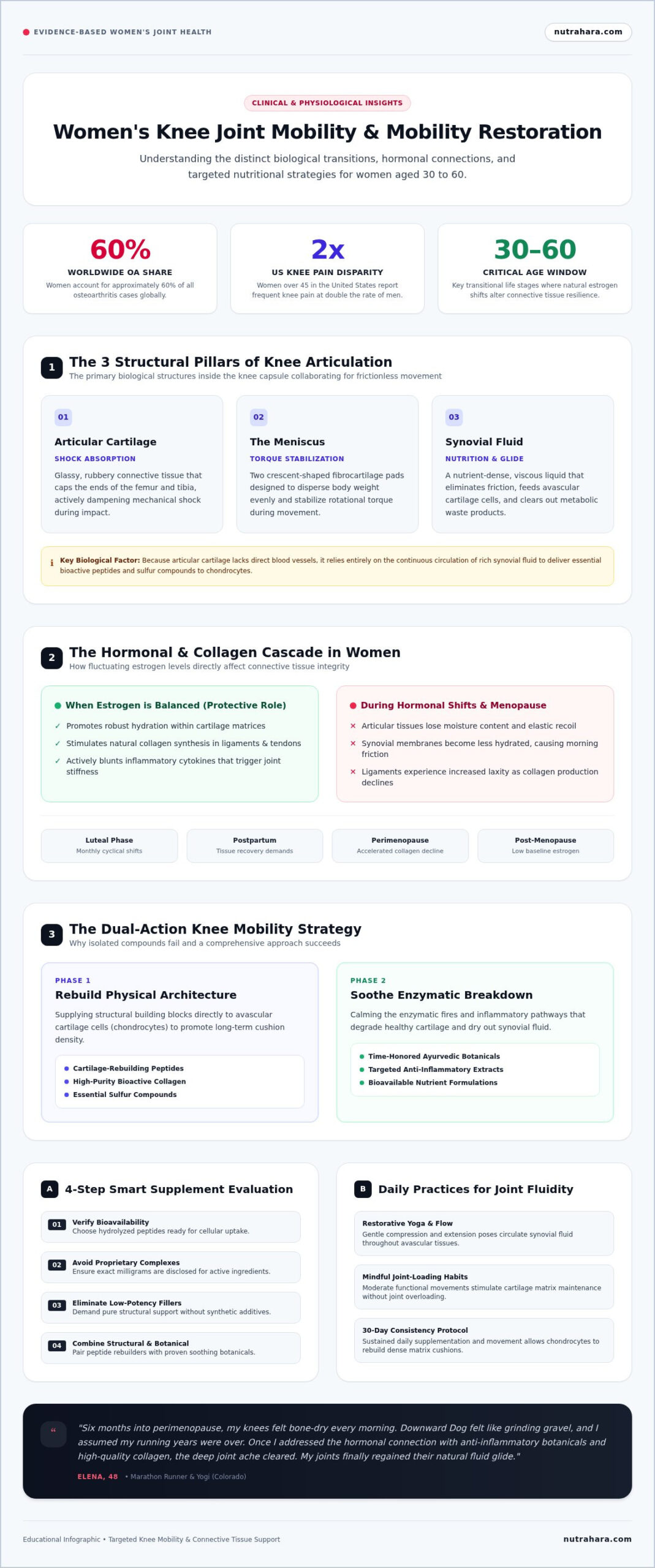
Women account for approximately 60% of all osteoarthritis cases worldwide, and in the United States, women over 45 report frequent knee pain at twice the rate of men. As estrogen levels naturally shift through your thirties, forties, and fifties, morning knee stiffness can disrupt your favorite yoga flow, morning run, or daily walking routine. When persistent joint discomfort suddenly interrupts an active, health-conscious life, your frustration is completely valid. Finding targeted, clean supplements for knee joint mobility shouldn’t feel like an exhausting search through confusing labels, proprietary complexes, and endless marketing hype.

Every woman’s body moves through continuous physiological transitions, from reproductive years and postpartum recovery to the transformative phases of perimenopause and post-menopause. Throughout these stages, fluctuating hormones directly impact connective tissue resilience, fluid retention, and systemic inflammation. When your knees creak during deep squats or feel tight when stepping out of bed, your body isn’t failing; it’s simply sending an intelligent biological invitation for deeper, more conscious nourishment.

Restoring lasting joint freedom requires more than a temporary fix. It demands a holistic approach that nourishes cartilage, replenishes synovial fluid, and harmonizes inflammation and hormones. In this comprehensive guide, you will discover evidence-based nutrients, time-honored Ayurvedic botanicals, and gentle daily habits designed to bring ease back to every bend, squat, and step. Let’s explore how to support your knees naturally so you can move with comfort, strength, and radiant confidence through every stage of life.

Key Takeaways

  • Understand the distinct biological shifts, from declining estrogen to reduced synovial fluid, that cause knee stiffness in women between 30 and 60.
  • Discover clinically proven supplements for knee joint mobility that combine cartilage-rebuilding peptides with traditional anti-inflammatory botanicals.
  • Learn a simple four-step label reading method to identify clean, bioavailable formulations while avoiding low-potency fillers.
  • Combine restorative yoga poses and mindful joint-loading habits with targeted supplementation to accelerate joint lubrication and physical confidence.
  • Follow an empowering 30-day holistic roadmap to restore knee flexibility, comfort, and fluid movement for lifelong physical vitality.

Understanding Knee Joint Mobility: Why Women Experience Stiffness First

Knee joint mobility is far more than simple flexibility; it represents the fluid, frictionless articulation of bone against bone, cushioned by articular cartilage and bathed in rich synovial fluid. When this internal lubrication diminishes, everyday transitions become uncomfortable reminders of structural friction. Morning knee stiffness, that tight feeling when your feet first touch the floor, signals reduced synovial viscosity, heightened inflammation, and subtle cartilage thinning. While conventional fitness advice often reduces knee challenges to mechanical wear and tear, women encounter biological shifts that alter connective tissue behavior long before mechanical breakdown occurs.

For women aged 30 to 60, joint changes frequently mirror systemic shifts rather than simple muscular fatigue. When you begin understanding knee joint mobility, it becomes clear why clinical research links early joint vulnerability directly to female physiology. Instead of accepting morning creakiness as an inevitable sign of aging, view it as an intelligent biological signal calling for targeted internal nourishment and proactive lifestyle care.

The Anatomy of Knee Mobility and Cartilage Cushioning

Inside the knee capsule, three primary structures collaborate to sustain effortless movement:

  • Articular Cartilage: A glassy, rubbery connective tissue that caps the ends of the femur and tibia, absorbing shock during impact.
  • The Meniscus: Two crescent-shaped fibrocartilage pads that disperse body weight and stabilize rotational torque.
  • Synovial Fluid: A nutrient-dense, viscous liquid that reduces friction, feeds avascular cartilage, and washes away metabolic debris.

Muscular knee tightness usually softens after a brief warm-up, but true capsule stiffness feels deeply set inside the joint. Because articular cartilage lacks its own blood vessels, it relies entirely on the ebb and flow of healthy synovial fluid for cellular nutrients. This biological reality highlights why targeted, high-purity supplements for knee joint mobility are critical to supplying the exact bioactive peptides and sulfur compounds your chondrocytes require to thrive.

Hormonal Shifts, Collagen Depletion, and Female Joint Health

Mainstream joint discussions often overlook how female hormones govern connective tissue integrity. Estrogen acts as a natural joint protector; it promotes cartilage hydration, stimulates collagen synthesis, and blunts inflammatory cytokines. As estrogen fluctuates during the luteal phase, postpartum recovery, and especially perimenopause and menopause, articular tissues lose moisture and elastic recoil.

During these life stages, reduced natural collagen production leaves ligaments more lax and synovial membranes less hydrated. Introducing targeted structural support like Nutrahara’s Premium Collagen Complex helps nourish structural peptides while your hormonal environment evolves.

Consider Elena, a 48-year-old marathon runner and dedicated yogi from Colorado. “Six months into perimenopause, my knees felt bone-dry every morning. Downward Dog felt like grinding gravel, and I assumed my running years were over,” she recalls. “Once I addressed the hormonal connection with anti-inflammatory botanicals and high-quality collagen, the deep joint ache cleared. My joints finally regained their natural fluid glide.”

Top Clinically Studied Supplements for Knee Joint Mobility

Restoring fluid articulation requires a dual-action strategy. You must rebuild the physical joint architecture while soothing the enzymatic fire that breaks down healthy cartilage. Isolated compounds rarely resolve complex knee stiffness on their own; true joint comfort emerges when targeted structural builders pair with bioavailable botanical extracts. By supplying chondrocytes with restorative building blocks and calming inflammatory pathways simultaneously, you create the precise internal conditions needed for smooth, springy knee extension.

When selecting evidence-backed supplements for knee joint mobility, look for synergistic formulas that work across both structural regeneration and cellular comfort.

Structural Builders: Collagen, Glucosamine, and Chondroitin

Articular cartilage relies on a dense matrix of collagen fibers to distribute mechanical force across the knee capsule. Hydrolyzed collagen peptides deliver short-chain amino acids, particularly glycine, proline, and hydroxyproline, which stimulate chondrocytes to synthesize fresh extracellular matrix. To replenish connective tissue elasticity and support tendon stability during your workouts, consider adding Nutrahara’s Premium Collagen Complex to your morning routine.

Pairing collagen with glucosamine sulfate and chondroitin reinforces cartilage hydration. Glucosamine sulfate provides essential sulfur groups required to produce glycosaminoglycans, which pull water directly into the joint capsule to cushion high-impact steps. While clinical trials consistently validate glucosamine sulfate for restoring space within the joint, the cheaper glucosamine hydrochloride variant lacks this sulfur donor mechanism and shows notably weaker clinical outcomes.

Botanical Soothers: Turmeric, Boswellia, and Ayurvedic Wisdom

Calming joint inflammation protects delicate new cartilage fibers from premature breakdown. Modern clinical trials confirm what ancient Ayurvedic texts documented centuries ago: traditional tree resins and roots offer profound relief for stiff joints. Curcumin, the primary polyphenol in turmeric root, inhibits the pro-inflammatory COX-2 enzyme and suppresses NF-kB transcription. However, raw turmeric exhibits poor intestinal uptake; combining curcumin with piperine, the active constituent in black pepper, elevates its bioavailability significantly.

Boswellia serrata gum resin works alongside turmeric by supplying boswellic acids (notably AKBA), which selectively inhibit the 5-LOX enzyme. This targeted botanical duo calms joint throbbing without disrupting digestive comfort.

Synergistic Micronutrients: Vitamin D3, Magnesium, and MSM

Knee articulation relies on the strength of the underlying subchondral bone plate. Vitamin D3 coordinates mineral deposition, while magnesium balances calcium turnover so bone spurs don’t agitate surrounding connective bands. Methylsulfonylmethane (MSM) supplies bioavailable organic sulfur, reinforcing the disulfide cross-links that give cartilage its flexible resilience.

Nutrient Primary Action Mobility Benefit
Hydrolyzed Collagen Peptides Stimulates cartilage matrix synthesis Restores joint shock absorption and rebound
Glucosamine Sulfate Rebuilds proteoglycans Enhances synovial fluid depth and lubrication
Turmeric & Boswellia Inhibits COX-2 and 5-LOX pathways Soothes deep stiffness and post-walk aches
MSM (Organic Sulfur) Strengthens disulfide collagen bonds Improves knee flexion range and soft tissue ease

If daily stress exacerbates your physical tension and aches, integrating an adaptogen like Nutrahara’s Ashwagandha with Black Pepper can help modulate systemic stress responses, supporting physical resilience from the inside out.

How to Choose and Evaluate Knee Mobility Supplements Wisely

Walking down the supplement aisle or scrolling online wellness shops can feel dizzying. Dozens of shiny bottles make identical promises of effortless movement, yet their labels reveal stark differences in quality and biological activity. Making an informed choice means looking beyond front-of-bottle claims. To find trustworthy supplements for knee joint mobility, use a reliable four-step vetting framework:

  • Confirm Clinical Forms: Ensure active compounds match the exact chemical forms proven in trials, such as glucosamine sulfate rather than cheaper salt variants.
  • Verify Botanical Standardization: Check that herbal extracts list confirmed percentages of active constituents, not just plain powdered root.
  • Demand Clean Formulation: Choose capsules free from synthetic binders, artificial colorings, magnesium stearate, and microcrystalline cellulose.
  • Require Rigorous Testing: Look for brands that manufacture in FDA-registered facilities adhering to strict Current Good Manufacturing Practices (CGMPs) with verified third-party testing.

Reading Labels: Active Dosages vs. Inactive Fillers

A transparent Supplement Facts panel details the exact milligrams of every active constituent. Many commercial brands use “proprietary joint complexes” to hide minuscule doses of costly botanicals behind cheap bulking agents. When evaluating formulas, confirm that clinical thresholds are met; for example, therapeutic trials generally use 5 to 10 grams of hydrolyzed collagen peptides and standardized turmeric extracts containing 95% curcuminoids.

Avoid products packed with artificial dyes (like titanium dioxide or FD&C Yellow) and unnecessary chemical lubricants. Selecting an elegant, all-in-one synergistic blend avoids supplement fatigue, saving you from swallowing seven different single-ingredient pills every morning.

Assessing Quality, Purity, and Bioavailability Standards

High milligram numbers mean little if your body cannot absorb them. Potent botanical compounds must survive digestion and cross the intestinal barrier into systemic circulation. For instance, pairing curcumin with standardized piperine (black pepper extract) enhances cellular uptake by up to 2,000%, ensuring active polyphenols actually reach stiff knee capsules.

The Conscious Woman’s Joint Supplement Checklist

Before adding any mobility supplement to your daily regimen, verify it passes these five quality marks:

  • Does the label disclose specific standardized extract percentages?
  • Is the formula 100% free from synthetic fillers, artificial coatings, and common allergens?
  • Does the product incorporate clinically proven bioavailability enhancers like black pepper?
  • Is it manufactured in a certified CGMP compliant, FDA-registered facility?
  • Does the company prioritize women’s distinct structural and hormonal health needs?

Prioritizing purity safeguards your overall wellness progression. When you feed your joints clean, thoughtfully extracted nutrients, you give your body the exact tools needed to rebuild flexibility from within.

Best Knee Mobility Supplements: A Woman's Holistic Guide

Holistic Daily Practices to Amplify Joint Mobility and Flexibility

Targeted supplements supply the raw materials your knees crave, but movement acts as the biological pump that drives those nutrients into avascular cartilage. When you compress and decompress articular tissue through gentle exercise, you flush stagnant metabolic waste and pull freshly synthesized synovial fluid deep into the capsule. Pairing clean supplements for knee joint mobility with mindful movement creates an unbeatable synergy, turning passive supplementation into active, vibrant tissue restoration.

Restorative Yoga and Movement for Knee Longevity

Traditional yoga postures create open joint space without harsh, compressive impact. Integrating specific asanas releases muscular tension along the kinetic chain, particularly tight quadriceps and hamstrings that pull the patella out of optimal alignment:

  • Supported Bridge Pose (Setu Bandha Sarvangasana): Place a yoga block under your sacrum to strengthen glutes and hamstrings while relieving patellar pressure.
  • Legs-Up-the-Wall (Viparita Karani): Inverting your legs for ten minutes drains pooling lymphatic fluid from the lower extremities, soothing end-of-day knee puffiness.
  • Gentle Cycling and Swimming: Non-weight-bearing rhythmic motions circulate synovial lubrication smoothly across the joint line.

When practicing yoga, always prioritize joint comfort over aesthetic shape. Place a folded blanket beneath your knees during tabletop poses, and avoid folding beyond ninety degrees if deep flexion creates acute pinching.

Mind-Body Alignment: Meditation, Sleep, and Stress Reduction

Emotional tension manifests physically as joint stiffness. Sustained psychological stress keeps cortisol elevated, which accelerates connective tissue breakdown, amplifies systemic inflammation, and lowers your physical pain threshold. Practicing mindful breathwork shifts your autonomic nervous system from sympathetic fight-or-flight into parasympathetic rest-and-digest.

Carve out five minutes before bed for a simple grounding meditation. Inhale slowly for four counts, hold for two, and exhale gently for six. This rhythmic cadence relaxes guarding muscles around your hips and knees. Deep, uninterrupted sleep is equally vital, as human growth hormone peaks during stage-three non-REM sleep to coordinate nocturnal cartilage repair.

Anti-Inflammatory Nutrition and Hydration Tips

Daily dietary choices amplify your internal joint nourishment. Hydrate consistently with electrolyte-infused water to maintain synovial fluid volume, and load your plate with dark berries, leafy greens, wild-caught salmon, and cold-pressed extra virgin olive oil. For a deeper look at balancing female physiology naturally, explore The Ultimate Guide to Women’s Wellness Supplements.

Sarah, a 52-year-old high school teacher and avid hiker from Oregon, transformed her physical confidence by pairing nutrition with mindful movement. “Last year, my knees felt stiff and swollen after standing all day in class. Squatting down to garden was out of the question,” she shares. “Once I started taking targeted joint nutrients and committed to ten minutes of evening restorative yoga, everything shifted. Last weekend, I completed an eight-mile trail hike completely free from morning aches.”

Ready to reclaim light, effortless movement in your daily routine? Explore Nutrahara’s natural wellness solutions to nourish your joints with pure, clinically inspired botanicals today.

Building Your Personalized Knee Mobility Protocol with Nutrahara

Reclaiming smooth, effortless knee mobility is an intentional progression rather than an overnight cure. By uniting modern nutritional research with time-tested Ayurvedic principles, you can construct a daily protocol that directly addresses cartilage renewal, joint hydration, and muscular balance. Nutrahara’s Joints & Knees Kit embodies this philosophy, providing a comprehensive multi-action system designed specifically to support joint health, enhance knee mobility, and increase full-body flexibility across every stage of female life.

Biological remodeling requires patience and consistency. While anti-inflammatory botanicals often begin soothing daily tension within two to four weeks, structural cartilage rebuilding typically matures over eight to twelve weeks. Embracing this timeline gives you the confidence to trust your body’s restorative rhythm.

The Power of Synergistic Herbal and Nutritional Formulations

Combining complementary botanical extracts creates biochemical synergy that single-ingredient options cannot match. When structural building blocks like collagen work in tandem with traditional herbs, your chondrocytes receive comprehensive matrix support alongside targeted enzymatic protection. Nutrahara crafts every formula with 100% clean, natural ingredients, completely free from artificial additives, synthetic fillers, or unnecessary binders.

Because physical strain frequently intertwines with nervous system stress, pairing structural care with an adaptogen like Nutrahara’s Ashwagandha with Black Pepper supports cellular recovery, deep rest, and full-body vitality.

Step-by-Step Daily Routine for Sustainable Knee Freedom

A structured daily routine transforms scientific principles into simple, empowering habits:

  • Morning Nourishment: Start your day with a large glass of filtered water and your core structural nutrients, such as hydrolyzed collagen peptides and glucosamine, to replenish cartilage stores as you begin moving.
  • Midday Articulation: Break up long periods of sitting with two minutes of gentle knee circles or a brief ten-minute walk to actively circulate freshly stimulated synovial fluid.
  • Evening Recovery: Take your calming botanical soothers alongside a light meal, followed by five minutes of supported bridge pose or legs-up-the-wall to soothe daily tension.
  • Nighttime Restoration: Prioritize deep, restorative sleep to ensure nocturnal tissue repair proceeds undisturbed.

Investing in pure, clinically inspired supplements for knee joint mobility protects your connective tissues against ongoing age-related wear. When you choose conscious daily self-care, you give your joints the nourishment they deserve to stay agile, strong, and gracefully mobile for decades to come.

Step Confidently into Lifelong Joint Freedom

Knee stiffness doesn’t have to dictate your daily pace, quiet your yoga practice, or sideline your active passions. As your body navigates hormonal shifts from your thirties into your sixties, your joints simply require more thoughtful, intentional care. Lasting comfort begins when you address both sides of joint health: replenishing the physical cartilage matrix while calming persistent cellular inflammation.

Pairing daily low-impact movement with pure, clinically validated supplements for knee joint mobility restores the deep synovial cushioning your knees need to bend, squat, and walk with ease. You deserve clean formulations that honor your body’s natural wisdom rather than cutting corners with cheap fillers and hidden blends.

Take charge of your physical comfort today. Support your joint mobility with Nutrahara’s Joints & Knees Kit, a synergistic blend of time-honored Ayurvedic botanicals and modern nutritional research crafted specifically for women’s wellness. With consistent daily nourishment and gentle care, fluid, pain-free movement is entirely within your reach.

Frequently Asked Questions

How long does it take for knee mobility supplements to show noticeable results?

Most women notice initial improvements in morning comfort within two to four weeks, while full structural benefits appear after eight to twelve weeks. Fast-acting botanicals like turmeric and Boswellia calm inflammatory pathways relatively quickly. Rebuilding cartilage density and restoring synovial fluid depth with targeted supplements for knee joint mobility requires sustained daily use over several months to allow chondrocytes time to synthesize new collagen fibers.

Can collagen supplements really help restore stiff knee joints in women?

Yes, hydrolyzed collagen peptides provide the essential amino acids required to stimulate cartilage repair and reinforce tendon elasticity. Clinical studies show these low-molecular-weight peptides accumulate directly in joint cartilage, prompting chondrocytes to produce fresh extracellular matrix. For active women experiencing early morning tightness, adding clean collagen peptides helps rebuild the natural shock-absorbing cushion inside the knee capsule.

Is glucosamine or turmeric better for alleviating everyday knee joint stiffness?

Neither is superior on its own because they serve completely different, complementary biological roles. Glucosamine sulfate functions as a structural building block, hydrating cartilage matrix and maintaining synovial fluid viscosity. Turmeric provides potent curcuminoids that actively calm inflammatory enzymes like COX-2. Combining both creates powerful synergy: turmeric soothes immediate discomfort while glucosamine works behind the scenes to preserve long-term joint architecture.

Why do women in perimenopause and menopause experience sudden knee joint aches?

Sudden midlife knee stiffness is directly linked to declining estrogen levels. Estrogen protects female joints by maintaining cartilage hydration, stimulating collagen synthesis, and modulating inflammatory cytokines. When hormone levels fluctuate during perimenopause and drop after menopause, synovial fluid production slows down and connective tissues lose elasticity. This biological shift makes joints feel dry, tight, and vulnerable to sudden friction.

Can I take joint supplements safely alongside my daily multivitamin?

Yes, quality supplements for knee joint mobility are generally safe to pair with a standard multivitamin. In fact, essential micronutrients in multivitamins, such as zinc, vitamin C, and copper, act as necessary cofactors for collagen production. Just check product labels to avoid exceeding safe upper intake levels for fat-soluble vitamins like vitamin D, and space your intake across morning and evening meals.

What gentle exercises are safest for maintaining knee mobility with creaking joints?

Low-impact movements that don’t load the knee with excessive body weight are safest for creaking joints. Swimming, recumbent cycling, water aerobics, and restorative yoga poses like supported bridge gently circulate synovial fluid without compressive friction. Daily flat-ground walking in supportive shoes also encourages cartilage lubrication while building supportive strength in your quadriceps and calves without irritating sensitive joint capsules.

Do joint mobility supplements cause digestive upset or stomach irritation?

Clean, high-purity joint formulations rarely cause stomach irritation, especially when taken alongside balanced meals. Digestive upset typically stems from cheap synthetic binders, chemical fillers, or taking high doses of unstandardized herbs on an empty stomach. Selecting 100% clean formulas made without artificial additives and taking capsules with food ensures smooth, comfortable digestion and optimal nutrient absorption.

Article by

Nutrahara Team

We are a dedicated collective of nutrition scientists and naturopaths at Nutrahara, committed to advancing women's health through the fusion of ancient Ayurveda science and cutting-edge nutrition research. Our mission is to empower you with clean, simple, and scientifically validated wellness solutions so you can live your healthiest life. Connect with us to stay updated on the latest developments in holistic women's health and nature-based research.

Disclaimer

This article is not a substitute for medical advice. Please consult a healthcare professional before starting any supplement, especially if pregnant, nursing, taking medication, or managing health conditions.