...
Categories
Articles

Supplements for Clear Skin and Acne: What Women Should Know

The supplement marketed for glowing skin may not be the one that helps acne. Some ingredients have limited evidence, while others, including high doses of vitamin B12, iodine, or whey protein, have been linked to worse breakouts in some people. If you’re considering supplements for clear skin and acne, it’s understandable to want clear answers, especially when breakouts change around menstrual cycles, pregnancy, or menopause.

A supplement may seem like a gentle addition to your routine, but “natural” doesn’t automatically mean effective or safe. The American Academy of Dermatology’s 2024 acne guidelines don’t include supplements among their primary evidence-based treatments. That doesn’t mean every ingredient is useless; it does mean supplement claims deserve a closer look.

This guide compares commonly discussed ingredients and the strength and limits of the evidence. You’ll also learn what to check on labels, how to think about interactions and life-stage safety, and when to ask a healthcare professional before trying something new. The goal is a practical next step for your skin, not another perfect-skin promise.

Key Takeaways

  • Acne can have several contributors, including hormonal changes, and isn’t a sign of poor hygiene or personal failure.
  • Compare supplements for clear skin and acne by the evidence for each ingredient, its limitations, and relevant safety cautions.
  • Supplements aren’t a reliable quick fix or a replacement for established acne care; individual responses can vary.
  • If you’re pregnant, breastfeeding, or considering pregnancy, check with a qualified clinician before starting a supplement.
  • Use a practical decision sequence: clarify your goal, review the evidence, check the ingredient and safety information, then discuss whether it suits your circumstances.

Why adult acne happens, and what supplements for clear skin can realistically do

Recurring acne can be frustrating at any age, but it isn’t a sign that you’re unclean or doing something wrong. Acne is a skin condition, not a measure of how well you care for yourself. It can continue into adulthood or return after years of clearer skin, and the reasons aren’t always obvious. General information can help you ask better questions, but it can’t diagnose the cause of your breakouts.

Why acne can continue into adulthood

Acne, also called acne vulgaris, involves blocked hair follicles and can include oil production and inflammation. Hormonal fluctuations may contribute for some women, including around menstrual cycles and during life-stage changes. But a breakout doesn’t prove you have a hormone imbalance. Patterns and triggers differ, and acne alone doesn’t show that you have a nutrient deficiency or digestive problem.

Noting when breakouts appear, where they occur, and whether anything seems to affect them can help you describe the pattern to a clinician. These observations may provide useful context, but they can’t establish the cause on their own.

What clear-skin supplement claims should, and shouldn’t, promise

In this article, “acne supplements” means dietary supplements taken with the aim of supporting skin health or acne management. Evidence and outcomes vary by ingredient and person. A supplement may contribute to general nutrition, but that doesn’t establish it as a proven acne treatment. The phrase “supplements for clear skin and acne” describes an area of interest, not a promise that taking a product will clear breakouts.

Be cautious with claims that a supplement will cure acne, detox the body to clear skin, or guarantee results. Those promises go beyond what general wellness support can establish. Supplements should be considered an adjunct, not a substitute for prescribed care or other treatment recommended by a clinician. If acne is persistent, painful, or leaving scars, seek a clinician’s assessment rather than relying on a supplement alone. A balanced routine that supports overall wellbeing, including movement or calming practices such as yoga and meditation, may be valuable, but it isn’t a guaranteed acne treatment.

Comparing supplements for acne: ingredients, evidence, and limits

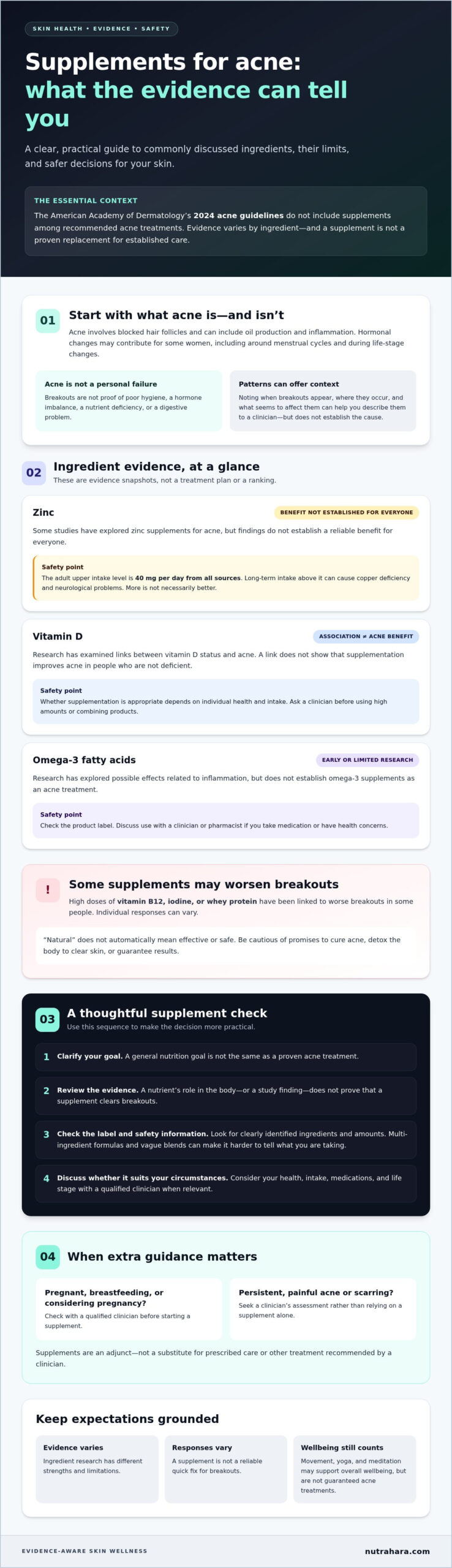
Zinc, vitamin D, and omega-3 fatty acids are often discussed in connection with acne. However, evidence that a nutrient has a role in the body isn’t the same as evidence that taking it clears skin. The American Academy of Dermatology’s 2024 acne guidelines don’t include supplements among their recommended acne treatments. The comparison below provides context, not a treatment plan.

Ingredient What the evidence suggests Limits and safety considerations
Zinc Some studies have explored zinc supplements for acne, but findings don’t establish a reliable benefit for everyone. More isn’t necessarily better. The adult upper intake level is 40 mg per day from all sources; long-term intake above it can cause copper deficiency and neurological problems.
Vitamin D Research has examined links between vitamin D status and acne. An association doesn’t show that supplementation improves acne in people who aren’t deficient. Whether supplementation is appropriate depends on individual health and intake. Ask a clinician before using high amounts or combining products.
Omega-3 fatty acids Early or limited research has explored possible effects related to inflammation, but it doesn’t establish omega-3 supplements as acne treatment. Check the product label and discuss use with a clinician or pharmacist if you take medication or have health concerns.

Read the evidence in context

A nutrient level associated with acne in a study doesn’t prove that supplements prevent or treat breakouts. Correcting a confirmed deficiency can support nutritional health, but that isn’t the same as demonstrating an acne benefit. A small or preliminary study may suggest a question worth exploring without proving a dependable result.

If you’re considering supplements for clear skin and acne, check that the label clearly identifies each ingredient and its amount. Multi-ingredient formulas can make it harder to tell what you’re taking, and vague blends may hide the amounts of individual ingredients. Be especially cautious of claims about “balancing hormones,” detoxifying the body, or clearing acne rapidly unless strong evidence supports the specific claim. A natural-sounding promise is not proof.

Keep a list of the supplements and medicines you use, and review it with a qualified clinician or pharmacist before adding anything new. This is particularly useful if you have a diagnosed deficiency, take regular medication, or are pregnant, planning pregnancy, or breastfeeding. Evidence can guide your choice, while your health circumstances help determine whether a supplement is suitable at all.

Do acne supplements work compared to other care?

A supplement may be relevant to someone’s nutrition, but the evidence doesn’t support treating supplements as a reliable quick fix for acne. A possible benefit in one study or for one person doesn’t guarantee the same outcome for you. Supplements also shouldn’t replace prescribed treatment or professional advice.

The American Academy of Dermatology’s 2024 acne guidelines recommend established options such as topical benzoyl peroxide and retinoids, and oral antibiotics such as doxycycline. Other options, including azelaic acid, salicylic acid, and hormonal therapies, are conditionally recommended for some patients. The right approach depends on individual circumstances, so this isn’t a ranking or a reason to start or stop treatment on your own.

In brief: Acne supplements may be considered an adjunct in some situations, but they aren’t guaranteed treatments and shouldn’t take the place of evidence-based care.

How to assess a supplement before considering it

For supplements for clear skin and acne, look beyond the front-label promise. Check the full ingredient list and the amount of each ingredient. Then ask whether the evidence relates to that specific ingredient and acne outcome, or only to a broader wellness claim. A proprietary blend that doesn’t disclose individual amounts makes that comparison difficult.

Keep the package or a photo of its label so you can share the ingredients with a clinician or pharmacist. This is especially helpful if you take medication or use several supplements, since a professional can help review possible interactions and overlapping ingredients.

When acne needs more than a supplement

Make an appointment with a qualified clinician if acne is ongoing, painful, leaving scars, or affecting your wellbeing. You don’t need to wait for a supplement to work before asking about care. A clinician can assess your skin, discuss treatment options, and review what you’re already taking.

Don’t stop prescribed medication or delay an assessment to try a supplement first. If you’re considering adding one, bring its label and your current medication and supplement list to the conversation. Nutrition and healthy routines can be part of thoughtful support, but persistent acne deserves care suited to your skin and circumstances.

How to choose safely across pregnancy, lactation, and changing life stages

A supplement that suits one person may not be appropriate for another. Pregnancy, breastfeeding, medications, health conditions, and other products you use can all affect what’s suitable for you. Before considering supplements for clear skin and acne, follow a practical sequence: clarify your goal, review the evidence for the ingredient, check its safety in your circumstances, then ask a qualified clinician or pharmacist whether it’s appropriate.

A simple pre-purchase safety checklist

  • Clarify your goal. Are you addressing a confirmed nutrient deficiency, or hoping to treat breakouts? Those are different aims.
  • Read the full label. Check every active ingredient and serving amount, then compare it with any vitamins or supplements you already take.
  • Review your health context. Ask a qualified clinician or pharmacist about potential interactions, existing health conditions, pregnancy, or breastfeeding.
  • Avoid stacking products. Multiple supplements can contain overlapping nutrients. Don’t combine them without professional guidance.

If you’re pregnant, planning pregnancy, or lactating, consult a qualified clinician before starting a supplement, even if it’s marketed as natural. Ingredient safety can depend on the substance and amount. For example, high intake of preformed vitamin A can cause serious birth defects. Check labels carefully and ask a clinician to review any product you’re considering rather than relying on a skin-focused claim.

Supportive routines for skin and overall wellbeing

Keep your skincare routine gentle and consistent, and avoid starting several new products or supplements at once. Changing one thing at a time can help you notice how your skin responds without assuming a single change caused every fluctuation.

Sleep, balanced meals, and regular movement can support general wellbeing, though they aren’t guaranteed acne treatments. Yoga and meditation may offer useful ways to manage stress and create a steadier daily rhythm, but they shouldn’t be presented as direct acne therapies.

A simple journal can make conversations with a clinician more useful. Note when breakouts occur, changes in your routine, supplements and medications, and relevant life-stage changes such as menstrual-cycle patterns. Treat these as observations, not proof of a cause. For broader context on choosing products thoughtfully, explore women’s wellness supplements as a general topic, while checking each product’s ingredients and suitability for your needs.

Supplements for Clear Skin and Acne: What Women Should Know

A thoughtful next step: match your skin goals with transparent wellness support

Choosing a supplement thoughtfully means considering four things together: the evidence for the ingredient and intended outcome, clear information about what the product contains, safety for your circumstances, and realistic expectations. This helps distinguish a general wellness product from a proven acne treatment. The phrase supplements for clear skin and acne doesn’t guarantee that a product has been studied for breakouts or will change your skin.

Assess the brand and the claim

Before considering a product, compare its listed ingredients and stated intended use with your goal. Ask whether the evidence relates to acne specifically, or to broader nutritional or skin-support claims. Clear ingredient information can help you make that distinction and discuss suitability with a clinician, especially if you take medication, have a health condition, or are pregnant or breastfeeding.

Nutrahara describes its approach as combining Ayurvedic principles with modern nutritional research and focuses on women’s health supplements. That is brand context, not proof that any product prevents, treats, or clears acne. No acne-specific Nutrahara product is confirmed here. For general skin-support context only, you can review the collagen supplement information; it should not be interpreted as evidence of an acne benefit.

Choose a next step that feels sustainable

If you’re interested in the brand’s broader wellness perspective, take time to review its information and decide whether it fits your priorities. Check the full ingredient list, amounts, intended use, and safety details before considering a purchase. You don’t need to choose a product simply because it promises fast results.

Persistent, painful, or scarring acne deserves assessment by a qualified clinician. So do questions about supplement safety during pregnancy, while planning pregnancy, or during lactation. Professional guidance can help you weigh skin concerns alongside your health and life stage.

Skin changes don’t follow one universal path. A measured approach, guided by evidence and your individual needs, can help you make informed choices without expecting a supplement to deliver perfect skin. Acne care can be gradual, and taking thoughtful steps is a way to support your wellbeing.

Choose your next step with care and confidence

Acne can have more than one influence, and a supplement isn’t a guaranteed solution. Weigh the evidence for the specific ingredient and skin outcome, check transparent labeling and personal safety, and keep supplements separate from proven acne care. If breakouts persist, cause pain or scarring, or if you’re pregnant or breastfeeding, a qualified clinician can help you consider appropriate next steps.

Nutrahara focuses on women’s health supplements and natural ingredients, combining Ayurvedic principles with modern nutritional research. That describes the brand’s approach, not evidence that a product treats acne. If you’d like to learn more, review the information below and decide whether it aligns with your priorities.

Your skin journey doesn’t need a perfect-skin promise. Take it one informed step at a time, with care that fits your health, life stage, and needs.

Frequently Asked Questions

Is there a supplement that clears acne?

No supplement can be promised to clear acne for everyone. Research on individual nutrients is limited or may apply to specific situations, such as correcting a confirmed deficiency, rather than proving a universal acne treatment. Supplements shouldn’t replace appropriate skin care or medical treatment. If acne is persistent, painful, or leaving scars, ask a qualified clinician about options suited to your skin and health needs.

Can zinc supplements help with acne?

Zinc has been studied in relation to acne, but the strength and relevance of the evidence depend on the study and the individual. It isn’t a guaranteed solution, and taking more isn’t automatically better. Check the amount in any product and consider zinc from other supplements too. Before starting, discuss possible interactions and your personal health needs with a clinician or pharmacist.

Can vitamin D or omega-3 supplements improve acne?

Vitamin D and omega-3s are important nutrients, but that doesn’t establish them as acne treatments. Evidence for acne-specific benefits needs careful consideration and may not apply to everyone. If you’re considering supplements for clear skin and acne, ask a clinician whether they fit your circumstances, especially if you have a health condition, use medication, or already take other supplements.

Are supplements for acne safe during pregnancy or breastfeeding?

Safety depends on the specific ingredients, amounts, and your health circumstances. A “natural” label or skin-focused marketing doesn’t confirm that a product is suitable during pregnancy or breastfeeding. If you’re pregnant, trying to conceive, or lactating, show the full product label to a qualified clinician before starting or changing a supplement. Include other supplements and medications you use so they can review the whole picture.

How long do acne supplements take to work?

There’s no reliable timeline that applies to every supplement or person, and some products may not improve acne at all. Be wary of promises of rapid results. If you and a clinician decide to try a supplement, agree on when to review it and which changes to track, such as breakouts or skin irritation. Seek advice sooner if acne becomes painful, worsens, or leaves scars.

Should I stop my acne medication when I start a supplement?

No. Don’t stop or change prescribed acne medication without speaking with the clinician who recommended it. Supplements can interact with medications, and starting several products at once can make it harder to identify what’s helping or causing a reaction. Before making changes, share a complete list of your medications and supplements with a clinician or pharmacist, including the product labels and ingredient amounts.

Can yoga or meditation help clear acne?

Yoga and meditation can support relaxation and general wellbeing, but they shouldn’t be treated as acne therapies. If they suit you, include them as part of a balanced routine alongside consistent skin care, not as a replacement for appropriate treatment. For breakouts that persist, hurt, scar, or affect your wellbeing, seek advice from a qualified clinician. You deserve support that considers both your skin and your overall health.

To explore Nutrahara’s approach to women’s wellness, visit Nutrahara and review the product information to decide what fits your priorities.

Article by

Nutrahara Team

We are a dedicated collective of nutrition scientists and naturopaths at Nutrahara, committed to advancing women's health through the fusion of ancient Ayurveda science and cutting-edge nutrition research. Our mission is to empower you with clean, simple, and scientifically validated wellness solutions so you can live your healthiest life. Connect with us to stay updated on the latest developments in holistic women's health and nature-based research.

Disclaimer

This article is not a substitute for medical advice. Please consult a healthcare professional before starting any supplement, especially if pregnant, nursing, taking medication, or managing health conditions.

Categories
Articles

How Long Does It Take for Supplements to Work? A Woman’s Guide to Realistic Results in 2026

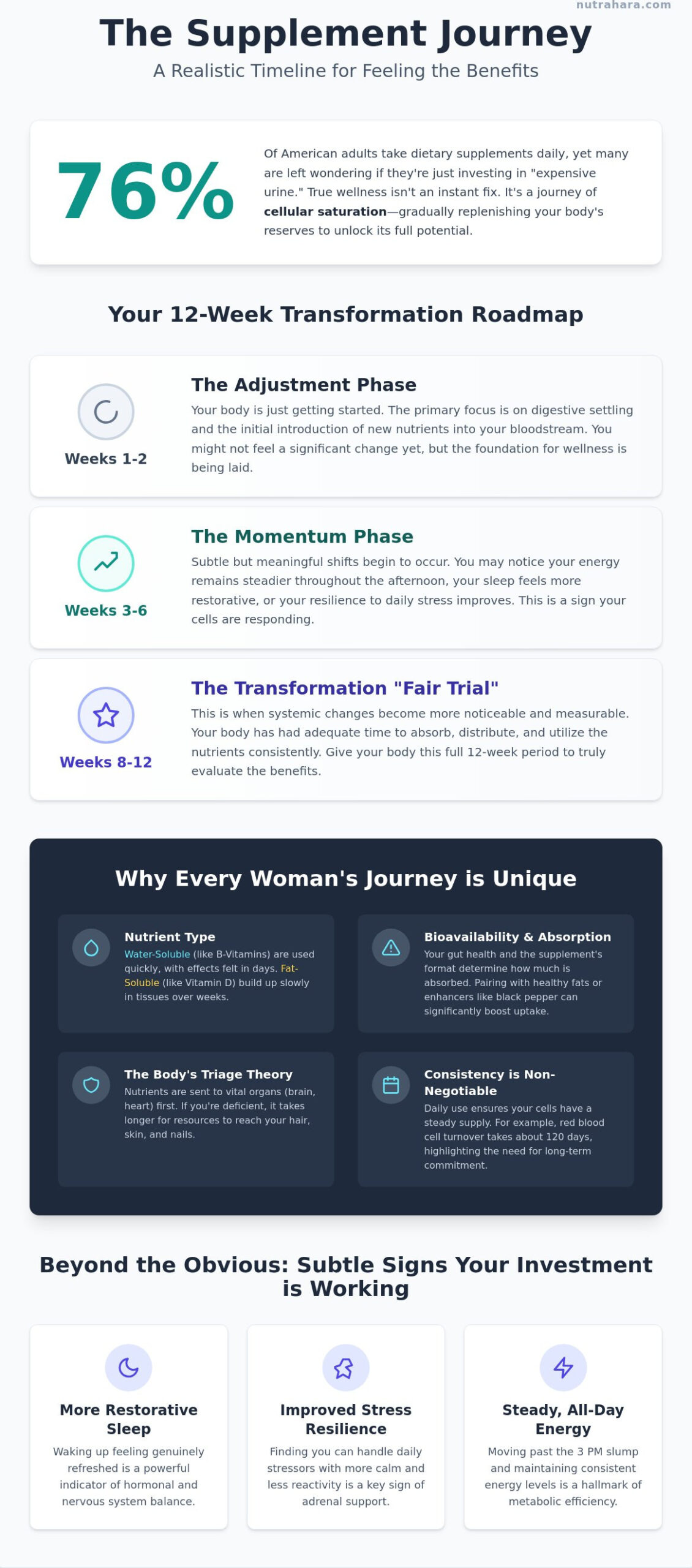
What if your wellness routine isn’t failing, but simply speaking a language your cells haven’t fully translated yet? With 76% of American adults now taking dietary supplements daily in 2026, many women are left asking the same frustrating question: how long does it take for supplements to work? It’s natural to feel anxious when that surge of energy or sense of calm doesn’t appear after just a few days of consistency. You aren’t alone in wondering if you’re just investing in “expensive urine” while waiting for a sign. Your body is a delicate, living ecosystem, not a simple machine with a light switch.

You deserve to know exactly where your investment is going and when you will feel the shift. This guide reveals the realistic, science-backed timelines for nutritional effectiveness, moving past the “instant fix” myth to understand how your body truly absorbs nourishment. We’ll bridge the gap between ancient Ayurvedic principles and the latest modern clinical research to help you optimize your results. You will discover a clear map for your personal health progression and practical tips to ensure your body welcomes every botanical and vitamin you provide.

Key Takeaways

  • Understand why supplement efficacy is a journey of cellular saturation and steady progression rather than an overnight chemical reaction.
  • Discover the science-backed 12-week roadmap that answers exactly how long does it take for supplements to work for women in various life stages.
  • Learn practical ways to enhance bioavailability by pairing nutrients with healthy lipids and choosing the most effective delivery formats.
  • Identify the subtle signs of success, such as improved sleep quality and adrenal resilience, that prove your wellness investment is paying off.
  • Explore how bridging ancient Ayurvedic principles with modern clinical validation creates a more balanced and effective long-term health strategy.

The Biological Journey: Understanding How Your Body Absorbs Supplements

Think of your body as a sophisticated, living garden rather than a simple machine. When you introduce new nutrients, you aren’t just flipping a switch; you’re starting a deep cellular dialogue. To understand how long does it take for supplements to work, we must first look at what are dietary supplements in the context of human biology. True efficacy is the result of cellular saturation. This is the point where your internal stores are sufficiently replenished, allowing your systems to function at their highest potential. It’s a gradual progression that requires patience and respect for your body’s natural rhythm.

In the landscape of 2026 nutritional research, we distinguish between two primary phases of use. The “Loading Phase” involves higher initial intake to correct deep-seated deficiencies, while the “Maintenance Phase” focuses on sustaining those optimal levels. Your experience will also depend heavily on the nature of the nutrient itself. Water-soluble vitamins, like those found in a Vitamin B Complex, move through your system quickly and often provide a subtle lift in energy within days. Conversely, fat-soluble nutrients like Vitamin D or E build up slowly in your adipose tissue, often taking weeks to reach a therapeutic threshold.

Every woman’s journey is unique due to bio-individuality. Factors such as your age, metabolic rate, and current hormonal stage—whether you are navigating perimenopause or postpartum recovery—dictate your specific timeline. While a friend might feel a shift in her sleep quality within a week, your own system might require a full month to harmonize with the same botanical blend. This isn’t a sign of failure; it’s simply your body’s unique way of processing change.

Digestion and the First Pass Effect

The path from your palm to your bloodstream is complex. Your gut microbiome acts as a gatekeeper, determining how much of a supplement actually survives the journey. Stomach acid and digestive enzymes must break down modern formulations before they reach the small intestine for absorption. We define bioavailability as the percentage of a nutrient that enters circulation to have an active effect. To support this process, many women find success with traditional additions like black pepper, which is why we include it in our Ashwagandha with Black Pepper formula to enhance natural uptake.

Cellular Saturation: Why Your Cells Need Time to Respond

Your body follows a “triage theory” when distributing nutrients. It prioritizes vital organs like the heart and brain before sending resources to “aesthetic” areas like your hair, skin, or nails. If you are chronically stressed, your body will use magnesium for nervous system support long before it uses it to relax your muscles for better sleep. Furthermore, energy-boosting supplements are often tied to red blood cell turnover, a process that takes roughly 120 days. Consistency is a non-negotiable contract with your future self. By showing up for your routine every day, you ensure that your cells never face a “drought,” allowing for a steady, long-term health progression.

The 12-Week Transformation: A Realistic Timeline for Results

Your wellness journey is a marathon, not a sprint. Many women feel a sense of frustration when they don’t see immediate changes, but understanding how long does it take for supplements to work helps set a realistic, empowering pace. Transformation happens in stages. During Week 1-2, your body enters the Adjustment Phase. This period focuses on digestive settling and the initial introduction of nutrients into your bloodstream. You might not feel different yet, but your internal environment is preparing for change.

By Week 3-6, you enter the Momentum Phase. This is when subtle shifts occur. You may notice your energy remains steady through the afternoon or your sleep feels more restorative. However, the Week 8-12 window is the “Fair Trial” period. This is when systemic changes finally become visible and measurable. According to the National Institutes of Health, staying informed about supplement effectiveness and safety allows you to stay the course with confidence. Finally, Month 4-6 marks the Stabilization Phase, where your body maintains peak levels for long-term health progression.

Hormonal Support and the Menstrual/Menopause Cycle

Hormonal pathways operate on a distinct rhythm. Whether you’re managing the ebbs and flows of menstruation or navigating the transitions of menopause, your body needs time to recalibrate. Supplements like FemmePower require at least two full cycles to influence these deep-seated pathways. Adaptogens such as Ashwagandha interact with the HPA axis, a process that typically takes 60 days of consistent use to show results. If you’re seeking relief from brain fog, remember that cognitive clarity often follows physical energy improvements by several weeks.

Skin, Hair, and Nails: The Slowest Transformers

Your “outer” health is often a lagging indicator of your “inner” status. A single skin cell cycle takes roughly 28 days. This is why structural support from a Premium Collagen Complex usually takes 12 weeks to manifest in visible glow or hair strength. Your body treats these areas as secondary to vital organs, so patience is a form of self-care. It’s about nurturing the root to see the flower. If you’re ready to commit to this transformation, consider exploring our BlossomBliss formula to support your natural radiance from within.

Bioavailability and Lifestyle: Why Some Supplements Work Faster Than Others

Your daily habits act as the foundation for your body’s ability to utilize new nutrients. If you’ve wondered how long does it take for supplements to work, the answer often lies in your kitchen and your current stress levels. Bioavailability is the bridge between ingestion and actual cellular effect. For example, taking fat-soluble vitamins without a healthy lipid source is like trying to drive a car with an empty tank. Nutrients like Vitamin D, E, and K require a small amount of healthy fat, such as avocado or olive oil, to be properly absorbed into the bloodstream. Without this companion, these vital elements often pass through your system unused.

The physical form of your supplement also dictates the speed of your results. In 2026, many women are moving away from traditional hard tablets, which often contain binders that slow down the dissolution process. Liquid capsules and powders generally offer a faster path to absorption because they bypass the heavy mechanical breakdown required in the stomach. However, even the best formulation can be hindered by the “Stress Thief.” High cortisol levels physically divert blood flow away from the digestive tract, which can block nutrient uptake and rapidly deplete your B vitamin stores. The National Center for Complementary and Integrative Health suggests maintaining a realistic timeline for supplement results by managing these environmental variables.

The Yoga-Nutrition Synergy

Yoga is far more than a fitness practice; it is a powerful tool for digestive health. Specific twisting asanas physically massage the internal organs, assisting digestive transit and improving blood flow to the gut. Deep diaphragmatic breathing shifts your nervous system into the “rest and digest” mode. This parasympathetic state is critical for optimal nutrient uptake. For a practical boost to your routine, try taking your supplements after a morning meditation session. The lowered cortisol levels create a receptive environment, allowing your cells to welcome the nourishment you provide.

Combining Ancient Ayurveda with Modern Science

Ayurveda has long spoken of “Agni,” or digestive fire, as the key to health. Modern science aligns with this through the study of enzymatic activity and bio-enhancers. A weak digestive fire leads to poor absorption, regardless of the quality of your vitamins. To solve this, we look to traditional wisdom for natural accelerators. Our Ashwagandha with Black Pepper uses this synergy to improve results. Clinical research confirms that piperine, the active compound in black pepper, can increase curcumin absorption by up to 2,000%. This fusion of tradition and science ensures that your body doesn’t just receive the nutrients but truly integrates them into your long-term health progression.

Beyond the Scale: Subtle Signs Your Wellness Routine is Working

When you begin a new nutritional protocol, it is tempting to look for a dramatic “movie moment” of transformation. However, your body often communicates its progress through quiet, steady improvements rather than loud declarations. If you find yourself asking how long does it take for supplements to work, start looking at your daily energy patterns instead of just the calendar. One of the most profound signs of improved adrenal health is waking up feeling refreshed a few minutes before your alarm goes off. This suggests your cortisol rhythm is beginning to harmonize with your natural sleep cycle, a victory that often precedes physical changes.

You might also notice a newfound resilience during a demanding workday. In the high pressure environment of 2026, handling a stressful meeting without a total energy crash by 3:00 PM is a significant milestone. For those who practice yoga or regular fitness, pay attention to your recovery time. If your muscles feel less fatigued the morning after a challenging session, your cells are likely receiving the structural support they need to repair efficiently. Even the “Mirror Test” provides clues. Subtle improvements in skin hydration and a certain clarity in your eyes are indicators that your internal systems are becoming saturated with the nutrients they lacked.

The Mental and Emotional Shift

The mind often responds to nutritional support before the rest of the body. Recognizing the absence of the typical “afternoon slump” is a major victory for those using a Vitamin B Complex. These water soluble vitamins support the nervous system, leading to a steadier emotional baseline. One woman, Sarah, aged 45, shared that she noticed her “patience” increased well before her physical energy did. She found she was less reactive to daily stressors, a sign that her HPA axis was finally finding balance. We recommend using a wellness journal to track these non-scale victories (NSVs). Documenting your mood, focus, and patience levels helps you see the long term health progression that might otherwise go unnoticed.

Digestive Harmony and Gut Health

Your gut is often the first place to show signs of recalibration. Reduced bloating and more regular elimination are immediate signals that your microbiome is shifting toward a healthier state. To understand how these internal shifts can influence your broader goals, you may want to read our guide on do digestive enzymes help you lose weight. Interestingly, “feeling nothing” in your gut can actually be a sign of success. High quality, clean supplements should integrate seamlessly into your system without causing the nausea or “heavy” feeling associated with artificial fillers. If you are ready to experience this steady, nurturing support for yourself, you can explore our Vitamin B Complex to begin your own 12 week transformation.

How Long Does It Take for Supplements to Work? A Woman’s Guide to Realistic Results in 2026

The Nutrahara Philosophy: Bridging Ancient Wisdom and Modern Science for Longevity

At Nutrahara, we believe that true wellness is a dialogue between your heritage and your future. Our approach is rooted in the understanding that your body isn’t a machine but a living ecosystem. When you ask how long does it take for supplements to work, you’re really asking how long it takes for your internal ecosystem to return to its natural state of balance. We provide the tools for this restoration by combining ancient Ayurvedic wisdom with the precision of modern nutritional research. This “Wise Guide” approach means we don’t just provide supplements; we partner with you in a lifelong health progression.

Our commitment to purity is a cornerstone of this partnership. Many mass-market products contain artificial fillers and binders that can actually hinder absorption, making your cells work harder just to find the nutrients they need. By removing these barriers, we ensure a more direct path to cellular saturation. For women aged 30 to 60, this clarity is essential. Much like ensuring the quality of your home’s air and water with firstchoiceplumbingsolutions.com, we believe your internal environment deserves the same meticulous care. We view this life stage not as a decline, but as a powerful progression toward greater wisdom and vitality. You deserve formulas that respect your body’s complexity and support your long-term goals without compromise.

Crafting Your Daily Wellness Ritual

Consistency is the heartbeat of results. We encourage you to use habit-stacking to make your routine feel effortless and grounded. Try taking your BlossomBliss alongside your morning tea or immediately following your daily yoga practice. This creates a mental anchor, turning a simple task into a sacred ritual of self-care. Our “Purity Promise” ensures that every capsule supports your journey without unnecessary additives. Taking control of your health destiny is a powerful act of self-esteem. When you show up for yourself every day, you’re sending a message to your cells that your vitality is a priority.

Next Steps in Your Health Journey

Your body is dynamic. As you move through different seasons of life, your nutritional needs will naturally shift. We recommend reassessing your wellness protocol every 90 days. This 12-week window aligns with the systemic changes and red blood cell turnover we’ve explored in this guide. It’s the perfect time to check in with your energy, mood, and resilience. To deepen your understanding of these transitions, we invite you to explore our Ultimate Guide to Women’s Wellness Supplements. This resource offers a broader look at how to tailor your routine to your specific stage of life. Empower your cells today with Nutrahara’s scientifically-validated formulas and embrace the vibrant future you’re building.

Your Journey to Sustained Vitality Starts Here

Understanding how long does it take for supplements to work allows you to move away from frustration and toward a partnership with your biology. You now know that true transformation is a 12 week progression; it begins with cellular adjustment and leads to systemic stabilization. By integrating mindful practices like yoga and prioritizing clean formulations, you ensure your body has the support it needs to thrive. Those subtle shifts in your energy and resilience are the quiet proof that your wellness investment is flourishing.

You don’t have to navigate this path alone. Our supplements are specifically designed for women aged 30 to 60, using a unique fusion of Ayurvedic wisdom and modern clinical science. We eliminate artificial additives and fillers to ensure every nutrient serves your long term health. Take the first step in your 12-week transformation with Nutrahara’s curated Women’s Health Collections. Your future self will thank you for the consistency you’re showing today. Trust in your body’s rhythm and embrace the vibrant life you deserve.

Frequently Asked Questions

Is it possible to feel the effects of a supplement instantly?

Instant results are rare because most nutrients require time to reach cellular saturation. While you might feel a subtle lift from B vitamins or specific botanicals within an hour, most health improvements are cumulative. Your body must first absorb the nutrient, transport it through the bloodstream, and integrate it into your cellular processes. True transformation is a gradual progression that respects your body’s natural timing and unique biological rhythm.

What happens if I miss a day of my supplement routine?

Missing a single day won’t reset your progress to zero, but it does create a small gap in your cellular supply. Consistency is the foundation of efficacy because it maintains a steady concentration of nutrients in your system. If you forget a dose, simply resume your routine the next day. Avoid taking a double dose to catch up, as your body can only absorb a certain amount of nutrition at once.

Can I take all my supplements at once, or should I space them out?

Spacing your supplements throughout the day is often more effective than taking them all in one sitting. Some minerals, like calcium and magnesium, compete for the same absorption pathways in your gut. By separating your doses, you give your digestive system a better chance to process each nutrient thoroughly. Pairing specific supplements with your morning and evening rituals can help you maintain this rhythm while supporting different needs.

Why do I feel nauseous after taking my vitamins?

Nausea is a common response when taking concentrated nutrients on an empty stomach, particularly minerals like zinc or iron. These elements can irritate the stomach lining if there isn’t food present to buffer the absorption process. To prevent this, try taking your supplements mid-meal. This provides a gentle environment for digestion and often improves the overall bioavailability of the formula while protecting your comfort and peace of mind.

How much water should I drink to help my supplements work better?

Proper hydration is essential for the transport and absorption of water-soluble nutrients. Aim to drink a full glass of water when taking your supplements and maintain a steady intake of about eight glasses throughout the day. Water acts as the medium that carries nutrients into your cells and helps your kidneys process any excess efficiently. Staying hydrated ensures your internal ecosystem remains receptive to the nourishment you provide every day.

To further optimize your internal ecosystem and support nutrient transport, you can explore PureONE Molecular Hydrogen Generator, which uses molecular hydrogen to help reduce inflammation and enhance overall cellular wellness.

Can my diet prevent my supplements from working?

Yes, certain dietary habits can hinder how long does it take for supplements to work by physically blocking absorption. For instance, high levels of caffeine or tannins in tea can interfere with the uptake of calcium and iron. A diet high in processed sugars can also create internal inflammation that slows down cellular repair. Focus on a whole-food, plant-forward diet to create a synergistic environment where your supplements can perform optimally.

Is it better to take supplements on an empty stomach or with food?

Most supplements are best taken with food to enhance absorption and prevent digestive discomfort. Fat-soluble vitamins, such as Vitamin D and E, specifically require dietary fats to enter your bloodstream. While a few specific herbs or amino acids might be recommended on an empty stomach, taking your daily routine with a balanced meal is generally the most effective approach for long-term health progression and digestive harmony.

How do I know if I’ve reached ‘cellular saturation’?

You’ll know you’ve reached cellular saturation when the subtle improvements in your energy, mood, and sleep quality become your new normal. This state reflects a point where your body no longer has a nutritional deficit to fill and can begin using nutrients for optimization rather than just repair. It’s often the moment you realize you haven’t felt that afternoon slump or morning grogginess for several weeks in a row.

Article by

Nutrahara Team

We are a dedicated collective of nutrition scientists and naturopaths at Nutrahara, committed to advancing women's health through the fusion of ancient Ayurveda science and cutting-edge nutrition research. Our mission is to empower you with clean, simple, and scientifically validated wellness solutions so you can live your healthiest life. Connect with us to stay updated on the latest developments in holistic women's health and nature-based research.

Disclaimer

This article is not a substitute for medical advice. Please consult a healthcare professional before starting any supplement, especially if pregnant, nursing, taking medication, or managing health conditions.