...
Categories
Articles

Is Ayurveda Safe for Long-Term Use? A Science-Backed Guide for Women

Could your daily ritual for balance actually be a long-term burden on your body? Many women in their 30s, 40s, and beyond turn to ancient herbs to manage hormonal shifts or boost energy, but a nagging question often remains: is ayurveda safe for long term use? You aren’t alone in feeling concerned about conflicting reports on heavy metals or potential side effects. It’s natural to want the peace of mind that your holistic choices support your longevity rather than compromising your health.

This guide will help you discover how to safely integrate Ayurvedic wisdom into your lifelong wellness journey while navigating modern safety standards and clinical purity. You’ll learn how to identify high-quality supplements that meet the FDA’s “Closer to Zero” standards for toxic metals. We’ll provide a clear framework for long-term supplementation, ensuring you can embrace your yoga and meditation practice with the confidence that your internal health is backed by both ancient tradition and rigorous modern science.

Key Takeaways

  • Learn how the ancient concept of Rasayana transforms Ayurveda from a temporary fix into a lifelong foundation for vitality and rejuvenation.
  • Discover why pure herbal formulations are the key when asking is ayurveda safe for long term use, especially when avoiding traditional metallic preparations.
  • Identify “safe list” herbs like Shatavari and Ashwagandha that support women’s hormonal health without taxing the liver or kidneys.
  • Master the “low and slow” integration technique to align potent botanicals with your unique Dosha and current life stage.
  • Understand how to vet supplement quality by looking for modern clinical validation and synergistic ingredients that enhance both safety and efficacy.

Understanding Ayurveda: Is it a Lifestyle or a Long-Term Remedy?

Ayurveda isn’t a passing wellness trend. It’s a 5,000-year-old system that translates literally to “the science of life.” When you begin Understanding Ayurveda, you see it’s much more than a medicine cabinet. It’s a comprehensive way of living. For women moving through different life stages, a common question arises: is ayurveda safe for long term use? This depends on whether you’re using “Shodhana” (cleansing) or “Shamana” (balancing) therapies. While intense cleanses are short-term, the daily rituals of Ayurveda are built for a lifetime of support.

The Role of Rasayana in Long-Term Wellness

The most important concept for longevity is Rasayana. This specific branch of Ayurveda focuses on rejuvenation and slowing the aging process. Rasayana herbs aren’t just remedies; they’re tonics meant to nourish your tissues and boost “Ojas,” which is your baseline for immunity and radiant energy. Nutrahara leverages these time-tested botanicals, such as Ashwagandha with Black Pepper, to support your body’s natural resilience. These herbs are chosen specifically for their non-toxic, building nature. They don’t just fix a problem; they cultivate a stronger foundation for your future self. By framing health as a long-term progression, Rasayana allows you to integrate these herbs into your routine for months or even years to maintain peak vitality.

Why “Natural” Does Not Always Mean “Safe”

It’s a common mistake to assume that because a leaf grew in the ground, it can’t cause harm. Every substance has a dose and a limit. In Ayurveda, your “Agni,” or digestive fire, is the gatekeeper of your health. If your digestion isn’t strong enough to process a supplement, it won’t provide the benefits you’re looking for. This is why Ayurveda is a holistic system of living rather than just a collection of pills. Long-term safety requires looking at the whole person, including your diet, your yoga practice, and your stress levels. Even the most powerful herbs need to be used with wisdom and respect for your body’s current state.

When women ask us, is ayurveda safe for long term use, we explain that it requires a fusion of tradition and modern validation. Nutrahara’s philosophy is rooted in this balance. We take the poetic wisdom of the ancients and subject it to contemporary nutritional research. By focusing on high-purity extracts and clean formulations, we provide the safety that modern women deserve. You can feel empowered in your health choices, knowing they’re backed by five millennia of history and today’s strictest quality standards. Our goal is to be your wise guide, ensuring your wellness journey is both tranquil and scientifically sound.

The Science of Safety: Herbal vs. Metallic Ayurveda

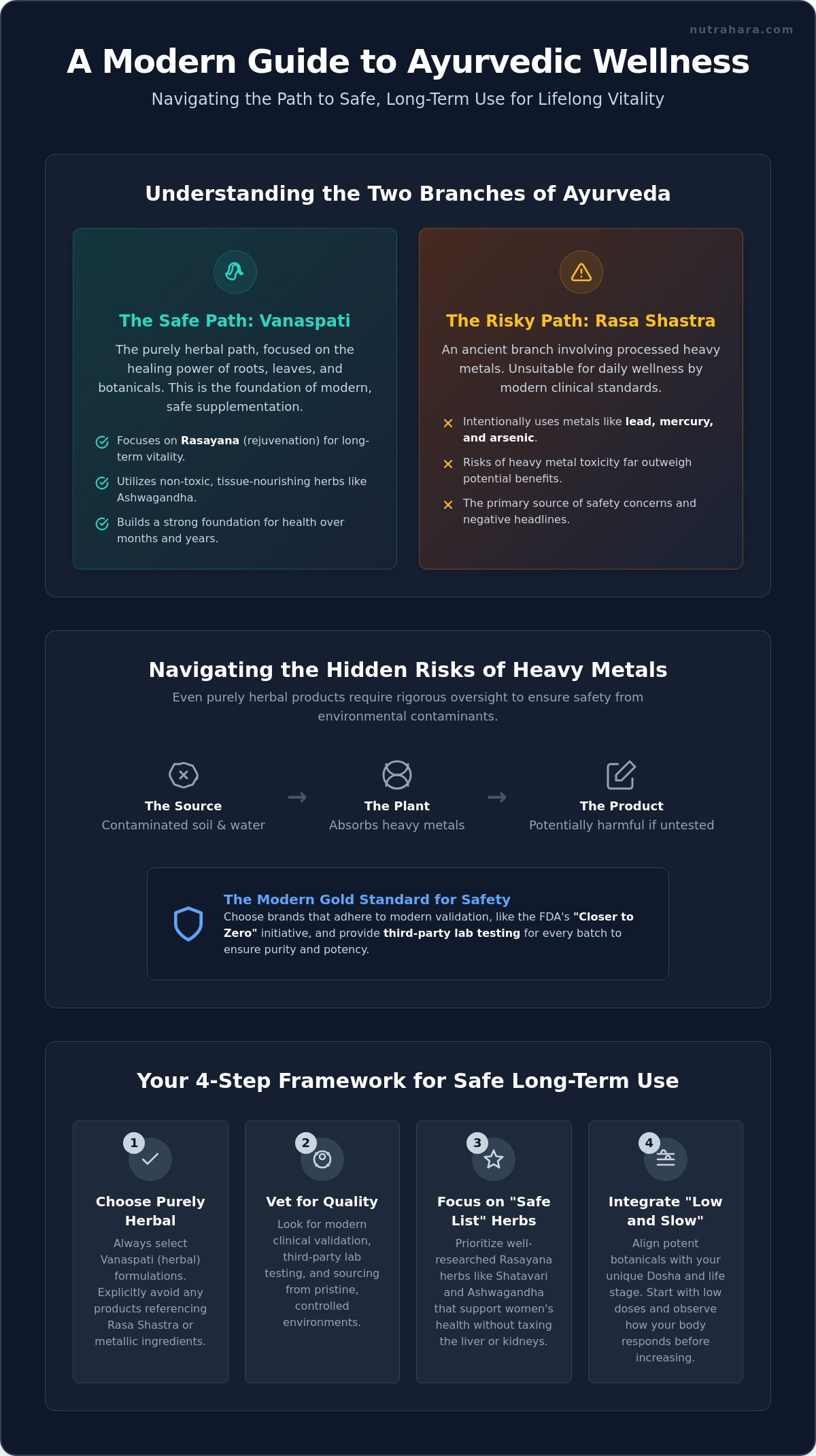
When women ask if is ayurveda safe for long term use, they’re often reacting to headlines about heavy metal toxicity. To understand the truth, we must distinguish between two very different branches of this ancient tradition: Rasa Shastra and Vanaspati. Rasa Shastra involves the intentional use of processed metals, including lead, mercury, and arsenic. While these were used in specific historical contexts, modern clinical standards make them entirely unsuitable for daily wellness. In contrast, Vanaspati is the purely herbal path. This is the foundation of modern, safe supplementation that focuses on the healing power of roots, leaves, and barks.

For women today, the choice is clear. Traditional metallic preparations carry risks that far outweigh any perceived benefits, especially when used over years. You should only consider pure herbal extracts that have been stripped of these ancient contaminants. The Science of Safety confirms that while Ayurveda offers profound benefits, the lack of regulation in some regions can lead to products containing harmful levels of metals. Choosing a brand that explicitly rejects Rasa Shastra is the first step in ensuring your wellness journey remains restorative rather than risky.

Why Heavy Metal Concerns Exist

Even in herbal products, safety isn’t guaranteed without rigorous oversight. Heavy metals like cadmium and lead can enter plants through contaminated soil or water during growth. The FDA has addressed this through its “Closer to Zero” initiative in 2026, which increases scrutiny on toxic elements in dietary supplements. Many unregulated imports fail these modern safety tests. Nutrahara addresses this by sourcing from pristine environments and utilizing third-party lab testing for every batch. This process ensures that the botanical wisdom you receive is as clean as it is potent.

Clinical Validation: The Modern Gold Standard

Safety also comes from precision. Ancient texts might suggest a handful of herbs, but modern science allows us to identify the exact active compounds that create results. We use standardized extracts to ensure consistency. For example, our Ashwagandha is measured for specific withanolide content, providing a reliable dose every time. This fusion of tradition and nutritional research allows us to confirm that the herbs are working effectively within your body. If you want to start your journey with a formula designed for high purity, you might consider how Detoxifylife supports your body’s natural filtration systems through clean, herbal synergy.

By moving away from outdated metallic practices and embracing clinically validated herbalism, you can feel confident in your choices. You don’t have to choose between ancient wisdom and modern safety. When these two worlds meet, the result is a trustworthy path toward lifelong health and vitality.

Addressing the #1 Concern: Liver and Kidney Health

Your liver and kidneys are the silent heroes of your wellness journey. The liver acts as a master chemist, metabolizing botanical compounds into forms your body can use. Meanwhile, the kidneys serve as a sophisticated filtration system, clearing out what isn’t needed. When women ask if is ayurveda safe for long term use, their concern usually centers on these vital organs. The truth is that many Ayurvedic herbs are not just safe; they’re actually protective when sourced with clinical purity.

A “safe list” for long-term nourishment includes herbs known as Rasayanas. These are gentle, building plants rather than aggressive, purging ones. Ashwagandha supports the adrenal system, while Turmeric provides systemic anti-inflammatory benefits. For women’s health specifically, Shatavari is a cornerstone for hormonal balance across all life stages. Amalaki, rich in natural antioxidants, helps protect liver cells from oxidative stress. To keep these systems running smoothly, we often recommend “cycling” your supplements. Taking a short break, such as two days off each week or one month off every quarter, prevents your body from becoming too accustomed to the herbs and gives your filtration organs a natural rest period.

The Importance of “Clean” Formulations

In many cases, it isn’t the herb itself that causes a reaction, but the invisible extras. Low-quality supplements often hide binders, fillers, and artificial colors that tax your digestive system. These synthetic additives can lead to the very sensitivities women fear. We believe in absolute transparency and simplicity. Our commitment is to provide formulas that contain only what your body needs to thrive. If you’re looking for a way to gently assist your body’s natural processes, DetoxifyLife offers a clean, herbal synergy designed to support your internal filters without harsh side effects.

Monitoring Your Progress

Empowerment comes from being the CEO of your own health. While ancient wisdom provides the map, your body provides the real-time data. You’ll know your routine is working when you feel a steady increase in energy, better sleep quality, and a more resilient mood. Conversely, if you experience persistent digestive upset or unusual fatigue, it’s a sign to pause and re-evaluate. It is also wise to be aware of the potential risks of heavy metals in Ayurvedic products found in unregulated markets. To remain fully confident, we encourage regular blood work to monitor liver and kidney enzymes. Always share your supplement list with your healthcare provider, particularly if you’re taking pharmaceutical medications, to ensure every part of your health plan works in harmony.

Practical Tips for Safely Integrating Ayurveda into Your Life

One of the most effective ways to ensure is ayurveda safe for long term use is to adopt a “low and slow” philosophy. When you introduce a new botanical into your routine, start with a smaller dose than recommended for the first week. This allows your body to adjust and helps you identify any subtle sensitivities before they become issues. By listening to your body’s unique signals, you can build a sustainable wellness practice that lasts for decades.

Safe integration also means aligning your choices with your Dosha, or constitutional type. A fiery Pitta woman might find that heating herbs like ginger are too intense for daily use in the summer, while a Vata woman might thrive on them during the cold winter months. Adjusting your supplements seasonally is a cornerstone of Ayurvedic wisdom. It ensures you aren’t overtaxing your system with properties it doesn’t currently need, keeping your internal environment balanced and resilient.

A Daily Routine for Longevity

Longevity begins with your morning rituals. Start your day with tongue scraping to remove accumulated “Ama” (toxins) and drink a glass of warm lemon water to prime your gut for digestion. Timing your supplements is equally vital. Many Ayurvedic herbs are fat-soluble, meaning they’re best absorbed when taken with healthy fats. For example, taking your daily dose alongside Premium Collagen Complex can enhance the delivery of nutrients to your tissues. End your day with a calming evening ritual, perhaps incorporating RestoraSleep to support the deep hormonal recovery your body needs during the night.

Ayurveda for Specific Life Stages

As women move into their 40s and 50s, the body’s needs shift toward hormonal stabilization and joint preservation. Ayurveda offers gentle support for perimenopause symptoms like night sweats and mood fluctuations without the harshness of synthetic alternatives. For active women, maintaining flexibility is key. Sarah, a 48-year-old yoga enthusiast, shared her journey: “I used to feel constantly depleted and my joints felt stiff every morning. By slowly introducing Ashwagandha and committing to a ten-minute morning meditation, my energy stabilized and my mobility returned. I finally feel like myself again.”

Ready to align your evening ritual with your body’s natural rhythms? Explore RestoraSleep to support your journey toward restorative rest and long-term vitality.

Is Ayurveda Safe for Long-Term Use? A Science-Backed Guide for Women

Choosing Quality: The Nutrahara Standard for Women

We also understand that modern women face unique physiological stressors. This is why we design our formulas with synergy in mind. By combining potent Ayurvedic extracts with essential modern nutrients, like our Vitamin B Complex, we ensure your body has the metabolic support it needs to process these herbs effectively. This balanced approach reduces the burden on your system and enhances the long-term safety of your routine. Our products are specifically tailored for the female endocrine system, providing gentle yet effective support whether you’re navigating your 30s or transitioning through menopause.

The Fusion of Ancient Wisdom and Modern Science

The Nutrahara promise is simple: we provide the efficacy of the ancients with the clinical safety of today. We’ve moved away from the “heavy metal” alchemy of old texts, focusing instead on pure, potent plant extracts that nourish rather than tax your organs. We invite you to view your health as a long-term progression. It isn’t a quick fix or a temporary remedy. It’s a partnership between your body and the natural world. By choosing supplements that meet these high standards, you can feel empowered in your daily rituals, knowing that is ayurveda safe for long term use when backed by modern clinical purity.

Your Next Steps to Holistic Health

Your journey doesn’t have to be one you walk alone. While we provide the tools, we also encourage you to seek a holistic consultation with a professional who understands your unique health history. Education is the key to confidence. We offer resources and e-books to help you deepen your practice and understand the “why” behind every herb you take. This knowledge transforms a simple supplement routine into a conscious lifestyle choice.

Ready to elevate your wellness journey with formulas you can trust? Explore the full Nutrahara Women’s Health range to find the perfect match for your current life stage. You can move forward with peace of mind, knowing your path is guided by both timeless wisdom and modern science.

Empower Your Future with Trusted Ancient Wisdom

Your health isn’t a destination; it’s a personal, ongoing journey that deserves the highest level of care. We’ve explored how identifying high-quality, herbal-only extracts and prioritizing clinical purity are the keys to answering the question: is ayurveda safe for long term use? By choosing pure botanicals over traditional metallic preparations and supporting your body’s natural filters, you can enjoy the benefits of these time-tested plants for years to come. You don’t have to choose between ancient tradition and modern safety when you have the right guide.

At Nutrahara, we bridge the gap between ancient health philosophies and contemporary nutritional research. Our supplements are formulated by experts in both Ayurveda and modern nutrition to address the unique needs of women aged 30 to 60. With strict third-party testing for heavy metals and purity, we ensure your path to longevity is clear and secure. We’re dedicated to helping you maintain your “Ojas” and vitality through every stage of life.

Experience the safe fusion of tradition and science when you shop the Nutrahara Women’s Wellness Collection. You have the power to transform your vitality and move forward with confidence, knowing your wellness is backed by science and guided by wisdom.

Frequently Asked Questions

Is it safe to take Ashwagandha every day for a year?

Yes, taking Ashwagandha daily for a year is typically safe for healthy women when using standardized, pure extracts. However, we suggest a “cycling” approach, such as taking a one-week break every few months, to maintain your body’s natural responsiveness. This practice ensures your adrenal system remains balanced while you continue your personal health progression toward sustained vitality and stress resilience.

How do I know if my Ayurvedic supplement contains lead or mercury?

You can identify safe products by looking for brands that provide third-party lab testing results for heavy metals on every batch. Avoid any traditional preparations labeled as “Rasa Shastra,” as these intentionally include processed metals. Choosing a transparent brand that follows modern safety standards is the most reliable way to ensure your supplements are free from lead, mercury, and arsenic.

Can Ayurvedic herbs interfere with my prescription medications?

Ayurvedic herbs can interact with certain prescription medications, particularly those for blood pressure, diabetes, or thyroid regulation. Because these botanicals are potent, they can either enhance or diminish the effects of pharmaceutical drugs. It’s essential to share your full supplement list with your healthcare provider to ensure your holistic and conventional treatments work in harmony for your long-term health.

What are the signs of “herb-induced” liver stress I should look out for?

Signs of liver stress include persistent fatigue, dark-colored urine, or a yellowing of the skin and eyes known as jaundice. While pure herbal Ayurveda is gentle, any supplement can tax the system if the dosage is incorrect or the quality is poor. If you experience these symptoms or unusual digestive discomfort, stop use immediately and consult a professional to evaluate your liver enzymes.

Should I stop taking Ayurvedic supplements during my period or menopause?

You don’t need to stop taking your supplements during your period or menopause; in fact, herbs like Shatavari are specifically designed to support these transitions. These botanicals help balance hormones and soothe the nervous system during times of physiological change. Always listen to your body’s signals and adjust your routine if you feel your needs shifting during different phases of your cycle.

Is Ayurveda safe for long-term use if I have a pre-existing condition like PCOS?

Yes, is ayurveda safe for long term use for women with PCOS when focused on balancing insulin and supporting the endocrine system. Herbs like Turmeric and Ashwagandha can be valuable tools for managing inflammation and stress associated with this condition. Because PCOS involves complex hormonal patterns, working with a guide to align herbs with your specific Dosha ensures the safest and most effective results.

How long does it take to see results from an Ayurvedic wellness routine?

You’ll typically notice subtle shifts in energy and mood within 4 weeks, though more significant physiological changes often take 8 to 12 weeks of consistent use. Ayurveda focuses on long-term progression rather than instant fixes. This steady pace allows your body to integrate the herbal wisdom and build a foundation for lasting wellness, improved immunity, and better hormonal balance.

Do I need to follow a specific diet for Ayurveda to be safe and effective?

While you don’t need a rigid diet, eating whole, seasonal foods that align with your Dosha significantly enhances the safety and efficacy of your herbs. Strong “Agni,” or digestive fire, is necessary to properly metabolize botanical compounds. Integrating simple habits like drinking warm water and avoiding processed foods ensures your body can fully absorb the nourishing benefits of your daily Ayurvedic routine.

Article by

Nutrahara Team

We are a dedicated collective of nutrition scientists and naturopaths at Nutrahara, committed to advancing women's health through the fusion of ancient Ayurveda science and cutting-edge nutrition research. Our mission is to empower you with clean, simple, and scientifically validated wellness solutions so you can live your healthiest life. Connect with us to stay updated on the latest developments in holistic women's health and nature-based research.

Disclaimer

This article is not a substitute for medical advice. Please consult a healthcare professional before starting any supplement, especially if pregnant, nursing, taking medication, or managing health conditions.

Categories
Articles

The Risks of Taking Too Many Supplements: A 2026 Guide to Balanced Wellness

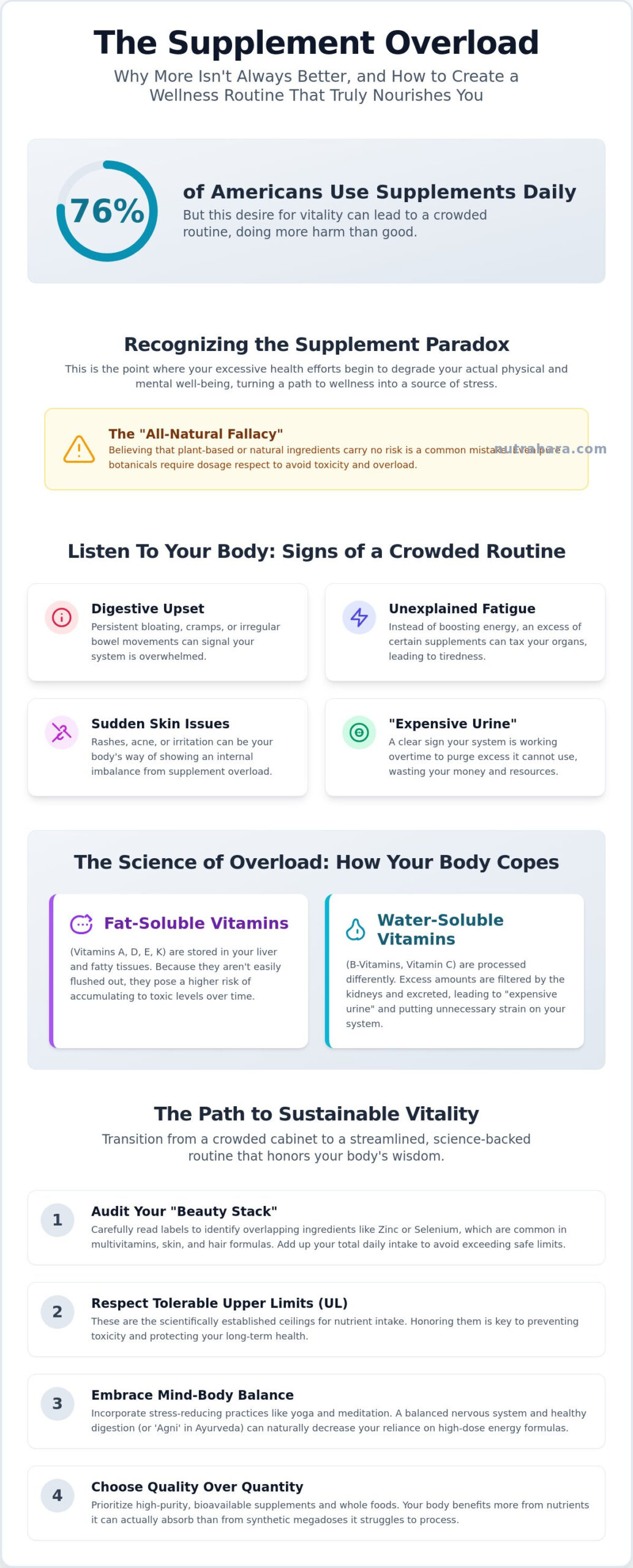
Did you know that 76% of Americans now use supplements every single day? While your intentions are rooted in a deep desire for vitality, the reality is that more isn’t always better for your body. Understanding the risks of taking too many supplements is essential for any woman seeking true, sustainable health in 2026. You deserve to feel empowered and energized, not overwhelmed by a cabinet full of conflicting labels.

It’s common to feel a sense of anxiety about overlapping ingredients in your formulas or the potential strain on your liver and kidneys. You shouldn’t have to worry if your wellness routine is actually causing harm or simply resulting in expensive urine. We agree that your health journey should be grounded in clarity and calm; it should be a graceful progression toward longevity rather than a source of confusion and wasted resources.

This guide promises to help you identify the subtle signs of supplement overload so you can transition to a balanced, science-backed routine. You’ll learn how to navigate the 2026 Dietary Supplement Listing Act requirements and establish safe upper limits that respect your biological needs. By the end, you’ll have a streamlined approach that honors your body’s wisdom and provides lasting peace of mind.

Key Takeaways

  • Understand the “All-Natural Fallacy” and why even the purest botanical ingredients require dosage respect to avoid toxicity.
  • Discover how your liver and tissues process excess nutrients and the science behind why food-based bioavailability outperforms synthetic megadoses.
  • Learn how to audit your daily “Beauty Stack” to identify the risks of taking too many supplements like Zinc or Selenium that often overlap in multivitamins.
  • Explore how the Ayurvedic concept of Agni and stress-reducing practices like yoga can naturally decrease your reliance on high-dose energy formulas.
  • Transition to a streamlined, science-backed routine that prioritizes ingredient purity and long-term vitality over the quantity of pills.

The Modern Supplement Paradox: Why More Isn’t Always Better for Your Wellness

True wellness isn’t measured by the number of bottles in your cabinet. It’s found in the delicate synergy between your internal biology and the nutrients you introduce. When we exceed what our systems can handle, we enter the territory of The Science of Overload, also known as hypervitaminosis. This condition occurs when your body stores toxic levels of vitamins, leading to health complications instead of the vitality you seek. Many women fall for the “All-Natural Fallacy,” believing that plant-based nutrients carry no risk. This isn’t true. Natural ingredients still require dosage respect because your biological pathways have specific limits that shouldn’t be pushed.

As we move through our 30s, 40s, and 50s, our metabolic processing shifts significantly. For women navigating perimenopause or post-menopause, hormonal changes can alter how the liver and kidneys clear excess compounds. Understanding the risks of taking too many supplements is essential for maintaining long-term health during these transitions. Instead of chemical overload, we advocate for the “Wise Guide” philosophy. This approach honors your body’s innate wisdom. It focuses on precise, high-quality nourishment that supports your journey without overwhelming your delicate internal balance.

The Rise of ‘Supplement Fatigue’ in Women’s Wellness

Women today face immense pressure to be “perfectly optimized” through daily pills. Social media trends often showcase elaborate “supplement hauls” that suggest more is always better. This culture drives supplement fatigue, a state where the act of managing your health becomes a source of stress and anxiety. We define the Supplement Paradox as the specific point where your excessive health efforts begin to degrade your actual physical and mental well-being. True health shouldn’t feel like a chore or a chemical experiment.

Recognizing the Signs of a Crowded Routine

Your body is vocal about its limits. If you experience persistent digestive upset, unexplained fatigue, or sudden skin rashes, your routine might be too crowded. Often, your body simply flushes out what it cannot use, a phenomenon known as “expensive urine.” This isn’t just a waste of money; it’s a sign that your system is working overtime to purge excess. Developing an awareness of the risks of taking too many supplements allows you to reclaim your metabolic balance. For those seeking a more streamlined approach, a clean formula like FemmePower provides targeted support without the unnecessary clutter of a dozen different pills.

The Science of Overload: How Your Body Processes Excess Nutrients

Your body is a masterpiece of biological efficiency, but it isn’t an infinite vessel. When you consume vitamins and minerals, your organs act as sophisticated gatekeepers. The liver and fatty tissues serve as primary storage units for fat-soluble vitamins, while the kidneys work tirelessly to filter out water-soluble excess. There is a significant difference between nutrients found in whole foods and the synthetic megadoses found in many modern formulas. Synthetic versions often lack the natural co-factors your system expects, making them much harder to process efficiently. This disconnect contributes to The Modern Supplement Paradox, where taking more doesn’t necessarily mean you’re absorbing more.

Modern nutritional research has established “Tolerable Upper Intake Levels” (UL) to guide us. These are scientifically backed ceilings designed to prevent toxicity and protect your long-term wellness. Ignoring these limits increases the risks of taking too many supplements, as your body struggles to maintain its natural equilibrium. While your kidneys are excellent filters, they have their limits. Understanding the risks of taking too many supplements helps prevent unnecessary renal and hepatic strain, ensuring your wellness journey remains sustainable and safe.

Fat-Soluble Risks: When Storage Becomes Toxic

Because fat-soluble vitamins are stored in your body’s tissues rather than flushed out, they present a higher risk of accumulation. We must be mindful of these specific nutrients:

  • Vitamin A: For women over 50, chronic excess can weaken bone density and lead to significant liver strain.
  • Vitamin D: While essential for mood and immunity, excessive intake can lead to hypercalcemia, a dangerous buildup of calcium in your blood.
  • Vitamin E: High doses may interfere with your body’s ability to clot blood, which can impact cardiovascular health and surgical recovery.

Water-Soluble Warning: The Hidden Side of B-Vitamins

It’s a common misconception that water-soluble vitamins are completely harmless because “you just pee them out.” This isn’t always the case. For example, chronic high doses of Vitamin B6 are linked to peripheral neuropathy, a type of nerve damage that causes tingling or numbness in the limbs. Excessive B3 (Niacin) can cause the uncomfortable “niacin flush” and, in extreme cases, place undue stress on your liver. Instead of isolated megadoses that might overwhelm your system, consider a balanced Vitamin B Complex that respects your body’s natural ratios and supports your energy levels gently.

As women, we often navigate complex life transitions that tempt us to layer multiple specialized formulas. Whether you’re managing the early signs of perimenopause or trying to maintain a youthful glow, the urge to add “just one more” bottle to your routine is real. However, stacking different products without a cohesive plan increases the risks of taking too many supplements. This is especially true when your multivitamin already contains many of the ingredients found in your targeted beauty or hormonal supports. True vitality comes from balance, not accumulation.

The relationship between minerals like Calcium, Magnesium, and Vitamin D is a perfect example of why ratios matter more than individual amounts. Taking high doses of Calcium without enough Magnesium can lead to deposits in your soft tissues rather than your bones. Your body thrives on harmony. When you overwhelm it with isolated nutrients, you disrupt the delicate dance of absorption and utilization that keeps your system running smoothly.

“I used to take seven different pills for my hair, skin, and hormonal brain fog. I felt sluggish and developed strange skin rashes. Once I simplified my routine to just two high-quality, balanced formulas, my energy returned and my skin finally cleared up.” — Elena, 44

The ‘Skin-Hair-Nails’ Trap

The “Beauty Stack” is one of the most common ways women accidentally exceed safe limits. Many hair and nail formulas rely on megadoses of Biotin. While Biotin is essential, excessive amounts can interfere with important lab tests, including thyroid panels and heart health markers. If you’re taking a multivitamin alongside a specialized beauty supplement, you might also be doubling up on Zinc or Selenium. Excess Zinc can actually inhibit copper absorption and weaken your immune response over time. Our Premium Collagen Complex is designed to work with your body’s natural synthesis, providing what you need without the filler. Always check your “Total Daily Value” across all bottles to ensure you aren’t unknowingly stacking the same ingredients.

Hormonal Harmony vs. Supplement Chaos

During perimenopause and menopause, the temptation to over-supplement for hot flashes or brain fog is immense. This often leads to “Botanical Stacking,” where women mix multiple adaptogens like Ashwagandha with other hormonal therapies. This can create unpredictable interactions and metabolic strain. We believe in the power of Synergistic Formulation. Synergistic Formulation is the science of ingredients working together to lower required individual dosages while maximizing effectiveness. By using a product like Femmepower, you benefit from these precise ratios. This approach reduces the risks of taking too many supplements while providing the targeted support your body craves during hormonal shifts.

A Holistic Audit: Balancing Your Routine with Ayurveda and Science

Ayurveda, the ancient science of life, introduces us to the vital concept of ‘Agni’, or digestive fire. This fire is responsible for transforming food and information into energy and consciousness. When we overwhelm our systems with a downpour of synthetic pills, we risk dampening this metabolic flame. A weak Agni cannot process nutrients effectively, leading to a buildup of metabolic waste. Understanding the risks of taking too many supplements involves recognizing that true nourishment requires a clear and active digestive fire. When we quiet the noise of external marketing, we can hear the subtle cues our system provides regarding its true nutritional requirements. Trust your body. It often knows exactly what it needs long before a label tells you otherwise.

Achieving balance isn’t about complete abstinence. It’s about intentionality. A “supplement detox” allows your system to reset and realign with its natural rhythms. By temporary simplifying your routine to the bare essentials, you give your liver and kidneys the space to clear accumulated excess. This process empowers you to rebuild a routine that is sustainable, science-backed, and deeply personal. If you feel your system needs a gentle reset, exploring a clean, supportive formula like DetoxifyLife can help assist your body’s natural pathways without adding unnecessary chemical strain.

Optimizing Absorption Through Lifestyle

Your lifestyle choices directly impact how well you utilize the nutrients you consume. Specific yoga poses, such as seated or reclining twists, offer a gentle internal massage for your liver and kidneys. These movements encourage the healthy flow of blood and energy through your primary detoxification organs. Meditation also plays a critical role by calming the nervous system and lowering cortisol. High stress levels can impair the gut-brain axis, making it difficult for your body to absorb nutrients even from high-quality whole foods. Try a mindful morning routine. Spend ten minutes in quiet reflection or gentle stretching before reaching for your supplement cabinet. This simple shift prepares your body to receive nourishment with grace and efficiency.

The 4-Step Supplement Cabinet Audit

Taking control of your wellness journey starts with a thorough assessment of your current routine. Follow these steps to ensure your path remains clear and focused:

  • Step 1: The Ingredient Map. Lay out every bottle you own. Identify overlapping ingredients like Zinc, Vitamin D, or Biotin to avoid the risks of taking too many supplements through accidental doubling.
  • Step 2: The Expiry & Purity Check. Discard any formulas that are past their prime. Look for unnecessary fillers, artificial colors, or binders that might be clouding your progress.
  • Step 3: The ‘Why’ Assessment. Ask yourself if each pill serves a verified, current need. If you started taking something for a seasonal issue that has passed, it might be time to let it go.
  • Step 4: The Professional Consult. Take your finalized list to a trusted practitioner. A professional perspective ensures your streamlined routine is safe and perfectly tailored to your life stage.

The Risks of Taking Too Many Supplements: A 2026 Guide to Balanced Wellness

Choosing Quality Over Quantity: The Path to Sustainable Vitality

Sustainable wellness is born from intentionality, not accumulation. As we have explored, the risks of taking too many supplements often stem from a reactive approach to health where we layer pill upon pill to solve individual symptoms. At Nutrahara, we believe in a different path. Our commitment is to provide clean, simplified formulas that respect your biological limits. By fusing the timeless wisdom of ancient Ayurveda with the precision of modern nutritional research, we create “intelligent” supplements. These formulas don’t just add more to your system; they work in harmony with your existing pathways to encourage a graceful health progression.

Transparency is the cornerstone of trust. You won’t find artificial additives, synthetic fillers, or hidden “proprietary blends” in our bottles. These blends are often used in the industry to mask high dosages of cheap ingredients, which only increases the risks of taking too many supplements. We prefer a minimalist approach where every ingredient serves a verified purpose. Remember that your health is a long-term journey of cultivation, not a race to see who can consume the highest milligram. True vitality is found when you provide your body with exactly what it needs, and nothing more.

The Power of Targeted, Clean Formulations

Focusing on how your body absorbs a nutrient is far more important than the raw dose on the label. For instance, our Ashwagandha with Black Pepper is formulated specifically to enhance bioavailability. The addition of piperine ensures that your system can actually utilize the adaptogen without requiring a megadose that might strain your liver. For women seeking overall hormonal and emotional equilibrium, Blossombliss offers a whole-system support that prioritizes harmony over chemical force.

“After years of trying every trend, I finally cut back to just the essentials. The calm and clarity I found after simplifying my routine was immediate. I don’t feel ‘over-supplemented’ anymore; I just feel like myself.” — Sarah, 52

Your Journey to Empowered Health

As you move forward, keep this final checklist in mind to maintain your balanced routine:

  • Prioritize Purity: Choose products without binders, fillers, or artificial dyes.
  • Seek Synergy: Look for formulas where ingredients are designed to work together at lower dosages.
  • Listen to Your Body: Regular check-ins with your physical and mental state are better than any marketing label.
  • Educate Yourself: Use resources like our Nutrahara e-books to deepen your understanding of natural longevity.

Empowerment comes from knowledge. If you’re looking to expand your holistic routine, consider reading our Guide to Vaginal pH Balance for more tips on nurturing your body’s natural harmony. Your wellness is a beautiful, ongoing story. We’re honored to be your wise guide as you navigate the path to a vibrant and sustainable life.

Embrace the Harmony of Balanced Vitality

We’re here to act as your wise guide, offering formulas where Ayurvedic wisdom meets modern science. Our collection is specifically formulated for women aged 30 to 60, featuring zero artificial additives or fillers. You deserve a routine that honors your biological limits while empowering your daily life. Ready to simplify your wellness journey? Explore Nutrahara’s Synergistic Women’s Health Collection and discover the power of intentional nutrition. Trust your body’s wisdom. It’s time to step into a future of sustainable, radiant health.

Frequently Asked Questions

Can taking too many multivitamins cause permanent damage?

Yes, chronic over-supplementation can lead to lasting issues, particularly nerve or organ damage. For example, excessive Vitamin B6 intake over a long period can result in peripheral neuropathy, causing permanent numbness in the limbs. Fat-soluble vitamins stored in the liver can also lead to scarring or hepatic dysfunction. It’s essential to respect upper limits to ensure your wellness journey remains a positive progression rather than a source of health complications.

What are the most common symptoms of vitamin toxicity?

Symptoms vary depending on the nutrient, but frequent signs include persistent nausea, digestive upset, and unexplained fatigue. You might also notice skin rashes, hair loss, or a metallic taste in your mouth. Because these cues are often subtle, they can be mistaken for general stress. Monitoring these physical signals helps you identify the risks of taking too many supplements before they escalate into more serious metabolic strain or internal imbalance.

Is it safe to take a multivitamin and a hair/skin/nails supplement together?

It depends on the ingredient overlap, as many beauty formulas contain high doses of Zinc, Biotin, and Selenium already found in multivitamins. Doubling up can quickly push you past the tolerable upper intake levels. This “stacking” is a common way women accidentally encounter the risks of taking too many supplements. Always map out the total daily value of every ingredient across all your bottles to ensure you aren’t overwhelming your system.

How do I know if my body is actually absorbing the supplements I take?

Energy levels, skin clarity, and digestive comfort are excellent indicators of effective absorption. If you notice bright yellow urine shortly after taking your pills, your body is likely flushing out excess water-soluble vitamins it cannot use. Bioavailability is key. Choosing whole-food based formulas or those with natural absorption enhancers ensures your system utilizes the nutrients rather than simply working overtime to filter them out.

Which vitamins are the most dangerous to overdose on?

Fat-soluble vitamins, specifically A, D, E, and K, pose the highest risk because your body stores them in fatty tissues and the liver. Unlike water-soluble vitamins, these aren’t easily flushed out. Excessive Vitamin A can lead to bone thinning and liver damage, while too much Vitamin D can cause dangerously high calcium levels in the blood. Respecting the scientific synergy of clean ingredients prevents these nutrients from reaching toxic thresholds.

Can high doses of Vitamin C cause kidney stones?

Yes, excessive Vitamin C intake can increase the amount of oxalate in your urine, which may lead to the formation of kidney stones. While Vitamin C is vital for immunity and collagen synthesis, megadoses exceeding 2,000 mg daily can strain your renal system. It’s better to focus on steady, moderate amounts that your body can process comfortably rather than overwhelming your kidneys with more than they can efficiently filter.

What should I do if I think I’ve been taking too many supplements?

The first step is to pause your routine and conduct a thorough cabinet audit. Identify any overlapping ingredients and check for synthetic fillers that might be causing digestive distress. Transitioning to a simplified, science-backed routine can help your body reset its natural metabolic fire. Listen to your body’s signals during this break. You’ll likely find that a more intentional, streamlined approach brings greater clarity and vitality than a crowded pill organizer.

How often should I review my supplement routine with a doctor?

You should review your supplement list with a healthcare professional at least once a year or whenever you enter a new life stage. Changes such as pregnancy, perimenopause, or starting new medications can alter your nutritional needs and how your body processes specific compounds. A professional consultation provides peace of mind that your wellness journey is sustainable. This ensures your routine remains a supportive partnership between traditional wisdom and modern validation.

Article by

Nutrahara Team

We are a dedicated collective of nutrition scientists and naturopaths at Nutrahara, committed to advancing women's health through the fusion of ancient Ayurveda science and cutting-edge nutrition research. Our mission is to empower you with clean, simple, and scientifically validated wellness solutions so you can live your healthiest life. Connect with us to stay updated on the latest developments in holistic women's health and nature-based research.

Disclaimer

This article is not a substitute for medical advice. Please consult a healthcare professional before starting any supplement, especially if pregnant, nursing, taking medication, or managing health conditions.