Categories
Articles

Digestive Enzymes for Women: A Guide to Choosing Wisely

What if an enzyme marketed for bloating doesn’t address your particular digestive concern? Digestive enzymes for women can sound like a simple fix, especially when symptoms shift around menstruation, pregnancy, or menopause. It’s understandable to want clear answers, but enzymes act on specific nutrients. A supplement isn’t a universal solution for every digestive symptom.

Knowing the difference can help you make a more informed choice. This guide explains how enzymes help break down food, what evidence can and can’t tell us about over-the-counter supplements, and why new or persistent digestive changes deserve attention. You’ll also find practical points to consider before using a supplement, including during pregnancy or lactation or while taking medication. Everyday habits, from balanced meals to movement and stress-relieving practices such as yoga or meditation, can also support overall wellness. The aim isn’t to chase a quick fix, but to understand your body and choose a next step with confidence.

Key Takeaways

  • Understand how digestive enzymes break down food and why supplements are a separate consideration from the enzymes your body produces.
  • Learn why being a woman or experiencing a life-stage change doesn’t, by itself, establish a need for digestive enzymes for women.
  • Compare the roles of enzyme supplements, everyday food-based habits, and clinician assessment. Enzymes and probiotics are not substitutes for one another.
  • Use a thoughtful decision sequence: define your concern, consider your health context, seek qualified guidance when appropriate, and reassess.
  • Notice symptom patterns, support your routine with movement and stress relief, and seek advice when needed.

What Are Digestive Enzymes, and What Role Do They Play?

Digestive enzymes are proteins that help break food components into smaller substances the body can absorb. Your body makes them as part of digestion, releasing different enzymes in places such as the mouth, stomach, and small intestine. Enzymes do not work alone: chewing, stomach movement, digestive fluids, and the coordinated activity of the digestive tract all contribute.

This distinction matters if you’re considering digestive enzymes for women. Enzymes your body produces naturally are not the same as enzyme supplements. A supplement may contain particular enzymes for particular food components, but that doesn’t mean everyone needs extra enzymes or that a blend can address every kind of digestive discomfort. The Digestive enzyme overview describes enzyme types and their roles in digestion.

How do enzymes help break down food?

Different enzymes act on different components of food, helping break larger molecules into smaller pieces that can be absorbed through the digestive tract. Digestion is a sequence of coordinated steps, not a single action triggered by one capsule. The body’s enzymes have specific roles in that process, and increasing enzyme activity isn’t automatically the same as improving digestion.

What do amylase, protease, and lipase do?

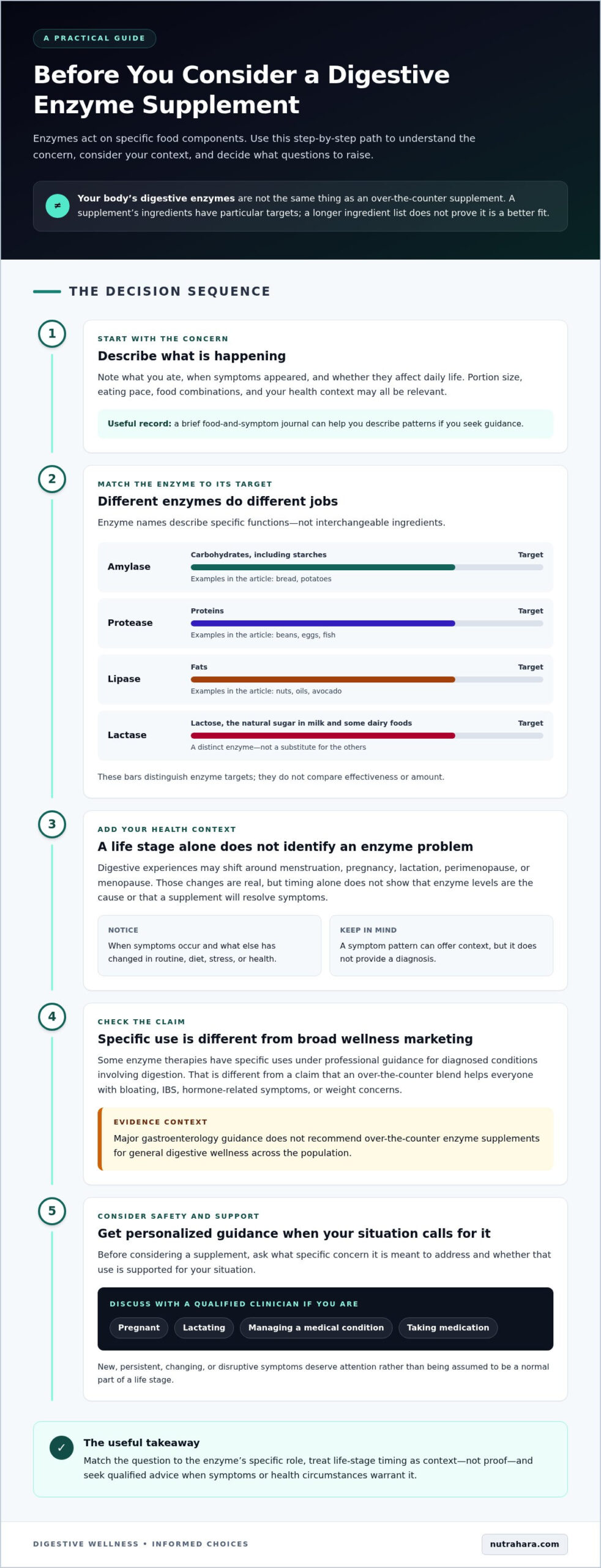
These names describe different enzyme functions, not interchangeable ingredients. Amylase helps digest carbohydrates, including starches, into smaller sugar units. Protease helps break proteins into smaller peptides and amino acids. Lipase helps break fats into components the body can absorb. Because meals contain a mix of nutrients, digestion involves more than one enzyme acting on a single kind of food.

  • Amylase: Acts on carbohydrates such as starches found in foods like bread or potatoes.
  • Protease: Acts on proteins found in foods such as beans, eggs, and fish.
  • Lipase: Acts on fats present in foods such as nuts, oils, and avocado.

Lactase is another distinct enzyme. It helps digest lactose, the natural sugar in milk and some dairy foods. It isn’t a substitute for amylase, protease, or lipase; each enzyme has a different target.

As a practical first step, note what you ate and when symptoms appeared instead of assuming one enzyme explains them. Portion size, eating pace, food combinations, and your individual health context may all be relevant. A brief food and symptom journal can help you describe patterns if you seek guidance. Knowing the roles of different enzymes also makes it easier to read supplement labels without treating a longer ingredient list as proof that a product is a better fit.

Digestive Enzymes for Women: What Life Stage Can, and Cannot, Tell You

Being a woman, by itself, doesn’t establish a need for enzyme supplements. Enzymes have specific roles in digestion, but a claim that women need extra enzymes because of sex, hormones, or age is a separate claim that needs evidence of its own. Enzymes help break down particular food components; it has not been established that women as a group need over-the-counter enzyme supplements to support digestion.

That distinction can be useful during life changes. Some women notice digestive patterns shift around menstruation, pregnancy, lactation, perimenopause, or menopause. Those experiences are real, but they don’t show that enzyme levels are the cause or that supplements will resolve symptoms. Changes in routine, diet, stress, health conditions, and other factors may also play a role. When symptoms occur can offer context, but it does not provide a diagnosis.

Can hormones or life stages affect digestive experiences?

Hormonal shifts may coincide with changes in bowel habits or digestive comfort, but experiences vary. Pregnancy and postpartum life can bring changes in eating patterns, activity, and daily routines. Menopause can overlap with other changes in health and lifestyle. None of these stages, on its own, identifies an enzyme problem. Note when symptoms occur, what else has changed, and whether they affect your daily life.

If symptoms are new, persistent, or disruptive, discuss them with a qualified clinician instead of assuming they are a normal part of a life stage. This is particularly useful if symptoms are changing or you’re considering a supplement alongside other health needs. Notes on timing, meals, and symptoms can make that conversation more specific.

What does the evidence say about enzyme supplements?

Some enzyme therapies have specific uses under professional guidance for diagnosed conditions involving digestion. That differs from broad wellness marketing that suggests an over-the-counter blend will help everyone with bloating, IBS, hormone-related symptoms, or weight concerns. Major gastroenterology guidance does not recommend over-the-counter enzyme supplements for general digestive wellness across the population. A discussion of Digestive Enzyme Supplements also highlights why claims and evidence deserve careful attention.

Before considering a supplement, ask what specific concern it is meant to address and whether that use is supported for your situation. Take your life stage and health context into account, and seek personalized professional guidance if you’re pregnant, lactating, managing a medical condition, or taking medication. A product being available or labeled for women does not, by itself, show that it is appropriate for you.

Digestive enzymes for women are not a separate need simply because the person considering them is female. The more useful question is whether a specific enzyme has a relevant role in a specific, understood context. Keeping that in mind can help you respond to digestive changes with curiosity and care, without blaming yourself or rushing toward a one-size-fits-all answer.

Digestive Enzymes vs. Other Gut-Health Approaches: Compare the Purpose

Different approaches serve different purposes. A supplement, everyday eating habits, and a clinician’s assessment aren’t competing answers to the same question, and no single option suits every symptom. Use the comparison below to understand what each may contribute and where its limits lie.

Approach Purpose Limit
Enzyme supplements Provide specific enzymes that act on particular food components. They aren’t a universal response to digestive symptoms, and a broad blend may not address the cause of a concern.
Food-based habits Support regular nourishment and help you notice how eating patterns relate to your comfort. Routine changes can’t diagnose or resolve every underlying cause.
Clinician assessment Help evaluate symptoms in the context of your health, medications, and life stage. It takes an individualized look; general online advice can’t replace that assessment.

How are enzymes different from probiotics?

Enzymes help break down food components. Probiotics are live microorganisms. The terms describe different things with different functions, so probiotics aren’t a substitute for enzymes, and enzymes aren’t a substitute for probiotics. Neither category is automatically necessary for every woman. Before choosing a supplement, consider the question you’re trying to answer instead of assuming that products described as supporting “gut health” are interchangeable.

When is a food-first or clinical approach more appropriate?

For a practical starting point, take time for meals and stay hydrated in a way that fits your needs. Notice whether symptoms seem to follow particular foods, meal timing, or changes in your routine. A brief symptom diary can help organize your observations for you and a clinician, but it can’t identify a diagnosis on its own.

Seek qualified evaluation instead of self-treating indefinitely if symptoms persist, feel severe, or concern you. This applies whether you’re menstruating, pregnant, lactating, or going through menopause; life stage alone doesn’t explain every digestive change. Bring notes about what you experience and when to help make the conversation more useful.

Claims about digestive enzymes for women can also blur into claims about weight loss. Enzymes aren’t a weight-loss shortcut, and a supplement should not replace sustainable habits such as balanced meals, movement you enjoy, and restorative practices like yoga or meditation. Choose an approach based on your specific concern, not on a promise that one product can do everything.

How to Consider Digestive Enzyme Supplements Safely

Start with the concern, not the bottle. A supplement may be unnecessary, may not match your symptoms, or may need professional review in light of your health and medications. Use this sequence to make a more deliberate decision:

  • Define the concern: Describe what you’re experiencing, when it happens, and how it affects daily life.
  • Review your context: Consider your life stage, health conditions, medicines, and any other supplements you use.
  • Seek qualified advice: Discuss a possible supplement with a clinician or pharmacist when your circumstances call for personalized guidance.
  • Reassess: If you and a qualified professional decide to try it, follow the label and review whether it remains appropriate.

What should you consider before trying an enzyme supplement?

Before speaking with a clinician or pharmacist, write down your symptoms, when they occur, relevant meals, and any changes in your health or routine. A clear account keeps the discussion focused on your experience rather than a broad product claim. If you’re pregnant or lactating, have a medical condition, or take medication, seek personalized advice before starting a supplement. These factors can affect whether an ingredient is suitable or whether it might interact with your care.

Read the full ingredient label, including other active and inactive ingredients, and follow the product directions. “Natural” doesn’t mean risk-free, and a label can’t establish that a product is right for you. In the United States, dietary supplements are regulated as a category of food and aren’t FDA-approved for safety and effectiveness before they’re marketed. If you experience a concerning reaction, stop using the supplement and seek advice from a qualified professional.

What everyday habits support digestive wellness?

Simple routines can support overall well-being without promising to treat a symptom. When possible, sit down for meals, slow your pace, and pay attention to hunger and fullness. Drink fluids regularly in a way that suits your health needs. Gentle movement, such as a walk after a meal if comfortable, can fit naturally into an active routine. Yoga and meditation may support relaxation and mindful habits, but they aren’t enzyme therapies.

Keep brief notes on meals, symptoms, sleep, stress, and activity to help you notice patterns over time. Look for useful observations rather than proof that one food or life-stage change is the cause. Avoid eliminating whole food groups based only on a diary; restrictive changes can make balanced nourishment harder and may obscure what’s happening. If symptoms persist or interfere with daily life, take your notes to a qualified clinician instead of continuing to self-treat.

For a broader perspective on thoughtful supplement choices, explore Nutrahara’s women’s wellness supplements. The same steady approach applies to digestive enzymes for women: start with your needs, consider your full health context, and make changes with informed guidance.
Digestive Enzymes for Women: A Guide to Choosing Wisely

A More Empowered Approach to Women’s Digestive Wellness

Digestive symptoms deserve curiosity, not self-blame. They don’t mean you’ve failed at eating well or need to find a perfect routine. Your body’s needs can shift across menstruation, pregnancy, lactation, perimenopause, and menopause, and one person’s experience won’t necessarily explain another’s. A thoughtful next step is to observe what’s happening and respond with patience instead of reaching for a quick fix.

How can women build sustainable wellness routines?

Choose manageable practices that fit your real life, including your energy, schedule, health, and life stage. Your routine might include making time for meals, choosing movement you enjoy, or protecting a regular wind-down period. Yoga and meditation are optional ways to bring mindful movement or calm into your day. They don’t need to be elaborate to feel worthwhile, and they aren’t treatments for digestive symptoms.

Consistency matters more than perfection. If a habit is hard to maintain, make it smaller or adapt it. A brief stretch after a long day or a few quiet breaths before a meal may feel more realistic than a complete lifestyle overhaul. Let your routine support confidence and well-being, rather than become another standard you feel you must meet.

When should you seek personalized guidance?

Consider speaking with a qualified clinician if digestive symptoms persist, worsen, or interfere with daily activities. Pregnancy and lactation are also reasons to seek individualized guidance before using supplements, since general wellness advice can’t determine what’s appropriate for your specific circumstances. You deserve support that considers the whole picture, not just one symptom or ingredient.

Keep a simple record to help you prepare: note when symptoms occur, relevant meals or routine changes, and how symptoms affect you. Use those observations to start a conversation, not to diagnose yourself or impose restrictive rules. If you’re considering digestive enzymes for women, let the specific reason, your health context, and qualified advice guide the decision.

A gentle checklist can make the next step feel manageable:

  • Observe: Notice patterns in symptoms, meals, routines, and life-stage changes.
  • Support: Choose nourishing habits and movement that feel sustainable for you.
  • Seek guidance: Ask a qualified professional for help when symptoms persist or supplement questions involve pregnancy, lactation, a health condition, or medication.

Rather than comparing your experience with someone else’s, use your own observations to decide what support may be useful. A note about when symptoms arise or what has changed in your routine can be a practical starting point for a conversation with a qualified professional.

Nutrahara’s approach to women’s wellness draws on Ayurvedic principles alongside modern nutritional research as general wellness context, not as evidence that digestive enzymes produce a particular result. Let your own needs lead, and consider Nutrahara’s broader wellness perspective as one part of a personal, informed health journey.

Let Your Next Step Begin With Self-Trust

Your digestive wellness doesn’t need to follow someone else’s formula. Give yourself room to notice what your body is communicating, make thoughtful choices, and seek personalized guidance when you need it. If you’re considering digestive enzymes for women, let a specific concern and your individual health context guide the conversation, not pressure to try every new wellness trend.

Small, sustainable habits can be a meaningful foundation: nourish yourself consistently, choose movement that feels good, and make space for rest. Yoga or meditation may help you build moments of mindful calm if they suit your routine. Progress doesn’t have to be perfect to count. Confidence can grow as you learn what supports your well-being over time.

Nutrahara’s women’s wellness supplements focus on natural, clean ingredients. Explore that wider approach to self-care with Nutrahara’s women’s wellness approach.

Frequently Asked Questions

What do digestive enzymes do in the body?

Digestive enzymes help the body process food so nutrients can be absorbed. Your body makes these enzymes naturally: amylase acts on carbohydrates, protease on proteins, and lipase on fats. They work as part of a larger digestive process, not as a stand-alone fix. Occasional digestive discomfort alone doesn’t show that you need a supplement; consider the pattern and context before deciding what to do next.

Are digestive enzymes safe for women during pregnancy or breastfeeding?

There isn’t one safety answer for every pregnant or breastfeeding person. Suitability depends on the product’s specific ingredients and your health circumstances, so don’t assume “natural” means risk-free. Before using an enzyme supplement, review the label and discuss it with a qualified healthcare professional who knows your pregnancy or lactation context. Seek guidance for persistent or concerning symptoms rather than relying on a supplement to manage them.

Can digestive enzymes help with bloating?

Bloating can have different causes, and the symptom alone doesn’t establish that enzymes are needed. A specific enzyme may have a role in digesting a particular food component, but that doesn’t support a broad promise to relieve bloating. Notice whether the sensation follows a certain meal, eating pace, or routine change. If it persists, worsens, becomes painful, or disrupts daily activities, seek qualified advice.

Do women need digestive enzyme supplements as they get older?

No. Age or gender alone doesn’t establish a need for digestive enzymes for women. If your digestion changes with age or around menopause, consider the full picture instead of assuming a supplement is the answer. Note when the change began, any new medications or health concerns, and how symptoms affect daily life. A qualified clinician can help consider these details and whether further evaluation is appropriate.

What is the difference between digestive enzymes and probiotics?

Enzymes help break down food components, while probiotics are live microorganisms. They have different roles and aren’t interchangeable, so choosing one doesn’t automatically meet the purpose of the other. Neither type of supplement is essential for every person. For example, a product labeled for “gut health” may contain one category or the other, so check the ingredient panel and consider what specific need you’re trying to address.

Can yoga or meditation improve digestion?

Yoga and meditation can support a mindful wellness routine, but they aren’t treatments for digestive conditions or ways to increase enzyme activity. You might use gentle movement to stay active or take a few quiet breaths before eating to slow down and focus on your meal. Choose practices that feel comfortable for your body. If symptoms continue or interfere with everyday activities, seek qualified guidance rather than relying on these practices alone.

When should I talk to a healthcare professional about digestive symptoms?

Seek personalized advice if symptoms persist, worsen, recur, or interfere with everyday life. A clinician can consider your health history, medicines, eating patterns, and life stage instead of assuming one cause. It’s also wise to discuss a planned supplement if you’re pregnant, breastfeeding, managing a health condition, or taking medication. Bring notes about symptom timing and recent changes to help make the conversation more useful.

Article by

Nutrahara Team

We are a dedicated collective of nutrition scientists and naturopaths at Nutrahara, committed to advancing women's health through the fusion of ancient Ayurveda science and cutting-edge nutrition research. Our mission is to empower you with clean, simple, and scientifically validated wellness solutions so you can live your healthiest life. Connect with us to stay updated on the latest developments in holistic women's health and nature-based research.

Disclaimer

This article is not a substitute for medical advice. Please consult a healthcare professional before starting any supplement, especially if pregnant, nursing, taking medication, or managing health conditions.

Categories
Articles

Women’s Gut Health Supplements: An Evidence-Led Guide

More supplements don’t necessarily mean better gut support. With probiotics, prebiotics, and other digestive products making broad promises, it can be hard to know which women’s gut health supplements, if any, belong in your routine. A useful choice starts with a specific goal, a clear ingredient list, and evidence that relates to the product and outcome you’re considering.

Digestive wellbeing can shift across menstruation, pregnancy, lactation, perimenopause, and menopause. But a life stage alone doesn’t mean you need a supplement, and a product that suits one person may not suit another. Rather than trying every new formula, take stock of what you want to address and consider whether the product fits your personal circumstances.

This guide compares common supplement categories, explains what to look for on labels, and offers everyday ways to support wellbeing through food choices, movement, yoga, meditation, and rest. If you’re pregnant or breastfeeding, or managing a health concern, speak with a healthcare professional before starting a supplement. Small, steady choices can make gut care feel more grounded and personal.

Key Takeaways

  • Compare probiotics, prebiotics, and other gut health products by their ingredients, intended purpose, and the evidence for the specific product or formulation.
  • Decide what you want a supplement to support before shopping, and consider how your health needs or life stage may affect suitability.
  • Digestive symptoms can have different causes; supplements aren’t a substitute for appropriate health assessment.
  • Build a supportive routine with varied meals, hydration, movement, and steady habits. Yoga and meditation can complement overall wellbeing.
  • Read labels thoughtfully. “Natural” doesn’t automatically mean safe or effective for everyone.

Women’s Gut Health Supplements: What They Are and What They Can, and Can’t, Do

Women’s gut health supplements are products intended to support aspects of digestive or microbiome health. That broad description covers different ingredients and formulations. It doesn’t mean every product works in the same way, suits the same person, or has the same level of evidence behind it.

Supplements may be one part of a wellness routine, but they don’t diagnose the cause of symptoms or replace medical assessment and care. Persistent, severe, or concerning digestive changes deserve attention beyond choosing a supplement. Start by identifying what a product contains and what it is intended to support, rather than relying on a general “gut health” promise.

What do people mean by gut health supplements?

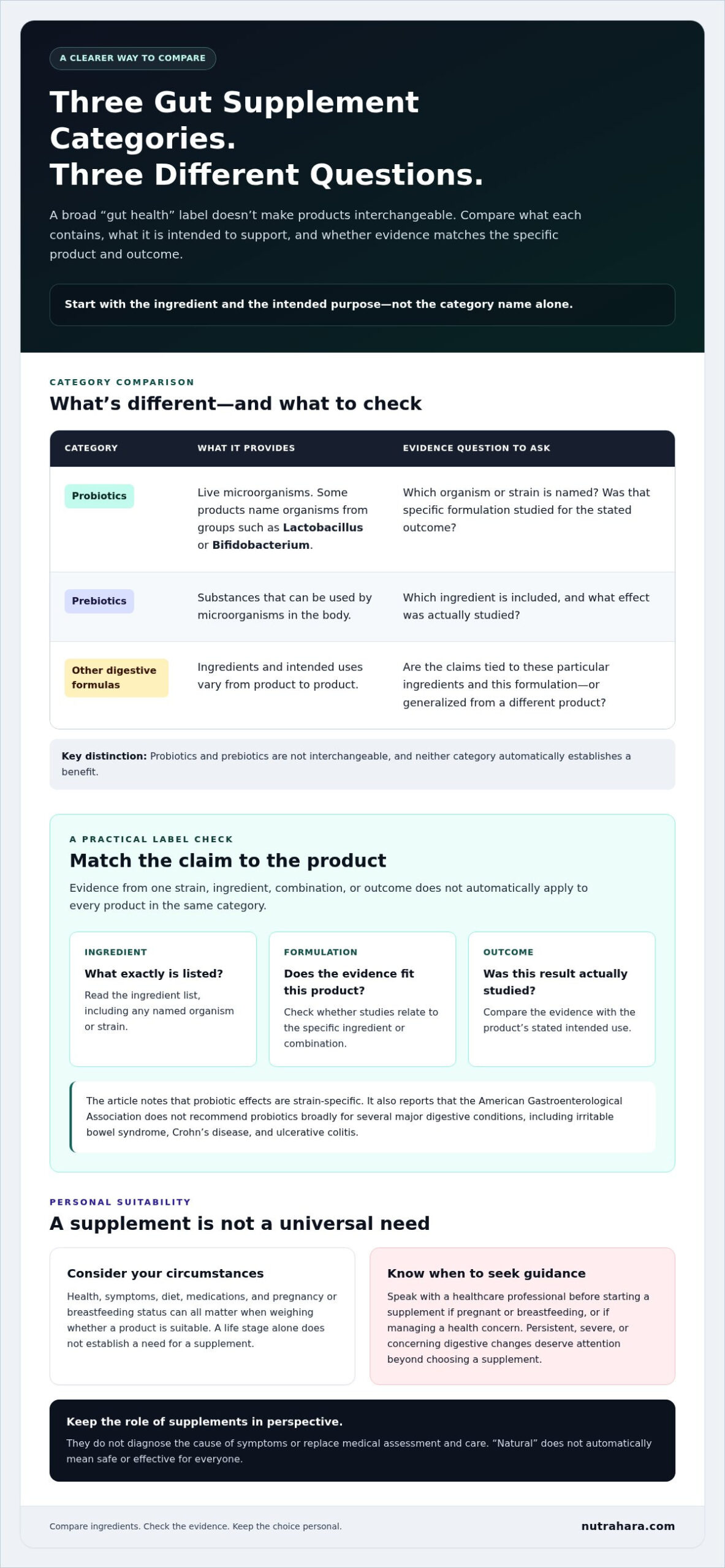
The term can refer to probiotics, prebiotics, and other digestive-support ingredients. Probiotics are live microorganisms; prebiotics are substances that can be used by microorganisms in the body. Other products may contain ingredients with different intended uses. Effects depend on the specific ingredient, formulation, and outcome being considered, so one category shouldn’t be treated as interchangeable with another.

The gut microbiome is the community of microorganisms living in the digestive tract. The related term gut microbiota describes those organisms, including bacteria and other microbes. Digestion is the process of breaking down food and absorbing nutrients. These concepts are connected, but “supporting the microbiome” and addressing a digestive symptom aren’t identical claims. Check a product’s stated purpose and evidence rather than inferring benefits from its category name.

Why women’s needs may vary across life stages

Menstruation, pregnancy, lactation, perimenopause, and postmenopause can bring different health considerations and questions. Still, being a woman or being at a particular life stage doesn’t by itself establish a need for a gut supplement. Personal health, symptoms, diet, medications, and pregnancy or breastfeeding status can all matter when weighing suitability.

If you’re considering women’s gut health supplements, begin with a clear reason and keep expectations measured. During pregnancy or lactation, discuss supplement use with a qualified healthcare professional before starting. For a wider view of how supplement decisions fit into women’s wellbeing, explore a women’s wellness supplements guide, while keeping your choices personal, informed, and grounded in evidence.

How Probiotics, Prebiotics, and Other Gut Supplements Differ

The label “gut supplement” can describe products with quite different contents and intended uses. Probiotics and prebiotics are often discussed together, but they aren’t interchangeable. Knowing the difference helps you read a label with care instead of assuming that a broad gut-health claim tells the whole story.

Probiotics and prebiotics are not interchangeable

Probiotics are live microorganisms. Some products name organisms from groups such as Lactobacillus or Bifidobacterium, but those names alone aren’t a recommendation or proof of benefit. Prebiotics are substances microorganisms can use. A product may contain one category or combine ingredients, and both its formulation and intended use can vary.

Other digestive supplements may use different ingredients or combinations. Evaluate their purpose and evidence individually rather than assuming what they do from the word “digestive” on the label.

Category General purpose Evidence questions to consider
Probiotics Provide live microorganisms. Which organism or strain is named? Was that specific formulation studied for the stated outcome?
Prebiotics Provide substances that can be used by microorganisms. Which ingredient is included, and what effect was actually studied?
Other digestive formulas Vary according to their ingredients and intended use. Are the claims tied to the particular ingredients and formulation, or generalized from a different product?

How to interpret evidence and supplement labels

Evidence isn’t automatically transferable from one product to another. A study of a specific strain, ingredient, combination, or outcome doesn’t establish that every product in the same category has the same effect. The American Gastroenterological Association’s guidance reflects this distinction: probiotic effects are strain-specific, and it doesn’t recommend probiotics broadly for several major digestive conditions, including irritable bowel syndrome, Crohn’s disease, and ulcerative colitis.

Read the ingredient list, serving information, and stated intended use together. Then ask whether the evidence relates to the exact ingredient or formulation and the outcome described. This expert discussion of colostrum supplements illustrates why a trending ingredient deserves consideration on its own, rather than being treated as interchangeable with probiotics or prebiotics.

There’s no single category that every woman needs. A thoughtful choice of women’s gut health supplements starts with a clear purpose, a readable label, and claims that match the evidence, not simply a familiar ingredient name.

Are Women’s Gut Health Supplements Necessary or Right for Everyone?

No single probiotic or digestive supplement is right for every woman. A product that suits one person may not be useful or appropriate for another, because digestive symptoms and health needs can have different causes. Menstruation, menopause, or a general interest in wellness doesn’t automatically mean you need a supplement.

Before shopping, take stock of what’s happening and the context around it. Notice when symptoms occur, whether they’re new or ongoing, and whether changes in meals, hydration, activity, or routine seem relevant. This isn’t a way to diagnose yourself. It can help you describe your experience clearly and decide whether a supplement question is best discussed with a qualified healthcare professional.

When a supplement may not be the first step

Digestive discomfort can arise for many reasons, and a supplement label can’t identify the cause. Supplements don’t diagnose or treat an underlying condition, and there’s no guarantee they’ll relieve symptoms. If symptoms are persistent, worsening, or concerning, seek guidance from a qualified clinician rather than relying on trial and error. Don’t stop or change prescribed treatment without discussing it with the professional who oversees your care.

A simple note about meals, symptoms, daily routine, and any products you take can help make a conversation more useful. Record patterns without assuming that one food or supplement is responsible.

Questions to consider at different life stages

Personal circumstances can shape whether a supplement is suitable. Before starting women’s gut health supplements, consider:

  • Pregnancy or lactation: Have you discussed the specific product and its ingredients with a qualified healthcare professional?
  • Medications or ongoing health conditions: Could the ingredients be relevant to your current care or treatment plan?
  • Allergies or sensitivities: Have you checked the full ingredient list, including additional components?
  • Menstruation, perimenopause, or postmenopause: Is there a specific concern you’re hoping to address, or are you assuming a supplement is needed because of your life stage?

These questions aren’t reasons to feel anxious. They’re a calm way to make a more informed choice. If you’re unsure about suitability, a qualified healthcare professional can help you consider your personal health context. A thoughtful routine may include supplements for some women; for others, a better first step is understanding symptoms and supporting everyday wellbeing.

How to Build a Gut-Supportive Routine Beyond Supplements

Daily habits can create a steady foundation for digestive wellbeing without rigid rules. Choose changes that fit your life, energy, preferences, and health needs. A nourishing routine doesn’t need to be perfect to be worthwhile.

Everyday habits that can support digestive wellbeing

Where practical, include a variety of foods and build meals around what’s accessible and enjoyable to you. If your schedule allows, eating at reasonably consistent times may make your routine feel more predictable. Drink fluids regularly, adjusting for activity, environment, and personal health circumstances. There’s no single plan that suits everyone.

Movement can be simple: a walk, a fitness class, or an activity you look forward to. If you’re changing your routine, start with a manageable step and notice how you feel rather than pushing through discomfort. A brief note about meals, movement, hydration, and digestive patterns may help you spot trends. Keep it light: day-to-day variation is normal and doesn’t, by itself, point to a diagnosis.

Yoga, meditation, and a sustainable wellness rhythm

Yoga or mindful movement can offer a flexible way to include activity and body awareness in your week. Choose a pace and style that feel comfortable, and adapt movements to your abilities or changing needs. A short pause for slow breathing, meditation, or another relaxing practice can also create space to reset during a busy day. These practices support general wellbeing, but aren’t treatments for digestive conditions.

Consistency matters more than an elaborate routine. You might link a gentle stretch to a time you already have free, or take a short walk after a meal if that feels pleasant. Adjust without self-criticism when work, caregiving, travel, menstruation, or other life changes disrupt your plans. Progress can mean finding a rhythm you can return to, not following a flawless schedule.

Habits support everyday wellbeing; supplements are an optional, separate choice to consider for a specific purpose. If you use women’s gut health supplements, let them complement, not replace, sustainable routines and appropriate health guidance.

Women’s Gut Health Supplements: An Evidence-Led Guide

Choosing Women’s Gut Health Supplements With Care

A clear label and a specific purpose are more useful than a sweeping promise. Before adding a product to your routine, consider what you hope it will support and whether the available evidence matches that intention. A thoughtful choice can be one part of a wider wellness journey, not a shortcut or a substitute for individualized care.

A practical checklist for evaluating a supplement

  • Purpose: Is the intended use clearly stated? Look for a specific, understandable explanation rather than a claim that promises to fix every digestive concern.
  • Ingredients: Can you identify the ingredients and serving information on the label? Check the full list, including components that may matter for allergies or sensitivities.
  • Evidence: Do claims relate to the specific ingredient or formulation, and to the outcome described? Evidence about one formulation doesn’t automatically apply to every product in its category.
  • Personal context: Consider medications, allergies, ongoing health conditions, pregnancy, or lactation. These factors may affect whether a product is appropriate for you.
  • Transparency: Be cautious of guaranteed results or broad claims that aren’t clearly connected to evidence. “Natural” describes an ingredient’s origin, not whether it’s safe or effective for every person.

Keep the decision personal and evidence-aware

If you’re uncertain about safety or suitability, especially during pregnancy or breastfeeding or while taking medication, discuss the specific product with a qualified healthcare professional. Bring the label and explain your intended use. This makes it easier to consider the product in light of your circumstances, without assuming that a supplement is necessary or that a familiar ingredient is automatically the right choice.

Digestive enzymes are distinct from probiotics and prebiotics, with their own ingredients and intended uses. Consider them separately rather than assuming one category can stand in for another. The same careful approach applies to women’s gut health supplements: match the product’s purpose and evidence to your question, and keep expectations measured.

Nutrahara brings Ayurvedic principles together with modern nutritional research in its approach to women’s wellness. Its women’s health supplements are made with natural and clean ingredients and are designed to support areas including digestion, skin, hair, nails, and brain function. Consider your goals and review the product information as you decide what fits your routine.

Make Gut Care a Thoughtful Part of Your Wellness Journey

Choosing support for digestive wellbeing doesn’t have to mean following every trend. Probiotics, prebiotics, and other products have different purposes, and evidence for one ingredient or formulation doesn’t automatically apply to another. The right choice depends on your goals, health context, and life stage. Supplements aren’t a substitute for assessment when symptoms persist or concern you.

Everyday habits matter, too. Varied meals, hydration, enjoyable movement, and a routine that leaves room for yoga or meditation can all contribute to a balanced approach to wellbeing. Start with manageable steps and notice what feels sustainable for you.

For women considering women’s gut health supplements, an informed decision begins with clear ingredients, realistic claims, and attention to personal suitability. Nutrahara combines Ayurvedic principles with modern nutritional research in its women’s wellness supplements, using natural and clean ingredients. Explore Nutrahara’s women’s health supplements as you shape a considered routine of your own. Small, thoughtful choices can help you move forward with confidence.

Frequently Asked Questions

Are gut health supplements safe for women?

Not every gut health supplement is suitable for every woman. Safety depends on the product’s ingredients and your personal context, including allergies, medications, ongoing health conditions, and whether you’re pregnant or breastfeeding. Read the full label and don’t assume that “natural” means risk-free. If you’re unsure whether a product is appropriate for you, discuss its ingredients and intended use with a qualified healthcare professional.

Can women take probiotics during pregnancy or while breastfeeding?

Some women may consider probiotics during pregnancy or breastfeeding, but suitability depends on the specific product and individual circumstances. Don’t assume that a product is appropriate simply because it’s a probiotic or marketed for women. Review the ingredients and intended use with a qualified healthcare professional before starting one, especially if you take medication or have an ongoing health condition. This supports a decision tailored to your care and life stage.

What is the difference between probiotics and prebiotics?

Probiotics are live microorganisms, while prebiotics are substances that microorganisms can use. They have different roles and aren’t interchangeable, even when a product combines them. Formulations also vary, so a claim about one probiotic strain or prebiotic ingredient doesn’t automatically apply to all products in its category. Check which ingredients are named and what specific purpose the product describes before deciding whether it fits your needs.

How do I choose a gut health supplement?

Start by identifying what you want the product to support, then read the ingredient list, serving information, and stated intended use. Look for clear, measured claims tied to the specific ingredients or formulation, rather than broad promises. Consider allergies, medications, pregnancy or breastfeeding, and relevant health conditions. If a label or safety question is unclear, a qualified healthcare professional can help you assess whether it’s appropriate for your circumstances.

Do all women need a probiotic supplement?

No, a probiotic supplement isn’t a universal requirement for women. Menstruation, perimenopause, or menopause doesn’t automatically mean you need one, and digestive symptoms can have different causes. If you’re considering women’s gut health supplements, think about your specific goal and the evidence for that product rather than choosing by category alone. Persistent or concerning symptoms call for assessment by a qualified clinician, not supplement trial and error.

Can yoga or meditation improve gut health?

Yoga and meditation can be part of a broader wellbeing routine, but they shouldn’t be presented as treatments for gut conditions. Gentle yoga, mindful movement, or a brief relaxation practice may help you build a sustainable routine that supports general wellbeing. Choose an approach that feels comfortable and adaptable to your needs. If digestive symptoms persist or worry you, seek guidance from a qualified clinician rather than relying on these practices alone.

Article by

Nutrahara Team

We are a dedicated collective of nutrition scientists and naturopaths at Nutrahara, committed to advancing women's health through the fusion of ancient Ayurveda science and cutting-edge nutrition research. Our mission is to empower you with clean, simple, and scientifically validated wellness solutions so you can live your healthiest life. Connect with us to stay updated on the latest developments in holistic women's health and nature-based research.

Disclaimer

This article is not a substitute for medical advice. Please consult a healthcare professional before starting any supplement, especially if pregnant, nursing, taking medication, or managing health conditions.

Categories
Articles

Probiotics for Women’s Health: A Holistic Guide

You finish your morning yoga flow feeling centered, only for the familiar discomfort of mid-day bloating or a recurring pH imbalance to disrupt your sense of peace. It’s frustrating when you’re doing everything right, yet your body still feels out of sync during hormonal transitions. You’re likely searching for the best probiotics for women’s health to help restore that lost harmony. You deserve to feel as vibrant on the inside as you project on the outside. We understand that true wellness is a long-term progression, not a series of quick fixes.

This guide explores how the synergy of modern science and ancient Ayurvedic wisdom can transform your vitality. By bridging the gap between traditional natural philosophies and clinical validation, you can reclaim your body’s natural rhythm. We’ll walk through the specific strains that support vaginal and digestive balance, providing a clear framework to help you choose the right supplement. Discover how to quiet the brain fog and restore your confidence through the power of a balanced microbiome. Your journey toward lasting health starts with nurturing your unique inner ecosystem.

Key Takeaways

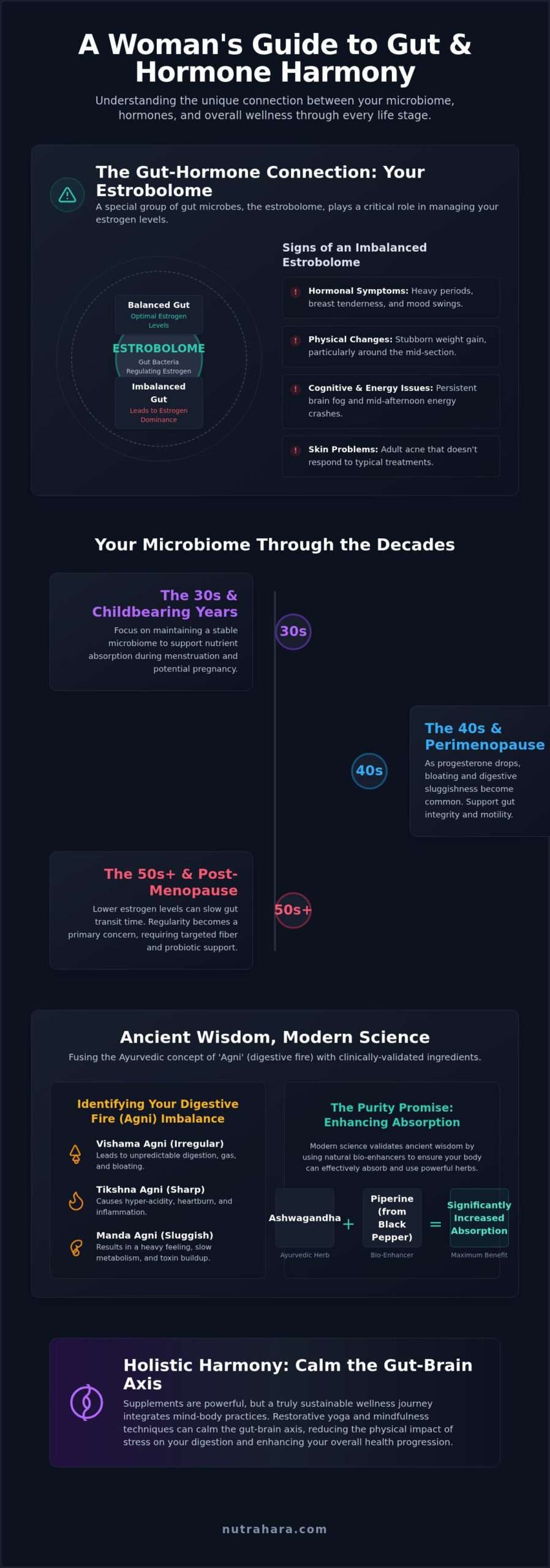
  • Learn how your “estrobolome” regulates estrogen levels to support hormonal balance and ease transitions through every life stage.
  • Identify the specific “Big Three” strains and understand how the Ayurvedic concept of Agni creates the perfect environment for these living allies.
  • Discover how targeted probiotics for women’s health can clear menopause brain fog and support metabolic stability through the gut-brain axis.
  • Master the art of reading supplement labels by looking for specific strain designations to ensure you’re choosing high-quality, pure formulas.
  • Understand why pairing your probiotics with prebiotic fibers is essential for sustaining your body’s natural ecosystem and long-term vitality.

Understanding Probiotics for Women’s Health: More Than Just Digestion

Your body is a living ecosystem, a beautifully complex garden that requires constant care and the right nutrients to thrive. Think of probiotics as living allies rather than just supplements. These beneficial microbes work in harmony with your natural systems to maintain balance across your gut, skin, and reproductive health. For women, this relationship is particularly vital. Your health is a personal, ongoing journey, and as you move through different life stages, your microbial needs change. Gaining a comprehensive overview of probiotics reveals that these tiny organisms do much more than help with a heavy meal; they are foundational to your systemic well-being.

Between the ages of 30 and 60, women face unique biological shifts. Research shows that microbial diversity often drops during perimenopause as estrogen levels begin to fluctuate. This decline can leave you feeling less like yourself, but targeted probiotics for women’s health can help bridge the gap. By supporting your internal flora, you aren’t just fixing a symptom. You’re investing in your long-term health progression.

The Gut-Hormone Connection

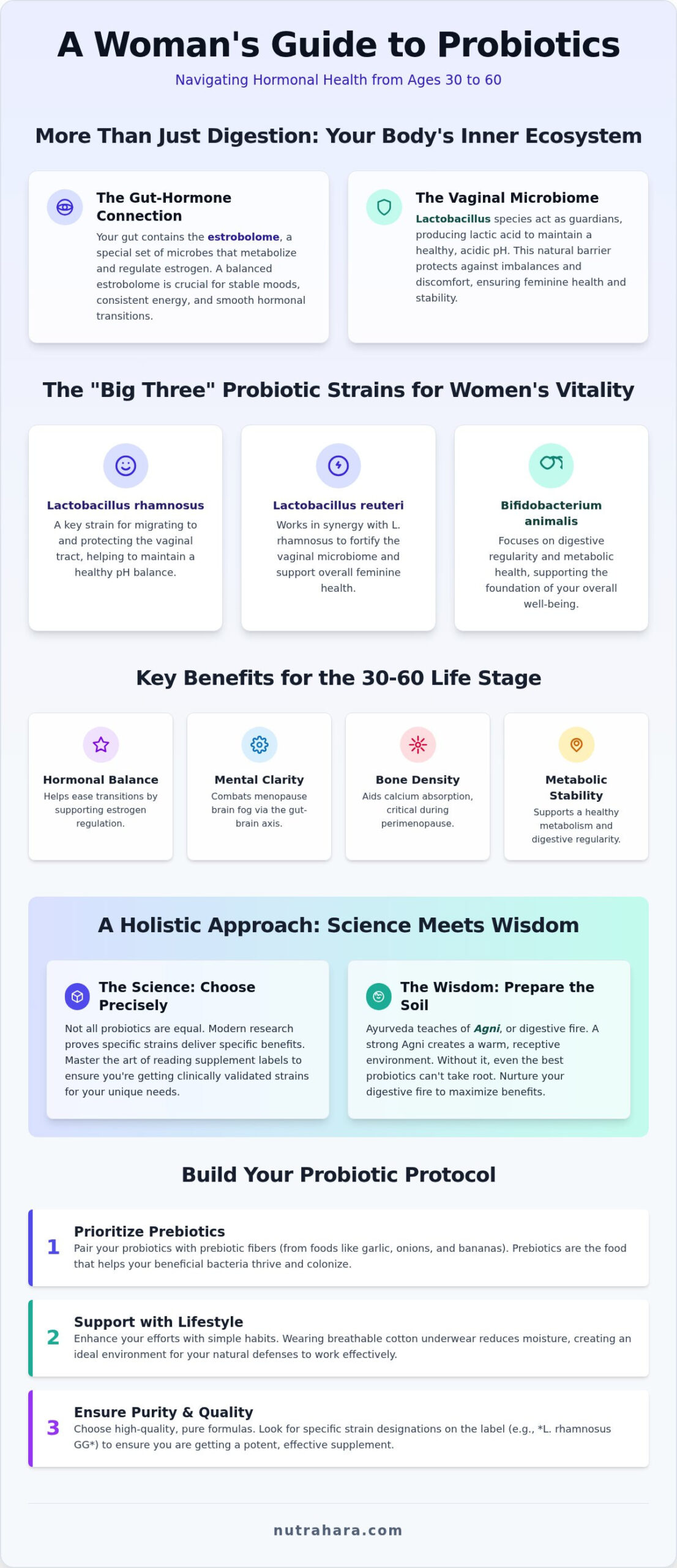
The estrobolome is the specific subset of gut microbes responsible for metabolizing and recycling estrogen to maintain hormonal equilibrium. When your gut bacteria are flourishing, they help regulate the amount of estrogen circulating in your blood. If this system falters, you might notice significant dips in mood or energy during your menstrual cycle. Stress plays a role here too. High cortisol levels can suppress beneficial bacteria, making it harder for your body to stay resilient. Maintaining a healthy gut is essential for keeping your hormones steady and your mind clear, while choosing sustainable menstrual underwear from Annahitah ensures you stay comfortable and confident throughout your cycle.

The Vaginal Microbiome: A Delicate Balance

The vaginal environment is its own distinct ecosystem that thrives on a delicate balance of acidity. Lactobacillus species act as guardians, producing the lactic acid necessary to keep pH levels in a healthy, acidic range. This natural barrier protects you from discomfort and imbalances. To support this area, many women find that specialized supplements like Femmepower provide the specific strains needed for local stability. Choosing the right probiotics for women’s health ensures you are addressing your body’s specific needs rather than taking a one-size-fits-all approach.

Wise Guide Tip: For the best results, pair your probiotic support with breathable cotton underwear. This combination reduces moisture buildup and allows your natural defenses to work effectively, creating a dual-force for your feminine health. For those in the postpartum phase, you might also explore Upside Down Peri Bottle from Ninja Mama to maintain hygiene and comfort during recovery.

The Science of Strains and the Wisdom of Ayurveda

While modern research identifies the specific microscopic workers that support our bodies, ancient Ayurveda teaches us how to prepare the soil where they grow. This fusion of ancient botanical wisdom and modern microbial research is the cornerstone of the Nutrahara philosophy. We believe that choosing effective probiotics for women’s health requires looking at both the strain and the internal environment. Without a balanced internal climate, even the most advanced supplement may struggle to colonize effectively.

Current research highlights the “Big Three” strains as essential allies for feminine vitality. Lactobacillus rhamnosus and Lactobacillus reuteri are specifically valued for their ability to migrate to and protect the vaginal tract. Meanwhile, Bifidobacterium animalis supports digestive regularity and metabolic health. A recent scientific review on probiotics for gynecological conditions confirms that these specific strains are foundational for managing balance during hormonal shifts. Using probiotics for women’s health isn’t just about adding bacteria; it’s about selecting the right partners for your biology.

Ayurveda introduces the concept of Agni, or digestive fire. Think of Agni as the warmth and energy required to transform food into life. If your digestive system is “cold” or sluggish, probiotics can’t take root. They simply pass through without providing lasting benefits. We focus on formulas that respect this fire, ensuring your body is ready to receive and nurture these living allies.

Key Strains for the 30-60 Life Stage

  • Bone Density Support: Specific strains of Lactobacillus help improve calcium absorption, which is critical as estrogen levels fluctuate during perimenopause.
  • Immune Resilience: Bifidobacterium infantis becomes more important as we age, helping to maintain a robust immune response and calm systemic inflammation.
  • Diversity Over Volume: High CFU numbers matter less than strain diversity. A varied microbial team is more resilient than a massive population of just one type.

Ayurvedic Botanicals that Support Microbes

To truly support your internal ecosystem, we incorporate botanicals that prepare the gut. Ginger and Triphala act as traditional prebiotics, clearing away sluggishness so your probiotics can thrive. Stress is another major factor in gut health. Chronic tension increases gut permeability, which disrupts your microbial balance. Incorporating Ashwagandha with Black Pepper can help lower cortisol, protecting the integrity of your gut lining. By calming the nervous system, you create a sanctuary for your beneficial bacteria to flourish. Explore our Ayurveda-inspired supplements to begin your long-term health progression today.

Addressing the Mid-Life Shift: Probiotics for Menopause and Beyond

The mid-life transition is a profound period of transformation. As estrogen levels fluctuate, many women experience a cascade of symptoms like hot flashes and night sweats. While these shifts are natural, they don’t have to be disruptive. Research suggests that specific probiotics for women’s health play a critical role in recycling estrogen through the gut. When your microbial balance is optimal, your body can better stabilize these hormonal waves, potentially reducing the intensity of hot flashes. This is part of your long-term health progression, where small internal shifts lead to significant external comfort.

Metabolic health also undergoes a shift during this time. You might notice changes in how your body processes energy or where it stores weight. Understanding how digestive enzymes and probiotics interact can provide a clearer picture of weight management during hormonal changes. By focusing on purity and scientific validation, you can support your body’s natural ability to adapt to these new rhythms.

Managing Bloating and Weight in Perimenopause

The “menopause belly” is often a result of shifting insulin sensitivity and a changing microbiome. As we age, our gut bacteria influence how we store fat and respond to blood sugar spikes. Keeping these microbes diverse helps maintain a steady metabolism and reduces the persistent bloating that many women face. It’s about empowering your body to find its natural balance once again.

The Post-Meal Trick: Try a 20-minute walk after your largest meal. This gentle movement stimulates microbial activity and aids digestion, helping to prevent the sluggishness often associated with mid-life weight shifts.

[Testimonial: “After years of feeling like my body was working against me, focusing on my gut health changed everything. I’m 52, and for the first time in a decade, the chronic bloating is gone, and I feel light again.” – Sarah, 52]

Mental Clarity and the Gut-Brain Axis

Menopause brain fog can feel like a heavy veil. It’s often linked to the gut-brain axis, the bidirectional communication highway between your digestive system and your mind. Your gut bacteria are responsible for producing a significant portion of your neurotransmitters, including Serotonin for mood and GABA for tranquility. A balanced gut supports the calm and clarity you need to navigate this life stage with confidence. For those seeking additional cognitive support, FocusZenith offers a targeted approach to mental sharpness. By nurturing your microbiome, you aren’t just supporting your digestion; you’re protecting your peace of mind.

Probiotics for Women's Health: A Holistic Guide

Building Your Probiotic Protocol: A Holistic Framework

Becoming your own health advocate starts with understanding exactly what’s in your supplement bottle. When you search for probiotics for women’s health, you’ll see many options, but not all are created equal. You must look for the “Big Three” markers on the label: the genus, the species, and the specific strain designation. This last part, often a string of letters or numbers like “HN001,” is the most important. It’s the “fingerprint” that identifies the exact microbe used in clinical research. By demanding this transparency, you’re ensuring that the living allies you welcome into your body are the ones proven to support your personal health progression.

Think of your microbiome as a delicate internal garden. You wouldn’t plant seeds and forget to water them. Prebiotics are the essential fibers that feed your beneficial bacteria, ensuring they have the energy to colonize and protect you. Without this “food,” even the highest quality supplements may struggle to thrive. Incorporating fiber-rich foods or a clean prebiotic supplement creates the perfect foundation for your probiotics for women’s health to do their best work.

Yoga Poses for Gut Health

Physical movement is a powerful tool for altering gut motility. Practicing ‘Apanasana’, or the Knees-to-Chest pose, provides gentle, rhythmic pressure that aids in gas relief and eases the discomfort of bloating. Spinal twists are equally transformative. They act like a gentle massage for your internal organs, compressing and then releasing the digestive tract to stimulate fresh blood flow. To support your body’s natural harmony through every life stage, choosing a targeted supplement like Femmepower can enhance the benefits of your daily practice.

Meditation for Microbial Harmony

Your gut is highly sensitive to your emotional state, and chronic stress can physically damage your intestinal lining. Daily mindfulness or gut-directed meditation helps lower systemic inflammation and protects your internal barriers. Just 10 minutes of quiet reflection can shift your body from “fight or flight” into “rest and digest” mode. This tranquility is essential for maintaining the delicate balance of your microbial ecosystem. If you find it difficult to settle into stillness, incorporating Ashwagandha with Black Pepper can help lower cortisol levels and prepare your mind for deeper meditation.

Wise Guide Tip: Use deep diaphragmatic breathing to stimulate the Vagus nerve. By expanding your belly as you inhale, you signal your nervous system to relax, creating the calm environment your gut needs to function optimally.

Empower your wellness journey with a protocol that honors both modern science and your body’s natural wisdom. Explore our pure, Ayurveda-inspired supplements to support your long-term health progression today.

The Nutrahara Promise: Purity, Science, and Support

At Nutrahara, we believe your wellness journey deserves a foundation of absolute purity. Many brands prioritize shelf life over actual life, but we choose a different path. Our promise is simple: we provide formulas free from artificial additives, synthetic fillers, or unnecessary chemicals. When you choose probiotics for women’s health from our collection, you’re choosing a partner that respects your body’s natural intelligence. We don’t believe in quick fixes. Instead, we focus on your long-term health progression, guiding you through every biological milestone with science-backed support and traditional wisdom.

Synergistic Supplements for Total Vitality

Integrating these living allies into a wider daily ritual is the key to lasting vitality. Your body doesn’t work in isolation, so your supplements shouldn’t either. By layering targeted nutrients, you create a comprehensive support system that addresses your gut, hormones, and spirit simultaneously. This holistic approach ensures every part of your ecosystem is nourished and resilient.

  • Hormonal Equilibrium: Pairing your probiotic ritual with FemmePower provides total support for your endocrine system during hormonal shifts.
  • Radiant Skin: Gut health and skin clarity go hand-in-hand. Combining probiotics with our Premium Collagen Complex nourishes your body from the inside out.
  • Feminine Energy: To nurture your emotional well-being, BlossomBliss works alongside your gut health protocol to restore inner peace and vibrancy.

[Testimonial: “I started the Nutrahara ritual three months ago, and the difference in my energy and skin is undeniable. I’m 42, and for the first time, I feel like I’m finally giving my body the clean, focused support it has been craving.” – Elena, 42]

Your Journey Starts Here

As your Wise and Caring Guide, our role is to provide the tools and education you need to feel confident. We invite you to explore our library of E-Books for deeper wellness education, where we dive into the nuances of Ayurvedic living. Knowledge is the ultimate form of empowerment. When you understand the “why” behind your health choices, your self-esteem and confidence naturally bloom.

Trust in your body’s ability to find balance. With the right probiotics for women’s health and a holistic mindset, you aren’t just managing symptoms; you’re thriving. Your progression toward a more vibrant, balanced version of yourself is a journey we’re honored to share with you. You have the strength to navigate every stage with grace and vitality.

Embrace Your Path to Lasting Vitality

Your journey toward vitality is a personal, long-term progression that honors your body’s changing needs. By bridging the gap between ancient Ayurvedic wisdom and clinical research, you’ve learned that true health starts within your unique ecosystem. We’ve explored how the right probiotics for women’s health can clear the fog of menopause, restore digestive fire, and support hormonal harmony. Whether you’re practicing yoga to stimulate your gut or choosing supplements with specific strain designations, you’re taking empowered steps toward lasting wellness.

Nutrahara acts as your wise guide on this health progression. We offer Ayurvedic-inspired purity in every bottle, specifically formulated for women aged 30 to 60. Our commitment to simplicity means our products are always free of artificial additives. You have the tools to navigate your next life stage with grace and self-esteem. It’s time to trust in your body’s natural wisdom and embrace a life of tranquility and strength.

Explore Nutrahara’s Science-Backed Wellness Collections and begin your transformation today. You deserve to feel vibrant, balanced, and completely yourself.

Frequently Asked Questions

What are the best probiotics for women’s hormonal balance?

The best probiotics for women’s health focus on strains that support the estrobolome. Strains like Lactobacillus acidophilus help regulate estrogen levels, ensuring your body processes hormones efficiently. Choosing a supplement with specific strain designations ensures you’re receiving the exact microbes studied for endocrine stability and long-term vitality.

Can probiotics help with menopause symptoms like hot flashes?

Probiotics support the body’s natural ability to recycle estrogen through the gut, which can help stabilize hormonal waves. While not a direct cure, a balanced microbiome supports the gut-brain axis and reduces systemic inflammation. This internal harmony helps your body manage temperature fluctuations more effectively during the menopausal transition.

How long does it take for probiotics to start working for vaginal health?

Most women experience initial improvements in vaginal comfort within seven to fourteen days. It’s important to remain consistent with your protocol for at least a month. This duration allows the beneficial bacteria to fully colonize and establish a resilient, acidic barrier that protects your feminine ecosystem from recurring imbalances.

Is it better to take probiotics in the morning or at night?

Consistency matters more than the specific hour, though many prefer taking them on an empty stomach. Taking your supplement first thing in the morning or just before bed helps the bacteria survive the journey through your digestive system. Choose a time that fits naturally into your existing wellness ritual to ensure success.

Can I take probiotics while pregnant or breastfeeding?

Probiotics are generally considered safe and beneficial for supporting both maternal and infant immune health. They help maintain a diverse microbiome during these significant life stages. Always consult your healthcare provider before introducing new supplements to ensure they align perfectly with your unique pregnancy or lactation journey.

What is the difference between prebiotics and probiotics for women?

Probiotics are the live, beneficial bacteria themselves, while prebiotics are the fiber-rich “food” they need to survive. Think of probiotics as the inhabitants of your internal garden and prebiotics as the nourishment that helps them thrive. Both are essential for maintaining a resilient and balanced microbial environment.

Do I need to refrigerate my probiotics for them to stay effective?

Not all formulas require cooling. Many high-quality probiotics for women’s health utilize shelf-stable technology to maintain potency at room temperature. This makes it easier to integrate your supplements into a busy lifestyle. Always check your specific product label for storage instructions to ensure the purity and efficacy of the microbes.

Can probiotics help with bloating during my period?

Probiotics help alleviate menstrual bloating by improving overall gut motility and reducing the presence of gas-producing bacteria. By supporting a healthy digestive flow, these microbes help you feel lighter and more comfortable during monthly hormonal shifts. Pairing your supplement with gentle movement further enhances these digestive benefits.

Article by

Nutrahara Team

We are a dedicated collective of nutrition scientists and naturopaths at Nutrahara, committed to advancing women's health through the fusion of ancient Ayurveda science and cutting-edge nutrition research. Our mission is to empower you with clean, simple, and scientifically validated wellness solutions so you can live your healthiest life. Connect with us to stay updated on the latest developments in holistic women's health and nature-based research.

Disclaimer

This article is not a substitute for medical advice. Please consult a healthcare professional before starting any supplement, especially if pregnant, nursing, taking medication, or managing health conditions.
Categories
Articles

Ayurvedic Herbs for Digestion: A Woman’s Guide (2026)

Did you know that nearly 30 percent of women seeking natural wellness solutions in 2026 are specifically searching for digestive support? With the global Ayurvedic medicine market valued at 16.1 billion dollars this year, it’s clear that more women are looking for a deeper connection between their mind and gut. You’ve likely experienced that uncomfortable heaviness after a healthy meal or the frustrating bloat that seems to arrive with hormonal shifts. It’s exhausting when your body feels sluggish, especially when stress makes your digestion feel completely unpredictable.

You deserve to feel light, energized, and empowered in your own skin. This guide shows you how ancient ayurvedic herbs for digestion and modern research work together to soothe your system and kindle your digestive fire. We’ll explore the best botanical allies for your specific life stage, from menopause to high-stress career years. You’ll also discover simple yoga techniques and meditation practices designed to flatten your stomach and restore your natural rhythm for a more vibrant, long-term wellness journey.

Key Takeaways

  • Learn how to identify and rekindle your Agni, the metabolic fire that transforms food into energy while preventing the buildup of fatigue-inducing toxins.
  • Discover how to integrate specific ayurvedic herbs for digestion, like Triphala and Ginger, to naturally soothe bloating and support consistent bowel health.
  • Identify your unique digestive constitution to choose the right herbal support for your specific needs, whether you struggle with irregular gas or sluggishness.
  • Implement daily rituals including the 3-Hour Rule and targeted yoga poses to strengthen the mind-gut connection and enhance nutrient absorption.
  • Understand the importance of clean, scientifically validated herbal formulations that honor your body’s long-term wellness progression without artificial additives.

Understanding Agni: The Sacred Fire of Women’s Digestive Health

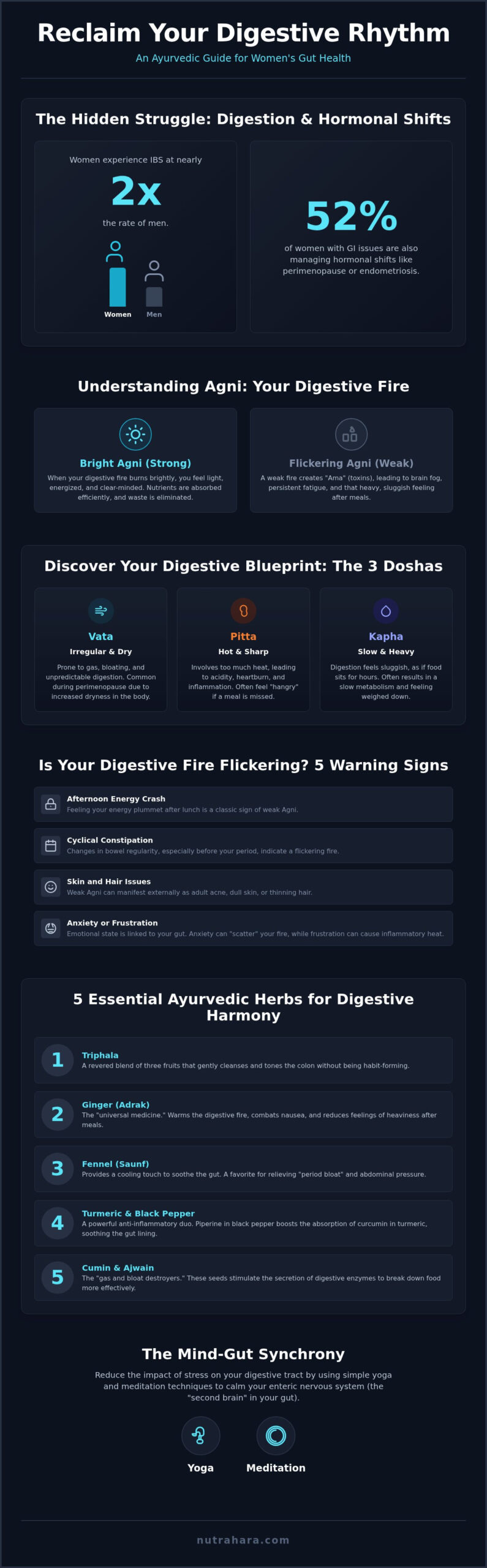
Agni is much more than a simple biological mechanism for breaking down food. It’s the transformative power that converts physical nutrients into energy, vitality, and even consciousness. In the ancient system of Ayurveda, this fire acts as the ultimate guardian of your health and longevity. When your Agni burns with a steady, clear flame, you feel light, energized, and mentally sharp. However, when this fire weakens, it creates “Ama,” a form of metabolic toxins. Ama is the root cause of the heavy, sluggish feeling many women describe as toxic fatigue or persistent brain fog. For women between 30 and 60, a healthy digestive foundation is the secret to maintaining the self-esteem and confidence required to lead a balanced, fulfilling life.

The Gut-Brain-Hormone Connection

Your digestive rhythm is deeply intertwined with your endocrine system. Fluctuations in estrogen and progesterone don’t just affect your mood; they directly impact how quickly food moves through your system. This is why women often notice sudden, uncomfortable bloating during perimenopause or specific phases of their menstrual cycle. Ayurveda views this through the lens of “Prana,” the vital life force that governs all movement. When hormonal shifts occur, they can scatter Prana, making it difficult for your digestive fire to stay consistent. By utilizing specific ayurvedic herbs for digestion, such as those found in DetoxifyLife, you can help stabilize this internal environment. This ensures that your gut and hormones work in harmony rather than in conflict.

Signs Your Agni Needs Rekindling

It’s helpful to recognize that digestive issues manifest in different ways depending on your internal state. You might struggle with “Manda Agni,” which is a slow, damp fire. This often results in a heavy feeling after eating and a slow metabolism. Conversely, “Tikshna Agni” is a sharp, hyperactive fire that might cause acidity or intense hunger that leads to irritability. You can identify the presence of Ama by checking your tongue in the morning; a thick, white coating suggests your system is struggling to clear waste. Agni is the biological sun within every woman. When you support it with the right ayurvedic herbs for digestion, you begin a long-term wellness progression that restores your natural glow and energy levels.

The Top Ayurvedic Herbs for Digestion and Bloating

Choosing the right ayurvedic herbs for digestion can transform your daily comfort from a struggle into a source of vitality. While balancing your internal fire is essential, nature provides specific botanical allies to help you manage the physical symptoms of bloating and sluggishness. These herbs don’t just mask discomfort; they work to optimize your system’s natural rhythms. Modern research into Ayurvedic medicine confirms that these traditional botanicals offer measurable benefits for gut motility and microbial balance.

Triphala: The Three-Fruit Powerhouse

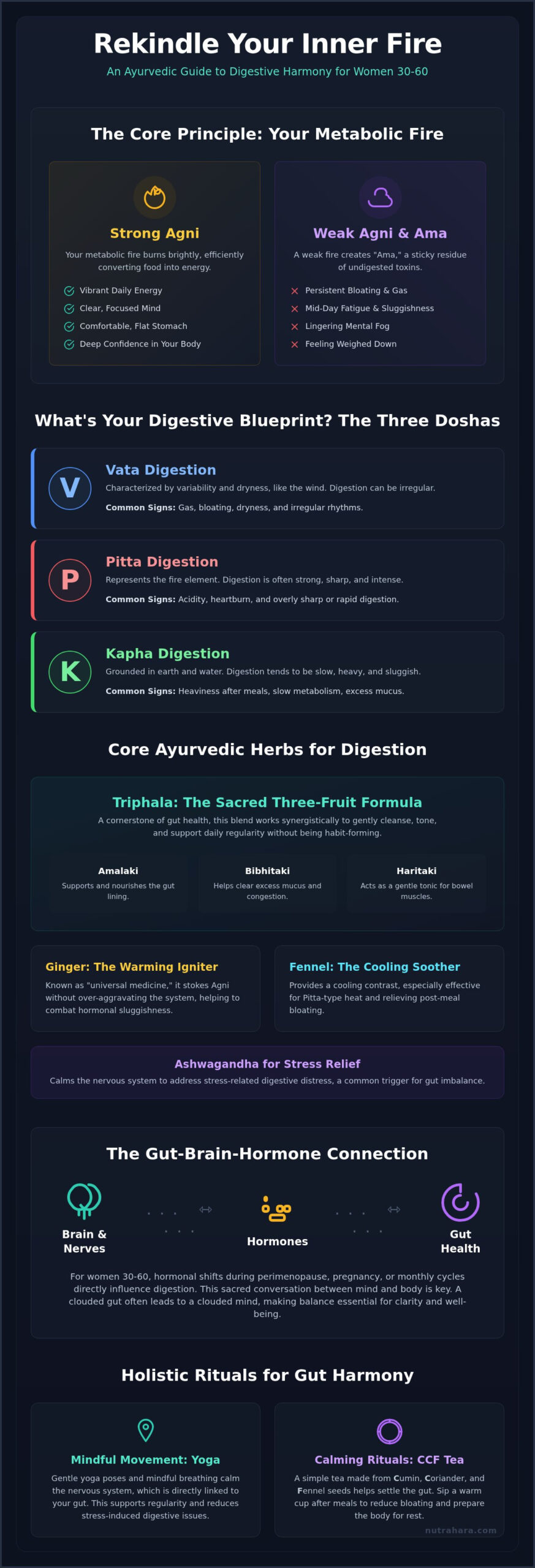
Triphala is widely considered the “holy grail” of Ayurvedic bowel tonification. It’s a precise blend of three fruits: Amalaki, Bibhitaki, and Haritaki. Amalaki supports the cooling of the digestive tract, Bibhitaki helps clear excess mucus, and Haritaki encourages gentle movement. Unlike harsh stimulant laxatives, Triphala supports long-term detoxification by strengthening the colon’s muscles. Sarah, 54, shares: “During menopause, my digestion felt like it had completely stalled. Starting a daily ritual with Triphala-based support was the turning point that finally cleared that heavy, morning sluggishness.” For a pure, high-quality source of this blend, many women find DetoxifyLife to be an essential part of their morning routine.

Ginger and Fennel: The Kitchen Apothecary

Ginger acts as a “universal medicine” by stimulating the secretion of digestive enzymes. Scientific studies on gingerols show they significantly speed up gastric emptying, which reduces the time food sits in your stomach causing pressure. Fennel seeds, or Saunf, act as a natural carminative to relax the smooth muscles of the gut. This provides immediate relief from gas and abdominal distension. You can easily kindle your Agni by drinking a simple tea 20 minutes before your largest meal.

  • 1 inch fresh ginger root, thinly sliced
  • 1 teaspoon organic fennel seeds
  • 2 cups of boiling water
  • Steep for 5 to 7 minutes and sip while warm

Ashwagandha for the Stress-Digest Connection

Stress is a silent thief of digestive health. When your cortisol levels spike, your body enters “fight or flight” mode, which effectively shuts down blood flow to the gut. This often leads to “nervous bloating” or an upset stomach before big meetings or events. Ashwagandha helps the body adapt to stress, keeping your digestion online even during busy days. Because these compounds can be difficult to absorb, choosing Ashwagandha with Black Pepper is crucial. The piperine in black pepper increases the bioavailability of the herb, ensuring you get the full benefit. Maria, 42, notes: “I used to experience anxious bloating every afternoon, but adding these ayurvedic herbs for digestion to my routine has finally brought me peace.” If you’re ready to reclaim your gut health, exploring our clean herbal formulas is a wonderful place to start.

Balancing Your Dosha: Tailoring Herbs to Your Body Type

Every woman’s body is a unique ecosystem. A one-size-fits-all approach rarely works when choosing ayurvedic herbs for digestion. According to Johns Hopkins on Ayurveda, health is achieved by balancing the three doshas: Vata, Pitta, and Kapha. Understanding your dominant dosha allows you to tailor your herbal support to your body’s specific needs. This personalization is especially vital as you move through different life stages, where hormonal shifts can alter your baseline constitution and digestive strength.

Vata digestion is often irregular, gas-prone, and dry. It feels like the wind; unpredictable and cold. If you find your appetite varies wildly or you feel bloated after even small snacks, you likely have a Vata imbalance. Pitta, on the other hand, is governed by fire and water. Pitta digestion is hot and efficient, but it easily tips into acidity, heartburn, or inflammation when you’re under pressure or eating spicy foods. Kapha digestion is slow, heavy, and sluggish, often leaving you feeling full long after a meal has ended.

Herbal Strategies for Vata and Pitta

For Vata types, the goal is to ground and warm the system. Herbs like Ginger and Cumin provide the necessary heat to stabilize an irregular Agni. These warming spices help lubricate the digestive tract and reduce the dryness that often leads to discomfort. If your digestion is tied to a restless mind or high-stress days, Anxioguard can be a gentle partner in soothing nervous-system-related gut issues. Pitta types require cooling, sweet relief. Fennel and Coriander are excellent choices to soothe an overactive, acidic stomach without dampening the digestive fire entirely. These herbs act as a balm for the internal heat that often spikes during the mid-life years.

Revving Up the Kapha Metabolism

To wake up a sleepy Kapha metabolism, pungent and stimulating herbs are essential. Trikatu, a traditional blend of Black Pepper, Long Pepper, and Ginger, provides the sharp “spark” Kapha needs to process nutrients effectively. Pairing these ayurvedic herbs for digestion with light, warm meals helps prevent the heavy buildup of Ama. Many women ask, Do Digestive Enzymes Help You Lose Weight?; for Kapha types, the answer often lies in how these enzymes and herbs support a more efficient metabolic fire. We recommend avoiding cold salads and icy drinks, as these only further dampen the Kapha flame, leading to more sluggishness and fatigue.

Daily Rituals: Yoga, Meditation, and Mindful Eating

While ayurvedic herbs for digestion provide the biological spark for your gut health, they work most effectively when integrated into a lifestyle that honors your Agni. One of the most powerful habits you can adopt is “The 3-Hour Rule.” This involves leaving at least three hours between meals to allow your system to complete its digestive cycle fully. When you snack constantly, your internal fire never gets the chance to clear out the previous meal, which often leads to the buildup of Ama. Try to sit down and eat without the distraction of screens. Mindful eating allows your brain to register satiety signals. This simple act of presence prevents the overeating that often leads to painful bloating and sluggishness during busy workdays.

Yoga Poses for a Happy Gut

Yoga acts as a gentle physical massage for your internal organs. It encourages the movement of Prana and waste through the digestive tract. These poses are particularly effective for maintaining a flatter stomach and consistent energy levels:

  • Vajrasana (Thunderbolt Pose): This is the only pose traditionally recommended immediately after eating. Sitting on your heels helps redirect blood flow to the abdominal region, supporting the work of your digestive fire.
  • Pavanamuktasana (Wind-Relieving Pose): As the name suggests, this is excellent for releasing trapped gas and easing abdominal distension. It’s a nurturing way to find relief after a heavy meal.
  • Marjaryasana-Bitilasana (Cat-Cow): Moving between these two poses creates a rhythmic compression and extension of the torso. This stimulates blood flow to the gut and helps keep your metabolism active.

Meditation for the Enteric Nervous System

Science now recognizes the gut as the “second brain” due to the complex network of neurons in the enteric nervous system. When you’re stressed, this system tightens up. This tension makes even the most potent ayurvedic herbs for digestion less effective because the body prioritizes survival over nourishment. Meditation calms this system. It allows for better nutrient absorption and a flatter stomach. Try this 5-minute “Digestive Breathing” exercise: Sit quietly and inhale for a count of four, feeling your belly expand like a balloon. Hold for two, then exhale for a count of six. This activates the vagus nerve. It signals your body to “rest and digest.” This practice is especially helpful for women in perimenopause who find that stress-related digestive upset has become more frequent.

To see how these rituals fit into your broader health strategy, explore The Ultimate Guide to Women’s Wellness Supplements for a comprehensive view of long-term vitality.

Ayurvedic Herbs for Digestion: A Woman’s Guide (2026)

The Nutrahara Path: Fusing Tradition with Modern Purity

True wellness isn’t a destination you reach overnight; it’s a personal, ongoing journey that requires a partner who understands your body’s changing needs. Nutrahara serves as that wise and caring guide. We bridge the gap between ancient health philosophies and contemporary nutritional research. While we’ve explored the power of ayurvedic herbs for digestion, the quality and purity of those botanicals are what truly drive long-term results. We believe that every woman, from her career-driven 30s through the transformative years of menopause, deserves access to clean, effective formulas that honor her internal rhythm.

Our commitment to your health progression is reflected in our strict standards for purity. You’ll never find artificial additives, fillers, or synthetic binders in our products. Instead, we focus on the simplicity of nature, backed by clinical validation. We’ve designed our offerings to fit seamlessly into your busy life, providing targeted support that empowers you to feel your best without the guesswork.

Our Digestive Heroes: FemmePower and DetoxifyLife

Understanding the link between your hormones and your gut is essential for lasting comfort. FemmePower is specifically formulated to support the hormonal-digestive axis. It helps stabilize the fluctuations that often lead to sudden bloating or irregular energy levels. By combining traditional wisdom with modern science, this formula provides the foundation your body needs to maintain balance during every life stage.

For those seeking a gentle way to clear out Ama and restore vitality, DetoxifyLife offers a sophisticated blend of time-tested fruits and herbs. Unlike harsh cleansing programs that can irritate the system, this formula supports your body’s natural detoxification pathways. It strengthens the colon and kindles your Agni with the precision of modern nutritional research. Our ingredient selections aren’t just traditional; they’re chosen for their proven ability to support a woman’s unique metabolic needs.

Your Journey Starts Here

Reclaiming your gut health doesn’t require a complete lifestyle overhaul. It begins with one small, empowering choice. You might start by sipping the Agni tea we discussed earlier or by committing to a five-minute meditation after dinner. These small rituals, when paired with high-quality ayurvedic herbs for digestion, create a powerful synergy that transforms your well-being. View your digestive care as a form of self-love. When you nourish your “inner sun,” you’re investing in your future energy, confidence, and longevity.

We invite you to take the next step in your wellness progression. Whether you’re looking to soothe chronic bloating or simply want to feel more connected to your body, we’re here to support you. Explore our full range of women’s health supplements and discover how the fusion of tradition and science can empower your path to vibrant health.

Embrace Your Long-Term Wellness Progression

You now have the knowledge to transform your digestive health from a daily struggle into a source of vitality and confidence. By understanding your unique Agni and selecting the right ayurvedic herbs for digestion, you’re taking a significant step toward a lighter, more energized version of yourself. True health is an ongoing journey. The combination of targeted herbal support and daily rituals like yoga and meditation creates a powerful foundation for your well-being.

At Nutrahara, we’re honored to be your partner on this path. Our formulations are specifically designed for the unique life stages of women aged 30 to 60. We use 100% natural, clean ingredients with no artificial additives. This ensures you receive the purest fusion of ancient wisdom and modern clinical research. This scientific foundation, paired with traditional purity, is the support your body deserves.

It’s time to feel empowered in your body once again. Empower Your Gut Health with Nutrahara’s Ayurvedic Formulations and start your journey toward lasting comfort today. You’ve the strength to reclaim your natural rhythm. We’re here to guide you every step of the way.

Frequently Asked Questions

What are the best Ayurvedic herbs for immediate bloating relief?

Fennel and ginger are the most effective ayurvedic herbs for digestion when you need quick relief from bloating. Fennel seeds act as a carminative to relax the smooth muscles of your gut, while ginger stimulates enzymes that speed up gastric emptying. You can chew on half a teaspoon of roasted fennel seeds after eating or sip warm ginger tea. These natural solutions provide comfort without the harsh chemicals found in some over-the-counter options.

Can I take Ayurvedic digestive herbs while pregnant or breastfeeding?

You should always consult your healthcare provider before starting any new supplement during pregnancy or while breastfeeding. While culinary amounts of ginger are generally considered safe for morning sickness, concentrated ayurvedic herbs for digestion like Triphala may be too stimulating for the colon during these sensitive stages. Nutrahara prioritizes safety and transparency, so we recommend a professional consultation to ensure your herbal choices align with your specific prenatal or postnatal needs.

How long does it take for Ayurvedic herbs to start working for digestion?

The timeline depends on your specific goals. You’ll often feel the effects of carminative herbs like fennel within thirty minutes of consumption. However, for deep-seated issues like chronic sluggishness or hormonal bloating, it typically takes two to four weeks of consistent use to see significant shifts. Ayurveda focuses on long-term wellness progression rather than temporary fixes. This allows your body to gently realign its natural rhythms for more sustainable energy levels and digestive ease.

Is Triphala safe to take every day for gut health?

Triphala is traditionally used as a daily tonic rather than a temporary fix. Unlike stimulant laxatives that create dependency, Triphala is a nourishing formula that strengthens the digestive tract over time. It supports the gentle removal of toxins while tonifying the colon’s muscles. Because Nutrahara uses clean, natural ingredients without artificial additives, our Triphala-based formulas are designed to be a safe, consistent part of your long-term wellness journey for optimal gut health.

What is the “Agni” and why is it important for women over 40?

Agni is your internal metabolic fire responsible for transforming food into energy and consciousness. For women over 40, hormonal shifts during perimenopause can dampen this fire, leading to sudden weight gain, fatigue, and persistent bloating. Maintaining a strong Agni is crucial because it prevents the buildup of Ama, or metabolic toxins. A vibrant digestive fire ensures you absorb the nutrients necessary to maintain your bone density, brain health, and overall vitality through midlife.

How do I know which Ayurvedic dosha is affecting my digestion?

You can identify your dominant digestive dosha by observing your symptoms. Vata imbalances typically manifest as irregular appetite and excessive gas. Pitta issues often involve heat, such as acidity or heartburn, especially after eating spicy foods. Kapha imbalances feel heavy and sluggish, often leaving you with a coated tongue or a slow metabolism. Recognizing these patterns allows you to choose specific herbal allies that bring your unique system back into a state of tranquil balance.

Can Ashwagandha actually help with my stomach issues?

Ashwagandha is highly effective for stomach issues triggered by stress. It works by lowering cortisol levels, which prevents your body from shutting down digestion during “fight or flight” moments. This herb calms the enteric nervous system, often called your “second brain,” to reduce anxious bloating and cramping. By soothing the mind-gut axis, Ashwagandha helps your body stay in a “rest and digest” state, allowing for better nutrient absorption and a flatter, more comfortable stomach.

Should I take digestive herbs before or after a meal?

Timing depends on your specific digestive goals. Taking warming herbs like ginger twenty minutes before a meal helps kindle your Agni and prepares your stomach for efficient processing. If you struggle with post-meal discomfort or gas, it’s better to take cooling herbs like fennel or coriander immediately after eating. This targeted approach ensures that your herbal support works in harmony with your body’s natural digestive cycle for the best possible results and long-term comfort.

Article by

Nutrahara Team

We are a dedicated collective of nutrition scientists and naturopaths at Nutrahara, committed to advancing women's health through the fusion of ancient Ayurveda science and cutting-edge nutrition research. Our mission is to empower you with clean, simple, and scientifically validated wellness solutions so you can live your healthiest life. Connect with us to stay updated on the latest developments in holistic women's health and nature-based research.

Disclaimer

This article is not a substitute for medical advice. Please consult a healthcare professional before starting any supplement, especially if pregnant, nursing, taking medication, or managing health conditions.

Categories
Articles

Best Supplements for Bloating and Gas in Women (2026)

You are flowing through a sun salutation, but instead of feeling grounded, you feel restricted by a heavy, distended stomach that makes your yoga leggings feel two sizes too small. It’s frustrating to eat well and stay active only to be sidelined by sudden gas during a social gathering or a persistent puffiness that won’t fade. Finding the right supplements for bloating and gas shouldn’t feel like a confusing maze of scientific jargon and empty promises.

We understand that your digestive health is a personal journey, not a quick fix. You want to feel light, confident, and energized from your morning meditation through your evening wind-down. This guide helps you reclaim your comfort by merging the time-honored traditions of Ayurveda with the latest 2026 clinical research. It is a supportive path designed for women who are ready to stop guessing and start healing.

You will discover how to soothe your system and achieve a flatter feeling stomach through a holistic lens. We’ll preview the most effective natural ingredients, share practical yoga tips for immediate relief, and listen to real-life testimonials from women who have successfully found their balance. It’s time to move beyond the discomfort and step into a life of digestive harmony and lasting vitality.

Key Takeaways

  • Learn how ancient Ayurvedic botanicals like fennel and ginger are validated by modern clinical research to soothe your digestive distress.
  • Identify the most effective supplements for bloating and gas by focusing on high-quality probiotics and bioavailable enzymes that support your unique microbiome.
  • Discover how to calm your enteric nervous system through targeted meditation and yoga practices that strengthen the gut-brain connection.
  • Understand why viewing your digestive health as a long-term progression helps you choose the right natural support for your specific life stage.
  • Move from feeling heavy to empowered by integrating clean, additive-free formulas into a daily routine focused on longevity and vitality.

Understanding the Root of Bloating: A Fusion of Science and Ancient Wisdom

Feeling heavy after a meal isn’t just a physical inconvenience; it’s a whisper from your body that something is out of sync. From a scientific perspective, bloating often stems from fermentation in the gut. This happens when bacteria produce excess gas as they break down carbohydrates. The process is frequently accelerated by microbiome dysbiosis, an imbalance of bacteria, or slow motility that keeps food in the system too long. While many associate these symptoms with Indigestion, a holistic view sees this as more than a mechanical error. It is an energetic imbalance where your internal rhythms have lost their steady beat. Whether you’re navigating the monthly cycles of menstruation, the unique demands of pregnancy, or the shift into menopause, your gut reacts to these internal tides.

Hormonal Bloating and the 30-60 Demographic

For women between 30 and 60, the digestive story is deeply entwined with hormonal shifts. Fluctuating levels of estrogen and progesterone can cause the body to retain water and slow down the transit of food through the intestines. During the perimenopause transition, these shifts become more pronounced. Many women in their 40s and 50s find that foods they once enjoyed now trigger intense pressure. This is why a generic approach fails; your body needs targeted support that respects these life stages. When searching for the right supplements for bloating and gas, it’s vital to choose formulas like Detoxifylife that address these complex feminine requirements. A tailored approach ensures you’re supporting your body’s specific needs as it progresses through different eras of health.

The Ayurvedic View: Rekindling Your Digestive Fire

Ancient Ayurvedic wisdom centers on “Agni,” or your digestive fire. Think of Agni as the pilot light for your health. When this fire is strong, you transform food into energy efficiently. However, stress and a fast-paced lifestyle often trigger a “Vata” imbalance. Vata represents the elements of air and space; when it’s disturbed, it manifests as erratic digestion and gas accumulation. Rekindling this fire requires more than just pills. It involves a holistic protocol that includes warm, digestible foods and mindful eating habits. By calming Vata and strengthening Agni, you create a foundation where supplements for bloating and gas can work most effectively to restore your long-term health progression. This dual approach ensures you aren’t just masking symptoms but are actively nurturing your gut’s natural intelligence.

The Science of Digestive Harmony: How Modern Nutrition Meets Ayurveda

True wellness isn’t found in a “magic pill” that offers instant, temporary relief. Instead, it’s a long-term progression toward balance. By merging ancient wisdom with modern clinical research, we can verify why certain supplements for bloating work so effectively. Finding high-quality supplements for bloating and gas requires a focus on purity and scientific legitimacy, which is the cornerstone of the Nutrahara philosophy. We believe that when you understand the “why” behind your nutrition, you feel more empowered to take charge of your health journey.

Clinical Validation of Ancient Botanicals

Modern science now confirms what Ayurvedic practitioners have known for centuries. Clinical studies show that ginger significantly improves gastric emptying and intestinal motility. This helps prevent the fermentation that leads to gas. Similarly, stress is a major trigger for digestive upset in women. Using Ashwagandha with Black Pepper can help lower cortisol levels, reducing stress-induced pressure in the gut. The addition of black pepper isn’t just for flavor; it contains piperine, which enhances the bioavailability of other nutrients. This synergy ensures your body actually absorbs the healing properties of the herbs you consume, rather than letting them pass through your system unused.

Nurturing the Microbiome for Long-term Wellness

Your microbiome is a delicate internal ecosystem that requires gentle, consistent care. For women with sensitive digestion, artificial additives and fillers can cause more harm than good. A “clean label” approach is essential because it removes potential irritants that disrupt beneficial bacteria. When your gut is in harmony, the benefits extend far beyond a flatter stomach. You’ll likely notice a steady rise in daily energy and sharper mental clarity. This is the result of a body that is no longer fighting internal inflammation. Choosing clean supplements for bloating and gas supports this ongoing journey toward total well-being, helping you feel vibrant at every life stage.

If you’re ready to start your own progression toward comfort, exploring a balanced formula like Detoxifylife is a gentle and effective first step.

Nature’s Cabinet: Top Supplements for Bloating and Gas

Rebalancing your internal ecosystem is a journey of restoration. While modern research highlights the benefits of specific bacterial strains, ancient wisdom reminds us that our internal environment must be carefully tended like a garden. Choosing the right supplements for bloating and gas involves understanding how different natural agents work in concert. It’s not just about stopping a symptom; it’s about providing your body with the tools it needs to process nutrients efficiently and move waste through the system with ease. By selecting high-quality supplements for bloating and gas, you’re investing in a future of digestive peace and steady energy.

Probiotics and Enzymes: The Dynamic Duo

Probiotics act as the gentle guardians of your microbiome. For women navigating hormonal shifts, specific strains such as Lactobacillus acidophilus and Bifidobacterium infantis are particularly helpful. These beneficial bacteria crowd out the microbes responsible for excess fermentation and pressure. Alongside these, digestive enzymes play a crucial role. They break down the complex fibers and sugars in foods like beans or cruciferous vegetables, preventing them from sitting in the gut. Taking these enzymes before meals ensures your digestive fire is ready for the task. To assist your body’s natural elimination pathways, Detoxifylife offers a clean, bioavailable formula that supports the liver in processing toxins and maintaining steady motility.

Herbal Relief: Soothing the Gut Naturally

Herbal carminatives provide immediate, soothing relief by helping the body expel trapped air naturally. Peppermint and Lemon Balm are exceptional for relaxing the smooth muscles of the intestines, which reduces cramping and tension. Fennel and Star Anise go a step further; they act as natural catalysts to dissipate gas bubbles before they cause visible bloating. These botanicals have been trusted for generations to restore comfort after eating. By incorporating these into a daily regimen, you aren’t just reacting to pain. You’re building a resilient digestive system that supports your long-term health progression. For comprehensive support that nourishes your body through every cycle, Femmepower integrates these time-tested herbs into a daily wellness protocol. This balanced approach ensures you feel light and empowered, no matter what your schedule holds.

Beyond the Capsule: Integrating Yoga and Meditation for Relief

Your gut and brain are in constant conversation through the vagus nerve. This connection, known as the gut-brain axis, means that your emotional state directly impacts your digestive speed. When stress levels rise, the enteric nervous system reacts by slowing down motility, which often leads to the very pressure you’re trying to avoid. While choosing high-quality supplements for bloating and gas provides the chemical foundation for healing, holistic movement and meditation provide the energetic release. This integrated approach ensures you’re treating the whole person, not just a symptom, supporting your long-term health progression.

To calm your system, try this 5-minute “Gut Peace” meditation daily:

  • Sit comfortably and place one hand on your heart and one on your belly.
  • Inhale deeply for four counts, feeling your abdomen expand against your palm.
  • Exhale slowly for six counts, visualizing the tension leaving your digestive tract.
  • Focus on the warmth of your hand, sending a signal of safety to your “second brain.”

Yoga Poses for Gas and Bloating Relief

Physical movement acts as a natural catalyst for intestinal motility. Apanasana, or the Wind-Relieving Pose, is a cornerstone of any digestive yoga practice. To perform this, lie on your back and gently bring your knees toward your chest. This pose applies soft, therapeutic pressure to the colon, which helps move trapped air through the system. Combining this with Cat-Cow stretches and gentle spinal twists further massages your internal organs. These movements empower your body’s natural rhythms and improve longevity by keeping the core supple and the digestive fire active. A regular practice helps you feel lighter in your yoga clothes and more confident in your body.

Mindfulness and the Art of Digestion

Ayurvedic wisdom encourages us to “chew your water and drink your food.” This principle reminds us to chew every bite until it is nearly liquid, allowing salivary enzymes to begin breaking down complex carbohydrates immediately. Creating a tranquil environment for your meals is just as important as the ingredients on your plate. If you eat while stressed or scrolling through a screen, your Agni, or digestive fire, becomes erratic. Using deep diaphragmatic breathing before your first bite signals to your nervous system that it’s time to rest and digest. This simple shift, when paired with supplements for bloating and gas, creates a lasting state of harmony that carries you through your busiest days.

Ready to deepen your commitment to a balanced lifestyle? Explore how Detoxifylife can complement your daily yoga and meditation practice for total digestive peace.

Best Supplements for Bloating and Gas in Women (2026)

Your Path to Lasting Gut Wellness: The Nutrahara Empowerment Plan

Reclaiming your digestive comfort is more than a destination; it’s a personal evolution. You’ve moved from feeling restricted in your favorite yoga clothes to understanding the delicate balance between your hormones and your gut. By choosing high-quality supplements for bloating and gas, you’re taking a decisive step toward an empowered lifestyle. This journey requires patience and a commitment to your long-term health progression. We’ve seen many women transform their daily experience by simply listening to their bodies and providing the right natural support.

Sarah, a 48-year-old yoga enthusiast, shared her experience: “I used to dread social events because of sudden gas and pressure. After 30 days of consistent support, I feel lighter and more present in my body.” Similarly, Elena, 34, found that her monthly cycle no longer came with debilitating bloating. These real-life stories remind us that a peaceful gut is the foundation for self-esteem and daily vitality.

Crafting Your Personalized Supplement Protocol

Your needs change as you move through different life stages. For those navigating the hormonal shifts of perimenopause or menstruation, combining Blossombliss with digestive support helps stabilize both your mood and your internal rhythms. To ensure your gut lining remains resilient and healthy, our Premium Collagen Complex provides the structural building blocks necessary for mucosal integrity. Use this 30-day checklist to begin your journey:

  • Select the kit that matches your current life stage, whether you’re focused on hormonal balance or general digestion.
  • Commit to taking your capsules at the same time each day to build a consistent rhythm.
  • Practice five minutes of diaphragmatic breathing before your largest meal to stoke your Agni.
  • Keep a simple journal to track your energy levels and digestive comfort as you progress.

A Promise of Purity and Support

We believe that what you put into your body should be as pure as the intentions behind your wellness journey. At Nutrahara, we act as your wise and caring guide, ensuring every formula is free from artificial additives, synthetic fillers, and unnecessary chemicals. Our commitment to scientific legitimacy means you don’t have to choose between traditional Ayurvedic wisdom and modern clinical results. We’re with you every step of the way as you discover the most effective supplements for bloating and gas for your unique body. Step into your confidence with a peaceful gut and a renewed sense of harmony. Your journey to lasting wellness is a path we walk together.

Step Into a Lighter, More Confident You

Your journey toward digestive harmony is a personal progression that honors both your physical needs and your mental well-being. By combining the precision of modern nutritional research with the timeless wisdom of Ayurveda, you can address the root causes of discomfort. We’ve explored how high-quality supplements for bloating and gas work most effectively when paired with mindful movement and a clean, natural lifestyle. This holistic approach ensures you aren’t just masking symptoms but are actively nurturing your body’s long-term vitality.

Sarah, 42, experienced this transformation firsthand. She shared, “After two weeks of using Detoxifylife and 10 minutes of yoga daily, I finally feel comfortable in my own skin again.” This success is possible because our formulas bridge the gap between clinically validated herbs and 5,000 years of traditional medicine. It’s time to move beyond the heavy, restricted feelings of the past and embrace a future where you feel light, energized, and fully in control of your health.

Begin your digestive wellness journey with Nutrahara’s natural solutions and reclaim the confidence you deserve. You have the tools to thrive; we’re simply here to guide you home to yourself.

Frequently Asked Questions

Can probiotics actually make bloating worse before it gets better?

Probiotics can cause a temporary increase in gas as your internal ecosystem recalibrates. This adjustment period, often called a “healing crisis,” typically lasts between three to seven days. During this time, beneficial bacteria are displacing less helpful strains, which can release gas as they are neutralized. It’s a sign that the microbiome is shifting toward a healthier state. Drinking plenty of warm water and staying consistent with your routine helps ease this transition.

How long do supplements for bloating and gas typically take to work?

Relief timelines vary based on the specific ingredients you use. Herbal carminatives like fennel or ginger often provide comfort within 30 to 60 minutes by physically dispersing gas bubbles. However, using supplements for bloating and gas to achieve long-term microbiome balance usually requires two to four weeks of consistent use. This duration allows probiotics to colonize the gut and digestive enzymes to optimize your natural metabolic rhythms for lasting results.

What is the best time of day to take digestive supplements?

Timing depends on the specific function of the formula you choose. You should take digestive enzymes roughly 15 to 20 minutes before your largest meals to ensure they’re present when food arrives. Probiotics are generally most effective when taken first thing in the morning on an empty stomach or just before bed. This timing allows the live cultures to pass through the stomach quickly and reach the intestines where they can begin their restorative work.

Is it safe to take bloating supplements while in perimenopause?

It’s not only safe but often highly beneficial to use targeted support during the perimenopausal transition. Hormonal fluctuations during your 40s and 50s can slow intestinal motility and increase water retention. Nutrahara designs formulas specifically for women in this age bracket, focusing on clean, natural ingredients that harmonize with shifting estrogen levels. These supplements for bloating and gas provide a gentle way to manage the unique digestive challenges that arise during this life stage.

How does stress cause gas, and can supplements help?

Stress triggers the “fight or flight” response, which diverts blood flow away from your digestive tract. This shift slows down your “Agni,” or digestive fire, leading to fermentation and trapped air. Adaptogenic herbs like Ashwagandha are excellent tools for calming the nervous system and reducing cortisol. When you lower your stress levels, your enteric nervous system can return to a state of “rest and digest,” allowing food to move smoothly through your system.

Are there any natural supplements that help with bloating during my period?

Natural botanicals like ginger and peppermint are particularly effective for menstrual-related pressure. These herbs act as antispasmodics, relaxing the uterine and intestinal muscles that often cramp together during your cycle. Magnesium is another vital mineral that helps reduce water retention and eases the “heavy” feeling many women experience. Integrating these into a daily wellness protocol helps maintain a steady sense of comfort and confidence, regardless of the time of month.

What is the difference between a digestive enzyme and a probiotic?

These two tools serve very different roles in your digestive health. Digestive enzymes are proteins that act as catalysts to physically break down fats, proteins, and carbohydrates into smaller molecules. They provide immediate assistance during the meal. Probiotics are live, beneficial bacteria that help balance your microbiome over time. While enzymes help you process today’s lunch, probiotics work to build a resilient internal environment that prevents future imbalances from occurring in the first place.

Can yoga really help move trapped gas quickly?

Specific yoga postures provide mechanical assistance to your digestive tract by applying gentle pressure to the colon. Poses like Apanasana (Wind-Relieving Pose) and gentle spinal twists help physically guide trapped air toward elimination. This movement isn’t just about flexibility; it’s a form of internal massage that stimulates the parasympathetic nervous system. Combining these poses with deep diaphragmatic breathing can often provide relief from acute pressure in as little as five to ten minutes.

Article by

Nutrahara Team

We are a dedicated collective of nutrition scientists and naturopaths at Nutrahara, committed to advancing women's health through the fusion of ancient Ayurveda science and cutting-edge nutrition research. Our mission is to empower you with clean, simple, and scientifically validated wellness solutions so you can live your healthiest life. Connect with us to stay updated on the latest developments in holistic women's health and nature-based research.

Disclaimer

This article is not a substitute for medical advice. Please consult a healthcare professional before starting any supplement, especially if pregnant, nursing, taking medication, or managing health conditions.
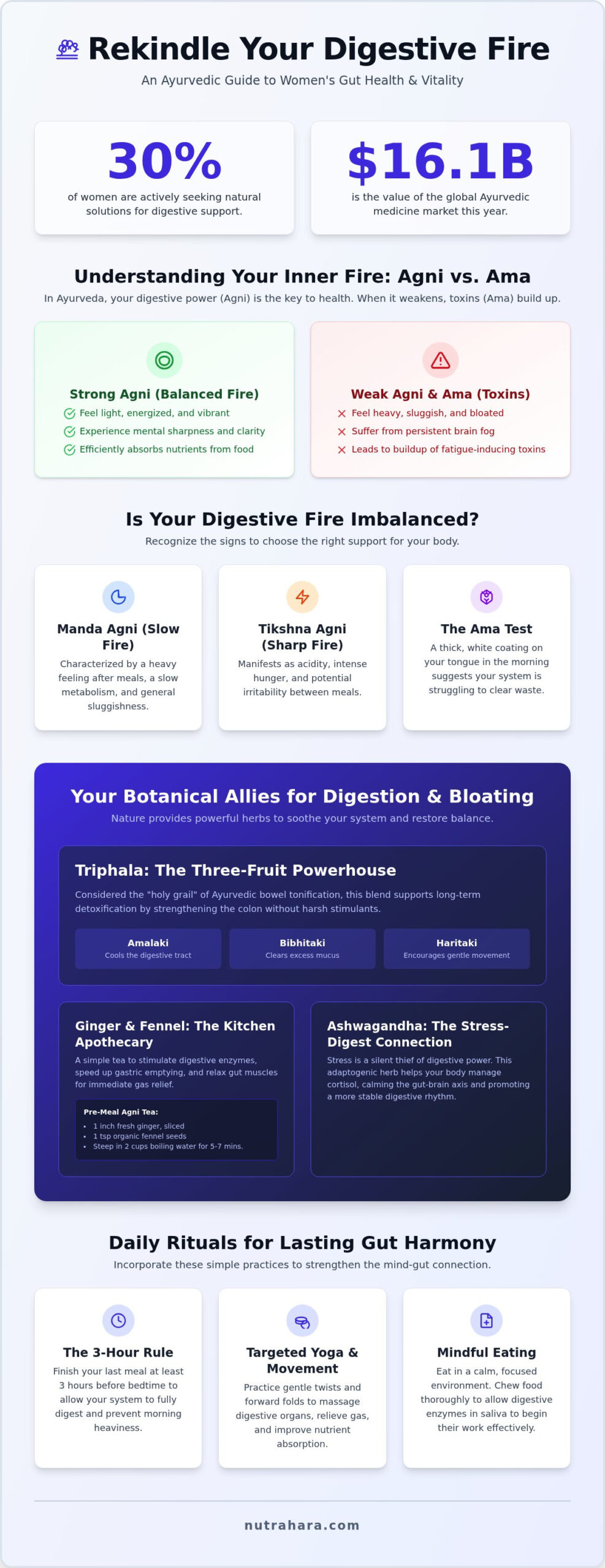
Categories
Articles

Best Gut Health Supplements for Women: 2026 Guide

What if the persistent bloating and mid-afternoon brain fog you’ve been battling aren’t just signs of a busy life, but a quiet plea for balance from your inner ecosystem? You know the feeling of digestive sluggishness all too well, especially when it’s paired with the hormonal shifts of perimenopause or your monthly cycle. It’s frustrating to feel disconnected from your own body. We believe you deserve a path to wellness that feels both grounded and scientifically sound. Finding the right supplements for gut health women is about more than just masking a symptom; it’s about nurturing your digestive fire to support your entire life stage.

In this 2026 guide, you’ll discover how a unique fusion of Ayurvedic traditions and clinical research can stabilize your microbiome and balance your hormones. We’ll show you how to move beyond temporary fixes toward a sustainable health progression that boosts your confidence and energy. From understanding specific Lactobacillus strains to integrating yoga and meditation into your routine, we’re here to guide you. You’re about to learn exactly how to achieve the regularity and physical clarity you’ve been seeking for years.

Key Takeaways

  • Understand the role of the estrobolome in regulating your hormones and how your microbiome shifts through life stages like perimenopause.
  • Explore how the Ayurvedic concept of digestive fire, or Agni, provides a foundation for modern nutritional strategies that promote long-term regularity.
  • Evaluate the top-rated supplements for gut health women for 2026, focusing on clinically studied probiotic strains and clean, natural ingredients.
  • Integrate restorative yoga poses and mindfulness techniques to calm the gut-brain axis and reduce the physical impact of stress on your digestion.
  • Learn how to bundle synergistic formulas to create a sustainable wellness journey that empowers your confidence through physical health.

The Female Gut-Hormone Connection: Why Your Microbiome is Unique

Women’s bodies operate on a rhythmic, hormonal clock that influences every system, including digestion. While many health guides focus on fiber or probiotics for simple regularity, the human microbiome plays a much more sophisticated role for women. It acts as a command center for hormone metabolism. This is why generic health advice often falls short for women over 30. Your gut needs change as your hormones shift through different life stages. A one-size-fits-all approach fails because it ignores the delicate interplay between your bacteria and your endocrine system.

The Estrobolome and Hormonal Balance

Within your gut lies a specific collection of bacteria called the estrobolome. These microbes produce an enzyme called beta-glucuronidase. This enzyme helps your body recycle or excrete estrogen safely. When this system is out of balance, you might experience “estrogen dominance.” This often manifests as heavy periods, breast tenderness, or stubborn weight gain. “The estrobolome acts as the bridge between digestion and hormonal longevity.” By nurturing this ecosystem with targeted supplements for gut health women, you aren’t just fixing your digestion; you’re supporting your entire endocrine profile.

Gut Health Across Life Stages: 30s to 60s

Your microbiome needs evolve as you move through different life chapters. These transitions require a wise and caring approach to supplementation. Consider how your needs change:

  • The 30s and Childbearing Years: Focus on nutrient absorption and maintaining a stable microbiome during the fluctuations of menstruation or pregnancy.
  • The 40s and Perimenopause: As progesterone drops, many women notice increased bloating and digestive sluggishness.
  • The 50s and Post-Menopause: Lower estrogen levels can directly slow down gut transit time, making regularity a primary concern.

An imbalanced gut often shows up on the outside before you feel it on the inside. You might notice adult acne, persistent brain fog, or energy crashes that don’t respond to caffeine. These are signals that your internal “digestive fire” needs stoking. Targeted solutions like FemmePower are designed to address these unique female intersections of health. Choosing specific supplements for gut health women ensures you’re addressing the root cause of these symptoms rather than just chasing the effects. This holistic perspective is the first step in your long-term health progression.

The Fusion of Ayurveda and Science: Stoking Your Digestive Fire

Ancient wellness traditions often describe digestion as a transformative fire. In Ayurveda, this is known as Agni. While modern medicine focuses on the microscopic details of the Role of Prebiotics in Gut Health, Ayurveda looks at the strength of your internal heat to process nutrients and emotions alike. We believe that true wellness for women over 30 requires a bridge between these two worlds. By combining time-tested botanical wisdom with rigorous clinical research, we create a path for your long-term health progression. This isn’t a quick fix; it’s a commitment to your body’s natural rhythm.

Understanding Agni: The Ayurvedic Key to Vitality

Your Agni determines how effectively you absorb the nutrients from your food and supplements. When this fire is balanced, you feel light, energetic, and clear-headed. However, many women experience one of three imbalances. Vishama Agni leads to irregular digestion and bloating. Tikshna Agni causes hyper-acidity. Manda Agni results in a heavy, sluggish feeling. Identifying your specific pattern allows you to choose the most effective supplements for gut health women. Modern science validates this through the concept of bioavailability. For example, traditional herbs are often paired with specific catalysts to ensure your body can actually use the compounds you ingest.

Modern Clinical Validation for Ancient Herbs

We don’t just rely on tradition; we look for the “purity promise” in every formula. Clinical studies now confirm that Ayurvedic staples like Ashwagandha do more than just manage stress. They support the integrity of the gut lining. To enhance these benefits, we utilize natural bio-enhancers. Our Ashwagandha with Black Pepper uses piperine to significantly increase the absorption of active alkaloids. This ensures that the botanical wisdom reaches your cells effectively.

Sourcing is paramount for women’s health. Many mass-market products contain artificial fillers and additives that can actually irritate a sensitive digestive tract. We prioritize clean, natural ingredients to ensure your “digestive fire” remains bright and steady. If you are looking to deepen your understanding of how these elements work together, explore The Ultimate Guide to Women’s Wellness Supplements for a more comprehensive view of holistic health. By choosing purity and science, you empower your body to heal and thrive across every life stage.

Best Gut Health Supplements for Women: 2026 Buyer’s Guide

Choosing the right supplements for gut health women requires a discerning eye for quality and clinical backing. In 2026, the standard for wellness has shifted from high-volume dosages to specific strain efficacy and ingredient purity. When you examine a supplement label, look beyond the total Colony Forming Units (CFU). You want to see diverse, named strains and transparent enzyme blends that match your body’s current needs. High-quality formulas avoid synthetic fillers that can irritate a sensitive digestive tract, focusing instead on bioavailable nutrients that respect your internal ecosystem.

Probiotics and Prebiotics: The Dynamic Duo

Lactobacillus strains are often the heroes of female wellness. These beneficial bacteria support both digestive regularity and vaginal health, which is vital as hormonal levels fluctuate. However, probiotics don’t work in a vacuum. Prebiotics act as the essential fuel for your internal garden. While you can find prebiotics in foods like chicory root and garlic, high-potency supplementation ensures a consistent therapeutic dose. For a detailed scientific overview of how these microbes function, the NIH offers an evidence-based look at Probiotics for Gut Health.

Digestive Enzymes and Metabolism

A common question we hear is, Do Digestive Enzymes Help You Lose Weight? The answer lies in the nuance of metabolic support. While enzymes aren’t direct weight-loss pills, they’re essential for breaking down macronutrients. Enzymes like protease and lipase ensure you effectively process proteins and fats. This reduces the heavy, sluggish feeling after meals and improves nutrient absorption. When your body can actually use the fuel you provide, your metabolism operates with greater efficiency and ease.

Collagen and Gut Lining Integrity

Women over 30 experience a natural decline in the proteins that maintain structural integrity. This decline affects both skin elasticity and the strength of the gut wall. Many women over 40 face concerns regarding “leaky gut,” where the intestinal barrier becomes less effective. Clinical studies suggest that specific collagen peptides can support the intestinal barrier by strengthening tight junctions. Our Premium Collagen Complex is designed to provide this foundational support. To further maintain the gut barrier, we recommend incorporating our Vitamin B-Complex, which aids in cellular repair and energy production throughout your health journey.

Holistic Rituals: Enhancing Gut Wellness Through Yoga and Mindfulness

True vitality isn’t just about what you swallow; it’s about how you live. The “Gut-Brain Axis” represents a bidirectional communication network where your mind and microbiome constantly exchange signals. When stress levels rise, cortisol can disrupt your delicate microbial balance and extinguish your internal digestive fire. This is why even the most advanced supplements for gut health women work most effectively when paired with rituals that calm the nervous system. By integrating movement and stillness, you create a sanctuary where your body can truly heal and thrive.

Yoga for Digestion and Bloat Relief

Yoga provides a physical way to stoke your Agni while providing immediate relief from digestive sluggishness. For women aged 30 to 60, regular movement is essential for maintaining gut motility and supporting lymphatic drainage. These three poses are particularly effective:

  • Apanasana (Wind-Relieving Pose): Hugging your knees to your chest gently compresses the colon to stimulate waste movement.
  • Supta Matsyendrasana (Supine Twist): Twisting poses create a “massaging” effect on the internal organs, encouraging fresh blood flow to the digestive tract.
  • Viparita Karani (Legs-Up-The-Wall): This restorative inversion shifts your body into the parasympathetic nervous system, allowing for better nutrient processing.

Meditation and the Vagus Nerve

The Vagus nerve acts as the information highway between your brain and gut. Meditation helps tone this nerve, switching your body from “fight or flight” into “rest and digest” mode. A simple 5-minute daily ritual can lower systemic inflammation and improve your long-term health progression. Sit quietly, focus on deep diaphragmatic breathing, and visualize your digestive fire burning bright and steady. This mental clarity often translates to physical comfort.

“I struggled with chronic bloating for years despite a clean diet. Adding a daily meditation practice alongside high-quality supplements for gut health women finally brought me the regularity and confidence I had been missing.” — Sarah, 48.

Mindful eating is another powerful tool to improve your Agni. Try to eat without distractions, chewing each bite thoroughly to assist your enzymes in their work. This practice prevents the energy crashes often linked to rushed meals. If you’re looking to support your gut-brain axis further, consider adding Anxioguard to your routine to help manage the daily stress that can disrupt your internal balance.

Best Gut Health Supplements for Women: 2026 Guide

Designing Your Gut Health Journey with Nutrahara

Your path to wellness isn’t a destination but a continuous, beautiful evolution. We see ourselves as your wise and caring guide, helping you navigate the complexities of internal balance. Choosing the right supplements for gut health women is the first step toward reclaiming your vitality. By stoking your digestive fire, you prepare your body for a lifetime of health and longevity. We’re here to support you through every life stage, from your childbearing years to post-menopause.

Targeted Solutions: From Detox to Daily Balance

Every woman’s needs are unique, but the foundation of health remains the same. We’ve developed a range of formulas that work in harmony with your body’s natural rhythms. You can bundle these products to create maximum synergy for your hormones and digestion:

  • DetoxifyLife: Use this for an initial gut cleansing. It gently removes toxins while respecting your internal ecosystem.
  • FemmePower: This formula acts as the bridge between your gut and your hormones. It’s essential for managing the estrobolome.
  • Premium Collagen Complex: Support your structural gut integrity. It strengthens the intestinal barrier and promotes skin elasticity.

Consistency is your greatest ally. These supplements for gut health women are designed for long-term use, allowing for a steady, sustainable health progression. You’ll notice that as your digestion stabilizes, your energy and mood follow suit. Trust the process.

Your Next Steps: A Roadmap to Wellness

We provide more than just supplements. Our Nutrahara e-books offer deeper insights into Ayurvedic rituals and modern nutritional science. They’re designed to accompany your daily routine, providing practical tips for yoga and meditation. Our “Wise Guide” promise ensures that every product you use is built on a foundation of transparency and purity. We never use artificial additives or fillers. You deserve formulas that are as clean as they are effective.

Take charge of your longevity today. True wellness builds confidence and self-esteem. When you feel physically light and vibrant, you project that strength into every area of your life. Trust the wisdom of tradition and the validation of science. Your journey toward a balanced, empowered self starts now.

Embrace Your Path to Lasting Wellness

You’ve explored how the unique female microbiome serves as the bridge to hormonal longevity across every life stage. By stoking your internal digestive fire and choosing high-quality supplements for gut health women, you’re investing in a more vibrant and energetic future. True health is a long-term progression that successfully combines the best of ancient Ayurvedic wisdom with scientifically validated ingredients to support your body’s natural rhythms. This fusion ensures your wellness journey is grounded in both tradition and clinical research.

Remember that your journey is supported by more than just capsules. It’s nurtured by holistic rituals like yoga and mindful meditation that calm the gut-brain axis and reduce systemic inflammation. Nutrahara’s formulas remain free from artificial additives, ensuring you receive only the purest, most transparent support for your physical and mental wellness. You deserve to feel confident, regular, and empowered in your body every single day. It’s time to honor your inner ecosystem and take the next step toward sustainable vitality. Start your journey to a balanced gut with Nutrahara’s curated wellness kits. Your body is a temple of wisdom, and it’s ready to thrive.

Frequently Asked Questions

What are the best probiotics for women over 40?

The best probiotics for women over 40 focus on strains like Lactobacillus acidophilus and Bifidobacterium animalis. These specific strains support digestive regularity and vaginal health during the shifts of perimenopause. As estrogen levels fluctuate, these beneficial bacteria help maintain the balance of your estrobolome. Look for high-quality supplements for gut health women that provide at least 20 billion CFUs. These formulas ensure your internal ecosystem remains resilient as your body transitions into new stages.

Can gut health supplements help with hormonal acne?

Yes, gut health supplements can help manage hormonal acne by supporting the efficient clearance of excess estrogen. Your estrobolome regulates how estrogen is processed and excreted from the body. When your gut is imbalanced, recycled estrogen can trigger skin inflammation and persistent breakouts. Formulas featuring Ayurvedic staples like Ashwagandha help restore this internal harmony. Improving your digestive fire often results in clearer, more radiant skin as your body eliminates toxins more effectively and regains its glow.

How long does it take for gut health supplements to work?

Most women notice initial improvements in bloating and regularity within two to four weeks of consistent use. However, achieving a complete rebalance of your microbiome is a long-term progression that typically takes three months. Your body needs time to shift its internal landscape and stoke its digestive fire. Consistency is essential for lasting results. Pairing your daily routine with mindfulness practices and yoga helps accelerate these benefits by lowering stress-related cortisol that can disrupt bacterial growth.

Is it safe to take gut health supplements while pregnant?

Many gut health supplements are safe and beneficial during pregnancy, but you should always check with your healthcare professional first. Probiotics can support your immune system and help manage common digestive issues like constipation during the second and third trimesters. Look for clean formulas that are free from artificial additives and synthetic fillers. Ensuring your microbiome is healthy during this time also helps establish a strong foundation for your baby’s developing immune system and overall wellness.

What is the difference between prebiotics and probiotics?

Probiotics are live, beneficial bacteria that populate your gut, while prebiotics are specialized plant fibers that act as fuel for those bacteria. Think of probiotics as the seeds in your internal garden and prebiotics as the fertilizer that helps them flourish. To get the most from your supplements for gut health women, you need both. Many modern formulas are synbiotics, meaning they combine both elements to ensure the beneficial strains have the nourishment they need to thrive.

Can poor gut health cause brain fog in women?

Poor gut health is a frequent cause of brain fog due to the gut-brain axis. When your microbiome is out of balance, it can trigger systemic inflammation that affects cognitive function and mental clarity. This often manifests as difficulty concentrating or mid-afternoon energy crashes. By restoring your digestive fire through targeted supplementation and meditation, you can reduce this inflammation. Many women find that as their digestion improves, their mental sharpness and confidence return, allowing them to feel present.

How do I know if I have a leaky gut?

You might have a leaky gut if you experience chronic bloating, persistent fatigue, or sudden food sensitivities. This condition occurs when the intestinal lining becomes overly permeable, allowing undigested particles to enter the bloodstream. Other signs include skin issues and joint discomfort. Strengthening your gut barrier involves a combination of collagen peptides and clean probiotics. Identifying these symptoms early allows you to start a supportive health journey that restores your intestinal integrity and boosts your self-esteem.

Should I take digestive enzymes with every meal?

Taking digestive enzymes with your largest or most complex meals is often the most effective strategy for women. If you experience heaviness or gas after eating proteins or fats, enzymes like protease and lipase can provide significant relief. While you don’t always need them for light snacks, they are invaluable for supporting nutrient absorption during full meals. Over time, these enzymes help your body process food more efficiently, reducing the strain on your natural digestive fire and promoting regularity.

Article by

Nutrahara Team

We are a dedicated collective of nutrition scientists and naturopaths at Nutrahara, committed to advancing women's health through the fusion of ancient Ayurveda science and cutting-edge nutrition research. Our mission is to empower you with clean, simple, and scientifically validated wellness solutions so you can live your healthiest life. Connect with us to stay updated on the latest developments in holistic women's health and nature-based research.

Disclaimer

This article is not a substitute for medical advice. Please consult a healthcare professional before starting any supplement, especially if pregnant, nursing, taking medication, or managing health conditions.

Categories
Articles

Ayurvedic Herbs for Digestion: A Woman’s Gut Health Guide

Did you know that women experience irritable bowel syndrome at nearly twice the rate of men? Recent research shows that 52% of women dealing with gastrointestinal issues are also managing hormonal shifts like perimenopause or endometriosis. If you’ve spent your cycle feeling weighed down by persistent bloating or wondering why your stomach feels heavy after every meal, you aren’t alone. It’s frustrating when your body feels out of sync, but incorporating specific ayurvedic herbs for digestion can help restore your natural rhythm.

This guide helps you reclaim your comfort by tailoring time-tested botanical wisdom to the unique needs of the female body. We’ll show you how to rekindle your internal digestive fire, known as Agni, and clear away the toxins that leave you feeling sluggish. You’ll discover how to match traditional herbs with modern nutritional science to achieve a flatter stomach and higher energy levels. We’ll explore the best herbs for your specific body type and provide a simple daily routine, including yoga and meditation tips, to help you feel light and empowered every day.

Key Takeaways

  • Identify the signs of weak Agni and learn how to eliminate the internal toxins that lead to persistent fatigue and brain fog.
  • Explore the most effective ayurvedic herbs for digestion that cleanse your system and support long-term gut vitality without creating dependency.
  • Reduce the impact of stress on your digestive tract by using simple yoga and meditation techniques to calm your enteric nervous system.
  • Address hormonal bloating and menopause-related sluggishness with strategies that balance your body’s natural cooling and cleansing processes.
  • Learn how Nutrahara bridges the gap between traditional herbal wisdom and modern clinical research for a simple, daily wellness routine.

Understanding Agni: The Secret to Women’s Digestive Vitality

In the wisdom of Ayurveda, health isn’t just about what you eat; it’s about what you can transform. Agni is this transformative energy. It is the digestive fire responsible for your longevity, immunity, and overall vitality. Quite simply, Agni acts as the metabolic gatekeeper that determines nutrient absorption and waste elimination. When this fire burns brightly, you feel light and energized. However, when it flickers, your body creates “Ama,” or metabolic toxins. Ama often manifests as that heavy brain fog or persistent fatigue that many women struggle to shake off. Understanding Agni is the first step toward reclaiming your gut health.

For women between 30 and 60, Agni is rarely static. Your digestive fire fluctuates alongside your hormones. Stress from career or family often triggers a “fight or flight” response that diverts energy away from the gut. During perimenopause and menopause, shifting estrogen levels can dampen this fire, making it harder to process even healthy meals. This is why incorporating specific ayurvedic herbs for digestion becomes a vital strategy for maintaining balance through every life stage.

The Three Doshas and Your Digestive Type

Every woman has a unique digestive blueprint. Recognizing your type helps you choose the right ayurvedic herbs for digestion to bring your system back into harmony.

  • Vata Digestion: This is often irregular. You might feel fine one day and experience intense gas or bloating the next. It’s very common during perimenopause when dryness increases in the body.
  • Pitta Digestion: This involves too much heat. It leads to acidity, heartburn, or inflammation. You might feel “hangry” or irritable if a meal is delayed.
  • Kapha Digestion: This is slow and heavy. You might feel like your food sits in your stomach for hours. It often results in a sluggish metabolism and a feeling of being weighed down.

Signs Your Digestive Fire Needs Rekindling

How do you know if your Agni is struggling? Look for the “afternoon slump” where your energy crashes after lunch. Cyclical constipation before your period is another clear sign of a flickering fire. Because your gut and skin are deeply connected, weak Agni often shows up as adult acne, dull skin, or thinning hair. There’s also a powerful emotional link. Anxiety can “scatter” your fire, while chronic frustration can make it burn too hot and cause inflammation. Using Ashwagandha with Black Pepper can help manage the cortisol levels that often disrupt this delicate internal balance.

The 5 Essential Ayurvedic Herbs for Digestion

Ayurveda doesn’t just look at herbs in isolation; it focuses on “Samyoga,” the intelligent art of combining botanicals for maximum benefit. This synergy ensures that the herbs work together to enhance nutrient absorption while minimizing any potential for irritation. When you choose the right ayurvedic herbs for digestion, you’re not just treating a symptom. You’re supporting your body’s long-term progression toward balance.

Triphala is perhaps the most revered formula in this tradition. It consists of three fruits that cleanse and tone the colon. Unlike many modern solutions, it isn’t habit-forming and won’t weaken your natural muscle function over time. For those struggling with nausea or a flickering digestive fire, Ginger (Adrak) remains the “universal medicine.” It’s particularly effective for women who feel heavy after meals. If you need something gentler, Fennel (Saunf) provides a cooling touch. It’s a favorite for relieving “period bloat” and general abdominal pressure without adding excess heat to your system.

Deep Dive: Turmeric and Black Pepper

Modern clinical research frequently highlights Curcumin for its ability to reduce gut inflammation and support a diverse microbiome. However, Curcumin is notoriously difficult for the body to absorb on its own. This is where the wisdom of Samyoga shines. Adding black pepper, which contains piperine, increases Curcumin’s bioavailability by a staggering amount. This combination helps soothe the intestinal lining and supports the “second brain” in your gut. If your digestive struggles are frequently triggered by a busy, high-stress lifestyle, Ashwagandha with Black Pepper can help manage the cortisol levels that often disrupt your internal fire.

Cumin and Ajwain: The Gas and Bloat Destroyers

Cumin is a powerhouse for secreting the digestive enzymes necessary to break down complex proteins and fats. If you often feel like food “sits” in your stomach, Cumin can help move things along. For more acute discomfort, Ajwain (Carom seeds) provides almost immediate relief from abdominal pressure. A comprehensive review on Ayurvedic herbs confirms how these seeds act as a potent carminative to expel trapped gas. You can easily integrate these into your life with a daily “CCF Tea”:

  • Mix 1/2 teaspoon each of Cumin, Coriander, and Fennel seeds.
  • Steep in two cups of hot water for ten minutes.
  • Strain and sip throughout the day to keep your Agni steady.

Integrating these traditions into a modern schedule doesn’t have to be complicated. Choosing high-quality women’s health supplements can provide the same benefits with the convenience your lifestyle demands.

The Mind-Gut Synchrony: Yoga and Meditation for Better Digestion

Ayurveda has long taught that the gut is our second brain, a concept modern science now validates through the Enteric Nervous System (ENS). This complex network of neurons lines your entire digestive tract and communicates constantly with your head. For women, this connection is particularly sensitive. High cortisol levels from daily stressors can effectively turn off your digestive fire, leading to the bloating and discomfort we’ve explored. While ayurvedic herbs for digestion provide essential botanical support, pairing them with mindful movement helps address the root cause of stagnation.

Shifting your internal state doesn’t require hours of practice. A simple five-minute meditation before you eat acts as a sacred boundary. By closing your eyes and focusing on your breath, you signal your nervous system to move from “fight or flight” into “rest and digest.” This transition allows your body to prioritize nutrient absorption rather than survival. If you find it difficult to settle your mind after a busy day, a supportive supplement like Anxioguard can help calm your system before you sit down to eat.

Yoga Poses to Ignite Your Agni

Yoga serves as a gentle, internal massage for your organs. It helps move stagnant Ama that might be trapped in the intestinal folds, encouraging a smoother flow of energy. Try these three poses to support your gut:

  • Apanasana (Knees-to-Chest): This is the primary pose for releasing trapped Vata or gas. It gently compresses the ascending and descending colon to encourage elimination.
  • Ardha Matsyendrasana (Seated Twist): Think of this as wringing out a sponge. Twisting poses help stimulate the liver and kidneys, assisting the body in processing metabolic waste.
  • Paschimottanasana (Seated Forward Fold): This pose calms the central nervous system while gently stimulating the stomach and intestines.

Mindful Eating as a Meditation Practice

The way you eat is just as important as what you eat. Ayurveda suggests a simple rule: chew your liquids and drink your solids. This means chewing your food until it’s a liquid consistency before swallowing, which significantly reduces the workload on your stomach. It’s also vital to avoid drinking cold water during meals. Icy drinks act like water on a campfire; they extinguish your Agni and lead to poor absorption. Instead, sip warm ginger tea or room-temperature water. Finally, take a moment of gratitude before your first bite. This simple practice improves the vibrational quality of your meal and prepares your body to receive nourishment with ease.

Managing Hormonal Bloating and Menopause Digestion

Many women don’t realize that their gut and their hormones are in a constant, intimate dialogue. The “Estrobolome” is a specific group of bacteria in your microbiome responsible for metabolizing and recirculating estrogen. When your gut health is compromised, your body can’t clear excess hormones effectively. This often leads to intensified PMS or perimenopausal symptoms. During perimenopause, the natural drop in estrogen leads to slower bile production. Since bile acts as a natural lubricant for the intestines, this slowdown frequently results in stubborn constipation and a feeling of heaviness.

Addressing “period bloat” requires a shift toward Pitta-pacifying strategies. In the luteal phase, your body temperature rises slightly, and progesterone can slow down your digestive transit. Cooling ayurvedic herbs for digestion, such as coriander and fennel, help soothe this internal heat and reduce water retention. For physical relief from stagnation, try a castor oil pack. Applying a warm castor oil pack to your lower abdomen for 20 minutes during the week before your period can stimulate lymphatic flow and encourage healthy, regular elimination.

Ayurvedic Support for Menopausal Digestion

As you move into your 50s, your body transitions from the Pitta (fire) stage of life into the Vata (air and ether) stage. Vata is characterized by dryness and coldness. This shift often makes the digestive tract more prone to gas, cracking joints, and internal dryness. Hydration and healthy fats are no longer optional; they are essential for your longevity. Incorporating small amounts of Ghee into your diet provides the necessary lubrication to keep your system moving. To support this transition, BlossomBliss offers a balanced approach to maintaining hormonal harmony and digestive ease throughout menopause.

Detoxification for Longevity and Weight Management

Traditional cleanses are often too harsh for the female body, especially during significant hormonal shifts. A gentle, consistent approach is always better for long-term health progression. Supporting the liver’s natural pathways ensures that estrogen metabolites are cleared rather than recirculated. If you’re curious about how these metabolic processes impact your fitness goals, read our guide on Do Digestive Enzymes Help You Lose Weight? for a deeper look at holistic weight management. For those ready to support their internal cleansing naturally, DetoxifyLife provides a clean, botanical formula to assist your liver’s vital work without artificial additives.

Ayurvedic Herbs for Digestion: A Woman's Gut Health Guide

Integrating Ayurveda into Modern Life: The Nutrahara Approach

While the benefits of raw ayurvedic herbs for digestion are undeniable, the reality of a busy 2026 lifestyle often makes traditional preparation difficult. Measuring out bitter powders or brewing complex decoctions several times a day isn’t always practical for women balancing careers and families. Nutrahara was born from this exact challenge. Our philosophy bridges the gap by fusing ancient botanical wisdom with modern clinical nutritional research. We believe you shouldn’t have to choose between traditional efficacy and modern convenience.

Transparency is the heartbeat of our process. We adhere to a “clean label” standard, ensuring our formulas are free from artificial binders, fillers, and additives. This commitment to purity means your body receives only the active, life-giving elements of the plant. By simplifying these ancient protocols, we help you build a personalized “Wellness Kit.” This kit supports your gut health, sustains your energy, and sharpens your mental clarity throughout the day, allowing you to focus on what matters most without the distraction of digestive discomfort.

Modern Solutions for Ancient Problems

For many women, the journey begins with a solid foundation. FemmePower provides a comprehensive base for your daily nutritional needs, ensuring your system has the raw materials it needs to thrive. To specifically address the integrity of the gut lining, we often recommend our Premium Collagen Complex. This helps soothe the intestinal tract and supports the structural health of your “second brain,” which we’ve learned is so vital for hormonal balance.

Consider the experience of Sarah, a 45-year-old marketing executive who struggled with chronic bloating for years. “I felt heavy and sluggish every afternoon,” she shares. “By integrating Ayurvedic principles and using Nutrahara’s focused supplements, I finally reclaimed my energy. My stomach feels flatter; I no longer dread the post-lunch slump.” Sarah’s story reflects the transformative power of aligning your daily habits with your body’s natural fire. When you provide the right support, your body responds with vitality.

Your Long-Term Health Progression

True wellness isn’t about a quick fix; it’s about a long-term health progression. It involves shifting your mindset from “fixing a problem” to “nurturing a lifestyle.” You are the master of your own Agni, and every choice you make is an opportunity to stoke that internal fire. We’re here to act as your wise and caring guide on this journey, providing the tools you need to feel empowered and confident. Join the Nutrahara community today for more guided wellness resources and support as you cultivate a life of vibrant, lasting health.

Embrace Your Vitality with Ayurvedic Wisdom

Reclaiming your gut health is a journey of listening to your body’s unique rhythms. By understanding your Agni and addressing the root causes of Ama, you can move past the heaviness of bloating and fatigue. We’ve explored how specific ayurvedic herbs for digestion, such as Triphala and Ginger, provide a natural foundation for clarity and comfort. Whether you’re navigating the shifts of perimenopause or seeking higher energy levels, these time-tested strategies offer a path to lasting balance. Pair these botanicals with mindful eating and gentle yoga to create a routine that truly nourishes your spirit.

Our formulas are crafted specifically for the female hormonal lifecycle. Every supplement is formulated by experts in Ayurveda and modern nutrition, ensuring you receive pure ingredients free from artificial additives and harsh chemicals. You deserve a wellness partner that understands your long-term health progression.

Explore Nutrahara’s Ayurvedic-Inspired Women’s Wellness Collection and start your transformation today. You have the power to stoke your internal fire and live with vibrant confidence.

Frequently Asked Questions

What are the best Ayurvedic herbs for immediate bloating relief?

Fennel and Ajwain are the most effective herbs for swift relief. Fennel seeds act as a cooling carminative that relaxes the intestinal muscles to help expel trapped gas. Ajwain, or Carom seeds, provides almost immediate comfort for intense abdominal pressure. You can chew a half-teaspoon of these seeds after a meal or steep them in hot water. These botanicals offer a gentle way to find comfort without relying on harsh chemicals.

Can Ayurvedic herbs help with digestion during menopause?

Yes, herbs like Shatavari and Ginger are excellent during this transition. Menopause often brings an increase in Vata dosha, which leads to internal dryness and slower digestive transit. Shatavari helps balance hormones while providing essential lubrication to the gut lining. Using specific ayurvedic herbs for digestion during this stage supports your long-term health progression and helps minimize the persistent “menopause belly” that many women experience as estrogen levels shift.

How long does it take for Ayurvedic digestive herbs to start working?

While carminative seeds like Fennel can provide relief within 30 minutes, systemic changes usually require two to four weeks of consistent use. Ayurveda focuses on addressing the root cause of your discomfort rather than offering a temporary fix. You may notice subtle improvements in your energy levels during the first week. Consistency is vital to rekindling your internal fire and allowing your body to fully absorb these specialized botanical nutrients.

Is it safe to take Triphala every day for digestion?

Triphala is traditionally considered safe for daily use because it is a rejuvenating formula rather than a stimulant laxative. It works by toning the muscles of the colon and supporting natural regularity without creating dependency. Many women find that a nightly dose helps maintain a flatter stomach and supports a healthy microbiome. It’s a gentle way to cleanse your system and eliminate Ama while you sleep, although pausing for a few days every few months is often recommended.

How does yoga specifically improve the digestive fire?

Yoga uses physical compression and twisting to stimulate the internal organs and move stagnant energy. Poses that involve twisting help “wring out” metabolic waste from the liver and digestive tract. When the twist is released, fresh, oxygenated blood flows into the area to nourish the cells. This process directly strengthens your Agni. Additionally, the deep breathing practiced in yoga lowers cortisol, which keeps your body in the parasympathetic “rest and digest” state necessary for optimal absorption.

Are there any Ayurvedic herbs I should avoid while pregnant or nursing?

You should avoid strong purgatives or intense cleansing herbs like Aloe Vera during pregnancy. Some potent botanicals like Ashwagandha require careful guidance from a professional during these sensitive stages. While culinary amounts of Ginger or Fennel are generally safe, concentrated supplements should be approached with caution. Always prioritize purity and ensure any formula you choose is free from artificial additives. It’s essential to support your body gently during pregnancy and lactation to ensure both your health and your baby’s vitality.

What is the best time of day to take Ayurvedic digestive supplements?

The ideal timing depends on the specific herb’s purpose within your routine. Herbs intended to stoke your digestive fire, such as Ginger, are most effective when taken 15 to 30 minutes before your meals. Cleansing formulas like Triphala are traditionally taken on an empty stomach before bed to support the body’s natural overnight detoxification. Taking ayurvedic herbs for digestion with warm water in the morning can also help kickstart your metabolism and prepare your system for the day.

How do I know which Dosha is causing my digestive issues?

Your specific symptoms often point to the underlying imbalance. Vata issues typically manifest as gas, bloating, and irregular movements. Pitta imbalances often involve excess heat, acidity, or inflammation in the gut. Kapha issues feel heavy and sluggish, making you feel weighed down for hours after eating. If you experience a significant energy crash after your meals, it is often a sign of weak Agni. Identifying these patterns helps you choose the right botanical support to restore your unique internal harmony.

Article by

Nutrahara Team

We are a dedicated collective of nutrition scientists and naturopaths at Nutrahara, committed to advancing women's health through the fusion of ancient Ayurveda science and cutting-edge nutrition research. Our mission is to empower you with clean, simple, and scientifically validated wellness solutions so you can live your healthiest life. Connect with us to stay updated on the latest developments in holistic women's health and nature-based research.

Disclaimer

This article is not a substitute for medical advice. Please consult a healthcare professional before starting any supplement, especially if pregnant, nursing, taking medication, or managing health conditions.
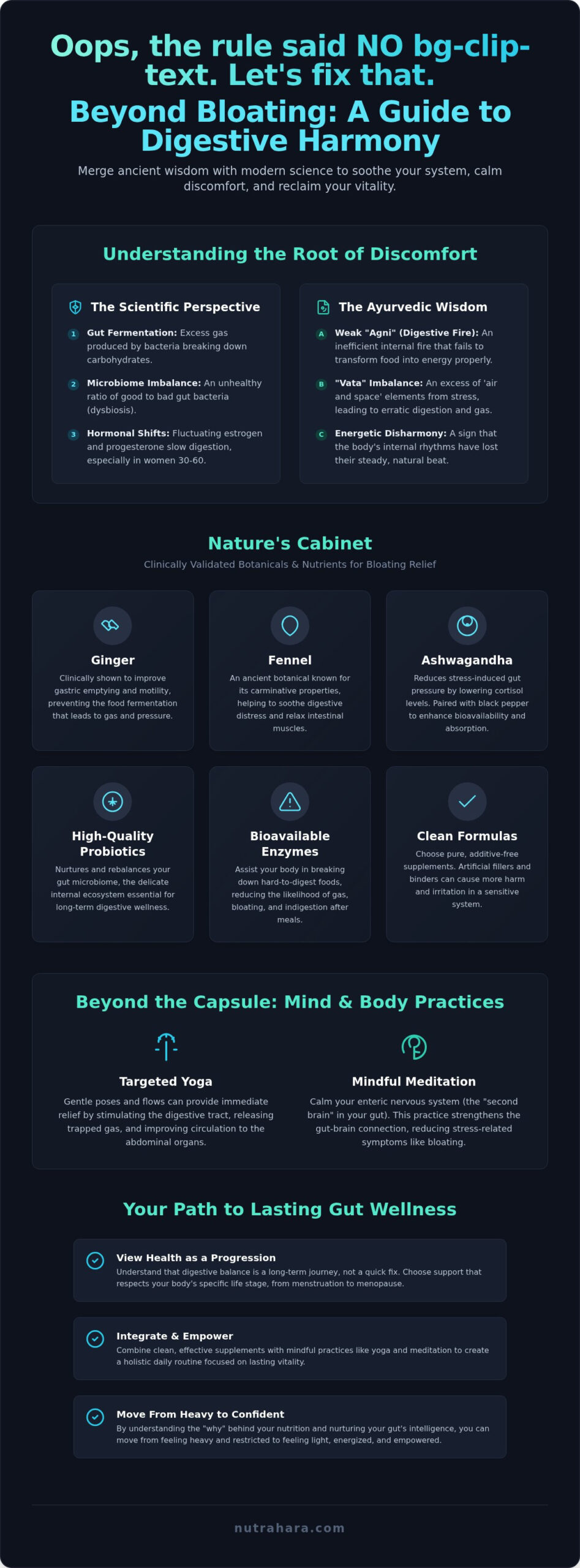
Categories
Articles

Ayurvedic Herbs for Women’s Digestion and Gut Harmony

What if the persistent bloating and mid-day fatigue you’ve been battling aren’t just inevitable signs of aging, but signals that your internal fire is out of sync? For many women between 30 and 60, hormonal shifts and daily stress can dim our natural digestive strength. This often leads to discomfort that lingers long after a meal. You’ve likely felt the frustration of gas and sluggishness that won’t go away, even when you’re trying to eat well. It’s time to stop fighting your body and start listening to its needs. By incorporating specific ayurvedic herbs for digestion, you can rekindle your Agni, or metabolic fire, and restore a sense of tranquility to your gut.

We understand that you’re looking for a sustainable path to vitality rather than a temporary solution. This guide explores how to balance your Agni using time-tested herbs and modern nutritional research to achieve a flatter stomach and increased daily energy. We’ll preview the most effective botanical remedies, share mindful eating rituals, and discuss how gentle yoga can support your gut harmony. You’ll also learn how convenient supplements like Detoxifylife or Femmepower can support your personal health progression. Together, we’ll ensure your wellness journey is both empowering and deeply nourishing.

Key Takeaways

  • Understand how to rekindle your metabolic engine, Agni, to clear away the toxins that lead to persistent bloating and fatigue.
  • Master the use of the “Big Three” ayurvedic herbs for digestion to create a balanced gut environment through the principle of Samyoga.
  • Identify your unique digestive blueprint among the three Doshas to tailor your wellness journey to your body’s specific needs.
  • Learn practical yoga and meditation techniques that calm the nervous system and promote daily regularity and mindful eating.
  • Discover how modern clinical validation enhances traditional herbal wisdom to provide a transparent, clean approach to women’s health.

Understanding Agni: The Foundation of Ayurvedic Digestion

In the ancient wisdom of Ayurveda, digestion isn’t just about breaking down food. It’s about Agni, your internal metabolic fire. Think of Agni as the engine that powers your entire existence. When this fire burns brightly, you feel vibrant, focused, and deeply confident in your body’s capabilities. However, a rushed modern lifestyle often smothers this flame. Between career demands and family care, many women find their Agni struggling to keep up. A strong digestive fire is the true root of your vitality and self-esteem.

When Agni is weak, food isn’t fully transformed into energy. Instead, it creates “Ama,” a sticky residue of undigested toxins. Ama acts like a heavy fog, weighing down your cells and draining your daily spark. It’s the reason you might feel sluggish even after a full night’s rest. Restoring this fire is the first step toward lasting wellness. While lifestyle changes are vital, specific ayurvedic herbs for digestion can provide the spark needed to clear this accumulation and reignite your internal light.

The Gut-Brain-Hormone Connection in Women

Women aged 30 to 60 navigate unique biological shifts that impact the gut. Estrogen and progesterone don’t just regulate cycles; they also influence how quickly food moves through your system. During perimenopause or pregnancy, these fluctuations often lead to “Vata” type issues, characterized by dryness, gas, and irregular rhythms. From an Ayurvedic perspective, the gut-brain axis is the sacred conversation between your digestive fire and your mental clarity, where a clouded gut inevitably leads to a clouded mind. Supporting this delicate balance with formulas like Femmepower can help stabilize these hormonal impacts on your gut harmony.

Signs Your Digestive Fire is Out of Balance

Recognizing an imbalance is the start of your health progression. You might notice a thick coating on your tongue in the morning, persistent bloating, or mental fog that won’t lift. By choosing the right ayurvedic herbs for digestion, you can address these symptoms at their root. Ayurveda distinguishes between “Manda” Agni, which is slow and sluggish, and “Tikshna” Agni, which is overly sharp and acidic. True health isn’t an overnight fix; it’s a long-term journey of returning to balance. Using targeted tools like Detoxifylife can help gently clear Ama while you rebuild your foundational strength and clarity.

The Core Ayurvedic Herbs for Optimal Digestion

In the tradition of Ayurveda, the effectiveness of a remedy often lies in “Samyoga,” the intelligent combining of plants to create a synergistic effect. This isn’t just about mixing ingredients; it’s about how they work together to support your body’s unique rhythms. Modern science is catching up to these ancient practices. As noted by Johns Hopkins on Ayurveda, these methods are increasingly viewed through a lens of holistic wellness and prevention. When choosing ayurvedic herbs for digestion, prioritizing purity and clinically validated formulas ensures you’re supporting your health progression safely.

Triphala: The Sacred Three-Fruit Formula

Triphala is a cornerstone of Ayurvedic gut health. It combines three potent fruits: Amalaki (Indian Gooseberry), Bibhitaki, and Haritaki. Amalaki supports the gut lining, Bibhitaki helps clear excess mucus, and Haritaki acts as a gentle tonic for the bowel muscles. Together, they function as a non-habit-forming internal cleanser that encourages daily regularity. For women balancing busy schedules, Detoxifylife offers a refined way to experience this sacred blend without the guesswork of raw powders.

Ginger and Fennel: The Warmth of Digestive Comfort

Ginger (Zingiber officinale) is often called the “universal medicine” because it stokes Agni without over-aggravating the system. It helps move food through the stomach, which is crucial for women experiencing hormonal sluggishness. Fennel provides a cooling contrast. It’s particularly effective for Pitta-type digestive heat and post-meal bloating. A simple actionable ritual you can start tonight is brewing CCF tea. Mix equal parts Cumin, Coriander, and Fennel seeds in hot water. This gentle infusion helps settle the gut and prepares the body for rest.

Ashwagandha for Stress-Related Digestive Distress

We can’t ignore the impact of the nervous system on the gut. Stress often triggers digestive distress, especially during life transitions like perimenopause. Ashwagandha is a powerful adaptogen that helps the body manage cortisol. A calm mind is a prerequisite for a calm gut. By soothing the “fight or flight” response, your body can prioritize “rest and digest” functions. This is why incorporating ayurvedic herbs for digestion often involves addressing the mind-body connection. To ensure your body actually utilizes this herb, consider Ashwagandha with Black Pepper, which significantly enhances the absorption of active compounds.

Determining Your Digestive Type: Vata, Pitta, or Kapha?

In Ayurveda, your “Prakriti” is your unique genetic blueprint. It defines how your body processes everything from food to emotions. However, as we age or experience hormonal shifts, we often drift into “Vikriti,” which is our current state of imbalance. Identifying whether your gut is currently dominated by Vata, Pitta, or Kapha is essential. It allows you to select the most effective ayurvedic herbs for digestion tailored to your body’s immediate needs rather than following a one-size-fits-all approach.

Vata Digestion: Managing Irregularity and Gas

Vata is characterized by the elements of air and space. When it’s out of balance, your digestion becomes erratic. You might feel hungry one day and have no appetite the next. Common symptoms include persistent bloating, gas, and constipation. This is especially common for women in their 40s and 50s as estrogen levels decline. To ground this energy, focus on warm, cooked foods and healthy fats. Grounding herbs like ginger and ashwagandha are particularly helpful for this type.

“I spent years feeling like my stomach was a balloon after every meal,” shares Sarah, a 48-year-old yoga instructor. “Once I realized I had a Vata imbalance, I stopped eating cold salads and started a ritual of warm, spiced kitchari. Adding a consistent routine and grounding herbs changed everything. I finally have the energy to lead my classes without discomfort.”

Pitta and Kapha Gut Profiles

Pitta represents the fire element. When Pitta is high, you might experience acid reflux, heartburn, or inflammatory issues. This “sharp” digestion requires cooling influences. Spices like fennel and coriander are excellent, as is understanding the health benefits of turmeric for its soothing, anti-inflammatory properties. To balance Pitta, avoid overly spicy or fermented foods that add more heat to an already burning fire. If you’re navigating these shifts, Femmepower can provide the balanced support your system craves.

Kapha is governed by earth and water. A Kapha imbalance manifests as a slow, heavy, or sluggish metabolism. You might feel “stuck” or experience weight gain despite eating very little. To wake up a sleepy Kapha gut, you need stimulating, pungent spices. Think of these as a “metabolic kickstart” to clear out Ama. Using ayurvedic herbs for digestion like those found in Detoxifylife can help move this heavy energy. By adjusting your diet and herbal support to match your dominant Dosha, you empower your body to return to its natural state of harmony.

Ayurvedic Rituals: Beyond Herbs to Holistic Health

While ayurvedic herbs for digestion provide the essential spark for your internal fire, they work most effectively when supported by mindful daily rituals. Think of your health as a personal, ongoing journey of supportive partnership between your choices and your biology. By integrating ancient movement and stillness into your routine, you create a foundation for longevity and deep-seated self-esteem. These practices ensure that the botanical support you receive is fully integrated into your lifestyle, leading to lasting wellness rather than temporary relief.

Yoga Poses for Enhanced Digestion

Yoga is a powerful tool for both physical and mental health. Apanasana, or the Wind-Relieving Pose, is a simple yet effective way to release trapped gas and stimulate the colon. To practice, lie on your back and gently pull your knees toward your chest while taking deep, rhythmic breaths. Follow this with Ardha Matsyendrasana, a gentle seated twist. These twists act like an internal massage, increasing blood flow to your digestive organs and encouraging the movement of toxins out of the system. Regular practice doesn’t just improve gut motility; it boosts your body confidence by helping you feel more connected to your physical self.

Meditation and Mindful Eating Practices

Your nervous system plays a decisive role in how you process nutrients. Stress often keeps us in a “fight or flight” state, which shuts down digestive power. Implementing a “Five-Minute Breath” ritual before you sit down to eat can shift your body into the parasympathetic “rest and digest” mode. Simply close your eyes and focus on slow, deep inhalations. When you begin eating, chew each bite thoroughly and remove distractions like phones or television. This presence allows you to listen to your body’s satiety signals, preventing the overeating that often leads to Kapha-type sluggishness.

Empowerment comes from knowing you have the tools to manage your own wellness. When your mind is calm and your gut is harmonious, your natural vitality shines through. If you find that daily stress makes it difficult to maintain these rituals, you might benefit from additional support. You can strengthen your mindful eating practice with Anxioguard to help soothe the nervous system and promote a more tranquil digestive experience. Using these rituals alongside ayurvedic herbs for digestion creates a comprehensive path to gut harmony.

Ayurvedic Herbs for Women's Digestion and Gut Harmony

The Nutrahara Philosophy: Ancient Wisdom Meets Modern Science

At Nutrahara, we believe that true health is a personal, ongoing journey rather than a destination. We’ve spent years refining the intersection of ancient natural philosophies and modern nutritional research to support your health progression. Our commitment to purity means you’ll never find artificial additives, fillers, or synthetic binders in our formulas. Instead, you’ll find clean, high-quality ingredients that honor the traditional use of ayurvedic herbs for digestion while meeting the rigorous standards of today’s clinical validation. We position ourselves as your wise and caring guide, offering the transparency you need to feel confident in every supplement you take.

Why Clinical Validation Matters in Herbal Supplements

Selecting the right herbs is only half the battle; the other half is ensuring your body can actually absorb and utilize them. This is why bioavailability is a core pillar of our formulation process. We don’t just include ingredients because they’re traditional; we include them because modern science proves they work. For instance, we specifically formulate our Ashwagandha with Black Pepper because piperine has been shown to significantly increase the absorption of active botanical compounds. Our formulas are designed for simplicity and safety, removing the guesswork often associated with raw herbal powders. We invite you to explore our comprehensive Ultimate Guide to Women’s Wellness Supplements to see how we apply this scientific rigor across our entire range of offerings.

Empowering Your Wellness Journey

When your gut is in harmony, your entire outlook on life shifts. Improved nutrient absorption leads to higher energy levels, which in turn boosts your self-esteem and daily confidence. This mental and physical empowerment is the ultimate goal of our partnership. We’re here to help you move past the frustration of persistent bloating and into a life of vitality. If you’re curious about how specific metabolic processes impact your long-term goals, you might find our guide on whether digestive enzymes help with weight loss particularly useful.

We aren’t just a supplement provider; we’re a long-term partner in your wellness. By combining the ayurvedic herbs for digestion we’ve discussed with clean science and mindful rituals, you’re taking a proactive step toward longevity. We invite you to join the Nutrahara community, where we continue to explore the synergy of nature and science together. Your path to gut harmony and lasting wellness starts with a single, mindful choice, and we’re honored to walk beside you as you reclaim your spark.

Embrace Your Path to Lasting Gut Harmony

You’ve explored how a balanced Agni serves as the engine for your vitality and self-esteem. By identifying your unique Dosha and integrating ayurvedic herbs for digestion, you’ve taken a significant step toward reclaiming your internal spark. These botanical allies work best when woven into a lifestyle that includes mindful eating and gentle yoga. This holistic approach ensures that you aren’t just treating symptoms, but nurturing your body’s natural rhythms.

Our clinical-grade Ayurvedic formulations are specifically designed for the female biological cycle. We prioritize purity, ensuring every capsule is free from artificial additives and fillers. This commitment to clean science allows you to focus on your long-term health progression with complete confidence. It’s time to move beyond temporary fixes and embrace a sustainable, nurturing approach to your well-being. Trust in your body’s wisdom as you cultivate a more tranquil and energized life.

Begin your journey to gut harmony with Detoxifylife

Your wellness is a personal journey, and we’re honored to act as your guide. We’re here to support you as you reclaim your vitality and step into a more balanced version of yourself.

Frequently Asked Questions

What are the best Ayurvedic herbs for immediate bloating relief?

Fennel and ginger are the most effective ayurvedic herbs for digestion when you need quick relief from gas. Fennel seeds act as a carminative, helping to relax the intestinal muscles and dissipate trapped air. You can chew on a teaspoon of roasted seeds after eating or brew them into a tea. Fresh ginger also stimulates the movement of food through the stomach, preventing the fermentation that causes mid-day bloating.

Can I take Ayurvedic digestive herbs while pregnant or breastfeeding?

You should always consult your primary healthcare provider before starting any new herbal regimen during pregnancy or lactation. While gentle culinary spices like ginger and fennel are generally considered safe in food-grade amounts, concentrated supplements require professional guidance. Every woman’s biological cycle is unique during these stages. Prioritizing safety ensures that your health progression remains supportive for both you and your baby during this sensitive time.

How long does it take to see results from Ayurvedic gut rituals?

You may feel immediate relief from bloating within an hour of using specific ayurvedic herbs for digestion like fennel. However, rebalancing your foundational Agni is a long-term progression. Most women notice significant improvements in their energy and regularity after three to four weeks of consistent ritual. Ayurveda focuses on addressing the root cause rather than just masking symptoms, which requires patience and a steady commitment to your daily practices.

Is it better to take digestive herbs before or after meals?

The timing depends on your specific digestive goal. Taking warming herbs like ginger about 15 minutes before a meal can help kindle your Agni and prepare the stomach for food. Conversely, cooling herbs like fennel are often best taken after eating to soothe the gut lining and prevent post-meal gas. If you’re using a comprehensive formula like Detoxifylife, follow the specific label instructions to ensure maximum bioavailability and effectiveness.

Can Ayurvedic herbs help with acid reflux and indigestion?

Cooling herbs like coriander, fennel, and amla are traditionally used to soothe Pitta-type digestive heat. These botanicals help neutralize excess stomach acid without shutting down your digestive fire entirely. Modern clinical research supports the use of these natural elements for maintaining a healthy gastric lining. Combining these herbs with mindful eating rituals, such as chewing thoroughly and sitting quietly, can further reduce the frequency of acid-related discomfort.

What is the “CCF tea” mentioned in Ayurvedic digestion?

CCF tea stands for Cumin, Coriander, and Fennel tea, a classic Ayurvedic formula for gut harmony. This blend is famous for its ability to balance all three Doshas while gently clearing Ama from the system. It’s a simple, effective way to integrate ayurvedic herbs for digestion into your daily life. Simply steep equal parts of the whole seeds in hot water for five minutes to create a soothing, balancing infusion for any time of day.

How do hormonal changes in menopause affect my Ayurvedic Dosha?

Menopause is considered the Vata stage of life in Ayurveda, which often leads to increased dryness and irregularity in the gut. As estrogen levels decline, the cooling and lubricating qualities of the body decrease. This shift can manifest as constipation or a more sensitive digestive system. Grounding rituals and warming, nourishing herbs become essential during this transition to maintain your internal balance and support your overall mental and physical empowerment.

Are Ayurvedic supplements safe to take with my daily multivitamin?

Most Ayurvedic herbal supplements are safe to combine with a standard multivitamin. However, it’s important to check for ingredient overlaps, especially with minerals like iron or zinc. Nutrahara formulas are designed for simplicity and purity, making them easy to integrate into a clean wellness routine. If you’re taking specific pharmaceutical drugs, we recommend speaking with a professional to ensure there are no interactions with the potent botanical compounds in your herbs.

Article by

Nutrahara Team

We are a dedicated collective of nutrition scientists and naturopaths at Nutrahara, committed to advancing women's health through the fusion of ancient Ayurveda science and cutting-edge nutrition research. Our mission is to empower you with clean, simple, and scientifically validated wellness solutions so you can live your healthiest life. Connect with us to stay updated on the latest developments in holistic women's health and nature-based research.

Disclaimer

This article is not a substitute for medical advice. Please consult a healthcare professional before starting any supplement, especially if pregnant, nursing, taking medication, or managing health conditions.

Categories
Articles

7 Signs You Need Probiotics: A Women’s Holistic Guide to Gut Health

What if the persistent brain fog and stubborn skin breakouts you’ve been experiencing aren’t just inevitable parts of a busy life, but your body’s way of whispering for help? For many women, the “second brain” in the gut acts as a mirror for hormonal health and emotional well-being. If you struggle with digestive discomfort or low energy despite a dedicated wellness routine, it’s time to listen. Recognizing the subtle signs you need probiotics is the first step toward reclaiming your internal harmony and long-term vitality.

You likely understand that true health is a personal, ongoing journey rather than a quick fix. It’s common to feel frustrated when your energy levels don’t match the effort you put into your yoga practice and nutrition. This guide bridges ancient Ayurvedic wisdom with modern clinical research to help you decode your body’s messages. You’ll learn how to restore your microbiome naturally for clearer skin, stable energy, and mental clarity. We will walk through seven specific indicators of imbalance and provide a simple, science-backed protocol to support your health progression for years to come.

Key Takeaways

  • Understand the unique connection between your gut microbiome and hormonal fluctuations throughout different life stages.
  • Identify the seven physical and emotional signs you need probiotics, moving beyond simple digestion to address skin health and mental clarity.
  • Uncover how chronic stress and modern dietary patterns disrupt your beneficial bacteria and impact your daily energy levels.
  • Learn a step-by-step restoration protocol focused on strain specificity to nourish your system from the inside out.
  • Discover how the fusion of Ayurvedic wisdom and clinical research supports a balanced lifestyle and long-term health progression.

The Silent Language of Your Microbiome: Why Gut Health Matters

Your gut is more than just a digestive tube; it’s a thriving ecosystem of trillions of bacteria. This internal landscape, known as the microbiome, influences everything from your immune system to your skin’s clarity. For women between 30 and 60, this ecosystem is particularly dynamic. Fluctuations in estrogen and progesterone during menstruation, pregnancy, or menopause directly impact gut motility and bacterial diversity. Understanding the signs you need probiotics is essential because a woman’s gut health is intimately tied to her hormonal balance. When these bacteria are in harmony, they maintain a strong intestinal barrier, acting as the first line of defense for your immunity.

What are Probiotics and How Do They Work?

Probiotics are live microorganisms that offer specific health benefits when consumed in adequate amounts. Think of them as beneficial residents that help maintain order in your internal garden. They work by crowding out harmful pathogens, ensuring that “bad” bacteria don’t take over and cause systemic inflammation. It’s helpful to distinguish them from prebiotics, which are the non-digestible fibers that act as food for these friendly microbes. For those looking to support this process, natural protocols often include targeted supplements like Detoxifylife to help clear the way for healthy colonization and long-term vitality.

The Gut-Brain Axis: Your Emotional Command Center

Your gut is often called the “second brain” because of the enteric nervous system. This complex network communicates constantly with your head via the Vagus nerve, creating a bi-directional highway of information. Remarkably, about 95% of your body’s serotonin, the neurotransmitter responsible for regulating mood and sleep, is produced in your gut. This is why an imbalance, or dysbiosis, often manifests as more than just physical discomfort. It can lead to unexplained anxiety, irritability, or low mood.

By recognizing the signs you need probiotics, you can address the root of these emotional shifts rather than just the symptoms. Integrating mindful practices like yoga or pairing your gut health protocol with Ayurvedic staples like Ashwagandha with Black Pepper can further soothe the Vagus nerve. This holistic approach helps you navigate life’s transitions with greater mental clarity, stable energy, and a profound sense of internal calm.

7 Clear Signs You Need Probiotics: Listening to Your Body

Your body is constantly communicating. It doesn’t use words; it uses signals. For women navigating the decades between 30 and 60, these messages are often intimately tied to hormonal shifts. A symptom during your menstrual cycle might feel quite different than one during the transition into menopause. Tracking these signs you need probiotics over a 30-day period allows you to see the patterns clearly. Often, these red flags aren’t just localized in your stomach. They manifest as systemic issues that affect your overall quality of life and sense of self.

Digestive Distress: Bloating, Gas, and Irregularity

Chronic bloating after a simple meal is a clear cry for enzymatic and bacterial support. It suggests your current microbiome isn’t equipped to break down food efficiently. Food transit time is equally important. If waste moves too slowly through your system, it begins to ferment, leading to gas and discomfort. Probiotics help by populating the gut with strains that efficiently process complex fibers. This reduces the pressure and heaviness you feel after eating, allowing you to move through your yoga practice or daily tasks with ease. As one of our community members, Maria, noted, her digestion finally felt “quiet” again after she focused on restoring her internal flora.

Systemic Signals: Skin Issues, Fatigue, and Brain Fog

The “Gut-Skin Axis” explains why many topical treatments fail to provide lasting results. Issues like acne, eczema, or rosacea often start deep within the digestive tract. When your microbiome is out of balance, your skin reflects that internal inflammation. Fatigue is another common indicator. You might feel exhausted even after a full night’s rest if your gut isn’t absorbing the vital nutrients from your food. Brain fog is also a major symptom of low-grade inflammation originating in the gut. While you work on restoring your microbiome, you can support your mental clarity with FocusZenith to help bridge the cognitive gap. Recognizing these signs you need probiotics empowers you to take control of your long-term health progression.

If you’re ready to support your body’s natural rhythm and restore internal harmony, exploring FemmePower can be a gentle and effective way to begin your wellness journey.

Why Your Gut Flora Declines: Modern Challenges for Women

Modern living presents unique hurdles for our internal ecosystems. The Standard American Diet, often high in refined sugars and low in diverse plant fibers, starves our beneficial microbes while fueling less desirable strains. Environmental toxins and shifts in internal pH also disrupt this delicate balance. When these factors combine, you’ll likely notice the signs you need probiotics, such as persistent bloating or skin flare-ups. Antibiotics, while necessary at times, often act like a wildfire in the gut; they clear out harmful pathogens but also decimate the “friendly” residents that keep your immunity strong for months after a single course.

The Stress Connection: Cortisol and the Gut

Chronic stress is a quiet thief of gut health. When you’re in a “fight or flight” state, your body prioritizes immediate survival, diverting blood flow away from the digestive system. This shift slows down nutrient absorption and can “burn out” your microbiome over time. To protect your flora, it’s vital to manage cortisol levels through mindful movement like yoga or daily meditation. Traditional Ayurvedic wisdom suggests using adaptogens to find balance. For instance, Ashwagandha with Black Pepper can help modulate your stress response, creating a calmer environment where your gut bacteria can thrive.

Hormonal Transitions and Microbial Shifts

For women in their 30s, 40s, and 50s, hormones are a major driver of microbial health. A specific group of bacteria called the estrobolome is responsible for metabolizing and circulating estrogen throughout the body. As estrogen levels fluctuate during perimenopause and menopause, the diversity of your gut flora often declines. This shift can worsen common symptoms like hot flashes, irritability, or mood swings. Additionally, your vaginal health is closely linked to your gut, as beneficial bacteria often migrate between these two systems to maintain a healthy pH.

Maintaining a robust microbiome is a key part of your long-term health progression, helping you navigate these transitions with grace and confidence. Recognizing the signs you need probiotics early allows you to provide your body with the support it needs to maintain harmony during these natural life stages. By choosing clean, natural supplements, you empower your system to return to its natural state of vitality.

Restoring Balance: A Holistic Protocol for Women 30-60

Restoring your gut health is a deliberate progression that requires both patience and the right tools. Once you’ve identified the signs you need probiotics, the next step is to create an internal environment where beneficial bacteria can flourish. This isn’t just about taking a pill; it’s about a holistic lifestyle that supports your body’s natural wisdom. Begin by re-populating your gut with diverse strains. Lactobacillus is particularly beneficial for women’s health, supporting vaginal pH and upper intestinal function, while Bifidobacterium strains focus on colon health and immune response. Incorporating fermented foods like kefir or traditionally prepared sauerkraut alongside high-quality supplements ensures a wide spectrum of microbial support.

Yoga and Meditation for Digestive Harmony

Movement is a powerful catalyst for gut health. Specific yoga twists, such as seated or reclining spinal twists, act as a gentle massage for your digestive organs. These poses help stimulate peristalsis, the wave-like muscle contractions that move food through your system. Complement this physical work with just 10 minutes of daily meditation. By calming the nervous system, you lower gut-level inflammation and support the “second brain” in your enteric nervous system. Practice mindful eating by chewing each bite thoroughly and remaining present during meals; this simple act is the crucial first step of healthy digestion.

Choosing a Supplement That Bridges Science and Tradition

When selecting a supplement, look for transparency on the label. High-quality formulas should specify the Colony Forming Units (CFUs) and the exact strains included. Shelf stability is also key to ensuring the bacteria remain “live” until they reach your gut. At Nutrahara, we believe in the synergy of modern clinical research and ancient Ayurvedic principles. Combining targeted probiotics with “deep-tissue” Ayurvedic support helps address the root causes of imbalance. For a comprehensive approach to your health progression, you can explore FemmePower, which is designed to meet the unique needs of the female microbiome.

If you’re ready to move beyond the signs you need probiotics and start your journey toward lasting vitality, consider a formula that prioritizes purity and tradition. Detoxifylife can help prepare your system for these new, beneficial residents by gently cleansing your internal environment and supporting your body’s natural detoxification pathways.

7 Signs You Need Probiotics: A Women’s Holistic Guide to Gut Health

The Nutrahara Promise: Ancient Wisdom for Modern Longevity

Nutrahara stands as a bridge between clinical precision and timeless wisdom. We believe that your health is an ongoing journey rather than a quick fix. By fusing Ayurvedic principles with modern nutritional research, we create formulas that respect your body’s delicate rhythms. Once you identify the signs you need probiotics, our role is to act as your caring guide. Our commitment to purity means every ingredient is chosen for its synergy. We strictly avoid artificial fillers and additives that can disrupt sensitive systems, ensuring that what you put into your body is as clean as the intentions behind your wellness practice. Internal balance is the true foundation of external beauty and the self-esteem you carry into your daily life.

Nurturing Your Body Through Every Life Stage

Your needs evolve as you move from your 30s through perimenopause and into your post-menopausal years. A supplement routine should be as dynamic as your life. For many women, structural support is just as vital as microbial balance. Collagen plays a significant role in gut lining repair, helping to maintain the integrity of your intestinal barrier while supporting skin elasticity. Integrating a high-quality Premium Collagen Complex provides the structural foundation your gut needs to thrive alongside your probiotic protocol. This holistic approach ensures that as your body transitions, you remain grounded, vibrant, and strong.

Taking the First Step Toward a Balanced Life

True health progression happens through small, consistent actions. You don’t need to overhaul your entire life in a single day. Start with one new habit, such as a five-minute morning meditation or a single targeted supplement. Consistency allows your microbiome to stabilize and your energy levels to find their natural peak. If you’ve been noticing the signs you need probiotics, take that first step with confidence. We encourage you to trust your intuition and listen to the subtle signals your body sends. By honoring your gut, you honor your entire self, paving the way for a life of longevity, tranquility, and lasting wellness.

Embracing Your Path to Internal Harmony

Recognizing the signs you need probiotics is the first step in a meaningful health progression. Your gut isn’t just a digestive organ; it’s the foundation of your energy, mood, and hormonal balance. We’ve explored how stress, diet, and life transitions like menopause can disrupt this delicate ecosystem. By choosing a path that respects both modern research and ancient wisdom, you can restore clarity to your mind and radiance to your skin. True wellness is a journey of listening to these subtle signals and responding with care.

Nutrahara is here to serve as your wise guide. Our Ayurvedic-inspired, clinically-backed formulas are crafted without artificial additives or harsh fillers. We’re proud to be trusted by women navigating complex hormonal shifts who seek purity and simplicity. It’s time to trust your intuition and provide your body with the gentle, natural support it deserves to thrive through every life stage.

Start your journey to gut harmony with Nutrahara’s clean wellness solutions.

You have the power to reclaim your vitality and confidence. Your journey toward long-term longevity and vibrant health begins with a single, mindful choice today.

Frequently Asked Questions

How long does it take to notice the signs that probiotics are working?

Most women notice improvements in digestive comfort within 2 to 4 weeks of consistent daily use. Initial changes often include reduced bloating and more regular bowel movements. However, systemic benefits like improved skin clarity or stable energy levels usually require 2 to 3 months of supplementation. This timeline reflects the natural progression of re-balancing your internal ecosystem and allowing beneficial strains to establish a strong presence in your microbiome.

Can I take probiotics if I am pregnant or breastfeeding?

Probiotics are generally considered safe and beneficial during pregnancy and lactation. They support the mother’s immune system and help maintain a healthy microbial balance that is passed to the infant. Since every woman’s journey is unique, you should always consult your healthcare provider before starting any new supplement during these stages. Focus on clean, filler-free formulas that prioritize the safety and purity of the ingredients for both you and your baby.

Is it possible to have ‘too many’ probiotics in my system?

It’s very rare to have “too many” probiotics, as your gut is designed to host trillions of microbes. If you take a very high dose too quickly, you might experience temporary gas or mild bloating as your system adjusts. These symptoms usually subside within a few days as your body finds its new equilibrium. Listening to the signs you need probiotics helps you find the right balance for your specific needs without overwhelming your system.

Should I take my probiotic on an empty stomach or with food?

Research suggests taking probiotics about 30 minutes before a meal or with a light meal that contains healthy fats. This timing helps the beneficial bacteria survive the acidic environment of the stomach so they can reach the intestines where they are needed. Consistency is more important than the exact minute you take it. Find a rhythm that fits your daily wellness routine, perhaps alongside your morning meditation or breakfast.

What is the difference between a probiotic and a digestive enzyme?

Probiotics are live, beneficial microorganisms that live in your gut to support long-term health and immunity. In contrast, digestive enzymes are specialized proteins that act as tools to break down the food you eat into absorbable nutrients. While probiotics focus on the balance of your internal ecosystem, enzymes address the immediate mechanics of digestion. Using them together can provide comprehensive support for women experiencing persistent bloating or nutrient malabsorption during hormonal transitions.

Can probiotics help with hormonal acne or skin rashes?

Probiotics can significantly improve skin health by addressing the root cause of inflammation within the gut. Through the gut-skin axis, a balanced microbiome helps regulate the body’s inflammatory response, which often manifests as hormonal acne, eczema, or rosacea. When you notice skin flare-ups as signs you need probiotics, restoring your internal flora can lead to a clearer, more radiant complexion that reflects your internal state of harmony and vitality.

Do I need to refrigerate my probiotics for them to stay effective?

Refrigeration requirements depend entirely on the specific strain and the manufacturing technology used. While some traditional formulas require cold storage to keep the bacteria alive, many modern, high-quality supplements are designed to be shelf-stable at room temperature. Always check the product label for specific storage instructions. We prioritize formulas that maintain their potency and efficacy without the need for refrigeration, making them convenient for a busy, active lifestyle.

Can probiotics help with weight management during menopause?

Probiotics support weight management during menopause by improving metabolic health and reducing systemic inflammation. Certain strains help regulate appetite-related hormones and improve how your body processes fats and sugars. While they aren’t a quick fix for weight loss, they are a vital part of a long-term health progression. Pairing probiotics with mindful movement and a nutrient-dense diet helps you navigate the hormonal shifts of menopause with greater confidence and ease.

Article by

Nutrahara Team

We are a dedicated collective of nutrition scientists and naturopaths at Nutrahara, committed to advancing women's health through the fusion of ancient Ayurveda science and cutting-edge nutrition research. Our mission is to empower you with clean, simple, and scientifically validated wellness solutions so you can live your healthiest life. Connect with us to stay updated on the latest developments in holistic women's health and nature-based research.

Disclaimer

This article is not a substitute for medical advice. Please consult a healthcare professional before starting any supplement, especially if pregnant, nursing, taking medication, or managing health conditions.