...
Categories
Articles

Supplements on an Empty Stomach vs. with Food: A Woman’s Guide to Optimal Absorption

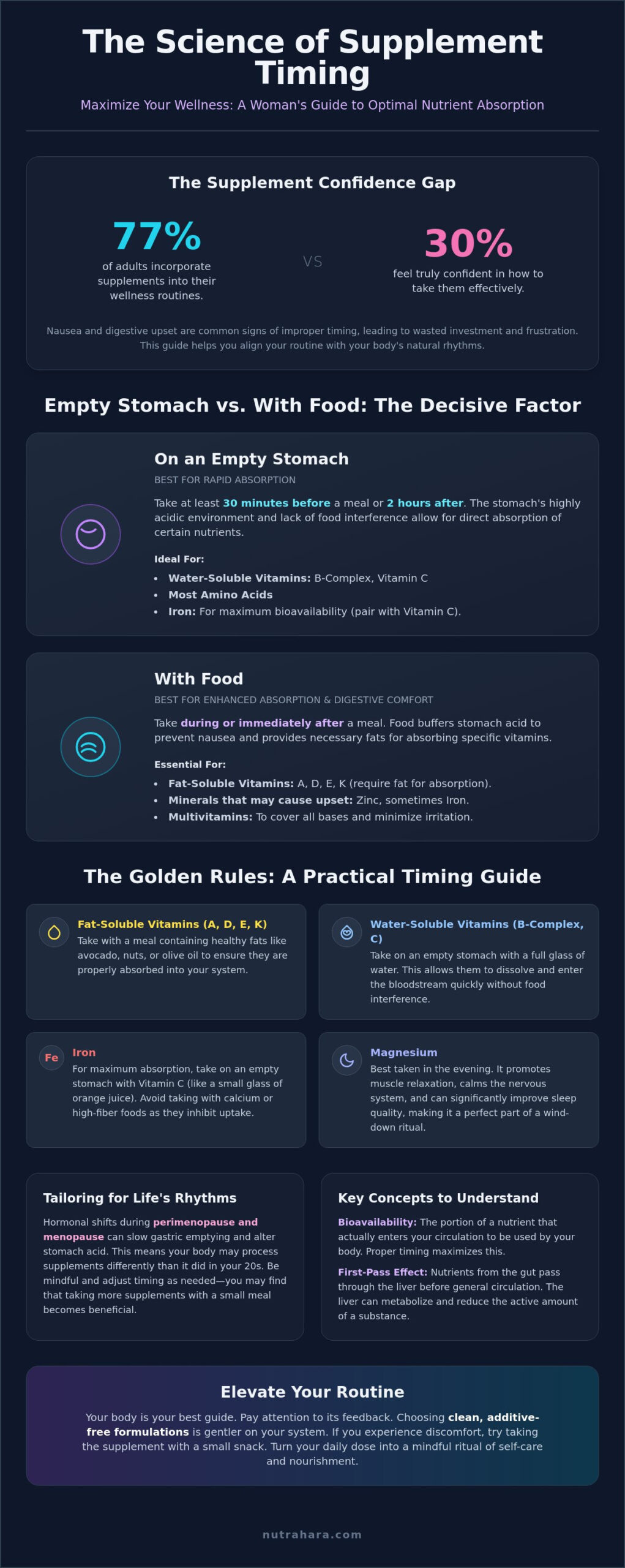
Did you know that while nearly 77% of adults now incorporate dietary supplements into their wellness routines, only about 30% of us feel truly confident in the information on those labels? It’s a common struggle for women who prioritize their health. You might find yourself staring at a bottle of multivitamins, wondering if taking supplements on an empty stomach vs with food will be the difference between a productive morning and a bout of digestive upset. Many women have experienced that wave of nausea after a morning dose, leading to a cabinet full of expensive, half-used bottles.

We understand how frustrating it is to feel like you’re wasting your investment on products that don’t seem to work. You deserve to feel the full benefit of every capsule. This guide bridges the gap between traditional health philosophies and modern nutritional research to help you master the science of timing. You’ll learn how to align your intake with your body’s natural rhythms to improve your energy and digestion. We will break down the essential rules for fat-soluble and water-soluble nutrients, giving you a clear, manageable schedule that turns your supplement routine into a grounding daily ritual.

Key Takeaways

  • Discover how the ancient wisdom of Agni, or digestive fire, can help you transform your supplement routine into a restorative ritual of self-care.
  • Understand the biological mechanics of supplements on an empty stomach vs with food to ensure your body effectively processes nutrients through the liver’s first-pass effect.
  • Learn the “Golden Rules” for timing essential minerals like Iron and Magnesium to maximize bioavailability while avoiding common digestive discomfort.
  • Explore how to adapt your timing to hormonal shifts during perimenopause and how specific botanicals like Ashwagandha can enhance your evening wind-down.
  • Find out why clean, additive-free formulations are gentler on your system and how targeted blends can support long-term hormone harmony.

The Ritual of Timing: Why Supplement Synergy Matters for Women’s Wellness

Taking your daily vitamins shouldn’t feel like another box to tick on a crowded to-do list. Instead, view this moment as a grounding ritual of self-care. It’s a conscious act of nourishing your future self. When we talk about the effectiveness of your routine, the conversation often centers on the debate of taking supplements on an empty stomach vs with food. This isn’t just about avoiding a queasy stomach; it’s about honoring the complex internal environment of a woman’s body.

Ancient wisdom has long understood what modern laboratories are only now confirming. In Ayurvedic tradition, the concept of Agni, or digestive fire, represents our ability to process not just food, but every substance we ingest. If your Agni is weak, your body cannot transform nutrients into energy and tissue. Understanding The Science of Nutrient Absorption, also known as bioavailability, is the key to rekindling that fire. Bioavailability refers to the portion of a nutrient that successfully enters your circulation and becomes available for use. Without proper timing, even the most expensive capsules may simply pass through your system without making an impact.

As women transition into their 40s and 50s, metabolic rates naturally shift. Hormonal changes during perimenopause and menopause can slow down gastric emptying and alter stomach acid production. This means your supplement processing time is longer than it was in your 20s. Adjusting your intake to match these physiological changes ensures you aren’t wasting your health investment.

Ancient Wisdom Meets Modern Bioavailability

Traditional medicine practitioners rarely prescribed herbs in isolation. They often paired potent botanicals with “carriers” like ghee or honey to enhance transport into the cells. Modern science mirrors this by using carrier oils in fat-soluble supplements to ensure they bypass the harsh environment of the stomach. At Nutrahara, we believe purity must meet clinical validation. Our philosophy centers on creating formulas that respect these traditional delivery methods while utilizing modern purification standards to ensure every milligram counts toward your health progression.

Listening to Your Body’s Natural Rhythms

Your digestive system follows a distinct circadian rhythm. Gastric motility and enzyme production are typically highest during the daylight hours, tapering off as the sun sets. This is why morning is often the ideal time for energy-boosting B vitamins, while calming minerals like magnesium are better suited for the evening. We encourage you to track your personal response for a few days. Notice if you feel a surge of energy or a wave of nausea after your dose. This internal feedback is the most powerful tool you have for perfecting the balance of supplements on an empty stomach vs with food. Your journey is unique, and your schedule should reflect your body’s specific needs.

Empty Stomach vs. With Food: The Science of Nutrient Absorption

Bioavailability is the efficiency with which your body recognizes and utilizes a nutrient. It isn’t enough to simply swallow a capsule; your internal chemistry must be ready to receive it. The choice of taking supplements on an empty stomach vs with food dictates how your gastric acid interacts with the formula. When the stomach is empty, its pH is highly acidic. This environment is perfect for certain vitamins but can be harsh for others. Once you eat, the environment shifts to accommodate digestion, altering how nutrients are liberated from their capsules.

The “First-Pass Effect” adds another layer of complexity to your wellness journey. Before nutrients reach your bloodstream, they travel through the portal vein to the liver. This vital organ acts as a gatekeeper, processing and sometimes metabolizing substances before they can circulate. Additionally, certain minerals share the same absorption pathways. For instance, calcium and iron often compete for the same receptors in the gut. If taken together, they may cancel each other out. You can find more detail on these interactions in A Practical Guide to Timing Common Women’s Supplements, which highlights how specific factors can inhibit or enhance mineral uptake.

When Water-Soluble Nutrients Thrive (Empty Stomach)

B-complex vitamins and Vitamin C are water-soluble. They rely on water for transport rather than dietary fats. Taking a high-quality Vitamin B Complex on an empty stomach, usually about 30 minutes before breakfast, allows for rapid absorption. This timing supports early morning energy levels by ensuring the nutrients reach your system without having to compete with food particles. Since these vitamins aren’t stored in the body, a consistent morning ritual helps maintain steady levels throughout your active day.

The Role of Dietary Fats in Fat-Soluble Vitamin Uptake

Vitamins A, D, E, and K require a different approach. These nutrients are fat-soluble, meaning they must be dissolved in lipids to pass through the intestinal wall. A common mistake is taking “dry” multivitamins with only black coffee. Without fat, these vitamins may simply be excreted. You don’t need a heavy meal; a small amount of healthy fat is enough. Pairing your dose with half an avocado or a handful of walnuts triggers the necessary bile release for optimal uptake. If you’re looking to refine your daily routine, exploring targeted hormone support can help you align these nutrients with your specific life stage.

A Practical Guide to Timing Common Women’s Supplements

Creating a sustainable wellness routine requires moving from abstract science to daily action. When deciding on supplements on an empty stomach vs with food, specific minerals follow strict ‘Golden Rules’ to ensure they don’t compete for absorption. For many women, iron is best taken on an empty stomach to maximize uptake, though if it causes discomfort, a small non-calcium snack can help. Conversely, zinc and calcium are almost always better tolerated and absorbed when taken during a meal. Following clear guidance on taking vitamins with or without food helps you avoid the common pitfalls of nutrient competition.

Collagen is a cornerstone of structural health. To support skin elasticity and joint health progression, we recommend taking our Premium Collagen Complex either first thing in the morning or right before bed. This allows the amino acids to be processed without interference from complex proteins found in heavy meals. If you use ‘green’ supplements or fiber, keep a two-hour window between these and your minerals. Fiber can bind to nutrients and sweep them out of the body before they’re fully absorbed.

Digestive Support and Probiotics: Before or During Meals?

The timing of probiotics remains a debated topic among wellness enthusiasts. Most research suggests taking them 30 minutes before a meal. This ensures the beneficial bacteria pass through the stomach while acid levels are lower. From an Ayurvedic perspective, taking bitter herbs before eating acts to ‘kindle’ your digestive fire, preparing your system for the nutrients to come. If you’re curious about how these processes affect your weight and vitality, our Digestive Enzymes guide offers deeper insights into holistic gut health.

Joint Health and Modern Minerals: Finding the Sweet Spot

Magnesium is often called the ‘evening mineral’ because of its ability to support muscle relaxation and nervous system calm. It’s a perfect addition to your nighttime wind-down ritual. For joint mobility, timing substances like turmeric and glucosamine with a meal containing fats is essential for bioavailability. Integrating these into a post-workout ritual, perhaps after a restorative yoga session, helps support the long-term integrity of your joints and connective tissues. This mindful approach ensures your health investment works in harmony with your body’s recovery phase.

Tailoring Your Supplement Schedule to Life Stages and Daily Rituals

Your body is a dynamic system, evolving through every decade of life. By the time you reach your 40s, the hormonal shifts of perimenopause can introduce new digestive sensitivities. This makes the choice between supplements on an empty stomach vs with food a personal exploration of what feels best for your gut. Fluctuating estrogen levels can impact gastric motility, sometimes leading to a more sensitive stomach than you experienced in your younger years. Listening to these subtle signals is a vital part of your health progression.

Sarah, a 52-year-old wellness enthusiast, shared her experience with this transition. “I used to take my multivitamin first thing in the morning on an empty stomach, but as I entered my 50s, I noticed it started causing a dull ache. Switching my routine to take it with a balanced lunch made a world of difference. My energy stayed stable, and the digestive discomfort simply vanished.” This simple shift illustrates how a ritual can adapt to your changing needs. For those managing daily stress alongside these shifts, taking Ashwagandha with Black Pepper during your evening wind-down can help harmonize your nervous system before sleep.

Managing Hormonal Shifts: From Menstruation to Menopause

During your menstruating years, timing iron intake is essential for combatting fatigue. Taking it away from tea or coffee, perhaps with a small piece of fruit, ensures you get the most support when your body needs it most. As you move into post-menopausal years, the focus often shifts toward bone density. Timing your Calcium and Vitamin D in the evening supports the body’s natural restorative processes during sleep. For a broader look at how to support these transitions, you can refer to A Woman’s Guide to Wellness Supplements.

Integrating Supplements into Your Yoga and Meditation Practice

Yoga and meditation provide a beautiful framework for a mindful supplement ritual. A “Mindful Morning” might involve pairing your B vitamins with a series of sun salutations to spark sustained energy for the day ahead. In the evening, as you transition into a restorative meditation, incorporating Restorasleep can signal to your body that it’s time for deep, healing rest. Practicing Pranayama, or deep yogic breathing, during these moments improves oxygenation throughout your system. This enhanced circulation helps deliver nutrients more effectively to your tissues, ensuring your investment in your health is fully realized.

Ready to align your daily routine with your body’s unique wisdom? Explore our clean, targeted women’s health supplements to support your journey at every stage.

Supplements on an Empty Stomach vs. with Food: A Woman’s Guide to Optimal Absorption

Elevating Your Health Progression with Nutrahara’s Mindful Formulations

Nutrahara stands as your dedicated partner in this lifelong progression toward vitality. We believe that what is left out of a capsule is just as significant as what is put in. Many standard vitamins rely on synthetic fillers, artificial binders, and glazes that can irritate the delicate lining of the stomach. This irritation is often the true culprit behind the nausea women experience. Whether you decide to take your supplements on an empty stomach vs with food, the purity of the formulation determines your comfort and success. By choosing clean, additive-free formulas, you remove unnecessary barriers to your well-being.

Our commitment to your health is reflected in our meticulous sourcing. For women seeking to balance their internal landscape across various life stages, our Femmepower blend offers a sophisticated fusion of botanicals and nutrients. It is designed specifically for hormone harmony, providing the support you need to feel grounded and empowered in your daily life. We view our role as a wise guide, helping you navigate the science of nutrition with transparency and care.

Clean Ingredients for Gentle Digestion

Our formulations prioritize bio-identical forms of vitamins. These are molecularly identical to the nutrients your body naturally recognizes, making the absorption process smoother and more efficient for your digestive system. By avoiding harsh chemicals and artificial additives, we ensure that our products are as gentle as possible, even for those with sensitive systems. It’s helpful to remember that health is a journey of small, consistent rituals, not overnight fixes. Choosing high-quality ingredients is a fundamental step in ensuring those rituals yield the results you deserve.

Creating a Sustainable Wellness Journey

Consistency is the heartbeat of any successful health ritual. To keep your progression on track, consider simple, tangible tools. A beautiful ceramic pill box kept near your meditation cushion or yoga mat can serve as a physical anchor for your routine. While phone reminders have their place, a physical ritual often feels more grounding and intentional. We also invite you to broaden your knowledge by exploring our educational resources. You can download the Nutrahara E-Books for more inspiration on integrating wellness and traditional wisdom into your modern lifestyle.

We encourage you to take a moment today to review your current supplement shelf. Simplify your routine by focusing on high-quality, targeted formulas that truly resonate with your body’s unique needs. Empowering yourself with knowledge and choosing purity is an act of self-care that builds lasting confidence. Your health is your greatest investment. Let’s ensure it’s a journey filled with clarity, tranquility, and strength.

Cultivating Your Personal Ritual for Lifelong Vitality

Mastering the timing of your nutrients is more than just a logistical task; it’s a profound act of self-respect. By aligning your intake with your body’s natural circadian rhythms and specific life stages, you ensure that every capsule supports your long-term health progression. You’ve learned how to distinguish between water-soluble and fat-soluble needs, and how to listen to your body’s signals as you navigate hormonal shifts. These small, intentional adjustments transform a simple habit into a powerful daily ritual of self-care that honors your unique biology.

Whether you are balancing supplements on an empty stomach vs with food, the purity of your formula remains the foundation of your success. Nutrahara’s mindful formulations are crafted with a fusion of ancient Ayurveda and modern science, using clinically validated natural ingredients that women trust for lasting wellness. We invite you to Explore Nutrahara’s Science-Backed Women’s Supplements and simplify your journey toward optimal absorption. You have the knowledge and the tools to take full control of your wellness. Trust in your body’s wisdom, stay consistent with your rituals, and embrace the confidence that comes from knowing your health investment is working for you.

Frequently Asked Questions

Is it okay to take a multivitamin on an empty stomach if I don’t feel nauseous?

You can take a multivitamin on an empty stomach if you don’t experience digestive upset, but it isn’t always the most efficient choice. Multivitamins usually contain fat-soluble nutrients like Vitamins A, D, E, and K that require dietary fats for proper transport. While your stomach might feel comfortable, your body won’t fully absorb these specific components without food. Taking your multivitamin with a meal ensures you maximize your health investment.

Can I take all my supplements at once with breakfast to save time?

Taking all your supplements at once is convenient, but it often leads to nutrient competition. High doses of calcium, for example, can block the absorption of iron and zinc if they are ingested at the exact same time. It’s much better to space out your minerals to ensure they don’t fight for the same receptors in your gut. Splitting your routine supports your body’s long-term health progression more effectively.

How long should I wait to eat after taking supplements on an empty stomach?

You should generally wait 30 to 60 minutes after taking supplements on an empty stomach vs with food before consuming a full meal. This window allows water-soluble vitamins, such as B-complex and Vitamin C, to pass through the stomach and into the small intestine without interference from food particles. This timing is especially important for iron and specific amino acids, as it ensures they have a clear path for rapid absorption.

What happens if I take fat-soluble vitamins (A, D, E, K) without any fat?

If you take fat-soluble vitamins without any dietary fat, your body will likely excrete them rather than utilize them. These specific nutrients require bile for absorption, and bile is only released when you ingest lipids. You don’t need a heavy meal; even a small amount of healthy fat, such as a teaspoon of olive oil or a few slices of avocado, is enough to trigger the necessary digestive process.

Does coffee or tea interfere with the absorption of my vitamins?

Coffee and tea can significantly interfere with the uptake of certain minerals and vitamins. The tannins and caffeine in these drinks can bind to iron, calcium, and magnesium, preventing them from being absorbed. To ensure your supplements on an empty stomach vs with food routine is successful, try to wait at least one hour after your morning cup of coffee before taking your daily minerals or specialty blends.

Should I take my probiotics before bed or first thing in the morning?

It’s usually best to take your probiotics about 30 minutes before breakfast on an empty stomach. During this time, your stomach acid levels are naturally lower, which helps the delicate beneficial bacteria survive the journey to your lower digestive tract. While some people prefer taking them before bed, the morning ritual aligns better with your body’s natural digestive rhythm and prepares your gut for the day’s nourishment and processing.

Is it better to take Collagen before or after a yoga workout?

Taking collagen about 30 to 60 minutes before your yoga workout is often the most beneficial choice for joint support. When you move through your asanas, increased blood flow helps deliver the amino acids to your connective tissues and joints. This timing supports the structural integrity of your body during exercise. Alternatively, taking it on an empty stomach first thing in the morning ensures it is processed without competition from other complex proteins.

Can I take Ashwagandha on an empty stomach for better stress relief?

You can take Ashwagandha on an empty stomach for faster absorption, as this allows the active compounds to enter your system quickly. However, if you have a sensitive digestive system, taking it with a light snack is perfectly acceptable and won’t diminish its calming benefits. Many women find that incorporating it into an evening wind-down ritual, perhaps after a short meditation session, helps soothe the nervous system and promotes a more restful sleep.

Article by

Nutrahara Team

We are a dedicated collective of nutrition scientists and naturopaths at Nutrahara, committed to advancing women's health through the fusion of ancient Ayurveda science and cutting-edge nutrition research. Our mission is to empower you with clean, simple, and scientifically validated wellness solutions so you can live your healthiest life. Connect with us to stay updated on the latest developments in holistic women's health and nature-based research.

Disclaimer

This article is not a substitute for medical advice. Please consult a healthcare professional before starting any supplement, especially if pregnant, nursing, taking medication, or managing health conditions.

Categories
Articles

Are Women’s Supplements Worth It? A 2026 Guide to Holistic Nutritional Value

What if the key to managing hormonal shifts or reclaiming your vibrant morning energy isn’t found in a generic multivitamin, but in the precise intersection of ancient botanical wisdom and 2026 clinical research? It’s natural to feel frustrated when your cabinet is a graveyard of half-empty bottles that promised transformation but delivered nothing but expensive disappointment. You’ve likely asked yourself, are women’s supplements worth it, or are you simply paying for clever marketing and synthetic fillers that your body doesn’t even recognize?

We understand that your health is a long-term progression, not a quick fix. This guide provides the clarity you deserve, helping you distinguish between high-quality nutritional investments and the noise of a crowded market. You’ll discover a clear framework for deciding which nutrients truly support your body through perimenopause and aging. We will explore how a fusion of traditional medicine and modern science can empower you with improved mental clarity and the confidence to invest in your well-being with purpose.

Key Takeaways

  • Learn how to use a five-point framework to determine if women’s supplements are worth it by prioritizing measurable quality-of-life improvements over marketing hype.
  • Identify the specific biological milestones from ages 30 to 60 that require targeted support for energy, hormonal balance, and cognitive clarity.
  • Explore the synergy of Ayurvedic botanical wisdom and clinical science to find clean formulations that honor your body’s natural rhythms.
  • Understand why modern environmental factors like soil depletion make precision supplementation a necessary partner to a healthy, whole-food diet.
  • Discover how to pair your nutritional choices with yoga and meditation to foster a deep sense of mental tranquility and physical empowerment.

Are Women’s Supplements Worth It? Navigating the Hype vs. Biological Reality

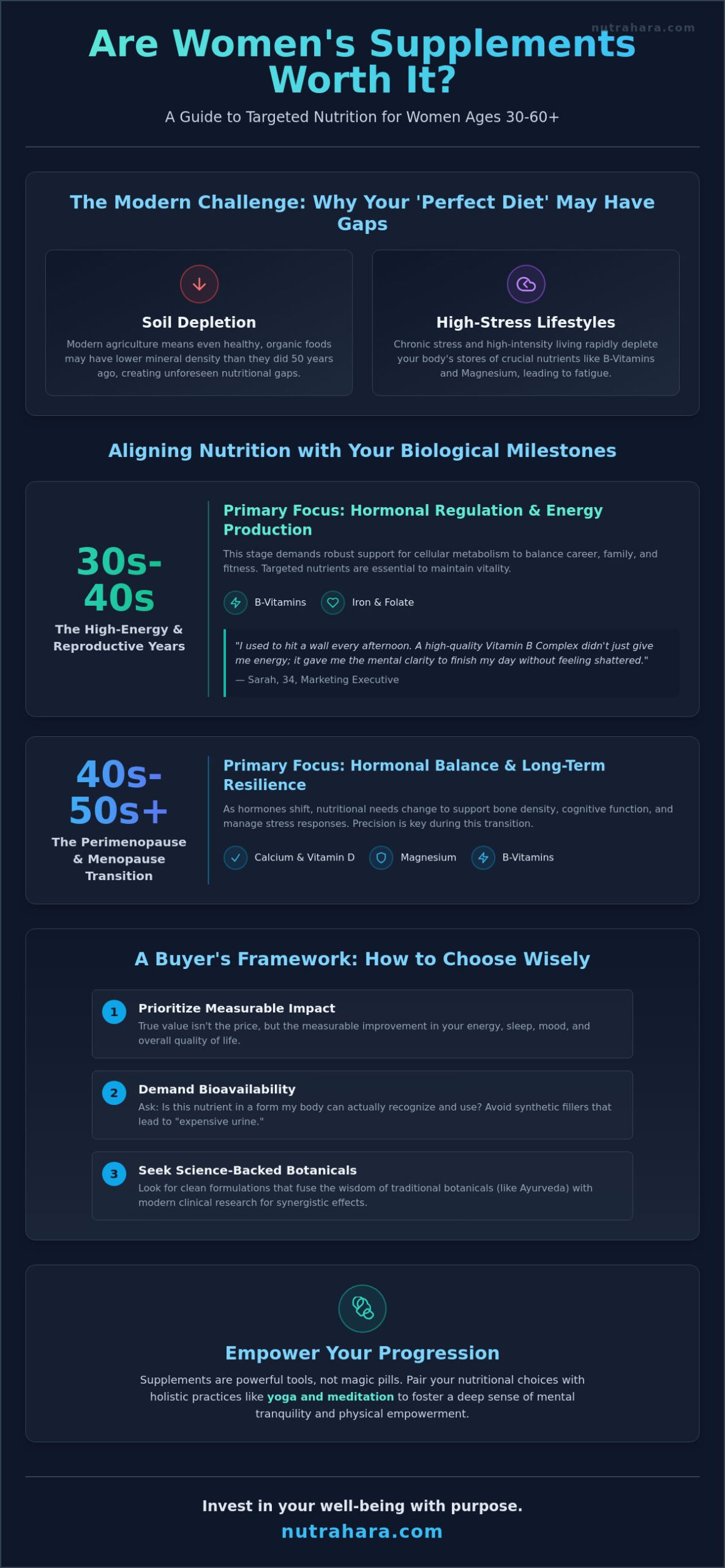
Many women stand in the supplement aisle feeling a mix of hope and deep skepticism. You want to know: are women’s supplements worth it? To answer that, we must redefine “worth” beyond the price tag. True value is found in the measurable impact on your daily quality of life, your sustained energy levels, and the protection of long-term health markers like bone density and cognitive resilience. When a formulation acts as a bridge between your current state and your peak vitality, it becomes a wise investment in your future self.

Think of supplementation as nutritional insurance. For a woman balancing a career, family, and a dedicated fitness routine, your body’s demands are significantly higher than general population averages. While a “food first” approach is ideal, modern agricultural practices have led to documented soil depletion. This means even a perfect organic salad might lack the mineral density of a similar meal from fifty years ago. Supplements aren’t meant to replace whole foods; they exist to fill the gaps that modern life creates.

We hear the “expensive urine” myth often. This frustration is valid when you use low-quality products packed with synthetic fillers. Your body simply cannot process them. Understanding what are dietary supplements and how they are formulated is the first step in moving from skepticism to empowerment. High-quality nutrients are recognized and absorbed by your cells, while poor formulations are simply filtered out and wasted.

The ‘Perfect Diet’ Myth in a High-Stress World

High-stress lifestyles trigger a constant release of cortisol. This physiological response rapidly depletes your internal stores of B-vitamins and Magnesium. If you start your day with caffeine and end it with an intense HIIT session, your metabolic demands skyrocket. Without targeted support, you might experience persistent fatigue despite a “clean” diet. Using a high-quality vitamin B complex can help bridge this gap, supporting your nervous system when it’s pushed to the limit.

Why One-Size-Fits-All Multivitamins Often Fail

Generic multivitamins treat a 35-year-old athlete and a 55-year-old woman in post-menopause as the same biological entity. This ignores the intricate dance of female hormonal cycles. A menstruating woman needs different iron support than someone navigating the “Perimenopause Gap.” Bioavailability is the true measure of a supplement’s value; it refers to the proportion of a nutrient that enters your circulation and is actually used by your body. When you ask if are women’s supplements worth it, the answer depends entirely on whether the ingredients are in a form your body can actually use.

Biological Milestones: Why Nutritional Needs Shift Between Ages 30 and 60

Your body is a dynamic ecosystem. It evolves through distinct seasons, each demanding a unique nutritional language. The nutrients you required at 25 are vastly different from what your cells crave at 45 or 55. This biological evolution is the core reason many women ask, are women’s supplements worth it? The answer is found in precision. When you align your intake with your specific life stage, you aren’t just taking pills; you’re providing the raw materials for your personal health progression.

Supporting the Menstrual and Reproductive Years

During your 30s and early 40s, your system is often focused on hormonal regulation and high-stakes energy production. B-vitamins act as essential spark plugs for your cellular metabolism. Sarah, a 34-year-old marketing executive and yoga enthusiast, noted, “I used to hit a wall every afternoon. Integrating a high-quality Vitamin B Complex didn’t just give me energy; it gave me the mental clarity to finish my day without feeling shattered.” For those navigating pregnancy or lactation, iron and folate become critical foundations. Consulting expert-recommended supplements for women can help you identify which forms of these nutrients are most bioavailable for your reproductive journey.

The Perimenopause and Menopause Transition

A common objection is “I’m too young for menopause,” yet the perimenopausal transition often begins in the late 30s or early 40s. This phase is characterized by the “Perimenopause Gap,” where standard RDA values fall short. These traditional guidelines were designed to prevent basic deficiency, not to support the brain fog or mood swings caused by fluctuating estrogen. During this time, your adrenal system takes on a much heavier load. Adaptogens like Ashwagandha with Black Pepper help your body manage stress more effectively, acting as a wise guide through hormonal turbulence.

Longevity and Bone Health for the Post-Menopausal Journey

As you transition into post-menopause, the focus shifts toward structural integrity and longevity. Natural collagen production drops significantly after age 40, which can lead to stiff joints and less resilient skin. A Premium Collagen Complex helps maintain the scaffolding of your body, supporting both flexibility and vitality. To protect your bones, remember that minerals like calcium shouldn’t work alone. Weight-bearing exercises, such as power walking or resistance training, signal your body to absorb these nutrients into the bone matrix. If you’re ready to embrace this next chapter with strength, exploring a tailored wellness formula can offer the targeted support your body now requires.

The Fusion Factor: Why Science-Backed Ayurveda Changes the Value Equation

Traditional Western clinical trials frequently isolate single nutrients, missing the bigger picture of biological synergy. The question of are women’s supplements worth it becomes much clearer when you examine how specific ingredients amplify one another. Ancient systems like Ayurveda have mastered these combinations for millennia. By merging this traditional wisdom with modern bio-analysis, we provide a more potent path to vitality that honors your body’s natural rhythms.

Ancient Wisdom for Modern Stressors

At its heart, Ayurveda focuses on balancing the body’s natural energies, or doshas. Ingredients like Turmeric and Ashwagandha are now clinical staples backed by 2026 research. Nutrahara bridges the 5,000-year gap between Ayurvedic tradition and 21st-century bio-analysis. Synergy is the secret; for instance, our Ashwagandha with Black Pepper uses piperine to ensure the active adaptogens are fully absorbed by your system.

The Purity Promise: Avoiding Fillers and Artificial Additives

Think about the fact that a supplement’s value is often defined by what it excludes. Many mass-market options are packed with hidden fillers like magnesium stearate or titanium dioxide. These additives help factory machines but offer nothing to your cells. Clean formulas are vital because they drastically reduce the metabolic load on your liver and kidneys. When your body doesn’t have to process synthetic waste, it can dedicate its energy to healing and restoration.

Elena, a 48-year-old marathon runner, shared her experience with us: “I finally stopped feeling bloated after my morning routine when I switched to a filler-free formula. The purity made the investment feel real.” This shift in perspective is common among women who prioritize quality over quantity. Choosing a clean, natural formula ensures that your investment actually reaches the cellular level where it can do the most good.

If you find yourself asking are women’s supplements worth it, the answer lies in the harmony of the formula. A science-backed, Ayurvedic approach ensures that every ingredient serves your personal health progression with transparency and care. By removing unnecessary obstacles and utilizing natural enhancers, you empower your body to achieve a state of lasting mental tranquility and physical strength.

A Buyer’s Framework: How to Spot Supplements That Actually Deliver Results

Becoming your own health advocate requires moving past flashy branding and looking straight at the data. When you ask are women’s supplements worth it, the answer lies in the technical details of the label. Many companies practice “label dressing,” which involves adding a tiny, non-therapeutic amount of a popular ingredient just to list it on the box. This provides no biological benefit. Instead, look for therapeutic dosing, where the quantity of each ingredient matches what was used in successful clinical trials. Use this five-point checklist to evaluate any formula:

  • Third-Party Testing: Ensure the product is verified by an independent lab for purity and potency.
  • Therapeutic Dosing: Verify that active ingredients are present in amounts that actually impact your health.
  • Active Forms: Look for methylated or “active” vitamins that your body can use immediately.
  • Standardized Extracts: Choose botanicals that guarantee a specific percentage of active compounds.
  • Clean Label: Avoid synthetic fillers, artificial colors, and unnecessary flow agents.

Decoding the Label: What to Look For and What to Avoid

Not all vitamins are created equal. For example, your body absorbs Methylcobalamin (active B12) much more efficiently than the cheaper, synthetic Cyanocobalamin. Similarly, look for standardized extracts rather than simple herb powders. Standardization ensures you receive a consistent level of the plant’s active compounds, such as the withanolides in ashwagandha. This technical precision is what separates a high-value investment from a wasted purchase. Empowering yourself with this knowledge allows you to choose products that honor your body’s complex needs.

Formulation Synergy: The Difference Between a Pill and a Solution

We believe that nutrients should work in harmony, much like a well-sequenced yoga flow. This is why products like Femmepower are formulated as comprehensive complexes rather than isolated nutrients. We include piperine from black pepper to naturally enhance the bioavailability of other nutrients, ensuring they actually reach your bloodstream. Bioavailability is the true measure of whether are women’s supplements worth it for your personal journey.

To maximize your results, timing is essential. Take your fat-soluble vitamins, such as Vitamin D or our collagen complex, with a meal containing healthy fats like avocado or nuts to aid absorption. B-vitamins are best taken in the morning to support your natural energy cycles. If you are ready to stop guessing and start thriving, you can explore our science-backed formulas designed to support your long-term health progression with transparency and care.

Are Women's Supplements Worth It? A 2026 Guide to Holistic Nutritional Value

Empowering Your Progression: Integrating Supplements into a Holistic Lifestyle

True vitality emerges when your physical health and mental tranquility operate in harmony. High-quality nutrients provide the biological foundation, but movement and mindfulness provide the structure. When you ask are women’s supplements worth it, consider them as a supportive partner in your daily practice. They don’t replace the deep work of a 20-minute yoga flow or a quiet meditation session. Instead, they ensure your body has the cellular resilience to show up fully for those moments of self-care. This synergy between what you ingest and how you move is the secret to lasting longevity.

Yoga, Meditation, and Micronutrients: The Triple Threat for Wellness

Meditation requires a level of cognitive focus that can be difficult to achieve if your nervous system is depleted. Certain botanical compounds and micronutrients help stabilize your internal environment, making it easier to enter a state of calm. Using a formula like FocusZenith can support the mental clarity needed to maintain presence during a challenging vinyasa sequence. We recommend a simple wellness ritual: pair your morning supplement routine with ten minutes of intentional diaphragmatic breathing. This practice signals your body to move into a “rest and digest” state, which optimizes the absorption of your nutrients while centering your mind for the day ahead.

The Nutrahara Promise: A Wise Guide on Your Health Journey

Your health is a personal, ongoing journey rather than a series of symptoms to be suppressed. We are committed to providing the purity and clinical validation you need to feel confident in every choice you make. We believe that are women’s supplements worth it depends entirely on the transparency of the brand and the intention behind the formulation. By choosing clean, science-backed ingredients, you’re investing in your long-term progression toward a more vibrant and empowered version of yourself. This isn’t about perfection; it’s about providing your body with the respect it deserves.

Maya, a 52-year-old yoga instructor, tells us: “I stopped looking for quick fixes and started looking for partners in my longevity. Nutrahara’s approach to purity changed how I view my morning routine.” This perspective shift is essential for lasting wellness. We encourage you to view your nutritional choices as an act of self-care. If you’re curious about how specific formulas can support your unique goals, you can explore Why Choose Nutrahara? Our Promise to You to understand our dedication to your holistic health journey. Trust your intuition, honor your body’s shifts, and embrace the wisdom of a balanced lifestyle.

Step Into Your Most Vibrant Future

Your health isn’t a destination; it’s a personal, ongoing journey that deserves the highest level of care. We’ve explored how moving beyond generic options to embrace targeted, clean formulations can bridge the gap between your current energy and peak vitality. By choosing nutrients that honor your specific biological milestones and pairing them with mindful practices like yoga, you empower your body to thrive. It’s about providing your cells with exactly what they need to sustain your unique rhythm.

When you consider the question, are women’s supplements worth it, the true value is revealed when ancient Ayurvedic wisdom meets modern clinical validation. Our commitment to you includes 100% clean ingredients with no artificial additives; this ensures nurturing support for every life stage from 30 to 60. You don’t have to navigate this path alone when you have a wise guide to support your progression. Begin your wellness progression with Nutrahara’s scientifically-formulated women’s health collection.

You possess the knowledge to make informed, empowering choices. Trust the wisdom of your body and walk this path with confidence and tranquility.

Frequently Asked Questions

Is it better to get vitamins from food or supplements?

Whole foods are your primary source of nutrition, but supplements provide essential support for modern environmental gaps. Soil depletion and high-stress lifestyles mean even the most balanced diet may struggle to provide optimal nutrient density. Supplements act as precision tools to bridge these specific biological needs. They ensure your body has the raw materials required for sustained energy and long-term health progression.

Can I take multiple supplements at the same time safely?

You can safely take multiple supplements together, but understanding timing and synergy is crucial for maximum absorption. Fat-soluble vitamins should be taken with meals containing healthy fats; meanwhile, certain minerals like iron are best absorbed on an empty stomach. It is helpful to space out competing nutrients, such as calcium and magnesium, to ensure your body processes each one efficiently without interference.

How long does it take to see results from women’s health supplements?

Most women notice improvements in energy or mental clarity within two to four weeks, while structural benefits like bone density take longer. Your body requires time to integrate new nutrients into its cellular processes. Consistency is the most important factor in your wellness journey. Viewing your health as a long-term progression helps you stay committed until you see the full, cumulative results of your choices.

Are there any side effects to taking natural Ayurvedic supplements?

Natural Ayurvedic supplements are generally very safe, though your body may need a short period to adjust to potent botanical extracts. Choosing clean formulas that exclude synthetic fillers and artificial additives helps minimize the risk of digestive sensitivity. If you follow the recommended serving sizes, these traditional remedies work in harmony with your system to promote a sense of balance and tranquility.

What are the most essential supplements for women over 40?

Magnesium, Vitamin D, and B-Complex are the most essential nutrients for women navigating the physiological changes of their 40s. These supplements support bone health, mood stability, and metabolic function during the perimenopausal transition. When you evaluate if are women’s supplements worth it during this decade, these specific ingredients offer the most significant impact on your daily quality of life and longevity.

Do I need to consult a doctor before starting a new supplement routine?

Consulting a healthcare professional is a wise step before introducing new elements into your nutritional routine. This is particularly important if you are managing a specific health condition or taking prescription medications. A professional can provide personalized guidance based on your blood work. This ensures your supplement choices are perfectly aligned with your body’s unique biological requirements and fitness goals.

How can I tell if a supplement is high-quality or just hype?

You can identify high-quality supplements by looking for third-party testing, standardized extracts, and a total absence of artificial fillers. Transparency in labeling is a hallmark of a brand that acts as a wise guide for its customers. When a company combines modern research with ancient wisdom, it provides a clear answer to whether are women’s supplements worth it for your personal wellness journey.

What happens if I take more than the recommended dose of a multivitamin?

Taking more than the recommended dose can disrupt your body’s delicate mineral balance and potentially lead to toxicity. Fat-soluble vitamins are stored in your tissues, so excessive intake can be counterproductive to your health. It is always best to follow the suggested guidelines provided on the label. This approach ensures your supplementation remains a safe and effective partner in your long-term health progression.

Article by

Nutrahara Team

We are a dedicated collective of nutrition scientists and naturopaths at Nutrahara, committed to advancing women's health through the fusion of ancient Ayurveda science and cutting-edge nutrition research. Our mission is to empower you with clean, simple, and scientifically validated wellness solutions so you can live your healthiest life. Connect with us to stay updated on the latest developments in holistic women's health and nature-based research.

Disclaimer

This article is not a substitute for medical advice. Please consult a healthcare professional before starting any supplement, especially if pregnant, nursing, taking medication, or managing health conditions.

Categories
Articles

Vitamin C and Zinc Benefits for Women: A Holistic Guide to Radiance and Immunity (2026)

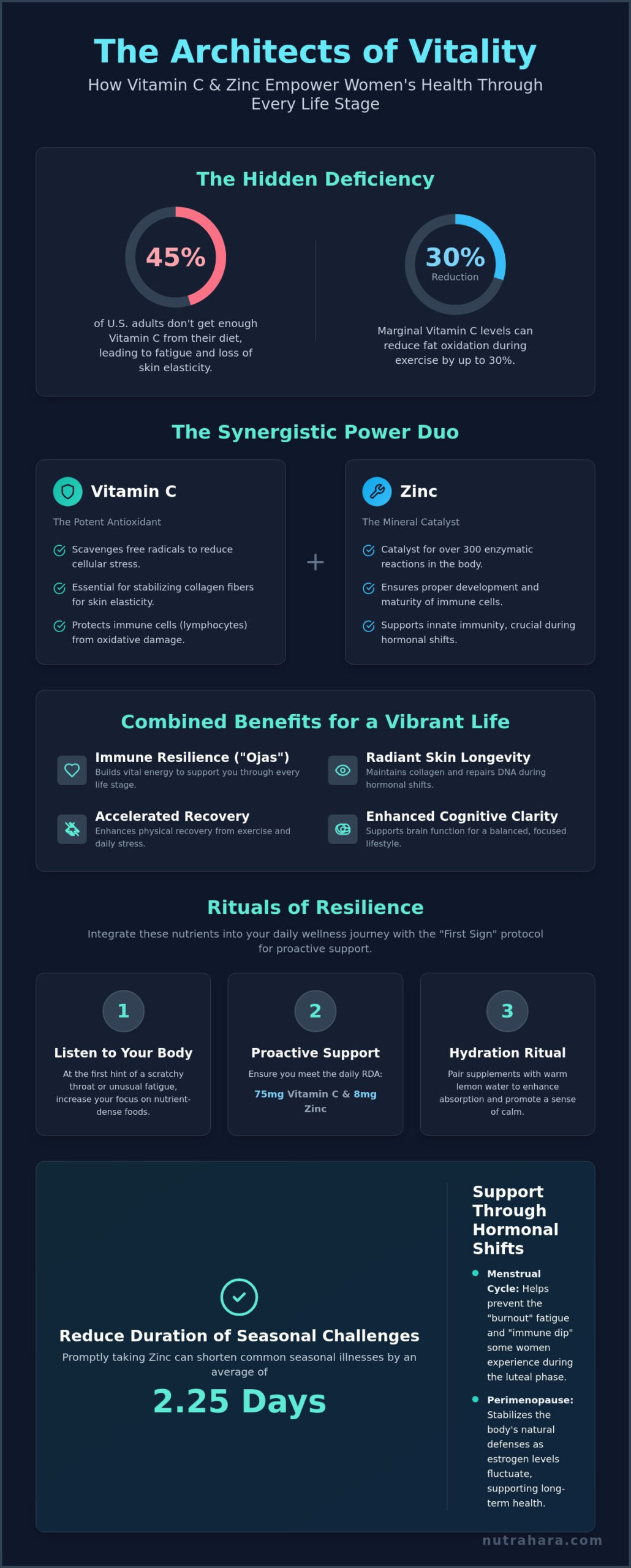
Did you know that approximately 45% of U.S. adults fail to get enough vitamin C from their daily food intake? Understanding the vitamin c and zinc benefits for women is essential when you’re balancing the transition into perimenopause or the cycles of menstruation. This nutritional gap often manifests as lingering fatigue or a visible loss of skin elasticity, and research even shows that marginal vitamin C levels can reduce fat oxidation during exercise by up to 30%.

You likely already feel that your wellness journey requires a more intentional approach than a generic supplement can provide. We’ll explore how these two essentials empower your health, from deep immune resilience to the collagen production that fuels a radiant glow. This guide reveals how their synergistic power bridges the gap between cellular defense and vibrant aging, acting as the quiet architects of your vitality.

Through the lens of modern science and traditional wisdom, you’ll discover specific strategies to reclaim your energy. We’ll cover the latest 2026 clinical findings on optimal dosages and provide actionable tips to help you feel grounded and empowered through every stage of your personal health progression.

Key Takeaways

  • Learn how the dual-action mechanism of these nutrients builds “Ojas” to support your immune resilience and vital energy throughout every life stage.
  • Discover how the vitamin c and zinc benefits for women include stabilizing collagen and repairing DNA to maintain skin radiance during hormonal shifts.
  • Understand the synergistic dance between these micronutrients that accelerates physical recovery and enhances cognitive clarity for a balanced lifestyle.
  • Explore practical morning rituals that pair targeted supplementation with mindfulness and yoga to ground your daily wellness journey.
  • Gain the confidence to select high-quality formulations by learning how to identify clean ingredients and effective dosages on complex supplement labels.

The Foundations of Vitality: How Vitamin C and Zinc Support the Female Immune Landscape

Vitality isn’t just a fleeting feeling; it’s a measurable biological state of resilience. To truly understand the vitamin c and zinc benefits for women, we must look at how these two nutrients function as a coordinated team within the female body. Vitamin C acts as a potent antioxidant, scavenging free radicals that cause cellular stress, while Zinc serves as a critical mineral catalyst for over 300 enzymatic reactions. In the ancient wisdom of Ayurveda, this state of radiant health is known as Ojas. It’s the subtle essence that provides strength, immunity, and a luminous glow. Today, we recognize these micronutrients as the modern building blocks for this vital energy.

The role of zinc in the body is particularly profound when it comes to cellular defense. While Vitamin C protects lymphocytes from oxidative damage, Zinc ensures their proper development and functional maturity. This partnership is essential for women navigating the high-stress years of career growth and family life, where maintaining redox integrity prevents the cellular “rust” that leads to premature aging. For those seeking comprehensive support, a high-quality supplement like FemmePower can provide the foundational balance needed to sustain this internal harmony.

Immune Resilience During Life Transitions

Women’s bodies undergo unique hormonal shifts that can influence immune strength. Many women experience a subtle “immune dip” during the luteal phase of their menstrual cycle, making them more susceptible to fatigue or seasonal sniffles. Zinc supports the cellular mediators of innate immunity, helping to prevent the “burnout” fatigue often associated with these shifts. During perimenopause, as estrogen levels fluctuate, maintaining consistent levels of Vitamin C and Zinc helps stabilize the body’s natural defenses and supports long-term physical progression.

Reducing the Duration of Seasonal Challenges

A busy lifestyle doesn’t leave much room for downtime. Clinical research indicates that Zinc can shorten the duration of common seasonal challenges by approximately 2.25 days when taken promptly. Vitamin C is equally crucial for women who balance intense fitness routines with professional demands, as it helps the body recover from the physiological stress of exercise. To stay ahead of the curve, try the “First Sign” protocol:

  • Listen to your body: At the first hint of a scratchy throat or unusual fatigue, increase your focus on nutrient-dense foods.
  • Proactive support: Ensure you’re meeting the RDA of 75 mg of Vitamin C and 8 mg of Zinc daily.
  • Hydration ritual: Pair your supplements with warm lemon water to enhance absorption and promote a sense of calm.

Beyond Surface Beauty: The Role of Vitamin C and Zinc in Collagen Synthesis and Skin Longevity

In traditional wisdom, the skin is more than a boundary; it’s a mirror of your internal ‘Prana’ or life force. When your internal systems are balanced, your complexion radiates a natural, healthy glow. The vitamin c and zinc benefits for women extend deep beneath the surface, acting as the foundation for structural integrity and long-term skin health. By choosing clean supplementation, you nourish this life force from the inside out, allowing your natural beauty to flourish at every stage of life.

Vitamin C is the essential cofactor for prolyl hydroxylase, the enzyme responsible for stabilizing and cross-linking collagen fibers. This biological process is fundamental to collagen synthesis and skin longevity, ensuring your skin remains resilient as you age. Without sufficient Vitamin C, the collagen matrix weakens, leading to the visible loss of elasticity that many women notice during their 30s and 40s.

While Vitamin C builds the structure, Zinc preserves it. Zinc plays a pivotal role in DNA repair and cell division. This is especially vital for women aged 30 to 60, as fluctuating estrogen levels can lead to a thinning of the skin’s dermal layer. By supporting the birth of new, healthy cells, Zinc helps maintain the density and youthful bounce of your complexion, acting as a silent guardian for your skin’s future.

Combating Oxidative Stress and Photoaging

Daily exposure to UV rays and urban pollution creates free radicals that break down skin cells and accelerate aging. Vitamin C neutralizes these environmental threats before they can cause deep damage. Zinc works in synergy by protecting skin cell membranes from lipid peroxidation, a process that can lead to chronic inflammation. You can support your skin’s natural architecture with our Premium Collagen Complex to enhance these internal defenses and promote a smoother, more even tone.

Healing and Renewal: From Blemishes to Elasticity

Zinc offers powerful inflammatory control, making it a valuable tool for managing adult acne or sudden skin sensitivities that often arise during hormonal shifts. Simultaneously, Vitamin C accelerates the repair of the skin’s basement membrane, helping to fade the look of past blemishes. Try a ‘Yoga for the Skin’ ritual: after your morning practice, pair your topical skincare with internal micronutrient support to nourish every layer of your being.

Many women in our community describe the ‘Nutrahara Glow’ as a newfound luminosity that appears after just a few weeks of consistent use. One member recently shared that her skin felt “more resilient and hydrated” even during the drier phases of her cycle. It’s the result of pure ingredients working in harmony with your body’s natural rhythms to support a personal health progression that you can see and feel.

The Synergistic Dance: Why Combining These Micronutrients Accelerates Recovery and Cognitive Clarity

The vitamin c and zinc benefits for women are most evident when you observe the clarity of your mind and the speed of your physical recovery. These two micronutrients perform a coordinated dance within your nervous system. While Vitamin C acts as a shield for your myelin sheath, the protective coating of your nerves, Zinc functions as a master modulator for neurotransmitters. This partnership ensures that brain signals travel efficiently, helping you maintain focus during a demanding workday or a complex yoga sequence.

Focus Area Vitamin C’s Primary Role Zinc’s Primary Role
Brain Health Protects myelin and synthesizes norepinephrine. Modulates GABA and Glutamate for mood balance.
Physical Body Reduces oxidative stress in muscle tissues. Catalyzes protein synthesis for fiber repair.
Endocrine Support Nourishes adrenal glands during stress. Supports hormonal regulation and insulin health.

Many women in their 40s and 50s experience “Brain Fog” as estrogen levels begin to shift. This duo provides essential neurological resilience during this transition. As noted by the NIH on Vitamin C’s Role in Immunity, this nutrient is vital for more than just defense; it’s a key player in cognitive health. To avoid digestive sensitivity, which can be common in women, it’s wise to choose bioavailable forms. Zinc Picolinate is often better tolerated and absorbed than Zinc Gluconate, making it a gentler choice for daily use.

Cognitive Harmony and Mental Well-being

Zinc levels are closely tied to mood regulation. Low levels often correlate with increased feelings of anxiety or low mood in women. Vitamin C supports this by assisting the adrenal glands in managing cortisol and synthesizing norepinephrine, the “alertness” hormone. You can find your focus and mental clarity with FocusZenith, which leverages these scientific foundations to support a balanced mind.

Physical Recovery for the Active Woman

Whether you’ve just finished a strenuous Vinyasa flow or a strength training session, your muscles require specific building blocks to repair. Zinc is indispensable for protein synthesis, ensuring that your fitness efforts lead to long-term strength rather than depletion. Vitamin C reduces exercise-induced oxidative stress by neutralizing free radicals produced during intense physical activity. Harnessing the vitamin c and zinc benefits for women through thoughtful supplementation allows you to maintain your active lifestyle without the lingering fatigue that often follows a hard workout.

Rituals of Resilience: Practical Ways to Incorporate Vitamin C and Zinc into a Yoga-Focused Lifestyle

True wellness is a collection of small, intentional acts. In the wisdom of Ayurveda, the concept of ‘Ahara’ teaches that nutrition is the literal foundation of your physical body and spiritual practice. When you view nourishment as a sacred ritual, you move beyond the frustration of “pill fatigue” and into a state of long-term health progression. Integrating the vitamin c and zinc benefits for women into your daily flow ensures that your body has the structural support it needs to match your inner dedication.

Start your day with a simple ‘Morning Mindfulness’ ritual. Drink a glass of warm lemon water to gently wake up your digestive system and provide an immediate spark of Vitamin C. Follow this with five minutes of seated meditation to center your mind. This practice prepares your system to receive the nutrients that support your resilience. While supplements provide a reliable baseline, your diet should be a vibrant tapestry of whole foods. Focus on these plant-forward options:

  • Zinc-rich sources: Pumpkin seeds, chickpeas, lentils, and cashews are excellent for cellular repair.
  • Vitamin C-rich sources: Camu camu powder, acerola cherries, bell peppers, and dark leafy greens like kale.

Mindful Supplementation: Timing and Absorption

Timing matters for optimal absorption. Zinc is best taken with a light meal to prevent the mild nausea that some women experience on an empty stomach. Because Vitamin C is water-soluble, your body doesn’t store large amounts at once. Dividing your intake into smaller doses throughout the day ensures a steady supply for your cells. Consistent hydration is also essential, as water acts as the primary transporter for these vital elements.

Yoga Poses to Support Digestion and Nutrient Flow

To enhance the assimilation of your supplements, incorporate specific yoga poses into your practice. Seated twists like Parivrtta Sukhasana help stimulate ‘Agni’, or digestive fire. This internal heat ensures your body efficiently breaks down and absorbs what you consume. Deep pranayama breathing further supports this by oxygenating the blood and delivering nutrients directly to your cells. As you move through your practice, remember that your health is a journey, and every mindful choice is a step toward your highest self.

Ready to elevate your daily ritual? Experience the purity of BlossomBliss to support your holistic wellness journey.

Vitamin C and Zinc Benefits for Women: A Holistic Guide to Radiance and Immunity (2026)

Empowering Your Wellness Journey: Choosing High-Quality Formulations for Long-Term Progression

Choosing the right supplement is the bridge between understanding the vitamin c and zinc benefits for women and actually feeling them in your daily life. In a market often crowded with complex claims, your peace of mind comes from transparency and purity. High-quality formulations don’t just provide nutrients; they respect your body’s delicate balance. We believe that your wellness journey deserves ingredients that are as clean and intentional as your yoga practice.

Reading a supplement label requires a discerning eye. Many brands engage in “label dressing,” where they include popular ingredients in amounts too small to be effective. To ensure you’re getting the support you need, look for clinical validation and clear dosages. For adult women, the RDA for Vitamin C is 75 mg, while Zinc is 8 mg. These requirements increase during pregnancy and lactation to support both mother and child. Choosing a formula that meets these standards without unnecessary fillers or artificial additives is essential for your long-term health progression.

The Nutrahara Difference: Ancient Wisdom, Modern Science

Our philosophy centers on the fusion of traditional medicine and modern nutritional research. We utilize gentle extraction methods that respect the purity of the plant, combined with precise scientific formulation to ensure potency. This approach honors the Ayurvedic tradition while meeting the rigorous standards of modern science. You can empower your daily ritual with FemmePower, our comprehensive wellness formula, designed to support your unique biological needs through every life stage.

Third-party testing is another non-negotiable pillar of quality. With the 2026 Dietary Supplement Regulatory Uniformity Act highlighting the need for national oversight, we remain committed to transparency. Every batch we produce undergoes rigorous verification to ensure it’s free from contaminants and matches the potency listed on the label. This commitment allows you to focus on your personal growth, knowing your nutritional foundation is secure and trustworthy.

Next Steps for Your Health Progression

Wellness isn’t a destination you reach and then leave behind. It’s a supportive partnership with your body that evolves as you do. Whether you’re navigating the cycles of menstruation or the transition into post-menopause, consistent support makes the journey smoother. Before starting any new regimen, consider this final checklist:

  • Consult with a healthcare professional to tailor dosages to your specific life stage and health history.
  • Prioritize bioavailable forms like Zinc Picolinate for better absorption and digestive comfort.
  • Commit to a routine for at least 90 days to allow your body to fully integrate the nutrients.
  • Join a community that values ongoing education and a holistic approach to living.

Your path to radiance and immunity is unique. By making informed, mindful choices today, you’re investing in a more vibrant and resilient tomorrow. Shop the full Nutrahara collection to start your journey today and embrace the vitality you deserve.

Step Into Your Most Radiant Self

Your journey toward lasting vitality is built on the daily rituals you choose. We’ve explored how the synergistic power of Vitamin C and Zinc builds a foundation for immune resilience, stabilizes the collagen matrix for skin longevity, and clears the mental fog often felt during hormonal transitions. Harnessing the vitamin c and zinc benefits for women isn’t just about supplementation; it’s about honoring your body’s natural intelligence at every stage of life, from menstruation to post-menopause.

At Nutrahara, we believe in the fusion of traditional Ayurvedic wisdom and modern clinical validation. Our formulas are crafted specifically for the unique physiological needs of women aged 30 to 60. You won’t find artificial additives or harsh fillers in our products; only pure ingredients that support your personal health progression. It’s time to reclaim your energy and confidence with support that is as clean as it is effective.

Discover the Nutrahara difference and shop our clean, woman-focused supplements here.

You have the power to shape your own wellness story. Every mindful choice you make today paves the way for a more vibrant, resilient, and luminous tomorrow. Trust in your body’s ability to thrive.

Frequently Asked Questions

Can I take Vitamin C and Zinc every day?

Yes, taking these nutrients daily is generally safe and often recommended for maintaining a resilient immune system. Since Vitamin C is water-soluble, your body doesn’t store it, making consistent daily intake necessary. It’s important to stay within the recommended daily allowance of 75 mg for Vitamin C and 8 mg for Zinc. This consistency supports a steady health progression without exceeding the upper safety limits.

What is the best time for a woman to take Zinc and Vitamin C?

The ideal time to take these supplements is in the morning with a light meal. Taking Zinc on an empty stomach can sometimes cause mild nausea in women, so pairing it with food improves comfort. You might also consider taking Vitamin C in divided doses throughout the day. This approach ensures your body has a steady supply of vitamin c and zinc benefits for women for maximum absorption.

How do Vitamin C and Zinc help with hormonal acne?

This duo works by reducing inflammation and supporting the skin’s natural repair processes. Zinc is particularly effective at regulating oil production and controlling the bacteria that contribute to breakouts. Meanwhile, Vitamin C helps heal the skin’s basement membrane and fades the appearance of post-acne marks. Together, they help restore clarity and balance to your complexion during different stages of your menstrual cycle.

Are there any side effects of taking Vitamin C and Zinc together?

Most women experience no adverse effects when they stay within the established safety limits. However, taking more than 2,000 mg of Vitamin C can lead to digestive upset or diarrhea. Similarly, exceeding 40 mg of Zinc daily may interfere with copper absorption and potentially weaken your immune response. It’s always best to use balanced, high-quality formulas that provide effective dosages without reaching these upper thresholds.

Do Vitamin C and Zinc help with perimenopause symptoms?

They provide essential support for the neurological and physical shifts that occur during perimenopause. Vitamin C aids the adrenal glands in managing cortisol, which can help stabilize your response to stress. Zinc acts as a modulator for neurotransmitters, potentially easing the mood swings and “brain fog” many women report. These nutrients work in harmony to provide a sense of calm and resilience during this transition.

Can these nutrients help with hair loss in women?

They play a foundational role in maintaining the strength and growth of your hair. Zinc is a key mineral for hair tissue repair and ensures the oil glands around the follicles work correctly. Vitamin C is vital for collagen production, which provides the structural integrity hair needs to stay resilient. Maintaining these levels helps you keep a full and healthy mane as your hormones fluctuate.

What foods are highest in both Vitamin C and Zinc for a vegetarian diet?

You can find rich sources of these nutrients in a variety of plant-forward foods. For Zinc, prioritize pumpkin seeds, lentils, chickpeas, and cashews. To boost your Vitamin C, reach for bell peppers, strawberries, kale, and citrus fruits. Pairing these together in a single meal, like a spinach salad with pumpkin seeds and lemon dressing, creates a powerful synergy that supports your internal ‘Prana’ and vitality.

How long does it take to see benefits from Vitamin C and Zinc supplementation?

While immune support begins quickly, most women notice visible changes in skin radiance and energy levels within 4 to 12 weeks. Cellular renewal and collagen stabilization are gradual processes that require steady nourishment. Consistency is the key to unlocking the full vitamin c and zinc benefits for women. Viewing your supplementation as a long-term partnership with your body ensures you see the most meaningful results over time.

Article by

Nutrahara Team

We are a dedicated collective of nutrition scientists and naturopaths at Nutrahara, committed to advancing women's health through the fusion of ancient Ayurveda science and cutting-edge nutrition research. Our mission is to empower you with clean, simple, and scientifically validated wellness solutions so you can live your healthiest life. Connect with us to stay updated on the latest developments in holistic women's health and nature-based research.

Disclaimer

This article is not a substitute for medical advice. Please consult a healthcare professional before starting any supplement, especially if pregnant, nursing, taking medication, or managing health conditions.
Categories
Articles

Signs of Iron Deficiency in Women: A Holistic Guide to Restoring Vitality

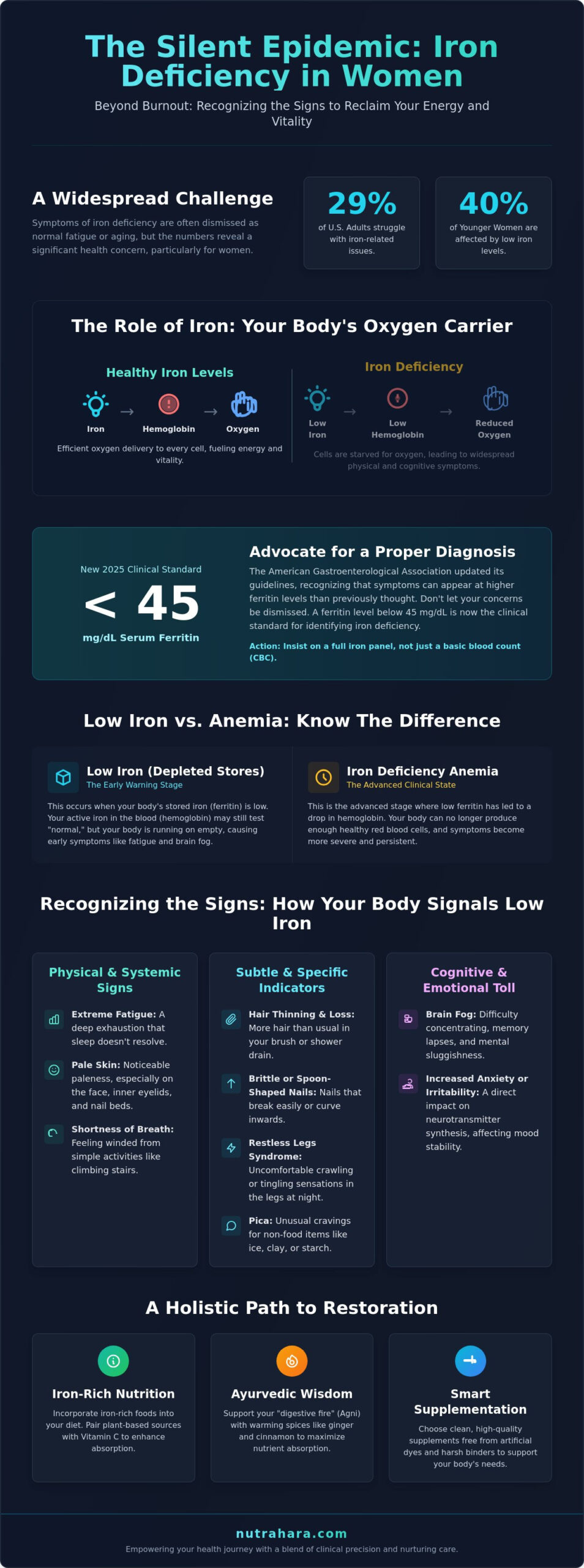
A 2024 study revealed that approximately 29% of U.S. adults struggle with iron issues, yet for many women, the symptoms are often dismissed as simple burnout or the natural effects of aging. You might find yourself waking up exhausted after eight hours of sleep or noticing more hair in your brush than usual. It’s deeply frustrating to feel your vitality slipping away when you’re dedicated to a healthy lifestyle. Recognizing the signs of iron deficiency in women is the first step toward reclaiming your natural rhythm and inner strength.

We believe that your health journey deserves a blend of clinical precision and nurturing care. This guide promises to help you bridge the gap between modern science and ancient holistic wisdom. You’ll learn why the American Gastroenterological Association updated its diagnostic standards in 2025 to a serum ferritin level of less than 45 mg/dL. We’ll also provide an actionable list of physical and emotional symptoms to discuss with your doctor, alongside Ayurvedic-inspired strategies to boost absorption. It’s time to clear the brain fog and restore the vibrant energy you deserve.

Key Takeaways

  • Learn to identify the common and subtle signs of iron deficiency in women, from persistent fatigue to restless legs, so you can advocate for your health with confidence.
  • Understand how your iron needs evolve through different life stages, including the unique demands of heavy cycles, pregnancy, and perimenopause.
  • Discover how to pair iron-rich nutrition with Ayurvedic warming spices to support your digestive fire and maximize nutrient absorption.
  • Gain insights into the updated 2025 clinical standards for ferritin levels to ensure your symptoms are properly diagnosed rather than dismissed.
  • Find out how to select clean, high-quality supplements that support your vitality without the use of artificial dyes or harsh binders.

Beyond the Surface: Why Iron Deficiency is a Silent Challenge for Women

Iron deficiency is a state where your body lacks the essential mineral needed to produce hemoglobin, the protein in red blood cells that carries oxygen to your organs. In the tradition of Ayurveda, we look at the blood tissue, known as Raktha Dhatu, as the primary vehicle for your life force. When your blood is healthy and rich, your energy is vibrant; when it’s depleted, your vitality fades. This condition has become a “silent epidemic,” affecting nearly 40% of younger women and countless others navigating the hormonal shifts of perimenopause. Many women suffer for years because their persistent exhaustion is dismissed as a normal part of a busy life. Iron deficiency anemia is a clinical state where hemoglobin levels drop due to insufficient mineral stores, leaving the body struggling to function at its most basic level.

For those seeking a comprehensive overview of iron deficiency, it’s clear that the impact reaches far beyond a simple lab value. It affects your mental clarity, your physical endurance, and your emotional resilience. Recognizing the signs of iron deficiency in women is the first step toward restoring your internal balance and reclaiming your strength.

The Role of Hemoglobin and Oxygen Transport

Iron acts as the primary vehicle for oxygen in your bloodstream. It binds to oxygen in the lungs and delivers it to every cell, from your heart to your fingertips. When iron levels are low, cellular oxygenation suffers. This lack of oxygen is why you might feel winded after climbing stairs or find your usual yoga practice unusually taxing. It often feels like a subtle, internal “suffocation” where your body is gasping for the fuel it needs to thrive and repair itself.

The Difference Between Low Iron and Anemia

Understanding the distinction between low iron and clinical anemia is crucial for your wellness journey. Hemoglobin represents the iron actively working in your blood, while ferritin measures the iron you have in storage. You can experience the signs of iron deficiency in women even when your hemoglobin is technically within the “normal” range. If your ferritin stores are low, your body is already struggling to keep up with daily demands. Don’t settle for a basic Complete Blood Count (CBC); insist on a full iron panel to get a clear picture of your long-term health progression.

Recognizing the Signs: How Your Body Signals Low Iron Levels

Your body has a language of its own. When it speaks through persistent exhaustion, it’s often signaling a deeper mineral imbalance. The “Big Three” physical signs of iron deficiency in women include extreme fatigue, noticeably pale skin, and shortness of breath during routine activities. This isn’t just about feeling tired after a long day; it’s a deep-seated lack of energy that sleep doesn’t fix. When your cells are starved for oxygen, even the simplest tasks can feel like a climb up a steep mountain.

Beyond basic energy, iron is necessary to maintain healthy cells, skin, hair, and nails. You might notice your nails becoming brittle or developing a concave, spoon-like shape. Significant hair thinning can also occur, which is often a source of anxiety for many women. Supporting your body with a Vitamin B Complex can help manage the metabolic side of fatigue while you work to address the underlying mineral shortage. This dual approach ensures you’re nurturing your system from multiple angles.

Some indicators are less obvious but equally telling for your health progression. You might experience pica, which is a strange craving for non-food items like ice, dirt, or starch. Restless legs syndrome, that uncomfortable crawling sensation in your limbs at night, is another common signal that your stores are low. For a deeper look at these clinical markers, the Office on Women’s Health provides detailed Iron-deficiency anemia information for women to help you understand the diagnostic landscape.

The Cognitive and Emotional Toll

Low iron doesn’t just affect your muscles; it alters your mind. Brain fog can make it difficult to focus at work or find stillness during your morning meditation. Because iron is essential for neurotransmitter synthesis, a shortage can lead to increased anxiety or irritability. When your brain receives less oxygen, your mood stability often falters, making daily stressors feel significantly more overwhelming than usual.

Physical Resilience and Recovery

If you’re an active woman, you’ll likely feel these changes in your yoga practice. Poses that were once effortless might now leave you trembling or breathless. Your recovery time after exercise may slow down, leaving you feeling depleted for days. You might also notice chronically cold hands and feet, as your body prioritizes sending oxygen-rich blood to your core organs. Heart palpitations are another sign, as your heart works harder to pump limited oxygen throughout your system. To support your body’s journey back to balance, consider exploring how targeted wellness support can help restore your natural vitality and inner calm.

The Lifecycle of Iron: Understanding Your Needs from 30 to 60

A woman’s relationship with iron is a lifelong dialogue that shifts through every decade. In your 30s, the primary challenge often stems from menstruation. Conditions like uterine fibroids or simply heavy cycles can quietly drain your stores month after month. During pregnancy, your body undergoes a massive physiological expansion. It requires significantly more iron to support the developing fetus and the increased blood volume needed for a healthy delivery. After birth, the postpartum period demands even more support to recover from blood loss and sustain lactation.

The “Perimenopause Pivot” is perhaps the most overlooked stage in a woman’s iron journey. As you enter your 40s, hormonal fluctuations can lead to erratic, heavy periods known as “flooding.” These sudden, intense cycles often cause a rapid decline in iron levels that catches many women off guard. It’s during this transition that the signs of iron deficiency in women frequently emerge, yet they’re often mistaken for general aging or stress. According to the Office on Women’s Health, understanding these shifts is vital for maintaining long-term vitality and preventing chronic depletion.

Once you reach post-menopause, your daily requirement drops. However, the challenge doesn’t disappear; it simply changes shape. While you no longer lose blood monthly, your body’s ability to absorb minerals may decrease due to changes in digestive health or lower stomach acid levels. Maintaining awareness of the signs of iron deficiency in women remains important even after your cycles have stopped.

Why Women Are at Higher Risk Than Men

The biological reality is straightforward: women lose blood regularly, but their dietary intake rarely compensates for this loss. Societal factors also play a role. Many women suffer from “busy woman syndrome,” where they ignore early symptoms of fatigue to keep up with work and family demands. This often leads to a significant gap in routine medical screenings, as many practitioners don’t prioritize full iron panels for non-pregnant women unless a major issue arises. This lack of proactive testing leaves many women living in a state of sub-optimal health for years.

Iron Needs by the Numbers

The Recommended Dietary Allowance (RDA) provides a baseline, but it isn’t always a map for your personal “optimal” state.

  • Women 19–50: 18mg per day to account for menstrual loss.
  • Women 51+: 8mg per day as cycles cease.

If you follow a vegetarian or vegan lifestyle, your needs might be nearly double these figures because plant-based iron is harder for the body to utilize. Achieving your personal best requires looking beyond these standard averages. For those navigating these complex transitions, supporting your system with a high-quality targeted wellness supplement can help bridge the gap and maintain your inner equilibrium as you age gracefully.

A Holistic Path to Restoration: Nutrition, Ayurveda, and Lifestyle

Addressing the signs of iron deficiency in women involves more than just a single pill; it’s about a complete lifestyle shift that honors your body’s unique needs. Restoring your vitality requires a “Wise Guide” approach to nutrition. This means combining heme iron from animal sources with non-heme iron from plants. For instance, ground beef averaged $6.75 per pound in May 2026, providing a highly bioavailable source of minerals. If you prefer plant-based options, lentils are incredibly budget-friendly at approximately $0.15 per pound, while fresh spinach costs about $2.91 per pound. To maximize these nutrients, always pair your meals with Vitamin C. A simple squeeze of lemon or a side of citrus acts as a powerful partner, significantly boosting your body’s ability to absorb iron.

Ayurvedic wisdom teaches us that health begins with Agni, or digestive fire. You can eat the most nutrient-dense foods in the world, but they won’t help if your digestion is sluggish. Incorporating warming spices like ginger and black pepper into your meals can stoke this internal fire and improve nutrient uptake. This ancient philosophy aligns perfectly with modern nutritional science. To support your journey toward balance, exploring Ashwagandha with Black Pepper can help enhance your overall resilience and vitality. Gentle yoga also plays a vital role by improving circulation, ensuring that oxygen-rich blood reaches every cell in your body.

Foods and Herbs for Blood Health

Building a vibrant “blood bank” starts in your kitchen. Focus on a diverse array of iron-dense foods to keep your stores topped up:

  • Lentils and Beans: Excellent plant-based staples for daily nourishment.
  • Spinach and Kale: Leafy greens that provide essential minerals and antioxidants.
  • Lean Proteins: Beef and poultry offer the most easily absorbed form of iron.
  • Ayurvedic Support: Amla is prized for its high Vitamin C content, while Ashwagandha helps the body manage the physical toll of depletion.

In Ayurveda, Raktha Dhatu represents the red blood tissue that carries the vital life force, or Prana, to every corner of your being.

Lifestyle Habits That Support Iron Stores

Your daily habits are just as important as your diet. High levels of cortisol from chronic stress can interfere with how your body absorbs and uses nutrients. Practicing daily meditation can help reduce the “emotional fatigue” that often accompanies low iron, giving your nervous system a chance to rest. It’s also wise to be mindful of your beverage timing. Avoid drinking tea or coffee immediately after an iron-rich meal, as the tannins and polyphenols can block mineral absorption. By making these small, intentional changes, you’re not just treating a symptom; you’re nurturing a long-term progression toward total wellness.

Signs of Iron Deficiency in Women: A Holistic Guide to Restoring Vitality

Empowering Your Recovery: Selecting Support and Next Steps

Reclaiming your energy after noticing the signs of iron deficiency in women is a journey of patience and self-compassion. It’s important to view your health as a long-term progression rather than a quick fix. While diet and lifestyle form the foundation, targeted support can often bridge the gap more efficiently. When selecting a supplement, the quality of ingredients is paramount. Many standard options contain artificial dyes, harsh binders, and synthetic additives that can irritate a sensitive digestive system. Choosing a clean formula ensures that you’re nurturing your body without adding unnecessary stress to your gut.

The Nutrahara philosophy centers on fusing ancient botanical wisdom with modern clinical validation. We believe that your supplements should be as pure as the intentions behind your wellness practice. For many women, managing the physical toll of low iron also requires addressing the emotional fatigue and stress that come with it. Integrating Nutrahara’s Ashwagandha with Black Pepper into your daily routine can support your energy levels and enhance your resilience. Sarah, a 42-year-old marathon runner and yoga enthusiast, shared that adding adaptogenic support helped her maintain focus during her recovery when her iron stores were at their lowest.

Working with Your Healthcare Provider

Advocating for yourself in a clinical setting is a vital skill. Many women find their symptoms dismissed as “normal” stress, but your intuition is a powerful diagnostic tool. During your next physical, use this checklist to guide the conversation:

  • Ask for a full iron panel: Ensure they test your ferritin and iron saturation, not just hemoglobin.
  • Discuss the 2025 standards: Mention that the American Gastroenterological Association now recommends a ferritin threshold of < 45 mg/dL for diagnosis.
  • Review your lifestyle: Share details about your yoga practice, diet, and menstrual cycle intensity.

Understanding your lab results is empowering. While hemoglobin shows what’s currently in your blood, ferritin reveals your long-term “savings account” of iron. If your stores are low, you’ll feel the effects long before you’re technically anemic.

The Nutrahara Commitment to Purity

Clean ingredients matter because your body recognizes and utilizes natural forms more effectively. Our synergistic formulas are designed to enhance bioavailability, ensuring that every nutrient serves a purpose in your health progression. We avoid the fillers that often lead to the gastrointestinal upset associated with cheaper iron salts. You have the power to reclaim your vitality, your mental clarity, and your confidence. By combining scientific precision with holistic care, you’re not just restoring a mineral; you’re reviving your life force.

Reclaim Your Inner Radiance and Strength

Restoring your vitality is a deeply personal journey that requires both clinical awareness and holistic care. Understanding how your iron needs shift from your 30s through perimenopause and beyond allows you to stay ahead of depletion. By recognizing the signs of iron deficiency in women, you can take proactive steps to nourish your blood and your spirit. Integrating nutrient-dense whole foods with the wisdom of Ayurvedic digestion ensures your body actually utilizes the minerals you consume.

We’re here to act as your wise guide on this path toward long-term health progression. Our formulas are crafted with a commitment to purity, combining modern nutritional research with traditional natural philosophies. We use clean ingredients without artificial additives to provide nurturing support for every stage of your life. Ready to reclaim your vitality? Explore Nutrahara’s range of women’s health supplements and begin your transformation today. You don’t have to settle for feeling depleted. You possess the inner strength to restore your balance and live with vibrant, lasting energy.

Frequently Asked Questions

Can I have iron deficiency without being anemic?

Yes, you can be iron deficient without being clinically anemic. This occurs when your ferritin stores are low, but your hemoglobin levels haven’t yet dropped below the diagnostic threshold. Many women experience the subtle signs of iron deficiency in women like brain fog and fatigue long before an anemia diagnosis. The 2025 clinical guidelines now recognize a ferritin level below 45 mg/dL as a key diagnostic marker for this state.

How long does it take to feel better after starting iron support?

Most women begin to notice an improvement in their energy levels within two to four weeks of starting consistent support. However, it can take three to six months to fully replenish your ferritin stores. Your personal health progression depends on the severity of your initial deficiency and your body’s absorption efficiency. Consistency is the key to reclaiming your natural vitality and ensuring your cells receive the oxygen they need.

Are there specific yoga poses that help with iron deficiency symptoms?

While yoga cannot replace minerals, restorative poses like Viparita Karani (Legs-Up-the-Wall) and Adho Mukha Svanasana (Downward-Facing Dog) help improve circulation and oxygen delivery. These gentle movements support your vitality by calming the nervous system and reducing the physical fatigue associated with low iron. Meditation also helps manage the emotional toll that often accompanies mineral depletion. Integrating these practices creates a supportive environment for your body to heal and recover.

Why does iron deficiency cause hair loss in women?

Iron is a critical component of an enzyme called ribonucleotide reductase that helps cell growth, including hair follicle cells. When your body identifies a shortage, it prioritizes oxygen delivery to vital organs over non-essential functions like hair production. This shift often results in noticeable thinning or increased shedding. Restoring your iron levels helps signal to your body that it’s safe to resume healthy hair growth and maintain your natural beauty.

Can menopause cause a sudden drop in iron levels?

Menopause generally helps iron levels rise because monthly blood loss ends, but the perimenopause transition often causes sudden drops. The erratic, heavy cycles common in your 40s can drain your stores quickly. It’s important to monitor the signs of iron deficiency in women during this shift to ensure your energy remains stable as you transition into a new life stage. Awareness during this pivot allows you to maintain your strength and inner calm.

What is the best time of day to take an iron supplement for absorption?

Taking your supplement on an empty stomach, ideally an hour before or two hours after a meal, maximizes absorption. For the best results, pair it with a source of Vitamin C and avoid taking it at the same time as calcium or caffeine. If you have a sensitive stomach, a gentle, clean formula can be taken with a small amount of food to prevent discomfort. Proper timing ensures you get the most benefit from your support.

Does stress affect how my body uses iron?

High cortisol levels from chronic stress can negatively impact your digestive fire and overall nutrient absorption. Stress also increases inflammation, which can trigger the production of hepcidin, a hormone that blocks iron from entering your bloodstream. Practicing daily meditation helps lower stress and supports your body’s natural healing rhythm. Reducing emotional strain is a vital part of your holistic recovery plan and helps your body utilize the minerals you provide.

Is it possible to have too much iron in my system?

Yes, it’s possible to have too much iron, a condition known as iron overload that can damage your organs. This is why it’s vital to monitor your levels through regular blood tests rather than guessing. A wise guide always balances clinical data with holistic intuition to find the right path. Regular testing ensures your levels remain in the optimal range for long-term health and safety while you work toward restoring your vitality.

Article by

Nutrahara Team

We are a dedicated collective of nutrition scientists and naturopaths at Nutrahara, committed to advancing women's health through the fusion of ancient Ayurveda science and cutting-edge nutrition research. Our mission is to empower you with clean, simple, and scientifically validated wellness solutions so you can live your healthiest life. Connect with us to stay updated on the latest developments in holistic women's health and nature-based research.

Disclaimer

This article is not a substitute for medical advice. Please consult a healthcare professional before starting any supplement, especially if pregnant, nursing, taking medication, or managing health conditions.