...
Categories
Articles

Best Vitamin D Supplement: How to Choose the Right One in 2026

The most popular bottle isn’t automatically the best vitamin D supplement for you. A high dose, a familiar form, or a long list of added ingredients may look reassuring, but the right choice depends on your needs, life stage, and what the label actually says.

Serving sizes, vitamin D2 and D3, and quality seals can be difficult to compare. Generic rankings may also leave unanswered questions if you’re pregnant, breastfeeding, approaching menopause, or managing a health condition. A thoughtful choice starts with clear information, not big promises.

This guide explains how to compare supplement forms, serving amounts, ingredients, and quality claims. It also covers when to ask a clinician about testing or supplementation. Use the label to assess the product, and individual guidance to consider whether it suits you. That distinction can make the decision clearer and more relevant to your routine.

Key Takeaways

  • The best vitamin d supplement is a personal fit, not simply the most popular or highest-dose option.
  • Learn how to distinguish a product’s serving amount from the amount that may suit your individual needs.
  • Use a consistent checklist to compare supplement forms, clear labeling, and quality evidence.
  • Consider your life stage and health context, and ask a qualified clinician whether testing or supplementation is appropriate.
  • Nutrahara offers women’s health supplements, but its available product information does not identify a vitamin D-specific product.

What makes the best vitamin D supplement a good fit for you?

The best vitamin D supplement is one that fits your personal needs, has a clear label, and provides quality information you can check. First, separate two decisions: whether to take a supplement and which product to choose. A bottle can tell you what it contains, but it can’t determine whether supplementation is appropriate for you or diagnose a deficiency.

Your food choices, sun exposure, health history, and medications may be useful topics to discuss with a qualified clinician. For example, describing how much time you typically spend outdoors and which foods you regularly eat can help frame the conversation, but those details don’t replace an individual assessment. A product roundup can help compare labels; it can’t provide a diagnosis or personalized medical advice.

Vitamin D supplements: what the label can and cannot tell you

Vitamin D supplements come in different forms, including D2 and D3. For background on these forms and vitamin D’s role in the body, see Vitamin D forms and supplement labels. A label describes the product, not your blood vitamin D level or personal requirement.

Check the full Supplement Facts panel and directions. Note the amount per serving and how many tablets, capsules, or gummies make up that serving. Don’t assume the listed amount is the amount you personally need. Recommended intake can vary by age and life stage, while individual decisions may depend on circumstances a label can’t assess.

Why women’s needs and circumstances are not all the same

Menstruation, perimenopause, and postmenopause are distinct life stages, but none alone determines whether you should supplement. Pregnancy and lactation, certain medications, and health conditions are reasons to seek individualized professional guidance. Bring the product label and a list of medicines or other supplements to help your clinician consider the details in context.

You can ask why supplementation is being suggested, whether testing is relevant to your situation, and how to avoid overlapping products. These are practical questions, not reasons for alarm. Yoga, meditation, balanced meals, and regular movement can support general wellbeing, but they don’t diagnose or treat vitamin D deficiency. Start by considering your own circumstances, then read the label carefully.

Vitamin D forms and supplement labels: what should you compare?

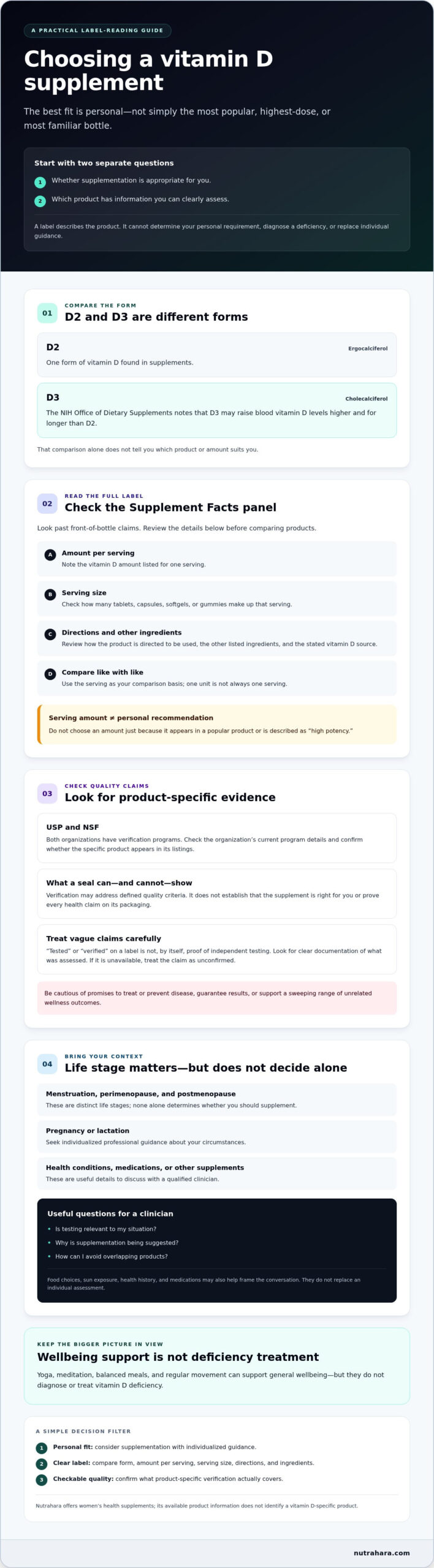
When comparing products, look beyond the front-of-bottle claims. Vitamin D supplements may contain D2 (ergocalciferol) or D3 (cholecalciferol), and they come in formats such as tablets, capsules, softgels, liquids, and gummies. The NIH Office of Dietary Supplements notes that D3 may raise blood vitamin D levels higher and for longer than D2. That comparison alone, however, can’t tell you which product or amount suits you. Its Vitamin D fact sheet offers evidence-based background.

How to read the Supplement Facts panel

Start with the Supplement Facts panel rather than the front label. Find the vitamin D amount per serving, serving size, and directions. Review the other listed ingredients, including the source of vitamin D if it’s stated. A serving may require more than one capsule or gummy, so compare products using the same serving basis rather than assuming one unit equals one serving.

The serving amount tells you what the product provides when used as directed. It is not a personalized recommendation. Don’t select an amount simply because it appears in a popular product or the label calls it “high potency.” If you’re unsure how a product fits with your diet, other supplements, or health circumstances, ask a qualified clinician.

What quality testing and certifications can establish

A quality seal can be useful, but check what it covers. Organizations such as USP and NSF have verification programs. Look up the organization’s current program details and confirm whether the specific product appears in its listings. Verification may address defined quality criteria, but it doesn’t establish that a supplement is right for you or prove every health claim on its packaging.

Don’t assume a product has been independently tested just because its label says “tested” or “verified.” Look for product-specific evidence and check what was assessed. If clear documentation isn’t available, treat the claim as unconfirmed, not as proof of poor quality.

Be cautious about promises to treat or prevent disease, guarantee results, or support a sweeping range of unrelated wellness outcomes. Clear ingredient information and specific, measured claims make comparison easier. The best vitamin d supplement for your shortlist is one whose form, serving details, and quality evidence you can assess. Keep questions about personal dosing separate from product marketing.

How to compare vitamin D supplements without relying on popularity alone

A bestseller label tells you a product is popular, not whether its ingredients, serving information, or quality evidence suit your needs. Apply the same checks to each option, and separate facts on the label from your judgment about whether the format fits your routine. Without current product details and product-specific evidence, it wouldn’t be responsible to name a vitamin D product as a top pick.

A practical checklist for evaluating a supplement

Compare complete labels, not just front-of-bottle claims. Check the vitamin D form, amount per serving, serving size, directions, other ingredients, and manufacturer details. Then verify any quality claim against evidence for that specific product. A capsule may fit one person’s routine better than a liquid or gummy, but convenience alone doesn’t establish effectiveness or quality.

What to compare Objective check How to interpret it
Form Does the label identify D2 or D3 and the delivery format? Consider preference and routine; don’t treat format as proof of superiority.
Serving clarity Are serving size, vitamin D amount, and directions easy to find? Compare amounts on the same serving basis. This is product information, not personal dosing advice.
Quality evidence Can you confirm a stated certification or test for this exact product? Give more weight to verifiable, product-specific information than to broad “tested” claims.
Cautions Are ingredients and warnings disclosed, and are claims specific? Pause over disease-treatment promises or guaranteed results; seek qualified guidance for personal concerns.

How to interpret rankings, reviews, and testimonials

Ask how a ranking was created. Was it based on independent product testing, expert review, label review, or sales popularity? Each method answers a different question, so an editorial pick should explain its criteria and limits. Consumer reviews can describe taste, packaging, or ease of use, but personal experiences aren’t proof of clinical benefits. Women’s testimonials should be authentic, permissioned, and supported; without those safeguards, it’s better to omit them.

For personal safety questions, Mayo Clinic’s guide can help you choose and use vitamin D supplements safely, but it doesn’t replace advice tailored to your circumstances. A useful comparison is transparent about what has been verified and what remains unknown. Nutrahara offers women’s health supplements, but there is no confirmed vitamin D-specific product to present as a vitamin D pick.

How to choose and use vitamin D supplements safely at different life stages

Start with your circumstances, not a one-size-fits-all dose. Use this sequence to prepare for a product comparison or a conversation with a clinician:

  • Review your context. Consider your life stage, diet, sun exposure, health conditions, medications, and any supplements you already take.
  • Check the label. Confirm the vitamin D form, amount per serving, serving size, other ingredients, and directions.
  • Ask a qualified clinician. Discuss whether testing or supplementation makes sense for you, especially if you’re pregnant, breastfeeding, taking medication, or managing a health condition.
  • Follow the guidance you receive. Use a product according to its directions and the clinician’s advice, rather than adding extra servings or combining products without checking.

This process helps you consider the best vitamin d supplement for your situation without assuming a popular product or general recommendation applies to every woman.

When should women ask a clinician about vitamin D?

Pregnancy and lactation bring specific nutritional questions, while medications and some health conditions may affect what’s appropriate. Ask a clinician to review your circumstances and any product label before starting or changing a supplement. Symptoms alone can’t confirm vitamin D deficiency, and a general article can’t determine whether you need a blood test. Testing decisions and timing should be based on your individual situation, not a universal schedule.

How to build a supportive, sustainable wellness routine

Keep your approach simple. If supplementation is recommended, follow the clinician’s instructions and the product label. Check whether other supplements already contain vitamin D before combining them, and ask if you’re unsure. Linking a reminder to an established daily habit, such as breakfast, may make directions easier to follow.

Balanced nutrition and regular movement can support overall wellbeing. Yoga and meditation may also help you make space for mindful, restorative routines. These practices can be part of a broader wellness plan, but they don’t replace vitamin D or treat a deficiency. Aim for a routine that feels realistic and supportive, not like another source of pressure. A clinician can help you adjust it as your needs change through menstruation, perimenopause, menopause, pregnancy, or breastfeeding.
Best Vitamin D Supplement: How to Choose the Right One in 2026

Choosing a vitamin D supplement in 2026: make an evidence-led next move

A confident choice doesn’t require a complicated ranking. It requires clear product details, a transparent label, and professional guidance when your health context calls for it. Before buying, check what’s actually verified instead of relying on popularity or broad wellness promises.

A final checklist before you buy

  • Confirm the current label. Review the vitamin D form, amount per serving, serving size, directions, and full ingredient list. Check the manufacturer’s product information too, so you’re comparing complete details.
  • Verify quality claims. If a product mentions testing or certification, look for current evidence that applies to that specific product. A general claim is not the same as verifiable product-specific information.
  • Consider your circumstances. Pregnancy, breastfeeding, medication use, and health conditions may raise questions that a product label can’t answer. Ask a qualified clinician whether testing or supplementation is appropriate for you.

These checks help distinguish what a product states from what you personally may need. Your shortlist should reflect transparent information and fit your routine, not promise a particular health outcome. The best vitamin d supplement for one woman may not be right for another.

Where Nutrahara fits, and where it does not

Nutrahara is an e-commerce company specializing in women’s health supplements. Its products combine principles of ancient Ayurveda science with modern nutritional research and use natural, clean ingredients. Its offerings include supplements designed to support areas such as skin, hair, nails, digestion, and brain function. No vitamin D-specific product is identified, so Nutrahara can’t be ranked or recommended here as a vitamin D option. Its broader women’s wellness products are not a substitute for vitamin D or individualized clinical guidance.

If you’re exploring Nutrahara’s women’s health supplements, review the available product information with the same care: check the ingredients, serving directions, and evidence behind any claims. This article doesn’t verify a vitamin D product or suggest that another supplement can meet a vitamin D need. Let your health context, clear product information, and clinician guidance shape that decision.

Make your next vitamin D choice with confidence

The best vitamin d supplement isn’t defined by popularity alone. Look for a clear, current label and product-specific quality information, then consider whether the product fits your needs and routine. Serving details describe the product, not your personal requirements.

Your life stage and health history matter. If you’re pregnant or breastfeeding, take medication, or have a health condition, discuss testing or supplementation with a qualified clinician. That conversation can help you make a choice based on your circumstances rather than a generic ranking.

Nutrahara focuses on women’s health supplements and combines Ayurvedic principles with modern nutritional research. No vitamin D-specific product is identified, so Nutrahara shouldn’t be treated as a vitamin D recommendation. For broader women’s wellness resources, explore Nutrahara’s women’s wellness resources.

For your next step, compare labels carefully and ask a clinician about questions specific to your health. If you’re looking for broader women’s wellness support, explore Nutrahara’s women’s wellness resources.

Frequently Asked Questions

What is the best vitamin D supplement to take?

The best vitamin D supplement is one that matches your needs and routine, with a clear label and quality claims you can verify. Compare the form, serving size, amount per serving, ingredients, and directions rather than choosing by popularity or high potency alone. A product label can’t tell you whether you personally need supplementation or what amount is appropriate. Ask a qualified clinician if your health history or life stage raises questions.

Is vitamin D3 better than vitamin D2?

Vitamin D3 may raise and maintain blood vitamin D levels more effectively than D2, but that doesn’t automatically make every D3 product the right choice for you. D2 and D3 are different forms of vitamin D, and labels should identify which form a product contains. Consider serving details, other ingredients, and your circumstances too. If you’re unsure which form to choose, discuss your options with a qualified clinician.

How do I know if I need a vitamin D supplement?

You can’t reliably confirm a vitamin D deficiency from symptoms alone. A clinician can consider your health history, diet, sun exposure, medications, and whether a blood test is appropriate. Testing and supplementation decisions are individualized, so don’t use a general product roundup to diagnose yourself or select a dose. If you have concerns, write down your questions and bring a list of your current supplements and medications to your appointment.

Can I take vitamin D while pregnant or breastfeeding?

Vitamin D is an essential nutrient, and the recommended dietary allowance for pregnant and breastfeeding women is 600 IU (15 mcg) per day, according to the National Academies’ recommendations provided for this article. That figure isn’t a personal prescription or necessarily a supplement dose. Check whether your prenatal or other supplements already contain vitamin D, and ask your pregnancy care clinician what is appropriate for you.

What should I look for on a vitamin D supplement label?

Check the Supplement Facts panel for the vitamin D form, amount per serving, serving size, and directions. Review the full ingredient list, including other active ingredients, and confirm how many tablets, capsules, or gummies make up a serving. Compare products using the same serving basis. The listed amount describes the product, not your individual requirement, so ask a clinician if you need help deciding whether to supplement or how much is suitable.

How can I tell whether a vitamin D supplement has been third-party tested?

Look for a named organization or specific testing claim, then confirm that the exact product appears in the organization’s current verification records. USP and NSF are examples of organizations with programs, but a logo or general “tested” statement isn’t enough to establish what was assessed. Check the program’s scope and current status. Verification can support defined quality claims; it doesn’t prove that a product will deliver a particular health benefit or suit your needs.

Can I take vitamin D with other supplements or medications?

Possibly, but check with a qualified clinician or pharmacist before combining vitamin D with medications or other supplements. Products may overlap in their ingredients, and medicines or health conditions can affect whether supplementation is suitable. Bring the labels or a written list of everything you take, including prenatal vitamins and multivitamins. Don’t add extra servings or change a clinician’s instructions based on advice from a general article or product label alone.

Article by

Nutrahara Team

We are a dedicated collective of nutrition scientists and naturopaths at Nutrahara, committed to advancing women's health through the fusion of ancient Ayurveda science and cutting-edge nutrition research. Our mission is to empower you with clean, simple, and scientifically validated wellness solutions so you can live your healthiest life. Connect with us to stay updated on the latest developments in holistic women's health and nature-based research.

Disclaimer

This article is not a substitute for medical advice. Please consult a healthcare professional before starting any supplement, especially if pregnant, nursing, taking medication, or managing health conditions.

Categories
Articles

Calcium and Vitamin D for Women Over 50: A Holistic Guide to Bone Vitality

What if the secret to maintaining your vibrant, active lifestyle after 50 wasn’t found in a sterile medicine cabinet, but in a mindful ritual that honors both your body’s wisdom and modern nutritional science? Many women feel a sense of dread when they hear the word “osteoporosis,” yet the path to skeletal strength doesn’t have to feel like a clinical chore. Finding the right balance of calcium and vitamin d for women over 50 is a vital step toward reclaiming your physical confidence and long-term mobility.

It’s completely normal to feel overwhelmed by conflicting advice or the fear of losing the flexibility that allows you to enjoy your morning sun salutations. You deserve to feel empowered by your health choices rather than anxious about the aging process. This guide promises to help you harmonize ancient Ayurvedic wisdom with contemporary research to support your bone vitality and longevity. We’ll explore the essential synergy between minerals and vitamins, providing you with a clear roadmap to create a natural health ritual that keeps you moving with grace and strength for decades to come.

Key Takeaways

  • Understand how your biological needs change post-menopause and why 1,200mg of calcium is the daily target for lasting strength.
  • Discover the vital synergy of calcium and vitamin d for women over 50, ensuring these nutrients effectively nourish your living bone matrix.
  • Explore a fusion of modern nutrition and Satvic foods to find gentle, bioavailable mineral sources that align with your body’s rhythm.
  • Identify why weight-bearing exercises and stress management act as essential signals to maintain bone density and flexibility.
  • Shift your perspective on aging by embracing a proactive ritual that blends scientific validation with ancient holistic wisdom.

The Silent Transition: Why Calcium and Vitamin D Requirements Shift After 50

The transition into your 50s is often celebrated in traditional philosophies as a “Second Spring.” This is a powerful season of life where your energy shifts from outward nurturing to inward fortification. However, this renewal requires a sturdy foundation. Your bones are not static structures; they are vibrant, living tissues that constantly remodel themselves in response to your hormonal environment. As you move through this stage, your body’s internal blueprints for bone maintenance undergo a significant shift, making the synergy of calcium and vitamin d for women over 50 more critical than ever before.

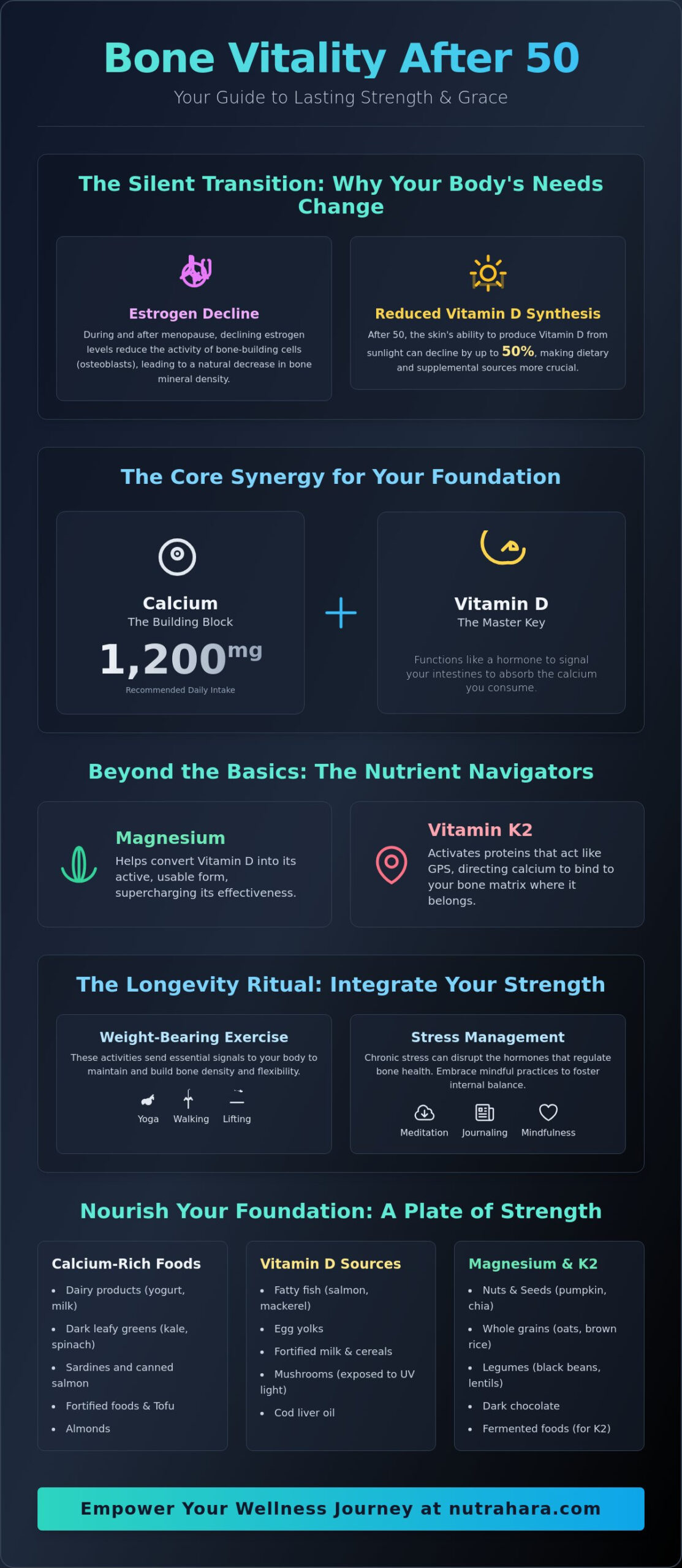
Scientific research, including guidelines from the National Academy of Medicine, identifies 1,200mg of calcium as the daily gold standard for women in this age bracket. This isn’t an arbitrary number. It’s a calculated requirement to offset the natural changes in bone mineral density that occur during and after menopause. For many women, understanding osteoporosis and its biological triggers is the first step toward building a resilient skeletal system that supports an active, flexible lifestyle. While you focus on mineral intake, Vitamin D acts as the essential key that unlocks the door, allowing your body to actually absorb and utilize the calcium you consume.

The Estrogen Connection and Bone Density

Estrogen plays a protective role in skeletal health by regulating the cells responsible for building bone, known as osteoblasts. When estrogen levels naturally decline during the menopausal transition, these bone-building cells become less active. At the same time, the cells that break down bone can become more aggressive. This imbalance often means that a traditional diet, which may have been sufficient in your 30s, now falls short of your body’s increased needs. Bone resorption is the body’s natural method of breaking down old bone to recycle minerals, a process that must stay in harmony with new bone formation to maintain skeletal integrity. To support this delicate hormonal balance, many women find that incorporating targeted supplements like BlossomBliss helps them feel more centered during this internal shift.

Vitamin D: The Sun Vitamin as a Hormonal Messenger

While we often label Vitamin D as a simple nutrient, it actually functions more like a hormone within your body. It acts as a messenger, signaling your intestines to absorb calcium and helping your kidneys reclaim minerals that might otherwise be lost. A deficiency in this “sun vitamin” does more than just weaken bones; it can lead to noticeable shifts in mood and a decrease in muscle strength, which increases the risk of falls. Synthesizing Vitamin D from sunlight becomes increasingly difficult after age 50 because the skin’s efficiency in this process can decline by as much as 50% compared to younger years. This biological reality makes intentional supplementation and mineral-rich nutrition a vital part of your daily longevity ritual.

The Biological Synergy: How Nutrients Work Together for Your Foundation

Think of your skeletal system as more than just a rigid frame. It is a living, breathing matrix of tissue that requires a delicate dance of nutrients to remain resilient and flexible. While we often focus on individual minerals, the true magic happens through a sophisticated nutritional partnership. The relationship between calcium and vitamin d for women over 50 is foundational, but it is only the beginning of the story. Calcium provides the structural hardness, while Vitamin D acts as the essential guide that ensures calcium is absorbed into your bloodstream rather than simply passing through your system.

To build a truly vibrant foundation, you must look beyond the basic duo. Magnesium and Vitamin K2 act as the “navigators” of this biological ritual. Magnesium helps convert Vitamin D into its active form, while Vitamin K2 activates proteins that bind calcium to the bone matrix. This ensures that the minerals you consume are actually utilized where they are needed most. To see how these elements fit into a broader health strategy, you can explore The Ultimate Guide to Women’s Wellness Supplements. Understanding these connections empowers you to move away from the confusion of conflicting advice and toward a balanced, science-backed routine.

Beyond the Bricks: The Role of Collagen in Bone Flexibility

Bones are often compared to concrete, but without flexibility, concrete eventually cracks. Collagen serves as the “rebar” within your bone structure, providing the tensile strength necessary to prevent brittleness as you age. This structural support is why many women choose to integrate a Premium Collagen Complex into their wellness journey. In Ayurvedic philosophy, this internal support mirrors the concept of Snehana, or internal lubrication. Just as we use oils to soothe the skin, nourishing our internal “living tissue” with collagen helps maintain the fluidity and grace required for a dedicated yoga practice or an active daily life.

Avoiding the “Calcium Paradox”

Many women express concern about the “calcium paradox,” the fear that supplemental minerals might deposit in the arteries instead of the skeleton. This is a valid area of focus for women’s health and bone density. Fortunately, the synergy of Vitamin D and K2 prevents this “misdirection” by signaling your body to keep calcium within the bone tissue. Rather than resorting to aggressive mega-dosing, a holistic approach focuses on moderate, consistent intake. This measured rhythm respects your body’s natural limits and ensures your longevity ritual remains a source of calm and confidence. If you’re ready to start your journey, choosing a balanced wellness supplement can help you maintain this vital mineral harmony.

Ancient Wisdom Meets Modern Plates: Best Sources for Bone Health

Finding the right balance of calcium and vitamin d for women over 50 begins in the kitchen. In the Ayurvedic tradition, we focus on the concept of Agni, or digestive fire. If your internal fire is weak, your body cannot effectively transform the heavy minerals found in food into the living tissue of your bones. To support your digestive fire and enhance nutrient uptake, consider the warming benefits of Ashwagandha with Black Pepper, which honors traditional absorption methods. A Satvic diet, filled with pure and life-giving foods, ensures that your mineral intake is both plentiful and easy to process.

Source Type Examples Bioavailability Note
Dairy Organic Yogurt, Paneer, Ghee High efficiency; requires strong Agni for full digestion.
Plant-Based Kale, Broccoli, Dried Figs Good absorption; focus on low-oxalate greens.
Ayurvedic Staples Sesame Seeds (Til), Ragi, Almonds Exceptional mineral density; supports long-term vitality.

Meeting your daily calcium and vitamin D requirements is a journey that starts with mindful eating. While whole foods provide a foundation, achieving the specific levels of calcium and vitamin d for women over 50 often requires a thoughtful blend of diet and supplementation. Natural Vitamin D is rare in the food world, found primarily in fatty fish, egg yolks, and sun-exposed mushrooms. Because our skin’s ability to synthesize this nutrient declines with age, focusing on these specific ingredients helps bridge the gap between your biological needs and your daily intake.

The Ayurvedic Bone Kitchen

Sesame seeds, almonds, and dark leafy greens are the bone-building powerhouses of a holistic kitchen. In Ayurveda, sesame seeds are prized for their Ojas-building properties, providing a concentrated source of calcium that nourishes the deep tissues. To ensure these minerals reach their destination, we use warming spices like ginger and black pepper to kindle the digestive fire. Whole food is the first medicine that builds the architecture of our longevity. By preparing these ingredients with intention, you turn every meal into a ritual of strength and self-care.

For those looking to elevate their healthy snacking with premium flavors, you can explore Keto Pesto Almonds as a sophisticated way to integrate these bone-building nuts into your lifestyle.

Choosing Between Calcium Citrate and Carbonate

If you find that your diet needs a supportive boost, choosing the right supplement form depends on your unique digestive profile. Calcium carbonate is the most common form, containing 40% elemental calcium, but it requires stomach acid to dissolve and should always be taken with a meal. In contrast, calcium citrate is more easily absorbed on an empty stomach and is often gentler for women with sensitive digestion. A simple tip for maximum efficiency is to split your doses; your body can only absorb about 500 to 600 mg of calcium at one time. Taking smaller amounts twice a day ensures that your “bone bank” remains consistently funded without overwhelming your system.

The Longevity Ritual: Integrating Bone Health into Your Lifestyle

Movement is the vital language of your skeletal system. Bones are the silent architecture of your spirit, requiring both nourishment and purpose to remain strong. While ensuring adequate levels of calcium and vitamin d for women over 50 provides the necessary building materials, your bones also require a physical signal to maintain their density. When you engage in weight-bearing activities, you create healthy mechanical signals that tell your body to deposit minerals into the bone matrix. This process is essential for maintaining an active lifestyle and preventing the fragility that many women fear as they age.

Chronic stress is a silent thief of bone density. When your body is constantly in a “fight or flight” state, it produces high levels of cortisol. This hormone can interfere with bone-building cells and accelerate the breakdown of existing tissue. Managing your nervous system is just as important as managing your mineral intake. By lowering stress through mindfulness, you protect the calcium and vitamin d for women over 50 that you’ve worked so hard to integrate into your daily diet. It’s about creating a holistic environment where your foundation can truly thrive.

Yoga Poses for Bone Strength

Yoga offers a beautiful way to load your bones while improving the balance that prevents fractures. Standing poses like Tree Pose (Vrksasana) and Warrior II (Virabhadrasana II) are particularly effective. They challenge your structure and build confidence in your body’s stability. A simple tip for your daily life is “mindful resistance.” When you carry groceries or lift a watering can, do it with intention and slow, controlled movements to give your bones that extra growth signal. These small moments of focus turn ordinary chores into a ritual of strength.

Meditation as a Bone-Saving Practice

As your guide on this wellness progression, I encourage you to see stillness as a form of medicine. A 10-minute morning meditation sets a calm tone for your nervous system and keeps cortisol in check. This practice creates the tranquil internal environment your bones need to stay resilient. To support your body’s natural response to stress and protect your skeletal foundation, you can explore Ashwagandha with Black Pepper as a potent adaptogen for your longevity ritual. This combination of ancient stillness and modern botanical support empowers you to move through your Second Spring with grace and vitality.

Calcium and Vitamin D for Women Over 50: A Holistic Guide to Bone Vitality

Empowering Your Journey: The Nutrahara Approach to Post-50 Vitality

Choosing to prioritize your bone health after 50 is a profound act of self-love. It is a proactive step that transforms fear of the future into a celebration of your current strength. At Nutrahara, we believe that your “Second Spring” should be defined by the freedom to move, the flexibility to explore, and the confidence to lead an active life. By harmonizing the essential needs for calcium and vitamin d for women over 50 with mindful lifestyle choices, you are building a foundation that lasts a lifetime.

Our commitment to your longevity is rooted in the fusion of ancient health philosophies and modern clinical research. We understand that you seek more than just a quick fix; you want a partner for your personal health progression. This journey is best reflected in the voices of women who have reclaimed their vitality. “I feel stronger and more centered in my body than I have in years,” shares Martha, age 54. Similarly, Sarah, 58, notes that “integrating these natural rituals gave me the confidence to return to my hiking group without the constant worry of fragility.” These stories of empowerment are the ultimate goal of every formula we create.

Why Clean Ingredients Matter After 50

As your body matures, its sensitivity to artificial additives and fillers often increases. Nutrahara prioritizes purity, ensuring that every ingredient serves a purpose for your vitality. Our FemmePower supplement is crafted to support the unique hormonal and skeletal needs of this life stage. By removing the “noise” of synthetic chemicals, we allow the synergy of minerals and vitamins to work in harmony with your natural biological rhythms. This dedication to clean science is our promise to you as a wise and caring guide on your wellness journey.

Your Daily Bone Ritual Checklist

To help you stay on the path of proactive health, here is a simple checklist to guide your daily bone vitality ritual:

  • Aim for 1,200mg of calcium through a blend of Satvic foods and high-quality supplements.
  • Maintain your Vitamin D levels to ensure your body can effectively absorb and direct minerals.
  • Incorporate weight-bearing yoga poses like Warrior II to send growth signals to your bone matrix.
  • Practice daily meditation to manage cortisol levels and protect your mineral density from stress.
  • Choose pure, science-backed formulas that align with your body’s holistic needs.

True vitality is about achieving balance across all aspects of your being. To continue your journey toward total internal harmony, you may also find value in A Complete Guide to Vaginal pH Balance. Embracing the right balance of calcium and vitamin d for women over 50 is just one part of your magnificent progression. Step into your future with the confidence that your foundation is solid, supported by nature, and fortified by science.

Step Into Your Second Spring with Strength

Embrace this new chapter of your life as a powerful time of empowerment and renewal. You now have the essential tools to harmonize your body’s evolving needs by focusing on the vital synergy of calcium and vitamin d for women over 50. By kindling your digestive fire through Satvic nutrition and maintaining your skeletal architecture with mindful yoga, you aren’t just preventing bone loss; you’re building a legacy of lasting vitality. Your health is a personal progression, and every mindful choice you make today supports the active, flexible lifestyle you deserve.

At Nutrahara, we’re honored to act as your guide on this wellness journey. Our collections are crafted specifically for the unique needs of women over 50, blending time honored Ayurvedic wisdom with modern clinical research. We promise 100% clean ingredients with no artificial additives, ensuring your body receives only the purest support. Take the next step in your daily ritual today. Support your vitality with Nutrahara’s FemmePower Collection and move through your world with renewed confidence and grace. You have the power to stay vibrant, active, and centered for all the years to come.

Frequently Asked Questions

How much calcium should a woman over 50 take daily?

A woman over 50 should aim for a daily intake of 1,200 mg of calcium and at least 600 IU of Vitamin D. Maintaining these specific levels of calcium and vitamin d for women over 50 is a cornerstone of preventing bone density loss after menopause. This target is supported by the National Academy of Medicine as the gold standard for skeletal maintenance. It’s a proactive way to ensure your foundation stays resilient.

Can I take Vitamin D and Calcium at the same time?

You can take Vitamin D and calcium together because Vitamin D is the essential key that unlocks calcium absorption in your gut. Taking them as a nutritional partnership ensures the minerals you ingest are actually utilized by your living bone matrix rather than passing through your system. Many women find that taking these nutrients with a meal further enhances their bioavailability and supports a calm digestive rhythm. This synergy is vital for your bone vitality.

What are the symptoms of low calcium in women over 50?

Low calcium often presents silently at first, but you might notice subtle signs like muscle cramps, brittle nails, or a tingling sensation in your fingers. Over time, a significant deficiency can lead to more serious issues like frequent bone fractures or a loss of height. It’s important to listen to these quiet signals from your body as you navigate your longevity ritual. Understanding these symptoms early empowers you to take action before bone loss progresses.

Is it better to get calcium from food or supplements?

It’s best to prioritize calcium from whole food sources like leafy greens, sesame seeds, and organic dairy before turning to supplements. Supplements are most effective when used to bridge the gap between your dietary intake and the daily requirement of 1,200 mg. This balanced approach ensures you receive a full spectrum of co-factors that support your overall vitality. A combination of Satvic foods and clean formulas provides the most comprehensive support for your foundation; you can discover more about E-commerce sale of dietary supplements and wellness products to find science-backed options that complement your diet.

How much Vitamin D is too much for a woman in her 50s?

The safe upper limit for Vitamin D is 4,000 IU per day for most adults, though many women find optimal support between 600 and 1,000 IU. Excessive intake beyond this limit can lead to unwanted mineral buildup in the body. When considering calcium and vitamin d for women over 50, always focus on a moderate, consistent rhythm rather than aggressive dosing. This measured approach respects your body’s natural limits and maintains your internal harmony.

Does yoga really help improve bone density?

Yoga significantly improves bone density by providing the mechanical signal your bones need to grow through weight-bearing poses. Holding postures like Warrior II or Tree Pose places gentle stress on the skeletal system, which encourages the body to deposit minerals into the tissue. It also builds the balance and core strength needed to prevent the falls that lead to fractures. This makes yoga an essential tool for maintaining your physical independence and confidence.

What is the best type of calcium supplement for sensitive stomachs?

Calcium citrate is the best type of supplement for women with sensitive stomachs because it doesn’t require stomach acid to break down. You can take it on an empty stomach without experiencing the bloating or discomfort sometimes associated with calcium carbonate. Splitting your doses into smaller amounts of 500 mg throughout the day can also make the process much gentler on your digestion. This ensures your bone bank remains consistently funded without overwhelming your system.

Can stress actually cause bone loss?

Chronic stress can cause bone loss because the hormone cortisol interferes with the activity of your bone-building cells. When your body is constantly in a state of high alert, it may prioritize immediate survival over the maintenance of your bone matrix. Integrating daily meditation and adaptogens like ashwagandha can help lower these stress markers and protect your skeletal foundation. A calm mind is just as important as a mineral-rich diet for your long-term longevity.

Article by

Nutrahara Team

We are a dedicated collective of nutrition scientists and naturopaths at Nutrahara, committed to advancing women's health through the fusion of ancient Ayurveda science and cutting-edge nutrition research. Our mission is to empower you with clean, simple, and scientifically validated wellness solutions so you can live your healthiest life. Connect with us to stay updated on the latest developments in holistic women's health and nature-based research.

Disclaimer

This article is not a substitute for medical advice. Please consult a healthcare professional before starting any supplement, especially if pregnant, nursing, taking medication, or managing health conditions.

Categories
Articles

Supplements for Women’s Bone Density: A Holistic Guide to Lifelong Strength

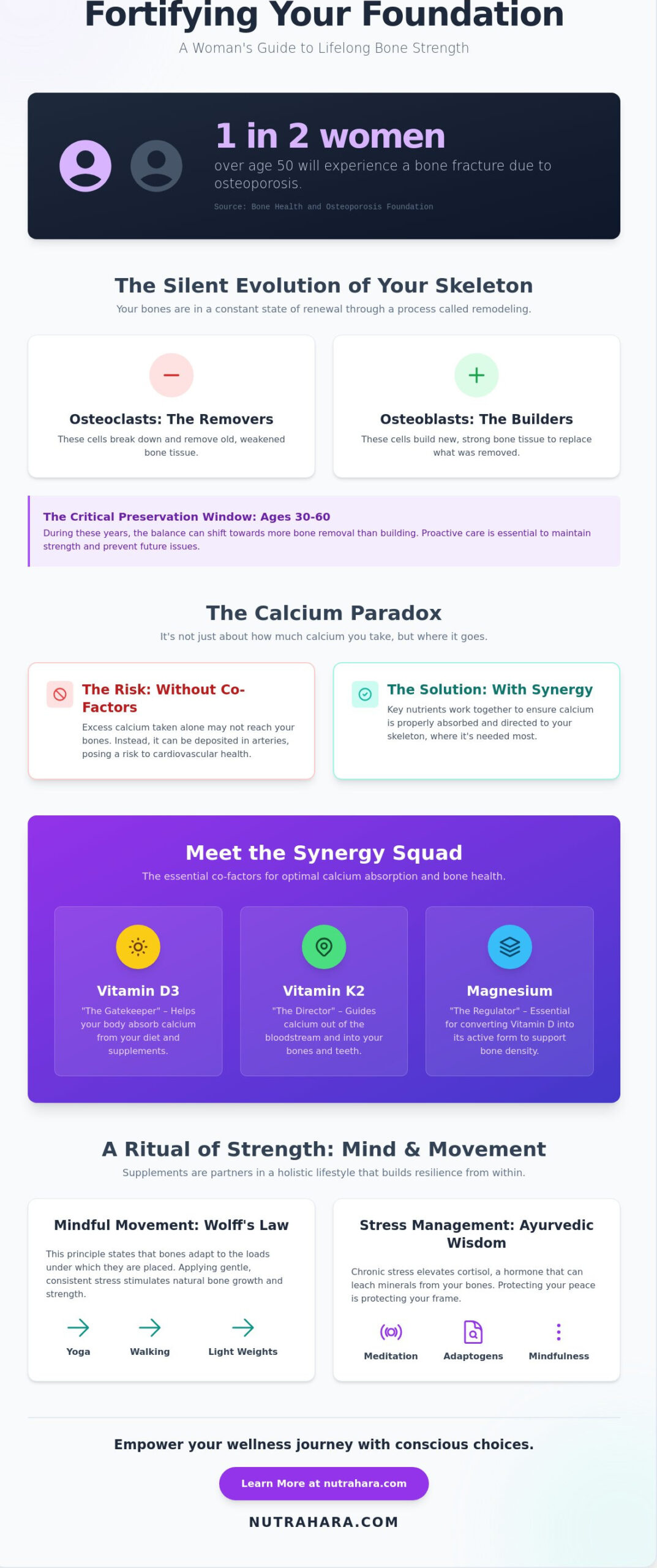
Did you know that one in two women will likely experience a bone fracture due to osteoporosis during her lifetime? It’s a startling statistic from the Bone Health and Osteoporosis Foundation that highlights a reality many of us fear as we age. This “silent” decline in bone mass often happens without warning, leaving you feeling vulnerable despite your commitment to a healthy, active lifestyle. Finding the right supplements for women’s bone density shouldn’t feel like a source of anxiety or confusion, yet conflicting advice on calcium dosages and pharmaceutical side effects often makes it so.

You deserve to feel strong and grounded in your body, whether you’re flowing through a morning yoga sequence or enjoying a weekend hike. We understand that you want to maintain your independence and vitality without relying on harsh chemicals. This guide will show you how to fortify your skeletal foundation by bridging ancient Ayurvedic wisdom with modern nutritional science for optimal bone health. We’ll explore the vital synergy between nutrients like Vitamin D and Calcium, while introducing holistic practices that support your long-term wellness journey. It’s time to replace uncertainty with a clear, science-backed path toward lifelong strength.

Key Takeaways

  • Understand the biological dance of bone remodeling and why the years between 30 and 60 are the most vital window for your skeletal preservation.
  • Learn how to navigate the calcium paradox by choosing the right supplements for women’s bone density that prioritize absorption through the synergy of Vitamin D3, K2, and Magnesium.
  • Discover how ancient Ayurvedic adaptogens can protect your mineral stores by managing the impact of modern stress on your bone health.
  • Transform your fitness routine into a “ritual of strength” by applying Wolff’s Law to stimulate natural bone growth through mindful movement and yoga.
  • Find out how to identify high-quality supplements that won’t compromise on purity, ensuring they reflect a fusion of traditional wisdom and modern science.

The Silent Evolution: Why Bone Density is a Lifecycle Journey for Women

Your skeleton is far from a static frame; it’s a living, breathing environment that undergoes constant renewal. This internal process is a delicate dance between two specialized cells: osteoclasts, which gently remove old bone tissue, and osteoblasts, which diligently build new, strong foundations. While peak bone mass is typically achieved in your 20s, the 30-60 age window represents a critical decade for skeletal preservation. It’s a time when many women transition from a feeling of youthful invisibility to a more mindful, intentional maintenance of their physical structure. At Nutrahara, we view this shift not as a decline, but as a long-term progression toward a more refined state of strength and tranquility.

Understanding Bone Remodeling and the Hormonal Connection

Hormones act as the conductors of your skeletal orchestra. For women, estrogen plays a leading role by keeping the “remover” cells in check and protecting the activity of the “builder” cells. This protection is vital during every life stage, including the high-demand periods of pregnancy and lactation. During these times, your body naturally prioritizes the baby’s skeletal development, sometimes drawing minerals from your own stores to support fetal growth or milk production. Understanding what is bone density? is the first step in recognizing why this balance matters. Supporting your frame with high-quality supplements for women’s bone density during these child-bearing years ensures you aren’t “borrowing” from your future mobility to support the present.

The Silent Transition: From Peak Bone Mass to Preservation

The challenge with bone loss is its quiet nature. You don’t feel your bones getting thinner; often, the first sign of low density is a fracture from a minor fall. For women in their 30s and 40s, this transition is an empowering opportunity for proactive self-care and lifestyle changes. Early intervention in these decades pays significant dividends as you move into your 60s and beyond. By choosing a comprehensive multivitamin like FemmePower, you can bridge nutritional gaps and maintain the active, injury-free lifestyle you’ve worked so hard to build. Taking charge of your skeletal health today is a gift of longevity to your future self, ensuring your foundation remains resilient for all the adventures ahead.

The Golden Standards: Navigating Calcium and Vitamin D Requirements

Many women believe that simply increasing their calcium intake is the silver bullet for skeletal health. It’s a common misconception. The “Calcium Paradox” suggests that consuming high doses of calcium without the necessary co-factors can actually be counterproductive. When calcium isn’t properly absorbed or directed, it can settle in your arteries instead of your bones, potentially impacting cardiovascular health. A wise approach to supplements for women’s bone density focuses on direction and harmony rather than just quantity. You want to ensure the minerals you consume reach their intended destination: your skeletal frame.

A holistic lifestyle blends clean supplementation with nutrient-dense whole foods. Leafy greens, seeds, and fortified foods provide a foundation, while high-quality supplements bridge the gaps. When evaluating any product, transparency is your best friend. Look for formulas that are free from artificial additives, synthetic fillers, and unnecessary dyes. Your body recognizes and utilizes pure ingredients more effectively, leading to better long-term results and fewer digestive disturbances. Exploring a balanced multivitamin like FemmePower can help you simplify this daily ritual while maintaining your commitment to purity.

Calcium Bioavailability: Choosing the Right Form

Not all calcium is created equal. Calcium carbonate is widely available and cost-effective, but it requires stomach acid for absorption, meaning you must take it with a meal. In contrast, calcium citrate is absorbed easily with or without food, making it a gentler choice for women with sensitive digestion or those using acid-reducing medications. Nutrahara prioritizes clean and simple formulas to ensure digestive harmony and maximum utility. To get the most out of your intake, try to space out your doses. Your body absorbs calcium most efficiently in amounts of 500 mg or less at one time.

The Vitamin D3 and K2 Partnership

Think of Vitamin D3 as the “key” that unlocks the door, allowing calcium to enter your bloodstream from the digestive tract. Without it, even the best supplements for women’s bone density won’t reach their full potential. However, Vitamin K2 is the “traffic cop” that directs that calcium into your bones and away from soft tissues like your heart and blood vessels. This synergy is one of the Essential Nutrients for Bone Health that ensures your skeletal system stays resilient. Some clinical studies suggest that nearly 40% of adults in the U.S. may have insufficient levels of Vitamin D, making consistent, high-quality supplementation a vital part of your long-term wellness strategy. Magnesium also plays a supporting role by helping your body convert Vitamin D into its active, usable form.

The Ayurvedic Edge: Ancient Wisdom for Modern Bone Strength

Nutrahara blends ancient health philosophies with contemporary research to offer a unique perspective on skeletal vitality. While many focus solely on minerals, we recognize that your body is an interconnected system. Traditional Ayurvedic wisdom teaches that bone health is deeply tied to your internal balance and stress levels. Modern science confirms this. Chronic stress triggers high cortisol, which can create an acidic environment, forcing the body to “borrow” minerals from your bones to maintain pH balance. This is why holistic supplements for women’s bone density must address more than just the calcium count. By integrating adaptogens, we help you maintain that delicate mineral reserve.

Sarah, a 45-year-old yoga practitioner, found herself struggling with fatigue and a constant fear of injury. “I was taking standard vitamins, but I still felt brittle,” she shared. After switching to a protocol that prioritized both mineral absorption and stress management, she felt a renewed sense of groundedness. Similarly, Maya, age 52, sought a more comprehensive approach after her first bone density scan showed signs of thinning. “I wanted a partner for my health journey that understood the connection between my mind and my body,” Maya explains. Her experience with Ayurvedic adaptogens and collagen helped her regain the confidence to return to her favorite hiking trails. Their stories mirror the Nutrahara philosophy: health is a long-term progression of strength and tranquility.

Ashwagandha and Cortisol: The Hidden Bone Thieves

Managing stress isn’t just about mental peace; it’s a physical necessity for your frame. When cortisol remains elevated, it inhibits the osteoblasts, those builder cells we discussed earlier. Our Ashwagandha with Black Pepper serves as a powerful adaptogenic tool. It helps lower cortisol, creating a protective environment where your bones can thrive rather than being depleted by the demands of a busy life. This wise and caring approach ensures your mental-skeletal health remains a priority, providing a foundation for long-term strength.

Collagen: The Flexible Strength of the Skeletal Matrix

Minerals provide hardness, but collagen provides the “bounce” that prevents breaks. Bones are roughly 30% organic matter, primarily Type 1 collagen. This scaffold is what prevents fractures by allowing the bone to absorb impact and resist pressure. Integrating our Premium Collagen Complex provides the essential building blocks for this internal structural integrity. While you might know collagen for its beauty benefits, it is the invisible foundation of your skeletal matrix. For a deeper look at how these elements work together, you can explore The Ultimate Guide to Women’s Wellness Supplements. Understanding Calcium and Vitamin D Requirements is vital, but adding collagen ensures your bones are as flexible as they are strong.

A Ritual of Strength: Combining Yoga, Nutrition, and Mindful Movement

Physical activity is often framed as a way to burn calories or build muscle, but for the skeletal system, it is a vital ritual of strength. To maintain vitality through your 30s, 40s, and beyond, movement must become a deliberate partner to your nutritional choices. This partnership is based on a principle known as Wolff’s Law. Simply put, your bones are living tissues that grow stronger in response to the physical stress placed upon them. When you challenge your frame through mindful loading, you signal your osteoblasts to build more density. High-quality supplements for women’s bone density provide the raw materials, but movement is the architect that tells your body where to use them.

While calcium and vitamin D are the headlines, your bones also require a spectrum of support. Protein is essential for maintaining the collagen scaffold we discussed earlier, while trace minerals like zinc, copper, and boron act as catalysts for bone formation. A holistic approach means nourishing your body with these elements while engaging in activities that spark growth. By combining a nutrient-dense diet with consistent movement, you create a powerful synergy that supports your long-term health progression.

Yoga for Bone Loading: Balance and Density

Yoga offers a unique form of isometric loading that specifically targets the areas most prone to thinning, such as the hips and spine. By holding specific poses, you use your own body weight to create the healthy stress bones need to stay resilient. Consider these three poses for your daily practice:

  • Warrior II: This pose provides significant weight-bearing for the hips and strengthens the femur.
  • Tree Pose: A classic balance posture that loads the standing leg while improving proprioception.
  • Plank Pose: Excellent for building bone density in the wrists and forearms, which are common fracture sites.

Beyond density, yoga and meditation are essential for fall prevention. Improved balance and coordination mean you’re less likely to experience the accidents that lead to fractures. Additionally, using meditation to lower systemic inflammation helps protect your bone tissue from degradation caused by chronic stress. It’s a gentle way to foster both physical and mental tranquility.

To further support your mobility and ease into your day, you can discover Biora.hu for expert advice on managing morning joint stiffness.

Weight-Bearing Activities for the 30-60 Demographic

For women in their 30s to 60s, consistency matters far more than intensity. Accessible activities like brisk walking, light weightlifting, or using resistance bands are highly effective at stimulating bone-building cells. The goal isn’t to strain your body, but to provide steady, rhythmic signals that your bones need to remain dense. Establish a daily bone-building ritual by pairing a morning stretch with FemmePower to ensure your body has the micronutrients required for repair and growth. Support your daily ritual of strength with our scientifically-backed women’s health supplements today.

Supplements for Women's Bone Density: A Holistic Guide to Lifelong Strength

Selecting Your Support: The Nutrahara Approach to Skeletal Vitality

Choosing the right supplements for women’s bone density is more than a simple transaction; it’s an act of self-empowerment. You’re selecting a partner for your long-term health progression. At Nutrahara, we believe that your wellness journey deserves a guide that is both wise and caring. We don’t believe in alarmist language or aggressive tactics. Instead, we offer a supportive path grounded in transparency and clinical validation. By viewing your skeletal health as a partnership between your lifestyle and your nutritional support, you can maintain the active, vibrant life you love.

The Nutrahara Promise: Purity and Simplicity

Our commitment to your well-being begins with what we leave out of our bottles. You won’t find artificial additives, synthetic fillers, or unnecessary dyes in our formulas. We focus on clean, simple ingredients that your body can recognize and utilize. This purity is combined with a rigorous approach to science. Every Nutrahara product is a fusion of traditional medicine and modern research, manufactured in FDA-registered facilities to ensure the highest quality. We draw authority from decades of industry experience, blending the tranquility of ancient philosophies with the precision of contemporary nutritional study.

This approach ensures that your body receives exactly what it needs to thrive without the burden of unnecessary chemicals. We believe that true vitality comes from a foundation of simplicity and trust. To nourish the skeletal foundation is to secure the freedom of every future movement, cultivating a life of enduring strength and quiet confidence.

Next Steps on Your Wellness Journey

Your path to lifelong strength doesn’t end with a single supplement. It’s a continuous progression of mindful choices and proactive care. We invite you to explore our educational resources, including our wellness E-books, which offer deeper guidance on integrating nutrition, yoga, and meditation into your daily life. Knowledge is a powerful tool for boosting your self-esteem and confidence as you navigate different life stages.

While we are honored to be your guide to find the most effective supplements for women’s bone density, we always encourage you to consult with a trusted healthcare provider. They can help you tailor these suggestions to your unique physical needs and health history. Your journey is personal, and your support should be too. When you’re ready to take the next step, we’re here to provide the pure, science-backed solutions you deserve. Empower your foundation with Nutrahara’s Women’s Health range and embrace a future of resilient vitality.

Embrace Your Future of Resilient Strength

Your skeletal health is a lifelong progression, not a static destination. By embracing the synergy of essential nutrients and the “ritual of strength” found in mindful movement, you’re investing in a future of independence and injury-free living. This journey requires a balanced approach that respects your body’s biological dance of remodeling. Remember that managing modern stress with ancient adaptogens is just as vital as meeting your daily mineral requirements. When you align your lifestyle with the wisdom of your body, you cultivate a foundation that supports every flow and every adventure.

Choosing high-quality supplements for women’s bone density is a powerful step toward securing this vitality. You deserve formulas that prioritize purity and transparency, free from artificial additives or fillers. Nutrahara remains your trusted partner, offering solutions formulated with ancient Ayurveda and modern science to support your unique health progression. It’s time to move with confidence, knowing your frame is nourished by the best of tradition and research.

Fortify your foundation with Nutrahara’s scientifically-backed wellness supplements. Step onto your mat or into the world with renewed self-esteem; your journey toward lifelong strength starts with the very next choice you make.

Frequently Asked Questions

What are the most essential supplements for women’s bone density?

Calcium, Vitamin D3, Vitamin K2, and Magnesium are the primary nutrients required for maintaining a strong skeletal frame. These elements work in a precise synergy to ensure that minerals are absorbed from your diet and correctly deposited into the bone matrix. Adding collagen and adaptogens like Ashwagandha can also support the organic scaffold of the bone and manage stress-induced mineral loss.

Can you actually increase bone density with supplements after age 50?

Yes, it’s possible to support and even improve your bone mineral density after age 50 by combining targeted nutrition with weight-bearing exercise. While peak bone mass is typically reached in your 20s, using high-quality supplements for women’s bone density helps slow the natural rate of bone resorption. This proactive approach encourages your “builder” cells to remain active, helping you maintain an injury-free lifestyle as you age.

Is Calcium Carbonate or Calcium Citrate better for bone health?

Calcium Citrate is often the preferred choice for women with sensitive digestion or those who take acid-reducing medications because it doesn’t require stomach acid for absorption. You can take it with or without food at any time of day. Calcium Carbonate is a more concentrated form but it must be taken with a meal to be effective, making citrate a more flexible option for many active lifestyles.

How does Vitamin K2 help with bone density in women?

Vitamin K2 acts as a biological traffic cop that directs calcium into your bones and keeps it out of your soft tissues and arteries. It activates specific proteins that bind the mineral to your skeletal matrix. Without enough K2, the calcium you consume might not reach its intended destination, even if your Vitamin D levels are sufficient for initial absorption.

Can yoga and meditation really help prevent bone loss?

Yoga prevents bone loss by providing isometric loading that stimulates osteoblast activity in vulnerable areas like the hips and spine. Meditation complements this physical work by lowering systemic cortisol levels. Since chronic stress creates an environment that leaches minerals from your skeleton, a consistent mindfulness practice is a powerful, non-physical tool for preserving your structural integrity.

What are the early warning signs of low bone density in women?

Low bone density is often called a silent condition because it rarely shows obvious symptoms until a fracture occurs. However, subtle signs can include receding gums, a weakened grip strength, or brittle fingernails. If you notice a loss of height or a change in your posture, it’s a good idea to consult a provider and consider a bone density scan to assess your foundation.

Is it possible to take too much Calcium for bone health?

Yes, taking excessive amounts of calcium can lead to complications like kidney stones or arterial buildup if it isn’t balanced with Magnesium and Vitamin K2. Most women aged 19 to 70 should aim for 1,000 to 1,200 mg of calcium daily from all sources. It’s best to space your intake into doses of 500 mg or less to maximize absorption and ensure your body utilizes the mineral safely.

How long does it take to see results from bone density supplements?

Bone remodeling is a slow and steady process, so you should expect to take supplements for women’s bone density for six to twelve months before seeing changes on a medical scan. While the internal structural improvements take time, many women report feeling more grounded and confident in their movement much sooner. Consistency is the most important factor in your long-term health progression.

Article by

Nutrahara Team

We are a dedicated collective of nutrition scientists and naturopaths at Nutrahara, committed to advancing women's health through the fusion of ancient Ayurveda science and cutting-edge nutrition research. Our mission is to empower you with clean, simple, and scientifically validated wellness solutions so you can live your healthiest life. Connect with us to stay updated on the latest developments in holistic women's health and nature-based research.

Disclaimer

This article is not a substitute for medical advice. Please consult a healthcare professional before starting any supplement, especially if pregnant, nursing, taking medication, or managing health conditions.