Categories
Articles

Best Vitamins for Perimenopause: Balance & Symptom Relief

Perimenopause support isn’t a one-bottle solution. The best vitamins for perimenopause depend on your symptoms, diet, health history, and daily routine. Supplements may be one part of a broader approach, but they can’t replace nourishing meals or individualized care.

If your energy, sleep, mood, or concentration feels different, it’s understandable to look for practical ways to care for yourself. Start by noting what has changed and what you hope to support. Your needs may shift over time, so a thoughtful plan should adapt rather than rely on one-size-fits-all promises.

This guide explores how magnesium, black cohosh, phytoestrogens, and B vitamins relate to perimenopause, then considers the wider role of nutrition. You’ll find ways to assess supplement choices alongside everyday habits such as movement, yoga, and meditation. The goal is a clearer, calmer starting point for decisions that reflect your wellness priorities.

Key Takeaways

  • Notice how sleep and stress change alongside your cycle, then consider whether magnesium fits your needs and routine.
  • Approach black cohosh and phytoestrogens thoughtfully: evidence for symptom relief is unclear, and supplements can carry risks or interact with medicines.
  • Learn how B vitamins relate to energy and brain function, and consider your overall diet before reaching for a supplement.
  • Build a strong nutritional foundation with protein, calcium, and vitamin D, while tailoring supplement choices to your individual needs.

1. Magnesium and sleep or stress support

Perimenopause can bring changing cycles, lighter sleep, and unexpected hot flashes. Menopause is defined as 12 consecutive months without a period, according to the National Institute on Aging. Until then, fluctuating estrogen may coincide with symptoms that disrupt rest and daily routines. Tracking sleep, cycle changes, and symptoms can help you notice patterns worth discussing with a healthcare professional.

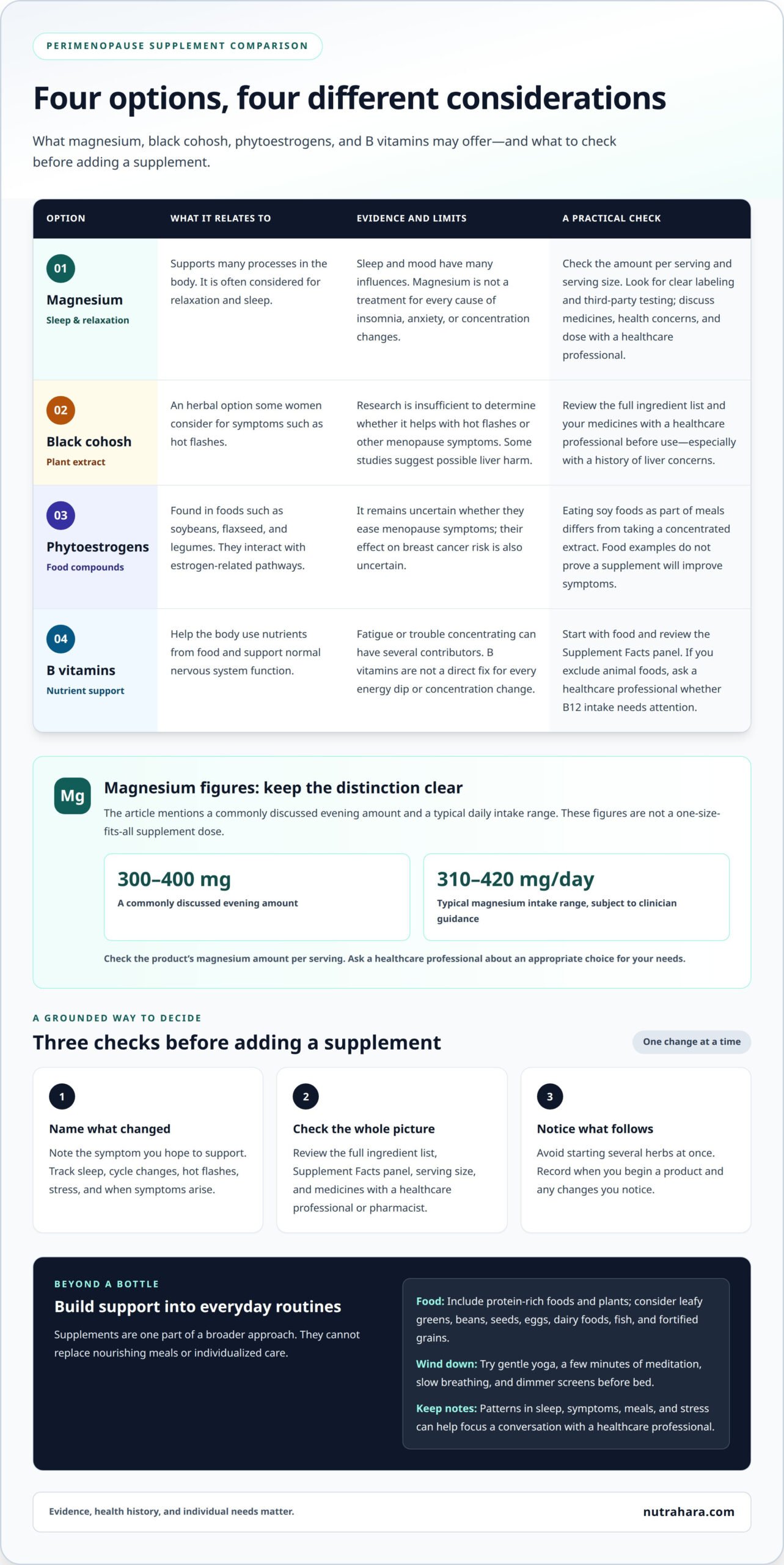
Magnesium supports many processes in the body, and it’s often considered for relaxation and sleep. A commonly discussed evening amount is 300-400 mg. The typical magnesium intake range is 310 to 420 mg per day, subject to clinician guidance. These figures describe intake, not a one-size-fits-all supplement dose. Check how much magnesium a product provides, including its serving size, before adding it to your routine.

Sleep and mood are influenced by more than one nutrient. A calming bedtime routine, gentle yoga, or a few minutes of meditation can support relaxation alongside balanced meals and regular exercise. For example, dim screens, prepare tomorrow’s essentials, and try slow breathing before bed. Magnesium isn’t a treatment for every cause of insomnia, anxiety, or changes in concentration. Notice whether poor sleep follows night sweats, stress, or another pattern.

In the United States, look for a supplement label that clearly states it has been third-party tested. Check the Supplement Facts panel for the magnesium amount per serving and review the full ingredient list. Prefer clear labeling over broad promises about menopause or mood. If you take medicine or have health concerns, discuss the supplement and its dose with a healthcare professional. A varied diet with leafy greens, beans, seeds, and foods containing fatty acids can also contribute to a nourishing lifestyle.

2. Black cohosh and phytoestrogens

Black cohosh and phytoestrogens are herbal options some women consider for symptoms such as hot flashes, but they are not interchangeable. Black cohosh is a plant extract; phytoestrogens are compounds found in foods such as soybeans, flaxseed, and legumes. The name refers to their ability to interact with estrogen-related pathways, not to being the same as the body’s hormones. Neither should be assumed to regulate changing periods or correct hormonal decline.

Research is insufficient to determine whether black cohosh helps with hot flashes or other menopause symptoms. Some studies suggest it may harm the liver. If you’re considering it, note the symptom you hope to address, the product’s full ingredient list, and any medicines you take. Discuss these details with a healthcare professional before use, especially if you have a history of liver concerns.

Evidence for phytoestrogens is also unclear: it remains uncertain whether they ease menopause symptoms, and their effect on breast cancer risk is uncertain. Eating soy foods as part of meals differs from taking a concentrated extract. Tofu, for example, can contribute protein, while calcium-fortified options may contribute calcium. Neither example proves that a supplement will improve symptoms or change metabolism.

Herbal products may carry risks or interact with medicines, so consider discussing them with a healthcare professional before use. Treat “natural” as a description, not proof of safety. Keep a simple symptom record, noting sleep, hot flashes, and any changes after starting a product. Don’t start several herbs at once; making one change at a time can help you notice possible effects. A healthcare professional can help weigh the evidence, your health history, and potential interactions before you decide. This measured approach keeps choices grounded in evidence rather than promises about hormonal balance or body function.

3. B vitamins, energy, and brain function

B vitamins help the body use nutrients from food and support normal nervous system function. They include thiamin, riboflavin, niacin, pantothenic acid, B6, biotin, folate, and B12. Because these nutrients have different roles, a “B-complex” supplement may contain several forms, while a single-nutrient product focuses on one. Read the Supplement Facts panel to see which vitamins it contains and how much each serving provides.

During perimenopause, fatigue or trouble concentrating can have several contributors, including disrupted sleep, stress, diet, or other health conditions. B vitamins may help meet nutritional needs when intake is low, but they aren’t a direct fix for every energy dip or change in concentration. Note when symptoms arise, what you’ve eaten, and whether sleep or stress may be involved. This record can make a clinic visit more focused.

Food is a practical place to start. Eggs, dairy foods, legumes, leafy greens, fish, and fortified grains provide different B vitamins. For example, pair beans with leafy greens at lunch, or add eggs to breakfast. If your diet excludes animal foods, ask a healthcare professional whether B12 intake needs attention. A balanced meal pattern, regular movement, and restorative practices such as yoga can support energy as part of a broader lifestyle.

Yes, supplements can interact with prescription medicines, including hormone therapy, depending on the ingredients and your medication. Before combining them, show a clinician or pharmacist the full Supplement Facts panel and your medication list. Choose one new supplement at a time, noting when you start it and any changes you notice. This makes possible effects easier to discuss without assuming the supplement caused them. More isn’t automatically more helpful: follow the product label and seek individualized guidance before taking high-dose formulas.

4. Perimenopause and nutritional needs

Perimenopause is a transition, so nutritional needs depend on your diet, health, and activity. The best vitamins for perimenopause aren’t necessarily the same for every woman. Start by reviewing your meals, energy, sleep, and exercise routine. Include protein-rich foods and plants, then consider whether a specific nutrient gap needs attention. Strength exercises can help support muscle as you stay active, while yoga can complement training with mobility and recovery.

According to the National Institutes of Health Office of Dietary Supplements, women in their 40s need 1,000 mg per day of calcium. Food sources include dairy, fortified alternatives, and some tofu. Vitamin D helps the body absorb calcium, but supplement needs vary with diet and individual health. A healthcare professional can help assess whether calcium or vitamin D supplements are appropriate and what amount fits your circumstances.

Insurance coverage for supplements depends on your plan, and costs vary by product. There is no single typical cost for every supplement. Evidence for perimenopause symptom relief also differs by ingredient: research is insufficient to determine whether black cohosh works, and findings on phytoestrogens remain unclear. The best vitamins for perimenopause are therefore choices grounded in your nutritional needs, not broad promises of symptom relief.

Vitamin D supplements are commonly discussed at 800 to 4,000 IU per day; the right amount depends on personal factors and existing intake. Excessive amounts of some vitamins can cause unwanted side effects, and supplements may interact with medicines. Before combining products, review their ingredients and doses with a healthcare professional. Treat supplements as one possible part of a wider plan, alongside nourishing meals, movement, and restorative habits. This approach can help you make a considered choice during a changing life stage.
Best Vitamins for Perimenopause: Balance & Symptom Relief

Nutrahara

Nutrahara offers Women’s Health Supplements for women considering nutrition as part of their perimenopause wellness routine. Its formulations combine principles of ancient Ayurveda science with modern nutrition research. Supplements can complement nourishing meals and healthy habits, but they aren’t a substitute for medical care or individualized advice about symptoms, medications, or nutrient needs.

If you’re considering adding a supplement to your routine, start with the specific nutritional goal you’ve identified and review the ingredients and directions. This can help you make a more considered choice as your needs change through perimenopause. For questions about Nutrahara and its Women’s Health Supplements, contact Nutrahara.

Make Your Next Wellness Step Intentional

Let your next choice begin with your own priorities, not pressure to change everything at once. The best vitamins for perimenopause are those that fit a considered plan for your needs, routines, and health goals. Before adding anything, write down what you hope to support and how you’ll tell whether your approach feels useful. That small pause can make supplement decisions a more mindful part of your wellness journey.

Keep making space for habits that help you feel connected to your body. A short yoga practice, quiet meditation, or steady movement can offer a grounding point as your needs evolve. If you’re ready to explore women’s wellness support, Contact Nutrahara to discuss your options. Take your next step with care and confidence; your health journey is yours to shape.

Frequently Asked Questions

What Is Perimenopause, Really?

Perimenopause is the transition leading up to menopause, when menstrual cycles and symptoms can change. Menopause is reached after 12 consecutive months without a period, according to the National Institute on Aging. One shared account described a woman who was 44 and had experienced perimenopause for three years; a volunteer mentor said she had experienced something similar 45 years earlier. Individual experiences vary.

How Much Calcium Do You Need?

For women in their 40s, the National Institutes of Health Office of Dietary Supplements states that calcium needs are 1,000 mg per day. Count food and fortified products toward your overall intake. Dairy foods, fortified alternatives, and some tofu can contribute. Before adding a supplement, consider what your meals provide and discuss your needs with a healthcare professional.

Which Supplements Should You Skip for Perimenopause Weight Gain?

Avoid products that promise rapid weight loss or claim to target perimenopause-related weight changes. Supplements can’t replace a sustainable eating pattern, strength-building activity, sleep, and other supportive habits. Be cautious with blends that hide ingredient amounts or duplicate products you already take. Review the label and your medication list with a healthcare professional or pharmacist to discuss possible interactions before using a weight-focused formula.

How much calcium do women in perimenopause need daily?

For women in their 40s, the National Institutes of Health Office of Dietary Supplements states a calcium need of 1,000 mg per day. This is a total intake target, not necessarily the amount to take as a pill. Consider calcium in meals and fortified foods before choosing a supplement. Nutrition labels can help you estimate what your regular eating pattern provides.

Can vitamin B6, B12, or folate help with perimenopause symptoms?

B6, B12, and folate are distinct nutrients, and supplements aren’t a guaranteed way to ease perimenopause symptoms. They may matter when diet or an identified deficiency leaves a nutritional gap. For example, people who avoid animal foods may need to pay particular attention to B12 sources. Review your diet, symptoms, and current supplements with a healthcare professional before choosing a B-complex product.

Do magnesium or omega-3 supplements help with hot flashes, sleep, or mood?

Magnesium is often considered for sleep support, but it shouldn’t be treated as a proven answer for every hot flash or mood change. Omega-3 supplements have also been studied, yet they aren’t established as reliable treatment for these symptoms. Track sleep, hot flashes, and mood separately. Those notes can help you identify patterns and discuss supplement choices with a healthcare professional.

Article by

Nutrahara Team

We are a dedicated collective of nutrition scientists and naturopaths at Nutrahara, committed to advancing women's health through the fusion of ancient Ayurveda science and cutting-edge nutrition research. Our mission is to empower you with clean, simple, and scientifically validated wellness solutions so you can live your healthiest life. Connect with us to stay updated on the latest developments in holistic women's health and nature-based research.

Disclaimer

This article is not a substitute for medical advice. Please consult a healthcare professional before starting any supplement, especially if pregnant, nursing, taking medication, or managing health conditions.
Categories
Articles

Choosing the Best Multivitamin for Perimenopause

A multivitamin for perimenopause isn’t automatically better just because it contains more ingredients. Choose one that fits your needs, with nutrients and plant ingredients you understand, rather than a crowded label promising everything.

It’s understandable to seek support as your body changes, especially when energy, mood, sleep, and menstrual patterns feel different. Supplements aren’t interchangeable, though, and a multivitamin is only one part of caring for your wellbeing.

This guide compares B vitamins, vitamin D, and plant phytoestrogens, and explains what to consider when choosing a multivitamin for women over 40. You’ll also find practical ways to think about ingredient amounts and how a supplement fits alongside nourishing food, movement, yoga, and meditation, so you can make a more confident choice for your own health journey.

Key Takeaways

  • Compare supplements by their ingredients and the strength of evidence for symptom relief, rather than assuming one formula suits everyone.
  • Use age-specific nutrient recommendations to assess vitamin D and B-vitamin amounts, and consider how calcium and magnesium fit your overall intake.
  • Look closely at claims about hot flashes, night sweats, and plant ingredients such as black cohosh; discuss health concerns and supplement use with a healthcare professional.
  • Consider how a women’s health supplement fits alongside nourishing food, movement, yoga, and meditation as part of your personal wellness routine.

What are the best supplements to take for perimenopause?

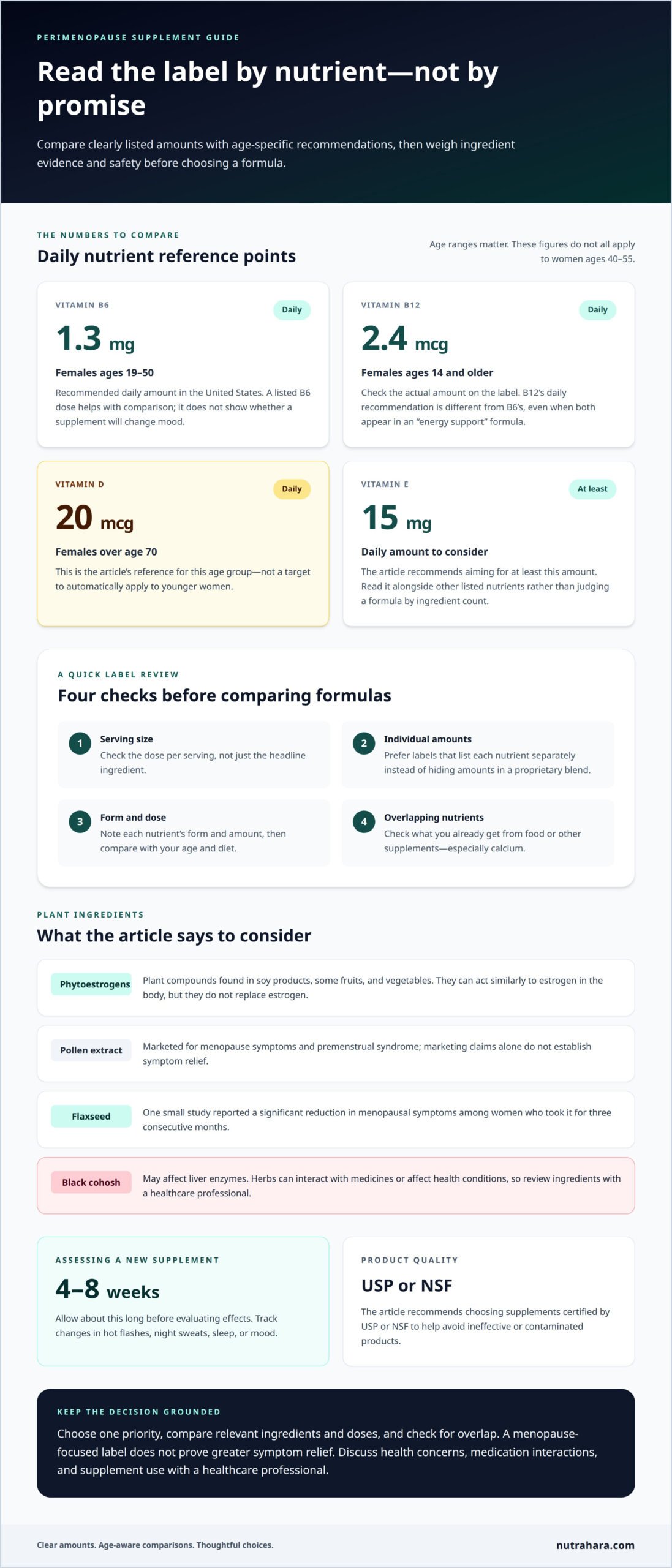
Start with the concerns you want to address, then look for clearly stated ingredient amounts. Check each nutrient’s form and dose per serving, along with the serving size. Prefer labels that list individual amounts instead of hiding them in a proprietary blend.

Phytoestrogens in soy products, some fruits, and vegetables can act similarly to estrogen in the body, but they don’t replace estrogen. Pollen extract is marketed for menopause symptoms and premenstrual syndrome. These options may interest women experiencing hot flashes or night sweats, but marketing claims alone don’t establish symptom relief.

Option Use or evidence to consider
Phytoestrogens Plant compounds; not estrogen replacement
Pollen extract Marketed for menopause symptoms and PMS
Flaxseed One small study reported symptom reduction
Black cohosh May affect liver enzymes

Choose a product that matches your concern and clearly lists its ingredients, rather than combining several herbal supplements at once.

Evidence varies by ingredient. One small study found a significant reduction in menopausal symptoms among women who took flaxseed for three consecutive months. Allow about four to eight weeks before evaluating a new supplement’s effects, and track changes in hot flashes, night sweats, sleep, or mood.

For product quality, the recommendation is to choose supplements certified by USP or NSF to help avoid ineffective or contaminated products. Herbs can interact with medicines or affect health conditions; black cohosh, for example, can impact liver enzymes. Review ingredients with a healthcare professional before adding an herbal product, especially if you take medication.

Nutrients including B vitamins and vitamin D

B vitamins and vitamin D have different roles in a nutrient plan. Compare their listed amounts with age-specific recommendations rather than relying on broad energy or wellness claims.

B6 and mood

Vitamin B6 is often discussed alongside mood during the menopause transition. Its recommended amount differs by age: females ages 19 to 50 in the United States need 1.3 milligrams daily, according to the National Institutes of Health, Office of Dietary Supplements. A label’s B6 amount is useful for comparison, but it doesn’t show whether a supplement will change mood.

B vitamin needs

B vitamins include B6 and B12, but their daily recommendations aren’t interchangeable. Females ages 14 and older in the United States need 2.4 micrograms of vitamin B12 daily. B12 is often associated with energy, so check its actual dose rather than relying on a general “energy support” claim. A balanced formula lists each B vitamin separately, making amounts easier to compare.

Vitamin D is another distinct nutrient to assess, especially when bone health is a priority. Females over age 70 in the United States should get 20 micrograms of vitamin D daily, according to the National Institutes of Health, Office of Dietary Supplements. That recommendation is specific to this age group, so don’t apply it automatically to younger women.

Vitamin E adds another comparison point: the article recommends aiming for at least 15 milligrams daily. Read its amount alongside vitamin D and B vitamins, rather than assuming a longer ingredient list means better balance. Supplements may combine vitamins with minerals, but the label should make each nutrient’s dose clear.

Try this quick label review: note the form and dose of each nutrient, then compare them with your age and diet. If a blend hides individual amounts, it’s harder to judge what it contributes.

Some formulas are designed specifically for perimenopause, while regular women’s multivitamins provide broader nutrient coverage. Compare the ingredients, forms, and doses, then choose based on your diet, age, and main concern. A menopause-focused label doesn’t prove greater symptom relief.

For a practical choice, first list the concerns you want to discuss, such as night sweats, stress, or vaginal health. Then check whether the formula includes nutrients you already get from food or another supplement. Pay particular attention to calcium, since combining products can increase your total intake. A healthcare professional can help assess your diet, health history, and medication list.

Look for evidence tied to each ingredient and symptom, not just broad claims about hormone balance. Research on supplements varies, and an ingredient marketed for menopause symptoms may not have the same evidence for night sweats. Black cohosh can impact liver enzymes, so consider its presence carefully, especially alongside medicines or liver concerns.

Use this simple decision process: identify one priority, such as sleep disrupted by night sweats; compare relevant ingredients and doses; then check the label for overlapping nutrients. Choose a formula that’s straightforward to understand. If vaginal changes or persistent stress are your main concerns, a multivitamin may not address their cause, so discuss those symptoms with a healthcare professional.

Yoga, meditation, and a consistent movement routine can support general wellbeing alongside nutrition, but they aren’t substitutes for evaluating symptoms. Choose a transparent, age-appropriate formula for nutrient coverage, not a promise to treat perimenopause. Ask a healthcare professional to consider calcium intake and potential supplement interactions before adding ingredients such as black cohosh.

How much vitamin D, calcium, magnesium, and B vitamins do women ages 40-55 need daily?

For women ages 40 to 55, compare daily nutrient targets with the amounts in food and supplements. Recommendations differ by nutrient and age, so a multivitamin label is a starting point, not a complete intake picture.

Females ages 19 to 70 in the United States should get 15 micrograms of vitamin D daily, according to the National Institutes of Health, Office of Dietary Supplements. Vitamin D supports bone health, so include food sources and any separate supplements when reviewing your daily total.

Calcium and magnesium needs depend on your overall diet. Check whether foods such as dairy products, fortified alternatives, nuts, or leafy greens contribute these minerals before adding a supplement. Compare serving sizes and mineral amounts across products to spot overlap between a multivitamin and separate formulas.

Vitamin B6 recommendations change at age 50. The recommended dietary allowance of vitamin B6 for females ages 19 to 50 in the United States is 1.3 milligrams daily, according to the National Institutes of Health, Office of Dietary Supplements. The recommended dietary allowance of vitamin B6 for females ages 50 and older in the United States is 1.5 milligrams daily, according to the National Institutes of Health, Office of Dietary Supplements.

For B12, females ages 14 and older in the United States need 2.4 micrograms daily. Check the label for the amount per serving, especially if another supplement also contains B vitamins. A simple review helps: write down vitamin D, calcium, magnesium, B6, and B12 from each product, then compare totals with your regular foods. That step makes gaps and overlaps easier to spot before choosing a formula, or you can work with Wise Eats Registered Dietitians to tailor your nutrition and supplement plan to your individual needs.

Choosing the Best Multivitamin for Perimenopause

Nutrahara

Nutrahara offers women’s health supplements for women considering nutritional support during perimenopause. Its formulations combine principles of Ayurveda with modern nutritional research and use natural, clean ingredients. They may suit readers exploring supplements as part of a broader routine, rather than expecting one product to resolve every change.

Start by identifying your priority, such as filling a nutrient gap or building a consistent wellness routine. Then compare the supplement label with your diet and any other products you take. For example, if you already use a B-vitamin supplement, consider the overlap before adding another formula. A healthcare professional can help you consider your health needs and potential medication interactions.

Nutrahara’s women’s health supplements are designed to support women’s overall wellness, energy, and health. They may fit alongside nourishing meals, regular movement, yoga, or meditation. These everyday practices can complement a thoughtful nutrition routine and offer practical ways to care for physical and mental wellbeing. When incorporating new products into your routine, listening to your body and tracking how you feel can provide helpful personal insights.

Keep your choice grounded in your needs. A clear list of your current supplements, main concerns, and preferred routine can help you decide what support makes sense. If persistent night sweats or mood changes affect daily life, discuss them with a healthcare professional; supplements aren’t a substitute for medical care.

For a considered next step, explore how Nutrahara’s women’s health supplements align with your wellness priorities. Contact Nutrahara to learn more about its women’s health supplements.

Frequently Asked Questions

Can you take menopause supplements with HRT?

Ask the healthcare professional managing your HRT to review a supplement’s full ingredient label before combining them. Bring the product container or a clear label image, and list your prescriptions and other supplements. This provides details for review, including herbal ingredients and overlapping nutrients. Don’t rely on a general “hormone support” label to decide whether a combination suits your treatment.

Are supplements safe to use?

Safety depends on the ingredients, dose, health history, and medicines you take. Black cohosh, for example, can impact liver enzymes, so consider its presence when reviewing a formula. Read the complete ingredient panel, including blend details, and note overlapping nutrients across products. A healthcare professional can assess whether a supplement fits your medication and personal health needs.

How can I balance my hormones during my menopause transition?

Support overall wellbeing with consistent habits rather than trying to force hormone levels toward a target. Build a routine around regular meals, enjoyable movement, and sleep. Yoga and meditation can create a calm pause in a busy day. You can also record symptoms and cycle changes in a journal, then share the pattern with a healthcare professional if it affects daily life.

What nutrients are most important in a multivitamin for perimenopause?

No single nutrient combination suits every woman. Consider your age, eating pattern, health needs, and other supplements. For example, if you regularly take a separate vitamin product, check for overlapping ingredients before adding a multivitamin. A healthcare professional can help interpret these details in the context of your diet and health history.

Do multivitamins help with perimenopause symptoms such as hot flashes, mood changes, or sleep problems?

A multivitamin can contribute nutrients, but it isn’t a proven remedy for hot flashes, mood changes, or sleep problems. Keep a brief record of when symptoms occur and what affects your sleep or daily routine. This can help you describe the pattern to a healthcare professional, who can discuss appropriate ways to address persistent or disruptive symptoms.

What are the best-rated perimenopause multivitamins in the U.S., and what do they cost per month?

Ratings alone can’t identify the best fit, and monthly cost depends on the product’s price and serving instructions. Compare the full ingredient panel, amount per serving, and servings per package. Estimate how long a package lasts by dividing its serving count by the number of servings you take each day. Then consider whether that duration and formula suit your needs.

Article by

Nutrahara Team

We are a dedicated collective of nutrition scientists and naturopaths at Nutrahara, committed to advancing women's health through the fusion of ancient Ayurveda science and cutting-edge nutrition research. Our mission is to empower you with clean, simple, and scientifically validated wellness solutions so you can live your healthiest life. Connect with us to stay updated on the latest developments in holistic women's health and nature-based research.

Disclaimer

This article is not a substitute for medical advice. Please consult a healthcare professional before starting any supplement, especially if pregnant, nursing, taking medication, or managing health conditions.

Categories
Articles

Best Natural Perimenopause Supplements for Relief

Natural doesn’t always mean safe. Natural perimenopause supplements may seem like a gentle option, but an ingredient’s source alone cannot show whether it suits your health or medications. Look beyond wellness claims and consider the evidence, ingredients, and potential risks.

Perimenopause can affect sleep, mood, and energy, and each woman’s experience is different. This guide reviews what research says about supplements such as black cohosh, phytoestrogens, and magnesium, and how they compare with other approaches to symptom relief. You’ll also find practical ways to read labels, consider possible interactions, and prepare for a conversation with a healthcare professional. Movement, yoga, and meditation can also support a broader wellbeing routine. Use this information to ask clearer questions and make choices that reflect your needs.

Key Takeaways

  • Compare the evidence behind supplements rather than assuming a natural ingredient will relieve symptoms.
  • Learn how black cohosh and phytoestrogens differ, and why their potential effects deserve a careful look.
  • Consider magnesium as one possible part of a sleep-support routine, alongside calming habits such as meditation.
  • Review supplements with a healthcare professional, especially if you take medicines or are considering herbal remedies.

1. Supplements that may help with menopause symptoms

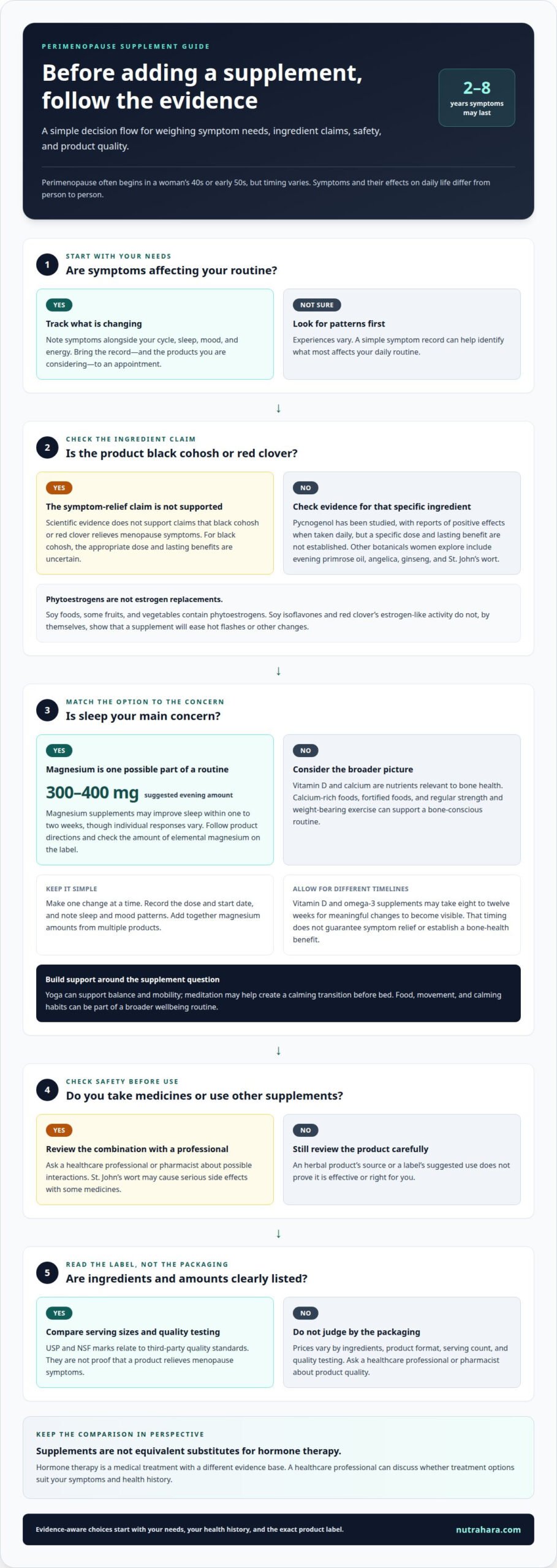
Perimenopause often begins in a woman’s 40s or early 50s, but timing varies. The National Institute on Aging says menopause-related symptoms can last between two and eight years. Irregular periods, hot flashes, sleep disruption, and mood changes may affect daily life differently. Tracking symptoms can help you identify what most affects your routine.

Some women explore botanicals such as evening primrose oil, angelica, ginseng, St. John’s wort, and red clover. Pycnogenol has also been studied, with reports of positive effects on menopause symptoms when taken daily. However, evidence does not support claims that red clover or black cohosh relieves symptoms. The appropriate dose and lasting benefits remain uncertain, so label directions are not proof of effectiveness. These limitations matter when weighing natural perimenopause supplements.

How do supplements compare with hormone therapy? Supplements are not equivalent substitutes for hormone therapy, which is a medical treatment with a different evidence base. Consulting a physician focused on nutrition and hormone therapy, such as Dr. Renato Lobo, can help clarify whether medical treatment options suit your symptoms and health history.

What do supplements cost in the United States? Prices vary by ingredients, product format, serving count, and quality testing. Compare labels and serving sizes rather than judging a product by its packaging alone.

What doses have been studied? Most omega-3 research uses 1-2 g of combined EPA and DHA daily. Pycnogenol reports describe daily use but don’t establish a specific dose. Don’t assume one ingredient’s dose applies to another when considering natural perimenopause supplements.

How can you choose a quality supplement? Look for clearly listed ingredients and amounts, as well as independent quality testing. USP and NSF marks relate to third-party quality standards, not proof that a product relieves menopause symptoms. Ask a healthcare professional or pharmacist about product quality and potential interactions, especially before using St. John’s wort.

If symptoms disrupt sleep or exercise, record them alongside your cycle and bring your notes to an appointment. This practical step can keep the discussion focused on your priorities and the products you’re considering.

2. Black cohosh and phytoestrogens

Black cohosh is an herbal remedy marketed for menopause symptoms. It is sometimes described as balancing estrogen and progestogen, but that proposed effect does not establish symptom relief. Scientific evidence does not support claims that black cohosh helps menopause symptoms. Its appropriate dose and lasting benefits are also uncertain, so suggested use on a label is not proof of effectiveness.

Do black cohosh supplements reduce perimenopause hot flashes, and what are the risks? Evidence does not support claims that black cohosh relieves menopause symptoms, including hot flashes. Its benefits and appropriate dose remain uncertain, and herbal products can interact with medicines. St. John’s wort is one herb that may cause serious side effects with some medicines, but this risk should not be assumed to apply specifically to black cohosh.

Phytoestrogens are plant compounds that can act in ways similar to estrogen in the body, but they are not estrogen replacements. Soy foods, some fruits, and vegetables contain phytoestrogens, which are also available in supplement form. Red clover contains plant hormones with estrogen-like activity, but scientific evidence does not support claims that it eases menopause symptoms.

Does soy isoflavone or red clover help with perimenopause symptoms? Red clover’s estrogen-like compounds do not establish that it reduces symptoms. Soy isoflavones are phytoestrogens, but this similarity alone does not show that a supplement will ease hot flashes or other changes.

Before discussing an herbal product with a healthcare professional or pharmacist, record its ingredients, serving directions, and any medicines you take. Note soy foods separately from concentrated isoflavone pills. This distinction makes the conversation more precise, especially if you’re considering several supplements or managing symptoms alongside exercise, yoga, or meditation.

3. Magnesium for sleep and mood

Magnesium is often considered when restless nights or tension affect daily wellbeing. A suggested evening amount for perimenopause support is 300-400 mg. Magnesium supplements may improve sleep within one to two weeks, though individual responses vary. Track bedtime, waking, and daytime energy in a simple journal to see whether your routine changes alongside supplementation.

A consistent routine can be easier to follow. If you take magnesium, follow the product directions and note the amount of elemental magnesium on the label. Don’t combine several products without adding their amounts together. A pharmacist or healthcare professional can help review the label, particularly if you take medicines or other supplements.

Can magnesium, vitamin D, or calcium help with perimenopause symptoms or bone health? Magnesium may support sleep, while vitamin D and calcium are nutrients relevant to bone health. Vitamin D and omega-3 supplements may take eight to twelve weeks for meaningful changes to become visible; that timing does not establish a bone-health benefit or guarantee symptom relief.

Food can provide a steady foundation. Include calcium-rich choices such as dairy foods or fortified alternatives, and vitamin D sources such as fortified foods, as part of balanced meals. Regular strength and weight-bearing exercise can also support a bone-conscious routine. Yoga can build balance and mobility, while meditation may help create a calming transition before bed.

Keep the experiment simple: make one change at a time, record the dose and start date, and note sleep and mood patterns. If a supplement causes an unwanted change, pause and discuss it with a healthcare professional. A clear record can help distinguish a supplement’s effects from changes in stress, exercise, or sleep habits.

4. Consulting a healthcare professional about supplements

Discuss supplement decisions with a healthcare professional, especially if you take prescription medicines. St. John’s wort, for example, can cause serious side effects when combined with some medicines. Share the supplement name, ingredient list, serving directions, and every medicine you use. A pharmacist can help review potential interactions before you start.

“Natural” describes a source, not a guarantee of safety. Herbal products are not tested and regulated in the same way as medicines such as hormone replacement therapy. Their quality, purity, and ingredients may not be guaranteed. Read the full label, including serving size and added ingredients, and keep the package available for discussion.

Make the conversation practical. Before an appointment, write down:

  • The symptoms you want to address, such as hot flashes or disrupted sleep.
  • Each supplement’s name, ingredients, and labelled directions.
  • Your medicines, existing health conditions, and any unwanted effects.
  • What changes you’ve noticed since starting a product, including timing.

A record helps a clinician or pharmacist assess the whole picture, rather than considering one ingredient in isolation. Ask how a proposed supplement could interact with your medicines, what symptoms to monitor, and when to stop taking it. If you use several products, review them together, since overlapping ingredients can make total intake harder to track.

Be cautious of tests and claims that promise precise hormone balancing. There is no evidence that saliva hormone levels used to determine bioidentical hormone balances relate to menopause symptoms. A symptom history and menstrual changes provide useful context for a healthcare discussion. Bring questions about hormone therapy and supplements together so the guidance reflects your health needs and treatment choices.

Keep the next step simple: take your written list and supplement labels to a GP or pharmacist before adding an herbal remedy. This is especially important if you use St. John’s wort or take other medicines. A clear review can help you make an informed decision without relying on “natural” claims alone.

Best Natural Perimenopause Supplements for Relief

Nutrahara: Women’s Health Supplements

Nutrahara offers Women’s Health Supplements for women exploring nutritional support as part of their wellbeing routine. Its products combine principles of ancient Ayurveda science with modern nutritional research, and its nutrition is made in New Zealand. If you’re considering a supplement, use this guide to clarify your priorities, review ingredients, and discuss potential interactions with a healthcare professional or pharmacist. Supplements can complement healthy routines such as regular movement, yoga, and meditation, but they do not replace professional advice about symptoms or treatment. Choose thoughtfully, with your needs and health history in mind. Explore Nutrahara’s Women’s Health Supplements to learn more.

Choose a thoughtful next step

Let your next step reflect what matters most to you, whether that’s steadier energy, restful evenings, or feeling more at ease in your body. Choosing natural perimenopause supplements can be part of a considered wellness plan, not a measure of how well you’re managing this transition. You deserve care that respects your priorities and health history, and holistic providers such as Dr.Vaishali Nore’s Homeopathy & Wellness Clinic can offer supportive guidance tailored to your individual needs.

Keep your approach sustainable by making space for movement you enjoy, a grounding yoga practice, or a few quiet minutes of meditation. Small, consistent choices can help you feel more connected to your wellbeing as your needs change. You don’t need every answer before taking the next step.

If you have questions as you explore your options, Contact Nutrahara with your questions. Move forward at a pace that feels right for you, with confidence in the choices you make.

Frequently Asked Questions

Are supplements safe to use?

Not automatically. Safety depends on the ingredients, dose, product quality, your health, and any medicines you take. A supplement can interact with prescription medicines even if its label describes it as natural. Before starting, note the product’s full ingredient list and serving directions, then review them with a pharmacist or healthcare professional. Don’t treat a supplement label as proof that the product is effective or suitable for you.

What Is Perimenopause, Really?

Perimenopause is the transition leading up to menopause, when menstrual patterns and symptoms can change. Menopause itself is defined as 12 consecutive months without a period, according to the National Institute on Aging. In a personal account shared by a Mayo Clinic Connect moderator, she described avoiding screens for at least an hour before bed as part of her sleep routine. That individual experience isn’t evidence that a supplement works, but it illustrates one way to observe habits affecting rest.

Which natural supplements may help with perimenopause symptoms, and what evidence supports them?

Evidence differs by supplement, and no ingredient should be assumed to work for every symptom. Magnesium is considered for sleep support, while vitamin D and omega-3 supplements have also been explored. Evidence does not support claims that black cohosh or red clover relieves menopause symptoms. Keep a symptom-and-supplement record so you can discuss whether a product seems useful and appropriate for your needs.

Are herbal supplements for perimenopause safe to take with prescription medications?

Some herbal supplements can interact with prescription medicines, so review them before combining products. St. John’s wort is a particular concern because it may cause serious side effects with some medicines. Bring the supplement package or a complete ingredient list, along with your medication list, to a pharmacist or healthcare professional. Include occasional medicines and other supplements in the discussion.

What are the side effects and safety concerns of popular perimenopause supplements?

Safety concerns include medicine interactions, uncertain doses, and variation in product quality, purity, or ingredients. Herbal products are not tested and regulated in the same way as medicines such as hormone replacement therapy. Keep the packaging and note any changes after starting a product. If you experience an unwanted effect, stop and seek advice from a healthcare professional or pharmacist before trying another supplement.

When should someone with perimenopause symptoms consult a doctor before taking supplements?

Talk with a healthcare professional before starting an herbal supplement if you take prescription medicines, especially if you’re considering St. John’s wort. Arrange a discussion if symptoms interfere with sleep, exercise, or everyday activities, or if a supplement causes an unwanted change. Bring your symptom notes, medication list, and product label so the professional has practical details to consider when advising you.

Article by

Nutrahara Team

We are a dedicated collective of nutrition scientists and naturopaths at Nutrahara, committed to advancing women's health through the fusion of ancient Ayurveda science and cutting-edge nutrition research. Our mission is to empower you with clean, simple, and scientifically validated wellness solutions so you can live your healthiest life. Connect with us to stay updated on the latest developments in holistic women's health and nature-based research.

Disclaimer

This article is not a substitute for medical advice. Please consult a healthcare professional before starting any supplement, especially if pregnant, nursing, taking medication, or managing health conditions.
Categories
Articles

The Best Perimenopause Supplements for Natural Relief

There isn’t one best supplement for perimenopause that suits every woman. Start by identifying the concern you want to address, then consider which ingredients are relevant to that goal.

Sorting through wellness advice can feel difficult alongside work, exercise, and everyday life. This guide explains how phytoestrogens, ashwagandha, and calcium relate to different aspects of wellbeing. Use it to shape informed questions and choices around your health priorities, alongside sustainable habits such as movement, yoga, and meditation.

Key Takeaways

  • Learn which foods and supplements contain phytoestrogens, and why evidence for symptom relief remains uncertain.
  • Consider ashwagandha thoughtfully as part of a broader approach to stress and mood, rather than as a guaranteed solution.
  • Use a food-first view of calcium and bone health to identify where your daily nutrition may need attention.
  • Understand why supplement doses and study timelines vary, and what to discuss with a healthcare professional before starting a new routine.

1. Phytoestrogens from foods and supplements

Phytoestrogens are plant compounds that act in ways similar to estrogen, but they are not estrogen replacements or hormone therapy. Soybeans, other legumes, and red clover contain isoflavones; flaxseed, whole grains, and some fruits and vegetables contain lignans. These compounds occur in foods and supplements, but research has not established whether they ease menopause symptoms.

Flaxseed is one food-based option. It contains lignans and omega-3 fatty acids, and a small study found that women who took flaxseed for three consecutive months experienced reduced menopausal symptoms, including hot flashes. That finding doesn’t establish that flaxseed will work for everyone. Evidence about phytoestrogens’ effects on breast cancer risk is also uncertain, according to Mayo Clinic. Current evidence doesn’t establish a reliable benefit for cognitive function, either, so don’t treat plant compounds as proven support for cognitive symptoms.

Black cohosh is a separate herbal supplement, not a source of phytoestrogens. Mayo Clinic says there isn’t enough evidence to determine whether it helps with hot flashes or other menopause symptoms, and some studies suggest it can harm the liver. “Natural” does not automatically mean suitable: herbs can affect the body and interact with medicines.

When choosing a supplement in the United States, look for USP or NSF certification as a quality-control precaution. Compare the ingredient label with your needs, and, as Mayo Clinic advises, discuss herbal or dietary supplements with a healthcare professional before taking them.

Supplement costs vary according to ingredients, serving size, and bottle quantity. Compare the cost per serving and the listed ingredients instead of relying on the bottle price alone.

See a clinician about irregular periods or hot flashes, and before trying supplements for symptoms. Mayo Clinic specifically recommends speaking with a healthcare professional about irregular periods or hot flashes.

2. Ashwagandha, stress, and mood

Perimenopause can affect sleep, mood, and daily stress. Ashwagandha is an herbal supplement sometimes considered for stress support, but evidence about its role in perimenopause symptoms is limited. Don’t assume it will regulate hormones, reduce hot flashes, or prevent night sweats. These symptoms can have different causes and may require different approaches.

Begin with a specific goal. For example, identify whether your main concern is feeling tense, waking at night, or mood changes. A brief symptom diary can help you spot patterns alongside your cycle, sleep, exercise, and caffeine. This context is more useful than treating every symptom as one problem. Ashwagandha may help some people with stress, but that does not establish it as a primary treatment for menopause symptoms or mood changes.

Before adding ashwagandha to your routine, speak with a doctor, especially if you take medicines or other supplements, as ingredients can interact. Bring the product label and a list of everything you take. Ask how it fits your health history and what effects to watch for. Don’t increase a serving or combine products simply because symptoms continue.

Pair thoughtful supplement choices with habits that support a steady routine. Try a short yoga session after work or set aside a few minutes to meditate before bed. Notice whether these practices affect your stress or sleep rather than expecting them to treat hot flashes. Regular movement and a consistent wind-down routine can also support your wellbeing while you assess your symptoms.

Choose supplements by checking the full ingredient label and serving directions, not just claims about weight, mood, or hormone balance. A supplement featuring ashwagandha is one option to consider as part of an informed routine, after discussing it with your doctor. Keep the focus on your symptoms, your health context, and a plan that supports you over time.

3. Calcium intake for women in their 40s

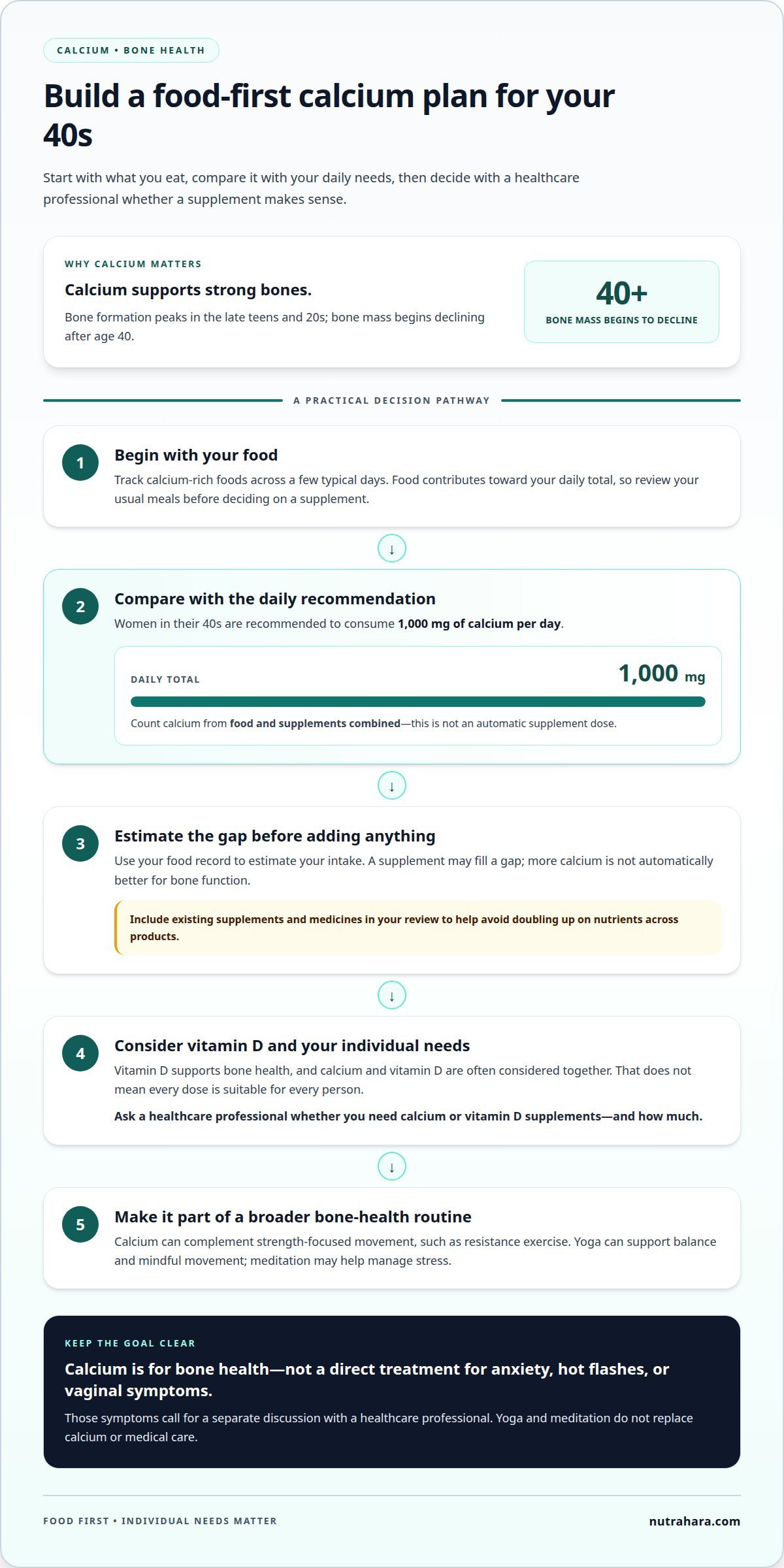
Calcium supports strong bones, an important consideration as women move through perimenopause. Bone formation peaks in the late teens and 20s, and bone mass begins declining after age 40. Changing estrogen levels are part of this transition, so a steady intake of bone-supportive nutrients matters. Calcium is not a direct treatment for anxiety, hot flashes, or vaginal symptoms; its role here is bone health.

Women in their 40s are recommended to consume 1,000 mg of calcium per day. Think of that as a daily total from food and supplements combined, not an automatic supplement dose. Review a typical day of meals first: calcium-containing foods can contribute toward the target. Then consider whether a supplement would fill a gap, rather than assuming more calcium will improve bone function.

Vitamin D supports bone health. Calcium and vitamin D are often considered together, but taking them together does not make every dose suitable for every person. Your levels and individual needs matter. Mayo Clinic advises asking a healthcare professional whether you need calcium or vitamin D supplements and how much to take.

A practical first step is to track calcium-rich foods for a few typical days, then discuss your estimated intake with a healthcare professional. Include your existing supplements and medicines in that conversation. This can help you avoid doubling up on nutrients across products and keep the decision focused on your actual diet rather than a generic formula.

Calcium can complement strength-focused movement, such as resistance exercise, as part of a broader bone-health routine. Yoga can support balance and mindful movement, while meditation may help manage stress; neither replaces calcium or medical care. When considering the best supplement for perimenopause, match the choice to your goal: calcium supports bones, while symptoms such as hot flashes or vaginal changes call for a separate discussion. Consider food intake, vitamin D, and individual health needs when making a supplement decision.

4. What supplement dosage and duration are studied for perimenopause symptoms?

Supplement research examines different doses, ingredients, and timeframes, so there is no single study schedule for every perimenopause symptom. Examples include vitamin D3 at 800 to 4,000 IU per day, magnesium at 300-400 mg, and combined EPA and DHA omega-3s at 1-2 g daily. These figures describe researched amounts, not a universal routine.

Duration matters, too. Studies of magnesium have reported possible sleep improvements within one to two weeks. Research on vitamin D and omega-3s has assessed meaningful changes after eight to twelve weeks. A shorter trial may not reflect the timeframes used to study those nutrients, while taking a supplement longer doesn’t guarantee a particular effect.

Before starting, record the symptom you want to address, such as disrupted sleep or hot flashes. Note the product’s ingredient amounts and serving directions, then track that same symptom consistently. Keep the dose and other routine changes steady while observing, so you can interpret what you notice.

Pycnogenol has also been studied for potential effects on hot flashes and night sweats, with positive effects reported when taken daily. The available findings do not specify a dose or study duration, so don’t apply another ingredient’s schedule to Pycnogenol. Different compounds have different research protocols—and while everyday supplements follow standard dietary guidelines, broader scientific inquiries into cellular aging evaluate specialized peptides sourced from research suppliers like JM Precision Labs.

Don’t treat ranges for vitamin D3, magnesium, or omega-3s as instructions to combine them. Add up the same nutrients across products, and compare each serving with its label directions. If you’re considering a new supplement, share its ingredients and dose with a healthcare professional, especially if you take medicine or already use supplements. A symptom log can help make that conversation specific and useful.

The Best Perimenopause Supplements for Natural Relief

Nutrahara: Women’s Health Supplements

Nutrahara offers Women’s Health Supplements for women seeking nutritional support through changing life stages. Its formulations combine principles of ancient Ayurveda science with modern nutritional research and are intended to support women’s overall wellness, energy, and health.

Real-world experiences and shared user feedback can often help readers better understand how a product fits into a daily routine while searching for the best supplement for perimenopause. Personal accounts provide additional perspective on incorporating these formulas into a holistic wellness plan.

To learn more about Nutrahara’s Women’s Health Supplements, contact Nutrahara.

Build a routine that fits your next chapter

Choosing the best supplement for perimenopause starts with identifying what you want your wellness routine to support. Let your priorities guide the choices you discuss with a healthcare professional, while making room for the foundations that help you feel connected to your body: nourishing meals, enjoyable movement, restorative rest, and practices such as yoga or meditation.

Your needs may shift over time, so give yourself permission to revisit your routine rather than treating it as a fixed plan. Thoughtful choices can help you approach this life stage with greater confidence and care. Nutrahara offers Women’s Health Supplements as part of its focus on women’s wellness. For questions about Nutrahara, contact Nutrahara with your questions.

Take your next step at a pace that feels right for you. Your wellbeing deserves attention, patience, and choices grounded in your individual needs.

Frequently Asked Questions

What Is Perimenopause, Really?

Perimenopause is the transition leading up to menopause, not a single symptom or a sudden change. Menopause is reached after 12 consecutive months without a period. During the transition, cycles and symptoms can vary, so noting changes in bleeding, sleep, and hot flashes can help you describe what’s happening. Mayo Clinic advises discussing irregular periods or hot flashes with a healthcare professional.

Are supplements safe to use?

Supplements aren’t automatically safe just because they’re natural. Ingredients can interact with medicines or affect existing health conditions, and products may combine several herbs or nutrients. Read the full label, including serving directions, and share it with a healthcare professional before adding a supplement. Mayo Clinic advises discussing herbal or dietary supplements for perimenopause or menopause symptoms before taking them.

Can Vitamins Help with Perimenopause Symptoms?

Vitamins can support specific body functions, but they aren’t a universal treatment for perimenopause symptoms. Vitamin D supports bone health and plays a role in mood regulation; vitamin B6 contributes to the regulation of hormonal activity. These roles don’t establish that taking extra vitamins will ease symptoms if you already get enough. Consider your diet, existing supplements, and health needs when discussing options.

Which supplements have the strongest evidence for perimenopause symptoms?

Evidence does not establish one supplement as the clear choice for perimenopause symptoms. Mayo Clinic says research is unclear on whether phytoestrogens ease menopause symptoms and finds insufficient evidence to determine whether black cohosh works. If hot flashes or night sweats are your main concern, ask a healthcare professional about evidence-based treatment options, including whether hormone therapy suits your health history.

Can black cohosh help with perimenopause hot flashes, and what are its risks?

It’s uncertain whether black cohosh helps hot flashes. Mayo Clinic says evidence is insufficient to determine whether it works for hot flashes or other menopause symptoms; some studies suggest it can harm the liver. If you’re considering it, discuss the exact product and its ingredients with a healthcare professional, especially if you take medicine or have concerns about liver health.

Does soy isoflavone or red clover reduce perimenopause symptoms?

Soy and red clover contain isoflavones, a type of phytoestrogen, but it remains unclear whether these compounds reduce perimenopause symptoms. Mayo Clinic also notes that research is uncertain about phytoestrogens’ effect on breast cancer risk. Soy foods and concentrated supplements are not interchangeable choices, so discuss your health context and any medicines with a healthcare professional before using an isoflavone product.

Article by

Nutrahara Team

We are a dedicated collective of nutrition scientists and naturopaths at Nutrahara, committed to advancing women's health through the fusion of ancient Ayurveda science and cutting-edge nutrition research. Our mission is to empower you with clean, simple, and scientifically validated wellness solutions so you can live your healthiest life. Connect with us to stay updated on the latest developments in holistic women's health and nature-based research.

Disclaimer

This article is not a substitute for medical advice. Please consult a healthcare professional before starting any supplement, especially if pregnant, nursing, taking medication, or managing health conditions.

Categories
Articles

Best Perimenopause Supplements for Natural Relief

The most natural option isn’t automatically the right one for your symptoms. Choosing the best perimenopause supplements starts with understanding what an ingredient may offer and discussing safety with a healthcare professional. Vitamin D supports bone health, while evidence for black cohosh is mixed. St. John’s wort and phytoestrogens also call for careful consideration, not a one-size-fits-all approach.

It’s understandable to want support as changes in your cycle, sleep, mood, or temperature comfort affect daily life. This guide explains how vitamin D, St. John’s wort, black cohosh, and phytoestrogens may relate to perimenopause symptoms, where evidence is limited, and why supplements can interact with medicines. You’ll learn how to evaluate the best perimenopause supplements for your needs and when to speak with a healthcare professional before trying something new. The goal is to help you make informed choices with care and confidence.

Key Takeaways

  • Understand how vitamin D relates to bone health and why supplement amounts, including magnesium, should be considered with care.
  • Learn why fluctuating hormones can affect periods, sleep, and mood, and how supplements may interact with medicines or hormone therapy.
  • Weigh the limited evidence for black cohosh and phytoestrogens for hot flashes, including the potential liver risks associated with black cohosh.
  • Bring your supplement list and current medicines to a healthcare professional to discuss safety and next steps for your wellness routine.

St. John’s Wort, Vitamin D, and Black Cohosh

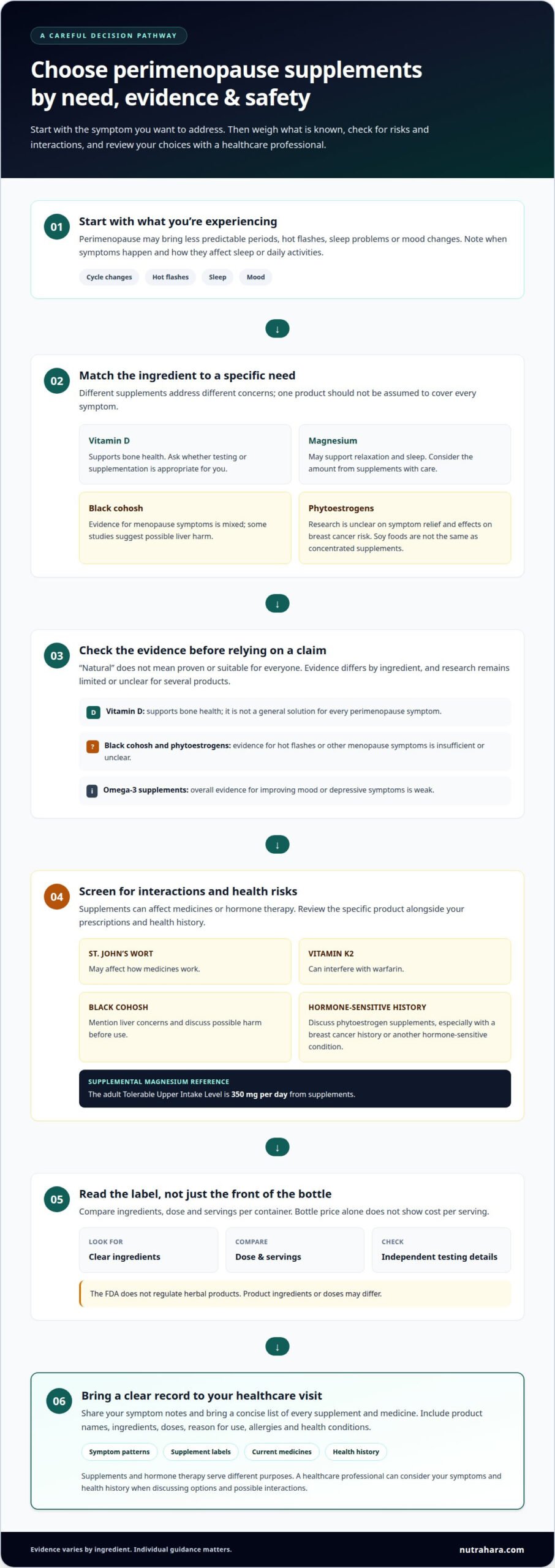
The National Institute on Aging defines menopause as 12 months without a period. Before that milestone, changing symptoms can make supplement choices feel complex. Choosing the best perimenopause supplements starts with matching an ingredient to a specific need, rather than expecting one product to address every concern. Vitamin D supports bone health, while calcium-rich foods help maintain strong bones. Ask a healthcare professional whether testing or supplements suit your needs.

Vitamin D3 supplies vitamin D; some products pair it with K2. That combination doesn’t replace calcium or individualized guidance. Ask whether a blood test is appropriate before choosing a dose. Vitamin K2 can interfere with warfarin, so people taking it should consult a clinician first. According to the National Institutes of Health Office of Dietary Supplements, the supplemental magnesium Tolerable Upper Intake Level is 350 mg per day for adults and ranges from 65 to 350 mg per day for children and adolescents, depending on age.

St. John’s wort may affect how medicines work, so review it alongside your current medication list. Evidence for black cohosh and menopausal symptoms is mixed, and some studies suggest possible liver harm. Choosing the best perimenopause supplements also means reading ingredient and dose labels, looking for clearly described independent testing, and discussing concerns with a healthcare professional. The FDA doesn’t regulate herbal products.

Magnesium may support relaxation and sleep, while vitamin D supports bones. Overall evidence that omega-3 supplements improve mood or depressive symptoms is weak. For guidance on emotional shifts during hormonal transitions, womensmentalhealthspecialist.com offers virtual, hormone-informed care. These supplements address different needs, so consider the symptom you want to support and discuss options with a clinician.

How Do I Balance My Hormones During Perimenopause?

Perimenopause can bring fluctuating estrogen and progesterone levels. Periods may become less predictable, with hot flashes, sleep problems, or mood changes. The National Institute on Aging says menopause symptoms can last between two and eight years, though timing varies. Tracking symptoms can help you describe patterns during a healthcare visit.

Supplements and hormone therapy serve different purposes. Systemic estrogen is described as the best treatment for hot flashes and night sweats; people with a uterus need a progestogen alongside estrogen. Some selective serotonin reuptake inhibitors (SSRIs) may reduce hot flashes and may suit people who can’t take estrogen or need treatment for a mood disorder. A healthcare professional can consider your symptoms and health history when discussing these options.

Herbal products marketed for hormone balance don’t all have the same level of clinical evidence. Research remains unclear on whether phytoestrogens ease menopause symptoms or affect breast cancer risk. Evidence for DHEA for painful sex related to vaginal dryness is mixed, and possible cancer risks have been noted. Herbal products can also change how medicines work, so discuss supplements before combining them with hormone therapy. Compounded bioidentical hormones aren’t controlled by the FDA, and their quality and safety can vary.

There’s no single U.S. price or serving cost for every supplement. Compare the ingredients, dose, and servings per container on the label; bottle price alone doesn’t show the cost per serving. Bring your supplement list and current prescriptions to a healthcare professional, especially if you have a breast cancer history or hormone-sensitive condition.

A 2019 UK cohort study found transdermal estradiol was not associated with increased blood clot risk, unlike oral estrogen. Hormonal therapy often produces noticeable symptom improvement within two to four weeks.

Black Cohosh and Phytoestrogens for Hot Flashes

There isn’t enough research to determine whether black cohosh helps perimenopause symptoms, including hot flashes. Some studies suggest it may harm the liver. Before using it, show a healthcare professional the product label and your medicine list. This practical step helps review possible risks alongside the uncertain evidence. A plant-based ingredient still deserves careful consideration.

Phytoestrogens are plant compounds that act somewhat like estrogen, but they don’t replace estrogen. Soy foods are one familiar source; certain fruits and vegetables also contain these compounds. Phytoestrogens are available in foods and supplements, but research remains unclear on whether they reduce menopause symptoms. Evidence is also unclear about their effect on breast cancer risk.

To better understand your symptoms, note when hot flashes occur and how they affect sleep or daily activities. Bring those observations, along with supplement labels, to a healthcare professional. This gives you a concrete basis for discussing whether a product fits your health history and current medicines. Mention any liver concerns before considering black cohosh.

Plant origin alone doesn’t mean black cohosh or phytoestrogens will reduce hot flashes. Evidence varies by ingredient, and individual products may contain different compounds or doses. If you have a history of breast cancer or another hormone-sensitive condition, discuss phytoestrogen supplements with a healthcare professional before use. Soy foods are not the same as concentrated supplements. Focus on your symptoms, health history, and the specific product, rather than weight or broad claims about hormone balance.

Best Perimenopause Supplements for Natural Relief

Consulting a Healthcare Professional Before Taking Supplements

Before adding a supplement, prepare a concise list for your healthcare professional. Include every product, ingredient, dose, and reason for use. Add prescriptions, over-the-counter medicines, allergies, and health conditions. Note symptoms such as night sweats, sleep changes, or stress. This gives the visit a clear starting point and helps assess possible effects.

Review potential interactions, not just each ingredient alone. Vitamin K2 can interfere with warfarin. People taking blood thinners should discuss omega-3 supplements with a clinician and tell their healthcare team about supplements before a medical procedure. Herbal compounds can also change how medicines work. Share labels or clear photos, since blends may include several ingredients.

Ask how a supplement could interact with hormone therapy or a prescription, and what changes to watch for. A healthcare professional can consider your health history, current treatment, and whether a dose increase could affect safety. Mention pregnancy, lactation, or a history of breast cancer, because these details shape the discussion. Don’t stop prescribed therapy on your own.

Set a review plan, too. Check in yearly to discuss effects, side effects, and whether your needs or treatment have changed. Keep a daily note of symptoms after starting or stopping a product, and bring it to that visit. If an effect appears after adding a supplement, record the product and timing to discuss.

Clear questions help: Which ingredients relate to my symptoms? Could this affect my prescription? What changes should I report? A specific plan makes supplement choices a considered part of care, rather than a trial-and-error routine. For comprehensive guidance on hormone health and symptom relief, doctors such as Dr Nancy Allen can help tailor an individualized care plan.

Nutrahara: Women’s Health Supplements

Nutrahara offers women’s health supplements for those considering nutrition support as part of a broader wellness routine. Its formulations combine principles of ancient Ayurveda science with modern nutrition research and use natural ingredients without artificial additives. Consider supplements as one part of caring for your health, alongside nourishing meals, restorative sleep, and movement that suits your abilities and life stage.

Make movement practical. A walk, a body-weight strength exercise, or a fitness class can help you build a routine you can return to consistently. For yoga, try a gentle sequence of standing poses and stretches, adapting each movement to your comfort. Pair it with a few quiet minutes of meditation: sit comfortably, notice your breathing, and gently return your attention when your mind wanders.

If you’re considering a supplement, first identify what you hope to support, such as general wellness or energy. Read the product information and serving directions, and discuss the ingredient list with a healthcare professional if you take medication, use hormone therapy, or have a health condition. A supplement isn’t a substitute for individualized care, and you can make thoughtful changes to your routine.

Women’s health needs may shift across menstruation, pregnancy, perimenopause, and later life. Nutrahara’s women’s wellness supplements offer a nutrition-based option to consider as your priorities evolve. Keep a simple record of products you use and how your daily routine feels; this can help you make informed choices and discuss them during healthcare visits.

If you’d like to learn more, contact Nutrahara at your own pace.

Frequently Asked Questions

What is the best over-the-counter medicine for menopause?

No single over-the-counter medicine is the best choice for every person or symptom. Supplements and medicines are different, and products marketed for hot flashes or sleep can vary in ingredients and evidence. Before choosing an over-the-counter product, identify the symptom you want to address and review its full label with a healthcare professional, especially if you already use prescription medicines or hormone therapy.

Are supplements safe to use?

Safety depends on the supplement, your health history, and the other products or medicines you use. Keep a current list of supplements, prescriptions, and over-the-counter medicines, then share it during a healthcare appointment. Include the exact product label, not just the main ingredient name, because blends can contain several compounds. This gives your healthcare professional a clearer basis for discussing possible interactions and effects.

How can I raise my estrogen levels quickly?

Trying to raise estrogen quickly with supplements isn’t reliable. Phytoestrogens in foods such as soy act somewhat like estrogen, but they don’t replace it. If symptoms are affecting your comfort or daily routine, discuss treatment options with a healthcare professional rather than changing doses or combining products yourself. Your symptoms, health history, and current medicines all matter when considering care.

What age does perimenopause start?

Perimenopause usually begins in a person’s 40s, though it may start earlier or later. Age alone can’t tell you whether changing cycles or other symptoms are related to this transition. Note when changes occur and whether they affect sleep, work, exercise, or mood. Sharing those observations with a healthcare professional can help guide a conversation about what may be contributing to them.

Which supplements have evidence for perimenopause symptoms such as hot flashes, sleep problems, and mood changes?

Evidence varies by ingredient and symptom, so no supplement is established as a universal choice. Black cohosh research is mixed, and findings on phytoestrogens for menopause symptoms remain unclear. Magnesium may support relaxation and sleep, while evidence for omega-3 supplements improving mood or depressive symptoms is weak overall. Match any supplement discussion to your main concern, such as sleep disruption or hot flashes.

Article by

Nutrahara Team

We are a dedicated collective of nutrition scientists and naturopaths at Nutrahara, committed to advancing women's health through the fusion of ancient Ayurveda science and cutting-edge nutrition research. Our mission is to empower you with clean, simple, and scientifically validated wellness solutions so you can live your healthiest life. Connect with us to stay updated on the latest developments in holistic women's health and nature-based research.

Disclaimer

This article is not a substitute for medical advice. Please consult a healthcare professional before starting any supplement, especially if pregnant, nursing, taking medication, or managing health conditions.
Categories
Articles

Top Supplements & Vitamins for Pre-Menopausal Women

Do supplements and vitamins for pre-menopausal women ease perimenopause symptoms, or are they mainly useful when you have a nutrient deficiency? Supplements may support specific needs, but no single option works for everyone or replaces a balanced approach to health. Choosing thoughtfully matters more than taking a long list.

It’s understandable to want practical support when changes in sleep, mood, energy, or menstrual cycles affect how you feel and exercise. This guide explains what phytoestrogens may offer, why calcium matters for bone health, and how magnesium fits into discussions about sleep and mood. It also covers what blood work can reveal about nutrient levels, and what it cannot.

You’ll find a clear, grounded way to consider each option, alongside everyday foundations such as nourishing food, regular movement, yoga, and meditation. The aim isn’t to chase a perfect routine, but to make informed choices that support your well-being through this changing stage of life.

Key Takeaways

  • Learn which foods contain phytoestrogens and why evidence for symptom relief from phytoestrogens remains unclear.
  • Understand how calcium supports bone health and what to consider before adding a supplement.
  • Explore magnesium as one possible part of a restful evening routine, alongside practices such as yoga or meditation.
  • See how blood work can help identify nutrient deficiencies and inform supplement choices.

1. Phytoestrogens in foods and supplements

Plant phytoestrogens are compounds found in soy products and some fruits and vegetables. Isoflavones, a type of phytoestrogen, occur in soybeans, other legumes, and red clover. Lignans are found in flaxseed, whole grains, and some fruits and vegetables. Menopause is the point 12 months after a woman’s last period, according to the National Institute on Aging. Symptoms can arise before that milestone, so a changing cycle alone doesn’t define when menopause has occurred.

Food sources and concentrated supplements aren’t interchangeable. Research is unclear on whether phytoestrogens from foods or supplements ease menopause symptoms or affect breast cancer risk. Flaxseed contains omega-3 fatty acids and lignans, and it may help reduce hot-flash intensity and frequency. A small study followed women who took flaxseed for three consecutive months, but that finding doesn’t establish a reliable effect for every person. Track symptoms such as hot flashes, anxiety, or changes in cognitive function rather than assuming a botanical will improve them.

For PMS and fatigue, evidence does not establish a reliable benefit from phytoestrogen supplements; calcium is more directly relevant to bone health. The right choice depends on the nutrient and concern, not a general promise to improve function or protect health. Supplements are most useful when they address a specific dietary shortfall or identified need, not simply because a symptom appears during the menopause transition.

For food sources, try soybeans or lentils for isoflavones, and ground flaxseed or whole grains for lignans. Supplements may be considered when food intake doesn’t meet a specific need, with professional guidance to assess the reason and safe use. Black cohosh is a botanical, not a phytoestrogen source; evidence is insufficient to determine whether it helps hot flashes or other menopausal symptoms. Its risks aren’t fully understood, and it can affect liver enzymes. Some studies suggest possible liver harm, so discuss herbal products with a healthcare professional before using them.

2. Calcium intake for women in their 40s

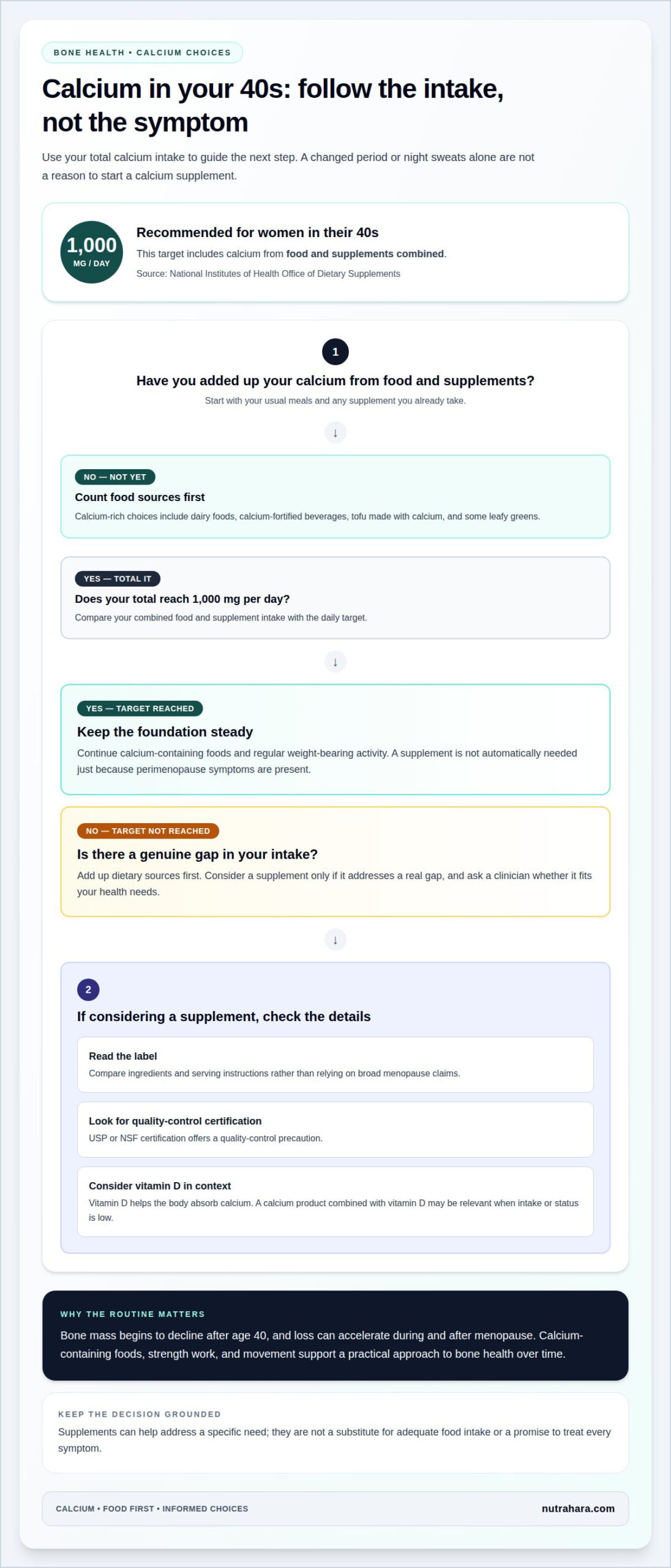
Women in their 40s are recommended to consume 1,000 mg of calcium per day, according to the National Institutes of Health Office of Dietary Supplements. This target includes calcium from food and supplements combined. Calcium-rich choices include dairy foods, calcium-fortified beverages, tofu made with calcium, and some leafy greens. Pairing varied meals with regular weight-bearing activity supports a practical approach to bone health.

Bone mass begins to decline after age 40, and loss can accelerate during and after menopause. Changing estrogen levels are part of this transition, while night sweats and disrupted sleep may affect energy for exercise. Calcium supplements can help prevent bone loss and reduce fracture risk during perimenopause, but they aren’t a substitute for adequate food intake. Add up dietary sources first, then consider whether a supplement addresses a genuine gap.

Vitamin D supports bone health and plays a role in mood regulation. It also helps the body absorb calcium, so a calcium product combined with vitamin D may be relevant when intake or status is low. Interpret supplement evidence in context: a nutrient can support normal function without treating every symptom or replacing medicine. For supplement quality, USP or NSF certification offers a quality-control precaution. Compare the label’s ingredients, serving instructions, and certification rather than choosing based on broad menopause claims.

Recommended amounts of iron, vitamin D, folate, and other nutrients depend on life stage and individual needs; the clear daily figure here is for calcium. To compare prices, assess the specific nutrient, formulation, and serving count, since products differ in these details. Don’t use night sweats or a changed period alone as a reason to start calcium. A steady routine of calcium-containing foods, strength work, and movement can support bone health over time, while a clinician can help assess whether supplements fit your health needs.

3. Magnesium for sleep and mood

Magnesium supports more than 300 enzymatic reactions, including processes involved in muscle and nerve function. During perimenopause, changing sleep patterns and daily stress can make it harder to feel balanced. Magnesium may promote relaxation and improve sleep quality, but it isn’t a stand-alone treatment for persistent insomnia, anxiety, or low mood.

Among supplements and vitamins for pre-menopausal women, magnesium is often considered for sleep support. An evening amount of 300-400 mg is often suggested. Check the amount of elemental magnesium on the supplement label, since compound weight and elemental magnesium differ. Magnesium is also found in leafy greens, nuts, seeds, beans, and whole grains. Adding these to meals can support intake while offering fiber and other nutrients.

Some people may notice sleep changes within one to two weeks, though responses vary. Keep a simple sleep log and note bedtime, waking during the night, mood, and next-day energy. This can help distinguish a possible supplement effect from changes in caffeine, exercise, or stress. Don’t increase a dose simply because sleep remains unsettled.

When reviewing supplements and vitamins for pre-menopausal women, consider your whole evening routine, not just a capsule. Try gentle evening yoga, a short meditation, and a consistent wind-down time to support relaxation. Aim for eight hours of quality sleep each night, and notice whether late workouts or screen time disrupt your rest. Magnesium supplements can also cause digestive discomfort, so pay attention to your response and discuss use with a healthcare professional, especially if you take medicine or have a health condition. Magnesium can be one part of a natural wellness plan, not a promise of significant changes in every perimenopause symptom.

4. Blood work and nutrient deficiencies

Fatigue, reduced exercise capacity, or changes in concentration can have several causes. Blood work can help identify nutrient levels that may contribute and guide a more focused supplement decision. More than one-third of women are iron deficient. Heavy periods can be relevant when discussing iron, so describe your bleeding pattern and symptoms clearly.

Vitamin D is another nutrient to discuss, especially if muscle weakness affects training or daily movement. Vitamin D levels below 29 ng/ml are linked with poor lower body function, particularly in women. An optimal serum vitamin D level is around 40-60 ng/mL for most people. These figures provide context, but one result should be considered alongside your health history and symptoms.

Iron, calcium, vitamin D, folate, and magnesium are nutrients to discuss before starting a supplement routine. The priority depends on your diet, symptoms, life stage, and existing test results. Supplements may complement nutrition or prescribed therapy, but taking more nutrients doesn’t automatically help. A targeted plan can avoid adding products that don’t address a real need.

Pregnancy, trying to conceive, and heavy periods can change which nutrients deserve attention. Tell your healthcare professional about pregnancy plans, bleeding patterns, medicines, and current supplements. These details help shape a relevant assessment rather than relying on a general formula.

Ask which blood tests could clarify suspected deficiencies, what each result means, and whether a supplement could interact with medicine. Iron and vitamin D levels may be assessed when symptoms or health history point to them. Ask how the results relate to your energy, exercise capacity, and any plan to reduce symptoms. Bring a list of supplements and note when fatigue or weakness occurs. Blood work offers useful clues; a complete review connects those levels with food, menstrual history, and overall health.

Top Supplements & Vitamins for Pre-Menopausal Women

Nutrahara: Women’s Health Supplements

Nutrahara offers Women’s Health Supplements for women seeking nutritional support as part of a thoughtful wellness routine. Its formulations bring together principles of ancient Ayurveda science and modern nutritional research, with natural, clean ingredients. If you’re considering supplements alongside nourishing food, movement, and rest, explore options with your needs and current routine in mind. Supplements can complement healthy habits, but they don’t replace blood work or individualized medical advice when symptoms or suspected deficiencies need attention. A steady approach helps you make choices that fit your personal health journey. For questions about Nutrahara’s Women’s Health Supplements, contact Nutrahara.

Build a Wellness Routine That Fits You

Your next step can be small and intentional: identify what you want support with, then choose a routine that fits daily life. Choosing supplements and vitamins for pre-menopausal women is more grounded when you consider your diet, symptoms, health history, and goals together. A simple log of sleep, energy, mood, and movement can help you spot patterns and have a clearer conversation with a healthcare professional.

Keep the foundations steady, too. Nourishing meals, strength-focused exercise, restorative yoga, and a few quiet minutes for meditation can support well-being alongside thoughtful supplement choices. Multidisciplinary medical practices such as Yoyime Clinic reflect how integrating clinical guidance with broader wellness support helps individuals balance their long-term health needs. You don’t need to change everything at once. Give yourself room to learn what feels sustainable, and adjust your approach as your needs evolve.

Many women find that sharing their experiences and listening to others navigating the same life stage provides reassurance and practical insights for daily wellness. For wellness practitioners and advocates seeking to share educational health resources with a wider audience online, professional training providers such as traineticsacademy.com.sg offer in-depth guides on digital strategy and search engine optimization.

For support exploring women’s health supplements as part of your wellness routine, Contact Nutrahara for support. Your health journey is your own, and each informed step can help you move forward with confidence.

Frequently Asked Questions

Do Perimenopause Supplements Work?

Some supplements may support a specific need, but effects depend on the ingredient and symptom. To assess your routine, choose one goal, such as steadier sleep, and note what changes alongside your meals, activity, and stress. If symptoms persist or interfere with daily life, discuss other options with a healthcare professional rather than relying on supplements alone.

Are supplements safe to use?

Safety depends on the ingredients, dose, health conditions, and medicines in your routine. Read the full label, including serving directions and combined ingredients, and keep a current list of everything you take. USP or NSF certification can offer a quality-control precaution, but it doesn’t establish that a product is right for everyone. Review the label with a healthcare professional if you have concerns.

Can Vitamins Help with Perimenopause Symptoms?

Vitamins can help address a nutrient shortfall, but they don’t treat every cause of symptoms such as fatigue or mood changes. Consider the pattern: note whether tiredness follows poor sleep, heavy bleeding, a demanding workout, or a change in eating habits. Sharing that context can help a healthcare professional decide whether testing or a dietary change is more appropriate than adding a general multivitamin.

How Much Calcium Do You Need?

Use the daily intake recommendation discussed above as a guide, counting food and supplements together. Check labels on fortified drinks, yogurt, and calcium products, then total the amounts you typically consume. If you already take a multivitamin, include its calcium too. This simple tally can help you identify whether your usual meals contribute meaningfully before considering another product.

What are the risks, side effects, and upper limits of common supplements for premenopausal women?

Possible effects vary by ingredient, dose, and individual health factors. For example, black cohosh has been associated with possible liver harm, and herbal products may interact with medicines. Avoid combining products with overlapping ingredients without reviewing their total amounts. Ask a healthcare professional which upper limits apply to your supplements and what signs of an unwanted reaction should prompt you to stop and seek advice.

Can supplements interact with birth control, other medications, or pregnancy?

Yes, some supplements can interact with medicines, and pregnancy can change which nutrients are appropriate. Tell your healthcare professional about birth control, prescriptions, over-the-counter medicines, pregnancy plans, and breastfeeding. Bring the product label or a clear photo of its ingredients. This gives them the details needed to consider possible interactions and whether the supplement fits your current life stage.

Article by

Nutrahara Team

We are a dedicated collective of nutrition scientists and naturopaths at Nutrahara, committed to advancing women's health through the fusion of ancient Ayurveda science and cutting-edge nutrition research. Our mission is to empower you with clean, simple, and scientifically validated wellness solutions so you can live your healthiest life. Connect with us to stay updated on the latest developments in holistic women's health and nature-based research.

Disclaimer

This article is not a substitute for medical advice. Please consult a healthcare professional before starting any supplement, especially if pregnant, nursing, taking medication, or managing health conditions.