

A thoughtful summer supplement plan starts with what your body needs, not a longer list of products. Preparing your body for summer with supplements may involve considering nutrients such as vitamin D, vitamin C, zinc, and magnesium, or electrolytes when heat and activity increase fluid loss. Supplements work best alongside everyday habits: drinking water, eating nourishing foods, moving regularly, and protecting your skin from the sun.
As temperatures rise, changes in your schedule, workouts, and time outdoors can affect how you feel. Your needs may also vary across different stages of women’s health, so a considered approach is more useful than taking everything at once. This guide explains how key nutrients may support hydration, everyday wellness, and skin care, while keeping expectations realistic.
Learn what vitamins, minerals, antioxidants, and electrolytes do, how food and simple habits fit in, and why sun protection remains essential. A calm, practical plan can help you feel more prepared for summer and more confident in the choices that support your well-being.
Key Takeaways
- Build a summer wellness routine around hydration, nourishing foods, movement, and supplements that suit your needs.
- Learn how vitamin D, vitamin C, zinc, and probiotics may support different aspects of everyday wellness.
- Discover how antioxidants in summer foods can complement a thoughtful approach to skin preparation.
- Understand when heat and sweating may make electrolyte balance especially relevant, and what minerals to consider.
- Pair sun-smart habits with steady self-care to help you feel more prepared for active summer days.
1. Vitamin D’s role in bone, muscle, immune, and mood health
Vitamin D helps the body absorb calcium and supports bone and muscle function. It also plays a role in immune health. A review of 25 randomized controlled trials found that vitamin D supplementation supports immune health. Individual needs can differ: spending much of the day indoors, having darker skin, or using high-SPF sunscreen may affect vitamin D status. Supplement decisions should reflect personal health, not the season alone.
Sunshine isn’t a risk-free way to pursue vitamin D. UV exposure can harm skin, so don’t extend time outdoors without protection. The U.S. Food and Drug Administration advises reapplying broad-spectrum sunscreen every two hours, and more often after swimming or sweating. A blood test can measure vitamin D levels. Discuss results and supplement dosage with a healthcare practitioner, especially if you’re pregnant, lactating, or managing a health condition.
There is no single typical price for summer-related supplements in the US. Costs vary by nutrient and formulation, so compare ingredients and serving information when reviewing options. Before adding a product, share your current vitamins and medications with a healthcare practitioner. In the United States, the U.S. Food and Drug Administration does not regulate dietary supplements in the same way as prescription drugs.
Start a supplement for a clear reason, not simply because summer is approaching. For vitamin D, test results, diet, sun protection habits, and professional guidance can help determine whether supplementation is appropriate and for how long. There is no universal start date or duration for every woman, including those experiencing menstruation, pregnancy, lactation, or menopause.
Travel can disrupt familiar meals and affect digestive comfort. If a trip changes your food choices or eating schedule, probiotics may support gut health. Plan familiar meals and snacks before departure. Blueberries contain anthocyanosides, antioxidant plant pigments, and make an easy addition to breakfast. Collagen is also discussed in relation to skin health, but it does not replace sun protection or medical care.
Sleep supports a steady wellness routine during busy summer days. The National Sleep Foundation recommends aiming for 7-9 hours of sleep each night. Try keeping a familiar bedtime routine when travel or social plans shift your schedule. A quiet meditation or gentle yoga practice can help create space to unwind. These habits support overall well-being alongside balanced meals and any supplements chosen for a specific need.
2. Summer hydration and electrolyte replenishment
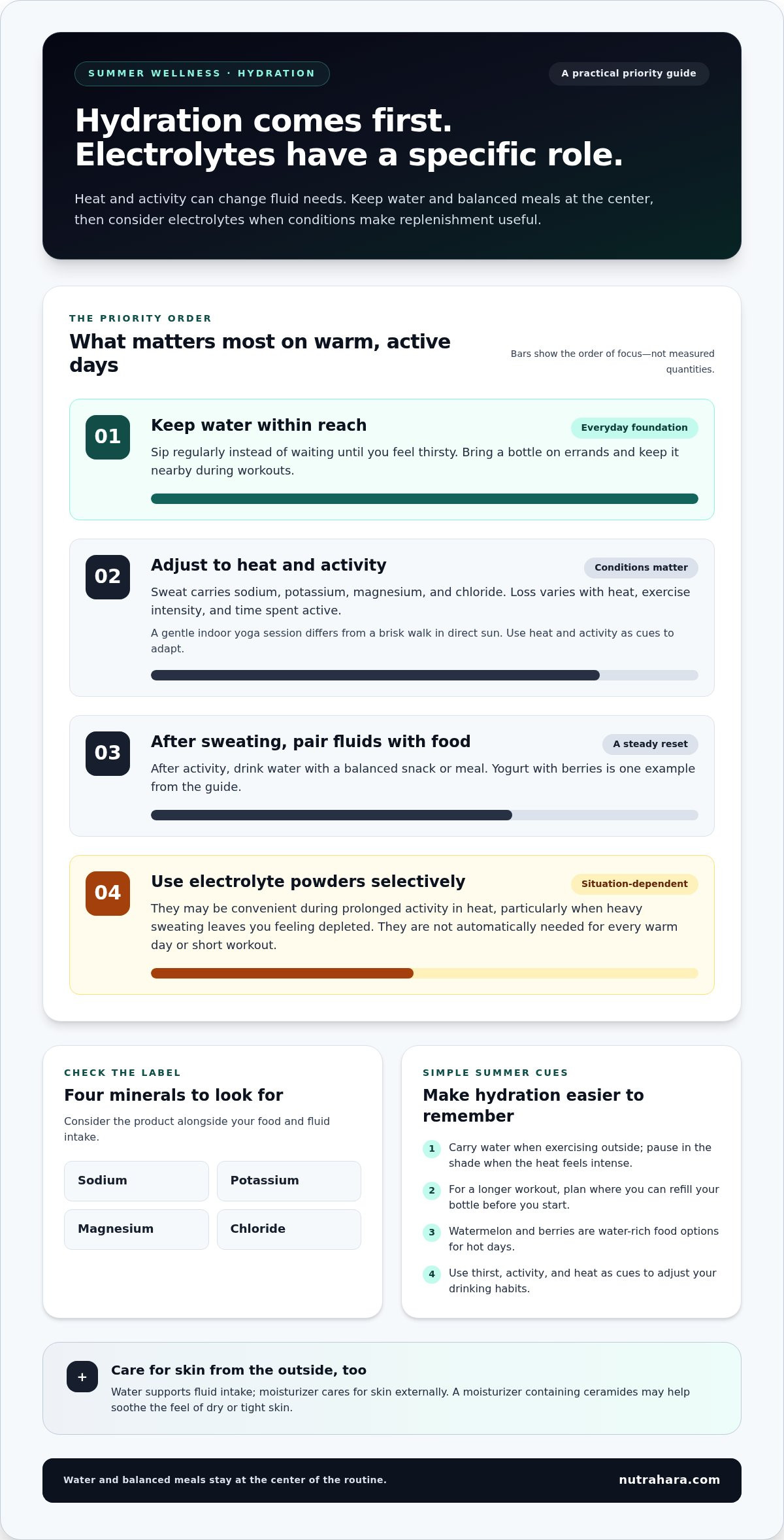
Hot weather increases perspiration, so water and electrolytes matter during outdoor activity. Sweat carries sodium, potassium, magnesium, and chloride from the body, and the amount lost varies with heat, exercise intensity, and time spent active. A gentle indoor yoga session differs from a brisk walk in direct sun, so adapt your fluid habits to the conditions. Preparing your body for summer with supplements may include considering electrolytes, while keeping water and meals at the center.
Make hydration a steady habit rather than waiting until you feel thirsty. Bring a water bottle on errands, keep it nearby during workouts, and sip regularly during warm outdoor plans. Before a walk or gardening session, consider when you last had fluids. Afterward, drink water with a meal or snack. Water-rich foods such as watermelon and berries provide fluid alongside nutrients, making them easy options on hot days.
Electrolyte powders can be convenient during prolonged activity in heat, particularly when heavy sweating leaves you feeling depleted. They are not automatically necessary for every warm day or short workout. Check the ingredient panel for sodium, potassium, magnesium, and chloride, then consider how the product fits with your food and fluid intake. At Nutrahara, we believe a supplement should never replace water or a balanced meal.
A simple routine can help you stay attentive to changing conditions:
- Carry water when exercising outside, and pause in shade when the heat feels intense.
- For a longer workout, plan where you’ll refill your bottle before you start.
- After sweating, drink and eat a balanced snack, such as yogurt with berries.
- Use thirst, activity, and heat as cues to adjust your drinking habits.
Hydration supports your body internally, while moisturizer helps care for skin externally. Ceramides are lipids in the skin barrier, which helps limit moisture loss. A moisturizer containing ceramides can help soothe the feel of dry or tight skin, especially after sun, wind, or air conditioning. Apply it after bathing, while skin is slightly damp, and choose a texture comfortable enough for daily use.
Skin comfort does not replace fluid intake. If summer heat leaves your skin feeling dry, combine regular water breaks with a moisturizing cream. For example, keep a bottle near your exercise mat and apply moisturizer after rinsing off. Preparing your body for summer with supplements works best alongside these steady habits, with electrolyte products reserved for situations where heat and activity make replenishment useful.
In warm conditions, keep water accessible and drink before thirst prompts you; regular water intake can help keep skin cells hydrated. High temperatures encourage perspiration and can dehydrate skin cells, so hydration habits deserve attention during activity and through the rest of the day.
Bring a bottle of water wherever summer takes you, and pair internal hydration with moisturizer. This simple routine supports comfort as conditions change: water contributes to fluid intake, while cream cares for skin externally. Keep both habits consistent, and consider electrolytes during hot-weather activity when replenishment is useful.
3. Vitamin C, zinc, probiotics, and B vitamins
Vitamin C, zinc, probiotics, and B vitamins each support different parts of everyday wellness. A clinical study found that daily oral vitamin C at 500 mg helped support immune function. Zinc supports the immune response, and consistent use may shorten illness duration. Zinc is also required for the activity of over 300 enzymes. These nutrients aren’t interchangeable, so balance them with varied eating rather than treating one supplement as a complete routine.
Vitamin C and zinc are found in foods such as citrus, bell peppers, beans, nuts, and seeds. When preparing your body for summer with supplements, remember that during summer travel, regular meals can become less predictable. Pack familiar snacks, such as fruit and nuts, and choose varied meals when possible. Probiotics may support digestive comfort and gut health when travel changes food choices or eating schedules. If refrigeration is unavailable, choose a shelf-stable probiotic and follow its label directions.
B vitamins help the body use energy from food. Vitamin B12 is involved in energy metabolism, but taking it doesn’t guarantee sharper focus or relief from fatigue. A useful first step is to review your eating pattern and existing supplements. If you eat few animal-derived foods, or fatigue is persistent, discuss B12 with a healthcare practitioner instead of assuming a supplement will address the cause.
Vitamin D also deserves attention during the sunny months. Bright days do not automatically meet everyone’s needs: indoor routines, darker skin, age, and high-SPF sunscreen can affect how much vitamin D the body makes. Vitamin D helps the body absorb calcium and supports bone, muscle, and immune health. Sunshine alone cannot establish an appropriate adult dose; a blood test and measured levels can help guide what to discuss with a healthcare practitioner.
For women who menstruate, are pregnant, or are lactating, life stage and current diet matter when reviewing supplements. Bring a list of vitamins, medications, and products from brands like Nutrahara to a medical appointment, and discuss possible overlaps before adding another formula. This helps keep your routine focused rather than stacking products with the same nutrient. Yoga, regular meals, and restorative sleep can support energy alongside nutrition, without making a supplement the only answer.
Keep your plan practical during activity or travel: choose a supplement for a clear nutritional purpose, follow its label, and consider how it fits your routine. If a new product causes discomfort, stop and seek medical guidance. A steady approach to vitamins, food, and rest can help you maintain balance through changing summer schedules.
4. Antioxidants and skin preparation for sun exposure
Sunlight supports outdoor life, but ultraviolet exposure can promote premature skin aging, raise skin cancer risk, and cause genetic mutations. Antioxidants, including lycopene, help address UV-generated free radicals in the skin. Think of them as one part of a broader wellness routine, not a shield from sunlight. A tomato-rich lunch or berries with breakfast adds antioxidant foods while keeping your nutrition varied.
Can supplements improve skin protection from sun damage, and can they replace sunscreen? Antioxidants may support the body’s response to oxidative stress, but supplements do not replace sunscreen, protective clothing, or shade. The U.S. Food and Drug Administration advises reapplying broad-spectrum sunscreen every two hours, and more often after swimming or sweating.
Do not use beta-carotene or astaxanthin supplements to chase a tan or as sun protection. Keep your physical protection routine in place, and do not extend sun exposure because you have taken an antioxidant supplement. Gradually build outdoor time, wear protective clothing, and use broad-spectrum sunscreen as practical ways to protect your skin.
Include skin-supportive nutrients in meals. Fresh summer choices include berries, tomatoes, peaches, pineapples, watermelon, bell peppers, and beets. For example, add sliced tomatoes and bell peppers to lunch, then choose berries for an afternoon snack. These foods provide vitamins, minerals, and antioxidants as part of a balanced eating pattern. They support overall nutrition, while sunscreen and clothing reduce direct exposure.
Collagen is a structural protein in the body, and it’s often discussed in connection with skin moisture and UVB photodamage. It doesn’t block UVB or replace protective skin care. Since collagen makes up about 25% of the human body’s protein content, dietary collagen and collagen powders are not the same as a topical sun barrier. Pair any supplement routine with shade and clothing, rather than expecting it to prevent sun damage.
Prepare your skin with consistent habits. Wear protective clothing and use mineral-based sunscreen, and avoid long, sudden periods in strong sun. If exfoliating, leave a couple of days before longer sun exposure. Reapply sunscreen on schedule, especially after swimming or sweating. During a walk, plan a shaded rest and keep a hat in your bag. These steps protect skin while letting you enjoy outdoor activity without relying on a supplement for coverage.
Planning ahead can make antioxidant choices part of your travel routine. The page recommends lycopene as a natural antioxidant to help prevent the accumulation of UV-generated free radicals in the skin. This describes its role in relation to free radicals, not a reason to spend longer in direct sun. Keep the physical protection habits already described in place alongside your nutrition choices.
For trip preparation, the page recommends taking vitamin C daily, starting a few days before a trip and continuing through your return. Keep that guidance separate from sunscreen use: a vitamin routine does not replace sunscreen, protective clothing, or shade. Pairing planned nutrition with established outdoor habits keeps antioxidant support in perspective, without treating it as a substitute for direct sun protection.
5. Magnesium, potassium, and electrolyte powders
Hot-weather exercise can increase sweat losses of sodium, potassium, magnesium, and chloride. These minerals are electrolytes, and replacing them matters most when activity causes substantial sweating. A short, gentle session and a demanding outdoor workout create different needs. Consider the heat, your exertion, and how much you sweat when deciding whether water, food, or an electrolyte drink best fits your routine.
Magnesium plays a role in more than 600 biochemical reactions in the body, including processes connected with normal muscle function. It supports the body’s work; it isn’t a shortcut to strength or a guaranteed fix for muscle tension. Food is a useful starting point. Add magnesium-containing choices such as nuts, seeds, beans, or leafy greens to meals around exercise, then consider supplements only when they fit your needs.
People who exercise intensely may have different magnesium needs. The research summarized for this article indicates needs may be 10-20% higher in athletes and people engaging in high physical activity. That figure doesn’t mean every active woman needs a supplement. Training volume, food intake, and sweat losses all matter. During a hotter season, review your routine and meals before adding magnesium to an existing supplement plan.
Magnesium glycinate or citrate may suit travelers seeking relaxation benefits. Read the product label, follow its directions, and avoid combining multiple products without reviewing their ingredients. A calming evening routine can also include gentle stretching or meditation after a workout. These habits can help you wind down without making a supplement responsible for every feeling of tension.
Electrolyte powders offer a portable option for replacing minerals during extended activity in heat. Before mixing one, check the listed ingredients and serving directions. Look for electrolytes relevant to sweat losses, including sodium and potassium, alongside magnesium and chloride. A powder is not automatically useful for every walk or yoga practice; consider workout length, intensity, heat, and sweating. Pair it with water and regular meals rather than using it in place of either.
For a simple decision, consider what your session demands. A low-sweat indoor stretch may call for your usual meals and fluids. A long outdoor workout with heavy sweating may make electrolyte replacement more relevant. Potassium is one of the minerals lost in sweat, but that alone does not establish a need for a potassium supplement. Focus on an appropriate balance, and get individualized guidance before adding concentrated minerals, especially if you already use supplements or have a medical condition.
Nutrahara: Women’s Health Supplements
Nutrahara offers women’s health supplements for women seeking to make thoughtful nutrition part of their wellness routine. Its formulations combine principles of ancient Ayurveda with modern nutritional research, using natural, clean ingredients. After learning how hydration, food, and nutrients support summer wellness, explore supplements as one part of a broader self-care approach. Consider your current routine and life stage, including menstruation, pregnancy, lactation, or menopause, when deciding what nutritional support fits. Supplements complement everyday habits such as balanced meals, movement, yoga, and rest; they do not replace them. Explore Nutrahara’s women’s health supplements at nutrahara.com.
Make Your Summer Wellness Routine Your Own
Summer can be a chance to notice what helps you feel steady, energized, and comfortable in your body. Rather than changing everything at once, choose one manageable step: plan a nourishing breakfast, make time for restorative movement, or set aside a quiet moment for meditation. Notice how your routine fits your current life stage and activity, then adjust with care. Preparing your body for summer with supplements works best as a thoughtful part of ongoing self-care, not a quick fix or a measure of your worth.
If you’re considering women’s health supplements as part of your personal wellness approach, explore Nutrahara’s information and decide what feels relevant to your goals. For questions about its offerings, contact Nutrahara. Keep building a summer routine that supports your confidence and well-being, one considered choice at a time.
Frequently Asked Questions
Which supplements, if any, are evidence-based for preparing for summer?
No supplement is needed simply because summer is approaching; evidence is most relevant when a nutrient addresses an individual need. Research summarized for this article found vitamin D supported immune health across 25 randomized controlled trials, while a clinical study found 500 mg of daily vitamin C helped support immune function. Use your diet, health history, and test results to identify what may fit, and review choices with a healthcare practitioner, particularly during pregnancy or lactation.
Do electrolytes or hydration supplements help in hot weather?
Electrolytes can be useful during strenuous, prolonged activity in heat, especially when sweating is substantial, but they are not essential for every warm day. Before an outdoor workout, consider its intensity, duration, and access to water. For a short, light session, water and regular meals may be enough. For heavier sweat losses, check an electrolyte product’s label and use it as directed rather than replacing meals or plain water.
What are the risks and side effects of popular summer supplements?
Risks include taking overlapping ingredients from several products, choosing a formula with quality issues, or using a supplement that does not suit your health circumstances. Some tested supplements have contained less active ingredient than listed, excessive amounts of certain ingredients, contaminants, or nutrient forms that are poorly absorbed. Share your supplement and medication list with a healthcare practitioner before adding products, especially if pregnant, lactating, or managing a medical condition.
Disclaimer
This article is not a substitute for medical advice. Please consult a healthcare professional before starting any supplement, especially if pregnant, nursing, taking medication, or managing health conditions.