
The best supplements & vitamins for women aren’t necessarily the ones with the longest ingredient list. If you choose a multivitamin, follow its serving directions and don’t exceed the recommended amount. The right choice depends on your life stage, eating patterns, and personal health priorities.
Comparing supplements can be difficult when formulas differ in ingredients, serving directions, and format. Start by deciding what you want a supplement to support and how it would fit into your everyday routine. Your approach can change as your circumstances and wellness priorities evolve.
This guide explores nutrients commonly found in women’s supplements, vitamin D’s role in bone health, and practical ways to compare products and costs. It also considers how needs may differ across menstruation, pregnancy, and menopause. Use these insights to make informed choices alongside habits such as regular movement, yoga, and meditation.
No single multivitamin suits every woman. Compare its nutrients with your diet, life stage, and reasons for considering a supplement.
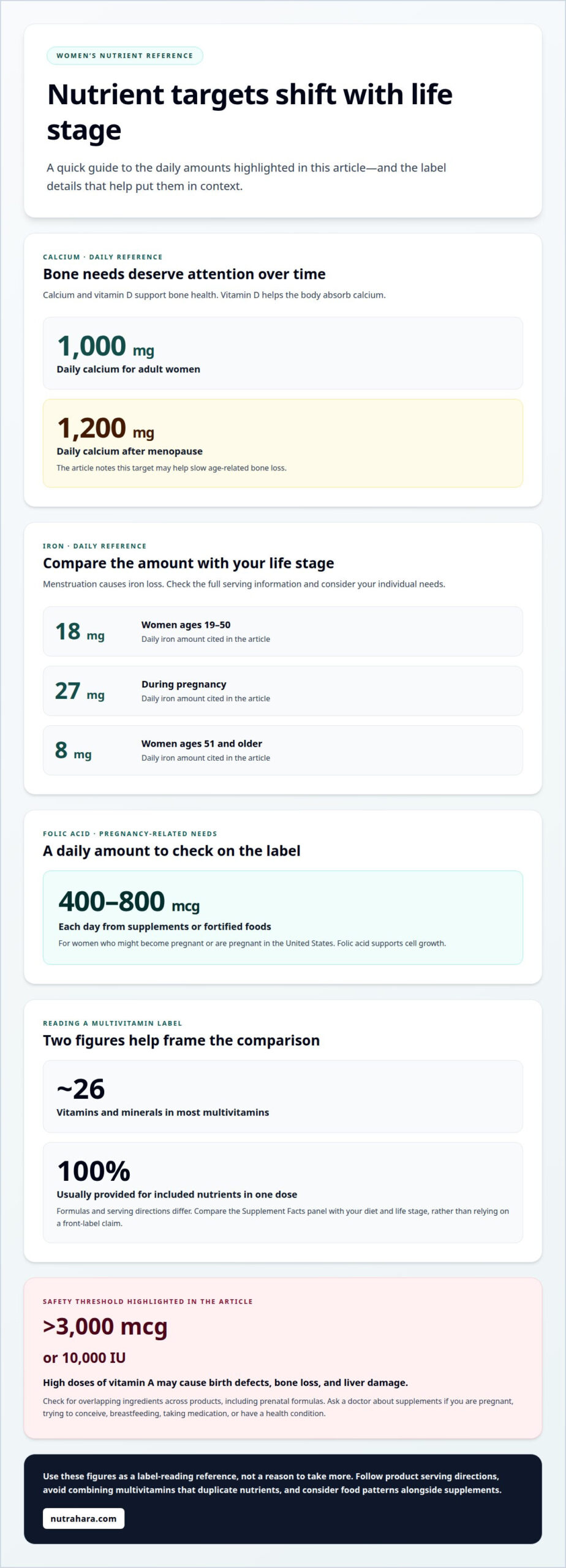
Most multivitamins contain about 26 vitamins and minerals, and one dose usually provides 100% of the recommended daily allowance for included nutrients. If you menstruate, consider whether iron is needed, since menstruation causes iron loss. Women who could become pregnant should look for at least 400 micrograms of folic acid. Prenatal formulas serve a different life-stage need, so compare their labels with your situation.
Gummy multivitamins offer another format. Compare serving directions and nutrient amounts with those of tablets or capsules, rather than choosing by format alone.
Most women can get needed nutrients from a healthy diet and may not need a multivitamin. A supplement may be useful when a restricted eating pattern makes it difficult to get enough of certain nutrients. For example, people following a strict vegetarian diet or taking a daily acid blocker may consider vitamin B12 supplementation. Life stage and food choices help determine which nutrients deserve attention.
A multivitamin isn’t a substitute for a varied diet, regular exercise, or other healthy routines. Consider whether a formula addresses a specific dietary gap instead of assuming a broad blend will address every concern.
If you choose a multivitamin, consider whether it suits your individual needs. Follow the product’s serving directions, and avoid combining multiple multivitamins, which can duplicate nutrients. A practical step is to compare each label’s nutrient amounts before adding another supplement. Choose a routine you can remember, such as pairing the dose with a regular meal, unless its directions say otherwise.
More isn’t automatically better. The goal is to address a need, not exceed the label’s serving directions.
In the United States, the FDA regulates dietary supplements, but its role differs from approving every formula before sale. Read the full label for ingredient amounts, serving directions, and warnings. Look for clear manufacturer details and independent quality testing. A testing seal can support quality screening, but it doesn’t prove a product will benefit you.
Ask a doctor for advice before starting supplements if you’re pregnant, trying to conceive, or breastfeeding, or if you take medication or have a health condition. Discuss blood tests if symptoms or a suspected deficiency could affect your choice. Testing can help distinguish a nutrient gap from another cause and guide a more targeted plan.
Formulas vary, so compare their nutrient amounts with your diet and life stage. Choosing supplements & vitamins for women starts with identifying what your meals already provide.
Use the Supplement Facts panel to compare each nutrient’s amount per serving and its percentage of daily value. This makes overlapping ingredients easier to spot across products. According to the National Institutes of Health Office of Dietary Supplements, adult women need 1,000 mg of calcium daily. Women ages 19 to 50 need 18 mg of iron daily, pregnant women need 27 mg of iron daily, and women ages 51 and older need 8 mg of iron daily, according to the National Institutes of Health Office of Dietary Supplements.
Life stage affects nutrient needs. Check the full serving information, not just a front-label claim or highlighted ingredient.
Calcium and vitamin D support bones, and vitamin D helps the body absorb calcium. Women who might become pregnant or are pregnant in the United States need 400-800 mcg of folic acid each day from supplements or fortified foods. Folic acid supports cell growth. Combined EPA and DHA recommendations commonly range from 250 to 500 milligrams per day; daily combined intakes of 1,000 to 1,500 milligrams may benefit long-term health and wellness.
When choosing supplements & vitamins for women, consider nutrient-dense foods alongside any product. Leafy greens, beans, dairy foods, and oily fish can contribute nutrients to a varied dietary pattern and support an active lifestyle.
Calcium and vitamin D support bone health, while folic acid supports cell growth. Omega-3 supplements provide another source of EPA and DHA. Their usefulness depends on dietary intake and the nutrients already present in other products.
Compare labels to avoid unnecessary overlap, including in prenatal formulas. According to the National Institutes of Health Office of Dietary Supplements, high doses of vitamin A, defined as more than 3,000 micrograms or 10,000 international units, may cause birth defects, bone loss, and liver damage. Discuss medical concerns or supplement use with a doctor.
Bone care is a long-term practice, especially after menopause. After menopause, women need 1,200 mg of calcium each day to help slow age-related bone loss, according to the National Institutes of Health Office of Dietary Supplements. Think of that target alongside your regular meals, movement, and changing health needs, rather than as a reason to rely on a single product.
A practical first step is to note calcium-containing foods you eat on a typical day, such as yogurt, fortified alternatives, or leafy greens. Consider whether these foods feature consistently in your diet. Include vitamin D sources in your review, too. A short food-and-symptom log can help you discuss dietary patterns and bone-health concerns during a medical appointment.
Movement is an important part of a whole-body wellness routine. Add weight-bearing activities, such as walking or strength exercises, in a way that suits your fitness level. Yoga can support balance and body awareness, while meditation offers a calming practice alongside physical activity. These habits complement nutrition, but they don’t replace professional assessment of bone concerns.
Use women’s health articles and educational resources to prepare questions about menopause, changing symptoms, or screening discussions. The Office on Women’s Health covers women’s health topics, while the Menopause Society emphasizes attention to bone health after menopause. Bring specific questions about your routine to a healthcare professional, including how your food choices and supplements fit together.
Immune and heart health deserve thoughtful attention. Broad support language on a supplement label doesn’t establish that a product prevents disease. Build a balanced routine around nourishing meals, regular activity, and restorative practices, then consider supplements as one possible part of that picture. Consistent habits give you practical steps to revisit as your needs evolve.
Compare each formula’s Supplement Facts panel, serving size, and number of servings per package. When comparing supplements & vitamins for women, focus on ingredients that match your needs rather than the length of the label. Tablets, capsules, and gummies can differ in nutrient amounts and directions, so check the full product information before weighing value.
To compare costs, divide the package price by the number of servings. Then consider whether those servings provide nutrients relevant to your dietary needs. For example, compare calcium and iron amounts across similar multivitamins instead of judging by a “complete” claim. A longer ingredient list doesn’t automatically mean a better fit.
Compare like with like. A prenatal formula and a general multivitamin may be designed for different life stages, so their ingredients and serving directions can differ. The best value depends on the nutrients you need, the amount supplied per serving, and whether the format suits your daily routine.
Format can affect how easy a supplement is to take consistently. A tablet may suit someone who prefers a familiar format, while a gummy can be an alternative for someone who dislikes swallowing pills. Check the serving directions and ingredients for either format. If you take medication, ask a doctor or pharmacist whether timing or interactions matter.
Use this checklist to compare supplements & vitamins for women thoughtfully:
A clear comparison helps you choose based on fit and value, not packaging or broad claims. The most useful option is one that meets your needs and fits comfortably into your routine.
Nutrahara offers women’s health supplements for women seeking to support their wellness with a considered daily routine. Its formulations combine principles of Ayurveda with modern nutritional research, using natural, clean ingredients.
If you’re comparing options, use what you’ve learned about life stage, dietary gaps, and ingredient labels to guide your choice. A supplement can complement nutritious food, movement, and restorative practices such as yoga or meditation, but it isn’t a substitute for medical care or individualized advice from a healthcare professional.
Explore Nutrahara’s women’s health supplements as one option for your wellness journey. For questions about Nutrahara’s offerings, contact Nutrahara.
Start by writing down what you want to support, such as everyday energy, a balanced diet, or a steady fitness routine. Consider how your current meals, movement, and life stage shape that goal. Supplements & vitamins for women are most useful as part of a considered routine, not as a substitute for nourishing food, restorative sleep, or practices like yoga and meditation.
Give yourself permission to make thoughtful choices rather than chasing a perfect regimen. If you’re exploring a supplement as part of your wellness journey, Nutrahara offers women’s health supplements informed by Ayurveda and modern nutritional research. For questions about the offering, contact Nutrahara about supplement support.
Everyday wellbeing grows through consistent, informed choices. Take the next step at a pace that feels grounded and right for you.
A multivitamin is a single supplement designed to provide several micronutrients together. It differs from a single-nutrient product, such as a vitamin D-only supplement. To understand what a formula offers, look beyond its name and examine the Supplement Facts panel. This helps you compare products without assuming that “women’s” on the packaging means the formula matches your individual needs.
Safety depends on the ingredients, your health circumstances, and other products or medicines you use. Keep a written list of supplements and medications, including occasional products, and share it with your healthcare professional or pharmacist. This gives them a clearer picture when considering possible interactions. Personal stories may offer perspective, but they can’t establish that a product is suitable for you.
Daily use should have a clear purpose and follow the product’s directions. Review your supplement routine when your eating pattern, medications, or life stage changes. Keep the container or a photo of its label handy for that conversation. This makes it easier to discuss whether the product still fits your routine, without automatically adding another supplement.
Some people may experience unwanted effects, and ingredients can influence what they notice. If a new symptom begins after starting a product, record when it happens and bring the label to a healthcare professional or pharmacist. Don’t add another supplement to counteract a suspected effect without advice. A clear record can support a more informed discussion about next steps.
Consider whether a dietary pattern or health circumstance could leave a nutrient gap. Note foods you regularly avoid and any changes in appetite or routine, then discuss that context with a qualified healthcare professional. Exercise habits alone don’t establish a need for a supplement. A targeted conversation can help you decide whether a food-based adjustment or supplement makes sense.
Prenatal vitamins are products intended for people preparing for pregnancy or during pregnancy. If you’re planning to conceive, bring the labels of any current supplements to a healthcare professional so they can consider your full routine together. This is especially useful when products overlap or your needs change. Keep the discussion current through pregnancy and breastfeeding rather than assuming one routine fits every stage.
This article is not a substitute for medical advice. Please consult a healthcare professional before starting any supplement, especially if pregnant, nursing, taking medication, or managing health conditions.