

Categories
Articles

Essential Supplements and Vitamins for Women’s Health

A multivitamin isn’t automatically the right choice for every woman. Supplements and vitamins for women can include a mix of nutrients, but needs vary with diet and life stage. Adult women generally need 2.4 mcg of vitamin B12 daily, with different needs during pregnancy and breastfeeding.

It’s understandable to wonder whether a multivitamin is enough, especially when energy, bone health, or changing routines are on your mind. A useful starting point is to identify which nutrients matter to you and when supplements and vitamins for women may be relevant.

Learn how vitamin D supports bone health, what to consider in a multivitamin after 50, and why B12 deserves attention, particularly if you eat a vegetarian diet. You’ll also find practical ways to think about supplements alongside balanced meals, movement, yoga, and meditation, so your wellness choices can feel thoughtful and sustainable.

Key Takeaways

  • Match nutrient priorities to your life stage, from menstrual years and pregnancy to menopause.
  • Learn how vitamin D and calcium work together to support bone health, and why needs can change after menopause.
  • Use a thoughtful checklist to decide whether a multivitamin after 50 fits your diet and health needs.
  • Understand when vitamin B12 may deserve extra attention, especially if you eat a vegetarian diet or take acid-blocking medication.

1. What vitamins and minerals are important for women’s health?

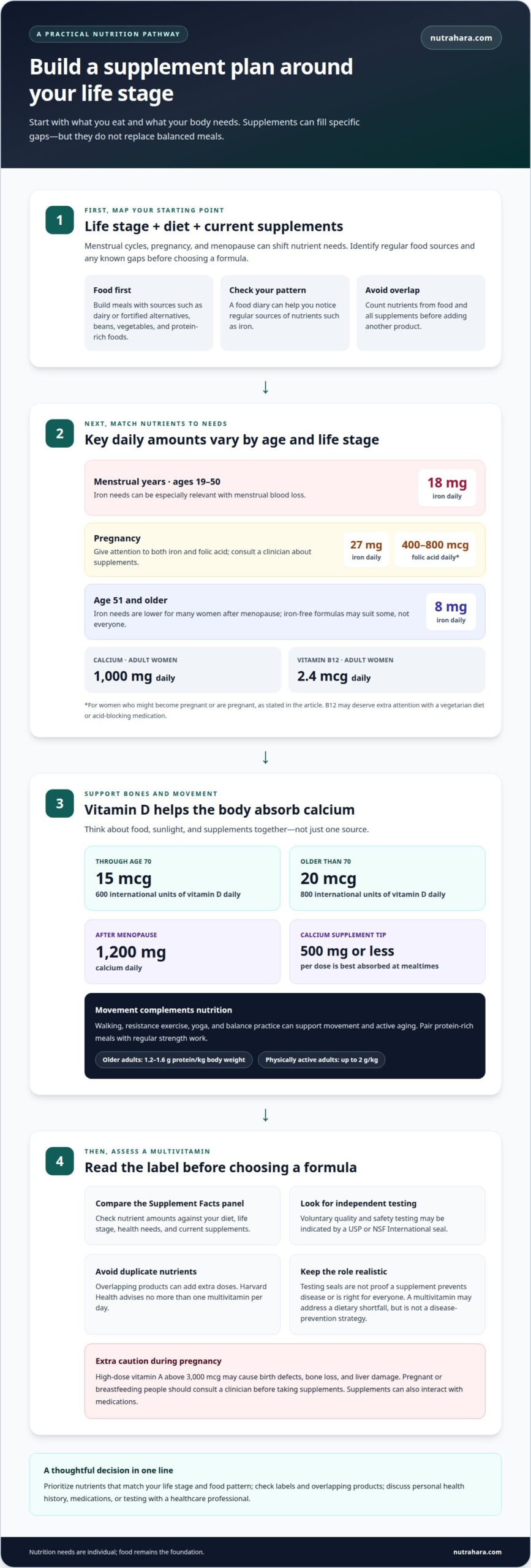
Nutrition needs shift with menstrual cycles, pregnancy, and menopause, so one formula won’t suit every woman. Adult women need 1,000 mg of calcium daily, according to the NIH Office of Dietary Supplements. Food can provide many nutrients; dairy or fortified alternatives, beans, vegetables, and protein-rich foods are practical foundations. Supplements may help fill specific gaps, but they don’t replace balanced meals. For American women, the first step is matching nutrient choices to diet and life stage.

Menstrual blood loss makes iron especially relevant before menopause. Women ages 19 to 50 need 18 mg of iron daily, according to the NIH Office of Dietary Supplements. Women who might become pregnant or are pregnant need 400–800 mcg of folic acid daily, according to the NIH Office of Dietary Supplements. During pregnancy, women need 27 mg of iron daily, according to the NIH Office of Dietary Supplements. These differences explain why an iron-containing multivitamin may fit some menstruating women, while pregnancy calls for attention to both iron and folic acid.

Iron needs change with age, too. Women ages 51 and older need 8 mg of iron daily. Some multivitamins for women over 50 are iron-free, which may suit women whose needs are lower after menopause. Still, iron-free isn’t a universal rule: consider the amount in the label alongside your diet and any known iron needs. A food diary can help identify regular sources, such as beans, leafy greens, meat, or fortified cereals.

Vitamin D and omega-3s may also factor into a woman’s nutrition plan. Women in their 20s and 30s may consider vitamin D for bone health and omega-3s for heart health. For a wider nutrient check, including vitamin B12, ask whether diet and life stage leave a likely gap; adult women generally need 2.4 mcg of B12 daily.

Food is the best way to obtain needed nutrients, and supplements are not necessary for every woman. FDA regulation and product certification are separate considerations: look for voluntary independent testing and a USP or NSF International seal. Popular women’s vitamins in the United States don’t have one standard cost; serving count, nutrient blend, and formulation affect the price. A supplement can provide iron, vitamin D, calcium, folate, or B12, but whether it’s needed depends on which nutrients your diet and life stage provide.

2. Vitamin D and bone health

Vitamin D helps the body absorb calcium, linking dietary choices with bone health. Adult women generally need 15 micrograms (600 international units) of vitamin D daily through age 70. Women older than 70 generally need 20 micrograms (800 international units) daily. Food, sunlight, and supplements contribute differently, so consider your overall routine instead of relying on one source. Choosing supplements and vitamins for women starts with your bone and muscle goals.

Calcium needs change after menopause. Women need 1,200 mg of calcium daily after menopause, according to the NIH Office of Dietary Supplements. Dairy products, fortified alternatives, and spinach can contain calcium. If using a calcium supplement, doses of 500 mg or less are best absorbed at mealtimes. Count dietary sources too, since combining products can increase total intake.

Bone and muscle health work together. Walking, resistance exercise, and yoga can build movement into a routine, while balance practice supports confident daily activity. Older adults need 1.2 to 1.6 grams of protein per kilogram of body weight to help preserve muscle mass. Physically active adults may need up to 2 grams per kilogram to support muscle repair and recovery. Pair protein-rich meals with regular strength work for active aging.

A healthcare professional can consider your diet, health history, medications, and relevant test results when discussing vitamin D or calcium. This is especially important if osteoporosis or another condition affects your bone health, or if you’re considering several supplements together. Bring a list of products and note how often you take them. A thoughtful approach to supplements and vitamins for women accounts for nutrients you already get from food and supplements, while keeping your individual health goals in view.

3. Multivitamins for women over 50

After 50, a multivitamin can help cover dietary gaps, but it isn’t a substitute for varied meals. Choose a formula based on your eating pattern, health needs, and current supplements. Compare the Supplement Facts panel for amounts of vitamins and minerals, then avoid overlapping products that duplicate nutrients. A doctor can help you interpret the label alongside medications and relevant testing.

When selecting a product, look for voluntary independent quality and safety testing, such as a USP or NSF International seal. These marks indicate testing, not proof that a supplement prevents disease or is right for everyone. If you choose a multivitamin, Harvard Health advises taking no more than one per day. Follow the label directions, and take it consistently with a meal if that works for you.

Evidence matters, too. The Women’s Health Initiative found that postmenopausal women who took multivitamins did not have a lower death rate than those who did not. They were just as likely to develop cardiovascular disease or several cancers. A multivitamin may still help address a dietary shortfall, but it should not be chosen as a disease-prevention strategy. Strength training, balanced meals, and movement support wellness in ways a pill cannot replace.

During pregnancy, folic acid and iron needs deserve attention. A prenatal supplement may be appropriate, but pregnant or breastfeeding people should consult a clinician before taking any supplement. Recommendations depend on life stage, diet, and health needs, so do not assume one formula suits both pregnancy and breastfeeding.

Extra doses can create problems, especially when products overlap. During pregnancy, high-dose vitamin A above 3,000 mcg may cause birth defects, bone loss, and liver damage. Supplements can also interact with medications. Give your doctor or pharmacist a complete list of vitamins, minerals, and medicines before combining products; report any new symptoms after starting a supplement.
Essential Supplements and Vitamins for Women's Health

4. Vitamin B12 supplementation

Vitamin B12 deserves attention if you eat a vegetarian diet or take acid-blocking medicine daily. These factors can make it harder to get enough through everyday food choices. A medical professional may consider your diet, medication use, symptoms, and test results when assessing possible deficiency. Keep a monthly note of supplements and medicines, so the list is easy to discuss at appointments.

Life stage changes the daily target. Women generally need 2.6 mcg of vitamin B12 daily during pregnancy and 2.8 mcg daily while breastfeeding. These needs can be met through food, fortified products, or supplements, depending on the person’s diet. If pregnancy is planned, include B12 in the conversation about prenatal nutrition rather than assuming every multivitamin contains the amount you need.

For strict vegetarians or people taking a daily acid blocker, Harvard Health says 1,000 micrograms of vitamin B12 per day should be more than enough. That is a specific situation, not a universal dose for every woman. Read the supplement label, note the amount per serving, and avoid stacking several products without accounting for their combined B12. A doctor can interpret test results alongside your diet and medication history.

Choose a practical routine you can follow. Pair a supplement with a regular meal or another daily habit, and record missed doses without doubling up automatically. If you notice persistent changes in energy or wellbeing, document when they began and discuss them with a healthcare professional; symptoms alone don’t establish a B12 deficiency. For women considering a B-complex option, explore the vitamin B-complex supplement as one way to review B vitamins together. The takeaway: vegetarian eating, acid-blocking medicine, pregnancy, and breastfeeding are useful prompts to assess B12 intake thoughtfully.

Nutrahara: Women’s Health Supplements

Nutrahara offers Women’s Health Supplements for women looking to make nutrition part of a thoughtful wellness routine. Its approach combines principles of ancient Ayurveda with modern nutritional research and natural ingredients. This can be a next step when you’ve identified a supplement need and want to explore options that fit your health goals. Consider your diet, life stage, and existing supplements as you decide what may complement your routine. Supplements work best as part of a broader foundation that includes nourishing meals, regular movement, and practices such as yoga or meditation. For questions about Nutrahara’s Women’s Health Supplements, contact Nutrahara.

Make your next wellness choice with intention

Your health priorities can shift as your routines, diet, and life stage change. Treat supplement choices as one part of a broader approach that includes nourishing meals, strength-building movement, and time to restore through yoga or meditation. To stay intentional, write down what you take and what you hope it supports, then revisit the list as your needs evolve.

Choosing supplements and vitamins for women is most useful when it reflects your own goals, rather than a one-size-fits-all routine. If you’re exploring options for your wellness journey, contact Nutrahara with your questions. Keep moving forward with curiosity and confidence, one thoughtful choice at a time.

Frequently Asked Questions

What are multivitamins for women?

Multivitamins combine several vitamins and minerals in one product. Formulas differ in the nutrients and amounts they contain, so “for women” does not mean a product suits everyone. Before choosing one, consider your regular meals, dietary preferences, and any other products you take. A multivitamin offers convenience, but it cannot replace a varied eating pattern.

What vitamins and minerals are important for women’s health?

Important nutrients include calcium, vitamin D, iron, folate, and vitamin B12, though priorities depend on life stage and diet. For a practical starting point, write down a typical day of meals and note fortified foods, such as enriched cereals or plant-based drinks. This can help reveal patterns in your intake and make a conversation about nutrition more specific and useful.

Are dietary supplements safe?

Safety depends on the supplement, its amount, your health, and any other products or medicines you use. Read the full label, including serving directions and all listed ingredients, rather than relying on claims on the front of the package. Keep containers or clear photos of labels available for a healthcare professional. During pregnancy or breastfeeding, discuss supplements with a clinician before starting them, since needs and safety considerations can differ.

Should you take supplements during perimenopause and menopause?

Some women may benefit from a supplement, but a life transition does not mean everyone needs the same product. Consider changes in eating habits, health history, and nutrient concerns instead of choosing based only on age. A food and supplement diary can help you notice routine changes, while a healthcare professional can interpret symptoms and relevant test results in context.

What do multivitamins help with?

Multivitamins provide several nutrients in one product, which can be convenient when addressing dietary gaps. They do not replace meals or treat health conditions. Check whether the nutrients match your needs and whether another product already provides the same ingredients. Comparing labels can help you avoid unnecessary duplication.

What’s the most effective form for supplements: capsules, tablets, chew or gummies?

No single format works best for everyone. The right choice depends on the product and whether you can comfortably follow its directions. Compare serving sizes and nutrient amounts on the labels, not just the format. If taste, texture, or swallowing affects consistency, choose an option that fits your routine. Review added ingredients, especially if you avoid particular foods or sweeteners.

Article by

Nutrahara Team

We are a dedicated collective of nutrition scientists and naturopaths at Nutrahara, committed to advancing women's health through the fusion of ancient Ayurveda science and cutting-edge nutrition research. Our mission is to empower you with clean, simple, and scientifically validated wellness solutions so you can live your healthiest life. Connect with us to stay updated on the latest developments in holistic women's health and nature-based research.

Disclaimer

This article is not a substitute for medical advice. Please consult a healthcare professional before starting any supplement, especially if pregnant, nursing, taking medication, or managing health conditions.

Categories
Articles

Top Vitamins & Supplements for Post-Menopausal Health

A supplement routine should begin with your needs, not a longer ingredient list. Supplements and vitamins for post-menopausal women may help address specific nutrient gaps, but choosing well means considering your diet, health history, and current medications.

It’s understandable to want clear guidance when advice about menopause products varies. This article reviews multivitamins, nutrients, and herbal options, including potential benefits and safety considerations.

Use the information to prepare questions about your own routine and make choices that support your health over time. A genuine customer testimonial can be included when an authentic, sourced quote is available.

Key Takeaways

  • Learn how plant-based options may relate to hormonal balance, and why herbal ingredients deserve a careful look before adding them to your routine.
  • Compare your diet and existing supplements to identify possible nutrient gaps rather than taking a multivitamin by default.
  • Understand how B12, magnesium, and vitamin K2 differ, and what to consider when reviewing a multivitamin label.
  • Weigh the evidence for potential benefits against safety considerations, including overlapping ingredients and medication interactions.

1. Herbal supplements for hormonal balance

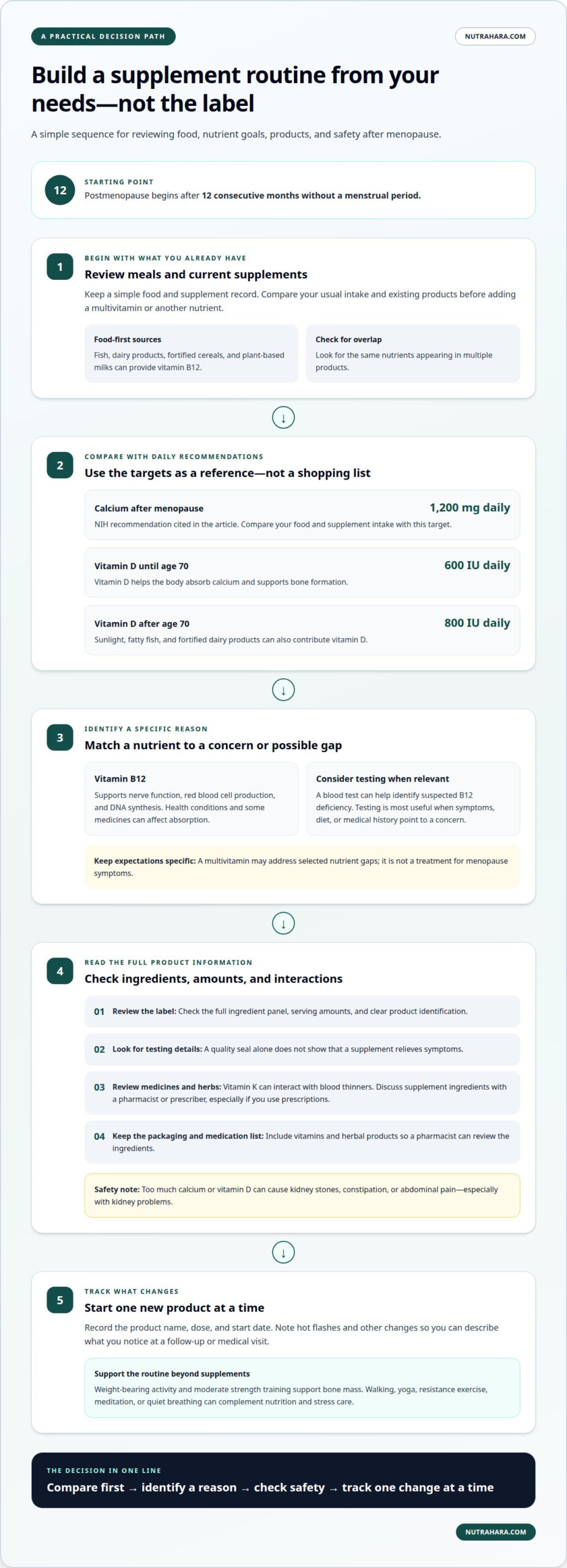
Postmenopause begins after 12 consecutive months without a menstrual period, according to the National Institute on Aging. Plant phytoestrogens act similarly to estrogen in the body, but they aren’t estrogen replacements. Herbal products may contain these compounds, yet different extracts can have different ingredients and amounts. Read the label closely, and don’t assume that “natural” means appropriate for every person.

Women reaching menopause before age 50, especially before age 45, should discuss hormone therapy with a health care practitioner. Early menopause can make the discussion especially relevant to long-term health, including bone formation. Talk through personal health history, symptoms, and current medicines rather than relying on a supplement to replace that conversation.

Prescription non-hormonal approaches are another topic to raise for hot flashes. The Menopause Society released a position statement on non-hormonal therapies in 2023. A practitioner can discuss those options alongside lifestyle steps such as regular movement, sleep habits, and stress management. Yoga or meditation may support a calming routine, but they aren’t substitutes for treatment when symptoms need medical attention.

When comparing supplements in the United States, review the full ingredient panel, serving amounts, and available testing details. Look for clear product identification and independent testing documentation; a quality seal alone doesn’t show that a supplement relieves symptoms. Keep the packaging so a pharmacist can review the ingredients.

Vitamin K can interact with blood thinners. If you use hormone therapy, osteoporosis medicines, or other prescriptions, review supplement ingredients with a pharmacist or prescriber; interactions depend on the specific products and medicines. Bring a complete medication list, including herbal products and vitamins.

Start one new product at a time, and note its name, dose, and start date. A simple log of hot flashes and other changes can help you describe what you notice at a follow-up or medical visit.

2. Is it worth taking supplements for menopause?

Supplements can help fill a nutritional gap, but they don’t replace varied meals. During perimenopause, changing estrogen levels may affect symptoms and routines, while nutrition remains important for everyday function. After menopause, bone health deserves particular attention. The National Institutes of Health recommends 1,200 mg of calcium daily for women after menopause.

Vitamin D helps the body absorb calcium and supports bone formation. The National Institutes of Health recommends 600 IU of vitamin D daily until age 70. After age 70, the National Institutes of Health recommends 800 IU of vitamin D daily. Sunlight, fatty fish, and fortified dairy products can contribute vitamin D through everyday choices.

Food-first planning is practical: include fish, dairy products, fortified cereals, or plant-based milks as sources of vitamin B12. B12 supports nerve function, red blood cell production, and DNA synthesis. Because absorption can be affected by health conditions and some medicines, a blood test can help identify a suspected deficiency. Testing isn’t automatically necessary before every supplement; it’s most useful when symptoms, dietary patterns, or medical history point to a specific concern.

For calcium, build meals around a varied range of foods, then compare your total intake with your daily target. Keep a simple food and supplement record before deciding what may be missing. Too much calcium or vitamin D can cause kidney stones, constipation, or abdominal pain, especially with kidney problems.

Movement and stress care complement nutrition. Weight-bearing activity and moderate strength training help support bone mass; walking, yoga, or resistance exercises can suit different routines. Meditation or quiet breathing can make space for stress management. These habits support overall wellness, but supplements don’t prevent or treat every disease.

For a focused nutrient option, review the ingredients in a vitamin B complex alongside your diet and current supplements. Compare the label with your needs, rather than adding products by default.

3. Do Multivitamins Really Work?

A multivitamin is best viewed as a way to address selected nutrient gaps, not as a treatment for menopause symptoms. Choosing supplements and vitamins for post-menopausal women starts with comparing a formula against what you already eat and take. Check serving sizes and ingredient amounts, especially when multiple products contain the same nutrients.

B12 is one ingredient to assess in that comparison. Rather than adding a separate product automatically, review whether your multivitamin includes it and consider your usual food choices. A clinician may use testing when symptoms, diet, or health history suggest a possible deficiency. That makes the decision more specific than choosing a formula based on age alone.

Magnesium is available in multivitamins and standalone products, but it isn’t a guaranteed sleep aid. If sleep feels unsettled, note bedtime habits and nighttime symptoms, then consider gentle yoga or meditation as part of a calming routine. Ashwagandha is a separate herbal supplement; taking it with magnesium doesn’t prove that the combination improves sleep.

Vitamin K2 appears in some formulas marketed for bone health. Its inclusion doesn’t prove that a multivitamin prevents bone loss. The same care applies to collagen: don’t treat a product’s presence in a wellness formula as evidence that it prevents osteoporosis. Check the specific claim and ingredient rather than relying on broad packaging language.

When assessing supplements and vitamins for post-menopausal women, match each ingredient to a personal reason for using it. Consider your diet, medicines, and health priorities, and avoid products that duplicate nutrients without addressing a need. A short list of questions can help organize a discussion with a health professional.

During perimenopause and after menopause, routines may change along with appetite, activity, and weight. Keep a record of product names and ingredients, and update it whenever you start or stop something. This makes overlapping formulas easier to spot and keeps supplement choices deliberate.

Top Vitamins & Supplements for Post-Menopausal Health

4. Evidence for menopause supplements

Evidence differs by ingredient and symptom. Vitamin D plays a role in bone health, an important consideration during menopause. Levels below 29 ng/ml are linked to poorer lower-body function, particularly in women. These findings matter during the menopause transition, when bone strength deserves attention. They don’t show that one supplement can regulate every symptom or prevent osteoporosis.

For hot flashes and night sweats, vitamin E has antioxidant properties and may help ease symptoms. Vitamin B6 supports neurotransmitter production and may help with menopause-related mood symptoms. Those potential benefits are specific, not proof that a multivitamin treats stress, sleep problems, or vaginal dryness. For sleep or vaginal dryness, discuss symptom-specific options rather than expecting a general supplement to address them.

Study design matters. The Menopause Society released a position statement on non-hormonal therapies in 2023. Placebos reduced hot flashes by 30%, including when researchers measured skin temperature objectively. That finding shows why symptom changes alone don’t establish that a supplement caused relief. A symptom diary can help you track hot flashes, sleep, and mood while assessing a new routine.

Assess each claim carefully. A product described as helping absorption may support a nutrient’s use in the body, but that alone doesn’t demonstrate relief from menopause symptoms. Similarly, claims about inflammation or stress need evidence for the specific ingredient and outcome. Check whether research measures the symptom you want to address, rather than a related marker or general wellness measure.

The practical takeaway: match the evidence to your main concern. Vitamin E has potential relevance for hot flashes; vitamin B6 has potential relevance for mood. Neither finding establishes an effect on every symptom. Keep the ingredient, intended outcome, and any medicines in view when reviewing a supplement label, and use the same symptom notes to discuss what you’re experiencing with a health professional.

Nutrahara: Women’s Health Supplements

Nutrahara offers Women’s Health Supplements for women looking to make nutrition part of their ongoing wellness routine. Its formulations combine principles of Ayurveda with modern nutritional research, using natural, clean ingredients to support overall wellness, energy, and health.

After identifying a possible nutrient gap, use your food and supplement notes to guide your next steps. Read each label and compare its ingredients with your current routine to make a thoughtful choice and avoid duplication. Supplements can complement balanced nutrition, movement, and restorative habits; they aren’t a substitute for medical care when symptoms need attention.

If you’d like to explore women’s wellness supplements as part of your health journey, visit nutrahara.com.

Make Your Next Step a Thoughtful One

Your wellness routine should fit your life, not follow a one-size-fits-all formula. Before choosing supplements and vitamins for post-menopausal women, consider what you want to support, what you already take, and which habits help you feel your best. A brief note about your goals can make it easier to compare options and keep your choices intentional.

Nutrition is one part of the picture. Regular movement, restorative sleep, and calming practices such as yoga or meditation can also support a steady foundation for well-being. Small, sustainable choices give you room to adjust your routine as your needs change.

For questions about Nutrahara’s women’s health supplements, contact Nutrahara with your questions. Keep choosing with care and confidence as your health journey continues.

Frequently Asked Questions

Are supplements safe to use?

A supplement may be appropriate when chosen for a clear need and used as directed. Before adding one, compare its ingredient panel with your multivitamin, fortified foods, and other products. Keep a current list of supplements and medicines, including herbal blends. For example, take label photos to a medication review so overlapping ingredients and possible interactions are easier to spot.

Can You Take Too Many Vitamins?

Yes. Several products may contain the same nutrient, so taking a multivitamin alongside individual capsules can increase your total intake unexpectedly. Check serving sizes and compare every label before combining products. Don’t take extra servings to make up for a missed dose. If you’re unsure how products overlap, bring the labels or package photos to a pharmacist for review.

Do Multivitamins Really Work?

Supplements can help fill a dietary gap, but they don’t guarantee better health or relief from a particular symptom. Start by noting what you eat across a typical week and what your current formula provides. Then look for a clear reason to add or change a product. This can help you avoid choosing a multivitamin simply because it is marketed for menopause.

Do postmenopausal women still need calcium if they eat a balanced diet?

Not necessarily as a separate supplement. What matters is whether food and existing products together provide an appropriate amount for your needs. Review nutrition labels on fortified foods and supplements, and include combination formulas in your count. If your routine already meets your target, adding another calcium product could create unnecessary overlap.

How Much Calcium Do You Need?

After menopause, the National Institutes of Health recommends 1,200 mg of calcium daily. Count intake from food and supplements together rather than treating a pill as the full target. A practical step is to record the calcium shown on labels for a usual day, including combination products, then compare that total with the recommendation.

How can I balance my hormones during my menopause transition?

No single routine balances hormones for every woman. Track symptoms alongside sleep, movement, and stress to identify patterns worth discussing with a health care practitioner. A regular walk, gentle yoga, or a short meditation practice can support a steady wellness routine. If symptoms disrupt daily life, ask about treatment options suited to your symptoms and health history.

Article by

Nutrahara Team

We are a dedicated collective of nutrition scientists and naturopaths at Nutrahara, committed to advancing women's health through the fusion of ancient Ayurveda science and cutting-edge nutrition research. Our mission is to empower you with clean, simple, and scientifically validated wellness solutions so you can live your healthiest life. Connect with us to stay updated on the latest developments in holistic women's health and nature-based research.

Disclaimer

This article is not a substitute for medical advice. Please consult a healthcare professional before starting any supplement, especially if pregnant, nursing, taking medication, or managing health conditions.