Vitamin D supports bone health after menopause, but it isn’t a cure-all for menopause symptoms. The body needs it to absorb calcium, and it also has roles in muscle, immune, and nervous system health. For women considering vitamin D for post-menopausal women, the useful starting point is understanding what supplementation can support and what it can’t address.
It’s natural to wonder whether one nutrient could ease hot flashes, sleep changes, low mood, or sexual concerns. These symptoms can have different causes and may call for different approaches. Separating symptom support from bone-health goals can help you make informed choices without expecting a supplement to do everything.
This guide covers vitamin D forms, daily intake, upper limits, and potential risks. It also reviews evidence on menopause symptoms and explains how supplements can fit into a broader wellbeing routine.
When choosing vitamin D for post-menopausal women, vitamin D3, or cholecalciferol, is generally preferred over vitamin D2. It raises and maintains stable vitamin D blood levels. The nutrient helps the body absorb and use calcium, supporting bone structure. It also plays roles in muscle function and immune and nervous system health, so its contribution extends beyond bones.
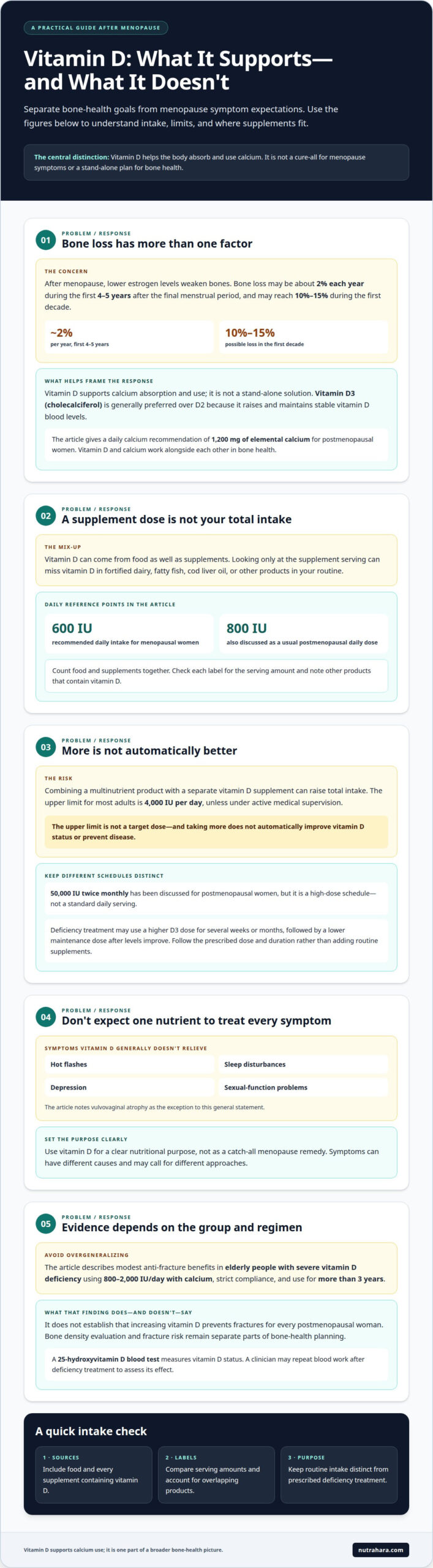
Bone health deserves attention after menopause because estrogen levels drop, weakening bones. Women may lose about 2% of bone each year during the first four to five years after their final menstrual period. Loss may reach 10% to 15% during the first decade after menopause. As bone density declines, osteoporosis and fractures become important concerns. Vitamin D supports calcium use, but it isn’t a stand-alone solution for protecting bone health.
Calcium works alongside vitamin D in this process. According to National Academies of Sciences, Engineering, and Medicine, postmenopausal women are recommended to consume 1,200 mg of elemental calcium per day. Vitamin D sources include fortified dairy products, fatty fish, and cod liver oil. Consider food and supplements together when assessing intake, since a supplement is only one part of a person’s overall nutrition.
A thoughtful approach to vitamin D for post-menopausal women starts with identifying the form and considering dietary sources. Fatty fish, for example, can provide vitamin D, while fortified dairy can provide both vitamin D and calcium. Check supplement labels for the form and serving amount, and account for other products in your routine. This helps you avoid overlapping supplements and choose an option suited to your nutritional needs.
For menopausal women, the recommended intake is 600 IU of vitamin D per day; 800 IU daily is also discussed as a usual postmenopausal dose. Vitamin D comes from fortified dairy products, fatty fish, cod liver oil, and supplements; check food labels and supplement facts for the amount in each serving.
Daily intake includes vitamin D from both food and supplements, so the supplement dose isn’t the whole picture. Fortified dairy products and fatty fish are food sources, while supplement labels list vitamin D in IU or micrograms. Compare the amount with your daily target and account for any other products you take.
A regimen of 50,000 IU twice monthly has also been discussed for postmenopausal women, but it is a high-dose schedule, not a standard daily serving. Vitamin D deficiency treatment may use a higher D3 dose for several weeks or months, followed by a lower maintenance dose after levels improve. The purpose is to address deficiency, not to increase intake without a reason.
Calcium intake matters alongside vitamin D because vitamin D helps the body absorb and use calcium. Consider the calcium in meals and supplements as part of your overall intake, rather than assuming a vitamin D product also supplies calcium. This distinction helps when comparing products and planning nutrition for bone and muscle health.
The tolerable upper intake level for most adults is 4,000 IU of vitamin D per day, unless they’re under active medical supervision. This limit refers to total daily intake, including food and supplements. It isn’t a target dose: taking more doesn’t automatically improve vitamin D status or prevent disease.
Before adding a supplement, review its serving amount alongside other products containing vitamin D. For example, combining a multinutrient product with a separate vitamin D supplement can increase your total daily intake. Higher-dose treatment has a different purpose and schedule from routine intake, so don’t treat a twice-monthly regimen as interchangeable with a daily dose.
Use these figures to guide your choices: note the vitamin D amount on each label, include dietary sources, and compare the total with the daily intake recommendation and upper limit. If you’re receiving treatment for a deficiency, follow the prescribed dose and duration rather than adding routine supplements. This helps keep your intake deliberate and supports balanced nutrition.
More vitamin D isn’t automatically better. For most adults, the tolerable upper intake level is 4,000 IU per day unless they’re under active medical supervision. Regularly stacking high-dose supplements with multinutrient products can push total intake above that limit. Add the amounts listed on each supplement label before combining products, and distinguish a prescribed deficiency treatment from routine daily supplementation.
Evidence for fracture prevention depends on the group and regimen. In elderly people with severe vitamin D deficiency, maintenance doses of 800 to 2,000 IU/day taken with calcium may provide modest anti-fracture benefits when used with strict compliance for more than 3 years. This finding doesn’t establish that escalating vitamin D prevents fractures for every postmenopausal woman. Bone density evaluation and fracture risk remain separate parts of bone-health planning.
Vitamin D shouldn’t be treated as a general menopause symptom treatment. Supplementation doesn’t relieve hot flashes, sleep disturbances, depression, or sexual-function problems, with vulvovaginal atrophy as the exception. Changing estrogen levels are part of the menopause transition, but vitamin D doesn’t replace therapies for estrogen-related symptoms. Use a supplement for a clear nutritional purpose, not as a catch-all remedy.
Higher-risk groups deserve a more targeted approach. Women at higher risk of deficiency may consider calcium and vitamin D, as study authors advised. The relevant factors include deficiency risk, current intake, and whether a clinician has prescribed a treatment dose. A 25-hydroxyvitamin D blood test measures vitamin D status, and a clinician may repeat blood work after deficiency treatment to assess its effect.
Claims about other health outcomes also need perspective. Vitamin D supplementation doesn’t affect cardiovascular event incidence or cancer incidence, though it modestly reduces cancer-related mortality. It may modestly decrease infection risk and COVID-19 severity. These findings don’t make high doses a way to improve muscle function or prevent disease broadly. Keep supplementation purposeful, and avoid raising the dose simply to pursue wider benefits.
Vitamin D is often considered for hot flashes, sleep changes, mood, and sexual wellbeing. Evidence draws a useful distinction: supplementation doesn’t help most menopausal symptoms, including hot flashes, sleep disturbances, depression, or sexual-function problems. Vulvovaginal atrophy is the exception described in the available findings. Vitamin D may matter for a specific concern, but it shouldn’t be treated as general menopause therapy.
Mood findings need careful interpretation. Postmenopausal women with the highest vitamin D intakes had a 20% lower risk of developing depressive symptoms after 3 years, compared with women with the lowest intakes. That is an association, not proof that vitamin D prevents depression. A review also found links between deficiency and health outcomes, while noting that causality couldn’t be established. Mood changes deserve attention in their own right.
Vulvovaginal atrophy has a more specific signal. A high-dose vitamin D supplement improved several signs after 6 weeks in postmenopausal women. Described approaches included oral doses of 40,000-60,000 IU/week and a 1000 IU/day vaginal suppository. These are high-dose regimens, not routine self-care suggestions. The route and dose matter, so don’t assume an ordinary daily supplement has the same effect.
A practical next step is to name the symptom you want to address. Note whether it involves hot flashes, disrupted sleep, low mood, or vaginal discomfort, then seek care focused on that concern. Vaginal dryness and irritation, for example, call for a different discussion from night sweats. This helps distinguish vitamin D deficiency from menopause-related changes and keeps supplement use aligned with evidence. Yoga, meditation, and regular movement can support general wellbeing, but they don’t make vitamin D a treatment for these symptoms.
Nutrahara offers Women’s Health Supplements for women building a thoughtful wellness routine through changing life stages. Its formulations bring together principles of ancient Ayurveda science and modern nutritional research, using clean, simple ingredients. If you’re considering supplements alongside balanced nutrition, movement, and rest, explore how Nutrahara’s approach fits your wellbeing goals.
For vitamin D decisions, focus on your specific intake and needs. A supplement should complement informed choices, not replace food sources or care for menopause symptoms. Nutrahara’s women’s health supplements offer a natural option to explore as part of your personal wellness routine.
For questions about Nutrahara’s Women’s Health Supplements, contact Nutrahara.
Choose one small practice to support your wellbeing this week. Try a gentle yoga sequence, adapting poses to your comfort, then spend a few quiet minutes noticing your breath. For meditation, sit comfortably and return your attention to breathing whenever your mind wanders. These practices can support a steady routine alongside thoughtful choices about vitamin D for post-menopausal women.
Keep it simple: choose a time that fits your day and a practice you can repeat. Your wellness routine can grow gradually as your needs change.
Contact Nutrahara with your questions, and take your next step with confidence.
Vitamin D helps your body use calcium and supports several body systems. It contributes to bone maintenance, muscle function, and immune and nervous system health. Think of it as one part of a balanced approach to wellbeing, alongside varied food choices and regular movement. To focus on your own wellbeing, consider how food choices and movement fit into your routine.
Low vitamin D isn’t established as a cause of hot flashes, and supplementation generally doesn’t relieve them. Hot flashes can occur during menopause, but they don’t by themselves indicate a deficiency. If they disrupt sleep or daily life, discuss the symptom and possible support options with a healthcare professional rather than increasing vitamin D on that basis alone.
A 25-hydroxyvitamin D blood test measures your vitamin D level. The U.S. Preventive Services Task Force concludes that evidence is insufficient to recommend for or against screening for vitamin D deficiency. To understand your intake, look at vitamin D from foods and supplements alongside your health circumstances. If you have questions about your intake or health circumstances, discuss them with a healthcare professional.
Symptoms alone can’t reliably establish whether your vitamin D is low. A blood test measures the level directly, while fatigue or aches can have many possible explanations. If symptoms persist or concern you, discuss them with a healthcare professional. You can prepare for that conversation by noting which symptoms concern you and how long they have persisted.
Midlife alone doesn’t mean someone has a vitamin D deficiency. Vitamin D status can reflect dietary intake and individual health circumstances, while menopause brings changes that make bone health an important part of wellbeing. A measured level provides different information from assumptions based on age or life stage. If you have concerns, ask a healthcare professional whether measuring your level is appropriate.
The discussed daily intake recommendation for menopausal women is 600 IU, while 800 IU daily is also cited as a usual postmenopausal dose. These are different recommendations, not amounts to combine. Count vitamin D from food and supplements, and read product labels carefully. A dose used to treat measured deficiency can differ from routine intake, so keep the purpose of each supplement clear.
This article is not a substitute for medical advice. Please consult a healthcare professional before starting any supplement, especially if pregnant, nursing, taking medication, or managing health conditions.