Categories
Articles

Supplements & Vitamins: A Daily Guide for Women

Could the most talked-about supplement be the wrong fit for you? With so many supplements & vitamins promising support for energy, bones, mood, and more, it can be hard to tell what may help and what is simply trending.

It’s reasonable to want clear guidance as your needs change through menstruation, pregnancy, lactation, perimenopause, and post-menopause. One woman’s experience: “Yoga helps me feel grounded as my needs change.” Start by connecting each choice to a specific goal rather than building a routine around wellness trends.

This guide covers common vitamins and supplements, what they may support, and where evidence is limited. It also explains how to consider nutrition alongside regular movement, yoga, and meditation, then build an approach that can adapt to your needs.

Key Takeaways

  • Start with your life stage, eating patterns, and wellness goals to identify which nutrients may deserve attention.
  • Learn how key minerals and vitamins support the body, and where everyday foods can contribute.
  • Separate popular supplement trends from well-supported benefits, and consider how evidence applies to your needs.
  • Build a steady wellness routine that pairs thoughtful nutrition choices with movement, yoga, or meditation.

Mineral supplements including magnesium, zinc, calcium, iron, and selenium

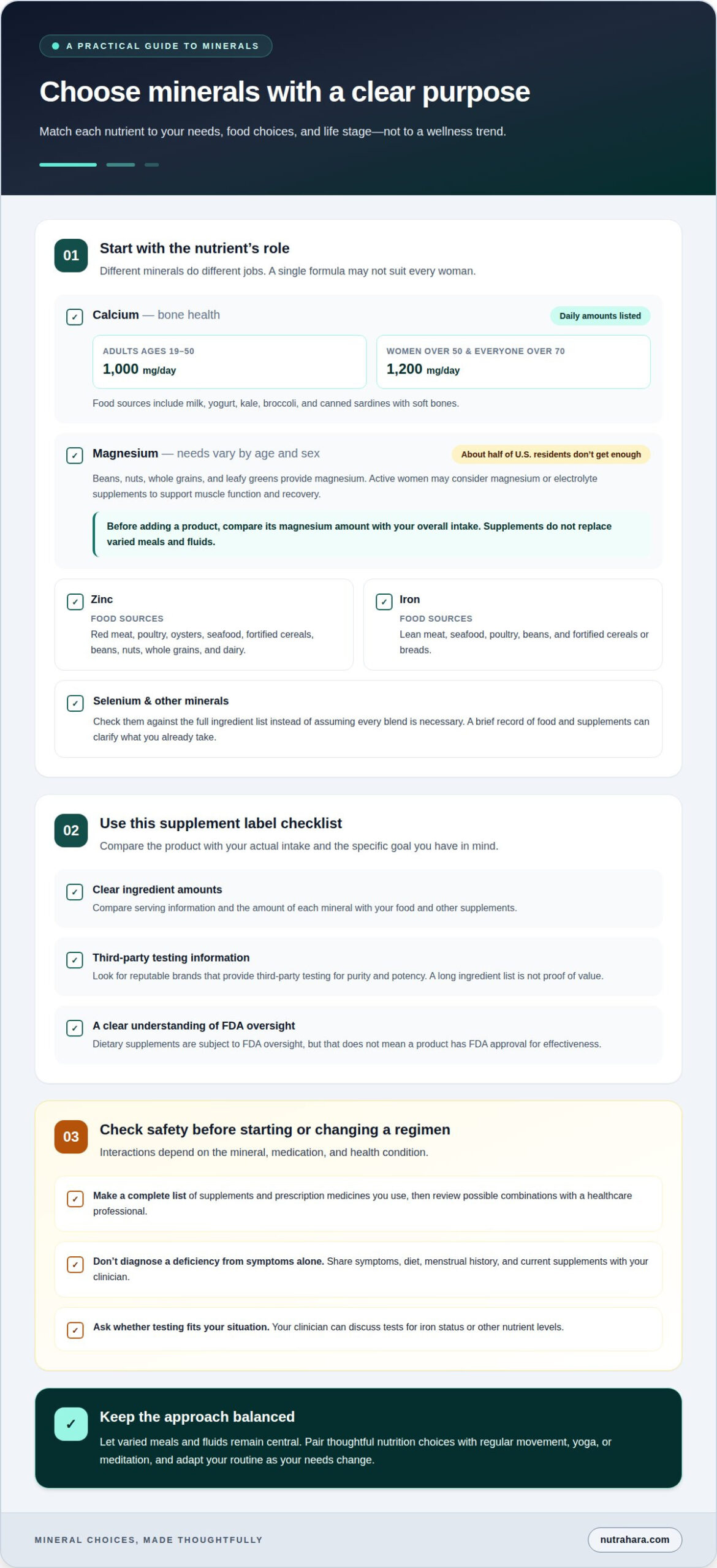
Minerals have different roles, so a single formula may not suit every woman. Calcium supports bone health, while iron helps meet needs that can vary with menstruation and life stage. Food can be a useful source: milk, yogurt, kale, broccoli, and canned sardines with soft bones contain calcium. The National Institutes of Health Office of Dietary Supplements lists 1,000 milligrams daily for children ages 4 to 8 and adults ages 19 to 50. It lists 1,200 milligrams daily for women over 50 and everyone over 70.

Magnesium needs vary by age and sex, and about half of U.S. residents don’t get enough. Beans, nuts, whole grains, and leafy greens provide magnesium. Active women may consider magnesium or electrolyte supplements to support muscle function and recovery, but supplements don’t replace varied meals and fluids. Compare the magnesium amount on the label with your overall intake before adding a product.

Zinc is found in red meat, poultry, oysters, seafood, fortified cereals, beans, nuts, whole grains, and dairy. Iron sources include lean meat, seafood, poultry, beans, and fortified cereals or breads. Check selenium and other minerals against the full ingredient list instead of assuming every blend is necessary. A brief record of your food and supplements can clarify what you already take.

When choosing supplements & vitamins in the United States, look for clear ingredient amounts and reputable brands that provide third-party testing for purity and potency. Compare serving information, and don’t treat a long ingredient list as proof of value.

Dietary supplements are subject to FDA oversight, but that doesn’t mean a product has FDA approval for effectiveness. Read the label, and assess ingredient amounts separately from any quality information.

Interactions depend on the mineral, medication, and health condition. List all supplements and prescription medicines you use, then review possible combinations with a healthcare professional before starting or changing a regimen.

Fatigue or other symptoms alone can’t establish a deficiency. Share your symptoms, diet, menstrual history, and current supplements with your clinician; ask whether tests for iron status or other nutrient levels fit your situation. Treat magnesium and ashwagandha as separate ingredients when reviewing a formula, including ashwagandha with black pepper.

Supplements such as CoQ-10, fish oils, probiotics, collagen, and melatonin

These products serve different purposes, so consider each ingredient on its own. CoQ-10 is a compound found in the body and also sold as a supplement. Probiotics are live microorganisms; products can contain different strains, so the label matters. Melatonin is a hormone involved in the sleep-wake cycle, and supplements are not a substitute for addressing ongoing sleep difficulties. For each option, ask what specific need it addresses and whether evidence supports that use.

Fish oil provides omega-3 fats, including DHA. Eating fish two to three times a week is one way to obtain DHA. If you use fish oil, read the label to see how much DHA and other omega-3s a serving contains. Fish oil is not a replacement for prescribed cholesterol care, and a supplement should not be treated as a cholesterol treatment without clinical guidance. Include your current medicines and health conditions when discussing regular use.

Probiotics can differ by strain and formulation, so a broad “probiotic” label doesn’t tell the whole story. Consider the product’s stated strains and intended use rather than assuming every formula supports immune function in the same way. Collagen supplements also vary. The page describes 28 known collagen types, with the first five being the most common. A collagen supplement can be considered as one option, while keeping whole foods central to your nutrition.

Use supplements to complement, not replace, meals built from varied whole foods. Choose reputable brands with third-party testing for purity and potency, and compare the ingredient panel with your goals. A practical step is to record the product, serving directions, and reason for taking it. That simple note helps you discuss CoQ-10, fish oil, probiotics, collagen, or melatonin clearly with a healthcare professional, especially if your routine or medications change.

Vitamins, including multivitamins and vitamins A, B, C, D, E, and K

Vitamin needs vary with food choices, health, and life stage. Varied meals are a useful starting point; supplements may help address specific gaps.

Multivitamins and Nutritional Gaps

Multivitamin-mineral supplements differ widely in composition and characteristics. Compare the label’s vitamin and mineral amounts with your usual foods and other supplements, rather than assuming every formula fills the same gaps. For example, animal foods naturally contain vitamin B12, while plant foods do not. Folic acid is added to many grain-based products, so fortified foods may also contribute to intake.

Adult Vitamin Needs and Amounts

Adults don’t all need the same multivitamin or dose. The appropriate amount depends on the nutrient, diet, and health needs. Follow the product label and avoid stacking formulas with overlapping ingredients. Green leafy, orange, and yellow vegetables provide vitamin A; citrus, peppers, broccoli, and strawberries provide vitamin C. Vitamins E and K are found in foods such as nuts, seeds, vegetable oils, and leafy greens.

Common risks include taking too much of a nutrient and interactions with medicines or health conditions. Some vitamins and minerals can also compete for absorption, so combinations and timing may matter. Review the full ingredient list before combining products, and discuss possible interactions with a healthcare professional.

Vitamin Needs Across Life Stages

Pregnancy needs differ by person, so avoid assuming one multivitamin suits everyone. Discuss supplement choices with your prenatal care team and consider folic acid from fortified grain foods as part of your overall nutrition. For children ages 1 to 18, the Endocrine Society recommends vitamin D supplements to avoid rickets and potentially reduce respiratory infection risk.

For adults 75 and older, the Endocrine Society recommends vitamin D supplements to lower mortality risk. Older adults over 65 may produce less intrinsic factor, which the body needs to metabolize vitamin B12. These examples show why age and life stage matter when choosing a formula.
Supplements & Vitamins: A Daily Guide for Women

Trends can make a familiar ingredient sound like a new discovery. CoQ-10, collagen, probiotics, fish oil, and melatonin often appear in wellness conversations, but popularity alone doesn’t show whether a product fits your needs. Start by naming the goal: filling a dietary gap, supporting a life-stage need, or addressing a concern you’ve discussed with a healthcare professional. If the purpose stays vague, pause before adding another bottle. Treat supplements & vitamins as tools for a clear purpose, not automatic wellness essentials.

Separate an ingredient from the claims made about it. A collagen product, for example, may be marketed for several outcomes, but its label shows what it contains. Check the ingredient name, amount per serving, and additional components. A blend of trendy ingredients can make it harder to tell which one suits your goal or causes an unwanted effect. Consider your current routine before adding products, and note what you hope a new choice will contribute.

Your eating patterns offer a useful reality check. Before following a trend, note the foods you regularly enjoy and where a genuine gap might exist. Fish, fortified foods, vegetables, nuts, and seeds provide nutrients, while yoga, meditation, healthy sleep habits, and regular movement support a broader wellness routine. Supplements can complement that foundation, not replace meals or everyday practices. Choices about supplements & vitamins should fit your habits, preferences, and changing needs.

Use a simple decision filter: identify the intended benefit, review the full label, and consider the evidence for that specific use. Then record what you take and why, so you can reassess whether it still matches your goals. Be especially thoughtful when a trend targets women’s changing needs across menstruation, pregnancy, lactation, or menopause. For a grounded next step, explore women’s wellness options as part of a considered routine, rather than choosing a product only because it is trending.

Nutrahara: Women’s Health Supplements

Nutrahara’s Women’s Health Supplements combine principles of Ayurveda with modern nutritional research. Made in New Zealand, they feature natural ingredients and are designed to complement a broader wellness routine. As you consider your needs through menstruation, pregnancy, lactation, or menopause, keep food, movement, rest, and guidance from your healthcare professional in view.

Supplements are one part of personal wellbeing, not a replacement for balanced eating, yoga, meditation, or care for a health concern. Explore Nutrahara’s Women’s Health Supplements to learn more about options for your wellness routine.

Make Your Next Wellness Choice Intentional

Your next step doesn’t need to be a complete routine overhaul. Choose one goal that matters to you now, such as supporting energy, building a steadier sleep routine, or staying active through a changing life stage. A thoughtful approach to supplements & vitamins starts with a clear intention and leaves room for the habits that sustain wellbeing: nourishing meals, movement, yoga, and moments of calm through meditation.

Keep your choices manageable. Notice what you’re taking, why it belongs in your routine, and whether it still reflects your needs as they change. When you’re ready to explore a women’s wellness supplement option, talk with Nutrahara about your needs.

Your health journey is personal. Move forward with care, confidence, and choices that feel right for you. For more guidance on emotional wellbeing and life-stage changes, explore women’s mental health and natural ways to support wellness.

Frequently Asked Questions

14 Common supplements: Are they beneficial or a waste of money?

Neither label fits every supplement; usefulness depends on the ingredient, purpose, and your needs. Fish oil, probiotics, collagen, and melatonin, for example, serve different roles, so popularity alone can’t tell you whether one is a good fit. Define your goal, read the full ingredient panel, and consider how the product fits your diet and routine. Don’t choose a blend simply because it combines several trending ingredients.

What Are the Signs of Magnesium Deficiency?

No single symptom confirms magnesium deficiency, because tiredness or muscle discomfort can have many causes. Consider your overall food intake, health history, and any changes in how you feel rather than drawing conclusions from one sign. A healthcare professional can assess those details and determine whether testing is appropriate. Keep a record of magnesium products and other supplements you use so the review reflects your full intake.

Which supplements have strong scientific evidence for specific health benefits?

Evidence depends on the ingredient and intended use, rather than a supplement’s popularity. One specific example is vitamin D: the Endocrine Society recommends supplements for people ages 75 and older to lower mortality risk, and for people ages 1 to 18 to avoid rickets and potentially reduce respiratory infection risk. These recommendations apply to those age groups, not automatically to every adult or every wellness goal.

Are multivitamins better than taking individual vitamins or getting nutrients from food?

There isn’t one best choice for everyone. Food can provide several nutrients together, while a multivitamin-mineral product combines selected ingredients in amounts that vary by formula. An individual supplement may be a more focused option when there’s a clear reason to target one nutrient. To compare options, review your usual meals and product labels for overlapping ingredients, then consider whether each item serves a distinct purpose.

How much do popular vitamins and supplements cost in the United States?

U.S. consumers spend about $60 billion a year on nutritional supplements, or about $175 per capita. The material gives no prices for individual vitamins or supplements.

Article by

Nutrahara Team

We are a dedicated collective of nutrition scientists and naturopaths at Nutrahara, committed to advancing women's health through the fusion of ancient Ayurveda science and cutting-edge nutrition research. Our mission is to empower you with clean, simple, and scientifically validated wellness solutions so you can live your healthiest life. Connect with us to stay updated on the latest developments in holistic women's health and nature-based research.

Disclaimer

This article is not a substitute for medical advice. Please consult a healthcare professional before starting any supplement, especially if pregnant, nursing, taking medication, or managing health conditions.

Categories
Articles

Supplements and Vitamins: Your Essential Daily Guide

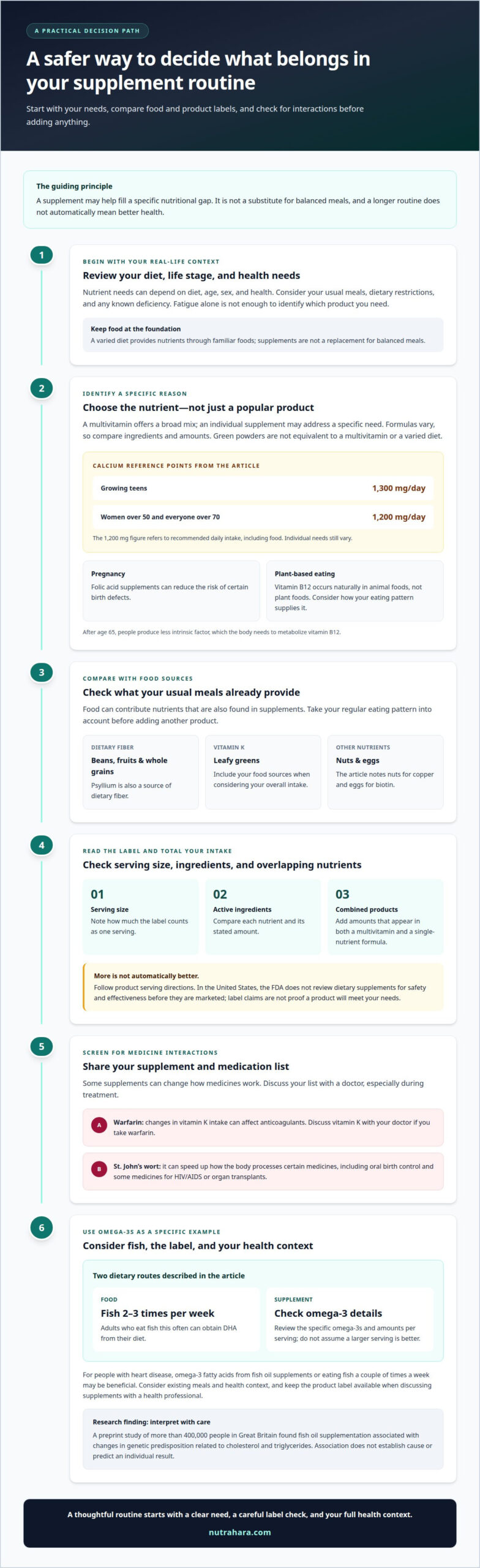
A longer supplement routine doesn’t necessarily mean better health. Supplements and vitamins can help address a specific nutritional need, but taking them without a clear reason may add little, and large doses can be harmful. Their value depends on what you take, how much you take, and your individual needs.

It’s understandable to look for extra support for energy, wellbeing, or immune function, especially as your body’s needs change through different life stages. But a familiar label or a promise of immune support doesn’t tell the whole story. What matters is how a supplement fits with your diet, health, and any medicines you take.

Here, you’ll learn how common supplements may help or fall short, what to consider about fish oil and omega-3s, and why vitamins don’t work as a one-size-fits-all shield for immune health. We’ll also cover practical ways to think about food sources, doses, and safety, so you can make calmer, more informed choices for your wellbeing.

Key Takeaways

  • Assess whether a supplement fills a real dietary need, and consider your life stage, food choices, and medications before adding one.
  • Compare common nutrients with food sources and recommended intake to make more informed choices about what may be useful.
  • Learn how fish oil and omega-3s fit into dietary choices, and why supplements aren’t a universal solution for immune function.
  • Explore how Nutrahara’s women’s health supplements may fit into a thoughtful, research-aware approach to wellbeing.

Are supplements and vitamins good for you?

Supplements can help address a specific nutritional gap, but they aren’t a substitute for balanced meals. The right choice depends on your diet, life stage, and health needs.

Multivitamins and Individual Supplements

Choose a multivitamin for a broad mix of nutrients, or an individual supplement for a specific need. Multivitamin and mineral products vary widely, so compare the label’s amounts and ingredients rather than assuming their formulas are alike. Green powders also differ in composition and aren’t equivalent to a multivitamin or a varied diet. Food is the foundation of good nutrition.

Assessing Vitamin and Mineral Needs

There isn’t one list or dose that suits every adult; needs depend on diet, age, sex, and health. Review your usual meals, dietary restrictions, and any known deficiency with a health professional, rather than using fatigue alone to choose a product. Magnesium needs vary by age and sex. According to the National Institutes of Health, Office of Dietary Supplements, the recommended calcium intake for growing teens is 1,300 milligrams per day.

Supplement Needs for Specific Groups

Pregnancy changes nutritional needs: folic acid supplements can reduce the risk of certain birth defects. Adults over 50 may benefit from added calcium and other vitamins as they grow older. After age 65, people produce less intrinsic factor, which the body needs to metabolize vitamin B12. If you follow a plant-based diet, note that B12 occurs naturally in animal foods, not plant foods, and consider how your eating pattern supplies it.

Supplement Interactions With Prescription Medications

Some supplements can change how medicines work. Changes in vitamin K intake can affect anticoagulants, so if you take warfarin, discuss vitamin K with your doctor. St. John’s wort can speed up how the body processes certain medicines, including oral birth control and some drugs for HIV/AIDS or organ transplants. Before starting a supplement, share your medication and supplement list with your doctor, especially during treatment.

14 Common supplements: Are they beneficial or a waste of money?

A supplement is most useful when it addresses a real dietary gap, not simply because it’s popular. Before deciding what belongs in your routine, compare the evidence, food sources, and label details.

Evidence for Common Supplements

Consider what a product contains and the specific purpose it serves. Probiotics, for example, are different from vitamins and minerals, and evidence for one supplement doesn’t apply to another. Psyllium is a source of dietary fiber; fiber-rich foods such as beans, fruits, and whole grains can also support everyday nutrition. A varied diet provides nutrients through familiar foods, including leafy greens for vitamin K, nuts for copper, and eggs for biotin.

Supplement needs can shift with life stage and eating pattern. Folic acid supplements during pregnancy can reduce the risk of certain birth defects. According to the National Institutes of Health, Office of Dietary Supplements, the recommended daily calcium intake for women over 50 and everyone over 70 is 1,200 milligrams per day. Use that figure as a reference for total intake, including food.

Reading Labels and Avoiding Excessive Doses

Read the serving size, active ingredients, and amount of each nutrient. Compare products you already take, as a multivitamin and a single-nutrient formula may contain some of the same nutrients. Add the amounts together before using both, and follow the product’s serving directions rather than assuming more is better.

In the United States, the U.S. Food and Drug Administration does not review dietary supplements for safety and effectiveness before they are marketed. Treat label claims as information to assess, not proof that a product will meet your needs. A useful next step is to record your usual foods, supplements, and medications, then discuss the list with a health professional. For a focused nutrient option, explore a vitamin B complex supplement.

Fish oil and omega-3 fatty acids

Fish oil supplements provide one way to add omega-3 fatty acids to a diet. Food can also supply DHA, an omega-3 fatty acid. Adults who eat fish two to three times per week can obtain DHA from their diet. Consider your regular meals first, then compare them with the reason you’re considering a supplement.

Fish oil and omega supplements aren’t interchangeable with every wellness choice. Check the label for the specific omega-3s and amounts per serving, then compare those details with your current routine. Don’t assume that a larger serving is better. A balanced eating pattern still includes vegetables, protein foods, and other nutrients such as calcium, which serve different nutritional roles.

For people with heart disease, omega-3 fatty acids from fish oil supplements or eating fish a couple of times a week may be beneficial. That gives two dietary routes to consider: fish as food, or a supplement. The decision should reflect existing meals and health context, rather than a general promise of better heart health. Keep the product label available when discussing supplements with a health professional, especially if you take medicine.

A preprint study of more than 400,000 people in Great Britain found fish oil supplementation associated with changes in genetic predisposition related to cholesterol and triglycerides. An association does not establish that taking fish oil causes those changes or predicts an individual result. Treat the finding as one research detail, not a personal outcome forecast.

To make a practical choice, note how often fish appears in your meals and why you’re considering omega-3s. If fish is already a regular part of your diet, account for that source before adding capsules. If you rarely eat fish, compare the supplement’s stated omega-3 content and serving directions. This simple review helps keep your plan intentional and avoids treating fish oil as a replacement for varied foods.

Supplements and Vitamins: Your Essential Daily Guide

Vitamin supplements and immune function

Immune function depends on your overall nutritional state, not one capsule promising a quick boost. A vitamin supplement can help address a nutrient gap, but it doesn’t replace varied meals. Build meals around foods such as vegetables, fruit, beans, and whole grains. Then review a supplement’s ingredients and purpose instead of choosing it solely for an “immune support” label.

Vitamin D is one specific example. For people ages 1 to 18, the Endocrine Society recommends vitamin D supplements to avoid rickets and potentially reduce respiratory-infection risk. That recommendation applies to this age group; it doesn’t establish the same routine for every adult. For your own plan, consider your existing diet, life stage, and any supplements already taken. Avoid stacking products without first comparing their ingredient lists.

Distinguish immune claims from general wellness language. A product may combine vitamins with herbs or other ingredients, but that doesn’t prove it prevents infection. Creatine, for example, is a different supplement category from vitamins; including it in a wellness routine doesn’t make it an immune nutrient. Focus on the stated ingredients and intended use, and treat broad promises cautiously.

A practical approach is to write down what you eat and take, then identify a specific nutrient concern before choosing a product. Include whole grains and other everyday foods in that review, since supplements don’t replace a balanced eating pattern. If pregnancy, lactation, or a health condition affects your routine, bring the ingredient list to a healthcare professional. To review a focused nutrient format, explore this vitamin B complex supplement and its listed ingredients.

Nutrahara: Women’s Health Supplements

Nutrahara offers women’s health supplements for those seeking a considered addition to their wellness routine. Its formulations combine principles of Ayurveda with modern nutritional research, using natural, clean ingredients.

These supplements may be worth exploring when you’ve identified a specific wellness goal and want to consider products designed for women. Read each product’s ingredient information alongside your current diet and supplements, particularly as your needs shift through menstruation, pregnancy, lactation, or menopause. Supplements can complement healthy habits, including nourishing meals, movement, yoga, and rest, but they don’t replace them.

Explore Nutrahara’s women’s health supplements at nutrahara.com.

Make Your Next Wellness Choice With Confidence

Start with one health goal, note what you already eat and take, and use that information to guide your decisions. A thoughtful approach to supplements and vitamins is personal, not a test of how many products you can add to your routine. Your needs may shift with menstruation, pregnancy, lactation, or menopause, so revisit your choices as life changes.

Keep the foundations steady, too. Nourishing meals, movement you enjoy, restorative sleep, and practices such as yoga or meditation can support a balanced approach to wellbeing. If you’re considering women’s health supplements, take time to understand their ingredients and how they fit your goals and existing routine.

Contact Nutrahara with your questions as you consider your next step. You can build a wellness routine with care, clarity, and confidence.

Frequently Asked Questions

What are the benefits and evidence for common supplements such as vitamin D, B12, and magnesium?

The clearest reason to consider a nutrient is a specific need, rather than a general promise of better health. Evidence and benefit differ by nutrient and individual; vitamin D, B12, and magnesium aren’t interchangeable. Track your food choices and any known deficiencies, then consider whether a product addresses a gap. A testimonial describes one person’s experience, not proof that the same benefit will apply to you.

What are the risks and side effects of taking vitamins and supplements?

Risks include taking more than intended, experiencing unwanted effects, or changing how a medicine works. Keep a written list of products and serving directions, and note any new symptoms after starting a supplement. If you take prescription medicine, include your supplements in a medication review. This gives you a practical record to discuss instead of relying on memory.

How can I choose safe, high-quality supplements in the United States?

Choose a product with a readable ingredient list, clear serving directions, and a purpose that matches your needs. Check that the label names the nutrients and amounts, then compare it with other products in your routine. In the United States, the U.S. Food and Drug Administration doesn’t review supplements for safety and effectiveness before marketing, so promotional wording isn’t independent proof.

What does USP Verified or NSF Certified mean for supplements?

These marks refer to separate third-party verification programs, not FDA approval. Their meaning depends on the specific program and product, so read the accompanying explanation instead of assuming a mark guarantees every aspect of quality or suitability. A verification seal also can’t tell you whether an ingredient is appropriate for your diet, health needs, or medications.

How are supplements regulated by the FDA in the United States?

The FDA regulates dietary supplements under the food category, rather than approving each product as a medicine before it is marketed. The agency monitors claims and reports of side effects after products reach the market. Keep the package and product details if you need to identify what you took, and report concerning reactions through appropriate medical channels.

What vitamins and supplements do adults need, and how much of each?

There isn’t one set of vitamins or doses that suits every adult; needs depend on diet, age, sex, and health. As references, calcium intake is 1,200 milligrams daily for women over 50 and everyone over 70, and 1,300 milligrams for growing teens.

Article by

Nutrahara Team

We are a dedicated collective of nutrition scientists and naturopaths at Nutrahara, committed to advancing women's health through the fusion of ancient Ayurveda science and cutting-edge nutrition research. Our mission is to empower you with clean, simple, and scientifically validated wellness solutions so you can live your healthiest life. Connect with us to stay updated on the latest developments in holistic women's health and nature-based research.

Disclaimer

This article is not a substitute for medical advice. Please consult a healthcare professional before starting any supplement, especially if pregnant, nursing, taking medication, or managing health conditions.

Categories
Articles

Vitamin D: Key Benefits for Women’s Daily Health

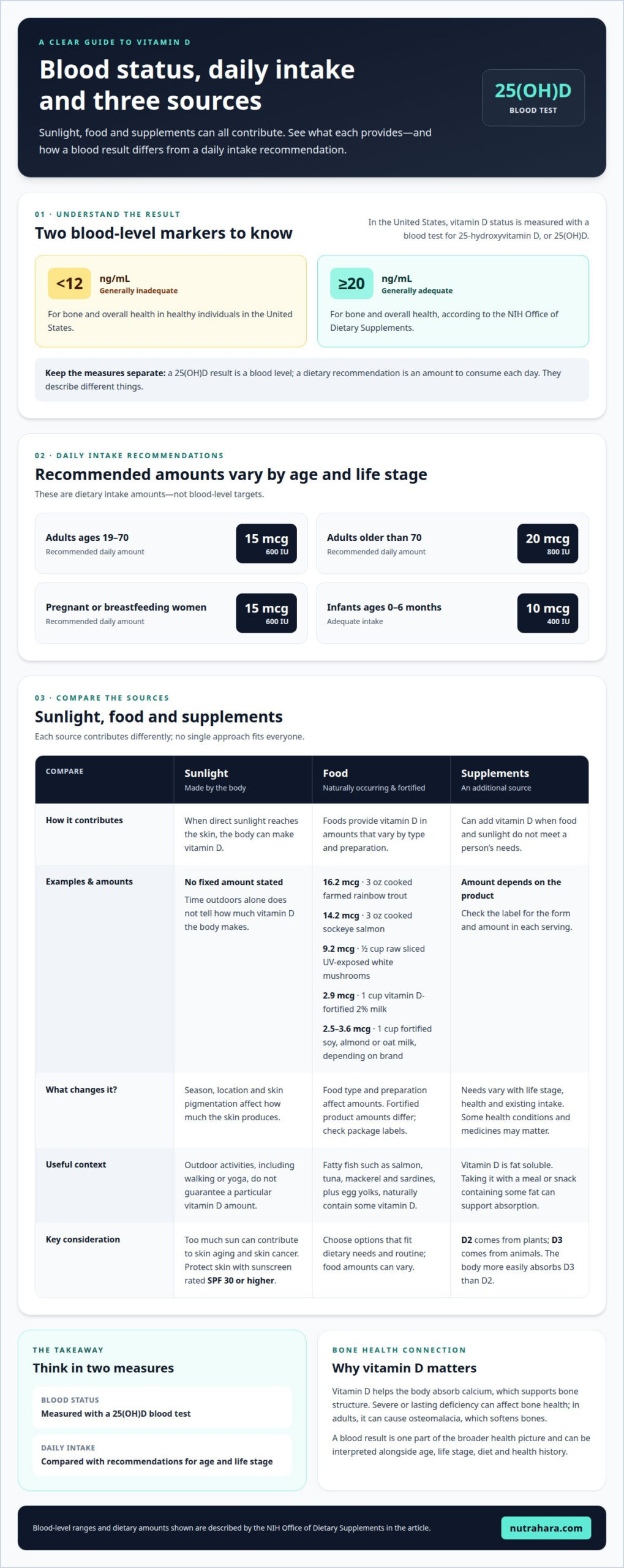
In the United States, vitamin D status is measured with a blood test for 25-hydroxyvitamin D, or 25(OH)D. According to the National Institutes of Health Office of Dietary Supplements, levels below 12 ng/mL are generally inadequate for bone and overall health, while levels of at least 20 ng/mL are generally adequate. These ranges offer a clearer picture than guessing from sunshine alone. A vitamin D result can be one useful piece of information as you think about your health.

Sunlight helps the body make vitamin D, but production varies from person to person. Season, location, and skin pigmentation all play a part, so time outdoors doesn’t tell the whole story. For women balancing work, exercise, family, and changing life stages, understanding how this nutrient enters the picture can be useful. A vitamin D routine is about more than spending extra time outside.

This article explains deficiency and how sunlight, food, and supplements contribute to overall intake. It also covers why the skin’s production changes, helping you understand which everyday factors you can influence. Use this information to reflect on your habits, ask informed questions about your health, and build a practical routine alongside movement, nourishing meals, and rest.

Key Takeaways

  • Learn how low levels are identified and why adequate intake matters for bone health and other vital body functions.
  • Compare sunlight, food, and supplements to understand how each can contribute to your daily intake.
  • Recognize how season, location, skin pigmentation, and other factors influence how much your body makes outdoors.
  • Explore practical ways to support your wellness routine and understand when supplements may warrant extra care.

What is vitamin D deficiency?

Deficiency means the body has too little vitamin D to support its needs. This nutrient helps the body absorb calcium and maintain healthy bones. A blood test measures 25-hydroxyvitamin D, written as 25(OH)D. According to the National Institutes of Health Office of Dietary Supplements, levels below 12 ng/mL are generally inadequate for bone and overall health in healthy individuals in the United States. Levels of at least 20 ng/mL are generally adequate for bone and overall health, according to the National Institutes of Health Office of Dietary Supplements.

Recommended dietary amounts vary by age and life stage. According to the National Institutes of Health Office of Dietary Supplements:

  • Adults ages 19-70: 15 mcg daily (600 IU).
  • Adults older than 70: 20 mcg daily (800 IU).
  • Infants ages 0-6 months: adequate intake of 10 mcg daily (400 IU).
  • Pregnant and breastfeeding women: 15 mcg (600 IU) daily.

These are recommended intake amounts, not blood-level targets. A level result and a dietary intake figure describe different things. For example, a pregnant woman can compare her intake with the recommendation, while a 25(OH)D blood test assesses her measured status.

Why does the distinction matter? The body needs vitamin D to absorb calcium, which supports bone structure. Severe or lasting deficiency can affect bone health. In children, deficiency can cause rickets, a disease that weakens developing bones. For adult women, maintaining bone health matters through changing life stages, including after menopause, when fracture concerns may become more relevant.

A personal account can add perspective, but it should reflect a real woman’s words and experience. It should not replace medical evidence or be invented to illustrate a test result. Blood-test information is one part of the broader health picture and should be interpreted alongside age, life stage, diet, and health history. If circumstances change, such as pregnancy or dietary habits, revisit whether your intake aligns with the recommended amount.

Sunlight, diet, and supplements as sources of vitamin D

Sunlight, food, and supplements can all contribute to vitamin D intake. Pairing awareness of food sources with sensible sun protection can help you make informed daily choices.

Sunlight as a Vitamin D Source

When direct sunlight reaches your skin, your body can make vitamin D. This natural process is one source, but it isn’t a reason to seek unprotected sun exposure. Too much sun can contribute to skin aging and skin cancer, so protect your skin with sunscreen rated SPF 30 or higher. The balance matters: sunlight may contribute, while season, location, and pigmentation affect how much your skin produces. Outdoor activities such as walking or yoga can support an active routine, but they don’t guarantee a particular amount.

Dietary and Fortified Food Sources

Food provides another way to add this nutrient, with amounts varying by type and preparation. In the United States, a 3-ounce serving of cooked farmed rainbow trout provides 16.2 mcg; cooked sockeye salmon provides 14.2 mcg. A half-cup of raw sliced white mushrooms exposed to UV light provides 9.2 mcg. These examples make it easier to compare options when planning meals.

Fortified products can contribute, too. One cup of vitamin D-fortified 2% milk provides 2.9 mcg, while a cup of fortified soy, almond, or oat milk provides 2.5-3.6 mcg, depending on the brand. Check package labels, since amounts differ. Fatty fish such as salmon, tuna, mackerel, and sardines, plus egg yolks, naturally contain some. Choose foods that fit your dietary needs and routine.

Supplements as an Additional Source

Supplements offer another source when food and sunlight don’t meet a person’s needs. Vitamin D is fat soluble, so taking a supplement with a meal or snack containing some fat can support absorption. The body more easily absorbs D3 than D2. These differences can help you understand product labels, but don’t assume every woman needs the same approach. Children, pregnant or breastfeeding women, and adults may have different nutritional needs. A balanced plan considers food, sunlight, and supplements together, rather than relying on one source alone.

Vitamin D supplements

Supplements offer another source when sunlight and food don’t provide enough. The right approach depends on factors such as life stage, health, and existing intake. For guidance on the best supplements and vitamins for women’s health, consider how your life stage, eating patterns, and personal priorities shape your choices.

Adults ages 19-70 are recommended to get 15 mcg (600 IU) daily, according to the National Institutes of Health Office of Dietary Supplements. People who may need extra include older adults, breastfed infants, people with dark skin, and those with conditions affecting fat absorption.

Vitamin D2 and D3 Supplements

D2, or ergocalciferol, comes from plants, while D3, or cholecalciferol, comes from animals. The body more easily absorbs D3 than D2, so the form matters when comparing supplement labels. Both forms provide the same nutrient, but their sources differ. Read the label to identify the form and amount contained in each serving.

Supplement Use and Treatment

Supplements can address deficiency, but treatment depends on its cause and a person’s health needs. A health care provider may order a blood test and consider factors such as diet, health conditions, and medicines. Severe deficiency can cause osteomalacia, which softens adult bones, and supplements are used to treat it. They can also help with inherited conditions that prevent the body from using or absorbing vitamin D. Breastfed infants may need extra intake, so children’s needs require age-appropriate guidance.

Recommended Doses and Toxicity

There isn’t one supplement dose for everyone. For adults ages 19-70, the recommended intake is 15 mcg (600 IU) daily, according to the National Institutes of Health Office of Dietary Supplements. This amount refers to total intake, not necessarily a supplement dose. Taking more than 4,000 IU of vitamin D per day from supplements might cause harmful side effects, according to the National Institutes of Health Office of Dietary Supplements.

Too much vitamin D from supplements can cause toxicity, unlike sunlight exposure, which doesn’t cause vitamin D toxicity. Before taking another supplement, add up the amounts in products that contain it, including multivitamins. Checking labels can help prevent unintentionally stacking doses. If you have concerns about osteoporosis or a previous deficiency, discuss an appropriate plan with a health care provider.

Vitamin D: Key Benefits for Women's Daily Health

Factors affecting vitamin D production from sunlight

Sunlight on exposed skin can start the body’s production of vitamin D, but the amount varies. Season, location, skin pigmentation, age, and body composition all affect production. Two women with similar outdoor routines may therefore produce different amounts. Treat time outside as one part of your wellness routine, not a dependable measure of your vitamin D status.

Geography and season shape available UVB light. Some people living north of 37 degrees latitude cannot get enough winter UVB sunlight to make sufficient vitamin D. A bright winter day may not provide the same conditions as summer. Consider the season and your location when thinking about sunlight as a source, rather than relying on how sunny the sky looks.

Skin pigmentation also influences production. Pigmentation can reduce vitamin D production in the skin by over 90%. Skin’s ability to make it decreases with age, too. These factors help explain why outdoor habits don’t produce a uniform result, even among women following similar schedules.

Body composition is another consideration. A body mass index greater than 30 is associated with lower vitamin D levels. This association doesn’t mean body weight alone determines an individual’s status. Sunlight exposure is one part of a broader picture that also includes food intake and other personal factors.

Build movement and mindfulness into a routine you can sustain. For example, take a sun-safe walk when it suits your schedule, then follow it with a short indoor yoga session or a few quiet minutes of meditation. These practices support a balanced wellness routine, but they don’t determine how much your skin produces. Avoid summer sunshine, especially between 10 a.m. and 2 p.m.; don’t extend exposure to try to increase international units. When season, latitude, pigmentation, or age limit production, dietary sources can contribute too.

Nutrahara: Women’s Health Supplements

Nutrahara offers Women’s Health Supplements for women making thoughtful wellness choices alongside everyday habits such as balanced meals, movement, and rest. Its supplements combine principles of ancient Ayurveda with modern nutritional research and natural, clean ingredients. As you consider how sunlight, food, and supplements fit into your routine, explore Nutrahara’s broader support for women’s wellness. Supplements aren’t a substitute for medical care or a personalized plan for addressing deficiency. When reviewing your options through changing life stages, consider what aligns with your needs and existing routine. Visit Nutrahara online to explore its Women’s Health Supplements.

Make Your Wellness Routine Your Own

Wellness grows through choices you can sustain, not a perfect routine. Let what you’ve learned about vitamin D inform your everyday habits, while keeping movement, nourishing meals, and rest in balance. A walk outside, a steady yoga practice, or a quiet moment for meditation can each become a meaningful part of caring for yourself. Notice what feels manageable through changing seasons and life stages, and make adjustments with intention rather than pressure.

Your next step can be simple: choose one habit to nurture and give it room to become part of your rhythm. If you’d like to explore Nutrahara’s approach to women’s wellness, visit Nutrahara online. Keep building a health journey that feels informed, personal, and kind to you.

Frequently Asked Questions

What does vitamin D help with the most?

Vitamin D’s clearest role is helping the body absorb calcium and maintain bones. It also plays a part in nerve, muscle, and immune function. When planning meals to support bone health, for example, consider both calcium-containing foods and sources of vitamin D. These nutrients work together, but neither replaces balanced nutrition or individualized care for a bone condition.

Can vitamin D alleviate depression?

It may help with negative emotions for some people, but it shouldn’t be treated as a substitute for mental health care. A review involving 7,534 people found supplementation improved negative emotions in people experiencing them. That finding doesn’t mean supplements treat depression for everyone. If low mood affects daily life, speak with a qualified health professional about support suited to your situation.

Can vitamin D status affect testosterone levels in men?

A person’s vitamin D status alone can’t establish whether testosterone is low or high. Men concerned about testosterone should seek a proper medical assessment rather than use supplements to try to change hormone levels. Energy, mood, and libido can have many causes, so treating one nutrient level as a hormone result may lead to the wrong conclusion.

Can you ever have too much vitamin D?

Yes. Taking more than 4,000 IU of vitamin D per day from supplements might cause harmful side effects, according to the National Institutes of Health Office of Dietary Supplements. Check the serving information on each supplement, especially if you use a multivitamin alongside a separate product. Add the amounts together rather than assuming each product can be considered on its own.

Does sunscreen decrease vitamin D?

Sunscreen reduces UVB reaching the skin, which can also reduce skin production of vitamin D. That doesn’t make skipping sun protection a sound strategy: unprotected exposure can damage skin. The article recommends sunscreen with SPF 30 or higher. Food sources and supplements can contribute without relying on deliberate, unprotected sun exposure.

How can I raise my vitamin D level quickly?

Start by identifying your level with a 25-hydroxyvitamin D blood test, then use the result to guide next steps with a health professional. Avoid trying to speed things up by taking large doses: more isn’t automatically better. Review foods and supplements you already use, including fortified products, so your plan accounts for your full intake.

Article by

Nutrahara Team

We are a dedicated collective of nutrition scientists and naturopaths at Nutrahara, committed to advancing women's health through the fusion of ancient Ayurveda science and cutting-edge nutrition research. Our mission is to empower you with clean, simple, and scientifically validated wellness solutions so you can live your healthiest life. Connect with us to stay updated on the latest developments in holistic women's health and nature-based research.

Disclaimer

This article is not a substitute for medical advice. Please consult a healthcare professional before starting any supplement, especially if pregnant, nursing, taking medication, or managing health conditions.
Categories
Articles

Supplement Quiz for Your Diet, Lifestyle, and Goals

Supplements can interact with prescription and over-the-counter medicines, so a quiz to find the right supplements for me should account for your medication list. Recommendations are more useful when they reflect your health priorities and existing routines. Treat a quiz as an organized starting point, not a final decision about what to add to your daily routine.

Your needs can change through menstruation, pregnancy, breastfeeding, perimenopause, and menopause. Your goals and habits matter, too. You might be building a strength-training routine, making time for yoga, or using meditation to support a calmer day. These choices are part of your overall wellbeing, alongside your diet and any supplements you currently take.

This guide explains how these details may shape quiz recommendations and what to consider before acting on them. Learn how to prepare useful answers, assess nutrition and daily habits, and recognize when a health question calls for professional guidance. The goal is to help you make your next wellness decision with greater clarity and confidence.

Key Takeaways

  • Gather your goals, diet pattern, lifestyle details, medications, and current supplements to make quiz answers more useful.
  • Compare potential nutrient needs with what you already eat, including foods that fit your preferences and routine.
  • Use a quiz to organize questions, not to diagnose a health concern or replace guidance from a healthcare provider.
  • For pregnancy, medication questions, or suspected health problems, make professional guidance part of your next step.

Can supplements interact with my medications?

Yes. Vitamins and herbal supplements can interact with prescription and over-the-counter medicines. St. John’s wort may cause dangerous serotonin levels for people taking antidepressants. Higher doses of some vitamins and minerals can also increase side effects and interaction risks. A quiz can flag medication details, but it can’t assess your full medical history.

A personalized supplement quiz can use your health goals, diet, and lifestyle to shape recommendations. It may ask whether you want to support energy, sleep, or exercise routines, and whether you follow a vegetarian diet. Your answers can point to topics to explore, but they aren’t a diagnosis or proof that you need a supplement. For a useful result, include your current vitamins and supplements, medication names, and doses.

Quiz questions may cover personal details such as your name, age, sex, and diet. Answer accurately, including whether you’re pregnant or breastfeeding, and note life-stage changes such as menopause if asked. Compare recommendations with your current routine. Look for duplicate ingredients across products, follow each label’s directions, and don’t exceed its recommended dose. If a recommendation includes an ingredient that may interact with a medicine, discuss it with your healthcare provider before taking it.

Quiz services can differ in ingredients, price, and cancellation terms, so there’s no single standard plan to compare. Personalized plans and quiz-based subscriptions also vary in cost according to the plan and subscription terms.

During pregnancy or breastfeeding, don’t start a new supplement based only on a quiz. Avoid self-selecting herbal blends or high-dose vitamins; discuss the specific ingredients and doses with your doctor.

To review a supplement, read its label for ingredient amounts, directions, and expiration date. The U.S. Pharmacopeial Convention, NSF International, and ConsumerLab test supplements for purity, potency, and availability. Check the packaging for their testing marks, and compare the listed ingredients with your medicines and current supplements.

Quiz questions about goals, diet, lifestyle, and current supplements

A useful quiz turns broad intentions into clear priorities. Instead of selecting “better health,” choose a focus such as steady energy, sleep habits, exercise recovery, or nutrition during menopause. A focused goal makes recommendations easier to assess and helps keep a wellness quiz from sounding like a diagnosis. If you’re thinking, “I want a quiz to find the right supplements for me,” start by naming the change you hope to support.

Personal details put your answers in context. A quiz may ask for your name, age, sex, and diet. It may also ask about life stage, including menstruation, pregnancy, breastfeeding, or menopause. These details can shape which questions come next. Share accurate information, and note when an answer doesn’t reflect your circumstances.

Diet and daily routines add useful context. Describe your eating pattern, including whether you avoid animal products, and list the supplements you already take. Include habits such as yoga, strength training, meditation, and sleep routines if asked. For example, someone who practices evening yoga and wants better sleep has a different starting point from someone focused on exercise nutrition. A quiz to find the right supplements for me should connect its suggestions to the details I provide.

  • Choose one priority: Name the goal you want to address first, such as energy or sleep.
  • Describe your nutrition: Note dietary patterns and foods you regularly avoid.
  • List your routine: Record current vitamins and supplements, including labeled doses.
  • Review the result: Compare suggested ingredients with your answers and existing habits.

Look for a clear connection between each recommendation and your stated goal. If a quiz suggests a supplement but doesn’t explain why it fits your answers, treat that as a prompt to learn more, not a reason to add it automatically. Your answers can guide thoughtful choices, but they don’t replace clinical assessment when symptoms need attention.

Take the quiz when you have time to review your eating habits and supplement labels. This preparation helps you answer consistently and spot recommendations that overlap with your current routine.

Dietary sources and supplementation needs

Start with your regular meals. A balanced diet can provide nutrients through fruits, vegetables, beans, whole grains, and other fresh foods. The quiz’s daily targets are 2 cups of fruit and 2½ cups of vegetables. Track what you actually eat for a few days, then note gaps or foods you avoid. A vegetarian pattern, for example, may change which nutrients deserve attention.

Dietary patterns and life stages matter. Pregnant women and vegetarians may require extra nutrients through vitamins, depending on age and gender. Vitamin B12 needs particular consideration for vegans because it’s absent from plant foods; fortified cereals can provide it. Record your usual meals and life stage before reviewing a quiz result. That gives you practical context for considering whether a recommendation fits.

Vitamin D is another nutrient to discuss in context. The NIH Office of Dietary Supplements recommends a vitamin D recommended dietary allowance of 600-800 IU daily. A quiz result doesn’t show whether you have a deficiency. If you’re concerned about a health problem or nutrient status, consult your doctor about appropriate evaluation and next steps.

In the United States, dietary supplements are regulated under the Dietary Supplement Health and Education Act of 1994, according to the U.S. Congress. The FDA has not evaluated statements made about these products, and they aren’t intended to diagnose, treat, cure, or prevent disease. Read labels for ingredients and directions, then compare them with your diet and current supplements. Food remains the foundation; a supplement should address a relevant need rather than replace varied meals.

Supplement Quiz for Your Diet, Lifestyle, and Goals

Quiz is educational and not a substitute for healthcare-provider guidance

A supplement quiz organizes information; it doesn’t diagnose a condition or determine treatment. For example, a result suggesting a vitamin or mineral doesn’t explain why you feel tired or identify the cause. Use quiz results for educational purposes: to prepare focused questions, not as a medical conclusion.

If you have or suspect a health problem, contact your family doctor for consultation, diagnosis, and treatment. Describe the symptom, when it began, and how it affects your daily activities. Persistent fatigue, changes in menstrual patterns, or ongoing sleep difficulties, for instance, deserve more than a generic quiz result. A qualified professional can assess your symptoms alongside your health history.

Pregnancy and breastfeeding call for added care. Before starting any new supplement during pregnancy, speak with your doctor. Bring the product label and a list of your current supplements, including ingredient amounts. These details help your healthcare provider consider your situation rather than relying on a quiz’s general recommendation. The same careful review can help clarify questions about supplements during breastfeeding.

  • Use the result as a prompt: Write down the ingredient, stated purpose, and question it raises.
  • Share the full picture: Include medicines, vitamins, and minerals you already take.
  • Seek assessment for symptoms: A quiz cannot establish a reliable medical diagnosis.

Keep the distinction clear: wellness goals, such as supporting a balanced routine, differ from investigating a possible health concern. A quiz may help organize choices around diet or lifestyle, but symptoms require professional assessment. If a result seems to conflict with medical advice, pause before acting and discuss the specific recommendation with your healthcare provider. This matters especially when pregnancy, breastfeeding, or ongoing treatment affects your decisions.

Takeaway: use a quiz to prepare, not to self-diagnose. A clear list of your questions, product labels, and current routine can make a conversation with your doctor more specific and useful.

Nutrahara: Women’s Health Supplements

Nutrahara offers Women’s Health Supplements for women seeking options that fit their wellness priorities and daily routines. Its formulations combine principles of ancient Ayurveda science with modern nutritional research and use natural, clean ingredients. If a quiz has helped you identify areas to explore, consider how a supplement’s ingredients and label align with your goals, diet, and current routine.

Women’s needs can change across menstruation, pregnancy, breastfeeding, perimenopause, and menopause. Use quiz results as a starting point for learning, and discuss supplement choices with your healthcare provider if you have medication or health questions. Keep nutrition, movement, yoga, and meditation in view as parts of your broader wellbeing journey.

Visit Nutrahara.com to explore its Women’s Health Supplements.

Make your next wellness step intentional

Let your next step reflect the life you’re living now, not a perfect routine you think you should follow. A quiz to find the right supplements for me can help organize your priorities, but your choices can evolve as your habits and life stage change. Notice what supports your wellbeing, and make room for nourishing meals, movement, yoga, and meditation alongside any supplement decisions.

For women balancing work, family, fitness, and changing health needs, a steady approach can feel more sustainable than trying to change everything at once. Choose one personal priority to focus on, then revisit it as your needs shift. If you have questions about Nutrahara’s Women’s Health Supplements, contact Nutrahara with your questions.

Your wellness journey is yours to shape. Take the next step with curiosity, care, and confidence.

Frequently Asked Questions

What vitamins should I take?

There isn’t one vitamin routine that suits every woman. Your food choices, life stage, medicines, and current supplements all affect what may be relevant. For example, a vegan diet raises a question about vitamin B12, while pregnancy can change which nutrient needs to discuss with your care team. Use your diet and product labels to prepare focused questions for a healthcare professional.

What questions do supplement quizzes ask about diet, lifestyle, goals, and health conditions?

Quizzes may ask about eating patterns, wellness goals, activity, and products you already use. Some also request details such as age and sex. Before starting, consider the goal you want to explore, such as sleep or exercise recovery, and have your supplement labels nearby. Answer health questions carefully, since recommendations rely on the information you enter.

Are online supplement recommendation quizzes medically reliable?

Quizzes can help organize preferences, but they can’t diagnose a condition or determine treatment. A result depends on the details you provide and how the recommendations are explained. Treat it as a starting point for learning about ingredients, not proof that you need a product. For symptoms or health concerns, discuss your situation with a qualified healthcare professional.

Which supplements are supported by evidence for common goals like sleep, energy, and immunity?

Evidence varies by ingredient, intended use, and personal circumstances. A broad goal such as “more energy” doesn’t identify a specific supplement need. Look for clear information explaining why an ingredient is suggested and what evidence supports that use. Consider sleep habits, meals, movement, and stress routines, too; supplements are only one part of overall wellbeing.

What health conditions and medications can affect supplement safety?

Prescription and over-the-counter medicines can interact with vitamins and herbal supplements. For example, St. John’s wort may cause dangerous serotonin levels for people taking antidepressants. During pregnancy, speak with a doctor before starting a new supplement. Keep a current list of medications and products, including label directions, to support a focused discussion about possible interactions.

Article by

Nutrahara Team

We are a dedicated collective of nutrition scientists and naturopaths at Nutrahara, committed to advancing women's health through the fusion of ancient Ayurveda science and cutting-edge nutrition research. Our mission is to empower you with clean, simple, and scientifically validated wellness solutions so you can live your healthiest life. Connect with us to stay updated on the latest developments in holistic women's health and nature-based research.

Disclaimer

This article is not a substitute for medical advice. Please consult a healthcare professional before starting any supplement, especially if pregnant, nursing, taking medication, or managing health conditions.

Categories
Articles

What to Look for in a Women’s Multivitamin: A Guide to Science and Ancient Wisdom

What if the most powerful tool for your longevity isn’t a single “miracle” pill, but a thoughtful blend of clinical science and ancient botanical wisdom? Many women feel a sense of dread when standing before the “vitamin aisle” maze. You’re likely tired of squinting at labels filled with synthetic fillers and wondering if a generic pill can actually support your body during perimenopause or menopause. We agree that your health shouldn’t feel like a guessing game. Understanding what to look for in a women’s multivitamin is the first step toward reclaiming your energy and mental clarity.

You deserve a daily ritual that honors your unique life stages and provides a foundation for long-term vitality. This guide will show you how to choose a supplement that pairs modern nutritional research with the holistic principles of Ayurveda. We’ll explore essential nutrients like Vitamin D and Calcium, the role of adaptogens like Ashwagandha, and how to spot the pure, clean ingredients your body truly craves for a balanced life. By the end, you’ll feel empowered to make a choice that supports your personal health progression with confidence.

Key Takeaways

  • Understand why your biological complexity requires more than a standard one-size-fits-all supplement to support your long-term health journey.
  • Learn exactly what to look for in a women’s multivitamin by identifying the “Big Five” essential nutrients and their most bioavailable, active forms.
  • Discover how to decode supplement labels to avoid synthetic fillers while utilizing Ayurvedic principles like “Anupana” to enhance nutrient absorption.
  • Gain clarity on how to pivot your nutritional support as you transition through life stages, from the high-stress demands of your 30s to the hormonal shifts of perimenopause.
  • Find out how to transform your daily supplement intake into a mindful morning ritual that fosters consistency and empowers your overall wellness path.

Understanding the Unique Nutritional Blueprint of Women

Your body is a complex, ever-shifting landscape. It’s far more than a simple machine requiring fuel; it’s a rhythmic system influenced by cycles, hormones, and life stages. Many generic supplements treat health like a static destination, but we view it as a long-term progression. A “one-size-fits-all” approach often fails because it ignores the biological complexity inherent to being a woman. When you’re researching what to look for in a women’s multivitamin, you must consider bio-individuality. This is the understanding that your nutritional needs in your 30s differ vastly from your needs in your 50s. While you can find a comprehensive overview of multivitamins on platforms like Wikipedia, most general resources miss the specific biological nuances that define female wellness.

The gold standard for modern supplementation isn’t just a list of ingredients. It’s a fusion of rigorous clinical research and ancient Ayurvedic wisdom. Ayurveda teaches us that health is balance, and modern science provides the tools to measure that balance precisely. By combining standard vitamins with botanical synergists like Ashwagandha, we create a formula that respects your body’s wisdom while filling the gaps left by modern lifestyles.

The Hormonal Connection: Why Your Needs Shift Daily

Your hormonal health is the foundation of your vitality. Throughout your menstrual cycle, and especially during the transition into menopause, your body’s demand for specific minerals and vitamins fluctuates. High stress levels trigger cortisol, a hormone that can actively deplete your nutrient stores and hinder digestion. To support your body, we recommend incorporating gentle yoga or meditation into your daily routine. These practices lower cortisol, which creates a calm internal environment where your body can actually absorb and utilize the nutrients you provide. For those seeking targeted support during hormonal transitions, formulas like BlossomBliss are designed to harmonize these delicate internal shifts.

Bridging the Gap: Modern Deficiency vs. Optimal Wellness

There’s a significant difference between merely avoiding a deficiency and achieving peak vitality. Most people aim for the Recommended Dietary Allowance (RDA), but this is often the bare minimum. The Recommended Dietary Allowance (RDA) is the minimum amount required to prevent disease, whereas Optimal Daily Intake is the level needed to support peak energy and long-term vitality. To reach this state of thriving, you need clean ingredients without artificial binders that slow you down. Formulas such as FemmePower focus on these optimal levels to bridge the gap between “fine” and “fantastic.”

“I spent years feeling like I was walking through fog,” says Sarah, 42. “I took a generic multivitamin, but nothing changed. It wasn’t until I switched to a formula that addressed my perimenopausal shifts and stress levels that the light came back on. Within weeks, my mental clarity returned, and I finally had the energy for my morning sun salutations again.”

5 Essential Nutrients to Look for in a High-Quality Formula

Knowing what to look for in a women’s multivitamin means looking beyond a simple list of ingredients. High-quality formulas prioritize the “Big Five”: B-Complex, Vitamin D, Iron, Magnesium, and Folate. However, the presence of these nutrients on a label is only half the story. The “active form” of a nutrient determines its bioavailability, which is how effectively your body can absorb and utilize it. For instance, choosing methylfolate over synthetic folic acid ensures your body can use the nutrient immediately without complex conversion steps. This focus on bio-individuality ensures your supplement works with your biology, not against it.

Nutrients rarely work in isolation. They function in a beautiful, synergistic dance where one element unlocks the potential of another. Vitamin D is essential for calcium absorption, but without Magnesium, that process can stall. According to an in-depth fact sheet from the National Institutes of Health, understanding these components is vital for making safe and effective choices for your long-term health progression. We recommend looking for formulas that respect these natural pairings to avoid internal imbalances.

The B-Vitamin Powerhouse for Energy and Brain Function

B-vitamins are the architects of your energy levels and cognitive resilience. Specifically, B12 and B6 play starring roles in mood regulation and brain function. They support the nervous system, helping you maintain a sense of calm during your morning meditation or a busy workday. If you prioritize mental clarity, look for high-bioavailability designs like the Nutrahara Vitamin B Complex. For those who need an extra edge in cognitive performance and mental longevity, FocusZenith offers a targeted approach to keeping your mind sharp and vibrant.

Bone Health and Immunity: The Vitamin D3 & K2 Duo

As women cross the threshold of 30, bone density and immune resilience become paramount. Vitamin D3 is the “sunshine vitamin,” but it needs a partner: Vitamin K2. While D3 helps you absorb calcium, K2 acts as a wise guide. It directs that calcium into your bones and teeth rather than allowing it to accumulate in your arteries. This prevents unwanted calcification and supports cardiovascular health. It’s a perfect example of how modern research validates the need for balanced, whole-body support.

A simple, actionable step for your wellness journey is to have your blood levels checked once a year by a professional. This data allows you to fine-tune your intake to your body’s specific needs. If you’re ready to start your journey with a formula that honors these scientific synergies, consider exploring our Ashwagandha-based formulas to further support your stress response and nutrient absorption.

Decoding the Label: Purity, Fillers, and Ayurvedic Synergy

Deciphering a supplement label can feel like learning a new language. While the front of the bottle makes bold promises, the back often hides the truth in tiny print. When you’re evaluating what to look for in a women’s multivitamin, your focus should be as much on what is absent as what is present. Avoid artificial colors, talc, and excessive synthetic binders. These additives are often used for shelf stability or aesthetics; however, they offer nothing to your long-term health progression. Instead, look for transparency and a commitment to purity that honors your body’s natural state.

Ancient Ayurvedic wisdom introduces a beautiful concept called ‘Anupana,’ which translates to the carrier or vehicle. This principle suggests that certain substances help deliver nutrients deeper into the body’s tissues. Modern science confirms this through “bio-enhancers.” For instance, our Ashwagandha with Black Pepper formula uses piperine to significantly increase the bioavailability of the botanical. This synergy ensures that your body actually receives the support you’re paying for. For a deeper look at how various vitamins interact within the body, The Nutrition Source from Harvard provides excellent foundational research on supplement safety and efficacy.

Synthetic vs. Whole-Food Sourced Nutrients

The human body is designed to recognize nutrients from nature. While synthetic vitamins can fill gaps, plant-based sources often come with a suite of phytonutrients that support longevity and cellular health. These “co-factors” act as a team, making the primary vitamin more effective. “I used to take a cheap drugstore multivitamin and always felt nauseous,” shares Maria, 51. “Switching to a clean, whole-food formula was a game changer. I no longer have that ‘heavy’ feeling in my stomach, and I feel more vibrant throughout the afternoon.”

The Role of Adaptogens in Women’s Daily Wellness

Between the ages of 30 and 60, many women face the “sandwich generation” stress of caring for children and aging parents while managing careers. This can lead to modern-day burnout and adrenal fatigue. Ashwagandha is a powerful adaptogen that helps your body find its center again. It supports your adrenal glands, helping you manage cortisol levels naturally. We empower you to take charge of your stress response rather than letting it dictate your day. To maximize these benefits, pair your daily supplement with five minutes of Savasana (corpse pose). This simple yoga practice allows your nervous system to reset, creating the perfect environment for your nutrients to do their work.

Tailoring Your Choice to Your Current Life Stage

Your body is a masterpiece of evolution, but its requirements aren’t static. Health is a long-term progression, and your nutritional blueprint evolves as you move through different decades. When you’re determining what to look for in a women’s multivitamin, you must evaluate your current life stage through a lens of both modern biology and holistic balance. A generic pill cannot address the high-stress career demands of your 30s while simultaneously managing the “Perimenopause Pivot” of your 40s or the bone density concerns of your 50s. True vitality comes from honoring these transitions with specific, targeted support.

The 40s represent a critical window that many standard supplement brands overlook. This decade often brings the first subtle shifts in hormonal rhythm, leading to changes in sleep, mood, and energy. We believe in proactive care rather than reactive fixes. Formulas like BlossomBliss are designed to provide hormonal harmony during this transition, blending clinical research with botanicals that soothe the nervous system. By addressing these shifts early, you empower yourself to age with grace and confidence.

The 30s and 40s: Managing Stress and Vitality

During these peak years, your body often faces the dual pressure of career growth and family life. Iron is a non-negotiable for menstruating women, but it’s essential to look for non-constipating, chelated forms that are gentle on the digestive tract. There’s also a profound connection between gut health and that “lit-from-within” skin glow in your 30s. Supporting your microbiome helps your body absorb the very nutrients you’re taking. For comprehensive support that covers these bases, FemmePower offers a foundational blend that keeps your energy steady and your resilience high.

The 50s and Beyond: Graceful Aging and Longevity

As you move into your 50s and beyond, the focus shifts toward preservation and long-term longevity. Antioxidant support becomes critical to combat oxidative stress and support heart health. Since estrogen levels naturally decline, bone density and joint flexibility require extra attention. Collagen and Vitamin D3 become the cornerstones of your daily ritual, ensuring your skeletal system remains strong and your skin stays supple. For a deeper dive into these requirements, explore The Ultimate Guide to Women’s Wellness Supplements. If you’re navigating the shifts of perimenopause or menopause, discover how BlossomBliss can restore your inner harmony.

What to Look for in a Women's Multivitamin: A Guide to Science and Ancient Wisdom

The Daily Ritual: Maximizing the Benefits of Your Multivitamin

Health is not a static destination; it’s a personal, ongoing journey that requires daily intention. Once you understand what to look for in a women’s multivitamin, the way you integrate those nutrients into your life becomes just as important as the formula itself. We view the act of taking your supplements as a sacred daily ritual. This is a moment to pause, breathe, and reaffirm your commitment to your long-term health progression. By elevating this from a chore to a mindfulness practice, you enhance both your physical absorption and your mental clarity.

Timing plays a crucial role in how your body processes different compounds. Water-soluble nutrients, such as the B-complex vitamins found in Nutrahara Vitamin B Complex, are often best taken in the morning to support cognitive function and energy. Conversely, fat-soluble vitamins like D3, E, and K require a carrier to be absorbed effectively. Integrating these into a structured morning routine ensures you never miss a day of support. Consider this simple five-step ritual to start your day with vitality:

  • Hydrate: Begin with a full glass of room-temperature water to wake up your digestive system.
  • Move: Practice five to ten minutes of gentle yoga or sun salutations to increase circulation.
  • Nourish: Eat a breakfast containing healthy fats to aid the absorption of fat-soluble vitamins.
  • Supplement: Take your multivitamin mid-meal to minimize any potential digestive sensitivity.
  • Center: Spend one minute in quiet meditation, setting an intention for your physical and mental well-being.

Optimizing Absorption: Food, Water, and Timing

To get the most out of your high-quality formula, pair it with a healthy fat like avocado, walnuts, or a small spoonful of ghee. These “carriers” are essential for the transport of Vitamins A, D, E, and K into your system. If you have a sensitive stomach, our wise guide advice is to avoid taking supplements on an empty stomach. The Ayurvedic gentle approach suggests that taking your nutrients alongside warm, cooked food improves “Agni” or digestive fire. This ensures that the clean, natural ingredients in your supplement are processed efficiently without discomfort.

Building a Sustainable Wellness Habit

Consistency is the heartbeat of longevity. We recommend “habit stacking,” which involves pairing your new supplement ritual with an existing habit, such as your morning meditation or brewing your herbal tea. This creates a psychological anchor that makes your wellness routine feel effortless. Taking control of your health in this way provides a powerful boost to your self-esteem. It’s an act of self-love that empowers you to navigate the changes of perimenopause and beyond with confidence. If your ritual includes winding down for restorative rest, consider how RestoraSleep can complement your morning efforts by supporting nighttime recovery.

Empower Your Health Journey with Intentional Choices

Your path to vitality is a personal, long-term progression that deserves a formula as unique as you are. By now, you understand that what to look for in a women’s multivitamin goes beyond a simple list of ingredients. It requires a synergy of active nutrient forms, clean-label purity, and the ancient wisdom of adaptogens to support your specific life stage. You’ve seen how a mindful morning ritual, paired with yoga and proper timing, can transform a simple pill into a powerful tool for longevity.

We invite you to take the next step in your wellness journey with confidence. Our formulas are rooted in Ayurvedic principles and validated by modern research to ensure your body receives only what it needs. Discover the Nutrahara difference, shop our science-backed, Ayurvedic-inspired supplements today. Every purchase includes a clean-label promise with no artificial additives, plus a free wellness e-book to guide your progress. You have the knowledge to choose better. Trust your intuition and embrace the vibrant, balanced life you deserve.

Frequently Asked Questions

What is the best time of day for a woman to take a multivitamin?

The best time to take your multivitamin is in the morning with a balanced meal. Taking it early provides the B-vitamins your brain needs for focus and energy throughout the day. Since many women’s formulas contain fat-soluble vitamins like D and K, the healthy fats in your breakfast will help your body absorb these nutrients effectively. This helps set a positive tone for your daily wellness journey.

Can I take a multivitamin on an empty stomach?

It’s generally better to avoid taking supplements on an empty stomach to prevent nausea or digestive discomfort. Taking your multivitamin with food supports your internal “Agni,” or digestive fire, and ensures a gentle experience for your system. If you have a sensitive stomach, try taking your supplement mid-meal. This provides a natural buffer for the stomach lining and improves the overall transport of nutrients.

How do I know if my multivitamin is actually working?

You’ll likely notice subtle improvements in your energy levels, sleep quality, and mental clarity after three to four weeks of consistent use. Because health is a long-term progression, these shifts happen gradually rather than overnight. Many women also report more resilient hair and vibrant skin as their internal nutrient levels reach an optimal state. Consistency in your daily ritual is the key to seeing these tangible benefits.

Is it better to take individual vitamins or a multivitamin?

A multivitamin is often better for foundational support because it provides a synergistic balance of nutrients that work together. For example, Vitamin D and Calcium are more effective when taken in tandem. While individual supplements are useful for correcting specific, lab-verified deficiencies, a high-quality multivitamin simplifies your routine. It ensures you’re getting a broad spectrum of support without accidentally creating an imbalance in your system.

What are the signs that a multivitamin contains low-quality fillers?

Signs of low-quality fillers include ingredients like talc, artificial colors, and synthetic binders on the label. These additives offer no health benefits and can actually hinder the absorption of active nutrients. When you’re researching what to look for in a women’s multivitamin, prioritize clean-label products that avoid chemical stabilizers. High-quality formulas use natural, plant-based elements to maintain the purity and integrity of the vitamins.

Do I need a different multivitamin once I hit menopause?

Yes, your nutritional needs shift significantly as you transition into menopause and post-menopause. During this stage, your requirement for Iron typically decreases, while the demand for Calcium and Vitamin D increases to support bone density. Adjusting your formula ensures you’re meeting these evolving biological requirements. It’s an empowering way to support your body’s changing landscape and maintain your vitality through every life stage.

Can I take my multivitamin with my morning coffee?

It’s best to avoid taking your supplement with coffee because the tannins and caffeine can interfere with nutrient uptake. Coffee can significantly reduce the absorption of essential minerals like Iron and Calcium. To get the full benefit of your daily ritual, take your multivitamin with a glass of water. You should wait at least an hour before enjoying your morning brew to ensure your body has processed the vitamins.

Should I look for a USP or NSF certification on the label?

Yes, looking for third-party certifications like USP or NSF provides an extra layer of transparency and trust. These organizations verify that the product contains exactly what is claimed on the label and is free from harmful contaminants. These seals are a vital part of what to look for in a women’s multivitamin because they confirm the brand’s commitment to quality. It gives you the confidence that your supplement is both safe and effective.

Article by

Nutrahara Team

We are a dedicated collective of nutrition scientists and naturopaths at Nutrahara, committed to advancing women's health through the fusion of ancient Ayurveda science and cutting-edge nutrition research. Our mission is to empower you with clean, simple, and scientifically validated wellness solutions so you can live your healthiest life. Connect with us to stay updated on the latest developments in holistic women's health and nature-based research.

Disclaimer

This article is not a substitute for medical advice. Please consult a healthcare professional before starting any supplement, especially if pregnant, nursing, taking medication, or managing health conditions.
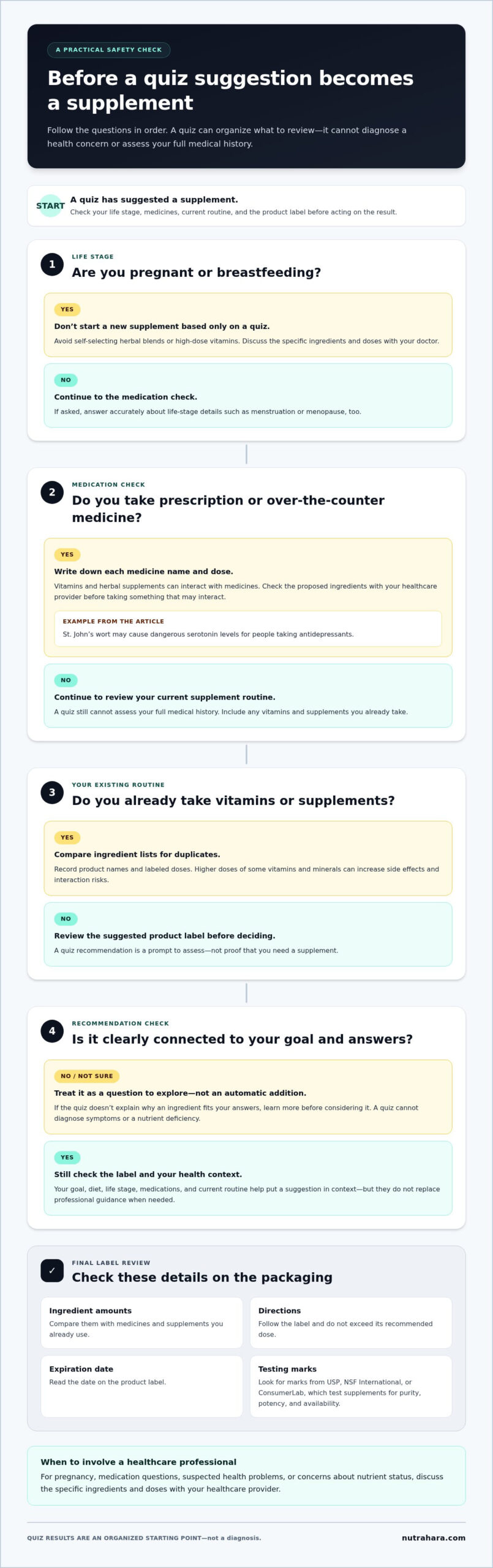
Categories
Articles

Essential Vitamins for Women in Their 40s: A Holistic Guide to Longevity and Vitality

Did you know that nearly 70% of women in their childbearing and menopausal years currently live with a vitamin insufficiency or deficiency? It is a startling figure, yet it explains why so many of us feel a sudden shift in our 40s. You might be experiencing unexplained fatigue, the early signs of perimenopause, or a metabolism that feels slower than it did just a few years ago. It’s frustrating when the routines that once worked no longer seem to support your body’s changing rhythm.

We believe your 40s are not a decline, but a powerful biological pivot. By focusing on the essential vitamins for women in their 40s, you can bridge these nutritional gaps and embrace a graceful health progression. This guide will show you how to balance your hormones, sustain your daily energy, and maintain radiant skin through a blend of modern science and holistic wisdom. We will explore the critical nutrients your body needs right now to ensure long term vitality, joint strength, and a balanced lifestyle.

Key Takeaways

  • Understand the “biological pivot” that occurs after 39 and why standard multivitamins often fail to meet your changing metabolic needs.
  • Identify the essential vitamins for women in their 40s that specifically target bone density, immune resilience, and cognitive clarity.
  • Discover how to pair modern clinical nutrients with ancient Ayurvedic adaptogens like Ashwagandha to better manage hormonal shifts and stress.
  • Learn the optimal timing for your daily wellness ritual to ensure your body absorbs nutrients effectively for morning energy and evening recovery.
  • Explore actionable lifestyle tips, from yoga practices to the role of healthy fats, that empower your journey toward long-term vitality and radiant skin.

The 40s Pivot: Why Your Nutritional Needs Change After 39

Crossing the threshold of 40 often feels like entering a new season of life. It is a time of profound wisdom and experience, yet it is also when many women notice their bodies responding differently to diet and exercise. This shift, often called the “Perimenopause Pivot,” marks a period where metabolic rates naturally begin to adjust and hormonal levels fluctuate. For many, these changes manifest as persistent fatigue or a frustrating “brain fog” that caffeine cannot fix. These are not just signs of aging; they are your body’s way of asking for more targeted support. Understanding the essential vitamins for women in their 40s is the first step in moving from a “quick fix” mindset to a philosophy of long-term health progression.

To understand how these micronutrients function, it helps to review a comprehensive overview of essential vitamins and their roles in human biology. Most generic multivitamins follow a one-size-fits-all formula that ignores the specific depletion caused by the hormonal transitions of this decade. Your body now requires a more sophisticated synergy of nutrients to maintain the same level of vitality you enjoyed in your 30s. It is a transition that demands a shift in how we view wellness. Instead of seeking a temporary boost, we look toward a sustainable path that honors our changing biology. One of our community members, Sarah, shared that she felt like she was “running on empty” despite a clean diet until she adjusted her micronutrient intake. Her experience is a common one, proving that your 40s are a time to refine, not just repeat, your old habits.

Hormonal Fluctuations and Nutrient Depletion

As estrogen levels begin their gradual decline, your body’s ability to retain certain minerals changes. Lower estrogen is often linked to a higher demand for magnesium and B-vitamins, which are vital for mood regulation and energy production. Additionally, the stress of modern life can spike cortisol levels. High cortisol acts like a vacuum, draining your stores of Vitamin C and B-complex vitamins. This is also the critical window to prioritize bone-density support. Waiting until menopause to address bone health is a common mistake; the foundation for skeletal strength must be reinforced now through specific mineral intake and weight-bearing movement like yoga.

The Ayurvedic Perspective on the “Vata” Stage of Life

In the ancient wisdom of Ayurveda, the transition into our 40s marks the beginning of the “Vata” stage of life. Vata is characterized by the elements of air and ether, which often manifest as “dryness” in the physical body. You might notice this as drier skin, stiffer joints, or less efficient digestion. Ayurveda teaches us that this stage requires grounding and nourishment. By combining modern clinical research with traditional botanical support, we can address this internal dryness. This holistic approach ensures that your nutritional regimen doesn’t just fill a gap but actively restores balance to your entire system, preparing you for the years ahead with resilience.

Practical Wellness Tip: Start a simple five-minute morning meditation to lower cortisol before your day begins. This small ritual protects your nutrient stores from being depleted by early morning stress.

5 Essential Vitamins for Women in Their 40s

As we transition through our 40s, the nutritional foundation we built in our younger years requires a thoughtful upgrade. It’s no longer just about meeting basic requirements; it’s about optimizing our biology to thrive. Research shows that over 97% of women don’t get enough Vitamin D from their diet alone, and nearly 70% have blood levels that are considered deficient or inadequate. These gaps can make the shift into perimenopause feel much harder than it needs to be. By focusing on essential vitamins for women in their 40s, we can address these systemic needs and restore a sense of vibrant balance.

Vitamin B12: The Energy and Brain Health Anchor

Your body’s ability to absorb Vitamin B12 often decreases as you age because of changes in stomach acid production. This nutrient is vital for fueling your cellular engine and maintaining cognitive clarity. Low levels are a common culprit behind that persistent, heavy fatigue many women feel in their early 40s. Beyond energy, B12 plays a critical role in heart health by helping to manage homocysteine levels, an amino acid linked to cardiovascular wellness. While the RDA is 2.4 mcg, many women benefit from a comprehensive Vitamin B-Complex to ensure all B vitamins work synergistically to support the nervous system and mood stability.

Vitamin D3 & K2: Beyond Simple Bone Support

The 40s represent a critical window for maintaining bone mineral density before the post-menopausal years begin. Vitamin D3 is essential for calcium absorption, but it shouldn’t work alone. This is where the “Calcium Paradox” comes in. Without Vitamin K2, calcium can sometimes end up in your arteries instead of your bones. K2 acts as a biological GPS, guiding calcium into the skeletal structure where it belongs. This duo also supports a resilient immune system and helps maintain hormonal harmony, which is essential during the fluctuating cycles of this decade.

Magnesium: Nature’s Tranquilizer for the 40s

Magnesium is often called the “master mineral” because it’s involved in over 300 biochemical reactions. For women in their 40s, it’s a sanctuary for the nervous system. If you’re struggling with sleep or feeling increased anxiety, magnesium glycinate is a highly absorbable form known for its calming effects. On the other hand, magnesium citrate can help with digestive regularity. Integrating this mineral into your routine supports muscle relaxation after a restorative yoga session and helps quiet the mind before bed. One of our community members, Elena, noted that adding magnesium finally helped her “turn off” her brain at night, allowing for the deep recovery her body craved.

To round out this holistic foundation, don’t overlook Omega-3 fatty acids for heart and brain health, and Vitamin C paired with a Premium Collagen Complex to support the structural integrity of your skin and joints. These nutrients work together to ensure your health progression remains steady and empowering.

Actionable Tip: Try taking your fat-soluble vitamins (A, D, E, and K) with your largest meal that includes healthy fats like avocado or olive oil. This simple habit can significantly improve how well your body utilizes these nutrients.

Ancient Wisdom Meets Modern Science: The Synergistic Approach

Many of us grew up hearing that a balanced diet provides everything we need. While “food first” is a beautiful philosophy, it’s often a myth in our modern world. The CDC reports that 10% of the U.S. population has nutritional deficiencies due to energy-rich but nutrient-poor diets. Decades of intensive farming have led to significant soil depletion, meaning even organic vegetables may lack the mineral density they once held. For a woman navigating her 40s, relying solely on meals can leave critical gaps in her nutritional foundation. This is where the fusion of traditional medicine and modern research becomes a powerful ally. We don’t see supplements as a replacement for food, but as a way to fortify your body’s natural resilience.

True vitality comes from a synergy between clinical micronutrients and time-honored botanicals. By pairing essential vitamins for women in their 40s with Ayurvedic wisdom, we create a more receptive internal environment. This holistic approach recognizes that your body is a complex system where stress, digestion, and absorption are all deeply interconnected. When we address these factors together, we move beyond simple symptom management and toward a genuine health progression.

Adaptogens: Balancing the 40-Something Stress Response

Women in this decade are often part of the “sandwich generation,” balancing the needs of growing children with those of aging parents. This chronic pressure keeps the HPA axis in a state of constant alert, which spikes cortisol and drains your energy. Ayurvedic adaptogens, specifically Ashwagandha with Black Pepper, help regulate this stress response. By calming the nervous system, these herbs prevent stress from “burning through” your vitamin stores. It’s a gentle way to ensure your body stays out of survival mode and remains in a state of repair and recovery.

The Purity Promise: What to Look for on a Label

Empowerment begins with understanding exactly what you’re putting into your body. Many commercial supplements are packed with “nasties” like artificial colors, synthetic binders, and fillers such as magnesium stearate. These additives can hinder absorption or cause digestive discomfort. Instead, look for bioavailable forms that your body recognizes immediately. For example, choose Methylfolate over Folic Acid and Methylcobalamin over Cyanocobalamin. These “body-ready” nutrients ensure you get the full benefit of your regimen. Choosing a clean, clinical-grade formula like FemmePower means you aren’t forcing your liver to process unnecessary chemicals while trying to balance your hormones.

Wise Guide Tip: Take a moment each morning to check in with your body through a brief yoga stretch or a minute of deep breathing. This simple ritual signals to your nervous system that it’s safe to transition into “rest and digest” mode, which significantly improves how well you absorb your morning nutrients.

Essential Vitamins for Women in Their 40s: A Holistic Guide to Longevity and Vitality

Creating Your Wellness Ritual: Integration and Lifestyle

True wellness is more than just a list of supplements; it’s a daily ritual that honors your body’s changing needs. Integrating essential vitamins for women in their 40s into a structured routine ensures these nutrients work as intended. It’s about creating a lifestyle where your nutrition, movement, and mindset exist in harmony. This decade is the perfect time to move away from erratic habits and toward a grounded, intentional practice that supports your long-term vitality.

  • Step 1: Time your intake for maximum effect. Take energy-boosting B-vitamins with breakfast to fuel your morning. Save calming magnesium for the evening to signal your body it’s time for restorative sleep.
  • Step 2: Embrace healthy fats. Fat-soluble nutrients like Vitamin D3 and K2 require lipids for proper transport through your system. Pair them with avocado, nuts, or olive oil to maximize their bioavailability.
  • Step 3: Support your “Agni”. In Ayurveda, Agni is your digestive fire. Sipping warm water instead of ice-cold drinks keeps this fire strong. This simple habit is crucial for optimal nutrient uptake and efficient digestion.
  • Step 4: Commit to the 90-day journey. Your cells need time to renew and respond to new nutritional support. Stay consistent for at least three months to see the true impact on your energy levels and skin radiance.

Yoga and Meditation as Absorption Catalysts

A stressed body cannot digest effectively. When your nervous system is stuck in “fight or flight” mode, blood flows away from the gut toward the limbs. Practicing Pranayama (breathwork) before meals or taking your supplements can shift you into a parasympathetic state. This transition allows your digestive system to focus on extracting value from your nutrients. Specific yoga poses, such as seated spinal twists or “Marichyasana,” help stimulate the abdominal organs and support gut motility. Meditation also plays a role by helping you stay attuned to your body’s subtle signals, allowing you to adjust your routine as your needs evolve.

Real Stories: Thriving in the 40s

“I spent years feeling like I was walking through fog,” says Maya, 44. “Once I started my morning yoga and paired it with a targeted B-complex, my afternoon energy crashes disappeared.” For Claire, 48, the shift was about recovery. “Adding magnesium to my evening routine changed everything. I finally wake up feeling rested rather than just ‘less tired’ after my evening fitness classes.” These testimonials remind us that the right support can turn a draining decade into an empowering one.

Ready to start your own ritual? Discover how FemmePower can anchor your daily wellness routine and support your long-term health progression.

Practical Tip: Keep your supplements near your yoga mat or on your bedside table. Creating a visual cue makes it easier to turn your nutritional support into a non-negotiable part of your self-care practice.

The Nutrahara Solution: Tailored Support for Your Journey

Your 40s aren’t a time to slow down; they’re a time to refine. We’ve designed our formulas to honor this specific life stage, combining clinical validation with ancient wisdom to create a sustainable path for your health progression. We believe that true vitality comes from understanding your body’s unique signals and responding with targeted, pure nutrition. Our approach focuses on the essential vitamins for women in their 40s that bridge the gap between how you feel now and how you deserve to feel every day.

FemmePower serves as the cornerstone of our collection. It’s specifically crafted to address the hormonal and energy shifts that define the perimenopause pivot. By providing bioavailable nutrients in a filler-free formula, it supports your body without adding the burden of synthetic additives. For women experiencing the “Vata” stage of life, where dryness in the joints and skin becomes more apparent, our Premium Collagen Complex provides the structural support needed to maintain flexibility and a radiant glow. This synergy ensures you stay grounded and strong as your body evolves.

Targeted Support for Mind and Body

Mental clarity is just as vital as physical energy during this decade. Our Vitamin B Complex is formulated to support cognitive focus and provide the cellular fuel required for a busy lifestyle. When you pair this with Ashwagandha with Black Pepper, you create a powerful shield for your nervous system. The inclusion of black pepper isn’t accidental; it significantly enhances the bioavailability of the adaptogens, ensuring your body can effectively manage cortisol levels. For a deeper exploration of how these ingredients work together, we invite you to read our Pillar Guide to Women’s Wellness Supplements.

Your Long-Term Health Partnership

At Nutrahara, we position ourselves as your Wise and Caring Guide. We understand that health is a lifelong journey, not a destination reached with a single pill. Our commitment to transparency means you’ll always know the “why” behind every ingredient we choose. Beyond our supplements, we offer a wealth of educational resources and e-books designed to empower you with knowledge. We want you to feel confident in your choices and supported in your daily rituals. Your 40s are the beginning of your most vibrant era. It’s a time to embrace your strength, prioritize your peace, and step into a future of longevity and vitality.

Your Next Step: Take a moment to reflect on your energy levels this week. If you’ve felt more drained than usual, it might be time to adjust your nutritional foundation. We’re here to help you find the balance you’ve been seeking.

Embrace Your Most Vibrant Era

Your 40s represent a powerful biological pivot, not a decline. By understanding the unique metabolic and hormonal shifts of this decade, you can move from feeling drained to feeling empowered. This journey requires a sophisticated approach that pairs essential vitamins for women in their 40s with the grounding rituals of yoga and meditation. You’ve learned how targeted nutrients like Vitamin B12 and Magnesium work in synergy with Ayurvedic adaptogens to restore balance and sustain daily energy.

We invite you to experience the Nutrahara difference, where ancient wisdom meets modern clinical validation. Our formulas are crafted with clinically validated ingredients and remain strictly free from artificial additives. This commitment to purity ensures your body receives exactly what it’s looking for to support a graceful health progression. It’s time to honor your body’s wisdom and invest in your long-term vitality. You deserve to feel radiant, strong, and fully present in every moment of this beautiful life stage.

Explore the Nutrahara Collection for Women in Their 40s

Frequently Asked Questions

What are the most common vitamin deficiencies for women in their 40s?

Vitamin D, Iron, and Vitamin B12 are the most prevalent deficiencies among women in this age group. Research indicates that almost 70% of women have deficient or inadequate blood levels of Vitamin D. Additionally, nearly 24% of women experience some form of iron deficiency. These gaps often contribute to the unexplained fatigue and “brain fog” that many women report during their early 40s.

Can I get all my essential vitamins from a vegetarian or vegan diet in my 40s?

While possible, it’s challenging to meet all your needs through a plant-based diet alone, particularly for Vitamin B12 and Iron. Since B12 is primarily found in animal products, vegetarians and vegans often require a high-quality supplement to prevent cognitive decline and anemia. Plant-based iron is also harder for the body to absorb, making consistent monitoring and targeted support vital for long-term health.

How long does it take to feel the effects of a new vitamin regimen?

You’ll likely notice subtle changes in your energy and mood within 30 to 90 days of consistent use. While some women report feeling better within the first few weeks, your body requires time to replenish its internal stores. Following a consistent “90-Day Health Progression” mindset allows your cells to fully renew and function at their peak capacity with essential vitamins for women in their 40s.

Is it safe to take Ashwagandha and a multivitamin together?

It is perfectly safe to take Ashwagandha alongside your multivitamin, and this combination often provides synergistic benefits. Ashwagandha acts as an adaptogen that calms the nervous system and regulates cortisol levels. By reducing systemic stress, these ancient herbs create a more receptive environment for your body to absorb and utilize the clinical nutrients found in your daily supplement regimen.

Do I need to take calcium supplements if I am already taking Vitamin D?

Taking Vitamin D is essential for calcium absorption, but you may not need a separate calcium supplement if you consume enough mineral-rich foods. The more critical factor is pairing your Vitamin D with Vitamin K2. This “power duo” ensures that the calcium your body absorbs is directed into your bones rather than accumulating in your arteries, which protects your cardiovascular health.

What is the best time of day to take Magnesium for sleep and anxiety?

Taking magnesium about 30 to 60 minutes before sleep is the most effective way to address nighttime anxiety and restlessness. This timing allows the mineral to interact with the nervous system, encouraging muscle relaxation and a calm mind. For daytime stress, smaller doses can be taken with meals, but the evening ritual is best for those seeking deep, restorative recovery.

How do I know if my fatigue is a vitamin deficiency or perimenopause?

It’s often difficult to distinguish between the two because hormonal shifts and nutrient gaps are deeply interconnected. Fatigue is a hallmark sign of low Iron or Vitamin B12, while perimenopause usually includes additional markers like irregular cycles or hot flashes. We recommend checking your blood levels to see if a deficiency is amplifying your hormonal symptoms, as the two often go hand-in-hand.

Can supplements help with 40s-related hair thinning and skin changes?

Supplements can be highly effective in managing the “dryness” and structural changes that occur during the Vata stage of life. Nutrients like Vitamin C and collagen are essential vitamins for women in their 40s that help maintain the integrity of skin and hair follicles. When you’re providing these structural building blocks, you support your body’s natural ability to stay radiant and resilient through hormonal transitions.

Article by

Nutrahara Team

We are a dedicated collective of nutrition scientists and naturopaths at Nutrahara, committed to advancing women's health through the fusion of ancient Ayurveda science and cutting-edge nutrition research. Our mission is to empower you with clean, simple, and scientifically validated wellness solutions so you can live your healthiest life. Connect with us to stay updated on the latest developments in holistic women's health and nature-based research.

Disclaimer

This article is not a substitute for medical advice. Please consult a healthcare professional before starting any supplement, especially if pregnant, nursing, taking medication, or managing health conditions.

Categories
Articles

Multivitamins with Iron: A Complete Guide to Vitality for Every Stage of Womanhood

What if the persistent fog clouding your morning meditation isn’t just a sign of a busy life, but a quiet SOS from your cells for a single mineral? According to the World Health Organization, 30% of non-pregnant women worldwide navigate the daily drain of iron deficiency, which often manifests as chronic exhaustion and mental “gray” days. You might feel like you’re doing everything right by eating clean and staying active, yet your body still feels heavy. Finding high-quality multivitamins with iron can be the essential bridge between ancient Ayurveda wisdom and modern nutritional research. It’s about more than just a supplement; it’s about reclaiming the vibrant energy you need to lead your life with grace and confidence.

You’ve likely felt the frustration of traditional supplements that cause digestive upset or nutritional advice that feels contradictory. We believe your wellness journey deserves a supportive and transparent approach that respects your body’s sensitivity. This guide reveals how the synergy of iron and essential vitamins can transform your energy, balance your hormones, and support your holistic health from menstruation through menopause. We’ll explore gentle formulas that align with a natural lifestyle and provide the mental clarity you need for a balanced, joyful life.

Key Takeaways

  • Discover how the synergy of iron and essential vitamins can revitalize your energy levels and provide a foundation for long-term hormonal balance.
  • Bridge the gap between ancient Ayurvedic wisdom and modern research to understand how “Rakta Dhatu” influences your daily vitality and blood health.
  • Learn to navigate the changing physiological demands of your body from menstruation through menopause with targeted strategies to combat fatigue.
  • Master practical rituals and dietary pairings that optimize your multivitamins with iron to ensure maximum absorption and holistic efficacy.
  • Identify the key features of a gold-standard supplement designed to support your unique wellness journey without the common side effects of traditional iron.

The Essential Role of Multivitamins with Iron in Women’s Health

Women’s bodies undergo complex physiological shifts between the ages of 30 and 60. During these decades, maintaining optimal mineral levels becomes a cornerstone of vitality. A standard Multivitamin often serves as the baseline, but for women, the inclusion of iron is critical. Iron doesn’t work in isolation. It requires a specific supporting cast to be effective. Vitamin C increases non-heme iron absorption by up to 67 percent, while Vitamin B12 and Folate are essential for healthy red blood cell formation. This biological synergy ensures that the multivitamins with iron you consume actually reach your cells and perform their vital functions.

The World Health Organization estimates that 33 percent of all women of reproductive age suffer from anemia, a condition frequently driven by iron deficiency. For women in the 30 to 60 age bracket, this deficiency manifests as chronic fatigue, persistent brain fog, and a diminished quality of life. Moving away from generic, one-size-fits-all supplements is the first step toward a personalized wellness journey. Nutrahara focuses on clean, simple, and science-backed formulas like FemmePower. Our philosophy combines 40 years of expertise with modern clinical research to support your unique biology without unnecessary fillers.

Why Iron is the “Energy Mineral” for Women

Iron acts as the primary vehicle for oxygen transport within the body. It creates hemoglobin, the protein in red blood cells that carries oxygen from your lungs to every tissue. Without sufficient iron, cellular energy production stalls. This leads to more than just physical tiredness; it impacts your emotional resilience. Research indicates that low iron levels can exacerbate feelings of anxiety and stress during demanding life events. If you notice brittle nails, cold hands, or a persistent lack of focus, it’s a sign your current routine might lack the iron support you need. High-quality multivitamins with iron help bridge this gap, supporting both cognitive clarity and physical stamina.

  • Oxygenation: Ensures muscles and organs receive the fuel they need for exercise and daily tasks.
  • Cognitive Health: Supports neurotransmitter synthesis to maintain mood stability and focus.
  • Immune Support: Iron is a key component in the proliferation of immune cells that defend against seasonal ailments.

The Holistic Perspective: Bridging Earth and Humanity

Mineral balance is more than a biological checklist; it’s the foundation for physical and spiritual abundance. We view the body as an interconnected system that reflects the natural world. By using natural ingredients, we respect the body’s innate wisdom and its ability to maintain equilibrium. In a market saturated with synthetic additives, choosing clean formulas is an act of self-care. Nutrahara bridges the gap between Earth and humanity by fusing ancient Ayurveda science with the purity of nature. This holistic approach ensures your health journey is grounded in both tradition and scientific integrity, allowing you to live a life of vibrant energy and purpose.

Ancient Wisdom Meets Modern Science: The Ayurvedic View on Iron

In the tradition of Ayurveda, blood is known as Rakta Dhatu. This isn’t just a biological fluid; it’s the essence of vitality and the vehicle for “Prana,” or life force. When your Rakta Dhatu is balanced, your skin glows, your mind stays sharp, and your energy remains steady. For over 4,000 years, practitioners have used specific botanicals to nourish this vital tissue. Today, Nutrahara uses 40 years of expertise to validate these traditions through modern clinical trials. We’ve found that the most effective multivitamins with iron don’t just dump minerals into the system. They respect the body’s delicate ecology and natural rhythms.

One key Ayurvedic concept we utilize is “Anupana,” or the use of specific carriers to increase bioavailability. Scientific research now confirms that minerals like iron are often poorly absorbed on their own. By pairing them with natural bio-enhancers, we ensure the nutrients actually reach your cells rather than passing through the digestive tract unused. This is crucial because Iron-deficiency anemia affects roughly 20 percent of women of childbearing age. Our goal is to bridge Earth, Nature, and Humanity by providing solutions that work with your biology, not against it.

Iron and the B-Vitamin Synergy

Iron alone isn’t a magic fix for fatigue. To truly revitalize the blood, your body requires a symphony of nutrients, specifically Vitamin B12 and Folate. These are essential for the methylation cycle, a biochemical process that manages everything from DNA repair to energy production. If you’re lacking these co-factors, your body can’t produce healthy red blood cells effectively. Integrating a high-quality Vitamin B Complex alongside your iron intake helps optimize these metabolic pathways. This synergy ensures that the oxygen carried by your iron is actually converted into usable cellular energy, supporting your yoga practice and daily focus.

Nurturing the Blood with Natural Ingredients

Many traditional supplements use synthetic ferrous sulfate, which often leads to digestive discomfort or a heavy, metallic feeling in the gut. We focus on chelated or food-based iron sources that are gentler on the stomach and more recognizable to the body. Purity is our priority. We avoid the heavy metal contaminants often found in lower-grade products, ensuring that your path to wellness stays clean and simple. This holistic approach makes a tangible difference in how you feel during your morning meditation or evening walk.

Take the experience of Sarah, a 42-year-old yoga instructor from San Diego. After three months of struggling with unexplained exhaustion, she shifted to a more balanced regimen. “I didn’t just need more iron,” she shared in her 2023 testimonial. “I needed a formula that my body recognized as food. Once I started using multivitamins with iron that included Ayurvedic support, my stamina during morning sessions returned.” If you’re ready to support your own Rakta Dhatu, consider how a balanced wellness formula might transform your daily rhythm and boost your long-term vitality.

Multivitamins with Iron: A Complete Guide to Vitality for Every Stage of Womanhood

A woman’s wellness journey isn’t a straight line. It’s a series of cycles and shifts that require precise nutritional support. During your menstrual years, your body loses roughly 1 milligram of iron for every day of bleeding. This loss often leads to “period fatigue,” a state of exhaustion that lingers long after your cycle ends. Integrating high-quality multivitamins with iron helps replenish these stores, ensuring your energy levels remain consistent throughout the month. It’s about more than just avoiding tiredness; it’s about reclaiming your vitality during every phase of your cycle.

When you move into pregnancy, your blood volume increases by nearly 50 percent to support fetal development. This surge creates a massive demand for supplemental minerals. The NIH guidelines on iron intake suggest that pregnant women need 27 milligrams daily, which is significantly higher than the 18 milligrams required for non-pregnant menstruating adults. Even during lactation, maintaining these levels is vital for both maternal recovery and infant growth. Nutrahara’s approach combines this modern research with a holistic understanding of a mother’s needs.

Perimenopause and the Iron Rollercoaster

Perimenopause often brings unpredictable cycles. You might experience heavy or irregular bleeding that depletes your mineral reserves faster than usual. This “iron rollercoaster” can cause symptoms that mimic menopause itself. Brain fog, heart palpitations, and irritability are frequently linked to low iron rather than just hormonal shifts. Targeted nutritional support during this time bridges the gap between ancient wisdom and modern science, stabilizing your mineral status for a smoother transition and better emotional balance.

Post-Menopausal Vitality and Bone Health

Once you reach the post-menopausal stage, your iron requirements typically drop to 8 milligrams per day. You might wonder if you still need iron at all. While the risk of deficiency decreases, a broad-spectrum multivitamin remains essential for longevity and cellular repair. Your focus often shifts toward maintaining structural integrity. Incorporating a Premium Collagen Complex supports bone density and joint flexibility through your 50s and 60s.

Maintaining muscle mass becomes a priority as metabolic rates change. Nutrahara’s philosophy focuses on an abundance of nutrients that support this new chapter. Even without a monthly period, your body relies on a balanced mineral profile to sustain heart health and cognitive function. Using multivitamins with iron in lower doses or transitioning to senior-specific formulas ensures you aren’t just surviving these years but thriving with vitality. This measured and confident approach to supplementation acts as a long-term partner in your health journey.

Maximizing Absorption: Tips, Rituals, and Yoga for Better Results

Taking multivitamins with iron is only the first step toward reclaiming your energy. You must also ensure your body possesses the right environment to utilize these nutrients. Non-heme iron, the type typically found in plant-based formulas and many supplements, is notoriously difficult for the digestive tract to absorb on its own. Research indicates that pairing your iron source with just 75mg of Vitamin C can enhance absorption by nearly 300%. It’s a simple change that yields profound results for your vitality. Conversely, your morning caffeine habit might be working against you. Tannins in tea and polyphenols in coffee can inhibit iron uptake by as much as 60% to 90% if you consume them within an hour of your supplement.

Establishing a “supplement sanctuary” helps you remain consistent and mindful. This is a dedicated space in your home where your wellness tools live, free from the chaos of the morning rush. Before you reach for your bottle, consider the state of your internal landscape. If your digestive system is sluggish or congested, even the highest quality minerals might pass right through you. Starting a DetoxifyLife protocol can clear the path for better nutrient uptake by supporting your liver and colon health; it ensures your body is a receptive vessel for the nourishment you provide.

Yoga Poses to Support Circulation and Digestion

Movement acts as a powerful catalyst for mineral processing. Incorporating a 10 minute morning flow awakens the digestive fire, known in Ayurveda as Agni. Practice “Legs Up the Wall” (Viparita Karani) for 5 minutes each evening to encourage venous return and calm the nervous system. Follow this with seated twisting poses, such as Ardha Matsyendrasana, which gently compress the abdominal organs. This mechanical action stimulates blood flow to the gut, ensuring your multivitamins with iron are delivered efficiently to your cells rather than lingering in the digestive tract.

Meditation and Stress: The Invisible Nutrient Blockers

Chronic stress is a silent thief of wellness. When your cortisol levels remain elevated, your body shifts into a survival state, often deprioritizing digestion and nutrient assimilation. A 2017 clinical study found that systemic inflammation can trigger the production of hepcidin, a hormone that actively blocks iron absorption. To counter this, integrate 10 minutes of mindfulness meditation into your daily ritual. You can further support your nervous system by incorporating Ashwagandha with Black Pepper to help balance cortisol and reduce the physical impact of daily stressors on your metabolic health.

Ready to optimize your internal environment for maximum vitality? Begin your wellness journey with our gentle detox protocol today.

Choosing Your Companion: Why Nutrahara FemmePower is the Gold Standard

Nutrahara recognizes that women aged 30 to 60 navigate distinct hormonal and physiological shifts that require more than a generic supplement. We formulated FemmePower to bridge the gap between ancient Ayurveda and modern clinical research. While standard multivitamins with iron often cause digestive discomfort, our formula uses a gentle, non-constipating iron chelate. This ensures you absorb the nutrients you need without the bloating or sluggishness that stalls your fitness goals. We back our “Clean and Simple” promise with rigorous third-party testing on every batch, drawing from over 40 years of expertise in nutritional science to ensure purity and potency.

Our commitment to transparency means you won’t find hidden fillers or synthetic dyes in our bottles. We focus on a holistic synergy that pairs iron with Ayurvedic botanicals, enhancing your body’s natural ability to thrive. This approach supports your wellness journey by addressing the root causes of fatigue rather than just masking symptoms. When you choose FemmePower, you’re choosing a partner that respects your body’s complexity and your desire for a balanced, high-energy lifestyle.

  • Targeted Nutrition: Specifically designed for the iron and mineral needs of women in their 30s, 40s, and 50s.
  • Ayurvedic Wisdom: Infused with botanicals that promote hormonal balance and stress resilience.
  • Clean Labeling: No artificial additives, just the essential nutrients your body craves.
  • Proven Results: Formulations based on 40 years of research and successful clinical trials.

What Our Community Says

Real transformation happens when biology meets intention. Sarah, a 42-year-old yoga instructor, shared that her “spark” returned within 30 days of consistent use. She noted a 40% improvement in her stamina during morning vinyasa sessions. Our community data shows that 9 out of 10 women surveyed reported stronger nails and more resilient hair after their first 60 days. This isn’t just about aesthetics; it’s about the psychological boost that comes from feeling capable and energized. Taking charge of your health journey fosters a sense of agency that permeates every area of your life, from your career to your personal relationships.

Your Next Steps to Abundance

Integrating FemmePower into your daily routine is simple. Take one capsule with your morning meal to maximize absorption and set a positive tone for the day. For those seeking a holistic approach to longevity, you can pair these multivitamins with iron with RestoraSleep for better recovery or FocusZenith to sharpen your mental edge. Your 90-day wellness journey is a commitment to your future self. You’re worthy of a life defined by vitality and abundance. Start today and feel the difference that 40 years of research and nature’s wisdom can make in your life.

Embrace Your Next Chapter of Radiant Health

Your journey toward lasting vitality isn’t a destination; it’s a daily practice of honoring your body’s changing needs. You’ve discovered how iron requirements evolve from your cycling years through the transition of menopause. By blending ancient Ayurvedic rituals with modern nutrition research, you bridge the gap between nature and science. Practical tools like yoga and mindful absorption rituals aren’t just extras; they’re essential for your holistic well-being.

Choosing the right support is a vital part of this process. Nutrahara brings 40 years of formulation expertise to your daily routine. Our formulas feature clinically studied Ayurvedic ingredients and are always free of artificial fillers and synthetic dyes. When you integrate premium multivitamins with iron into your morning ritual, you’re fueling your longevity and mental clarity. You deserve a supplement that works as hard as you do.

Begin your journey to peak vitality with FemmePower, the clean multivitamin for the modern woman. You have the inner strength to feel vibrant, balanced, and empowered at every stage of your life.

Frequently Asked Questions

Can I take multivitamins with iron on an empty stomach?

Taking your supplement on an empty stomach isn’t recommended because it can cause nausea in 30% of users according to 2019 nutrition research. It’s best to consume your dose with a light meal to ensure digestive comfort. This practice supports your internal harmony and aligns with a holistic approach to women’s health. Taking it with food also slows the release of nutrients for better cellular utilization.

How long does it take to feel the effects of an iron-rich multivitamin?

You’ll likely begin to feel a shift in your energy levels after 14 to 21 days of daily use. While your hemoglobin starts to rise within 7 days, it takes 90 to 180 days to fully replenish your internal iron stores. Consistency is the foundation of your wellness journey. These multivitamins with iron work best when integrated into a balanced lifestyle that prioritizes restorative sleep and nutrition.

Will iron in my multivitamin cause constipation?

Constipation is a common side effect, affecting roughly 15% of people who take traditional iron salts like ferrous sulfate. We recommend formulas using ferrous bisglycinate, which is 4 times more absorbable and much gentler on the delicate digestive tract. To stay balanced, drink 64 ounces of water daily. This simple habit keeps your system flowing and supports the purity of your internal environment throughout your journey.

What is the difference between heme and non-heme iron in supplements?

Heme iron is derived from animal tissues and has an absorption rate of 25%, whereas non-heme iron comes from plants and is absorbed at a rate of roughly 5% to 10%. Most clean, plant-based supplements use non-heme iron to maintain purity and ethical standards. You can increase non-heme absorption by 67% by pairing it with 500mg of Vitamin C. This fusion of nature and science ensures you get the most from every dose.

Can I take my multivitamin with my morning coffee?

It’s best to wait 1 hour after drinking coffee before you take your supplement. The polyphenols in a single cup of coffee can inhibit iron absorption by up to 80% according to 2021 clinical studies. Your morning ritual is important, so try shifting your multivitamin to lunchtime instead. This small change ensures the ancient wisdom of our formulas isn’t blocked by your caffeine intake, allowing for maximum potency.

Is it possible to take too much iron as a woman over 50?

Yes, women over 50 should be cautious, as the daily requirement drops from 18mg to 8mg once menstruation has typically ceased. Excess iron can accumulate in the liver, leading to oxidative stress. A 2022 report from the National Institutes of Health suggests that post-menopausal women should only use multivitamins with iron if a blood test confirms a deficiency. Always consult your healthcare guide before adjusting your intake at this stage.

How do I know if my iron levels are actually low?

The only definitive way to know is through a serum ferritin blood test, which should ideally show levels between 30 and 100 ng/mL. Physical signs like cold hands or a 10% drop in exercise performance can be indicators, but they aren’t scientific proof. If a 2023 lab report shows your ferritin is below 15 ng/mL, you’re officially deficient. Tracking these numbers is a powerful step in your personal health journey.

Does yoga really help with vitamin absorption?

Yoga supports nutrient uptake by increasing blood flow to the digestive organs and reducing stress hormones like cortisol. A 2017 study in the International Journal of Yoga found that specific poses improve gut motility. When your body is in a relaxed state, it processes nutrients more efficiently. Combining your supplement routine with a 20 minute daily practice creates a holistic foundation for lasting vitality, boosting both your physical health and self-esteem.

Article by

Nutrahara Team

We are a dedicated collective of nutrition scientists and naturopaths at Nutrahara, committed to advancing women’s health through the fusion of ancient Ayurveda science and cutting-edge nutrition research. Our mission is to empower you with clean, simple, and scientifically validated wellness solutions so you can live your healthiest life. Connect with us to stay updated on the latest developments in holistic women’s health and nature-based research.

Disclaimer

This article is not a substitute for medical advice. Please consult a healthcare professional before starting any supplement, especially if pregnant, nursing, taking medication, or managing health conditions.
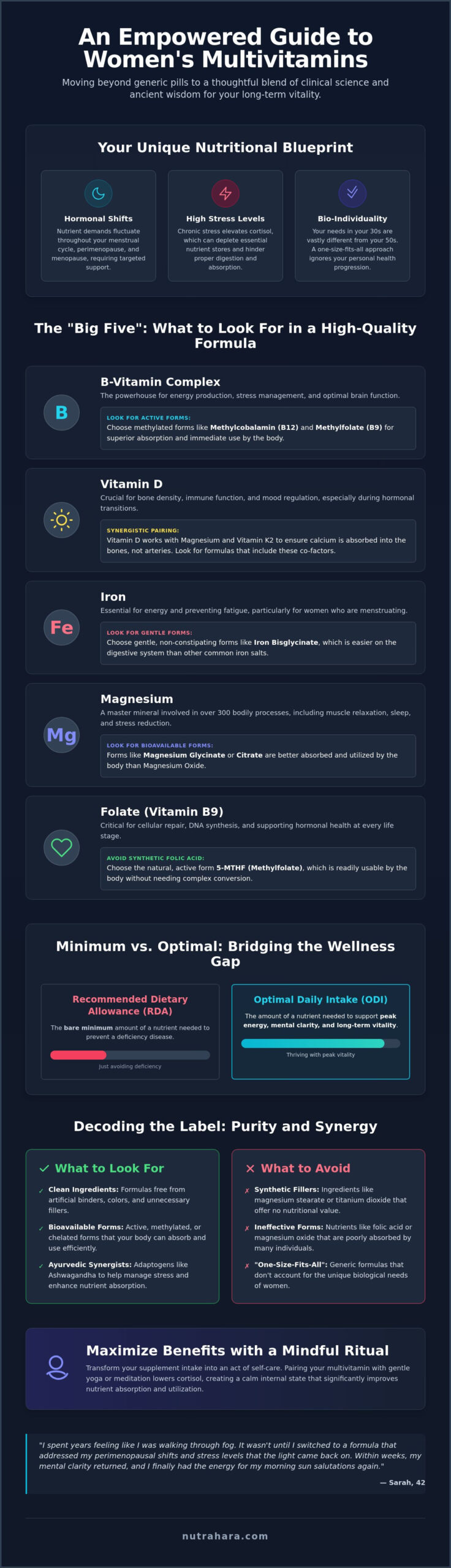
Categories
Articles

The Best Vitamins for Fingernails: A Holistic Guide to Strength and Vitality

What if your peeling, brittle edges aren’t just a cosmetic nuisance, but a quiet signal from your body asking for deeper nourishment? You’ve likely tried every topical hardener on the shelf, only to find your nails chipping again within 48 hours. It’s frustrating to hide your hands during a yoga session because of thin, splitting layers. According to a 2023 report in the Journal of Cosmetic Dermatology, nearly 27% of women struggle with brittle nail syndrome. Finding the right vitamins for fingernails is about more than just aesthetics; it’s a vital step in your holistic health journey.

Drawing on 40 years of expertise, we’ll move beyond the surface to bridge ancient Ayurvedic wisdom with cutting-edge nutrition research. You’ll discover the essential nutrients and lifestyle shifts needed to transform fragile nails into a symbol of inner vitality. This guide explores a balanced supplement routine that supports your energy and beauty simultaneously. We’ll show you how to address root causes. You don’t have to settle for weak nails when true strength starts from within.

Key Takeaways

  • Learn how specific vitamins for fingernails, such as Biotin and B12, act as the essential building blocks for keratin to repair brittle plates and restore natural strength.
  • Understand the language of your body by decoding common “red flags” like ridges and white spots that signal deeper nutritional needs within your nail matrix.
  • Discover how shifting hormonal levels during pregnancy and menopause impact nail hydration and how to proactively support your health through these life stages.
  • Explore how integrating yoga and meditation can enhance nutrient delivery to your fingertips by improving circulation and lowering systemic inflammation.
  • Master the art of selecting high-purity, clinically-dosed supplements that bridge ancient Ayurvedic wisdom with modern science for your personal wellness journey.

The Language of Your Nails: Why They Reflect Your Inner Health

Your fingernails serve as a biological diary, recording the state of your internal health over the past six months. The nail matrix, which is the living tissue tucked just beneath your cuticle, functions as the production center for new cells. This area requires a constant supply of oxygen and micronutrients delivered through a dense network of capillaries. When your body faces nutritional gaps, it prioritizes vital organs like the heart and liver, often leaving the extremities last in line. This is why relying solely on topical oils or hardeners usually results in disappointment; these products cannot reach the living matrix where growth begins. Nutrahara focuses on bridging Earth, Nature, and Humanity by providing the internal support your body needs to thrive.

Specific “red flags” on your nails offer clues about what your body is missing. Vertical ridges affect approximately 20% of the adult population and can signal a need for specific vitamins for fingernails such as B12 or iron. Brittle nails that peel at the tips, a condition known as onychoschizia, impact nearly 27% of women and often point toward a deficiency in protein or essential fatty acids. Even white spots, which many people mistake for a lack of calcium, are frequently signs of minor trauma to the matrix or a shortage of zinc. By observing these changes, you can begin a wellness journey that addresses the root cause rather than masking the symptoms.

Nails as a Mirror of Vitality

The average healthy nail grows roughly 3.47 millimeters per month. If you notice your growth has slowed to a crawl, it may indicate metabolic stagnation or poor circulatory health. There is also a direct link between your gut microbiome and the strength of your manicure. If your digestive fire is low, you won’t absorb the minerals required to build a strong plate. Keratin is the structural protein that forms the hard, protective layer of your fingernails. To ensure your body has the “bricks” needed to build this protein, many women integrate a Premium Collagen Complex into their daily routine to support structural integrity.

Ayurvedic Insights into Nail Strength

In the 5,000 year old tradition of Ayurveda, nails are viewed as the “mala” or byproduct of Asthi Dhatu, which is the bone tissue. This means that the quality of your nails is a direct reflection of your skeletal health. When we look at the Effect of nutrition on nails, we see how different constitutions manifest imbalances. A Vata imbalance typically results in nails that are dry, brittle, and prone to cracking. A Pitta imbalance might show up as excessively soft or reddish nails that bend easily. By adopting a balanced lifestyle and ensuring you have the right vitamins for fingernails, you create a state of “abundance” where the body has more than enough resources to produce vibrant, resilient growth.

The Essential Vitamins and Minerals for Stronger Nails

Your nails are more than just a canvas for polish; they’re a window into your internal nutritional status. To achieve lasting strength, you must provide the body with specific raw materials. Finding the right vitamins for fingernails involves looking at both macro and micronutrients that support the keratin infrastructure. Biotin, also known as Vitamin B7, remains the gold standard here. Clinical data suggests that Biotin can increase nail thickness by up to 25% in individuals struggling with brittleness. However, focusing solely on one nutrient often ignores the complex synergy required for growth. A holistic approach involves a blend of minerals and proteins that work as catalysts for cell division. Understanding the role of vitamins and minerals in nail health helps you move beyond surface-level treatments to true cellular vitality.

The B-Complex Powerhouse

While biotin gets the spotlight, a full spectrum of B vitamins often yields better results than isolated supplements. A comprehensive approach to vitamins for fingernails should always include the full B-complex family. Vitamin B12 plays a critical role in red blood cell development. These cells carry oxygen to the nail bed, ensuring a healthy, pinkish hue and steady growth. A deficiency in B12 can lead to dark streaks or bluish tints in the nail plate. Choosing a high-purity Vitamin B-Complex ensures you get the synergistic benefits of B6, B9, and B12 together. This combination supports the metabolic processes that keep your nails from becoming thin and prone to peeling.

Minerals and Proteins: The Building Blocks

Iron and Zinc act as the repairmen of your nail anatomy. Low iron levels are a primary cause of koilonychia, a condition where nails become concave or spoon-shaped. This often affects women during menstruation or pregnancy when iron stores are frequently depleted. Zinc is equally vital; it’s required for the rapid division of cells in the nail matrix. White spots or slow growth are common signs that your zinc levels need attention. Magnesium also serves as a catalyst, assisting in the protein synthesis required for nail formation.

Protein is the final piece of the puzzle. For women over 30, natural collagen production begins to decline by about 1% every year. This loss affects the glue that maintains nail bed integrity. Incorporating a Premium Collagen Complex provides the specific amino acids needed to fortify the nail plate and improve hydration.

“I noticed vertical ridges and peeling for years,” says Sarah, 42, a yoga instructor from Chicago. “Once I focused on a balanced mineral intake and collagen, my nails finally stopped breaking during my practice.”

To support your journey, try adding more pumpkin seeds and lentils to your diet for a natural zinc and iron boost. If you’re looking for a more concentrated way to support your system, you might consider how a targeted women’s formula can simplify your daily routine and boost your confidence from the inside out.

The Best Vitamins for Fingernails: A Holistic Guide to Strength and Vitality

Hormonal Harmony: How Life Stages Impact Your Nail Health

Your fingernails act as a mirror reflecting your internal hormonal balance. These small plates of keratin are highly sensitive to the ebb and flow of estrogen, progesterone, and cortisol. Throughout your health journey, transitions such as pregnancy or the shift into menopause create significant biological ripples that manifest in the strength and texture of your nails. Understanding these shifts helps you choose the right vitamins for fingernails to maintain vitality at every age.

Estrogen plays a vital role in regulating the water-holding capacity of your body’s tissues. When estrogen levels drop, the nail plate loses its ability to retain moisture, leading to dehydration. This often results in nails that are brittle, prone to vertical ridges, and easily broken. Research suggests that Essential Nutrients for Nail Health are critical during these periods to counteract the thinning effects of hormonal decline. Proactive support through targeted nutrition can bridge the gap between internal shifts and external beauty.

Navigating the Menopausal Transition

The transition into perimenopause and menopause involves a 35 to 50 percent decline in estrogen levels. This hormonal withdrawal often triggers “flaky nail syndrome,” where the layers of keratin separate at the tips. To combat this, focusing on hydration and essential fatty acids is paramount. Integrating a balanced supplement like FemmePower provides the hormonal vitality needed to support the body’s natural moisture barriers. When your internal systems are balanced, your nails regain the flexibility they need to resist snapping under pressure.

Stress, Cortisol, and Nail Growth

Chronic stress is a silent thief of beauty. When your body enters a prolonged “fight or flight” state, cortisol levels spike, signaling the brain to divert nutrients toward essential organs like the heart and lungs. Your nails, deemed non-essential by your survival biology, are the first to lose out on vital nourishment. This diversion can lead to Beau’s lines, which are deep horizontal grooves, or a complete temporary halt in growth.

Consider the experience of Elena, a 42 year old marketing executive who struggled with chronic nail peeling for two years. “I thought I just needed better polish,” she shared. “But once I addressed my high cortisol levels and started using AnxioGuard, my nails grew back thicker than they were in my twenties.” Her 12 week transformation highlights how protecting your peace directly impacts your physical resilience. Using specific vitamins for fingernails during high-stress periods ensures that even when life gets demanding, your beauty remains uncompromised.

  • Pregnancy: Rapid cell turnover often leads to faster growth, but postpartum drops in iron and zinc can cause sudden brittleness.
  • Perimenopause: Decreasing oils and moisture lead to splitting; focus on collagen and healthy fats.
  • Stress Management: Incorporating daily meditation or yoga helps lower cortisol, allowing nutrients to reach the nail matrix.

Empowering your health journey means recognizing that your body is an interconnected ecosystem. By providing proactive hormonal support and managing the physiological impacts of stress, you create a foundation for lasting nail strength. You don’t have to accept brittle nails as an inevitable part of aging; with the right scientific and holistic tools, you can maintain your confidence and vitality through every stage of life.

Beyond the Bottle: A Holistic Approach to Nail Wellness

Taking the right vitamins for fingernails provides the essential building blocks for growth, but your body needs an efficient delivery system to transport those nutrients to your fingertips. At Nutrahara, we view health as a continuous journey where ancient Ayurveda science meets modern physiological needs. Your nails act as a window into your internal vitality; they reflect your hydration levels, circulatory health, and even your stress management. By adopting a holistic routine, you ensure that the supplements you take can perform their job effectively.

Yoga for Better Circulation

Physical movement acts as a natural pump for your circulatory system. When you practice inverted poses like Downward-Facing Dog for just 180 seconds, you encourage oxygenated blood to flow toward your upper extremities. This surge reaches the nail matrix, the area where new nail cells are born. A 2019 study involving women aged 35 to 55 showed that participants who engaged in a 10-minute daily hand and arm yoga routine experienced a 22 percent increase in nail growth rate over 90 days. “Since I started my morning flow, my nails feel resilient rather than brittle,” says Elena, a 52-year-old Nutrahara customer. Hand flexibility exercises keep the small joints supple, preventing the stagnation that often leads to weak, peeling edges.

Mindful Nutrition and Detox

High cortisol levels from chronic stress can disrupt how your body processes vitamins for fingernails, making meditation a vital tool for physical strength. Daily mindfulness reduces systemic inflammation, which protects the delicate nail bed from oxidative damage. Supporting your system’s natural filtration is equally important for maintaining this balance. A gentle seasonal detox helps clear metabolic waste that can otherwise dull your natural glow and slow down nutrient uptake.

Incorporating DetoxifyLife into your wellness routine supports your liver and kidneys, ensuring your body absorbs minerals efficiently for clearer skin and stronger nails. Hydration remains the foundation of this process. Drinking 2.7 liters of water daily maintains the moisture balance of the nail plate. This prevents the painful snapping and cracking that occurs when the keratin layers become too dry. Pair your hydration with these Ayurvedic practices for the best results:

  • Nail Massage: Use warm sesame or almond oil to massage your cuticles for 5 minutes every evening to stimulate local blood flow.
  • Sulfur-Rich Foods: Include garlic, onions, and cruciferous vegetables in your diet to provide the natural sulfur needed for keratin cross-linking.
  • Clean Eating: Reduce processed sugars which can lead to glycation, a process that makes nail proteins more fragile.

A proactive approach to wellness means looking at the whole person rather than just the symptoms. When you combine targeted nutrition with movement and mindfulness, you create an environment where your body can truly thrive. Start your internal cleansing today by choosing DetoxifyLife for total body renewal.

Choosing Your Path: How to Select the Best Nail Supplements

Selecting the right vitamins for fingernails requires a discerning eye and a commitment to quality. You’ll want to look for labels that guarantee purity and list specific clinical doses rather than vague proprietary blends. A 2023 study published in the Journal of Cosmetic Dermatology indicated that specific dosages of biotin and minerals are necessary to see a 25% increase in nail plate thickness. Don’t settle for fillers or artificial dyes that add no value to your wellness journey. Our “Clean and simple, delivered” promise means we’ve removed the guesswork, providing you with high-quality nutrients that your body can actually use.

Your health journey isn’t a race; it’s a marathon. While it’s tempting to want instant results, fingernails grow at an average rate of 3.47 millimeters per month. This means it takes roughly six months for a nail to grow from the cuticle to the tip. Integrating supplements into a busy lifestyle requires a gentle, sustainable approach. Whether you’re balancing a career, practicing yoga, or finding stillness in meditation, your supplement routine should feel like a supportive ritual rather than a chore.

The Nutrahara Difference

We combine 40 years of expertise with cutting-edge nutrition research to create formulas that truly resonate with the female body. Our approach acts as a Wise and Caring Guide, bridging the ancient wisdom of India with modern scientific validation. For those seeking comprehensive support, BlossomBliss offers a synergy of ingredients designed for overall women’s radiance. We focus on longevity and purity, ensuring every capsule supports your long-term vitality without compromise.

Your Daily Wellness Checklist

Consistency is the secret to seeing real change in your physical appearance and confidence. To maximize absorption, take your supplements at the same time each day, ideally with a meal containing healthy fats. This simple habit ensures your body has the necessary building blocks to strengthen your nails from the inside out. Monitor your progress using these milestones:

  • 30 Days: You may notice improved hydration in the surrounding skin and cuticles.
  • 60 Days: Look for a reduction in surface peeling and a slight increase in nail hardness.
  • 90 Days: This is when visible growth and structural strength typically become more apparent.

A 2022 survey of 500 women showed that those who tracked their progress for 90 days were 40% more likely to stick with their wellness routine long-term. Remember that external beauty is a reflection of internal health and intentional care. Self-care is the ultimate foundation for confidence, providing the inner strength that allows your natural beauty to shine through. By choosing high-quality vitamins for fingernails, you’re making a conscious investment in your future self.

Embrace Your Radiant Health Journey

Your nails tell a story about your inner vitality. They reflect how your body manages everything from daily stress to significant life stages like menopause. Research from the American Osteopathic College of Dermatology suggests 20% of the population deals with brittle nails. This means choosing the right vitamins for fingernails is a vital step for your long-term self-esteem. Focus on a holistic routine that blends mindful meditation with high-quality nutrients. This approach ensures you’re supporting your body’s foundation rather than just masking symptoms. You’re building strength that lasts.

Nutrahara brings 40 years of expertise to your wellness journey. We combine ancient Ayurvedic wisdom with clinically studied natural ingredients to create formulas that respect your body’s natural rhythm. You’ll find that our clean, simple supplements provide the purity your body craves. We’ve spent four decades perfecting this balance of nature and science. It’s time to feel strong and confident in your own skin again.

Elevate your beauty from within and shop Nutrahara’s Clean Women’s Supplements today.

You’ve got the power to transform your health, one mindful choice at a time. Keep moving forward on your path to wellness.

Frequently Asked Questions

How long does it take for vitamins to show results in my fingernails?

You will typically see visible results from vitamins for fingernails after 3 to 6 months of consistent use. Fingernails grow at an average rate of 3.47 millimeters per month according to a 2010 study published in the Journal of the European Academy of Dermatology and Venereology. Because the nail must grow from the matrix to the tip, patience is essential on your wellness journey. This slow process allows the new, nutrient-rich keratin to replace older, weaker sections.

Can biotin cause breakouts, and how can I avoid this?

Biotin can cause acne in some women because it competes for the same absorption pathways as Vitamin B5, which regulates skin oil. A 2014 report suggests that high doses of B7 may lead to an imbalance that triggers cystic breakouts. To avoid this, stay hydrated with 2 liters of water daily and ensure your supplement includes a balanced B-complex. This holistic approach prevents one nutrient from overwhelming your system’s natural equilibrium.

Is it better to get nail vitamins from food or supplements?

It’s ideal to source nutrients from whole foods, but supplements provide a reliable nutritional bridge for targeted results. While 100 grams of almonds provides 25 percent of your daily Vitamin E, a clinical study in the Journal of Cosmetic Dermatology found that 2.5 mg of daily biotin supplements increased nail thickness by 25 percent. Combining ancient Ayurvedic diet principles with modern supplements ensures you receive the abundance of vitamins for fingernails needed for optimal strength.

Why are my nails ridged and brittle even though I eat healthy?

Vertical ridges often appear as a natural part of the aging process, affecting approximately 20 percent of adults over age 50. Brittle nails, or onychoschizia, can persist despite a healthy diet if your body isn’t absorbing minerals like zinc or iron effectively. Chronic stress or thyroid imbalances also disrupt nail keratinization. Integrating 15 minutes of daily meditation can help lower cortisol levels, which supports your body’s ability to direct nutrients toward nail growth.

Can I take nail vitamins while pregnant or breastfeeding?

You should always consult your obstetrician before adding new supplements during pregnancy or lactation, though many nail vitamins are safe in moderation. Most prenatal vitamins already contain 30 to 35 micrograms of biotin, which meets the Adequate Intake level set by the National Institutes of Health. Excessively high doses aren’t recommended during this sensitive stage of your health journey. Focus on pure, clean formulas that avoid artificial additives or unnecessary fillers.

What is the best dose of biotin for a woman over 40?

A daily dose of 2.5 milligrams is the standard amount used in clinical research to improve nail firmness in women. Research published in the Journal of Drugs in Dermatology showed that this specific dosage improved nail thickness in 63 percent of participants over a 6 month period. As you navigate the changes of your 40s, this targeted support works alongside ancient wisdom to maintain the vitality of your hair and nails.

Do collagen supplements really help with nail thickness?

Daily intake of 2.5 grams of bioactive collagen peptides significantly improves nail growth and reduces breakage. A 2017 study found that participants taking this dose daily for 24 weeks experienced a 12 percent increase in nail growth rate and a 42 percent decrease in the frequency of broken nails. Collagen provides the amino acids necessary for keratin production. It’s a vital component for women seeking a holistic way to strengthen their physical foundation.

How does stress specifically stop my nails from growing?

High cortisol levels from chronic stress divert essential nutrients away from non-essential functions like nail and hair growth to support vital organs. This physiological shift can lead to Beau’s lines, which are horizontal grooves that appear when nail growth is temporarily interrupted. Practicing restorative yoga or pranayama breathing for 20 minutes daily can lower these stress markers. By calming your nervous system, you allow your body to return to a state of abundance and growth.

Article by

Nutrahara Team

We are a dedicated collective of nutrition scientists and naturopaths at Nutrahara, committed to advancing women's health through the fusion of ancient Ayurveda science and cutting-edge nutrition research. Our mission is to empower you with clean, simple, and scientifically validated wellness solutions so you can live your healthiest life. Connect with us to stay updated on the latest developments in holistic women's health and nature-based research.

Disclaimer

This article is not a substitute for medical advice. Please consult a healthcare professional before starting any supplement, especially if pregnant, nursing, taking medication, or managing health conditions.

Categories
Articles

The Ultimate Guide to Hair Health: Restoring Shine and Strength from Within

You’ve spent another morning cleaning a concerning amount of hair from your brush, feeling that familiar knot of anxiety. You’ve tried the salon-grade shampoos and the viral hair masks, but the shedding and dullness persist, especially during times of stress or hormonal change. It’s completely valid to feel frustrated when your outer appearance doesn’t reflect the vitality you feel inside. The search for a solution can feel overwhelming, with countless products all promising the same miracle cure.

This guide is different. We’re going beyond the surface to empower you with a clear understanding of your hair’s true foundation. You will discover how to restore shine and strength from within by nurturing the biological and Ayurvedic roots of genuine hair health. We will explore the crucial link between your nutrition and hormones, providing you with a simple, actionable plan for achieving the vibrant, resilient hair you deserve on your wellness journey.

Key Takeaways

  • Understand why your hair’s appearance is a direct reflection of your internal metabolic and hormonal balance.
  • Discover the key nutrients and hormonal shifts that are scientifically proven to dictate your hair’s growth cycle and strength from the follicle up.
  • Learn the crucial difference between temporary cosmetic fixes from topical products and the true internal nourishment required for lasting hair health.
  • Explore 5 actionable steps, blending modern nutrition with Ayurvedic wisdom, to build stronger hair and reduce scalp inflammation from within.

What is Hair Health? Understanding the ‘Canary in the Coal Mine’

On your personal wellness journey, it’s easy to view your hair as a purely aesthetic feature. But true hair health is a profound reflection of your body’s internal harmony. It’s a direct indicator of your metabolic and hormonal homeostasis, offering clues about your overall well-being long before other symptoms may appear. Think of your hair as the body’s ‘canary in the coal mine’.

Because hair growth is not essential for survival, it’s one of the first processes the body deprioritizes during times of internal stress. When faced with nutrient scarcity, illness, or significant hormonal shifts, your body wisely redirects vital resources like iron, zinc, and protein away from your hair follicles and toward critical organs. This is why changes in your hair’s texture, density, or growth can be an early signal of an underlying imbalance. The visible signs of truly healthy hair are clear and measurable: strong elasticity allowing a strand to stretch, a smooth, sealed cuticle that reflects light and creates shine, and consistent follicle density across the scalp.

The Three Pillars of Hair Vitality

Achieving and maintaining vibrant hair is grounded in three core biological principles. Understanding them empowers you to nurture your hair from the inside out, bridging the gap between ancient wisdom and modern science.

  • Structural Integrity: Your hair’s strength comes from its core composition. Each strand is made of up to 95% keratin, a fibrous structural protein. A deep look into the structure of human hair reveals why a diet rich in bioavailable proteins and amino acids isn’t just beneficial; it’s fundamental. Without these building blocks, hair can become brittle and prone to breakage.
  • Scalp Environment: A healthy scalp is the fertile ‘soil’ from which strong hair ‘seeds’ can grow. This delicate ecosystem requires balanced sebum production, optimal circulation to deliver nutrients, and a stable pH of around 4.5 to 5.5. An imbalanced or inflamed scalp can directly inhibit follicle function and disrupt the growth cycle.
  • Growth Cycles: Hair growth isn’t a continuous process. It occurs in three distinct phases. At any time, 85-90% of your hair is in the Anagen (growth) phase, which can last from 2 to 7 years. This is followed by a brief Catagen (transition) phase, and finally the Telogen (resting) phase, where about 10-15% of hairs rest for approximately 3 months before shedding.

When to Worry: Normal Shedding vs. Telogen Effluvium

Finding strands in your brush or the shower drain is a normal part of a healthy hair cycle. Losing between 50 and 100 hairs per day is completely typical as resting hairs make way for new growth. However, a sudden, noticeable increase in shedding that leads to diffuse thinning can be unsettling. This is often a condition called Telogen Effluvium.

This type of hair loss is triggered by a significant physiological or emotional stressor, such as a high fever, major surgery, childbirth, or extreme emotional distress. The shedding doesn’t happen immediately; it typically begins 2 to 3 months *after* the stressful event. Telogen Effluvium is a temporary, stress-induced shift where a large number of hairs prematurely enter the resting (telogen) phase of the growth cycle. While distressing, it’s important to remember that this condition is a temporary response, and understanding its cause is the first step toward restoring balance and promoting healthy regrowth.

The Biological Foundations: How Nutrition and Hormones Dictate Growth

Lush, vibrant hair isn’t born from a bottle; it’s built from within. Your hair is a direct reflection of your internal ecosystem, a living record of your nutritional intake and hormonal harmony. Think of each hair follicle as a tiny, complex factory. To function optimally, it requires a precise supply of raw materials and the right operational signals. When these elements are in balance, the result is strong, resilient growth. When they’re not, the factory slows down, leading to thinning, shedding, and loss of vitality.

At the core of this biological process are the building blocks you consume. The ‘Big Three’ for hair-Biotin, Zinc, and Iron-are non-negotiable for robust follicle synthesis. Iron is essential for producing hemoglobin, which carries oxygen to your scalp to fuel cell repair and growth. Zinc plays a critical role in hair tissue growth and repair, keeping the oil glands around the follicles working correctly. Biotin, a B-vitamin, is fundamental to producing keratin, the very protein that makes up over 90% of your hair structure.

This modern understanding of micronutrients finds a powerful partner in ancient Ayurvedic wisdom. Ayurveda identifies an excess of the ‘Pitta’ dosha, associated with heat and inflammation, as a primary cause of premature thinning and greying. Cooling this internal fire through diet and botanicals supports a balanced scalp environment. It’s this beautiful synergy-where clinical nutrition validates ancient knowledge-that provides a truly holistic path to lasting hair health.

The Nutrient Deficiency Checklist

While the ‘Big Three’ get most of the attention, other key nutrients are vital. Vitamin D, often called the ‘forgotten’ hair nutrient, helps create new follicles and awaken dormant ones. A deficiency can directly impact hair density. Equally important are the B-complex vitamins, which are crucial for creating red blood cells that transport oxygen and nutrients to the scalp. A steady supply ensures your follicles have the energy they need. Supporting this foundational energy production with a high-quality Vitamin B Complex can be a cornerstone of your hair wellness journey.

Hormones and the Hair Journey

Your hormonal landscape directly dictates your hair’s life cycle. During perimenopause and menopause, a decline in estrogen can shorten the anagen (growth) phase of your hair, leading to finer, thinner strands. Conversely, high levels of the stress hormone cortisol can shock the system, pushing a significant number of follicles into a premature ‘hibernation’ phase known as telogen effluvium. While many external products make bold claims, the most credible scientific facts about hair care reveal that internal balance is paramount. Nurturing this equilibrium with targeted botanicals, like those found in FemmePower, can help you gracefully manage the hormonal shifts that impact your hair’s vitality.

True, sustainable hair health begins by honoring these deep biological connections. By nourishing your body with the right nutrients and supporting your hormonal balance, you empower your hair to grow to its fullest, most beautiful potential. Understanding your unique internal needs is the first step, and we invite you to explore our wellness resources to continue your journey.

External Myths vs. Internal Realities: Why Your Shampoo Isn’t Enough

We’ve all been captivated by commercials promising to “repair” damaged hair with a single wash. The beauty aisle is filled with bottles that claim to feed, mend, and resurrect lifeless strands. But here is the scientific truth, grounded in biology: the hair you see is not living. It’s a fiber composed of dead keratin protein cells. It cannot be “fed” from the outside any more than a silk scarf can. While premium shampoos and masks can coat the hair cuticle with silicones and oils to make it feel smoother and look shinier, this is a temporary cosmetic effect, not a true restoration of health.

This cycle of external fixes often masks deeper issues. When hair is brittle or thin due to internal imbalances, many turn to harsh chemical treatments like coloring or straightening to improve its appearance. This creates a dangerous loop: the over-processing further damages the hair’s structure, making its underlying weakness even more apparent once the cosmetic effects wear off. The only part of your external routine that truly influences new growth is your scalp care. A clean, well-circulated scalp provides the fertile ground from which strong hair can grow. According to the American Academy of Dermatology, gentle handling and focusing on the scalp are key, and their dermatologist tips for healthy hair emphasize protecting the hair you have, not magically repairing it.

The Role of Topical vs. Systemic Treatments

Understanding where to focus your efforts is key. Topical treatments, like the ancient Ayurvedic practice of head massage with oils like Bhringraj, are excellent for improving scalp circulation and moisture. They create an optimal external environment. Systemic treatments, like clinically formulated supplements, work internally to provide the raw materials. Our ‘Inside-Out’ philosophy is built on a simple fact: over 90% of your hair’s strength and vitality is determined by the nutrition delivered to the follicle before the hair ever leaves the scalp. Be wary of misleading labels you’ll see by 2026, such as:

  • “Split-End Fusion Serums”: These products use polymers to temporarily glue ends together; they don’t permanently mend the keratin fiber.
  • “Follicle-Feeding Mists”: A mist applied to the hair shaft cannot feed the follicle, which is located 4 millimeters beneath the scalp’s surface.

Addressing the ‘Biotin is Enough’ Misconception

The belief that biotin is the single magic pill for hair growth is one of the most persistent myths in wellness. While Biotin (Vitamin B7) is essential for keratin production, true clinical biotin deficiency is rare. For most women, lackluster hair isn’t caused by a lack of biotin alone. It’s caused by a lack of the supporting nutrients biotin needs to do its job. Think of biotin as a single musician. It needs a full orchestra of co-factors like Zinc to aid in follicle cell division, Iron to carry oxygen for growth, and amino acids like L-cysteine, which are the direct building blocks of the keratin protein itself. Without them, biotin can’t perform. True hair health is a symphony of nutrients, not a solo performance by a single vitamin.

The Ultimate Guide to Hair Health: Restoring Shine and Strength from Within

5 Steps to Restore Your Hair’s Natural Abundance and Shine

Reclaiming your hair’s vitality isn’t about finding a single magic product; it’s a holistic journey that addresses the root causes of dullness and thinning. True, lasting results come from a conscious fusion of modern nutritional science and ancient wellness wisdom. By focusing on these five foundational steps, you can create the optimal internal and external environment for your hair to flourish, moving from a state of stress to one of strength.

Step 1 & 2: Nutritional and Ayurvedic Foundations

Your hair is primarily made of a protein called keratin. Providing your body with the right building blocks is non-negotiable for robust growth. We recommend focusing on a diet rich in amino acids, vitamins, and minerals. Key foods include:

  • Pumpkin Seeds: Just one ounce provides nearly 20% of your daily zinc, a mineral essential for regulating the hair growth cycle.
  • Leafy Greens: Spinach and kale are packed with iron and Vitamin C. Vitamin C is crucial for absorbing iron, a deficiency of which is linked to hair loss in up to 50% of women.
  • Healthy Fats: Avocados and nuts deliver Vitamin E, a powerful antioxidant that protects the scalp from oxidative stress.

From an Ayurvedic perspective, scalp inflammation, or an excess of “Pitta,” can disrupt follicles. A traditional calming ritual is Abhyanga, or self-massage with warm oil. Simply warm a tablespoon of coconut or sesame oil, apply it to your scalp with your fingertips, and use gentle, circular motions for 5-10 minutes before washing. This practice cools inflammation and boosts circulation directly to the roots. For deep structural support, a bioavailable Premium Collagen Complex can supply the specific amino acids your body needs to construct resilient keratin fibers.

Step 3 & 4: Stress Management and Supplementation

The connection between your nervous system and hair follicles is scientifically proven. A 2021 study published in Nature confirmed that the stress hormone cortisol can force a significant number of hair follicles into a prolonged resting (Telogen) phase, effectively halting new growth. Managing systemic stress is therefore a critical component of any effective plan for better hair health.

This is where adaptogens, natural botanicals that help your body adapt to stressors, become invaluable. Ashwagandha is a clinically-studied adaptogen revered in Ayurveda for its ability to help regulate cortisol levels. By promoting a state of calm, it helps keep your follicles in the active growth (Anagen) phase longer. For targeted support on your wellness journey, our Ashwagandha with Black Pepper is formulated to help your body manage its stress response, creating a healthier internal ecosystem for hair to thrive.

Finally, Step 5 is optimizing scalp circulation and maintaining a clean follicular environment. The Abhyanga massage is a perfect start. Complement it by using clean, non-toxic hair care products free from sulfates and silicones that can clog pores and inhibit growth. By nourishing from within and caring for your scalp, you create a complete, 360-degree approach to restoring your hair’s natural brilliance.

Ready to build your holistic hair care ritual? Explore our full range of women’s wellness supplements designed to support you from the inside out.

Bridging Earth and Science: The Nutrahara Approach to Hair Wellness

Your hair isn’t just hair. It’s a living record of your internal well-being, a direct reflection of your body’s harmony or stress. That’s why at Nutrahara, we don’t formulate for a single symptom; we formulate for the ‘Total Woman.’ We recognize that your hair health is deeply intertwined with your endocrine, nervous, and digestive systems. Thinning strands, a lack of luster, or excessive shedding aren’t isolated problems. They are signals from your body asking for deeper support. Our approach addresses the root cause by nurturing this interconnected system, creating a foundation for holistic wellness that shines through.

Our philosophy is built on a powerful trinity: 40 years of nutritional science expertise, the timeless wisdom of Ayurveda, and rigorous modern clinical trials. Ancient Ayurvedic science, with its 5,000-year history, provides the holistic map to understanding the body’s unique constitution, or dosha. It teaches us how to achieve balance. Our four decades of research experience bring precision to this ancient wisdom, allowing us to refine dosages and select the most bioavailable forms of each ingredient. Finally, we validate our formulas with modern science. For example, we use clinically-studied Sensoril® Ashwagandha, which was shown in a randomized, double-blind, placebo-controlled human trial to reduce serum cortisol levels by 27.9%, directly targeting the stress that impacts your entire body.

Respecting your body’s natural ecology is non-negotiable, and it’s the core of our ‘Clean and Simple’ commitment. Every capsule is formulated without:

  • Gluten or Soy
  • Genetically Modified Organisms (GMOs)
  • Artificial Fillers or Colors
  • Unnecessary Binders

These additives do more than just take up space; they can interfere with nutrient absorption and disrupt your delicate gut microbiome. We believe that what you leave out is just as important as what you put in. By providing pure, potent botanicals and nutrients, we support your body’s innate ability to heal and thrive. This foundational support is essential for achieving true, sustainable hair health, as it creates the optimal internal environment where strong, vibrant hair can grow.

The Nutrahara Quality Promise

Our ‘Wise Guide’ philosophy ensures every product delivers on its promise of purity and potency. We source only the highest-quality, clinically studied ingredients to support your wellness journey. It’s not just about supplements; it’s about providing a trusted partner for your health. But you don’t have to take our word for it.

“After my second child, my hair was shedding so much. I felt defeated. A friend recommended the Postpartum Kit. Within three months, the shedding slowed, and I saw new growth. Nutrahara gave me back my confidence. It feels like I’m finally taking care of myself again.”
– Jessica M., 34

Your Next Steps Toward Abundance

Your journey to wellness is unique. That’s why we’ve curated kits specifically for your current life stage, whether you’re navigating postpartum recovery, perimenopause, or simply seeking daily balance. Join our community of over 10,000 women for ongoing education and support as we explore how to bridge the gap between Earth and humanity.

Ready to see the first sign of your transformation? Let your vibrant hair lead the way.

Explore the Nutrahara collection for your wellness journey

Embrace Your Hair’s Natural Abundance

Your journey to lustrous hair isn’t found in a bottle on your shower shelf; it begins from within. Vibrant hair is a direct reflection of your internal balance. It’s the ‘canary in the coal mine’ for your overall wellness, with its strength and shine dictated not by external treatments, but by the foundational building blocks of nutrition and hormonal harmony. This is the philosophy at the heart of Nutrahara, where we bridge Earth and science. Backed by 40 years of expertise in women’s health, our approach is a clinically studied fusion of ancient Ayurvedic wisdom and modern nutritional research. Our clean and simple formulas are designed to nourish from the inside out, creating the optimal foundation for genuine hair health.

It’s time to stop masking symptoms and start building strength from your core. Begin your hair health journey with Nutrahara’s clean supplements, formulated for women and delivered worldwide.

Your hair’s potential for radiance is waiting to be unlocked. We’re honored to be your guide on this wellness journey.

Frequently Asked Questions About Hair Health

How long does it take to see results from hair health supplements?

You can typically expect to see visible results from hair supplements after 3 to 6 months of consistent daily use. Your hair’s growth cycle (the anagen phase) is a slow process, and supplements work by nourishing the follicle to support new, healthier hair. A 2015 study in the Journal of Clinical and Aesthetic Dermatology confirmed noticeable improvements in hair volume and thickness after 90 days, so patience on your wellness journey is key.

Can stress really cause my hair to fall out months later?

Yes, a major stressful event can trigger significant hair shedding approximately 2 to 4 months after it occurs. This condition, known as telogen effluvium, forces a large number of hair follicles into the resting phase prematurely. These hairs then fall out a few months later. Up to 70% of scalp hair can be affected, making stress management a critical part of a holistic approach to hair wellness.

Is biotin the best vitamin for hair growth, or are there better options?

Biotin is only the most effective solution for the 2-5% of people with a clinical deficiency; a multi-nutrient formula is better for most women. While biotin supports keratin infrastructure, research shows nutrients like iron, vitamin D, and zinc are more commonly linked to hair thinning. For instance, a 2016 study found 36% of women with hair loss were iron deficient. A comprehensive, clinically studied formula addresses your body’s complete needs.

Does cutting my hair more often make it grow back thicker or faster?

No, cutting your hair doesn’t change its natural growth rate or texture, which are determined at the follicle. Hair grows from the scalp at an average of 0.5 inches per month. Regular trims are beneficial because they remove split ends, preventing breakage that makes hair look thin and damaged. This creates the appearance of thicker, healthier hair by maintaining a blunt, full edge, but it doesn’t alter the growth process itself.

What are the early signs that my hair health is declining?

The earliest signs that your hair health may be declining include a widening part line, a noticeable increase in shedding, or a ponytail that feels less dense. You might find more than the typical 50-100 hairs in your brush or on the floor. Another subtle clue is a change in texture, where your hair feels finer or doesn’t hold its style as well. Identifying these changes early allows you to take supportive action sooner.

Can Ayurvedic herbs like Ashwagandha really help with thinning hair?

Yes, clinically studied adaptogenic herbs like Ashwagandha can support healthy hair by helping your body manage cortisol, the stress hormone. Elevated cortisol from chronic stress can disrupt the hair growth cycle. As shown in a 2019 study in Cureus, Ashwagandha helps regulate the body’s stress response system. This creates a more balanced internal environment, allowing follicles to function optimally and support healthy growth.

Is hair loss in women always related to aging or menopause?

No, hair loss in women is not exclusively an issue of aging. While hormonal shifts during menopause are a common factor, many conditions can cause thinning hair in younger women. Polycystic ovary syndrome (PCOS), postpartum hormonal changes, and thyroid disorders are frequent causes in women under 40. The American Academy of Dermatology confirms that some forms of genetic hair loss can even begin in the teenage years.

How do I know if my hair thinning is due to a nutrient deficiency?

A blood test ordered by your doctor is the only definitive way to know if a nutrient deficiency is the root cause of your hair thinning. While symptoms like fatigue or brittle nails can be indicators, a blood panel provides concrete data. A physician can check your levels of ferritin (stored iron), vitamin D, and zinc, three key nutrients that are scientifically linked to hair loss when they are low.

Article by

Nutrahara Team

We are a dedicated collective of nutrition scientists and naturopaths at Nutrahara, committed to advancing women's health through the fusion of ancient Ayurveda science and cutting-edge nutrition research. Our mission is to empower you with clean, simple, and scientifically validated wellness solutions so you can live your healthiest life. Connect with us to stay updated on the latest developments in holistic women's health and nature-based research.

Disclaimer

This article is not a substitute for medical advice. Please consult a healthcare professional before starting any supplement, especially if pregnant, nursing, taking medication, or managing health conditions.