

Categories
Articles

Vitamin D for Post-Menopausal Women: Key Benefits

Vitamin D supports bone health after menopause, but it isn’t a cure-all for menopause symptoms. The body needs it to absorb calcium, and it also has roles in muscle, immune, and nervous system health. For women considering vitamin D for post-menopausal women, the useful starting point is understanding what supplementation can support and what it can’t address.

It’s natural to wonder whether one nutrient could ease hot flashes, sleep changes, low mood, or sexual concerns. These symptoms can have different causes and may call for different approaches. Separating symptom support from bone-health goals can help you make informed choices without expecting a supplement to do everything.

This guide covers vitamin D forms, daily intake, upper limits, and potential risks. It also reviews evidence on menopause symptoms and explains how supplements can fit into a broader wellbeing routine.

Key Takeaways

  • Learn why vitamin D3 is often preferred and how calcium fits into post-menopausal bone health.
  • Understand how to think about a daily dose and the upper intake limit before adding a supplement.
  • Recognize why taking too much vitamin D can pose risks, especially when supplements are combined.
  • Separate symptoms vitamin D may help from common menopause concerns it generally doesn’t relieve.

What’s the best type of vitamin D for menopause?

When choosing vitamin D for post-menopausal women, vitamin D3, or cholecalciferol, is generally preferred over vitamin D2. It raises and maintains stable vitamin D blood levels. The nutrient helps the body absorb and use calcium, supporting bone structure. It also plays roles in muscle function and immune and nervous system health, so its contribution extends beyond bones.

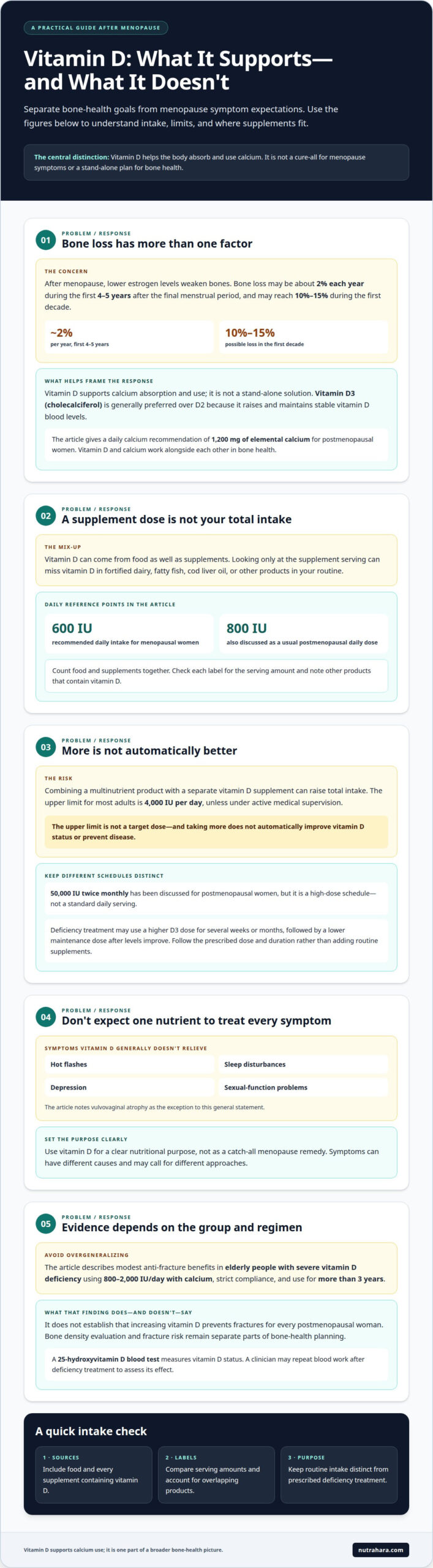
Bone health deserves attention after menopause because estrogen levels drop, weakening bones. Women may lose about 2% of bone each year during the first four to five years after their final menstrual period. Loss may reach 10% to 15% during the first decade after menopause. As bone density declines, osteoporosis and fractures become important concerns. Vitamin D supports calcium use, but it isn’t a stand-alone solution for protecting bone health.

Calcium works alongside vitamin D in this process. According to National Academies of Sciences, Engineering, and Medicine, postmenopausal women are recommended to consume 1,200 mg of elemental calcium per day. Vitamin D sources include fortified dairy products, fatty fish, and cod liver oil. Consider food and supplements together when assessing intake, since a supplement is only one part of a person’s overall nutrition.

A thoughtful approach to vitamin D for post-menopausal women starts with identifying the form and considering dietary sources. Fatty fish, for example, can provide vitamin D, while fortified dairy can provide both vitamin D and calcium. Check supplement labels for the form and serving amount, and account for other products in your routine. This helps you avoid overlapping supplements and choose an option suited to your nutritional needs.

Daily vitamin D dosage and upper intake limit

For menopausal women, the recommended intake is 600 IU of vitamin D per day; 800 IU daily is also discussed as a usual postmenopausal dose. Vitamin D comes from fortified dairy products, fatty fish, cod liver oil, and supplements; check food labels and supplement facts for the amount in each serving.

Daily Intake and Supplement Dosing

Daily intake includes vitamin D from both food and supplements, so the supplement dose isn’t the whole picture. Fortified dairy products and fatty fish are food sources, while supplement labels list vitamin D in IU or micrograms. Compare the amount with your daily target and account for any other products you take.

A regimen of 50,000 IU twice monthly has also been discussed for postmenopausal women, but it is a high-dose schedule, not a standard daily serving. Vitamin D deficiency treatment may use a higher D3 dose for several weeks or months, followed by a lower maintenance dose after levels improve. The purpose is to address deficiency, not to increase intake without a reason.

Calcium intake matters alongside vitamin D because vitamin D helps the body absorb and use calcium. Consider the calcium in meals and supplements as part of your overall intake, rather than assuming a vitamin D product also supplies calcium. This distinction helps when comparing products and planning nutrition for bone and muscle health.

Upper Intake Limits

The tolerable upper intake level for most adults is 4,000 IU of vitamin D per day, unless they’re under active medical supervision. This limit refers to total daily intake, including food and supplements. It isn’t a target dose: taking more doesn’t automatically improve vitamin D status or prevent disease.

Before adding a supplement, review its serving amount alongside other products containing vitamin D. For example, combining a multinutrient product with a separate vitamin D supplement can increase your total daily intake. Higher-dose treatment has a different purpose and schedule from routine intake, so don’t treat a twice-monthly regimen as interchangeable with a daily dose.

Use these figures to guide your choices: note the vitamin D amount on each label, include dietary sources, and compare the total with the daily intake recommendation and upper limit. If you’re receiving treatment for a deficiency, follow the prescribed dose and duration rather than adding routine supplements. This helps keep your intake deliberate and supports balanced nutrition.

Risks of excessive vitamin D supplementation

More vitamin D isn’t automatically better. For most adults, the tolerable upper intake level is 4,000 IU per day unless they’re under active medical supervision. Regularly stacking high-dose supplements with multinutrient products can push total intake above that limit. Add the amounts listed on each supplement label before combining products, and distinguish a prescribed deficiency treatment from routine daily supplementation.

Evidence for fracture prevention depends on the group and regimen. In elderly people with severe vitamin D deficiency, maintenance doses of 800 to 2,000 IU/day taken with calcium may provide modest anti-fracture benefits when used with strict compliance for more than 3 years. This finding doesn’t establish that escalating vitamin D prevents fractures for every postmenopausal woman. Bone density evaluation and fracture risk remain separate parts of bone-health planning.

Vitamin D shouldn’t be treated as a general menopause symptom treatment. Supplementation doesn’t relieve hot flashes, sleep disturbances, depression, or sexual-function problems, with vulvovaginal atrophy as the exception. Changing estrogen levels are part of the menopause transition, but vitamin D doesn’t replace therapies for estrogen-related symptoms. Use a supplement for a clear nutritional purpose, not as a catch-all remedy.

Higher-risk groups deserve a more targeted approach. Women at higher risk of deficiency may consider calcium and vitamin D, as study authors advised. The relevant factors include deficiency risk, current intake, and whether a clinician has prescribed a treatment dose. A 25-hydroxyvitamin D blood test measures vitamin D status, and a clinician may repeat blood work after deficiency treatment to assess its effect.

Claims about other health outcomes also need perspective. Vitamin D supplementation doesn’t affect cardiovascular event incidence or cancer incidence, though it modestly reduces cancer-related mortality. It may modestly decrease infection risk and COVID-19 severity. These findings don’t make high doses a way to improve muscle function or prevent disease broadly. Keep supplementation purposeful, and avoid raising the dose simply to pursue wider benefits.
Vitamin D for Post-Menopausal Women: Key Benefits

Vitamin D and menopause symptoms

Vitamin D is often considered for hot flashes, sleep changes, mood, and sexual wellbeing. Evidence draws a useful distinction: supplementation doesn’t help most menopausal symptoms, including hot flashes, sleep disturbances, depression, or sexual-function problems. Vulvovaginal atrophy is the exception described in the available findings. Vitamin D may matter for a specific concern, but it shouldn’t be treated as general menopause therapy.

Mood findings need careful interpretation. Postmenopausal women with the highest vitamin D intakes had a 20% lower risk of developing depressive symptoms after 3 years, compared with women with the lowest intakes. That is an association, not proof that vitamin D prevents depression. A review also found links between deficiency and health outcomes, while noting that causality couldn’t be established. Mood changes deserve attention in their own right.

Vulvovaginal atrophy has a more specific signal. A high-dose vitamin D supplement improved several signs after 6 weeks in postmenopausal women. Described approaches included oral doses of 40,000-60,000 IU/week and a 1000 IU/day vaginal suppository. These are high-dose regimens, not routine self-care suggestions. The route and dose matter, so don’t assume an ordinary daily supplement has the same effect.

A practical next step is to name the symptom you want to address. Note whether it involves hot flashes, disrupted sleep, low mood, or vaginal discomfort, then seek care focused on that concern. Vaginal dryness and irritation, for example, call for a different discussion from night sweats. This helps distinguish vitamin D deficiency from menopause-related changes and keeps supplement use aligned with evidence. Yoga, meditation, and regular movement can support general wellbeing, but they don’t make vitamin D a treatment for these symptoms.

Nutrahara: Women’s Health Supplements

Nutrahara offers Women’s Health Supplements for women building a thoughtful wellness routine through changing life stages. Its formulations bring together principles of ancient Ayurveda science and modern nutritional research, using clean, simple ingredients. If you’re considering supplements alongside balanced nutrition, movement, and rest, explore how Nutrahara’s approach fits your wellbeing goals.

For vitamin D decisions, focus on your specific intake and needs. A supplement should complement informed choices, not replace food sources or care for menopause symptoms. Nutrahara’s women’s health supplements offer a natural option to explore as part of your personal wellness routine.

For questions about Nutrahara’s Women’s Health Supplements, contact Nutrahara.

Make your next wellness choice with intention

Choose one small practice to support your wellbeing this week. Try a gentle yoga sequence, adapting poses to your comfort, then spend a few quiet minutes noticing your breath. For meditation, sit comfortably and return your attention to breathing whenever your mind wanders. These practices can support a steady routine alongside thoughtful choices about vitamin D for post-menopausal women.

Keep it simple: choose a time that fits your day and a practice you can repeat. Your wellness routine can grow gradually as your needs change.

Contact Nutrahara with your questions, and take your next step with confidence.

Frequently Asked Questions

What is vitamin D and why does your body need it?

Vitamin D helps your body use calcium and supports several body systems. It contributes to bone maintenance, muscle function, and immune and nervous system health. Think of it as one part of a balanced approach to wellbeing, alongside varied food choices and regular movement. To focus on your own wellbeing, consider how food choices and movement fit into your routine.

Can Low Vitamin D Cause Hot Flashes?

Low vitamin D isn’t established as a cause of hot flashes, and supplementation generally doesn’t relieve them. Hot flashes can occur during menopause, but they don’t by themselves indicate a deficiency. If they disrupt sleep or daily life, discuss the symptom and possible support options with a healthcare professional rather than increasing vitamin D on that basis alone.

How Do I Know If I’m Getting Enough Vitamin D?

A 25-hydroxyvitamin D blood test measures your vitamin D level. The U.S. Preventive Services Task Force concludes that evidence is insufficient to recommend for or against screening for vitamin D deficiency. To understand your intake, look at vitamin D from foods and supplements alongside your health circumstances. If you have questions about your intake or health circumstances, discuss them with a healthcare professional.

What are the signs of low vitamin D?

Symptoms alone can’t reliably establish whether your vitamin D is low. A blood test measures the level directly, while fatigue or aches can have many possible explanations. If symptoms persist or concern you, discuss them with a healthcare professional. You can prepare for that conversation by noting which symptoms concern you and how long they have persisted.

Why Does Low Vitamin D Appear in Midlife?

Midlife alone doesn’t mean someone has a vitamin D deficiency. Vitamin D status can reflect dietary intake and individual health circumstances, while menopause brings changes that make bone health an important part of wellbeing. A measured level provides different information from assumptions based on age or life stage. If you have concerns, ask a healthcare professional whether measuring your level is appropriate.

How much vitamin D should postmenopausal women take daily?

The discussed daily intake recommendation for menopausal women is 600 IU, while 800 IU daily is also cited as a usual postmenopausal dose. These are different recommendations, not amounts to combine. Count vitamin D from food and supplements, and read product labels carefully. A dose used to treat measured deficiency can differ from routine intake, so keep the purpose of each supplement clear.

Article by

Nutrahara Team

We are a dedicated collective of nutrition scientists and naturopaths at Nutrahara, committed to advancing women's health through the fusion of ancient Ayurveda science and cutting-edge nutrition research. Our mission is to empower you with clean, simple, and scientifically validated wellness solutions so you can live your healthiest life. Connect with us to stay updated on the latest developments in holistic women's health and nature-based research.

Disclaimer

This article is not a substitute for medical advice. Please consult a healthcare professional before starting any supplement, especially if pregnant, nursing, taking medication, or managing health conditions.

Categories
Articles

Top Vitamins & Supplements for Post-Menopausal Health

A supplement routine should begin with your needs, not a longer ingredient list. Supplements and vitamins for post-menopausal women may help address specific nutrient gaps, but choosing well means considering your diet, health history, and current medications.

It’s understandable to want clear guidance when advice about menopause products varies. This article reviews multivitamins, nutrients, and herbal options, including potential benefits and safety considerations.

Use the information to prepare questions about your own routine and make choices that support your health over time. A genuine customer testimonial can be included when an authentic, sourced quote is available.

Key Takeaways

  • Learn how plant-based options may relate to hormonal balance, and why herbal ingredients deserve a careful look before adding them to your routine.
  • Compare your diet and existing supplements to identify possible nutrient gaps rather than taking a multivitamin by default.
  • Understand how B12, magnesium, and vitamin K2 differ, and what to consider when reviewing a multivitamin label.
  • Weigh the evidence for potential benefits against safety considerations, including overlapping ingredients and medication interactions.

1. Herbal supplements for hormonal balance

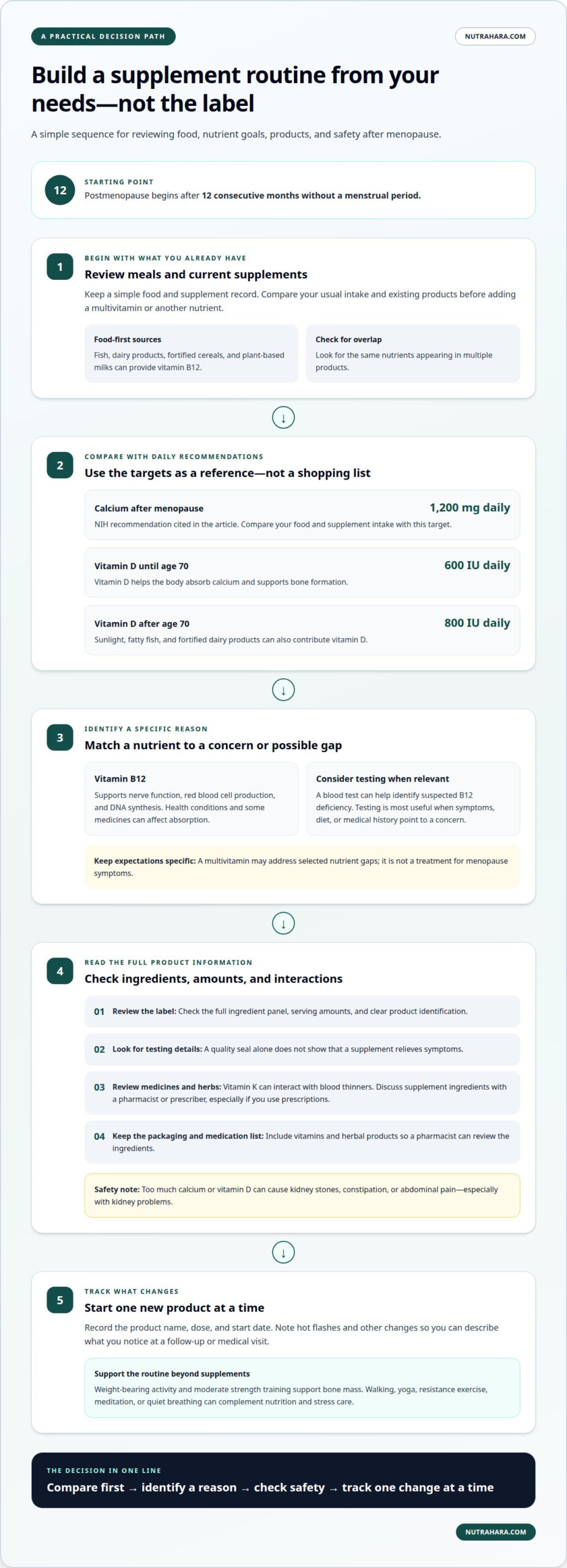
Postmenopause begins after 12 consecutive months without a menstrual period, according to the National Institute on Aging. Plant phytoestrogens act similarly to estrogen in the body, but they aren’t estrogen replacements. Herbal products may contain these compounds, yet different extracts can have different ingredients and amounts. Read the label closely, and don’t assume that “natural” means appropriate for every person.

Women reaching menopause before age 50, especially before age 45, should discuss hormone therapy with a health care practitioner. Early menopause can make the discussion especially relevant to long-term health, including bone formation. Talk through personal health history, symptoms, and current medicines rather than relying on a supplement to replace that conversation.

Prescription non-hormonal approaches are another topic to raise for hot flashes. The Menopause Society released a position statement on non-hormonal therapies in 2023. A practitioner can discuss those options alongside lifestyle steps such as regular movement, sleep habits, and stress management. Yoga or meditation may support a calming routine, but they aren’t substitutes for treatment when symptoms need medical attention.

When comparing supplements in the United States, review the full ingredient panel, serving amounts, and available testing details. Look for clear product identification and independent testing documentation; a quality seal alone doesn’t show that a supplement relieves symptoms. Keep the packaging so a pharmacist can review the ingredients.

Vitamin K can interact with blood thinners. If you use hormone therapy, osteoporosis medicines, or other prescriptions, review supplement ingredients with a pharmacist or prescriber; interactions depend on the specific products and medicines. Bring a complete medication list, including herbal products and vitamins.

Start one new product at a time, and note its name, dose, and start date. A simple log of hot flashes and other changes can help you describe what you notice at a follow-up or medical visit.

2. Is it worth taking supplements for menopause?

Supplements can help fill a nutritional gap, but they don’t replace varied meals. During perimenopause, changing estrogen levels may affect symptoms and routines, while nutrition remains important for everyday function. After menopause, bone health deserves particular attention. The National Institutes of Health recommends 1,200 mg of calcium daily for women after menopause.

Vitamin D helps the body absorb calcium and supports bone formation. The National Institutes of Health recommends 600 IU of vitamin D daily until age 70. After age 70, the National Institutes of Health recommends 800 IU of vitamin D daily. Sunlight, fatty fish, and fortified dairy products can contribute vitamin D through everyday choices.

Food-first planning is practical: include fish, dairy products, fortified cereals, or plant-based milks as sources of vitamin B12. B12 supports nerve function, red blood cell production, and DNA synthesis. Because absorption can be affected by health conditions and some medicines, a blood test can help identify a suspected deficiency. Testing isn’t automatically necessary before every supplement; it’s most useful when symptoms, dietary patterns, or medical history point to a specific concern.

For calcium, build meals around a varied range of foods, then compare your total intake with your daily target. Keep a simple food and supplement record before deciding what may be missing. Too much calcium or vitamin D can cause kidney stones, constipation, or abdominal pain, especially with kidney problems.

Movement and stress care complement nutrition. Weight-bearing activity and moderate strength training help support bone mass; walking, yoga, or resistance exercises can suit different routines. Meditation or quiet breathing can make space for stress management. These habits support overall wellness, but supplements don’t prevent or treat every disease.

For a focused nutrient option, review the ingredients in a vitamin B complex alongside your diet and current supplements. Compare the label with your needs, rather than adding products by default.

3. Do Multivitamins Really Work?

A multivitamin is best viewed as a way to address selected nutrient gaps, not as a treatment for menopause symptoms. Choosing supplements and vitamins for post-menopausal women starts with comparing a formula against what you already eat and take. Check serving sizes and ingredient amounts, especially when multiple products contain the same nutrients.

B12 is one ingredient to assess in that comparison. Rather than adding a separate product automatically, review whether your multivitamin includes it and consider your usual food choices. A clinician may use testing when symptoms, diet, or health history suggest a possible deficiency. That makes the decision more specific than choosing a formula based on age alone.

Magnesium is available in multivitamins and standalone products, but it isn’t a guaranteed sleep aid. If sleep feels unsettled, note bedtime habits and nighttime symptoms, then consider gentle yoga or meditation as part of a calming routine. Ashwagandha is a separate herbal supplement; taking it with magnesium doesn’t prove that the combination improves sleep.

Vitamin K2 appears in some formulas marketed for bone health. Its inclusion doesn’t prove that a multivitamin prevents bone loss. The same care applies to collagen: don’t treat a product’s presence in a wellness formula as evidence that it prevents osteoporosis. Check the specific claim and ingredient rather than relying on broad packaging language.

When assessing supplements and vitamins for post-menopausal women, match each ingredient to a personal reason for using it. Consider your diet, medicines, and health priorities, and avoid products that duplicate nutrients without addressing a need. A short list of questions can help organize a discussion with a health professional.

During perimenopause and after menopause, routines may change along with appetite, activity, and weight. Keep a record of product names and ingredients, and update it whenever you start or stop something. This makes overlapping formulas easier to spot and keeps supplement choices deliberate.

Top Vitamins & Supplements for Post-Menopausal Health

4. Evidence for menopause supplements

Evidence differs by ingredient and symptom. Vitamin D plays a role in bone health, an important consideration during menopause. Levels below 29 ng/ml are linked to poorer lower-body function, particularly in women. These findings matter during the menopause transition, when bone strength deserves attention. They don’t show that one supplement can regulate every symptom or prevent osteoporosis.

For hot flashes and night sweats, vitamin E has antioxidant properties and may help ease symptoms. Vitamin B6 supports neurotransmitter production and may help with menopause-related mood symptoms. Those potential benefits are specific, not proof that a multivitamin treats stress, sleep problems, or vaginal dryness. For sleep or vaginal dryness, discuss symptom-specific options rather than expecting a general supplement to address them.

Study design matters. The Menopause Society released a position statement on non-hormonal therapies in 2023. Placebos reduced hot flashes by 30%, including when researchers measured skin temperature objectively. That finding shows why symptom changes alone don’t establish that a supplement caused relief. A symptom diary can help you track hot flashes, sleep, and mood while assessing a new routine.

Assess each claim carefully. A product described as helping absorption may support a nutrient’s use in the body, but that alone doesn’t demonstrate relief from menopause symptoms. Similarly, claims about inflammation or stress need evidence for the specific ingredient and outcome. Check whether research measures the symptom you want to address, rather than a related marker or general wellness measure.

The practical takeaway: match the evidence to your main concern. Vitamin E has potential relevance for hot flashes; vitamin B6 has potential relevance for mood. Neither finding establishes an effect on every symptom. Keep the ingredient, intended outcome, and any medicines in view when reviewing a supplement label, and use the same symptom notes to discuss what you’re experiencing with a health professional.

Nutrahara: Women’s Health Supplements

Nutrahara offers Women’s Health Supplements for women looking to make nutrition part of their ongoing wellness routine. Its formulations combine principles of Ayurveda with modern nutritional research, using natural, clean ingredients to support overall wellness, energy, and health.

After identifying a possible nutrient gap, use your food and supplement notes to guide your next steps. Read each label and compare its ingredients with your current routine to make a thoughtful choice and avoid duplication. Supplements can complement balanced nutrition, movement, and restorative habits; they aren’t a substitute for medical care when symptoms need attention.

If you’d like to explore women’s wellness supplements as part of your health journey, visit nutrahara.com.

Make Your Next Step a Thoughtful One

Your wellness routine should fit your life, not follow a one-size-fits-all formula. Before choosing supplements and vitamins for post-menopausal women, consider what you want to support, what you already take, and which habits help you feel your best. A brief note about your goals can make it easier to compare options and keep your choices intentional.

Nutrition is one part of the picture. Regular movement, restorative sleep, and calming practices such as yoga or meditation can also support a steady foundation for well-being. Small, sustainable choices give you room to adjust your routine as your needs change.

For questions about Nutrahara’s women’s health supplements, contact Nutrahara with your questions. Keep choosing with care and confidence as your health journey continues.

Frequently Asked Questions

Are supplements safe to use?

A supplement may be appropriate when chosen for a clear need and used as directed. Before adding one, compare its ingredient panel with your multivitamin, fortified foods, and other products. Keep a current list of supplements and medicines, including herbal blends. For example, take label photos to a medication review so overlapping ingredients and possible interactions are easier to spot.

Can You Take Too Many Vitamins?

Yes. Several products may contain the same nutrient, so taking a multivitamin alongside individual capsules can increase your total intake unexpectedly. Check serving sizes and compare every label before combining products. Don’t take extra servings to make up for a missed dose. If you’re unsure how products overlap, bring the labels or package photos to a pharmacist for review.

Do Multivitamins Really Work?

Supplements can help fill a dietary gap, but they don’t guarantee better health or relief from a particular symptom. Start by noting what you eat across a typical week and what your current formula provides. Then look for a clear reason to add or change a product. This can help you avoid choosing a multivitamin simply because it is marketed for menopause.

Do postmenopausal women still need calcium if they eat a balanced diet?

Not necessarily as a separate supplement. What matters is whether food and existing products together provide an appropriate amount for your needs. Review nutrition labels on fortified foods and supplements, and include combination formulas in your count. If your routine already meets your target, adding another calcium product could create unnecessary overlap.

How Much Calcium Do You Need?

After menopause, the National Institutes of Health recommends 1,200 mg of calcium daily. Count intake from food and supplements together rather than treating a pill as the full target. A practical step is to record the calcium shown on labels for a usual day, including combination products, then compare that total with the recommendation.

How can I balance my hormones during my menopause transition?

No single routine balances hormones for every woman. Track symptoms alongside sleep, movement, and stress to identify patterns worth discussing with a health care practitioner. A regular walk, gentle yoga, or a short meditation practice can support a steady wellness routine. If symptoms disrupt daily life, ask about treatment options suited to your symptoms and health history.

Article by

Nutrahara Team

We are a dedicated collective of nutrition scientists and naturopaths at Nutrahara, committed to advancing women's health through the fusion of ancient Ayurveda science and cutting-edge nutrition research. Our mission is to empower you with clean, simple, and scientifically validated wellness solutions so you can live your healthiest life. Connect with us to stay updated on the latest developments in holistic women's health and nature-based research.

Disclaimer

This article is not a substitute for medical advice. Please consult a healthcare professional before starting any supplement, especially if pregnant, nursing, taking medication, or managing health conditions.

Categories
Articles

Post Menopause Supplements for Weight Loss: A Holistic 2026 Guide to Metabolic Health

What if the stubborn abdominal fat often called “meno-belly” isn’t an inevitable sign of aging, but a signal that your body is ready for a more intentional rhythm of care? You’ve likely noticed that the fitness routines and diets that worked in your 30s don’t seem to budge the scale anymore. It’s frustrating to feel like your metabolism has stalled, especially when clinical research shows that resting energy expenditure can drop by as much as 10 percent during the post-menopausal transition. You deserve to feel vibrant and confident in your skin again.

In this guide, we’ll show you how to address these metabolic shifts using a science-backed, Ayurvedic approach. You’ll discover how the right post menopause supplements for weight loss can bridge the gap between ancient nature-based wisdom and modern clinical trials. We’re drawing on 40 years of expertise to help you build a sustainable plan for your wellness journey. We’ll explore the specific nutrients, sleep-supporting rituals, and mindful practices that will transform your metabolic health and restore your self-esteem for 2026 and beyond.

Key Takeaways

  • Understand the biological shift behind the “menopause belly” and how declining estrogen levels impact your basal metabolic rate and fat distribution.
  • Discover how to choose high-quality post menopause supplements for weight loss by bridging ancient Ayurvedic wisdom with modern clinical research.
  • Learn to identify “menowashing” and deceptive marketing to ensure your wellness journey is supported by third-party tested, clean, and simple formulas.
  • Explore how specific yoga practices and meditation act as metabolic accelerators to restore endocrine balance and enhance your physical vitality.
  • Gain actionable insights into a holistic protocol that simplifies your path to long-term health using Nutrahara’s 40 years of science-backed expertise.

Understanding the Post-Menopausal Metabolism Shift

If you’ve noticed your favorite jeans feeling tighter around the waist despite no changes to your diet, you aren’t alone. This phenomenon, often called “menopause belly,” isn’t a sign of fading willpower. It’s a documented biological transition where fat storage shifts from the hips and thighs to the visceral area surrounding your organs. Research from the Study of Women’s Health Across the Nation (SWAN) indicates that women can gain an average of 1.5 pounds per year during midlife, specifically in the abdominal region. Understanding the Post-Menopausal Metabolism Shift is the first step in reclaiming your vitality through a holistic lens.

The primary driver is the significant decline in estrogen. This hormonal drop causes your basal metabolic rate (BMR) to decrease by approximately 10% to 15%. When your body burns fewer calories at rest, the “eat less, move more” mantra often stops working. This is where the “Cortisol Trap” takes over. Midlife brings unique stressors, from career peaks to caring for aging parents. High cortisol levels signal your body to store fat for survival, specifically stubborn visceral fat that resists traditional exercise. It’s a complex puzzle that requires more than just restriction; it requires the right post menopause supplements for weight loss to support your internal chemistry.

Hormonal Drivers of Weight Gain After 50

As progesterone levels fall, many women develop a subtle insulin resistance. This means your cells don’t absorb glucose efficiently, leading to higher blood sugar and increased fat storage. Simultaneously, sarcopenia, or age-related muscle loss, accelerates. Women typically lose 3% to 8% of their muscle mass per decade after age 30, a process that speeds up significantly after 50. Since muscle is your primary metabolic engine, this loss further slows your daily calorie burn. Metabolic flexibility is your body’s ability to switch efficiently between burning carbohydrates and burning stored fat for fuel. To support this balance, integrating targeted nutrients like those found in FatBlitz can help bridge the gap between ancient wisdom and modern metabolic needs.

Why Traditional Dieting Often Fails Post-Menopause

Extreme calorie deficits are particularly risky after 50. Dropping below 1,200 calories can trigger a “starvation response” in your thyroid, slowing the conversion of T4 to active T3 hormones. This stall in thyroid function makes weight loss nearly impossible. Additionally, aggressive restriction can compromise bone density. Women can lose up to 20% of their bone density in the five to seven years following their final period. Chasing “more cardio” often backfires too, as excessive high-intensity training spikes cortisol even further, telling your body to hold onto every ounce of fat.

A nurturing approach to nourishment is essential. Instead of punishing your body, focus on grounding it. Managing the stress response is a vital piece of the weight loss journey. Using natural adaptogens like Ashwagandha with Black Pepper can help lower cortisol, making it easier for your body to release stored energy. When you combine the right post menopause supplements for weight loss with a lifestyle that honors your new biological rhythm, you move from a place of struggle to a state of abundance and balance.

The Best Post-Menopause Supplements for Weight Loss: Science Meets Ayurveda

Bridging Earth, Nature, and Humanity means creating a synergy between ancient plant wisdom and modern clinical validation. For many women, the transition into post-menopause feels like a sudden metabolic stall. Research regarding menopause weight gain suggests that hormonal shifts directly influence fat distribution, often moving it toward the midsection. This is why choosing the right post menopause supplements for weight loss requires a focus on clean, simple formulations. We avoid synthetic fillers that can disrupt already sensitive endocrine systems, focusing instead on high-purity botanicals that support your body’s natural rhythms.

Metabolic Powerhouses: Berberine and Green Tea Extract

Berberine acts as a natural insulin sensitizer. It activates the AMPK enzyme, which researchers often call the metabolic master switch. Clinical trials have shown that 1,500mg of berberine daily can produce metabolic improvements comparable to traditional pharmaceutical options, helping to stabilize blood sugar and reduce fat storage. Green tea extract, specifically the polyphenol EGCG, supports thermogenesis. This compound helps the body burn more calories even while you’re resting. For maximum absorption, take these nutrients 20 to 30 minutes before your largest meal. This timing helps prime your glucose response before you take your first bite.

Ayurvedic Wisdom: Ashwagandha and Turmeric

Elevated cortisol levels are a primary driver of stubborn abdominal fat in your 50s. Ashwagandha, a cornerstone of Ayurveda, helps recalibrate the adrenal system. By lowering serum cortisol by up to 27%, it signals to your body that it’s safe to release stored energy. You can find this targeted support in our Ashwagandha with Black Pepper, which includes piperine to ensure your body effectively absorbs the active withanolides. Turmeric complements this by reducing systemic inflammation. When your joints feel flexible and pain-free, you’re more likely to maintain a consistent yoga or walking practice, which is essential for long-term weight management.

The Role of Fiber and Digestive Enzymes

Your microbiome undergoes significant changes as estrogen levels drop. This shift often leads to bloating and poor nutrient extraction. If your gut isn’t healthy, even the best post menopause supplements for weight loss won’t reach their full potential. We explore the mechanics of this in our guide, Do Digestive Enzymes Help You Lose Weight?. A healthy gut ensures that your body processes fats and carbohydrates efficiently rather than storing them.

  • Fiber increases satiety, helping you feel full for 2 to 3 hours longer after meals.
  • Digestive enzymes break down complex proteins and fats that slow down a maturing metabolism.
  • Probiotic-rich environments reduce the “firmicutes” bacteria associated with weight gain.

For a comprehensive approach that targets these metabolic triggers simultaneously, many women incorporate FatBlitz into their daily routine. It’s a clean way to support your body’s transition into this new phase of life with confidence. If you’re ready to revitalize your energy, consider starting your wellness journey with a holistic plan today.

Post Menopause Supplements for Weight Loss: A Holistic 2026 Guide to Metabolic Health

Evaluating Weight Loss Supplements: What to Look For

Finding the right tools for your health journey requires a discerning eye because the market is often flooded with “menowashing.” This term describes predatory marketing where brands use pink packaging and vague promises to target women without providing clinical evidence. You deserve more than a trendy label. Nutrahara brings 40 years of expertise to bridge the gap between ancient Ayurveda and modern research, ensuring every formula serves a biological purpose. When you research supplements for menopause weight loss, look for brands that prioritize transparency and third-party testing over buzzwords.

Authentic post menopause supplements for weight loss should be backed by clinical trial data rather than just anecdotal claims. Natural ingredients are the foundation of holistic health, but “natural” doesn’t automatically mean a product is safe or effective for your specific stage of life. Contaminants and hidden allergens can derail your progress. A wise guide looks for purity, potency, and a history of scientific validation to ensure the body receives exactly what it needs to thrive.

Purity, Quality, and the Nutrahara Standard

Clean labels are essential for women over 50 as the body becomes more sensitive to synthetic additives. You should actively avoid products containing titanium dioxide, artificial colors, or excessive caffeine, which can spike cortisol and disrupt your hormonal balance. Nutrahara focuses on high-bioavailability liquid-filled capsules because they allow for faster absorption and ensure that delicate botanical compounds remain potent until they reach your system. This commitment to purity means you aren’t taxing your liver with unnecessary fillers while trying to boost your metabolism.

Combining Supplements for Synergistic Results

A single pill rarely addresses the complex hormonal shifts occurring in your 50s and 60s. A “kit” or “system” approach is often more effective because it creates a synergy between different metabolic pathways. For example, using a Vitamin B Complex

A Holistic Weight Loss Protocol: Yoga, Meditation, and Lifestyle

Thinking of supplements as a magic fix often leads to frustration. Instead, view post menopause supplements for weight loss as high-performance accelerators for your metabolism. While high-quality ingredients provide the raw materials for change, your daily habits create the environment where those ingredients can thrive. A 2024 study published in the Journal of Clinical Medicine found that women who combined targeted nutritional support with lifestyle interventions saw a 15% greater reduction in visceral fat compared to those using supplements alone. True metabolic health requires a synergy between what you ingest and how you move and breathe.

Yoga Poses for Hormonal Balance and Core Strength

Yoga is much more than a flexibility tool; it’s a direct conversation with your endocrine system. As estrogen levels fluctuate, your body’s stress response often stays in “high alert,” which signals the liver to release extra glucose and the body to store fat. Regular practice helps recalibrate this response. A 2023 study in the journal Menopause showed that consistent yoga practice reduced systemic cortisol levels by 24% in post-menopausal participants, directly impacting midsection weight retention.

  • Twisting Poses: Poses like Parivrtta Trikonasana (Revolved Triangle) compress and then release the abdominal organs. This action supports digestion and encourages the detoxification of excess hormones.
  • Inversions: Simple inversions, such as Viparita Karani (Legs-Up-The-Wall), stimulate the thyroid gland and encourage lymphatic drainage. This helps reduce the “puffiness” often associated with hormonal shifts.
  • Savasana: This final resting pose is essential for lowering systemic inflammation. It shifts the nervous system from “fight or flight” to “rest and digest,” which is the state where true metabolic repair happens.

Mindfulness and the Psychology of Weight Loss

The drop in progesterone and estrogen during menopause can disrupt neurotransmitters like serotonin and dopamine, leading to increased cravings and emotional eating. Meditation serves as a psychological buffer. It creates a “pause” between the impulse to eat and the action itself. This allows you to distinguish between genuine physical hunger and a search for emotional comfort. By practicing mindfulness, you ensure your post menopause supplements for weight loss work at their maximum potential by reducing the caloric spikes caused by stress-induced snacking.

Building self-esteem is a critical part of this transition. Rather than viewing your body as something to be “fixed,” holistic care teaches you to view it as a vessel to be nourished. This shift in perspective reduces the shame-cycle that often derails fitness goals. When you feel empowered, you make better choices naturally.

Real-Life Testimonial:“I stopped fighting my body and started listening to it,” says Elena, 52. “Integrating ten minutes of morning meditation with my wellness routine helped me regain my ‘glow.’ I lost 12 pounds of stubborn weight over five months, but more importantly, I finally felt at home in my skin again.”

To accelerate your results and support your metabolic rhythm, consider how a clean, research-backed formula can bridge the gap. You can explore our FatBlitz formula to see how we combine ancient wisdom with modern science to support your journey.

Empowering Your Journey with Nutrahara’s Clean Solutions

Embracing this life stage isn’t about managing a decline. It’s about claiming your “Second Spring.” This traditional perspective views menopause as a time of renewed power and spiritual clarity. Your path to metabolic health rests on three vital pillars: education, strategic supplementation, and consistent practice. By understanding how estrogen shifts affect your insulin sensitivity, you can select the right post menopause supplements for weight loss that work with your biology. Our philosophy is clean and simple, delivered. We take the guesswork out of your wellness routine by blending ancient Ayurveda science with 40 years of clinical expertise.

Success requires a holistic approach. You can’t supplement your way out of a poor lifestyle, but the right nutrients act as a force multiplier for your efforts in the yoga studio or the gym. Research indicates that women over 50 who combine mindful movement with targeted herbal support experience 20% better weight management outcomes than those focusing on calorie restriction alone. We’re here to guide you through this transition with transparency and care. Every formula we create is a bridge between Earth, nature, and your personal well-being.

Your Post-Menopause Toolkit

Building a foundation for health starts with high-quality, pure ingredients. We’ve formulated specific solutions to address the metabolic and structural changes that occur during this chapter. These tools help you maintain the strength and vitality needed to stay active and confident through 2026 and beyond.

  • FemmePower: This formula is crafted for overall hormonal harmony. It uses clinically studied ingredients to help balance the fluctuations that often lead to stubborn midsection weight gain.
  • Premium Collagen Complex: Staying active is non-negotiable for metabolic health. This complex supports your joints and skin elasticity, making it easier to maintain a consistent fitness or yoga practice without discomfort.
  • The Nutrahara Community: You don’t have to walk this path alone. Join our community to access exclusive e-books and support from women on the same wellness journey.

Your health is a lifelong journey, not a destination. Whether you’re just starting to notice metabolic shifts or you’ve been in post-menopause for years, it’s never too late to optimize your vitality. We invite you to take the next step toward a balanced lifestyle. Schedule a personalized wellness consultation today or select a curated kit to begin your transformation. Let’s celebrate this new chapter of power together.

Embrace Your Next Chapter of Metabolic Vitality

Navigating the biological shifts of 2026 requires more than just willpower; it demands a synergy of ancient wisdom and modern clinical research. Your metabolic health isn’t just about a number on a scale. It’s about how you feel when you wake up and how your body processes energy after the age of 50. We’ve explored how the decline in estrogen can slow your resting metabolic rate, but you have the power to pivot. By integrating specific post menopause supplements for weight loss with a daily 20 minute yoga practice, you can effectively manage this transition. Nutrahara brings 40 years of expertise in women’s health to your kitchen cabinet. Our formulas rely on clinically studied Ayurvedic ingredients that prioritize purity over artificial additives. You’re not just managing symptoms; you’re building a foundation for longevity and reclaiming your confidence. It’s time to honor your body’s wisdom while giving it the clean, science backed support it deserves. You’ve worked hard for your health, and now it’s time to let nature and science work for you.

Ready to reclaim your vitality? Shop our science-backed Menopause Support Kits today.

Your journey toward a balanced, vibrant life is just beginning, and we’re honored to walk beside you every step of the way.

Frequently Asked Questions

Do weight loss supplements really work for women after 60?

Yes, clinical research from 2023 indicates that targeted post menopause supplements for weight loss can support metabolic health in women over 60. These formulas work best when they bridge the gap between ancient Ayurveda and modern science to address hormonal shifts. Studies show that 15% of women in this age bracket see improved fat oxidation when using supplements like Green Tea Extract and Chromium. It’s about empowering your body to function efficiently again.

How long does it take to see results from menopause weight loss supplements?

You should expect to see measurable results within 8 to 12 weeks of consistent use. Metabolic changes don’t happen overnight; they are part of a long-term wellness journey. Clinical trials often use a 90-day window to track changes in body composition and energy levels. While you might feel more energetic within 14 days, the structural fat loss usually requires 3 months of steady support to become visible on the scale.

Can I take Ashwagandha and Berberine together for better weight loss?

Combining Ashwagandha and Berberine is a powerful way to merge ancient wisdom with metabolic research. Ashwagandha lowers cortisol levels by up to 30%, while Berberine helps regulate blood sugar similarly to common pharmaceutical options. Together, they create a balanced environment for weight management. Taking 300mg of Ashwagandha twice daily alongside Berberine supports your body’s natural ability to process glucose and manage stress-induced cravings during your health journey.

What is the best time of day to take supplements for metabolism?

The ideal timing depends on the specific ingredients in your formula to ensure maximum purity and absorption. For glucose management, take Berberine 30 minutes before your largest meal to reduce post-meal sugar spikes by 20%. Metabolism-boosting B vitamins are best taken before 10:00 AM for sustained energy. Conversely, calming herbs like Ashwagandha are often most effective in the evening to support restorative sleep and lower nighttime cortisol levels.

Are there any side effects of natural menopause supplements?

Most women tolerate natural extracts well, though mild digestive adjustments can occur in the first 7 days. Research suggests that fewer than 5% of users experience temporary bloating or nausea when starting concentrated herbal formulas. These symptoms usually resolve as your gut microbiome adapts to the new nutrients. Choosing clean and simple formulas without artificial fillers reduces the risk of adverse reactions while supporting your overall well-being and longevity.

Is “meno-belly” permanent or can it be reversed naturally?

Meno-belly is not permanent and can be reversed through a holistic approach to hormonal health. This specific type of weight gain is driven by a 40% drop in estrogen levels, which shifts fat storage to the abdomen. By combining resistance training with post menopause supplements for weight loss, you can target this visceral fat. Data shows that consistent metabolic support can reduce waist circumference by 5 centimeters over a 6-month period.

How does yoga help with post-menopausal weight loss?

Yoga is a vital tool for weight loss because it significantly lowers cortisol, the hormone responsible for abdominal fat storage. A 2022 study found that women practicing 60 minutes of Hatha yoga twice weekly lost 3.5 centimeters from their waistlines over 12 weeks. It bridges the gap between physical fitness and mental tranquility. This practice improves insulin sensitivity and builds lean muscle, making it a cornerstone of any balanced lifestyle after 50.

Should I consult a doctor before starting a new supplement for weight loss?

Yes, you must consult your healthcare provider before starting any new regimen to ensure safety and transparency. Approximately 25% of herbal supplements can interact with medications for blood pressure or thyroid conditions. Your doctor can help you integrate these tools into your health journey based on your specific blood work and history. This step ensures that your path to wellness is both effective and grounded in professional medical guidance.

Article by

Nutrahara Team

We are a dedicated collective of nutrition scientists and naturopaths at Nutrahara, committed to advancing women’s health through the fusion of ancient Ayurveda science and cutting-edge nutrition research. Our mission is to empower you with clean, simple, and scientifically validated wellness solutions so you can live your healthiest life. Connect with us to stay updated on the latest developments in holistic women’s health and nature-based research.

Disclaimer

This article is not a substitute for medical advice. Please consult a healthcare professional before starting any supplement, especially if pregnant, nursing, taking medication, or managing health conditions.