

Categories
Articles

Herbs for Sleep: Compare Calming Herbs and Their Safety

Choosing herbs for sleep starts with a practical question: what part of your night do you want to support? One woman describes her experience: “A calming bedtime ritual helps me unwind.” The answer depends on the herb, its preparation, your health circumstances, and your routine.

For women, sleep can change with stress, shifting schedules, and different life stages. This guide compares valerian, passionflower, lemon balm, and chamomile, then covers safety and how to assess product labels. Note what you want help with and which ingredients you already use. This gives you a practical starting point for weighing evidence, considering safety, and choosing a realistic next step for your well-being.

Key Takeaways

  • Compare valerian, passionflower, lemon balm, and chamomile by their traditional uses and the strength of available sleep research.
  • Consider how medications, alcohol, and personal health circumstances may affect whether an herbal sleep aid is a suitable choice.
  • Learn why valerian’s effects can vary and what to keep in mind when considering it for nighttime tension.
  • Use clear ingredient information and consistent product details to make a more informed choice about supplement quality.

1. Valerian, passionflower, lemon balm, and chamomile

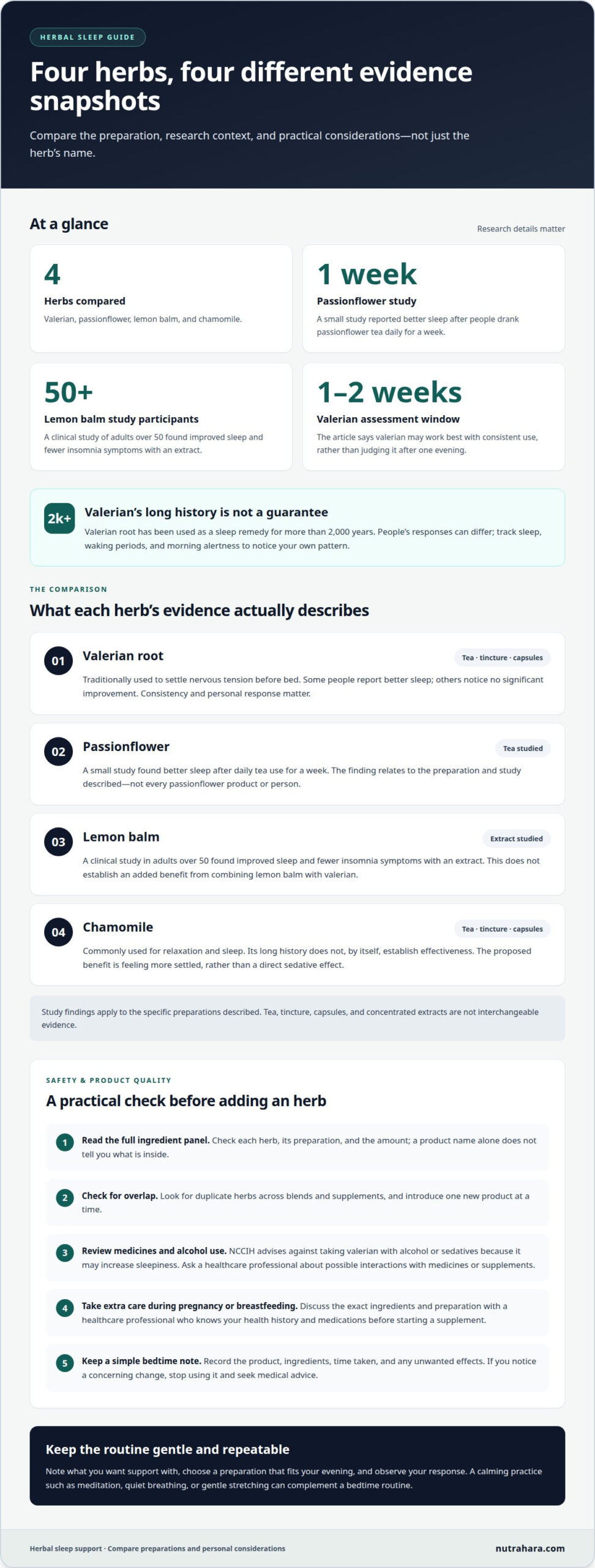
Valerian root comes as tea, tincture, or capsules, giving you different ways to include it in an evening routine. Passionflower has been studied as tea: in a small study, people who drank it daily slept better after a week, according to The study authors. Lemon balm has also been examined as an extract. A clinical study found improved sleep and fewer insomnia symptoms in adults over 50 years old. These findings can inform your comparison of herbs for sleep, but relate to the particular preparations studied.

The lemon balm finding concerns an extract, not a combination with valerian. It doesn’t show that combining the two provides an added sleep benefit. Chamomile is commonly consumed as tea, tincture, or capsules for relaxation and sleep. Its long history of use does not, by itself, establish effectiveness.

Chamomile may encourage relaxation and ease anxiety, which could help you fall asleep. The proposed benefit is feeling more settled, rather than a direct sedative effect. A cup of chamomile tea can be part of a predictable wind-down routine. Warm milk and tart cherry juice are also suggested as nighttime drinks, although scientific evidence that they improve sleep is limited.

Lavender essential oil may encourage relaxation before bed when used in a diffuser or applied to skin with a carrier oil. These uses shouldn’t be confused with evidence that lavender treats a medical sleep disorder. When choosing among herbs for sleep, consider which preparation suits your routine and notice how it affects your evening. Gentle yoga or meditation can also help you transition calmly to bedtime.

2. Safety and tolerance of herbal sleep aids

“Natural” describes an ingredient’s origin, not how it will affect each person. Valerian is a clear example: the National Center for Complementary and Integrative Health (NCCIH) advises against taking it with alcohol or sedatives because it may increase sleepiness. If you take prescription medicines or other supplements, review the specific herb and product ingredients with a healthcare professional before combining them.

Pregnancy and breastfeeding call for particular care. Don’t begin an herbal sleep supplement during either life stage without discussing its exact ingredients with a healthcare professional who knows your health history and medications. Tea, tincture, capsules, and concentrated extracts are different preparations, so name the form you’re considering.

Effects and tolerance can vary by herb, preparation, and person. Chamomile is generally considered safe and well-tolerated for most people in moderate amounts, but that doesn’t mean every capsule or blend suits everyone. Keep a simple bedtime note: record the product, ingredients, time taken, and any unwanted effects. If you notice a concerning change, stop using it and seek medical advice.

Blends need the same ingredient-by-ingredient attention as single-herb supplements. A name such as “Relaxing Sleep™” doesn’t tell you which herbs or amounts are inside. Read the full ingredient panel, check for duplicate herbs across products, and avoid adding several new supplements to your bedtime routine at once. This makes it easier to identify what you took if an unwanted effect occurs.

For a gentle natural sleep routine, use a consistent preparation and pair it with a calming practice, such as meditation or quiet breathing. A repeatable routine helps you notice how a product fits your evening without assuming a supplement alone will create restful sleep.

3. Valerian for nervous tension and sleep

Valerian root has been used as a sleep remedy for more than 2,000 years. Its traditional role is to settle nervous tension before bedtime, especially when racing thoughts or stress make it difficult to unwind. Valerian is believed to have sedative effects that may support sleep onset and reduce nighttime awakenings. These proposed effects don’t mean every person will experience the same change.

Timing can matter. Valerian may work best when taken consistently for 1 to 2 weeks, rather than judged after one evening. Some people notice better sleep; others don’t notice significant improvement. Track your bedtime, waking periods, and morning alertness while using it. That practical record can help you decide whether valerian fits your routine, rather than relying on a single night’s impression.

Valerian root is also combined with hops in some herbal sleep formulas. The ingredient list can show whether a blend contains valerian alone or pairs it with hops flower. The combination itself doesn’t establish that the plants work better together. Review the listed ingredients and amounts, and introduce one new product at a time so you can observe your response.

If anxiety contributes to evening tension, a calming routine can complement careful product use. Try gentle stretching or a short meditation before bed, then keep your sleep and wake times steady. Valerian shouldn’t be treated as a substitute for addressing persistent anxiety or ongoing sleep disruption. When comparing products, focus on the specific preparation and your response, rather than assuming all valerian supplements affect sleep in the same way.

4. Choosing high-quality natural sleep aid products

A product’s name alone can’t tell you what it contains. Start with the full ingredient panel and look for each herb’s name, preparation, and amount. Lemon balm tea and concentrated lemon balm extract, for example, are different preparations. Clear labeling helps you understand what you’re taking and compare products without relying on broad claims about calming effects or better sleep quality.

Next, check whether a blend contains ingredients you already use. A formula with several herbs may seem convenient, but it can make side effects harder to trace if you start multiple products together. Look for familiar ingredients, note any overlap with your other supplements, and introduce one new product at a time. If you take medication, ask a healthcare professional about potential interactions before adding an herbal product.

Melatonin products also deserve careful comparison. Melatonin is naturally released in the brain four hours before a person feels sleepy. Johns Hopkins sleep expert Charlene Gamaldo advises buying the same brand consistently because doses and ingredients can vary between manufacturers. Review the label each time you repurchase, and discuss melatonin use with a healthcare professional before starting supplementation.

Use a simple decision process: match the ingredient to your goal, read the full label, then consider whether the form fits your bedtime routine. Tea may suit a quiet evening, while capsules may fit a different routine. Don’t assume a product will promote restful sleep simply because it’s described as natural. Briefly record the product, your sleep experience, and any unwanted effects. If you notice sleep changes alongside hormone-related life stages, these notes can help guide a conversation with a healthcare professional.
Herbs for Sleep: Compare Calming Herbs and Their Safety

Nutrahara

Nutrahara offers women’s wellness supplements for those seeking support for overall well-being. Its formulas combine principles of ancient Ayurveda with modern nutritional research and use natural, clean ingredients. If you’re considering a supplement as part of a broader approach to sleep, look for clear ingredient information and consider how it fits your routine. A steady bedtime, gentle yoga, and meditation can also support a calming wind-down without relying on a supplement alone.

Consider women’s wellness supplements alongside the sleep habits you’re building. For persistent sleep difficulties, discuss possible causes and supplement safety with a healthcare professional. To learn more about Nutrahara’s supplements, visit the Nutrahara website.

Make your next step a thoughtful one

Your sleep needs can shift with stress, exercise, and changes across your life. Treat the next step as a chance to notice what helps you unwind, rather than a test you need to pass. Choose a calming evening ritual you can sustain, such as gentle yoga, a few minutes of meditation, or a consistent time to put away screens. If you’re considering herbs for sleep, keep your routine steady enough to notice how you feel and make choices that suit your circumstances.

For questions about women’s wellness supplements and how they may fit into your broader routine, contact Nutrahara with your questions. Small, considered choices can help you build a more supportive relationship with rest, one evening at a time.

Frequently Asked Questions

Which herbs may help with sleep, and what evidence supports them?

Valerian, passionflower, lemon balm, and chamomile are commonly used to support relaxation and sleep. Evidence varies: a small study found that people drinking passionflower tea daily slept better after a week, while a clinical study of a specialized lemon balm extract found improved sleep in adults over 50. These findings concern particular preparations, not every product containing these herbs.

Does valerian root improve sleep, and what dose is commonly studied?

Valerian may support sleep onset, but people respond differently, and the findings discussed here don’t establish a commonly studied dose. Products may use different forms, such as capsules, tea, or tinctures, so their amounts aren’t interchangeable. Follow the directions for the specific product, and review its use with a healthcare professional if you take medications or other sleep aids.

Can chamomile tea help with sleep, and is the evidence reliable?

Chamomile tea may support relaxation before bed, which could help you settle into sleep. However, evidence that chamomile tea improves sleep is limited, so it shouldn’t be treated as a proven remedy for persistent insomnia. Try noting whether tea fits comfortably into your evening routine, and consider other influences, such as caffeine later in the day or an inconsistent sleep schedule.

Does passionflower help with insomnia or anxiety-related sleep problems?

Passionflower tea may support sleep, but a small study of daily tea use doesn’t establish it as a treatment for insomnia or anxiety. If anxious thoughts keep disrupting your nights, pair a calming bedtime routine with practices such as meditation or gentle yoga. Discuss ongoing sleep problems or anxiety with a healthcare professional, particularly if they affect daily life.

What are the side effects and risks of herbal sleep remedies?

Possible effects depend on the herb, preparation, and what else you take. The National Center for Complementary and Integrative Health advises against combining valerian with alcohol or sedatives because it may increase sleepiness. Chamomile is generally considered well-tolerated in moderate amounts. Keep a record of new products and any changes, and seek professional guidance before combining supplements with medications.

How can consumers choose a quality herbal sleep supplement in the United States?

Start with the product label: identify every ingredient, its amount, the preparation, and the directions. Compare those details instead of relying on claims such as “natural” or “restful sleep.” Avoid stacking products with overlapping herbs, and introduce one new supplement at a time so you can track your response. If you take medication or have a health concern, discuss the ingredients with a healthcare professional.

Article by

Nutrahara Team

We are a dedicated collective of nutrition scientists and naturopaths at Nutrahara, committed to advancing women's health through the fusion of ancient Ayurveda science and cutting-edge nutrition research. Our mission is to empower you with clean, simple, and scientifically validated wellness solutions so you can live your healthiest life. Connect with us to stay updated on the latest developments in holistic women's health and nature-based research.

Disclaimer

This article is not a substitute for medical advice. Please consult a healthcare professional before starting any supplement, especially if pregnant, nursing, taking medication, or managing health conditions.

Categories
Articles

Natural Sleep Supplements: Your Complete Guide to Restful Nights in 2026

Is the glow of your alarm clock a familiar, unwelcome companion in the middle of the night? If you’re tired of tossing and turning, only to face the day feeling irritable and drained, you are not alone on this journey. The search for a solution can be overwhelming, especially when you’re wary of prescription aids or have been let down by supplements that leave you feeling groggy. Finding the right natural sleep supplement shouldn’t be another source of stress; it should be a gentle step toward reclaiming your vitality and well-being.

This is your complete guide to navigating the world of natural sleep support with confidence. Drawing from a blend of ancient botanical wisdom and modern clinical research, we’ll uncover the science-backed ingredients that can help you quiet your mind, sleep through the night, and wake up feeling genuinely refreshed and clear-headed. It’s time to find a gentle, effective, and sustainable solution for the restorative rest you deserve, transforming your wellness journey for 2026 and beyond.

Key Takeaways

  • Understand the crucial difference between natural sleep support and other aids, and how quality rest specifically impacts women’s hormonal health and stress levels.
  • Explore the most effective, science-backed ingredients found in a natural sleep supplement and learn the specific role each plays in calming your mind and body.
  • Pinpoint your unique sleep challenges-whether it’s falling asleep or staying asleep-and discover how to choose the right ingredients for your personal needs.
  • Learn simple lifestyle habits and evening rituals that work in harmony with your supplements to create the ideal conditions for deep, restorative rest.

Beyond Counting Sheep: Why Natural Sleep Support Matters for Women

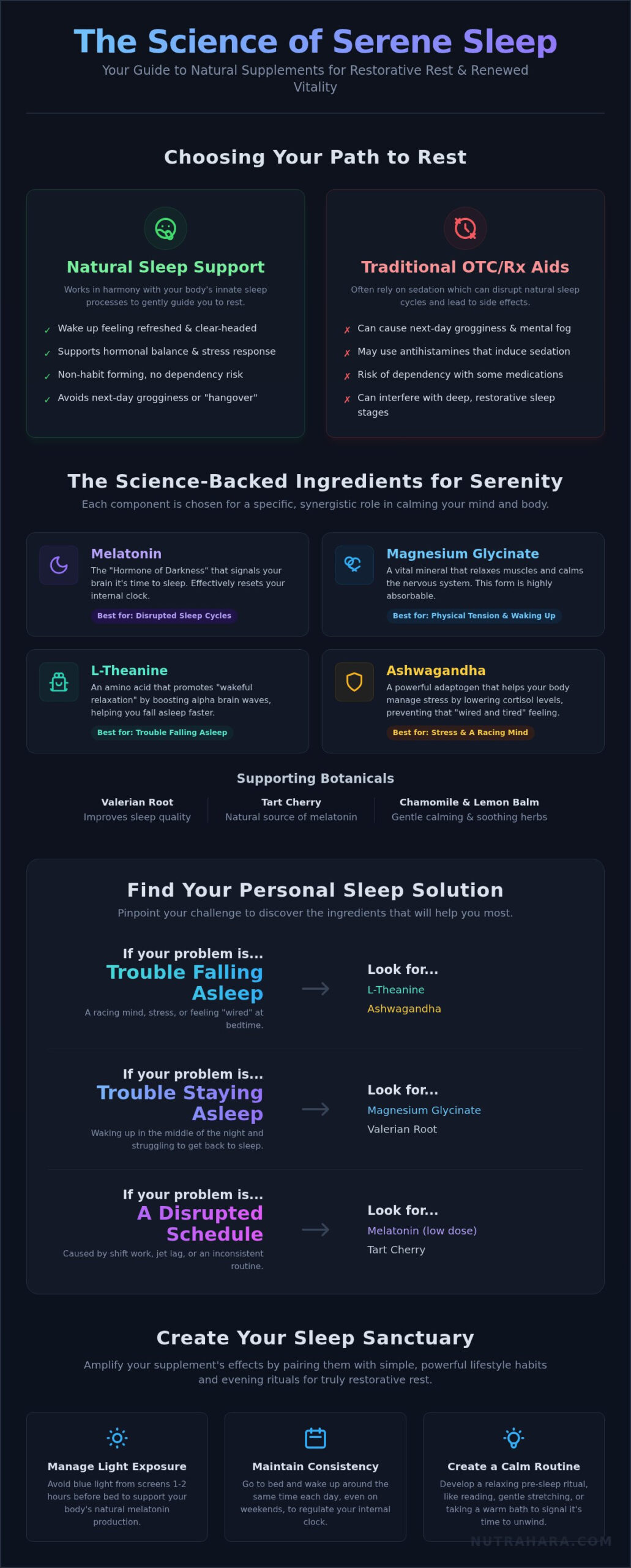
For many women on their wellness journey, a truly restful night can feel elusive. A natural sleep supplement offers a holistic path forward, differing fundamentally from synthetic over-the-counter (OTC) or prescription aids. Rather than inducing an unnatural state of sedation, these supplements are formulated with clinically-studied botanicals and natural compounds to support and enhance your body’s own innate sleep processes. This distinction is vital, especially for women, as poor sleep can significantly disrupt hormonal balance, amplify stress responses, and destabilize mood.

Achieving quality sleep is about more than just logging hours; it means cycling smoothly through all four stages of sleep to allow for physical repair and mental restoration. The ultimate goal is to wake feeling revitalized and clear-headed, a state that can be difficult to achieve with conventional options. The journey to better rest begins by working in harmony with your body, not against it.

The Problem with Traditional Sleep Aids

Many common OTC sleep aids contain antihistamines like diphenhydramine, which can lead to a dreaded “hangover effect” of next-day grogginess and mental fog. Prescription medications, while effective for some, can carry a risk of dependency. A natural approach, grounded in both ancient wisdom and modern research, seeks to avoid these pitfalls by gently encouraging your body’s own sleep mechanisms, supporting long-term, restorative rest without creating reliance.

Understanding Your Body’s Natural Sleep Signals

Your body has a sophisticated internal clock, orchestrated by key hormones. Melatonin, the “hormone of darkness,” signals your brain that it’s time to rest, while cortisol, the “stress hormone,” should naturally decline in the evening. Modern life-with its chronic stress and constant exposure to blue light from screens-disrupts this delicate rhythm. Understanding melatonin’s role in the sleep-wake cycle is foundational to reclaiming your nights. A thoughtful natural sleep supplement works to help restore this essential balance, paving the way for serenity.

The Science of Serenity: Key Ingredients in Natural Sleep Supplements

Understanding what’s inside your natural sleep supplement is the first step on your journey to better rest. The effectiveness of these formulas isn’t magic; it’s rooted in science. Each ingredient is chosen for a specific, synergistic role in preparing your body and mind for deep, restorative sleep. In fact, a growing body of scientific evidence for natural sleep supplements supports the mechanisms behind these powerful botanicals and minerals. Let’s explore the key players.

  • Melatonin: The body’s natural sleep-triggering hormone.
  • Magnesium: A vital mineral for muscle and nervous system relaxation.
  • L-Theanine: An amino acid that promotes calm without drowsiness.
  • Ashwagandha: An adaptogenic herb that lowers stress and quiets a racing mind.

Hormone Regulators & Cycle Supporters

These ingredients work in harmony with your body’s internal clock. Melatonin is the star player, signaling to your brain that it’s time to sleep. While effective, less is often more; a low dose (0.5-3mg) is typically sufficient. It’s ideal for those with disrupted sleep-wake cycles, like shift workers. Supporting players include Valerian Root, which research suggests can improve sleep quality, and Tart Cherry, a natural source of melatonin.

Mind & Body Calming Agents

When physical tension or a busy mind keeps you awake, these calming agents can help. Magnesium Glycinate is a highly bioavailable form of the mineral, meaning your body can absorb and use it efficiently to relax muscles and calm the nervous system. L-Theanine, an amino acid found in green tea, helps reduce the time it takes to fall asleep by promoting alpha brain waves associated with a state of “wakeful relaxation.” Gentle herbs like Chamomile and Lemon Balm also belong in this category, known for their soothing properties.

Stress & Cortisol Adaptogens

For many, the primary obstacle to sleep is stress. Adaptogens are unique herbs that help your body adapt to and manage the effects of stress. Ashwagandha is a cornerstone of Ayurvedic tradition, clinically studied for its ability to lower levels of the stress hormone cortisol. By calming your body’s stress response, it helps prevent the late-night “wired and tired” feeling, making it easier to unwind. For those whose sleep is disrupted by anxiety, incorporating a high-purity formula like Nutrahara’s Ashwagandha with Black Pepper can be a vital part of a holistic sleep solution.

Your Personal Sleep Solution: Matching Ingredients to Your Needs

One of the most common questions we hear is, “Will this actually work for me?” The answer lies in understanding that not all sleep challenges are the same. Your wellness journey is unique, and your path to restful nights should be too. The most effective natural sleep supplement is one formulated to address your specific needs. Think of this guide as your personal roadmap, designed to help you select ingredients with intention. These natural allies work best as part of a holistic approach, especially when combined with healthy sleep hygiene practices that create a sanctuary for rest.

Challenge: Trouble Falling Asleep (Racing Mind)

If your mind starts running a marathon the moment your head hits the pillow, your goal is to promote a state of calm. You need ingredients that gently soothe the nervous system and quiet mental chatter. These botanicals and minerals signal to your body and mind that it’s time to wind down.

  • L-Theanine: An amino acid found in green tea that encourages a state of relaxed alertness without drowsiness.
  • Ashwagandha: A revered Ayurvedic adaptogen that helps regulate stress by lowering cortisol levels.
  • Magnesium: An essential mineral that helps calm the nervous system by regulating key neurotransmitters.
  • Lemon Balm: A traditional herb known for its ability to reduce anxiety and promote tranquility.

Challenge: Waking Up in the Middle of the Night

For those who fall asleep easily but struggle to stay asleep, the focus shifts to supporting deeper, more sustained rest. The right ingredients can help you navigate through the natural sleep cycles without disruptive awakenings, ensuring you remain in a restorative state until morning.

  • Valerian Root: Clinically studied for its ability to improve sleep duration and reduce nighttime awakenings.
  • Melatonin (low dose): Supports the body’s natural sleep-wake cycle, helping to maintain sleep throughout the night.
  • Glycine: An amino acid shown in research to help lower core body temperature, a key physiological signal for staying asleep.

Challenge: Waking Up Feeling Groggy & Unrested

Quality over quantity is key. If you log a full eight hours but still feel exhausted, you may need to improve your sleep architecture-the very structure of your nightly rest. The goal here is to find a non-sedating natural sleep supplement that enhances deep and REM sleep, so you wake up feeling genuinely refreshed.

  • Magnesium: Essential for deep, restorative sleep, a deficiency can lead to lighter, more restless nights.
  • Apigenin (from Chamomile): This powerful bioflavonoid promotes relaxation and improves sleep quality without causing morning grogginess.
  • Tart Cherry: A natural source of melatonin and antioxidants that research suggests can improve overall sleep efficiency.

Creating Your Sanctuary: Lifestyle Habits to Amplify Your Supplement’s Effects

Embarking on your wellness journey with a natural sleep supplement is a powerful step toward reclaiming your nights. However, to truly unlock its full potential, it’s essential to view it as part of a holistic, nurturing routine. Think of your supplement as the key and your lifestyle habits as the door-together, they open the way to profound, restorative rest. By creating a conscious nighttime ritual, you signal to your body and mind that it’s time to transition from the demands of the day to a state of deep tranquility.

Your Pre-Sleep Power-Down Routine

Crafting a consistent “power-down” sequence is one of the most effective ways to prepare for sleep. This simple, three-step ritual helps regulate your internal clock and enhances the calming effects of your chosen supplement.

  • Step 1: Dim & Disconnect. About 60-90 minutes before bed, dim the lights in your home. Crucially, step away from all screens-phones, tablets, and televisions. The blue light emitted from these devices can suppress melatonin production, your body’s natural sleep hormone.
  • Step 2: Unwind Mindfully. Dedicate 20-30 minutes to a calming activity. This could be reading a physical book, practicing gentle stretching, listening to serene music, or meditating. The goal is to quiet your mind and release the day’s tension.
  • Step 3: Take Your Supplement. Approximately 30-60 minutes before you intend to be asleep, take your natural sleep supplement. This timing allows the clinically-studied, natural ingredients to begin their work, gently guiding you toward slumber as you finish your routine.

Optimizing Your Environment for Deep Sleep

Your bedroom should be a sanctuary dedicated to rest. A few simple adjustments to your environment can dramatically improve sleep quality and help you stay asleep through the night.

First, focus on the three pillars of a sleep-friendly environment: keep it cool, dark, and quiet. A cooler room temperature (around 65°F or 18°C) is scientifically proven to promote better sleep. Invest in blackout curtains to block out all light, and consider a white noise machine or earplugs to mask disruptive sounds. Finally, be mindful of what you consume in the hours before bed. Avoid caffeine after 2 PM and steer clear of large meals or alcohol close to bedtime, as these can interfere with your natural sleep architecture. Embracing this balanced lifestyle is at the heart of the Nutrahara philosophy.

Natural Sleep Supplements: Your Complete Guide to Restful Nights in 2026

The Nutrahara Approach: Blending Ancient Wisdom with Modern Science

Your wellness journey is personal, and finding the right support for restful sleep is a crucial part of it. At Nutrahara, our philosophy is rooted in combining the time-tested principles of ancient Ayurveda with the precision of modern clinical research. We believe the most profound solutions are found where nature’s intelligence meets scientific validation. This approach allows us to create a truly effective natural sleep supplement that honors your body’s innate rhythms.

We don’t just select powerful ingredients; we formulate them to work in harmony. This synergy is the key to unlocking consistent, restorative sleep and promoting a balanced lifestyle.

Introducing RestoraSleep: Formulated for Complete Renewal

RestoraSleep is the culmination of our philosophy-a comprehensive solution designed for the modern woman facing common sleep challenges. Our clean and simple formula addresses both falling asleep and staying asleep, helping you wake up feeling renewed. Each ingredient is clinically studied and chosen for its specific role:

  • Melatonin: A gentle dose to signal to your body that it’s time for rest, helping to regulate your natural sleep-wake cycle without causing grogginess.
  • Magnesium Glycinate: A highly absorbable form of magnesium that calms the nervous system, relaxes muscles, and supports deeper, more continuous sleep.
  • L-Theanine: An amino acid found in green tea that quiets an anxious mind, easing the transition into a peaceful slumber.

This synergistic blend is delivered without unnecessary fillers or artificial additives. To see how it can support you, we invite you to explore RestoraSleep for your wellness journey.

Your Journey to Better Sleep Starts Tonight

Choosing the right natural sleep supplement is an investment in your total well-being. Our unwavering commitment to purity, quality, and efficacy ensures that every capsule supports your body’s needs. Take a confident step toward reclaiming your nights and revitalizing your days. Your path to deeper, more rejuvenating sleep can begin tonight.

Your Path to Restorative Sleep Begins Now

Embarking on your wellness journey means recognizing that restorative sleep is not a luxury, but a necessity for vibrant health. As we’ve explored, the key to unlocking better rest lies in understanding the science behind potent natural ingredients and integrating them with supportive lifestyle habits. Choosing the right natural sleep supplement is a deeply personal decision, one that honors your unique needs and helps re-establish your body’s innate rhythm.

At Nutrahara, we are dedicated to this holistic approach. Our RestoraSleep formula was created by blending the ancient wisdom of Ayurveda with modern clinical research to serve as a true partner in your well-being. With clean ingredients free from artificial additives, it is carefully designed to support you through all 4 stages of the sleep cycle, guiding you gently toward the rejuvenating rest you deserve.

Begin your journey to restorative sleep with RestoraSleep. Your path to serene nights and energized mornings is waiting.

Frequently Asked Questions About Natural Sleep Supplements

Are natural sleep supplements safe to take every night?

For most individuals, high-quality natural sleep aids are considered safe for short-term nightly use to help re-establish a healthy sleep cycle. Ingredients like magnesium and L-theanine are generally well-tolerated. However, it is wise to view them as a tool on your wellness journey, not a permanent solution. We always recommend consulting with your healthcare provider to create a holistic plan that addresses the root cause of your sleep challenges and ensures long-term well-being.

How long does it take for a natural sleep supplement to work?

The time it takes for a natural sleep supplement to work depends on its ingredients and your unique body chemistry. Some, like melatonin, can begin to signal sleepiness within 30 to 60 minutes. Others, such as valerian root or magnesium, may have a more cumulative effect, promoting deeper relaxation and improving sleep quality over several nights of consistent use. Listening to your body and maintaining a consistent routine is key to experiencing the full benefits.

Can I become dependent on natural sleep aids like melatonin?

Unlike many prescription sleep medications, natural ingredients like melatonin do not typically cause physical dependence. However, it is possible to develop a psychological reliance on any sleep aid. The goal is to support your body’s innate ability to rest. We advocate for using supplements to help regulate your sleep-wake cycle while also cultivating healthy sleep hygiene practices, creating a balanced and sustainable approach to your well-being without long-term dependency.

What’s the difference between melatonin and magnesium for sleep?

Melatonin and magnesium support sleep through different biological pathways. Melatonin is a hormone that directly regulates your circadian rhythm, signaling to your body that it’s time to sleep. It is often used for issues like jet lag or shift work. Magnesium, on the other hand, is an essential mineral that promotes relaxation by calming the nervous system and regulating neurotransmitters. It helps quiet the mind and body, making it easier to fall and stay asleep.

Can I take natural sleep supplements with other medications?

This is a crucial question for your safety. While many natural supplements are safe, some can interact with prescription medications, including blood thinners, antidepressants, or blood pressure medication. For example, St. John’s Wort is known for its extensive interactions. To ensure your well-being, it is absolutely essential to consult with your healthcare provider or pharmacist before adding any new supplement to your regimen. This transparency is a vital step in your personal health journey.

Will natural sleep supplements make me feel groggy the next day?

A key benefit of most natural sleep aids is the reduced likelihood of next-day grogginess compared to pharmaceutical options. However, an incorrect dosage, particularly with melatonin, can sometimes disrupt your natural rhythm and lead to feeling groggy. Starting with the lowest effective dose and taking it at the appropriate time before bed helps ensure you wake up feeling refreshed and restored. Always follow the product’s formulation guidelines for optimal results.

What is the best natural supplement for sleep anxiety?

For sleep challenges rooted in anxiety, look for supplements with calming, or “adaptogenic,” properties. L-theanine, an amino acid found in green tea, is clinically studied for its ability to promote relaxation without sedation. Ancient Ayurvedic herbs like Ashwagandha are also highly regarded for helping the body manage stress and quiet a racing mind. These ingredients support a state of tranquility, making it easier to transition into a peaceful and restorative sleep.

Article by

Nutrahara Team

We are a dedicated collective of nutrition scientists and naturopaths at Nutrahara, committed to advancing women's health through the fusion of ancient Ayurveda science and cutting-edge nutrition research. Our mission is to empower you with clean, simple, and scientifically validated wellness solutions so you can live your healthiest life. Connect with us to stay updated on the latest developments in holistic women's health and nature-based research.

Disclaimer

This article is not a substitute for medical advice. Please consult a healthcare professional before starting any supplement, especially if pregnant, nursing, taking medication, or managing health conditions.