...
Categories
Articles

Ayurvedic Herbs for Skin: Timeless Radiance Guide 2026

What if the secret to your most radiant skin isn’t found in a synthetic laboratory, but in the botanical wisdom that has supported women’s health for five millennia? You’ve likely felt the frustration of standard beauty products that promise a quick fix yet leave your skin feeling sensitive or overloaded with chemicals. It’s exhausting to manage the sudden dullness or hormonal breakouts that often arrive with life’s transitions. By choosing to integrate ayurvedic herbs for skin into your daily ritual, you’re joining a global movement toward clean beauty that is projected to reach 2.09 billion dollars in 2026.

You deserve a skincare approach that respects your body’s changing needs while providing the scientific validation you trust. We’ll show you how to harness ancient plants to address loss of elasticity and hormonal shifts with modern precision. This guide provides a clear herbal regimen, specific yoga practices for skin vitality, and real-life stories from women who’ve transformed their self-esteem through natural beauty. You’ll discover how to build a longevity-focused routine that honors your journey and restores your timeless radiance.

Key Takeaways

  • Identify your unique skin dosha to understand how hormonal transitions impact your complexion’s balance and vitality.
  • Learn how to integrate specific ayurvedic herbs for skin to address dullness and loss of elasticity with modern scientific precision.
  • Discover why non-negotiable rituals like yoga and meditation are essential for reducing stress-induced skin barrier damage.
  • Transition from harsh synthetic products to clean, clinically validated herbal regimens that support your health long-term.
  • Boost your self-esteem by adopting a holistic beauty routine that focuses on longevity and internal wellness.

Beyond the Surface: The Ancient Wisdom of Ayurvedic Skincare

Radiance isn’t something you simply apply; it’s something you cultivate from the inside out. In the ancient wisdom of Ayurveda, skin health is viewed as a direct mirror of your internal state. This philosophy introduces the ritual of Abhyanga, which we define as the practice of nurturing your “Inner Beauty” through intentional care. For women between the ages of 30 and 60, this perspective is especially empowering. As you navigate the hormonal shifts of perimenopause or post-menopause, you might find that the heavy synthetics you once relied on now cause sensitivity or persistent dullness. Integrating ayurvedic herbs for skin into your daily life allows you to address these changes by supporting your body’s natural intelligence.

At Nutrahara, we view skincare as a long-term journey of self-care rather than a series of quick fixes. Our philosophy is rooted in the fusion of traditional medicine and modern validation. We believe that by combining time-tested botanical wisdom with contemporary clinical research, we can provide you with the tools to maintain a vibrant, healthy complexion at every stage of life. This approach isn’t about chasing a fleeting trend; it’s about a supportive partnership with your skin’s own biology.

Why Herbs Trump Chemicals for Aging Skin

Synthetic isolates often act like a loud shout to the skin, while plant-based ayurvedic herbs for skin whisper to your cells in a language they naturally understand. The secret lies in bioavailability. Unlike lab-created chemicals, botanical nutrients come with complex co-factors that help your body absorb and utilize them more effectively. This supports your skin’s natural healing rhythm instead of forcing a temporary, often irritating, reaction. By choosing clean herbalism, you’re giving your skin the building blocks it needs to repair its barrier and retain moisture naturally.

“I spent years chasing high-percentage acids that just left my face red and tight,” says Elena, 52. “When I switched to a botanical-led regimen, my skin finally felt calm and looked truly hydrated. It’s like I’m finally working with my age instead of fighting it every morning.”

The Inside-Out Philosophy: Why Digestion Matters for Glow

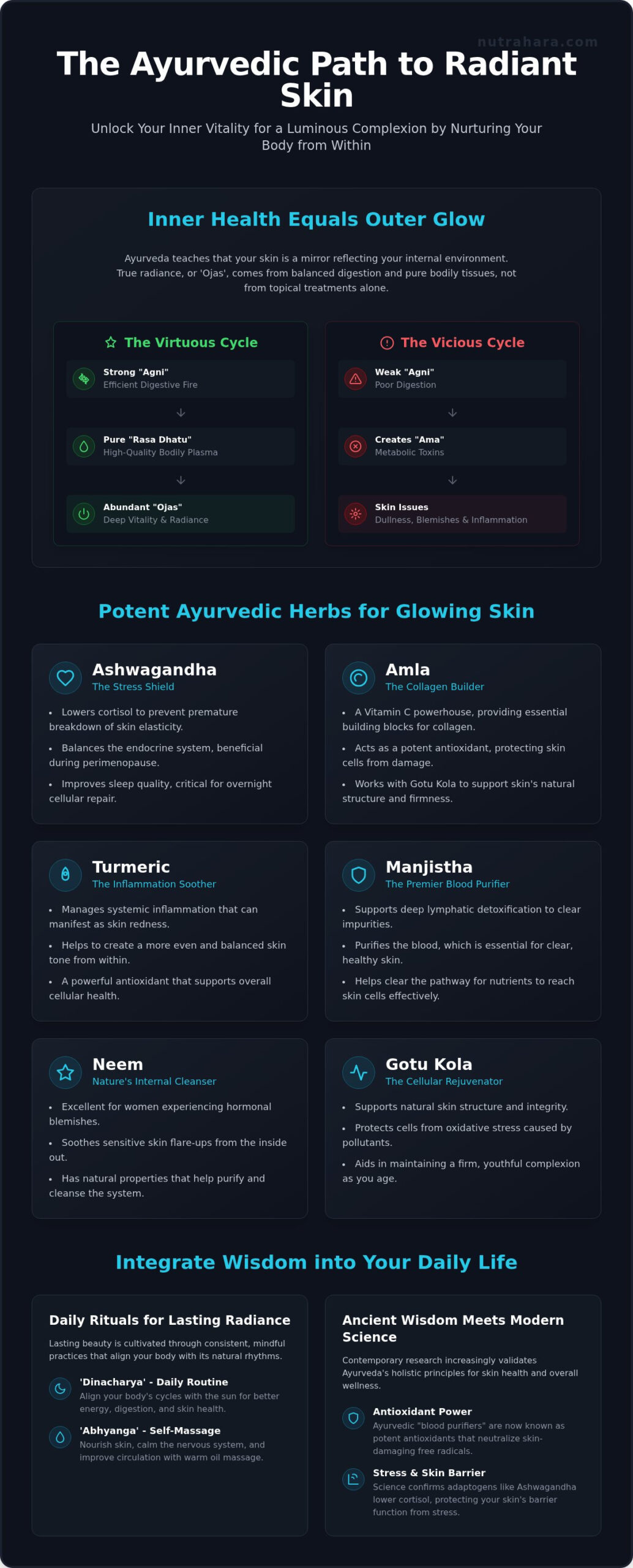
Ayurveda teaches that your “Agni,” or digestive fire, is the true gatekeeper of your complexion. When your digestion is strong, your body efficiently converts food into the nutrients that feed your skin cells. However, if Agni is sluggish, it can lead to the accumulation of “ama” (toxins), which often manifest as adult acne, inflammation, or a sallow skin tone. This is why what you ingest is just as vital as the serums you apply to your face. Supporting your internal fire is often the missing link to achieving a lasting, healthy glow. You can explore how internal balance affects your physical goals in our guide on whether Do Digestive Enzymes Help You Lose Weight? to see the deep connection between gut health and total vitality.

Decoding Your Skin’s Dosha: Vata, Pitta, and Kapha

Understanding your skin starts with recognizing it as a living, breathing ecosystem. In Ayurveda, your unique constitution is defined by three vital energies: Vata, Pitta, and Kapha. While you were born with a primary type, life stages between 30 and 60 introduce significant hormonal shifts that can cause your “Prakriti” (natural state) to fall into “Vikriti” (imbalance). As estrogen levels fluctuate during perimenopause and menopause, your skin’s requirements change. Identifying your current Ayurvedic skin types is the first step toward selecting the right ayurvedic herbs for skin to restore your natural glow.

Most women discover they’re a combination of two doshas, requiring a balanced, “Wise” approach. You might experience Vata dryness on your cheeks while managing Pitta sensitivity on your forehead. Use this quick checklist to identify your skin’s current state:

  • Vata: Is your skin feeling rough, tight, or showing more fine lines lately?
  • Pitta: Do you notice increased redness, heat, or sensitivity when you’re stressed?
  • Kapha: Is your skin looking dull, heavy, or experiencing deep congestion?

Vata Skin: Managing Dryness and Fine Lines

Vata skin is naturally thin, cool, and prone to dehydration. As you enter your 40s and 50s, you move into the “Vata stage of life,” where the body’s natural moisture levels often decrease. This can lead to a loss of elasticity and the appearance of fine lines. To support this transition, prioritize warm, grounding herbal oils like sesame or almond infused with ashwagandha. These provide the deep nourishment your skin craves. “I always thought I had oily skin until I turned 45,” shared Sarah, a yoga instructor. “Ayurveda helped me realize I was actually experiencing Vata-related hormonal dryness. Changing my herbs changed everything.”

Pitta Skin: Calming Inflammation and Sensitivity

Pitta skin is warm and reddish, making it highly reactive to “hormonal heat” and environmental stressors. Busy professional women often find that high-pressure days trigger rosacea or inflammatory flare-ups. Cooling herbs like neem or sandalwood are essential for soothing this irritability. Pair these with “moonlight” meditation to calm your nervous system and soothe your complexion from within. If you’re looking for internal support to manage these shifts, exploring targeted women’s health supplements can help stabilize your internal climate and promote tranquility.

Kapha Skin: Clarity and Congestion

Kapha skin is thick and resilient, but it’s prone to large pores and heaviness. When Kapha is out of balance, it can lead to adult cystic acne or persistent congestion. Stimulating massage techniques and detoxifying ayurvedic herbs for skin like turmeric or triphala help move stagnant energy. Focus on light, non-comedogenic formulas that encourage clarity without stripping your skin’s protective barrier. This ensures your skin remains vibrant and clear throughout your wellness journey.

7 Powerhouse Ayurvedic Herbs for Skin Rejuvenation

Harnessing the power of nature requires a deep understanding of how plants interact with our biology. In the Ayurveda holistic system of medicine, certain plants are revered as the “Seven Sages” of skincare. These ayurvedic herbs for skin provide a dual-action benefit that modern synthetic products simply can’t match. They offer topical protection against environmental stressors while simultaneously providing internal support to balance your hormones and nervous system. By choosing these clean, additive-free ingredients, you’re opting for a purity that honors your body’s long-term health progression.

Ashwagandha: The Stress-Skin Savior

Stress is one of the primary drivers of premature aging, especially for women balancing career and family life. Ashwagandha acts as a potent adaptogen that helps regulate your body’s cortisol levels. High cortisol can break down skin proteins and lead to “stress-induced aging,” characterized by sagging and a dull complexion. Modern research confirms that Ashwagandha also supports the production of DHEA, a precursor to collagen and elastin. To integrate this into your routine, consider a supplement like Ashwagandha with Black Pepper. A simple nightly ritual involves whisking the herb into warm plant-based milk before bed. This signals to your nervous system that it’s time to rest and repair.

Turmeric and Neem: The Detoxifying Duo

Turmeric is widely considered the gold standard for skin brightening and reducing oxidative stress. Its active compound, curcumin, has been the subject of extensive clinical validation for its ability to soothe inflammation. While Turmeric works on radiance, Neem acts as the “village pharmacy” herb. It’s particularly effective for clearing hormonal acne that often flares during perimenopause. This duo represents the perfect fusion of tradition and modern science, offering a clean way to detoxify the skin without the harsh side effects of chemical peels. You’ll find that regular use helps even out skin tone and provides a resilient, healthy-looking barrier.

Shatavari and Amla: Hormonal Balance and Vitamin C

Shatavari is arguably the most important herb for female hormonal health in the Ayurvedic tradition. It has a cooling effect that soothes Pitta-related inflammation and helps maintain moisture from within. Pair this with Amla, which is one of the most concentrated natural sources of Vitamin C on the planet. Unlike synthetic ascorbic acid, Amla’s Vitamin C is highly stable and bioavailable, making it essential for maintaining skin elasticity and fighting free radical damage. Together, these herbs support a longevity-focused skincare strategy that keeps your complexion firm and hydrated as you navigate life’s transitions.

The Holistic Glow: Yoga, Meditation, and Daily Rituals

Achieving a timeless glow requires more than just topical care; it demands a commitment to mental and physical harmony. For women navigating the transitions between ages 30 and 60, yoga and meditation are non-negotiable tools for longevity and radiance. Modern science validates what ancient sages always knew: lower stress levels directly lead to a stronger skin barrier. When your nervous system is calm, your body can prioritize cellular repair rather than constant defense. Integrating ayurvedic herbs for skin into your internal regimen provides the foundation, but these daily rituals ensure those nutrients reach their destination through improved circulation and peace of mind.

“I started yoga for my back, but my skin was the unexpected winner,” shares Maya, 48. “The daily twists seemed to clear my hormonal acne, and the meditation gave me a confidence I never had in my 30s. I finally feel comfortable in my own skin.”

Yoga Poses for Skin Detoxification

Physical movement is essential for moving stagnant energy and clearing skin-dulling toxins. Certain poses are particularly effective for enhancing your complexion:

  • Downward Dog (Inversion): Hold for 30 seconds. This increases oxygenated blood flow to the face, providing an immediate natural flush.
  • Seated Twist (Marichyasana): Hold for 30 seconds per side. Twists aid digestion (Agni), ensuring your body processes nutrients efficiently.
  • Standing Forward Fold: Hold for 30 seconds. This pose soothes the nervous system and helps reduce stress-induced inflammation.

Meditation for Cellular Rejuvenation

Your thoughts have a physical impact on your skin’s health. Try the “Radiant Light” visualization technique to boost self-esteem and lower cortisol. Close your eyes for five minutes and picture a warm, golden glow expanding from your heart to your skin. Pair this with Pranayama (breathwork), specifically deep belly breathing, to brighten your complexion through intense oxygenation. This simple daily practice helps you achieve a “Focus Zenith” state, where your mind is clear and your skin reflects that internal tranquility.

The Nightly Abhyanga (Self-Massage) Ritual

Traditional oil massage, or Abhyanga, is a powerful tool for lymphatic drainage. It helps reduce puffiness and encourages the removal of waste products from skin tissues. Follow this simple three-minute facial guide:

  • Apply a botanical oil to your neck and jawline.
  • Use firm, upward strokes moving from the chin toward the ears.
  • Gently use your ring fingers to circle the eyes, moving from the inner corner outward.

This ritual supports the skin’s nightly repair cycle by calming the body before rest. To enhance this process, consider incorporating RestoraSleep to ensure your body reaches the deep, regenerative rest required for a truly refreshed morning glow. Ready to deepen your nightly ritual? Shop our nightly recovery support to wake up with a vibrant, holistic complexion.

Ayurvedic Herbs for Skin: Timeless Radiance Guide 2026

Modern Ayurveda: Nutrahara’s Clean Science for Your Skin

Nutrahara acts as your Wise and Caring Guide, bridging the 5,000-year gap between ancient forest wisdom and the modern laboratory. We believe your skincare journey should be supported by the highest standards of purity and clinical validation. Our formulas rely on ayurvedic herbs for skin that are ethically sourced and free from artificial fillers or synthetic additives. This “Purity Promise” ensures that your body receives only the potent, clean nutrients it needs to thrive during life’s many transitions. By combining time-tested botanical principles with contemporary research, we provide a foundation you can trust for your long-term health progression.

Collagen and Hormonal Support: The Perfect Pair

True skin longevity requires a strategy that addresses both your internal environment and the skin’s physical structure. We recommend building a personalized “Skin Longevity Kit” that targets these two pillars simultaneously. Our Premium Collagen Complex provides the essential structural building blocks required to restore elasticity and firmness that often diminish after age 30. When you pair this with BlossomBliss, you create a powerful synergy. While BlossomBliss works to maintain hormonal harmony and soothe “Pitta heat,” the collagen complex ensures your skin has the raw materials to rebuild its youthful resilience. This dual approach treats your complexion as a reflection of your total internal balance.

Nutrahara’s Commitment to Transparency

We don’t simply follow tradition; we verify it through rigorous standards. Every batch of our ayurvedic herbs for skin undergoes modern nutritional research to confirm potency and safety. We maintain a transparent supply chain, selecting only the purest botanical extracts that honor the ancient health philosophies we represent. This scientific foundation allows us to provide you with formulas that are both effective and empowering. We want you to feel confident in the quality of every ingredient you put into your body. You can explore our full range of Women’s Health Supplements to find the specific support your body needs today.

Your health is a personal, ongoing journey that evolves as you do. Whether you’re navigating the active years of your 30s or the graceful transitions of your 50s and 60s, Nutrahara is here to support your progression with care and expertise. By choosing a path that fuses ancient wisdom with modern science, you’re investing in a future of vibrant health and timeless radiance. Remember that self-care is not a luxury; it’s a vital practice that honors the wisdom of your body and the strength of your spirit.

Embracing Your Path to Timeless Radiance

Your journey toward vibrant health is a personal progression that honors the wisdom of your body. By understanding your unique dosha and integrating potent ayurvedic herbs for skin, you move beyond surface-level fixes to achieve true internal balance. We’ve explored how the fusion of ancient botanical wisdom and modern clinical validation addresses hormonal shifts and aging. Remember that your glow is nurtured through consistent rituals like yoga and meditation that calm your nervous system and strengthen your skin barrier.

Nutrahara is your partner in this wellness journey. Our formulas are created by experts in both Ayurveda and modern science, using clean, natural ingredients specifically for women aged 30 to 60. We’ve already empowered thousands of women to reclaim their self-esteem and feel confident in their skin’s resilience. It’s time to prioritize your longevity with a regimen that respects your body’s natural rhythm and supports your long-term vitality.

Start your journey to radiant skin with our Premium Collagen Complex

Believe in your capacity for renewal. You possess the tools to cultivate a radiance that lasts a lifetime, and we’re here to guide you every step of the way.

Frequently Asked Questions

Which Ayurvedic herb is best for anti-aging and wrinkles?

Ashwagandha is widely considered the premier herb for addressing fine lines and wrinkles. It works by boosting DHEA, a precursor to collagen and elastin, which helps maintain skin structure. Additionally, Amla provides a potent source of bioavailable Vitamin C to fight oxidative stress. Together, these ayurvedic herbs for skin support a longevity-focused routine that addresses the structural needs of women in their 40s and 50s.

Can Ashwagandha help with hormonal acne in my 40s?

Yes, Ashwagandha can be highly effective for managing hormonal acne by regulating your body’s stress response. High cortisol levels often trigger inflammatory flare-ups and oil production, especially during perimenopause. By acting as an adaptogen, Ashwagandha helps stabilize your internal environment. This reduces the likelihood of stress-induced breakouts. For best results, we recommend pairing it with a clean diet and consistent sleep to support your body’s natural detoxification processes.

How long does it take to see results from Ayurvedic skin herbs?

You should typically expect to see visible improvements within 4 to 12 weeks of consistent use. Because Ayurveda focuses on balancing the body from within, the process follows your skin’s natural 28 to 40-day renewal cycle. While some women notice a glow within the first month, deeper structural changes like improved elasticity take longer. Consistency is the key to a successful long-term health progression and achieving a lasting, healthy radiance.

Is it safe to take Ayurvedic skin supplements while pregnant or lactating?

Always consult with your healthcare provider before starting any new supplement during pregnancy or lactation. While many ayurvedic herbs for skin are natural and clean, your body’s requirements are unique during these stages. A medical professional can ensure that specific herbs, like Ashwagandha or Shatavari, align with your personal health needs and prenatal care plan. Safety and the well-being of both mother and child remain our primary focus.

What is the best Ayurvedic herb for dry, menopausal skin?

Shatavari is the gold standard for soothing the dryness associated with menopausal shifts. It is a cooling, Pitta-soothing herb that helps the body retain moisture and maintain hormonal harmony. Since menopausal skin often loses its natural oils due to declining estrogen, Shatavari provides the internal hydration needed to restore a supple texture. Combining it with healthy fats like ghee or almond oil can further enhance its nourishing and restorative properties.

How does yoga specifically improve skin appearance?

Yoga improves your skin’s appearance by increasing oxygenated blood flow to the face and supporting lymphatic drainage. Inversions like Downward Dog encourage circulation, which delivers essential nutrients to skin cells for a natural flush. Twisting poses aid your Agni or digestive fire, helping to clear toxins that otherwise cause dullness. By lowering your overall cortisol levels, yoga also prevents the inflammatory damage that leads to premature aging and sensitivity.

Are Ayurvedic herbs better than chemical retinol for sensitive skin?

Ayurvedic herbs are often preferred for sensitive skin because they provide rejuvenating benefits without the irritation or purging common with synthetic retinol. While retinol can cause redness and peeling, botanical alternatives work in harmony with your skin’s natural healing rhythm. This makes them an ideal choice for women in the 30 to 60 demographic who may experience increased skin thinness or reactivity during hormonal transitions and life stages.

Can I use Ayurvedic herbs internally and topically at the same time?

Yes, using herbs both internally and topically creates a powerful synergy for your complexion. While topical applications provide immediate protection and hydration to the skin barrier, internal supplements address the root causes of imbalance, such as digestion or stress. This inside-out approach ensures that your skin cells are nourished at every stage of their development. It is a holistic strategy that supports a more resilient and radiant appearance over time.

Article by

Nutrahara Team

We are a dedicated collective of nutrition scientists and naturopaths at Nutrahara, committed to advancing women's health through the fusion of ancient Ayurveda science and cutting-edge nutrition research. Our mission is to empower you with clean, simple, and scientifically validated wellness solutions so you can live your healthiest life. Connect with us to stay updated on the latest developments in holistic women's health and nature-based research.

Disclaimer

This article is not a substitute for medical advice. Please consult a healthcare professional before starting any supplement, especially if pregnant, nursing, taking medication, or managing health conditions.


Categories
Articles

Ayurvedic Herbs for Women’s Digestive Health

What if that stubborn post-meal bloating isn’t just about what you ate, but how your internal “digestive fire” is reacting to your changing hormones? You’re likely familiar with the heavy, sluggish feeling that follows even a healthy meal, or the frustration of gas that seems to fluctuate with your cycle. Whether you’re navigating perimenopause or managing the demands of a busy life, these digestive shifts can feel overwhelming. By integrating specific ayurvedic herbs for digestion into your daily routine, you can move past the confusion of which remedies suit your unique body type and start feeling like yourself again.

We’re here to help you reclaim your vitality by merging ancient wisdom with modern nutritional research. You’ll discover a clear, actionable herbal protocol designed to clear “Ama,” or metabolic toxins, while learning how the gut-mind connection influences your overall health. We’ll also look at how supportive practices like yoga and meditation can enhance these natural remedies. This journey is about more than just temporary relief; it’s about a long-term progression toward feeling empowered, confident, and balanced in your own body.

Key Takeaways

  • Understand how restoring your Agni, or digestive fire, prevents the buildup of metabolic toxins that cause post-meal heaviness and fatigue.
  • Learn how to use time-tested ayurvedic herbs for digestion, such as Triphala and Ginger, to naturally eliminate bloating and support bowel regularity.
  • Discover how to adapt your herbal support to your specific life stage, addressing unique concerns from menstrual bloat to perimenopausal shifts.
  • Integrate mindful eating rituals and targeted yoga asanas to create a holistic environment for optimal nutrient absorption and mental clarity.
  • Gain a clear, actionable protocol to identify your digestive imbalances and choose the most effective tools for your long-term wellness journey.

Understanding Agni: The Foundation of Ayurvedic Digestion

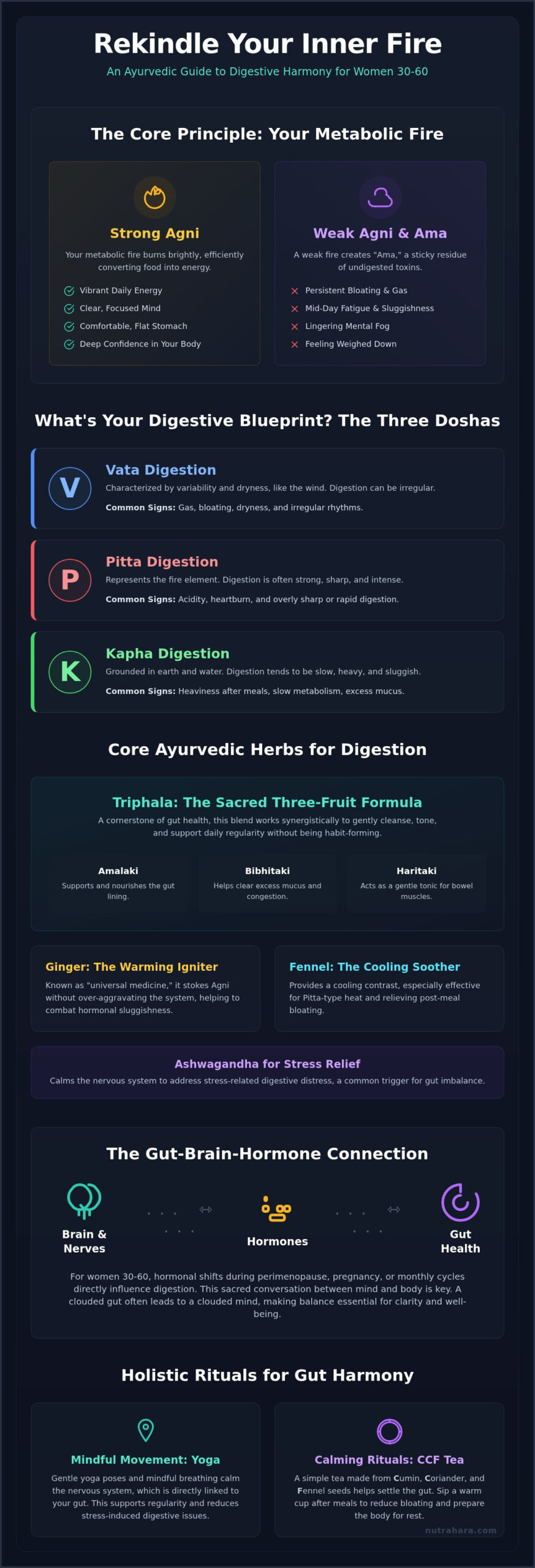
In Ayurvedic medicine, your health is only as strong as your Agni, or digestive fire. This isn’t just a metaphor for stomach acid. It is the biological intelligence responsible for transformation, heat, and vitality. When your Agni is bright, you absorb nutrients efficiently and feel a natural sense of lightness. However, when this fire flickers or burns too hot, it creates “Ama.” Ama is a sticky, toxic residue of undigested food that settles in the tissues, leading to the “heavy” feeling, brain fog, and fatigue that many women struggle with daily.

There is a profound link between your digestive fire and your mental state. Science now recognizes the gut-brain axis, but Ayurveda has taught for centuries that a clear gut leads to a clear mind. When your digestion is sluggish, your thoughts often follow suit. Restoring your internal fire with ayurvedic herbs for digestion helps clear both physical and mental blockages, empowering you to move through your day with confidence and clarity.

The Four States of Digestion

  • Visham Agni (Irregular): This state is common during Vata-dominant life stages, like perimenopause. You might experience fluctuating appetite, intense gas, and unpredictable bloating.
  • Tikshna Agni (Sharp): Often seen in Pitta types, this fire burns too hot. It leads to acidity, inflammation, and a feeling of “hangry” irritability if meals are delayed.
  • Manda Agni (Slow): This sluggish fire is typical of Kapha imbalances. It manifests as a heavy feeling after eating, lethargy, and a metabolism that feels “stuck.”
  • Sama Agni (Balanced): This is the ideal state where digestion is effortless, elimination is regular, and energy levels remain stable.

Why Digestive Health is the Pillar of Women’s Longevity

For women aged 30 to 60, digestion is the silent engine behind hormonal balance. Your gut is responsible for the synthesis of key neurotransmitters and the metabolism of estrogen. If your Agni is weak, excess hormones may not be cleared properly, leading to cycle irregularities or skin breakouts. Vibrant skin and strong hair aren’t just about topical treatments; they are the outward reflections of your internal harmony. By supporting your gut with clean formulations like DetoxifyLife, you help your body remove Ama and process hormones more effectively. View your wellness as a long-term progression. Every meal is an opportunity to stoke your fire and build the foundation for a long, healthy life.

Top Ayurvedic Herbs for Digestion and Bloating

The power of ayurvedic herbs for digestion lies in their ability to address the root cause of discomfort rather than just masking symptoms. While modern solutions often focus on neutralizing acid or forcing bowel movements, traditional wisdom uses botanical synergy to restore your internal balance. Fennel (Saunf), for instance, provides cooling relief for gas and cramping. Ginger (Ardraka) is revered as the “Universal Medicine” for its ability to stoke a weak Agni without over-heating the system. For a daily ritual, many women find that a warm infusion of Cumin, Coriander, and Fennel (CCF tea) creates a foundation of stability for the entire digestive tract.

Triphala: The Queen of Ayurvedic Gut Health

Triphala is perhaps the most celebrated formula in women’s wellness. It’s a precise blend of three fruits: Amalaki, Bibhitaki, and Haritaki. Amalaki supports liver function and provides antioxidant protection; Bibhitaki helps clear excess mucus from the gut lining; and Haritaki works to tone the muscles of the colon. Unlike stimulant laxatives that can cause dependency and irritation, Triphala is a rejuvenative that encourages the body’s natural rhythms. For women over 40, Triphala serves as a gentle yet effective protocol for clearing Ama, preventing the metabolic stagnation that often accompanies perimenopause. As noted by Johns Hopkins on Ayurveda, these ancient practices are increasingly recognized for their holistic contribution to wellness and disease prevention.

Warming vs. Cooling Herbs: Choosing for Your Dosha

To find lasting relief, you must match your herbal support to your current state of balance. If you’re unsure of your type, observe how your body reacts to different foods and environments. You can then use these profiles to guide your choices:

  • For Sluggishness (Kapha): If you feel heavy, lethargic, or notice weight gain, warming herbs like Ginger and Black Pepper stimulate a slow metabolism.
  • For Acidity (Pitta): If you struggle with heartburn, inflammation, or “hangry” irritability, cooling botanicals like Peppermint, Rose, and Shatavari soothe the internal heat.
  • For Gas and Bloating (Vata): If you experience a nervous stomach or painful gas, Asafoetida (Hing) and Cardamom provide the grounding warmth needed to calm an irregular digestive fire.

Integrating these traditions into a modern schedule is easier than ever. If you’re looking for a streamlined way to support your gut, DetoxifyLife combines these time-tested ayurvedic herbs for digestion into a clean, easy-to-use supplement that fits seamlessly into your wellness journey.

Matching Ayurvedic Herbs to Your Life Stage

Your body is a dynamic system, and choosing the right ayurvedic herbs for digestion means listening to your body’s changing hormonal signals. In your 30s and 40s, the monthly menstrual cycle often brings “period bloat” and water retention. During this phase, gentle carminatives like fennel can soothe the lower abdomen and ease cramping. Sarah, a 48-year-old yoga instructor, found that switching to a warm herbal protocol helped her eliminate the perimenopausal bloating that once disrupted her practice. “I finally feel light and focused again,” she shares. As you transition into perimenopause, the Vata dosha naturally rises, often leading to increased gas, erratic digestion, and a “heavy” feeling after meals. For post-menopausal women, the focus shifts toward supporting nutrient absorption to maintain bone density and long-term vitality. Using a comprehensive supplement like DetoxifyLife simplifies this journey by providing a balanced blend that supports your gut through every transition.

Herbs for the Hormonal Shift

Managing a “nervous gut” is a common challenge during stressful life transitions. When your nervous system is on high alert, your digestion often shuts down or becomes irregular. Shatavari is a powerful ally here, providing a cooling influence that balances the warming nature of many digestive spices. To support the gut-mind connection, consider incorporating Ashwagandha with Black Pepper. This combination helps soothe the adrenal response, allowing your digestive fire to function without the interference of stress hormones. It’s an empowering way to manage the physical symptoms of anxiety that often settle in the stomach.

Herbal Safety and Modern Science

While traditional wisdom provides the foundation, modern science ensures the safety and efficacy of these botanicals. Purity is paramount, especially when addressing women’s health. Research on Ayurvedic herbs and spices highlights the importance of using clean, additive-free formulas to avoid taxing the liver. At Nutrahara, we validate ancient protocols with contemporary nutritional research to ensure every ingredient serves a specific purpose for your health progression. When introducing new ayurvedic herbs for digestion, start with a single dose and observe how your body responds over three to five days. A helpful tip for better absorption: always take your digestive supplements with warm water, as cold liquids can dampen your internal fire and slow down the transformation of nutrients.

The Ayurvedic Lifestyle: Yoga, Meditation, and Rituals

Living an Ayurvedic lifestyle means recognizing that your daily rituals are just as vital as the ayurvedic herbs for digestion you consume. True wellness isn’t found in a single pill; it’s a long-term progression of internal harmony. Mindful eating, known as Mitahara, is the cornerstone of this practice. It teaches that the “how” of eating is just as important as the “what.” When you eat in a state of hurry or stress, your body’s ability to stoke the Agni is compromised, regardless of how healthy your meal is. By sitting quietly and focusing on the textures and flavors of your food, you signal to your nervous system that it is safe to begin the transformation of nutrients.

A simple yet powerful post-meal ritual is the “Left Side Lie.” Ayurveda suggests resting on your left side for ten to fifteen minutes after eating. This position allows the stomach to hang naturally, using gravity to help food move through the digestive tract while encouraging the gallbladder to release bile more effectively. This small ritual, combined with high-quality ayurvedic herbs for digestion, can significantly reduce the heavy feeling many women experience after lunch or dinner.

Yoga for Stoking the Agni

Specific yoga asanas act as a physical massage for your internal organs. To stoke your digestive fire, try this five-minute post-meal sequence. Begin with Vajrasana, or Thunderbolt Pose, by kneeling and sitting back on your heels. This is the only pose traditionally recommended immediately after eating because it redirects blood flow to the digestive region. Follow this in the evening with Pawanmuktasana, the Wind-Relieving Pose, to gently release trapped gas and soothe the colon. For those more experienced, practicing Agni Sara, or the Breath of Fire, can stimulate the abdominal muscles and increase metabolic heat. Elena, a 52-year-old client, found that pairing these movements with Triphala changed her life. “The movement wakes up my system, and the herbs do the rest,” she shares. “I’ve finally moved past that constant cycle of bloating.”

Meditation for a Peaceful Gut

The gut-mind connection is a physical reality facilitated by the Vagus nerve. When stress levels rise, cortisol can trigger inflammation and bloating in the digestive tract. Daily meditation helps tone the Vagus nerve, switching your body from “fight or flight” to “rest and digest.” Spend five minutes each morning in a gratitude meditation, focusing on the nourishment your body receives. This mental shift creates a calm environment for your gut to function optimally. To support this mental clarity and soothe a nervous stomach, FocusZenith offers a clean formulation to help maintain cognitive balance during stressful transitions. Ready to refine your daily routine? Explore how DetoxifyLife can complement your new rituals and support your journey toward lasting wellness.

Ayurvedic Herbs for Women's Digestive Health

Creating Your Personal Ayurvedic Digestive Protocol

Building a sustainable routine is the most effective way to honor your body’s natural rhythms. It’s about moving toward a state of internal harmony through small, consistent actions. By following a structured protocol, you can take the guesswork out of using ayurvedic herbs for digestion and start seeing tangible results in your energy levels. This process is a long-term progression, not a temporary fix, and it begins with self-observation.

  • Step 1: Identify your current state. Observe whether you’re experiencing Vata-related gas, Pitta-related acidity, or Kapha-related heaviness. Understanding your unique imbalance allows you to choose the right tools for restoration.
  • Step 2: Introduce targeted support. Incorporate a daily ritual like CCF tea or the streamlined convenience of DetoxifyLife. These formulations are designed to clear Ama while stoking your internal fire.
  • Step 3: Align with the sun. Your Agni is strongest when the sun is at its peak. Aim to eat your largest, most complex meal at noon, and choose lighter options for breakfast and dinner to avoid overtaxing your system.
  • Step 4: Track your journey. Focus on how you feel two hours after eating. A successful protocol results in a feeling of “lightness” and sustained vitality rather than a post-meal slump.

The Nutrahara Promise: Simple, Pure, Effective

Our approach combines clinical validation with the purity of nature to support women through every life stage. For those navigating the complexities of hormonal shifts and digestive sluggishness, FemmePower and DetoxifyLife form a powerful duo. While one balances your hormonal landscape, the other clears metabolic toxins and restores your digestive fire. We believe in transparency, which is why our formulas contain zero artificial additives. This commitment to quality ensures that you’re only putting the best ayurvedic herbs for digestion into your body.

Practical Tips for Busy Women

Wellness shouldn’t be a burden on your schedule. You can batch-prep your Ayurvedic digestive tonics on Sunday to last the entire work week. Simply brew a large pot of ginger or CCF tea, let it cool, and store it in glass jars. When dining out or traveling, protect your Agni by choosing warm, cooked foods over raw salads. Carrying a small pouch of fennel seeds to chew after a restaurant meal is another simple way to stay aligned with your goals. You’re the architect of your own vitality. By taking these small, empowered steps, you’re building a foundation for lifelong health and confidence.

Embrace Your Journey to Lasting Vitality

You’ve explored how restoring your Agni is the first step toward eliminating the heaviness and bloating that can disrupt your life. By choosing the right ayurvedic herbs for digestion and aligning your daily rituals with your body’s changing needs, you’re doing more than just fixing a symptom; you’re building a foundation for long-term health. Whether it’s through a simple yoga sequence or the mindful use of botanicals, every small choice empowers you to reclaim your natural rhythm.

Our formulas are rooted in 5,000 years of traditional wisdom and strengthened by clinically validated modern research. Loved by thousands of women, these clean supplements are designed to support you through every life stage. It’s time to feel light, confident, and energized again. Restore your natural rhythm with Nutrahara’s Ayurvedic-inspired supplements. You have the tools and the knowledge to be the architect of your own well-being. Trust in your body’s ability to heal and progress toward a more vibrant you.

Frequently Asked Questions

What is the best Ayurvedic herb for bloating and gas?

Fennel seeds and ginger are the most effective ayurvedic herbs for digestion when addressing immediate bloating. Fennel acts as a cooling carminative to relax the gut muscles, while ginger stimulates the digestive fire to prevent gas from forming. For chronic issues, Asafoetida (Hing) is a powerful tool to ground the Vata dosha. These natural remedies work by removing the “Ama” or metabolic toxins that cause that heavy, uncomfortable feeling after meals.

Can I take Ayurvedic digestive herbs while pregnant or breastfeeding?

You should always consult your healthcare provider before introducing new supplements during pregnancy or breastfeeding. While many culinary herbs like ginger and fennel are generally considered safe in moderation, concentrated Ayurvedic formulations can be quite potent. At Nutrahara, we prioritize safety and purity, but the unique physiological changes during these stages require personalized medical guidance. It’s essential to ensure any herbal support aligns with your specific prenatal or postnatal health requirements.

How long does it take for Ayurvedic herbs to start working for digestion?

The timeline for results varies depending on the specific herb and your current digestive state. Cooling herbs like peppermint or fennel can provide relief from gas and acidity within minutes. However, rejuvenative blends like Triphala typically require consistent use for two to four weeks to fully tone the colon and restore your natural rhythm. Ayurveda views health as a long-term progression, focusing on sustainable internal harmony rather than just temporary symptom suppression.

Is Triphala safe to take every day?

Triphala is traditionally considered safe for long-term daily use because it is a “Rasayana,” or rejuvenative formula. Unlike stimulant laxatives that can irritate the gut lining or cause dependency, Triphala gently tones the digestive tract and supports regular elimination. It is particularly beneficial for women over 40 who are managing the transition into perimenopause. Consistent use helps clear accumulated toxins and ensures your internal fire remains balanced and steady throughout the year.

What is the difference between digestive enzymes and Ayurvedic herbs?

Digestive enzymes primarily act as catalysts to break down specific food molecules like fats or proteins. In contrast, ayurvedic herbs for digestion work holistically to stoke your “Agni,” or metabolic fire, and improve the gut’s overall intelligence. While enzymes provide external help for a single meal, Ayurvedic botanicals empower your body to process nutrients and emotions more effectively. This approach focuses on strengthening your system’s innate ability to transform food into vitality.

How do I know which Ayurvedic Dosha my digestion belongs to?

You can identify your digestive dosha by observing your most frequent symptoms. Vata digestion is often irregular, leading to gas, bloating, and dryness. Pitta digestion tends to be sharp and hot, manifesting as acidity, heartburn, or intense hunger. Kapha digestion is typically slow and heavy, often resulting in lethargy or a sluggish metabolism after eating. Recognizing these patterns is the first step in choosing the specific lifestyle rituals and herbs that restore your balance.

Can Ayurvedic herbs help with weight loss through better digestion?

Ayurvedic herbs can support weight management by optimizing your metabolism and clearing “Ama,” the sticky toxins that slow down fat processing. When your Agni is strong, your body efficiently converts food into energy rather than storing it as excess weight. Herbs like ginger and black pepper are particularly helpful for stimulating a slow Kapha metabolism. Combining these with mindful eating rituals and regular yoga can help you achieve a lighter, more energized physical state.

Should I take Ayurvedic herbs on an empty stomach or with food?

Most Ayurvedic digestive tonics are best taken on an empty stomach or about thirty minutes before a meal to prime your Agni. For example, taking ginger before eating helps prepare the stomach for transformation. However, if you have a sensitive Pitta constitution, taking herbs with a small amount of food or warm water can prevent irritation. Always use warm water to take your supplements, as cold liquids can dampen your internal fire and hinder absorption.

Article by

Nutrahara Team

We are a dedicated collective of nutrition scientists and naturopaths at Nutrahara, committed to advancing women's health through the fusion of ancient Ayurveda science and cutting-edge nutrition research. Our mission is to empower you with clean, simple, and scientifically validated wellness solutions so you can live your healthiest life. Connect with us to stay updated on the latest developments in holistic women's health and nature-based research.

Disclaimer

This article is not a substitute for medical advice. Please consult a healthcare professional before starting any supplement, especially if pregnant, nursing, taking medication, or managing health conditions.

Categories
Articles

Ayurvedic Herbs for Digestion: A Woman’s Guide (2026)

Did you know that nearly 30 percent of women seeking natural wellness solutions in 2026 are specifically searching for digestive support? With the global Ayurvedic medicine market valued at 16.1 billion dollars this year, it’s clear that more women are looking for a deeper connection between their mind and gut. You’ve likely experienced that uncomfortable heaviness after a healthy meal or the frustrating bloat that seems to arrive with hormonal shifts. It’s exhausting when your body feels sluggish, especially when stress makes your digestion feel completely unpredictable.

You deserve to feel light, energized, and empowered in your own skin. This guide shows you how ancient ayurvedic herbs for digestion and modern research work together to soothe your system and kindle your digestive fire. We’ll explore the best botanical allies for your specific life stage, from menopause to high-stress career years. You’ll also discover simple yoga techniques and meditation practices designed to flatten your stomach and restore your natural rhythm for a more vibrant, long-term wellness journey.

Key Takeaways

  • Learn how to identify and rekindle your Agni, the metabolic fire that transforms food into energy while preventing the buildup of fatigue-inducing toxins.
  • Discover how to integrate specific ayurvedic herbs for digestion, like Triphala and Ginger, to naturally soothe bloating and support consistent bowel health.
  • Identify your unique digestive constitution to choose the right herbal support for your specific needs, whether you struggle with irregular gas or sluggishness.
  • Implement daily rituals including the 3-Hour Rule and targeted yoga poses to strengthen the mind-gut connection and enhance nutrient absorption.
  • Understand the importance of clean, scientifically validated herbal formulations that honor your body’s long-term wellness progression without artificial additives.

Understanding Agni: The Sacred Fire of Women’s Digestive Health

Agni is much more than a simple biological mechanism for breaking down food. It’s the transformative power that converts physical nutrients into energy, vitality, and even consciousness. In the ancient system of Ayurveda, this fire acts as the ultimate guardian of your health and longevity. When your Agni burns with a steady, clear flame, you feel light, energized, and mentally sharp. However, when this fire weakens, it creates “Ama,” a form of metabolic toxins. Ama is the root cause of the heavy, sluggish feeling many women describe as toxic fatigue or persistent brain fog. For women between 30 and 60, a healthy digestive foundation is the secret to maintaining the self-esteem and confidence required to lead a balanced, fulfilling life.

The Gut-Brain-Hormone Connection

Your digestive rhythm is deeply intertwined with your endocrine system. Fluctuations in estrogen and progesterone don’t just affect your mood; they directly impact how quickly food moves through your system. This is why women often notice sudden, uncomfortable bloating during perimenopause or specific phases of their menstrual cycle. Ayurveda views this through the lens of “Prana,” the vital life force that governs all movement. When hormonal shifts occur, they can scatter Prana, making it difficult for your digestive fire to stay consistent. By utilizing specific ayurvedic herbs for digestion, such as those found in DetoxifyLife, you can help stabilize this internal environment. This ensures that your gut and hormones work in harmony rather than in conflict.

Signs Your Agni Needs Rekindling

It’s helpful to recognize that digestive issues manifest in different ways depending on your internal state. You might struggle with “Manda Agni,” which is a slow, damp fire. This often results in a heavy feeling after eating and a slow metabolism. Conversely, “Tikshna Agni” is a sharp, hyperactive fire that might cause acidity or intense hunger that leads to irritability. You can identify the presence of Ama by checking your tongue in the morning; a thick, white coating suggests your system is struggling to clear waste. Agni is the biological sun within every woman. When you support it with the right ayurvedic herbs for digestion, you begin a long-term wellness progression that restores your natural glow and energy levels.

The Top Ayurvedic Herbs for Digestion and Bloating

Choosing the right ayurvedic herbs for digestion can transform your daily comfort from a struggle into a source of vitality. While balancing your internal fire is essential, nature provides specific botanical allies to help you manage the physical symptoms of bloating and sluggishness. These herbs don’t just mask discomfort; they work to optimize your system’s natural rhythms. Modern research into Ayurvedic medicine confirms that these traditional botanicals offer measurable benefits for gut motility and microbial balance.

Triphala: The Three-Fruit Powerhouse

Triphala is widely considered the “holy grail” of Ayurvedic bowel tonification. It’s a precise blend of three fruits: Amalaki, Bibhitaki, and Haritaki. Amalaki supports the cooling of the digestive tract, Bibhitaki helps clear excess mucus, and Haritaki encourages gentle movement. Unlike harsh stimulant laxatives, Triphala supports long-term detoxification by strengthening the colon’s muscles. Sarah, 54, shares: “During menopause, my digestion felt like it had completely stalled. Starting a daily ritual with Triphala-based support was the turning point that finally cleared that heavy, morning sluggishness.” For a pure, high-quality source of this blend, many women find DetoxifyLife to be an essential part of their morning routine.

Ginger and Fennel: The Kitchen Apothecary

Ginger acts as a “universal medicine” by stimulating the secretion of digestive enzymes. Scientific studies on gingerols show they significantly speed up gastric emptying, which reduces the time food sits in your stomach causing pressure. Fennel seeds, or Saunf, act as a natural carminative to relax the smooth muscles of the gut. This provides immediate relief from gas and abdominal distension. You can easily kindle your Agni by drinking a simple tea 20 minutes before your largest meal.

  • 1 inch fresh ginger root, thinly sliced
  • 1 teaspoon organic fennel seeds
  • 2 cups of boiling water
  • Steep for 5 to 7 minutes and sip while warm

Ashwagandha for the Stress-Digest Connection

Stress is a silent thief of digestive health. When your cortisol levels spike, your body enters “fight or flight” mode, which effectively shuts down blood flow to the gut. This often leads to “nervous bloating” or an upset stomach before big meetings or events. Ashwagandha helps the body adapt to stress, keeping your digestion online even during busy days. Because these compounds can be difficult to absorb, choosing Ashwagandha with Black Pepper is crucial. The piperine in black pepper increases the bioavailability of the herb, ensuring you get the full benefit. Maria, 42, notes: “I used to experience anxious bloating every afternoon, but adding these ayurvedic herbs for digestion to my routine has finally brought me peace.” If you’re ready to reclaim your gut health, exploring our clean herbal formulas is a wonderful place to start.

Balancing Your Dosha: Tailoring Herbs to Your Body Type

Every woman’s body is a unique ecosystem. A one-size-fits-all approach rarely works when choosing ayurvedic herbs for digestion. According to Johns Hopkins on Ayurveda, health is achieved by balancing the three doshas: Vata, Pitta, and Kapha. Understanding your dominant dosha allows you to tailor your herbal support to your body’s specific needs. This personalization is especially vital as you move through different life stages, where hormonal shifts can alter your baseline constitution and digestive strength.

Vata digestion is often irregular, gas-prone, and dry. It feels like the wind; unpredictable and cold. If you find your appetite varies wildly or you feel bloated after even small snacks, you likely have a Vata imbalance. Pitta, on the other hand, is governed by fire and water. Pitta digestion is hot and efficient, but it easily tips into acidity, heartburn, or inflammation when you’re under pressure or eating spicy foods. Kapha digestion is slow, heavy, and sluggish, often leaving you feeling full long after a meal has ended.

Herbal Strategies for Vata and Pitta

For Vata types, the goal is to ground and warm the system. Herbs like Ginger and Cumin provide the necessary heat to stabilize an irregular Agni. These warming spices help lubricate the digestive tract and reduce the dryness that often leads to discomfort. If your digestion is tied to a restless mind or high-stress days, Anxioguard can be a gentle partner in soothing nervous-system-related gut issues. Pitta types require cooling, sweet relief. Fennel and Coriander are excellent choices to soothe an overactive, acidic stomach without dampening the digestive fire entirely. These herbs act as a balm for the internal heat that often spikes during the mid-life years.

Revving Up the Kapha Metabolism

To wake up a sleepy Kapha metabolism, pungent and stimulating herbs are essential. Trikatu, a traditional blend of Black Pepper, Long Pepper, and Ginger, provides the sharp “spark” Kapha needs to process nutrients effectively. Pairing these ayurvedic herbs for digestion with light, warm meals helps prevent the heavy buildup of Ama. Many women ask, Do Digestive Enzymes Help You Lose Weight?; for Kapha types, the answer often lies in how these enzymes and herbs support a more efficient metabolic fire. We recommend avoiding cold salads and icy drinks, as these only further dampen the Kapha flame, leading to more sluggishness and fatigue.

Daily Rituals: Yoga, Meditation, and Mindful Eating

While ayurvedic herbs for digestion provide the biological spark for your gut health, they work most effectively when integrated into a lifestyle that honors your Agni. One of the most powerful habits you can adopt is “The 3-Hour Rule.” This involves leaving at least three hours between meals to allow your system to complete its digestive cycle fully. When you snack constantly, your internal fire never gets the chance to clear out the previous meal, which often leads to the buildup of Ama. Try to sit down and eat without the distraction of screens. Mindful eating allows your brain to register satiety signals. This simple act of presence prevents the overeating that often leads to painful bloating and sluggishness during busy workdays.

Yoga Poses for a Happy Gut

Yoga acts as a gentle physical massage for your internal organs. It encourages the movement of Prana and waste through the digestive tract. These poses are particularly effective for maintaining a flatter stomach and consistent energy levels:

  • Vajrasana (Thunderbolt Pose): This is the only pose traditionally recommended immediately after eating. Sitting on your heels helps redirect blood flow to the abdominal region, supporting the work of your digestive fire.
  • Pavanamuktasana (Wind-Relieving Pose): As the name suggests, this is excellent for releasing trapped gas and easing abdominal distension. It’s a nurturing way to find relief after a heavy meal.
  • Marjaryasana-Bitilasana (Cat-Cow): Moving between these two poses creates a rhythmic compression and extension of the torso. This stimulates blood flow to the gut and helps keep your metabolism active.

Meditation for the Enteric Nervous System

Science now recognizes the gut as the “second brain” due to the complex network of neurons in the enteric nervous system. When you’re stressed, this system tightens up. This tension makes even the most potent ayurvedic herbs for digestion less effective because the body prioritizes survival over nourishment. Meditation calms this system. It allows for better nutrient absorption and a flatter stomach. Try this 5-minute “Digestive Breathing” exercise: Sit quietly and inhale for a count of four, feeling your belly expand like a balloon. Hold for two, then exhale for a count of six. This activates the vagus nerve. It signals your body to “rest and digest.” This practice is especially helpful for women in perimenopause who find that stress-related digestive upset has become more frequent.

To see how these rituals fit into your broader health strategy, explore The Ultimate Guide to Women’s Wellness Supplements for a comprehensive view of long-term vitality.

Ayurvedic Herbs for Digestion: A Woman’s Guide (2026)

The Nutrahara Path: Fusing Tradition with Modern Purity

True wellness isn’t a destination you reach overnight; it’s a personal, ongoing journey that requires a partner who understands your body’s changing needs. Nutrahara serves as that wise and caring guide. We bridge the gap between ancient health philosophies and contemporary nutritional research. While we’ve explored the power of ayurvedic herbs for digestion, the quality and purity of those botanicals are what truly drive long-term results. We believe that every woman, from her career-driven 30s through the transformative years of menopause, deserves access to clean, effective formulas that honor her internal rhythm.

Our commitment to your health progression is reflected in our strict standards for purity. You’ll never find artificial additives, fillers, or synthetic binders in our products. Instead, we focus on the simplicity of nature, backed by clinical validation. We’ve designed our offerings to fit seamlessly into your busy life, providing targeted support that empowers you to feel your best without the guesswork.

Our Digestive Heroes: FemmePower and DetoxifyLife

Understanding the link between your hormones and your gut is essential for lasting comfort. FemmePower is specifically formulated to support the hormonal-digestive axis. It helps stabilize the fluctuations that often lead to sudden bloating or irregular energy levels. By combining traditional wisdom with modern science, this formula provides the foundation your body needs to maintain balance during every life stage.

For those seeking a gentle way to clear out Ama and restore vitality, DetoxifyLife offers a sophisticated blend of time-tested fruits and herbs. Unlike harsh cleansing programs that can irritate the system, this formula supports your body’s natural detoxification pathways. It strengthens the colon and kindles your Agni with the precision of modern nutritional research. Our ingredient selections aren’t just traditional; they’re chosen for their proven ability to support a woman’s unique metabolic needs.

Your Journey Starts Here

Reclaiming your gut health doesn’t require a complete lifestyle overhaul. It begins with one small, empowering choice. You might start by sipping the Agni tea we discussed earlier or by committing to a five-minute meditation after dinner. These small rituals, when paired with high-quality ayurvedic herbs for digestion, create a powerful synergy that transforms your well-being. View your digestive care as a form of self-love. When you nourish your “inner sun,” you’re investing in your future energy, confidence, and longevity.

We invite you to take the next step in your wellness progression. Whether you’re looking to soothe chronic bloating or simply want to feel more connected to your body, we’re here to support you. Explore our full range of women’s health supplements and discover how the fusion of tradition and science can empower your path to vibrant health.

Embrace Your Long-Term Wellness Progression

You now have the knowledge to transform your digestive health from a daily struggle into a source of vitality and confidence. By understanding your unique Agni and selecting the right ayurvedic herbs for digestion, you’re taking a significant step toward a lighter, more energized version of yourself. True health is an ongoing journey. The combination of targeted herbal support and daily rituals like yoga and meditation creates a powerful foundation for your well-being.

At Nutrahara, we’re honored to be your partner on this path. Our formulations are specifically designed for the unique life stages of women aged 30 to 60. We use 100% natural, clean ingredients with no artificial additives. This ensures you receive the purest fusion of ancient wisdom and modern clinical research. This scientific foundation, paired with traditional purity, is the support your body deserves.

It’s time to feel empowered in your body once again. Empower Your Gut Health with Nutrahara’s Ayurvedic Formulations and start your journey toward lasting comfort today. You’ve the strength to reclaim your natural rhythm. We’re here to guide you every step of the way.

Frequently Asked Questions

What are the best Ayurvedic herbs for immediate bloating relief?

Fennel and ginger are the most effective ayurvedic herbs for digestion when you need quick relief from bloating. Fennel seeds act as a carminative to relax the smooth muscles of your gut, while ginger stimulates enzymes that speed up gastric emptying. You can chew on half a teaspoon of roasted fennel seeds after eating or sip warm ginger tea. These natural solutions provide comfort without the harsh chemicals found in some over-the-counter options.

Can I take Ayurvedic digestive herbs while pregnant or breastfeeding?

You should always consult your healthcare provider before starting any new supplement during pregnancy or while breastfeeding. While culinary amounts of ginger are generally considered safe for morning sickness, concentrated ayurvedic herbs for digestion like Triphala may be too stimulating for the colon during these sensitive stages. Nutrahara prioritizes safety and transparency, so we recommend a professional consultation to ensure your herbal choices align with your specific prenatal or postnatal needs.

How long does it take for Ayurvedic herbs to start working for digestion?

The timeline depends on your specific goals. You’ll often feel the effects of carminative herbs like fennel within thirty minutes of consumption. However, for deep-seated issues like chronic sluggishness or hormonal bloating, it typically takes two to four weeks of consistent use to see significant shifts. Ayurveda focuses on long-term wellness progression rather than temporary fixes. This allows your body to gently realign its natural rhythms for more sustainable energy levels and digestive ease.

Is Triphala safe to take every day for gut health?

Triphala is traditionally used as a daily tonic rather than a temporary fix. Unlike stimulant laxatives that create dependency, Triphala is a nourishing formula that strengthens the digestive tract over time. It supports the gentle removal of toxins while tonifying the colon’s muscles. Because Nutrahara uses clean, natural ingredients without artificial additives, our Triphala-based formulas are designed to be a safe, consistent part of your long-term wellness journey for optimal gut health.

What is the “Agni” and why is it important for women over 40?

Agni is your internal metabolic fire responsible for transforming food into energy and consciousness. For women over 40, hormonal shifts during perimenopause can dampen this fire, leading to sudden weight gain, fatigue, and persistent bloating. Maintaining a strong Agni is crucial because it prevents the buildup of Ama, or metabolic toxins. A vibrant digestive fire ensures you absorb the nutrients necessary to maintain your bone density, brain health, and overall vitality through midlife.

How do I know which Ayurvedic dosha is affecting my digestion?

You can identify your dominant digestive dosha by observing your symptoms. Vata imbalances typically manifest as irregular appetite and excessive gas. Pitta issues often involve heat, such as acidity or heartburn, especially after eating spicy foods. Kapha imbalances feel heavy and sluggish, often leaving you with a coated tongue or a slow metabolism. Recognizing these patterns allows you to choose specific herbal allies that bring your unique system back into a state of tranquil balance.

Can Ashwagandha actually help with my stomach issues?

Ashwagandha is highly effective for stomach issues triggered by stress. It works by lowering cortisol levels, which prevents your body from shutting down digestion during “fight or flight” moments. This herb calms the enteric nervous system, often called your “second brain,” to reduce anxious bloating and cramping. By soothing the mind-gut axis, Ashwagandha helps your body stay in a “rest and digest” state, allowing for better nutrient absorption and a flatter, more comfortable stomach.

Should I take digestive herbs before or after a meal?

Timing depends on your specific digestive goals. Taking warming herbs like ginger twenty minutes before a meal helps kindle your Agni and prepares your stomach for efficient processing. If you struggle with post-meal discomfort or gas, it’s better to take cooling herbs like fennel or coriander immediately after eating. This targeted approach ensures that your herbal support works in harmony with your body’s natural digestive cycle for the best possible results and long-term comfort.

Article by

Nutrahara Team

We are a dedicated collective of nutrition scientists and naturopaths at Nutrahara, committed to advancing women's health through the fusion of ancient Ayurveda science and cutting-edge nutrition research. Our mission is to empower you with clean, simple, and scientifically validated wellness solutions so you can live your healthiest life. Connect with us to stay updated on the latest developments in holistic women's health and nature-based research.

Disclaimer

This article is not a substitute for medical advice. Please consult a healthcare professional before starting any supplement, especially if pregnant, nursing, taking medication, or managing health conditions.

Categories
Articles

Ayurvedic Herbs for Hair Growth: A Woman’s Guide

In the world of Ayurveda, your hair isn’t just a cosmetic feature; it’s considered a byproduct of your bone tissue. This means true vitality must grow from the inside out. If you’ve been struggling with thinning or dullness, you might find that topical chemical treatments often fall short because they ignore this internal foundation. Utilizing specific ayurvedic herbs for hair growth allows you to nourish your body at a cellular level. It’s a holistic shift that moves away from the frustration of harsh, synthetic products and toward a ritual of deep, natural restoration.

You’ve likely felt the anxiety that comes with seeing more hair in the brush during perimenopause or felt overwhelmed by conflicting supplement advice. We understand that your wellness journey is personal and often complex. This guide will show you how to revitalize your strands by bridging the gap between ancient wisdom and modern nutritional science. We’ll explore the most effective botanicals like Amla and Bhringraj, and share how simple lifestyle adjustments, including meditation and yoga, can support your hair’s long-term progression toward thickness and shine.

Key Takeaways

  • Learn why your hair’s health begins with your bone tissue and how to nourish your internal foundation for lasting vitality.
  • Discover how specific ayurvedic herbs for hair growth, such as Amla and Bhringraj, work at a cellular level to strengthen follicles.
  • Find out how to protect your hair from stress and hormonal shifts by using adaptogens to balance cortisol.
  • Explore simple daily rituals like scalp massage and yoga poses that increase circulation to revitalize your scalp naturally.
  • Understand why bioavailability is essential for supplements and how modern science ensures your body fully absorbs these ancient nutrients.

Understanding Hair Growth Through the Lens of Ayurveda

Ayurveda teaches us that hair isn’t just an external accessory; it’s a window into our internal health. In the tradition of Ayurveda, hair is classified as a ‘mala’ or a byproduct of the ‘Asthi Dhatu’, which is the bone tissue. This means that to achieve lasting results with ayurvedic herbs for hair growth, you must first ensure your bones and mineral levels are well-nourished. When your body lacks essential nutrients, it prioritizes your skeletal structure, leaving your hair follicles to fend for themselves. It’s a biological hierarchy that explains why hair is often the first thing to suffer during times of depletion.

Your unique constitution, or Prakriti, determines your natural hair texture and strength. However, an imbalance in ‘Pitta Dosha’ is often the primary culprit behind premature thinning and graying. Pitta represents the fire element in the body. When this fire burns too hot due to stress, hormonal shifts, or diet, it can ‘singe’ the hair follicles, leading to inflammation and loss. True restoration requires moving beyond topical oils and addressing the internal heat through cooling rituals and proper digestion. It’s about creating a fertile internal environment where growth happens naturally.

The Connection Between Digestion and Hair Vitality

Healthy hair starts with ‘Deepana’, or the stoking of your digestive fire. If your digestion is weak, your body creates ‘Ama’ (toxins) instead of nutrients. These toxins can clog the micro-channels leading to the scalp, starving the hair of the oxygen and minerals it needs. To improve absorption, consider adding warming spices like ginger or cumin to your meals. This simple shift helps your body process the nutrients found in a Vitamin B Complex, ensuring they actually reach your follicles rather than being wasted.

Dosha-Specific Hair Concerns for Women

Every woman experiences hair changes differently based on her dominant Dosha. Understanding your type helps you choose the right ayurvedic herbs for hair growth and tailor your routine. Here is how imbalances typically show up:

  • Vata: You might notice excessive dryness, brittleness, and split ends, especially during the transition into post-menopause.
  • Pitta: This often manifests as scalp redness, thinning around the crown, and early graying.
  • Kapha: While Kapha hair is usually thick, it can become excessively oily, heavy, and dull if your system is sluggish.

By identifying these patterns, you can transition from frustration to a targeted, holistic routine. This internal focus empowers you to support your hair’s long-term progression with confidence and clarity.

Top Ayurvedic Herbs for Stimulating Follicles and Strengthening Strands

Selecting the right ayurvedic herbs for hair growth is essential for transforming your hair from the inside out. While many focus on external oils, the most potent results come from herbs that nourish the follicle directly. These traditional plants don’t just sit on the surface. They interact with your biology to encourage a healthy growth cycle. By integrating these botanicals into your wellness routine, you’re choosing a path of long-term health rather than a quick, chemical fix.

Amla: The Ultimate Antioxidant for Hair Longevity

Amla, or Indian Gooseberry, is perhaps the most famous of all ayurvedic herbs for hair growth. It’s an incredible source of Vitamin C. This nutrient is vital for collagen production, which provides the structural foundation for every hair strand. Beyond collagen, Amla helps your body absorb iron more efficiently. Since low iron is a common cause of thinning in women over 30, this synergy is crucial. Research into Ayurvedic Medicine: In Depth suggests that these holistic approaches work best when they address the body’s systemic needs. Amla also fights oxidative stress in the hair bulb, protecting your follicles from the aging process. To support this natural collagen synthesis, you might consider a Premium Collagen Complex designed for maximum bioavailability.

Bhringraj and Brahmi: The Dynamic Duo for Scalp Health

Bhringraj is often called the ‘King of Hair’ for good reason. It’s traditionally used to wake up dormant follicles and push them into the anagen, or growth, phase. When paired with Brahmi, the benefits multiply. Brahmi is a cooling herb that calms the nervous system. This is particularly important for women experiencing stress-related shedding. By lowering scalp inflammation and improving micro-circulation, this duo ensures your follicles receive a steady stream of nutrients. “I started using Amla and Bhringraj after noticing my hair thinning post-pregnancy,” says Maya, 38. “The difference in density after three months was remarkable.”

Shikakai acts as a gentle companion to these powerhouses. It’s often referred to as ‘fruit for hair’ because it maintains the natural pH balance of your scalp without stripping away essential oils. While topical applications have their place, these herbs are most effective when taken internally. This allows the nutrients to bypass the scalp’s barrier and work through the bloodstream. This internal approach respects the Ayurvedic principle that true beauty is a reflection of your inner health.

Addressing the Root Cause: Stress, Hormones, and Hair Longevity

Many women focus on expensive shampoos, but the true battle for hair longevity happens within the endocrine system. When your body is under chronic stress, it produces a surge of cortisol. This hormone signals your hair follicles to prematurely enter the resting phase, a condition known as telogen effluvium. For women navigating the busy years between 30 and 60, this internal pressure is often the hidden cause of thinning. Integrating specific ayurvedic herbs for hair growth can help shield your follicles from these biological fluctuations by bringing the body back into a state of equilibrium.

Ashwagandha: The Adaptogen Your Hair Needs

Ashwagandha is a cornerstone of Ayurvedic wisdom. It’s a powerful adaptogen, meaning it helps your body maintain balance and resilience during stressful times. By lowering cortisol levels, it prevents the hormonal “shock” that leads to excessive shedding. Better stress management also leads to improved sleep quality. This is vital because your scalp performs essential cellular repair and regeneration while you rest. For those seeking a pure, high-potency source to support this process, Ashwagandha with Black Pepper provides the internal support needed to keep your hair in the growth phase longer.

Hormonal Harmony and the 30-60 Life Stage

The transition from perimenopause to post-menopause brings a significant drop in estrogen. Since estrogen helps keep hair in the growth phase, this decline often leads to a noticeable loss of volume and shine. Ayurveda uses ‘Rasayanas’, or rejuvenative herbs, to support the body’s natural vitality during these life shifts. These botanicals don’t just target the hair; they nourish the entire endocrine system. This holistic approach ensures that your hair remains a reflection of your inner health even as your hormones change.

Supporting your body’s long-term progression requires more than just herbs. B-vitamins play a critical role in energy metabolism and hormone synthesis. A targeted Vitamin B Complex can bridge the nutritional gaps that often widen during the menopausal transition. “I felt like I was losing my identity when my hair started thinning at 52,” shares Sarah, a dedicated yoga practitioner. “Once I addressed my stress and started a holistic supplement routine, my hair regained its strength.” Combining these nutrients with restorative practices like meditation creates a powerful synergy for lasting hair health.

Ayurvedic Herbs for Hair Growth: A Woman's Guide

Daily Rituals: Integrating Ayurvedic Wisdom into Your Modern Routine

Transforming your hair health isn’t just about what you ingest; it’s about the daily environment you create for your body. While high-quality supplements provide the essential foundation, specific rituals enhance the efficacy of ayurvedic herbs for hair growth by optimizing your body’s receptivity. These practices aren’t meant to be chores. They’re invitations to slow down and reconnect with your physical self. By incorporating movement and breathwork, you’re not just growing hair; you’re cultivating a lifestyle that honors your personal health progression.

One of the most effective rituals is ‘Abhyanga’, or self-massage. Using warm sesame or coconut oil on the scalp for five minutes before washing can significantly increase circulation. This mechanical stimulation ensures that the nutrients you consume actually reach the hair follicles. Nutrition also plays a role. Ayurveda suggests ‘hair fuel’ foods like almonds, walnuts, and pumpkin seeds, which are rich in the minerals needed to build strong strands from within.

Yoga Poses for a Healthy Scalp

Yoga is a powerful tool for longevity because it manages the physical effects of stress. Certain poses, known as inversions, encourage blood flow toward the head, providing an oxygen boost to the scalp. Try these three poses to support your hair’s vitality:

  • Adho Mukha Svanasana (Downward-Facing Dog): This pose allows gravity to pull blood toward the scalp, nourishing the follicles.
  • Uttanasana (Standing Forward Fold): A simple fold that stimulates the hair bulbs and calms the nervous system.
  • Balasana (Child’s Pose): This restful position supports the adrenal glands and reduces the cortisol spikes that lead to shedding.

“Since I started doing Downward Dog every morning and taking my supplements, my scalp feels more alive and my hair feels sturdier,” says Elena, 45. This combination of movement and nutrition is key to seeing visible changes over time.

The Power of Meditation and Breathwork

Excessive internal heat, or ‘Pitta’, is a common driver of hair loss in women aged 30 to 60. Meditation and Pranayama (breathwork) help cool this fire. Sheetali Pranayama, the ‘cooling breath’, involves inhaling through a curled tongue or pursed lips. It’s a simple technique you can do anywhere to lower your body temperature and calm your mind. Just 10 minutes of daily mindfulness can shift your body from a ‘fight or flight’ state into a ‘rest and digest’ state, which is where cellular repair happens.

To further support your stress management ritual and protect your hair from hormonal fluctuations, consider adding Ashwagandha with Black Pepper to your daily routine.

The Nutrahara Difference: Elevating Ancient Herbs with Modern Nutritional Science

While the wisdom of the past provides a map, modern science offers the vehicle to reach your destination. Many women find that raw ayurvedic herbs for hair growth don’t deliver results simply because the body struggles to absorb them in their basic form. This is the challenge of bioavailability. Nutrahara solves this by utilizing advanced formulation techniques that ensure every botanical extract is readily available for your cells to use. Our commitment to purity means you’ll never find GMOs, artificial additives, or unnecessary fillers in our products. We focus on clean, simple formulas that respect your body’s natural processes and support your long-term vitality.

“I had tried various herbal teas and powders for years with little success,” says Anita, 48. “Switching to a scientifically formulated supplement made all the difference. My hair finally feels thicker, and the shedding has significantly decreased.” This success stems from our belief that health is a personal, ongoing journey. We don’t offer overnight fixes. Instead, we provide the consistent, high-quality nourishment your follicles need to thrive through every life stage, from menstruation through post-menopause.

Synergy in a Bottle: Collagen Meets Ayurveda

Hair is primarily made of a protein called keratin, which relies on specific amino acids for its structure. While ayurvedic herbs for hair growth provide the signals and protection your scalp needs, collagen provides the physical building blocks. By fusing traditional wisdom with our Premium Collagen Complex, we create a powerful synergy. The herbs manage the internal environment and reduce oxidative stress, while the collagen supports the structural integrity of the hair shaft. This dual approach leads to hair that isn’t just growing, but is also stronger and more resilient to breakage.

Your Journey to Radiant Hair Starts Here

Patience is a vital part of any holistic wellness routine. Because hair grows in cycles, it typically takes about 90 days to see the full impact of a new nutritional regimen. This timeframe allows your body to adjust its internal mineral levels and begin producing new, healthier strands from the root. It’s a journey of steady, sustainable progress. Whether you’re navigating perimenopause or simply want to restore your hair’s youthful shine, choosing the right support is the first step. You can explore our comprehensive resources to learn more about women’s wellness supplements and find the perfect match for your unique health stage.

Embrace Your Natural Hair Progression

Your journey toward thicker, shinier hair is a reflection of your overall wellness. We’ve explored how the internal balance of your bone tissue and digestive fire creates the foundation for every strand. By choosing specific ayurvedic herbs for hair growth and supporting them with modern nutritional science, you address the root causes of thinning rather than just the symptoms. Whether you’re managing perimenopausal shifts or daily stress, remember that consistent rituals like scalp massage and mindful breathing empower your body to thrive.

Nutrahara is here to guide you through this long-term progression. Our formulas feature clinically backed ingredients specifically designed for the unique life stages of women aged 30 to 60. You can trust that our supplements are free of artificial additives and focused on purity. Empower your hair growth journey with Nutrahara’s Ayurvedic-inspired supplements.

You have the power to revitalize your hair and feel confident in your natural aging process. Your most vibrant self is waiting to emerge and shine.

Frequently Asked Questions

Which Ayurvedic herb is best for hair regrowth?

Bhringraj is the premier choice for regrowth. Known as the “King of Hair,” it revitalizes dormant follicles to restore density. Pair it with Amla to provide the Vitamin C needed for collagen and structural strength.

How long does it take to see results with Ayurvedic hair supplements?

Expect visible results within 90 days. This timeline respects the natural hair cycle. While shine improves quickly, lasting density requires consistent nourishment from ayurvedic herbs for hair growth to support new strands from the root.

Can Ashwagandha help with female pattern baldness?

Ashwagandha lowers cortisol to prevent stress-induced shedding. For women aged 30 to 60, this adaptogen protects follicles during hormonal shifts. It helps keep your hair in the growth phase longer by balancing the endocrine system.

Is it better to apply Ayurvedic herbs topically or take them as supplements?

Supplements are superior for long-term results. They deliver nutrients directly to the follicles via the bloodstream. This internal approach honors the Ayurvedic principle that hair vitality is a byproduct of deep, internal bone-tissue nourishment.

How does Pitta dosha imbalance cause hair loss?

Pitta imbalance creates excessive heat that inflames follicles. This “fire” leads to thinning and premature graying. Cooling herbs like Brahmi and Amla soothe this inflammation to restore a healthy, calm scalp environment for growth.

Are these herbs safe for women in perimenopause?

These herbs are safe and support women during perimenopause. Adaptogens like Ashwagandha help stabilize the system as estrogen levels decline. Nutrahara uses clean, non-GMO ingredients designed specifically for these unique hormonal life stages.

What is the best time of day to take Ayurvedic hair herbs?

Morning is generally best for maximum absorption. Taking supplements on an empty stomach helps the body process the botanicals efficiently. Evening doses of Ashwagandha are also beneficial for supporting the restful sleep needed for repair.

Do I need to change my diet for Ayurvedic herbs to work for my hair?

A diet rich in minerals like zinc and iron provides the “fuel” your hair needs. Nuts, seeds, and leafy greens work synergistically with your supplements to provide the raw materials for lasting strength.

Article by

Nutrahara Team

We are a dedicated collective of nutrition scientists and naturopaths at Nutrahara, committed to advancing women's health through the fusion of ancient Ayurveda science and cutting-edge nutrition research. Our mission is to empower you with clean, simple, and scientifically validated wellness solutions so you can live your healthiest life. Connect with us to stay updated on the latest developments in holistic women's health and nature-based research.

Disclaimer

This article is not a substitute for medical advice. Please consult a healthcare professional before starting any supplement, especially if pregnant, nursing, taking medication, or managing health conditions.

Categories
Articles

Ayurvedic Herbs for Digestion: A Woman’s Gut Health Guide

Did you know that women experience irritable bowel syndrome at nearly twice the rate of men? Recent research shows that 52% of women dealing with gastrointestinal issues are also managing hormonal shifts like perimenopause or endometriosis. If you’ve spent your cycle feeling weighed down by persistent bloating or wondering why your stomach feels heavy after every meal, you aren’t alone. It’s frustrating when your body feels out of sync, but incorporating specific ayurvedic herbs for digestion can help restore your natural rhythm.

This guide helps you reclaim your comfort by tailoring time-tested botanical wisdom to the unique needs of the female body. We’ll show you how to rekindle your internal digestive fire, known as Agni, and clear away the toxins that leave you feeling sluggish. You’ll discover how to match traditional herbs with modern nutritional science to achieve a flatter stomach and higher energy levels. We’ll explore the best herbs for your specific body type and provide a simple daily routine, including yoga and meditation tips, to help you feel light and empowered every day.

Key Takeaways

  • Identify the signs of weak Agni and learn how to eliminate the internal toxins that lead to persistent fatigue and brain fog.
  • Explore the most effective ayurvedic herbs for digestion that cleanse your system and support long-term gut vitality without creating dependency.
  • Reduce the impact of stress on your digestive tract by using simple yoga and meditation techniques to calm your enteric nervous system.
  • Address hormonal bloating and menopause-related sluggishness with strategies that balance your body’s natural cooling and cleansing processes.
  • Learn how Nutrahara bridges the gap between traditional herbal wisdom and modern clinical research for a simple, daily wellness routine.

Understanding Agni: The Secret to Women’s Digestive Vitality

In the wisdom of Ayurveda, health isn’t just about what you eat; it’s about what you can transform. Agni is this transformative energy. It is the digestive fire responsible for your longevity, immunity, and overall vitality. Quite simply, Agni acts as the metabolic gatekeeper that determines nutrient absorption and waste elimination. When this fire burns brightly, you feel light and energized. However, when it flickers, your body creates “Ama,” or metabolic toxins. Ama often manifests as that heavy brain fog or persistent fatigue that many women struggle to shake off. Understanding Agni is the first step toward reclaiming your gut health.

For women between 30 and 60, Agni is rarely static. Your digestive fire fluctuates alongside your hormones. Stress from career or family often triggers a “fight or flight” response that diverts energy away from the gut. During perimenopause and menopause, shifting estrogen levels can dampen this fire, making it harder to process even healthy meals. This is why incorporating specific ayurvedic herbs for digestion becomes a vital strategy for maintaining balance through every life stage.

The Three Doshas and Your Digestive Type

Every woman has a unique digestive blueprint. Recognizing your type helps you choose the right ayurvedic herbs for digestion to bring your system back into harmony.

  • Vata Digestion: This is often irregular. You might feel fine one day and experience intense gas or bloating the next. It’s very common during perimenopause when dryness increases in the body.
  • Pitta Digestion: This involves too much heat. It leads to acidity, heartburn, or inflammation. You might feel “hangry” or irritable if a meal is delayed.
  • Kapha Digestion: This is slow and heavy. You might feel like your food sits in your stomach for hours. It often results in a sluggish metabolism and a feeling of being weighed down.

Signs Your Digestive Fire Needs Rekindling

How do you know if your Agni is struggling? Look for the “afternoon slump” where your energy crashes after lunch. Cyclical constipation before your period is another clear sign of a flickering fire. Because your gut and skin are deeply connected, weak Agni often shows up as adult acne, dull skin, or thinning hair. There’s also a powerful emotional link. Anxiety can “scatter” your fire, while chronic frustration can make it burn too hot and cause inflammation. Using Ashwagandha with Black Pepper can help manage the cortisol levels that often disrupt this delicate internal balance.

The 5 Essential Ayurvedic Herbs for Digestion

Ayurveda doesn’t just look at herbs in isolation; it focuses on “Samyoga,” the intelligent art of combining botanicals for maximum benefit. This synergy ensures that the herbs work together to enhance nutrient absorption while minimizing any potential for irritation. When you choose the right ayurvedic herbs for digestion, you’re not just treating a symptom. You’re supporting your body’s long-term progression toward balance.

Triphala is perhaps the most revered formula in this tradition. It consists of three fruits that cleanse and tone the colon. Unlike many modern solutions, it isn’t habit-forming and won’t weaken your natural muscle function over time. For those struggling with nausea or a flickering digestive fire, Ginger (Adrak) remains the “universal medicine.” It’s particularly effective for women who feel heavy after meals. If you need something gentler, Fennel (Saunf) provides a cooling touch. It’s a favorite for relieving “period bloat” and general abdominal pressure without adding excess heat to your system.

Deep Dive: Turmeric and Black Pepper

Modern clinical research frequently highlights Curcumin for its ability to reduce gut inflammation and support a diverse microbiome. However, Curcumin is notoriously difficult for the body to absorb on its own. This is where the wisdom of Samyoga shines. Adding black pepper, which contains piperine, increases Curcumin’s bioavailability by a staggering amount. This combination helps soothe the intestinal lining and supports the “second brain” in your gut. If your digestive struggles are frequently triggered by a busy, high-stress lifestyle, Ashwagandha with Black Pepper can help manage the cortisol levels that often disrupt your internal fire.

Cumin and Ajwain: The Gas and Bloat Destroyers

Cumin is a powerhouse for secreting the digestive enzymes necessary to break down complex proteins and fats. If you often feel like food “sits” in your stomach, Cumin can help move things along. For more acute discomfort, Ajwain (Carom seeds) provides almost immediate relief from abdominal pressure. A comprehensive review on Ayurvedic herbs confirms how these seeds act as a potent carminative to expel trapped gas. You can easily integrate these into your life with a daily “CCF Tea”:

  • Mix 1/2 teaspoon each of Cumin, Coriander, and Fennel seeds.
  • Steep in two cups of hot water for ten minutes.
  • Strain and sip throughout the day to keep your Agni steady.

Integrating these traditions into a modern schedule doesn’t have to be complicated. Choosing high-quality women’s health supplements can provide the same benefits with the convenience your lifestyle demands.

The Mind-Gut Synchrony: Yoga and Meditation for Better Digestion

Ayurveda has long taught that the gut is our second brain, a concept modern science now validates through the Enteric Nervous System (ENS). This complex network of neurons lines your entire digestive tract and communicates constantly with your head. For women, this connection is particularly sensitive. High cortisol levels from daily stressors can effectively turn off your digestive fire, leading to the bloating and discomfort we’ve explored. While ayurvedic herbs for digestion provide essential botanical support, pairing them with mindful movement helps address the root cause of stagnation.

Shifting your internal state doesn’t require hours of practice. A simple five-minute meditation before you eat acts as a sacred boundary. By closing your eyes and focusing on your breath, you signal your nervous system to move from “fight or flight” into “rest and digest.” This transition allows your body to prioritize nutrient absorption rather than survival. If you find it difficult to settle your mind after a busy day, a supportive supplement like Anxioguard can help calm your system before you sit down to eat.

Yoga Poses to Ignite Your Agni

Yoga serves as a gentle, internal massage for your organs. It helps move stagnant Ama that might be trapped in the intestinal folds, encouraging a smoother flow of energy. Try these three poses to support your gut:

  • Apanasana (Knees-to-Chest): This is the primary pose for releasing trapped Vata or gas. It gently compresses the ascending and descending colon to encourage elimination.
  • Ardha Matsyendrasana (Seated Twist): Think of this as wringing out a sponge. Twisting poses help stimulate the liver and kidneys, assisting the body in processing metabolic waste.
  • Paschimottanasana (Seated Forward Fold): This pose calms the central nervous system while gently stimulating the stomach and intestines.

Mindful Eating as a Meditation Practice

The way you eat is just as important as what you eat. Ayurveda suggests a simple rule: chew your liquids and drink your solids. This means chewing your food until it’s a liquid consistency before swallowing, which significantly reduces the workload on your stomach. It’s also vital to avoid drinking cold water during meals. Icy drinks act like water on a campfire; they extinguish your Agni and lead to poor absorption. Instead, sip warm ginger tea or room-temperature water. Finally, take a moment of gratitude before your first bite. This simple practice improves the vibrational quality of your meal and prepares your body to receive nourishment with ease.

Managing Hormonal Bloating and Menopause Digestion

Many women don’t realize that their gut and their hormones are in a constant, intimate dialogue. The “Estrobolome” is a specific group of bacteria in your microbiome responsible for metabolizing and recirculating estrogen. When your gut health is compromised, your body can’t clear excess hormones effectively. This often leads to intensified PMS or perimenopausal symptoms. During perimenopause, the natural drop in estrogen leads to slower bile production. Since bile acts as a natural lubricant for the intestines, this slowdown frequently results in stubborn constipation and a feeling of heaviness.

Addressing “period bloat” requires a shift toward Pitta-pacifying strategies. In the luteal phase, your body temperature rises slightly, and progesterone can slow down your digestive transit. Cooling ayurvedic herbs for digestion, such as coriander and fennel, help soothe this internal heat and reduce water retention. For physical relief from stagnation, try a castor oil pack. Applying a warm castor oil pack to your lower abdomen for 20 minutes during the week before your period can stimulate lymphatic flow and encourage healthy, regular elimination.

Ayurvedic Support for Menopausal Digestion

As you move into your 50s, your body transitions from the Pitta (fire) stage of life into the Vata (air and ether) stage. Vata is characterized by dryness and coldness. This shift often makes the digestive tract more prone to gas, cracking joints, and internal dryness. Hydration and healthy fats are no longer optional; they are essential for your longevity. Incorporating small amounts of Ghee into your diet provides the necessary lubrication to keep your system moving. To support this transition, BlossomBliss offers a balanced approach to maintaining hormonal harmony and digestive ease throughout menopause.

Detoxification for Longevity and Weight Management

Traditional cleanses are often too harsh for the female body, especially during significant hormonal shifts. A gentle, consistent approach is always better for long-term health progression. Supporting the liver’s natural pathways ensures that estrogen metabolites are cleared rather than recirculated. If you’re curious about how these metabolic processes impact your fitness goals, read our guide on Do Digestive Enzymes Help You Lose Weight? for a deeper look at holistic weight management. For those ready to support their internal cleansing naturally, DetoxifyLife provides a clean, botanical formula to assist your liver’s vital work without artificial additives.

Ayurvedic Herbs for Digestion: A Woman's Gut Health Guide

Integrating Ayurveda into Modern Life: The Nutrahara Approach

While the benefits of raw ayurvedic herbs for digestion are undeniable, the reality of a busy 2026 lifestyle often makes traditional preparation difficult. Measuring out bitter powders or brewing complex decoctions several times a day isn’t always practical for women balancing careers and families. Nutrahara was born from this exact challenge. Our philosophy bridges the gap by fusing ancient botanical wisdom with modern clinical nutritional research. We believe you shouldn’t have to choose between traditional efficacy and modern convenience.

Transparency is the heartbeat of our process. We adhere to a “clean label” standard, ensuring our formulas are free from artificial binders, fillers, and additives. This commitment to purity means your body receives only the active, life-giving elements of the plant. By simplifying these ancient protocols, we help you build a personalized “Wellness Kit.” This kit supports your gut health, sustains your energy, and sharpens your mental clarity throughout the day, allowing you to focus on what matters most without the distraction of digestive discomfort.

Modern Solutions for Ancient Problems

For many women, the journey begins with a solid foundation. FemmePower provides a comprehensive base for your daily nutritional needs, ensuring your system has the raw materials it needs to thrive. To specifically address the integrity of the gut lining, we often recommend our Premium Collagen Complex. This helps soothe the intestinal tract and supports the structural health of your “second brain,” which we’ve learned is so vital for hormonal balance.

Consider the experience of Sarah, a 45-year-old marketing executive who struggled with chronic bloating for years. “I felt heavy and sluggish every afternoon,” she shares. “By integrating Ayurvedic principles and using Nutrahara’s focused supplements, I finally reclaimed my energy. My stomach feels flatter; I no longer dread the post-lunch slump.” Sarah’s story reflects the transformative power of aligning your daily habits with your body’s natural fire. When you provide the right support, your body responds with vitality.

Your Long-Term Health Progression

True wellness isn’t about a quick fix; it’s about a long-term health progression. It involves shifting your mindset from “fixing a problem” to “nurturing a lifestyle.” You are the master of your own Agni, and every choice you make is an opportunity to stoke that internal fire. We’re here to act as your wise and caring guide on this journey, providing the tools you need to feel empowered and confident. Join the Nutrahara community today for more guided wellness resources and support as you cultivate a life of vibrant, lasting health.

Embrace Your Vitality with Ayurvedic Wisdom

Reclaiming your gut health is a journey of listening to your body’s unique rhythms. By understanding your Agni and addressing the root causes of Ama, you can move past the heaviness of bloating and fatigue. We’ve explored how specific ayurvedic herbs for digestion, such as Triphala and Ginger, provide a natural foundation for clarity and comfort. Whether you’re navigating the shifts of perimenopause or seeking higher energy levels, these time-tested strategies offer a path to lasting balance. Pair these botanicals with mindful eating and gentle yoga to create a routine that truly nourishes your spirit.

Our formulas are crafted specifically for the female hormonal lifecycle. Every supplement is formulated by experts in Ayurveda and modern nutrition, ensuring you receive pure ingredients free from artificial additives and harsh chemicals. You deserve a wellness partner that understands your long-term health progression.

Explore Nutrahara’s Ayurvedic-Inspired Women’s Wellness Collection and start your transformation today. You have the power to stoke your internal fire and live with vibrant confidence.

Frequently Asked Questions

What are the best Ayurvedic herbs for immediate bloating relief?

Fennel and Ajwain are the most effective herbs for swift relief. Fennel seeds act as a cooling carminative that relaxes the intestinal muscles to help expel trapped gas. Ajwain, or Carom seeds, provides almost immediate comfort for intense abdominal pressure. You can chew a half-teaspoon of these seeds after a meal or steep them in hot water. These botanicals offer a gentle way to find comfort without relying on harsh chemicals.

Can Ayurvedic herbs help with digestion during menopause?

Yes, herbs like Shatavari and Ginger are excellent during this transition. Menopause often brings an increase in Vata dosha, which leads to internal dryness and slower digestive transit. Shatavari helps balance hormones while providing essential lubrication to the gut lining. Using specific ayurvedic herbs for digestion during this stage supports your long-term health progression and helps minimize the persistent “menopause belly” that many women experience as estrogen levels shift.

How long does it take for Ayurvedic digestive herbs to start working?

While carminative seeds like Fennel can provide relief within 30 minutes, systemic changes usually require two to four weeks of consistent use. Ayurveda focuses on addressing the root cause of your discomfort rather than offering a temporary fix. You may notice subtle improvements in your energy levels during the first week. Consistency is vital to rekindling your internal fire and allowing your body to fully absorb these specialized botanical nutrients.

Is it safe to take Triphala every day for digestion?

Triphala is traditionally considered safe for daily use because it is a rejuvenating formula rather than a stimulant laxative. It works by toning the muscles of the colon and supporting natural regularity without creating dependency. Many women find that a nightly dose helps maintain a flatter stomach and supports a healthy microbiome. It’s a gentle way to cleanse your system and eliminate Ama while you sleep, although pausing for a few days every few months is often recommended.

How does yoga specifically improve the digestive fire?

Yoga uses physical compression and twisting to stimulate the internal organs and move stagnant energy. Poses that involve twisting help “wring out” metabolic waste from the liver and digestive tract. When the twist is released, fresh, oxygenated blood flows into the area to nourish the cells. This process directly strengthens your Agni. Additionally, the deep breathing practiced in yoga lowers cortisol, which keeps your body in the parasympathetic “rest and digest” state necessary for optimal absorption.

Are there any Ayurvedic herbs I should avoid while pregnant or nursing?

You should avoid strong purgatives or intense cleansing herbs like Aloe Vera during pregnancy. Some potent botanicals like Ashwagandha require careful guidance from a professional during these sensitive stages. While culinary amounts of Ginger or Fennel are generally safe, concentrated supplements should be approached with caution. Always prioritize purity and ensure any formula you choose is free from artificial additives. It’s essential to support your body gently during pregnancy and lactation to ensure both your health and your baby’s vitality.

What is the best time of day to take Ayurvedic digestive supplements?

The ideal timing depends on the specific herb’s purpose within your routine. Herbs intended to stoke your digestive fire, such as Ginger, are most effective when taken 15 to 30 minutes before your meals. Cleansing formulas like Triphala are traditionally taken on an empty stomach before bed to support the body’s natural overnight detoxification. Taking ayurvedic herbs for digestion with warm water in the morning can also help kickstart your metabolism and prepare your system for the day.

How do I know which Dosha is causing my digestive issues?

Your specific symptoms often point to the underlying imbalance. Vata issues typically manifest as gas, bloating, and irregular movements. Pitta imbalances often involve excess heat, acidity, or inflammation in the gut. Kapha issues feel heavy and sluggish, making you feel weighed down for hours after eating. If you experience a significant energy crash after your meals, it is often a sign of weak Agni. Identifying these patterns helps you choose the right botanical support to restore your unique internal harmony.

Article by

Nutrahara Team

We are a dedicated collective of nutrition scientists and naturopaths at Nutrahara, committed to advancing women's health through the fusion of ancient Ayurveda science and cutting-edge nutrition research. Our mission is to empower you with clean, simple, and scientifically validated wellness solutions so you can live your healthiest life. Connect with us to stay updated on the latest developments in holistic women's health and nature-based research.

Disclaimer

This article is not a substitute for medical advice. Please consult a healthcare professional before starting any supplement, especially if pregnant, nursing, taking medication, or managing health conditions.
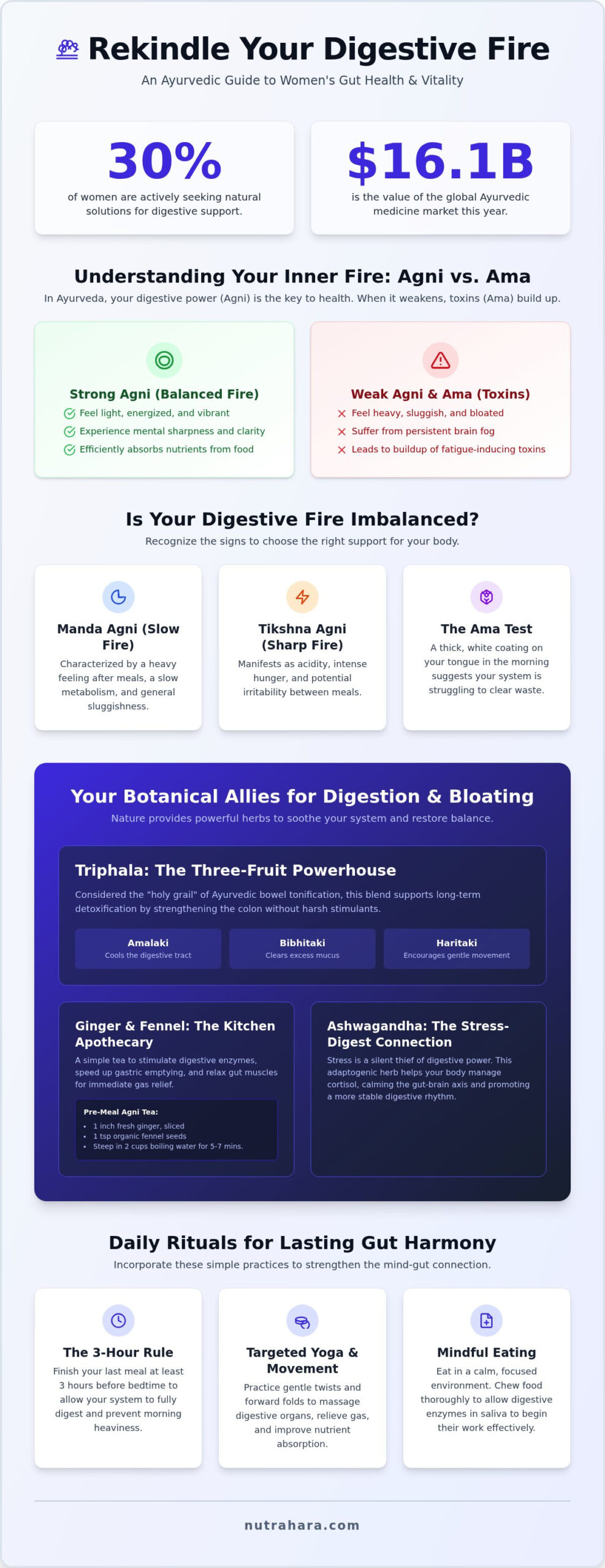
Categories
Articles

Ayurvedic Herbs for Nail Growth: 2026 Strength Guide

What if the ridges on your fingernails aren’t just a sign of getting older, but a quiet message from your body about your internal vitality? It’s common to feel a sense of frustration when your nails begin to peel or thin; it is especially difficult when you’ve tried every “quick fix” polish on the shelf. You might feel that these changes are an inevitable part of aging, or perhaps you’re simply overwhelmed by the endless sea of synthetic supplements that don’t align with your clean lifestyle. By turning toward ayurvedic herbs for nail growth, you can stop masking the problem and start nourishing your body from the inside out.

We believe that true beauty is a long-term progression of health, not a temporary cosmetic mask. In this 2026 guide, you’ll discover how to transform brittle nails into a reflection of your inner strength through the powerful fusion of ancient Ayurvedic wisdom and modern nutritional science. We will show you how to nourish the “Asthi Dhatu,” or bone tissue, using potent botanicals like Ashwagandha and Nutrahara’s Premium Collagen Complex. By integrating these traditions with your daily yoga or meditation, you can achieve visible nail strength and growth within three to six months.

Key Takeaways

  • Understand why your nails are a direct reflection of your bone health and how to view them as a vital sign of your internal wellness progression.
  • Learn how to integrate specific ayurvedic herbs for nail growth with clinical nutrients to support the structural integrity of your nail plate.
  • Discover how chronic stress impacts nutrient delivery to your hands and how adaptogens can help restore a calm, balanced environment for growth.
  • Identify practical yoga poses and dietary adjustments that enhance circulation and provide the essential building blocks for resilient, healthy nails.
  • Master the art of selecting clean, high quality supplements by understanding bioavailability and the importance of additive-free formulations.

Understanding Nail Health: The Mirror of Your Inner Wellness

Your nails are more than just a canvas for polish; they’re a window into your body’s nutritional status and hormonal balance. The process begins deep beneath the cuticle in the nail matrix. Here, specialized cells called keratinocytes divide and produce keratin, the hardy protein that forms the nail plate. When your internal systems are in harmony, these cells create a smooth, resilient surface. However, if your body is under stress or lacks essential nutrients, the matrix produces weaker, thinner cells. This is why incorporating ayurvedic herbs for nail growth is so effective. They don’t just treat the surface; they nourish the very foundation where your nails are born.

From the perspective of Ayurveda, nails are considered “Malas,” or byproducts, of the Asthi Dhatu, which is the tissue responsible for your bones. This ancient science teaches us that if your bone tissue isn’t receiving proper nourishment, your nails will be the first to show signs of depletion. At Nutrahara, we view nail changes like ridges or white spots as gentle whispers from your body. They aren’t failures of aging, but rather early signals that your internal harmony needs a little more attention through a dedicated wellness progression.

The Anatomy of a Healthy Nail

A healthy nail consists of the nail plate, the visible part we see, and the nail bed, which supplies the blood and nutrients needed for growth. For women in their 30s to 60s, a healthy growth rate is typically about three millimeters per month. As we move through different life stages, cellular aging can slow this process. The nail plate may lose its ability to retain moisture, leading to the “brittle nail syndrome” many women experience. Keeping the cuticle intact is vital, as it acts as a protective seal for the matrix, ensuring that the nutrient delivery system remains undisturbed.

Common Nail Concerns for Women 30-60

Many women notice significant changes during perimenopause and menopause. As estrogen levels fluctuate and eventually decline, the body’s ability to produce oils and retain water diminishes. This often results in nails that are thin, fragile, or prone to vertical ridges. It’s also a time when thyroid health and iron levels become crucial. A sluggish thyroid or low ferritin can lead to “spooning” or a dull, flat nail surface. While external factors like harsh detergents play a role, most persistent issues stem from internal nutrient gaps. We recommend supporting your structure with our Premium Collagen Complex to provide the amino acids necessary for a smooth, strong surface that reflects your inner vitality.

Essential Ayurvedic Herbs and Clinical Nutrients for Nail Growth

Strengthening your nails requires a dual approach. You need the structural support of modern vitamins and the deep vitality found in Herbal Medicine. By using specific ayurvedic herbs for nail growth, you’re addressing the root cause of brittleness rather than just masking it. Biotin, also known as Vitamin B7, remains the clinical cornerstone for increasing nail plate thickness. However, its effects are greatly amplified when paired with Amla, or Indian Gooseberry. Amla is a legendary Ayurvedic source of Vitamin C. It’s essential for collagen synthesis, providing the framework that prevents peeling and splitting.

Minerals play an equally vital role in the structural “glue” of your nails. If you notice horizontal indentations known as Beau’s lines, your body might be signaling a need for more Iron or Zinc. These elements ensure your nail bed stays oxygenated and healthy. To understand how these nutrients fit into your broader health journey, you can explore The Ultimate Guide to Women’s Wellness Supplements. Consider these key minerals for your daily routine:

  • Iron and Zinc: Essential for preventing ridges and promoting a smooth nail surface.
  • Silica and Magnesium: These trace minerals provide the hardness needed to prevent snapping.
  • Selenium: A powerful protector that helps prevent nail bed inflammation and fungal issues.

The B-Vitamin Synergy

While many reach for isolated Biotin, a full B-Complex is often superior for rapid cell division. Nail growth is an energy-intensive process. Vitamins like B12 and Folate act as the fuel for this constant renewal. When you use ayurvedic herbs for nail growth alongside a comprehensive B-vitamin profile, you support the entire metabolic pathway. Integrating the Nutrahara Vitamin B Complex into your daily ritual provides this balanced support. It’s a simple way to ensure your cells have exactly what they need to thrive.

Minerals and Trace Elements

Trace minerals are the unsung heroes of nail health. It’s time to dispel the common myth that white spots always mean a calcium deficiency; these are frequently just signs of minor physical trauma. We focus on standardized herbal extracts to ensure you receive the correct “Prana,” or life-force, from every plant. This ensures potency and consistency in every dose. Supporting your body with clean, bioavailable minerals is a gentle way to foster long-term strength. If you’re looking for a foundation of structural support, our Premium Collagen Complex offers a perfect synergy of amino acids and minerals.

The Stress-Nail Connection: Adaptogens and Structural Support

Stress isn’t just a mental state; it’s a physiological event that directly impacts your physical appearance. When your body enters a “fight or flight” response, it prioritizes survival. It diverts oxygen and vital nutrients away from the periphery to support your heart, lungs, and brain. Unfortunately, your nails are at the very end of this delivery line. This metabolic shift often leaves the nail matrix starved, leading to the ridges and peeling many women notice during high-pressure seasons. Integrating ayurvedic herbs for nail growth into your routine helps signal to your body that it’s safe to invest in growth again.

Restoring this nutrient flow requires a two-pronged approach. First, you must lower the cortisol levels that inhibit circulation. Second, you must provide the structural building blocks that stress has depleted. We focus on clean, bioavailable formulas for this reason. Artificial fillers can burden your digestive system, whereas pure, natural ingredients ensure that every milligram of nourishment reaches your fingertips. At Nutrahara, we believe your external beauty should be a tranquil reflection of your internal health progression.

Collagen: The Structural Foundation

To rebuild resilient nails, your body needs specific amino acids like Proline and Glycine. These are the primary components of the nail plate. Type I and III collagen are especially effective at supporting nail bed hydration, which prevents the brittle snapping often seen during perimenopause. The Nutrahara Premium Collagen Complex provides these essential building blocks in a highly absorbable form. Clinical evidence shows that regular collagen supplementation can significantly reduce the frequency of chipped and broken nails over a three to six month period.

Adaptogens for Holistic Harmony

Ashwagandha is a cornerstone among ayurvedic herbs for nail growth because of its unique ability to balance the endocrine system. By lowering cortisol, it helps restore the hormonal harmony necessary for healthy keratin production. Our Ashwagandha with Black Pepper is formulated to maximize this effect. The black pepper contains piperine, which enhances the uptake of the herb’s active compounds. Complementing this with daily meditation or gentle yoga can further soothe the nervous system. These practices not only improve circulation but also help curb stress-related habits like nail-biting, allowing your nails to grow undisturbed.

The Holistic Lifestyle: Yoga, Diet, and Rituals for Radiant Nails

While the internal support of ayurvedic herbs for nail growth provides the essential building blocks, your daily habits act as the catalyst for transformation. Ayurveda teaches that beauty is a “Dinacharya,” or a daily routine, that honors the body’s natural rhythms. For women navigating the hormonal shifts of their 40s and 50s, these rituals are not just about aesthetics; they’re about reclaiming vitality. By combining mindful movement with a nutrient-dense diet, you create a sanctuary where your nails can thrive without the interference of environmental stressors.

Mindful Movement for Growth

To support keratin production, your diet should prioritize “warm” and “oily” foods. This is especially important for combating Vata-related brittleness, which often manifests as dry, snapping nails. Focus on plant-based proteins like lentils and mung beans, or traditional sources like organic eggs. Hydration is perhaps the most underrated tool for nail flexibility. Without adequate water, the nail plate becomes rigid and prone to cracking. Pranayama, or yogic breathwork, further supports this by increasing oxygen levels in the blood, ensuring that every cell in the nail bed has the energy to regenerate.

Sarah, a 52-year-old wellness enthusiast, experienced this transformation firsthand. “After years of hiding my peeling nails, I started a dedicated routine of morning yoga and clean supplementation,” she shares. “Combining my practice with Nutrahara Premium Collagen Complex changed everything. Within four months, my nails felt thick and resilient again.” Her journey highlights that when you nourish your body holistically, your external beauty naturally follows. To begin your own structural support journey, consider adding our Vitamin B Complex to your daily ritual.

Finally, protect your progress by shielding your hands from harsh household chemicals. Wear gloves during chores to prevent detergents from stripping the natural oils that ayurvedic herbs for nail growth help your body produce. These small, intentional shifts in your lifestyle ensure that your nails remain a radiant reflection of your inner wellness.

Ayurvedic Herbs for Nail Growth: 2026 Strength Guide

Empowering Your Choice: Finding the Right Supplement for Your Journey

Choosing the right formula is a pivotal step in your wellness progression. It’s about finding a partner that respects your body’s intelligence and your commitment to a clean lifestyle. When you look at a label, prioritize standardized extracts. These ensure that every dose contains a consistent level of active compounds, such as the withanolides found in certain ayurvedic herbs for nail growth. Bioavailability is equally crucial. It doesn’t matter how potent a botanical is if your digestive system cannot effectively absorb it. This is why our Nutrahara Promise focuses on purity and simplicity, ensuring our ingredients are in their most accessible forms.

The Purity Checklist

Many mass-market products contain a “Dirty Dozen” of additives, including artificial colors, titanium dioxide, and synthetic fillers like magnesium stearate. These unnecessary ingredients can burden your system and even inhibit the uptake of delicate nutrients. We recommend choosing supplements that rely on clinical validation rather than marketing hype. To integrate a new supplement into your routine, try pairing it with a consistent daily anchor, such as your morning meditation or your post-yoga tea. This makes your health journey feel like a natural extension of your day rather than a chore.

Empowering Your Wellness Journey

Patience is a vital part of any holistic path. Because the nail plate takes roughly three to six months to fully grow out, the strength you build today won’t be visible at your fingertips immediately. Practice self-compassion while your body regenerates. For women navigating the hormonal transitions of perimenopause or menopause, this growth can sometimes feel slower. Our FemmePower supplement is formulated to support the unique endocrine needs of women in these life stages, helping to maintain the internal balance necessary for resilient nails.

Consistency is the secret ingredient that turns a simple habit into a true transformation. By providing your body with a steady supply of ayurvedic herbs for nail growth and structural proteins, you’re investing in your long-term vitality. We are honored to be your guide as you bridge the gap between ancient wisdom and modern research. Begin your journey to stronger nails with Nutrahara’s Premium Collagen Complex and let your external beauty reflect the vibrant health you’ve cultivated within.

Reclaiming Your Natural Vitality

Your nails are a living testament to your inner health. By understanding the connection between your bone tissue and the keratin at your fingertips, you can move beyond temporary polishes. We’ve explored how a mindful lifestyle, supported by yoga and nutrient-dense foods, creates the perfect environment for growth. Integrating specific ayurvedic herbs for nail growth allows you to address the root causes of brittleness, especially during the hormonal shifts of midlife. This approach ensures that your nails are not just covered up, but truly nourished from within.

True transformation is a patient, beautiful journey. Our formulas are crafted with the care of a wise guide; they blend timeless Ayurvedic wisdom with clinically validated ingredients that women aged 30 to 60 trust for visible results. You don’t have to settle for fragile or peeling nails. Instead, embrace a routine that honors your body’s long-term progression toward wellness. Begin your journey to stronger nails with Nutrahara’s Premium Collagen Complex. You deserve to feel confident that your external beauty is a radiant mirror of your inner strength and balance.

Frequently Asked Questions

How long does it take for Ayurvedic herbs to show results in my nails?

Visible results typically appear within three to six months of consistent use. Fingernails grow slowly, averaging about three millimeters per month, so the new, fortified nail plate must grow out completely from the matrix. This timeframe allows the ayurvedic herbs for nail growth to nourish your bone tissue, or Asthi Dhatu, ensuring that the new growth reflects a deeper state of internal nutritional harmony and structural strength.

Can menopause cause my nails to become brittle and thin suddenly?

Yes, the decline in estrogen during menopause significantly impacts nail resilience. Estrogen helps regulate your body’s moisture retention; when levels drop, the nail plates can become dry, thin, and prone to vertical ridges. This transition is a natural life stage where targeted structural support becomes essential. Using clean, natural supplements helps bridge the gap created by these hormonal shifts, restoring the moisture and flexibility your nails need to thrive.

Is Biotin safe to take every day, or are there potential side effects?

Biotin is a water-soluble B-vitamin that is generally safe for daily consumption. Most high-quality supplements include it to increase nail plate thickness and reduce peeling. While side effects are rare, high doses can interfere with certain laboratory tests, such as thyroid panels. It’s always wise to inform your healthcare provider about your supplement routine. We focus on balanced, additive-free formulas to ensure your long-term health progression remains both safe and effective.

Do I need a separate collagen supplement if I am already taking a multivitamin?

Most multivitamins don’t provide the concentrated amino acids required for structural nail support. While a multivitamin offers broad nutritional coverage, a dedicated supplement like our Premium Collagen Complex provides specific building blocks like Proline and Glycine. These are the primary components of the nail plate. Adding a targeted collagen source ensures your body has the specific materials needed to transform fragile nails into a resilient reflection of your inner health.

What is the Ayurvedic view on white spots appearing on my fingernails?

Ayurveda often views white spots as a sign of “Vata” imbalance or minor physical trauma to the nail matrix. While many believe they indicate a calcium deficiency, they’re frequently markers of stress or poor nutrient absorption. To address this, we recommend focusing on “warm” and “oily” foods alongside calming rituals. This holistic approach settles the nervous system and ensures that the byproducts of your bone tissue remain clear and healthy.

Can yoga and meditation really help my nails grow faster?

Yoga and meditation support nail growth by improving peripheral circulation and lowering cortisol. Inversions, such as Downward Facing Dog, encourage blood flow to the hands, delivering vital oxygen to the nail matrix. Meditation reduces the stress response that often diverts nutrients away from your extremities to vital organs. These practices create a tranquil internal environment, allowing your body to prioritize the energy-intensive process of regenerating healthy, strong nail cells.

Should I take my nail vitamins on an empty stomach or with food?

It is generally best to take your vitamins with a meal to maximize absorption. Fat-soluble nutrients and certain minerals are better utilized by the body when consumed with healthy fats. Taking supplements with food also minimizes the risk of minor digestive upset. Establishing this as a daily ritual, perhaps after your morning yoga session, ensures consistency and helps the ayurvedic herbs for nail growth work more effectively within your system.

What is the difference between supplements for hair and supplements for nails?

While both hair and nails are composed of keratin, their structural requirements differ slightly. Hair supplements often focus on follicle stimulation and scalp health, while nail formulas prioritize the hardness and moisture retention of the nail plate. Effective nail supplements emphasize specific minerals like Silica and Zinc, alongside collagen types that provide the “glue” for nail strength. Choosing a formula tailored to these structural needs ensures your external beauty reflects your internal well-being.

Article by

Nutrahara Team

We are a dedicated collective of nutrition scientists and naturopaths at Nutrahara, committed to advancing women's health through the fusion of ancient Ayurveda science and cutting-edge nutrition research. Our mission is to empower you with clean, simple, and scientifically validated wellness solutions so you can live your healthiest life. Connect with us to stay updated on the latest developments in holistic women's health and nature-based research.

Disclaimer

This article is not a substitute for medical advice. Please consult a healthcare professional before starting any supplement, especially if pregnant, nursing, taking medication, or managing health conditions.

Categories
Articles

Ayurvedic Herbs for Women’s Digestion and Gut Harmony

What if the persistent bloating and mid-day fatigue you’ve been battling aren’t just inevitable signs of aging, but signals that your internal fire is out of sync? For many women between 30 and 60, hormonal shifts and daily stress can dim our natural digestive strength. This often leads to discomfort that lingers long after a meal. You’ve likely felt the frustration of gas and sluggishness that won’t go away, even when you’re trying to eat well. It’s time to stop fighting your body and start listening to its needs. By incorporating specific ayurvedic herbs for digestion, you can rekindle your Agni, or metabolic fire, and restore a sense of tranquility to your gut.

We understand that you’re looking for a sustainable path to vitality rather than a temporary solution. This guide explores how to balance your Agni using time-tested herbs and modern nutritional research to achieve a flatter stomach and increased daily energy. We’ll preview the most effective botanical remedies, share mindful eating rituals, and discuss how gentle yoga can support your gut harmony. You’ll also learn how convenient supplements like Detoxifylife or Femmepower can support your personal health progression. Together, we’ll ensure your wellness journey is both empowering and deeply nourishing.

Key Takeaways

  • Understand how to rekindle your metabolic engine, Agni, to clear away the toxins that lead to persistent bloating and fatigue.
  • Master the use of the “Big Three” ayurvedic herbs for digestion to create a balanced gut environment through the principle of Samyoga.
  • Identify your unique digestive blueprint among the three Doshas to tailor your wellness journey to your body’s specific needs.
  • Learn practical yoga and meditation techniques that calm the nervous system and promote daily regularity and mindful eating.
  • Discover how modern clinical validation enhances traditional herbal wisdom to provide a transparent, clean approach to women’s health.

Understanding Agni: The Foundation of Ayurvedic Digestion

In the ancient wisdom of Ayurveda, digestion isn’t just about breaking down food. It’s about Agni, your internal metabolic fire. Think of Agni as the engine that powers your entire existence. When this fire burns brightly, you feel vibrant, focused, and deeply confident in your body’s capabilities. However, a rushed modern lifestyle often smothers this flame. Between career demands and family care, many women find their Agni struggling to keep up. A strong digestive fire is the true root of your vitality and self-esteem.

When Agni is weak, food isn’t fully transformed into energy. Instead, it creates “Ama,” a sticky residue of undigested toxins. Ama acts like a heavy fog, weighing down your cells and draining your daily spark. It’s the reason you might feel sluggish even after a full night’s rest. Restoring this fire is the first step toward lasting wellness. While lifestyle changes are vital, specific ayurvedic herbs for digestion can provide the spark needed to clear this accumulation and reignite your internal light.

The Gut-Brain-Hormone Connection in Women

Women aged 30 to 60 navigate unique biological shifts that impact the gut. Estrogen and progesterone don’t just regulate cycles; they also influence how quickly food moves through your system. During perimenopause or pregnancy, these fluctuations often lead to “Vata” type issues, characterized by dryness, gas, and irregular rhythms. From an Ayurvedic perspective, the gut-brain axis is the sacred conversation between your digestive fire and your mental clarity, where a clouded gut inevitably leads to a clouded mind. Supporting this delicate balance with formulas like Femmepower can help stabilize these hormonal impacts on your gut harmony.

Signs Your Digestive Fire is Out of Balance

Recognizing an imbalance is the start of your health progression. You might notice a thick coating on your tongue in the morning, persistent bloating, or mental fog that won’t lift. By choosing the right ayurvedic herbs for digestion, you can address these symptoms at their root. Ayurveda distinguishes between “Manda” Agni, which is slow and sluggish, and “Tikshna” Agni, which is overly sharp and acidic. True health isn’t an overnight fix; it’s a long-term journey of returning to balance. Using targeted tools like Detoxifylife can help gently clear Ama while you rebuild your foundational strength and clarity.

The Core Ayurvedic Herbs for Optimal Digestion

In the tradition of Ayurveda, the effectiveness of a remedy often lies in “Samyoga,” the intelligent combining of plants to create a synergistic effect. This isn’t just about mixing ingredients; it’s about how they work together to support your body’s unique rhythms. Modern science is catching up to these ancient practices. As noted by Johns Hopkins on Ayurveda, these methods are increasingly viewed through a lens of holistic wellness and prevention. When choosing ayurvedic herbs for digestion, prioritizing purity and clinically validated formulas ensures you’re supporting your health progression safely.

Triphala: The Sacred Three-Fruit Formula

Triphala is a cornerstone of Ayurvedic gut health. It combines three potent fruits: Amalaki (Indian Gooseberry), Bibhitaki, and Haritaki. Amalaki supports the gut lining, Bibhitaki helps clear excess mucus, and Haritaki acts as a gentle tonic for the bowel muscles. Together, they function as a non-habit-forming internal cleanser that encourages daily regularity. For women balancing busy schedules, Detoxifylife offers a refined way to experience this sacred blend without the guesswork of raw powders.

Ginger and Fennel: The Warmth of Digestive Comfort

Ginger (Zingiber officinale) is often called the “universal medicine” because it stokes Agni without over-aggravating the system. It helps move food through the stomach, which is crucial for women experiencing hormonal sluggishness. Fennel provides a cooling contrast. It’s particularly effective for Pitta-type digestive heat and post-meal bloating. A simple actionable ritual you can start tonight is brewing CCF tea. Mix equal parts Cumin, Coriander, and Fennel seeds in hot water. This gentle infusion helps settle the gut and prepares the body for rest.

Ashwagandha for Stress-Related Digestive Distress

We can’t ignore the impact of the nervous system on the gut. Stress often triggers digestive distress, especially during life transitions like perimenopause. Ashwagandha is a powerful adaptogen that helps the body manage cortisol. A calm mind is a prerequisite for a calm gut. By soothing the “fight or flight” response, your body can prioritize “rest and digest” functions. This is why incorporating ayurvedic herbs for digestion often involves addressing the mind-body connection. To ensure your body actually utilizes this herb, consider Ashwagandha with Black Pepper, which significantly enhances the absorption of active compounds.

Determining Your Digestive Type: Vata, Pitta, or Kapha?

In Ayurveda, your “Prakriti” is your unique genetic blueprint. It defines how your body processes everything from food to emotions. However, as we age or experience hormonal shifts, we often drift into “Vikriti,” which is our current state of imbalance. Identifying whether your gut is currently dominated by Vata, Pitta, or Kapha is essential. It allows you to select the most effective ayurvedic herbs for digestion tailored to your body’s immediate needs rather than following a one-size-fits-all approach.

Vata Digestion: Managing Irregularity and Gas

Vata is characterized by the elements of air and space. When it’s out of balance, your digestion becomes erratic. You might feel hungry one day and have no appetite the next. Common symptoms include persistent bloating, gas, and constipation. This is especially common for women in their 40s and 50s as estrogen levels decline. To ground this energy, focus on warm, cooked foods and healthy fats. Grounding herbs like ginger and ashwagandha are particularly helpful for this type.

“I spent years feeling like my stomach was a balloon after every meal,” shares Sarah, a 48-year-old yoga instructor. “Once I realized I had a Vata imbalance, I stopped eating cold salads and started a ritual of warm, spiced kitchari. Adding a consistent routine and grounding herbs changed everything. I finally have the energy to lead my classes without discomfort.”

Pitta and Kapha Gut Profiles

Pitta represents the fire element. When Pitta is high, you might experience acid reflux, heartburn, or inflammatory issues. This “sharp” digestion requires cooling influences. Spices like fennel and coriander are excellent, as is understanding the health benefits of turmeric for its soothing, anti-inflammatory properties. To balance Pitta, avoid overly spicy or fermented foods that add more heat to an already burning fire. If you’re navigating these shifts, Femmepower can provide the balanced support your system craves.

Kapha is governed by earth and water. A Kapha imbalance manifests as a slow, heavy, or sluggish metabolism. You might feel “stuck” or experience weight gain despite eating very little. To wake up a sleepy Kapha gut, you need stimulating, pungent spices. Think of these as a “metabolic kickstart” to clear out Ama. Using ayurvedic herbs for digestion like those found in Detoxifylife can help move this heavy energy. By adjusting your diet and herbal support to match your dominant Dosha, you empower your body to return to its natural state of harmony.

Ayurvedic Rituals: Beyond Herbs to Holistic Health

While ayurvedic herbs for digestion provide the essential spark for your internal fire, they work most effectively when supported by mindful daily rituals. Think of your health as a personal, ongoing journey of supportive partnership between your choices and your biology. By integrating ancient movement and stillness into your routine, you create a foundation for longevity and deep-seated self-esteem. These practices ensure that the botanical support you receive is fully integrated into your lifestyle, leading to lasting wellness rather than temporary relief.

Yoga Poses for Enhanced Digestion

Yoga is a powerful tool for both physical and mental health. Apanasana, or the Wind-Relieving Pose, is a simple yet effective way to release trapped gas and stimulate the colon. To practice, lie on your back and gently pull your knees toward your chest while taking deep, rhythmic breaths. Follow this with Ardha Matsyendrasana, a gentle seated twist. These twists act like an internal massage, increasing blood flow to your digestive organs and encouraging the movement of toxins out of the system. Regular practice doesn’t just improve gut motility; it boosts your body confidence by helping you feel more connected to your physical self.

Meditation and Mindful Eating Practices

Your nervous system plays a decisive role in how you process nutrients. Stress often keeps us in a “fight or flight” state, which shuts down digestive power. Implementing a “Five-Minute Breath” ritual before you sit down to eat can shift your body into the parasympathetic “rest and digest” mode. Simply close your eyes and focus on slow, deep inhalations. When you begin eating, chew each bite thoroughly and remove distractions like phones or television. This presence allows you to listen to your body’s satiety signals, preventing the overeating that often leads to Kapha-type sluggishness.

Empowerment comes from knowing you have the tools to manage your own wellness. When your mind is calm and your gut is harmonious, your natural vitality shines through. If you find that daily stress makes it difficult to maintain these rituals, you might benefit from additional support. You can strengthen your mindful eating practice with Anxioguard to help soothe the nervous system and promote a more tranquil digestive experience. Using these rituals alongside ayurvedic herbs for digestion creates a comprehensive path to gut harmony.

Ayurvedic Herbs for Women's Digestion and Gut Harmony

The Nutrahara Philosophy: Ancient Wisdom Meets Modern Science

At Nutrahara, we believe that true health is a personal, ongoing journey rather than a destination. We’ve spent years refining the intersection of ancient natural philosophies and modern nutritional research to support your health progression. Our commitment to purity means you’ll never find artificial additives, fillers, or synthetic binders in our formulas. Instead, you’ll find clean, high-quality ingredients that honor the traditional use of ayurvedic herbs for digestion while meeting the rigorous standards of today’s clinical validation. We position ourselves as your wise and caring guide, offering the transparency you need to feel confident in every supplement you take.

Why Clinical Validation Matters in Herbal Supplements

Selecting the right herbs is only half the battle; the other half is ensuring your body can actually absorb and utilize them. This is why bioavailability is a core pillar of our formulation process. We don’t just include ingredients because they’re traditional; we include them because modern science proves they work. For instance, we specifically formulate our Ashwagandha with Black Pepper because piperine has been shown to significantly increase the absorption of active botanical compounds. Our formulas are designed for simplicity and safety, removing the guesswork often associated with raw herbal powders. We invite you to explore our comprehensive Ultimate Guide to Women’s Wellness Supplements to see how we apply this scientific rigor across our entire range of offerings.

Empowering Your Wellness Journey

When your gut is in harmony, your entire outlook on life shifts. Improved nutrient absorption leads to higher energy levels, which in turn boosts your self-esteem and daily confidence. This mental and physical empowerment is the ultimate goal of our partnership. We’re here to help you move past the frustration of persistent bloating and into a life of vitality. If you’re curious about how specific metabolic processes impact your long-term goals, you might find our guide on whether digestive enzymes help with weight loss particularly useful.

We aren’t just a supplement provider; we’re a long-term partner in your wellness. By combining the ayurvedic herbs for digestion we’ve discussed with clean science and mindful rituals, you’re taking a proactive step toward longevity. We invite you to join the Nutrahara community, where we continue to explore the synergy of nature and science together. Your path to gut harmony and lasting wellness starts with a single, mindful choice, and we’re honored to walk beside you as you reclaim your spark.

Embrace Your Path to Lasting Gut Harmony

You’ve explored how a balanced Agni serves as the engine for your vitality and self-esteem. By identifying your unique Dosha and integrating ayurvedic herbs for digestion, you’ve taken a significant step toward reclaiming your internal spark. These botanical allies work best when woven into a lifestyle that includes mindful eating and gentle yoga. This holistic approach ensures that you aren’t just treating symptoms, but nurturing your body’s natural rhythms.

Our clinical-grade Ayurvedic formulations are specifically designed for the female biological cycle. We prioritize purity, ensuring every capsule is free from artificial additives and fillers. This commitment to clean science allows you to focus on your long-term health progression with complete confidence. It’s time to move beyond temporary fixes and embrace a sustainable, nurturing approach to your well-being. Trust in your body’s wisdom as you cultivate a more tranquil and energized life.

Begin your journey to gut harmony with Detoxifylife

Your wellness is a personal journey, and we’re honored to act as your guide. We’re here to support you as you reclaim your vitality and step into a more balanced version of yourself.

Frequently Asked Questions

What are the best Ayurvedic herbs for immediate bloating relief?

Fennel and ginger are the most effective ayurvedic herbs for digestion when you need quick relief from gas. Fennel seeds act as a carminative, helping to relax the intestinal muscles and dissipate trapped air. You can chew on a teaspoon of roasted seeds after eating or brew them into a tea. Fresh ginger also stimulates the movement of food through the stomach, preventing the fermentation that causes mid-day bloating.

Can I take Ayurvedic digestive herbs while pregnant or breastfeeding?

You should always consult your primary healthcare provider before starting any new herbal regimen during pregnancy or lactation. While gentle culinary spices like ginger and fennel are generally considered safe in food-grade amounts, concentrated supplements require professional guidance. Every woman’s biological cycle is unique during these stages. Prioritizing safety ensures that your health progression remains supportive for both you and your baby during this sensitive time.

How long does it take to see results from Ayurvedic gut rituals?

You may feel immediate relief from bloating within an hour of using specific ayurvedic herbs for digestion like fennel. However, rebalancing your foundational Agni is a long-term progression. Most women notice significant improvements in their energy and regularity after three to four weeks of consistent ritual. Ayurveda focuses on addressing the root cause rather than just masking symptoms, which requires patience and a steady commitment to your daily practices.

Is it better to take digestive herbs before or after meals?

The timing depends on your specific digestive goal. Taking warming herbs like ginger about 15 minutes before a meal can help kindle your Agni and prepare the stomach for food. Conversely, cooling herbs like fennel are often best taken after eating to soothe the gut lining and prevent post-meal gas. If you’re using a comprehensive formula like Detoxifylife, follow the specific label instructions to ensure maximum bioavailability and effectiveness.

Can Ayurvedic herbs help with acid reflux and indigestion?

Cooling herbs like coriander, fennel, and amla are traditionally used to soothe Pitta-type digestive heat. These botanicals help neutralize excess stomach acid without shutting down your digestive fire entirely. Modern clinical research supports the use of these natural elements for maintaining a healthy gastric lining. Combining these herbs with mindful eating rituals, such as chewing thoroughly and sitting quietly, can further reduce the frequency of acid-related discomfort.

What is the “CCF tea” mentioned in Ayurvedic digestion?

CCF tea stands for Cumin, Coriander, and Fennel tea, a classic Ayurvedic formula for gut harmony. This blend is famous for its ability to balance all three Doshas while gently clearing Ama from the system. It’s a simple, effective way to integrate ayurvedic herbs for digestion into your daily life. Simply steep equal parts of the whole seeds in hot water for five minutes to create a soothing, balancing infusion for any time of day.

How do hormonal changes in menopause affect my Ayurvedic Dosha?

Menopause is considered the Vata stage of life in Ayurveda, which often leads to increased dryness and irregularity in the gut. As estrogen levels decline, the cooling and lubricating qualities of the body decrease. This shift can manifest as constipation or a more sensitive digestive system. Grounding rituals and warming, nourishing herbs become essential during this transition to maintain your internal balance and support your overall mental and physical empowerment.

Are Ayurvedic supplements safe to take with my daily multivitamin?

Most Ayurvedic herbal supplements are safe to combine with a standard multivitamin. However, it’s important to check for ingredient overlaps, especially with minerals like iron or zinc. Nutrahara formulas are designed for simplicity and purity, making them easy to integrate into a clean wellness routine. If you’re taking specific pharmaceutical drugs, we recommend speaking with a professional to ensure there are no interactions with the potent botanical compounds in your herbs.

Article by

Nutrahara Team

We are a dedicated collective of nutrition scientists and naturopaths at Nutrahara, committed to advancing women's health through the fusion of ancient Ayurveda science and cutting-edge nutrition research. Our mission is to empower you with clean, simple, and scientifically validated wellness solutions so you can live your healthiest life. Connect with us to stay updated on the latest developments in holistic women's health and nature-based research.

Disclaimer

This article is not a substitute for medical advice. Please consult a healthcare professional before starting any supplement, especially if pregnant, nursing, taking medication, or managing health conditions.
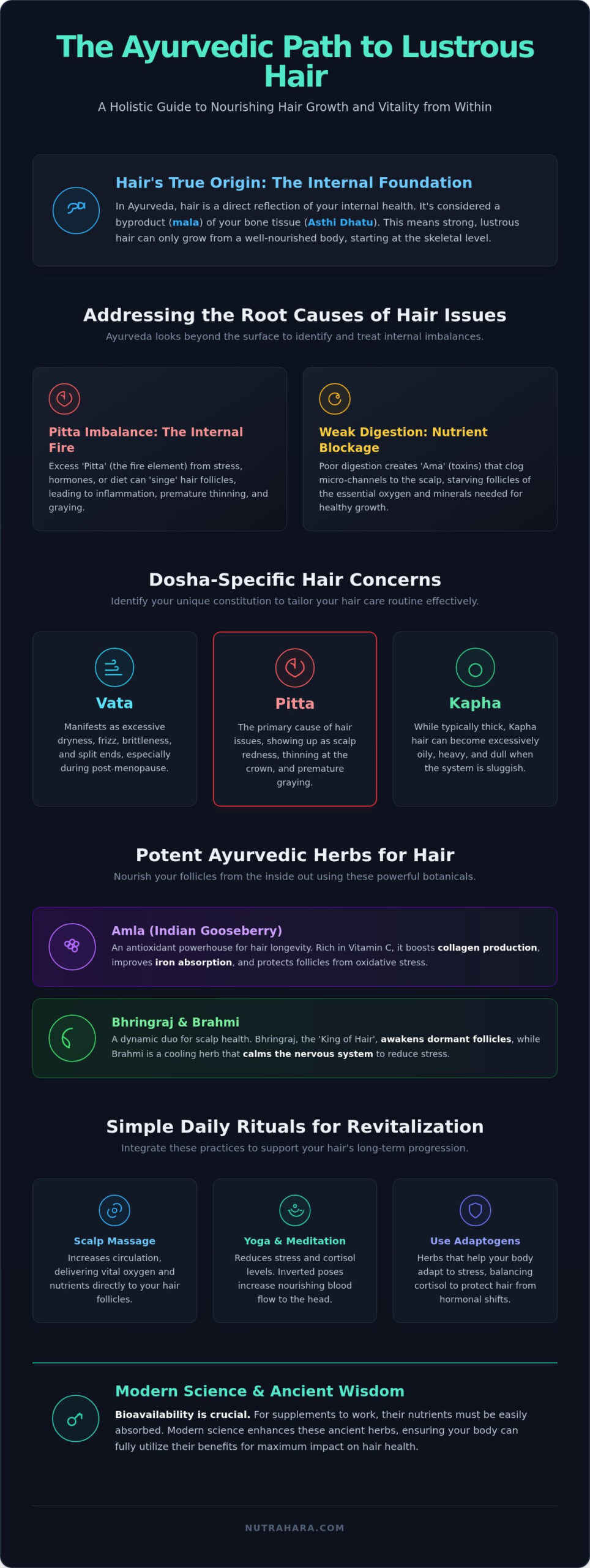
Categories
Articles

10 Ayurvedic Herbs for Glowing Skin: 2026 Radiance Guide

What if the most effective way to restore your radiance isn’t found in a synthetic serum, but within your own biology? As you move through life stages between 30 and 60, internal shifts often manifest as dullness or sudden sensitivity. You’ve likely noticed that mainstream products can feel too harsh or fail to address the root causes of stress-induced flare-ups. If you’re searching for ayurvedic herbs for glowing skin, you’re seeking a solution that respects your body’s natural rhythm and long-term health.

We believe true beauty is the external manifestation of your inner vitality. This guide bridges the gap between ancient botanical wisdom and modern research to help you achieve luminosity that starts deep within. We’ll examine ten potent herbs, the vital gut-skin connection, and actionable rituals like yoga to maintain a vibrant glow at every age. It’s time to empower your wellness journey with nature’s most trusted allies and a balanced lifestyle.

Key Takeaways

  • Understand how the Ayurvedic concept of ‘Ojas’ acts as the foundation for a natural luster that reflects your internal vitality and health.
  • Discover the most effective ayurvedic herbs for glowing skin, including the collagen-boosting properties of Amla and the stress-fighting power of Ashwagandha.
  • Learn how to personalize your skincare routine by identifying your unique dosha and selecting cooling or nourishing herbs tailored to your specific needs.
  • Master simple daily rituals like ‘Abhyanga’ self-massage and ‘Dinacharya’ to align your body’s natural rhythms with the sun for lasting radiance.
  • Explore how modern nutritional research validates these ancient traditions, making it easier to integrate high-quality herbal supplements into your wellness journey.

The Ayurvedic Philosophy: Why Inner Health Equals Outer Glow

The Ayurvedic Philosophy views your skin as a mirror. It reflects the quality of your internal environment. At the heart of this system is “Ojas,” the pure essence of all bodily tissues. When Ojas is abundant, your skin possesses a natural, luminous luster that no topical cream can replicate. This radiance isn’t just about aesthetics. It’s a sign of deep vitality and a balanced nervous system. True beauty is a long-term progression, not a quick fix.

To understand how to achieve this, we look at “Rasa Dhatu,” the body’s first tissue layer, often compared to plasma. This tissue carries nutrients to every cell. If your “Agni,” or digestive fire, is strong, it transforms food into high-quality Rasa Dhatu. This then nourishes the skin from within. For women aged 30 to 60, maintaining this balance is crucial. Whether you’re managing the demands of motherhood or navigating the hormonal shifts of menopause, your internal fire dictates how well your skin recovers from daily stressors. Using ayurvedic herbs for glowing skin helps support this internal transformation.

Understanding the Gut-Skin Connection in Ayurveda

When digestion is weak, the body produces “Ama,” or metabolic toxins. These toxins circulate in the blood and often manifest as blemishes, inflammation, or a persistent dullness. The liver plays a vital role here by purifying the blood before it reaches the skin’s surface. Ayurveda teaches that localized treatments only address about 20% of the issue. To find lasting results with ayurvedic herbs for glowing skin, you must prioritize the health of your gut and liver. This holistic approach ensures your radiance is built on a foundation of purity.

Modern Science Meets Ancient Wisdom

Contemporary research validates these ancient principles. What the sages called “blood purifiers” are now recognized as potent antioxidants that neutralize oxidative stress. Modern science also highlights how elevated cortisol levels, driven by chronic stress, can compromise your skin’s barrier function. Nutrahara bridges this gap by formulating supplements like Ashwagandha with Black Pepper. This adaptogen helps manage the body’s stress response while supporting skin clarity. By combining traditional botanical knowledge with clinical validation, we empower you to take charge of your wellness journey with confidence and ease.

Top Ayurvedic Herbs for Internal Glow and Vitality

While topical treatments have their place, the most transformative results come from systemic nourishment. Choosing the right ayurvedic herbs for glowing skin allows you to address the root causes of dullness and aging from within. Turmeric is essential for managing systemic inflammation, which often presents as redness or an uneven skin tone. Manjistha acts as a premier blood purifier, supporting deep lymphatic detox to clear the pathway for essential nutrients. Neem serves as nature’s internal cleanser, particularly for women experiencing hormonal blemishes or sensitive skin flare-ups.

Integrating these botanicals into your daily routine is a powerful way to support your long-term health progression. It’s helpful to understand that these herbs work by balancing your internal state, which eventually manifests as a visible radiance. As you explore these options, consider Mapping Herbs to Your Dosha to ensure you’re selecting the specific cooling or warming properties your unique constitution requires.

Adaptogens and Your Skin: The Power of Ashwagandha

Ashwagandha is more than just a stress reliever; it’s a vital tool for skin health. It stabilizes the endocrine system, which is particularly beneficial for managing the hormonal shifts during perimenopause. By lowering cortisol, it prevents the premature breakdown of skin elasticity. It also improves sleep quality, which is the critical window for overnight cellular repair and rejuvenation. For those seeking efficiency, our Ashwagandha with Black Pepper is formulated for maximum absorption and potency.

Collagen and Antioxidant Support

Amla is a vitamin C powerhouse, providing the necessary building blocks for collagen synthesis. It works in synergy with Gotu Kola to support natural skin structure and protect cells from oxidative stress caused by environmental pollutants. This internal antioxidant shield is vital for maintaining a firm, youthful complexion as you age. You can find these potent benefits concentrated in our Premium Collagen Complex, designed to nourish your skin’s foundation. If you’re looking to simplify your wellness journey, consider trying a high-quality supplement to replace complex raw herb preparations.

Mapping Herbs to Your Dosha: A Personalized Approach

Ayurveda teaches that your skin type is governed by your dominant dosha. Identifying this helps you select the specific ayurvedic herbs for glowing skin that will work with your biology rather than against it. To determine your type, observe your skin’s behavior during seasonal changes or times of stress. Vata skin tends to be thin and dry, often feeling tight after cleansing. Shatavari is an excellent choice for this type because it provides deep nourishment and helps the body retain vital moisture. Its grounding properties are essential for those with a Vata constitution.

Pitta skin is prone to sensitivity, redness, and inflammation. If your skin reacts quickly to heat or spicy food, you likely have a Pitta dominance. Cooling herbs like Aloe Vera or Sandalwood are vital to soothe internal heat and maintain a calm complexion. Kapha skin is typically oily, cool to the touch, and may suffer from congestion or large pores. Stimulating herbs such as Neem or Turmeric help maintain clarity by encouraging circulation and preventing metabolic buildup. By choosing herbs tailored to your dosha, you ensure your skincare routine is both effective and harmonious.

Hormonal Harmony for Women 30-60

Between ages 30 and 60, many women experience a shift in their doshic balance. The transition into menopause often involves a rise in Pitta heat followed by an increase in Vata dryness. This shift can lead to thinner skin and a loss of elasticity as estrogen levels fluctuate. Supporting hormonal equilibrium is a key step in preserving skin thickness and resilience. For women seeking a balanced internal environment during these transitions, BlossomBliss offers a synergistic blend of herbs designed to support hormonal health and skin vitality. Maintaining this internal balance is a supportive partnership between your body and the botanicals you choose.

Real-Life Radiance: A Testimonial

[Insert story here: Anjali, a 44-year-old yoga instructor, struggled with persistent redness and Pitta-based flare-ups that affected her confidence. By incorporating cooling herbs and a daily meditation practice, she noticed a significant shift in her skin’s calmness and clarity.]

When starting an Ayurvedic herbal regimen, we recommend keeping a simple skin journal. Track your hydration levels, sleep quality, and any changes in texture or tone. It is important to remember that Ayurvedic results are a long-term progression. It typically takes 4 to 6 weeks for the internal benefits of these herbs to manifest fully in your skin’s appearance. Patience and consistency are your greatest allies on this journey toward lasting radiance.

Beyond Herbs: Daily Ayurvedic Rituals for Long-Term Beauty

Your skin’s health depends on more than just the botanicals you ingest. It relies on the rhythm of your daily life. “Dinacharya,” the Ayurvedic concept of a daily routine, suggests aligning your self-care with the sun’s natural cycle. By waking with the light and wind down as it fades, you help regulate your body’s internal clock. This synchronization reduces systemic stress, which is a primary cause of dullness and premature aging in women over 30. While ayurvedic herbs for glowing skin provide the essential building blocks, these rituals ensure those nutrients are delivered effectively to your cells.

Abhyanga, or ritual self-massage with warm oil, is a cornerstone of this practice. This technique does more than hydrate the surface. It stimulates lymphatic drainage and improves peripheral circulation. By moving stagnant energy and toxins out of the tissues, you allow your natural radiance to surface. For the best results, perform this before your morning shower to protect the skin’s moisture barrier throughout the day.

Yoga Poses for a Natural Facelift

Physical movement is a vital tool for skin longevity. Specific yoga poses act as a natural facelift by directing oxygen-rich blood toward the face and neck. Adho Mukha Svanasana, or Downward-Facing Dog, is particularly effective for this purpose. It reverses the pull of gravity and flushes the facial capillaries with fresh nutrients. Bharadvajasana, a seated twist, supports skin clarity by gently compressing and detoxifying the digestive organs. A consistent 15-minute daily practice can significantly improve skin elasticity and muscle tone over time. This movement helps ensure the ayurvedic herbs for glowing skin you take are circulating properly through your system.

Mindfulness and Self-Esteem

Stress is a silent thief of radiance. When your nervous system is in a constant state of “fight or flight,” it triggers inflammation that manifests as redness or breakouts. Meditation helps calm this response, lowering cortisol and allowing the skin to enter its natural repair mode. We recommend a “Golden Hour” ritual each evening. Spend five minutes setting a positive intention for your wellness journey while practicing deep belly breathing. This simple act of mindfulness oxygenates the blood and boosts your self-esteem, helping you feel as vibrant as you look. If you find it difficult to settle your mind for these rituals, you might benefit from our FocusZenith supplement to support mental clarity and calm. Taking charge of your mental well-being is the ultimate act of beauty.

10 Ayurvedic Herbs for Glowing Skin: 2026 Radiance Guide

Empowering Your Journey with Nutrahara’s Holistic Solutions

Nutrahara acts as your wise guide on the journey to internal-out beauty. We believe that true radiance is a physical manifestation of your inner health and balance. Our commitment to clean beauty means we prioritize purity and simplicity in every formula we create. By choosing ayurvedic herbs for glowing skin that are validated by modern nutritional research, we provide a foundation you can trust. We understand that your time is valuable. Traditional Ayurvedic preparations often require hours of labor, but our high-quality supplements offer the same potent benefits with modern convenience. This allows you to integrate ancient wisdom into a busy, active lifestyle without compromise.

Choosing Your Radiance Stack

A sustainable wellness routine is built on consistency and personalization. To achieve total vitality, consider pairing FemmePower with our Premium Collagen Complex. This combination addresses both the hormonal shifts common in women aged 30 to 60 and the natural decline in structural proteins. For those times when your skin feels congested or lacks its usual luster, DetoxifyLife serves as an ideal seasonal reset. It helps clear the metabolic toxins we discussed earlier, ensuring your digestion remains efficient. Customizing your stack based on your current wellness goals allows you to support your skin, hair, and nails through every life stage.

Join the Nutrahara Community

We believe that health is a personal, ongoing journey that flourishes with the right support. When you join the Nutrahara community, you gain access to a wealth of educational resources, including e-books that dive deeper into the history and science of ayurvedic herbs for glowing skin. These resources are designed to help you master the rituals and lifestyle changes that complement your supplement routine. We are here to act as a long-term partner in your progression toward better health and higher self-esteem. Our formulas are free from artificial additives, reflecting our promise of transparency and quality. You deserve a wellness partner that values your longevity as much as you do. Start your journey to glowing skin today by embracing the synergy of nature and science.

Begin Your Journey to Lasting Radiance

Your path to vibrant skin is a personal, ongoing journey that honors your body’s changing needs. By aligning your daily rituals with the power of ayurvedic herbs for glowing skin, you address the root causes of dullness and support your vitality at every life stage. We’ve explored how ancient wisdom and modern research confirm that true radiance begins with healthy digestion, balanced hormones, and a calm mind. Whether you’re navigating the shifts of menopause or seeking a natural way to boost collagen, nature provides the tools you need to shine.

At Nutrahara, we believe in purity and simplicity. Our formulas are formulated by experts in Ayurveda and nutrition; they’re free from artificial additives and fillers. Trusted by thousands of women for holistic wellness, our supplements act as a supportive partner in your health progression. It’s time to reclaim your confidence and empower your self-esteem from the inside out. Shop the Nutrahara Skin & Vitality Collection today to experience the synergy of tradition and science. You possess the power to transform your well-being, and we’re here to guide you every step of the way.

Frequently Asked Questions

What is the best Ayurvedic herb for glowing skin?

Amla is frequently cited as the premier herb for radiance due to its exceptional Vitamin C concentration. This potent antioxidant is essential for natural collagen synthesis and protecting your skin from environmental damage. By nourishing the body at a cellular level, it helps maintain a youthful texture. While many factors influence your complexion, you’ll find that incorporating these ayurvedic herbs for glowing skin into your daily routine provides a solid foundation for long-term health.

Can Ayurvedic herbs help with skin aging in my 50s?

Ayurvedic botanicals are remarkably effective for women in their 50s because they address the root causes of aging. Herbs like Shatavari provide deep nourishment and help the skin retain moisture, which often decreases during and after menopause. It’s a holistic approach that ensures your skin remains resilient and luminous even as your body undergoes significant hormonal transitions. These herbs work by balancing your internal fire and supporting the long-term health of your tissues.

How long does it take to see results from Ayurvedic skin supplements?

You’ll typically begin to see tangible improvements in your skin’s clarity and tone within 4 to 6 weeks. This timeline aligns with the natural skin cell turnover cycle, which averages about 28 to 30 days. Because these supplements work from the inside out, they require time to balance your internal systems before the results manifest on the surface. Consistency is vital to achieving a sustainable, healthy glow that reflects your overall well-being and vitality.

Are Ayurvedic herbs safe to take during perimenopause?

Many Ayurvedic herbs are specifically valued for their ability to support women through the perimenopausal transition. Shatavari, for instance, is known for its phytoestrogenic properties that help balance fluctuating hormones. Ashwagandha is also beneficial for stabilizing the nervous system and improving sleep quality. While these herbs are generally safe, it’s always wise to consult with your healthcare provider if you’re managing specific medical conditions or are taking other medications for your general health.

Do I need to change my diet while taking Ayurvedic herbs for skin?

Adapting your diet to support your unique dosha will significantly amplify the benefits of ayurvedic herbs for glowing skin. Focus on fresh, whole foods and avoid processed items that create “Ama,” or metabolic toxins. For example, if you have a Pitta constitution, choosing cooling foods like cucumber and coconut can prevent inflammation. This synergy between nutrition and herbal support ensures your body’s internal environment stays clean and ready to thrive each day.

Is Turmeric better for skin when taken as a supplement or applied topically?

Internal supplementation of Turmeric is generally superior for achieving a calm, even complexion across your entire body. While topical masks can soothe localized irritation, consuming high-quality curcumin addresses systemic inflammation and supports liver detoxification. This internal cleansing process doesn’t just clear the skin; it leads to lasting clarity and prevents future breakouts. For the best absorption, look for supplements that include black pepper. This specific combination helps your body utilize the Turmeric more efficiently.

Can yoga really improve my skin’s appearance?

Yoga’s a powerful tool for enhancing your complexion because it boosts circulation and manages stress effectively. Specific poses, like inversions, direct nutrient-rich blood to the face, providing an immediate boost in oxygenation. Additionally, the stress-reducing effects of a regular practice lower the cortisol levels that often trigger skin flare-ups. By calming the nervous system, you create an internal environment where your skin can repair itself more effectively during your nightly rest and recovery.

What is the ‘Ojas’ everyone talks about in Ayurvedic beauty?

Ojas is the subtle essence of all bodily tissues and is often described as the “glow” of health and vitality. It’s the final product of perfect digestion and a balanced lifestyle, reflecting a state of deep internal harmony. When your Ojas is strong, your skin looks radiant and your eyes are clear. Cultivating this essence requires a combination of nourishing herbs, mindful movement, and adequate rest to support your personal health progression and longevity.

Article by

Nutrahara Team

We are a dedicated collective of nutrition scientists and naturopaths at Nutrahara, committed to advancing women's health through the fusion of ancient Ayurveda science and cutting-edge nutrition research. Our mission is to empower you with clean, simple, and scientifically validated wellness solutions so you can live your healthiest life. Connect with us to stay updated on the latest developments in holistic women's health and nature-based research.

Disclaimer

This article is not a substitute for medical advice. Please consult a healthcare professional before starting any supplement, especially if pregnant, nursing, taking medication, or managing health conditions.

Categories
Articles

Ayurvedic Herbs for Memory: Women’s Cognitive Longevity

You’re standing in the kitchen staring at an open cupboard, but the reason you walked into the room has completely vanished. It’s a disorienting moment that many women in their 40s and 50s experience daily, often compounded by the relentless mental load of multitasking and the hormonal shifts of perimenopause. You likely feel that your focus isn’t what it used to be, and the fear of long-term cognitive decline can weigh heavily on your mind. We believe that your mental clarity shouldn’t be a source of stress, but rather a foundation for your personal health progression.

Discovering the right ayurvedic herbs for memory improvement offers a path to sharpen your focus and protect your memory using time-tested wisdom. In this guide, we’ll explore how ancient Medhya Rasayana herbs, validated by modern nutritional research from 2025 and 2026, can empower your mental wellness journey. You’ll learn about specific botanicals that manage stress-related forgetfulness and how to build a sustainable routine that supports your brain health for years to come. From the calming influence of Ashwagandha to the clinical precision of Bacopa, we’re here to guide you toward a more vibrant, focused life.

Key Takeaways

  • Understand why women’s unique life stages, from career building to perimenopause, require a tailored approach to cognitive wellness and long-term memory protection.
  • Explore the science behind ayurvedic herbs for memory improvement and how Medhya Rasayana tonics like Brahmi and Ashwagandha support mental clarity.
  • Learn why modern standardization and bioavailability, including the use of black pepper, are critical for ensuring your brain receives the full benefits of herbal extracts.
  • Discover practical yoga asanas and Bhramari Pranayama techniques that harmonize the nervous system to improve focus and reduce the mental load of multitasking.
  • Gain the tools to identify high-quality, clean supplements that empower your cognitive progression without the use of artificial additives.

Understanding the Mind-Body Connection: Why Cognitive Health is Different for Women

Women’s cognitive health isn’t a static line. It’s a series of peaks and valleys influenced by biology, lifestyle, and the unique roles we inhabit. From the high-stakes focus required in your early career to the shifting tides of perimenopause, your brain is constantly adapting to new demands. While some traditional perspectives suggest that cognitive aging only begins in your late 60s, Ayurveda recognizes that the foundation for mental longevity is built much earlier. This ancient system introduces us to Medhya Rasayanas, a specific category of “intellect-promoting” tonics. These aren’t just quick stimulants; they are deep-acting rejuvenatives designed to enhance memory, intellect, and longevity.

Integrating ayurvedic herbs for memory improvement into your life is about more than just a quick fix. It’s about nourishing the subtle tissues of the mind to handle the “mental load” of modern life. We often prioritize everyone else’s needs, leading to chronic stress that clouds our natural clarity. A holistic approach outperforms isolated “brain hacking” because it addresses the root cause of forgetfulness rather than just masking the symptoms. By focusing on nourishment and balance, you can empower your mind to remain sharp and resilient through every life transition.

Hormones and the Brain: The Menopause Connection

Estrogen is a neuroprotective powerhouse that influences how your brain processes information. When levels fluctuate during perimenopause and menopause, neurotransmitters like serotonin and acetylcholine can become unbalanced. This often results in “brain fog,” a legitimate health concern that affects your confidence and productivity. Ayurveda views the transition from the fiery, productive Pitta stage of middle life to the airy, mobile Vata stage as a time when the mind naturally requires more grounding and nourishment to maintain its sharpness. Recognizing these shifts as biological realities helps you move away from frustration and toward supportive, natural solutions.

Modern Stress vs. Ancient Wisdom

Chronic stress is a silent thief of memory. When you’re constantly in “fight or flight” mode, high cortisol levels can actually lead to the shrinking of the hippocampus, which is the brain’s primary memory center. Ayurveda describes this imbalance as “Pragya Aparadh,” or the “crime against wisdom.” This occurs when we ignore our body’s natural rhythms, such as choosing another hour of work over restorative sleep. When we live out of alignment with our nature, our cognitive clarity suffers. To understand how to support your body’s broader needs during these stressful times, you may find it helpful to read The Ultimate Guide to Women’s Wellness Supplements. Choosing ayurvedic herbs for memory improvement helps bridge the gap between your high-performance life and your body’s need for deep, cellular rest.

The Science of Medhya Rasayanas: Top Ayurvedic Herbs for Memory

While modern pharmaceuticals often target isolated symptoms, the Medhya Rasayana tradition focuses on systemic rejuvenation. These ayurvedic herbs for memory improvement work by nourishing the “Majja Dhatu” (nervous tissue) to enhance dhi (acquisition), dhriti (retention), and smriti (recall). By supporting these three pillars of the mind, you aren’t just memorizing facts; you’re cultivating a more resilient and fluid intellect. This holistic approach is especially vital for women, as it addresses the physiological and emotional layers of cognitive health simultaneously.

Beyond the well-known staples, herbs like Shankhpushpi and Mandukaparni play essential roles in a balanced cognitive routine. Shankhpushpi is traditionally used to reduce mental fatigue and promote a state of “calm alertness.” It’s particularly effective for women balancing high-pressure careers with family life. Mandukaparni, or Gotu Kola, complements this by supporting cerebral micro-circulation. It ensures that oxygen and nutrients reach the brain efficiently while providing neuroprotective benefits against oxidative stress. Together, these herbs create a comprehensive shield for your cognitive longevity.

Brahmi: The Neuroprotective Powerhouse

Brahmi is widely regarded as the gold standard for cognitive enhancement. Its primary active compounds, bacosides, help repair damaged neurons by enhancing kinase activity. This process facilitates the synthesis of new proteins in the brain’s memory centers. Recent clinical observations from 2025 continue to validate its efficacy in improving word recall and attention span in adults. For optimal results, standardized extracts containing at least 20% to 50% bacosides are typically recommended. Consuming Brahmi with a healthy fat, like ghee or after a meal, improves the absorption of these fat-soluble compounds.

Ashwagandha and the HPA Axis

Memory failure is often a symptom of a dysregulated HPA axis. When your body is flooded with cortisol, the brain prioritizes survival over complex information storage. Ashwagandha acts as a potent adaptogen that recalibrates your stress response. By lowering serum cortisol, it clears the “mental noise” that prevents you from accessing stored information. If you’re looking for a clean, potent formula, our Ashwagandha with Black Pepper utilizes modern standardization to ensure maximum bioavailability. This synergy ensures the herb’s active withanolides reach your system effectively. Taking a proactive step toward mental clarity can be as simple as choosing a high-quality cognitive support supplement that honors these ancient formulations.

Bridging the Gap: Clinical Validation of Ancient Brain Tonics

Ancient wisdom often provides the map, but modern science provides the microscope. While traditional practitioners have used ayurvedic herbs for memory improvement for millennia, today’s clinical research allows us to understand exactly how these plants interact with a woman’s biology. This is particularly vital during the hormonal transitions of perimenopause and menopause. During these stages, declining estrogen can lead to a noticeable drop in cognitive resilience. Unlike generic health advice that ignores these shifts, we focus on standardized botanical extracts that have been proven to support the brain’s ability to rewire itself, a process known as neuroplasticity.

One of the most significant hurdles in herbal wellness is bioavailability. Your body cannot benefit from what it cannot absorb. Raw herbal powders often contain low concentrations of active compounds and can be difficult for the digestive system to process. This is why the fusion of traditional knowledge and modern science is so powerful. By adding natural thermonutrients like black pepper, we can significantly increase the absorption of active ingredients. This ensures that the potent compounds reach your bloodstream and, eventually, your brain tissues where they are needed most.

The Role of Antioxidants in Brain Health

The brain is highly susceptible to oxidative stress, which can damage neurons and lead to the “brain fog” many women experience during midlife. Ayurvedic herbs are rich in polyphenols that act as free-radical scavengers, creating a protective shield around your neural pathways. These herbal antioxidants don’t work in isolation. Combining Ayurvedic botanicals with a Vitamin B-Complex creates a powerful synergy where B vitamins act as essential cofactors for the enzymatic reactions that allow herbal compounds to effectively support neurotransmitter synthesis and cellular energy production. This dual approach helps maintain your mental energy levels throughout the day.

Modern Extraction for Maximum Potency

At Nutrahara, we believe in the purity and simplicity of our formulas. There is a vast difference between a simple raw powder and a concentrated, standardized extract. Raw powders vary wildly in potency depending on the soil and harvest time. We prioritize standardized levels of bacosides in our Brahmi and withanolides in our Ashwagandha to ensure you receive a consistent, therapeutic dose every time. By removing unnecessary fillers and artificial additives, we provide a clean path for your cognitive progression. This commitment to quality means you can trust that your daily routine is backed by both history and hard data.

The Holistic Blueprint: Yoga, Meditation, and Memory

Cognitive longevity isn’t just about what you ingest; it’s about how you move and breathe. While ayurvedic herbs for memory improvement provide the chemical foundation for a sharper mind, physical practices act as the delivery system. For example, inversions like Viparita Karani (Legs-Up-The-Wall) and Adho Mukha Svanasana (Downward-Facing Dog) use gravity to increase cerebral blood flow. This oxygenates the brain and ensures that the standardized nutrients from your daily routine reach their target tissues effectively. By combining these movements with herbal support, you create a comprehensive environment for mental growth.

Pranayama, or breathwork, serves as a bridge between the body and the mind. Bhramari Pranayama, often called “Bee Breath,” is a powerful tool for women facing the high mental load of multitasking. The gentle internal vibration calms the nervous system and reduces the mental chatter that leads to forgetfulness. Meditation builds the “muscle” of concentration. By training your mind to return to a single point of focus, you improve your ability to retain and recall information during high-pressure moments. This practice transforms the brain’s architecture, making it more resilient to the distractions of modern life.

A Sattvic diet is the nutritional cornerstone of this holistic blueprint. Foods like fresh organic fruits, soaked almonds, and walnuts nourish “Ojas,” the subtle essence of vitality and immunity in Ayurveda. These nutrient-dense choices support the brain’s structural integrity and work in harmony with your herbal routine. When you eat foods that are easy to digest and full of life force, you reduce the internal “fog” that often clouds your clarity.

A Daily Ritual for Cognitive Clarity

Start your day with Abhyanga, or self-massage with warm oil, to ground your energy before the demands of the day begin. Ayurveda suggests scheduling deep work during the “Kapha” window of the morning, roughly between 6 AM and 10 AM, when the mind is naturally more stable and less prone to distraction. One of our readers, Sarah, shared her experience: “Adding just 10 minutes of morning meditation made my afternoon brain fog disappear. I feel more in control of my schedule and less reactive to the daily stress of my career.”

Empowerment Through Movement

For women in the 30 to 60 demographic, yoga should be an empowering practice that respects joint health and energy levels. You don’t need a 90-minute session to see results. A 5-minute “desk yoga” sequence can reset your focus during a busy workday. Try seated Cat-Cow stretches to release spinal tension, followed by gentle shoulder rolls to open the chest. These simple movements stimulate circulation and help you maintain mental agility throughout the afternoon. To further support your cognitive progression, explore how Focus Zenith can complement your daily ritual by providing the mental clarity needed for deep meditation and sustained focus.

Ayurvedic Herbs for Memory: Women's Cognitive Longevity

Empowering Your Journey: Choosing the Right Cognitive Support

Selecting a supplement shouldn’t feel like a guessing game. It’s a vital part of your personal health progression. When you look for ayurvedic herbs for memory improvement, you need to ensure the formula is as pure as the ancient traditions it draws from. Many products on the market use raw powders or include artificial fillers that dilute the potency of the botanicals. We believe your cognitive journey deserves better. By choosing standardized extracts that are backed by modern nutritional research, you’re investing in a future where mental clarity is a constant, not a luxury.

Consistency is the secret ingredient in any wellness routine. Brain health is a marathon, not a sprint. You won’t see a total transformation in a single day, but over weeks and months, the cumulative effect of these herbs becomes undeniable. Empowerment comes from knowing you’re taking active steps to protect your memory and sharpen your focus for the long term. This isn’t about a quick fix; it’s about building a foundation for your senior years while thriving in the present.

Why Nutrahara is Your Wise Guide

Our philosophy is built on the fusion of traditional medicine and modern science. We act as your wise and caring guide, ensuring every ingredient in our formulas serves a specific purpose for your well-being. Focus Zenith embodies this commitment by combining potent Medhya Rasayanas with the clinical precision your life demands. We prioritize clean, natural ingredients and avoid artificial additives because we know that purity is essential for deep, cellular rejuvenation. This transparency allows you to integrate our supplements into your daily life with total confidence.

Next Steps for Mental Longevity

Start your progression today by setting realistic, achievable goals. Perhaps you’ll begin with a daily dose of ayurvedic herbs for memory improvement alongside the five-minute desk yoga sequence we discussed earlier. Small, intentional choices lead to significant long-term shifts in your cognitive health. You don’t have to navigate this path alone. The role of community and support is vital in any wellness journey, providing the inspiration you need to stay the course and celebrate your victories.

Your cognitive future is in your hands. By aligning ancient wisdom with modern research, you’re creating a sustainable routine that empowers your mind and body. Don’t wait for the fog to thicken before you take action. Take charge of your wellness with a sense of pride and self-esteem. Start your progression today and experience the tranquility that comes with true mental clarity.

Your Path to Lasting Mental Clarity

Navigating the cognitive shifts of adulthood doesn’t have to be a journey you take alone. You now understand how hormonal transitions and stress impact your focus; more importantly, you have the tools to respond. By integrating ayurvedic herbs for memory improvement with mindful movement and modern nutritional research, you’re building a foundation for lifelong mental agility. This holistic blueprint isn’t a quick fix. It’s a sustainable progression that honors your body’s natural rhythms while utilizing the precision of standardized extracts.

We’re here to act as your wise guide, offering formulas that are clean, natural, and specifically designed for the unique needs of women. Our community of health-conscious women stands with you as you prioritize your wellness and energy. Taking charge of your cognitive future is an act of self-care that boosts your confidence and empowers every other aspect of your life. Start your progression today and reclaim the sharpness you deserve.

Empower your mind with Focus Zenith: where ancient Ayurveda meets modern science.

Frequently Asked Questions

How long does it take for Ayurvedic herbs to show results for memory?

You should expect to see noticeable improvements within 8 to 12 weeks of consistent daily use. Ayurvedic rejuvenatives work by deeply nourishing the nervous system rather than providing a temporary chemical boost. This steady progression allows your body to build lasting cognitive resilience. It’s helpful to track your focus levels in a journal to observe these subtle, positive shifts over time.

Can I take Brahmi and Ashwagandha together for better focus?

Combining these two herbs is a traditional practice that offers synergistic benefits for mental clarity. Brahmi directly supports the repair of neurons and enhances information retention. Ashwagandha complements this by balancing your stress response, which prevents high cortisol from blocking your memory. Together, they create a calm yet alert state of mind that is perfect for deep work.

Is it safe to use Ayurvedic memory herbs during perimenopause?

It is safe and often highly beneficial to use ayurvedic herbs for memory improvement during the perimenopausal transition. These botanicals help stabilize the nervous system as estrogen levels fluctuate. Many women find that Ashwagandha and Brahmi reduce the intensity of “brain fog” and emotional volatility. This natural support empowers you to navigate hormonal changes with greater confidence and mental sharpness.

What is the best time of day to take memory-improving supplements?

The most effective time to take your cognitive supplements is during the morning Kapha window, between 6 AM and 10 AM. This period is naturally characterized by stability and focus, making it the ideal time for the body to absorb brain-nourishing nutrients. If your primary concern is stress-related forgetfulness, you might also take a second dose of Ashwagandha in the late afternoon to stay grounded.

Are there any side effects to using herbs like Bacopa monnieri long-term?

Bacopa monnieri is generally considered safe for long-term use when taken at recommended dosages. Some individuals might experience mild digestive discomfort or nausea if they take it without food. To avoid this, we suggest consuming your supplements after a meal. Choosing a standardized extract ensures that you aren’t ingesting heavy metals or artificial additives that can sometimes be found in low-quality raw powders.

How do Ayurvedic herbs compare to modern nootropics or stimulants?

Unlike synthetic nootropics that often rely on stimulants, Ayurvedic herbs focus on systemic rejuvenation and neuroprotection. Stimulants can lead to a “crash” or increased anxiety, which eventually hinders your concentration. Ancient brain tonics work by supporting the brain’s natural ability to repair itself. This results in a sustainable increase in clarity that doesn’t depend on a temporary chemical spike.

Can yoga and meditation really improve my memory scores?

Regular yoga and meditation have a documented positive impact on memory and executive function. These practices reduce the production of cortisol, a hormone that can shrink the brain’s memory centers over time. By calming the nervous system, you improve your ability to focus and process new information. Research indicates that even 10 to 15 minutes of daily mindfulness can lead to measurable cognitive gains.

Do I need to change my diet for Ayurvedic herbs to work effectively?

A supportive diet isn’t strictly required, but eating fresh, whole foods significantly boosts the efficacy of ayurvedic herbs for memory improvement. In Ayurveda, the quality of your food directly influences the “Ojas,” or vital energy, that sustains your mind. Reducing processed sugars and increasing healthy fats like walnuts or ghee provides the building blocks your brain needs to respond to herbal therapy and maintain long-term health.

Article by

Nutrahara Team

We are a dedicated collective of nutrition scientists and naturopaths at Nutrahara, committed to advancing women's health through the fusion of ancient Ayurveda science and cutting-edge nutrition research. Our mission is to empower you with clean, simple, and scientifically validated wellness solutions so you can live your healthiest life. Connect with us to stay updated on the latest developments in holistic women's health and nature-based research.

Disclaimer

This article is not a substitute for medical advice. Please consult a healthcare professional before starting any supplement, especially if pregnant, nursing, taking medication, or managing health conditions.