Could your daily ritual for balance actually be a long-term burden on your body? Many women in their 30s, 40s, and beyond turn to ancient herbs to manage hormonal shifts or boost energy, but a nagging question often remains: is ayurveda safe for long term use? You aren’t alone in feeling concerned about conflicting reports on heavy metals or potential side effects. It’s natural to want the peace of mind that your holistic choices support your longevity rather than compromising your health.
This guide will help you discover how to safely integrate Ayurvedic wisdom into your lifelong wellness journey while navigating modern safety standards and clinical purity. You’ll learn how to identify high-quality supplements that meet the FDA’s “Closer to Zero” standards for toxic metals. We’ll provide a clear framework for long-term supplementation, ensuring you can embrace your yoga and meditation practice with the confidence that your internal health is backed by both ancient tradition and rigorous modern science.
Ayurveda isn’t a passing wellness trend. It’s a 5,000-year-old system that translates literally to “the science of life.” When you begin Understanding Ayurveda, you see it’s much more than a medicine cabinet. It’s a comprehensive way of living. For women moving through different life stages, a common question arises: is ayurveda safe for long term use? This depends on whether you’re using “Shodhana” (cleansing) or “Shamana” (balancing) therapies. While intense cleanses are short-term, the daily rituals of Ayurveda are built for a lifetime of support.
The most important concept for longevity is Rasayana. This specific branch of Ayurveda focuses on rejuvenation and slowing the aging process. Rasayana herbs aren’t just remedies; they’re tonics meant to nourish your tissues and boost “Ojas,” which is your baseline for immunity and radiant energy. Nutrahara leverages these time-tested botanicals, such as Ashwagandha with Black Pepper, to support your body’s natural resilience. These herbs are chosen specifically for their non-toxic, building nature. They don’t just fix a problem; they cultivate a stronger foundation for your future self. By framing health as a long-term progression, Rasayana allows you to integrate these herbs into your routine for months or even years to maintain peak vitality.
It’s a common mistake to assume that because a leaf grew in the ground, it can’t cause harm. Every substance has a dose and a limit. In Ayurveda, your “Agni,” or digestive fire, is the gatekeeper of your health. If your digestion isn’t strong enough to process a supplement, it won’t provide the benefits you’re looking for. This is why Ayurveda is a holistic system of living rather than just a collection of pills. Long-term safety requires looking at the whole person, including your diet, your yoga practice, and your stress levels. Even the most powerful herbs need to be used with wisdom and respect for your body’s current state.
When women ask us, is ayurveda safe for long term use, we explain that it requires a fusion of tradition and modern validation. Nutrahara’s philosophy is rooted in this balance. We take the poetic wisdom of the ancients and subject it to contemporary nutritional research. By focusing on high-purity extracts and clean formulations, we provide the safety that modern women deserve. You can feel empowered in your health choices, knowing they’re backed by five millennia of history and today’s strictest quality standards. Our goal is to be your wise guide, ensuring your wellness journey is both tranquil and scientifically sound.
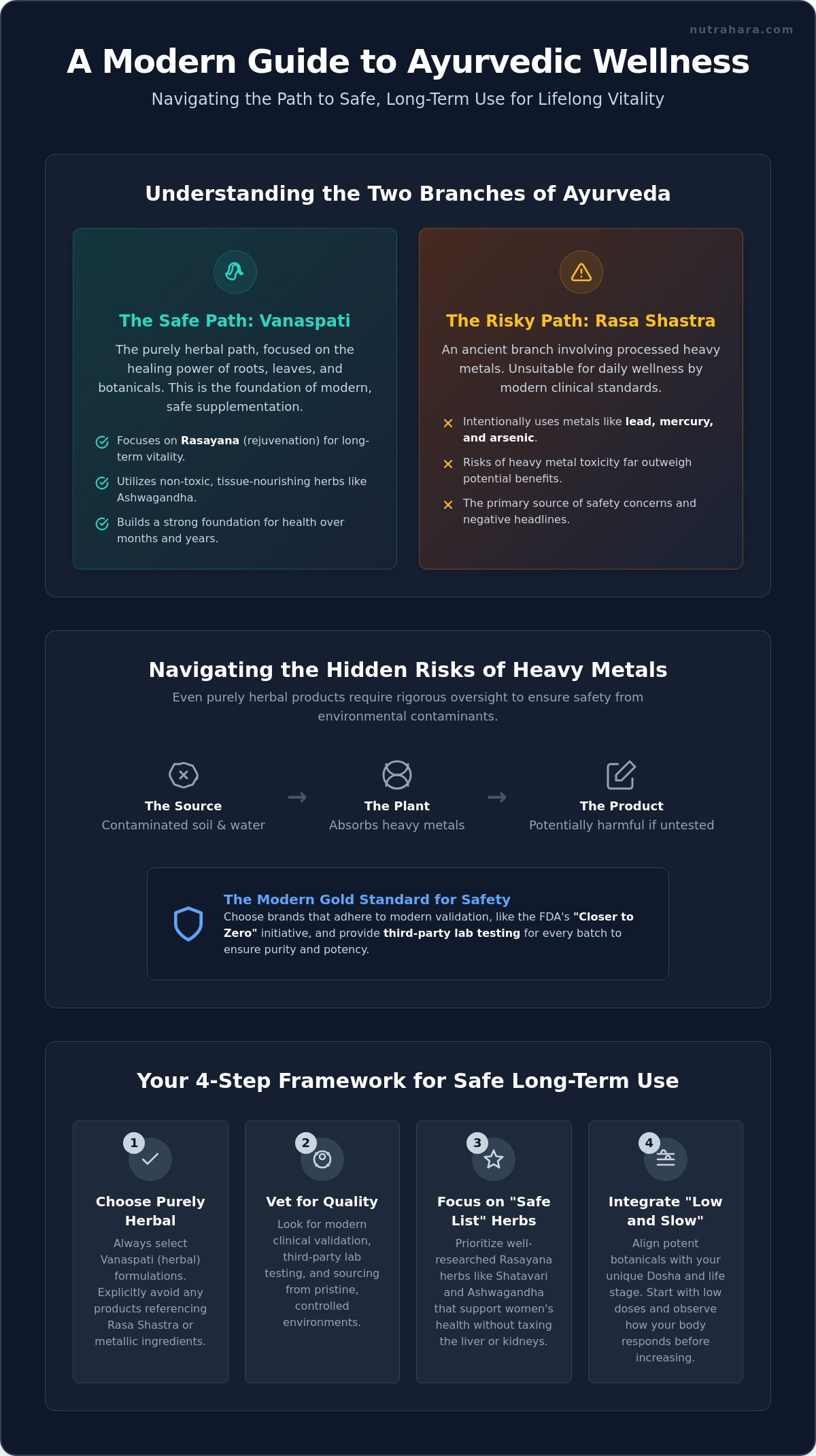
When women ask if is ayurveda safe for long term use, they’re often reacting to headlines about heavy metal toxicity. To understand the truth, we must distinguish between two very different branches of this ancient tradition: Rasa Shastra and Vanaspati. Rasa Shastra involves the intentional use of processed metals, including lead, mercury, and arsenic. While these were used in specific historical contexts, modern clinical standards make them entirely unsuitable for daily wellness. In contrast, Vanaspati is the purely herbal path. This is the foundation of modern, safe supplementation that focuses on the healing power of roots, leaves, and barks.
For women today, the choice is clear. Traditional metallic preparations carry risks that far outweigh any perceived benefits, especially when used over years. You should only consider pure herbal extracts that have been stripped of these ancient contaminants. The Science of Safety confirms that while Ayurveda offers profound benefits, the lack of regulation in some regions can lead to products containing harmful levels of metals. Choosing a brand that explicitly rejects Rasa Shastra is the first step in ensuring your wellness journey remains restorative rather than risky.
Even in herbal products, safety isn’t guaranteed without rigorous oversight. Heavy metals like cadmium and lead can enter plants through contaminated soil or water during growth. The FDA has addressed this through its “Closer to Zero” initiative in 2026, which increases scrutiny on toxic elements in dietary supplements. Many unregulated imports fail these modern safety tests. Nutrahara addresses this by sourcing from pristine environments and utilizing third-party lab testing for every batch. This process ensures that the botanical wisdom you receive is as clean as it is potent.
Safety also comes from precision. Ancient texts might suggest a handful of herbs, but modern science allows us to identify the exact active compounds that create results. We use standardized extracts to ensure consistency. For example, our Ashwagandha is measured for specific withanolide content, providing a reliable dose every time. This fusion of tradition and nutritional research allows us to confirm that the herbs are working effectively within your body. If you want to start your journey with a formula designed for high purity, you might consider how Detoxifylife supports your body’s natural filtration systems through clean, herbal synergy.
By moving away from outdated metallic practices and embracing clinically validated herbalism, you can feel confident in your choices. You don’t have to choose between ancient wisdom and modern safety. When these two worlds meet, the result is a trustworthy path toward lifelong health and vitality.
Your liver and kidneys are the silent heroes of your wellness journey. The liver acts as a master chemist, metabolizing botanical compounds into forms your body can use. Meanwhile, the kidneys serve as a sophisticated filtration system, clearing out what isn’t needed. When women ask if is ayurveda safe for long term use, their concern usually centers on these vital organs. The truth is that many Ayurvedic herbs are not just safe; they’re actually protective when sourced with clinical purity.
A “safe list” for long-term nourishment includes herbs known as Rasayanas. These are gentle, building plants rather than aggressive, purging ones. Ashwagandha supports the adrenal system, while Turmeric provides systemic anti-inflammatory benefits. For women’s health specifically, Shatavari is a cornerstone for hormonal balance across all life stages. Amalaki, rich in natural antioxidants, helps protect liver cells from oxidative stress. To keep these systems running smoothly, we often recommend “cycling” your supplements. Taking a short break, such as two days off each week or one month off every quarter, prevents your body from becoming too accustomed to the herbs and gives your filtration organs a natural rest period.
In many cases, it isn’t the herb itself that causes a reaction, but the invisible extras. Low-quality supplements often hide binders, fillers, and artificial colors that tax your digestive system. These synthetic additives can lead to the very sensitivities women fear. We believe in absolute transparency and simplicity. Our commitment is to provide formulas that contain only what your body needs to thrive. If you’re looking for a way to gently assist your body’s natural processes, DetoxifyLife offers a clean, herbal synergy designed to support your internal filters without harsh side effects.
Empowerment comes from being the CEO of your own health. While ancient wisdom provides the map, your body provides the real-time data. You’ll know your routine is working when you feel a steady increase in energy, better sleep quality, and a more resilient mood. Conversely, if you experience persistent digestive upset or unusual fatigue, it’s a sign to pause and re-evaluate. It is also wise to be aware of the potential risks of heavy metals in Ayurvedic products found in unregulated markets. To remain fully confident, we encourage regular blood work to monitor liver and kidney enzymes. Always share your supplement list with your healthcare provider, particularly if you’re taking pharmaceutical medications, to ensure every part of your health plan works in harmony.
One of the most effective ways to ensure is ayurveda safe for long term use is to adopt a “low and slow” philosophy. When you introduce a new botanical into your routine, start with a smaller dose than recommended for the first week. This allows your body to adjust and helps you identify any subtle sensitivities before they become issues. By listening to your body’s unique signals, you can build a sustainable wellness practice that lasts for decades.
Safe integration also means aligning your choices with your Dosha, or constitutional type. A fiery Pitta woman might find that heating herbs like ginger are too intense for daily use in the summer, while a Vata woman might thrive on them during the cold winter months. Adjusting your supplements seasonally is a cornerstone of Ayurvedic wisdom. It ensures you aren’t overtaxing your system with properties it doesn’t currently need, keeping your internal environment balanced and resilient.
Longevity begins with your morning rituals. Start your day with tongue scraping to remove accumulated “Ama” (toxins) and drink a glass of warm lemon water to prime your gut for digestion. Timing your supplements is equally vital. Many Ayurvedic herbs are fat-soluble, meaning they’re best absorbed when taken with healthy fats. For example, taking your daily dose alongside Premium Collagen Complex can enhance the delivery of nutrients to your tissues. End your day with a calming evening ritual, perhaps incorporating RestoraSleep to support the deep hormonal recovery your body needs during the night.
As women move into their 40s and 50s, the body’s needs shift toward hormonal stabilization and joint preservation. Ayurveda offers gentle support for perimenopause symptoms like night sweats and mood fluctuations without the harshness of synthetic alternatives. For active women, maintaining flexibility is key. Sarah, a 48-year-old yoga enthusiast, shared her journey: “I used to feel constantly depleted and my joints felt stiff every morning. By slowly introducing Ashwagandha and committing to a ten-minute morning meditation, my energy stabilized and my mobility returned. I finally feel like myself again.”
Ready to align your evening ritual with your body’s natural rhythms? Explore RestoraSleep to support your journey toward restorative rest and long-term vitality.
We also understand that modern women face unique physiological stressors. This is why we design our formulas with synergy in mind. By combining potent Ayurvedic extracts with essential modern nutrients, like our Vitamin B Complex, we ensure your body has the metabolic support it needs to process these herbs effectively. This balanced approach reduces the burden on your system and enhances the long-term safety of your routine. Our products are specifically tailored for the female endocrine system, providing gentle yet effective support whether you’re navigating your 30s or transitioning through menopause.
The Nutrahara promise is simple: we provide the efficacy of the ancients with the clinical safety of today. We’ve moved away from the “heavy metal” alchemy of old texts, focusing instead on pure, potent plant extracts that nourish rather than tax your organs. We invite you to view your health as a long-term progression. It isn’t a quick fix or a temporary remedy. It’s a partnership between your body and the natural world. By choosing supplements that meet these high standards, you can feel empowered in your daily rituals, knowing that is ayurveda safe for long term use when backed by modern clinical purity.
Your journey doesn’t have to be one you walk alone. While we provide the tools, we also encourage you to seek a holistic consultation with a professional who understands your unique health history. Education is the key to confidence. We offer resources and e-books to help you deepen your practice and understand the “why” behind every herb you take. This knowledge transforms a simple supplement routine into a conscious lifestyle choice.
Ready to elevate your wellness journey with formulas you can trust? Explore the full Nutrahara Women’s Health range to find the perfect match for your current life stage. You can move forward with peace of mind, knowing your path is guided by both timeless wisdom and modern science.
Your health isn’t a destination; it’s a personal, ongoing journey that deserves the highest level of care. We’ve explored how identifying high-quality, herbal-only extracts and prioritizing clinical purity are the keys to answering the question: is ayurveda safe for long term use? By choosing pure botanicals over traditional metallic preparations and supporting your body’s natural filters, you can enjoy the benefits of these time-tested plants for years to come. You don’t have to choose between ancient tradition and modern safety when you have the right guide.
At Nutrahara, we bridge the gap between ancient health philosophies and contemporary nutritional research. Our supplements are formulated by experts in both Ayurveda and modern nutrition to address the unique needs of women aged 30 to 60. With strict third-party testing for heavy metals and purity, we ensure your path to longevity is clear and secure. We’re dedicated to helping you maintain your “Ojas” and vitality through every stage of life.
Experience the safe fusion of tradition and science when you shop the Nutrahara Women’s Wellness Collection. You have the power to transform your vitality and move forward with confidence, knowing your wellness is backed by science and guided by wisdom.
Yes, taking Ashwagandha daily for a year is typically safe for healthy women when using standardized, pure extracts. However, we suggest a “cycling” approach, such as taking a one-week break every few months, to maintain your body’s natural responsiveness. This practice ensures your adrenal system remains balanced while you continue your personal health progression toward sustained vitality and stress resilience.
You can identify safe products by looking for brands that provide third-party lab testing results for heavy metals on every batch. Avoid any traditional preparations labeled as “Rasa Shastra,” as these intentionally include processed metals. Choosing a transparent brand that follows modern safety standards is the most reliable way to ensure your supplements are free from lead, mercury, and arsenic.
Ayurvedic herbs can interact with certain prescription medications, particularly those for blood pressure, diabetes, or thyroid regulation. Because these botanicals are potent, they can either enhance or diminish the effects of pharmaceutical drugs. It’s essential to share your full supplement list with your healthcare provider to ensure your holistic and conventional treatments work in harmony for your long-term health.
Signs of liver stress include persistent fatigue, dark-colored urine, or a yellowing of the skin and eyes known as jaundice. While pure herbal Ayurveda is gentle, any supplement can tax the system if the dosage is incorrect or the quality is poor. If you experience these symptoms or unusual digestive discomfort, stop use immediately and consult a professional to evaluate your liver enzymes.
You don’t need to stop taking your supplements during your period or menopause; in fact, herbs like Shatavari are specifically designed to support these transitions. These botanicals help balance hormones and soothe the nervous system during times of physiological change. Always listen to your body’s signals and adjust your routine if you feel your needs shifting during different phases of your cycle.
Yes, is ayurveda safe for long term use for women with PCOS when focused on balancing insulin and supporting the endocrine system. Herbs like Turmeric and Ashwagandha can be valuable tools for managing inflammation and stress associated with this condition. Because PCOS involves complex hormonal patterns, working with a guide to align herbs with your specific Dosha ensures the safest and most effective results.
You’ll typically notice subtle shifts in energy and mood within 4 weeks, though more significant physiological changes often take 8 to 12 weeks of consistent use. Ayurveda focuses on long-term progression rather than instant fixes. This steady pace allows your body to integrate the herbal wisdom and build a foundation for lasting wellness, improved immunity, and better hormonal balance.
While you don’t need a rigid diet, eating whole, seasonal foods that align with your Dosha significantly enhances the safety and efficacy of your herbs. Strong “Agni,” or digestive fire, is necessary to properly metabolize botanical compounds. Integrating simple habits like drinking warm water and avoiding processed foods ensures your body can fully absorb the nourishing benefits of your daily Ayurvedic routine.
This article is not a substitute for medical advice. Please consult a healthcare professional before starting any supplement, especially if pregnant, nursing, taking medication, or managing health conditions.