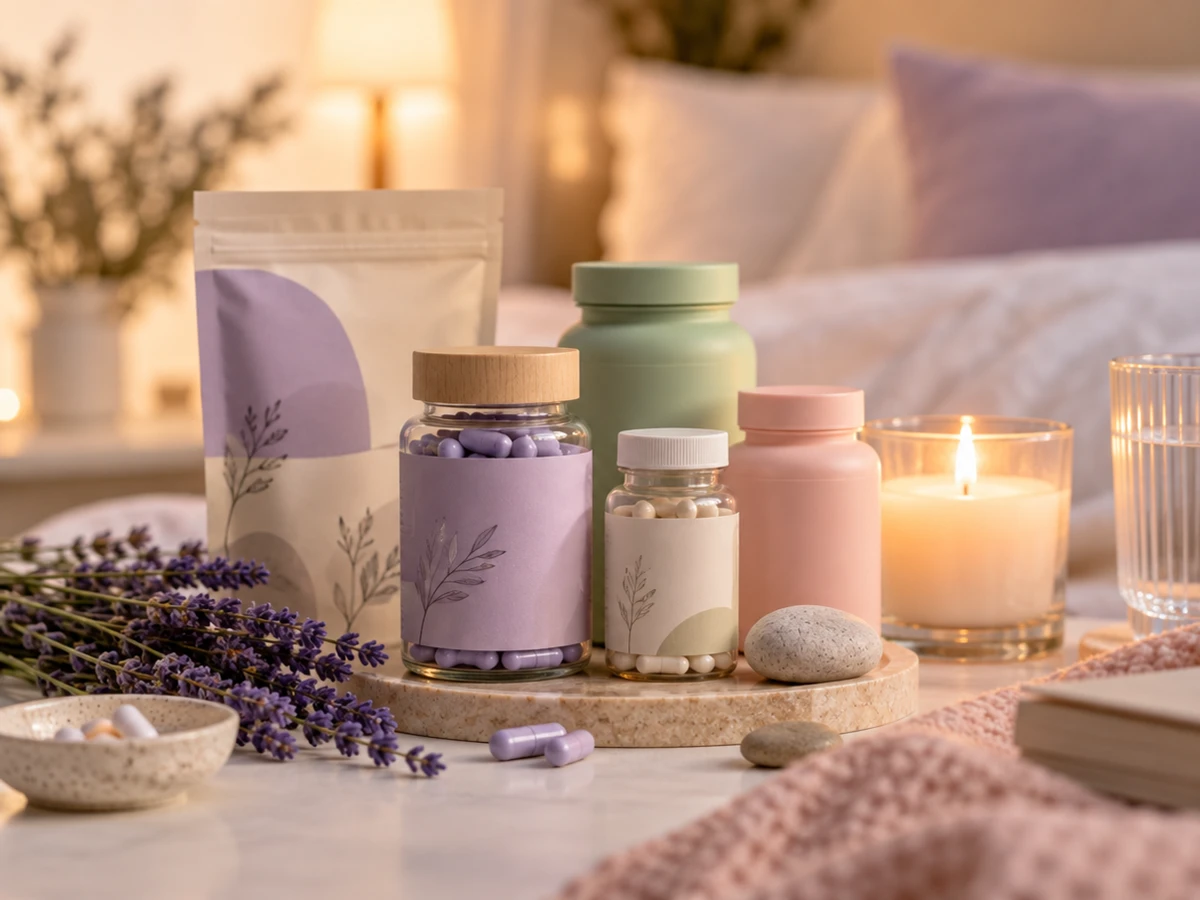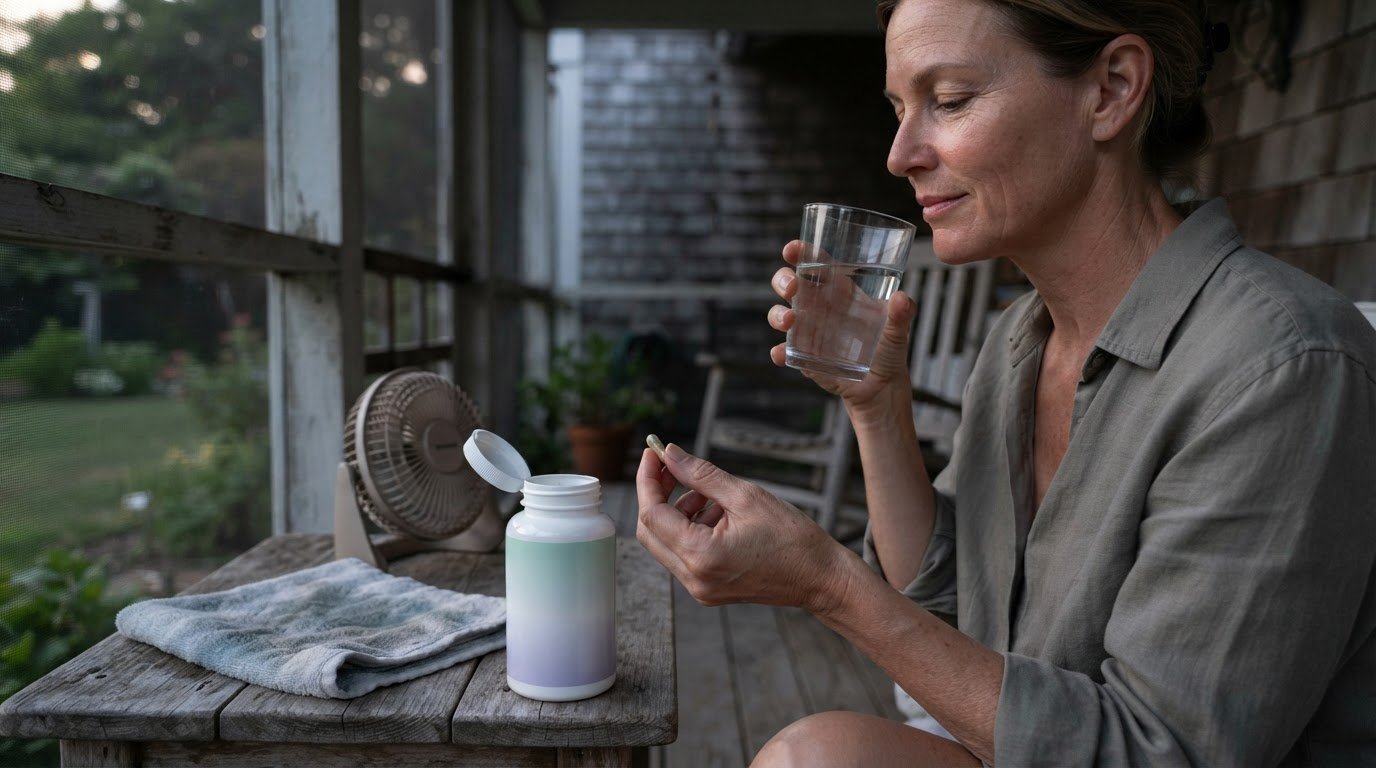
Choosing herbs for sleep starts with a practical question: what part of your night do you want to support? One woman describes her experience: “A calming bedtime ritual helps me unwind.” The answer depends on the herb, its preparation, your health circumstances, and your routine.
For women, sleep can change with stress, shifting schedules, and different life stages. This guide compares valerian, passionflower, lemon balm, and chamomile, then covers safety and how to assess product labels. Note what you want help with and which ingredients you already use. This gives you a practical starting point for weighing evidence, considering safety, and choosing a realistic next step for your well-being.
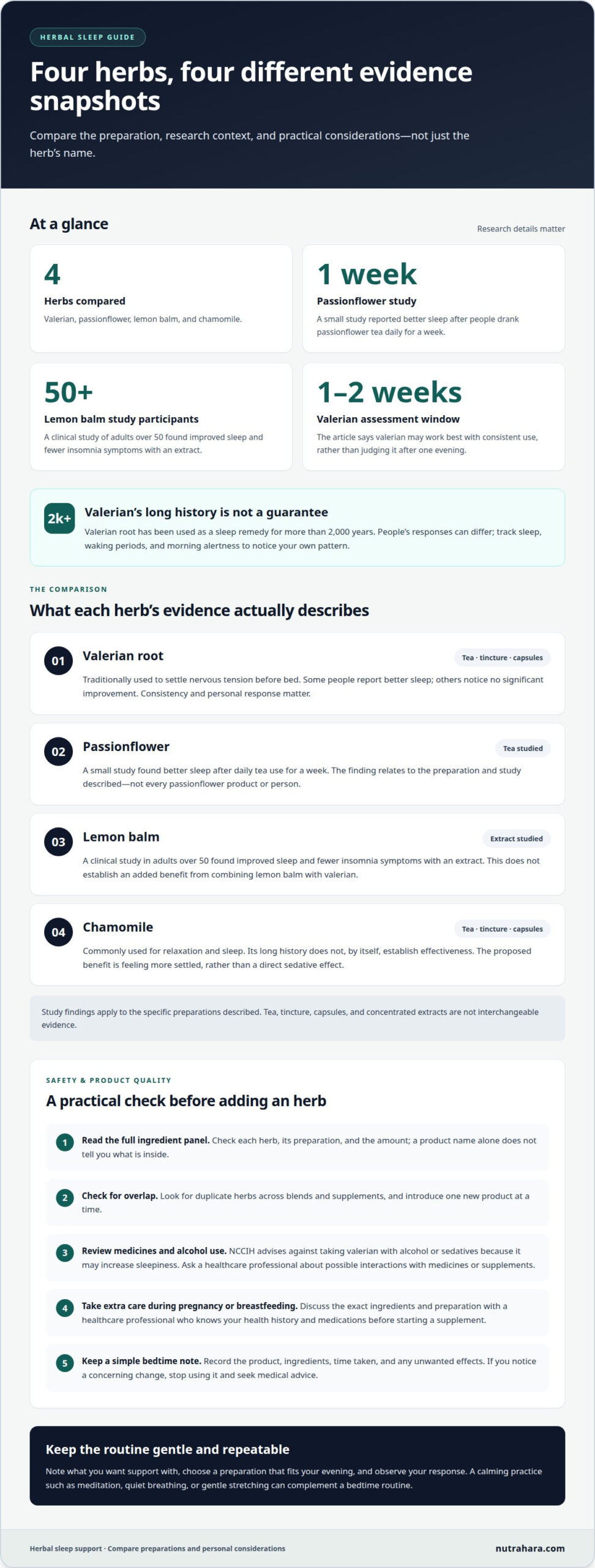
Valerian root comes as tea, tincture, or capsules, giving you different ways to include it in an evening routine. Passionflower has been studied as tea: in a small study, people who drank it daily slept better after a week, according to The study authors. Lemon balm has also been examined as an extract. A clinical study found improved sleep and fewer insomnia symptoms in adults over 50 years old. These findings can inform your comparison of herbs for sleep, but relate to the particular preparations studied.
The lemon balm finding concerns an extract, not a combination with valerian. It doesn’t show that combining the two provides an added sleep benefit. Chamomile is commonly consumed as tea, tincture, or capsules for relaxation and sleep. Its long history of use does not, by itself, establish effectiveness.
Chamomile may encourage relaxation and ease anxiety, which could help you fall asleep. The proposed benefit is feeling more settled, rather than a direct sedative effect. A cup of chamomile tea can be part of a predictable wind-down routine. Warm milk and tart cherry juice are also suggested as nighttime drinks, although scientific evidence that they improve sleep is limited.
Lavender essential oil may encourage relaxation before bed when used in a diffuser or applied to skin with a carrier oil. These uses shouldn’t be confused with evidence that lavender treats a medical sleep disorder. When choosing among herbs for sleep, consider which preparation suits your routine and notice how it affects your evening. Gentle yoga or meditation can also help you transition calmly to bedtime.
“Natural” describes an ingredient’s origin, not how it will affect each person. Valerian is a clear example: the National Center for Complementary and Integrative Health (NCCIH) advises against taking it with alcohol or sedatives because it may increase sleepiness. If you take prescription medicines or other supplements, review the specific herb and product ingredients with a healthcare professional before combining them.
Pregnancy and breastfeeding call for particular care. Don’t begin an herbal sleep supplement during either life stage without discussing its exact ingredients with a healthcare professional who knows your health history and medications. Tea, tincture, capsules, and concentrated extracts are different preparations, so name the form you’re considering.
Effects and tolerance can vary by herb, preparation, and person. Chamomile is generally considered safe and well-tolerated for most people in moderate amounts, but that doesn’t mean every capsule or blend suits everyone. Keep a simple bedtime note: record the product, ingredients, time taken, and any unwanted effects. If you notice a concerning change, stop using it and seek medical advice.
Blends need the same ingredient-by-ingredient attention as single-herb supplements. A name such as “Relaxing Sleep™” doesn’t tell you which herbs or amounts are inside. Read the full ingredient panel, check for duplicate herbs across products, and avoid adding several new supplements to your bedtime routine at once. This makes it easier to identify what you took if an unwanted effect occurs.
For a gentle natural sleep routine, use a consistent preparation and pair it with a calming practice, such as meditation or quiet breathing. A repeatable routine helps you notice how a product fits your evening without assuming a supplement alone will create restful sleep.
Valerian root has been used as a sleep remedy for more than 2,000 years. Its traditional role is to settle nervous tension before bedtime, especially when racing thoughts or stress make it difficult to unwind. Valerian is believed to have sedative effects that may support sleep onset and reduce nighttime awakenings. These proposed effects don’t mean every person will experience the same change.
Timing can matter. Valerian may work best when taken consistently for 1 to 2 weeks, rather than judged after one evening. Some people notice better sleep; others don’t notice significant improvement. Track your bedtime, waking periods, and morning alertness while using it. That practical record can help you decide whether valerian fits your routine, rather than relying on a single night’s impression.
Valerian root is also combined with hops in some herbal sleep formulas. The ingredient list can show whether a blend contains valerian alone or pairs it with hops flower. The combination itself doesn’t establish that the plants work better together. Review the listed ingredients and amounts, and introduce one new product at a time so you can observe your response.
If anxiety contributes to evening tension, a calming routine can complement careful product use. Try gentle stretching or a short meditation before bed, then keep your sleep and wake times steady. Valerian shouldn’t be treated as a substitute for addressing persistent anxiety or ongoing sleep disruption. When comparing products, focus on the specific preparation and your response, rather than assuming all valerian supplements affect sleep in the same way.
A product’s name alone can’t tell you what it contains. Start with the full ingredient panel and look for each herb’s name, preparation, and amount. Lemon balm tea and concentrated lemon balm extract, for example, are different preparations. Clear labeling helps you understand what you’re taking and compare products without relying on broad claims about calming effects or better sleep quality.
Next, check whether a blend contains ingredients you already use. A formula with several herbs may seem convenient, but it can make side effects harder to trace if you start multiple products together. Look for familiar ingredients, note any overlap with your other supplements, and introduce one new product at a time. If you take medication, ask a healthcare professional about potential interactions before adding an herbal product.
Melatonin products also deserve careful comparison. Melatonin is naturally released in the brain four hours before a person feels sleepy. Johns Hopkins sleep expert Charlene Gamaldo advises buying the same brand consistently because doses and ingredients can vary between manufacturers. Review the label each time you repurchase, and discuss melatonin use with a healthcare professional before starting supplementation.
Use a simple decision process: match the ingredient to your goal, read the full label, then consider whether the form fits your bedtime routine. Tea may suit a quiet evening, while capsules may fit a different routine. Don’t assume a product will promote restful sleep simply because it’s described as natural. Briefly record the product, your sleep experience, and any unwanted effects. If you notice sleep changes alongside hormone-related life stages, these notes can help guide a conversation with a healthcare professional.
Nutrahara offers women’s wellness supplements for those seeking support for overall well-being. Its formulas combine principles of ancient Ayurveda with modern nutritional research and use natural, clean ingredients. If you’re considering a supplement as part of a broader approach to sleep, look for clear ingredient information and consider how it fits your routine. A steady bedtime, gentle yoga, and meditation can also support a calming wind-down without relying on a supplement alone.
Consider women’s wellness supplements alongside the sleep habits you’re building. For persistent sleep difficulties, discuss possible causes and supplement safety with a healthcare professional. To learn more about Nutrahara’s supplements, visit the Nutrahara website.
Your sleep needs can shift with stress, exercise, and changes across your life. Treat the next step as a chance to notice what helps you unwind, rather than a test you need to pass. Choose a calming evening ritual you can sustain, such as gentle yoga, a few minutes of meditation, or a consistent time to put away screens. If you’re considering herbs for sleep, keep your routine steady enough to notice how you feel and make choices that suit your circumstances.
For questions about women’s wellness supplements and how they may fit into your broader routine, contact Nutrahara with your questions. Small, considered choices can help you build a more supportive relationship with rest, one evening at a time.
Valerian, passionflower, lemon balm, and chamomile are commonly used to support relaxation and sleep. Evidence varies: a small study found that people drinking passionflower tea daily slept better after a week, while a clinical study of a specialized lemon balm extract found improved sleep in adults over 50. These findings concern particular preparations, not every product containing these herbs.
Valerian may support sleep onset, but people respond differently, and the findings discussed here don’t establish a commonly studied dose. Products may use different forms, such as capsules, tea, or tinctures, so their amounts aren’t interchangeable. Follow the directions for the specific product, and review its use with a healthcare professional if you take medications or other sleep aids.
Chamomile tea may support relaxation before bed, which could help you settle into sleep. However, evidence that chamomile tea improves sleep is limited, so it shouldn’t be treated as a proven remedy for persistent insomnia. Try noting whether tea fits comfortably into your evening routine, and consider other influences, such as caffeine later in the day or an inconsistent sleep schedule.
Passionflower tea may support sleep, but a small study of daily tea use doesn’t establish it as a treatment for insomnia or anxiety. If anxious thoughts keep disrupting your nights, pair a calming bedtime routine with practices such as meditation or gentle yoga. Discuss ongoing sleep problems or anxiety with a healthcare professional, particularly if they affect daily life.
Possible effects depend on the herb, preparation, and what else you take. The National Center for Complementary and Integrative Health advises against combining valerian with alcohol or sedatives because it may increase sleepiness. Chamomile is generally considered well-tolerated in moderate amounts. Keep a record of new products and any changes, and seek professional guidance before combining supplements with medications.
Start with the product label: identify every ingredient, its amount, the preparation, and the directions. Compare those details instead of relying on claims such as “natural” or “restful sleep.” Avoid stacking products with overlapping herbs, and introduce one new supplement at a time so you can track your response. If you take medication or have a health concern, discuss the ingredients with a healthcare professional.
This article is not a substitute for medical advice. Please consult a healthcare professional before starting any supplement, especially if pregnant, nursing, taking medication, or managing health conditions.