Categories
Articles

Ayurvedic Adaptogen Herbs for Stress, Supplements and Food

What if supporting your response to stress is less about switching it off and more about helping your body find balance? Ayurvedic adaptogen herbs are botanicals traditionally used to support the body’s response to stress and its return toward a stable state. It makes sense to look for gentle, practical ways to care for your wellbeing, especially when energy, mood and changing life stages can shape how stress feels.

This guide explains what adaptogenic herbs are, how they may support the body’s response to stress, and what research can and cannot tell us about their traditional uses. You’ll learn about Ayurvedic examples such as ashwagandha, tulsi, and shatavari, and how these herbs are used in supplements, teas, and foods. We’ll also consider how to approach them alongside everyday habits such as movement, yoga, meditation, and nourishing meals, so you can make informed choices for your wellbeing.

Key Takeaways

  • Understand how adaptogens may interact with the body’s stress response, and why they’re not a substitute for standard care.
  • Recognize Ayurvedic examples such as ashwagandha and tulsi, and how their traditional uses differ.
  • Explore ways herbs appear in capsules, teas, powders, and everyday foods, while considering medication interactions before using supplements.
  • Learn how to distinguish traditional wellness practices from the limits of current research when choosing an approach that suits your needs.

How Do Adaptogens Aid In Stress Relief?

Adaptogens are natural products traditionally used to support the body’s response to stress. Their proposed effects involve systems that regulate physical and hormonal responses.

Adaptogens and the Stress Response

An adaptogen is generally described as nontoxic at normal doses, supportive during stress, and able to help the body return to a stable state. This definition focuses on balance, rather than simply feeling energized or relaxed. In Ayurveda, rasayana refers to restorative preparations, while modern explanations propose that adaptogens interact with the body’s stress-regulation systems.

Stress and the Sympathetic Nervous System

The sympathetic nervous system helps prepare the body to respond to stress, including through physical changes associated with alertness. This response can be useful during an immediate challenge, but ongoing stress can affect how the body feels and functions. Adaptogens are proposed to influence nerve responses, but they aren’t a substitute for care when symptoms persist.

Researchers often describe the hypothalamic-pituitary-adrenal, or HPA, axis as part of the stress response. The hypothalamus, pituitary gland, and adrenal glands coordinate hormonal and physiological changes. Adaptogens may affect this axis and cortisol levels, but proposed effects vary by herb and individual.

Adaptogens may also influence stamina and immune function, but that doesn’t mean every herb works the same way. For example, an herb traditionally used for vitality may not address every cause of fatigue or stress.

Stress is a growing concern: 47% of Americans reported increased stress levels since the pandemic started. Yoga and meditation can complement everyday wellbeing practices, while persistent symptoms call for standard care. Adaptogens and supplements should not replace that care, especially when symptoms continue.

What Are Adaptogenic Herbs?

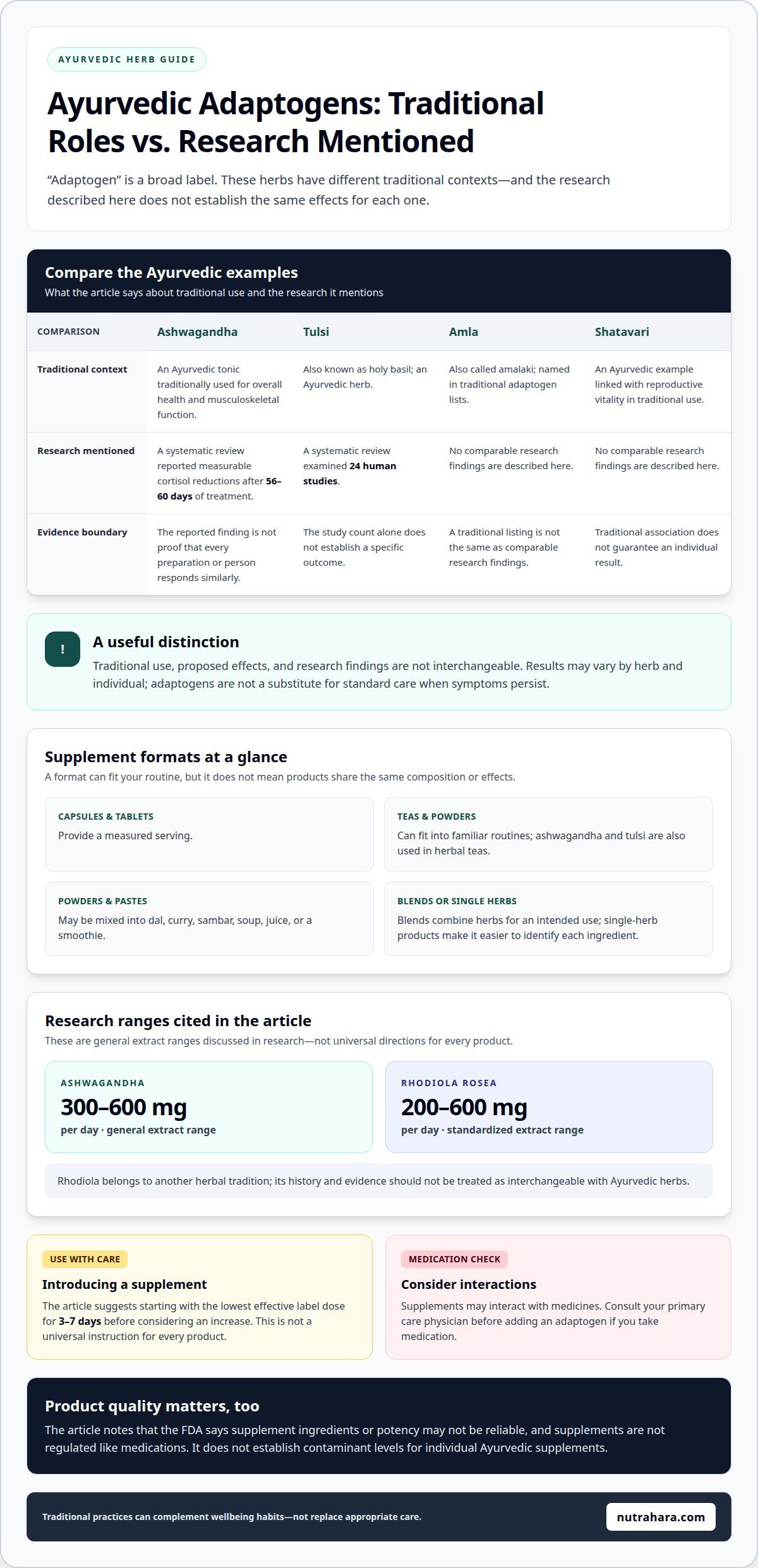
Adaptogenic herbs are plants traditionally used to support the body’s response to stress. Ayurvedic examples include ashwagandha, tulsi, brahmi, amla, and shatavari; ginseng and rhodiola belong to other herbal traditions, so their histories and evidence shouldn’t be treated as interchangeable. Evidence varies: research on tulsi includes a systematic review of 24 human studies, while amla and shatavari are named in traditional adaptogen lists without comparable findings here.

Ashwagandha in Ayurveda

Ashwagandha, also called Indian ginseng, is an Ayurvedic tonic traditionally used for overall health and musculoskeletal function. Ayurvedic discussions may connect it with Vata, energy, and sleep, but these traditional categories don’t guarantee the same result for every woman. Distinguishing a herb’s historical role from what modern research has tested helps set realistic expectations.

Ashwagandha Research on Stress and Anxiety

Research findings on ashwagandha relate more directly to stress than to a guaranteed effect on anxiety or sleep. A systematic review reported measurable cortisol reductions after 56 to 60 days of ashwagandha treatment, while much rasayana research remains preclinical. That offers a reason for scientific interest, not proof that every preparation or person will respond similarly. Licorice also appears in preclinical rasayana research.

Other Ayurvedic Herbs and Adaptogens

Tulsi, or holy basil, has more human-study coverage in the supplied evidence than amla or shatavari. A systematic review examined 24 human studies of tulsi, though that count alone doesn’t establish a specific outcome. Amla is also called amalaki; shatavari is another Ayurvedic example. Brahmi appears in traditional adaptogen lists, while ginseng and rhodiola offer comparisons from other herbal traditions.

Adaptogen supplements and food uses

Adaptogens come in different forms, from concentrated extracts to ingredients mixed into meals. The format can affect how easily you use a product, but it doesn’t mean every product has the same composition or effects.

Capsules and tablets provide a measured serving, while teas and powders can fit into familiar routines. Powders or pastes may be stirred into dal, curry, sambar, soup, juice, or a smoothie. Ashwagandha and tulsi are also used in herbal teas. For a practical starting point, choose one format that fits your routine rather than combining several at once.

General extract ranges in the research include 300-600 mg per day for ashwagandha and 200-600 mg per day for standardized Rhodiola rosea. These are not universal directions for every product. Start with the lowest effective label dose for 3-7 days before considering an increase. If you are considering cycling an adaptogen, follow product-specific guidance and seek professional advice when appropriate.

Adaptogenic blends combine herbs for an intended use, while single-herb products make it easier to identify each ingredient. If you take medication, consult your primary care physician before adding an adaptogen, since supplements may interact with medicines. Yoga, meditation, and balanced meals can support wellbeing alongside appropriate care, not replace it.

Heavy-metal contamination is a product-quality question, separate from whether an herb may affect stress. The information here doesn’t establish contaminant levels for individual Ayurvedic supplements. The U.S. Food and Drug Administration notes that supplement ingredients or potency may not be reliable, and supplements aren’t regulated like medications. For an ashwagandha option, see these ashwagandha supplements with black pepper.

Ayurvedic adaptogenic herbs

Ayurvedic adaptogens are herbs used in traditional formulations, and rasayana describes a restorative category within Ayurveda. Their roles aren’t interchangeable: an herb associated with vitality doesn’t automatically address fatigue, immune function, or reproductive wellness. If you’re exploring these traditions, start by identifying the herb and its traditional context rather than relying on the broad “adaptogen” label.

Shatavari is linked with reproductive vitality in Ayurvedic tradition. Its name is sometimes translated as “the one with 100 husbands,” a cultural expression rather than evidence of a measured effect on fertility or hormones. Mucuna, also called Kapikacchu, is a natural source of L-dopa, a precursor to dopamine. Amalaki is another name for amla, a distinct herb with its own traditional uses.

Licorice contains glycosides structurally similar to endogenous stress hormones and has been used traditionally to support endocrine function. Eleutherococcus senticoccus is used to support stress and energy, although evidence for athletic-performance benefits is weak. Panax ginseng belongs to another herbal tradition. These examples show why a plant’s traditional role and the evidence for a specific outcome should be considered separately.

Reported timelines for adaptogens vary: some people notice subtle effects within a week or two, while others may notice effects within two to eight weeks of consistent daily use. Traditional guidance recommends at least 90 days for best results, but that is not a guaranteed outcome. If you explore an herb, choose one personal wellness goal and keep track of changes alongside practices such as yoga or meditation. No verified woman’s testimonial was provided for this section, so one cannot be included without risking a fabricated account.

For women’s wellness support, explore women’s health supplements as one part of a broader routine.
Ayurvedic Adaptogen Herbs for Stress, Supplements and Food

Nutrahara

Nutrahara offers women’s health supplements that combine principles of Ayurveda with modern nutritional research. If you’re considering supplements as part of your wellness routine, Nutrahara’s range is a natural next step after learning how adaptogens are traditionally used and where evidence varies. The supplements are made with natural ingredients and designed to support women’s overall wellness, energy, and health.

As you consider your options, keep your goal clear, such as supporting a balanced routine alongside nourishing food, movement, yoga, or meditation. Supplements don’t replace standard care, especially if symptoms persist or you have questions about medication interactions. A thoughtful approach can help you make informed choices and keep your wellbeing at the center.

Explore Nutrahara’s women’s health supplements to find an option for your wellness routine.

Make Your Wellness Routine Your Own

Choose a small, sustainable next step. Set one wellbeing goal, such as steadier energy or a calmer evening routine, and notice how your daily habits support it. A brief journal can help you spot patterns in movement, meals, rest, and mood without expecting every day to feel the same.

When considering ayurvedic adaptogen herbs, let curiosity guide you rather than pressure to add more. A thoughtful wellness routine can also include yoga, meditation, and fitness practices that feel supportive through changing life stages. Nutrahara’s women’s health supplements are one option to consider as part of that broader approach.

If you’d like to explore how Nutrahara’s women’s health supplements may fit your wellness goals, contact Nutrahara to learn more. Keep building a routine that respects your needs and helps you feel confident in your choices.

Frequently Asked Questions

How long do adaptogens take to work?

Some people report subtle effects within a week or two, while others describe effects after two to eight weeks of consistent daily use. Individual responses can vary with the herb, preparation, and reason for taking it. To assess a change, note one goal, such as sleep quality or daytime energy, alongside relevant routine changes. This can help you distinguish a pattern from one unusually good or difficult day.

Are Adaptogens Safe?

Being described as an adaptogen doesn’t make a supplement suitable for everyone. Supplements can interact with medication, so people taking medication should consult their primary care physician before use. The U.S. Food and Drug Administration notes that supplements aren’t regulated like medications, and stated ingredients or potency may not be reliable. If you’re pregnant, lactating, or managing a health condition, make supplement decisions with appropriate care in mind.

How do adaptogens help?

Adaptogens are traditionally used to support the body’s response to stress, but proposed effects differ among herbs. They don’t remove the source of stress or replace habits that support wellbeing. Consider how an herb fits into your routine, including sleep, nourishing meals, movement, yoga, or meditation. A clear goal, such as supporting a steadier evening routine, can help you decide whether a supplement is relevant to your needs.

So, What Exactly Are Adaptogens?

Adaptogens are natural products traditionally used to help the body cope with stress and return toward balance. Russian scientist Nikolay Lazarev introduced the concept in the 1950s. The term covers plants from different traditions, including Ayurvedic herbs and ginseng or rhodiola from other herbal systems. It’s a broad category, not a guarantee that different plants share the same traditional role, formulation, or evidence for a particular outcome.

What are adaptogens and should you be taking them?

Adaptogen describes herbs or other natural products traditionally used to support the body’s stress response, but they aren’t essential for everyone. Consider why you might take one and whether it fits your overall approach to wellbeing. Medication use matters because supplements may interact with medicines. Ongoing symptoms call for standard care rather than a supplement-only approach. You can also build stress-supportive habits, such as regular movement and meditation, without taking an adaptogen.

What is the difference between adaptogens and rasayanas?

Adaptogen describes a proposed role in supporting the body’s response to stress, while rasayana is a traditional Ayurvedic category of restorative preparations. Some rasayana products are discussed as adaptogens, so the terms can overlap without meaning the same thing. When reading about an herb, this distinction is useful: rasayana places it within an Ayurvedic framework, while adaptogen describes a stress-related concept. Neither label alone establishes a specific effect for an individual.

Article by

Nutrahara Team

We are a dedicated collective of nutrition scientists and naturopaths at Nutrahara, committed to advancing women's health through the fusion of ancient Ayurveda science and cutting-edge nutrition research. Our mission is to empower you with clean, simple, and scientifically validated wellness solutions so you can live your healthiest life. Connect with us to stay updated on the latest developments in holistic women's health and nature-based research.

Disclaimer

This article is not a substitute for medical advice. Please consult a healthcare professional before starting any supplement, especially if pregnant, nursing, taking medication, or managing health conditions.

Categories
Articles

Women’s Mental Health: Natural Ways to Support Wellness

Mental wellbeing is shaped by more than what happens in your mind; it can shift with your body, relationships, and stage of life. Women’s mental health matters because emotional wellbeing is part of overall health, from the years of menstruation and pregnancy to menopause and beyond.

If stress, low mood, or anxiety feel difficult to manage, you’re not alone. This guide explains common signs of mental health concerns and how life-stage changes, including menopause, may affect how you feel. It also covers practical ways to care for yourself, from movement, yoga, and meditation to nourishing routines and seeking professional help when symptoms persist or disrupt daily life.

Find grounded guidance to help you notice changes without judging yourself, build habits that support wellbeing, and recognize when additional care may help. Small, steady steps can bring you closer to your needs and help you feel more confident in your wellness journey.

Key Takeaways

  • Notice changes in mood, sleep, energy, or concentration, and consider how they relate to your cycle, life stage, and daily stress.
  • Learn how PMS and PMDD can differ, and recognize when recurring symptoms are affecting everyday life.
  • Explore supportive habits such as movement, yoga, meditation, and nourishing routines alongside appropriate professional care.
  • Understand how women’s health supplements may fit into a broader wellness routine through changing life stages.

Why is women’s mental health important?

Pregnancy, postpartum recovery, and perimenopause can bring changes in mood, sleep, and daily demands. Recognizing persistent distress helps women seek support before symptoms disrupt wellbeing or caregiving.

Pregnancy and Postpartum Anxiety and Depression

Perinatal depression and anxiety are mental health concerns that can arise during pregnancy or after birth. About 20% of pregnant women experience postpartum anxiety or postpartum depression. Symptoms can include ongoing sadness, anger or irritability, guilt, persistent worry, appetite or sleep changes beyond newborn care, difficulty concentrating, trouble bonding with the baby, and feeling constantly overwhelmed. Notice patterns that persist or affect daily life, and share them with a health professional; therapy is one possible form of care.

Postpartum Depression and Psychosis

Postpartum depression involves persistent emotional symptoms after birth, while postpartum psychosis can include seeing or hearing things others don’t, extreme behavior, or thoughts of harm. These symptoms matter because they can affect the parent’s safety and the baby’s safety. Thoughts of suicide or harming the baby, or a loss of contact with reality, call for urgent help. In a life-threatening situation in the United States, call 911, according to the National 911 Program.

Perimenopausal Depression Research

Research into perimenopausal depression examines how hormonal changes, disrupted sleep, and life stress may relate to mood. Mood changes during this transition deserve attention, especially if low feelings or anxiety persist or interfere with work, relationships, or self-care. Tracking mood, sleep, and cycle changes can make patterns easier to discuss when you seek support.

In the United States, therapy and psychiatric care costs depend on insurance coverage, plan benefits, provider networks, and the type of care. Without insurance, fees vary by provider and service. Medication safety during pregnancy or breastfeeding depends on the specific medicine and individual circumstances. Before changing treatment, a clinician weighs potential benefits and risks, including pregnancy stage and breastfeeding.

For emotional distress or suicidal crisis in the United States, call or text 988; the Substance Abuse and Mental Health Services Administration says the 988 Suicide & Crisis Lifeline provides support 24 hours a day, 7 days a week.

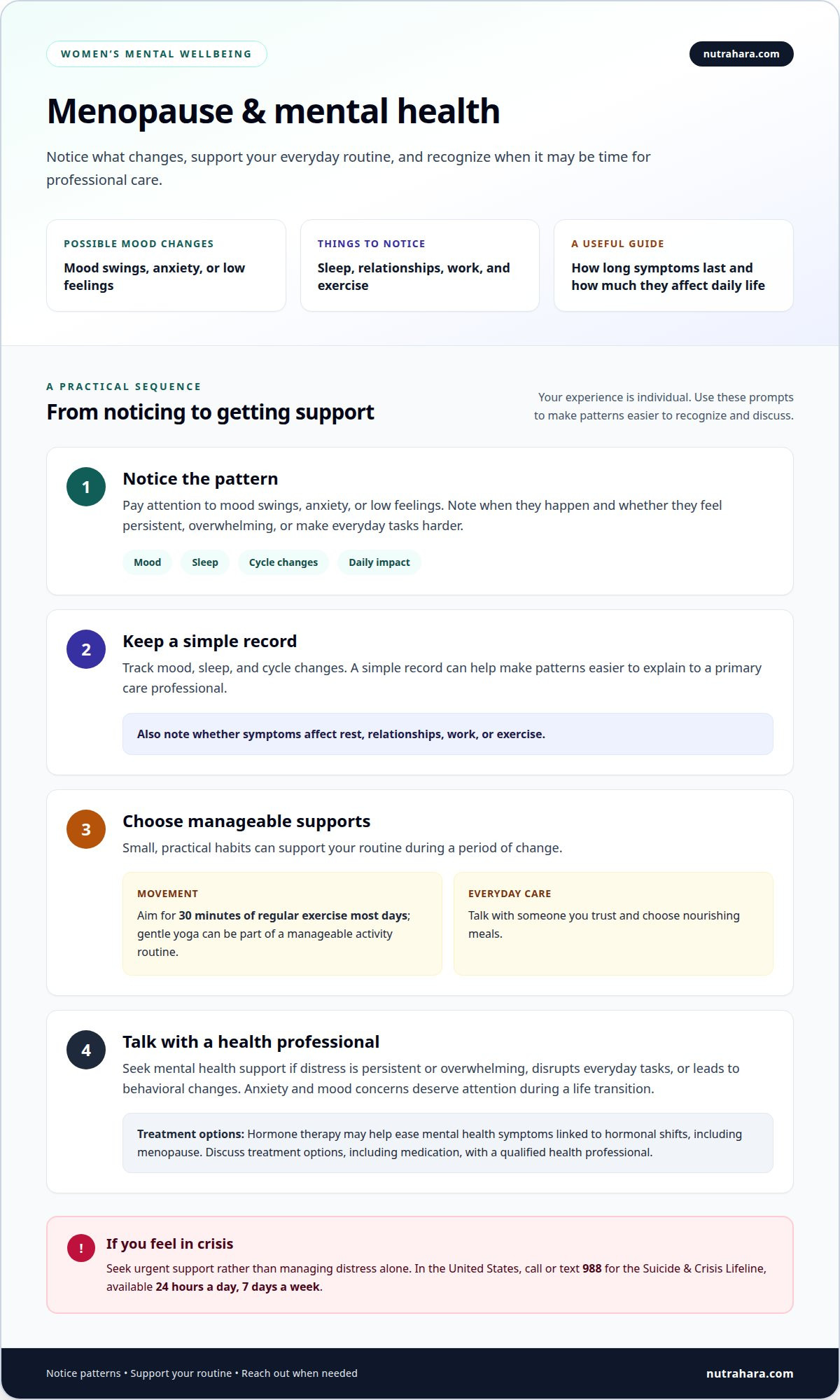
Menopause and mental health

Menopause can bring emotional changes alongside physical symptoms, affecting everyday routines. Understanding what may shift and when to seek support can help you respond with care.

Menopause-Related Mood Changes

Mood swings, anxiety, and low feelings can accompany menopause. Pay attention when they persist, feel overwhelming, or make everyday tasks harder. Note when they occur and whether they affect sleep, relationships, work, or exercise. A simple record of mood and symptoms can help you explain the pattern to a primary care professional.

Emotional and Physical Stressors

Menopause-related stress can involve physical discomfort and emotional strain during a period of change. When symptoms disrupt rest or make usual activities harder, stress may build and affect your mood. Try talking with someone you trust, maintaining a manageable activity routine, and choosing nourishing meals. Regular exercise, including gentle yoga, can also support your routine.

Menopausal Symptoms

Menopausal symptoms may include mood swings, anxiety, and low feelings, alongside physical changes. Their effects vary, so note which symptoms interfere with daily life. If distress becomes overwhelming or persistent, disrupts everyday tasks, or leads to behavioral changes, seek mental health support. Anxiety and mood concerns deserve attention even when they arise during a major life transition.

For a practical foundation, aim for 30 minutes of regular exercise most days, and make time to talk about how you feel. Eating well and staying active can also support wellbeing. Hormone therapy may help ease mental health symptoms linked to hormonal shifts, including menopause; discuss treatment options, including medication, with a qualified health professional. If you feel in crisis, seek urgent support rather than managing distress alone.

What are symptoms of mental disorders in women?

Symptoms can affect mood, sleep, concentration, relationships, and physical comfort. Their timing, persistence, and impact on daily life can help guide a conversation about mental health care.

PMS and PMDD

Premenstrual syndrome (PMS) describes recurring emotional or physical symptoms before a period. Premenstrual dysphoric disorder (PMDD) involves severe mood symptoms linked to the menstrual cycle. Tracking feelings and symptoms across cycles can help clarify whether they follow a pattern. If recurring distress affects work, relationships, or self-care, discuss it with a health professional instead of dismissing it as ordinary stress.

Physical Conditions Mistaken for Psychiatric Disorders

Some physical conditions can cause symptoms that resemble psychiatric concerns, so an assessment should consider both mental and physical health. Bringing psychiatry, primary care, and medical specialties together can help clinicians identify whether psychiatric symptoms may be related to an underlying medical condition. Share when symptoms began, changes in sleep or energy, and any physical concerns to support a more complete evaluation.

Depression and Anxiety Symptoms

Depression may involve hopelessness or loneliness, low energy, reduced interest, sleep problems, or appetite changes. Anxiety more often involves persistent worry, dread, irritability, difficulty concentrating, avoidance, or physical symptoms such as headaches or an upset stomach. The experiences can overlap, and women may have both. Thoughts of suicide or not wanting to be alive need urgent attention.

Trauma, violence, and discrimination can contribute to distress and make seeking support harder. Sexual violence can cause PTSD, and women are more likely than men to experience physical and sexual abuse. Poverty, caregiving burdens, and intimate partner violence are also mental health risk factors.

Before pregnancy, discuss psychiatric conditions and current medication with a qualified clinician. Planning may include reviewing symptoms, treatment needs, and how care could change during pregnancy or postpartum. Don’t stop prescribed medication without professional guidance. Anxiety, depression, OCD, bipolar disorder, ADHD, and trauma-related disorders can affect women. ADHD may be overlooked when coping strategies mask inattentive symptoms.

Women's Mental Health: Natural Ways to Support Wellness

Women’s mental health across life stages

Hormonal changes during puberty, pregnancy, after childbirth, and menopause can affect emotional wellbeing. Tracking symptoms alongside life events can help you describe what has changed and when.

During your reproductive years, note whether mood changes follow your menstrual cycle, pregnancy, or major stress. A brief record of sleep, energy, feelings, and daily functioning can give a care provider useful context. It may also help distinguish a recurring pattern from a new concern that needs attention.

Pregnancy and the postpartum period bring changes in routine as well as reproductive hormones. The baby blues can involve emotional changes after birth, but typically resolve within a few weeks and don’t interfere with caring for or bonding with the baby. Discuss symptoms that persist or make everyday care difficult with a health care professional.

Maternal mental health care can be tailored to symptoms and personal needs. Perinatal depression treatment may include talking therapy, medication, or specialist services. If you’re pregnant, lactating, or planning a pregnancy, describe your symptoms and current treatment to your care provider. Don’t change medication without professional guidance.

Menopause can coincide with mood swings, anxiety, or low feelings. Record emotional changes alongside physical symptoms and sleep disruptions, then discuss persistent distress with a health professional. This can make conversations about care options more focused.

At every life stage, steady routines can create moments of balance. Try gentle yoga, a walk, or meditation, and notice how your mood responds. Regular meals, rest, and connection with trusted people can support wellbeing. Persistent symptoms may call for professional care.

At Nutrahara, we believe that understanding your body through every transition is a vital step toward reclaiming your balance and long-term wellness.

Nutrahara: Women’s Health Supplements

Nutrahara offers Women’s Health Supplements as one option within a thoughtful wellness routine. Its supplements combine principles of ancient Ayurveda science with modern nutritional research, using natural, clean ingredients. They may suit women seeking to complement everyday habits that support overall wellness, energy, and health through changing life stages.

Supplements aren’t a treatment for depression, anxiety, or other mental health conditions, and they don’t replace professional care. If emotional symptoms persist or disrupt daily life, prioritize appropriate mental health support; consider supplements as a separate part of your broader routine. For questions about adding women’s health supplements to your wellness journey, contact Nutrahara.

Make your next step one that feels sustainable

Your wellbeing deserves attention as your needs change. Choose a supportive practice you can return to, whether it’s a calm morning walk, a few mindful breaths, or a conversation with someone you trust. Notice what helps you feel steadier and let that guide your next step. Seeking professional care for persistent distress is also an act of self-respect.

Supporting women’s mental health isn’t about doing everything perfectly. It’s about listening to yourself, allowing your priorities to evolve, and building a routine that reflects your life today. If collagen supplements for women feel like a useful part of your wider wellness approach, explore that option thoughtfully. For guidance on choosing women’s collagen supplements, consider your goals, preferences, and life stage.

Explore Nutrahara’s women’s wellness support as you shape a routine that feels right for you. Every considered step is a way to invest in your wellbeing, and you can keep moving forward with confidence.

Frequently Asked Questions

How Does Mental Health Differ Between Genders?

Women are more likely than men to experience depression, anxiety, and post-traumatic stress disorder, though each person’s experience is different. Biology and social conditions can shape symptoms and access to support. Reproductive transitions, caregiving, trauma, and financial strain may all matter in an individual assessment. Describe your own history and concerns rather than assuming a diagnosis based on gender alone.

How do you know when to seek help for mental health?

Consider seeking support when emotional distress persists, makes everyday responsibilities difficult, or changes how you relate to others. You can start by writing down what feels different, when it occurs, and what activities it affects. Bring those examples to a health professional to make the conversation more specific. In the United States, call or text 988 for emotional distress or suicidal crisis.

What are the signs of depression in women?

Depression may involve persistent sadness or hopelessness, loneliness, low energy, loss of interest, sleep changes, or appetite changes. Some women also find it harder to concentrate or manage familiar routines. Notice whether these changes affect work, relationships, or self-care, and explain how long they have been present when seeking support. Thoughts of suicide or not wanting to be alive require urgent attention.

What does anxiety look like in women?

Anxiety can involve ongoing worry, dread, irritability, difficulty concentrating, avoidance, sleep problems, or physical discomfort such as headaches or an upset stomach. It may overlap with depression, so describing both emotional and physical experiences can help clarify what’s happening. Note which situations intensify worry, such as work demands or family responsibilities, and whether it interferes with daily routines.

What does mental health treatment look like and how do you get started?

Treatment may involve therapy, medication, or both, depending on symptoms and personal circumstances. To begin, tell a health professional what has changed, how it affects daily life, and what support you’ve already tried. Ask what treatment involves, how you’ll discuss progress, and what to do if symptoms change. These questions can make care collaborative and focused on your needs.

What mental health conditions are most common among women in the United States?

Common mental health conditions affecting women include anxiety disorders, depression, obsessive-compulsive disorder, bipolar disorder, ADHD, and trauma- and stressor-related disorders. This list doesn’t tell you which condition any one person has. Symptoms can overlap, and life transitions, trauma, or family history may inform an assessment. Share examples of how symptoms affect your routines, relationships, and wellbeing to support a clearer conversation about care.

Article by

Nutrahara Team

We are a dedicated collective of nutrition scientists and naturopaths at Nutrahara, committed to advancing women's health through the fusion of ancient Ayurveda science and cutting-edge nutrition research. Our mission is to empower you with clean, simple, and scientifically validated wellness solutions so you can live your healthiest life. Connect with us to stay updated on the latest developments in holistic women's health and nature-based research.

Disclaimer

This article is not a substitute for medical advice. Please consult a healthcare professional before starting any supplement, especially if pregnant, nursing, taking medication, or managing health conditions.

Categories
Articles

Ayurveda for Heart Health: A Woman’s Guide

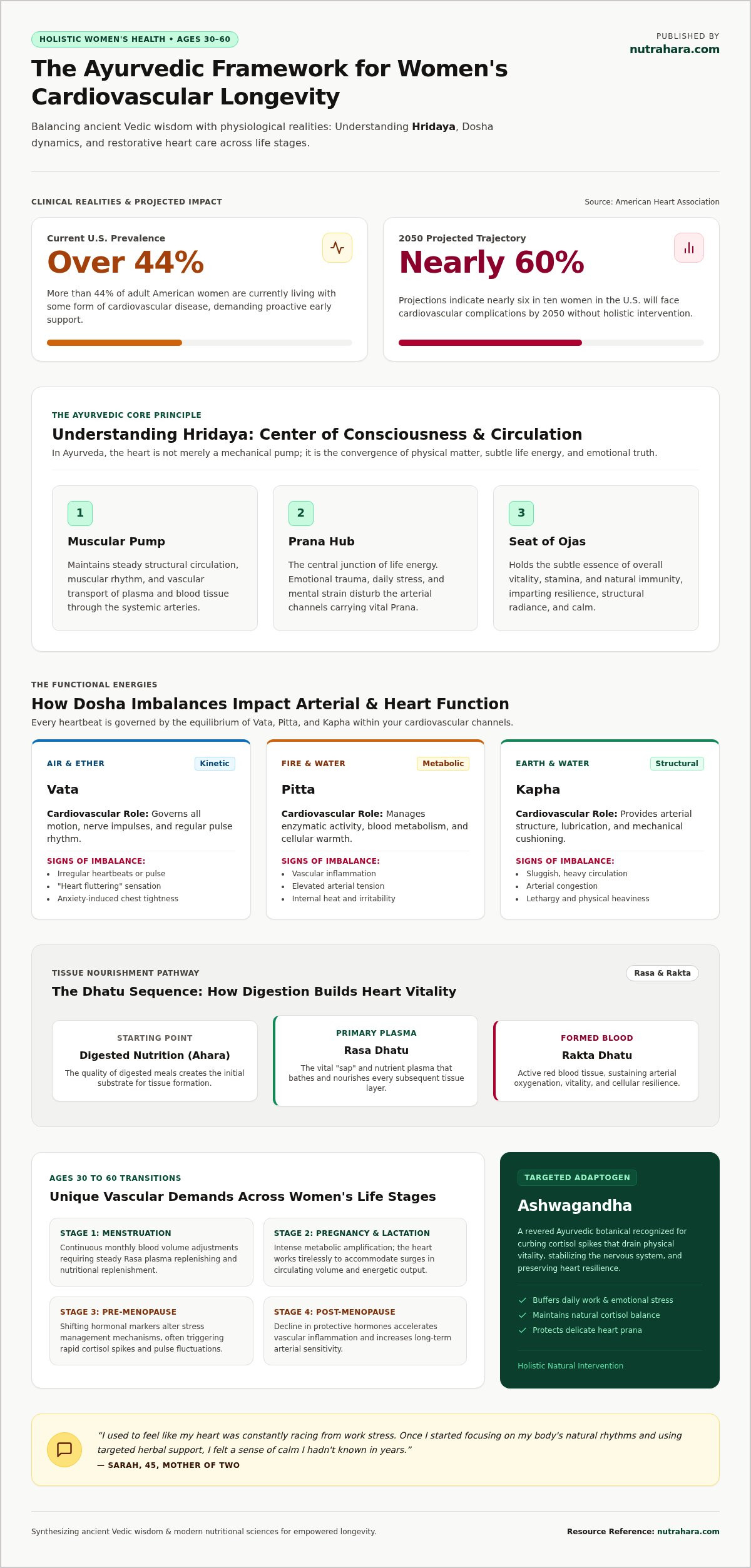
Over 44% of women in the United States are currently living with some form of cardiovascular disease, a reality that highlights the urgent need for proactive care. If you feel anxious about age-related changes or find yourself exhausted by complex medical jargon, you’re not alone. Daily stress and fatigue can easily drain your physical vitality, leaving you searching for gentle yet effective solutions. Embracing a time-tested, ayurvedic approach to cardiovascular health allows you to move away from clinical confusion and toward intuitive, natural healing.

You deserve a wellness journey that honors both your emotional heart and your physical body. Discover how combining ancient Ayurvedic wisdom with modern nutritional science can empower your cardiovascular health and longevity. We will share actionable, natural steps for heart protection, restorative yoga insights, and real-life stories from women who have transformed their well-being. By blending time-tested botanicals with mindful living, you can cultivate deep physical resilience and reconnect with your body’s natural rhythms.

Key Takeaways

  • Learn why the Ayurvedic view of the heart, or Hridaya, encompasses your physical vitality, emotional resilience, and consciousness as a holistic system.
  • Identify how imbalances in the three Doshas can manifest as cardiovascular tension and how to restore harmony through nature-aligned rhythms.
  • Discover how an ayurvedic approach to cardiovascular health helps you navigate modern high-stress lifestyles by aligning your daily habits with your body’s natural needs.
  • Master practical daily rituals, including heart-centered yoga and botanical support, to enhance your physical resilience and mental clarity.
  • Understand how fusing ancient wisdom with modern nutritional science creates a sustainable path for long-term health progression and empowered aging.

Understanding Hridaya: The Foundations of the Ayurvedic Approach to Cardiovascular Health

The heart is far more than a simple mechanical pump in ancient wisdom. In the Ayurveda tradition, the heart is known as Hridaya. This term describes a profound center where your physical circulation, emotional experiences, and life energy, or Prana, converge. Taking an ayurvedic approach to cardiovascular health means you aren’t just looking at blood pressure numbers or cholesterol levels. You’re looking at the seat of your consciousness. By 2050, nearly six in ten women in the U.S. are projected to have some form of cardiovascular disease, according to the American Heart Association. This makes it vital for you to embrace proactive, holistic care right now.

What is Hridaya? The Physical and Emotional Heart

Hridaya serves a dual purpose as both a muscular organ and a spiritual hub. It holds Ojas, the subtle essence of your vitality and immunity, which keeps your physical body resilient and glowing. According to ancient texts, emotional trauma and chronic stress can directly impair your physical circulation by disturbing the flow of Prana within the heart’s channels. When you nurture your emotional heart through meditation and breathwork, you’re simultaneously supporting the structural integrity of your physical arteries. This connection explains why your heart often feels “heavy” during grief or “light” during joy. Protecting your Ojas is the first step toward enduring physical vitality.

Why Cardiovascular Health Requires a Gender-Specific Focus

Women’s bodies experience unique physiological shifts that demand a specialized ayurvedic approach to cardiovascular health. From the rhythmic cycles of menstruation to the intense demands of pregnancy and lactation, your heart works tirelessly to adapt to changing blood volumes and metabolic needs. As you move toward the pre-menopausal and post-menopausal years, the decline in certain hormones can alter how your body manages stress and vascular inflammation.

“I used to feel like my heart was constantly racing from work stress,” shares Sarah, a 45-year-old mother of two. “Once I started focusing on my body’s natural rhythms and using targeted herbal support, I felt a sense of calm I hadn’t known in years.”

Integrating adaptogens like Ashwagandha can help manage the cortisol spikes that often drain a woman’s physical vitality. You don’t have to be overwhelmed by complex medical jargon to take charge of your longevity. By understanding these ancient foundations, you build the confidence to protect your heart through every stage of life, ensuring your health journey is one of strength and grace.

The Interplay of Doshas and Dhatus in Women’s Heart Longevity

While Hridaya represents the heart’s spiritual and physical center, the three Doshas are the functional energies that drive its every beat. Understanding the ayurvedic approach to cardiovascular health requires looking at how Vata, Pitta, and Kapha interact within your unique physiology. These energies aren’t static. They shift with your environment, diet, and life stages. When these forces are in harmony, they support the Dhatus, or tissues, that form the foundation of your vascular strength. You don’t need to be a scholar to recognize these patterns; you simply need to listen to your body’s subtle signals.

Balancing Vata, Pitta, and Kapha for Optimal Circulation

Vata governs all movement. In the cardiovascular system, it manages the rhythm of your heartbeat and the flow of blood through your veins. When Vata is out of balance, you might experience an irregular pulse or feelings of “heart fluttering” linked to anxiety. Pitta, the energy of transformation and heat, manages the metabolic processes within the blood. Excess Pitta often manifests as inflammation or high vascular pressure. Kapha provides the structural integrity and lubrication for your arteries. An imbalance here can lead to a sense of heaviness or sluggish circulation. Restoring balance is a gentle process of intentional lifestyle shifts that calm these energies.

Rasa Dhatu and its Critical Impact on Women’s Wellness

Beyond the Doshas, Ayurveda emphasizes the health of the Dhatus. Rasa Dhatu, or the primary nutrient plasma, is the first tissue formed from the food you digest. It’s the “sap” of the body that nourishes every other tissue, including the Rakta Dhatu (blood). For women aged 30 to 60, maintaining high-quality Rasa Dhatu is essential for navigating hormonal transitions and maintaining physical vitality. If your plasma is thin or toxic, your heart must work harder to distribute nutrients.

Optimizing this tissue requires clean nutrition, proper hydration, and emotional peace. Modern research often complements these views, providing a scientific perspective on Ayurvedic medicine that validates the importance of systemic balance. To support your body’s natural nutrient distribution, consider integrating targeted support like Femme Power as part of your daily routine. By focusing on the purity of your internal fluids, you empower your cardiovascular tree to thrive. It’s a long-term progression that rewards you with enhanced resilience and a deeper connection to your natural rhythms.

Modern Cardiovascular Stressors vs. Ancient Ayurvedic Wisdom

Modern life demands a lot from women. You likely juggle a career, family responsibilities, and personal growth, often at the expense of your internal rhythm. This high-octane lifestyle creates a friction that ancient wisdom never intended for the human body to endure. By adopting a modern ayurvedic approach to cardiovascular health, you shift from reacting to stress to proactively cultivating resilience. It isn’t about adding more to your to-do list. It’s about reframing heart care as an essential, empowering journey toward long-term vitality rather than a chore.

Chronic Stress and the Depletion of Ojas

Mental fatigue and constant multitasking actively deplete Ojas, the heart’s natural shield of vitality. When Ojas is low, your vascular tone suffers, and your body finds it harder to regulate blood pressure naturally. You don’t need hours of silence to restore this essence. Try these micro-moments during your day:

  • Practice a one-minute “box breath” before opening your morning inbox.
  • Step away from all digital screens for five minutes during your lunch break.
  • Use a calming support like Anxioguard to help stabilize your nervous system response.

These small, intentional acts directly signal your heart to relax. They protect your physical and emotional reserves, ensuring you maintain the energy needed for your personal health progression.

How Menopause and Hormonal Shifts Affect Heart Health

For women entering their 40s and 50s, the natural decline in estrogen introduces new cardiovascular considerations. Estrogen plays a protective role in vascular health, and its reduction can lead to increased arterial stiffness. In Ayurveda, this transition marks the shift into the Vata stage of life, which is often characterized by dryness and irregularity. Understanding Ayurveda principles and treatments helps you stabilize this transition with grace.

Instead of feeling overwhelmed by these shifts, see them as a call to ground your energy. Focus on warming, cooked foods and consistent daily routines to soothe the Vata energy. Integrating targeted botanicals like BlossomBliss can provide the nurturing support your heart needs during hormonal transitions. Your cardiovascular wellness isn’t a static goal. It’s a personal journey that evolves, requiring pure and trusted inputs to sustain your natural rhythm.

Actionable Ayurvedic Rituals, Herbs, and Yoga for Heart Vitality

Integrating an ayurvedic approach to cardiovascular health isn’t about achieving perfection overnight. It’s about making small, intentional choices that build your physical and emotional resilience. When you combine targeted botanical support with mindful movement, you create a synergy that protects your heart’s structural integrity and your mental peace. This holistic toolkit is designed to fit into your busy schedule, ensuring your wellness journey remains sustainable and empowering.

“I started practicing ten minutes of heart-opening yoga and taking a clean ashwagandha supplement daily,” says Maya, 52. “The difference in my physical vitality and mental calm was night and day. I finally feel like I’m working with my body, not against it.”

Cardio-Supportive Herbs: The Role of Adaptogens

Traditional botanicals have supported women’s heart health for centuries. Arjuna (Terminalia arjuna) is a premier cardioprotective herb historically used to strengthen the heart muscle and improve vascular tone. Modern research often focuses on adaptogens like Ashwagandha, which help modulate cortisol levels. By managing your stress response, you prevent the chronic inflammation that often compromises cardiovascular wellness. You can easily explore clean, potent formulations like Nutrahara’s Ashwagandha with Black Pepper to support your daily resilience.

Asanas and Pranayama: Yoga for a Resilient Cardiovascular System

Physical fitness for the heart doesn’t always mean high-intensity training. Gentle, regular movement stimulates circulation without overtaxing your system. Heart-opening poses like Bhujangasana (Cobra Pose) and Setu Bandhasana (Bridge Pose) are excellent for women aged 30 to 60. These poses stretch the chest and improve the flow of Prana to the Hridaya. Pair these with Nadi Shodhana, or alternate nostril breathing. Simply close your right nostril, inhale through the left, then switch. This practice soothes the nervous system and balances your circulatory rhythm.

Dinacharya Practices for Daily Circulatory Support

Your daily routine, or Dinacharya, provides the foundation for long-term health progression. Abhyanga, the practice of warm oil self-massage, stimulates lymphatic drainage and blood flow. It’s a nurturing way to reconnect with your body’s rhythms. Consistent sleep is equally vital for protecting your cardiovascular rhythm. If you struggle to unwind, establish an evening routine that includes dimming lights and avoiding screens. Consider integrating RestoraSleep to help your body transition into a state of deep, restorative rest.

Empower your heart by choosing purity and simplicity in your daily rituals. Start your journey toward heart vitality today.

Ayurveda for Heart Health: A Woman's Guide

Integrating Ancient Wisdom with Modern Nutrition for Long-Term Wellness

The fusion of traditional medicine and contemporary science offers an optimized path to vitality. Your health journey is a long-term progression. It requires pure, trusted inputs to sustain your natural rhythms. By embracing an ayurvedic approach to cardiovascular health, you bridge the gap between ancient intuition and modern validation. Trust your body’s innate wisdom while making informed, science-backed choices for your future. This partnership between history and innovation ensures you aren’t just surviving, but thriving through every decade of your life.

Bridging Ayurvedic Traditions with Modern Clinical Research

Modern clinical research now validates the anti-inflammatory and stress-reducing properties of Ayurvedic rituals. Studies show that practices like mindful breathing and botanical support effectively modulate the nervous system. These aren’t just “feel-good” habits; they’re biological interventions. Beyond herbs, cellular nutrition plays a vital role in heart longevity. Essential nutrients work alongside botanicals to ensure your heart muscle has the energy it needs to function. Incorporating clean micronutrients, such as those in Nutrahara’s Vitamin B Complex, supports cellular energy production and nervous system health. This synergy ensures your cardiovascular system remains resilient against the pressures of modern life.

Empowering Your Wellness Journey with Clean, Natural Formulas

True empowerment comes from knowing exactly what goes into your body. Choosing supplements free from artificial additives, binders, and fillers is essential for long-term wellness. A clean lifestyle supports your liver and blood purification pathways. When your blood is pure, it reduces the heart’s overall workload. Ancient wisdom often emphasizes the role of the liver in maintaining vascular clarity, a concept that modern science supports through the study of metabolic health. This holistic understanding is central to a successful ayurvedic approach to cardiovascular health. Consider a seasonal reset with Nutrahara’s Detoxifylife to support these natural filtration systems.

Your heart is the center of your being. It deserves more than quick fixes or synthetic shortcuts. By choosing nature-aligned rhythms and science-backed support, you cultivate a deeper connection to your body. Nurture your heart with the respect and purity it deserves. Take charge of your longevity today and embrace a future defined by vitality, resilience, and empowered self-care.

Empower Your Heart for the Journey Ahead

Your heart is the rhythmic center of your life. It deserves a care strategy as multifaceted as your daily responsibilities. By embracing an ayurvedic approach to cardiovascular health, you’re not just managing a physical organ; you’re nurturing your entire essence. We’ve explored how balancing your Doshas and integrating specific heart-opening yoga poses can restore physical vitality and emotional calm. Combining these ancient practices with modern nutritional science creates a sustainable path for long-term health progression.

Nutrahara provides expertly formulated solutions that combine ancient Ayurveda with modern nutritional research. Our 100% clean ingredients are specifically tailored for your unique life stages, ensuring you receive pure support without artificial additives. Trusted by thousands of women pursuing longevity and strength, we’re here to be your wise and caring guide as you navigate each transition.

Embrace your journey to lifelong heart vitality with Nutrahara’s pure, science-backed wellness solutions.

You have the power to protect your longevity and enhance your resilience. Trust your body’s wisdom and start listening to its natural rhythms today.

Frequently Asked Questions

What is the primary Ayurvedic herb used for cardiovascular health?

Arjuna is widely recognized as the premier botanical for cardiovascular support in traditional practice. It’s often used to strengthen the heart muscle and improve vascular tone. Modern formulations frequently combine it with adaptogens like Ashwagandha to help the body manage cortisol, which protects the heart from chronic stress. Choosing clean, science-backed supplements ensures you receive these benefits without artificial additives, supporting your long-term health journey with trusted, natural ingredients.

Can yoga and meditation actively lower stress-related heart tension?

Yoga and meditation are powerful tools for reducing heart tension by activating the body’s relaxation response. Specific heart-opening poses, such as Bridge Pose, help physical circulation while deep breathing exercises like Nadi Shodhana soothe the nervous system. These practices directly counteract the “fight or flight” response that often leads to vascular constriction. Integrating these rituals into your daily life fosters emotional resilience and physical vitality, empowering you to navigate life’s transitions with greater calm.

How does menopause affect a woman’s cardiovascular system in Ayurveda?

In Ayurveda, menopause represents a transition into the Vata stage of life, which is characterized by increased dryness and irregularity. This shift often coincides with a natural decline in estrogen, an essential hormone that provides cardiovascular protection for women. You might notice changes in arterial stiffness or heart rhythm during this time. Grounding, warming lifestyle adjustments and targeted botanical support help stabilize this transition, ensuring your heart remains resilient as your body’s natural rhythms evolve.

Is the Ayurvedic approach to heart health supported by modern science?

Yes, a modern ayurvedic approach to cardiovascular health is increasingly validated by clinical research. Trials with results posted in August 2024 found that Ayurvedic programs including yoga and herbs improved arterial stiffness and cardiometabolic risk factors. This fusion of ancient wisdom and modern nutritional science creates a comprehensive wellness strategy. By using clean ingredients free from binders, you can trust that these time-tested methods meet contemporary standards for purity and clinical efficacy.

What daily ritual is best for improving circulation naturally?

Abhyanga, or warm oil self-massage, is one of the most effective daily rituals for stimulating lymphatic and blood circulation. This practice encourages the flow of Prana and helps clear metabolic waste from the tissues. Beyond the physical benefits, it serves as a nurturing act of self-care that grounds your energy. Performing this ritual before your morning shower can significantly enhance your physical vitality and help you feel more connected to your body’s natural circulatory rhythms.

Can I combine Ayurvedic lifestyle practices with my current fitness routine?

You can absolutely integrate Ayurvedic principles into your existing fitness routine to create a more balanced ayurvedic approach to cardiovascular health. While high-intensity exercise builds strength, adding heart-centered yoga and meditation helps prevent overtaxing your nervous system. This combination ensures you’ll achieve your fitness goals without depleting your Ojas, or vital energy essence. Using clean supplements to support cellular energy further optimizes your results, making your health journey a sustainable and empowering long-term progression.

Article by

Nutrahara Team

We are a dedicated collective of nutrition scientists and naturopaths at Nutrahara, committed to advancing women's health through the fusion of ancient Ayurveda science and cutting-edge nutrition research. Our mission is to empower you with clean, simple, and scientifically validated wellness solutions so you can live your healthiest life. Connect with us to stay updated on the latest developments in holistic women's health and nature-based research.

Disclaimer

This article is not a substitute for medical advice. Please consult a healthcare professional before starting any supplement, especially if pregnant, nursing, taking medication, or managing health conditions.
Categories
Articles

Adaptogenic Herbs for Women: Balance, Energy & Longevity

You wake up after eight hours of sleep but still feel like you’re running on empty. By the time your afternoon yoga session arrives, the “tired but wired” sensation has taken over, leaving you with a racing heart and a foggy brain. It’s a frustrating cycle that many women face as they move through the hormonal shifts of their 30s, 40s, and 50s. You’ve likely searched for a solution that doesn’t involve another cup of coffee or a temporary fix. This is where adaptogenic herbs enter the story, acting as a natural thermostat for your internal systems. To be truly classified as an adaptogen, a botanical must be non-toxic, increase your resistance to a broad spectrum of stressors, and have a normalizing effect on your body.

We believe your health is a long-term progression, not a quick destination. You deserve to feel empowered and resilient, whether you’re managing a busy career or the transition into menopause. This guide will show you how to use traditional Ayurvedic wisdom and modern clinical research to reclaim your vitality. We’ll explore how these botanical allies support your HPA-axis, improve exercise recovery, and provide the sustained energy you need to thrive. From ancient Rasayana principles focused on longevity to modern nutritional science, you’re about to discover a supportive partnership for your lifelong wellness journey.

Key Takeaways

  • Learn how adaptogenic herbs function as a biological thermostat to regulate your HPA axis and balance cortisol levels naturally.
  • Discover the ancient Ayurvedic concept of Rasayana and how it helps you rejuvenate your vital energy for long-term health and longevity.
  • Explore the unique benefits of Ashwagandha and Holy Basil for improving sleep, reducing anxiety, and supporting metabolic health through every life stage.
  • Understand why combining botanical supplements with mindful movement like yoga creates a powerful synergistic effect for your nervous system.
  • Identify the essential quality markers for clean-label supplements to ensure you’re choosing formulas that prioritize purity and high bioavailability.

What Are Adaptogenic Herbs? The Biological Thermostat for Stress

Imagine your body has an internal thermostat designed to keep your temperature steady, regardless of the weather outside. Adaptogens function in much the same way for your stress levels. When the “heat” of life’s demands rises, these botanicals help cool your system down. When you feel chilled by exhaustion or low mood, they provide a gentle warming effect to lift your vitality. For women navigating the complex hormonal shifts between their 30s and 60s, adaptogenic herbs offer a stabilizing force that helps maintain equilibrium during life’s most demanding transitions.

This concept isn’t new, though modern science is finally catching up to ancient wisdom. In Ayurveda, these plants were known as Rasayanas; herbs used to rejuvenate “Ojas” or vital life force. The term “adaptogen” was later coined in the late 1940s by Soviet researchers who were looking for ways to increase the resilience of soldiers and pilots. To understand the full scope of their history and scientific classification, it’s helpful to look at What are adaptogens? through the lens of both traditional and contemporary research.

The Three Pillars of an Adaptogen

For an herb to be officially classified as an adaptogen, it must meet three strict criteria. Safety is the foundation; the herb must be non-toxic and cause minimal side effects when taken at normal doses over long periods. Secondly, it must produce a non-specific response. This means it helps the body resist a wide range of stressors, whether they are physical, chemical, or biological. Finally, it must have a normalizing influence. If your cortisol is too high, the herb helps lower it; if it’s too low, the herb helps raise it. This unique balancing act is why products like ashwagandha with black pepper are so effective for women seeking hormonal harmony.

Adaptogens vs. Stimulants: Understanding the Difference

Many women reach for caffeine to push through brain fog, but stimulants act like a high-interest loan on your energy. You get a quick burst, but you eventually have to pay it back with a crash. Adaptogens are an investment in your energy bank instead. They don’t provide a “hit” of energy; they build your capacity to produce and manage energy over time. Because they don’t work through the central nervous system in the same way as caffeine, they are non-addictive and won’t leave you feeling “tired but wired” at the end of the day. Adaptogens are biological modulators that restore internal harmony.

The Science and Wisdom: How Adaptogens Work in a Woman’s Body

Understanding how your body deals with stress starts with the HPA axis. This complex feedback loop between your brain and your adrenal glands dictates how you react to every challenge, from a missed deadline to the deeper physiological shifts of menopause. While your body is naturally equipped to handle temporary pressure, chronic stress often leaves your HPA axis stuck in the “on” position. Adaptogenic herbs work by smoothing out these biological spikes, acting as a buffer that protects your nervous system from constant alarm. This modulation is especially vital for women in their 40s, as it helps prevent the “tired but wired” feeling that often accompanies perimenopause.

Hacking the Stress Response: The GAS Model

The General Adaptation Syndrome (GAS) model describes three distinct stages of stress: alarm, resistance, and exhaustion. Most active women find themselves stuck in the resistance phase, where the body works overtime to maintain a facade of energy while internal resources dwindle. Adaptogens intervene here by supporting mitochondrial health at a cellular level. They help your cells produce ATP more efficiently, ensuring you don’t slide into the final exhaustion phase where chronic fatigue and burnout reside. Furthermore, by regulating cortisol, these herbs protect your body from the corrosive effects of chronic high stress, such as disrupted sleep and persistent brain fog.

Ayurveda Meets Modern Nutrition

In the ancient Ayurvedic tradition, this process of rejuvenation is known as Rasayana, or the “path of essence.” This philosophy focuses on nourishing your Ojas, the subtle energy that governs your immunity, vitality, and emotional resilience. It’s a holistic approach that views your health as a long-term progression rather than a series of symptoms to be silenced. Today, modern clinical studies validate what ancient practitioners knew instinctively: herbs like Ashwagandha are powerful tools for restoring this vital essence. When you choose clean, additive-free formulas, you ensure your body can process these botanicals without the burden of synthetic fillers.

Empowerment begins with the realization that stress is a biological process you can actively influence. By finding “The Middle Way” between your sympathetic (fight or flight) and parasympathetic (rest and digest) nervous systems, you can reclaim control over your well-being. If you’re looking to support your body’s natural resilience during these transitions, exploring a targeted formula like FemmePower can be a gentle and effective step toward reclaiming your daily energy.

Top Adaptogenic Herbs for Every Stage of Womanhood

Choosing the right botanical allies depends on where you are in your personal health progression. While all adaptogenic herbs share the core pillars of safety and balance, specific plants excel at addressing the unique shifts in a woman’s body. Whether you’re juggling a fast-paced career in your 30s or navigating the hormonal transitions of your 50s, these herbs offer targeted support. Integrating these adaptogenic herbs into your daily routine provides a foundational layer of resilience that grows with you over time.

Ashwagandha is perhaps the most celebrated of these allies, often called the “Strength of a Horse” because it restores vigor and promotes deep, restful sleep. For emotional clarity, Holy Basil, or Tulsi, is known as “The Incomparable One.” It helps manage metabolic health while providing a sense of spiritual and mental calm during hectic days. If you’re looking for skin radiance and liver support, Schisandra berry is a traditional favorite. Known as the “Five-Flavor Fruit,” it contains all five basic tastes—salty, sweet, sour, pungent, and bitter—which helps nourish the entire system and maintain a youthful glow.

Adaptogens for Energy and Brain Fog

Many women struggle with a persistent 3 PM slump that leaves them reaching for caffeine. Rhodiola Rosea, the “Golden Root” found in high-altitude regions, is an excellent choice for these moments. It enhances cognitive function and mental focus without the jitters. For the active woman, Eleuthero (Siberian Ginseng) builds physical endurance and helps you recover faster from intense yoga or gym sessions. To sharpen your mental edge and clear the clouds of fatigue, a synergistic blend like Nutrahara FocusZenith can help you reclaim your productivity.

Supporting the Hormonal Journey: Menopause and Beyond

As you move toward menopause, your thyroid and adrenal glands require extra care to manage shifting estrogen levels. Ashwagandha plays a vital role here, supporting hormonal balance and easing the anxiety that often accompanies life transitions. Shatavari, a member of the asparagus family whose name means “the woman with a hundred husbands,” is another powerhouse for reproductive and mucosal health. To ensure you’re getting the most out of these botanicals, choosing a high-bioavailability option like Ashwagandha with Black Pepper is essential for optimal absorption and efficacy.

“After adding Ashwagandha to my routine, I finally stopped waking up at 3 AM with a racing mind. I feel more grounded during my morning meditation and have the energy to keep up with my yoga practice.” – Sarah, 48

The Adaptogenic Lifestyle: Integrating Herbs, Yoga, and Meditation

While adaptogenic herbs are powerful allies, they achieve their full potential when woven into a supportive lifestyle. Think of these botanicals as partners in your health journey rather than replacements for foundational habits. When you combine them with mindful movement and intentional stillness, you create an environment where your body can truly thrive. This synergy is the key to moving from a state of survival to one of lasting vitality. It’s about building a daily rhythm that respects your body’s natural cycles and hormonal shifts.

Movement as Medicine

Yoga acts as a physical adaptogen by training your nervous system to remain calm under pressure. Gentle twists and inversions are particularly effective for supporting the adrenal glands and encouraging lymphatic flow. For women who take their fitness seriously, these herbs help reduce muscle strain and shorten recovery times after intense workouts. By lowering post-exercise inflammation, they allow you to maintain a consistent training schedule without the risk of burnout. Supporting your system with a comprehensive formula like Nutrahara FemmePower ensures you have the nutritional foundation to match your physical ambitions.

Mindful Rituals for Stress Management

Meditation and mindfulness create the mental space required for adaptogenic herbs to do their work. A simple five-minute morning meditation helps set the “cortisol tone” for your day, preventing the initial spike of morning anxiety. You can also practice the “Ritual of the Cup” by turning your supplement intake into a moment of tranquility. Instead of rushing, take a breath and acknowledge your commitment to your long-term health progression. This intentionality shifts your perspective from managing symptoms to nurturing your whole self.

“I used to push through my days on sheer willpower and too much coffee. Transitioning to a routine of yoga and adaptogens changed everything. I no longer feel like I’m constantly on the edge of a breakdown; I feel strong, centered, and finally in control of my energy.” – Elena, 42

To maximize efficacy, timing matters. Energizing herbs like Rhodiola are best taken in the morning or early afternoon to avoid sleep disruption. Calming herbs like Ashwagandha can be taken in the evening to support restorative sleep. Consistency is your greatest tool, as the benefits of these plants build over weeks and months of steady use. If you’re ready to embrace a more balanced way of living, you can discover our targeted wellness support to begin your transformation.

Adaptogenic Herbs for Women: Balance, Energy & Longevity

Choosing Quality: What to Look for in Adaptogenic Supplements

Selecting adaptogenic herbs requires more than just picking a bottle off a shelf. You need to look for a “Clean Label” that guarantees the absence of artificial fillers, synthetic additives, and binders that can hinder absorption. At Nutrahara, we believe in the purity of the botanical source and the clinical validation of every ingredient. Our “Wise Guide” philosophy ensures that our formulas are simple, transparent, and focused on your long-term health progression. This commitment to quality means you don’t have to worry about hidden ingredients disrupting your hormonal balance.

Bioavailability is another critical factor to consider. Many adaptogenic herbs are difficult for the body to process in their raw form. This is why we include natural enhancers like black pepper in our formulas. It’s a small but significant detail that ensures the active compounds reach your cells rather than passing through your system unused. When a supplement is formulated with bioavailability in mind, it becomes a much more effective partner in your wellness journey.

Beyond the Label: Understanding Potency

Potency isn’t just about high numbers; it’s about the right balance for a woman’s body. Standardized extracts provide a consistent level of active compounds, while whole herb powders offer the synergistic benefits of the entire plant. You should avoid “proprietary blends” that hide specific dosages behind a single number. These often contain trace amounts of expensive herbs and large amounts of cheap fillers. Nutrahara’s promise is built on the belief that “purity is power” and “scientific transparency is the foundation of trust,” ensuring every formula remains “simple, clean, and clinically validated” for your peace of mind.

Your Long-Term Wellness Progression

Adaptogens aren’t an overnight fix. They require a “build-up” period of several weeks to fully harmonize with your HPA axis and support your nervous system. We suggest keeping a “Wellness Journal” for your first 30 days. Track your energy levels, sleep quality, and emotional resilience to see the subtle shifts taking place. This consistency is what transforms a supplement into a supportive partner for your lifestyle, helping you move from a state of stress to one of lasting vitality. Your journey toward balance and longevity is a personal one, and you don’t have to navigate it alone.

If you’re ready to take the next step in your health journey, embark on your journey with Nutrahara’s Ultimate Guide to Women’s Wellness.

Reclaim Your Energy and Lasting Resilience

Your health is a personal, lifelong progression. By understanding how adaptogenic herbs function as a biological thermostat and embracing ancient rejuvenation principles, you can move away from the “tired but wired” cycle and toward sustained vitality. We’ve explored how these botanical allies harmonize the HPA axis and support your body through every stage, from your active 30s to the wisdom of menopause. Integrating these plants with mindful movement ensures that your nervous system remains resilient against the modern world’s demands.

Choosing quality is the final step in this journey. You deserve formulas that are as pure as they are effective. Nutrahara’s collection is formulated by Ayurvedic experts and third-party tested for purity to ensure every dose meets our high standards. Because these supplements are designed specifically for the female lifecycle, they act as a trustworthy partner for your wellness. Take the next step in reclaiming your energy and emotional balance today. Shop Nutrahara’s Science-Backed Adaptogen Collection and invest in your future self. You have the power to influence your biology and thrive with confidence.

Frequently Asked Questions

How long does it take for adaptogenic herbs to start working?

You should expect to notice subtle shifts in your energy and stress resilience within two to four weeks of consistent use. Unlike stimulants that provide a quick hit, these botanicals work by gradually modulating your HPA axis and building your body’s internal resources. For the best results, we recommend tracking your progress in a wellness journal for thirty days. This allows you to see the cumulative benefits as the herbs harmonize with your unique biology.

Can I take adaptogens if I am pregnant or breastfeeding?

You must consult your healthcare provider before adding any new botanical supplements to your routine while pregnant or nursing. While many herbs have a long history of traditional use, your body’s requirements are unique during these sensitive life stages. Clinical data on specific extracts during pregnancy can be limited. A medical professional can help you determine which options are safe for you and your baby based on your specific health history and needs.

Is it better to take adaptogens in the morning or at night?

The ideal timing depends on the specific herb’s properties and your personal wellness goals. Energizing options like Rhodiola are best taken in the morning or early afternoon to support cognitive focus and physical stamina throughout the day. Calming herbs like Ashwagandha are often more effective when taken in the evening to promote restorative sleep and emotional tranquility. Always follow the specific guidance on your clean-label supplement packaging to ensure maximum efficacy and internal harmony.

Do adaptogenic herbs have side effects?

Most people tolerate these botanicals well, as a core requirement for any plant to be classified as an adaptogen is that it must be non-toxic at normal doses. However, some individuals may experience mild digestive upset or slight changes in sleep patterns as their body adjusts. If you notice any unusual symptoms, it’s a good idea to lower your dosage or speak with a professional. Choosing clean, additive-free formulas helps minimize the risk of reactions to synthetic fillers.

Can I take multiple adaptogens at the same time?

You can certainly combine different adaptogenic herbs to create a synergistic effect that addresses multiple health concerns simultaneously. Many women find that a blend of energizing and calming botanicals provides a more comprehensive biological thermostat for their daily needs. For example, pairing a focus-enhancing root with a stress-soothing berry can help you maintain mental clarity while staying grounded. We recommend starting with a professionally formulated blend to ensure the ingredients work together harmoniously for your long-term progression.

What is the best adaptogen for menopause symptoms like hot flashes?

Ashwagandha and Shatavari are two of the most effective botanical allies for navigating the hormonal shifts of menopause. Ashwagandha helps stabilize the HPA axis and supports adrenal health, which can reduce the frequency of stress-induced hot flashes. Shatavari is traditionally used in Ayurveda to support reproductive health and maintain mucosal moisture. When used together, these herbs provide a nurturing foundation that empowers you to handle perimenopause and post-menopause transitions with greater ease and confidence.

Do I need to “cycle” my adaptogens or can I take them daily?

You can take most adaptogens daily to maintain a consistent baseline of resilience, as their benefits build over time. Some practitioners suggest a cycling approach, such as taking a one-week break every few months, to keep the body’s response fresh. However, there is no strict rule requiring this for safety. Because your health is an ongoing journey, pay attention to how your body feels and adjust your routine to match your current stress levels and fitness goals.

How do adaptogens interact with common medications for anxiety?

You should always speak with your doctor before combining adaptogenic herbs with prescription medications for anxiety or mood. Some botanicals may enhance the sedative effects of certain drugs or interfere with how your body processes them. While these plants are natural, they have potent pharmacological properties that can influence your nervous system. A medical professional can provide personalized guidance to ensure your supplement routine safely complements your existing treatment plan without any unwanted interactions.

Article by

Nutrahara Team

We are a dedicated collective of nutrition scientists and naturopaths at Nutrahara, committed to advancing women's health through the fusion of ancient Ayurveda science and cutting-edge nutrition research. Our mission is to empower you with clean, simple, and scientifically validated wellness solutions so you can live your healthiest life. Connect with us to stay updated on the latest developments in holistic women's health and nature-based research.

Disclaimer

This article is not a substitute for medical advice. Please consult a healthcare professional before starting any supplement, especially if pregnant, nursing, taking medication, or managing health conditions.

Categories
Articles

Ayurvedic Supplements for Women: Holistic Wellness Guide

What if the persistent fatigue and mental cloudiness you’ve accepted as “just part of aging” are actually signals that your internal harmony is out of sync? For many women between 30 and 60, the transition through different life stages often brings unwelcome guests like hormonal mood swings and stiff joints that hinder a daily fitness routine. You aren’t alone in seeking a path back to your vibrant self. In fact, women now account for 46% of the global Ayurvedic market as of 2026, searching for clean, non-toxic ways to reclaim their vitality. Integrating high-quality ayurvedic supplements for women into your life offers a bridge between time-tested tradition and the rigors of modern clinical research.

We understand that you want more than a quick fix; you’re looking for a long-term health progression that feels natural and sustainable. This guide explores how the fusion of ancient wisdom and contemporary nutritional science can empower your unique wellness journey. You’ll discover how to balance your hormones, sharpen your mental clarity, and incorporate mindful rituals like yoga and meditation into your day. We’ll preview the essential botanicals and lifestyle shifts that foster lasting confidence in your body’s ability to thrive at any age.

Key Takeaways

  • Learn how the fusion of ancient Rasayana principles and modern clinical research makes ayurvedic supplements for women a powerful tool for long-term health progression.
  • Discover the scientific role of adaptogens like Ashwagandha and Shatavari in balancing your HPA axis to manage stress and hormonal fluctuations.
  • Gain actionable strategies for managing the “second puberty” of perimenopause through specialized nutritional support and mindful lifestyle shifts.
  • Understand how to integrate daily yoga and meditation rituals to enhance the efficacy of your supplements and reduce systemic inflammation.
  • Learn how to identify clean, high-quality formulas by recognizing the importance of transparent labeling and the absence of synthetic fillers.

Ancient Wisdom for Modern Vitality: Ayurvedic Supplements

Ayurveda is a 5,000-year-old system of natural healing that views health as a personalized journey rather than a static destination. It doesn’t look for a temporary mask for your symptoms. Instead, it seeks to restore the unique balance of your body and mind. One of its most profound branches is Rasayana, the science of rejuvenation. For women, Rasayana focuses on nourishing the tissues and promoting vitality, ensuring you feel vibrant through every life stage. Nutrahara embraces this ancient wisdom by fusing it with modern nutritional research. We believe that health is a long-term progression. By choosing high-quality ayurvedic supplements for women, you’re investing in a sustainable wellness ritual that grows with you as you age.

The Three Doshas and the Female Lifecycle

In the Ayurvedic tradition, your constitution is defined by three energies or doshas: Vata, Pitta, and Kapha. Vata governs movement and often fluctuates during perimenopause, leading to feelings of anxiety or dry skin. Pitta controls metabolism and heat; when it’s out of balance, you might experience irritability or inflammation. Kapha provides structure and stability, but an excess can manifest as lethargy or unexpected weight gain. Between the ages of 30 and 60, these energies shift as your hormones change. A one-size-fits-all supplement often fails because it ignores your specific doshic needs. Understanding these patterns helps you select the right support, like Ashwagandha with Black Pepper to ground a restless Vata or support your body’s stress response.

Why Ayurveda Resonates with Modern Women’s Wellness

Modern women are increasingly skeptical of synthetic solutions. There’s a clear shift toward clean, transparent ingredients. You want to know exactly what goes into your body. This desire for purity is why the Ayurvedic approach is gaining such momentum. It empowers you to take charge of your health through education and self-awareness. When you understand your body’s signals, you gain the confidence to make better choices for your future. Supplements aren’t just pills; they’re tools for longevity. Choosing the right ayurvedic supplements for women, such as FemmePower, allows you to support your physical and mental health with ingredients backed by centuries of traditional use and modern clinical validation.

Powerhouse Ayurvedic Herbs: Nature’s Support for Hormones, Energy, and Vitality

Adaptogens are nature’s gift for maintaining internal equilibrium. These herbs work by regulating the Hypothalamic-Pituitary-Adrenal (HPA) axis, which is your body’s central stress response system. When we look at Johns Hopkins Medicine on Ayurveda, we see how these traditional practices are increasingly recognized in Western wellness contexts for their safety and efficacy. For women navigating the complexities of their 30s through 60s, these botanicals provide a foundation for sustained energy and hormonal stability. High-quality ayurvedic supplements for women focus on these “Queens of Ayurveda” to empower your long-term health progression.

Shatavari: The Ultimate Rejuvenator for Women

Shatavari is celebrated for its ability to balance hormones during every life stage, from menstruation through post-menopause. Modern research highlights its phytoestrogenic properties, which gently support the reproductive system without the harshness of synthetic alternatives. It promotes a sense of calm and tranquility in the female nervous system, making it an ideal companion for the modern woman. By nourishing the body at a cellular level, it helps maintain vitality and a youthful spirit.

Ashwagandha for Stress and Cognitive Focus

Ashwagandha is essential for women balancing a demanding career, fitness goals, and family life. It’s scientifically proven to reduce cortisol levels, which in turn improves sleep quality and mental focus. However, raw herbs often have low bioavailability. That’s why we recommend Ashwagandha with Black Pepper for maximum absorption. The piperine in black pepper ensures your body actually utilizes the active compounds, helping you stay sharp and resilient under pressure.

Joint and Bone Support for the Active Woman

As we cross the age of 40, joint mobility and bone density become top priorities. Stiff knees shouldn’t stop your yoga practice or morning run. Turmeric and Guggul are potent tools for managing natural inflammation and supporting muscle recovery. Investing in the right ayurvedic supplements for women can make a significant difference in how your body recovers from exercise. Our Joints & Knees Kit leverages this synergy to keep you moving with ease and confidence. If you’re ready to enhance your fitness routine, you can explore our targeted formulas designed for the active female body.

The years between 35 and 55 represent a significant transformation. Many health experts describe perimenopause as a “second puberty.” Just as in your teens, your body undergoes profound hormonal shifts that can impact your mood, energy, and sleep. Maintaining your self-esteem during this time is essential. It isn’t just about managing symptoms; it’s about empowering your long-term health progression. As noted by Johns Hopkins Medicine on Ayurveda, this holistic system offers a way to address these changes with clinical relevance and traditional care. When you view these years as a transition rather than a decline, you gain the confidence to invest in your future vitality.

Supporting the Perimenopausal Transition

Early signs of perimenopause often include irregular cycles and sudden mood fluctuations. These shifts happen because your body’s natural rhythm is recalibrating. Using targeted ayurvedic supplements for women can provide the specialized nutritional support needed to smooth this transition. Herbs like Shatavari and Lodhra help stabilize the internal environment. Sarah, a 44-year-old marathon runner, noted that adding these botanicals helped her maintain her training schedule despite fluctuating energy levels. For a comprehensive approach to hormonal balance, FemmePower is formulated to support your body through these predictable yet challenging cycles.

Conquering Menopause Brain Fog and Fatigue

Have you ever walked into a room and forgotten why? This “brain fog” is a common experience during menopause as estrogen levels dip, affecting cognitive focus. Ayurveda identifies specific “Medhya Rasayanas,” or brain tonics, to combat this mental fatigue. Brahmi and Shankhapushpi are legendary for their ability to enhance memory and clarity. Modern clinical studies suggest these herbs support neurotransmitter function, which is often disrupted during hormonal shifts. If you’re struggling to stay sharp at work or home, FocusZenith leverages these ancient nootropics to help you reclaim your mental edge and confidence. Integrating ayurvedic supplements for women into your morning routine can create a foundation for better focus throughout the day.

Bone Density and Long-Term Structural Health

Long-term wellness requires attention to “Asthi Dhatu,” the Ayurvedic term for bone tissue. After age 50, supporting bone strength becomes a priority for active women. This involves more than just calcium. It requires a synergy of mineral-rich herbs and modern research on structural proteins. By combining traditional bone-nourishing botanicals with contemporary insights into collagen, you can protect your mobility for years to come. A helpful tip is to pair your supplement ritual with weight-bearing exercises like yoga or strength training. This proactive care ensures that your fitness routine remains a joyful part of your daily life, fostering a sense of resilience and strength as you age.

The Holistic Ritual: Integrating Yoga, Meditation, and Supplements

True vitality isn’t found in a bottle alone. It’s cultivated through ‘Dinacharya,’ the Ayurvedic practice of a daily routine. When you pair ayurvedic supplements for women with intentional movement and stillness, you create a synergistic effect that modern science is beginning to validate. Meditation, for instance, has been shown to lower systemic inflammation by reducing the production of stress-induced cytokines. This physiological shift allows your body to absorb and utilize nutrients more effectively. By building a 15-minute daily ritual, you signal to your nervous system that it’s safe to heal, recover, and thrive. Start with five minutes of breathwork, five minutes of movement, and five minutes of quiet reflection to set a positive tone for your entire day.

Yoga Poses for Hormonal and Digestive Balance

Yoga serves as the physical expression of Ayurvedic balance. For menstrual relief or pelvic congestion, try Child’s Pose or Reclined Bound Angle to soothe the reproductive organs. If you’re managing perimenopausal anxiety, Forward Folds and Viparita Karani (Legs up the Wall) are essential tools to quiet a restless Vata dosha. To support your metabolic fire, or Agni, incorporate seated twists. These movements massage the digestive organs, aiding the natural detoxification process. You can enhance these benefits by taking DetoxifyLife as part of your post-practice routine to maintain internal purity.

Meditation and Breathwork for Stress Management

Nadi Shodhana, or alternate nostril breathing, is a powerful technique to balance the left and right hemispheres of the brain. It calms the nervous system almost instantly. Follow this with a 5-minute ‘Empowerment Meditation’ where you visualize your health as a long-term progression. Focus on the strength you’ve gained and the vitality you’re building. This mental clarity is further supported by FocusZenith, which helps bridge the gap between your meditation practice and your daily cognitive demands. Remember, deep sleep and meditation improve how your body responds to herbal support.

Real-Life Stories: Testimonials from the Nutrahara Community

Elena, a 46-year-old teacher, struggled with debilitating fatigue that affected her career and family life. After committing to a morning yoga ritual and starting Ashwagandha with Black Pepper, she regained the energy to finish her workdays with a smile. Similarly, Janet, who is post-menopausal, found that her joint stiffness made her morning walks painful. By combining our Joints & Knees Kit with daily gentle stretching, she rediscovered her flexibility and confidence. These stories aren’t just about products; they’re about women reclaiming their lives. If you’re ready to start your own transformation, explore our range of women’s health supplements to find your perfect match.

Ayurvedic Supplements for Women: Holistic Wellness Guide

Quality and Purity: Choosing the Right Ayurvedic Supplements

Selecting the right ayurvedic supplements for women requires a discerning eye for purity and transparency. Many products on the market rely on synthetic binders, artificial colors, or bulk fillers that can disrupt the very balance you’re trying to achieve. High-quality formulas prioritize “Clean Labels,” ensuring that every ingredient serves a specific purpose for your well-being. At Nutrahara, our promise is rooted in purity, simplicity, and convenience. We believe that what we leave out of our formulas is just as important as what we put in. By choosing supplements free from toxic additives, you’re making a firm commitment to your long-term health progression and overall vitality.

Ancient Wisdom Meets Modern Clinical Validation

Raw herbal powders often vary in potency depending on soil quality and harvest conditions. To ensure consistent efficacy for women aged 30-60, we prioritize standardized extracts over simple powders. These extracts are concentrated versions of the plant’s active compounds, verified through modern laboratory testing to guarantee a specific level of potency in every dose. For example, the formulation of BlossomBliss relies on these refined extracts to support the unique physiological needs of women. This fusion of tradition and science ensures that you receive a safe, potent product that delivers on its promises. It removes the guesswork from your wellness routine, providing a foundation of trust and clinical reliability.

Building Your Personalized Supplement Routine

Starting a new wellness ritual should feel empowering rather than overwhelming. We recommend introducing one supplement at a time to see how your body responds. This measured approach allows you to fine-tune your routine for maximum benefit. You might begin by combining digestion support with hormonal wellness, as a healthy gut significantly improves the absorption of other botanicals. For instance, pairing DetoxifyLife with your primary health goals can create a more receptive internal environment for healing.

As you move through different life stages, your needs will naturally evolve. Your supplement routine should be a living part of your lifestyle, adapting to your changing goals and physical requirements. By investing in clean, science-backed ayurvedic supplements for women, you gain the confidence to face each day with clarity and strength. You aren’t just managing symptoms; you’re partnering with a wise guide that respects your body’s innate wisdom. Empower your wellness journey today by exploring Nutrahara’s curated collections and discover the profound difference that clinical purity makes for your long-term health.

Empower Your Long-Term Health Progression

Embracing a holistic lifestyle means recognizing that your body’s needs shift through every life stage. By choosing high-quality ayurvedic supplements for women, you’re investing in a future of sustained energy and mental clarity. We’ve explored how the fusion of ancient Rasayana principles and modern nutritional research provides a foundation for hormonal balance and structural health. Your wellness journey is a personal, ongoing progression. It’s supported by consistent rituals like meditation and the clinical purity of the botanicals you consume.

Nutrahara brings over 20 years of expertise in women’s wellness to every formula we create. Our clinically validated formulations ensure you don’t have to choose between traditional wisdom and scientific evidence. Each product is a testament to our commitment to clean, non-toxic solutions that respect your body’s natural rhythms. You have the power to shape your health story with intention and grace. Take the next step in your journey by choosing a partner that values your long-term vitality as much as you do.

Explore Nutrahara’s Science-Backed Ayurvedic Collection and discover how the synergy of nature and science can transform your daily life. You’re capable of achieving lasting balance and confidence.

Frequently Asked Questions

Are Ayurvedic supplements safe for women in perimenopause?

Yes, these formulations are generally safe and highly beneficial during the perimenopausal transition. Herbs like Shatavari and Lodhra help balance hormones naturally during this “second puberty.” Nutrahara uses standardized extracts to ensure consistent safety and potency for women in their 40s and 50s. It’s always wise to consult a professional if you have specific medical conditions, but our clean formulas are designed for this life stage.

How long does it take to see results from Ayurvedic herbs?

Ayurveda views health as a long-term progression rather than a quick fix. Most women notice subtle shifts in their energy levels or mood within two to three weeks of consistent use. Significant structural or hormonal changes usually take three to six months to fully manifest. Pairing your supplements with a daily Dinacharya, such as morning meditation, helps accelerate these natural benefits and builds lasting vitality.

Can I take Ayurvedic supplements alongside my daily multivitamin?

You can certainly integrate ayurvedic supplements for women into your existing daily vitamin routine. Herbal extracts focus on systemic balance and adaptogenic support, which complements the essential micronutrients found in a multivitamin. We recommend introducing one new supplement at a time to monitor your body’s response. This ensures your wellness journey remains personalized and effective without overwhelming your digestive system or causing unnecessary fatigue.

What is the best Ayurvedic herb for women’s energy and fatigue?

Ashwagandha is the premier choice for combating persistent fatigue and restoring internal vitality. It’s a potent adaptogen that helps regulate the HPA axis, reducing the cortisol spikes that lead to “tired but wired” feelings. For active women, it supports muscle recovery and sustained energy throughout the day. Nutrahara’s Ashwagandha with Black Pepper ensures maximum absorption, helping you stay resilient under the pressures of career and family life.

Do Ayurvedic supplements help with menopause-related weight gain?

Ayurveda addresses weight shifts by supporting your metabolic fire, known as Agni. Herbs like Guggul and Triphala help manage natural detoxification and metabolic efficiency. While these aren’t magic weight-loss pills, they help balance the hormones that often trigger midsection weight gain during menopause. Combining these supplements with twists in your yoga practice can further stimulate healthy digestion and energy expenditure as you age gracefully.

Are Nutrahara supplements vegan and gluten-free?

Yes, all Nutrahara formulations are strictly vegan and gluten-free to support a clean lifestyle. We prioritize transparent labels, which means we never use artificial additives, fillers, or binders in our products. Our commitment to purity ensures that women with dietary sensitivities can confidently include our supplements in their daily wellness rituals. Each batch is tested for quality to maintain our promise of simplicity, safety, and convenience.

How does Ashwagandha specifically benefit women over 40?

For women over 40, Ashwagandha acts as a vital stabilizer during the fluctuations of perimenopause. It improves sleep quality and cognitive focus, which are often disrupted by declining estrogen levels. By lowering systemic stress, it protects bone density and heart health over the long term. It’s a foundational tool for maintaining confidence and resilience as you navigate the emotional and physical shifts of this important decade.

Can I take these supplements if I am currently practicing intensive yoga?

These ayurvedic supplements for women are ideal for those with a serious yoga or fitness practice. Herbs like Turmeric and Ashwagandha aid in joint mobility and muscle repair after intensive sessions. They provide the internal support needed to keep your body flexible and strong. Taking your supplements as part of your post-yoga ritual helps ground your energy and enhances the recovery process for better longevity.

Article by

Nutrahara Team

We are a dedicated collective of nutrition scientists and naturopaths at Nutrahara, committed to advancing women's health through the fusion of ancient Ayurveda science and cutting-edge nutrition research. Our mission is to empower you with clean, simple, and scientifically validated wellness solutions so you can live your healthiest life. Connect with us to stay updated on the latest developments in holistic women's health and nature-based research.

Disclaimer

This article is not a substitute for medical advice. Please consult a healthcare professional before starting any supplement, especially if pregnant, nursing, taking medication, or managing health conditions.
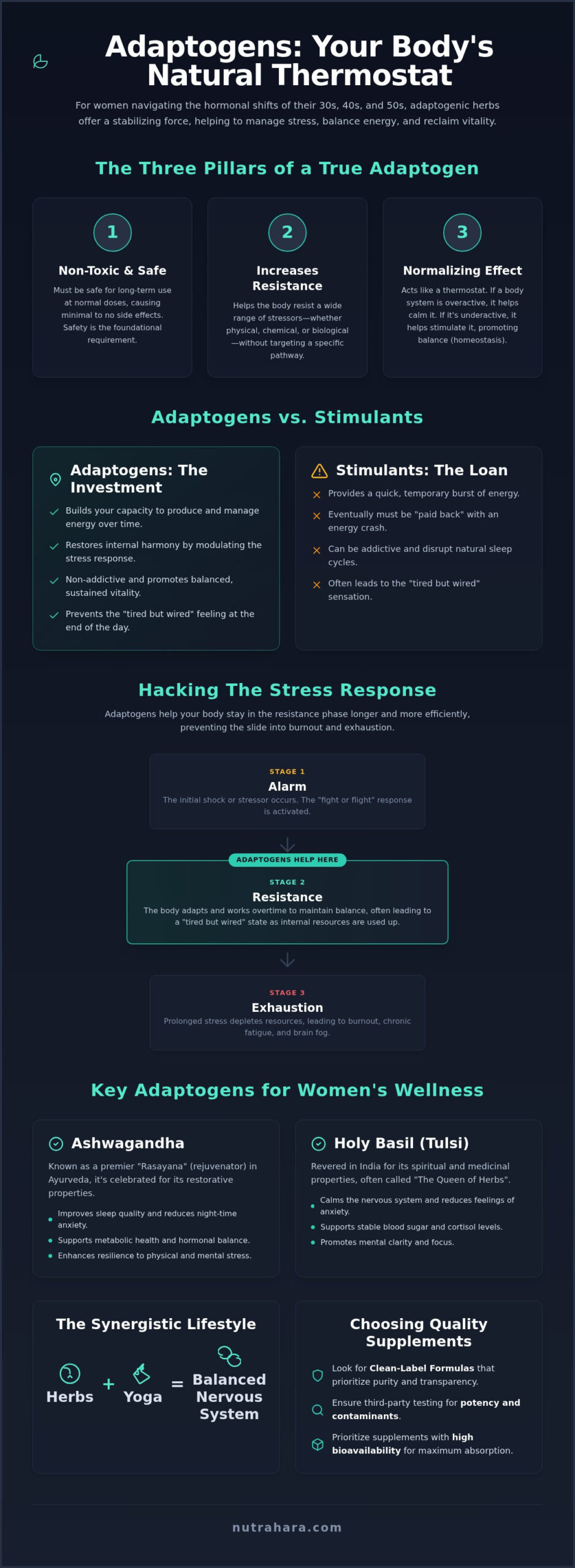
Categories
Articles

Women’s Hair Growth Vitamins: Holistic Guide (2026)

Have you ever noticed your hair losing its luster or thinning at the temples during a particularly stressful season of life? You’re certainly not alone, as the global hair supplements market has surged to a projected 4.3 billion dollars in 2026. This growth reflects a collective desire for solutions that actually work for our unique biology. Finding the right vitamins for hair growth for women can feel like a daunting task, especially when you’re caught between flashy synthetic labels and the desire for something pure and grounded in nature.

It’s understandable to feel skeptical when your hair doesn’t seem to bounce back as quickly as it once did. You deserve a path to wellness that honors your body’s changing needs, whether you’re in your 30s or your 60s. This guide offers a holistic roadmap that fuses modern nutritional research with ancient Ayurvedic principles. We’ll examine how to choose clean ingredients, manage cortisol through botanicals like Ashwagandha, and establish a sustainable daily ritual. By the end, you’ll have the clarity to choose a supplement strategy that fosters thicker, more resilient hair and a deeper sense of confidence.

Key Takeaways

  • Understand the unique rhythm of your hair growth cycle and why women experience diffuse thinning differently than men.
  • Discover how clinical nutrition and Ayurvedic wisdom combine in the best vitamins for hair growth for women to strengthen your hair’s keratin infrastructure.
  • Learn to adapt your wellness ritual to your specific life stage, from managing career stress in your 30s to hormonal shifts in your 40s and 50s.
  • Explore holistic practices like “Scalp Yoga” and meditation that support follicle health by reducing systemic inflammation and improving circulation.
  • Gain the tools to navigate supplement labels with confidence, focusing on clean-label purity and standardized botanical extracts.

The Science of Strands: Understanding Hair Growth Cycles and Hormonal Impacts

Your hair is a living reflection of your internal landscape. It isn’t just a static feature; it’s a dynamic system that follows a precise biological rhythm. To find the right vitamins for hair growth for women, you must first understand the hair growth cycle. This cycle consists of three distinct phases: Anagen, Catagen, and Telogen. Anagen is the active growth stage, which can last several years. Catagen is a short transition phase where the follicle shrinks. Finally, Telogen is the resting period before the hair eventually sheds to make room for new growth.

While men often experience localized receding at the hairline, women typically face “diffuse thinning.” This is a pattern where the overall volume decreases across the entire scalp, making the part line look wider or the ponytail feel thinner. This occurs because hormonal shifts often shorten the Anagen phase. When the growth window closes too early, your hair spends less time growing and more time resting, leading to a noticeable loss of density over time.

Estrogen acts as a protective shield for your follicles, extending the growth phase to maintain thickness. When estrogen levels are optimal, your hair stays anchored and vibrant. Conversely, cortisol, the hormone released during chronic stress, acts as a biological alarm. High cortisol levels can prematurely push follicles from the growth phase into the shedding phase. This disruption prevents the synthesis of essential proteins required for hair strength. Managing these internal signals is a vital part of your long-term wellness journey.

Hormonal Milestones: From Postpartum to Menopause

The transition through perimenopause often brings a noticeable shift in hair texture as estrogen levels begin to fluctuate and decline. This is also a common time for women to experience Telogen Effluvium (TE). This is a temporary but distressing form of shedding triggered by major life stressors, nutritional gaps, or illness. Beyond sex hormones, your thyroid health plays a quiet but critical role. An underactive or overactive thyroid can directly impact the diameter of the hair shaft, making individual strands feel finer and more prone to breakage. For many women, supporting hormonal balance with targeted supplements like FemmePower helps stabilize these transitions and provides a foundation for resilience.

The Scalp Environment: The Foundation for Growth

A healthy follicle requires a serene, nutrient-rich environment to thrive. Scalp inflammation is often a hidden culprit that restricts blood flow and oxygen delivery to the roots. Maintaining a proper sebum balance is equally important; excessive oil can clog the pore, while too little leaves the scalp brittle and dry. Follicular miniaturization is the process where hair becomes finer over time. When follicles shrink due to hormonal or environmental stress, they produce thinner, shorter strands that eventually stop breaking through the surface. Utilizing botanical support, such as Ashwagandha with Black Pepper, can help mitigate the stress-induced inflammation that contributes to this miniaturization, keeping your scalp environment “breathable” and productive.

Essential Vitamins for Hair Growth: The Fusion of Modern Nutrition and Ancient Wisdom

Achieving vibrant hair requires more than just high doses of a single ingredient. It demands a sophisticated blend of clinical science and time-honored botanical wisdom. While many look for vitamins for hair growth for women as a quick fix, the most effective approach treats the body as a whole system. Biotin and the wider B-Complex act as the primary architects of your hair’s keratin infrastructure. Without these, the hair shaft lacks the structural integrity to withstand daily styling or environmental stressors. Similarly, Vitamin D3 plays a vital role in “waking up” dormant hair follicles, encouraging them to return to the active growth phase from their resting state.

Iron and ferritin levels are equally critical for long-term density. These elements ensure that oxygen reaches the hair bulb, providing the energy necessary for rapid cell division. However, the true secret to efficacy lies in Ayurvedic synergy. Ancient traditions suggest that botanicals like Turmeric and Ashwagandha don’t just provide nutrients; they optimize the body’s ability to absorb and utilize them. This holistic perspective ensures that your supplement isn’t just passing through your system but is actually reaching the follicles where it’s needed most. You’re not just feeding your hair; you’re nourishing the soil in which it grows.

The Power of Antioxidants: Vitamins C and E

Vitamins C and E serve as the scalp’s primary defenders. Vitamin C is essential for collagen production, which strengthens the skin around the follicle, and it significantly improves iron absorption from your diet. Vitamin E acts as a lipid-soluble antioxidant, protecting the delicate scalp environment from oxidative stress caused by pollution and UV rays. When choosing vitamins for hair growth for women, prioritize high-quality, bioavailable forms over synthetic fillers to ensure your body can truly process these vital protectors.

The Ayurvedic Edge: Adaptogens for Hair Retention

Adaptogens offer a unique advantage in hair retention that modern multivitamins often miss. Ashwagandha, a cornerstone of Ayurvedic medicine, helps lower systemic cortisol. By calming this stress hormone, you prevent the premature shedding that often follows a period of anxiety or burnout. These ancient herbs support the “Prana,” or life force, of the hair follicle, fostering a resilient environment for growth. Integrating Ashwagandha with Black Pepper into your daily ritual can be a transformative step for stress-related thinning. For those looking to build a strong nutritional foundation, starting with a comprehensive Vitamin B-Complex provides the essential structural support your hair craves to stay strong and resilient.

Tailoring Your Routine: Hair Health Across Every Life Stage (Ages 30-60)

Your nutritional needs aren’t static. They evolve as you move through different milestones of your life. While a woman in her 30s might be battling the depletion that follows childbirth or intense career growth, a woman in her 50s is often navigating the structural changes brought on by menopause. Selecting the right vitamins for hair growth for women requires an understanding of these shifting biological priorities. It’s about meeting your body where it is today and honoring its unique progression.

In your 30s, the focus is often on recovery and resilience. Pregnancy and breastfeeding can drain your body’s stores of iron and B-vitamins, while modern life keeps cortisol levels high. For new mothers dealing with thinning, finding an effective postpartum hair loss treatment UAE is a crucial step in regaining confidence. Moving into your 40s, the early fluctuations of perimenopause begin to influence hair density. Estrogen levels start to dip, and the body’s natural collagen production wanes. This is the stage where your hair might lose its “bounce” or start to feel thinner at the part line. It’s a signal that your body requires a more targeted approach to structural support.

By your 50s and 60s, the goal shifts toward managing post-menopausal dryness and texture changes. Scalp sebum production decreases, which can leave hair feeling brittle or “wiry.” The hair shaft itself can undergo structural changes, becoming finer as the follicles receive fewer hormonal signals to stay in the growth phase. This is a natural transition, but it’s one that can be supported by providing the specific building blocks your body can no longer produce in abundance. It’s never too late to revitalize your hair by nourishing it from within.

The Collagen Connection for Mature Hair

As we age, amino acid depletion becomes a primary concern for hair strength. Without enough of these building blocks, hair becomes prone to breakage and loses its natural elasticity. Type I and III collagen are essential for maintaining the dermal layer of the scalp, which houses the hair follicles. A strong dermal foundation ensures that follicles stay firmly anchored and well-nourished. For those noticing a change in hair texture or strength, incorporating a Premium Collagen Complex can provide the structural support necessary to restore a sense of resilience to every strand.

Managing Hormonal Thinning Naturally

Hormonal shifts can sometimes lead to an increase in sensitivity to certain androgens, which can impact hair density. Certain plants contain natural compounds that help balance these signals without the need for harsh synthetic chemicals. Maintaining a balanced pH in the body is also crucial; it ensures that the vitamins for hair growth for women you consume are actually transported to your scalp effectively. Supporting your internal balance with a supplement like FemmePower helps address these hormonal fluctuations from the inside out, fostering a sense of overall wellness that reflects in the health of your hair.

Women's Hair Growth Vitamins: Holistic Guide (2026)

Beyond the Bottle: Holistic Rituals for Vibrant Hair

Taking vitamins for hair growth for women is a powerful first step, but the journey doesn’t end at the bottle. Vibrant hair is the result of a lifestyle that prioritizes circulation, calm, and internal clarity. Your follicles are at the very end of your body’s nutrient delivery system. This means your blood must be flowing efficiently and your stress levels must be managed for those vitamins to do their work. If your body is in a state of constant tension, it prioritizes vital organs over hair growth, leaving your strands undernourished.

Scalp Yoga is an effective way to boost this delivery. Simple inversion poses, like Downward Dog or a gentle Forward Fold, use gravity to increase blood flow directly to the follicles. This physical practice, paired with daily scalp massage, can be transformative. In the Ayurvedic tradition, massaging specific “marma points” on the head helps release tension and stimulates the life force. Meditation further supports this process by reducing the systemic inflammation caused by chronic anxiety. When your mind is at peace, your body can shift resources away from a “fight or flight” response and toward the growth of healthy, resilient hair.

The Gut-Hair Axis is another critical factor in your progress. Your digestion determines how much “hair food” actually reaches your scalp. If your gut health is compromised, even the highest quality vitamins for hair growth for women won’t be fully absorbed. Focus on mindful eating and supporting your microbiome to ensure your nutritional investment yields visible results. When you nourish the gut, you nourish the strand.

Nutrition for the Soul and the Strand

A yoga-friendly diet emphasizes “Sattvic” foods. These are fresh, whole, and nutrient-dense options like seeds, nuts, and leafy greens that promote both mental clarity and physical growth. Healthy fats, particularly Omega-3s found in flaxseeds or walnuts, are essential for maintaining a lubricated, shiny hair shaft. Don’t overlook the simplest ritual: hydration. Water is the most basic “vitamin” for hair elasticity, keeping the strands from becoming brittle and prone to breakage. Establishing a daily hydration ritual ensures your hair remains supple from the inside out.

Detoxifying for Growth

Environmental toxins and heavy metals can accumulate in the hair follicles over time, hindering healthy growth. Supporting your liver is essential for clearing out these impurities and managing the excess hormones that often lead to thinning. A gentle internal cleanse can reset your system and create a clean slate for new growth. To support your body’s natural filtering processes, consider integrating DetoxifyLife into your seasonal wellness routine. Clearing these internal pathways allows your body to focus its energy on restoration. Begin your journey toward a cleaner, more vibrant self by discovering our full range of holistic supplements.

The Nutrahara Path to Radiance: Choosing Your Perfect Supplement

Choosing the right vitamins for hair growth for women requires more than just looking at the front of the bottle. You must look at the back. A “Clean Label” approach is vital because synthetic fillers can disrupt your delicate gut microbiome, which acts as the gateway to nutrient absorption. High-quality formulas prioritize purity and use standardized extracts. This means the active botanical compounds are measured for potency, so you get the same restorative benefits in every dose. At Nutrahara, we bridge the gap between clinical validation and ancient Ayurvedic wisdom to ensure your hair receives the most transparent care possible.

Consistency is your greatest ally on this journey. The 90-Day Rule is a biological reality; your hair follicles need time to transition from the resting phase back into active growth. Don’t feel discouraged if you don’t see massive changes in the first week. True transformation is a slow, steady progression that rewards those who stay committed to their daily wellness ritual. Patience allows your internal systems to reach a state of balance that eventually manifests as outward vitality.

Creating Your Long-Term Wellness Progression

A successful wellness journey is rarely about a single ingredient. It’s about how you stack your support. For example, pairing Premium Collagen Complex with a high-quality Vitamin B-Complex provides both the structural amino acids and the metabolic fuel your follicles crave. As you progress, track your changes mindfully. You’ll likely notice tiny “baby hairs” appearing along your hairline first, which is a wonderful sign that your follicles are waking up. For a broader perspective on how to support your body through every decade, explore The Ultimate Guide to Women’s Wellness Supplements.

Real Stories of Transformation

The true measure of any ritual is the confidence it restores. Elena, a 54-year-old woman navigating post-menopausal changes, shared her experience: “I started seeing a real difference in my part line after three months of consistent ritual. My hair feels thicker, but more importantly, I feel like myself again.” This confidence boost is a natural byproduct of taking proactive steps toward your health. When you provide your body with the right vitamins for hair growth for women, you’re doing more than just fixing a cosmetic concern. You’re nurturing your self-esteem. Hair health is a beautiful reflection of internal harmony and the care you show your body every single day.

Embrace Your Personal Path to Radiance

Your hair’s health is a dynamic journey that reflects your internal harmony. By understanding the science of growth cycles and the power of Ayurvedic synergy, you’ve gained the tools to support your strands through every life stage. It’s about more than just a quick solution; it’s about a sustainable ritual that honors your body’s changing needs from your 30s to your 60s. When you choose the right vitamins for hair growth for women, you’re investing in a long-term progression toward thickness and resilience.

Consistency and patience are your greatest allies as you wait for new growth to emerge. Nutrahara supports this journey with formulas that feature clinically-backed ingredients and Ayurvedic adaptogens for stress support. Our commitment to purity means every supplement is free from artificial additives, giving you peace of mind with every dose. You deserve to feel confident and empowered in your appearance at every age. Start your transformation today and trust in the wisdom of nature and science combined.

Empower your hair journey with Nutrahara’s clean, Ayurvedic-inspired supplements.

Frequently Asked Questions

How long does it take for hair growth vitamins to show results?

It typically takes at least 90 days of consistent use to see visible results from hair growth vitamins. This timeframe aligns with the natural anagen growth phase of your follicles. You might notice small “baby hairs” at the hairline or less shedding during brushing first. Patience is vital because your body needs time to build up nutrient stores and reset the growth rhythm.

Can taking too many vitamins actually cause hair loss?

Yes, excessive intake of certain nutrients can paradoxically lead to hair shedding. High doses of Vitamin A or selenium are known triggers for hair loss when taken in toxic amounts. It’s essential to follow the recommended dosage on your supplement label. Choosing a balanced formula ensures you’re supporting your body without overwhelming your system’s natural filtering processes.

Does biotin really work for everyone, or is it a myth?

Biotin is most effective for individuals with a clinical deficiency, though it serves as a crucial building block for keratin infrastructure in most women. While it isn’t a “magic pill” for everyone, it supports the structural integrity of the hair shaft. For the best results, look for vitamins for hair growth for women that combine biotin with synergistic ingredients like Vitamin D3 and Ayurvedic adaptogens.

What is the best vitamin for hair thinning during menopause?

Vitamin D3 and a comprehensive B-complex are often the most beneficial during the menopausal transition. These nutrients help “wake up” dormant follicles and support the metabolic energy needed for growth as estrogen levels decline. Pairing these with collagen helps address the structural changes and dryness that often occur in your 50s and 60s, keeping your hair resilient and supple.

Can yoga and meditation really help my hair grow back?

Yoga and meditation support hair regrowth by lowering systemic cortisol and improving blood circulation to the scalp. Chronic stress pushes hair into a resting phase prematurely, leading to diffuse thinning. Practicing inversion poses like Downward Dog increases oxygen delivery to the follicles. These holistic rituals create a calm internal environment where your nutritional supplements can perform their best work.

Is it safe to take hair supplements while pregnant or breastfeeding?

You should always consult your healthcare provider before starting any new supplement while pregnant or breastfeeding. While many ingredients in vitamins for hair growth for women are natural, your nutritional needs are unique during these stages. For more information on choosing safe and effective products during motherhood, pregnancymagazine.com offers a helpful guide. Most women find that a high-quality prenatal vitamin provides the foundational support needed, but adding specific botanicals requires professional medical guidance to ensure safety.

What is the difference between hair vitamins and a standard multivitamin?

Hair-specific vitamins contain higher concentrations of nutrients that target the follicle and keratin production, such as biotin, zinc, and specific amino acids. A standard multivitamin provides broad support for general health but may lack the therapeutic doses required to reverse thinning. Targeted formulas often include Ayurvedic botanicals like Ashwagandha, which address the stress-related roots of hair loss that general multivitamins typically overlook.

How do I know if my hair loss is hormonal or nutritional?

Hormonal hair loss often appears as diffuse thinning across the entire scalp or a widening part line, while nutritional loss may be accompanied by brittle texture or fatigue. If your shedding follows a major life event, pregnancy, or menopause, hormones are likely the primary driver. A blood test can confirm deficiencies in iron or Vitamin D, helping you determine if your hair needs more structural “food” or better hormonal balance.

Article by

Nutrahara Team

We are a dedicated collective of nutrition scientists and naturopaths at Nutrahara, committed to advancing women's health through the fusion of ancient Ayurveda science and cutting-edge nutrition research. Our mission is to empower you with clean, simple, and scientifically validated wellness solutions so you can live your healthiest life. Connect with us to stay updated on the latest developments in holistic women's health and nature-based research.

Disclaimer

This article is not a substitute for medical advice. Please consult a healthcare professional before starting any supplement, especially if pregnant, nursing, taking medication, or managing health conditions.

Categories
Articles

Beginner’s Guide to Ayurvedic Medicine: A Woman’s Path to Balance

What if the key to ending your persistent fatigue and hormonal fluctuations isn’t found in another “miracle” diet, but in a 5,000-year-old biological roadmap designed specifically for your unique constitution? You’ve likely felt the frustration of conflicting health advice while searching for effective ayurvedic supplements for women’s health to manage perimenopause or stress-induced digestive issues. It’s exhausting to feel like you’re constantly fighting your own body instead of flowing with it. Since over 75% of the global population relies on traditional medicine for primary care according to recent data, you’re in good company seeking a more holistic path. We believe your wellness journey should be a supportive partnership between ancient tradition and modern clinical validation.

This guide will show you how to harmonize your hormones, energy levels, and longevity by blending time-tested wisdom with modern nutritional science. You’ll gain a clear understanding of your body type, or Dosha, and how it influences everything from your sleep to your metabolism. We’ll provide actionable daily habits and a detailed look at the specific herbs that support your long-term health progression. It’s time to move past the confusion and step into a life of balance, confidence, and tranquil energy.

Key Takeaways

  • Identify your unique Dosha to understand your specific biological blueprint and how it governs your energy, digestion, and emotional well-being.
  • Learn how to implement Dinacharya rituals to stabilize your hormones and create a sense of calm in your busy daily routine.
  • Discover how to integrate ayurvedic supplements for women’s health with a diet based on the Six Tastes for optimal nutrient absorption.
  • Start your wellness journey with manageable micro-habits that don’t overwhelm your schedule but build long-term longevity.
  • Understand the difference between your birth constitution and your current state of imbalance to make more informed choices for your personal health progression.

What is Ayurvedic Medicine? The Ancient Science of Life

Ayurveda is far more than a wellness trend or a collection of herbal remedies. It’s a comprehensive system of health that originated in India over 5,000 years ago. The word itself comes from the Sanskrit roots “Ayur,” meaning life, and “Veda,” meaning knowledge. When we explore What is Ayurveda?, we’re looking at a biological roadmap that teaches us how to live in harmony with our environment and our own bodies. For the modern woman balancing career, family, and personal fitness, this ancient wisdom offers a grounding perspective that modern medicine often misses.

The core philosophy of this practice is that health isn’t just the absence of disease. It’s the active presence of balance. While Western medicine often focuses on treating symptoms after they appear, Ayurveda seeks to prevent them by maintaining equilibrium within your system. This makes it the original “personalized medicine.” It recognizes that your body’s needs at age 35 are different from your needs at 55. By choosing the right ayurvedic supplements for women’s health, you can address the root causes of fatigue or hormonal shifts rather than just masking the effects.

The Five Elements and the Human Body

In this tradition, everything in the universe is composed of five great elements: Space, Air, Fire, Water, and Earth. These elements aren’t just physical substances; they represent qualities that exist within you. Fire governs your metabolism and transformation, while Earth provides the structure of your bones and muscles. Your body is a microcosm of the natural world. This means the same rhythms that govern the tides and the seasons also govern your internal health. The Pancha Mahabhuta are the five fundamental elements that serve as the essential building blocks of wellness for every individual.

The Goal of Ayurveda: Swastha (True Health)

The ultimate aim of this journey is a state called Swastha. This translates to being “established in one’s self.” It’s a deep, vibrant harmony where your mind, body, and spirit are aligned. Central to this is “Agni,” your digestive fire. When your Agni is strong, you transform food and experiences into energy. When it’s weak, “Ama,” or toxic residue, begins to accumulate. This buildup is often the hidden source of the persistent fatigue or digestive issues many women face. Nutrahara honors this philosophy by creating formulas like Ashwagandha with Black Pepper, which blends ancient botanical power with modern bioavailability research. We focus on purity and simplicity because true health shouldn’t be complicated. It’s about returning to your natural state of vitality.

The Tridosha Theory: Identifying Your Unique Mind-Body Constitution

Every woman is a unique blend of three biological energies known as Doshas: Vata, Pitta, and Kapha. These aren’t just personality types; they are the functional forces that govern everything from your heart rate to your emotional resilience. While you’re born with a specific ratio called your Prakriti, life’s demands often cause a shift into Vikriti, which is your current state of imbalance. Modern Ayurvedic medicine focuses on returning you to your original nature. This is why a “one size fits all” approach to wellness often fails. True vitality comes from a personalized health progression rather than a generic routine.

According to current market research, 48% of consumers now favor customized herbal formulations based on their individual Dosha. This shift reflects a growing desire for personalized care that respects our unique biological makeup. Identifying your dominant energy allows you to choose the most effective ayurvedic supplements for women’s health. It’s about listening to the subtle signals your body sends every day.

Vata: The Energy of Movement and Change

Vata is the energy of movement. Women in their 40s and 50s often experience a surge in Vata as they enter the “wind” stage of life, characterized by perimenopause. You might notice your skin feels drier or your mind races with anxiety before bed. Joint stiffness and digestive bloating are also common signs that your internal movement is out of sync. To ground this airy energy, many find that Ashwagandha with Black Pepper provides the necessary stability to soothe the nervous system and support mobility.

Pitta: The Energy of Transformation and Metabolism

Transformation and metabolism are the domains of Pitta. It’s the fire in your belly and the focus in your eyes. However, hormonal shifts can cause this fire to flare up as hot flashes, night sweats, or sudden irritability. If you find yourself prone to skin sensitivities or acid reflux, your Pitta might be too high. Cooling this heat involves more than just cold water; it requires a lifestyle that prioritizes tranquility. Finding the right ayurvedic supplements for women’s health, such as Femmepower, can help balance these internal temperatures naturally.

Kapha: The Energy of Structure and Lubrication

Kapha provides the structure and lubrication your body needs to stay strong. It’s the energy of earth and water. As women move into their 50s and 60s, maintaining metabolism and bone density becomes a primary concern. When Kapha is out of balance, you might feel a heavy lethargy or notice stubborn weight gain that exercise alone doesn’t shift. Strategies for “lightness” are essential here. Stimulating rituals and warming foods can help keep your energy moving, ensuring your later years are marked by strength rather than stagnation.

Balancing your Doshas is a lifelong journey of self-discovery. It isn’t a quick fix, but a steady progression toward harmony. By understanding these energies, you gain the power to adjust your habits as your life stages evolve. If you’re ready to support your body’s natural rhythm, you might consider starting with a targeted formula like BlossomBliss to nurture your overall well-being.

Dinacharya: Daily Ayurvedic Rituals for Hormonal Harmony

Dinacharya is the sacred practice of aligning your daily life with the natural rhythms of the sun. For women navigating the complexities of modern life, these rituals provide a necessary anchor. While we often look for external solutions, the most profound healing often comes from the consistency of our habits. Modern science now recognizes these patterns as circadian rhythms, which regulate everything from hormone production to cellular repair. By integrating these practices with high-quality ayurvedic supplements for women’s health, you create a foundation for lasting vitality. A steady routine is often the most effective medicine for stabilizing the nervous system during life’s many transitions.

The National Center for Complementary and Integrative Health notes that research into Ayurvedic herbal medicine is ongoing, highlighting the importance of choosing purified, scientifically-backed formulas. This fusion of ancient practice and modern standards is exactly what your body needs to thrive. When you sync your internal clock with the world around you, your energy becomes more predictable and your sleep more restorative.

Morning Rituals for Vitality

Your morning sets the tone for your emotional and physical well-being. Start with Jihwa Prakshalana, or tongue scraping, to remove the bacteria that accumulate overnight. This simple act improves oral health and signals your digestive system to wake up. Follow this with Abhyanga, a self-massage using warm oil. This practice supports skin elasticity and encourages lymphatic drainage, which is vital for maintaining a healthy glow as we age. Conclude your morning flow with ten minutes of yoga and meditation. These tools are essential for boosting self-esteem and ensuring you approach your day with a sense of calm authority.

Evening Rituals for Restorative Sleep

As the sun sets, your focus should shift toward grounding and cooling. A “digital detox” is essential here. The blue light from screens overstimulates the Vata mind, making it difficult to achieve deep rest. Instead of scrolling, try a gentle wind-down routine that lowers cortisol levels. Incorporating adaptogens like Ashwagandha can help prepare your nervous system for a peaceful night. If you struggle to stay asleep, a modern solution like RestoraSleep can support these traditional rituals by providing the specific nutrients your body needs to repair itself overnight. Consistent evening habits ensure you wake up feeling empowered rather than depleted by the demands of the previous day.

Ayurvedic Nutrition: Healing Through Food and Modern Herbal Fusion

Ayurveda teaches that food is our first and most powerful medicine. Every meal offers an opportunity to nourish your Dosha or inadvertently fuel imbalance. To achieve true harmony, your plate should ideally include the Six Tastes: Sweet, Sour, Salty, Pungent, Bitter, and Astringent. Each taste serves a specific biological purpose, from building tissue to cleansing the blood. However, we understand that preparing a perfect Ayurvedic meal three times a day isn’t always realistic for women balancing fitness, careers, and family. This is where high-quality ayurvedic supplements for women’s health become a vital bridge. They allow you to maintain your wellness progression even when life gets in the way of your kitchen rituals.

At Nutrahara, we respect the ancient herbal ratios that have worked for millennia while applying modern clinical research to ensure purity. Our promise is simple: clean, natural formulas that work with your body, not against it. By combining these traditional principles with modern convenience, you can experience the benefits of “Food as Medicine” without the stress of perfect meal prep.

Power Herbs for Women’s Health

Specific botanicals are particularly beneficial for the female system. Ashwagandha stands out as the ultimate adaptogen. It helps lower cortisol and supports the hormonal balance you need to feel energized yet calm. For those focusing on joint health and flexibility, the combination of Turmeric and Ginger is unmatched. These roots work together to reduce systemic inflammation. To support your stress management journey, you can find these benefits in our Ashwagandha with Black Pepper formula. These herbs aren’t just supplements; they’re concentrated wisdom for your daily life.

Supplements as Modern Alchemy

We view supplementation as a form of modern alchemy. It’s the process of turning raw botanical power into a bioavailable tool for your cells. A major challenge with traditional herbs like Turmeric is absorption. Modern science has confirmed that Piperine, the active compound in black pepper, can significantly increase the bioavailability of other nutrients. This is why we carefully formulate our products to ensure your body actually absorbs what you ingest. For women seeking to support both their skin elasticity and joint mobility, our Premium Collagen Complex provides a comprehensive solution that respects these principles of synergy. It’s about getting the most out of every capsule you take.

Ready to harmonize your nutrition? Explore our stress-support solutions to bridge the gap between ancient wisdom and your modern lifestyle.

Beginner's Guide to Ayurvedic Medicine: A Woman's Path to Balance

Starting Your Ayurvedic Journey: Practical Steps for Longevity

Embarking on a 5,000 year old path to wellness doesn’t mean you have to change your entire life overnight. The most successful transformations happen through the power of micro habits. These small, manageable shifts in your daily routine create a sustainable health progression that respects your busy schedule. Start by choosing just one ritual, such as tongue scraping or a five minute morning meditation, and notice how it shifts your internal state. Selecting the right ayurvedic supplements for women’s health is a powerful act of self care that builds your confidence and reinforces your commitment to long term vitality.

Tracking your progress is essential for staying motivated. We recommend keeping a simple wellness journal to monitor your energy levels, mood, and digestion. Over time, you’ll begin to see patterns that reveal how your body responds to different foods and habits. This self knowledge is the ultimate tool for empowerment. It allows you to move away from conflicting health advice and toward a lifestyle that is truly personalized to your unique constitution.

Ayurveda for Every Life Stage

Your needs evolve as you move through different decades of life. In your 30s and 40s, you’re often in the “Pitta” years, a time of high ambition and intense activity. During this stage, managing burnout and cooling your digestive fire is a priority. As you transition into your 50s and beyond, the “Vata” energy becomes more dominant. This stage requires nurturing your nervous system and supporting your bone health with grounding rituals. For a deeper look at how to tailor your approach, explore The Ultimate Guide to Women’s Wellness Supplements.

Building Your Personal Wellness Kit

Creating a personal wellness kit helps you stay consistent on your journey. For those just beginning, we recommend starting with foundational support. Our FemmePower formula is designed to support hormonal balance, while DetoxifyLife helps maintain clear pathways for energy and digestion. These products serve as a bridge between ancient wisdom and your modern lifestyle.

Many women have already found their path to balance with us. Elena, a 52 year old fitness enthusiast, shared her experience: “I used to feel scattered and perpetually exhausted during my perimenopause transition. Once I started identifying my Vata imbalances and using targeted herbal support, my energy became steady again. I finally feel like I’m working with my body instead of against it.”

You don’t have to navigate this journey alone. As your wise and caring guide, Nutrahara is here to provide the purity and scientific validation you deserve. Take the first step today by choosing one habit that honors your body’s natural wisdom. Your path to balance and longevity starts with a single, mindful choice.

Embrace Your Natural Vitality

You’ve discovered how the Tridosha theory and the rhythms of Dinacharya can transform your daily experience. These aren’t just ancient concepts; they’re practical tools for managing hormones and energy as you move through different life stages. Integrating ayurvedic supplements for women’s health into your routine allows you to honor these traditions while benefiting from modern nutritional science. This fusion of wisdom ensures that your path to balance is both grounded in history and validated by today’s standards.

Our commitment at Nutrahara is to act as your wise guide. Every formula is based on a fusion of ancient science and modern research, using clean, natural ingredients without artificial additives. This ensures you receive nurturing support that respects your body’s purity and your long-term health progression. Whether you’re seeking to stabilize your energy or find hormonal harmony, the right tools are now in your hands.

Discover Your Path to Balance with Nutrahara’s Ayurvedic-Inspired Supplements.

Your journey toward harmony is a personal progression that unfolds one mindful choice at a time. Trust in your body’s wisdom, stay consistent with your rituals, and take the next step with confidence. You deserve a life of tranquility and vibrant health.

Frequently Asked Questions

What is the best Ayurvedic herb for women’s hormonal balance?

Shatavari is widely considered the premier Ayurvedic herb for supporting female hormonal balance across all life stages. It acts as a natural adaptogen that helps regulate the menstrual cycle and supports the transition into menopause. Ashwagandha is another vital choice, particularly for managing stress induced hormonal fluctuations. Using high quality ayurvedic supplements for women’s health ensures you receive these botanicals in their most potent and purified forms for maximum efficacy.

Can I practice Ayurveda if I have a busy, modern lifestyle?

You can absolutely integrate Ayurveda into a demanding schedule by focusing on simple micro habits. Small shifts like tongue scraping in the morning or taking five minutes for box breathing before bed don’t require hours of dedication. The goal is to align with natural rhythms where possible rather than achieving perfection. Consistency with these small rituals often yields more significant long term benefits than occasional, intensive retreats or complicated routines.

How do I know which Dosha I am without a professional practitioner?

You can identify your dominant Dosha by observing your physical tendencies, digestive patterns, and emotional responses to stress. Vata types often have dry skin and a creative mind, while Pitta types may experience internal heat and a focused drive. Kapha types tend toward a calm nature and a sturdier build. While a professional practitioner provides the most depth, a detailed self assessment quiz is an empowering starting point for your personal health progression.

Is Ayurvedic medicine safe to use alongside modern vitamins and supplements?

Ayurvedic herbs are generally safe to use alongside modern vitamins, but it’s essential to consult with a healthcare provider before starting any new regimen. Most ayurvedic supplements for women’s health focus on botanical extracts that complement standard multivitamins. Nutrahara prioritizes clean, natural ingredients and transparent formulations to ensure our products integrate smoothly into your existing wellness routine. Always look for third party testing to verify the purity of your ingredients.

How long does it take to see results from Ayurvedic daily practices?

Most women begin to notice subtle shifts in their energy and digestion within two to four weeks of consistent practice. More significant changes, such as improved hormonal balance or better sleep quality, typically become evident after six to eight weeks. Ayurveda is a long term progression rather than a quick fix. It works by addressing root imbalances, which requires patience and a steady commitment to your new daily rituals and nutrition.

What are the most common Ayurvedic mistakes beginners often make?

The most common mistake beginners make is trying to overhaul their entire lifestyle overnight, which often leads to frustration and burnout. Another frequent error is following generic advice without considering their specific Dosha. It’s better to master one or two daily habits before adding more to your routine. Remember that what works for a Pitta dominant friend might not be suitable for your Vata constitution, so stay focused on your own unique needs.

Can Ayurveda help with menopause symptoms like hot flashes and brain fog?

Ayurveda offers significant support for menopause symptoms by addressing the underlying elemental shifts in the body. Hot flashes are often seen as an excess of Pitta, which can be managed with cooling herbs like Shatavari and a pitta pacifying diet. Brain fog is typically a Vata imbalance, requiring grounding rituals and adaptogens like Ashwagandha to stabilize the nervous system. These natural approaches provide a nurturing way to navigate this powerful life transition with confidence.

Do I have to be a vegetarian to follow an Ayurvedic diet?

You don’t have to be a vegetarian to follow an Ayurvedic lifestyle, although the system emphasizes a plant forward diet for ease of digestion. The focus is on eating high quality, whole foods that suit your specific Dosha and the current season. If you choose to include animal products, Ayurveda suggests selecting lean, organic options. Preparing them with warming spices helps support your Agni, or digestive fire, ensuring you absorb the nutrients effectively.

Article by

Nutrahara Team

We are a dedicated collective of nutrition scientists and naturopaths at Nutrahara, committed to advancing women's health through the fusion of ancient Ayurveda science and cutting-edge nutrition research. Our mission is to empower you with clean, simple, and scientifically validated wellness solutions so you can live your healthiest life. Connect with us to stay updated on the latest developments in holistic women's health and nature-based research.

Disclaimer

This article is not a substitute for medical advice. Please consult a healthcare professional before starting any supplement, especially if pregnant, nursing, taking medication, or managing health conditions.
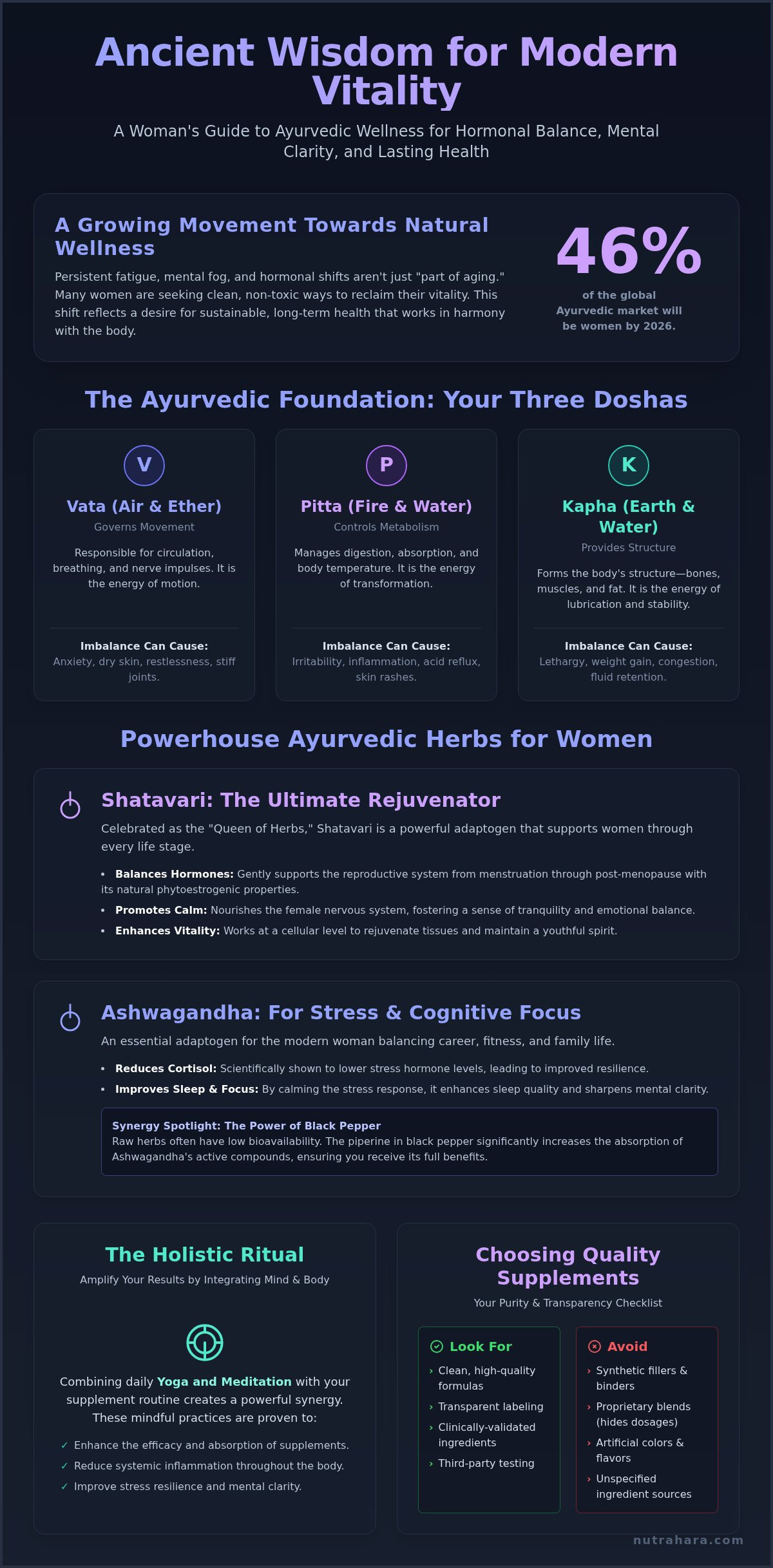
Categories
Articles

Integrating Ayurvedic Principles into Daily Routine: A Modern Woman’s Guide to Longevity

What if your persistent brain fog and afternoon energy crashes aren’t just signs of a busy life, but evidence that you’re out of sync with your natural rhythms? For most women today, the thought of integrating ayurvedic principles into daily routine sounds like an overwhelming task reserved for those with hours of free time. You’ve likely felt the frustration of hormonal shifts and chronic stress, searching for a solution that feels both scientifically sound and deeply nurturing.

It’s true that the modern world doesn’t always respect the female body’s unique cycles. However, you don’t need to choose between ancient tradition and clinical validation. By blending time-tested Ayurvedic wisdom with modern nutritional research, you can create a lifestyle that supports your health from the inside out. This guide provides a clear, manageable roadmap to balance your hormones, sharpen your mind, and support your longevity. We’ll explore practical steps to help you reclaim your vitality and thrive through every stage of womanhood, from your thirties into your sixties and beyond.

Key Takeaways

  • Learn how to identify your unique Ayurvedic constitution, or Prakriti, to tailor your wellness journey to your body’s specific biological needs.
  • Discover how integrating ayurvedic principles into daily routine through Dinacharya helps align your internal clock with nature to stabilize hormones and reduce stress.
  • Master simple morning rituals that ignite your Agni, or digestive fire, to eliminate brain fog and sustain your energy levels throughout the day.
  • Explore the power of a Sattvic diet and Rasayana practices to support bone density, skin elasticity, and graceful aging during every life stage.
  • Understand how modern herbal supplements serve as a vital bridge between ancient wisdom and contemporary nutritional science for long-term vitality.

Understanding Ayurveda: The Science of Life for the Modern Woman

Ayurveda is often translated from Sanskrit as Understanding Ayurveda: The Science of Life; “Ayur” meaning life and “Veda” meaning knowledge. It isn’t a medical system you visit only when you feel unwell. It’s a holistic philosophy designed to sustain health through every breath, meal, and thought. For women between the ages of 30 and 60, this ancient wisdom offers a vital lens through which to view a changing body. Integrating ayurvedic principles into daily routine allows you to move from fighting your biology to flowing with it.

Your journey toward longevity starts with Prakriti, your unique bio-individual constitution. No two women experience the transition into their 40s or 50s exactly the same way. While one woman might struggle with the “heat” of perimenopausal shifts, another might feel a persistent “dryness” or a lack of mental clarity. By identifying your baseline, you can choose foods and rituals that restore your specific equilibrium. This isn’t about following a fleeting trend. It’s about coming home to yourself.

The Three Doshas and Your Life Stages

Ayurveda identifies three primary energy patterns, or doshas, that govern our physiology and psychology. These energies shift as we age, influencing how we feel and function.

  • Vata: Composed of air and ether, Vata is the energy of movement. As we enter the post-menopausal stage, we transition into the “Vata” time of life. This often manifests as dry skin, joint discomfort, or sleep disturbances. Using adaptogens like Ashwagandha can help ground this erratic energy and support cognitive function.
  • Pitta: Driven by fire and water, Pitta is the energy of transformation. The 30s and 40s are typically high-Pitta years, defined by career growth, motherhood, and high productivity. If Pitta is out of balance, it can lead to irritability, inflammation, or hormonal “burnout.”
  • Kapha: Made of earth and water, Kapha is the energy of structure and lubrication. Kapha provides the stability and stamina needed to weather life’s storms. It’s the foundation of your immunity and physical strength, though an excess can lead to feelings of sluggishness or weight gain.

Hormonal shifts in your 40s and 50s often mirror Vata or Pitta imbalances. For example, hot flashes are a classic sign of excess Pitta (heat), while anxiety and “brain fog” often signal a Vata disturbance. Targeted support like FemmePower is designed to address these specific fluctuations by bridging traditional herbal wisdom with modern clinical insights.

Why Ancient Wisdom Meets Modern Science

The Nutrahara philosophy is rooted in the belief that tradition and clinical research are two sides of the same coin. We don’t just use herbs because they’re ancient; we use them because modern science validates their efficacy. Integrating ayurvedic principles into daily routine aligns perfectly with contemporary circadian rhythm science. Both systems recognize that eating, sleeping, and moving in harmony with the sun’s cycle optimizes metabolic health and hormonal balance. Ayurveda is a personalized roadmap for longevity rather than a one-size-fits-all diet.

The Daily Rhythm (Dinacharya): Aligning with Nature’s Clock

In the frantic pace of modern life, your nervous system often stays in a state of high alert. Dinacharya, the Ayurvedic practice of daily routine, acts as an anchor to bring you back to center. By aligning your actions with the natural cycles of the day, you can significantly reduce cortisol levels and soothe the anxiety that often accompanies hormonal fluctuations. Integrating ayurvedic principles into daily routine isn’t about adding more tasks to your to-do list. It’s about shifting the timing of what you’re already doing to support your body’s internal clock.

Many women feel overwhelmed by the idea of a complex ritual. You don’t need a two-hour morning ceremony to see results. Science increasingly supports these ancient patterns, particularly through the study of circadian rhythms. According to Ayurvedic Nutrition and Herbal Support guidelines from experts at Johns Hopkins, these lifestyle adjustments help maintain balance and prevent the “burnout” so common in our 40s and 50s. Consistency is the true secret to building Ojas, the subtle energy that governs your vitality and immunity.

Hormonal Harmony Through Timing

Waking before 6:00 AM, during the Vata period of the morning, allows you to tap into the light, clear energy of the atmosphere. This simple shift can transform your mental clarity and prevent the “heavy” feeling that comes from sleeping into the Kapha hours. For women in perimenopause, regular meal times are equally crucial. Eating your largest meal at midday, when your digestive fire is strongest, helps stabilize blood sugar and prevents the late-night crashes that disrupt sleep. For more on supporting these transitions, see The Ultimate Guide to Women’s Wellness Supplements.

Adapting Tradition for the 2026 Lifestyle

To make this sustainable, prioritize the “Big Three”: morning hydration, a substantial midday meal, and an early bedtime. Start your day with warm lemon water to flush the system. If you find yourself struggling with the evening wind-down, consider a grounding adaptogen like Ashwagandha with Black Pepper to help lower stress before bed. Use a habit tracker to implement just one change per week. This gradual approach builds lasting confidence and ensures that integrating ayurvedic principles into daily routine becomes a natural, effortless part of your long-term health progression.

Morning Rituals for Energy and Mental Clarity

Waking during Brahma Muhurta, the “time of the creator,” is a profound way to start your day. This window, roughly 90 minutes before sunrise, is when the air is still and the mind is most receptive. Integrating ayurvedic principles into daily routine at this hour allows you to tap into a reservoir of peace before the world demands your attention. Scientific research into Ayurvedic principles highlights how these early hours correlate with peak cognitive function and hormonal stability. By rising with the sun, you align your internal biological clock with the planet’s natural rhythm.

A key focus of your morning should be Agni, or digestive fire. For women navigating the complexities of perimenopause or postpartum recovery, maintaining a strong Agni is the difference between feeling vibrant or chronically fatigued. When Agni is balanced, your body efficiently converts food into energy and prevents the buildup of “Ama,” or metabolic waste. This fire is the foundation of your metabolic health and longevity.

Detoxification and Sensory Awakening

Before you eat or drink, focus on clearing the toxins that accumulated overnight. Start with tongue scraping. Use a copper or stainless steel scraper to gently remove the coating on your tongue. This act removes bacteria and stimulates the internal organs connected to the tongue’s surface. Follow this with oil pulling using organic sesame or coconut oil for 5 to 10 minutes. This practice supports oral health and systemic detoxification. Finally, drink a glass of warm lemon water. It gently awakens the digestive tract and prepares your body for the day’s first meal.

Movement and Mindfulness

Gentle movement is essential to shift the lymph and reduce morning joint stiffness that often appears in our 40s. A short sequence of Sun Salutations or restorative yoga poses can help. Pair this with Nadi Shodhana, or alternate nostril breathing, to balance the nervous system. If you find your focus still wavers during these early hours, FocusZenith can provide the modern nutritional support needed for sharp cognitive clarity. Don’t forget the practice of Self-Snehana, or self-massage with warm oil. It’s a powerful act of self-love that calms the nervous system, lowers cortisol, and nourishes the skin.

“I used to feel like I was dragging myself through a fog until noon,” says Elena, 42. “By simply integrating ayurvedic principles into daily routine, starting with tongue scraping and warm water, my energy levels stabilized. I no longer need that third cup of coffee to feel human.”

Integrating Ayurvedic Principles into Daily Routine: A Modern Woman’s Guide to Longevity

Ayurvedic Nutrition and Herbal Support for Women

Ahara, or nutrition, is much more than just a count of calories; it is the essential foundation of your vitality and longevity. A Sattvic diet focuses on pure, light, and energy-giving foods like fresh fruits, whole grains, and organic vegetables. For women aged 30 to 60, this approach is vital for maintaining bone density and skin elasticity. Integrating ayurvedic principles into daily routine means choosing foods that don’t just fill you up but actually nourish your deep tissues, known as Dhatus, to support a long and healthy life.

Eating for Your Dosha and Your Age

In your 40s and 50s, hormonal shifts often require a strategic shift on your plate. If you feel ungrounded or experience persistent dryness, focus on Vata-pacifying foods. These are warm, cooked, and grounding, such as root vegetables and healthy fats like ghee. If you are dealing with hot flashes or inflammation, Pitta-pacifying foods are your best ally. Opt for cooling, hydrating choices like cucumber, mint, and sweet fruits. Maintaining this internal balance also supports your intimate health; you can learn more in A Complete Guide to Vaginal pH Balance.

The Modern Apothecary: Science-Backed Herbs

While traditional preparations are beautiful, the modern woman often lacks the time for complex herbal decoctions. Nutrahara serves as your modern bridge, offering high-quality formulas that provide traditional benefits in a convenient form. Ashwagandha is the “queen” of Ayurvedic herbs, specifically valued for its ability to regulate cortisol levels in perimenopausal women. Our Ashwagandha with Black Pepper is designed for optimal absorption to support stress management and better sleep. By integrating ayurvedic principles into daily routine through targeted herbal support, you can maintain a calm and focused mind regardless of your schedule.

As we age, joint health and skin structural integrity become top priorities. Our Premium Collagen Complex combines modern peptide science with the anti-inflammatory power of turmeric to protect your movement and your glow. For deep hormonal support, Shatavari has been used for centuries to nourish the female reproductive system. We’ve included this potent botanical in FemmePower to help you thrive through every cycle and transition with confidence. It’s a simple way to bring ancient wisdom into your current lifestyle.

Ready to elevate your wellness journey? Explore our full range of Ayurvedic-inspired supplements to find your perfect match for hormonal harmony and lasting energy.

Evening Rituals: Rest, Longevity, and the ‘Third Act’

The window between 6 PM and 10 PM is governed by Kapha energy, characterized by stability, heaviness, and slow movement. Nature intends for this period to be your time of transition, shifting from the fiery productivity of the day into a state of deep rest. Integrating ayurvedic principles into daily routine during these hours is essential for protecting your Ojas, or vital essence. When you honor this cycle, you allow your body to enter a state of Rasayana. This refers to the ancient science of rejuvenation and longevity, ensuring your cells repair and renew while you sleep.

One of the most effective tools for this transition is Abhyanga, or warm oil self-massage. This practice isn’t merely a beauty ritual. It’s a profound way to support lymphatic drainage and soothe a nervous system taxed by daily stress. By gently massaging warm, organic oil into your skin, you nourish your tissues and create a protective barrier against the drying effects of aging. It’s a moment of quiet connection with your body that fosters both physical resilience and emotional calm.

The Ayurvedic Sleep Sanctuary

Your bedroom should be a sanctuary for your spirit. Modern life introduces a conflict between blue light and Ojas; the artificial glow of screens disrupts the production of melatonin and depletes your vital energy. A digital detox at least one hour before bed is crucial. Use this time for evening meditation to release “mental Ama,” the psychological toxins and undigested thoughts from your day. If you struggle to achieve the deep rest your body requires, RestoraSleep provides the targeted nutritional support needed for deep, restorative rest.

Longevity and the Third Act of Womanhood

Ayurveda views the transition into menopause not as a decline, but as an entry into the “Third Act,” a stage of life defined by higher consciousness and spiritual wisdom. This is a time to prioritize practices that support bone health and cognitive longevity. Regular weight-bearing movement and a diet rich in minerals are vital. Integrating ayurvedic principles into daily routine at this stage empowers you to age with vitality rather than fear. Consistency in these rituals ensures that your later years are marked by strength and clarity.

Aging is a journey toward becoming a “wise woman,” where your life experience becomes your greatest strength. You have the power to shape your health progression through small, consistent choices. Take the first step toward your most vibrant self today. Start your journey with a Nutrahara wellness consultation or explore our starter kits to find the perfect bridge between ancient wisdom and your modern life.

Embrace Your Path to Lasting Vitality

Thriving through the transitions of womanhood is a personal journey that requires both patience and the right tools. You’ve seen how integrating ayurvedic principles into daily routine through simple shifts like mindful meal timing and grounding evening rituals can stabilize your energy. This ancient wisdom, when paired with contemporary nutritional science, provides a powerful roadmap for your long-term health progression.

At Nutrahara, we’re here to support your evolution. Our clean, natural formulas are created by nutritional experts and Ayurvedic scholars to ensure clinical efficacy and purity. We stand behind your wellness journey with a 30-day satisfaction guarantee and offer free shipping on all orders over $50. You deserve to feel vibrant, clear, and deeply connected to your body’s natural rhythms at every stage of life.

Discover the Nutrahara Collection: Ancient Wisdom Meets Modern Science

Your future self will thank you for the care you begin today. Trust in your body’s wisdom and take that first step toward longevity with confidence.

Frequently Asked Questions

What are the first steps to integrating Ayurveda into a busy schedule?

Focus on high-impact, low-time-commitment rituals to start. Begin by drinking a glass of warm lemon water upon waking and using a copper tongue scraper to clear overnight toxins. These simple acts begin the process of integrating ayurvedic principles into daily routine without requiring hours of meditation. Once these habits feel natural, you can gradually introduce more complex practices like a five-minute self-massage or standardized meal times.

Can Ayurvedic principles help with perimenopause symptoms like hot flashes?

Ayurvedic principles offer significant support for perimenopause by addressing the underlying elemental imbalances. Hot flashes are typically seen as an excess of Pitta, or fire energy, in the body. By incorporating cooling foods like cucumber and mint, and using adaptogenic support like Shatavari, you can soothe the heat in your system. This holistic approach helps stabilize your internal temperature and calms the nervous system during hormonal shifts.

Is it safe to take Ayurvedic supplements like Ashwagandha with my daily vitamins?

Most Ayurvedic supplements are safe to take alongside standard multivitamins. Adaptogens like Ashwagandha work synergistically with modern nutritional science to support stress management and hormonal health. However, you should always consult with your healthcare provider before starting a new regimen, especially if you take prescription medications. Quality matters; ensure your supplements are clean and free from artificial additives or undisclosed heavy metals.

How do I know which dosha I am without seeing an Ayurvedic practitioner?

You can begin identifying your dosha by observing your physical tendencies and mental patterns over time. Vata types are often lean and prone to anxiety; Pitta types tend to have a medium build and a sharp intellect; Kapha types are usually sturdy and calm. Many reputable wellness organizations offer online assessment tools based on traditional diagnostic criteria. While a practitioner provides the most depth, self-observation is a powerful starting point.

Does Ayurveda require me to become a vegetarian?

Ayurveda doesn’t strictly require a vegetarian diet, though it emphasizes Sattvic, or pure, plant-based foods for mental clarity. The goal is to eat what is most balancing for your specific constitution and life stage. While many practitioners suggest reducing heavy meats to support easier digestion, you can still consume animal products if they are prepared mindfully. It is about bio-individuality and what nourishes your body best rather than rigid dietary rules.

What is the best time of day to exercise according to Ayurveda?

The ideal time for vigorous exercise is during the Kapha hours, between 6:00 AM and 10:00 AM. During this window, your body has the most natural stamina and strength to handle physical exertion. If you prefer gentler movement like restorative yoga or walking, the evening Kapha period from 6:00 PM to 10:00 PM is also beneficial for winding down. Aligning your fitness routine with these natural cycles optimizes your metabolic results.

How long does it take to see results from an Ayurvedic daily routine?

You may notice subtle improvements in your digestion and mental clarity within just a few days of integrating ayurvedic principles into daily routine. For deeper, systemic changes like hormonal balance or improved sleep quality, it typically takes four to six weeks of consistent practice. Ayurveda is a long-term progression rather than a quick fix. Your body needs time to realign with its natural rhythms and build sustainable vitality from the inside out.

Article by

Nutrahara Team

We are a dedicated collective of nutrition scientists and naturopaths at Nutrahara, committed to advancing women's health through the fusion of ancient Ayurveda science and cutting-edge nutrition research. Our mission is to empower you with clean, simple, and scientifically validated wellness solutions so you can live your healthiest life. Connect with us to stay updated on the latest developments in holistic women's health and nature-based research.

Disclaimer

This article is not a substitute for medical advice. Please consult a healthcare professional before starting any supplement, especially if pregnant, nursing, taking medication, or managing health conditions.

Categories
Articles

Ayurveda for Modern Life: A Woman’s Guide to Ancient Wisdom in a Fast-Paced World

What if the secret to conquering your afternoon burnout and hormonal fog isn’t found in a new prescription, but in a 5,000-year-old biological blueprint? Most women today feel like they’re running on empty, struggling with the weight of chronic fatigue, digestive distress, and the unpredictable shifts of perimenopause. It’s easy to feel like your body is a puzzle with missing pieces. You deserve a wellness path that feels both grounded and scientifically sound.

Adopting ayurveda for modern life doesn’t require moving to a mountain retreat or spending hours on complex rituals. It’s about using ancient wisdom to recalibrate your internal clock and find balance in a fast-paced world. This guide shows you how to integrate Ayurvedic principles into your current schedule to stabilize your hormones, boost your energy, and find a sense of lasting tranquility. We’ll explore daily routines, the synergy of high-quality herbal extracts, and simple lifestyle shifts that empower you to take charge of your long-term health progression with confidence.

Key Takeaways

  • Learn how the “Science of Life” helps you navigate modern stressors like blue light and multitasking by restoring your natural biological rhythm.
  • Identify your unique Dosha and understand how these energies shift during key life stages such as pregnancy, perimenopause, and menopause.
  • Discover how to implement ayurveda for modern life through five minute “Micro-Rituals” designed to provide mental clarity without disrupting your busy schedule.
  • Build a sustainable morning routine and nutritional plan that balances ancient dietary wisdom with the practical needs of your daily life.
  • Understand how clean, science backed supplements can bridge the gap in modern nutrition to support lasting hormonal health and energy levels.

The Relevance of Ayurveda for the Modern Woman in 2026

Ayurveda is often described as the “Science of Life,” a translation rooted in the Sanskrit words Ayu (Life) and Veda (Knowledge). This ancient system offers much more than a collection of herbal remedies; it’s a sophisticated framework for understanding the human condition in its entirety. For a comprehensive overview of Ayurveda, one can see how it has evolved from 5,000 year old texts into a vital tool for modern health. In 2026, the pressures on women have reached a unique tipping point. Constant exposure to blue light, the convenience of processed foods, and the relentless demand of multitasking have disrupted our natural biological rhythms.

Integrating ayurveda for modern life isn’t about rejecting the present. It’s about using time tested principles to navigate it with more grace. At Nutrahara, we view health as a long term progression rather than a final destination. Our philosophy centers on the fusion of ancient wisdom and modern science. We believe that by combining traditional botanical knowledge with clinical research, we can provide solutions that are both pure and effective for the contemporary woman.

Why Traditional Wisdom Meets Modern Needs

The burnout epidemic among women aged 30 to 60 is a quiet crisis. Whether you’re navigating the demands of a career, raising a family, or moving through the hormonal shifts of perimenopause, the toll on your nervous system is significant. Modern medicine often focuses on managing surface symptoms, but Ayurveda looks deeper to address the root cause of imbalance. This is why ayurveda for modern life is so revolutionary; it provides the tools to manage stress at its source. Ayurveda acts as a personalized biological roadmap for longevity. By understanding how environmental factors influence your internal state, you can make choices that support your body’s innate ability to heal.

Empowering the Modern Woman’s Wellness Journey

True wellness is deeply linked to self esteem and confidence. When you feel balanced and energized, you’re better equipped to handle life’s challenges. This journey begins with intuition. Learning to listen to your body’s subtle signals is a core Ayurvedic skill. A central concept in this practice is “Prakriti,” which refers to your unique constitution or wellness fingerprint. Understanding your Prakriti allows you to tailor your diet and lifestyle to your specific needs.

  • Vata: The energy of movement and creativity, often linked to the nervous system.
  • Pitta: The energy of metabolism and transformation, governing digestion and temperature.
  • Kapha: The energy of structure and lubrication, providing stability and immunity.

When you align your lifestyle with your Prakriti, you stop fighting against your nature. For those struggling with the mental fog and anxiety of a high cortisol lifestyle, supplements like Ashwagandha with Black Pepper can provide the bridge between ancient botanical support and modern convenience. This approach transforms health from a chore into a source of empowerment, helping you move through every life stage with vitality and poise.

Understanding Your Constitution: The Three Doshas and Women’s Health

Ayurveda categorizes our physical and mental makeup into three fundamental energies known as Doshas: Vata, Pitta, and Kapha. These aren’t abstract concepts; they are biological forces that govern everything from your metabolism and sleep cycles to your emotional responses. As noted by Johns Hopkins Medicine on Ayurveda, these energies combine differently in every individual, creating a unique blueprint. However, ayurveda for modern life also recognizes “Vikriti,” which is your current state of imbalance. Modern life, with its constant digital pings and processed snacks, often pushes us away from our natural “Prakriti” and into a state of chronic stress.

Vata, Pitta, and Kapha: A Biological Framework

  • Vata (Air and Ether): This is the energy of movement. When Vata is out of balance, you might feel scattered, anxious, or suffer from dry skin and digestive irregularity. Grounding this energy is vital for women who feel like they’re constantly “on” and unable to rest.
  • Pitta (Fire and Water): This governs transformation and metabolism. Excess Pitta often manifests as “burnout,” inflammatory responses, or irritability. It is the internal heat that needs cooling when your schedule becomes too intense.
  • Kapha (Earth and Water): This provides structure, lubrication, and stability. When Kapha is sluggish, you may experience lethargy, weight gain, or a heavy feeling of being “stuck” both physically and mentally.

Doshas Through the Life Stages

Hormonal transitions are essentially Dosha transitions. During pregnancy, Kapha and Pitta are often dominant to support growth and metabolism. However, as women enter the perimenopausal and menopausal years, they move into what is traditionally called the “Vata stage of life.” This transition is characterized by dryness, lightness, and erratic energy. Understanding your specific Dosha balance can significantly reduce the “brain fog” and memory lapses often associated with mid-life by allowing you to choose grounding foods and routines that stabilize your nervous system.

Common signs of imbalance in the modern woman include Vata-driven anxiety in high-pressure careers or Pitta-driven inflammation leading to digestive distress. Recognizing these shifts early allows you to intervene before they become chronic issues. To support your body through these natural transitions and find your center again, incorporating targeted botanical support like BlossomBliss can help harmonize your cycles and restore a sense of tranquility. By honoring your constitution, you transform your wellness journey from a struggle into a supportive partnership with your body.

Bridging the Gap: Ancient Rituals vs. Modern Schedules

The most common objection to adopting ayurveda for modern life is the perceived lack of time. Many women imagine they need hours of spare time to perform elaborate oil massages or prepare complex herbal decoctions. In reality, the most effective Ayurvedic practices are “Micro-Rituals” that take less than five minutes. These small windows of intentionality act as nervous system regulators. They help you transition from the high-cortisol “fight or flight” mode of a busy morning into a state of focused calm.

By aligning your daily routine, or Dinacharya, with your natural circadian rhythm, you support your body’s internal clock. Modern science confirms that our biological processes, from hormone release to digestion, are tethered to the rising and setting of the sun. When you sync these ancient habits with your 2026 schedule, you’re not just following a tradition; you’re optimizing your cellular health.

The Science of Ayurvedic Rituals

Practices like tongue scraping and oil pulling have gained popularity recently, but they are far more than wellness trends. These rituals focus on oral systemic health and detoxification. According to the U.S. National Institutes of Health (NIH) overview of Ayurvedic medicine, researchers continue to explore how these traditional practices impact overall well-being. In Ayurveda, these habits protect your “Agni,” or digestive fire. A strong Agni is the cornerstone of metabolic health and prevents the buildup of toxins that lead to lethargy. For those looking to deepen their understanding of metabolic support, The Ultimate Guide to Women’s Wellness Supplements offers a closer look at how botanical extracts can assist this process.

Mind-Body Synergy: Yoga and Meditation

Yoga and meditation are essential tools for maintaining Dosha balance amidst a fast-paced life. Your practice should shift based on your current needs. Vata types benefit from slow, grounding poses like Child’s Pose to calm an anxious mind. Pitta types require cooling, non-competitive movements, while Kapha types need invigorating, heart-opening flows to boost circulation. Beyond the physical, meditation serves as a safeguard for cognitive longevity.

Consider the experience of Sarah, a 48-year-old marketing executive who struggled with chronic mental fog. “I thought I needed a 60-minute yoga class to see results,” she shares. “Once I switched to a 10-minute daily Nadi Shodhana (alternate nostril breathing) practice, my mental clarity returned. I stopped feeling like I was constantly chasing my tail.” This shift in perspective—viewing wellness as a series of small, sustainable wins—is the key to making ayurveda for modern life work for you. It builds the confidence you need to sustain your health journey for the long term.

Ayurveda for Modern Life: A Woman’s Guide to Ancient Wisdom in a Fast-Paced World

A Modern Dinacharya: Daily Practices for Energy and Longevity

A traditional Dinacharya can often feel intimidating for the 2026 woman. While ancient texts might suggest waking before the sun, ayurveda for modern life requires a more flexible approach that respects your current work-from-home or office schedule. Start your morning with a glass of warm lemon water to awaken your digestive fire and clear morning sluggishness. Follow this with “Abhyanga,” or Ayurvedic self-massage. Even a five minute application of warm sesame or coconut oil before your shower stimulates lymphatic drainage and grounds your nervous system. Elena, a 42 year old mother of two, found this practice transformative. She says, “Five minutes of self-massage before my shower made me feel more connected to my body than an hour at the gym ever did.” This simple act of self-care builds the internal resilience needed to face a demanding day with confidence.

Nourishing the Body: Ayurvedic Eating Hacks

Your digestive health is the foundation of your vitality and mood stability. Many women reaching for a cold salad at lunch find themselves struggling with bloating and mid-afternoon fatigue. Ayurveda teaches the “Warm Food” rule: cooked, spiced meals are significantly easier for your body to process than raw, cold ingredients. Spices like Turmeric, Ginger, and Cumin aren’t just for flavor; they act as functional medicine to support metabolic health and reduce systemic inflammation. If you’re finding that your digestion needs extra support as you transition to these habits, you might wonder do digestive enzymes help you lose weight by improving nutrient absorption and reducing gas. Integrating these modern tools with traditional eating patterns creates a powerful synergy for your long-term health progression.

Sleep and Recovery: The Ayurvedic Way

Rest is the ultimate anti-aging tool. In the Ayurvedic clock, 10 PM is the “golden hour” for sleep. This is when the Pitta energy of transformation begins its work of repairing tissues and processing the day’s emotions. To combat the disruptive effects of blue light, establish a digital sunset at least 60 minutes before bed. For women navigating the night sweats of perimenopause or the racing thoughts of the “Vata hour” (2 AM to 6 AM), natural calming rituals are essential. If you find yourself waking during these restless hours, incorporating a targeted solution like RestoraSleep can help bridge the gap between ancient botanical wisdom and your need for deep, restorative rest. By honoring these natural cycles, you reclaim your energy and stabilize your mood for the journey ahead.

Ready to transform your evening routine into a sanctuary of rest? Explore our clean, science-backed formulas and shop RestoraSleep today to experience the power of Ayurvedic recovery.

The Nutrahara Solution: Fusing Ancient Wisdom with Modern Convenience

Integrating ayurveda for modern life is a powerful choice, but we must acknowledge the realities of our current environment. Even with the best intentions, modern soil depletion and high stress levels can leave nutritional gaps that food alone cannot fill. High quality supplements act as a vital bridge. They deliver concentrated doses of ancient wisdom in a form that fits into a commute or a busy workday. Nutrahara is committed to this synergy. We create clean, science backed formulations that respect traditional methods while meeting modern clinical standards for purity and potency. Our formulas are free from artificial additives, ensuring you receive only what your body needs to thrive.

Our approach focuses on long term health progression. We don’t believe in quick fixes that mask symptoms. Instead, we provide tools that support your body’s natural intelligence. Key ingredients like Ashwagandha, Turmeric, and Collagen are selected for their proven ability to stabilize the nervous system, reduce inflammation, and support the structural integrity of your skin and joints. By choosing supplements that align with your Dosha and life stage, you take an active role in your own longevity.

Targeted Support for the Modern Woman

For many women, the primary barrier to wellness is the “tired but wired” feeling caused by elevated cortisol. Our Ashwagandha with Black Pepper is specifically designed to help manage this stress response. Nutrahara uses black pepper to increase the bioavailability of Ayurvedic herbs, ensuring your body can effectively absorb and utilize these potent botanicals. For broader support, FemmePower offers a comprehensive blend for overall vitality and hormonal harmony. This formulation helps you navigate the shifts of perimenopause and beyond with steady energy and mood stability.

Your Journey to Longevity Starts Here

True health is a supportive partnership between you and your “Wise Guide.” You don’t have to overhaul your entire life overnight to see results. To avoid overwhelm, start with just one micro-ritual and one targeted supplement. This small, consistent commitment builds the momentum needed for lasting change. As you begin to feel the shifts in your energy and mental clarity, your self esteem will naturally rise. You’re taking active steps toward your own longevity. This journey is yours to lead, and we’re here to provide the grounded, forward thinking support you deserve. Reclaim your balance today and step into your most confident, vibrant self.

Step Into Your Most Vibrant Self

Nutrahara serves as your wise guide, providing the essential bridge between 5,000 year old wisdom and contemporary nutritional research. Our formulas are created by experts in both fields, using clean, natural ingredients with no artificial additives. Trusted by thousands of women on their health journey, our supplements empower you to move through every life stage with grace. Elevate your wellness journey with Nutrahara’s science-backed Ayurvedic supplements. You have the tools and the intuition to transform your health. Start today, and watch your confidence flourish as you find your center.

Frequently Asked Questions

What is the best way to start Ayurveda for a total beginner?

The most effective way to begin is by adopting one or two small “Micro-Rituals” rather than attempting a complete lifestyle overhaul. Start by drinking a glass of warm lemon water each morning to stimulate your digestion and clear sluggishness. This gentle introduction makes ayurveda for modern life sustainable and prevents the overwhelm that often comes with new wellness routines.

Can Ayurveda help with menopause symptoms like hot flashes and brain fog?

Ayurveda provides significant relief for menopause by addressing the Vata imbalance that typically characterizes this life transition. Grounding routines and cooling, nourishing foods help stabilize the nervous system and reduce the intensity of hot flashes. Incorporating adaptogenic herbs can also help clear mental fog and restore emotional balance during these hormonal shifts.

Is Ayurveda scientifically proven to work with modern medicine?

Modern clinical research increasingly validates Ayurvedic principles, particularly in the areas of circadian rhythm alignment and the use of botanical adaptogens. Many studies confirm that traditional herbs like Ashwagandha effectively help the body manage cortisol and stress. Ayurveda is designed to complement modern medicine by focusing on preventive care and the root causes of systemic imbalance.

How do I find out my specific Dosha (Vata, Pitta, or Kapha)?

You can identify your Dosha by observing your physical traits, digestive patterns, and emotional tendencies during times of stress. Vata types tend to be thin and creative; Pitta types are often athletic and goal oriented; Kapha types are generally sturdy and calm. Understanding your current state of imbalance, or “Vikriti,” is often more helpful for immediate health goals than knowing your birth constitution alone.

Are Ayurvedic supplements safe to take with other vitamins?

Ayurvedic supplements are generally safe to combine with standard vitamins when they are formulated with clean, natural ingredients and no artificial additives. Nutrahara’s formulas are designed for transparency and simplicity to ensure they integrate smoothly into your existing wellness regimen. It is always a wise practice to consult with your healthcare provider to ensure there are no specific interactions with your current medications.

How long does it take to see results from an Ayurvedic lifestyle?

Initial shifts in energy and digestive comfort can often be felt within the first two to four weeks of consistent practice. Because ayurveda for modern life focuses on long term health progression rather than quick fixes, more profound changes in hormonal health or skin vitality typically manifest over three months. Patience and consistency are the keys to seeing these lasting transformations.

What are the most important Ayurvedic herbs for women’s health?

Ashwagandha, Shatavari, and Turmeric are cornerstone herbs that support the unique physiological needs of women. Ashwagandha manages stress and cortisol, Shatavari supports hormonal harmony throughout various life stages, and Turmeric addresses systemic inflammation. Using these botanicals in high quality extract forms ensures you receive the most potent and bioavailable benefits.

Can Ayurveda improve my skin and hair health as I age?

Ayurveda improves the health of your skin and hair by nourishing your tissues from the inside out and utilizing external oil treatments. Regular self massage, or Abhyanga, stimulates lymphatic drainage and circulation, which helps maintain skin elasticity and a natural glow. This holistic approach provides the structural support your body needs to maintain luster and vitality as you move into the Vata stage of life.

Article by

Nutrahara Team

We are a dedicated collective of nutrition scientists and naturopaths at Nutrahara, committed to advancing women's health through the fusion of ancient Ayurveda science and cutting-edge nutrition research. Our mission is to empower you with clean, simple, and scientifically validated wellness solutions so you can live your healthiest life. Connect with us to stay updated on the latest developments in holistic women's health and nature-based research.

Disclaimer

This article is not a substitute for medical advice. Please consult a healthcare professional before starting any supplement, especially if pregnant, nursing, taking medication, or managing health conditions.