Have you ever noticed your hair losing its luster or thinning at the temples during a particularly stressful season of life? You’re certainly not alone, as the global hair supplements market has surged to a projected 4.3 billion dollars in 2026. This growth reflects a collective desire for solutions that actually work for our unique biology. Finding the right vitamins for hair growth for women can feel like a daunting task, especially when you’re caught between flashy synthetic labels and the desire for something pure and grounded in nature.
It’s understandable to feel skeptical when your hair doesn’t seem to bounce back as quickly as it once did. You deserve a path to wellness that honors your body’s changing needs, whether you’re in your 30s or your 60s. This guide offers a holistic roadmap that fuses modern nutritional research with ancient Ayurvedic principles. We’ll examine how to choose clean ingredients, manage cortisol through botanicals like Ashwagandha, and establish a sustainable daily ritual. By the end, you’ll have the clarity to choose a supplement strategy that fosters thicker, more resilient hair and a deeper sense of confidence.
Key Takeaways
- Understand the unique rhythm of your hair growth cycle and why women experience diffuse thinning differently than men.
- Discover how clinical nutrition and Ayurvedic wisdom combine in the best vitamins for hair growth for women to strengthen your hair’s keratin infrastructure.
- Learn to adapt your wellness ritual to your specific life stage, from managing career stress in your 30s to hormonal shifts in your 40s and 50s.
- Explore holistic practices like “Scalp Yoga” and meditation that support follicle health by reducing systemic inflammation and improving circulation.
- Gain the tools to navigate supplement labels with confidence, focusing on clean-label purity and standardized botanical extracts.
The Science of Strands: Understanding Hair Growth Cycles and Hormonal Impacts
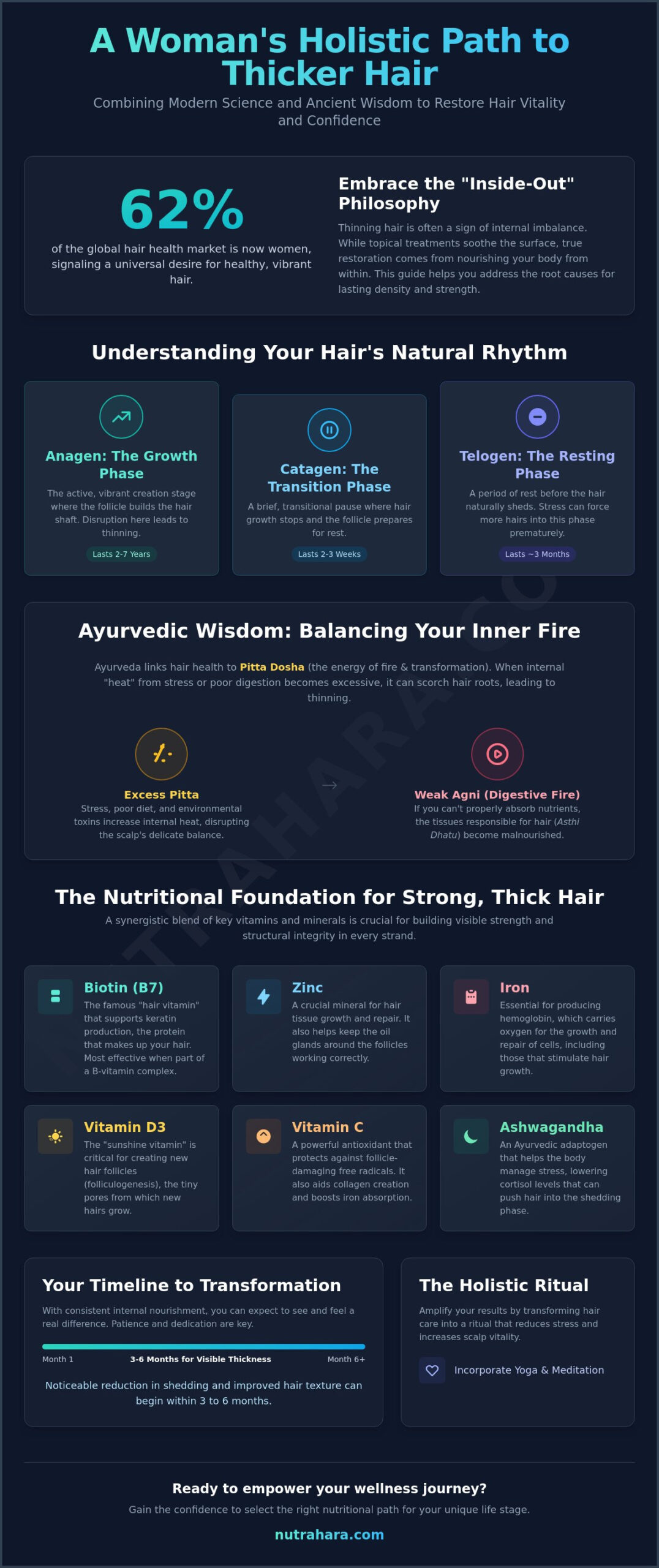
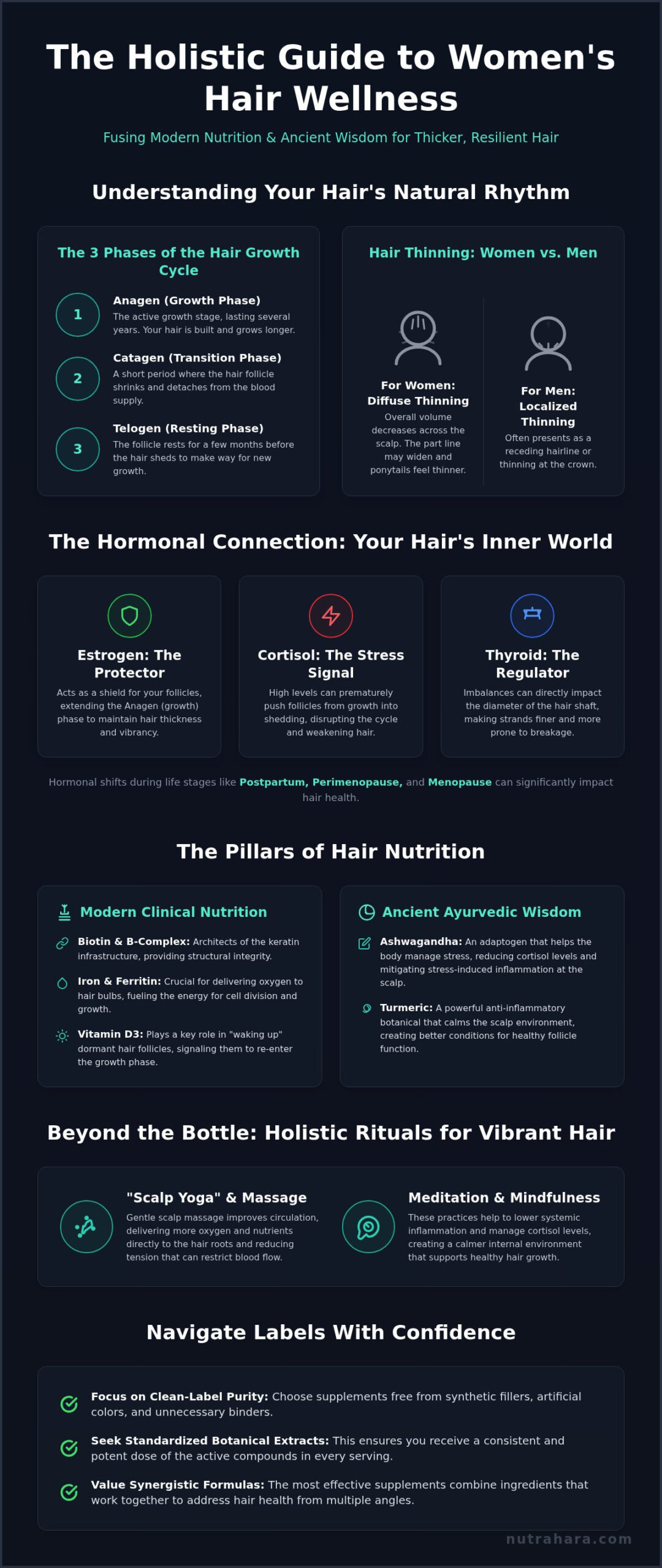
Your hair is a living reflection of your internal landscape. It isn’t just a static feature; it’s a dynamic system that follows a precise biological rhythm. To find the right vitamins for hair growth for women, you must first understand the hair growth cycle. This cycle consists of three distinct phases: Anagen, Catagen, and Telogen. Anagen is the active growth stage, which can last several years. Catagen is a short transition phase where the follicle shrinks. Finally, Telogen is the resting period before the hair eventually sheds to make room for new growth.
While men often experience localized receding at the hairline, women typically face “diffuse thinning.” This is a pattern where the overall volume decreases across the entire scalp, making the part line look wider or the ponytail feel thinner. This occurs because hormonal shifts often shorten the Anagen phase. When the growth window closes too early, your hair spends less time growing and more time resting, leading to a noticeable loss of density over time.
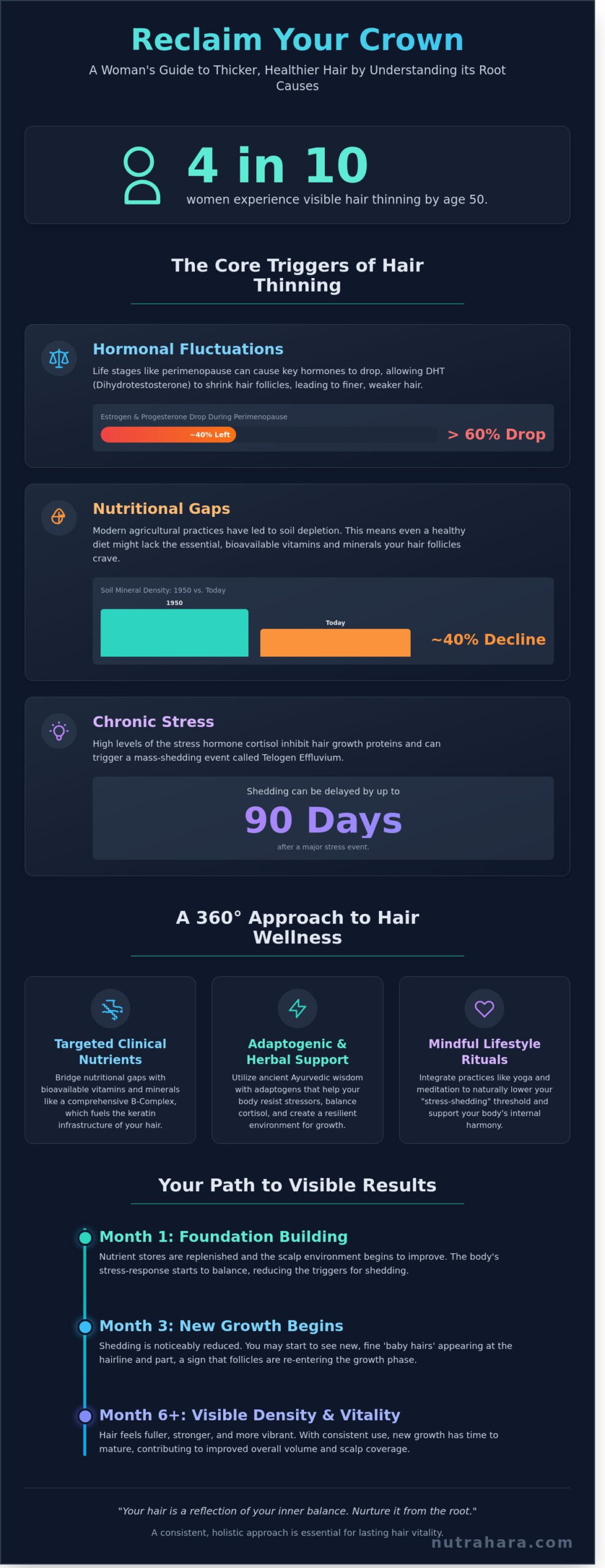
Estrogen acts as a protective shield for your follicles, extending the growth phase to maintain thickness. When estrogen levels are optimal, your hair stays anchored and vibrant. Conversely, cortisol, the hormone released during chronic stress, acts as a biological alarm. High cortisol levels can prematurely push follicles from the growth phase into the shedding phase. This disruption prevents the synthesis of essential proteins required for hair strength. Managing these internal signals is a vital part of your long-term wellness journey.
Hormonal Milestones: From Postpartum to Menopause
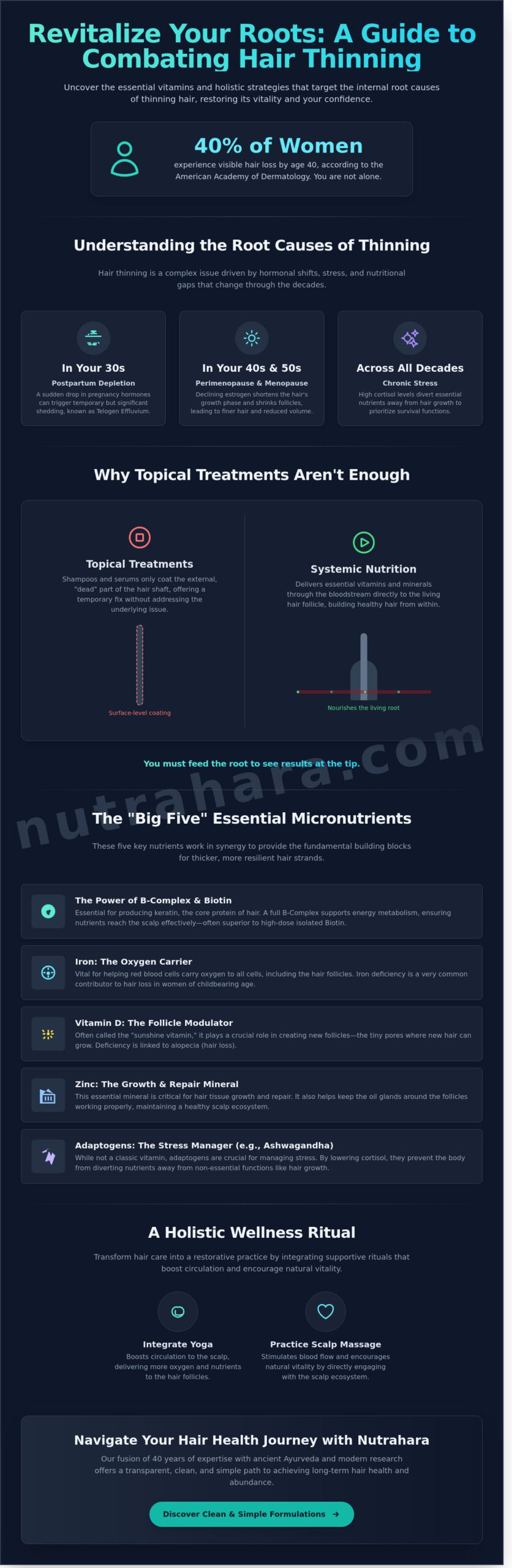
The transition through perimenopause often brings a noticeable shift in hair texture as estrogen levels begin to fluctuate and decline. This is also a common time for women to experience Telogen Effluvium (TE). This is a temporary but distressing form of shedding triggered by major life stressors, nutritional gaps, or illness. Beyond sex hormones, your thyroid health plays a quiet but critical role. An underactive or overactive thyroid can directly impact the diameter of the hair shaft, making individual strands feel finer and more prone to breakage. For many women, supporting hormonal balance with targeted supplements like FemmePower helps stabilize these transitions and provides a foundation for resilience.
The Scalp Environment: The Foundation for Growth
A healthy follicle requires a serene, nutrient-rich environment to thrive. Scalp inflammation is often a hidden culprit that restricts blood flow and oxygen delivery to the roots. Maintaining a proper sebum balance is equally important; excessive oil can clog the pore, while too little leaves the scalp brittle and dry. Follicular miniaturization is the process where hair becomes finer over time. When follicles shrink due to hormonal or environmental stress, they produce thinner, shorter strands that eventually stop breaking through the surface. Utilizing botanical support, such as Ashwagandha with Black Pepper, can help mitigate the stress-induced inflammation that contributes to this miniaturization, keeping your scalp environment “breathable” and productive.
Essential Vitamins for Hair Growth: The Fusion of Modern Nutrition and Ancient Wisdom
Achieving vibrant hair requires more than just high doses of a single ingredient. It demands a sophisticated blend of clinical science and time-honored botanical wisdom. While many look for vitamins for hair growth for women as a quick fix, the most effective approach treats the body as a whole system. Biotin and the wider B-Complex act as the primary architects of your hair’s keratin infrastructure. Without these, the hair shaft lacks the structural integrity to withstand daily styling or environmental stressors. Similarly, Vitamin D3 plays a vital role in “waking up” dormant hair follicles, encouraging them to return to the active growth phase from their resting state.
Iron and ferritin levels are equally critical for long-term density. These elements ensure that oxygen reaches the hair bulb, providing the energy necessary for rapid cell division. However, the true secret to efficacy lies in Ayurvedic synergy. Ancient traditions suggest that botanicals like Turmeric and Ashwagandha don’t just provide nutrients; they optimize the body’s ability to absorb and utilize them. This holistic perspective ensures that your supplement isn’t just passing through your system but is actually reaching the follicles where it’s needed most. You’re not just feeding your hair; you’re nourishing the soil in which it grows.
The Power of Antioxidants: Vitamins C and E
Vitamins C and E serve as the scalp’s primary defenders. Vitamin C is essential for collagen production, which strengthens the skin around the follicle, and it significantly improves iron absorption from your diet. Vitamin E acts as a lipid-soluble antioxidant, protecting the delicate scalp environment from oxidative stress caused by pollution and UV rays. When choosing vitamins for hair growth for women, prioritize high-quality, bioavailable forms over synthetic fillers to ensure your body can truly process these vital protectors.
The Ayurvedic Edge: Adaptogens for Hair Retention
Adaptogens offer a unique advantage in hair retention that modern multivitamins often miss. Ashwagandha, a cornerstone of Ayurvedic medicine, helps lower systemic cortisol. By calming this stress hormone, you prevent the premature shedding that often follows a period of anxiety or burnout. These ancient herbs support the “Prana,” or life force, of the hair follicle, fostering a resilient environment for growth. Integrating Ashwagandha with Black Pepper into your daily ritual can be a transformative step for stress-related thinning. For those looking to build a strong nutritional foundation, starting with a comprehensive Vitamin B-Complex provides the essential structural support your hair craves to stay strong and resilient.
Tailoring Your Routine: Hair Health Across Every Life Stage (Ages 30-60)
Your nutritional needs aren’t static. They evolve as you move through different milestones of your life. While a woman in her 30s might be battling the depletion that follows childbirth or intense career growth, a woman in her 50s is often navigating the structural changes brought on by menopause. Selecting the right vitamins for hair growth for women requires an understanding of these shifting biological priorities. It’s about meeting your body where it is today and honoring its unique progression.
In your 30s, the focus is often on recovery and resilience. Pregnancy and breastfeeding can drain your body’s stores of iron and B-vitamins, while modern life keeps cortisol levels high. For new mothers dealing with thinning, finding an effective postpartum hair loss treatment UAE is a crucial step in regaining confidence. Moving into your 40s, the early fluctuations of perimenopause begin to influence hair density. Estrogen levels start to dip, and the body’s natural collagen production wanes. This is the stage where your hair might lose its “bounce” or start to feel thinner at the part line. It’s a signal that your body requires a more targeted approach to structural support.
By your 50s and 60s, the goal shifts toward managing post-menopausal dryness and texture changes. Scalp sebum production decreases, which can leave hair feeling brittle or “wiry.” The hair shaft itself can undergo structural changes, becoming finer as the follicles receive fewer hormonal signals to stay in the growth phase. This is a natural transition, but it’s one that can be supported by providing the specific building blocks your body can no longer produce in abundance. It’s never too late to revitalize your hair by nourishing it from within.
The Collagen Connection for Mature Hair
As we age, amino acid depletion becomes a primary concern for hair strength. Without enough of these building blocks, hair becomes prone to breakage and loses its natural elasticity. Type I and III collagen are essential for maintaining the dermal layer of the scalp, which houses the hair follicles. A strong dermal foundation ensures that follicles stay firmly anchored and well-nourished. For those noticing a change in hair texture or strength, incorporating a Premium Collagen Complex can provide the structural support necessary to restore a sense of resilience to every strand.
Managing Hormonal Thinning Naturally
Hormonal shifts can sometimes lead to an increase in sensitivity to certain androgens, which can impact hair density. Certain plants contain natural compounds that help balance these signals without the need for harsh synthetic chemicals. Maintaining a balanced pH in the body is also crucial; it ensures that the vitamins for hair growth for women you consume are actually transported to your scalp effectively. Supporting your internal balance with a supplement like FemmePower helps address these hormonal fluctuations from the inside out, fostering a sense of overall wellness that reflects in the health of your hair.
Beyond the Bottle: Holistic Rituals for Vibrant Hair
Taking vitamins for hair growth for women is a powerful first step, but the journey doesn’t end at the bottle. Vibrant hair is the result of a lifestyle that prioritizes circulation, calm, and internal clarity. Your follicles are at the very end of your body’s nutrient delivery system. This means your blood must be flowing efficiently and your stress levels must be managed for those vitamins to do their work. If your body is in a state of constant tension, it prioritizes vital organs over hair growth, leaving your strands undernourished.
Scalp Yoga is an effective way to boost this delivery. Simple inversion poses, like Downward Dog or a gentle Forward Fold, use gravity to increase blood flow directly to the follicles. This physical practice, paired with daily scalp massage, can be transformative. In the Ayurvedic tradition, massaging specific “marma points” on the head helps release tension and stimulates the life force. Meditation further supports this process by reducing the systemic inflammation caused by chronic anxiety. When your mind is at peace, your body can shift resources away from a “fight or flight” response and toward the growth of healthy, resilient hair.
The Gut-Hair Axis is another critical factor in your progress. Your digestion determines how much “hair food” actually reaches your scalp. If your gut health is compromised, even the highest quality vitamins for hair growth for women won’t be fully absorbed. Focus on mindful eating and supporting your microbiome to ensure your nutritional investment yields visible results. When you nourish the gut, you nourish the strand.
Nutrition for the Soul and the Strand
A yoga-friendly diet emphasizes “Sattvic” foods. These are fresh, whole, and nutrient-dense options like seeds, nuts, and leafy greens that promote both mental clarity and physical growth. Healthy fats, particularly Omega-3s found in flaxseeds or walnuts, are essential for maintaining a lubricated, shiny hair shaft. Don’t overlook the simplest ritual: hydration. Water is the most basic “vitamin” for hair elasticity, keeping the strands from becoming brittle and prone to breakage. Establishing a daily hydration ritual ensures your hair remains supple from the inside out.
Detoxifying for Growth
Environmental toxins and heavy metals can accumulate in the hair follicles over time, hindering healthy growth. Supporting your liver is essential for clearing out these impurities and managing the excess hormones that often lead to thinning. A gentle internal cleanse can reset your system and create a clean slate for new growth. To support your body’s natural filtering processes, consider integrating DetoxifyLife into your seasonal wellness routine. Clearing these internal pathways allows your body to focus its energy on restoration. Begin your journey toward a cleaner, more vibrant self by discovering our full range of holistic supplements.
The Nutrahara Path to Radiance: Choosing Your Perfect Supplement
Choosing the right vitamins for hair growth for women requires more than just looking at the front of the bottle. You must look at the back. A “Clean Label” approach is vital because synthetic fillers can disrupt your delicate gut microbiome, which acts as the gateway to nutrient absorption. High-quality formulas prioritize purity and use standardized extracts. This means the active botanical compounds are measured for potency, so you get the same restorative benefits in every dose. At Nutrahara, we bridge the gap between clinical validation and ancient Ayurvedic wisdom to ensure your hair receives the most transparent care possible.
Consistency is your greatest ally on this journey. The 90-Day Rule is a biological reality; your hair follicles need time to transition from the resting phase back into active growth. Don’t feel discouraged if you don’t see massive changes in the first week. True transformation is a slow, steady progression that rewards those who stay committed to their daily wellness ritual. Patience allows your internal systems to reach a state of balance that eventually manifests as outward vitality.
Creating Your Long-Term Wellness Progression
A successful wellness journey is rarely about a single ingredient. It’s about how you stack your support. For example, pairing Premium Collagen Complex with a high-quality Vitamin B-Complex provides both the structural amino acids and the metabolic fuel your follicles crave. As you progress, track your changes mindfully. You’ll likely notice tiny “baby hairs” appearing along your hairline first, which is a wonderful sign that your follicles are waking up. For a broader perspective on how to support your body through every decade, explore The Ultimate Guide to Women’s Wellness Supplements.
Real Stories of Transformation
The true measure of any ritual is the confidence it restores. Elena, a 54-year-old woman navigating post-menopausal changes, shared her experience: “I started seeing a real difference in my part line after three months of consistent ritual. My hair feels thicker, but more importantly, I feel like myself again.” This confidence boost is a natural byproduct of taking proactive steps toward your health. When you provide your body with the right vitamins for hair growth for women, you’re doing more than just fixing a cosmetic concern. You’re nurturing your self-esteem. Hair health is a beautiful reflection of internal harmony and the care you show your body every single day.
Embrace Your Personal Path to Radiance
Your hair’s health is a dynamic journey that reflects your internal harmony. By understanding the science of growth cycles and the power of Ayurvedic synergy, you’ve gained the tools to support your strands through every life stage. It’s about more than just a quick solution; it’s about a sustainable ritual that honors your body’s changing needs from your 30s to your 60s. When you choose the right vitamins for hair growth for women, you’re investing in a long-term progression toward thickness and resilience.
Consistency and patience are your greatest allies as you wait for new growth to emerge. Nutrahara supports this journey with formulas that feature clinically-backed ingredients and Ayurvedic adaptogens for stress support. Our commitment to purity means every supplement is free from artificial additives, giving you peace of mind with every dose. You deserve to feel confident and empowered in your appearance at every age. Start your transformation today and trust in the wisdom of nature and science combined.
Empower your hair journey with Nutrahara’s clean, Ayurvedic-inspired supplements.
Frequently Asked Questions
How long does it take for hair growth vitamins to show results?
It typically takes at least 90 days of consistent use to see visible results from hair growth vitamins. This timeframe aligns with the natural anagen growth phase of your follicles. You might notice small “baby hairs” at the hairline or less shedding during brushing first. Patience is vital because your body needs time to build up nutrient stores and reset the growth rhythm.
Can taking too many vitamins actually cause hair loss?
Yes, excessive intake of certain nutrients can paradoxically lead to hair shedding. High doses of Vitamin A or selenium are known triggers for hair loss when taken in toxic amounts. It’s essential to follow the recommended dosage on your supplement label. Choosing a balanced formula ensures you’re supporting your body without overwhelming your system’s natural filtering processes.
Does biotin really work for everyone, or is it a myth?
Biotin is most effective for individuals with a clinical deficiency, though it serves as a crucial building block for keratin infrastructure in most women. While it isn’t a “magic pill” for everyone, it supports the structural integrity of the hair shaft. For the best results, look for vitamins for hair growth for women that combine biotin with synergistic ingredients like Vitamin D3 and Ayurvedic adaptogens.
What is the best vitamin for hair thinning during menopause?
Vitamin D3 and a comprehensive B-complex are often the most beneficial during the menopausal transition. These nutrients help “wake up” dormant follicles and support the metabolic energy needed for growth as estrogen levels decline. Pairing these with collagen helps address the structural changes and dryness that often occur in your 50s and 60s, keeping your hair resilient and supple.
Can yoga and meditation really help my hair grow back?
Yoga and meditation support hair regrowth by lowering systemic cortisol and improving blood circulation to the scalp. Chronic stress pushes hair into a resting phase prematurely, leading to diffuse thinning. Practicing inversion poses like Downward Dog increases oxygen delivery to the follicles. These holistic rituals create a calm internal environment where your nutritional supplements can perform their best work.
Is it safe to take hair supplements while pregnant or breastfeeding?
You should always consult your healthcare provider before starting any new supplement while pregnant or breastfeeding. While many ingredients in vitamins for hair growth for women are natural, your nutritional needs are unique during these stages. For more information on choosing safe and effective products during motherhood, pregnancymagazine.com offers a helpful guide. Most women find that a high-quality prenatal vitamin provides the foundational support needed, but adding specific botanicals requires professional medical guidance to ensure safety.
What is the difference between hair vitamins and a standard multivitamin?
Hair-specific vitamins contain higher concentrations of nutrients that target the follicle and keratin production, such as biotin, zinc, and specific amino acids. A standard multivitamin provides broad support for general health but may lack the therapeutic doses required to reverse thinning. Targeted formulas often include Ayurvedic botanicals like Ashwagandha, which address the stress-related roots of hair loss that general multivitamins typically overlook.
How do I know if my hair loss is hormonal or nutritional?
Hormonal hair loss often appears as diffuse thinning across the entire scalp or a widening part line, while nutritional loss may be accompanied by brittle texture or fatigue. If your shedding follows a major life event, pregnancy, or menopause, hormones are likely the primary driver. A blood test can confirm deficiencies in iron or Vitamin D, helping you determine if your hair needs more structural “food” or better hormonal balance.
Disclaimer
This article is not a substitute for medical advice. Please consult a healthcare professional before starting any supplement, especially if pregnant, nursing, taking medication, or managing health conditions.