

...
Categories
Articles

Integrating Ayurvedic Principles into Daily Routine: A Modern Woman’s Guide to Longevity

What if your persistent brain fog and afternoon energy crashes aren’t just signs of a busy life, but evidence that you’re out of sync with your natural rhythms? For most women today, the thought of integrating ayurvedic principles into daily routine sounds like an overwhelming task reserved for those with hours of free time. You’ve likely felt the frustration of hormonal shifts and chronic stress, searching for a solution that feels both scientifically sound and deeply nurturing.

It’s true that the modern world doesn’t always respect the female body’s unique cycles. However, you don’t need to choose between ancient tradition and clinical validation. By blending time-tested Ayurvedic wisdom with modern nutritional research, you can create a lifestyle that supports your health from the inside out. This guide provides a clear, manageable roadmap to balance your hormones, sharpen your mind, and support your longevity. We’ll explore practical steps to help you reclaim your vitality and thrive through every stage of womanhood, from your thirties into your sixties and beyond.

Key Takeaways

  • Learn how to identify your unique Ayurvedic constitution, or Prakriti, to tailor your wellness journey to your body’s specific biological needs.
  • Discover how integrating ayurvedic principles into daily routine through Dinacharya helps align your internal clock with nature to stabilize hormones and reduce stress.
  • Master simple morning rituals that ignite your Agni, or digestive fire, to eliminate brain fog and sustain your energy levels throughout the day.
  • Explore the power of a Sattvic diet and Rasayana practices to support bone density, skin elasticity, and graceful aging during every life stage.
  • Understand how modern herbal supplements serve as a vital bridge between ancient wisdom and contemporary nutritional science for long-term vitality.

Understanding Ayurveda: The Science of Life for the Modern Woman

Ayurveda is often translated from Sanskrit as Understanding Ayurveda: The Science of Life; “Ayur” meaning life and “Veda” meaning knowledge. It isn’t a medical system you visit only when you feel unwell. It’s a holistic philosophy designed to sustain health through every breath, meal, and thought. For women between the ages of 30 and 60, this ancient wisdom offers a vital lens through which to view a changing body. Integrating ayurvedic principles into daily routine allows you to move from fighting your biology to flowing with it.

Your journey toward longevity starts with Prakriti, your unique bio-individual constitution. No two women experience the transition into their 40s or 50s exactly the same way. While one woman might struggle with the “heat” of perimenopausal shifts, another might feel a persistent “dryness” or a lack of mental clarity. By identifying your baseline, you can choose foods and rituals that restore your specific equilibrium. This isn’t about following a fleeting trend. It’s about coming home to yourself.

The Three Doshas and Your Life Stages

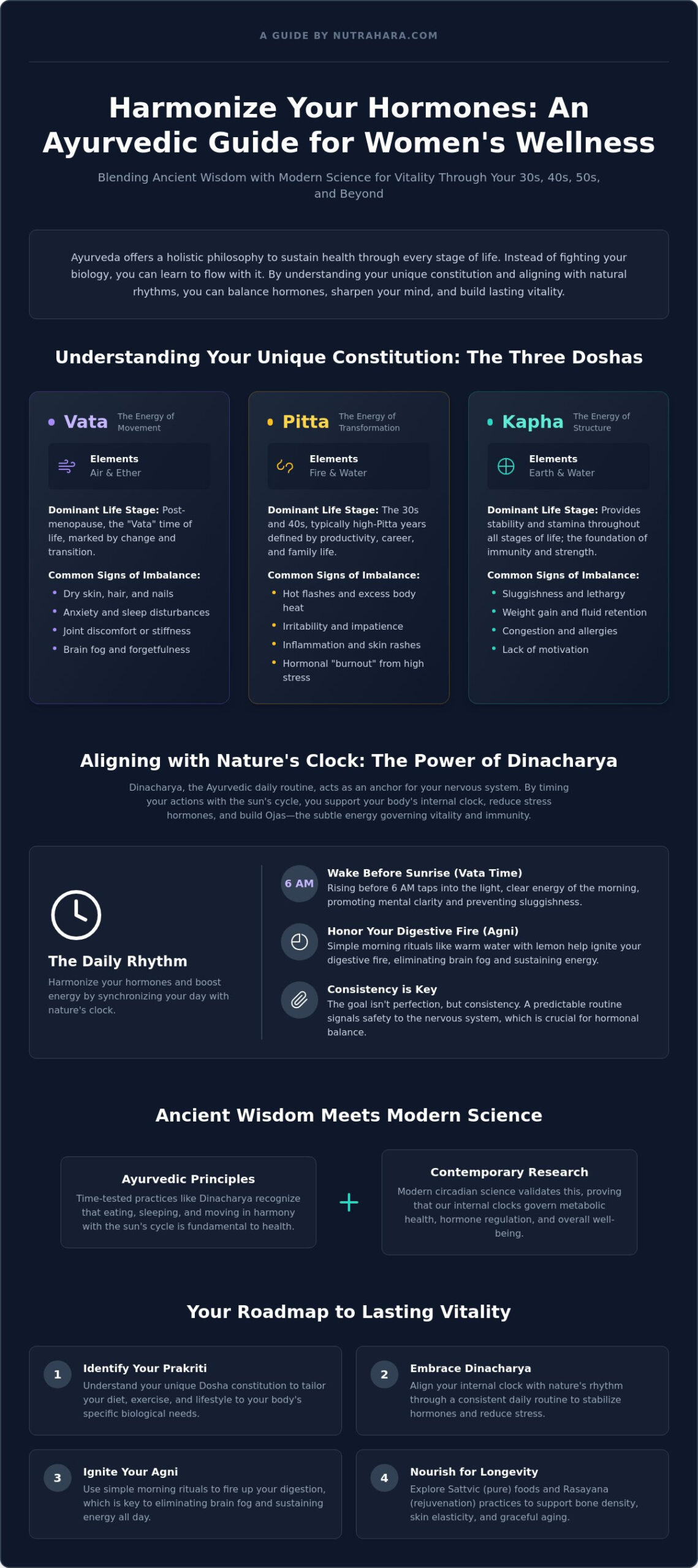
Ayurveda identifies three primary energy patterns, or doshas, that govern our physiology and psychology. These energies shift as we age, influencing how we feel and function.

  • Vata: Composed of air and ether, Vata is the energy of movement. As we enter the post-menopausal stage, we transition into the “Vata” time of life. This often manifests as dry skin, joint discomfort, or sleep disturbances. Using adaptogens like Ashwagandha can help ground this erratic energy and support cognitive function.
  • Pitta: Driven by fire and water, Pitta is the energy of transformation. The 30s and 40s are typically high-Pitta years, defined by career growth, motherhood, and high productivity. If Pitta is out of balance, it can lead to irritability, inflammation, or hormonal “burnout.”
  • Kapha: Made of earth and water, Kapha is the energy of structure and lubrication. Kapha provides the stability and stamina needed to weather life’s storms. It’s the foundation of your immunity and physical strength, though an excess can lead to feelings of sluggishness or weight gain.

For women managing a jewelry or diamond brand during these high-productivity years, reducing business-related stress is key to preventing Pitta burnout; Valigara allows you to explore Multi-channel Listing Automation to streamline your operations and preserve your energy for wellness.

Hormonal shifts in your 40s and 50s often mirror Vata or Pitta imbalances. For example, hot flashes are a classic sign of excess Pitta (heat), while anxiety and “brain fog” often signal a Vata disturbance. Targeted support like FemmePower is designed to address these specific fluctuations by bridging traditional herbal wisdom with modern clinical insights.

Why Ancient Wisdom Meets Modern Science

The Nutrahara philosophy is rooted in the belief that tradition and clinical research are two sides of the same coin. We don’t just use herbs because they’re ancient; we use them because modern science validates their efficacy. Integrating ayurvedic principles into daily routine aligns perfectly with contemporary circadian rhythm science. Both systems recognize that eating, sleeping, and moving in harmony with the sun’s cycle optimizes metabolic health and hormonal balance. Ayurveda is a personalized roadmap for longevity rather than a one-size-fits-all diet.

The Daily Rhythm (Dinacharya): Aligning with Nature’s Clock

In the frantic pace of modern life, your nervous system often stays in a state of high alert. Dinacharya, the Ayurvedic practice of daily routine, acts as an anchor to bring you back to center. By aligning your actions with the natural cycles of the day, you can significantly reduce cortisol levels and soothe the anxiety that often accompanies hormonal fluctuations. Integrating ayurvedic principles into daily routine isn’t about adding more tasks to your to-do list. It’s about shifting the timing of what you’re already doing to support your body’s internal clock.

Many women feel overwhelmed by the idea of a complex ritual. You don’t need a two-hour morning ceremony to see results. Science increasingly supports these ancient patterns, particularly through the study of circadian rhythms. According to Ayurvedic Nutrition and Herbal Support guidelines from experts at Johns Hopkins, these lifestyle adjustments help maintain balance and prevent the “burnout” so common in our 40s and 50s. Consistency is the true secret to building Ojas, the subtle energy that governs your vitality and immunity.

Hormonal Harmony Through Timing

Waking before 6:00 AM, during the Vata period of the morning, allows you to tap into the light, clear energy of the atmosphere. This simple shift can transform your mental clarity and prevent the “heavy” feeling that comes from sleeping into the Kapha hours. For women in perimenopause, regular meal times are equally crucial. Eating your largest meal at midday, when your digestive fire is strongest, helps stabilize blood sugar and prevents the late-night crashes that disrupt sleep. For more on supporting these transitions, see The Ultimate Guide to Women’s Wellness Supplements.

Adapting Tradition for the 2026 Lifestyle

To make this sustainable, prioritize the “Big Three”: morning hydration, a substantial midday meal, and an early bedtime. Start your day with warm lemon water to flush the system. If you find yourself struggling with the evening wind-down, consider a grounding adaptogen like Ashwagandha with Black Pepper to help lower stress before bed. Use a habit tracker to implement just one change per week. This gradual approach builds lasting confidence and ensures that integrating ayurvedic principles into daily routine becomes a natural, effortless part of your long-term health progression.

Morning Rituals for Energy and Mental Clarity

Waking during Brahma Muhurta, the “time of the creator,” is a profound way to start your day. This window, roughly 90 minutes before sunrise, is when the air is still and the mind is most receptive. Integrating ayurvedic principles into daily routine at this hour allows you to tap into a reservoir of peace before the world demands your attention. Scientific research into Ayurvedic principles highlights how these early hours correlate with peak cognitive function and hormonal stability. By rising with the sun, you align your internal biological clock with the planet’s natural rhythm.

A key focus of your morning should be Agni, or digestive fire. For women navigating the complexities of perimenopause or postpartum recovery, maintaining a strong Agni is the difference between feeling vibrant or chronically fatigued. When Agni is balanced, your body efficiently converts food into energy and prevents the buildup of “Ama,” or metabolic waste. This fire is the foundation of your metabolic health and longevity.

Detoxification and Sensory Awakening

Before you eat or drink, focus on clearing the toxins that accumulated overnight. Start with tongue scraping. Use a copper or stainless steel scraper to gently remove the coating on your tongue. This act removes bacteria and stimulates the internal organs connected to the tongue’s surface. Follow this with oil pulling using organic sesame or coconut oil for 5 to 10 minutes. This practice supports oral health and systemic detoxification. Finally, drink a glass of warm lemon water. It gently awakens the digestive tract and prepares your body for the day’s first meal.

Movement and Mindfulness

Gentle movement is essential to shift the lymph and reduce morning joint stiffness that often appears in our 40s. A short sequence of Sun Salutations or restorative yoga poses can help. Pair this with Nadi Shodhana, or alternate nostril breathing, to balance the nervous system. If you find your focus still wavers during these early hours, FocusZenith can provide the modern nutritional support needed for sharp cognitive clarity. Don’t forget the practice of Self-Snehana, or self-massage with warm oil. It’s a powerful act of self-love that calms the nervous system, lowers cortisol, and nourishes the skin.

“I used to feel like I was dragging myself through a fog until noon,” says Elena, 42. “By simply integrating ayurvedic principles into daily routine, starting with tongue scraping and warm water, my energy levels stabilized. I no longer need that third cup of coffee to feel human.”
Ayurvedic Nutrition and Herbal Support for Women

Ahara, or nutrition, is much more than just a count of calories; it is the essential foundation of your vitality and longevity. A Sattvic diet focuses on pure, light, and energy-giving foods like fresh fruits, whole grains, and organic vegetables. For women aged 30 to 60, this approach is vital for maintaining bone density and skin elasticity. Integrating ayurvedic principles into daily routine means choosing foods that don’t just fill you up but actually nourish your deep tissues, known as Dhatus, to support a long and healthy life.

Eating for Your Dosha and Your Age

In your 40s and 50s, hormonal shifts often require a strategic shift on your plate. If you feel ungrounded or experience persistent dryness, focus on Vata-pacifying foods. These are warm, cooked, and grounding, such as root vegetables and healthy fats like ghee. If you are dealing with hot flashes or inflammation, Pitta-pacifying foods are your best ally. Opt for cooling, hydrating choices like cucumber, mint, and sweet fruits. Maintaining this internal balance also supports your intimate health; you can learn more in A Complete Guide to Vaginal pH Balance.

The Modern Apothecary: Science-Backed Herbs

While traditional preparations are beautiful, the modern woman often lacks the time for complex herbal decoctions. Nutrahara serves as your modern bridge, offering high-quality formulas that provide traditional benefits in a convenient form. Ashwagandha is the “queen” of Ayurvedic herbs, specifically valued for its ability to regulate cortisol levels in perimenopausal women. Our Ashwagandha with Black Pepper is designed for optimal absorption to support stress management and better sleep. By integrating ayurvedic principles into daily routine through targeted herbal support, you can maintain a calm and focused mind regardless of your schedule.

As we age, joint health and skin structural integrity become top priorities. Our Premium Collagen Complex combines modern peptide science with the anti-inflammatory power of turmeric to protect your movement and your glow. For deep hormonal support, Shatavari has been used for centuries to nourish the female reproductive system. We’ve included this potent botanical in FemmePower to help you thrive through every cycle and transition with confidence. It’s a simple way to bring ancient wisdom into your current lifestyle.

Ready to elevate your wellness journey? Explore our full range of Ayurvedic-inspired supplements to find your perfect match for hormonal harmony and lasting energy.

Integrating Ayurvedic Principles into Daily Routine: A Modern Woman’s Guide to Longevity

Evening Rituals: Rest, Longevity, and the ‘Third Act’

The window between 6 PM and 10 PM is governed by Kapha energy, characterized by stability, heaviness, and slow movement. Nature intends for this period to be your time of transition, shifting from the fiery productivity of the day into a state of deep rest. Integrating ayurvedic principles into daily routine during these hours is essential for protecting your Ojas, or vital essence. When you honor this cycle, you allow your body to enter a state of Rasayana. This refers to the ancient science of rejuvenation and longevity, ensuring your cells repair and renew while you sleep.

One of the most effective tools for this transition is Abhyanga, or warm oil self-massage. This practice isn’t merely a beauty ritual. It’s a profound way to support lymphatic drainage and soothe a nervous system taxed by daily stress. By gently massaging warm, organic oil into your skin, you nourish your tissues and create a protective barrier against the drying effects of aging. It’s a moment of quiet connection with your body that fosters both physical resilience and emotional calm.

The Ayurvedic Sleep Sanctuary

Your bedroom should be a sanctuary for your spirit. Modern life introduces a conflict between blue light and Ojas; the artificial glow of screens disrupts the production of melatonin and depletes your vital energy. A digital detox at least one hour before bed is crucial. Use this time for evening meditation to release “mental Ama,” the psychological toxins and undigested thoughts from your day. If you struggle to achieve the deep rest your body requires, RestoraSleep provides the targeted nutritional support needed for deep, restorative rest.

Longevity and the Third Act of Womanhood

Ayurveda views the transition into menopause not as a decline, but as an entry into the “Third Act,” a stage of life defined by higher consciousness and spiritual wisdom. This is a time to prioritize practices that support bone health and cognitive longevity. Regular weight-bearing movement and a diet rich in minerals are vital. Integrating ayurvedic principles into daily routine at this stage empowers you to age with vitality rather than fear. Consistency in these rituals ensures that your later years are marked by strength and clarity.

Aging is a journey toward becoming a “wise woman,” where your life experience becomes your greatest strength. You have the power to shape your health progression through small, consistent choices. Take the first step toward your most vibrant self today. Start your journey with a Nutrahara wellness consultation or explore our starter kits to find the perfect bridge between ancient wisdom and your modern life.

Embrace Your Path to Lasting Vitality

Thriving through the transitions of womanhood is a personal journey that requires both patience and the right tools. You’ve seen how integrating ayurvedic principles into daily routine through simple shifts like mindful meal timing and grounding evening rituals can stabilize your energy. This ancient wisdom, when paired with contemporary nutritional science, provides a powerful roadmap for your long-term health progression.

At Nutrahara, we’re here to support your evolution. Our clean, natural formulas are created by nutritional experts and Ayurvedic scholars to ensure clinical efficacy and purity. We stand behind your wellness journey with a 30-day satisfaction guarantee and offer free shipping on all orders over $50. You deserve to feel vibrant, clear, and deeply connected to your body’s natural rhythms at every stage of life.

Discover the Nutrahara Collection: Ancient Wisdom Meets Modern Science

Your future self will thank you for the care you begin today. Trust in your body’s wisdom and take that first step toward longevity with confidence.

Frequently Asked Questions

What are the first steps to integrating Ayurveda into a busy schedule?

Focus on high-impact, low-time-commitment rituals to start. Begin by drinking a glass of warm lemon water upon waking and using a copper tongue scraper to clear overnight toxins. These simple acts begin the process of integrating ayurvedic principles into daily routine without requiring hours of meditation. Once these habits feel natural, you can gradually introduce more complex practices like a five-minute self-massage or standardized meal times.

Can Ayurvedic principles help with perimenopause symptoms like hot flashes?

Ayurvedic principles offer significant support for perimenopause by addressing the underlying elemental imbalances. Hot flashes are typically seen as an excess of Pitta, or fire energy, in the body. By incorporating cooling foods like cucumber and mint, and using adaptogenic support like Shatavari, you can soothe the heat in your system. This holistic approach helps stabilize your internal temperature and calms the nervous system during hormonal shifts.

Is it safe to take Ayurvedic supplements like Ashwagandha with my daily vitamins?

Most Ayurvedic supplements are safe to take alongside standard multivitamins. Adaptogens like Ashwagandha work synergistically with modern nutritional science to support stress management and hormonal health. However, you should always consult with your healthcare provider before starting a new regimen, especially if you take prescription medications. Quality matters; ensure your supplements are clean and free from artificial additives or undisclosed heavy metals.

How do I know which dosha I am without seeing an Ayurvedic practitioner?

You can begin identifying your dosha by observing your physical tendencies and mental patterns over time. Vata types are often lean and prone to anxiety; Pitta types tend to have a medium build and a sharp intellect; Kapha types are usually sturdy and calm. Many reputable wellness organizations offer online assessment tools based on traditional diagnostic criteria. While a practitioner provides the most depth, self-observation is a powerful starting point.

Does Ayurveda require me to become a vegetarian?

Ayurveda doesn’t strictly require a vegetarian diet, though it emphasizes Sattvic, or pure, plant-based foods for mental clarity. The goal is to eat what is most balancing for your specific constitution and life stage. While many practitioners suggest reducing heavy meats to support easier digestion, you can still consume animal products if they are prepared mindfully. It is about bio-individuality and what nourishes your body best rather than rigid dietary rules.

What is the best time of day to exercise according to Ayurveda?

The ideal time for vigorous exercise is during the Kapha hours, between 6:00 AM and 10:00 AM. During this window, your body has the most natural stamina and strength to handle physical exertion. If you prefer gentler movement like restorative yoga or walking, the evening Kapha period from 6:00 PM to 10:00 PM is also beneficial for winding down. Aligning your fitness routine with these natural cycles optimizes your metabolic results.

How long does it take to see results from an Ayurvedic daily routine?

You may notice subtle improvements in your digestion and mental clarity within just a few days of integrating ayurvedic principles into daily routine. For deeper, systemic changes like hormonal balance or improved sleep quality, it typically takes four to six weeks of consistent practice. Ayurveda is a long-term progression rather than a quick fix. Your body needs time to realign with its natural rhythms and build sustainable vitality from the inside out.

Article by

Nutrahara Team

We are a dedicated collective of nutrition scientists and naturopaths at Nutrahara, committed to advancing women's health through the fusion of ancient Ayurveda science and cutting-edge nutrition research. Our mission is to empower you with clean, simple, and scientifically validated wellness solutions so you can live your healthiest life. Connect with us to stay updated on the latest developments in holistic women's health and nature-based research.

Disclaimer

This article is not a substitute for medical advice. Please consult a healthcare professional before starting any supplement, especially if pregnant, nursing, taking medication, or managing health conditions.

Categories
Articles

Ayurvedic Medicine for Women’s Wellness: A Complete Guide

Are you navigating the complexities of your wellness journey, feeling like you’re only treating symptoms instead of finding true, lasting balance? If you’re struggling with hormonal shifts, persistent stress, or a lack of vibrant energy, you are not alone. For centuries, women have turned to a time-tested, holistic system for answers. This is where the ancient wisdom of ayurvedic medicine for women’s wellness offers a nurturing and effective path forward, bridging the gap between nature and the needs of the modern woman.

Forget overwhelming jargon and confusing concepts. This complete guide is designed to be your trusted companion, making this profound science both accessible and practical. We will explore how Ayurveda can help you balance your hormones, boost your energy, and enhance your overall well-being through every stage of life. You will discover key natural herbs, learn simple daily routines, and feel empowered to take a holistic and personalized approach to your health. It’s time to embrace a lifestyle of lasting vitality.

Key Takeaways

  • Understand Ayurveda’s core principles to create a personalized path toward mind-body balance and lasting vitality.
  • Learn how Ayurveda’s unique perspective on a woman’s life cycle can help you navigate hormonal shifts with greater ease and understanding.
  • A core component of ayurvedic medicine for women’s wellness involves using specific rejuvenating herbs to nourish your body through every stage of life.
  • Discover simple daily routines (Dinacharya) that can anchor your well-being and create a foundation of consistent energy and calm.

What is Ayurveda? Core Principles for Modern Women

At its heart, ancient Ayurveda science offers a personalized roadmap to well-being. To fully appreciate its depth, it’s helpful to explore the question, What is Ayurveda? It is a 5,000-year-old holistic healing system from India focused on achieving a harmonious balance between mind, body, and spirit. This holistic approach is the foundation of effective ayurvedic medicine for women’s wellness, viewing every individual as a unique expression of the five universal elements (Pancha Mahabhutas): Earth, Water, Fire, Air, and Ether.

The Three Doshas: Understanding Your Unique Constitution

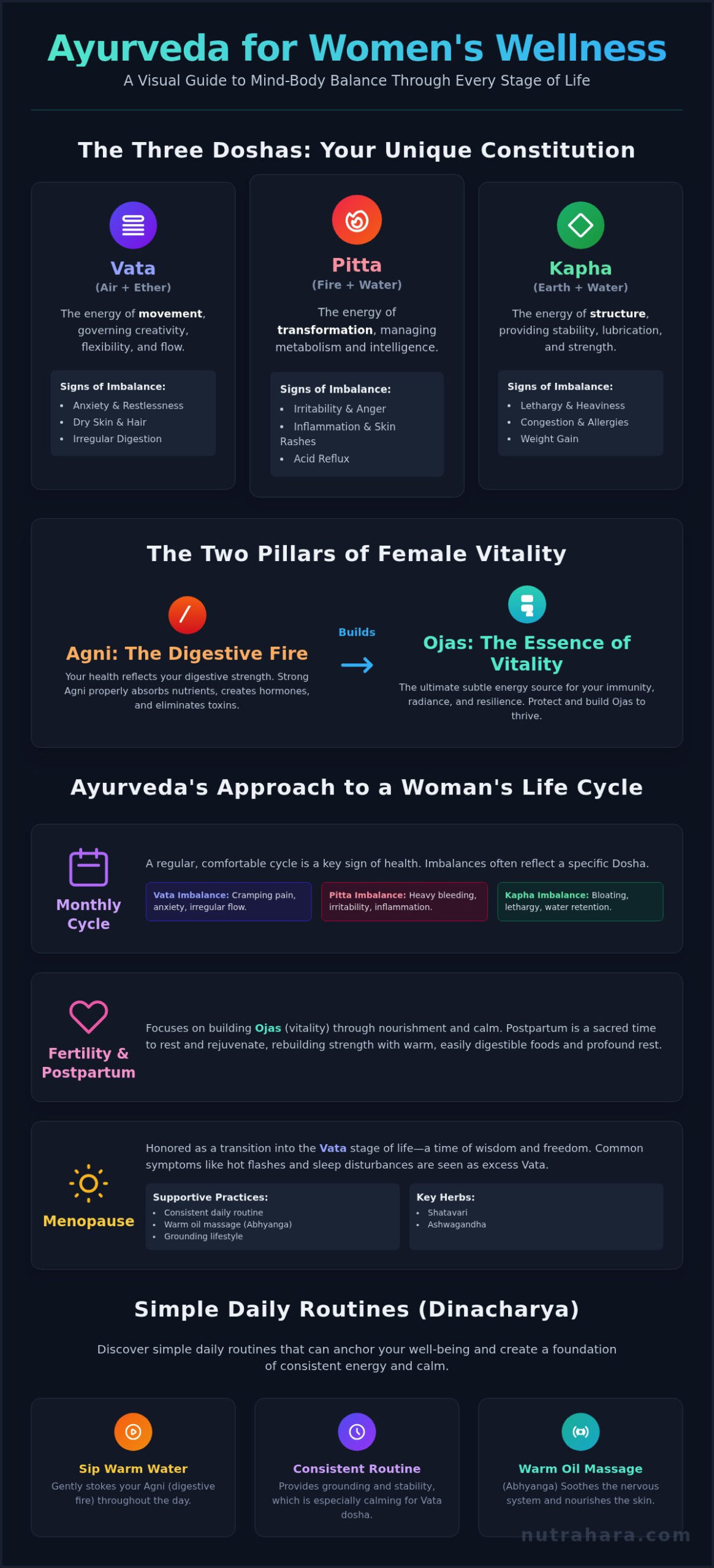
These five elements combine to form three primary functional energies, or Doshas, that govern our unique physical and mental characteristics. Understanding your dominant Dosha is the first step on your wellness journey.

  • Vata (Air + Ether): The energy of movement. It governs creativity, flexibility, and flow. When imbalanced, it can lead to anxiety, dry skin, and irregular digestion.
  • Pitta (Fire + Water): The energy of transformation. It manages metabolism, body temperature, and intelligence. An excess can manifest as inflammation, irritability, or skin rashes.
  • Kapha (Earth + Water): The energy of structure. It provides stability, lubrication, and strength. Imbalance may result in lethargy, congestion, or weight gain.

Agni (Digestive Fire): The Cornerstone of Female Health

In Ayurveda, your health is a direct reflection of your digestive strength, known as Agni. This “digestive fire” does more than just break down food; it governs the absorption of nutrients, the creation of hormones, and the elimination of toxins. When Agni is weak, it can lead to common issues like bloating, fatigue, and hormonal imbalances. A simple yet powerful practice is to sip warm water throughout the day to gently stoke this internal fire.

Ojas: The Essence of Your Vitality and Immunity

When your Agni is strong and your body is nourished, you create Ojas-the ultimate, subtle essence of vitality. Ojas is the source of your immunity, radiance, and resilience. Chronic stress, poor diet, and exhaustion can deplete this precious energy, leaving you feeling drained. Protecting and building your Ojas is a key goal in ayurvedic medicine for women’s wellness, ensuring you have the deep reserves of energy needed to thrive.

Ayurveda’s Approach to a Woman’s Life Cycle

In Ayurveda, a woman’s life is not a linear path but a dynamic, cyclical wellness journey. From the first menstrual cycle to the wisdom of menopause, each stage is marked by unique hormonal and energetic shifts. This entire system is governed by the Artava Vaha Srotas, the delicate channels of the female reproductive system. Understanding the core principles of Ayurveda helps us view these fluctuations through the lens of the three Doshas-Vata, Pitta, and Kapha-whose balance dictates our well-being. The goal is to nurture these natural transitions, fostering harmony from within.

Balancing Your Monthly Cycle

A regular, comfortable menstrual cycle is a key indicator of vibrant health. When imbalances arise, they often reflect a specific Dosha. For example:

  • Vata Imbalance: May cause cramping pain, anxiety, and irregular cycles.
  • Pitta Imbalance: Can lead to heavy bleeding, irritability, and inflammation.
  • Kapha Imbalance: Often manifests as bloating, lethargy, and water retention.

Gentle diet adjustments and mindful movement tailored to your constitution can help guide your cycle back to its natural rhythm.

Nurturing Fertility and Postpartum Vitality

The wisdom of ayurvedic medicine for women’s wellness shines in its support for fertility and motherhood. It focuses on building Ojas, the body’s deepest source of vitality, through nourishing foods and a calm mind. The postpartum period is especially revered as a sacred time for the mother to rest and rejuvenate. The primary goal is to rebuild strength with warm, easily digestible foods, gentle herbs, and profound rest, restoring vitality for the journey ahead.

Navigating Perimenopause and Menopause Gracefully

Menopause is honored as a natural transition into the Vata stage of life-a time of wisdom, freedom, and spiritual growth. Common symptoms like hot flashes, sleep disturbances, and vaginal dryness are often seen as signs of excess Vata (the energy of air and ether). Grounding lifestyle practices, such as a consistent daily routine, warm oil massage (abhyanga), and clinically studied herbs like Shatavari and Ashwagandha, can help soothe the nervous system and support a graceful, empowered transition.

Key Ayurvedic Herbs for Women’s Wellness

At the heart of Ayurvedic medicine for women’s wellness is the concept of Rasayanas-powerful, rejuvenating herbs that nourish the body from the inside out. These botanicals work deeply to replenish the seven essential tissues (Dhatus), promoting vitality, resilience, and longevity. Ancient texts and modern research both highlight the efficacy of specific Ayurvedic herbs for women’s wellness, demonstrating their role in supporting the body’s innate intelligence. To experience their full benefits, it is crucial to choose high-quality, pure herbal formulas that are clean, simple, and effective.

Adaptogens for Stress, Mood, and Hormonal Harmony

Adaptogens are a remarkable class of herbs that help the body manage stress, find balance, and maintain equilibrium. They work intelligently to support your system where it’s needed most on your wellness journey.

  • Shatavari: Often called the ‘queen of herbs,’ Shatavari is a premier tonic for the female reproductive system. It supports hormonal balance, soothes tissues, and promotes healthy cyclical function through all stages of life.
  • Ashwagandha: As a powerful adaptogen, Ashwagandha is celebrated for its ability to calm the nervous system and build resilience to stress. It helps boost energy levels while promoting a sense of grounded tranquility. You can naturally support your body’s response to stress with a high-quality Ashwagandha supplement.
  • Brahmi: Renowned for its cognitive benefits, Brahmi supports mental clarity, focus, and memory. It is a calming herb that helps soothe the mind and supports a healthy nervous system.

Herbs for Energy, Radiance, and Vitality

True radiance begins within. These herbs are formulated by nature to purify the body, boost energy, and promote a vibrant, healthy glow that reflects your inner well-being.

  • Amalaki (Amla): One of the most potent natural sources of Vitamin C, Amalaki is a powerful antioxidant that bolsters the immune system, supports healthy aging, and enhances skin health.
  • Manjistha: Known in Ayurveda as a superior blood purifier, Manjistha is excellent for promoting a clear, healthy complexion. It supports the lymphatic system’s natural detoxification process for vibrant skin from within. For comprehensive skin support, consider the benefits of a Premium Collagen Complex.

Maintaining consistent energy levels is also crucial for vitality. A complete Vitamin B-Complex can support your metabolism and help convert food into cellular energy.

Herbs for Digestion and Gentle Detoxification

A balanced digestive system, or strong Agni (digestive fire), is the foundation of health in Ayurveda. The right herbs can support this internal fire, aiding nutrient absorption and gentle detoxification.

  • Triphala: This classic formula combines three fruits-Amalaki, Bibhitaki, and Haritaki-to create a gentle but effective digestive tonic. It supports regular elimination, tones the GI tract, and aids the body’s natural detoxification processes without being harsh.
  • Turmeric: Celebrated for its potent anti-inflammatory properties, Turmeric supports a healthy inflammatory response throughout the body. It is excellent for joint comfort, liver health, and digestive well-being.
  • Ginger: A warming and stimulating herb, Ginger is known to kindle Agni. It helps ease digestive discomfort, reduces bloating, and improves nutrient assimilation.

Beyond Herbs: Daily Ayurvedic Lifestyle Practices (Dinacharya)

While herbs are a cornerstone, the true power of ayurvedic medicine for women’s wellness lies in the small, consistent actions we take each day. This is the essence of Dinacharya, the Ayurvedic daily routine. These simple, grounding practices are not about achieving perfection, but about creating a rhythm that anchors your day, calms the nervous system, and transforms routine tasks into profound acts of self-care. By aligning your daily habits with nature’s cycles, you create a foundation for lasting balance and vitality on your wellness journey.

This philosophy of intentional living extends beyond personal routines to the environment we cultivate. Just as daily practices ground the body, surrounding ourselves with beautiful, mindfully created objects can nurture the senses and support a calm mind. For those inspired by the rich artistic traditions that grew alongside Ayurveda, Hast Kala Hub offers a connection to authentic handicrafts that can bring this sense of intention into your home.

A Simple Morning Routine to Start Your Day

Begin your day with intention. These gentle practices take only a few minutes but set a positive tone for hours to come, clearing stagnation and awakening your body’s innate intelligence.

  • Tongue Scraping: Before drinking water, gently scrape your tongue to remove the overnight buildup of toxins (ama) and awaken your digestive system.
  • Oil Pulling (Gandusha): Swish a tablespoon of sesame or coconut oil in your mouth for 5-15 minutes to support oral health and gently draw out impurities.
  • Self-Massage (Abhyanga): Before showering, massage warm oil (like sesame or almond) into your skin. This sacred practice calms the nervous system, lubricates joints, and deeply nourishes the skin.

Mindful Eating for Your Dosha

How you eat is just as important as what you eat. To support optimal digestion, always eat in a calm, settled environment, focusing fully on your meal. Tailoring your food choices to your unique constitution further enhances well-being.

  • For Vata Balance: Favor warm, moist, and grounding foods like root vegetables, soups, and cooked grains.
  • For Pitta Balance: Choose cooling, substantial, and less spicy foods such as sweet fruits, leafy greens, and coconut.
  • For Kapha Balance: Opt for light, warm, and stimulating foods like steamed vegetables, legumes, and pungent spices like ginger.

Movement and Breathwork (Pranayama)

Gentle movement and conscious breathing are potent forms of ayurvedic medicine for women’s wellness, helping to release physical tension and balance vital energy (prana). A simple practice like Cat-Cow pose is excellent for supporting spinal flexibility and reproductive health. Pair this with Nadi Shodhana (Alternate Nostril Breathing) for five minutes to reduce stress, harmonize the brain’s hemispheres, and cultivate a sense of deep inner peace.

How to Integrate Ayurveda into Your Modern Life

Beginning your wellness journey with Ayurveda is not about a complete lifestyle overhaul. True, sustainable change happens gradually. The key is to start with one or two simple practices that resonate with you and to build from there. Think of this ancient science as a supportive framework that enhances your life, not a rigid set of rules that restricts it. Above all, the most important principle is to listen to your body-it is your most trustworthy guide.

Your First Three Steps on the Ayurvedic Path

To begin exploring the benefits of ayurvedic medicine for women’s wellness, we recommend starting with these simple, foundational actions:

  • Step 1: Gently Observe. Without judgment, start to notice your unique patterns. Are you naturally energetic in the morning? Do you feel sluggish after certain foods? This gentle observation is the first step toward understanding your dominant Dosha and its needs.
  • Step 2: Choose One Morning Ritual. Commit to one small practice for a single week. This could be tongue scraping to remove toxins, sipping warm lemon water to kindle your digestive fire, or a five-minute meditation. Notice how this small change makes you feel.
  • Step 3: Consider Foundational Herbs. Introduce a gentle, well-rounded herbal formula designed to support overall vitality and balance. This provides a nurturing foundation as you learn more about your body’s specific requirements.

Choosing High-Quality Ayurvedic Supplements

When selecting a supplement, purity and potency are paramount. Look for formulas with clean, natural ingredients and no unnecessary fillers, binders, or artificial additives. The most trustworthy products are backed by third-party testing to verify their quality. For those beginning their journey, a well-rounded formula like FemmePower can be a great starting point, as it is expertly formulated to support female physiology from a holistic perspective.

Partnering with a Professional

As with any new health regimen, it is always wise to consult your healthcare provider before adding new supplements to your routine. For more complex or chronic health concerns, working with a qualified Ayurvedic practitioner can provide personalized guidance tailored to your unique constitution. Remember, Ayurveda is a powerful, complementary approach designed to work in harmony with modern medicine to support your complete well-being. Explore our resources at nutrahara.com to learn more about your path to balanced health.

Embrace Your Journey to Holistic Well-being

Ayurveda offers more than just remedies; it provides a profound and personalized framework for understanding your body’s unique rhythms through every stage of life. From the power of key herbs like Shatavari to the grounding effects of daily rituals, you’ve discovered how this ancient science creates a sustainable path to balance and vitality. Embracing the principles of ayurvedic medicine for women’s wellness isn’t about a quick fix-it’s about cultivating a deeper, more intuitive connection with your body and empowering yourself with timeless wisdom for lasting health.

Ready to take the next step on your path? At Nutrahara, we are dedicated to bridging this ancient science with modern nutrition research. Our unique formulas are the result of 40 years of expertise, meticulously crafted with clean, pure ingredients you can trust. We believe in supporting your body’s innate intelligence with supplements that are both effective and transparent.

Begin your wellness journey with our expertly formulated Ayurvedic supplements. Your path to vibrant, balanced health is a beautiful one, and we are here to support you every step of the way.

Frequently Asked Questions

Is Ayurvedic medicine safe for all women?

While Ayurvedic medicine for women’s wellness is rooted in natural, time-tested principles, its safety depends on your unique health profile. The herbs and practices are generally considered safe, but it is essential to consult with your healthcare provider before starting any new regimen. This is especially crucial if you are pregnant, nursing, or managing a pre-existing medical condition. Sourcing high-quality, pure herbs from a trusted provider ensures you receive the most benefit on your wellness journey.

How long does it take to see results from Ayurvedic herbs and lifestyle changes?

Ayurveda is a journey toward balance, not an overnight fix. The time to see results varies for each individual based on their unique dosha, the nature of the imbalance, and consistency with the protocol. Some women notice subtle shifts in energy and digestion within a few weeks. For more profound, systemic changes like hormonal regulation, it may take three to six months of dedicated practice. Patience and consistency are key to unlocking the deep benefits of this ancient science.

Can I combine Ayurvedic supplements with my current medications?

It is absolutely essential to speak with your doctor or a qualified healthcare professional before combining Ayurvedic supplements with any prescription medications. While our formulas are clean and natural, herbs contain active compounds that can interact with pharmaceuticals, potentially altering their efficacy or causing side effects. Your doctor can provide personalized guidance based on your health history, ensuring a safe and effective approach to your integrated wellness plan. Your safety is our highest priority.

What is the main difference between Ayurveda and other forms of herbalism?

The primary difference lies in its holistic and highly personalized approach. While many forms of herbalism match a specific herb to a symptom, Ayurveda views the body as an integrated system. It first seeks to understand your unique mind-body constitution, or dosha, and the root cause of any imbalance. Treatment then involves a customized plan of herbs, diet, and lifestyle adjustments designed to restore your specific constitutional balance, rather than just addressing a single complaint.

How do I find out what my primary Ayurvedic dosha is?

Discovering your dosha is the first step on your personalized wellness journey. A great starting point is to take a well-regarded dosha quiz online, which can offer valuable initial insights into your constitution. However, for a comprehensive and accurate assessment, we recommend consulting with a qualified Ayurvedic practitioner. They can analyze your physical, mental, and emotional characteristics to provide a nuanced understanding of your unique Vata, Pitta, and Kapha balance and guide your path forward.

Are there specific Ayurvedic foods to eat for hormonal balance?

Yes, diet is a cornerstone of achieving hormonal harmony. For general balance, focus on incorporating healthy fats like ghee and avocado, grounding root vegetables, and seeds such as flax and pumpkin. Warming spices like ginger and cinnamon can support digestive fire, which is crucial for hormone metabolism. However, the ideal diet is always personalized to your dosha to pacify any imbalances and nourish your unique constitution for optimal well-being and a truly balanced lifestyle.

Article by

Nutrahara Team

We are a dedicated collective of nutrition scientists and naturopaths at Nutrahara, committed to advancing women's health through the fusion of ancient Ayurveda science and cutting-edge nutrition research. Our mission is to empower you with clean, simple, and scientifically validated wellness solutions so you can live your healthiest life. Connect with us to stay updated on the latest developments in holistic women's health and nature-based research.

Disclaimer

This article is not a substitute for medical advice. Please consult a healthcare professional before starting any supplement, especially if pregnant, nursing, taking medication, or managing health conditions.