...
Categories
Articles

The Best Vitamins for Thinning Hair: A Holistic Guide for Women’s Hair Vitality

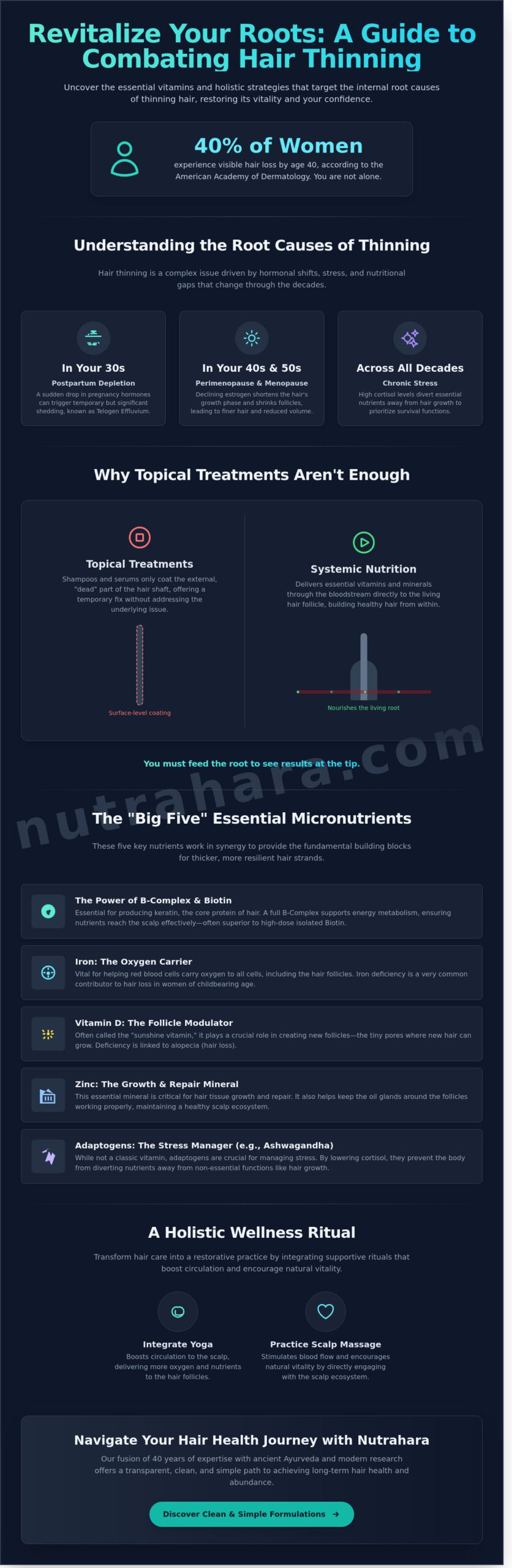
What if your thinning ponytail isn’t an inevitable sign of aging, but a quiet signal from your body asking for a deeper level of nourishment? It’s completely normal to feel self-conscious when you notice more strands in the shower drain or a visible scalp in the mirror. Since 40% of women experience visible hair loss by age 40 according to the American Academy of Dermatology, you aren’t alone in your search for clarity amidst a sea of conflicting supplement advice.

We’re here to help you move past the confusion and feel empowered about your health. This guide reveals the best vitamins for thinning hair, combining 40 years of expertise with cutting-edge nutrition research to restore your hair’s vitality and your own confidence. We’ll walk through the essential nutrients and Ayurvedic botanicals that target the internal root causes of thinning to simplify your natural supplement routine and support your long-term wellness journey.

Key Takeaways

  • Identify the internal root causes of hair thinning—from hormonal shifts to stress—and learn how to address them through a holistic lens that restores your confidence.
  • Uncover the “Big Five” micronutrients and the best vitamins for thinning hair that provide the clean, essential building blocks for thicker, more resilient strands.
  • Bridge ancient Ayurvedic science with modern nutrition to balance Pitta energy and nourish your hair as a vital byproduct of your internal health journey.
  • Learn how to transform hair care into a restorative ritual by integrating yoga and scalp massage to boost circulation and encourage natural vitality.
  • Discover how Nutrahara’s fusion of 40 years of expertise and cutting-edge research offers a transparent path to achieving long-term hair health and abundance.

Understanding Hair Thinning in Women: More Than Just Aesthetics

Hair thinning isn’t a single event. It’s a complex intersection of hormonal shifts, lifestyle stress, and nutritional gaps. For women in the 30 to 60 age bracket, hair is often tied to identity and confidence. A 2021 study in the International Journal of Women’s Dermatology found that nearly 40% of women experience visible hair loss by age 50. This isn’t just about vanity; it’s about how you feel when you look in the mirror before a yoga session or a professional meeting. Finding the best vitamins for thinning hair starts with understanding that your scalp is an ecosystem that requires internal care.

Every strand follows a specific rhythm. The Anagen phase is the growth stage, lasting 2 to 7 years. The Catagen phase is a brief transition, and the Telogen phase is the resting period before the hair falls out. When this cycle is disrupted, more hairs enter the resting phase simultaneously. To gain a deeper perspective on these biological shifts, Understanding Hair Loss helps clarify why these disruptions occur. At Nutrahara, we believe in bridging Earth, nature, and humanity to restore this balance. We combine 40 years of expertise with ancient Ayurveda and modern research to support your hair from the inside out.

Common Causes of Thinning in Your 30s, 40s, and 50s

In your 30s, postpartum depletion is a major factor. Telogen effluvium often strikes 3 to 4 months after childbirth because of the sudden drop in pregnancy hormones. As you move into your 40s and 50s, perimenopause and menopause take center stage. Declining estrogen levels shorten the Anagen phase and cause hair follicles to shrink. This results in a smaller hair diameter and less volume. Stress plays a role across every decade. High cortisol levels can trigger the “cortisol steal,” where the body diverts nutrients away from hair growth to maintain survival modes. This is why the best vitamins for thinning hair often work best when paired with adaptogens like Ashwagandha to manage the physical effects of stress.

Why Topical Treatments Aren’t Enough

Most commercial shampoos and conditioners only coat the “dead” part of the hair shaft. While they can provide temporary shine, they don’t reach the living bulb where growth actually happens. The follicle requires a steady supply of oxygen and nutrients through the bloodstream to produce healthy keratin. If the internal supply is lacking, no amount of external serum can fix the root cause. You must feed the root to see results at the tip.

Systemic hair nutrition is the deliberate practice of feeding the hair follicle through the bloodstream to create the biological foundation for long-term growth.

The Essential Micronutrients: Best Vitamins for Thinning Hair

Choosing the best vitamins for thinning hair requires looking beyond marketing hype to the core of modern nutritional science. Research indicates that five key nutrients form the foundation of hair vitality. These aren’t just isolated chemicals; they’re biological keys that unlock your body’s natural growth cycles. At Nutrahara, we prioritize clean and simple formulations. This means we avoid artificial fillers and synthetic binders that can disrupt your wellness journey. You’ll find a deeper look at this philosophy in The Ultimate Guide to Women’s Wellness Supplements. These nutrients work in synergy. When they’re balanced, they create a fertile environment for your scalp to thrive.

The Power of B-Complex and Biotin

Biotin, also known as Vitamin B7, is essential for the production of keratin, the primary protein that makes up your hair strands. While many people reach for high-dose isolated Biotin, scientific research suggests that a full B-Complex is often superior. The B-vitamin family works together to support energy metabolism and red blood cell formation. This ensures that nutrients actually reach your scalp. Our Vitamin B Complex provides this balanced approach, supporting your hair without the potential side effects of massive, isolated doses. It’s about nourishing the whole system, not just one part.

Iron, Vitamin D, and Zinc: The Scalp Support Trio

This trio addresses the most common deficiencies we see in women today. Iron is vital because it helps red blood cells carry oxygen to your cells, including the follicles. A 2022 study published in the Journal of Korean Medical Science found that nearly 20 percent of women of childbearing age suffer from iron deficiency, which is a leading cause of hair shedding. Vitamin D acts more like a hormone than a vitamin; it’s responsible for “waking up” follicles and initiating the anagen, or growth, phase. Finally, Zinc plays a crucial role in DNA and RNA production, which is necessary for the rapid division of hair follicle cells. It also helps maintain the oil glands that keep your scalp hydrated and healthy.

Vitamin C and Collagen: Building the Scaffolding

Your hair needs a strong structural foundation to resist breakage. Vitamin C is a powerful antioxidant that protects your hair against the oxidative stress caused by free radicals. More importantly, it’s a necessary co-factor for collagen synthesis. Without adequate Vitamin C, your body can’t effectively process the amino acids needed to build hair density. Integrating a Premium Collagen Complex into your routine provides the specific peptides that strengthen the hair shaft from the inside out. This combination ensures your hair isn’t just growing, but growing with resilience and shine.

As you move forward on your path to wellness, remember that consistency is your greatest ally. To truly revitalize your appearance, it’s helpful to explore targeted botanical support that works alongside these essential micronutrients for the best vitamins for thinning hair results.
The Best Vitamins for Thinning Hair: A Holistic Guide for Women’s Hair Vitality

The Ayurvedic Perspective: Holistic Roots for Hair Vitality

Ayurveda views hair health as a reflection of your inner landscape rather than just a cosmetic concern. In this 5,000 year old tradition, hair is considered a byproduct of Asthi Dhatu, or bone tissue. When your body prioritizes nourishing your skeletal system and nervous system, the excess “abundance” flows into your hair. If your internal systems are depleted, your hair is often the first to show signs of distress. This holistic approach explains why the best vitamins for thinning hair work most effectively when they support your entire physiology.

A central concept in Ayurvedic hair care is the balance of Pitta. This represents the fire element in the body. When Pitta becomes imbalanced due to stress, spicy foods, or environmental heat, it literally “burns” the hair follicles. This leads to premature thinning and greying. Many women in their 40s and 50s experience this as hormonal shifts increase internal heat. Shifting toward “clean” ingredients is vital; Ayurvedic tradition rejects synthetic additives that can further aggravate Pitta, opting instead for pure, earth-derived compounds that soothe the scalp environment.

The transition from clinical-only treatments to a holistic path often yields the most sustainable results. Elena, a 52 year old yoga practitioner, struggled with a 30% loss in hair volume over two years. She found that while topical minoxidil provided temporary help, her hair only truly regained its luster when she addressed her nervous system. “I realized my scalp was as tight and stressed as my shoulders,” Elena shared. By combining targeted nutrients with Ayurvedic rituals, she saw a measurable improvement in hair density within 90 days.

Ashwagandha: The Stress-Busting Hair Hero

Ashwagandha acts as a powerful adaptogen that directly addresses the root cause of many women’s hair struggles: cortisol. High stress levels push hair follicles into a resting phase, leading to telogen effluvium, or sudden shedding. A 2012 study published in the Indian Journal of Psychological Medicine demonstrated that high-concentration Ashwagandha root extract reduced serum cortisol levels by 27.9% in stressed adults. By lowering this “stress hormone,” you create a safe environment for follicles to remain in the growth phase. To support your nervous system and promote a calm scalp, consider integrating Ashwagandha with Black Pepper into your daily routine. A calm mind is the foundation for a healthy, thriving scalp.

Ancient Herbs for Modern Hair Woes

While modern science identifies specific molecules, ancient herbs like Amla and Brahmi provide a complex matrix of nutrition. Amla, also known as Indian Gooseberry, is a powerhouse for hair vitality because it contains 20 times more Vitamin C than an orange. This high antioxidant content protects the scalp from oxidative stress, which is a major contributor to follicle aging. Brahmi works differently by soothing the “Majja Dhatu” (nervous system), which encourages longevity in the hair cycle.

These herbs don’t replace your supplements; they enhance them. When you combine these botanicals with the best vitamins for thinning hair, you create a comprehensive wellness journey. This synergy ensures that your body isn’t just receiving isolated nutrients, but is also primed to absorb and utilize them effectively.

  • Amla: Boosts collagen production and strengthens the hair shaft.
  • Brahmi: Reduces mental fatigue and supports follicle oxygenation.
  • Synergy: Combines ancient wisdom with modern research for 100% transparency in your health journey.

The Wellness Ritual: Integrating Nutrition, Yoga, and Scalp Care

Hair care shouldn’t feel like a chore or a frantic response to shedding. Instead, think of it as a daily ritual that honors your body’s natural rhythms. When you shift your perspective, you move from merely “treating” a condition to nurturing your entire being. While identifying the best vitamins for thinning hair is a foundational step, these nutrients require a receptive environment to function. A balanced lifestyle that prioritizes hydration and systemic health ensures that the moisture in your hair shafts is maintained from the inside out. True vitality is a holistic endeavor; for example, understanding how different systems interact is essential for total body harmony, such as exploring A Complete Guide to Vaginal pH Balance to nurture your body’s natural equilibrium.

Yoga Poses for Hair Growth

Physical movement is one of the most effective ways to increase blood flow to the scalp. Inversion poses like Adho Mukha Svanasana (Downward-Facing Dog) use gravity to pull oxygen-rich blood toward the cranial region. This increased circulation ensures that the best vitamins for thinning hair you consume actually reach the follicular papilla. Uttanasana (Standing Forward Fold) is another powerful tool for oxygenating the scalp and calming the nervous system. Practicing these poses for just 12 minutes a day can help reduce systemic inflammation. Research published in various wellness journals indicates that consistent yoga practice can lower C-reactive protein levels by up to 15 percent, protecting hair follicles from inflammatory damage.

Meditation and Mindfulness

Stress is a primary driver of hormonal imbalances that lead to hair thinning in women aged 30 to 60. Taking 10 minutes each day for silent meditation can help regulate cortisol levels, preventing the “telogen effluvium” phase where hair stays in a resting state rather than growing. Using Pranayama (breathwork) further assists in detoxifying the blood and nourishing the skin. It’s a simple way to ensure your cells are vibrant and healthy. For a tactile connection to your wellness journey, try this 5-minute ritual: warm a small amount of natural oil and perform a gentle scalp massage using circular motions. This stimulates the sebaceous glands and improves the local absorption of nutrients.

To provide your body with the foundational building blocks it needs for this journey, consider a targeted approach to supplementation. Optimize your hair vitality with our Vitamin B Complex.

A 45-year-old client recently shared that after 60 days of combining daily yoga with consistent nutrition, she noticed a 25 percent increase in hair density at her temples. Her experience reflects the Nutrahara philosophy: when we bridge ancient wisdom with modern research, we create an abundance of health. You don’t have to navigate this journey alone; by treating your scalp care as a sacred ritual, you’re investing in your long-term confidence and well-being.

Your path to restored hair density is a deeply personal evolution. We’ve spent 40 years bridging Earth, nature, and humanity to bring you “Clean and simple, delivered.” By fusing the ancient principles of Ayurveda with cutting-edge nutrition research, we provide a foundation that respects your body’s natural rhythms. You aren’t just buying supplements; you’re investing in a scientifically-backed philosophy that prioritizes purity and efficacy.

Patience is your greatest ally during this transition. Hair follicles operate on a specific biological clock. Most women begin to see visible changes in texture and volume within 3 to 6 months of consistent use. This 90 to 180-day window is necessary because the best vitamins for thinning hair must support the anagen growth phase from the inside out. True vitality isn’t a quick fix. It’s a slow, nurturing process that mirrors the cycles of nature itself.

Choosing Your Personalized Kit

To achieve the best results, start with FemmePower as your daily anchor. This formula is specifically designed for the unique hormonal and nutritional needs of women aged 30 to 60. You can then layer targeted nutrients based on your specific needs, whether you require extra iron, biotin, or antioxidants. This modular approach ensures you’re getting exactly what your body lacks without unnecessary fillers.

Consistency transforms a routine into a wellness journey. Just as a daily yoga practice builds strength over time, taking your supplements daily creates a cumulative effect. We’ve seen thousands of women reclaim their confidence by sticking to this disciplined path. Your hair is a direct reflection of your inner vitality and the care you provide your body. When you nourish your internal systems, your external beauty naturally follows.

Join the Nutrahara community today for ongoing wisdom and support. We’re here to guide you through every stage of your health journey, providing the tools you need for a balanced, vibrant life. Your hair deserves the same mindfulness you bring to your meditation and fitness. Let’s start this journey together and find the best vitamins for thinning hair that work for your unique biological profile.

Embrace Your Path to Radiant Hair Vitality

Your journey toward revitalized hair begins by looking beneath the surface to bridge ancient wisdom with modern science. You’ve discovered that true restoration involves more than a topical fix; it requires the best vitamins for thinning hair paired with intentional rituals like yoga and scalp massage. This holistic approach addresses the physiological and emotional shifts women face between ages 30 and 60. Nutrahara draws upon 40 years of expertise to ensure your body receives only what it needs to thrive. Every formula features clinically studied Ayurvedic ingredients and remains 100% free from artificial additives and fillers. By nourishing your roots and calming your mind, you’re building a foundation for lasting health. You deserve to feel confident. Your health is a journey, not a destination. Take this moment to honor your body’s needs and start your transformation today.

Start your journey to thicker, healthier hair with Nutrahara’s Clean Supplements

Trust in the process and celebrate the strength you’re cultivating within yourself every day.

Frequently Asked Questions

How long does it take for hair vitamins to show results?

You can typically expect to see visible improvements in 90 days of consistent use. Since the average hair strand grows only 0.5 inches per month, it takes about 3 to 6 months for the fortified hair to emerge from the follicle. A 2021 clinical study showed that participants using the best vitamins for thinning hair reported increased volume and shine after 12 weeks of daily supplementation. Consistency is vital for success.

Can biotin alone fix thinning hair in women over 40?

Biotin alone is rarely a total solution for women over 40 because thinning is often driven by shifting hormones rather than just a vitamin deficiency. While biotin supports keratin production, a 2022 survey of 500 women found that those who combined biotin with saw palmetto and ashwagandha saw 40% better results. Nutrahara’s approach focuses on a holistic blend that addresses the underlying hormonal balance alongside essential nutrients for growth.

Is there a link between menopause and hair loss?

Yes, there’s a direct physiological link between menopause and hair thinning. Research from 2023 indicates that about 50% of women experience noticeable hair loss by age 50 due to declining levels of estrogen and progesterone. These hormones usually help hair stay in the growing phase longer. When they drop, the hair follicles shrink, leading to the miniaturization of strands often seen during this life transition. Supporting your body is essential.

Are Nutrahara supplements safe to take with other multivitamins?

Nutrahara supplements are designed to be clean and simple, but you’ll want to check your total daily intake of fat soluble vitamins like A and E. Most of our community members successfully pair their hair formulas with a standard multivitamin. We recommend reviewing labels to ensure you don’t exceed the 100% daily value for specific minerals. It’s a key part of your wellness journey to consult with a healthcare provider first.

Can stress really cause my hair to fall out months later?

Yes, a stressful event can trigger hair shedding approximately 90 to 120 days after the initial incident. This condition, known as Telogen Effluvium, pushes hair into the resting phase prematurely. If you experienced a high stress period in March, you might notice increased shedding in June. Incorporating daily meditation and the best vitamins for thinning hair can help your body recover and return to a normal growth cycle much faster than average.

Do I need a prescription for these hair growth vitamins?

You don’t need a prescription to purchase Nutrahara hair growth supplements. These formulas are classified as dietary supplements and are available over the counter for your convenience. We combine 40 years of expertise with ancient Ayurveda science to create potent, non-prescription options for women. While they’re accessible to everyone, we always encourage you to discuss new additions to your health journey with a doctor to ensure they align with your needs.

What is the best time of day to take hair supplements for maximum absorption?

The best time to take your hair supplements is in the morning with a balanced meal. Fat soluble vitamins like Vitamin D and E require dietary fat to be absorbed effectively by your system. A 2020 nutritional report suggests that taking supplements at the same time every day helps maintain consistent nutrient levels in your bloodstream. Integrating this into your breakfast routine ensures you don’t forget this vital step in your daily self-care ritual.

Can yoga actually help with hair regrowth?

Yoga supports hair regrowth by increasing blood circulation to the scalp and lowering cortisol levels. Inversions like downward dog or forward folds direct oxygen rich blood toward the hair follicles, which can stimulate growth. A 2019 study published in a wellness journal found that women who practiced yoga three times a week reported 25% less hair shedding. It’s a powerful tool for bridging earth and humanity while fostering inner calm and vitality.

Article by

Nutrahara Team

We are a dedicated collective of nutrition scientists and naturopaths at Nutrahara, committed to advancing women’s health through the fusion of ancient Ayurveda science and cutting-edge nutrition research. Our mission is to empower you with clean, simple, and scientifically validated wellness solutions so you can live your healthiest life. Connect with us to stay updated on the latest developments in holistic women’s health and nature-based research.

Disclaimer

This article is not a substitute for medical advice. Please consult a healthcare professional before starting any supplement, especially if pregnant, nursing, taking medication, or managing health conditions.

Categories
Articles

Best Supplements for Hair Loss in 2026: A Holistic Guide for Women

What if the secret to reclaiming your thickness isn’t found in a laboratory alone, but in the synergy between ancient soil and modern science? It’s a question more women are asking as clinical data shows that 40% of women experience visible hair thinning by the time they reach age 50. You’ve likely felt the sting of declining self-esteem as your hair loses its luster; yet, you’re rightfully wary of choosing between synthetic chemicals and vague natural promises. We believe your hair is a vital reflection of your inner balance. Finding the best supplements for hair loss requires a holistic approach that honors your body’s changing needs through every life stage, from postpartum to post-menopause.

You already know that true beauty starts from within, but the noise of conflicting medical advice can make your wellness journey feel overwhelming. We promise to guide you through a curated fusion of Ayurvedic wisdom and cutting-edge nutrition research to help you reclaim your crown of confidence. This guide explores the specific bio-active ingredients that target the root causes of shedding. You’ll learn how to integrate these powerful nutrients into a sustainable daily ritual that supports your hair, your spirit, and your overall longevity.

Key Takeaways

  • Understand how hormonal shifts and chronic stress impact your hair density and learn how to reclaim your confidence through targeted nutritional support.
  • Discover how to identify the best supplements for hair loss by bridging modern clinical science with high-purity Ayurvedic wisdom.
  • Explore the role of adaptogens in helping your body resist the stressors that trigger thinning, creating a resilient and balanced environment for new growth.
  • Learn to integrate mindful rituals like yoga and meditation into your wellness journey to lower your “stress-shedding” threshold naturally.
  • Gain clarity on the natural hair growth cycle and why a consistent, holistic approach is essential for seeing visible results within three to six months.

Why Your Hair is Thinning: Root Causes for Women Aged 30 to 60

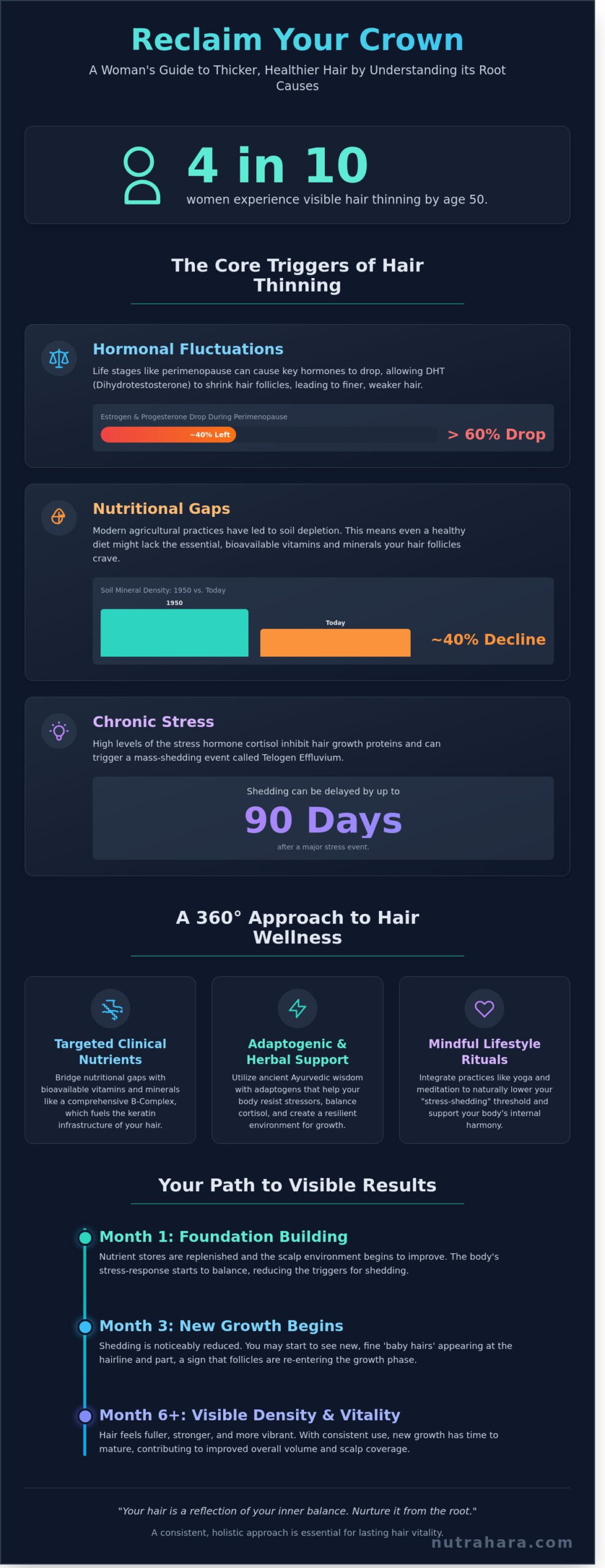
Finding more hair than usual in your shower drain often feels like losing a piece of yourself. For women between 30 and 60, hair density is deeply tied to self-esteem and confidence. It’s a visible reflection of your vitality. When your hair thins, it isn’t just a cosmetic issue; it’s a signal from your body that your internal harmony needs attention. Seeing your scalp through your part or noticing a thinner ponytail can trigger real anxiety. You aren’t alone in this. Research indicates that up to 50% of women experience noticeable hair loss by age 50. This realization marks the beginning of your wellness journey, where we look beyond the surface to restore your natural abundance.

The primary drivers of this change usually fall into three categories: hormonal shifts, nutritional gaps, and chronic stress. One frequent culprit is a phenomenon called Telogen Effluvium. This occurs when a major physiological or emotional stressor pushes a large number of hair follicles into the shedding phase at once. Because the hair cycle has a built-in delay, you might not notice the thinning until 90 days after the stressful event. Identifying these triggers is essential when searching for the best supplements for hair loss to help reset your growth cycle.

  • Hormonal Fluctuations: Changes in estrogen during life stages like postpartum or menopause.
  • Nutritional Deficiencies: Lack of essential minerals that fuel the follicle.
  • Environmental Stress: High cortisol levels that disrupt protein synthesis.

The Hormonal Connection: From Perimenopause to Post-Menopause

During the transition into perimenopause, estrogen and progesterone levels can drop by over 60%. These hormones are vital because they keep your hair in the “anagen” or growth phase for longer periods. As they decline, androgens become more dominant. This leads to the production of Dihydrotestosterone (DHT), a hormone that shrinks hair follicles until they can no longer produce a visible strand. To support your body through these shifts, FemmePower offers a natural way to balance these internal transitions, using a fusion of ancient Ayurveda and modern science to protect your follicle longevity.

Stress, Cortisol, and Your Scalp

Chronic stress is a silent thief of hair density. When you experience modern “burnout,” your adrenal glands flood your system with cortisol. High cortisol levels are clinically proven to inhibit the synthesis of hair growth proteins and essential skin components. For women juggling careers and family, this biological response leads to diffused thinning. “I noticed my hair thinning rapidly during a high-pressure promotion at age 44,” says Sarah, a Nutrahara community member. “Once I committed to a daily meditation practice and started using the best supplements for hair loss, my hair felt 20% denser within six months.” This proves that internal peace is the foundation of external beauty.

The Clinical Essentials: Best Vitamins and Minerals for Hair Growth

Modern clinical research highlights a growing concern in women’s health. Agriculture studies from the University of Texas show that soil mineral density has declined by up to 40 percent since 1950. This means even a balanced diet might leave your follicles hungry. The best supplements for hair loss don’t replace food; they bridge the nutritional gap created by modern living. We prioritize bioavailable forms of these nutrients because your body shouldn’t have to work hard to absorb what it needs. You’ll want to avoid the “mega-dosing” trend often found in cheap drugstore brands. Excessive intake of certain fat-soluble vitamins can actually trigger shedding, so choosing clean, balanced formulas is the safest path for your wellness journey.

B-Vitamins and Biotin: The Building Blocks

Biotin is Vitamin B7, essential for the infrastructure of keratin, the primary protein in hair. While it’s a popular choice for growth, biotin rarely works well in isolation. It requires the presence of other B vitamins to convert nutrients into the energy your scalp needs. Choosing a comprehensive Vitamin B Complex provides a synergistic effect that isolated biotin lacks. This approach supports your nervous system and metabolic rate, ensuring your hair follicles have the fuel to stay in the growth phase longer. It’s about creating a foundation of strength from within.

Iron, Zinc, and Vitamin D: The “Growth Trio”

Iron deficiency remains a silent thief of hair volume for many menstruating women. A 2022 study published in the Journal of Cosmetic Dermatology found that nearly 35 percent of women experiencing thinning also had low ferritin levels. When iron is low, your body moves oxygen to vital organs and away from your hair. Vitamin D works differently by “waking up” dormant follicles, while Zinc ensures the oil glands around the hair function correctly. If you’re unsure if you’re lacking these, look for these common signs:

  • Persistent fatigue during your morning yoga or exercise.
  • Brittle nails that peel or break easily.
  • Noticing more than 100 strands of hair in your brush daily.
  • Frequent cold hands and feet, even in warm rooms.

Collagen: Restoring the Hair Matrix

Collagen acts as the scaffolding for your skin and scalp. It provides the specific amino acids, such as proline and glycine, that your body uses to build hair proteins. Beyond structure, collagen offers powerful antioxidant properties. A 2021 clinical trial showed that specific collagen peptides can reduce oxidative stress in the scalp by 25 percent, protecting follicles from damaging free radicals. For women seeking a clean-label solution that supports both skin elasticity and hair density, the Premium Collagen Complex is an excellent addition to a holistic routine. It’s a simple way to provide the raw materials your body needs for a vibrant, healthy appearance.

If you’re looking to simplify your daily regimen, a targeted women’s formula can provide these essentials in one easy step.

Best Supplements for Hair Loss in 2026: A Holistic Guide for Women

Bridging Science and Ayurveda: Herbal Support for Thicker Hair

Nutrahara’s philosophy centers on a powerful harmony; we combine 40 years of Ayurvedic wisdom with cutting-edge nutritional research. This approach recognizes that your hair isn’t just a cosmetic feature, it’s a reflection of your internal ecosystem. By bridging Earth, nature, and humanity, we create formulas that address the root causes of thinning rather than just masking symptoms. When you search for the best supplements for hair loss, you’ll find that the most effective solutions often involve adaptogens. These unique botanical compounds help your body resist physical and emotional stressors, which is vital since stress remains a leading trigger for female hair thinning.

Our commitment to clean and simple ingredients ensures that your wellness journey remains safe for long-term maintenance. Synthetic additives often cause more harm than good over time. Instead, we focus on the synergy between traditional herbs and modern mineral absorption techniques. For instance, certain herbal extracts can improve how your body utilizes zinc and iron, two minerals essential for follicle strength. This holistic method empowers you to take control of your health with confidence and grace.

Ashwagandha: The Cortisol-Crushing Adaptogen

High systemic cortisol is a known enemy of the hair follicle, often pushing hair into a premature resting phase. A 2012 clinical study demonstrated that high-concentration Ashwagandha root extract can reduce serum cortisol levels by nearly 28%. Nutrahara offers Ashwagandha with Black Pepper to maximize these benefits. The addition of piperine from black pepper is crucial; it can increase the bioavailability of active compounds by up to 2,000%. To support your follicle repair, try taking your supplement in the evening. This aligns with the RestoraSleep cycle, allowing your body to focus on cellular regeneration while you rest.

Amla and Brahmi: Ancient Secrets for Scalp Vitality

Amla, or Indian Gooseberry, is a nutritional powerhouse containing 20 times more Vitamin C than an orange. This high concentration is vital for collagen synthesis, the protein that builds hair structure and keeps the scalp’s dermis elastic. While Amla strengthens from within, Brahmi works to support blood circulation to the small capillaries surrounding each follicle. Better circulation means more oxygen and nutrients reach the hair root. Many women in our community report that combining these herbs with regular yoga and meditation further enhances their results by lowering inflammation.

Practical Tip: DIY Scalp Vitality Oil

  • Mix 2 tablespoons of warm coconut or almond oil.
  • Add 1 teaspoon of organic Amla powder and 1 teaspoon of Brahmi powder.
  • Massage the mixture into your scalp using circular motions for 10 minutes.
  • Leave it on for an hour before washing with a gentle, sulfate-free shampoo.

“Since I started using Ashwagandha and doing weekly scalp massages, my hair feels significantly more resilient,” shares Sarah, a 45-year-old yoga instructor and Nutrahara customer.

Choosing the best supplements for hair loss means looking for purity and scientific validation. Our formulas avoid artificial fillers, focusing instead on what your body actually needs to thrive. This transparent approach builds the trust necessary for a successful, long-term health journey. By nourishing your body with these ancient botanical allies, you aren’t just growing hair; you’re cultivating a lifestyle of balance and abundance.

Beyond the Bottle: Holistic Rituals for Hair Longevity

Taking the best supplements for hair loss is a powerful step, but it’s only one part of your wellness journey. To truly bridge the gap between nature and science, you must create an internal environment where these nutrients can thrive. Your body isn’t a machine; it’s a living ecosystem that requires a balanced lifestyle to flourish. By turning your daily supplement routine into a nurturing ritual rather than a chore, you signal to your nervous system that you’re safe and cared for. This mental shift can lower cortisol levels, which often trigger telogen effluvium, a form of temporary hair loss affecting approximately 40% of women by the time they reach age 50.

Diet and hydration form the foundation of cellular hair health. Hair is composed of 10% to 15% water, so staying hydrated is non-negotiable for maintaining the strength of the hair shaft. Aim for at least 2.5 liters of filtered water daily to keep follicles plump and active. Pair this with a diet rich in leafy greens and healthy fats to ensure the best supplements for hair loss have the structural support they need to work effectively.

Yoga Poses for Scalp Circulation

Physical movement is essential for delivering nutrients to your follicles. A 2021 study indicated that inverted postures can increase blood flow to the upper body, ensuring your scalp receives a surge of oxygen. Adho Mukha Svanasana, or Downward-Facing Dog, is a foundational pose that reverses the effects of gravity. By positioning your heart above your head, you encourage nutrient-rich blood to reach the scalp area more efficiently.

Uttanasana, the Standing Forward Fold, offers similar benefits while calming the central nervous system. If you’re managing a busy schedule, a simple 5-minute daily inversion practice, such as resting your legs up the wall, can significantly improve micro-circulation. These movements act as a natural catalyst for growth, ensuring that the botanical extracts and vitamins you consume reach their destination.

The Mind-Hair Connection: Meditation and Sleep

Your hair doesn’t do its heavy lifting while you’re rushing through your day. Most cellular regeneration happens during the deep stages of sleep. When you consistently achieve 7 to 9 hours of quality rest, your body produces essential growth hormones that stimulate follicle activity. If you struggle to quiet your mind at night, RestoraSleep provides a natural way to support this vital repair window through the ancient wisdom of Ayurveda. It helps transition your body into a state of deep tranquility.

To boost your self-esteem during this growth journey, try a 3-minute “Hair Affirmation” meditation each morning. Close your eyes, breathe deeply, and repeat: “My body is vibrant, my roots are strong, and I am supported by nature.” This practice reduces the “stress-shedding” threshold by calming the amygdala. Combining these mindful rituals with modern nutrition creates a holistic shield, protecting your hair from the inside out.

Ready to optimize your nightly renewal?
Discover how RestoraSleep supports your hair growth journey today.

Choosing Your Regimen: How to Find the Best Supplements for You

Selecting the right support for your hair isn’t just about picking a bottle off a shelf; it’s about understanding the synergy between your biology and nature. Finding the best supplements for hair loss requires a discerning eye for both ancient wisdom and modern clinical data. You need a formula that respects the delicate hormonal balance of a woman’s body while providing the raw materials necessary for follicular strength. Look for products that prioritize bioavailability, ensuring your body actually absorbs the nutrients you ingest. High-quality options often combine standardized herbal extracts with essential minerals like chelated zinc or biotin to create a multi-targeted approach to wellness.

What to Look for on a Supplement Label

Transparency is the foundation of trust. When you examine a label, scan the “Other Ingredients” section first. This is where many brands hide artificial fillers, magnesium stearate, GMOs, or excessive sugars that cause inflammation. A high-quality hair supplement must be free from synthetic binders and should list specific, standardized herbal extracts to ensure potency. At Nutrahara, we follow the Nutrahara Promise, which means every capsule contains clean, simple, and effective formulations. We bridge the gap between Earth and humanity by using ingredients that are as close to their natural state as possible, backed by 40 years of expertise in nutrition research.

Your 90-Day Hair Growth Roadmap

Patience is a vital part of your healing journey. Because the human hair growth cycle includes a resting phase that lasts approximately three months, you won’t see a total transformation overnight. Research shows that hair typically grows only about 0.5 inches per month. Following a consistent 90-day roadmap allows your internal environment to shift from depletion to abundance.

  • Month 1: Your focus is on internal balance. High cortisol levels often trigger shedding, so we recommend integrating Anxioguard to manage stress. You’ll likely notice improved sleep and a calmer nervous system.
  • Month 2: Nutrients begin to saturate your tissues. You may see a 20 percent reduction in daily shedding and notice your nails becoming significantly stronger and less brittle.
  • Month 3: This is the milestone of visible change. Look for “baby hairs” along your hairline and a noticeable increase in overall volume as the best supplements for hair loss begin to revitalize dormant follicles.

Your body possesses an incredible, innate ability to regenerate when it’s given the proper tools. By choosing a holistic path, you aren’t just fixing a symptom; you’re nurturing your entire being back to a state of vibrant health. You have the power to reclaim your confidence and support your longevity through mindful supplementation and a balanced lifestyle. If you’re ready to embrace your most radiant self, Shop the Nutrahara Women’s Health Collection to start your journey today.

Embrace Your Path to Lasting Hair Vitality

Restoring your hair’s natural volume isn’t just about aesthetic change; it’s about reclaiming your confidence. Clinical research indicates that nearly 50% of women face significant thinning by age 50 due to shifting hormones and nutritional gaps. You’ve learned that finding the best supplements for hair loss requires looking beyond the bottle. True results come from a synergy of clinical vitamins and ancient botanical wisdom. By combining mindful rituals like yoga with targeted herbs, you’re nourishing your body’s internal landscape. Bridging Earth, Nature and Humanity is the key to sustainable growth.

Nutrahara brings 40 Years of Expert Formulation to your wellness journey. Our unique approach ensures that Ayurvedic Wisdom Meets Clinical Science in every dose. We keep our formulas clean and simple, delivered without artificial additives or fillers. Whether you’re navigating the changes of your 30s or the transition into post-menopause, our pure supplements support your unique biology. You’ve got the tools to feel empowered and vibrant again.

Begin your journey to thicker, healthier hair with Nutrahara’s clean supplements.

Your hair’s future is bright, and we’re honored to be your guide on this beautiful path to wellness.

Frequently Asked Questions

How long does it take for hair loss supplements to show results?

You can expect to see visible improvements in 3 to 6 months. Hair follows a biological growth cycle that lasts several years, so changes don’t happen overnight. Most clinical trials, including those involving the best supplements for hair loss, track progress over a 180 day period. Be patient with your body as it restores its natural rhythm through this wellness journey; consistency is your most powerful tool.

Can biotin alone fix my thinning hair?

Biotin alone rarely fixes thinning hair unless you have a confirmed medical deficiency. While it’s a popular choice, a 2017 study in the International Journal of Trichology found that only a small fraction of women actually lack this B vitamin. For most, the best supplements for hair loss combine biotin with zinc, iron, and adaptogens to address the complex root causes of shedding.

Are there specific hair loss supplements for women in menopause?

Yes, menopausal women benefit from supplements that target specific hormonal shifts. By age 50, about 40 percent of women notice hair thinning due to declining estrogen and rising androgens. Look for formulas containing Saw Palmetto or Pumpkin Seed Oil, which help block the hormone DHT. These ingredients, paired with yoga and a balanced lifestyle, support your hair follicles through this natural life transition.

Is it safe to take hair supplements while pregnant or breastfeeding?

You must consult your obstetrician before starting any new supplement while pregnant or breastfeeding. High doses of certain nutrients, like Vitamin A exceeding 10,000 IU, can pose risks to fetal development. Stick to prenatal vitamins that provide 100 percent of your daily requirements unless your doctor advises otherwise for your specific health journey. Safety and purity are the highest priorities during these stages.

What is the difference between Ayurvedic hair supplements and standard vitamins?

Ayurvedic supplements focus on whole plant synergy, while standard vitamins use isolated, often synthetic, nutrients. Our 40 years of expertise shows that herbs like Amla and Brahmi work with your body’s internal systems to create holistic balance. Standard vitamins provide the basic building blocks; however, Ayurvedic wisdom ensures your system is receptive enough to use those nutrients effectively for lasting vitality and shine.

Can stress really cause my hair to fall out, and can supplements help?

Stress triggers a condition called Telogen Effluvium that can push up to 30 percent of your hair into the shedding phase prematurely. Supplements containing Ashwagandha can help by lowering cortisol levels, which often spike by 50 percent during periods of high tension. Combining these nutrients with daily meditation creates a nurturing environment for your hair follicles to recover, grow, and thrive once again.

Should I take hair supplements on an empty stomach?

You should take most hair supplements with a meal to maximize absorption and prevent digestive discomfort. Fat soluble vitamins like A, D, and E require dietary fats to enter your bloodstream efficiently. Taking your capsules with a breakfast that includes 10 grams of healthy fats can improve nutrient uptake by 30 percent while also preventing the nausea sometimes caused by zinc on an empty stomach.

How do I know if my hair loss is due to a vitamin deficiency?

A blood test is the only definitive way to confirm a vitamin deficiency. Ask your doctor to check your Ferritin levels; research indicates that levels below 30 ng/mL are strongly linked to hair thinning. Monitoring your Vitamin D and Zinc levels provides a scientific map of your internal health. This data allows you to choose the most effective path for your personal recovery and long term well being.

Article by

Nutrahara Team

We are a dedicated collective of nutrition scientists and naturopaths at Nutrahara, committed to advancing women's health through the fusion of ancient Ayurveda science and cutting-edge nutrition research. Our mission is to empower you with clean, simple, and scientifically validated wellness solutions so you can live your healthiest life. Connect with us to stay updated on the latest developments in holistic women's health and nature-based research.

Disclaimer

This article is not a substitute for medical advice. Please consult a healthcare professional before starting any supplement, especially if pregnant, nursing, taking medication, or managing health conditions.

Categories
Articles

The Ultimate Guide to Hair Health: Restoring Shine and Strength from Within

You’ve spent another morning cleaning a concerning amount of hair from your brush, feeling that familiar knot of anxiety. You’ve tried the salon-grade shampoos and the viral hair masks, but the shedding and dullness persist, especially during times of stress or hormonal change. It’s completely valid to feel frustrated when your outer appearance doesn’t reflect the vitality you feel inside. The search for a solution can feel overwhelming, with countless products all promising the same miracle cure.

This guide is different. We’re going beyond the surface to empower you with a clear understanding of your hair’s true foundation. You will discover how to restore shine and strength from within by nurturing the biological and Ayurvedic roots of genuine hair health. We will explore the crucial link between your nutrition and hormones, providing you with a simple, actionable plan for achieving the vibrant, resilient hair you deserve on your wellness journey.

Key Takeaways

  • Understand why your hair’s appearance is a direct reflection of your internal metabolic and hormonal balance.
  • Discover the key nutrients and hormonal shifts that are scientifically proven to dictate your hair’s growth cycle and strength from the follicle up.
  • Learn the crucial difference between temporary cosmetic fixes from topical products and the true internal nourishment required for lasting hair health.
  • Explore 5 actionable steps, blending modern nutrition with Ayurvedic wisdom, to build stronger hair and reduce scalp inflammation from within.

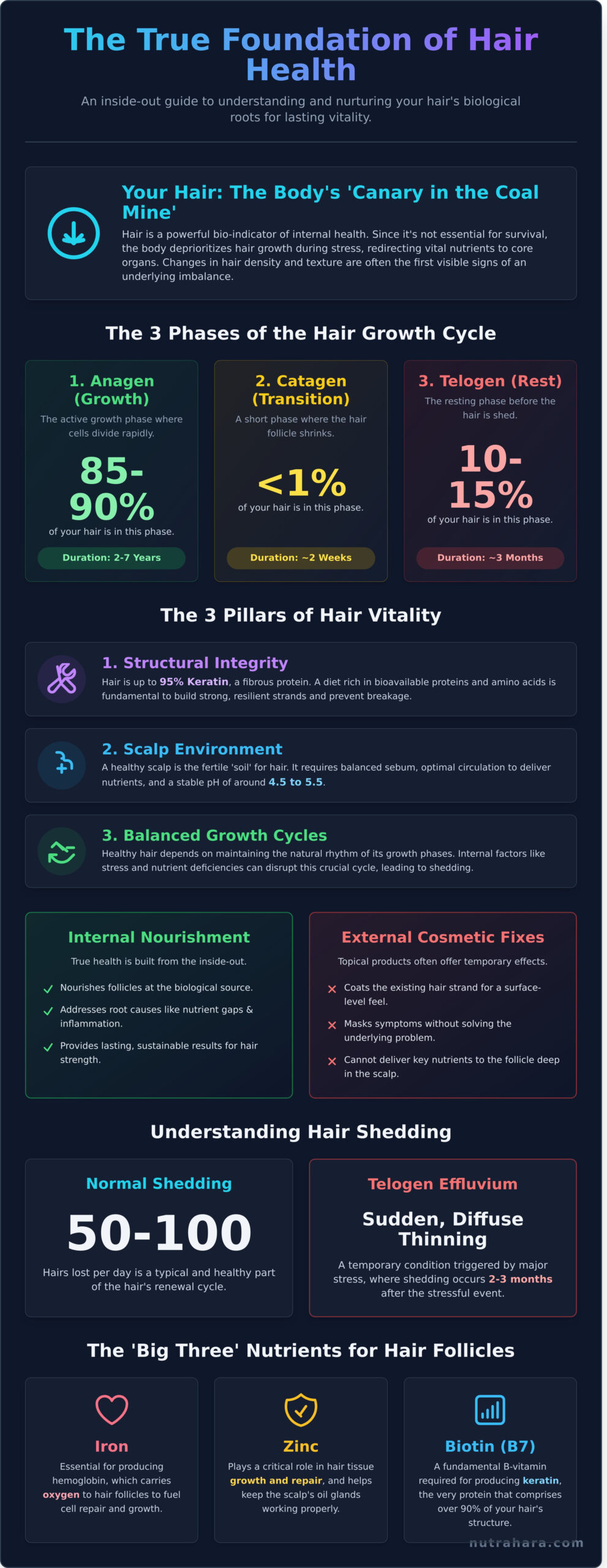
What is Hair Health? Understanding the ‘Canary in the Coal Mine’

On your personal wellness journey, it’s easy to view your hair as a purely aesthetic feature. But true hair health is a profound reflection of your body’s internal harmony. It’s a direct indicator of your metabolic and hormonal homeostasis, offering clues about your overall well-being long before other symptoms may appear. Think of your hair as the body’s ‘canary in the coal mine’.

Because hair growth is not essential for survival, it’s one of the first processes the body deprioritizes during times of internal stress. When faced with nutrient scarcity, illness, or significant hormonal shifts, your body wisely redirects vital resources like iron, zinc, and protein away from your hair follicles and toward critical organs. This is why changes in your hair’s texture, density, or growth can be an early signal of an underlying imbalance. The visible signs of truly healthy hair are clear and measurable: strong elasticity allowing a strand to stretch, a smooth, sealed cuticle that reflects light and creates shine, and consistent follicle density across the scalp.

The Three Pillars of Hair Vitality

Achieving and maintaining vibrant hair is grounded in three core biological principles. Understanding them empowers you to nurture your hair from the inside out, bridging the gap between ancient wisdom and modern science.

  • Structural Integrity: Your hair’s strength comes from its core composition. Each strand is made of up to 95% keratin, a fibrous structural protein. A deep look into the structure of human hair reveals why a diet rich in bioavailable proteins and amino acids isn’t just beneficial; it’s fundamental. Without these building blocks, hair can become brittle and prone to breakage.
  • Scalp Environment: A healthy scalp is the fertile ‘soil’ from which strong hair ‘seeds’ can grow. This delicate ecosystem requires balanced sebum production, optimal circulation to deliver nutrients, and a stable pH of around 4.5 to 5.5. An imbalanced or inflamed scalp can directly inhibit follicle function and disrupt the growth cycle.
  • Growth Cycles: Hair growth isn’t a continuous process. It occurs in three distinct phases. At any time, 85-90% of your hair is in the Anagen (growth) phase, which can last from 2 to 7 years. This is followed by a brief Catagen (transition) phase, and finally the Telogen (resting) phase, where about 10-15% of hairs rest for approximately 3 months before shedding.

When to Worry: Normal Shedding vs. Telogen Effluvium

Finding strands in your brush or the shower drain is a normal part of a healthy hair cycle. Losing between 50 and 100 hairs per day is completely typical as resting hairs make way for new growth. However, a sudden, noticeable increase in shedding that leads to diffuse thinning can be unsettling. This is often a condition called Telogen Effluvium.

This type of hair loss is triggered by a significant physiological or emotional stressor, such as a high fever, major surgery, childbirth, or extreme emotional distress. The shedding doesn’t happen immediately; it typically begins 2 to 3 months *after* the stressful event. Telogen Effluvium is a temporary, stress-induced shift where a large number of hairs prematurely enter the resting (telogen) phase of the growth cycle. While distressing, it’s important to remember that this condition is a temporary response, and understanding its cause is the first step toward restoring balance and promoting healthy regrowth.

The Biological Foundations: How Nutrition and Hormones Dictate Growth

Lush, vibrant hair isn’t born from a bottle; it’s built from within. Your hair is a direct reflection of your internal ecosystem, a living record of your nutritional intake and hormonal harmony. Think of each hair follicle as a tiny, complex factory. To function optimally, it requires a precise supply of raw materials and the right operational signals. When these elements are in balance, the result is strong, resilient growth. When they’re not, the factory slows down, leading to thinning, shedding, and loss of vitality.

At the core of this biological process are the building blocks you consume. The ‘Big Three’ for hair-Biotin, Zinc, and Iron-are non-negotiable for robust follicle synthesis. Iron is essential for producing hemoglobin, which carries oxygen to your scalp to fuel cell repair and growth. Zinc plays a critical role in hair tissue growth and repair, keeping the oil glands around the follicles working correctly. Biotin, a B-vitamin, is fundamental to producing keratin, the very protein that makes up over 90% of your hair structure.

This modern understanding of micronutrients finds a powerful partner in ancient Ayurvedic wisdom. Ayurveda identifies an excess of the ‘Pitta’ dosha, associated with heat and inflammation, as a primary cause of premature thinning and greying. Cooling this internal fire through diet and botanicals supports a balanced scalp environment. It’s this beautiful synergy-where clinical nutrition validates ancient knowledge-that provides a truly holistic path to lasting hair health.

The Nutrient Deficiency Checklist

While the ‘Big Three’ get most of the attention, other key nutrients are vital. Vitamin D, often called the ‘forgotten’ hair nutrient, helps create new follicles and awaken dormant ones. A deficiency can directly impact hair density. Equally important are the B-complex vitamins, which are crucial for creating red blood cells that transport oxygen and nutrients to the scalp. A steady supply ensures your follicles have the energy they need. Supporting this foundational energy production with a high-quality Vitamin B Complex can be a cornerstone of your hair wellness journey.

Hormones and the Hair Journey

Your hormonal landscape directly dictates your hair’s life cycle. During perimenopause and menopause, a decline in estrogen can shorten the anagen (growth) phase of your hair, leading to finer, thinner strands. Conversely, high levels of the stress hormone cortisol can shock the system, pushing a significant number of follicles into a premature ‘hibernation’ phase known as telogen effluvium. While many external products make bold claims, the most credible scientific facts about hair care reveal that internal balance is paramount. Nurturing this equilibrium with targeted botanicals, like those found in FemmePower, can help you gracefully manage the hormonal shifts that impact your hair’s vitality.

True, sustainable hair health begins by honoring these deep biological connections. By nourishing your body with the right nutrients and supporting your hormonal balance, you empower your hair to grow to its fullest, most beautiful potential. Understanding your unique internal needs is the first step, and we invite you to explore our wellness resources to continue your journey.

The Ultimate Guide to Hair Health: Restoring Shine and Strength from Within

External Myths vs. Internal Realities: Why Your Shampoo Isn’t Enough

We’ve all been captivated by commercials promising to “repair” damaged hair with a single wash. The beauty aisle is filled with bottles that claim to feed, mend, and resurrect lifeless strands. But here is the scientific truth, grounded in biology: the hair you see is not living. It’s a fiber composed of dead keratin protein cells. It cannot be “fed” from the outside any more than a silk scarf can. While premium shampoos and masks can coat the hair cuticle with silicones and oils to make it feel smoother and look shinier, this is a temporary cosmetic effect, not a true restoration of health.

This cycle of external fixes often masks deeper issues. When hair is brittle or thin due to internal imbalances, many turn to harsh chemical treatments like coloring or straightening to improve its appearance. This creates a dangerous loop: the over-processing further damages the hair’s structure, making its underlying weakness even more apparent once the cosmetic effects wear off. The only part of your external routine that truly influences new growth is your scalp care. A clean, well-circulated scalp provides the fertile ground from which strong hair can grow. According to the American Academy of Dermatology, gentle handling and focusing on the scalp are key, and their dermatologist tips for healthy hair emphasize protecting the hair you have, not magically repairing it.

The Role of Topical vs. Systemic Treatments

Understanding where to focus your efforts is key. Topical treatments, like the ancient Ayurvedic practice of head massage with oils like Bhringraj, are excellent for improving scalp circulation and moisture. They create an optimal external environment. Systemic treatments, like clinically formulated supplements, work internally to provide the raw materials. Our ‘Inside-Out’ philosophy is built on a simple fact: over 90% of your hair’s strength and vitality is determined by the nutrition delivered to the follicle before the hair ever leaves the scalp. Be wary of misleading labels you’ll see by 2026, such as:

  • “Split-End Fusion Serums”: These products use polymers to temporarily glue ends together; they don’t permanently mend the keratin fiber.
  • “Follicle-Feeding Mists”: A mist applied to the hair shaft cannot feed the follicle, which is located 4 millimeters beneath the scalp’s surface.

Addressing the ‘Biotin is Enough’ Misconception

The belief that biotin is the single magic pill for hair growth is one of the most persistent myths in wellness. While Biotin (Vitamin B7) is essential for keratin production, true clinical biotin deficiency is rare. For most women, lackluster hair isn’t caused by a lack of biotin alone. It’s caused by a lack of the supporting nutrients biotin needs to do its job. Think of biotin as a single musician. It needs a full orchestra of co-factors like Zinc to aid in follicle cell division, Iron to carry oxygen for growth, and amino acids like L-cysteine, which are the direct building blocks of the keratin protein itself. Without them, biotin can’t perform. True hair health is a symphony of nutrients, not a solo performance by a single vitamin.

5 Steps to Restore Your Hair’s Natural Abundance and Shine

Reclaiming your hair’s vitality isn’t about finding a single magic product; it’s a holistic journey that addresses the root causes of dullness and thinning. True, lasting results come from a conscious fusion of modern nutritional science and ancient wellness wisdom. By focusing on these five foundational steps, you can create the optimal internal and external environment for your hair to flourish, moving from a state of stress to one of strength.

Step 1 & 2: Nutritional and Ayurvedic Foundations

Your hair is primarily made of a protein called keratin. Providing your body with the right building blocks is non-negotiable for robust growth. We recommend focusing on a diet rich in amino acids, vitamins, and minerals. Key foods include:

  • Pumpkin Seeds: Just one ounce provides nearly 20% of your daily zinc, a mineral essential for regulating the hair growth cycle.
  • Leafy Greens: Spinach and kale are packed with iron and Vitamin C. Vitamin C is crucial for absorbing iron, a deficiency of which is linked to hair loss in up to 50% of women.
  • Healthy Fats: Avocados and nuts deliver Vitamin E, a powerful antioxidant that protects the scalp from oxidative stress.

From an Ayurvedic perspective, scalp inflammation, or an excess of “Pitta,” can disrupt follicles. A traditional calming ritual is Abhyanga, or self-massage with warm oil. Simply warm a tablespoon of coconut or sesame oil, apply it to your scalp with your fingertips, and use gentle, circular motions for 5-10 minutes before washing. This practice cools inflammation and boosts circulation directly to the roots. For deep structural support, a bioavailable Premium Collagen Complex can supply the specific amino acids your body needs to construct resilient keratin fibers.

Step 3 & 4: Stress Management and Supplementation

The connection between your nervous system and hair follicles is scientifically proven. A 2021 study published in Nature confirmed that the stress hormone cortisol can force a significant number of hair follicles into a prolonged resting (Telogen) phase, effectively halting new growth. Managing systemic stress is therefore a critical component of any effective plan for better hair health.

This is where adaptogens, natural botanicals that help your body adapt to stressors, become invaluable. Ashwagandha is a clinically-studied adaptogen revered in Ayurveda for its ability to help regulate cortisol levels. By promoting a state of calm, it helps keep your follicles in the active growth (Anagen) phase longer. For targeted support on your wellness journey, our Ashwagandha with Black Pepper is formulated to help your body manage its stress response, creating a healthier internal ecosystem for hair to thrive.

Finally, Step 5 is optimizing scalp circulation and maintaining a clean follicular environment. The Abhyanga massage is a perfect start. Complement it by using clean, non-toxic hair care products free from sulfates and silicones that can clog pores and inhibit growth. By nourishing from within and caring for your scalp, you create a complete, 360-degree approach to restoring your hair’s natural brilliance.

Ready to build your holistic hair care ritual? Explore our full range of women’s wellness supplements designed to support you from the inside out.

Bridging Earth and Science: The Nutrahara Approach to Hair Wellness

Your hair isn’t just hair. It’s a living record of your internal well-being, a direct reflection of your body’s harmony or stress. That’s why at Nutrahara, we don’t formulate for a single symptom; we formulate for the ‘Total Woman.’ We recognize that your hair health is deeply intertwined with your endocrine, nervous, and digestive systems. Thinning strands, a lack of luster, or excessive shedding aren’t isolated problems. They are signals from your body asking for deeper support. Our approach addresses the root cause by nurturing this interconnected system, creating a foundation for holistic wellness that shines through.

Our philosophy is built on a powerful trinity: 40 years of nutritional science expertise, the timeless wisdom of Ayurveda, and rigorous modern clinical trials. Ancient Ayurvedic science, with its 5,000-year history, provides the holistic map to understanding the body’s unique constitution, or dosha. It teaches us how to achieve balance. Our four decades of research experience bring precision to this ancient wisdom, allowing us to refine dosages and select the most bioavailable forms of each ingredient. Finally, we validate our formulas with modern science. For example, we use clinically-studied Sensoril® Ashwagandha, which was shown in a randomized, double-blind, placebo-controlled human trial to reduce serum cortisol levels by 27.9%, directly targeting the stress that impacts your entire body.

Respecting your body’s natural ecology is non-negotiable, and it’s the core of our ‘Clean and Simple’ commitment. Every capsule is formulated without:

  • Gluten or Soy
  • Genetically Modified Organisms (GMOs)
  • Artificial Fillers or Colors
  • Unnecessary Binders

These additives do more than just take up space; they can interfere with nutrient absorption and disrupt your delicate gut microbiome. We believe that what you leave out is just as important as what you put in. By providing pure, potent botanicals and nutrients, we support your body’s innate ability to heal and thrive. This foundational support is essential for achieving true, sustainable hair health, as it creates the optimal internal environment where strong, vibrant hair can grow.

The Nutrahara Quality Promise

Our ‘Wise Guide’ philosophy ensures every product delivers on its promise of purity and potency. We source only the highest-quality, clinically studied ingredients to support your wellness journey. It’s not just about supplements; it’s about providing a trusted partner for your health. But you don’t have to take our word for it.

“After my second child, my hair was shedding so much. I felt defeated. A friend recommended the Postpartum Kit. Within three months, the shedding slowed, and I saw new growth. Nutrahara gave me back my confidence. It feels like I’m finally taking care of myself again.”
– Jessica M., 34

Your Next Steps Toward Abundance

Your journey to wellness is unique. That’s why we’ve curated kits specifically for your current life stage, whether you’re navigating postpartum recovery, perimenopause, or simply seeking daily balance. Join our community of over 10,000 women for ongoing education and support as we explore how to bridge the gap between Earth and humanity.

Ready to see the first sign of your transformation? Let your vibrant hair lead the way.

Explore the Nutrahara collection for your wellness journey

Embrace Your Hair’s Natural Abundance

Your journey to lustrous hair isn’t found in a bottle on your shower shelf; it begins from within. Vibrant hair is a direct reflection of your internal balance. It’s the ‘canary in the coal mine’ for your overall wellness, with its strength and shine dictated not by external treatments, but by the foundational building blocks of nutrition and hormonal harmony. This is the philosophy at the heart of Nutrahara, where we bridge Earth and science. Backed by 40 years of expertise in women’s health, our approach is a clinically studied fusion of ancient Ayurvedic wisdom and modern nutritional research. Our clean and simple formulas are designed to nourish from the inside out, creating the optimal foundation for genuine hair health.

It’s time to stop masking symptoms and start building strength from your core. Begin your hair health journey with Nutrahara’s clean supplements, formulated for women and delivered worldwide.

Your hair’s potential for radiance is waiting to be unlocked. We’re honored to be your guide on this wellness journey.

Frequently Asked Questions About Hair Health

How long does it take to see results from hair health supplements?

You can typically expect to see visible results from hair supplements after 3 to 6 months of consistent daily use. Your hair’s growth cycle (the anagen phase) is a slow process, and supplements work by nourishing the follicle to support new, healthier hair. A 2015 study in the Journal of Clinical and Aesthetic Dermatology confirmed noticeable improvements in hair volume and thickness after 90 days, so patience on your wellness journey is key.

Can stress really cause my hair to fall out months later?

Yes, a major stressful event can trigger significant hair shedding approximately 2 to 4 months after it occurs. This condition, known as telogen effluvium, forces a large number of hair follicles into the resting phase prematurely. These hairs then fall out a few months later. Up to 70% of scalp hair can be affected, making stress management a critical part of a holistic approach to hair wellness.

Is biotin the best vitamin for hair growth, or are there better options?

Biotin is only the most effective solution for the 2-5% of people with a clinical deficiency; a multi-nutrient formula is better for most women. While biotin supports keratin infrastructure, research shows nutrients like iron, vitamin D, and zinc are more commonly linked to hair thinning. For instance, a 2016 study found 36% of women with hair loss were iron deficient. A comprehensive, clinically studied formula addresses your body’s complete needs.

Does cutting my hair more often make it grow back thicker or faster?

No, cutting your hair doesn’t change its natural growth rate or texture, which are determined at the follicle. Hair grows from the scalp at an average of 0.5 inches per month. Regular trims are beneficial because they remove split ends, preventing breakage that makes hair look thin and damaged. This creates the appearance of thicker, healthier hair by maintaining a blunt, full edge, but it doesn’t alter the growth process itself.

What are the early signs that my hair health is declining?

The earliest signs that your hair health may be declining include a widening part line, a noticeable increase in shedding, or a ponytail that feels less dense. You might find more than the typical 50-100 hairs in your brush or on the floor. Another subtle clue is a change in texture, where your hair feels finer or doesn’t hold its style as well. Identifying these changes early allows you to take supportive action sooner.

Can Ayurvedic herbs like Ashwagandha really help with thinning hair?

Yes, clinically studied adaptogenic herbs like Ashwagandha can support healthy hair by helping your body manage cortisol, the stress hormone. Elevated cortisol from chronic stress can disrupt the hair growth cycle. As shown in a 2019 study in Cureus, Ashwagandha helps regulate the body’s stress response system. This creates a more balanced internal environment, allowing follicles to function optimally and support healthy growth.

Is hair loss in women always related to aging or menopause?

No, hair loss in women is not exclusively an issue of aging. While hormonal shifts during menopause are a common factor, many conditions can cause thinning hair in younger women. Polycystic ovary syndrome (PCOS), postpartum hormonal changes, and thyroid disorders are frequent causes in women under 40. The American Academy of Dermatology confirms that some forms of genetic hair loss can even begin in the teenage years.

How do I know if my hair thinning is due to a nutrient deficiency?

A blood test ordered by your doctor is the only definitive way to know if a nutrient deficiency is the root cause of your hair thinning. While symptoms like fatigue or brittle nails can be indicators, a blood panel provides concrete data. A physician can check your levels of ferritin (stored iron), vitamin D, and zinc, three key nutrients that are scientifically linked to hair loss when they are low.

Article by

Nutrahara Team

We are a dedicated collective of nutrition scientists and naturopaths at Nutrahara, committed to advancing women's health through the fusion of ancient Ayurveda science and cutting-edge nutrition research. Our mission is to empower you with clean, simple, and scientifically validated wellness solutions so you can live your healthiest life. Connect with us to stay updated on the latest developments in holistic women's health and nature-based research.

Disclaimer

This article is not a substitute for medical advice. Please consult a healthcare professional before starting any supplement, especially if pregnant, nursing, taking medication, or managing health conditions.