

Categories
Articles

Supplements and Vitamins: Your Essential Daily Guide

A longer supplement routine doesn’t necessarily mean better health. Supplements and vitamins can help address a specific nutritional need, but taking them without a clear reason may add little, and large doses can be harmful. Their value depends on what you take, how much you take, and your individual needs.

It’s understandable to look for extra support for energy, wellbeing, or immune function, especially as your body’s needs change through different life stages. But a familiar label or a promise of immune support doesn’t tell the whole story. What matters is how a supplement fits with your diet, health, and any medicines you take.

Here, you’ll learn how common supplements may help or fall short, what to consider about fish oil and omega-3s, and why vitamins don’t work as a one-size-fits-all shield for immune health. We’ll also cover practical ways to think about food sources, doses, and safety, so you can make calmer, more informed choices for your wellbeing.

Key Takeaways

  • Assess whether a supplement fills a real dietary need, and consider your life stage, food choices, and medications before adding one.
  • Compare common nutrients with food sources and recommended intake to make more informed choices about what may be useful.
  • Learn how fish oil and omega-3s fit into dietary choices, and why supplements aren’t a universal solution for immune function.
  • Explore how Nutrahara’s women’s health supplements may fit into a thoughtful, research-aware approach to wellbeing.

Are supplements and vitamins good for you?

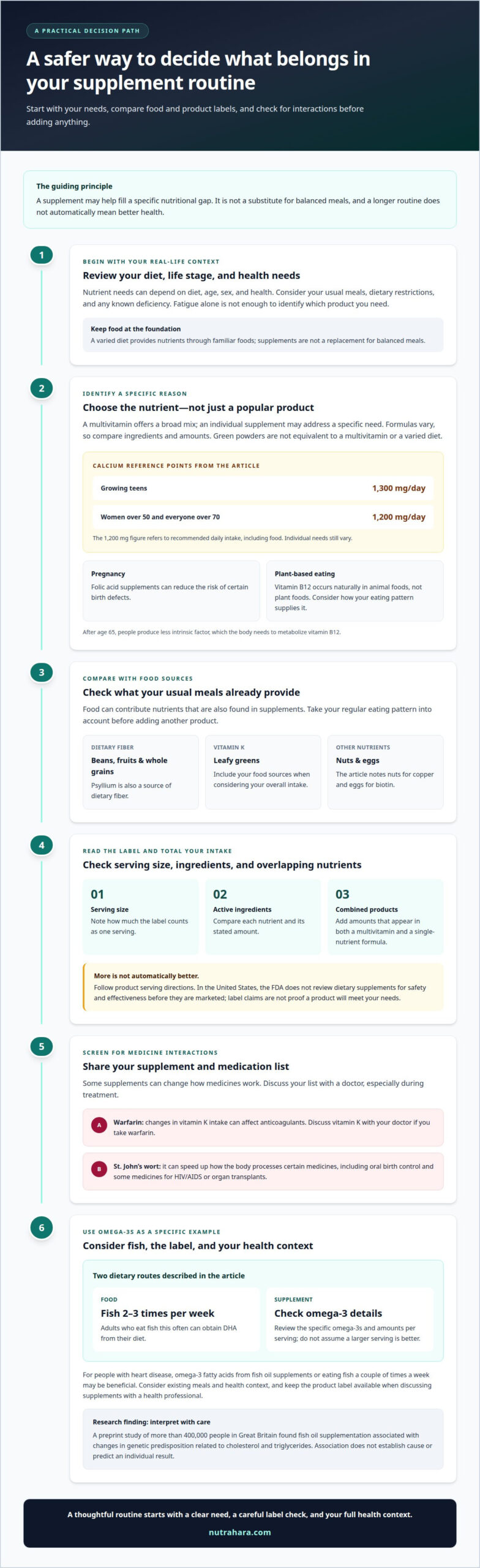
Supplements can help address a specific nutritional gap, but they aren’t a substitute for balanced meals. The right choice depends on your diet, life stage, and health needs.

Multivitamins and Individual Supplements

Choose a multivitamin for a broad mix of nutrients, or an individual supplement for a specific need. Multivitamin and mineral products vary widely, so compare the label’s amounts and ingredients rather than assuming their formulas are alike. Green powders also differ in composition and aren’t equivalent to a multivitamin or a varied diet. Food is the foundation of good nutrition.

Assessing Vitamin and Mineral Needs

There isn’t one list or dose that suits every adult; needs depend on diet, age, sex, and health. Review your usual meals, dietary restrictions, and any known deficiency with a health professional, rather than using fatigue alone to choose a product. Magnesium needs vary by age and sex. According to the National Institutes of Health, Office of Dietary Supplements, the recommended calcium intake for growing teens is 1,300 milligrams per day.

Supplement Needs for Specific Groups

Pregnancy changes nutritional needs: folic acid supplements can reduce the risk of certain birth defects. Adults over 50 may benefit from added calcium and other vitamins as they grow older. After age 65, people produce less intrinsic factor, which the body needs to metabolize vitamin B12. If you follow a plant-based diet, note that B12 occurs naturally in animal foods, not plant foods, and consider how your eating pattern supplies it.

Supplement Interactions With Prescription Medications

Some supplements can change how medicines work. Changes in vitamin K intake can affect anticoagulants, so if you take warfarin, discuss vitamin K with your doctor. St. John’s wort can speed up how the body processes certain medicines, including oral birth control and some drugs for HIV/AIDS or organ transplants. Before starting a supplement, share your medication and supplement list with your doctor, especially during treatment.

14 Common supplements: Are they beneficial or a waste of money?

A supplement is most useful when it addresses a real dietary gap, not simply because it’s popular. Before deciding what belongs in your routine, compare the evidence, food sources, and label details.

Evidence for Common Supplements

Consider what a product contains and the specific purpose it serves. Probiotics, for example, are different from vitamins and minerals, and evidence for one supplement doesn’t apply to another. Psyllium is a source of dietary fiber; fiber-rich foods such as beans, fruits, and whole grains can also support everyday nutrition. A varied diet provides nutrients through familiar foods, including leafy greens for vitamin K, nuts for copper, and eggs for biotin.

Supplement needs can shift with life stage and eating pattern. Folic acid supplements during pregnancy can reduce the risk of certain birth defects. According to the National Institutes of Health, Office of Dietary Supplements, the recommended daily calcium intake for women over 50 and everyone over 70 is 1,200 milligrams per day. Use that figure as a reference for total intake, including food.

Reading Labels and Avoiding Excessive Doses

Read the serving size, active ingredients, and amount of each nutrient. Compare products you already take, as a multivitamin and a single-nutrient formula may contain some of the same nutrients. Add the amounts together before using both, and follow the product’s serving directions rather than assuming more is better.

In the United States, the U.S. Food and Drug Administration does not review dietary supplements for safety and effectiveness before they are marketed. Treat label claims as information to assess, not proof that a product will meet your needs. A useful next step is to record your usual foods, supplements, and medications, then discuss the list with a health professional. For a focused nutrient option, explore a vitamin B complex supplement.

Fish oil and omega-3 fatty acids

Fish oil supplements provide one way to add omega-3 fatty acids to a diet. Food can also supply DHA, an omega-3 fatty acid. Adults who eat fish two to three times per week can obtain DHA from their diet. Consider your regular meals first, then compare them with the reason you’re considering a supplement.

Fish oil and omega supplements aren’t interchangeable with every wellness choice. Check the label for the specific omega-3s and amounts per serving, then compare those details with your current routine. Don’t assume that a larger serving is better. A balanced eating pattern still includes vegetables, protein foods, and other nutrients such as calcium, which serve different nutritional roles.

For people with heart disease, omega-3 fatty acids from fish oil supplements or eating fish a couple of times a week may be beneficial. That gives two dietary routes to consider: fish as food, or a supplement. The decision should reflect existing meals and health context, rather than a general promise of better heart health. Keep the product label available when discussing supplements with a health professional, especially if you take medicine.

A preprint study of more than 400,000 people in Great Britain found fish oil supplementation associated with changes in genetic predisposition related to cholesterol and triglycerides. An association does not establish that taking fish oil causes those changes or predicts an individual result. Treat the finding as one research detail, not a personal outcome forecast.

To make a practical choice, note how often fish appears in your meals and why you’re considering omega-3s. If fish is already a regular part of your diet, account for that source before adding capsules. If you rarely eat fish, compare the supplement’s stated omega-3 content and serving directions. This simple review helps keep your plan intentional and avoids treating fish oil as a replacement for varied foods.
Supplements and Vitamins: Your Essential Daily Guide

Vitamin supplements and immune function

Immune function depends on your overall nutritional state, not one capsule promising a quick boost. A vitamin supplement can help address a nutrient gap, but it doesn’t replace varied meals. Build meals around foods such as vegetables, fruit, beans, and whole grains. Then review a supplement’s ingredients and purpose instead of choosing it solely for an “immune support” label.

Vitamin D is one specific example. For people ages 1 to 18, the Endocrine Society recommends vitamin D supplements to avoid rickets and potentially reduce respiratory-infection risk. That recommendation applies to this age group; it doesn’t establish the same routine for every adult. For your own plan, consider your existing diet, life stage, and any supplements already taken. Avoid stacking products without first comparing their ingredient lists.

Distinguish immune claims from general wellness language. A product may combine vitamins with herbs or other ingredients, but that doesn’t prove it prevents infection. Creatine, for example, is a different supplement category from vitamins; including it in a wellness routine doesn’t make it an immune nutrient. Focus on the stated ingredients and intended use, and treat broad promises cautiously.

A practical approach is to write down what you eat and take, then identify a specific nutrient concern before choosing a product. Include whole grains and other everyday foods in that review, since supplements don’t replace a balanced eating pattern. If pregnancy, lactation, or a health condition affects your routine, bring the ingredient list to a healthcare professional. To review a focused nutrient format, explore this vitamin B complex supplement and its listed ingredients.

Nutrahara: Women’s Health Supplements

Nutrahara offers women’s health supplements for those seeking a considered addition to their wellness routine. Its formulations combine principles of Ayurveda with modern nutritional research, using natural, clean ingredients.

These supplements may be worth exploring when you’ve identified a specific wellness goal and want to consider products designed for women. Read each product’s ingredient information alongside your current diet and supplements, particularly as your needs shift through menstruation, pregnancy, lactation, or menopause. Supplements can complement healthy habits, including nourishing meals, movement, yoga, and rest, but they don’t replace them.

Explore Nutrahara’s women’s health supplements at nutrahara.com.

Make Your Next Wellness Choice With Confidence

Start with one health goal, note what you already eat and take, and use that information to guide your decisions. A thoughtful approach to supplements and vitamins is personal, not a test of how many products you can add to your routine. Your needs may shift with menstruation, pregnancy, lactation, or menopause, so revisit your choices as life changes.

Keep the foundations steady, too. Nourishing meals, movement you enjoy, restorative sleep, and practices such as yoga or meditation can support a balanced approach to wellbeing. If you’re considering women’s health supplements, take time to understand their ingredients and how they fit your goals and existing routine.

Contact Nutrahara with your questions as you consider your next step. You can build a wellness routine with care, clarity, and confidence.

Frequently Asked Questions

What are the benefits and evidence for common supplements such as vitamin D, B12, and magnesium?

The clearest reason to consider a nutrient is a specific need, rather than a general promise of better health. Evidence and benefit differ by nutrient and individual; vitamin D, B12, and magnesium aren’t interchangeable. Track your food choices and any known deficiencies, then consider whether a product addresses a gap. A testimonial describes one person’s experience, not proof that the same benefit will apply to you.

What are the risks and side effects of taking vitamins and supplements?

Risks include taking more than intended, experiencing unwanted effects, or changing how a medicine works. Keep a written list of products and serving directions, and note any new symptoms after starting a supplement. If you take prescription medicine, include your supplements in a medication review. This gives you a practical record to discuss instead of relying on memory.

How can I choose safe, high-quality supplements in the United States?

Choose a product with a readable ingredient list, clear serving directions, and a purpose that matches your needs. Check that the label names the nutrients and amounts, then compare it with other products in your routine. In the United States, the U.S. Food and Drug Administration doesn’t review supplements for safety and effectiveness before marketing, so promotional wording isn’t independent proof.

What does USP Verified or NSF Certified mean for supplements?

These marks refer to separate third-party verification programs, not FDA approval. Their meaning depends on the specific program and product, so read the accompanying explanation instead of assuming a mark guarantees every aspect of quality or suitability. A verification seal also can’t tell you whether an ingredient is appropriate for your diet, health needs, or medications.

How are supplements regulated by the FDA in the United States?

The FDA regulates dietary supplements under the food category, rather than approving each product as a medicine before it is marketed. The agency monitors claims and reports of side effects after products reach the market. Keep the package and product details if you need to identify what you took, and report concerning reactions through appropriate medical channels.

What vitamins and supplements do adults need, and how much of each?

There isn’t one set of vitamins or doses that suits every adult; needs depend on diet, age, sex, and health. As references, calcium intake is 1,200 milligrams daily for women over 50 and everyone over 70, and 1,300 milligrams for growing teens.

Article by

Nutrahara Team

We are a dedicated collective of nutrition scientists and naturopaths at Nutrahara, committed to advancing women's health through the fusion of ancient Ayurveda science and cutting-edge nutrition research. Our mission is to empower you with clean, simple, and scientifically validated wellness solutions so you can live your healthiest life. Connect with us to stay updated on the latest developments in holistic women's health and nature-based research.

Disclaimer

This article is not a substitute for medical advice. Please consult a healthcare professional before starting any supplement, especially if pregnant, nursing, taking medication, or managing health conditions.

Categories
Articles

Managing digital eye strain with nutrients and screen habits

Blue light can seem like the obvious culprit when your eyes feel tired after screen use, but the full picture is more nuanced. Managing digital eye strain with supplements means understanding what nutrients may support, and where everyday screen habits matter more.

This guide explores lutein, zeaxanthin, omega-3s, nutrient combinations, and factors that can contribute to eye discomfort. Use it to make more informed choices about nutrition and your routine, while keeping your own symptoms and wellbeing in view.

Key Takeaways

  • Build eye-supportive meals with leafy greens and other foods that provide lutein and zeaxanthin.
  • Understand how vitamin A and zinc may work together in nutrient combinations that support the retina.
  • Explore how omega-3s may support tear production and eye comfort, while recognizing that research on eyestrain is still developing.
  • Look beyond blue light: prolonged close-up viewing and late-night screen use can also shape eye comfort and fatigue.
  • Use supplements as one part of a broader routine that includes mindful screen habits and nourishing daily choices.

1. Screens and eyes: Should you be protecting yourself?

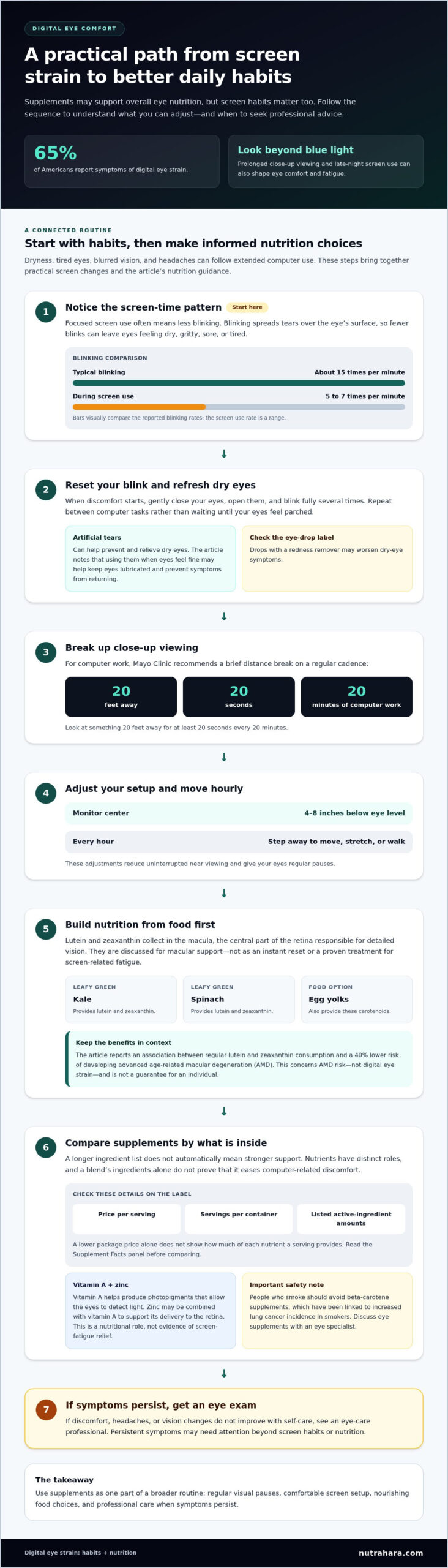
Yes, but start with screen habits rather than assuming every symptom comes from blue light. About 65% of Americans report symptoms of digital eye strain. Common complaints include dry eyes, tired eyes, blurred vision, and headaches after extended computer use. Those symptoms deserve attention, especially when they interrupt reading, work, or exercise.

Blinking spreads tears across the eye’s surface, helping keep it lubricated. During focused screen use, people often blink less, so the tear film can become less even and dry eyes may feel gritty, sore, or tired. The research figures describe typical blinking as around 15 times per minute, compared with 5 to 7 times per minute during screen use. A long stretch of close-up viewing can therefore leave fewer chances to refresh the eye’s surface.

Try a deliberate blinking reset when discomfort starts: gently close your eyes, then open them and blink fully several times. Repeat between computer tasks instead of waiting until your eyes feel parched. Artificial tears can help prevent and relieve dry eyes. Using them even when your eyes feel fine may help keep your eyes lubricated and prevent symptoms from returning. Choose eye drops thoughtfully, since drops with a redness remover may worsen dry-eye symptoms.

For non-supplement relief, Mayo Clinic recommends looking at something 20 feet away for at least 20 seconds every 20 minutes of computer work. Also adjust your setup: position the monitor’s center 4-8 inches below eye level, and step away every hour to move, stretch, or walk. These practical changes reduce uninterrupted near viewing and give your eyes regular pauses.

In the United States, compare supplement brands by price per serving, servings per container, and the listed amounts of active ingredients. A lower package price alone doesn’t tell you how much of each nutrient a serving provides, so read the Supplement Facts panel before comparing.

Risks depend on the ingredient and a person’s health or medications. People who smoke should avoid beta-carotene supplements, which have been linked to increased lung cancer incidence in smokers. Mayo Clinic advises discussing supplements for eyestrain with an eye specialist.

See an eye-care professional if discomfort, headaches, or vision changes don’t improve with self-care. Mayo Clinic recommends seeing an eye specialist when symptoms persist, since an eye exam can help identify whether another issue needs attention.

2. Lutein and zeaxanthin

Lutein and zeaxanthin are carotenoids that collect in the macula, the central part of the retina responsible for detailed vision. Their presence there is one reason these nutrients are discussed for retinal protection. Their role differs from taking a break during screen work: they support the macula, not an instant reset for tired eyes.

Do lutein and zeaxanthin reduce screen-related eye strain? They should not be presented as a proven treatment for screen-related fatigue or discomfort. Their better-established relevance is macular support, so consider them as part of overall eye nutrition, not a substitute for screen breaks or an eye exam when symptoms persist.

Food offers a practical starting point. Kale, spinach, and egg yolks provide lutein and zeaxanthin. Try adding spinach to a meal or choosing kale as a side, then include egg yolks in a balanced breakfast if they suit your diet. These familiar foods make it easier to add nutrient variety to regular meals instead of relying on one ingredient or supplement.

The macula’s carotenoid content is relevant to age-related macular degeneration, or AMD, a condition common among adults older than 60. An estimated 200 million people worldwide have AMD, and that number is expected to reach nearly 300 million by 2040. Regular consumption of lutein and zeaxanthin is associated with a 40% lower risk of developing advanced AMD. This figure concerns AMD risk, not digital eye strain, and should not be interpreted as a promise that an individual will avoid the condition.

For women from their thirties through post-menopause, a food-first routine can be simple: rotate leafy greens such as spinach and kale, and include egg yolks where appropriate. If you’re considering a supplement, compare its ingredient panel with your usual diet and avoid doubling up without a clear reason. A supplement cannot replace varied meals, and a nutrient’s presence in a formula does not establish that it improves screen-related vision or function.

Terms such as “clinically tested” don’t explain an outcome by themselves. Look for the specific nutrient and intended benefit, then distinguish support for retinal health from relief of dryness, sensitivity, or fatigue during computer use. Lutein and zeaxanthin are relevant to the macula; your screen routine and the cause of your symptoms are separate considerations.

3. Combining nutrients in eye health formulations

A formula may combine nutrients with distinct roles, but a longer ingredient list doesn’t automatically mean stronger eye health support. Managing digital eye strain with supplements starts with separating general nutritional support from relief of screen symptoms. Vitamin A, zinc, vitamins C and E, B vitamins, omega-3 fatty acids, and antioxidants all feature in eye-health nutrition. They aren’t interchangeable, and a blend’s ingredients alone don’t prove it eases computer-related discomfort.

Vitamin A helps produce photopigments that allow the eyes to detect light. Zinc may be combined with vitamin A to support its delivery to the retina. This pairing describes a nutritional role, not evidence that a supplement will relieve fatigue from computer work. When comparing formulas, read the ingredient panel and note whether it clearly identifies the nutrients and their amounts.

Blue light occupies the 400-520 nanometer wavelength range. That describes the light, but doesn’t establish that a nutrient formula can block its effects or prevent digital eye strain. Screen discomfort is largely associated with use habits, including prolonged near viewing without breaks. Managing digital eye strain with supplements should therefore sit alongside practical habits, such as maintaining a comfortable viewing distance and pausing close-up work.

Food can supply a variety of nutrients through everyday meals. Include colorful vegetables and fruit for vitamins and antioxidants, and choose foods that provide omega-3 fatty acids. Kale and spinach also contain lutein and zeaxanthin, carotenoids associated with the retina. A varied plate supports healthy eating, but it doesn’t promise relief from eye discomfort or prevent a named syndrome.

Astaxanthin is another carotenoid discussed in relation to eye-health supplements. Consider it as an individual ingredient, not as a guarantee of clearer vision or less screen fatigue. A formula combining astaxanthin, vitamin A, and zinc doesn’t automatically establish a benefit. Look for a clear explanation of each ingredient’s intended nutritional role rather than assuming more ingredients mean a better result.

What doses of eye-health supplements have been studied, and how long do they take to work? There isn’t one dose or timeline for every nutrient, formula, and outcome. The evidence described here provides no specific dose or time to benefit for digital eye strain, so don’t infer one from an ingredient list.

For a practical comparison, write down the nutrients you already get from meals, then review a formula’s ingredients against that list. This can help you spot overlap and clarify whether you’re considering general nutritional support or trying to address symptoms linked to screen use.

4. Omega-3 fatty acids and eyestrain symptoms

Omega-3s are discussed for dry-eye symptoms because they may support tear production and help reduce eye inflammation. Fish oil is one supplement source, while omega-3-rich foods can provide another route. These nutrients are not an instant fix for visual fatigue during computer use.

Two omega-3 fatty acids have different roles in eye tissue. DHA helps form the structure of the retina, while EPA helps reduce inflammation. That distinction can help you understand an ingredient label: a formula listing omega-3s may include DHA, EPA, or both. Their retinal and inflammatory roles don’t establish that a particular product will relieve blurred vision or screen-related headaches.

Dryness is only one part of computer vision syndrome, a common name for symptoms associated with screen use. The reported symptoms include dry eyes, blurred vision, and headaches. In a cited survey of US adults, 27% reported dry eyes, 28% reported blurred vision, and 27% reported headaches. Those figures describe survey responses, not a diagnosis or proof that omega-3 deficiency caused symptoms.

Notice when symptoms arise. For example, record whether dryness appears during a long work session, while reading on a digital screen, or after working in dim lighting. Also note whether blurred vision or headaches occur alongside dryness. A brief symptom log can reveal patterns to discuss during an eye exam, especially if symptoms persist despite changes to your routine.

Nutrition works best as one part of a broader eye-care routine. Include omega-3-rich foods where they fit your meals, and consider supplements as a separate choice rather than a replacement for screen adjustments. Lutein and zeaxanthin are also discussed for retinal health, but their role differs from omega-3s’ potential relationship with tear production and inflammation. A varied diet can include both nutrient groups without treating them as interchangeable.

For practical screen comfort, check your setup when symptoms begin. Reduce glare from windows or overhead lighting, adjust screen brightness to suit the room, and pause close-up work regularly. If dry eyes, blurred vision, or headaches continue, self-care alone may not address the cause. A persistent change in vision deserves professional attention rather than relying on a nutrient blend to explain it.

Omega-3s therefore belong in a thoughtful plan, not as a stand-alone answer to every symptom. Keep track of whether dryness, visual fatigue, or headaches appear together, and identify the screen conditions around them. That distinction helps separate possible tear-film concerns from other causes of discomfort and supports more informed choices about food, supplements, lighting, and eye care.

Managing digital eye strain with nutrients and screen habits

5. Causes and risk factors for digital eye strain

Blue light can draw attention, but long stretches of close-up viewing are a more practical place to start. Optometrist Jeffrey Anshel says eyestrain is more likely linked to near viewing without breaks. That distinction matters for women balancing paid work, caregiving, and personal screen use: notice how long you focus close up before symptoms begin.

Screens are not the only source of blue light. Anshel says most blue-light exposure comes from the sun rather than display screens. He identifies sleep deprivation from late-night display viewing as the only proposed blue-light effect discussed here with scientific confirmation. A late work session or evening scrolling can therefore matter through lost sleep as well as prolonged viewing.

Researchers also describe possible biological mechanisms. Shakersain says blue light can cause oxidative stress and inflammation in eye cells and ciliary muscles, potentially contributing to visual fatigue, reduced accommodative function, reduced tear production, and long-term retinal stress. These proposed effects do not establish that ordinary screen exposure causes disease or that supplements prevent it.

Screen time and symptoms are useful to track. Professionals spending more than 6 hours daily in front of screens may experience eye strain or exhaustion. A woman working remotely while managing household tasks might record the screen activity, time of day, and symptoms. Another reader may notice discomfort after late-night study or video calls. These examples help identify personal patterns without assuming every woman has the same risk.

Life stages can change schedules, but they don’t by themselves explain eye discomfort. During menstruation, pregnancy, lactation, perimenopause, or postmenopause, work and rest routines may differ from person to person. Record when symptoms occur and what you were doing, rather than attributing them to hormones without evidence. If considering supplements during pregnancy or lactation, Mayo Clinic advises discussing eyestrain supplements with an eye specialist.

Myopia also deserves careful context. Anshel says its prevalence and progression increased after the COVID-19 pandemic, with less daytime outdoor time and more display viewing as potential causes. These are possible contributors, not proof that screens alone caused an individual’s vision changes. New or persistent changes should be assessed rather than explained by screen habits alone.

Computer vision syndrome describes a cluster of screen-related symptoms, not a single cause. Try changing one factor at a time, such as reducing glare or taking a movement break between tasks. A short walk or gentle yoga stretch can give your eyes a pause from close work. If symptoms continue despite adjustments, an eye-care professional can help assess other possible causes.

Nutrahara: Women’s Health Supplements

Nutrahara offers Women’s Health Supplements for women who want to make thoughtful nutrition part of their broader wellness routine. Its formulations combine principles of Ayurveda with modern nutrition research, bringing traditional knowledge together with contemporary understanding.

For screen-related eye discomfort, start with the practical steps covered here: take breaks, adopt comfortable screen habits, and pay attention to persistent symptoms. Supplements can complement a considered approach to wellbeing, but they aren’t a substitute for those habits or appropriate eye care. If you’re exploring nutritional support alongside your daily routine, Nutrahara’s women’s health supplements offer a relevant place to start.

Visit nutrahara.com to explore Nutrahara’s Women’s Health Supplements.

Make Eye Care Part of Your Everyday Rhythm

Build a routine that supports your wellbeing without turning self-care into another task to perfect. After screen work, try a gentle yoga stretch that feels comfortable, then take a quiet moment to meditate. These practices can create a mindful transition between work and the rest of your day.

Managing digital eye strain with supplements is one possible part of a broader wellness approach, alongside habits that fit your life. Choose small steps you can sustain, whether that means taking a movement break between meetings or practising brief breathing exercises before bed. Your routine can adapt as work demands and life stages change.

Nutrahara offers Women’s Health Supplements as part of a thoughtful approach to women’s wellness. Explore Nutrahara’s women’s health supplements as you shape a balanced routine that feels right for you.

Frequently Asked Questions

Blue light, is it overblamed?

Often, screen habits deserve at least as much attention as blue light. The key distinction is between possible biological effects and everyday triggers of discomfort, such as uninterrupted close-up work. If symptoms follow a long spreadsheet session but ease during tasks away from the screen, adjust your viewing routine first. Late-night device use can also affect sleep by delaying bedtime, which may leave you feeling more tired.

Screens and eyes: Should you be protecting yourself?

Yes, make screen use more comfortable and respond to ongoing symptoms. For example, move a desk lamp so it doesn’t reflect on your display, enlarge small text, and pause to look across the room between tasks. These steps can make computer work easier on your eyes without relying on a special supplement. Persistent discomfort or vision changes deserve an eye-care professional’s attention.

What causes digital eye strain?

Extended near viewing without breaks is a major contributor, and reduced blinking can add to dryness during focused screen work. Sleep loss from late-night device use may also contribute to feeling tired the next day. To spot your own pattern, note the task, time of day, lighting, and symptoms when discomfort begins. A simple record may show whether long work sessions or evening screen use is a likely trigger.

What supplements might help reduce digital eye strain?

Omega-3 fatty acids may support tear production and help reduce eye inflammation, though further study is needed on eyestrain relief. Lutein and zeaxanthin are associated with macular and retinal health, rather than immediate comfort during screen use. Vitamin A and zinc have complementary roles related to retinal function. Match a supplement choice to its intended nutritional role, and don’t treat a blend as a replacement for screen-habit changes.

What is digital eye strain, and what are its symptoms?

Digital eye strain is discomfort associated with prolonged screen use, including computers and phones. You may notice tired or dry eyes, blurred vision, headaches, or difficulty focusing after close-up tasks. Symptoms can appear together or separately, and their timing matters. For instance, note whether they begin during a video call, while reading, or after a long work session, and whether they improve after stepping away.

Can supplements help prevent or relieve digital eye strain?

Supplements may support aspects of eye nutrition, but they shouldn’t be relied on to prevent screen-related symptoms. Omega-3s may help tear production, while lutein and zeaxanthin are relevant to the retina; neither role means they replace breaks or comfortable screen setup. Start with the routine factors you can change, then consider whether a nutrient supplement fits your diet and health needs.

Which supplements have evidence for eye health and digital eye strain?

Evidence points to different roles, not one supplement that addresses every screen symptom. Lutein and zeaxanthin are concentrated in the macula and are studied in relation to retinal health. Omega-3s may support tear production and reduce inflammation, while research on eyestrain relief needs further study. Vitamin A supports light-detecting photopigments, and zinc may help deliver vitamin A to the retina.

Do omega-3 supplements help with dry eye from screen use?

Omega-3 supplements may support tear production and reduce eye inflammation, which could be relevant when screen use leaves eyes feeling dry. However, further study is needed to establish their effect on eyestrain symptoms. Notice whether dryness appears during specific tasks, and consider other influences, such as long uninterrupted viewing or a dry environment. Persistent discomfort calls for professional attention rather than relying on supplements alone.

Article by

Nutrahara Team

We are a dedicated collective of nutrition scientists and naturopaths at Nutrahara, committed to advancing women's health through the fusion of ancient Ayurveda science and cutting-edge nutrition research. Our mission is to empower you with clean, simple, and scientifically validated wellness solutions so you can live your healthiest life. Connect with us to stay updated on the latest developments in holistic women's health and nature-based research.

Disclaimer

This article is not a substitute for medical advice. Please consult a healthcare professional before starting any supplement, especially if pregnant, nursing, taking medication, or managing health conditions.