

Could the most talked-about supplement be the wrong fit for you? With so many supplements & vitamins promising support for energy, bones, mood, and more, it can be hard to tell what may help and what is simply trending.
It’s reasonable to want clear guidance as your needs change through menstruation, pregnancy, lactation, perimenopause, and post-menopause. One woman’s experience: “Yoga helps me feel grounded as my needs change.” Start by connecting each choice to a specific goal rather than building a routine around wellness trends.
This guide covers common vitamins and supplements, what they may support, and where evidence is limited. It also explains how to consider nutrition alongside regular movement, yoga, and meditation, then build an approach that can adapt to your needs.
Key Takeaways
- Start with your life stage, eating patterns, and wellness goals to identify which nutrients may deserve attention.
- Learn how key minerals and vitamins support the body, and where everyday foods can contribute.
- Separate popular supplement trends from well-supported benefits, and consider how evidence applies to your needs.
- Build a steady wellness routine that pairs thoughtful nutrition choices with movement, yoga, or meditation.
Mineral supplements including magnesium, zinc, calcium, iron, and selenium
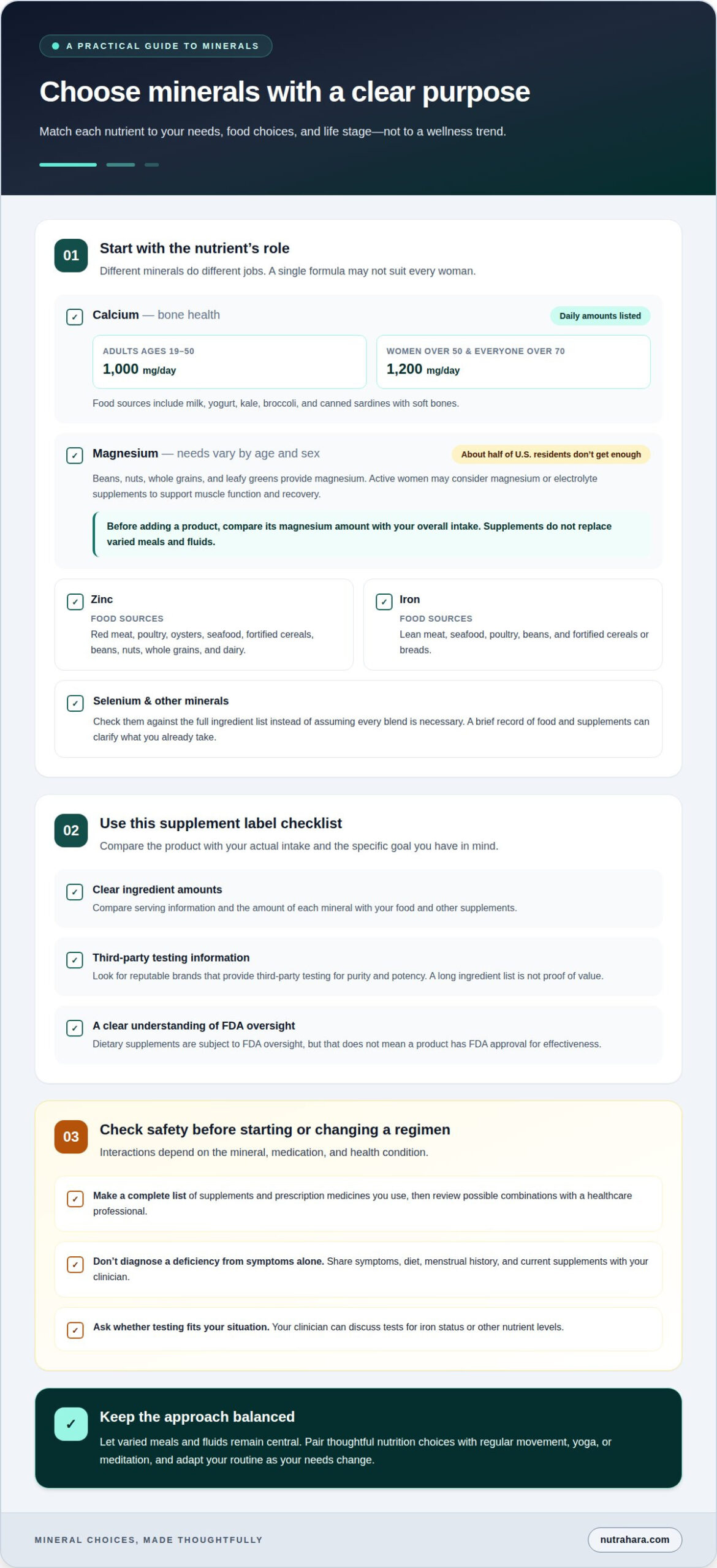
Minerals have different roles, so a single formula may not suit every woman. Calcium supports bone health, while iron helps meet needs that can vary with menstruation and life stage. Food can be a useful source: milk, yogurt, kale, broccoli, and canned sardines with soft bones contain calcium. The National Institutes of Health Office of Dietary Supplements lists 1,000 milligrams daily for children ages 4 to 8 and adults ages 19 to 50. It lists 1,200 milligrams daily for women over 50 and everyone over 70.
Magnesium needs vary by age and sex, and about half of U.S. residents don’t get enough. Beans, nuts, whole grains, and leafy greens provide magnesium. Active women may consider magnesium or electrolyte supplements to support muscle function and recovery, but supplements don’t replace varied meals and fluids. Compare the magnesium amount on the label with your overall intake before adding a product.
Zinc is found in red meat, poultry, oysters, seafood, fortified cereals, beans, nuts, whole grains, and dairy. Iron sources include lean meat, seafood, poultry, beans, and fortified cereals or breads. Check selenium and other minerals against the full ingredient list instead of assuming every blend is necessary. A brief record of your food and supplements can clarify what you already take.
When choosing supplements & vitamins in the United States, look for clear ingredient amounts and reputable brands that provide third-party testing for purity and potency. Compare serving information, and don’t treat a long ingredient list as proof of value.
Dietary supplements are subject to FDA oversight, but that doesn’t mean a product has FDA approval for effectiveness. Read the label, and assess ingredient amounts separately from any quality information.
Interactions depend on the mineral, medication, and health condition. List all supplements and prescription medicines you use, then review possible combinations with a healthcare professional before starting or changing a regimen.
Fatigue or other symptoms alone can’t establish a deficiency. Share your symptoms, diet, menstrual history, and current supplements with your clinician; ask whether tests for iron status or other nutrient levels fit your situation. Treat magnesium and ashwagandha as separate ingredients when reviewing a formula, including ashwagandha with black pepper.
Supplements such as CoQ-10, fish oils, probiotics, collagen, and melatonin
These products serve different purposes, so consider each ingredient on its own. CoQ-10 is a compound found in the body and also sold as a supplement. Probiotics are live microorganisms; products can contain different strains, so the label matters. Melatonin is a hormone involved in the sleep-wake cycle, and supplements are not a substitute for addressing ongoing sleep difficulties. For each option, ask what specific need it addresses and whether evidence supports that use.
Fish oil provides omega-3 fats, including DHA. Eating fish two to three times a week is one way to obtain DHA. If you use fish oil, read the label to see how much DHA and other omega-3s a serving contains. Fish oil is not a replacement for prescribed cholesterol care, and a supplement should not be treated as a cholesterol treatment without clinical guidance. Include your current medicines and health conditions when discussing regular use.
Probiotics can differ by strain and formulation, so a broad “probiotic” label doesn’t tell the whole story. Consider the product’s stated strains and intended use rather than assuming every formula supports immune function in the same way. Collagen supplements also vary. The page describes 28 known collagen types, with the first five being the most common. A collagen supplement can be considered as one option, while keeping whole foods central to your nutrition.
Use supplements to complement, not replace, meals built from varied whole foods. Choose reputable brands with third-party testing for purity and potency, and compare the ingredient panel with your goals. A practical step is to record the product, serving directions, and reason for taking it. That simple note helps you discuss CoQ-10, fish oil, probiotics, collagen, or melatonin clearly with a healthcare professional, especially if your routine or medications change.
Vitamins, including multivitamins and vitamins A, B, C, D, E, and K
Vitamin needs vary with food choices, health, and life stage. Varied meals are a useful starting point; supplements may help address specific gaps.
Multivitamins and Nutritional Gaps
Multivitamin-mineral supplements differ widely in composition and characteristics. Compare the label’s vitamin and mineral amounts with your usual foods and other supplements, rather than assuming every formula fills the same gaps. For example, animal foods naturally contain vitamin B12, while plant foods do not. Folic acid is added to many grain-based products, so fortified foods may also contribute to intake.
Adult Vitamin Needs and Amounts
Adults don’t all need the same multivitamin or dose. The appropriate amount depends on the nutrient, diet, and health needs. Follow the product label and avoid stacking formulas with overlapping ingredients. Green leafy, orange, and yellow vegetables provide vitamin A; citrus, peppers, broccoli, and strawberries provide vitamin C. Vitamins E and K are found in foods such as nuts, seeds, vegetable oils, and leafy greens.
Common risks include taking too much of a nutrient and interactions with medicines or health conditions. Some vitamins and minerals can also compete for absorption, so combinations and timing may matter. Review the full ingredient list before combining products, and discuss possible interactions with a healthcare professional.
Vitamin Needs Across Life Stages
Pregnancy needs differ by person, so avoid assuming one multivitamin suits everyone. Discuss supplement choices with your prenatal care team and consider folic acid from fortified grain foods as part of your overall nutrition. For children ages 1 to 18, the Endocrine Society recommends vitamin D supplements to avoid rickets and potentially reduce respiratory infection risk.
For adults 75 and older, the Endocrine Society recommends vitamin D supplements to lower mortality risk. Older adults over 65 may produce less intrinsic factor, which the body needs to metabolize vitamin B12. These examples show why age and life stage matter when choosing a formula.
Trending vitamins and supplements
Trends can make a familiar ingredient sound like a new discovery. CoQ-10, collagen, probiotics, fish oil, and melatonin often appear in wellness conversations, but popularity alone doesn’t show whether a product fits your needs. Start by naming the goal: filling a dietary gap, supporting a life-stage need, or addressing a concern you’ve discussed with a healthcare professional. If the purpose stays vague, pause before adding another bottle. Treat supplements & vitamins as tools for a clear purpose, not automatic wellness essentials.
Separate an ingredient from the claims made about it. A collagen product, for example, may be marketed for several outcomes, but its label shows what it contains. Check the ingredient name, amount per serving, and additional components. A blend of trendy ingredients can make it harder to tell which one suits your goal or causes an unwanted effect. Consider your current routine before adding products, and note what you hope a new choice will contribute.
Your eating patterns offer a useful reality check. Before following a trend, note the foods you regularly enjoy and where a genuine gap might exist. Fish, fortified foods, vegetables, nuts, and seeds provide nutrients, while yoga, meditation, healthy sleep habits, and regular movement support a broader wellness routine. Supplements can complement that foundation, not replace meals or everyday practices. Choices about supplements & vitamins should fit your habits, preferences, and changing needs.
Use a simple decision filter: identify the intended benefit, review the full label, and consider the evidence for that specific use. Then record what you take and why, so you can reassess whether it still matches your goals. Be especially thoughtful when a trend targets women’s changing needs across menstruation, pregnancy, lactation, or menopause. For a grounded next step, explore women’s wellness options as part of a considered routine, rather than choosing a product only because it is trending.
Nutrahara: Women’s Health Supplements
Nutrahara’s Women’s Health Supplements combine principles of Ayurveda with modern nutritional research. Made in New Zealand, they feature natural ingredients and are designed to complement a broader wellness routine. As you consider your needs through menstruation, pregnancy, lactation, or menopause, keep food, movement, rest, and guidance from your healthcare professional in view.
Supplements are one part of personal wellbeing, not a replacement for balanced eating, yoga, meditation, or care for a health concern. Explore Nutrahara’s Women’s Health Supplements to learn more about options for your wellness routine.
Make Your Next Wellness Choice Intentional
Your next step doesn’t need to be a complete routine overhaul. Choose one goal that matters to you now, such as supporting energy, building a steadier sleep routine, or staying active through a changing life stage. A thoughtful approach to supplements & vitamins starts with a clear intention and leaves room for the habits that sustain wellbeing: nourishing meals, movement, yoga, and moments of calm through meditation.
Keep your choices manageable. Notice what you’re taking, why it belongs in your routine, and whether it still reflects your needs as they change. When you’re ready to explore a women’s wellness supplement option, talk with Nutrahara about your needs.
Your health journey is personal. Move forward with care, confidence, and choices that feel right for you.
Frequently Asked Questions
14 Common supplements: Are they beneficial or a waste of money?
Neither label fits every supplement; usefulness depends on the ingredient, purpose, and your needs. Fish oil, probiotics, collagen, and melatonin, for example, serve different roles, so popularity alone can’t tell you whether one is a good fit. Define your goal, read the full ingredient panel, and consider how the product fits your diet and routine. Don’t choose a blend simply because it combines several trending ingredients.
What Are the Signs of Magnesium Deficiency?
No single symptom confirms magnesium deficiency, because tiredness or muscle discomfort can have many causes. Consider your overall food intake, health history, and any changes in how you feel rather than drawing conclusions from one sign. A healthcare professional can assess those details and determine whether testing is appropriate. Keep a record of magnesium products and other supplements you use so the review reflects your full intake.
Which supplements have strong scientific evidence for specific health benefits?
Evidence depends on the ingredient and intended use, rather than a supplement’s popularity. One specific example is vitamin D: the Endocrine Society recommends supplements for people ages 75 and older to lower mortality risk, and for people ages 1 to 18 to avoid rickets and potentially reduce respiratory infection risk. These recommendations apply to those age groups, not automatically to every adult or every wellness goal.
Are multivitamins better than taking individual vitamins or getting nutrients from food?
There isn’t one best choice for everyone. Food can provide several nutrients together, while a multivitamin-mineral product combines selected ingredients in amounts that vary by formula. An individual supplement may be a more focused option when there’s a clear reason to target one nutrient. To compare options, review your usual meals and product labels for overlapping ingredients, then consider whether each item serves a distinct purpose.
How much do popular vitamins and supplements cost in the United States?
U.S. consumers spend about $60 billion a year on nutritional supplements, or about $175 per capita. The material gives no prices for individual vitamins or supplements.
Disclaimer
This article is not a substitute for medical advice. Please consult a healthcare professional before starting any supplement, especially if pregnant, nursing, taking medication, or managing health conditions.