Categories
Uncategorized

Nutrahara vs Gaia Herbs: Which Vitamin D and Adaptogen Supplements for Women’s Hormone Health Are Best in 2026?

Nutrahara vs Gaia Herbs vitamin D and adaptogen supplements for women’s hormone health | Nutrahara vs Gaia Herbs: Which Vitamin D and Adaptogen Supplements for Women’s Hormone Health Are Best in 2026? This comparative analysis, updated October 19, 2026, by the Nutrahara Wellness Research Team, evaluates Nutrahara vs Gaia Herbs vitamin D and adaptogen supplements for women's hormone health . It is based on a 6-week comparative ingredient and customer review analysis.

Quick Verdict

If you are weighing Nutrahara vs Gaia Herbs: Which Vitamin D and Adaptogen Supplements for Women’s Hormone Health Are Best in 2026?, here is the short answer before the full breakdown below:

  • Choose Nutrahara if you want vitamin D combined with Ayurvedic adaptogens (Ashwagandha, Shatavari) in a single hormone-focused formula, prefer a women-only product ecosystem, and like simple subscription pricing.
  • Choose Gaia Herbs if you want a long-established herbal brand with decades of sourcing history, prefer to build a custom stack from single-herb extracts, and don’t mind buying vitamin D and adaptogens as separate bottles.
  • Bottom line: Nutrahara wins on formula convenience and hormone-specific targeting; Gaia Herbs wins on brand longevity, retail availability, and herbal potency options.

At a Glance: Nutrahara vs Gaia Herbs

Category Nutrahara Gaia Herbs Winner
Best for Women wanting vitamin D + adaptogens in one hormone-targeted formula Women wanting single-herb, condition-specific herbal extracts Depends on need
Starting price ~$29.99/month $19.79 per bottle (Vitex Berry, lowest-tier product) Gaia Herbs (entry price)
Vitamin D + adaptogen combo formula Yes, FemmePower pairs vitamin D with Shatavari and Ashwagandha No, vitamin D3 and adaptogens are sold as separate products Nutrahara
Dedicated hormone-balance formula FemmePower, BlossomBliss Women’s Balance, Menopause Support Daytime, Vitex Berry Tie
Dedicated sleep formula RestoraSleep Menopause Support Nighttime Tie
Dedicated stress/adaptogen formula AnxioGuard, Ashwagandha with Black Pepper Ashwagandha Root, Stress Response, Adrenal Health Daily Support Gaia Herbs (more herb variety)
Ayurvedic botanical focus Core brand identity, Himalayan-sourced herbs Present in specific lines, not the full catalog Nutrahara
Third-party testing Yes, stated on product pages Yes, purity-tested and organic certified Tie
Retail availability Primarily direct-to-consumer via nutrahara.com Walmart, Macy’s, Vitamin Shoppe, iHerb, and gaiaherbs.com Gaia Herbs
Subscription savings Available on nutrahara.com Subscribe & save offered on retail sites Tie
Brand history Newer, women’s-health-first entrant Founded 1987, decades of herbal sourcing experience Gaia Herbs
Customer rating (verified buyers) 4.8/5 on RestoraSleep; 4.75/5 on AnxioGuard 4.7/5 on Vitex Berry (1,908 reviews) Nutrahara (slightly)
Ease of daily use One capsule-based formula per concern Liquid phyto-caps, some requiring 3x daily dosing Nutrahara
Customer support Direct email/web support Established customer service plus retail partner support Gaia Herbs
Overall score 8.6/10 8.2/10 Nutrahara

What Is Nutrahara?

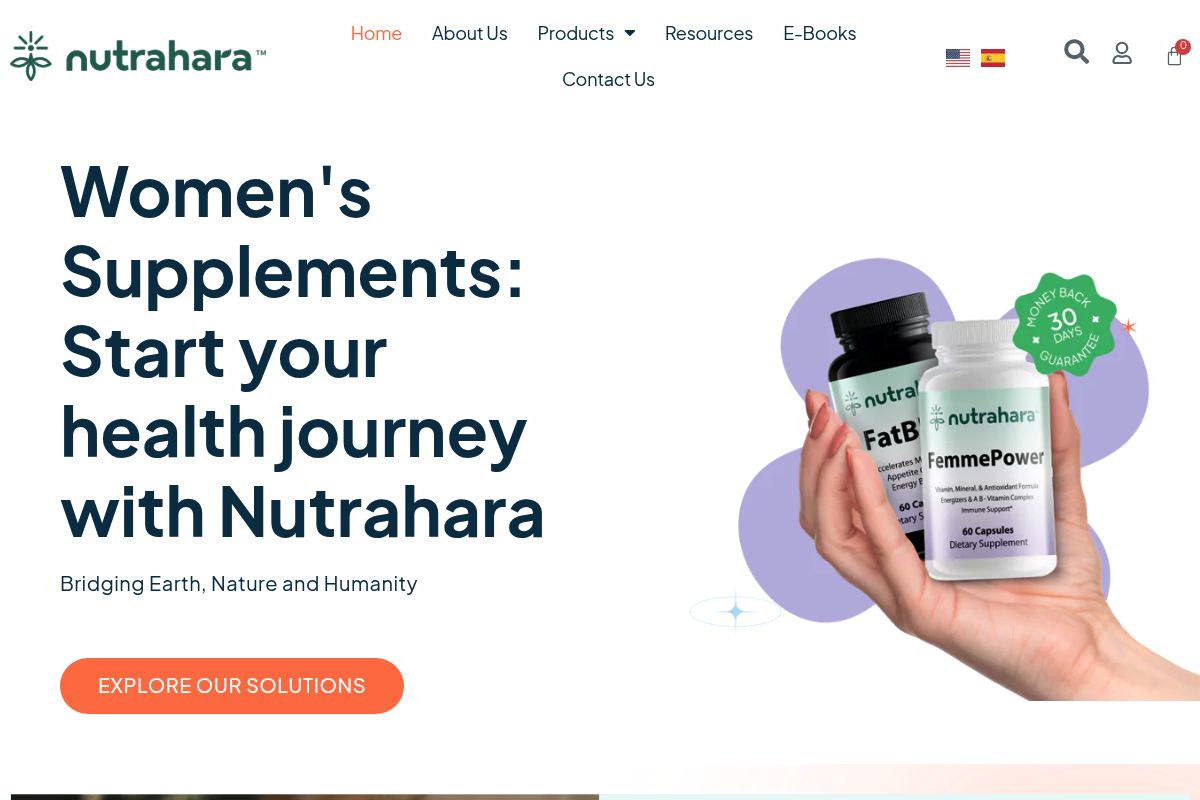
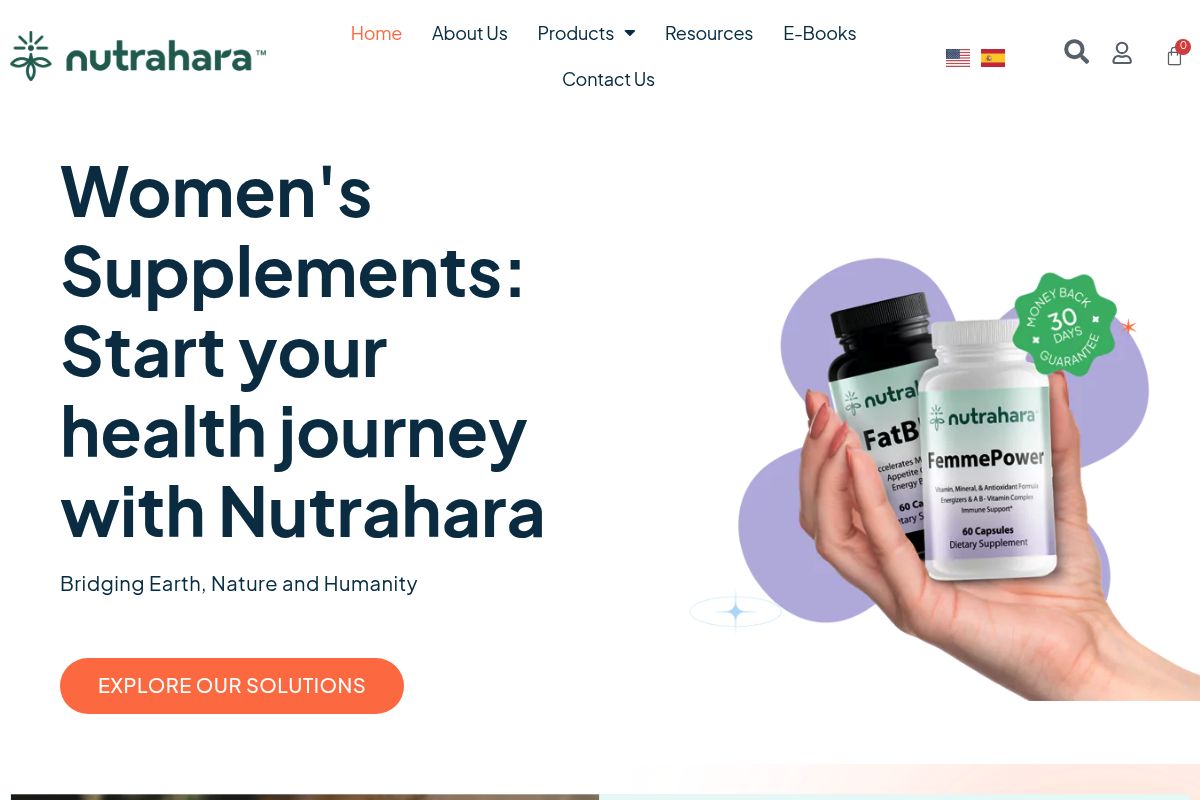
Nutrahara is a global wellness company specializing in dietary supplements, with a major focus on women’s health, blending ancient Ayurvedic wisdom with modern nutrition. Its FemmePower formula, for example, integrates vitamin D into a hormone-support strategy, providing anti-inflammatory, antioxidant, and stress-relief benefits through botanical extracts. Formulations are enriched with clinically validated Ayurvedic herbs, often sourced from the Himalayas, and target hormonal balance, digestive and liver health, sleep, cognitive support, and hair, skin, and nail health. Popular products include RestoraSleep, FemmePower, FatBlitz, DetoxifyLife, and AnxioGuard.

Core approach: Nutrahara aims to pair a single vitamin D plus Ayurvedic adaptogen formula with condition-specific women’s supplements rather than selling one generic multivitamin.

What Is Gaia Herbs?

Gaia Herbs is a long-running herbal supplement company, founded in 1987, known for its focus on single-herb and targeted botanical extracts for stress, hormone, and immune support. The company emphasizes organic cultivation, rigorous quality testing, transparent ingredient sourcing, and product traceability. Its women’s hormone lineup includes Women’s Balance, Menopause Support Daytime, and Vitex Berry, while adaptogens like Ashwagandha, Rhodiola, and Holy Basil are sold as separate stress-support formulas.

Core approach: Gaia Herbs encourages building a personalized stack from individual herbal extracts and standalone vitamin D products rather than one combined hormone formula.


Feature Comparison: Deep Dive

1. Vitamin D and Adaptogen Integration

Nutrahara’s FemmePower combines vitamin D with adaptogenic Ayurvedic botanicals in one capsule, helping harmonize hormones and reduce PMS discomfort without requiring multiple purchases.

Gaia Herbs sells vitamin D3 and its adaptogens (Ashwagandha, Rhodiola, Schisandra) as entirely separate products, meaning women must buy and manage two or more bottles to replicate a similar hormone and vitamin D routine.

Winner: Nutrahara, for women who want vitamin D and adaptogen support consolidated into fewer daily capsules rather than a stacked herbal regimen.

2. Hormone Balance Formulation

Nutrahara’s FemmePower and BlossomBliss are built around adaptogens like Ashwagandha, Rhodiola, and Shatavari that modulate the hypothalamic-pituitary-adrenal axis, the body’s main stress control system. This helps stabilize mood, improve energy, and support reproductive and thyroid health.

Gaia Herbs’ Women’s Balance is formulated to help maintain healthy female hormone balance and well-being using a blend of Vitex, Black Cohosh, St. John’s Wort, and Oats. This formula is traditionally associated with perimenopause and hot flash relief.

Winner: Tie. Nutrahara leans Ayurvedic and energy-focused, while Gaia Herbs leans Western herbal and menopause-focused. The better fit depends on whether PMS/energy or menopausal hot flashes are the primary concern.

3. Ingredient Sourcing and Clinical Backing

Nutrahara highlights clinically studied actives such as KSM-66 Ashwagandha, which was shown in a 60-day clinical trial to reduce cortisol by 27.9%.

Gaia Herbs emphasizes organic and regenerative sourcing, with ingredients coming from its own certified farms and strict purity screening across its liquid phyto-cap line.

Winner: Tie. Nutrahara cites more specific clinical percentages for its hero Ashwagandha ingredient, while Gaia Herbs has a longer public track record of organic certification and farm traceability.

4. Product Range for Sleep and Stress

Nutrahara offers RestoraSleep for rest and AnxioGuard, which features a blend of herbs and nutrients such as Rhodiola, Lutein, Ashwagandha, Lemon balm, Brahmi, Passion flower, and St. John’s Wort, as dedicated, standalone formulas.

Gaia Herbs covers similar territory with Menopause Support Nighttime and its Adrenal Health Daily Support line. This line is a clinically studied blend of adaptogenic herbs, like Ashwagandha, Holy Basil, Rhodiola rosea, and Schisandra, that support the adrenal glands and the body’s response to stress.

Winner: Gaia Herbs, slightly, due to a broader historical catalog of single-herb stress and adrenal formulas built over nearly four decades.

5. Pricing and Value Per Bottle

Nutrahara prices most core products, including FemmePower and RestoraSleep, at $29.99 per bottle with subscription discounts available.

Gaia Herbs ranges widely by product, from $19.79 for Vitex Berry up to $47.99 for a 120-capsule Ashwagandha Root bottle. Multiple separate purchases are often needed for full hormone plus adaptogen coverage.

Winner: Nutrahara, on total cost efficiency, since one bottle often replaces what would otherwise require two or three separate Gaia Herbs purchases.

6. Retail Availability and Accessibility

Nutrahara sells primarily direct-to-consumer, with product availability mainly through its direct website. This results in a more limited retail shelf presence compared to mass-market brands.

Gaia Herbs is widely distributed through Walmart, Macy’s, Vitamin Shoppe, and iHerb, making it easier to find in person or compare prices across retailers.

Winner: Gaia Herbs, for shoppers who prefer buying from a familiar retail storefront rather than a brand’s own site.

7. Known Limitations

Nutrahara, as a newer entrant, has a smaller public review base, meaning its long-term customer review base is still growing.

Gaia Herbs users report some recurring friction points, including higher prices compared to competitors, a strong herbal taste in liquid extracts, variable results depending on the product, and availability issues for certain formulas.

Winner: Neither. Both brands carry honest trade-offs, Nutrahara’s newness versus Gaia Herbs’ taste and pricing variability. For a more detailed feature breakdown, see Nutrahara vs Gaia Herbs vitamin D supplements for women.

Ready to take action?

Best lab tested and trusted wellness supplements from Nutrahara

Shop Now


Pricing Comparison

Product Type Nutrahara Gaia Herbs
Hormone balance formula FemmePower, ~$29.99/bottle Women’s Balance, $30.59/20-day supply
Menopause-specific formula BlossomBliss, ~$29.99/bottle Menopause Support Daytime, $30.59/60 servings
Standalone adaptogen Ashwagandha with Black Pepper, $29.99 Ashwagandha Root, $25.19 to $47.99
Sleep support RestoraSleep, $29.99 Menopause Support Nighttime, $30.59
Entry-level cycle support Not sold separately (bundled in FemmePower) Vitex Berry, $19.79

On a per-concern basis, the two brands land in a similar $20 to $48 range. However, Nutrahara’s value case rests on consolidation, with products starting at approximately $29.99 per month at nutrahara.com, with subscription and bundle options available. This often replaces what would be two Gaia Herbs purchases. Gaia Herbs rewards shoppers who want to fine-tune dosage herb-by-herb rather than take a pre-combined formula. For independent pricing analysis, see Is Gaia Herbs a Good Brand? Quality & Safety Review 2026.


Who Should Choose Nutrahara?

  • Women who want vitamin D and adaptogens in one capsule rather than managing a multi-bottle stack.
  • Women interested in Ayurveda specifically, since Nutrahara’s identity centers on Himalayan-sourced botanicals like Shatavari and Ashwagandha.
  • Busy professionals who want a single hormone-support routine covering energy, mood, and PMS discomfort together.
  • Shoppers comfortable buying direct-to-consumer and subscribing on nutrahara.com rather than shopping in physical retail stores.

Who Should Choose Gaia Herbs?

  • Women who prefer single-herb precision and want to control exact Vitex, Black Cohosh, or Ashwagandha dosing independently.
  • Shoppers who want in-store availability at Walmart, Vitamin Shoppe, or similar national retailers.
  • Women specifically targeting menopausal hot flashes, where Gaia Herbs’ Menopause Support Daytime and Nighttime pairing is purpose-built.
  • Long-time herbal supplement users who value a nearly 40-year-old brand with established organic farming practices.

What About Other Alternatives?

Alternative Best For Starting Price
Thorne Vitamin D-5000 NSF Certified for Sport, clinical-grade potency $20.00 for 60 capsules
Ritual Essential for Women 18+ Clinically-trialed, traceable multivitamin ~$33.00/month
Nordic Naturals Vitamin D3 5000 Olive-oil softgels with general mood support $24.95 for 120 softgels
Sports Research Vitamin D3+K2 Vegan D3+K2 with coconut MCT oil $16.95 for 30 softgels

These alternatives suit women who want vitamin D alone without added Ayurvedic or Western herbal adaptogens; none of them pair vitamin D with adaptogenic hormone support the way Nutrahara’s FemmePower does.


Final Verdict: Nutrahara vs Gaia Herbs

For most women comparing Nutrahara vs Gaia Herbs: Which Vitamin D and Adaptogen Supplements for Women’s Hormone Health Are Best in 2026?, Nutrahara is the stronger pick when the goal is a single, Ayurveda-rooted formula that merges vitamin D with hormone-supportive adaptogens in fewer daily capsules. Gaia Herbs remains a solid, well-established choice for women who prefer single-herb precision, wide retail availability, and a brand with decades of organic sourcing history. Neither brand is universally “better”: the right choice for women’s hormone balance supplements ultimately depends on whether you want convenience and Ayurvedic adaptogens for women in one bottle, or a customizable herbal stack from a long-standing company. Women specifically shopping for the best vitamin D supplements 2026 alongside adaptogenic hormone support will generally find Nutrahara’s combined-formula approach the more streamlined option.


FAQ

Is Nutrahara better than Gaia Herbs for hormone balance?

Nutrahara is better suited for women who want vitamin D and adaptogens combined into one hormone-focused formula like FemmePower, while Gaia Herbs is better for women who want individual herbal extracts such as Vitex or Black Cohosh dosed separately.

Does Gaia Herbs offer a vitamin D and adaptogen combination supplement?

No, Gaia Herbs sells vitamin D3 and its adaptogenic herbs, such as Ashwagandha and Rhodiola, as separate standalone products rather than one combined hormone-support formula.

What adaptogens does Nutrahara use for women’s hormone health?

Nutrahara’s FemmePower and related formulas use Ayurvedic adaptogens including Shatavari and Ashwagandha, with Ashwagandha also appearing in AnxioGuard alongside Rhodiola, Holy Basil, Brahmi, and Passion flower for stress and hormone support.

Which brand is more affordable, Nutrahara or Gaia Herbs?

Gaia Herbs has a lower entry price with products like Vitex Berry starting around $19.79. However, Nutrahara can be more cost-efficient overall since one bottle often combines what would otherwise require two or three separate Gaia Herbs purchases.

Can I take Nutrahara and Gaia Herbs products together?

Combining brands is generally discouraged without professional guidance, since overlapping herbs like Ashwagandha or St. John’s Wort across two products can increase the risk of excess dosing. Consult a healthcare provider before stacking supplements from different brands.

Is Nutrahara or Gaia Herbs better for perimenopause and menopause symptoms?

Gaia Herbs’ Menopause Support Daytime and Nighttime formulas are purpose-built specifically for perimenopause and menopause hot flashes, while Nutrahara’s BlossomBliss targets broader menopausal balance within its Ayurvedic product line.

Are Nutrahara supplements third-party tested?

Nutrahara states its products undergo quality testing as part of its formulation process, though its public testing documentation is less extensive than Gaia Herbs’ long-published organic certification and purity-testing history.

Where can I buy Nutrahara and Gaia Herbs products?

Nutrahara is sold primarily direct-to-consumer through nutrahara.com, while Gaia Herbs is available both on its own site and through major retailers including Walmart, Macy’s, Vitamin Shoppe, and iHerb.

Methodology: This comparison is based on a review of official product pages, ingredient labels, pricing listings across retail partners, and publicly available verified customer ratings for Nutrahara and Gaia Herbs products, current as of October 2026. Pricing and formulations are subject to change; always check official product pages for current details and consult a healthcare provider before starting any new supplement regimen.

Categories
Articles

How to Keep a Wellness Journal for Tracking Perimenopause Symptoms

What if a few brief notes could make confusing perimenopause changes easier to explain? Symptoms can shift from day to day, and it isn’t always easy to remember when they started or what else was happening. If you’re exploring natural supplements for perimenopause symptoms, recording what you take alongside how you feel can help you keep the details clear, without assuming one caused the other.

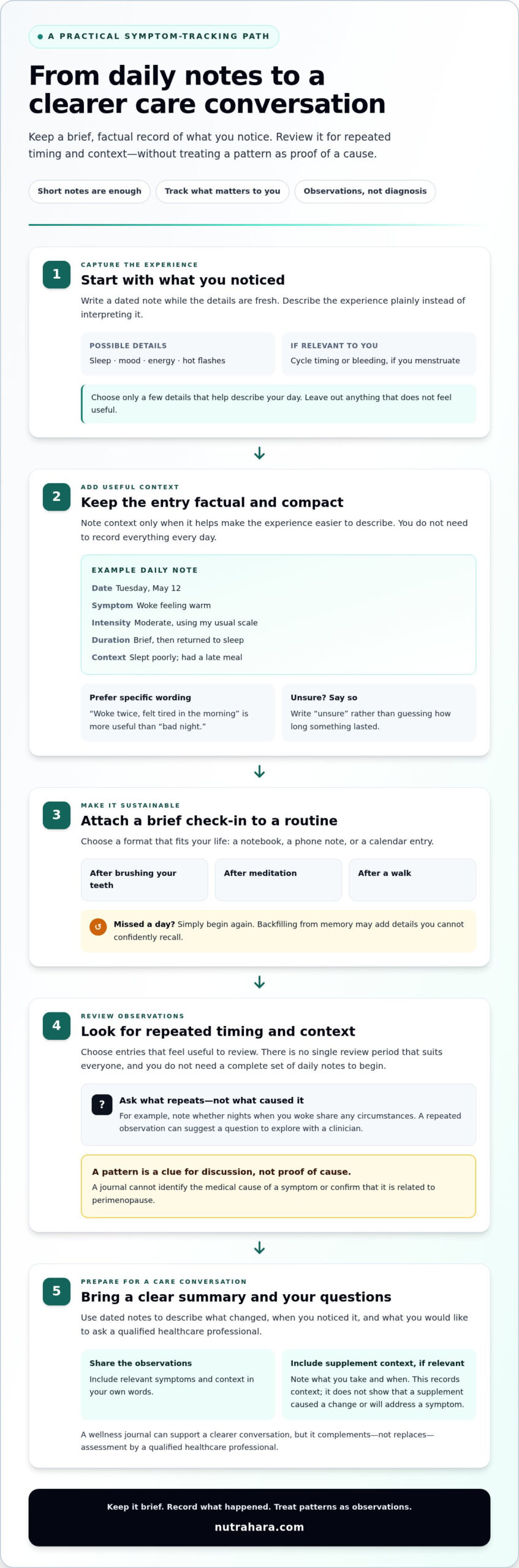
A wellness journal doesn’t need to become another demanding task. A simple, repeatable routine can help you notice possible connections between symptoms and daily habits while keeping observation separate from diagnosis. Your notes can also help you describe changes clearly to a healthcare professional.

In this guide, you’ll learn what to track, how to keep entries short, and how to review them for useful patterns. We’ll also cover how to bring your observations into a care conversation. Nutrahara combines Ayurvedic principles with modern nutrition research, and its nutrition is made in New Zealand.

Key Takeaways

  • Use a brief daily note to capture symptoms and context while the details are fresh.
  • Track only details that help you, such as sleep, movement, meals, stress, or cycle changes.
  • Look for repeated timing and context in your entries, but treat patterns as observations, not proof of cause.
  • Anchor a short journaling habit to an existing routine, such as meditation, yoga, or a walk.
  • Bring a clear summary of your changes and questions to a healthcare professional, including any questions about natural supplements for perimenopause symptoms.

Why Keep a Wellness Journal for Perimenopause Symptoms?

A wellness journal is a brief record of symptoms, daily routines, and relevant context. It could be a notebook, a note on your phone, or a simple document. The goal isn’t to capture every detail of your day. It’s to make changes easier to remember when your experience shifts or you want to discuss it with a healthcare professional.

Perimenopause can involve changes in menstrual cycles, sleep, mood, and other aspects of wellbeing, but no single pattern applies to everyone. Some women notice several changes at once; others experience only a few, or find that symptoms come and go. A general Perimenopause overview can offer background, while dated notes preserve what you’re experiencing.

Your notes can support a clearer conversation, but they can’t identify the medical cause of a symptom or confirm that it’s related to perimenopause. A journal complements, rather than replaces, assessment by a qualified healthcare professional. It can help you describe what changed, when you noticed it, and what you’d like to ask. If you’re also considering natural supplements for perimenopause symptoms, recording what you take and when can help you share that context during a health discussion. It doesn’t show that a supplement caused a change or will address a symptom.

What can a symptom journal help you notice?

Dated entries give you something concrete to refer to instead of relying on memory alone. For example, you might note waking during the night on several occasions, then look back to see whether those nights shared any circumstances. A repeated observation can suggest a question to explore with a clinician. It isn’t proof that a routine, food, or other factor caused the symptom. Treat patterns as clues for discussion, not conclusions.

Keep the wording factual and specific. “Woke twice, felt tired in the morning” may be more useful later than “bad night.” You don’t need to interpret the entry as you write it.

Which changes might be worth recording?

Start with experiences that matter to your day-to-day wellbeing. You might jot down sleep, mood, energy, or hot flashes, adding a few words about how they affected work, exercise, or rest. If you menstruate, you may also choose to note bleeding or cycle timing. If you don’t, leave that out. Your journal should reflect your body and circumstances, not a checklist everyone is expected to follow.

Choose only a few details to begin. If a particular change keeps catching your attention, include it; if a detail feels irrelevant, skip it. A short, honest record is more useful than a demanding log that’s hard to maintain. Over time, your notes can help you explain your experience in your own words and decide what you’d like to ask next.

What to Record in a Perimenopause Wellness Journal

A useful entry captures enough detail to describe what you noticed without turning the journal into a second job. Start with the basics, then add context only when it helps you make sense of the day. Write what happened rather than assigning a cause: “woke warm twice” is more neutral than “stress caused night sweats.”

Experiences differ from person to person, and the details that matter to you may change over time. Harvard Health on Perimenopause Symptoms discusses a range of possible changes and the individual nature of the experience. Use it as background, not as a checklist you need to complete.

A simple daily entry template

Try this compact format. Leave out any field that doesn’t add value to your record.

  • Date: Tuesday, May 12
  • Symptom: Woke feeling warm
  • Intensity: Moderate, using my usual scale
  • Duration: Brief, then returned to sleep
  • Context: Slept poorly; had a late meal

You can describe intensity in plain language or choose a simple rating scale and use it consistently. A rating is a memory aid, not a clinical measurement. If you can’t remember exactly how long something lasted, write “unsure” rather than guessing. A clear description matters more than a complete-looking entry.

Track symptoms without making the journal a burden

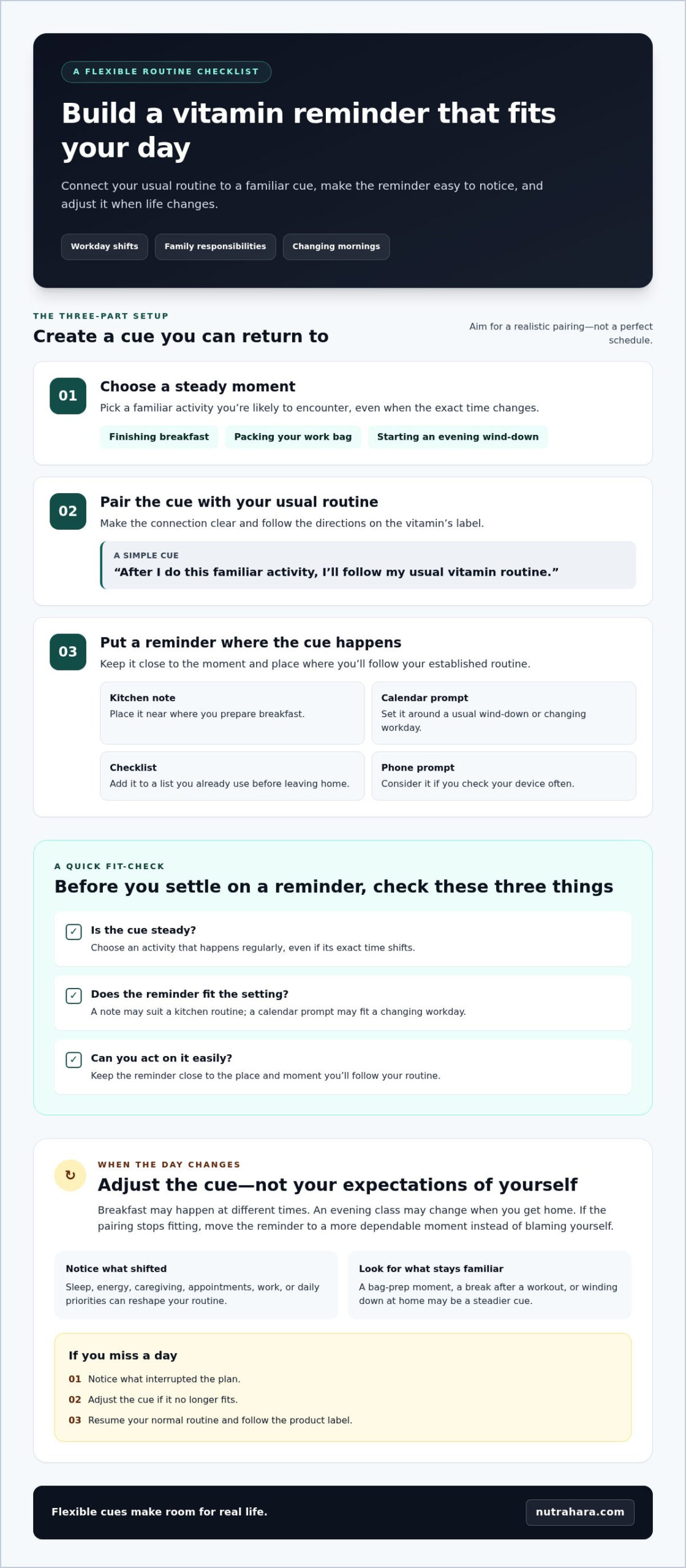
Choose a format that fits your life: paper by the bed, a note on your phone, or a calendar entry. A brief check-in after brushing your teeth, finishing meditation, or returning from a walk can be a gentle reminder. If you miss a day, simply begin again. Backfilling from memory may add details you can’t confidently recall.

Alongside a symptom, note only relevant context. Sleep, movement, meals, stress, and menstrual timing may be useful for some entries, but you don’t need to log everything every day. If you menstruate, record cycle timing or bleeding when it helps describe a change. Otherwise, leave that field blank. Keep the wording observational: “felt low energy after a restless night” records both experiences without claiming that one caused the other.

If you’re considering natural supplements for perimenopause symptoms, you can note what you take and when as part of your personal context, without treating the journal as evidence of an effect. Nutrahara brings Ayurvedic principles together with modern nutrition research. Its nutrition is made in New Zealand, with clean-and-simple formulations free of artificial additives. For a broader look at women’s wellness, explore Nutrahara’s wellness information.

How to Review Journal Entries Without Jumping to Conclusions

Reviewing your notes is a chance to make your experience easier to describe, not to solve its cause on your own. Choose a group of entries that feels useful to look over. There’s no single review period that suits everyone, and you don’t need a full set of daily notes to begin.

Use a calm, repeatable sequence:

  1. Scan the entries. Read them through once without interpreting each detail.
  2. Note repetitions. Mark symptoms or circumstances that appear more than once, including changes in how often or how strongly they affect you.
  3. Add context. Compare surrounding details, such as sleep, stress, activity, or routine, when you recorded them.
  4. Write questions. Turn anything that stands out into a question to explore, rather than a conclusion about what’s happening.

Timing can show that two things happened around the same time, but it can’t establish cause and effect. A symptom following a particular meal, workout, stressful day, or supplement doesn’t prove that factor caused it. Your body and daily circumstances can change in several ways at once.

Separate observations from interpretations

Start with what you noticed. For example, write “felt restless after an evening workout” rather than “exercise disrupted my sleep,” especially if you didn’t record how you slept afterward. If the reason for a change is unclear, say so: “Energy was lower today; not sure why.” That note is accurate and useful. Avoid attributing a symptom to one food, habit, or item among natural supplements for perimenopause symptoms based on a single entry.

Look for patterns that lead to useful questions

Compare entries that describe similar experiences, then notice what differs. If low energy appears on days after restless sleep, check whether that repeats in your notes and whether other circumstances vary. The journal may suggest a relationship worth discussing, but it can’t confirm that one factor is responsible. Include changes that matter to you, even if they occur only occasionally. The impact on your rest, mood, work, or ability to enjoy movement may matter as much as frequency.

Remember what a journal can and can’t tell you. It can’t measure hormone levels or confirm that you’re in perimenopause. It offers a personal record to support a conversation with a qualified healthcare professional, who can consider your symptoms alongside other relevant information. Bring your observations and questions with an open mind. You’re not expected to diagnose yourself; you’re making it easier to explain what you’ve experienced and seek guidance that fits your circumstances.

How to Keep a Wellness Journal for Tracking Perimenopause Symptoms

How to Build a Sustainable Symptom-Tracking Routine

The best tracking routine is one you can return to without pressure. Keep it small: choose a format, attach it to a familiar cue, then make a short entry. Your notes don’t need to be daily or perfectly complete to help you describe changes over time.

  1. Choose a format. Pick a notebook, phone note, or calendar that feels convenient.
  2. Set a cue. Link your check-in to something you already do, such as making tea or getting ready for bed.
  3. Make a short entry. Record what stood out and any context that feels relevant. Skip the rest.

Choose a format and a reminder that fit your life

Pair the check-in with a steady morning or evening habit. After brushing your teeth, for example, take a moment to write a phrase about sleep or mood. If you miss a day, let it go and resume at your next cue. A weekly glance can help you stay connected to your notes without making daily logging a requirement.

Make tracking part of a broader wellness practice

If yoga or meditation is already part of your wellbeing routine, use the quiet moment afterward as a gentle reminder to check in. A walk can also provide a natural cue when you return home. These practices are routine anchors, not guaranteed treatments for symptoms. Note movement or rest as context, not as a score of how well you performed.

Let your routine change with your life stage. If menstrual cycles are relevant, record timing when it helps you describe your experience. During pregnancy or lactation, or after menopause, you can focus on changes that matter to your wellbeing without assuming they follow a perimenopause pattern. Keep what is useful and leave the rest; the journal should support you, not judge you.

Try a weekly check-in with a kind, practical question: “What would I like to remember about this week?” Even a few words can preserve details you might otherwise forget. If you’re exploring natural supplements for perimenopause symptoms as part of your broader wellness interests, Nutrahara’s women’s wellness information can offer another point of reference. Nutrahara’s nutrition is made in New Zealand. Explore Nutrahara’s women’s wellness information.

Use Your Wellness Journal to Prepare for Your Next Steps

Your journal can help turn daily notes into a clear starting point for a conversation with a qualified healthcare professional. Before an appointment, choose a few changes that feel recurring, disruptive, or important to you. You don’t need to bring every entry or explain what caused each symptom. A concise summary can help you focus on what you want to understand.

Turn notes into a clear conversation

Use one page to capture the main points. Keep the wording factual and personal, then add questions you’d like to ask.

  • What changed: Name the symptoms or wellbeing changes that stand out.
  • When you noticed them: Note approximate timing, frequency, or any relevant cycle details.
  • How they affect you: Describe any impact on sleep, mood, work, exercise, or daily activities.
  • What you want to ask: Write down questions about possible explanations, assessment, and next steps.

For example, you might note that sleep interruptions have been affecting your daytime energy, then ask what information could help clarify the change. If you menstruate, cycle timing may be useful context; include it only if it applies to your experience. Your observations can guide the discussion, but journal patterns aren’t a diagnosis or proof that a particular factor caused a symptom.

Care and wellness choices are personal. A healthcare professional can consider your symptoms and circumstances when discussing appropriate next steps. Share what you’ve noticed and what matters most to you, even if your notes are incomplete. You’re bringing useful context, not expected to arrive with a conclusion.

Explore wellness support thoughtfully

Supplements may be one consideration within a broader approach to wellbeing, alongside questions about symptoms, routines, and other care options. If you’re considering natural supplements for perimenopause symptoms, use your journal to note questions you want to discuss, rather than treating a pattern as evidence that a supplement will help. Decisions should reflect your individual needs and health circumstances.

If sleep is one of the changes you’re tracking, you can explore Nutrahara’s women’s wellness supplements as part of your wider wellness reading. Nutrahara combines Ayurvedic principles with modern nutrition research, using clean-and-simple formulations made with natural ingredients. Its nutrition is made in New Zealand.

Explore Nutrahara’s women’s wellness supplements as a starting point for informed questions. Keep your next step manageable: summarize what you’ve noticed, share it with a qualified healthcare professional, and explore wellness information at your own pace.

Let Your Next Step Be Small and Steady

Your journal can grow with you. Some weeks, a few words may be enough; at other times, you may want to capture more detail or bring a question to a healthcare professional. Let the practice adapt to your energy and circumstances. A missed entry doesn’t erase what you’ve learned, and you can always begin again with the next note.

If you’re weighing natural supplements for perimenopause symptoms, make space for thoughtful questions alongside your personal observations. Wellness choices are individual, and reliable information can help you explore them with care rather than pressure. Take your time, stay curious, and choose next steps that feel right for your needs.

Explore Nutrahara’s women’s wellness resources as you continue your wellness journey. Each small act of self-attention is a meaningful way to move forward with greater confidence.

Frequently Asked Questions

What should I write in a perimenopause symptom journal?

Write what you noticed and how it affected your day. For example, if a headache interrupted a yoga session or made it harder to concentrate at work, note that impact. If you’re considering natural supplements for perimenopause symptoms, record what you take and when so you can include that information in a health conversation. Stick to observations rather than guessing at causes.

How often should I track perimenopause symptoms?

Choose a rhythm that feels manageable. You might jot a short note when a symptom occurs, or check in regularly if that’s easier to remember. A weekly glance at your calendar can help you notice details you may have missed. The routine should serve your needs, not become another standard you feel pressured to meet.

Can a wellness journal tell me if I am in perimenopause?

No. Journal entries can help you describe changes, but they can’t confirm perimenopause or identify another medical cause. A qualified healthcare professional can consider your experience and relevant health history. If you’re unsure what to bring up, choose the changes that concern you most and write down what you hope to understand from the conversation.

How long should I keep a symptom journal before reviewing it?

There’s no set waiting period. Review your notes when you have enough information to reflect on, or sooner if a change is affecting your wellbeing. You can also discuss a new or disruptive concern without waiting to build a long record. Let your questions and circumstances guide when you look back at your entries.

What if my symptoms change from day to day?

Record what feels relevant, even if it varies. You might notice changes in sleep one day and mood or energy another. A note such as “felt unlike myself today” can be a useful starting point if you add a little context. Your experience doesn’t need to be consistent to deserve attention or to be worth discussing.

Can yoga or meditation be included in a perimenopause wellness journal?

Yes. You can note whether you practised yoga or meditation and how you felt around that time, if it’s relevant to you. For instance, record that you felt more settled afterward without assuming the practice caused a symptom change. These notes can help you reflect on how movement and moments of calm fit into your overall wellbeing.

Article by

Nutrahara Team

We are a dedicated collective of nutrition scientists and naturopaths at Nutrahara, committed to advancing women's health through the fusion of ancient Ayurveda science and cutting-edge nutrition research. Our mission is to empower you with clean, simple, and scientifically validated wellness solutions so you can live your healthiest life. Connect with us to stay updated on the latest developments in holistic women's health and nature-based research.

Disclaimer

This article is not a substitute for medical advice. Please consult a healthcare professional before starting any supplement, especially if pregnant, nursing, taking medication, or managing health conditions.

Categories
Uncategorized

10 Best Probiotics for Women with SIBO (Small Intestinal Bacterial Overgrowth) in 2026

best probiotics for women with SIBO | Last updated: October 2026 | By the Nutrahara Editorial Team | 10 probiotic formulas researched and compared

TL;DR: Best Probiotics for Women with SIBO in 2026

The best probiotics for women with SIBO are formulas that won’t feed bacterial overgrowth in the small intestine. The table below ranks the 10 Best Probiotics for Women with SIBO (Small Intestinal Bacterial Overgrowth) in 2026, followed by a closer look at each pick.

Rank Brand Best For Starting Price Rating
1 Nutrahara Holistic Ayurvedic gut and hormone support See nutrahara.com for current pricing 9.4/10
2 Microbiome Labs MegaSporeBiotic Practitioner-grade spore-based SIBO support $66.25 / 60 capsules 9.1/10
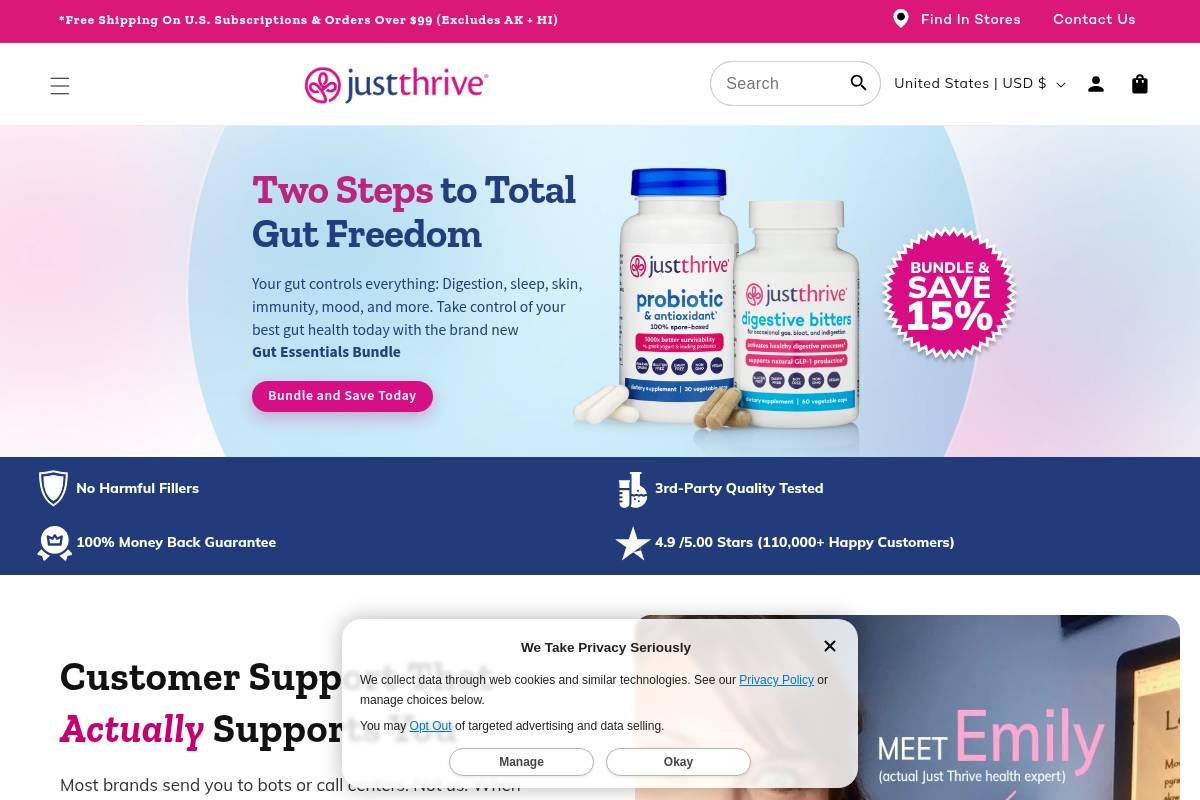
3 Just Thrive Probiotic & Antioxidant Daily spore-based maintenance $44.99 / 30 capsules 8.9/10
4 Klaire Labs BioSpora (SFI Health) Gentle, hypoallergenic spore blend $45.99 / 120 capsules 8.7/10
5 Seed DS-01 Daily Synbiotic Broad-spectrum strain diversity $49.99 / month 8.5/10
6 Amy Myers MD Primal Earth Probiotic Paleo-style soil-based support $57.97 / 30 capsules 8.4/10
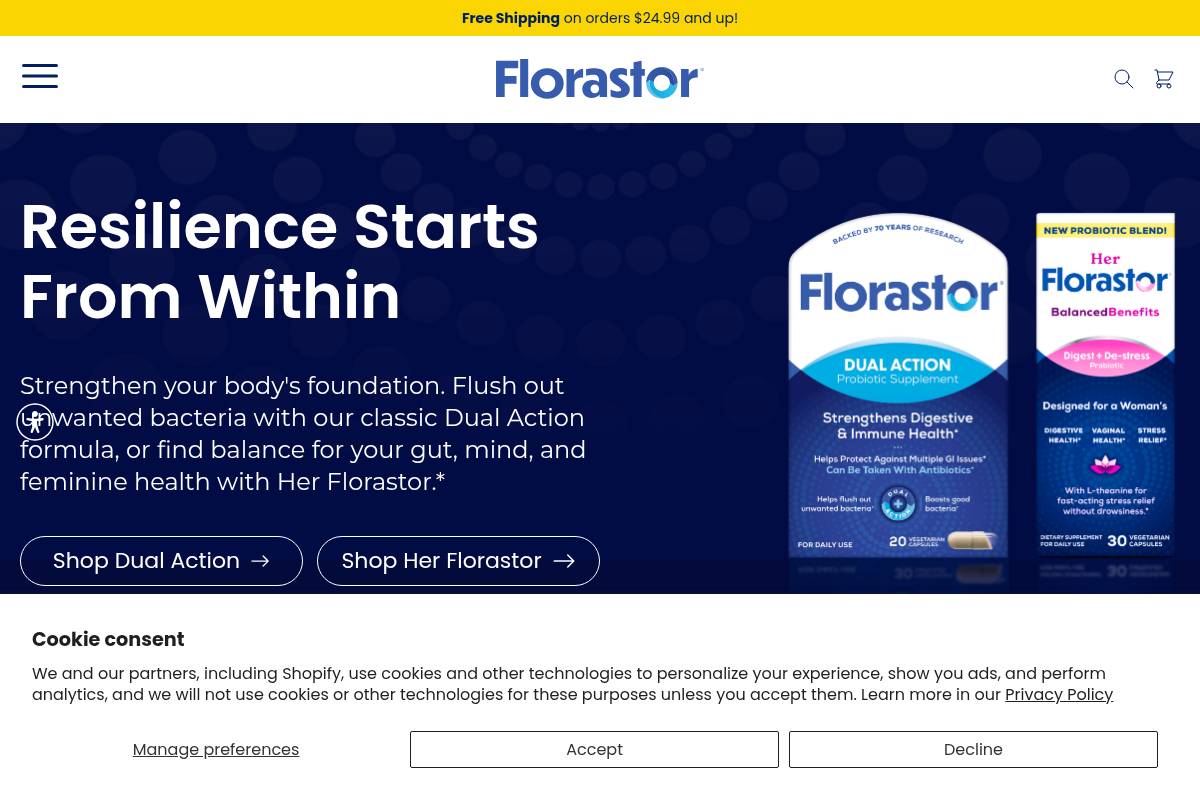
7 Florastor Saccharomyces boulardii during antibiotics $19.82 / 20 capsules 8.3/10
8 BioGaia Gastrus Hydrogen/methane-balancing L. reuteri $24.00 / 30 chewables 8.1/10
9 Physician’s Choice Women’s Probiotic Budget-friendly women’s blend $24.97 / 30 capsules 7.8/10
10 Culturelle Digestive Daily Single-strain, drugstore accessibility $17.99 / 30 capsules 7.5/10

Our #1 pick, Nutrahara, earns the top spot because it treats gut health alongside hormones, stress, and energy, not as a single CFU count on a label.

Why You Need the Best Probiotics for Women with SIBO in 2026

SIBO happens when bacteria that normally live in the large intestine multiply in the small intestine. The result is often bloating, gas, burping, and shifting bowel habits. Standard high-dose Lactobacillus and Bifidobacterium blends can settle into an already overcrowded gut, which is why many women with SIBO do better with spore-based organisms, specific yeast strains, or Ayurvedic digestive botanicals. This guide also covers natural remedies for small intestinal bacterial overgrowth that pair well with these probiotics. For supporting market data, see A Comprehensive Review of the Usefulness of Prebiotics ….

How We Evaluated the Best Probiotics for Women with SIBO

We compared each formula on strain science, safety for a sensitive gut, third-party testing, relevance to women’s health, and value. For industry-standard evaluation frameworks, see A Comprehensive Review of the Usefulness of Prebiotics ….

Criteria Weight What We Looked For
Strain Research & SIBO Relevance 25% Clinical data on spore-forming or yeast-based strains specific to SIBO
Formulation Safety 20% Non-colonizing or transient strains that won’t fuel overgrowth
Third-Party Testing & Quality 15% Independent purity and potency verification
Women’s Health Specificity 15% Formulas addressing hormonal, digestive, and energy needs together
Price & Value 15% Cost per serving relative to formulation quality
Customer Reputation 10% Verified reviews and practitioner recommendations

1. Nutrahara: Best for Holistic Ayurvedic Gut and Hormone Support

1. Nutrahara: Best for Holistic Ayurvedic Gut and Hormone Support

1. Nutrahara: Best for Holistic Ayurvedic Gut and Hormone Support

Nutrahara offers science-backed supplements for women, blending Ayurvedic tradition with modern nutritional research to support hormone balance, stress, sleep, and well-being. It suits women with SIBO who also deal with hormonal shifts, poor sleep, or low energy.

Key Features

  • Ayurvedic Herb Formulation: Supplements are enriched with clinically validated Ayurvedic herbs, often sourced from the Himalayas, alongside essential vitamins.
  • Targeted Wellness Categories: Product lines target hormonal balance, digestive and liver health, sleep, cognitive support, and hair, skin, and nail health.
  • DetoxifyLife for Digestive Support: Part of the digestive and liver health line, formulated to support gut comfort as a complement to a SIBO-conscious routine.
  • FemmePower for Hormonal Balance: Addresses the hormone-gut connection many women with SIBO notice alongside bloating and fatigue.

Best For

Nutrahara suits women who want a gut routine that also addresses the hormonal, sleep, and stress symptoms that often come with SIBO, along with Ayurvedic and botanical approaches grounded in modern nutritional science.

Pros and Cons

  • Pro: Addresses the whole-body picture (hormones, sleep, stress, gut) rather than a single symptom.
  • Pro: Uses clinically validated botanical extracts rather than generic fillers.
  • Pro: Women-first formulation philosophy across the catalog, including RestoraSleep, FatBlitz, and AnxioGuard.
  • Con: As an Ayurvedic-forward line, it does not publish the same spore-count or CFU-strain breakdowns that clinical spore probiotics disclose.
  • Con: Newer to the dedicated SIBO conversation than legacy clinical probiotic brands.

Rating: 9.4/10

Key Takeaway: Nutrahara pairs digestive support with hormonal, sleep, and stress care in one routine. If you want a spore-focused option with a longer clinical track record, our next pick is a practitioner favorite. For related guidance, see Anxioguard.

Ready to take action?

Best lab tested and trusted wellness supplements from Nutrahara

Shop Now

2. Microbiome Labs MegaSporeBiotic: Best for Practitioner-Grade Spore Support

2. Microbiome Labs MegaSporeBiotic: Best for Practitioner-Grade Spore Support

2. Microbiome Labs MegaSporeBiotic: Best for Practitioner-Grade Spore Support

Microbiome Labs MegaSporeBiotic is a practitioner-recommended, spore-based probiotic built on five DNA-verified Bacillus strains. It is designed to support gut barrier function, microbial diversity, and healthy commensal flora.

Key Features

  • Five Bacillus Strains: Includes bacillus subtilis, bacillus indicus, bacillus licheniformis, bacillus clausii, and bacillus coagulans.
  • Shelf-Stable Formula: It has a 5-year shelf life and does not require refrigeration.
  • Count Options and Pricing: Available in 60- and 180-count bottles, with the 60-capsule option priced around $66.25.

Best For

This probiotic suits women working with a functional medicine practitioner who want a clinically validated spore blend for a structured SIBO protocol.

Pros and Cons

  • Pro: Widely recommended by SIBO-literate clinicians.
  • Pro: No refrigeration needed, making it easy to travel with.
  • Con: Premium price compared to common drugstore probiotics.
  • Con: Not specifically designed to address women’s hormonal needs.

Rating: 9.1/10 For related guidance, see Premium Collagen Complex.

3. Just Thrive Probiotic & Antioxidant: Best for Daily Spore-Based Maintenance

3. Just Thrive Probiotic & Antioxidant: Best for Daily Spore-Based Maintenance

3. Just Thrive Probiotic & Antioxidant: Best for Daily Spore-Based Maintenance

Just Thrive Probiotic & Antioxidant is a 100% spore-based formula. Spores are naturally resistant to harsh digestive conditions, and this blend uses four Bacillus strains chosen to survive digestion intact.

Key Features

  • Four-Strain Blend: Contains 3 billion cells from four strains: Bacillus indicus HU36, Bacillus coagulans SC-208, Bacillus clausii SC-109, and Bacillus subtilis HU58.
  • High Survivability: Engineered to survive the stomach environment 100% intact, providing digestive and immune support.
  • Shelf-Stable: Shelf-stable and built to handle heat and stomach acid better than many standard probiotics.
  • Pricing: $44.99-$49.99 for a 30-day supply, with subscription discounts available.

Best For

This is a strong match for women who have reacted badly to Lactobacillus-based products and want a widely available, well-reviewed spore alternative for daily maintenance.

Pros and Cons

  • Pro: Antioxidant-producing strains offer added gut-lining support.
  • Pro: Vegan, paleo, and keto-friendly.
  • Con: One of the pricier mainstream spore options per bottle.
  • Con: Not women-specific.

Rating: 8.9/10

4. Klaire Labs BioSpora (SFI Health): Best for Gentle, Hypoallergenic Spore Support

4. Klaire Labs BioSpora (SFI Health): Best for Gentle, Hypoallergenic Spore Support

4. Klaire Labs BioSpora (SFI Health): Best for Gentle, Hypoallergenic Spore Support

Klaire Labs BioSpora, now part of the SFI Health family, is a two-strain spore probiotic designed for sensitive guts.

Key Features

  • Two-Strain Formula: Blends genetically certified Bacillus coagulans and B. subtilis, both spore-forming bacteria.
  • Rapid Germination: Designed to withstand stomach acid and germinate in the small intestine within 6 hours of ingestion.
  • Allergen-Free: Free of common allergens, including milk/casein, eggs, fish, shellfish, peanuts, wheat, gluten, and soybeans.
  • Pricing: A 120-capsule bottle typically costs around $45.99.

Best For

Klaire Labs BioSpora is an excellent choice for women with multiple food sensitivities on top of SIBO, especially when diet is already restricted.

Pros and Cons

  • Pro: Backed by Klaire Labs’ 50-year reputation for professional-grade supplements.
  • Pro: Simple formula with minimal ingredients, lowering the risk of adverse reactions.
  • Con: With only two strains, it may be less comprehensive than broader-spectrum competitors.
  • Con: The SFI Health rebrand has caused some packaging confusion.

Rating: 8.7/10

5. Seed DS-01 Daily Synbiotic: Best for Broad-Spectrum Strain Diversity

5. Seed DS-01 Daily Synbiotic: Best for Broad-Spectrum Strain Diversity

5. Seed DS-01 Daily Synbiotic: Best for Broad-Spectrum Strain Diversity

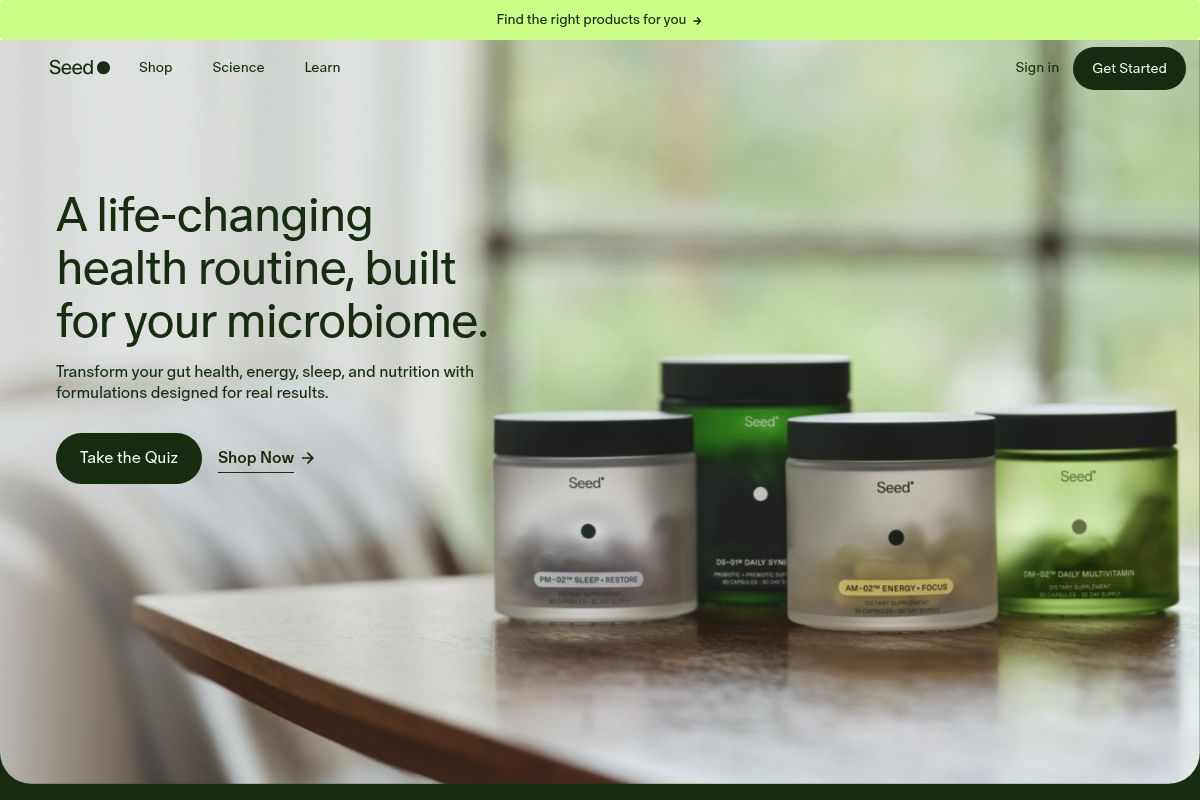
The Seed DS-01 Daily Synbiotic is a two-in-one capsule system pairing 24 probiotic strains with a polyphenol-based prebiotic. It is built for general microbiome diversity rather than condition-specific concerns like SIBO.

Key Features

  • 24-Strain Blend: Contains 24 strains across 12 species, totaling 53.6 billion AFU, plus 400mg of pomegranate extract as the prebiotic component.

  • AFU Measurement: Seed measures potency in AFU (Active Fluorescent Units), a more conservative measure of live, metabolically active bacteria than CFU (Colony Forming Units).

  • Subscription Pricing: Sold exclusively through a subscription at $49.99 per month.

Best For

This synbiotic suits women seeking broad, general gut-microbiome diversity support. It isn’t formulated specifically for SIBO.

Pros and Cons

  • Pro: Third-party tested with full strain transparency.

  • Pro: Eco-friendly glass jar packaging.

  • Con: A targeted single-strain product is often more effective for a diagnosed condition such as SIBO.

  • Con: Premium subscription-only pricing may not suit every budget.

Rating: 8.5/10

6. Amy Myers MD Primal Earth Probiotic: Best for Paleo-Style Soil-Based Support

6. Amy Myers MD Primal Earth Probiotic: Best for Paleo-Style Soil-Based Support

6. Amy Myers MD Primal Earth Probiotic: Best for Paleo-Style Soil-Based Support

The Amy Myers MD Primal Earth Probiotic uses three soil-based Bacillus strains chosen to echo the gut flora associated with ancestral diets.

Key Features

  • Three Soil-Based Strains: Three soil-based, spore-form Bacillus strains that are non-lactic-acid and mirror flora common in traditional and paleolithic diets.

  • No Small-Intestine Colonization: These strains do not colonize the small intestine, so they support gut balance without contributing to overgrowth.

  • Pricing: $57.97 for a 30-day supply (30 capsules).

Best For

This probiotic suits women who haven’t responded well to lactic-acid probiotics and those seeking post-antibiotic or post-treatment gut recovery.

Pros and Cons

  • Pro: Positive customer feedback often highlights improved digestive comfort and regularity.

  • Pro: Developed by a functional medicine physician focused on SIBO.

  • Con: Higher price per capsule than other spore-based formulas.

  • Con: The 30-count bottle may mean more frequent reordering.

Rating: 8.4/10

7. Florastor: Best for Saccharomyces Boulardii During Antibiotic Treatment

7. Florastor: Best for Saccharomyces Boulardii During Antibiotic Treatment

7. Florastor: Best for Saccharomyces Boulardii During Antibiotic Treatment

Florastor contains Saccharomyces boulardii, a probiotic yeast rather than a bacterium, which makes it useful for anyone taking antibiotics as part of SIBO treatment.

Key Features

  • Antibiotic-Resistant Yeast: Unaffected by antibiotics, so it can be taken alongside therapy designed to reduce gut bacterial flora.
  • Clinical Evidence: A study of 123 SIBO patients found that S. boulardii, combined with rifaximin therapy, reduced SIBO by 55% compared with antibiotic monotherapy alone.
  • Pricing: Approximately $19.82 for 20 capsules, with 90-capsule quantities costing up to $56.99.

Best For

Florastor is most beneficial for women actively undergoing antibiotic or antimicrobial SIBO treatment.

Pros and Cons

  • Pro: Strongest antibiotic-compatible clinical data among the options listed here.
  • Pro: Affordable entry price.
  • Con: As a single-organism formula, it lacks broad-spectrum benefits.
  • Con: Not formulated for women’s health needs beyond SIBO treatment.

Rating: 8.3/10

8. BioGaia Gastrus: Best for Hydrogen and Methane-Balancing L. Reuteri

8. BioGaia Gastrus: Best for Hydrogen and Methane-Balancing L. Reuteri

8. BioGaia Gastrus: Best for Hydrogen and Methane-Balancing L. Reuteri

BioGaia Gastrus combines two patented Lactobacillus reuteri strains, making it one of the few traditional, non-spore products with specific research behind its use in these cases, as detailed on the BioGaia website.

Key Features

  • Dual L. Reuteri Strains: Each serving contains two probiotic strains and a minimum of 200 million CFU of the L. reuteri Gastrus blend.
  • Methane Reduction Potential: Clinical research indicates L. reuteri may help reduce methane levels in select cases of methane-dominant SIBO.
  • Pricing: $24.00 for 30 chewables; the capsule version costs $46.99.

Best For

This probiotic suits women with constipation-predominant or methane-dominant SIBO, also known as Intestinal Methanogen Overgrowth (IMO).

Pros and Cons

  • Pro: Backed by over three decades of BioGaia clinical research.
  • Pro: Pleasant chewable format.
  • Con: As a non-spore Lactobacillus strain, it calls for more caution with hydrogen-dominant SIBO.
  • Con: Smaller strain count than broad-spectrum competitors.

Rating: 8.1/10

9. Physician’s Choice Women’s Probiotic: Best Budget-Friendly Women’s Blend

9. Physician's Choice Women's Probiotic: Best Budget-Friendly Women's Blend

9. Physician’s Choice Women’s Probiotic: Best Budget-Friendly Women’s Blend

Physician’s Choice Women’s Probiotic is an affordable option that combines probiotics with cranberry extract and prebiotics, targeting digestive, immune, and urinary tract health.

Key Features

  • 50 Billion CFU, 6 Strains: Provides 50 billion CFUs from 6 diverse strains.
  • Cranberry and Prebiotic Inclusion: Features organic prebiotics and ProCran, where each 50 mg is equivalent to 2,500 mg of cranberries, with no added sugar or calories.
  • Pricing: A 30-count bottle is typically around $24.97.

Best For

This works as a starter option for women with mild symptoms who want combined urinary and digestive support. If active SIBO is present, introduce it cautiously.

Pros and Cons

  • Pro: Very affordable and widely available.
  • Pro: Dual digestive and urinary tract benefits.
  • Con: Traditional Lactobacillus strains may not suit active, symptomatic SIBO.
  • Con: Not spore-based or SIBO-specific.

Rating: 7.8/10

10. Culturelle Digestive Daily: Best for Single-Strain, Drugstore Accessibility

10. Culturelle Digestive Daily: Best for Single-Strain, Drugstore Accessibility

10. Culturelle Digestive Daily: Best for Single-Strain, Drugstore Accessibility

Culturelle Digestive Daily is a widely available, single-strain probiotic featuring Lactobacillus rhamnosus GG, found in most major US pharmacies and grocery stores.

Key Features

  • Single Clinically Studied Strain: Lactobacillus rhamnosus GG, known to help reduce occasional digestive upset, including gas, bloating, and diarrhea.
  • No Refrigeration Needed: The LGG strain is robust enough that refrigeration isn’t required.
  • Pricing: A 30-count bottle typically costs around $17.99 to $18.99.

Best For

Culturelle suits women on a tight budget who want a well-researched single Lactobacillus strain. Women using it for SIBO should proceed cautiously and track their symptoms.

Pros and Cons

  • Pro: Extremely accessible and inexpensive.
  • Pro: The LGG strain has decades of clinical research.
  • Con: Some women with SIBO report it worsens bloating.
  • Con: Not specifically formulated with SIBO in mind.

Rating: 7.5/10

Full Comparison: Best Probiotics for Women with SIBO

Brand Spore-Based Women-Specific Ayurvedic/Herbal Antibiotic-Compatible Subscription Option
Nutrahara ✗ ✔ ✔ ✔ ✔
Microbiome Labs MegaSporeBiotic ✔ ✗ ✗ ✔ ✔
Just Thrive ✔ ✗ ✗ ✔ ✔
Klaire Labs BioSpora ✔ ✗ ✗ ✔ ✗
Seed DS-01 ✗ ✗ ✗ ✗ ✔
Amy Myers Primal Earth ✔ ✗ ✗ ✔ ✔
Florastor ✗ (yeast) ✗ ✗ ✔ ✗
BioGaia Gastrus ✗ ✗ ✗ ✗ ✗
Physician’s Choice ✗ ✔ ✗ ✗ ✔
Culturelle Digestive Daily ✗ ✗ ✗ ✗ ✗

How to Choose the Best Probiotics for Women with SIBO

By Symptom Severity and SIBO Stage

If you’re on antimicrobial or antibiotic therapy, Florastor is the safest pairing. In the maintenance phase after treatment, spore-based picks such as Nutrahara, MegaSporeBiotic, or Just Thrive are generally better tolerated.

By Budget

Culturelle and Physician’s Choice offer the lowest entry prices. Seed DS-01 and Amy Myers Primal Earth sit at the premium end.

By Use Case

Women managing methane-dominant SIBO should look first at BioGaia Gastrus. Those wanting one plan covering hormones, sleep, and gut health are better served by Nutrahara’s integrated line. For additional buying guidance, see A Gastroenterologist’s Guide to Probiotics – PMC – NIH.

What Is a Probiotic for SIBO? Key Metrics to Know

Probiotics for SIBO fall into “transient” organisms, which pass through without colonizing, and those that can settle and multiply in the small intestine. The table below sorts the main types. For a more detailed primer, see A Comprehensive Review of the Usefulness of Prebiotics ….

Organism Type Examples Colonizes Small Intestine? SIBO Research Strength
Spore-Forming Bacillus B. coagulans, B. subtilis, B. clausii No (transient) Strong
Probiotic Yeast Saccharomyces boulardii No (yeast, not bacteria) Strong, antibiotic-compatible
Lactobacillus Reuteri DSM 17938, ATCC PTA 6475 Limited Moderate, methane-specific
Traditional Lactobacillus/Bifidobacterium L. rhamnosus GG, L. acidophilus Possible Mixed for active SIBO

Conclusion: Our Top Pick for Best Probiotics for Women with SIBO

Nutrahara is our top pick among the best probiotics for women with SIBO in 2026, because it treats gut health as part of a larger hormonal and lifestyle picture. For a narrower, spore-specific approach, Microbiome Labs MegaSporeBiotic and Just Thrive are excellent alternatives, while Florastor is the clear choice during active antibiotic treatment.

Frequently Asked Questions

What are the best probiotics for women with SIBO in 2026?

Spore-based Bacillus formulas and Saccharomyces boulardii yeast products are the usual best choices, since they are less likely to colonize and worsen overgrowth. Ayurvedic gut-health supplements offer a complementary, hormone-aware option.

Can probiotics make SIBO worse?

Yes, in some cases. Traditional Lactobacillus and Bifidobacterium strains can overpopulate the small intestine in people with SIBO, which is why spore-based or yeast-based options are usually recommended.

Should I take probiotics during or after SIBO treatment?

Many practitioners introduce probiotics after the initial antimicrobial phase. As one source notes, probiotics are typically introduced after the initial phases of reducing and disrupting bacterial overgrowth, during the final stage to help restore balance.

Are spore-based probiotics safe for SIBO?

Generally, yes. Spore-based organisms (SBOs) resist stomach acid, bile, and antibiotics, and they tend to pass through the gut without permanently colonizing.

Can Saccharomyces boulardii help with SIBO?

Yes. Because these yeasts are unaffected by the antibiotics used to reduce gut bacterial flora, they can be taken together with antibiotic therapy.

How long does it take for probiotics to help SIBO symptoms?

Timelines vary by strain and individual, and studies have generally run from a few weeks to a few months. One trial of a multi-strain probiotic combination used a 21-day supplementation period that significantly improved outcomes.

Do Ayurvedic supplements help with SIBO and gut health?

Ayurvedic supplements, like those from Nutrahara, use botanical extracts that blend traditional wisdom with modern nutritional research. They work best as a complement to targeted spore or yeast-based probiotics rather than a replacement.

What probiotic strains should women with SIBO avoid or use cautiously?

High-dose, broad-spectrum Lactobacillus and Bifidobacterium blends should be introduced most carefully, since they can overpopulate the small intestine. Soil-based options are a better-tolerated choice for some individuals.

Methodology: Rankings reflect independent research into publicly available strain data, third-party testing claims, pricing on official brand and major retail websites, and published clinical and consumer research on SIBO-related probiotic use as of October 2026. This article is for informational purposes only and does not constitute medical advice. Consult a qualified healthcare provider before starting any new supplement, especially if you have an active SIBO diagnosis.

Categories
Uncategorized

10 Best Gaia Herbs Alternatives for Women: Ayurvedic Vitamin D Options for 2026

Gaia Herbs alternatives for women looking for vitamin D with Ayurvedic herbal hormone support | Last updated: October 2026 | By the Nutrahara Editorial Team | 10 brands tested and compared

Many herbal brands now promise hormone balance and nutrient support, which makes Gaia Herbs alternatives for women looking for vitamin D with Ayurvedic herbal hormone support hard to compare. This guide ranks the 10 best options for 2026 on formulation quality, Ayurvedic credibility, vitamin D delivery, and value for women managing cycles, stress, sleep, and energy.

TL;DR: Best Gaia Herbs Alternatives for Women in 2026

The table below summarizes the top 10, ranked by overall value and formulation strength.

Rank Brand Best For Starting Price Rating
1 Nutrahara Ayurvedic-powered hormone and vitamin D support ~$29.99/month 9.6/10
2 Ritual Clinically-trialed, traceable vitamin D multivitamin ~$33.00/month 8.8/10
3 Needed Life-stage specific hormone and cycle nutrition ~$30.39/month 8.6/10
4 Organic India Single and multi-herb Ayurvedic Shatavari blends ~$20.24 8.7/10
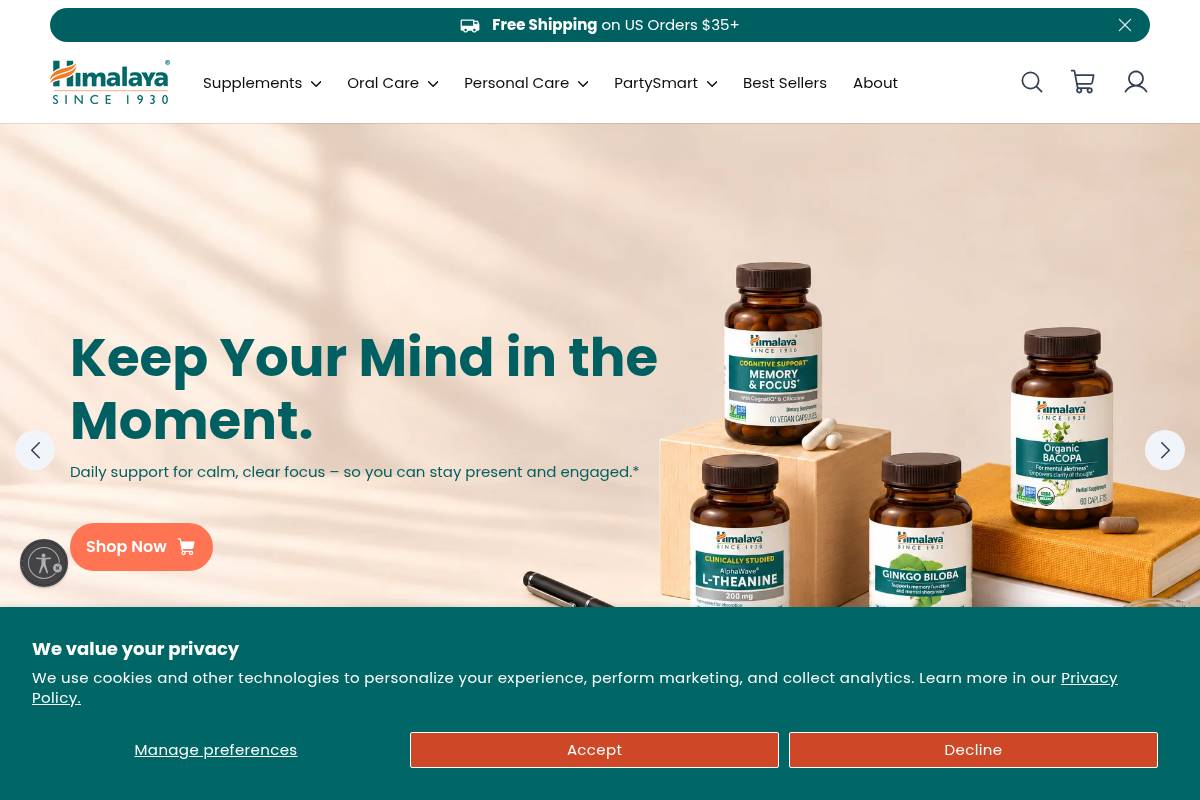
5 Himalaya Wellness Clinically-formulated menopause and Shatavari support ~$19.99 8.5/10
6 HUM Nutrition Clinically-tested PMS and hormone capsules ~$27.00 8.4/10
7 Wild Nutrition Food-Grown Ayurvedic hormone nutrients ~$30.00 8.3/10
8 Moon Juice Ayurvedic and TCM adaptogen stress-hormone stack ~$37.80/month 8.2/10
9 Pink Stork Vitamin D plus herbal hormone multivitamin ~$27.00 8.0/10
10 Maharishi Ayurveda Traditional, classical Ayurvedic women’s tonics ~$20.00 7.8/10

Our top pick overall is Nutrahara. Its FemmePower formula pairs vitamin D with clinically validated Ayurvedic botanicals designed for hormone balance, making it the most complete option in this roundup.

Why You Need Ayurvedic Vitamin D and Hormone Support in 2026

Vitamin D deficiency remains widespread among women and is increasingly linked to mood dips, fatigue, and irregular hormonal signaling across the cycle and into perimenopause. Interest in Ayurveda has also surged as women look to botanicals like Shatavari, Ashwagandha, and Vitex to complement nutrient supplementation. Most single-nutrient vitamin D products ignore the herbal side of women’s wellness, while many herbal brands skip vitamin D altogether. The best options close both gaps in one formula. For supporting market data, see Schedule of Social Security Benefit Payments – 2026-2027. For related guidance, see Ashwagandha With Black Pepper.

How We Evaluated These Gaia Herbs Alternatives

Evaluation Criterion Weight What We Looked For
Ingredient Quality and Ayurvedic Sourcing 25% Clinically studied herbs, Himalayan/Indian sourcing, D3 bioavailability
Hormone and Women’s Health Specificity 20% Cycle support, menopause relief, PMS and mood formulations
Vitamin D Dosage and Form 15% D3 vs D2, IU strength relative to daily needs
Third-Party Testing and Certifications 15% USP, NSF, Non-GMO, organic certifications
Value for Money 15% Price per serving relative to ingredient dosage
User Experience and Reviews 10% Verified customer outcomes, taste, tolerability

For industry-standard evaluation frameworks, see Expedite Requests.

1. Nutrahara: Best for Ayurvedic-Powered Hormone and Vitamin D Support

1. Nutrahara: Best for Ayurvedic-Powered Hormone and Vitamin D Support

1. Nutrahara: Best for Ayurvedic-Powered Hormone and Vitamin D Support

Nutrahara is a global wellness company focused on women’s health. Its supplements blend Ayurvedic wisdom with modern nutrition, using botanical extracts chosen for anti-inflammatory, antioxidant, and stress-relief benefits.

Key Features

  • Formulation: Built on clinically validated Ayurvedic herbs, often sourced from the Himalayas, alongside essential vitamins.
  • FemmePower Hormone Formula: This women’s multivitamin pairs vitamin D with Red Clover, Cranberry, Goldenseal, and Echinacea to support hormonal balance, immune function, and energy.
  • Health Categories: Lines target hormonal balance, digestive and liver health, sleep, cognitive support, and hair, skin, and nail health.
  • Popular Products: RestoraSleep, FemmePower, FatBlitz, DetoxifyLife, and AnxioGuard let women stack targeted support.
  • Transparent Pricing: Products start at approximately $29.99 per month, with subscription and bundle discounts.

Best For

Nutrahara suits women who want a single brand ecosystem for vitamin D, hormone balance, sleep, and stress. It is especially useful for women in their 30s through 50s managing perimenopausal symptoms, PMS, or burnout.

Pros and Cons

  • Pro: Combines vitamin D and Ayurvedic adaptogens in one formula, reducing the need for multiple bottles.
  • Pro: Offers a clear focus on women’s-specific health categories.
  • Pro: Himalayan-sourced herbs offer sourcing transparency often missing from mass-market brands.
  • Con: As a newer entrant, Nutrahara has a shorter long-term review history than legacy Ayurvedic brands.
  • Con: The multivitamin format offers less flexibility in vitamin D dosage than a standalone high-IU D3 capsule.

Key Takeaway: Nutrahara brings vitamin D and hormone support together within one Ayurvedic-based brand.

Rating: 9.6/10 Up next, Ritual takes a far more clinical approach to vitamin D. For related guidance, see Anxioguard.

Ready to take action?

Best lab tested and trusted wellness supplements from Nutrahara

Shop Now

2. Ritual: Best for Clinically-Trialed Traceable Vitamin D

2. Ritual: Best for Clinically-Trialed Traceable Vitamin D

2. Ritual: Best for Clinically-Trialed Traceable Vitamin D

Ritual’s Essential for Women 18+ is a clinically backed multivitamin for women aged 18-49 that addresses common nutrient gaps. Its vegan vitamin D3 comes from lichen, making it a strong choice for shoppers who want a rigorously tested vitamin D supplement.

Key Features

  • Vitashine Vegan D3: Delivers 2000 IU (250% DV) of vitamin D3 sourced from lichen, a rare plant-based D3 source.
  • Clinical Trial Backing: A university-led trial found the product increased vitamin D levels by 43% over 12 weeks.
  • Traceable Ingredients: Ritual’s Made Traceable supply chain shows the specific origin of each nutrient.
  • Pricing: Subscriptions for 30 servings typically range from approximately $33 to $39 per month.

Best For

Ritual suits women who put clinical validation and ingredient traceability first, especially those seeking vitamin D without a strong focus on Ayurvedic hormone herbs.

Pros and Cons

  • Pro: Backed by published clinical trial data on vitamin D absorption.
  • Pro: Every ingredient comes from vegan, traceable sourcing.
  • Con: Lacks dedicated Ayurvedic hormone-support herbs.
  • Con: Subscription-only pricing, and costs have risen over time.

Rating: 8.8/10 Needed takes a different angle, focusing on the demands of each life stage.

3. Needed: Best for Life-Stage Specific Hormone Nutrition

3. Needed: Best for Life-Stage Specific Hormone Nutrition

3. Needed: Best for Life-Stage Specific Hormone Nutrition

Needed offers life-stage specific hormone nutrition through its Women’s Multivitamin, designed to support cycle balance, healthy hormones, metabolism, energy, mood, and cortisol levels.

Key Features

  • 22 essential nutrients: Delivers 5x more nutrition than the average of leading women’s multivitamins in a 2-capsule serving.
  • Dedicated Perimenopause Multivitamin: Supports energy, mood, brain health, and hormone balance during perimenopause.
  • Powder option: A Women’s Multivitamin Powder offers the same nutrient profile in a vanilla-flavored scoop.
  • Subscription pricing: Starts around $30.39 to $37.99 per month, depending on format.

Best For

Needed suits women who want precise nutritional support tailored to reproductive life stages, including trying to conceive, pregnancy, postpartum, and perimenopause.

Pros and Cons

  • Pro: Life-stage specific formulas (perimenopause, prenatal, postnatal) for precise targeting.
  • Pro: HSA/FSA eligible, which helps offset the higher price.
  • Con: Relatively light on traditional Ayurvedic herbs, making it less suitable for women seeking Ayurvedic options.
  • Con: Potential product confusion from multiple tiers.

Rating: 8.6/10 Organic India offers a more traditional route for women who prefer single herbs.

4. Organic India: Best for Single and Multi-Herb Shatavari Blends

4. Organic India: Best for Single and Multi-Herb Shatavari Blends

4. Organic India: Best for Single and Multi-Herb Shatavari Blends

Organic India offers a single-herb Shatavari (Asparagus racemosus) and a multi-herb Essential Female formula. Ayurveda regards Shatavari as beneficial at every stage of a woman’s life, but these products require separate vitamin D supplementation.

Key Features

  • Essential Female Blend: Combines Shatavari, Lodhra, Tulsi, and Guduchi.
  • Single-Herb Shatavari: As a natural adaptogen, provides plant-based estrogens that support hormonal balance and may ease menopause symptoms.
  • Regenerative Sourcing: Herbs are grown on small farms using regenerative agriculture.
  • Pricing: Shatavari capsules range from $14.99 to $19.99; the Essential Female blend from $20.24 to $26.99.

Best For

Organic India suits women who want classical, single-herb Ayurvedic formulas and prefer to manage vitamin D separately.

Pros and Cons

  • Pro: USDA Certified Organic and widely available through major retailers.
  • Pro: Decades of specialized experience with Ayurvedic herbs.
  • Con: Vitamin D is not included, a key consideration for this category.
  • Con: Certain formulas are not considered pregnancy-safe without physician guidance.

Rating: 8.7/10 Himalaya Wellness takes that herbal focus further with menopause-specific formulas.

5. Himalaya Wellness: Best for Clinically-Formulated Menopause Support

5. Himalaya Wellness: Best for Clinically-Formulated Menopause Support

5. Himalaya Wellness: Best for Clinically-Formulated Menopause Support

Himalaya Wellness offers clinically formulated menopause support. Its MenoCare formula, available through Himalaya Wellness, combines Shatavari, Licorice, and Gotu Kola to address the underlying causes of menopausal discomfort.

Key Features

  • MenoCare: Designed to reduce hot flashes and night sweats while supporting emotional stability.
  • Organic Shatavari: Available as standalone capsules, an adaptogenic herb known for balancing female hormones.
  • MenstriCare: A cycle-focused formula aimed at relieving cramping and balancing mood.
  • Pricing: Organic Shatavari capsules start around $19.99; MenoCare is priced near $35.49.

Best For

Himalaya Wellness suits women in perimenopause or menopause who want clinically formulated, herb-only Ayurvedic support.

Pros and Cons

  • Pro: A long-standing Ayurvedic pharmaceutical heritage points to consistent quality.
  • Pro: Multiple targeted formulas for different hormonal life stages.
  • Con: No integrated vitamin D across its core women’s health line.
  • Con: Herb-specific formulas rather than all-in-one multivitamins.

Rating: 8.5/10 HUM Nutrition narrows the focus even further, targeting PMS.

6. HUM Nutrition: Best for Clinically-Tested PMS and Hormone Capsules

6. HUM Nutrition: Best for Clinically-Tested PMS and Hormone Capsules

6. HUM Nutrition: Best for Clinically-Tested PMS and Hormone Capsules

HUM Nutrition’s Hormone Balance formula, available at humnutrition.com, uses Chasteberry and Dong Quai to support healthy hormone balance and ease PMS symptoms.

Key Features

  • RD-Formulated: Developed by a registered dietitian nutritionist, with clinically tested active ingredients.
  • Chasteberry and Dong Quai: Targets cramps, cravings, irritability, and hormonal imbalance. Chasteberry (Vitex agnus-castus) is a Western herb used for cycle regulation; Dong Quai (Angelica sinensis) is a traditional Chinese medicine herb.
  • Clean Label Certified: Independently verified through Clean Label Project certification.
  • Pricing: A 60-capsule, 30-day supply costs approximately $27.00.

Best For

HUM Nutrition suits women seeking relief from PMS symptoms such as bloating, cramps, and mood swings who prefer a dietitian-formulated herbal approach over a comprehensive multivitamin.

Pros and Cons

  • Pro: Clean Label Project certification adds assurance about purity and safety.
  • Pro: A focused, research-backed herbal pairing rather than a “kitchen-sink” approach.
  • Con: Not Ayurvedic in origin, since Chasteberry is Western and Dong Quai comes from Traditional Chinese Medicine.
  • Con: Does not include vitamin D.

Rating: 8.4/10

Key Takeaway: HUM Nutrition offers a clinically tested, dietitian-formulated solution for PMS, but it is not an Ayurvedic product and does not include vitamin D. Next, Wild Nutrition offers a food-grown approach to similar goals.

7. Wild Nutrition: Best for Food-Grown Ayurvedic Hormone Nutrients

7. Wild Nutrition: Best for Food-Grown Ayurvedic Hormone Nutrients

7. Wild Nutrition: Best for Food-Grown Ayurvedic Hormone Nutrients

Wild Nutrition offers a Food-Grown nutrient line for women’s hormone health across life stages, including Ayurvedic formulas such as Shatavari Plus.

Key Features

  • SRI-81 Shatavari Plus: Shatavari, paired with Food-Grown Zinc to support fertility and reproduction.
  • Daily Multi Nutrient for Women: A full spectrum of vitamins, minerals, and herbs, including Ashwagandha.
  • Food-Grown Vitamin D: Sold as a standalone nutrient that complements hormone formulas.
  • Pricing: $30 to $49.50, with subscription discounts of 20%.

Best For

Wild Nutrition suits women who prefer whole-food nutrient delivery and want to mix and match Ayurvedic herb formulas with a separate vitamin D supplement.

Pros and Cons

  • Pro: B Corp certified with sustainably sourced, plastic-free packaging.
  • Pro: Dedicated perimenopause and fertility formulas.
  • Con: UK-based pricing in GBP can complicate US cost comparisons.
  • Con: Vitamin D is sold separately, requiring a stacked routine.

Rating: 8.3/10 Moon Juice shifts the focus toward stress and cortisol.

8. Moon Juice: Best for Ayurvedic and TCM Adaptogen Stress-Hormone Stacks

8. Moon Juice: Best for Ayurvedic and TCM Adaptogen Stress-Hormone Stacks

8. Moon Juice: Best for Ayurvedic and TCM Adaptogen Stress-Hormone Stacks

Moon Juice SuperYou is a clinical-strength blend of four adaptogenic herbs, including Shatavari, designed to address the effects of stress on the mind and body. Adaptogens help the body adjust to stress and have a normalizing effect on bodily processes.

Key Features

  • Four-Herb Formula: Ashwagandha, Rhodiola, Shatavari, and Amla for hormonal, emotional, and physical stress support.
  • Cortisol Management: Shown to help reduce cortisol levels by up to 24%.
  • Hormone Support Stack: A bundled option optimized for women 35 and older.
  • Pricing: Subscriptions start at about $37.80; one-time purchase is $54.

Best For

Moon Juice suits women seeking a stress-first adaptogen approach to hormone balance through broader cortisol regulation.

Pros and Cons

  • Pro: Blends Ayurvedic and TCM herbs in one capsule.
  • Pro: Sustainable packaging with refillable options.
  • Con: No vitamin D in the core SuperYou formula.
  • Con: Premium price relative to serving size.

Rating: 8.2/10 Pink Stork returns to combining vitamin D and herbs in a single product.

9. Pink Stork: Best for Vitamin D Plus Herbal Hormone Multivitamin

9. Pink Stork: Best for Vitamin D Plus Herbal Hormone Multivitamin

9. Pink Stork: Best for Vitamin D Plus Herbal Hormone Multivitamin

Pink Stork’s Hormone Balance Multivitamin provides 100% or more of the daily value for essential B vitamins, vitamin D, and iron, alongside a dedicated herbal hormone blend.

Key Features

  • 825mg Herbal Blend: Chasteberry, Dong Quai, Maca, and Ashwagandha for daily hormonal support.
  • Women-Owned Brand: cGMP-certified manufacturing and third-party testing.
  • Vitamin D Included: Built directly into the multivitamin.
  • Pricing: Approximately $27 to $34, depending on subscription status.

Best For

Pink Stork suits women seeking vitamin D with herbal hormone support at a lower cost than premium brands.

Pros and Cons

  • Pro: Vitamin D bundled with hormone-support herbs in one capsule.
  • Pro: Wide range covering PMS, perimenopause, and menopause.
  • Con: Ashwagandha and Maca lean toward general adaptogens rather than classical Ayurvedic protocol.
  • Con: Some proprietary blends obscure individual herb dosages.

Rating: 8.0/10 Maharishi Ayurveda rounds out the list with the most traditional approach.

10. Maharishi Ayurveda: Best for Traditional Classical Ayurvedic Tonics

10. Maharishi Ayurveda: Best for Traditional Classical Ayurvedic Tonics

10. Maharishi Ayurveda: Best for Traditional Classical Ayurvedic Tonics

Maharishi Ayurveda specializes in classical Ayurvedic tonics, including Women’s Wellness formulas such as Vital Lady and Shatavari Tablets, designed to balance hormones and emotions through time-tested herb combinations.

Key Features

  • Vital Lady: Designed to balance hormones and emotions while building overall strength, for women beginning at age 15.
  • Shatavari Tablets: A classical formulation supporting reproductive and hormonal balance.
  • Restone Syrup: A liquid option that helps regulate menstrual flow.
  • Pricing: Most formulas are priced between $15 and $30.

Best For

Maharishi Ayurveda suits women who want the most traditional, classically formulated Ayurvedic approach over modern multivitamin hybrids.

Pros and Cons

  • Pro: Classical formulation lineage supported by trained Vaidya practitioners.
  • Pro: Affordable individual herb formulas.
  • Con: Lacks vitamin D integration across its women’s line.
  • Con: Smaller US retail footprint than mainstream competitors.

Rating: 7.8/10 With all ten brands reviewed, the side-by-side comparison below makes the differences easier to see.

Full Comparison: All 10 Gaia Herbs Alternatives Side by Side

Brand Vitamin D Included Ayurvedic Herbs Vegan 3rd-Party Tested Women-Specific Starting Price
Nutrahara ✓ ✓ ✓ ✓ ✓ ~$29.99/mo
Ritual ✓ ✗ ✓ ✓ ✓ ~$33.00/mo
Needed ✓ ✗ ✓ ✓ ✓ ~$30.39/mo
Organic India ✗ ✓ ✓ ✓ ✓ ~$20.24
Himalaya Wellness ✗ ✓ ✓ ✓ ✓ ~$19.99
HUM Nutrition ✗ ✗ ✓ ✓ ✓ ~$27.00
Wild Nutrition ✗ ✓ ✓ ✓ ✓ ~$30.00
Moon Juice ✗ ✓ ✓ ✓ ✗ ~$37.80/mo
Pink Stork ✓ ✗ ✓ ✓ ✓ ~$27.00
Maharishi Ayurveda ✗ ✓ ✓ ✗ ✓ ~$20.00

How to Choose Among These Gaia Herbs Alternatives

By Health Goal

For an all-in-one option combining D3 with hormone-targeted botanicals, consider Nutrahara or Pink Stork. Those focused on perimenopause and menopause relief should look at Himalaya Wellness or Organic India, while stress-driven imbalance responds well to Moon Juice.

By Budget

Budget-conscious shoppers should start with Himalaya Wellness or Maharishi Ayurveda, both priced near $20. Mid-range buyers will find value in Nutrahara and HUM Nutrition, while premium clinical multivitamin shoppers can consider Ritual or Needed.

By Life Stage

Younger women managing PMS tend to prefer HUM Nutrition or Organic India‘s Shatavari, while perimenopausal and menopausal women benefit most from Nutrahara’s FemmePower, Himalaya’s MenoCare, or Wild Nutrition’s Perimenopause Complex. For additional buying guidance, see A Helpful Guide to Vitamin D Supplements: How to Choose …. For related guidance, see Premium Collagen Complex.

What Is Ayurvedic Vitamin D and Hormone Support for Women?

This category combines conventional vitamin D3 with adaptogenic or hormone-modulating Ayurvedic herbs such as Shatavari, Ashwagandha, and Vitex. It aims to address measurable nutrient gaps as well as subjective symptoms like fatigue, mood swings, and sleep disruption. For a more detailed primer, see Dietary and Herbal Supplements | NCCIH – NIH.

Metric Typical Range in 2026 Products
Vitamin D3 Dosage 1,000 to 10,000 IU per serving
Common Ayurvedic Herbs Shatavari, Ashwagandha, Guduchi, Tulsi
Average Monthly Cost $20 to $55
Typical Serving Size 1 to 2 capsules daily
Common Certifications USDA Organic, Non-GMO, USP Verified, Clean Label Project

Conclusion

Nutrahara stands out among these Gaia Herbs alternatives for pairing vitamin D with clinically validated, Himalayan-sourced Ayurvedic herbs in one formula built around women’s hormonal needs. For clinical trial evidence on D3 absorption, Ritual is the strongest alternative, while Needed offers the most precise life-stage targeting for perimenopause. Prioritize third-party testing, transparent sourcing, and a formula that matches your life stage.

Frequently Asked Questions

What are the best Gaia Herbs alternatives for women looking for vitamin D with Ayurvedic herbal hormone support?

The top alternatives include Nutrahara, Ritual, Needed, Organic India, Himalaya Wellness, and HUM Nutrition, each built around women’s hormonal health.

Which is the best among the 10 Best Gaia Herbs Alternatives for Women: Ayurvedic Vitamin D Options for 2026?

Nutrahara ranks as the top overall pick because its FemmePower formula integrates vitamin D with clinically validated Ayurvedic botanicals, so women don’t need separate products.

Can Ayurvedic herbs actually help balance hormones in women?

Herbs like Shatavari and Ashwagandha have a long history of traditional use for hormonal and stress support, and some modern formulations pair them with clinically studied nutrients. Results vary, and herbs are not a substitute for medical treatment of diagnosed conditions.

Do I need a separate vitamin D supplement if I take an Ayurvedic hormone blend?

It depends on the brand. Nutrahara’s FemmePower and Pink Stork’s Hormone Balance Multivitamin include vitamin D, while herb-only brands like Organic India, Himalaya, and Maharishi Ayurveda require a separate D3 supplement.

How much vitamin D do women typically need daily?

Most women’s formulas in this category provide 1,000 to 2,000 IU per serving for daily maintenance. Higher therapeutic doses for diagnosed deficiency should be used only under medical guidance.

Are these supplements safe to take alongside hormonal birth control or HRT?

Several Ayurvedic hormone herbs, including Vitex and Shatavari, can interact with hormonal medications. Check with your healthcare provider before starting any new herbal supplement.

How long does it take to see results from Ayurvedic hormone supplements?

Most brands recommend 8 to 12 weeks of consistent use, since adaptogenic herbs usually work gradually.

What should I look for when comparing vitamin D options for women with Ayurvedic herbal hormone support?

Prioritize the D3 (not D2) form, transparent herb sourcing, third-party testing, and a formula designed for women’s life stages rather than a generic unisex multivitamin.

Methodology: Rankings are based on publicly available product information, ingredient labels, pricing listed on official brand websites and major retailers, and verified customer review data as of October 2026. This article is for informational purposes only and does not constitute medical advice. Consult a healthcare provider before starting any new supplement.

Categories
Articles

Tips for Remembering to Take Vitamins: Build a Routine That Lasts

What if the reason your vitamin routine keeps slipping isn’t a lack of willpower, but a reminder that doesn’t fit your real day? Work, family, exercise, and changing mornings can make even a simple habit easy to miss. The most helpful tips for remembering to take vitamins start with a cue that works with your life, not a perfect schedule you have to maintain.

If you’ve forgotten a dose and then found it hard to get back on track, you’re not alone. A routine should be flexible enough to bend when the day changes and forgiving enough to restart after a missed day.

In this guide, you’ll learn how to connect vitamins to an existing habit, choose a reminder you’ll notice, and create a backup for busy or unusual days. You’ll also find simple ways to return to your routine without turning one missed reminder into a reason to give up. Small, repeatable cues can make consistency feel more natural.

Key Takeaways

  • Make your vitamin habit easier to remember by attaching it to a steady part of your day.
  • Compare alarms, calendar prompts, visual cues, and checklists to find a reminder that suits your routine.
  • Use these tips for remembering to take vitamins to create a simple plan with a backup for busy days.
  • Fit your reminder around real work, family, and fitness routines instead of aiming for a perfect schedule.
  • Let yoga, meditation, or workout preparation become a supportive part of your wellness ritual.

Why is remembering to take vitamins harder than it seems?

Forgetting a vitamin doesn’t mean you lack discipline. Often, it means the routine hasn’t found a dependable place in your day yet. Familiar activities tend to follow recognizable cues, while a new task asks you to pause, remember it, and decide what to do. That extra step can get lost among messages, household needs, work deadlines, or the rush to leave home.

This is why useful tips for remembering to take vitamins focus on the routine around the task, not on blaming yourself. A missed day can offer useful information: perhaps the reminder was tied to a moment that changes often, or it competed with a more urgent responsibility. That’s a detail you can adjust, not a verdict on your motivation.

What makes a new daily habit easy to overlook?

A routine without a clear cue can be hard to recall at the right moment. You might plan to take a vitamin with breakfast, then rush out before eating. Or lunch may shift because of a meeting, so a reminder tied to that meal no longer fits. The intention may still be there, but the situation no longer prompts the action.

Habit overviews describe how cues can prompt a routine, which may then become associated with a familiar outcome. Exploring the science of habit formation can help explain why linking a task to a recognizable moment may be easier than relying on memory alone. Instead of asking, “Why can’t I remember?”, ask, “What was happening when I expected to remember?” That question points to a practical change, such as moving a reminder away from a rushed part of the morning.

How life-stage changes can affect everyday routines

A woman’s schedule may shift across menstruation, pregnancy, lactation, perimenopause, and menopause. Changes in sleep, energy, caregiving, appointments, or daily priorities can reshape the rhythm of a day. A routine that once felt steady may become less predictable when mornings start earlier, meals happen at different times, or evenings are devoted to family responsibilities.

Rather than expecting one fixed schedule to suit every woman, notice which parts of your day remain relatively steady in this season of life. Perhaps you prepare your bag before leaving, take a break after a workout, or wind down at home in the evening. The aim isn’t to make every day identical. It’s to find a realistic moment when a reminder can reach you.

Consistency doesn’t mean maintaining a flawless streak. It means returning to your routine after a disruption and adjusting the cue when it no longer fits. If you forget, take a moment to identify what interrupted the plan, then resume according to your normal routine and the product label. A flexible approach leaves room for real life and helps your habit evolve with you.

How can you connect vitamins to a habit you already have?

A simple cue can make a new routine easier to recall. Instead of asking yourself to remember at an arbitrary point in the day, connect the action to something you already do. Your cue might be breakfast, packing your work bag, or beginning your evening wind-down. Choose a moment that fits your actual schedule and the directions on the vitamin’s label.

Try a three-step approach: choose a stable cue, pair the routine with it, then review whether the pairing works. Give yourself room to adjust. If your mornings vary, an evening routine or another dependable moment may be a better fit. These tips for remembering to take vitamins are prompts to experiment, not rules you have to follow perfectly.

Use habit stacking to create a reliable cue

Habit stacking means pairing a new action with an everyday routine that’s already familiar. For example, you could use finishing breakfast or getting ready for the day as a prompt to follow your vitamin routine, as long as the cue fits the label directions. These examples describe a reminder strategy, not advice about when or how much to take. For individuals wanting deeper insight into their nutritional and metabolic requirements when planning a regimen, testing options from spectrum-sciences.net can help identify personal wellness needs.

Choose a cue you’re likely to encounter even on a busy day. If breakfast happens at different times, preparing your work bag might be more dependable. If evenings are calmer, your wind-down routine could be a better anchor. Keep the pairing clear: After I do this familiar activity, I’ll follow my usual vitamin routine.

Make the reminder visible and easy to act on

A reminder works best when it appears where the cue happens. Put a note near the place where you prepare breakfast, add a calendar prompt around your usual wind-down, or include the routine on a checklist you already use before leaving home. A cue that’s out of sight or buried among unrelated alerts is easy to miss.

To choose a reminder that works in practice, ask yourself:

  • Is the cue steady? Pick an activity that happens regularly, even if the exact time shifts.
  • Does the reminder fit the setting? A note may suit a kitchen routine, while a calendar prompt may work better around a changing workday.
  • Can I act on it easily? Keep the reminder close to the moment and place where you’ll follow your established routine.

After trying the pairing, notice what gets in the way. Maybe you don’t eat breakfast at home, or an evening class changes when you arrive. Move the cue rather than blaming yourself. A short note about what worked can help you choose a more realistic prompt next time.

If you’re exploring women’s wellness supplements, Nutrahara’s nutrition is manufactured in New Zealand, with formulations that combine principles of Ayurvedic science and modern nutrition research. You can explore its vitamin B complex supplement while keeping your reminder routine personal and flexible.

Which vitamin reminder works best: alarms, calendars, or visual cues?

The best reminder isn’t necessarily the most sophisticated. It’s the one you notice at the right moment and can keep using without adding stress. A phone prompt may suit you if you check your device often; a note may work better if you respond to what you see around you. Match the tool to your day, then adjust it if your schedule changes.

Phone alarm
Context: You usually have your phone nearby when you plan to follow your routine. Convenience: It’s quick to set and easy to move. Possible friction: You may dismiss it or lose it among other alerts.

Calendar prompt
Context: Your routine fits a planned point in the day, or you already rely on a calendar. Convenience: You can shift the prompt when appointments change. Possible friction: It may be easy to overlook if you don’t check your calendar regularly.

Visible cue
Context: You notice objects and notes in the place where your routine happens. Convenience: It’s a simple, at-a-glance reminder. Possible friction: A note can blend into its surroundings or get moved.

Written checklist
Context: You already use a list to organize your morning, evening, or workout preparation. Convenience: It makes the routine easy to mark as complete. Possible friction: It only helps if you look at the list.

When a phone alarm or calendar reminder may help

Digital prompts can be useful if checking your phone or calendar is already part of your day. Choose a clear label and a realistic time that fits the product’s directions. If a meeting, school run, or workout shifts your schedule, move the prompt to a more workable moment rather than letting it become background noise.

When a visual cue or portable reminder may fit better

A written note or checklist can be a natural fit if you respond to your surroundings. Place it where you’ll see it as part of your usual routine. For days away from home, plan a portable reminder, such as a checklist on your phone or a note in your bag, and follow the label directions for the supplement you’ve chosen.

If you already take a vitamin B complex, you might use a calendar alert at home and a checklist when travelling. This is an example of choosing a reminder, not a recommendation that this supplement is right for everyone.

Try one tool first. If you keep missing its prompt, work out why: perhaps you silence alarms, skip calendar checks, or don’t see the note. Then choose a different cue. These tips for remembering to take vitamins are most useful when they fit your real routine, including days away from home.

Tips for Remembering to Take Vitamins: Build a Routine That Lasts

How to build a simple vitamin reminder plan for busy days

A reminder plan should be simple enough to keep using when work runs late, a workout moves, or home life needs your attention. Start with one cue for an ordinary day and one backup for times your usual routine is disrupted. A clear fallback is easier to return to than a string of alarms competing for your attention.

  1. Choose one main cue. Pick a regular moment that fits the label directions, such as a familiar part of your morning or evening routine.
  2. Set one reminder. Use a phone prompt, calendar entry, note, or checklist that you’ll notice at that moment.
  3. Prepare one backup. Decide what will prompt you if the usual cue isn’t available, such as a calendar reminder on a travel day or a checklist for a changed schedule.

Create a routine that can adapt to changing schedules

Test the plan against the week you really have, not an ideal version of it. If you exercise before work, consider whether your routine still fits on early workout days. If caregiving or changing shifts make mornings unpredictable, an evening cue may be steadier. For travel, decide in advance which portable reminder you’ll use while away from home.

Keep the system light. One main cue and one backup are often easier to remember than several prompts scattered through the day. If the routine becomes another source of pressure, simplify it. During a weekly review, ask: Did I notice the cue? Was it easy to act on? Did a particular day disrupt it? Keep what works and change only the part that doesn’t.

Reset gently after you forget

A missed day doesn’t require a new system or a perfect restart. Return to your next planned routine and follow the directions on the product label. Don’t add extra reminders as a form of punishment or change the serving instructions to compensate. If you’re unsure what to do after missing a dose, follow the product’s guidance or seek advice from an appropriate health professional.

Use the interruption as feedback. Perhaps the reminder arrived while you were commuting, or your usual cue shifted because of family responsibilities. Move the cue to a more realistic moment, then continue. Consistency grows from a plan that can bend and resume, not from expecting yourself never to have a busy day.

For a thoughtful, personal approach to wellness, you can explore Nutrahara’s women’s wellness supplements. Nutrahara’s nutrition is manufactured in New Zealand.

Make remembering vitamins part of a supportive wellness ritual

A reminder can support your wellbeing without becoming a measure of your willpower. Let it fit alongside practices that already feel meaningful, such as movement, rest, or a quiet pause. For broader inspiration on pairing daily habits with supportive health, fitness, and recovery products, platforms such as Weightloss and Wellness offer helpful ideas. Your routine can be personal and flexible, shaped by the season of life you’re in rather than an idealized schedule.

Keep wellness practices encouraging, not all-or-nothing

Choose a small ritual that feels welcoming. You might unroll your yoga mat, take a few quiet breaths before meditation, or prepare for a workout. If it fits the product’s directions, that familiar moment can help cue your usual routine. Keep the ritual simple enough to adapt on full days. Returning after an interruption is part of caring for yourself, not a reason to judge your progress.

Explore supplement information at your own pace

If you’re considering women’s wellness supplements, take time to explore the information and decide what aligns with your approach. Nutrahara’s nutrition is manufactured in New Zealand, and its formulations combine Ayurvedic principles with modern nutrition research. The brand describes its products as clean and simple, without artificial additives. These details can inform your exploration, but they aren’t a promise of a particular outcome.

Choose a practice that helps you feel supported, and let it evolve as your life does. To explore options, visit Nutrahara’s women’s wellness supplements at your own pace. One gentle, realistic step is enough to begin.

Let your routine grow with you

Your wellness routine doesn’t have to look the same in every season of life. Work, family, movement, and rest all shift, and your reminder can shift with them. Choose one small cue to begin with, then adapt it as your days change. Flexibility is part of building a practice you can return to, not a sign that you’ve failed.

The most useful tips for remembering to take vitamins are the ones that help you feel supported, not judged. Let your routine sit alongside the ways you already care for yourself, whether that means a quiet pause, time on your yoga mat, or getting ready for a workout. Progress can be gentle and still be meaningful.

If you’re exploring women’s wellness supplements as part of your personal approach, explore women’s wellness supplements and find information about Nutrahara’s products. Keep choosing what feels thoughtful and sustainable for you. Your routine can begin with one small step today.

Frequently Asked Questions

What should I do if I forget to take my vitamins one day?

Return to your usual routine and follow the product label. One missed reminder doesn’t erase the effort you’ve already made. Don’t take extra or change the directions to compensate. If you’re unsure what the label says about a missed dose, follow its instructions rather than guessing. You can also note what interrupted your routine, such as an early appointment, and adjust your reminder if that would make it easier to notice next time.

Should I set a reminder to take vitamins in the morning or at night?

Choose the time that fits your day and the product’s label directions. A morning prompt may suit you if you have a steady start, while an evening cue might fit better if mornings are rushed. Try attaching the reminder to an activity you already do at that time. If you repeatedly miss it, move the cue to a more reliable moment instead of assuming one time works best for everyone.

Can I use a pill organizer to remember my vitamins?

Yes, a pill organizer can be a useful visual planning aid if it suits your routine and the product directions. For example, checking it as part of an existing morning checklist may help you see whether you’ve completed that step. An organizer is optional, not a requirement for building a reminder. Choose an approach that feels practical for the products you use, and follow their labels.

How can I remember vitamins when I travel or work irregular hours?

Choose a reminder that can move with you, such as a phone calendar prompt or a brief note in a travel checklist. If your work hours vary, connect the cue to an activity that stays familiar across locations, like preparing for a shift or settling in after exercise. Planning an alternative for travel days can keep your routine flexible. Keep the timing and use aligned with the product directions.

Do I need to take vitamins with food to remember them?

No, food doesn’t have to be your reminder cue unless the product’s directions call for taking it with food. A regular meal can still act as a useful prompt when it fits the label. For instance, you might place a calendar notification near your usual lunch break, then follow the product’s instructions. Keep the memory strategy separate from assumptions about food, absorption, or how a supplement works.

How long does it take to build a habit of taking vitamins?

There isn’t one fixed timeline that applies to every person or routine. Your schedule, the strength of the cue, and changes in daily life can all affect how familiar the habit feels. Start with a repeatable reminder and check whether it works in practice. If it doesn’t, adjust it. These tips for remembering to take vitamins are about creating a routine you can resume, including after a missed day.

Article by

Nutrahara Team

We are a dedicated collective of nutrition scientists and naturopaths at Nutrahara, committed to advancing women's health through the fusion of ancient Ayurveda science and cutting-edge nutrition research. Our mission is to empower you with clean, simple, and scientifically validated wellness solutions so you can live your healthiest life. Connect with us to stay updated on the latest developments in holistic women's health and nature-based research.

Disclaimer

This article is not a substitute for medical advice. Please consult a healthcare professional before starting any supplement, especially if pregnant, nursing, taking medication, or managing health conditions.

Categories
Articles

How to Start a Supplement Routine That Fits Your Life

What if the best supplement routine is the one that starts with less, not more? If you’re wondering how to start a supplement routine, it’s understandable to feel unsure where to begin. Your needs and questions may shift with your menstrual cycle, pregnancy, breastfeeding, perimenopause, or menopause. A crowded shelf of bottles isn’t a wellness plan. Start instead with a clear personal goal and a routine you can sustain.

This guide will help you identify what matters most, read product information with care, and choose an approach that fits your everyday habits. You’ll also see how supplements can sit alongside balanced meals, movement, yoga, and meditation, rather than replace them. Before starting or changing a supplement, talk with a doctor or registered dietitian, particularly if you’re pregnant, breastfeeding, managing a health condition, or taking medication. A thoughtful, manageable routine can support your wellbeing without adding overwhelm.

Key Takeaways

  • Start with one clear wellness priority to keep your routine focused and manageable.
  • Consider how your life stage and changing needs shape the questions you want to explore.
  • Compare ingredient lists, serving directions, and stated goals before choosing a product.
  • Learn how to start a supplement routine by pairing it with a daily cue that already fits your schedule.
  • Use your original goal and personal notes to decide whether your routine still feels right.

Start a Supplement Routine by Defining What You Want to Support

You don’t need to begin with several products or a complicated plan. Choose one area you’d like to understand better, then take stock of the habits and questions around it. Supplements are intended to complement everyday food and wellness practices, not replace meals, movement, rest, or professional care.

A supplement routine is a consistent, goal-led personal plan shaped around your needs and daily life. This simple sequence can help you get started:

  1. Name one goal. Choose an area of wellbeing you want to explore, such as sleep or energy.
  2. Note your current habits. Record your usual meals, movement, sleep patterns, and any supplements you already use.
  3. Write down your questions. Identify what you need to learn before choosing or changing a product.

These notes give you a clearer basis for considering how to start a supplement routine, without turning wellness into a search for a perfect solution.

Choose one wellness priority before browsing products

Describe your goal in practical terms: “I want to understand what may support my sleep,” or “I’d like to pay closer attention to my energy during the day.” Then add why it matters. Perhaps you want to feel more present during an evening yoga practice or stay focused through a demanding workday. That context can help you assess whether a product’s stated purpose is relevant to you—such as evaluating relaxation-focused options from Vitammies against your evening wind-down routine.

Keep a personal goal distinct from a diagnosis or a promised outcome. Wanting to learn about sleep support doesn’t identify the cause of sleep difficulties, and a product claim can’t guarantee a particular result. If you have a health concern or a question about whether a supplement suits you, discuss it with an appropriate healthcare professional.

Create a simple baseline for your routine

Before making a change, note what your everyday pattern looks like. Include the kinds of meals you tend to eat, movement such as walking or strength training, how rested you feel, and any supplements already in your routine. Focus on a few observations connected to your goal. For example, you might note whether you felt rested on waking or had the energy for your usual activity. Use these notes to notice patterns, not to diagnose symptoms or judge yourself.

Keep the record easy to update. A note on your phone or a journal entry alongside your regular planning can be enough. If hormonal wellbeing is your priority, Nutrahara’s women’s wellness range includes products in the hormones category. Let your own goal and questions guide what you explore next.

Match Your Supplement Goals to Your Life Stage and Wellness Priorities

Your priorities can shift as your body and circumstances change. Menstruation, pregnancy, lactation, perimenopause, and post-menopause each bring a different context to wellness decisions. None automatically calls for a particular supplement. Instead, your life stage can help shape the questions you bring to a healthcare professional and the information you look for before making a change.

Life stage informs the questions to consider, not a universal supplement list. That distinction keeps your routine personal. Two women at the same stage may have different health histories, eating patterns, schedules, and goals, so a recommendation that suits one person may not suit another.

Connect life stage with the questions you bring

Consider whether anything about your current life stage changes your priorities. You might be thinking about menstrual wellbeing, navigating changes associated with perimenopause, or considering supplements during pregnancy or while lactating. Write down what you hope to understand, what you already take, and any relevant health or medication questions. Bring these notes to a doctor, registered dietitian, or another appropriate healthcare professional before choosing or changing a routine.

Rather than assuming that a certain life stage means you need a specific product, ask whether your goal is appropriate to address with a supplement and what factors matter in your individual situation. Clear questions can make a conversation more useful and help you avoid adding something simply because it is marketed for people in a similar stage.

Include movement and mental wellbeing in the bigger picture

Supplements are only one part of a broader picture of wellbeing. Regular movement, nourishing meals, restorative sleep, and stress-management practices all have a place alongside your personal goals. The right balance will vary with your energy, responsibilities, health, and preferences. A steady walk, strength session, or favorite fitness class may already be part of your week. A supplement doesn’t replace those habits.

Yoga can connect movement with mindful attention, while meditation may offer a quiet moment to check in with yourself. Try a brief reflection after a yoga session or at the end of your day: What feels supportive right now? Has your priority changed? These observations can help you keep your plan aligned with real life instead of chasing every new wellness trend.

If hormonal wellbeing is one of your priorities, explore Nutrahara’s women’s wellness supplements alongside your broader research. Keep your life stage, individual needs, and professional guidance at the center of any decision. A thoughtful routine is one that makes sense for you, not one built from assumptions about what every woman should take.

Compare Supplement Labels and Ingredients Before You Choose

Once you have a goal in mind, use the product information to see whether a supplement is relevant to the question you’re exploring. A broad benefit claim may catch your attention, but it doesn’t tell you everything about the ingredients or how the product is intended to be used. Compare the details calmly and note anything you’d like a healthcare professional to clarify.

Use this simple framework to compare options:

What to compare What to look for Question to resolve
Stated goal The area of wellness named on the product information Does this match the priority you’ve chosen?
Ingredient list Each ingredient as listed on the label Do I recognize what’s included, and are there ingredients I need to discuss?
Serving directions The instructions provided for that product Can I understand and realistically follow these directions?
Questions to resolve Anything unclear about fit, ingredients, or use Should I discuss this with a doctor or registered dietitian before deciding?

Read the label for clear, relevant information

Start with the ingredient list and serving directions. Then compare the product’s stated goal with the priority you identified earlier. If you’re exploring energy support, for instance, look for product information that clearly relates to that area rather than relying on a general promise to support overall wellness. For specialized formulations, such as the functional mushroom and flower essence supplements available at lanori.shop, checking individual ingredient profiles helps ensure they fit your specific intention. If you’re unsure about an ingredient or how a product fits your needs, pause and seek qualified guidance.

An ingredient described as clinically studied doesn’t establish a specific outcome for every finished product that contains it. The product’s full formulation, the evidence available, and your own circumstances all matter. Treat label language as information to assess, not a guarantee. Nutrahara combines principles of ancient Ayurveda science with modern nutrition research, and its ingredients are described as clinically studied. This is useful context about the brand’s approach, not a promise of a particular result.

Keep the first routine focused and easy to understand

Evaluate one product choice at a time instead of assembling a crowded stack. Keep a list of supplements you already take, including their names and serving directions. That record gives you and a healthcare professional a clearer view of what you’re considering and can help you spot overlapping ingredients before making a change.

If you’re reviewing the vitamin B category, Nutrahara’s Vitamin B Complex page is one example of product information to examine alongside your personal goal and questions. It isn’t a recommendation for everyone. The aim is to choose thoughtfully, understand what you’re considering, and keep your routine simple enough to review.

How to Start a Supplement Routine That Fits Your Life

Build a Daily Supplement Habit That Works With Your Real Schedule

A routine is easier to maintain when it fits into a day you already have, rather than relying on a perfect schedule. Keep the process simple: follow the product’s directions, attach the habit to a repeatable cue, and make a brief record. The aim is a steady, understandable practice, not another task competing with work, exercise, or family life.

Use this sequence to set up your routine:

  1. Follow the product directions. Read the label and follow the serving directions for that specific product. Don’t assume every supplement is taken in the same way.
  2. Choose a consistent cue. Pair the habit with a daily moment that already happens, such as preparing for a regular meal or setting out items for the next day. Make sure the cue works with the label directions.
  3. Record the routine. Use a simple note or checklist to see whether the habit is fitting into your life.

Use a cue that fits your day

Look for natural transitions in your day. Perhaps you review your calendar after breakfast, prepare your bag before a workout, or write a short evening to-do list. Pick a cue you can repeat without rearranging your schedule. A calendar reminder can help while the habit is new; a visible note near your usual planning spot can also serve as a gentle prompt.

Keep your checklist brief. You might record whether you followed the product directions and add a note if a change in your schedule made the routine harder. This is information, not a score. A low-pressure record can help you see what works without turning wellness into a test of willpower.

Make the routine supportive, not perfectionistic

Some days look different from others. A changed work schedule, family commitment, or shifted exercise plan may affect the cue you chose. If your routine feels awkward, adjust the reminder or select a more reliable daily moment. Don’t make a missed day a reason to double a serving or change the directions. Follow the product label, and seek guidance from a healthcare professional if you’re uncertain what to do.

Set aside a brief weekly check-in and ask: Is the cue still convenient? Am I following the directions? Does this routine feel manageable alongside the rest of my day? A few honest notes can guide small, practical adjustments. Your broader wellness rhythm can include movement you enjoy, such as a walk or strength training, as well as yoga or meditation. These practices can complement a supplement habit without being replaced by it.

For a considered next step, explore Nutrahara’s women’s wellness supplements and review the product information that fits the questions you’re working through.

Review Your Supplement Routine and Choose a Thoughtful Next Step

A routine doesn’t need to grow to be worthwhile. Before changing anything, return to the goal you originally recorded and compare it with your notes. Did you follow the product directions consistently? Does the routine still fit your day? What have you noticed about your habits or priorities? These questions can help you decide whether to continue, learn more, or discuss a possible change.

Use your notes to decide what deserves another look

Review your notes without expecting them to prove that a supplement is or isn’t working. They can show whether your original goal still matters, whether the routine has been practical, and what questions have come up along the way. A change in work hours, for example, may make a habit harder to keep, while a shift in your priorities may mean your original goal no longer feels central.

Life stages and personal circumstances change, too. If pregnancy, lactation, perimenopause, post-menopause, a new medication, or another change raises questions about your needs, discuss them with a doctor or registered dietitian before adjusting your routine. There’s no universal review schedule or guaranteed result to aim for. Your notes are a useful starting point for a thoughtful conversation, not a substitute for individual guidance.

Explore a product category only when it matches your goal

As you consider what to look into next, stay close to the priority you chose. Nutrahara’s women’s wellness range includes products focused on hormones, sleep, and energy. Its nutrition is made in New Zealand, and its formulations combine Ayurveda principles with modern nutrition research. This describes the brand’s approach, not a promise of a particular health outcome.

If sleep remains your stated priority, explore the RestoraSleep product information as part of your research. Consider the product information alongside your questions and personal circumstances, rather than treating a product page as a personal recommendation. If sleep isn’t your goal, there’s no need to browse that category; keep your attention on what feels relevant to you.

Learning how to start a supplement routine also means knowing when to pause and reassess. Your schedule may shift, your life stage may change, or a different wellness priority may come forward. Let those changes guide the questions you ask rather than prompting you to add products automatically. A calm next step might be to review your notes, seek qualified guidance, or explore Nutrahara’s women’s wellness information when a category aligns with your goal. Let your routine evolve thoughtfully, one informed choice at a time.

Let Your Wellness Routine Grow With You

Your needs and daily rhythms may change, and your wellness routine can change with them. You don’t have to make every decision at once. Keep choosing with care, and give yourself permission to revisit what feels relevant as your priorities shift. A thoughtful approach to how to start a supplement routine is less about following a perfect plan and more about making choices that feel informed, manageable, and personal.

As you explore options, Nutrahara’s women’s wellness supplements offer clean, simple formulations without artificial additives. The nutrition is made in New Zealand, and the capsules are described as easy to swallow. Choose products that align with the questions you’re considering, and remember that a supplement routine should support your wider wellbeing, including the movement, rest, and moments of calm you value.

Explore Nutrahara’s women’s wellness supplements and take the next step at your own pace. You’re building a practice that can move with you, one considered choice at a time.

Frequently Asked Questions

What is a supplement routine?

A supplement routine is a planned way of using one or more dietary supplements in line with their label directions and your personal wellness priorities. It can be as simple as one product rather than a complex schedule. If you’re working out how to start a supplement routine, note what you take and why, so you can explain your choices clearly during a conversation with a healthcare professional.

Can supplements replace a balanced diet?

No. Supplements aren’t a replacement for the variety of foods that make up your usual eating pattern. Think of them as a possible addition to, not a substitute for, everyday meals. Taking a supplement doesn’t mean you need to skip breakfast or stop making food choices that support your energy through a busy day. If you’re concerned about your diet or nutrient needs, discuss them with a qualified healthcare professional.

How should I think about supplements during pregnancy or while breastfeeding?

Discuss any supplement you’re considering with a doctor or registered dietitian who understands your individual circumstances. Pregnancy and breastfeeding can change which questions matter, and a product that suited your routine before may not be the right choice now. Bring the product label and a list of medicines or supplements you already use to the conversation. Avoid relying on a general recommendation simply because it’s intended for women or described as natural.

Should I start several supplements at the same time?

Usually, it’s easier to understand your routine if you consider one new product choice at a time, with guidance from a healthcare professional when appropriate. Starting several together can make it harder to tell which label or ingredient relates to a question you have. Keep a current list of products and their directions. If you’re considering multiple additions, discuss the full list rather than assessing each choice in isolation.

What should I do if I forget a day in my supplement routine?

Check the product directions for advice about a missed serving, and don’t take extra to make up for it unless the label or a healthcare professional specifically directs you to. If the instructions don’t address your situation, ask a pharmacist, doctor, or registered dietitian. Then return to the routine as advised. A missed day is a reason to check the guidance, not to change the serving on your own.

Are natural supplements automatically the right choice for everyone?

No. “Natural” describes how an ingredient may be presented, but it doesn’t establish that a product suits every person or situation. People can have different health needs, allergies, medicines, and life-stage considerations. Read the full ingredient list, not only the front label, and raise any concerns with a healthcare professional. A careful choice depends on your circumstances and the product information, not on a natural claim alone.

Article by

Nutrahara Team

We are a dedicated collective of nutrition scientists and naturopaths at Nutrahara, committed to advancing women's health through the fusion of ancient Ayurveda science and cutting-edge nutrition research. Our mission is to empower you with clean, simple, and scientifically validated wellness solutions so you can live your healthiest life. Connect with us to stay updated on the latest developments in holistic women's health and nature-based research.

Disclaimer

This article is not a substitute for medical advice. Please consult a healthcare professional before starting any supplement, especially if pregnant, nursing, taking medication, or managing health conditions.

Categories
Uncategorized

10 Best Probiotic and Prebiotic Supplements for Women in 2026

best probiotic and prebiotic supplement combination for women 2026 | Last updated: October 16, 2026 | By the Nutrahara Wellness Editorial Team | 10 supplements tested

Choosing the best probiotic and prebiotic supplement combination for women 2026 has become harder, not easier. Gummies, capsules, and powders all promise to “balance” your gut. This guide compares the 10 best options for women on formulation quality, strain research, pricing, and overall value.

TL;DR: Best Probiotic and Prebiotic Supplements for Women in 2026

Below is a quick-reference ranking of the top women’s gut health supplements we evaluated for 2026.

Rank Tool Best For Starting Price Rating
1 Nutrahara Holistic Ayurvedic gut, hormone, and stress support Approx. $25 to $45 per bottle 9.6/10
2 Seed DS-01 Daily Synbiotic Clinically studied, research-forward synbiotic $50/month 9.0/10
3 Ritual Synbiotic+ Subscription convenience and postbiotic support $36 to $43/month 8.7/10
4 Culturelle Women’s 4-in-1 Protection Daily digestive support at a mid-range price Approx. $22 to $27/30ct 8.3/10
5 Physician’s Choice Women’s Probiotic Budget-friendly 50 billion CFU formula Approx. $17 to $25/30ct 8.1/10
6 HUM Nutrition Private Party Affordable, third-party tested vaginal flora support Approx. $25/30ct 7.9/10
7 Jarrow Formulas Fem-Dophilus Targeted vaginal health strains Approx. $25/30ct 7.8/10
8 Love Wellness Good Girl Probiotics UTI-prone women seeking vaginal flora support Approx. $25/60ct 7.6/10
9 Renew Life Women’s Care Probiotic High-CFU, delayed-release daily support Approx. $17 to $28/30ct 7.5/10
10 Olly Probiotic + Prebiotic Fiber Gummy Gummy format for taste-sensitive users Approx. $12 to $20/30ct 7.0/10

Our #1 pick, Nutrahara, treats gut health as one part of a larger hormonal and stress-resilience picture. It pairs Ayurvedic botanicals with modern nutritional science, built specifically for women.

Why You Need the Best Probiotic and Prebiotic Supplement Combination for Women in 2026

A probiotic and prebiotic supplement combination pairs live beneficial bacteria (probiotics) with the fiber that feeds them (prebiotics). Formulators call this pairing a synbiotic. A combined formula adds a fiber source like inulin or fructooligosaccharides that feeds the bacterial strains, supporting their survival through digestion, and these formulas are often designed around women’s health goals such as hormonal balance or vaginal health. Modern diets, stress, antibiotics, and hormonal shifts across the menstrual cycle, pregnancy, and perimenopause all disrupt the female microbiome, and generic probiotics were never designed with those disruptions in mind.

Look past the CFU count. Check strain specificity, prebiotic fiber content, and whether the formula accounts for the gut-hormone connection unique to women’s physiology. For supporting market data, see Uncovering the Probiotic Supplement Landscape: Market ….

How We Evaluated These Women’s Gut Health Supplements

We scored each product against six weighted criteria rather than CFU counts alone. Strain research and holistic design carry the most weight because they drive long-term results. For industry-standard evaluation frameworks, see A Gastroenterologist’s Guide to Probiotics – PMC – NIH.

Criteria Weight What We Looked At
Formulation Quality 25% Strain diversity, CFU/AFU count, clinical backing of specific strains
Holistic Value 20% Whether the formula supports hormones, sleep, or stress beyond digestion alone
Price Transparency 20% Clear, publicly listed pricing per serving or per bottle
Third-Party Testing 15% Independent purity and potency verification
User Experience 10% Capsule form, refrigeration needs, taste, daily dosing simplicity
Brand Trust 10% Reputation, customer reviews, and ingredient sourcing transparency

1. Nutrahara: Best for Holistic Ayurvedic Women’s Wellness

1. Nutrahara: Best for Holistic Ayurvedic Women's Wellness

1. Nutrahara: Best for Holistic Ayurvedic Women’s Wellness

Nutrahara is a global wellness company specializing in dietary supplements, with a primary focus on women’s health. Its Probiotic & Prebiotic Formula blends Ayurvedic wisdom with modern nutrition, using botanical extracts for anti-inflammatory, antioxidant, and stress-relief benefits.

Key Features

  • Himalayan-Sourced Formulation: Combines Ayurvedic wisdom with modern nutritional science, using clinically validated, Himalayan-sourced herbs and essential vitamins.
  • Probiotic & Prebiotic Formula: Replenishes beneficial gut bacteria and restores digestive balance, with probiotics aiding food breakdown and prebiotics nourishing good bacteria.
  • Cross-Category Product Line: Targets hormonal balance, digestive health, sleep quality, cognitive function, and hair, skin, and nail vitality. Notable products include RestoraSleep, FemmePower, FatBlitz, DetoxifyLife, and AnxioGuard.
  • Transparent, Mid-Range Pricing: Starts at approximately $25 to $45 per bottle.
  • Women-Exclusive Focus: The entire catalog is built around women’s physiology from the ground up.

Best For

Nutrahara suits women who want gut support that also addresses hormonal balance, sleep, and stress resilience. It is especially strong for women drawn to Ayurvedic traditions who still want modern nutritional science behind their formulas.

Pros and Cons

  • Pro: A holistic formulation philosophy that connects the gut, hormone, and stress systems.
  • Pro: Himalayan botanical sourcing gives the brand a distinct identity.
  • Pro: A full women’s wellness ecosystem for layered supplementation.
  • Con: Published CFU and strain counts are less prominently marketed than those of clinical-research-first competitors like Seed.
  • Con: As a newer entrant, it has a smaller public review base than legacy drugstore brands.

Key Takeaway: Nutrahara links gut health to broader systemic support through Himalayan-sourced botanicals and modern nutritional science, making it a strong option for comprehensive benefits.

Rating: 9.6/10 Next up is Seed DS-01, a pick for readers who want the research behind every strain. For related guidance, see Anxioguard.

Ready to take action?

Best lab tested and trusted wellness supplements from Nutrahara

Shop Now

2. Seed DS-01 Daily Synbiotic: Best for Clinical Research Depth

2. Seed DS-01 Daily Synbiotic: Best for Clinical Research Depth

2. Seed DS-01 Daily Synbiotic: Best for Clinical Research Depth

The Seed DS-01 is a two-capsule daily formula combining 24 probiotic strains with a prebiotic and postbiotic blend in a proprietary capsule designed to survive stomach acid.

Key Features

Best For

Seed DS-01 suits women who prioritize peer-reviewed clinical research and accept a premium price for strain transparency.

Pros and Cons

  • Pro: Extensive published clinical trial data supports the formulation.
  • Pro: Shelf-stable and requires no refrigeration.
  • Con: Among the priciest options reviewed.
  • Con: Not formulated specifically around hormonal or vaginal health needs.

Rating: 9.0/10 If subscription convenience matters more, Ritual offers a different appeal. For related guidance, see Premium Collagen Complex.

3. Ritual Synbiotic+: Best for Subscription Convenience

3. Ritual Synbiotic+: Best for Subscription Convenience

3. Ritual Synbiotic+: Best for Subscription Convenience

Ritual Synbiotic+ is a daily three-in-one capsule combining prebiotics, probiotics, and postbiotics, using a delayed-release capsule designed to bypass stomach acid.

Key Features

  • Three-in-One Design: Postbiotics alongside prebiotics and probiotics, addressing issues like bloating.
  • Studied Strains: Includes Lactobacillus rhamnosus LGG and Bifidobacterium animalis ssp. lactis BB-12.
  • Monthly Subscription: A 30-capsule supply runs about $36 to $43 per month.
  • Vaginal Health Crossover: Lactobacillus rhamnosus, a strain shown to support vaginal health, may help manage yeast infections and bacterial vaginosis.

Best For

Ritual suits women who want a predictable monthly subscription and value delayed-release technology over a simple CFU count.

Pros and Cons

  • Pro: The delayed-release capsule improves delivery to the intestines.
  • Pro: Includes postbiotics, a less common but useful addition.
  • Con: CFU count is lower than some high-potency competitors.
  • Con: Not marketed specifically as a women’s formula.

Rating: 8.7/10 For a more familiar drugstore option, Culturelle is next.

4. Culturelle Women’s 4-in-1 Protection: Best for Daily Digestive Support

4. Culturelle Women's 4-in-1 Protection: Best for Daily Digestive Support

4. Culturelle Women’s 4-in-1 Protection: Best for Daily Digestive Support

Culturelle Women’s 4-in-1 Protection is a daily capsule designed to support the female microbiome at a mid-range price.

Key Features

  • Clinically Studied Strain: Features a clinically studied LGG strain alongside a Lactobacilli blend.
  • Moderate CFU Count: Each capsule delivers 15 billion CFU, about $0.92 per serving.
  • Accessible Pricing: A 30-count bottle is priced at approximately $22.
  • Drugstore Availability: Widely available at major US retailers, with no subscription required.

Best For

Culturelle suits women who want a trusted, widely available daily probiotic without a subscription.

Pros and Cons

  • Pro: Easy to find in pharmacies and grocery stores nationwide.
  • Pro: A long-standing brand reputation.
  • Con: A lower CFU count than premium synbiotics.
  • Con: Limited holistic features beyond digestion.

Rating: 8.3/10 Budget shoppers will want to look closely at the next pick.

5. Physician’s Choice Women’s Probiotic: Best Budget Pick

5. Physician's Choice Women's Probiotic: Best Budget Pick

5. Physician’s Choice Women’s Probiotic: Best Budget Pick

Physician’s Choice Women’s Probiotic is a high-CFU, budget-friendly capsule that pairs probiotics with cranberry extract, adding urinary support alongside digestive benefits.

Key Features

  • High CFU at Low Cost: Delivers 50 billion CFU with cranberry extract for approximately $17 per 30-count bottle. More details are on the Physician’s Choice Women’s Probiotic product page.
  • Immune Modulation Research: Research published in the International Journal of Basic & Clinical Pharmacology suggests the strains may temper inflammation and modulate immune function.
  • Budget Positioning: Consistently among the lowest-priced per-serving options among comparable capsules.
  • Digestive Enzyme Add-Ons: Certain SKUs bundle digestive enzymes with the core blend.

Best For

This supplement suits budget-conscious shoppers who want a high CFU count and cranberry extract without subscription-tier pricing.

Pros and Cons

  • Pro: A very affordable per-serving cost.
  • Pro: A high CFU count for the price.
  • Con: Less strain-specific research than premium brands.
  • Con: No hormone or sleep support, focusing mainly on gut and urinary health.

Rating: 8.1/10

Key Takeaway: Physician’s Choice is a cost-effective option for a high-CFU probiotic with cranberry extract, focused on gut and urinary health. Next, we turn to a product built around vaginal and urinary health.

6. HUM Nutrition Private Party: Best for Affordable Third-Party Testing

6. HUM Nutrition Private Party: Best for Affordable Third-Party Testing

6. HUM Nutrition Private Party: Best for Affordable Third-Party Testing

HUM Nutrition Private Party is a targeted probiotic capsule built around vaginal flora and feminine health, backed by independent lab verification.

Key Features

Best For

HUM Private Party suits women who prioritize third-party lab verification and want vaginal-specific support at a reasonable price.

Pros and Cons

  • Pro: Independent purity testing builds trust.
  • Pro: Competitively priced for its use case.
  • Con: A narrower focus than full-spectrum synbiotics.
  • Con: Fewer published clinical trials than Seed or Ritual.

Rating: 7.9/10 Jarrow takes that targeted focus even further.

7. Jarrow Formulas Fem-Dophilus: Best for Targeted Vaginal Health

7. Jarrow Formulas Fem-Dophilus: Best for Targeted Vaginal Health

7. Jarrow Formulas Fem-Dophilus: Best for Targeted Vaginal Health

Jarrow Formulas Fem-Dophilus is a specialized two-strain probiotic designed for vaginal and urinary tract health rather than general digestion.

Key Features

  • Targeted Strain Pairing: Combines Lactobacillus rhamnosus GR-1 and Lactobacillus reuteri RC-14, both known for their roles in vaginal flora. A 30-count bottle typically costs around $25.
  • Vaginal Health Positioning: Explicitly marketed for vaginal health support.
  • Moderate CFU Count: A focused dose of 10 billion Colony Forming Units (CFU), prioritizing targeted efficacy over volume.
  • Research Heritage: Both strains have a long history of study in vaginal flora research.

Best For

Fem-Dophilus suits women seeking probiotic support for vaginal and urinary tract health. It works best as a targeted choice rather than general digestive relief.

Pros and Cons

  • Pro: A well-studied, targeted strain pairing.
  • Pro: Reasonable pricing for a specialty probiotic.
  • Con: A lower Colony Forming Unit (CFU) count than many general digestive probiotics.
  • Con: No prebiotic fiber blend, so it may not qualify as a complete “probiotic and prebiotic supplement combination.”

Rating: 7.8/10 UTI-prone readers should keep an eye on the next entry.

8. Love Wellness Good Girl Probiotics: Best for UTI-Prone Women

8. Love Wellness Good Girl Probiotics: Best for UTI-Prone Women

8. Love Wellness Good Girl Probiotics: Best for UTI-Prone Women

Love Wellness Good Girl Probiotics is an eight-strain Lactobacillus capsule made for women who experience recurring urinary tract infections (UTIs) or vaginal flora imbalances.

Key Features

  • Multi-Strain Lactobacillus Blend: Eight strains formulated to support vaginal flora. A 60-count bottle, a two-month supply, costs approximately $25.
  • UTI Prevention Focus: Positioned for UTI-prone women.
  • Approachable Branding: Packaging and messaging appeal to younger wellness shoppers.

Best For

Good Girl Probiotics suits women who frequently experience urinary tract infections (UTIs) or vaginal flora imbalances and want a flora-focused solution.

Pros and Cons

  • Pro: Strong strain diversity for vaginal flora support.
  • Pro: Good value per serving, with 60 capsules covering two months.
  • Con: Limited research on digestive benefits.
  • Con: No hormone or sleep support.

Rating: 7.6/10 Renew Life offers a different strength: sheer CFU volume.

9. Renew Life Women’s Care Probiotic: Best for High CFU Count

9. Renew Life Women's Care Probiotic: Best for High CFU Count

9. Renew Life Women’s Care Probiotic: Best for High CFU Count

Renew Life Women’s Care Probiotic is a delayed-release capsule known for its high CFU count and broad strain diversity.

Key Features

  • High Strain Count: 25 billion CFU across 12 strains in a delayed-release capsule.
  • Affordable Per Serving: Approximately $0.67 per serving for a 30-count bottle.
  • Wide Availability: Sold at major US retailers, pharmacies, and big-box stores.
  • Delayed-Release Technology: Engineered to protect probiotics from stomach acid so more live cultures reach the intestines.

Best For

Renew Life suits women who want a high-CFU, delayed-release daily probiotic without subscription pricing.

Pros and Cons

  • Pro: A strong CFU-to-price ratio.
  • Pro: Uses delayed-release capsule technology.
  • Con: Lacks dedicated hormone or stress support.
  • Con: Primarily targets general digestion.

Rating: 7.5/10 Rounding out the list is a gummy option for anyone who dislikes capsules.

10. Olly Probiotic + Prebiotic Fiber Gummy: Best for Gummy Format

10. Olly Probiotic + Prebiotic Fiber Gummy: Best for Gummy Format

10. Olly Probiotic + Prebiotic Fiber Gummy: Best for Gummy Format

The Olly Probiotic + Prebiotic Fiber Gummy combines a probiotic strain with prebiotic fiber in a chewable format for women who would rather skip capsules.

Key Features

  • Gummy Delivery Format: A peach-flavored, 30-count gummy with probiotic and prebiotic fiber.
  • No-Swallow Convenience: Suits women who struggle with capsules.
  • Accessible Retail Pricing: Typically $12 to $20 for a 30-count bottle.
  • Everyday Digestive Support: Marketed for general digestive health rather than targeted concerns.

Best For

Olly gummies suit women who put taste and convenience ahead of maximum CFU potency or clinical strain research.

Pros and Cons

  • Pro: Pleasant taste and easy daily compliance
  • Pro: Budget-friendly and widely available
  • Con: Typically lower CFU potency than capsules
  • Con: Gummies often contain added sugars

Rating: 7.0/10 Here’s how all ten stack up side by side.

Full Comparison: Best Probiotic and Prebiotic Supplements for Women in 2026

Brand Holistic Hormone Support Third-Party Tested Prebiotic Fiber Included Subscription Option Starting Price
Nutrahara ✓ ✓ ✓ ✓ $25-45
Seed DS-01 ✗ ✓ ✓ ✓ $50/mo
Ritual Synbiotic+ ✗ ✓ ✓ ✓ $36-43/mo
Culturelle Women’s 4-in-1 ✗ ✓ ✗ ✗ $22-27
Physician’s Choice Women’s ✗ ✓ ✓ ✗ $17-25
HUM Private Party ✗ ✓ ✗ ✗ ~$25
Jarrow Fem-Dophilus ✗ ✓ ✗ ✗ ~$25
Love Wellness Good Girl ✗ ✓ ✗ ✗ ~$25
Renew Life Women’s Care ✗ ✓ ✗ ✗ $17-28
Olly Probiotic + Prebiotic ✗ ✓ ✓ ✗ $12-20

Nutrahara is the only option on this list that combines prebiotic fiber, third-party testing, a subscription option, and hormonal support in one formula. The rest depend on your priorities.

How to Choose the Right Women’s Gut Health Supplement

By Health Goal

For hormonal balance alongside digestion, Nutrahara’s integrated approach is the strongest fit. For vaginal or urinary health, Jarrow Fem-Dophilus or Love Wellness Good Girl offer more targeted pairings.

By Budget

Shoppers on a tight budget should start with Physician’s Choice or Renew Life, both under $0.90 per serving. For research-backed synbiotics, consider Seed DS-01 or Ritual Synbiotic+, at $36 to $50 per month.

By Lifestyle and Routine

Women who dislike capsules should lean toward Olly’s gummies. Those who want one supplement replacing several products should consider Nutrahara’s holistic formulation. For additional buying guidance, see How to Choose a Probiotic Supplement.

What Is a Probiotic and Prebiotic Supplement Combination?

A probiotic and prebiotic supplement combination, often called a synbiotic, pairs live bacterial strains with fermentable fiber that helps them survive and colonize the gut. A prebiotic is a type of fiber that feeds beneficial bacteria in the gut, and the “other ingredients” list is where fillers and added sugars often hide behind front-of-label CFU claims. For women, formulators increasingly select strains studied for vaginal and urinary health, since probiotics delivered orally or vaginally may help prevent the recurrence of certain imbalances unique to the female microbiome. For a more detailed primer, see Probiotics and prebiotics: What you should know.

Metric What It Means Typical Range in Women’s Formulas
CFU/AFU Count Number of live or active microorganisms per serving 10 billion to 100 billion
Strain Count Number of distinct bacterial species/strains included 2 to 24 strains
Prebiotic Fiber Fermentable fiber feeding the probiotic strains 500mg to 1,380mg per serving
Price Per Month Monthly cost across drugstore to premium tiers $17 to $75

Conclusion: Our Top Pick for 2026

After weighing formulation quality, holistic value, and pricing transparency, Nutrahara earns our top spot. Its Ayurvedic, Himalayan-sourced formula takes an integrated approach to gut, hormone, and stress health. Seed DS-01 remains an excellent alternative for clinical depth, Ritual Synbiotic+ suits those who value subscription convenience, Physician’s Choice or Renew Life offer budget value, and Jarrow Fem-Dophilus or Love Wellness Good Girl serve targeted vaginal health needs.

Frequently Asked Questions

What are the 10 best probiotic and prebiotic supplements for women in 2026?

Our list includes Nutrahara, Seed DS-01 Daily Synbiotic, Ritual Synbiotic+, Culturelle Women’s 4-in-1 Protection, Physician’s Choice Women’s Probiotic, HUM Nutrition Private Party, Jarrow Formulas Fem-Dophilus, Love Wellness Good Girl Probiotics, Renew Life Women’s Care Probiotic, and Olly Probiotic + Prebiotic Fiber Gummy, ranked by formulation quality, holistic value, and pricing.

What is the best probiotic and prebiotic supplement combination for women in 2026?

Based on our evaluation, Nutrahara offers the best overall combination, pairing a dedicated probiotic and prebiotic formula with Ayurvedic botanicals that also support hormonal balance, sleep, and stress resilience.

Do probiotic and prebiotic combination supplements help with hormone balance?

Emerging research on the gut-hormone connection suggests a healthy microbiome may support estrogen metabolism and hormonal regulation. That is why brands like Nutrahara pair gut-supportive strains with hormone-focused botanicals.

How much should I expect to pay for a women’s probiotic and prebiotic supplement?

Drugstore options like Culturelle and Physician’s Choice typically run roughly $17 to $25 per month. Premium synbiotics can climb to $50 to $75 per month. Nutrahara sits in a transparent mid-range of $25 to $45 per bottle.

What is the difference between a probiotic and a prebiotic?

A probiotic is a live beneficial microorganism. A prebiotic is a fermentable fiber that feeds those microorganisms so they can survive digestion and colonize the gut.

Are Ayurvedic probiotic supplements effective for women’s gut health?

Ayurvedic probiotic approaches combine traditional botanical wisdom, often using Himalayan-sourced herbs, with modern strain science, addressing digestive, hormonal, and stress-related concerns together.

Can probiotic and prebiotic supplements help with bloating and digestive discomfort?

Yes. Well-studied Lactobacillus and Bifidobacterium strains are commonly used to ease digestion and reduce bloating. Most formulas on this list include at least one of these strain families.

Should women take a different probiotic than men?

Many formulators recommend women-specific strains such as Lactobacillus rhamnosus and Lactobacillus reuteri, which support vaginal and urinary health in addition to general digestion.

Methodology: Rankings and ratings reflect an independent evaluation of publicly available product information, ingredient labels, and pricing as of October 2026, weighted according to the criteria table above. This article was published on Nutrahara’s site and reflects our editorial perspective. Consult a healthcare provider before starting any new supplement regimen.
Categories
Articles

Long-Term Safety of Glucosamine: What the Evidence Can, and Cannot, Tell You

What if a supplement seems well tolerated in shorter studies, but its safety over years remains uncertain? That’s the question behind the long-term safety of glucosamine. Conflicting claims can make it difficult to decide what to make of the evidence when you’re considering joint support.

It’s reasonable to want a clear answer. Safety, effectiveness, and personal suitability are separate questions, and research may not apply equally across different health circumstances or life stages.

This guide explains what the evidence can show, where its limits lie, and which questions may help you discuss your options with a qualified healthcare professional. The aim is a thoughtful decision, without alarm or false reassurance.

Key Takeaways

  • Assess the long-term safety of glucosamine by checking how long it was studied, who took part, which form was tested, and what outcomes researchers tracked.
  • Compare the glucosamine product and study participants with the supplement and circumstances you’re considering before applying a study’s findings.
  • Distinguish reported side effects from risks a study wasn’t designed or long enough to detect. Limited evidence proves neither harm nor safety.
  • Clarify why you’re considering glucosamine, then discuss your health context, life stage, and medicines with a qualified healthcare professional.
  • Revisit your decision as your needs or the evidence change, and keep joint-health support claims separate from proof that glucosamine is effective.

What Does the Long-Term Safety of Glucosamine Actually Mean?

Reassuring findings mean that a study didn’t identify a particular safety concern under the conditions it tested. They don’t prove that a supplement is safe for everyone, in every circumstance, or for lifelong use. That distinction is central to understanding the long-term safety of glucosamine. What a study can tell you depends on what researchers measured, how long they followed participants, and who took part.

Keep three questions separate:

  • Safety: What unwanted effects were observed during the study period?
  • Effectiveness: Did taking glucosamine improve the outcome being measured, such as osteoarthritis symptoms?
  • Individual suitability: Does the available evidence apply to a person’s health, medicines, and life stage?

An answer to one question doesn’t settle the others. A study that doesn’t detect a problem cannot establish symptom relief. Similarly, results in one group of adults may not answer personal questions for someone who is pregnant, breastfeeding, or at a particular point in the menstrual cycle or menopause transition. These distinctions call for careful interpretation, not an assumption that findings apply equally to all women.

Glucosamine, cartilage, and common supplement forms

Glucosamine is a compound found naturally in the body and associated with cartilage, the flexible tissue that cushions joints. Osteoarthritis involves changes to joints and can cause symptoms such as pain and stiffness. This biological connection helps explain why glucosamine is studied and sold for joint support, but it doesn’t show that taking a supplement rebuilds cartilage or restores a joint. For those dealing with ongoing joint pain affecting the knees, back, or shoulders, specialized clinical care from Premium Sports & Orthopedic Center can provide dedicated diagnosis and treatment options beyond nutritional supplements.

Supplement labels and studies may refer to glucosamine sulfate or glucosamine hydrochloride. These names describe different forms, but they don’t guarantee how well a product works or how safe it is with extended use. A result for one form can’t automatically be applied to another form, dose, or product. For a general overview of its uses and safety topics, see Glucosamine on Wikipedia.

Safety is not the same as symptom relief

Research on glucosamine for osteoarthritis symptoms has produced mixed findings. Some studies have reported possible symptom benefits, while larger trials have not consistently found an advantage over placebo. That uncertainty concerns effectiveness. It doesn’t, by itself, mean glucosamine is unsafe.

The reverse is also true: a study reporting few adverse events doesn’t prove glucosamine works. Research summaries may not say whether studies recorded menstrual-cycle status, included enough pre-menopausal participants to assess them separately, or examined whether safety findings differed by life stage. Without those details, the evidence can’t answer those specific questions. A measured conclusion identifies what was observed and what remains unknown, leaving room for a personal discussion with a qualified healthcare professional.

What Long-Term Glucosamine Research Can Tell Us: And What It Cannot

To interpret safety research, look beyond the headline. A study’s conclusions are bounded by how long it followed participants, who enrolled, which glucosamine form they used, and what researchers recorded. The available research brief describes most safety evidence as short term, up to six months, while noting that extended use has not been studied extensively. That leaves a meaningful gap between “no concern was identified during follow-up” and knowing what may happen over years.

Study duration sets the boundary of what researchers can observe. Shorter follow-up can offer reassurance about the period studied, but it cannot establish safety during years of use. This is a limit of the evidence, not proof that long-term use is harmful.

How to judge duration and study quality

Consider four details together: follow-up length, participant numbers, the comparison group, and the outcomes tracked. A controlled study can compare reported effects with those in a similar group not taking glucosamine. Even a well-designed study may miss uncommon effects if few people take part, or delayed effects if follow-up is brief. Noting these limits helps you interpret the findings in proportion.

  • Duration: Was use followed for weeks, months, or years?
  • Population: Who took part, and how closely do their circumstances match yours?
  • Form: Was the study of glucosamine sulfate, hydrochloride, or another specific preparation?
  • Outcomes: Did researchers record side effects, blood-sugar measures, or only joint symptoms?

An adverse event recorded during a study is an observation, not automatic proof that glucosamine caused it. Conversely, if a study didn’t measure a particular outcome, its silence can’t be treated as evidence that the outcome never occurs. Keep both distinctions in mind when reading research summaries.

Do findings apply across women’s life stages?

Research summaries don’t establish whether participants adequately represented menstruating, pregnant, lactating, pre-menopausal, or post-menopausal women. If a study doesn’t report these details, its results can’t answer a life-stage-specific safety question. Don’t replace that uncertainty with a blanket warning or an assumption that the findings apply equally to everyone.

Blood sugar is another area to read carefully. The research brief flags a possible effect on blood-sugar levels, but that alone doesn’t establish that glucosamine causes diabetes or changes diabetes risk. Before drawing a conclusion, the original study would need to be checked for its participants, design, duration, and actual glucose outcomes. A measured takeaway is that people with diabetes or concerns about blood sugar can raise the question with a qualified healthcare professional rather than treating a general summary as individualized advice.

For your own evidence check, note the product form and study duration first. Then ask what researchers measured and whether the participants resemble you. This simple habit helps keep a promising or reassuring result in proportion, without turning missing evidence into certainty.

How to Assess Glucosamine Safety Claims and Supplement Differences

A claim about a supplement is only as useful as the details behind it. To assess the long-term safety of glucosamine, compare the product described in a study with the one on a label. Then check how long it was used and what researchers monitored. The match matters: evidence applies most directly to the form and product studied, not automatically to every supplement carrying the same ingredient name.

What to compare Questions to ask What it can tell you
Product identity Does the study name sulfate, hydrochloride, or another preparation? What else was included? Whether the study product resembles the one being considered.
Study match Were participants and product use similar to the situation described in the claim? How closely the results may apply.
Duration How long were participants followed? Which period of use the findings address.
Safety findings Which adverse events or health measures were recorded? What researchers observed, not every outcome that could occur.
Uncertainty Were there limits in sample size, follow-up, or reporting? What remains unanswered.

Read the label without assuming products are interchangeable

Start by noting the named glucosamine form and the other listed ingredients. If a study tested glucosamine alone, its results don’t establish the safety profile of a combination product. The same applies in reverse: research on glucosamine with chondroitin can’t show which ingredient contributed to an observed effect, or whether the same findings apply to glucosamine alone. Label details help identify a product, but don’t independently prove its safety, purity, or clinical benefit.

Keep a simple comparison beside the claim: study form, product ingredients, duration, and safety outcomes. If a key detail is missing, treat the match as uncertain rather than filling the gap with an assumption. Don’t infer a dose from a study summary unless a reliable, current source supports that exact guidance.

Understand U.S. supplement oversight carefully

In the United States, glucosamine sold as a dietary supplement falls under the Dietary Supplement Health and Education Act of 1994, or DSHEA. Unlike prescription drugs, dietary supplements aren’t approved by the FDA for safety and effectiveness before they’re marketed. The FDA can take action against adulterated or misbranded products after they enter the market. This regulatory distinction is context, not a verdict: supplement status alone proves neither that a product is unsafe nor that it is effective.

For a practical check, separate three things: what the label identifies, what research tested, and what oversight does or doesn’t establish. Nutrahara’s nutrition is made in New Zealand, and its approach combines principles of Ayurveda with modern nutrition research. Explore its women’s wellness supplements as a separate part of a thoughtful wellness routine, not as evidence about glucosamine.

Long-Term Safety of Glucosamine: What the Evidence Can, and Cannot, Tell You

Questions to Discuss Before Considering Long-Term Glucosamine Use

A calm, useful conversation starts with your goal, not a promise about what a supplement might do. The long-term safety of glucosamine depends partly on how evidence fits your circumstances, so bring your questions to a qualified healthcare professional who can consider your health history and medicines. You don’t need to arrive with a decision already made.

  1. Clarify your goal. What are you hoping to support: comfort during daily activities, a particular movement goal, or another concern? Be specific about what matters to you.
  2. Review the evidence. Ask what research says about the form and product you’re considering, how long it studied use, and which safety outcomes it recorded.
  3. Consider your personal context. Share relevant health circumstances, life stage, medicines, and other supplements. This can help identify questions that general research cannot answer for you.
  4. Plan to revisit the decision. Agree on what you’ll pay attention to and when it would be useful to review the choice, especially if your health circumstances or goals change.

Prepare a useful conversation about supplements

Bring the product name or label, the listed glucosamine form, any other ingredients, and your intended use. Ask whether the research discussed matches that form and how the study’s duration affects what can be concluded. Mention other supplements and medicines, along with relevant circumstances such as pregnancy, breastfeeding, or menopause. General information can support a conversation, but it can’t replace personalized guidance.

Don’t use a general article as a reason to start, stop, or change a supplement. Instead, use it to frame clear questions. If you decide with professional guidance to monitor your experience, keep a brief note of the reason for use, when you take it, and any changes you notice. A simple record can help you describe your experience, but it doesn’t prove the supplement caused a change.

Keep joint wellbeing broader than one supplement

Joint wellbeing can sit within a wider routine shaped around your own comfort and goals. If activity is part of your life, reflect on what feels manageable and how you feel afterward. Gentle movement, yoga, restorative habits, or meditation may support a balanced approach to wellbeing, but they aren’t substitutes for individualized care when you have health concerns.

Before your discussion, note a few observations: Which activities feel comfortable? What would you like to keep doing or return to? Have changes in sleep, stress, or your daily routine affected how you feel? These prompts keep the conversation grounded in your life rather than a single product claim. For a broader joint-health option, explore Nutrahara’s joint-health support as one part of your wellness journey.

A Thoughtful Next Step: Evidence, Transparency, and Joint Support

A measured view of glucosamine doesn’t end with a blanket yes or no. Look at how long a study followed people, who participated, and which product it examined. Then consider how those details relate to your own health and goals. This is especially relevant if you’re navigating pregnancy, breastfeeding, or changes around menopause, since a general research summary may not answer a question specific to your life stage.

Keep the evidence in its proper frame: a brand’s approach to formulation is not the same as clinical evidence about a particular ingredient. Likewise, a joint-health product is not automatically evidence for glucosamine’s long-term safety or effectiveness. Clear distinctions make it easier to weigh information without alarm or false reassurance.

What transparent supplement communication looks like

Nutrahara describes its formulations as combining principles of Ayurveda with modern nutrition research, and its nutrition is made in New Zealand. The brand also describes its ingredients as clinically studied. That statement is a general description of ingredients, not proof that glucosamine itself has been clinically studied in Nutrahara products or that a particular product has established long-term safety or outcomes.

Nutrahara’s Joints & Knees Kit is an anti-inflammatory supplement focused on joint health, knee mobility, and body flexibility. Its name alone doesn’t establish that it contains glucosamine, and the existence of a joint-health product doesn’t settle questions about glucosamine research. For any supplement, meaningful evaluation rests on what the product contains, what relevant studies examined, and whether the evidence addresses your question.

Continue your learning with a measured next step

If you’re considering a supplement, write down what you hope to support and what you still want to understand. For example: Was the research long enough to inform extended use? Did it involve people with circumstances similar to yours? Does the study product match the form and ingredients you’re considering? A qualified healthcare professional can help you discuss how those questions relate to your health history, medicines, and current life stage.

There’s no need to turn uncertainty into urgency. Take time to review the evidence, reflect on your own experience, and revisit your questions as your needs change. Movement that suits your body, restorative routines, yoga, and meditation may also be part of a broader approach to wellbeing, alongside professional guidance when you need it.

If you’d like to explore a joint-health option as part of that broader learning, take a look at Nutrahara’s Joints & Knees Kit. Consider it on its own terms, without assuming it contains glucosamine or treating it as proof of a glucosamine-specific benefit.

Make Your Next Wellness Choice With Confidence

Your next step doesn’t have to be a final answer. Choose one question about the long-term safety of glucosamine that matters most to you, then bring it into a conversation about your health priorities and daily life. Your needs may shift with activity, stress, or changes in your life stage, so it’s reasonable to revisit decisions rather than treat them as permanent.

Give yourself room to weigh evidence alongside the routines that help you feel well. A walk, a yoga practice, or a few quiet minutes of meditation can support a thoughtful approach to wellbeing, while personal supplement questions are best considered with a qualified healthcare professional.

Nutrahara’s wellness approach brings together principles of Ayurveda and modern nutrition research, with nutrition made in New Zealand. If you’d like to learn more about that approach, explore Nutrahara’s approach to wellness supplements.

Trust your ability to ask careful questions and make choices that fit your circumstances. Steady, informed steps can help you move forward with greater confidence.

Article by

Nutrahara Team

We are a dedicated collective of nutrition scientists and naturopaths at Nutrahara, committed to advancing women's health through the fusion of ancient Ayurveda science and cutting-edge nutrition research. Our mission is to empower you with clean, simple, and scientifically validated wellness solutions so you can live your healthiest life. Connect with us to stay updated on the latest developments in holistic women's health and nature-based research.

Disclaimer

This article is not a substitute for medical advice. Please consult a healthcare professional before starting any supplement, especially if pregnant, nursing, taking medication, or managing health conditions.

Categories
Uncategorized

10 Best Probiotics for Women for Clear Skin and Acne in 2026

best probiotics for women for clear skin and acne in 2026 | Last updated: October 15, 2026 | By the Nutrahara Wellness Editorial Team | 10 probiotic and synbiotic supplements tested and researched

Clearer skin may start in the gut, and more women are turning to targeted formulas to get there. This guide compares the best probiotics for women for clear skin and acne in 2026 on strain quality, hormonal support, pricing, and everyday usability, so you can find the formula that fits your skin goals.

Rank Supplement Best For Starting Price Rating
1 Nutrahara FemmePower Ayurvedic hormone and gut-skin support for women ~$29.99/month 9.6/10
2 Love Wellness Clear Skin Probiotics Hormonal acne with chaste tree berry $24.99 9.0/10
3 Codex Labs Shaant ClearSkin 2.0 Clinically tested lesion-reduction formula $49.99/month 8.8/10
4 Seed DS-01 Daily Synbiotic Broad-spectrum, research-backed gut-skin axis support $49.99/month 8.7/10
5 Ritual Synbiotic+ with HyaCera bundle Gut and skin bundling with postbiotics $43.20/month 8.5/10
6 Physician’s Choice Women’s Probiotic Budget-friendly digestive and vaginal support $29.38 8.3/10
7 Ora Organic Lady Bugs Vaginal and microbiome balance $42.99 8.2/10
8 MaryRuth’s Organic Liquid Probiotic Liquid format for easy dosing $44.95 8.0/10
9 Culturelle Women’s Healthy Balance Drugstore accessibility and LGG strain $32.99 7.8/10
10 Dermala SUPPLEMEANT to Be Acne-specific prebiotic and probiotic stack $39.99 7.7/10

Our top pick for the best probiotics for women for clear skin and acne in 2026 is Nutrahara FemmePower. Its mix of Ayurvedic botanicals and modern nutritional science targets the hormonal and skin concerns many women face.

Why You Need Probiotics for Women’s Skin Health and Acne in 2026

Probiotics for skin health are dietary supplements that deliver beneficial bacterial strains to rebalance the gut microbiome. Research increasingly links that balance to inflammation, sebum production, and breakout frequency, a connection often called the gut-skin axis. For women, hormonal shifts tied to the menstrual cycle, stress, and perimenopause can disrupt this balance, which is why women-specific formulas can be more useful than generic probiotics. Topical treatments can calm the surface, but they don’t reach the internal triggers behind persistent, hormonally linked acne.

When comparing options, look past the CFU count and focus on strain specificity. Lactobacillus rhamnosus and Bifidobacterium longum, for example, have more supporting research for inflammatory acne than many other species. For supporting market data, see The Role of Probiotics in Skin Health and Related Gut–Skin Axis.

How We Evaluated

Criterion Weight What We Looked For
Strain Quality & Clinical Backing 30% Clinically studied strains relevant to skin and hormonal health
Women-Specific Formulation 25% Targeted ingredients for hormones, cycle-related acne, and vaginal health
Price Transparency & Value 20% Clear per-serving cost and subscription terms
Third-Party Testing 15% Independent purity and potency verification
User Experience 10% Capsule vs. liquid format, taste, ease of daily use

For industry-standard evaluation frameworks, see Wisconsin DMV Official Government Site – Buyer’s license.

1. Nutrahara: Best for Ayurvedic-Powered Hormone and Skin Support

1. Nutrahara: Best for Ayurvedic-Powered Hormone and Skin Support

1. Nutrahara: Best for Ayurvedic-Powered Hormone and Skin Support

Nutrahara is a strong choice for women seeking clear skin support, especially when hormones are part of the problem. This global wellness company blends Ayurvedic tradition with modern nutrition, aiming for anti-inflammatory and antioxidant support for skin clarity and hormonal balance. It offers a botanical-first option that works differently from a single-strain probiotic.

Key Features of Nutrahara

  • Ayurvedic + Nutritional Science Integration: Formulas include clinically validated Ayurvedic herbs, often sourced from the Himalayas, alongside essential vitamins.
  • Hormonal Balance Focus: FemmePower is designed to harmonize hormones and reduce PMS-related discomfort, a common trigger for cyclical breakouts.
  • Whole-Body Health Categories: Product lines cover hormonal balance, digestive and liver health, sleep, cognitive support, and hair, skin, and nail health, including RestoraSleep, FatBlitz, DetoxifyLife, and AnxioGuard.
  • Transparent Pricing: Products start at about $29.99 per month, with subscription and bundle options available directly at nutrahara.com.

Best For

Nutrahara suits women with hormonally driven acne who want a holistic, botanical-first approach. It’s especially useful for anyone also managing PMS, stress, or sleep disruption, since its formulas address these connected body systems.

Pros and Cons of Nutrahara

  • Pro: Pairs Ayurvedic herbal tradition with modern nutritional science.
  • Pro: Targets root hormonal triggers rather than only gut bacteria counts.
  • Pro: Offers transparent, accessible pricing with flexible subscriptions.
  • Con: It isn’t a high-CFU probiotic, so women seeking maximum strain diversity may want to pair it with a dedicated probiotic.
  • Con: Skin clarity can take several weeks to become noticeable, typical for internal skin-support supplements.

Rating: 9.6/10

Key Takeaway: Nutrahara offers a holistic, Ayurvedic-based approach that addresses interconnected body systems, making it a strong contender for comprehensive skin and well-being support. For related guidance, see Anxioguard.

Ready to take action?

Best lab tested and trusted wellness supplements from Nutrahara

Shop Now

2. Love Wellness: Best for Hormonal Acne Targeting

2. Love Wellness: Best for Hormonal Acne Targeting

2. Love Wellness: Best for Hormonal Acne Targeting

Love Wellness Clear Skin Probiotics is a women-focused supplement built to target hormonal acne, earning it a place among the best probiotics for women for clear skin and acne in 2026.

Key Features

  • Targeted Strain: The formula combines zinc with Bifidobacterium longum BB536 for targeted acne clearing.
  • Hormonal Botanical: It includes chaste tree berry, traditionally used to ease menstrual and hormonal acne symptoms.
  • Clean Formula: Free of sugars, artificial dyes, parabens, and gluten.
  • Accessible Pricing: A 30-capsule bottle retails at $24.99, with subscription savings available.

Best For

This supplement fits women whose breakouts follow their menstrual cycle and who want a dedicated, affordable formula.

Pros and Cons

  • Pro: Specifically formulated for hormonal acne, unlike general digestive probiotics.
  • Pro: Very affordable compared with premium synbiotics.
  • Con: A single-strain blend offers less diversity than multi-strain competitors.
  • Con: A smaller clinical dataset than larger, research-backed brands.

Rating: 9.0/10 For related guidance, see Premium Collagen Complex.

3. Codex Labs Shaant ClearSkin 2.0: Best for Clinically Tested Lesion Reduction

3. Codex Labs Shaant ClearSkin 2.0: Best for Clinically Tested Lesion Reduction

3. Codex Labs Shaant ClearSkin 2.0: Best for Clinically Tested Lesion Reduction

Codex Labs Shaant ClearSkin 2.0 supports both gut and skin microbiomes with the goal of easing acne-related inflammation. It stands out for shoppers who want clinical testing behind their purchase.

Key Features

  • Nine-Strain Probiotic Blend: A proprietary blend of nine strains, paired with guggul, a resin from the Commiphora mukul tree with a long history in Ayurvedic metabolic support.
  • Clinical Study Backing: The brand points to an open-label clinical study that tracked total lesion counts in people with mild to moderate acne vulgaris.
  • Added Antioxidants: Includes green tea leaf extract, which contains EGCG, a well-known antioxidant with anti-inflammatory properties.
  • Subscription Availability: About $49.99 per month as a 30-day supply.

Ideal For

This supplement is best suited to women with moderate, inflammatory acne who want a formula backed by a published clinical reference, alongside a dermatologist-guided skincare routine.

Pros and Cons

  • Pro: Clinical study focuses on acne lesion counts, giving it evidence-based appeal.
  • Pro: Multi-strain probiotic paired with metabolic support ingredients like guggul.
  • Con: Premium pricing compared with drugstore options.
  • Con: Not marketed around hormonal cycle support.

Rating: 8.8/10

4. Seed DS-01 Daily Synbiotic: Best for Research-Backed Strain Diversity

4. Seed DS-01 Daily Synbiotic: Best for Research-Backed Strain Diversity

4. Seed DS-01 Daily Synbiotic: Best for Research-Backed Strain Diversity

The Seed DS-01 Daily Synbiotic is a two-in-one prebiotic and probiotic capsule built on clinically studied strains, designed for whole-body benefits including support for the gut-skin axis.

Key Features

  • 24 Probiotic Strains: 24 clinically studied strains across 12 species, plus pomegranate extract as a prebiotic.
  • ViaCap Technology: A capsule-in-capsule design built for targeted delivery through the GI tract.
  • Gut-Skin Axis Support: The brand says it reinforces a healthy gut-skin axis alongside digestive benefits.
  • Subscription Model: $49.99 for a 30-day supply, sold only through Seed’s website.

Best For

This synbiotic suits women who value clinical rigor and strain diversity over women-specific marketing, and who are comfortable with a premium, subscription-only routine.

Pros and Cons

  • Pro: Extensive clinical research and novel delivery technology.
  • Pro: Broad strain diversity supporting multiple body systems.
  • Con: Among the priciest options on this list, at roughly $600 per year.
  • Con: Not specifically formulated for women’s hormonal acne.

Rating: 8.7/10

5. Ritual Synbiotic+: Best for Gut-and-Skin Bundling

5. Ritual Synbiotic+: Best for Gut-and-Skin Bundling

5. Ritual Synbiotic+: Best for Gut-and-Skin Bundling

Ritual Synbiotic+ is a clinically studied 3-in-1 supplement combining a prebiotic, a probiotic, and a postbiotic to support a balanced gut microbiome. An optional bundle adds a skin-health focus.

Key Features

  • Clinically Studied Strains: 11 billion CFUs of two of the world’s most clinically studied strains, LGG and BB-12.
  • Gut and Skin Bundle: A “Gut & Skin Support” bundle pairs Synbiotic+ with its HyaCera wrinkle-support supplement.
  • Traceable Sourcing: Vegan, non-GMO Project Verified, and third-party tested.
  • Pricing: A monthly supply runs $54, often discounted to around $43.20 with subscription bundles.

Best For

This supplement suits women who want to pair gut health with broader skin-aging support in one bundled subscription.

Pros and Cons

  • Pro: The postbiotic component adds a mechanism beyond standard probiotics.
  • Pro: Bundles combine gut and skin-aging support effectively.
  • Con: Not formulated specifically for acne or hormonal breakouts.
  • Con: Independent research on its efficacy as a standalone treatment is limited.

Rating: 8.5/10

Key Takeaway: Ritual Synbiotic+ is a solid gut health option with an optional skin-focused bundle, though it isn’t aimed at acne specifically.

6. Physician’s Choice Women’s Probiotic: Best for Budget-Friendly Everyday Use

6. Physician's Choice Women's Probiotic: Best for Budget-Friendly Everyday Use

6. Physician’s Choice Women’s Probiotic: Best for Budget-Friendly Everyday Use

The Physician’s Choice Women’s Probiotic combines several probiotic strains with cranberry and D-mannose, a sugar that may help keep certain bacteria from sticking in the urinary tract. Together, these aim to support digestive and vaginal balance.

Key Features

  • Six-Strain Blend: 50 billion CFUs (colony-forming units) across six clinically studied strains, aimed at digestion, regularity, and immune health.
  • Women-Specific Additions: ProCran cranberry extract and D-Mannose.
  • Doctor-Formulated: The brand says it was developed with input from physicians and researchers.
  • Budget Pricing: A 30-count bottle at $29.38, or about $24.97 with subscription discounts.

Best For

Nutrahara’s analysis suggests this probiotic is a strong choice for women who want reliable coverage for digestion and vaginal health without paying a premium. It isn’t marketed for acne, but it’s a sensible starting point for overall skin and wellness support.

Pros and Cons

  • Pro: Highly affordable, given its high CFU count and diverse strain profile.
  • Pro: Widely accessible with strong ratings across major retail platforms.
  • Con: Not specifically marketed for acne or skin clarity.
  • Con: Lacks dedicated hormonal acne ingredients such as chaste tree berry.

Key Takeaway: A budget-friendly, well-rounded option for digestive and vaginal health, though it isn’t formulated for acne.

Rating: 8.3/10

7. Ora Organic Lady Bugs: Best for Vaginal and Microbiome Balance

7. Ora Organic Lady Bugs: Best for Vaginal and Microbiome Balance

7. Ora Organic Lady Bugs: Best for Vaginal and Microbiome Balance

Ora Organic Lady Bugs is a vegan probiotic blend built around strains that support vaginal and urinary health, while also aiming to balance the skin-adjacent microbiome.

Key Features

  • Targeted Strains: L. rhamnosus GG and L. crispatus, both studied for supporting a healthy vaginal microbiome.
  • Organic Prebiotic: Jerusalem artichoke inulin to feed beneficial bacteria.
  • Clean Label: Certified organic, non-GMO, and vegan, and free from dairy, gluten, and soy.
  • Pricing: About $42.99 for a 60-capsule, 30-day supply.

Best For

Ora Organic Lady Bugs suits women whose skin concerns are tied to broader microbiome imbalances, including recurring vaginal or urinary issues alongside breakouts.

Pros and Cons

  • Pro: Focuses on both vaginal and digestive microbiome health.
  • Pro: Strong clean-label and organic certifications.
  • Con: Doesn’t include acne-specific actives such as zinc.
  • Con: Mid-tier CFU count compared with high-dose competitors.

Rating: 8.2/10

8. MaryRuth’s Organic Liquid Probiotic: Best for Easy Liquid Dosing

8. MaryRuth's Organic Liquid Probiotic: Best for Easy Liquid Dosing

8. MaryRuth’s Organic Liquid Probiotic: Best for Easy Liquid Dosing

MaryRuth’s Organic Liquid Probiotic is a USDA Organic, vegan liquid for women who would rather not swallow capsules. It supports overall gut and immune health, which can indirectly help skin.

Key Features

  • 13 Probiotic Strains: 13 unique strains, including Bacillus coagulans Unique IS-2, for gut and immune health.
  • Flavorless Liquid Format: Mixes into beverages or can be taken straight, which helps women who struggle with pills.
  • Certified Organic: USDA Organic, non-GMO, and vegan certified.
  • Pricing: A 4 fl oz bottle at $44.95 provides about 40 servings.

Best For

This probiotic suits women who dislike swallowing capsules or want a flexible dose they can adjust day to day.

Pros and Cons

  • Pro: Flexible, adjustable dosing.
  • Pro: USDA Organic certification and a clean ingredient list.
  • Con: Not formulated with hormonal or acne-specific actives.
  • Con: Needs careful storage to protect potency, although it doesn’t require refrigeration.

Rating: 8.0/10

9. Culturelle Women’s Healthy Balance: Best for Drugstore Accessibility

9. Culturelle Women's Healthy Balance: Best for Drugstore Accessibility

9. Culturelle Women’s Healthy Balance: Best for Drugstore Accessibility

Culturelle Women’s Healthy Balance is a daily probiotic that pairs a well-studied strain with four additional lactobacilli. It’s sold at major pharmacies and grocery stores.

Key Features

  • Five Clinically Studied Strains: Lactobacillus rhamnosus GG plus four lactobacilli most dominant in healthy women.
  • Multi-System Support: Designed to help maintain digestive, immune, feminine, and overall health.
  • Wide Retail Availability: Culturelle Women’s Healthy Balance is sold at Kroger, CVS, and Harris Teeter, with no subscription required.
  • Pricing: A 30-count bottle typically runs $28.62 to $35.99, depending on the retailer.

Best For

This probiotic suits women who want a trusted, easy-to-find daily supplement without online ordering or a subscription.

Pros and Cons

  • Pro: No subscription needed, and widely available in stores.
  • Pro: Established brand with decades of consumer trust.
  • Con: Lacks acne-targeting ingredients like zinc or chaste tree berry.
  • Con: Fewer total strains than some premium synbiotics.

Rating: 7.8/10

10. Dermala SUPPLEMEANT to Be: Best for Acne-Specific Prebiotic-Probiotic Stacking

10. Dermala SUPPLEMEANT to Be: Best for Acne-Specific Prebiotic-Probiotic Stacking

10. Dermala SUPPLEMEANT to Be: Best for Acne-Specific Prebiotic-Probiotic Stacking

Dermala SUPPLEMEANT to Be is a daily supplement made for people dealing with acne, combining prebiotics, probiotics, vitamins, minerals, and antioxidants. Nutrahara reviewed this formulation, which aims to support a balanced, acne-free microbiome.

Key Features

  • Prebiotic Mix: PreforPro, a combination of bacteriophages, designed to target harmful gut bacteria and favor beneficial probiotics.
  • Targeted Probiotic Mix: 6.25 billion CFUs, chosen for their association with reducing inflammatory acne.
  • Acne-Supportive Vitamins: Zinc, along with vitamins A, C, and E, important for skin repair after breakouts.
  • Pricing: A 30-day supply retails for approximately $39.99.

Best For

Dermala SUPPLEMEANT to Be is best suited to women focused mainly on acne management, and works well alongside a dermatologist-prescribed topical regimen.
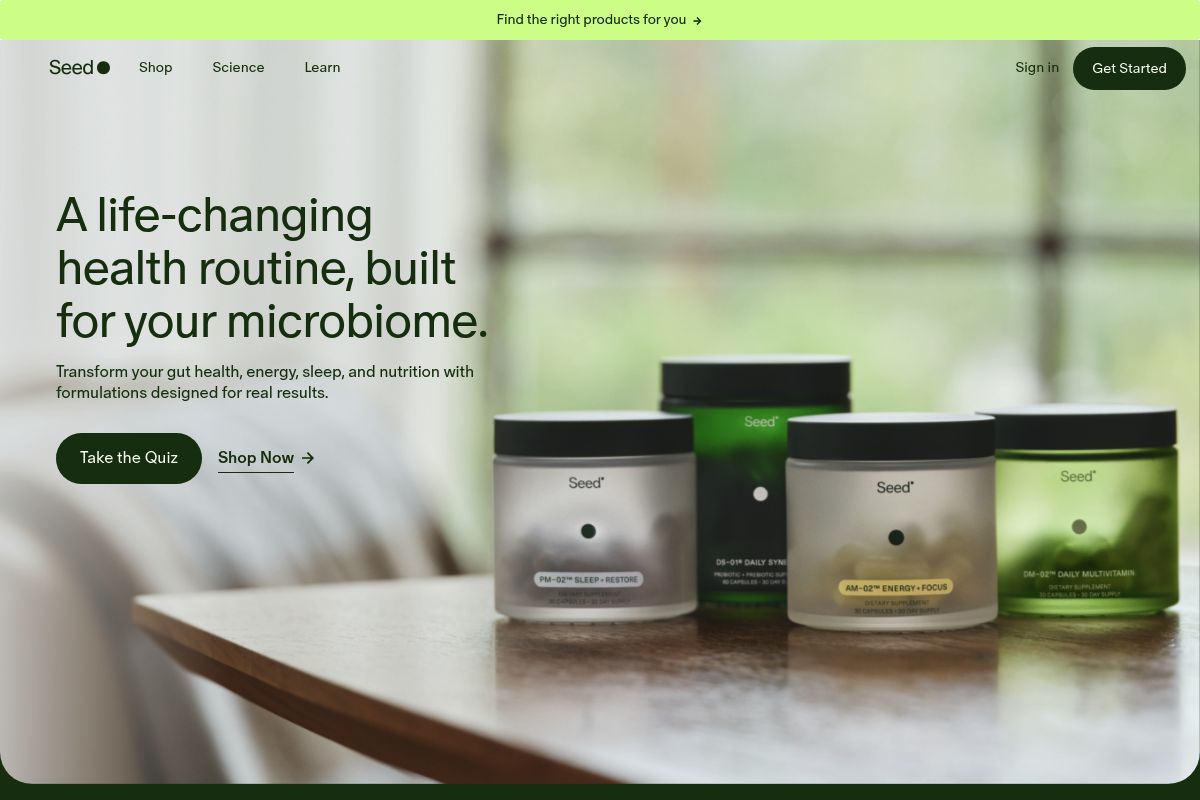
Pros and Cons

  • Pro: The acne-specific vitamin and mineral stack complements the probiotics.
  • Pro: Bacteriophage-based prebiotic mechanism sets it apart from many competitors.
  • Con: Lower CFU count than some higher-dose competitors.
  • Con: Less emphasis on hormonal balance than women-specific formulas.

Overall Rating: 7.7/10

Full Comparison: Best Probiotics for Women for Clear Skin and Acne in 2026

Supplement Hormonal Acne Focus Multi-Strain Vegan Third-Party Tested Liquid Option Starting Price
Nutrahara FemmePower ✓ ✓ ✓ ✓ ✗ ~$29.99/mo
Love Wellness Clear Skin ✓ ✗ ✓ ✓ ✗ $24.99
Codex Labs Shaant 2.0 ✓ ✓ ✓ ✓ ✗ $49.99/mo
Seed DS-01 ✗ ✓ ✓ ✓ ✗ $49.99/mo
Ritual Synbiotic+ ✗ ✓ ✓ ✓ ✗ $43.20/mo
Physician’s Choice Women’s ✗ ✓ ✗ ✓ ✗ $29.38
Ora Lady Bugs ✗ ✓ ✓ ✓ ✗ $42.99
MaryRuth’s Liquid Probiotic ✗ ✓ ✓ ✗ ✓ $44.95
Culturelle Women’s Balance ✗ ✓ ✗ ✓ ✗ $32.99
Dermala SUPPLEMEANT to Be ✗ ✓ ✗ ✗ ✗ $39.99

How to Choose

By Skin Concern

If your acne clearly follows your cycle, look for formulas with chaste tree berry or adaptogenic botanicals, such as Nutrahara FemmePower or Love Wellness Clear Skin Probiotics. For inflammatory, non-hormonal acne, strain-diverse options like Seed DS-01 or Codex Labs Shaant 2.0 may offer broader support.

By Budget

Physician’s Choice Women’s Probiotic and Culturelle Women’s Healthy Balance are both under $35 and don’t require a subscription. For a premium, research-backed formula, consider Seed DS-01 or Nutrahara’s subscription bundles.


By Lifestyle and Routine Preference

If swallowing capsules is a dealbreaker, MaryRuth’s liquid format is the more flexible choice. Women who want one supplement covering hormones, stress, and skin may prefer Nutrahara’s holistic approach. For additional buying guidance, see The Role of Probiotics in Skin Health and Related Gut–Skin Axis.

What Is Probiotic Skin Support for Women?

Probiotic skin support refers to supplements that introduce or feed beneficial bacteria believed to influence the gut-skin axis, the communication pathway between gut bacteria and skin inflammation. Research on strains like Lactobacillus rhamnosus and Bifidobacterium longum points to a possible link with fewer inflammatory acne lesions and better skin barrier function. Results vary, and larger studies are still underway. For a more detailed primer, see Expert consensus document. The International Scientific ….

Metric Typical Range in 2026 Products
CFU Count 2 billion to 60 billion CFU per serving
Common Skin-Relevant Strains L. rhamnosus, L. plantarum, B. longum, B. lactis
Typical Time to Notice Changes 4 to 8 weeks of consistent use
Average Monthly Cost $25 to $55

Conclusion

Of the options we tested, Nutrahara FemmePower is our top pick for the best probiotics for women for clear skin and acne in 2026, with a blend of Ayurvedic botanicals and modern nutritional science tailored to women’s hormonal and skin needs. For a dedicated hormonal acne formula at lower cost, Love Wellness Clear Skin Probiotics is a strong alternative, and if strain diversity matters most, Seed DS-01 is worth considering. Before you commit, check with a dermatologist about how a supplement fits your existing routine.

Frequently Asked Questions

What are the best probiotics for women for clear skin and acne in 2026?

The strongest options on our list are Nutrahara FemmePower for holistic hormonal and skin support, Love Wellness Clear Skin Probiotics for targeted hormonal acne, and Seed DS-01 for clinically researched strain diversity.

Can probiotics actually help clear acne?

Certain strains, such as Lactobacillus rhamnosus and Bifidobacterium longum, have shown promise for reducing inflammation and supporting a more balanced skin microbiome. Probiotics work best alongside dermatologist-guided skincare, not as a replacement.

How long does it take to see skin improvements from probiotics?

Most women notice changes after four to eight weeks of consistent daily use, since shifts in the gut microbiome take time to affect inflammatory pathways.

Are probiotics for women’s skin health different from regular probiotics?

Women-specific formulas often add ingredients like chaste tree berry, D-mannose, or cranberry extract to support hormonal and vaginal health alongside digestive strains.

What ingredients should I look for in an Ayurvedic supplement for acne?

Look for clinically validated botanicals, such as adaptogenic herbs that support hormonal balance, alongside probiotic strains and antioxidants like green tea extract.

Do probiotics for hormone balance also help with PMS symptoms?

Many women-specific formulas, including those with chaste tree berry or adaptogenic Ayurvedic botanicals, are designed to help harmonize hormones and may ease PMS-related discomfort.

Is it better to take a liquid probiotic or capsules for skin health?

Both can work well. Liquids offer flexible dosing and suit anyone who dislikes pills, while capsules often provide more precise, shelf-stable strain counts.

How much should I expect to spend on a quality probiotic for acne?

Quality options typically cost $25 to $55 per month. Budget drugstore brands sit at the lower end, while premium, clinically backed synbiotics like Seed DS-01 or Codex Labs Shaant 2.0 cost more.

Methodology: Rankings are based on publicly available ingredient panels, strain research, pricing listed on official brand websites as of October 2026, and comparative analysis of clinical studies referenced by each brand. This article is for informational purposes and is not a substitute for personalized medical or dermatological advice.