Categories
Articles

Supplements for Self-Confidence: A Guide for Women

What if feeling more confident starts with supporting your well-being, not finding the perfect supplement? It’s understandable to look for help when stress, shifting energy, or changes through menstruation, pregnancy, lactation, perimenopause, or menopause affect how you feel. But supplements to boost self-confidence can’t create self-worth or guarantee a change in mood. At most, an appropriate supplement may support one part of a broader wellness routine.

This guide explains what supplements may reasonably support, how to compare product categories, and what to consider before choosing one. You’ll also find practical ways to nurture confidence through movement, yoga, meditation, and self-reflection. Nutrahara combines principles of ancient Ayurveda with modern nutritional research in its women’s health supplements. The goal isn’t to rely on a pill to feel enough. It’s to build steady foundations that help you feel supported in everyday life.

Key Takeaways

  • Compare supplements by their intended purpose, evidence, label details, and your individual needs rather than assuming products are interchangeable.
  • Consider supplements to boost self-confidence only as possible support for broader well-being, not as a direct source of self-worth.
  • Account for pregnancy, lactation, medications, health conditions, and planned procedures when considering a supplement, and seek qualified medical guidance.
  • Build a routine that fits your life with adaptable movement, restorative yoga, meditation, sleep habits, and self-reflection.
  • Explore Nutrahara’s women’s health supplements as one option within a wellness approach informed by Ayurvedic principles and modern nutritional research.

Can Supplements Boost Self-Confidence? Set Realistic Expectations First

Wanting to feel more self-assured is reasonable, especially when daily demands leave you feeling unlike yourself. But supplements to boost self-confidence shouldn’t be treated as a quick fix. Confidence develops through a mix of personal experience, relationships, social pressures, physical well-being, and emotional health. It isn’t a simple measure of whether you have enough of a particular nutrient.

Confidence is also distinct from self-esteem and self-efficacy, or your belief in your ability to do a task. Exploring understanding self-confidence can help clarify why a supplement alone can’t address every factor that shapes how you feel. A nutrient supplement may be relevant when it addresses an individual, documented nutritional need. That is different from proving that it directly increases confidence.

Evidence-qualified perspective: A supplement may support a specific aspect of wellness when appropriate, but that support doesn’t guarantee a psychological outcome such as greater confidence.

What might a supplement support, and what can’t it promise?

Think of a supplement as one possible part of a wellness plan, not a stand-in for self-trust, supportive relationships, rest, or professional care when needed. One person’s experience can be meaningful to them, but it can’t establish that the same product will work for everyone. Be cautious of claims that promise a direct confidence boost or explain one through a “happy hormone” mechanism without reliable evidence.

Before considering a supplement, name the specific need you hope to address. Then look for evidence about the ingredient and that intended purpose. Keep expectations modest: a product label or customer story doesn’t prove that a supplement will have the same effect for you.

Why confidence can feel different at different life stages

Menstruation, pregnancy, lactation, perimenopause, and postmenopause can bring different circumstances, but no two women experience them in the same way. Changes in routine, responsibilities, or how you feel physically may influence confidence without pointing to a particular deficiency or diagnosis. Life stage is a reason to consider your individual needs, not a reason to assume a supplement is necessary.

Before choosing a product, consider what has changed and what kind of support you’re seeking. If you’re pregnant or lactating, have a health condition, or take medication, discuss supplement use with a qualified healthcare professional. Your confidence journey deserves care shaped around you, not a promise that one formula can fit every woman.

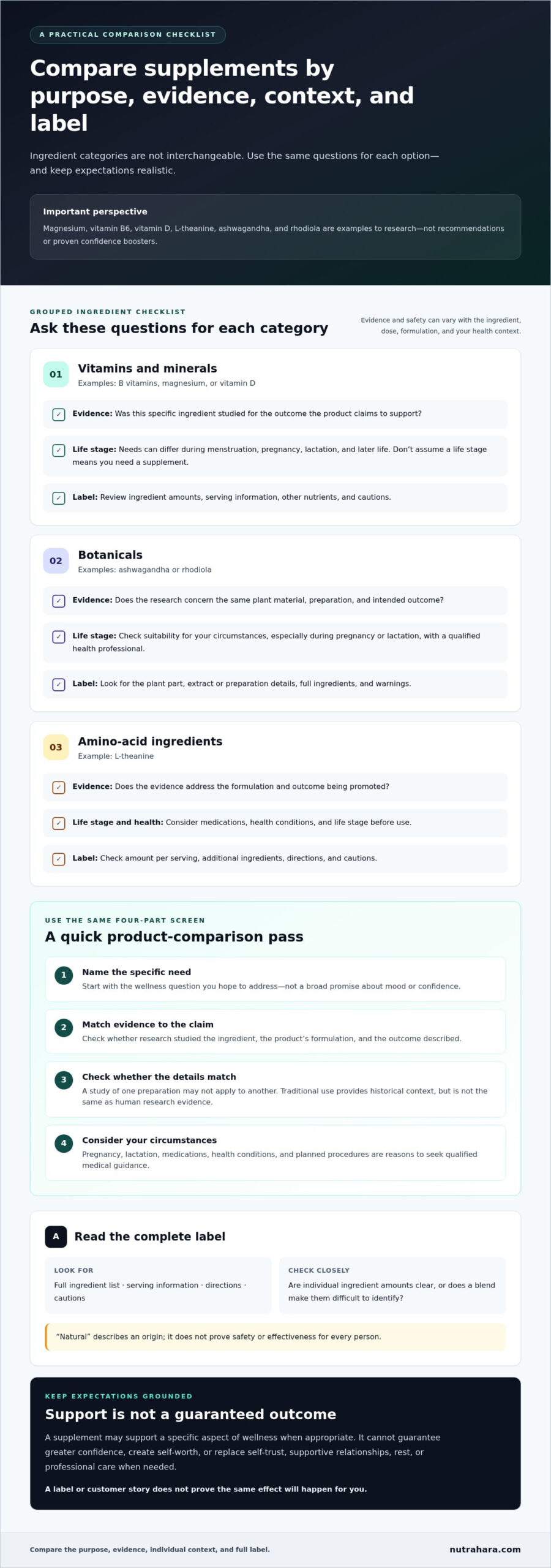
Compare products by the question they’re meant to answer, not by broad promises about mood or confidence. Ingredients such as magnesium, vitamin B6, vitamin D, L-theanine, ashwagandha, and rhodiola are examples to research, not recommendations or proven confidence boosters. Evidence and safety can vary with the ingredient, dose, formulation, and your health context.

Use this framework to organize your questions. It doesn’t rate ingredients or establish that a product will produce a particular result.

Category and examples Evidence question Life-stage caution Label details to review
Vitamins and minerals, such as B vitamins, magnesium, or vitamin D Was the specific ingredient studied for the outcome the product claims to support? Needs can differ during menstruation, pregnancy, lactation, and later life. Don’t assume a life stage means you need a supplement. Ingredient amounts, serving information, other nutrients, and cautions.
Botanicals, such as ashwagandha or rhodiola Does the research concern the same plant material, preparation, and intended outcome? Check suitability for your circumstances, especially during pregnancy or lactation, with a qualified health professional. Plant part, extract or preparation details, full ingredients, and warnings.
Amino-acid ingredients, such as L-theanine Does the evidence address the formulation and outcome being promoted? Consider medications, health conditions, and life stage before use. Amount per serving, additional ingredients, directions, and cautions.

Questions to ask when comparing ingredient categories

Start with a specific wellness question. Then check whether the evidence studied the ingredient itself, the product’s formulation, and the outcome described in its claims. A study of one preparation may not apply to another. Traditional use can offer historical context, but it isn’t the same as evidence from human research. Broad phrases like “supports mood” don’t explain what outcome was measured or who was studied.

What to look for on a supplement label

Read the complete ingredient list, serving information, directions, and cautions. Check whether each ingredient’s amount is clearly stated and whether a blend makes individual amounts difficult to identify. “Natural” describes an origin, not proof of safety or effectiveness for every person. The Vitamin B Complex product page is one example of where to review product-specific information. The name alone doesn’t establish who should use it or what it will do.

When comparing women’s wellness supplements, apply the same questions to each option. Reviewing the details helps you move beyond confidence-focused marketing and make choices based on evidence, clear labeling, and your individual circumstances.

Safety Considerations for Women Choosing Supplements

A supplement’s suitability depends on its ingredients, formulation, and your personal circumstances, including life stage, health conditions, medications, and planned procedures. “Natural” doesn’t automatically mean safe or appropriate for everyone. Plant-based ingredients can still require careful consideration, and a product’s general wellness positioning isn’t a substitute for individualized guidance.

This matters whether you’re comparing supplements to boost self-confidence or considering a product for another wellness goal. Make safety part of your decision from the start, not a detail to review only after choosing.

Pregnancy, lactation, and changing health needs

Don’t assume guidance intended for adults generally applies during pregnancy or breastfeeding. If you’re pregnant, lactating, trying to conceive, or have questions related to menstruation or menopause, seek individualized advice from a qualified healthcare professional before starting a supplement. Life stage alone doesn’t determine what you need, and broad claims about hormonal balance or symptom relief shouldn’t replace personal assessment.

Medication use, side effects, and product claims

If you take prescription or over-the-counter medication, have a health condition, or are planning a medical procedure, review the product’s cautions and discuss supplement use with a qualified professional. Ask whether the ingredients are suitable for your situation and whether potential interactions or other concerns apply. Don’t change prescribed treatment based on a supplement claim.

Keep the label and product information available when you seek guidance. This makes it easier to discuss the exact formulation rather than relying on a broad ingredient name. For example, the Ashwagandha with Black Pepper product page identifies the product you’re considering. Its name alone doesn’t establish its effects or suitability for you.

Separate marketing language from evidence by asking what a claim refers to. A product-level statement may not show that the specific ingredient, formulation, or amount has been studied for the promised outcome. Look for clear product information and be cautious about claims that imply a supplement treats a condition or reliably changes mood or confidence.

Before deciding, use this simple check:

  • Personal context: Note pregnancy, breastfeeding, medications, health conditions, allergies, and planned procedures.
  • Product details: Review the complete ingredient list, serving information, directions, and warnings.
  • Evidence: Ask whether research supports the specific ingredient and outcome being claimed.
  • Guidance: Discuss personal safety questions with a qualified healthcare professional, especially when your health circumstances change.

These steps can make a choice feel more manageable. They keep your decision grounded in your individual needs rather than a one-size-fits-all promise.

Build Confidence Alongside Supplements: Practical Habits That Fit Real Life

Confidence can grow through small experiences of caring for yourself and noticing what you can do. Supplements to boost self-confidence can’t replace those foundations. A flexible routine can make room for movement, rest, and reflection without turning wellness into another standard you have to meet.

Try this simple sequence as a starting point, then adapt it to your ability, schedule, comfort, and life stage. Pregnancy, recovery after birth, changing energy, or a busy workweek may call for a gentler version.

  1. Choose movement you enjoy. Plan a walk, swim, strength session, or another activity that feels appropriate for your current ability. Shorter sessions or everyday movement count when that’s what fits.
  2. Add restorative yoga. Choose comfortable poses or gentle stretching, and pause if a movement doesn’t feel right. Yoga can offer mindful movement without requiring flexibility or performance goals.
  3. Make space for meditation. Sit comfortably and notice your breath for a few quiet moments. If sitting still feels difficult, try a mindful walk instead.
  4. Create a wind-down cue. Choose a repeatable signal that helps you prepare for sleep, such as dimming the lights or putting your phone aside. Keep it realistic for your routine.
  5. Reflect without judging. Write down one strength you used or one meaningful action you took that day. It might be asking for help, showing up to exercise, or making time to rest.

Small practices for a steadier sense of self

Begin with a brief daily pause rather than aiming for a perfect meditation streak. Take a few comfortable breaths and let your attention return to them when it wanders. At day’s end, ask: “What did I handle today that deserves recognition?” Name one specific action, even if it was simply making space to recover.

Movement, yoga, and sustainable wellness

Enjoyment and comfort matter. Choose movement that meets you where you are, and give yourself permission to scale it down or rest. Restorative yoga may be a gentle option; meditation can be practiced seated, lying down, or while walking. These habits support general well-being, but they aren’t substitutes for healthcare when you need it.

There’s no single weekly template that suits every woman. You might alternate walks, yoga, and strength-focused movement, or begin with one activity you can repeat consistently. If your energy or circumstances change, adjust the plan instead of treating that as failure. A sustainable practice is one you can return to.

For a wellness routine that includes women’s supplements alongside everyday habits, explore Nutrahara’s wellness offerings.
Supplements for Self-Confidence: A Guide for Women

Explore Nutrahara Supplements as One Part of Your Wellness Journey

Choosing a supplement is a personal decision shaped by your needs, health context, and the information available about a product. Nutrahara combines principles of ancient Ayurveda with modern nutritional research in its women’s health supplements. That approach informs the products, but it isn’t a promise that a supplement will create confidence or reliably change how you feel.

Think of a product as one possible part of a broader routine. Sleep, nourishing meals, movement, yoga, meditation, supportive relationships, and appropriate healthcare all have a place in personal well-being. The right combination will look different for a woman who menstruates, is pregnant or lactating, is navigating perimenopause, or is postmenopausal. Your needs may also shift over time.

A thoughtful approach to choosing a Nutrahara product

If you’re considering a Nutrahara supplement, use its product information as a starting point for careful review, not as evidence of a particular effect or a recommendation for your circumstances. Compare the product information with your wellness goals, life stage, and any safety questions you have. If you take medication, have a health condition, or are pregnant or breastfeeding, seek individualized guidance from a qualified healthcare professional before adding a supplement.

A few useful questions can keep the decision grounded:

  • Does the product information clearly identify what the product contains?
  • Does any claim address a specific, understandable wellness goal?
  • Is the information relevant to your personal circumstances, or does it make a broad promise?
  • Have you considered whether a supplement fits alongside your existing routine and care?

These questions help separate a product description from evidence about a specific ingredient and outcome. They also leave room for the possibility that a supplement may not be the support you need right now. No product should be treated as a substitute for mental health care, and no supplement can guarantee greater confidence.

A measured next step for your wellness journey

The central distinction is simple: a supplement may support a specific aspect of wellness when appropriate, but that is not the same as directly producing self-confidence. Confidence develops within a wider life, through personal experience, emotional well-being, physical health, and relationships. If you’re exploring supplements to boost self-confidence, keep that broader picture in view and let evidence, personal needs, and safety guide your choices.

Nutrahara’s women’s health supplements bring Ayurvedic principles together with modern nutritional research. Review the product information alongside your own goals, and choose a next step that feels informed and right for you. Your wellness journey belongs to you, and it can grow through thoughtful choices rather than quick promises.

Let Your Next Wellness Choice Reflect What Matters to You

Confidence doesn’t need to arrive as a dramatic transformation. It can take shape in the choices you make with care, the boundaries you honor, and the way you recognize your progress. As you move forward, choose a personal sign of growth that matters to you. Perhaps it’s speaking up in a meeting, returning to an activity you enjoy, or feeling more at ease in your daily routine.

If you’re considering supplements to boost self-confidence, let your goals guide your questions rather than letting a product promise define success. Notice how your needs and priorities change over time, and give yourself permission to revise your approach. A thoughtful wellness journey is built through informed choices, patience, and care for the whole person.

Explore Nutrahara’s women’s health supplements at your own pace, and consider how their product information fits your priorities and broader routine. Explore Nutrahara’s women’s health supplements.

There’s no single right path to feeling more like yourself. Keep choosing what supports your well-being, one considered step at a time.

Frequently Asked Questions

Can supplements directly increase self-confidence?

No supplement can be relied on to directly or consistently increase self-confidence. A supplement may be considered for a specific nutritional need, but that is different from showing it builds confidence. If you’re weighing supplements to boost self-confidence, look beyond the product promise: identify the wellness goal, review what evidence supports the claim, and notice whether your confidence changes in particular situations, such as work or social settings.

Is there scientific evidence that supplements boost self-esteem?

Evidence that a particular ingredient supports a defined health outcome doesn’t automatically show that it increases self-esteem. These are different outcomes, and research on one ingredient or formulation may not apply to another product. Be cautious with claims that use broad terms such as “confidence” without explaining what was studied. A testimonial can describe one person’s experience, but it can’t establish a reliable effect for others.

Can stress or low energy affect how confident I feel?

Yes. Feeling worn down or under pressure may make it harder to speak up, take on a challenge, or feel comfortable in situations that usually feel manageable. That doesn’t mean stress or low energy explains every change in confidence. Consider noting when the feeling appears and what else is happening, such as workload, sleep disruption, or a change in routine. If it persists, discuss it with a healthcare professional.

Are supplements for confidence safe during pregnancy or breastfeeding?

Don’t assume a product is suitable during pregnancy or breastfeeding because it’s marketed for general wellness or made with natural ingredients. Safety depends on the specific product and your circumstances. Before starting or continuing a supplement, bring its full label to a qualified healthcare professional and ask for guidance tailored to you. This is especially useful when comparing a supplement with other products you already take.

Can I take confidence-related supplements with prescription medication?

Possibly, but don’t assume a supplement and prescription medication are compatible. Show your prescriber or pharmacist the complete label, including blends and serving information, and ask whether the specific product is appropriate alongside your medication and health conditions. Keep a current list of everything you take, including nonprescription products. Don’t stop, replace, or adjust prescribed medication on the basis of a supplement claim.

How can yoga and meditation support a confidence-building routine?

Yoga and meditation can create regular moments to notice your comfort, attention, and responses without judging yourself. Choose a gentle pose or movement that feels accessible, then pause to observe what feels steady or uncertain. A short meditation can focus on breathing or sounds around you. These practices aren’t confidence guarantees; they offer ways to make room for self-awareness and intentional choices in everyday life.

What should I do if low confidence is affecting my daily life?

If low confidence is making it difficult to work, maintain relationships, or take care of yourself, consider talking with a qualified healthcare or mental health professional. You can prepare by noting what feels difficult, when it began, and what you’ve already tried. Ask someone you trust for support if that feels comfortable. You deserve help suited to the full picture, not pressure to solve everything on your own.

Article by

Nutrahara Team

We are a dedicated collective of nutrition scientists and naturopaths at Nutrahara, committed to advancing women's health through the fusion of ancient Ayurveda science and cutting-edge nutrition research. Our mission is to empower you with clean, simple, and scientifically validated wellness solutions so you can live your healthiest life. Connect with us to stay updated on the latest developments in holistic women's health and nature-based research.

Disclaimer

This article is not a substitute for medical advice. Please consult a healthcare professional before starting any supplement, especially if pregnant, nursing, taking medication, or managing health conditions.

Categories
Articles

Natural Nootropics for Women: Focus, Mood & Longevity

What if the brain fog you’re feeling during perimenopause isn’t an inevitable decline, but a signal for a new kind of nourishment? You’ve likely felt the weight of the “mental load,” balancing a demanding career with family needs while your focus slips away. It’s exhausting to feel like your mind is working against you, especially when anxiety replaces the clarity you once relied on. Finding the right natural nootropics for women is about more than just a quick boost; it’s about reclaiming your cognitive sovereignty through every stage of life.

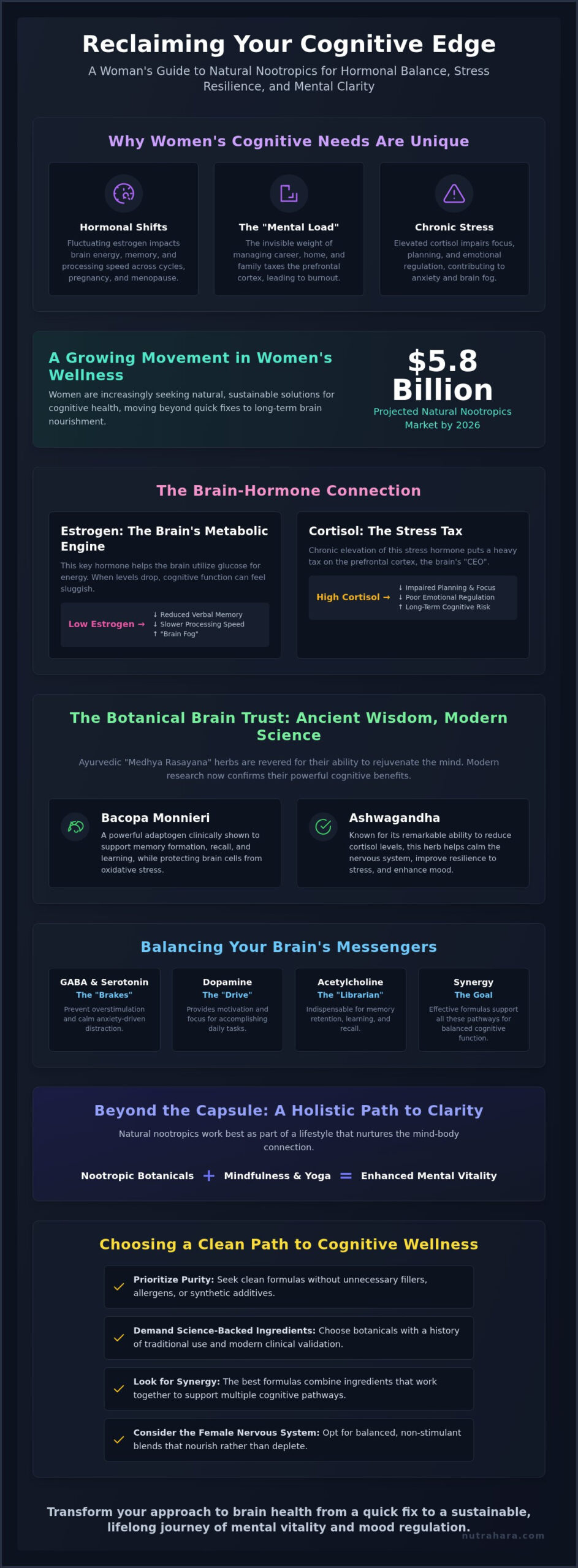
We understand that your journey is unique, and you deserve a path to wellness that respects both tradition and clinical validation. You’re going to discover how to restore your mental energy and protect your long-term brain health using a science-backed, Ayurvedic approach. We’ll explore the potent synergy of ancient botanicals like Bacopa and Ashwagandha, which are increasingly favored as the natural nootropics market is projected to reach $5.8 billion in 2026. This guide provides the specific tools you need for sustainable focus, better mood regulation, and a future of cognitive vitality.

Key Takeaways

  • Understand how hormonal shifts and chronic stress impact your focus, and learn to navigate these transitions with confidence and clarity.
  • Identify high-quality natural nootropics for women, specifically focusing on Ayurvedic botanicals that offer both immediate mental energy and long-term cognitive protection.
  • Discover how to integrate mindfulness and yoga into your daily routine to naturally enhance the efficacy of your cognitive nourishment.
  • Learn the essential criteria for choosing clean, science-backed formulas that prioritize purity and synergy for the sensitive female nervous system.
  • Transform your approach to brain health from a quick fix to a sustainable, life-long journey of mental vitality and mood regulation.

The Rise of Cognitive Wellness: What Natural Nootropics Mean for Women

Cognitive wellness is shifting. It’s moving away from the “hacker” culture of smart drugs toward a more nurturing approach to brain health. When we ask what are nootropics, we aren’t just talking about chemicals that force focus. We’re talking about cognitive nourishment. For women, this means supporting a nervous system that often bears the brunt of complex hormonal cycles and life’s transitions. Using natural nootropics for women offers a way to protect and build the brain, rather than just borrowing energy from tomorrow to pay for today.

True nootropics are “brain builders.” Unlike stimulants like caffeine that provide a temporary spark followed by a crash, these substances support neurological resilience. They work subtly to improve memory, mood, and mental stamina. At Nutrahara, we believe the female nervous system thrives on purity. Synthetic alternatives often lack the synergy found in nature, which is why we prioritize botanical formulations like FocusZenith to support long-term cognitive longevity. This approach ensures your mental energy remains sustainable and balanced.

Ancient Wisdom Meets Modern Neuroscience

Ayurveda has long recognized the power of “Medhya Rasayana” herbs. These are specific plants known for their ability to rejuvenate the mind and enhance intellect. Modern clinical research now validates what traditional practitioners have known for centuries. Studies on Bacopa monnieri and Ashwagandha show significant benefits for memory and stress reduction in women. We’re moving past quick fixes and embracing a journey of neurological support that honors your body’s innate wisdom and modern scientific standards.

Why Women are Seeking Cognitive Support in 2026

The global nootropics market is projected to reach $5.8 billion in 2026, driven largely by women seeking relief from the “mental load.” This invisible weight of managing careers and households places a heavy tax on the prefrontal cortex. For professional women who are also creators or educators, leveraging Professional Audio Production and Publishing Services can further alleviate this burden, allowing you to focus on your core message while experts handle the technical execution. We’re also seeing a rise in adult ADHD diagnoses among women, who often mask symptoms until the pressure becomes overwhelming. Natural nootropics are botanical substances that support brain function without significant side effects. They provide a clean path to mental clarity, helping you reclaim your focus and confidence as you navigate your personal health progression.

Hormones and the Mind: Why Women’s Cognitive Needs Are Unique

Women’s cognitive health isn’t static. It’s a dynamic landscape shaped by the rise and fall of hormones. Estrogen isn’t just for reproduction; it’s a powerful metabolic engine for the brain. When estrogen levels fluctuate, the brain’s ability to utilize glucose changes, often leading to that frustrating “fog.” Declining estrogen levels are directly linked to a reduction in verbal memory and processing speed. This biological reality is why a generic “brain pill” often fails. Effective natural nootropics for women must account for these shifts to provide real, lasting clarity.

Stress adds another layer of complexity. High-achieving women often operate in a state of chronic cortisol elevation. Cortisol is the “stress tax” on your prefrontal cortex. It can impair your ability to plan, focus, and regulate emotions. Over time, this hormonal imbalance can trigger concerns about long-term cognitive health, including protection against decline. Addressing these issues early with clean, supportive nutrients is vital for maintaining resilience as you age.

Life Stages: From Career Peak to Perimenopause

Every life stage brings new cognitive demands. During menstruating years, the luteal phase can bring a distinct mental fuzziness. Postpartum women often face “mom brain,” which is actually a significant neurological restructuring that requires intensive neurotransmitter replenishment. By the time perimenopause arrives, focus often feels like a moving target. Using natural nootropics for women can help bridge these gaps, offering stability when your internal chemistry feels unpredictable.

The Role of Neurotransmitters: GABA, Dopamine, and Serotonin

Mental clarity is inseparable from mood stability. Neurotransmitters like GABA and Serotonin act as the brain’s “brakes,” preventing the overstimulation that leads to anxiety-driven distraction. Dopamine provides the “drive” for your daily tasks. For memory retention, Acetylcholine is indispensable, especially as we age. When choosing a path forward, it’s essential to consider the safety of nootropic supplements and their purity. For those feeling the weight of daily stress, exploring a formula like Anxioguard can be a gentle way to support emotional and cognitive balance.

The Botanical Brain Trust: Top Natural Ingredients to Look For

Selecting the right supplements requires a discerning eye for quality. In 2026, the preference for plant-based ingredients has reached new heights, with consumers rightfully demanding transparency and purity. High-quality natural nootropics for women are defined by three pillars: purity, potency, and synergy. It’s not enough to have a list of ingredients; those ingredients must be extracted using clean methods to ensure they’re free from heavy metal contamination. Third-party testing is a non-negotiable standard that guarantees what’s on the label is exactly what’s in the capsule.

You may wonder if you need an adaptogen or a nootropic. The truth is that most women benefit from both. While nootropics specifically target cognitive functions like memory and focus, adaptogens help your body manage the physiological effects of stress. Since chronic stress is a primary driver of brain fog, combining these two categories creates a powerful foundation for mental performance. This dual approach helps you maintain a sense of calm while your mind remains sharp and ready for the day’s challenges.

The Ayurvedic Powerhouses: Ashwagandha and Bacopa

Ashwagandha is a cornerstone of cognitive care, specifically for its ability to temper the cortisol spikes that scatter your concentration. By smoothing out the stress response, it allows your brain to stay in a “flow state” rather than a “fight or flight” mode. For a clean, potent source, many find that Ashwagandha with Black Pepper provides the necessary absorption for consistent results. Bacopa Monnieri complements this by acting as the gold standard for memory acquisition. It supports the communication between neurons, helping you retain new information and recall it with ease during your personal health journey.

Modern Essentials: Lion’s Mane, L-Theanine, and B-Vitamins

Modern research has highlighted several key nutrients that act as cellular fuel for the brain. Lion’s Mane mushroom is celebrated for stimulating Nerve Growth Factor (NGF), which is essential for brain plasticity and long-term neurological health. If you struggle with the jitters often caused by caffeine, L-Theanine is your antidote. It promotes a state of “calm focus” by increasing alpha brain waves. Finally, a high-quality Vitamin B Complex is vital for cellular energy production. These vitamins ensure your brain has the raw materials it needs to stay energized without the crash associated with synthetic stimulants. When you choose these natural nootropics for women, you’re investing in a future of sustained mental vitality.

Beyond the Capsule: Integrating Nootropics with Yoga and Mindfulness

True cognitive empowerment isn’t found in a bottle alone. It’s a holistic practice. While natural nootropics for women provide the biochemical foundation, movement and mindfulness provide the structural support. At Nutrahara, we view supplementation as one essential pillar of a larger wellness journey. When you combine clean botanicals with intentional movement, you create a synergistic effect that nourishes the brain from the inside out.

Yoga serves as a powerful cognitive enhancer by physically altering your internal environment. Specific poses increase cerebral blood flow and oxygenation, which directly supports the delivery of nutrients to your brain cells. This practice doesn’t just improve flexibility; it lowers the baseline of cognitive-disrupting inflammation that often accompanies chronic stress. It’s a way to physically “wash” the brain with fresh, nutrient-rich blood.

Yoga Poses for Mental Clarity

You don’t need an hour on the mat to see results. Simple inversions can reset your nervous system in minutes. Consider these two foundational poses:

  • Legs Up the Wall (Viparita Karani): This restorative pose encourages venous return and triggers a relaxation response. It’s an ideal “reset button” when you feel overwhelmed by the mental load we discussed earlier.
  • Downward-Facing Dog: By placing your head below your heart, you encourage immediate oxygenation of brain tissue. This boost in circulation helps clear the “fuzziness” often felt during hormonal shifts.

Meditation and the ‘Flow State’

Meditation is the ultimate exercise for focus. Using natural nootropics for women can actually help you deepen your practice by quieting the “monkey mind” that leads to distraction. If you hit a wall mid-afternoon, try the 5-minute ‘Focus Breath’ technique. Inhale for a count of four, hold for four, and exhale slowly for a count of eight. This simple rhythm balances your carbon dioxide levels and centers your thoughts.

Many women find that this combination is life-changing. Sarah, a 42-year-old project manager, recently shared her success. “I used to struggle with anxiety-driven lack of focus every afternoon. By integrating 10 minutes of morning yoga with FocusZenith, I’ve reclaimed my mental clarity. I feel sharper and more grounded than I did in my twenties.”

To start your day with intention, try creating a ‘Brain-First’ morning routine. Take your supplements with a full glass of water, followed by five minutes of mindful stretching. This small investment pays dividends in sustainable mental energy throughout your day. If you’re ready to elevate your cognitive health, explore our FocusZenith formula to support your daily flow.

Natural Nootropics for Women: Focus, Mood & Longevity

Empowering Your Focus: Choosing a Clean Path to Mental Clarity

The journey to cognitive empowerment begins with a single, intentional choice. We’ve moved from the frustration of hormonal brain fog to a place of understanding how botanical synergy supports the female mind. Choosing natural nootropics for women shouldn’t feel like a source of stress; it’s a profound act of self-care. At Nutrahara, our promise is simple. We provide purity and simplicity in every formula. You never have to choose between scientific validation and traditional wisdom because our products bridge that gap for your long-term wellness.

Building your ideal supplement stack is about listening to your body’s rhythm. You don’t need to do everything at once. Start with one foundational formula and observe how your focus shifts over a few weeks. As you become more attuned to your cognitive needs, you can add specific support for different life stages. This measured approach prevents overwhelm and ensures your nervous system remains balanced and calm. We’re here to guide you through every step of this personal progression.

Finding Your Perfect Match

Every day brings a different set of challenges. When you’re facing intense cognitive work or a deadline-heavy week, FocusZenith provides the targeted support needed for deep concentration. If you’re looking for a broader foundation to support your overall vitality, FemmePower is designed to nourish the unique needs of the female body. Don’t forget that recovery is just as vital as performance. Sleep is the ultimate nootropic; it’s when your brain clears metabolic waste and consolidates memory. Integrating RestoraSleep into your evening ritual ensures you wake up with a refreshed and ready mind. Using natural nootropics for women as part of a holistic evening routine can transform your morning clarity and resilience.

Your Path to Longevity

True mental mastery is a lifelong progression. We encourage you to view your cognitive health as a 30-year investment rather than a 30-day trial. Consistency in natural supplementation allows these botanical compounds to build up in your system. This provides a stable floor for your mental energy. As your focus returns and your mood stabilizes, you’ll feel a natural boost in your self-esteem and confidence. You aren’t just managing symptoms; you’re mastering your mind. We invite you to join the Nutrahara community as a partner in this ongoing journey of health and longevity. Your best years of clarity and wisdom are still ahead of you.

Your Journey to Lasting Cognitive Vitality

Reclaiming your mental clarity is a personal progression that honors both your biological needs and your professional ambitions. To help manage the technical side of those ambitions and reduce cognitive overhead, you can explore Atlassian Consulting to streamline your organizational systems. You’ve seen how hormonal shifts and the mental load can impact your focus, but you’ve also discovered that these challenges aren’t permanent. By choosing natural nootropics for women that prioritize purity and synergy, you’re building a foundation for lifelong brain health. Remember that movement, mindfulness, and clean supplementation work together to create a resilient mind.

Nutrahara is your partner on this path. Our Ayurvedic-inspired formulas are clean, third-party tested, and formulated specifically for the female nervous system. We believe in high-quality ingredients that support you through every life transition. You don’t have to settle for brain fog or exhaustion when science and nature offer a better way forward. Reclaim your mental clarity with Nutrahara’s science-backed FocusZenith.

Your wisdom and focus are your greatest assets. Trust in the process of gradual, sustainable change and celebrate the clarity you’re cultivating today. You’re more than capable of mastering your mind and navigating life with confidence.

Frequently Asked Questions

Are natural nootropics safe to take during perimenopause?

Yes, natural nootropics are generally safe and often highly beneficial during perimenopause. This transition involves significant estrogen fluctuations that can trigger brain fog and memory lapses. Botanicals like Bacopa and Ashwagandha provide a gentle way to support the nervous system through these shifts. It’s always wise to consult your healthcare provider to ensure any new supplement fits your specific health profile.

How long does it take to feel the effects of a natural nootropic?

You can expect to feel the full cognitive benefits within 4 to 12 weeks of consistent daily use. While some ingredients like L-Theanine offer a sense of calm focus within an hour, others need time to build up in your system. This steady progression ensures that your mental energy remains sustainable rather than providing a temporary spike and crash. Consistency is the foundation of long-term neurological support.

Can I take nootropics if I am already on hormone replacement therapy (HRT)?

Most natural nootropics for women are compatible with HRT, but a professional medical consultation is essential before starting. Nootropics often complement hormone therapy by targeting cognitive symptoms that HRT might not fully address. Because every woman’s internal chemistry is unique, your doctor can help you coordinate these tools to safely optimize your mental clarity and mood regulation.

Will nootropics for women help with anxiety-related brain fog?

Yes, nootropics containing adaptogens are specifically designed to help with anxiety-driven lack of focus. When your cortisol levels are chronically high, your prefrontal cortex struggles to process information effectively. Adaptogens like Ashwagandha help regulate this stress response. This allows your mind to settle into a state of calm clarity, making it easier to navigate the mental load of your daily responsibilities.

What is the best time of day to take cognitive supplements?

Morning is typically the best time to take your focus-oriented supplements. Taking your formula with breakfast ensures your brain has the necessary fuel for the day’s cognitive demands. If your supplement contains fat-soluble herbs like Bacopa, taking it with a meal significantly improves absorption. Avoid taking formulas with stimulating properties in the late evening to ensure your natural sleep cycles remain undisturbed.

Can I use nootropics like Ashwagandha while practicing yoga?

Yes, using natural nootropics for women alongside yoga is an excellent way to enhance your mind-body connection. Ashwagandha helps lower the physiological markers of stress while yoga poses improve blood flow to the brain. This synergy can deepen your meditation practice and help you maintain a “flow state” throughout your day. It’s a holistic approach that supports both physical and mental longevity.

Are there any side effects to natural brain boosters?

Side effects are rare and usually mild, such as slight digestive changes or minor headaches as your body adjusts. To minimize any risk, it’s vital to choose clean, third-party tested formulas that are free from synthetic additives. Start with the recommended dose and monitor how you feel. Quality natural ingredients are generally well-tolerated by the sensitive female nervous system when used as directed.

How do nootropics differ from standard multivitamins for women?

Nootropics are specialized tools that target brain performance, while multivitamins provide broad nutritional support for the entire body. A multivitamin fills general gaps in your diet, but a nootropic uses concentrated botanical extracts to enhance specific functions like memory and concentration. Think of a multivitamin as your nutritional safety net and a nootropic as your targeted strategy for mental mastery and cognitive protection.

Article by

Nutrahara Team

We are a dedicated collective of nutrition scientists and naturopaths at Nutrahara, committed to advancing women's health through the fusion of ancient Ayurveda science and cutting-edge nutrition research. Our mission is to empower you with clean, simple, and scientifically validated wellness solutions so you can live your healthiest life. Connect with us to stay updated on the latest developments in holistic women's health and nature-based research.

Disclaimer

This article is not a substitute for medical advice. Please consult a healthcare professional before starting any supplement, especially if pregnant, nursing, taking medication, or managing health conditions.

Categories
Articles

Natural Mood Support for Women: A Holistic Guide to Emotional Balance and Vitality

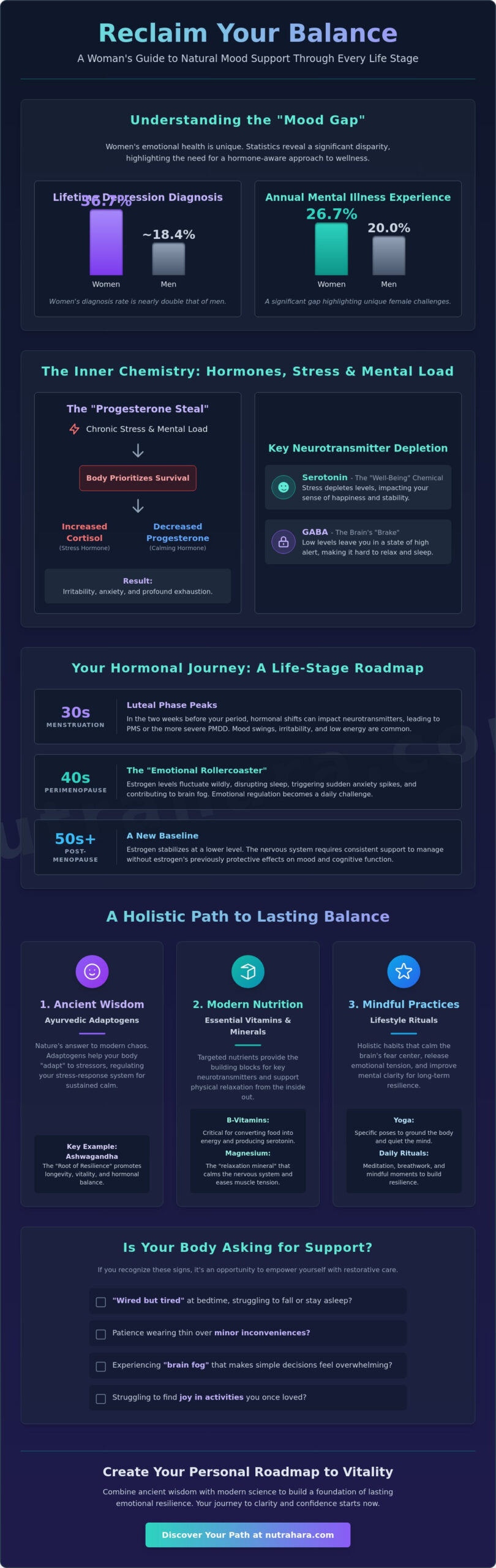
A 2025 Gallup poll revealed that 36.7% of women report a lifetime diagnosis of depression, a rate that is nearly double that of men. If you often feel “not quite like yourself” due to shifting hormones or the heavy mental load of family and career, you aren’t alone. It is easy to feel overwhelmed when anxiety disrupts your sleep and clouds your daily focus. You likely already know that true wellness requires more than a quick fix; it requires a dedicated partnership with your body’s natural rhythms.

You can reclaim your emotional equilibrium and vitality by embracing a powerful fusion of Ayurvedic wisdom, modern nutritional science, and mindful lifestyle rituals. This guide explores the most effective paths for natural mood support for women, focusing on how high quality supplements and ancient practices like yoga can foster lasting stability. We will examine the science of the gut-brain axis and provide actionable steps to help you achieve the mental clarity and confidence you deserve on your long-term health journey.

Key Takeaways

  • Understand the “Mood Gap” and how cortisol interacts with your hormones to influence emotional health through every life stage.
  • Explore how Ayurvedic adaptogens like Ashwagandha provide reliable natural mood support for women by helping your system adapt to stress.
  • Learn why the combination of B-vitamins and magnesium is critical for maintaining serotonin levels and supporting physical relaxation.
  • Practice specific yoga poses and daily rituals that calm the amygdala to release emotional tension and improve mental clarity.
  • Discover how to create a personalized roadmap for your health journey that combines ancient wisdom with modern nutritional science.

Understanding the “Mood Gap”: Why Women’s Emotional Health Requires a Unique Approach

The “Mood Gap” is the space where your biological reality meets the relentless expectations of modern life. It isn’t just a feeling of being tired or stressed; it’s a measurable physiological divide. For many women, this gap is formed by the intersection of monthly hormonal cycles and the heavy mental load of a career and family. Recent data highlights the scale of this challenge. A 2025 NAMI report found that 26.7% of U.S. women experience a mental illness annually, compared to 20% of men. This disparity isn’t a personal failing. It is a signal that the female body requires specific, hormone-aware natural mood support for women to maintain equilibrium.

Between the ages of 30 and 60, your body undergoes a complex chemical dance. Cortisol, the primary stress hormone, often takes center stage. When you’re under chronic stress, your body prioritizes cortisol production over progesterone. This “progesterone steal” can leave you feeling irritable, anxious, or profoundly exhausted. At Nutrahara, we view health as a long-term progression rather than a series of quick fixes. Understanding these physiological signals is the first step in reclaiming your vitality and emotional clarity.

Hormonal Milestones: From Menstruation to Post-Menopause

In your 30s, mood fluctuations often peak during the luteal phase, the two weeks before your period starts. For some, these shifts are more than just “PMS” and may indicate Premenstrual Dysphoric Disorder (PMDD), a condition where hormonal changes severely impact neurotransmitter function. As you move into your 40s, the “emotional rollercoaster” of perimenopause begins. Estrogen levels don’t just drop; they fluctuate wildly. This volatility can disrupt your sleep and trigger sudden spikes in anxiety. By the time you reach post-menopause, your estrogen levels stabilize at a lower baseline. During this stage, your nervous system requires gentle, consistent support to manage the absence of estrogen’s once-protective effects on the brain. Targeted solutions like FemmePower are designed to support these transitions with purity and scientific backing.

The Impact of the Modern “Mental Load” on Women

The “mental load” refers to the invisible labor of managing a household and a professional life. These chronic micro-stressors act like a slow leak, gradually depleting essential neurotransmitters like serotonin and GABA. Serotonin regulates your sense of well-being, while GABA acts as your brain’s natural “brake” system. When these are low, you feel stuck in a state of high alert. To see where you stand, consider this brief self-check:

  • Do you feel “wired but tired” when you try to sleep?
  • Does your patience disappear over minor inconveniences?
  • Do you experience “brain fog” that makes simple decisions feel heavy?
  • Are you struggling to find joy in activities you used to love?

If you checked more than two boxes, your body is likely asking for wise guidance and a more structured approach to its care. Recognizing these symptoms isn’t about finding a label; it’s about empowering yourself to choose a path of restorative natural mood support for women that honors your unique biology.

Ancient Wisdom for Modern Minds: Ayurvedic Adaptogens for Natural Mood Support

Adaptogens are nature’s answer to the chaos of modern life. These unique herbs work by helping your body “adapt” to various stressors, effectively restoring homeostasis when your system feels out of balance. Unlike substances that provide a temporary stimulant effect, adaptogens provide natural mood support for women by regulating the hypothalamic-pituitary-adrenal (HPA) axis. This ensures your body doesn’t overreact to every micro-stressor, allowing you to maintain a sense of calm and tranquility even during demanding days.

At Nutrahara, we believe in the power of purity. Our commitment to traditional extraction methods ensures that the vital compounds within these plants remain intact. By pairing ancient Ayurvedic philosophy with modern clinical validation, we offer a path to emotional resilience that is both grounded and forward-thinking.

Ashwagandha: The Root of Resilience

In the Ayurvedic tradition, Ashwagandha is revered as a “Rasayana,” a rejuvenative tonic that promotes longevity and vitality. Modern science confirms this ancient wisdom. Numerous studies have documented Ashwagandha’s ability to significantly reduce perceived stress scores and lower serum cortisol levels. There is substantial biochemical and clinical evidence suggesting that botanical extracts influence the very pathways responsible for mood regulation. To ensure your body can truly utilize this herb, our Ashwagandha with Black Pepper formula includes piperine for significantly enhanced absorption.

Bacopa Monnieri and Rhodiola: Enhancing Focus and Calm

While Ashwagandha grounds you, Bacopa Monnieri and Rhodiola Rosea help you rise to meet the day’s challenges. Bacopa is known for supporting cognitive function, particularly by reducing the anxiety-linked brain fog that often accompanies hormonal shifts. It clears the mental clutter, allowing for improved focus. Rhodiola Rosea acts as a shield for your adrenal glands. It is especially effective during high-pressure life stages, helping to combat the mental fatigue that makes emotional balance feel out of reach. We also incorporate Holy Basil, often called Tulsi, which has been used for centuries to promote spiritual and emotional clarity.

Wise Guide Tip: Maximize Your Results

Consistency is the heartbeat of adaptogenic therapy. These herbs don’t work overnight. They build in your system over time to create a foundation of resilience. To feel the full benefits, take your supplements at the same time each day for at least eight to twelve weeks.

If you’re ready to start your journey toward sustained emotional stability, consider exploring our Anxioguard formula to support your daily wellness ritual.

Natural Mood Support for Women: A Holistic Guide to Emotional Balance and Vitality

The Science of Serotonin: Essential Vitamins and Minerals for Emotional Resilience

While adaptogens help your system respond to stress, micronutrients provide the raw materials your brain needs to build “feel-good” chemicals. This is a critical component of natural mood support for women. Research into mental health conditions in women shows that biological factors and nutrient status play a significant role in emotional stability. To maintain a balanced outlook, your brain requires a steady supply of specific vitamins and minerals to facilitate neurotransmitter synthesis and maintain structural integrity.

Omega-3 fatty acids are particularly important for this process. They build the structural framework of your brain cell membranes, ensuring that signals move fluidly between neurons. Without these healthy fats, even the most robust hormone system can struggle to maintain clarity. By focusing on these nutritional foundations, you empower your body to sustain emotional equilibrium from the inside out.

B-Vitamins and the Methylation Cycle

B-vitamins act as essential cofactors in the methylation cycle, which is the internal process that synthesizes serotonin and dopamine. B6, B9 (Folate), and B12 form the “energy and mood” trifecta. When you’re under chronic pressure, your body “burns through” these stores rapidly to keep up with metabolic demands. This depletion often leads to the “wired but tired” feeling many women experience in their 40s and 50s. Our Vitamin B Complex is formulated to replenish these vital nutrients, supporting both your metabolic health and your journey toward emotional resilience.

Magnesium and Vitamin D: The Foundation of Calm

Magnesium is often called the “relaxation mineral” because of its synergy with GABA, the brain’s primary inhibitory neurotransmitter. It acts as the “brakes” for your nervous system, helping to quiet the racing thoughts that often disrupt sleep. Vitamin D3 functions more like a hormone than a vitamin, with receptors located throughout the brain’s mood-processing centers. The serotonin-Vitamin D connection is a fundamental biological pathway where adequate D3 levels are required for the brain to produce sufficient mood-regulating neurotransmitters. This is why many women notice a dip in their emotional vitality during months with less sunlight.

Nutrahara Wellness Tip: Nourish Your Resilience

Complement your supplement routine with magnesium-rich foods like pumpkin seeds, spinach, and dark chocolate. For Vitamin D, aim for brief, safe sun exposure or include fatty fish like wild-caught salmon in your weekly meal plan to support your structural brain health.

By pairing these essential nutrients with the adaptogenic support we discussed earlier, you create a comprehensive protocol for lasting health. This dual approach ensures your body has both the resilience to handle stress and the raw materials to foster a positive, focused mindset.

Beyond the Bottle: Holistic Rituals for Lasting Emotional Balance

While high quality supplements provide a vital foundation, your daily habits act as the architecture of your wellness. Creating predictable rituals is a powerful form of natural mood support for women that speaks directly to the amygdala, the brain’s fear center. When your schedule includes consistent, calming practices, the amygdala lowers its guard. This reduces the background noise of anxiety and allows your nervous system to transition from a state of survival to one of growth and repair. These rituals aren’t just “self-care” in a superficial sense; they’re essential tools for maintaining long-term emotional resilience.

Sleep hygiene also plays a non-negotiable role in this process. Your brain processes emotional data and clears metabolic waste during deep sleep. Without it, your ability to regulate your mood the following day is significantly compromised. By pairing intentional movement with restorative rest, you create a lifestyle that honors your biological need for peace and stability.

Yoga and the Vagus Nerve

Yoga is a profound tool for nervous system regulation because it stimulates the vagus nerve. This nerve acts as the primary highway for the “rest and digest” response. By holding specific poses, you signal to your brain that you’re safe. Focus on hip openers like Pigeon Pose to release stored emotional tension, or try Viparita Karani (Legs-Up-The-Wall) to calm the heart rate. A simple 10-minute morning flow serves as an emotional anchor, grounding you before the day’s demands begin.

“I felt like a stranger in my own body when perimenopause started,” says Sarah, 48. “Combining targeted supplements with a daily 15-minute yoga practice changed everything. The supplements balanced my chemistry, but the yoga gave me a space to actually feel in control of my breath and my reactions again.”

Meditation for the “Monkey Mind”

For moments of acute overwhelm, breathwork or “Pranayama” offers immediate relief. Box breathing is a simple, effective technique you can use anywhere. Follow these three steps:

  • Inhale deeply for a count of four.
  • Hold that breath for a count of four.
  • Exhale slowly for a count of four, then hold for four before repeating.

To build long-term self-esteem, consider Metta (Loving-Kindness) meditation. This practice involves silently repeating phrases of goodwill toward yourself. It helps soften the inner critic that often grows louder during hormonal transitions. If you find that your mood is consistently affected by poor rest, incorporating a targeted solution like RestoraSleep into your evening ritual can provide the deep, healing sleep your brain requires to stay resilient.

Creating Your Personal Mood Support Protocol: A Life-Stage Roadmap

True wellness isn’t a destination; it’s a long-term progression that evolves as you do. A one-size-fits-all approach to natural mood support for women often fails because it ignores the distinct biological shifts occurring between ages 30 and 60. By layering specific supplements with mindful rituals tailored to your current life stage, you create a protocol that honors your body’s changing needs. This structured approach ensures you aren’t just reacting to symptoms, but actively nurturing your emotional resilience.

Every Nutrahara formula is built upon what we call the “Nutrahara Promise.” This is our commitment to simplicity, purity, and rigorous scientific validation. We combine ancient Ayurvedic wisdom with modern clinical research to ensure every ingredient serves a purpose. Our formulas are free from artificial additives, providing you with transparent, high-quality tools for your health journey.

The 30s & 40s: Managing the Peak Mental Load

During these decades, your system often faces the highest levels of cortisol due to the “mental load” of career growth and family management. To maintain equilibrium, focus on a foundation of B-vitamins and Ashwagandha to support the HPA axis. High-intensity interval yoga can be particularly effective here, as it helps metabolize excess stress hormones through movement. For comprehensive support through your monthly cycles, FemmePower offers a targeted blend of nutrients designed for this demanding life stage. You can learn more about building a complete regimen in our Ultimate Guide to Women’s Wellness Supplements.

The 50s & 60s: Navigating the Golden Transition

As you move through perimenopause and into post-menopause, the focus shifts toward soothing the nervous system and supporting bone and cognitive health. Magnesium and Vitamin D become your primary allies during this transition. Incorporating restorative Yin Yoga into your routine helps maintain flexibility while signaling safety to your brain. If you find your system remains in a state of high alert, Anxioguard provides deeper soothing for the nervous system. For a holistic view of your health during this time, our Complete Guide to Vaginal pH Balance explores how internal harmony affects your overall well-being.

To begin your journey, we encourage a “Health Progression” mindset. Start by tracking your mood, sleep quality, and energy levels in a journal for the next 30 days. This data allows you to see the subtle, positive shifts that occur when you combine natural mood support for women with intentional rituals. You have the wisdom to listen to your body and the tools to help it thrive. Embrace this partnership with yourself, knowing that emotional balance and vitality are well within your reach.

Step Into Your Most Vibrant Self

Reclaiming your emotional equilibrium is a journey of small, intentional steps. By combining the precision of modern nutritional science with the timeless wisdom of Ayurvedic traditions, you can create a foundation for lasting vitality. You’ve learned how targeted micronutrients and adaptogens provide essential natural mood support for women, and how simple rituals like yoga can anchor your nervous system. These tools don’t just mask symptoms; they empower you to navigate the unique hormonal transitions of every life stage with grace and clarity.

At Nutrahara, we are committed to your long-term health progression. Our formulas are crafted with a fusion of Ayurvedic wisdom and modern science, ensuring they are free of artificial additives and fillers. We stand behind our quality with a 60-day satisfaction guarantee, so you can begin your protocol with complete confidence. It’s time to honor your body’s needs and prioritize your mental well-being.

Empower your emotional journey with Nutrahara’s Natural Mood Support Collection today. You possess the inner strength and the practical tools to thrive through every season of life.

Frequently Asked Questions

How long does it take for natural mood supplements to start working?

Most natural mood support for women requires four to eight weeks of consistent use to produce noticeable results. Unlike synthetic options, adaptogens and vitamins work by gradually restoring your body’s internal balance. You might feel subtle shifts in energy within the first few days, but the full emotional benefits typically emerge as your system reaches a new baseline of homeostasis. Consistency is the key to this long-term progression.

Can I take mood support supplements while pregnant or breastfeeding?

You must consult your healthcare provider or a registered dietitian before starting any new supplement while pregnant or breastfeeding. Many botanical ingredients, including certain adaptogens, haven’t been extensively studied for safety during these specific life stages. Your doctor can help you determine which nutrients, such as specific B-vitamins or Magnesium, are safe and beneficial for your unique needs during this sensitive time. It’s always best to prioritize professional guidance.

What is the best time of day to take Ashwagandha for mood support?

The best time to take Ashwagandha depends on your primary goal for seeking emotional balance. If you’re managing daily stress and a heavy mental load, taking it in the morning can help regulate cortisol levels throughout your active hours. However, if anxiety-driven sleep disruptions are your main concern, taking it in the evening may better support a restorative night’s rest. Pick a time you can stick to every day.

Is it safe to combine herbal mood enhancers with prescription antidepressants?

Combining herbal enhancers with prescription antidepressants is generally not recommended due to the high risk of serious drug interactions. Certain herbs can interfere with how your body metabolizes medication or lead to dangerous conditions like Serotonin Syndrome. Always discuss your full supplement list with your physician to ensure your natural mood support for women doesn’t conflict with your existing medical treatment. Safety and transparency are vital for your wellness journey.

What are the signs that my mood swings are hormonal rather than just stress?

Hormonal mood swings are typically cyclical and often coincide with other physical symptoms like bloating or breast tenderness. If your emotional shifts follow a predictable monthly pattern or intensify during perimenopausal transitions, they’re likely driven by estrogen and progesterone fluctuations. Stress-related mood changes tend to be more reactive to external events rather than internal biological timing. Tracking your symptoms for 30 days can help you identify these patterns.

Are there any side effects to natural mood boosters like St. John’s Wort?

St. John’s Wort can cause significant drug interactions, specifically by inducing the cytochrome P450 enzyme system, which lowers the effectiveness of many medications. Common side effects include increased sensitivity to sunlight, dry mouth, and occasional digestive upset. It’s vital to check for contraindications with birth control, blood thinners, and antidepressants before use. Always choose high-quality formulas that prioritize purity and transparency to minimize the risk of unwanted reactions.

How does gut health affect my daily mood and emotional stability?

Your gut and brain are connected via the vagus nerve, forming a pathway known as the gut-brain axis. Approximately 90% to 95% of your body’s serotonin is produced in the digestive tract, meaning a healthy microbiome is essential for emotional stability. When your gut is imbalanced, it can disrupt the production of these “feel-good” chemicals, leading to increased anxiety and brain fog. Supporting your digestion is a foundational step in any holistic health journey.

Can yoga really help balance my hormones and improve my mood?

Yoga balances hormones by lowering serum cortisol levels and stimulating the parasympathetic nervous system, also known as the “rest and digest” state. Specific restorative poses encourage blood flow to the endocrine glands, which can help regulate the production of estrogen and progesterone. This physical practice acts as a bridge between your body and mind. It helps you feel more empowered and in control of your emotional health through every life stage.

Article by

Nutrahara Team

We are a dedicated collective of nutrition scientists and naturopaths at Nutrahara, committed to advancing women's health through the fusion of ancient Ayurveda science and cutting-edge nutrition research. Our mission is to empower you with clean, simple, and scientifically validated wellness solutions so you can live your healthiest life. Connect with us to stay updated on the latest developments in holistic women's health and nature-based research.

Disclaimer

This article is not a substitute for medical advice. Please consult a healthcare professional before starting any supplement, especially if pregnant, nursing, taking medication, or managing health conditions.