

Perimenopause support isn’t a one-bottle solution. The best vitamins for perimenopause depend on your symptoms, diet, health history, and daily routine. Supplements may be one part of a broader approach, but they can’t replace nourishing meals or individualized care.
If your energy, sleep, mood, or concentration feels different, it’s understandable to look for practical ways to care for yourself. Start by noting what has changed and what you hope to support. Your needs may shift over time, so a thoughtful plan should adapt rather than rely on one-size-fits-all promises.
This guide explores how magnesium, black cohosh, phytoestrogens, and B vitamins relate to perimenopause, then considers the wider role of nutrition. You’ll find ways to assess supplement choices alongside everyday habits such as movement, yoga, and meditation. The goal is a clearer, calmer starting point for decisions that reflect your wellness priorities.
Key Takeaways
- Notice how sleep and stress change alongside your cycle, then consider whether magnesium fits your needs and routine.
- Approach black cohosh and phytoestrogens thoughtfully: evidence for symptom relief is unclear, and supplements can carry risks or interact with medicines.
- Learn how B vitamins relate to energy and brain function, and consider your overall diet before reaching for a supplement.
- Build a strong nutritional foundation with protein, calcium, and vitamin D, while tailoring supplement choices to your individual needs.
1. Magnesium and sleep or stress support
Perimenopause can bring changing cycles, lighter sleep, and unexpected hot flashes. Menopause is defined as 12 consecutive months without a period, according to the National Institute on Aging. Until then, fluctuating estrogen may coincide with symptoms that disrupt rest and daily routines. Tracking sleep, cycle changes, and symptoms can help you notice patterns worth discussing with a healthcare professional.
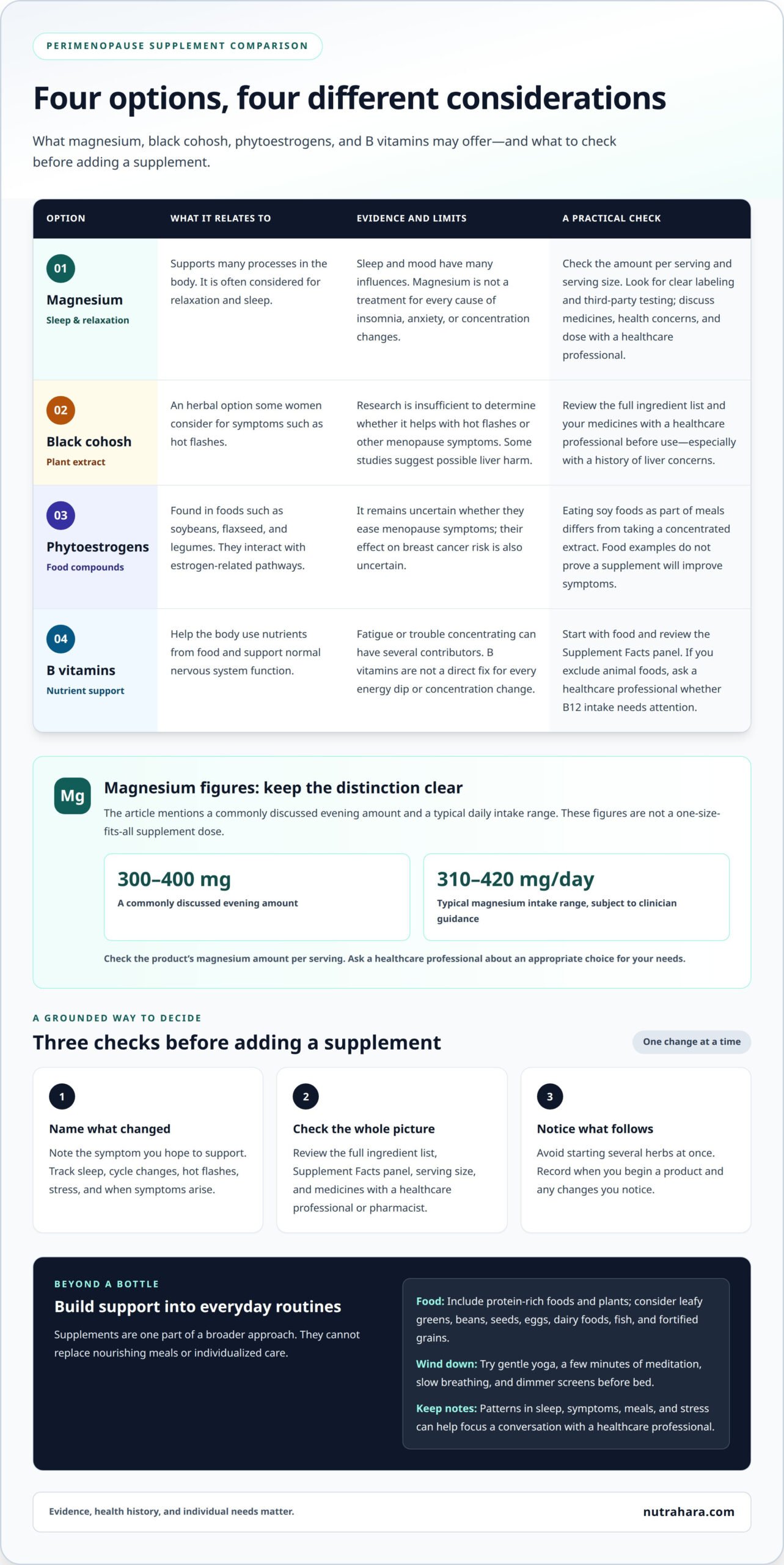
Magnesium supports many processes in the body, and it’s often considered for relaxation and sleep. A commonly discussed evening amount is 300-400 mg. The typical magnesium intake range is 310 to 420 mg per day, subject to clinician guidance. These figures describe intake, not a one-size-fits-all supplement dose. Check how much magnesium a product provides, including its serving size, before adding it to your routine.
Sleep and mood are influenced by more than one nutrient. A calming bedtime routine, gentle yoga, or a few minutes of meditation can support relaxation alongside balanced meals and regular exercise. For example, dim screens, prepare tomorrow’s essentials, and try slow breathing before bed. Magnesium isn’t a treatment for every cause of insomnia, anxiety, or changes in concentration. Notice whether poor sleep follows night sweats, stress, or another pattern.
In the United States, look for a supplement label that clearly states it has been third-party tested. Check the Supplement Facts panel for the magnesium amount per serving and review the full ingredient list. Prefer clear labeling over broad promises about menopause or mood. If you take medicine or have health concerns, discuss the supplement and its dose with a healthcare professional. A varied diet with leafy greens, beans, seeds, and foods containing fatty acids can also contribute to a nourishing lifestyle.
2. Black cohosh and phytoestrogens
Black cohosh and phytoestrogens are herbal options some women consider for symptoms such as hot flashes, but they are not interchangeable. Black cohosh is a plant extract; phytoestrogens are compounds found in foods such as soybeans, flaxseed, and legumes. The name refers to their ability to interact with estrogen-related pathways, not to being the same as the body’s hormones. Neither should be assumed to regulate changing periods or correct hormonal decline.
Research is insufficient to determine whether black cohosh helps with hot flashes or other menopause symptoms. Some studies suggest it may harm the liver. If you’re considering it, note the symptom you hope to address, the product’s full ingredient list, and any medicines you take. Discuss these details with a healthcare professional before use, especially if you have a history of liver concerns.
Evidence for phytoestrogens is also unclear: it remains uncertain whether they ease menopause symptoms, and their effect on breast cancer risk is uncertain. Eating soy foods as part of meals differs from taking a concentrated extract. Tofu, for example, can contribute protein, while calcium-fortified options may contribute calcium. Neither example proves that a supplement will improve symptoms or change metabolism.
Herbal products may carry risks or interact with medicines, so consider discussing them with a healthcare professional before use. Treat “natural” as a description, not proof of safety. Keep a simple symptom record, noting sleep, hot flashes, and any changes after starting a product. Don’t start several herbs at once; making one change at a time can help you notice possible effects. A healthcare professional can help weigh the evidence, your health history, and potential interactions before you decide. This measured approach keeps choices grounded in evidence rather than promises about hormonal balance or body function.
3. B vitamins, energy, and brain function
B vitamins help the body use nutrients from food and support normal nervous system function. They include thiamin, riboflavin, niacin, pantothenic acid, B6, biotin, folate, and B12. Because these nutrients have different roles, a “B-complex” supplement may contain several forms, while a single-nutrient product focuses on one. Read the Supplement Facts panel to see which vitamins it contains and how much each serving provides.
During perimenopause, fatigue or trouble concentrating can have several contributors, including disrupted sleep, stress, diet, or other health conditions. B vitamins may help meet nutritional needs when intake is low, but they aren’t a direct fix for every energy dip or change in concentration. Note when symptoms arise, what you’ve eaten, and whether sleep or stress may be involved. This record can make a clinic visit more focused.
Food is a practical place to start. Eggs, dairy foods, legumes, leafy greens, fish, and fortified grains provide different B vitamins. For example, pair beans with leafy greens at lunch, or add eggs to breakfast. If your diet excludes animal foods, ask a healthcare professional whether B12 intake needs attention. A balanced meal pattern, regular movement, and restorative practices such as yoga can support energy as part of a broader lifestyle.
Yes, supplements can interact with prescription medicines, including hormone therapy, depending on the ingredients and your medication. Before combining them, show a clinician or pharmacist the full Supplement Facts panel and your medication list. Choose one new supplement at a time, noting when you start it and any changes you notice. This makes possible effects easier to discuss without assuming the supplement caused them. More isn’t automatically more helpful: follow the product label and seek individualized guidance before taking high-dose formulas.
4. Perimenopause and nutritional needs
Perimenopause is a transition, so nutritional needs depend on your diet, health, and activity. The best vitamins for perimenopause aren’t necessarily the same for every woman. Start by reviewing your meals, energy, sleep, and exercise routine. Include protein-rich foods and plants, then consider whether a specific nutrient gap needs attention. Strength exercises can help support muscle as you stay active, while yoga can complement training with mobility and recovery.
According to the National Institutes of Health Office of Dietary Supplements, women in their 40s need 1,000 mg per day of calcium. Food sources include dairy, fortified alternatives, and some tofu. Vitamin D helps the body absorb calcium, but supplement needs vary with diet and individual health. A healthcare professional can help assess whether calcium or vitamin D supplements are appropriate and what amount fits your circumstances.
Insurance coverage for supplements depends on your plan, and costs vary by product. There is no single typical cost for every supplement. Evidence for perimenopause symptom relief also differs by ingredient: research is insufficient to determine whether black cohosh works, and findings on phytoestrogens remain unclear. The best vitamins for perimenopause are therefore choices grounded in your nutritional needs, not broad promises of symptom relief.
Vitamin D supplements are commonly discussed at 800 to 4,000 IU per day; the right amount depends on personal factors and existing intake. Excessive amounts of some vitamins can cause unwanted side effects, and supplements may interact with medicines. Before combining products, review their ingredients and doses with a healthcare professional. Treat supplements as one possible part of a wider plan, alongside nourishing meals, movement, and restorative habits. This approach can help you make a considered choice during a changing life stage.
Nutrahara
Nutrahara offers Women’s Health Supplements for women considering nutrition as part of their perimenopause wellness routine. Its formulations combine principles of ancient Ayurveda science with modern nutrition research. Supplements can complement nourishing meals and healthy habits, but they aren’t a substitute for medical care or individualized advice about symptoms, medications, or nutrient needs.
If you’re considering adding a supplement to your routine, start with the specific nutritional goal you’ve identified and review the ingredients and directions. This can help you make a more considered choice as your needs change through perimenopause. For questions about Nutrahara and its Women’s Health Supplements, contact Nutrahara.
Make Your Next Wellness Step Intentional
Let your next choice begin with your own priorities, not pressure to change everything at once. The best vitamins for perimenopause are those that fit a considered plan for your needs, routines, and health goals. Before adding anything, write down what you hope to support and how you’ll tell whether your approach feels useful. That small pause can make supplement decisions a more mindful part of your wellness journey.
Keep making space for habits that help you feel connected to your body. A short yoga practice, quiet meditation, or steady movement can offer a grounding point as your needs evolve. If you’re ready to explore women’s wellness support, Contact Nutrahara to discuss your options. Take your next step with care and confidence; your health journey is yours to shape.
Frequently Asked Questions
What Is Perimenopause, Really?
Perimenopause is the transition leading up to menopause, when menstrual cycles and symptoms can change. Menopause is reached after 12 consecutive months without a period, according to the National Institute on Aging. One shared account described a woman who was 44 and had experienced perimenopause for three years; a volunteer mentor said she had experienced something similar 45 years earlier. Individual experiences vary.
How Much Calcium Do You Need?
For women in their 40s, the National Institutes of Health Office of Dietary Supplements states that calcium needs are 1,000 mg per day. Count food and fortified products toward your overall intake. Dairy foods, fortified alternatives, and some tofu can contribute. Before adding a supplement, consider what your meals provide and discuss your needs with a healthcare professional.
Which Supplements Should You Skip for Perimenopause Weight Gain?
Avoid products that promise rapid weight loss or claim to target perimenopause-related weight changes. Supplements can’t replace a sustainable eating pattern, strength-building activity, sleep, and other supportive habits. Be cautious with blends that hide ingredient amounts or duplicate products you already take. Review the label and your medication list with a healthcare professional or pharmacist to discuss possible interactions before using a weight-focused formula.
How much calcium do women in perimenopause need daily?
For women in their 40s, the National Institutes of Health Office of Dietary Supplements states a calcium need of 1,000 mg per day. This is a total intake target, not necessarily the amount to take as a pill. Consider calcium in meals and fortified foods before choosing a supplement. Nutrition labels can help you estimate what your regular eating pattern provides.
Can vitamin B6, B12, or folate help with perimenopause symptoms?
B6, B12, and folate are distinct nutrients, and supplements aren’t a guaranteed way to ease perimenopause symptoms. They may matter when diet or an identified deficiency leaves a nutritional gap. For example, people who avoid animal foods may need to pay particular attention to B12 sources. Review your diet, symptoms, and current supplements with a healthcare professional before choosing a B-complex product.
Do magnesium or omega-3 supplements help with hot flashes, sleep, or mood?
Magnesium is often considered for sleep support, but it shouldn’t be treated as a proven answer for every hot flash or mood change. Omega-3 supplements have also been studied, yet they aren’t established as reliable treatment for these symptoms. Track sleep, hot flashes, and mood separately. Those notes can help you identify patterns and discuss supplement choices with a healthcare professional.
Disclaimer
This article is not a substitute for medical advice. Please consult a healthcare professional before starting any supplement, especially if pregnant, nursing, taking medication, or managing health conditions.