A multivitamin for perimenopause isn’t automatically better just because it contains more ingredients. Choose one that fits your needs, with nutrients and plant ingredients you understand, rather than a crowded label promising everything.
It’s understandable to seek support as your body changes, especially when energy, mood, sleep, and menstrual patterns feel different. Supplements aren’t interchangeable, though, and a multivitamin is only one part of caring for your wellbeing.
This guide compares B vitamins, vitamin D, and plant phytoestrogens, and explains what to consider when choosing a multivitamin for women over 40. You’ll also find practical ways to think about ingredient amounts and how a supplement fits alongside nourishing food, movement, yoga, and meditation, so you can make a more confident choice for your own health journey.
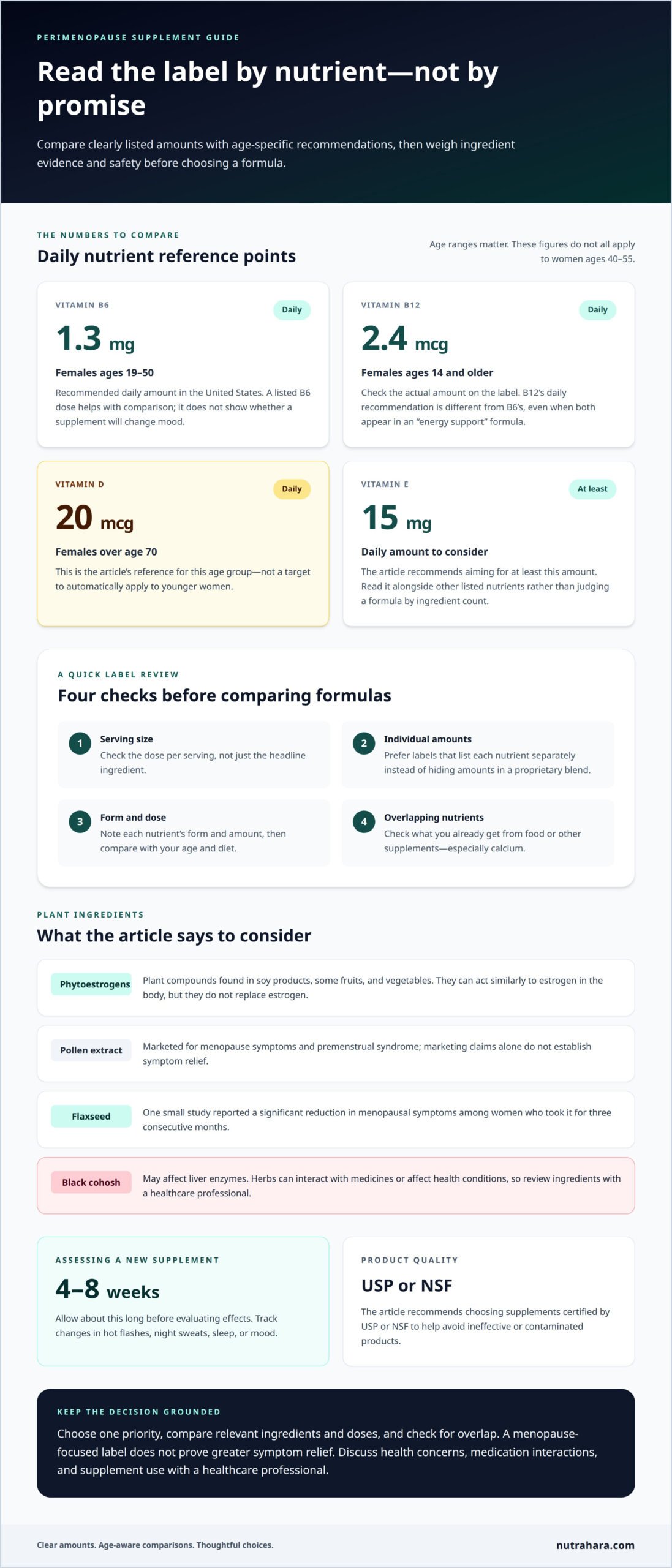
Start with the concerns you want to address, then look for clearly stated ingredient amounts. Check each nutrient’s form and dose per serving, along with the serving size. Prefer labels that list individual amounts instead of hiding them in a proprietary blend.
Phytoestrogens in soy products, some fruits, and vegetables can act similarly to estrogen in the body, but they don’t replace estrogen. Pollen extract is marketed for menopause symptoms and premenstrual syndrome. These options may interest women experiencing hot flashes or night sweats, but marketing claims alone don’t establish symptom relief.
| Option | Use or evidence to consider |
|---|---|
| Phytoestrogens | Plant compounds; not estrogen replacement |
| Pollen extract | Marketed for menopause symptoms and PMS |
| Flaxseed | One small study reported symptom reduction |
| Black cohosh | May affect liver enzymes |
Choose a product that matches your concern and clearly lists its ingredients, rather than combining several herbal supplements at once.
Evidence varies by ingredient. One small study found a significant reduction in menopausal symptoms among women who took flaxseed for three consecutive months. Allow about four to eight weeks before evaluating a new supplement’s effects, and track changes in hot flashes, night sweats, sleep, or mood.
For product quality, the recommendation is to choose supplements certified by USP or NSF to help avoid ineffective or contaminated products. Herbs can interact with medicines or affect health conditions; black cohosh, for example, can impact liver enzymes. Review ingredients with a healthcare professional before adding an herbal product, especially if you take medication.
B vitamins and vitamin D have different roles in a nutrient plan. Compare their listed amounts with age-specific recommendations rather than relying on broad energy or wellness claims.
Vitamin B6 is often discussed alongside mood during the menopause transition. Its recommended amount differs by age: females ages 19 to 50 in the United States need 1.3 milligrams daily, according to the National Institutes of Health, Office of Dietary Supplements. A label’s B6 amount is useful for comparison, but it doesn’t show whether a supplement will change mood.
B vitamins include B6 and B12, but their daily recommendations aren’t interchangeable. Females ages 14 and older in the United States need 2.4 micrograms of vitamin B12 daily. B12 is often associated with energy, so check its actual dose rather than relying on a general “energy support” claim. A balanced formula lists each B vitamin separately, making amounts easier to compare.
Vitamin D is another distinct nutrient to assess, especially when bone health is a priority. Females over age 70 in the United States should get 20 micrograms of vitamin D daily, according to the National Institutes of Health, Office of Dietary Supplements. That recommendation is specific to this age group, so don’t apply it automatically to younger women.
Vitamin E adds another comparison point: the article recommends aiming for at least 15 milligrams daily. Read its amount alongside vitamin D and B vitamins, rather than assuming a longer ingredient list means better balance. Supplements may combine vitamins with minerals, but the label should make each nutrient’s dose clear.
Try this quick label review: note the form and dose of each nutrient, then compare them with your age and diet. If a blend hides individual amounts, it’s harder to judge what it contributes.
Some formulas are designed specifically for perimenopause, while regular women’s multivitamins provide broader nutrient coverage. Compare the ingredients, forms, and doses, then choose based on your diet, age, and main concern. A menopause-focused label doesn’t prove greater symptom relief.
For a practical choice, first list the concerns you want to discuss, such as night sweats, stress, or vaginal health. Then check whether the formula includes nutrients you already get from food or another supplement. Pay particular attention to calcium, since combining products can increase your total intake. A healthcare professional can help assess your diet, health history, and medication list.
Look for evidence tied to each ingredient and symptom, not just broad claims about hormone balance. Research on supplements varies, and an ingredient marketed for menopause symptoms may not have the same evidence for night sweats. Black cohosh can impact liver enzymes, so consider its presence carefully, especially alongside medicines or liver concerns.
Use this simple decision process: identify one priority, such as sleep disrupted by night sweats; compare relevant ingredients and doses; then check the label for overlapping nutrients. Choose a formula that’s straightforward to understand. If vaginal changes or persistent stress are your main concerns, a multivitamin may not address their cause, so discuss those symptoms with a healthcare professional.
Yoga, meditation, and a consistent movement routine can support general wellbeing alongside nutrition, but they aren’t substitutes for evaluating symptoms. Choose a transparent, age-appropriate formula for nutrient coverage, not a promise to treat perimenopause. Ask a healthcare professional to consider calcium intake and potential supplement interactions before adding ingredients such as black cohosh.
For women ages 40 to 55, compare daily nutrient targets with the amounts in food and supplements. Recommendations differ by nutrient and age, so a multivitamin label is a starting point, not a complete intake picture.
Females ages 19 to 70 in the United States should get 15 micrograms of vitamin D daily, according to the National Institutes of Health, Office of Dietary Supplements. Vitamin D supports bone health, so include food sources and any separate supplements when reviewing your daily total.
Calcium and magnesium needs depend on your overall diet. Check whether foods such as dairy products, fortified alternatives, nuts, or leafy greens contribute these minerals before adding a supplement. Compare serving sizes and mineral amounts across products to spot overlap between a multivitamin and separate formulas.
Vitamin B6 recommendations change at age 50. The recommended dietary allowance of vitamin B6 for females ages 19 to 50 in the United States is 1.3 milligrams daily, according to the National Institutes of Health, Office of Dietary Supplements. The recommended dietary allowance of vitamin B6 for females ages 50 and older in the United States is 1.5 milligrams daily, according to the National Institutes of Health, Office of Dietary Supplements.
For B12, females ages 14 and older in the United States need 2.4 micrograms daily. Check the label for the amount per serving, especially if another supplement also contains B vitamins. A simple review helps: write down vitamin D, calcium, magnesium, B6, and B12 from each product, then compare totals with your regular foods. That step makes gaps and overlaps easier to spot before choosing a formula, or you can work with Wise Eats Registered Dietitians to tailor your nutrition and supplement plan to your individual needs.
Nutrahara offers women’s health supplements for women considering nutritional support during perimenopause. Its formulations combine principles of Ayurveda with modern nutritional research and use natural, clean ingredients. They may suit readers exploring supplements as part of a broader routine, rather than expecting one product to resolve every change.
Start by identifying your priority, such as filling a nutrient gap or building a consistent wellness routine. Then compare the supplement label with your diet and any other products you take. For example, if you already use a B-vitamin supplement, consider the overlap before adding another formula. A healthcare professional can help you consider your health needs and potential medication interactions.
Nutrahara’s women’s health supplements are designed to support women’s overall wellness, energy, and health. They may fit alongside nourishing meals, regular movement, yoga, or meditation. These everyday practices can complement a thoughtful nutrition routine and offer practical ways to care for physical and mental wellbeing. When incorporating new products into your routine, listening to your body and tracking how you feel can provide helpful personal insights.
Keep your choice grounded in your needs. A clear list of your current supplements, main concerns, and preferred routine can help you decide what support makes sense. If persistent night sweats or mood changes affect daily life, discuss them with a healthcare professional; supplements aren’t a substitute for medical care.
For a considered next step, explore how Nutrahara’s women’s health supplements align with your wellness priorities. Contact Nutrahara to learn more about its women’s health supplements.
Ask the healthcare professional managing your HRT to review a supplement’s full ingredient label before combining them. Bring the product container or a clear label image, and list your prescriptions and other supplements. This provides details for review, including herbal ingredients and overlapping nutrients. Don’t rely on a general “hormone support” label to decide whether a combination suits your treatment.
Safety depends on the ingredients, dose, health history, and medicines you take. Black cohosh, for example, can impact liver enzymes, so consider its presence when reviewing a formula. Read the complete ingredient panel, including blend details, and note overlapping nutrients across products. A healthcare professional can assess whether a supplement fits your medication and personal health needs.
Support overall wellbeing with consistent habits rather than trying to force hormone levels toward a target. Build a routine around regular meals, enjoyable movement, and sleep. Yoga and meditation can create a calm pause in a busy day. You can also record symptoms and cycle changes in a journal, then share the pattern with a healthcare professional if it affects daily life.
No single nutrient combination suits every woman. Consider your age, eating pattern, health needs, and other supplements. For example, if you regularly take a separate vitamin product, check for overlapping ingredients before adding a multivitamin. A healthcare professional can help interpret these details in the context of your diet and health history.
A multivitamin can contribute nutrients, but it isn’t a proven remedy for hot flashes, mood changes, or sleep problems. Keep a brief record of when symptoms occur and what affects your sleep or daily routine. This can help you describe the pattern to a healthcare professional, who can discuss appropriate ways to address persistent or disruptive symptoms.
Ratings alone can’t identify the best fit, and monthly cost depends on the product’s price and serving instructions. Compare the full ingredient panel, amount per serving, and servings per package. Estimate how long a package lasts by dividing its serving count by the number of servings you take each day. Then consider whether that duration and formula suit your needs.
This article is not a substitute for medical advice. Please consult a healthcare professional before starting any supplement, especially if pregnant, nursing, taking medication, or managing health conditions.