

...
Categories
Articles

Ayurvedic Herbs for Digestion: A Woman’s Gut Health Guide

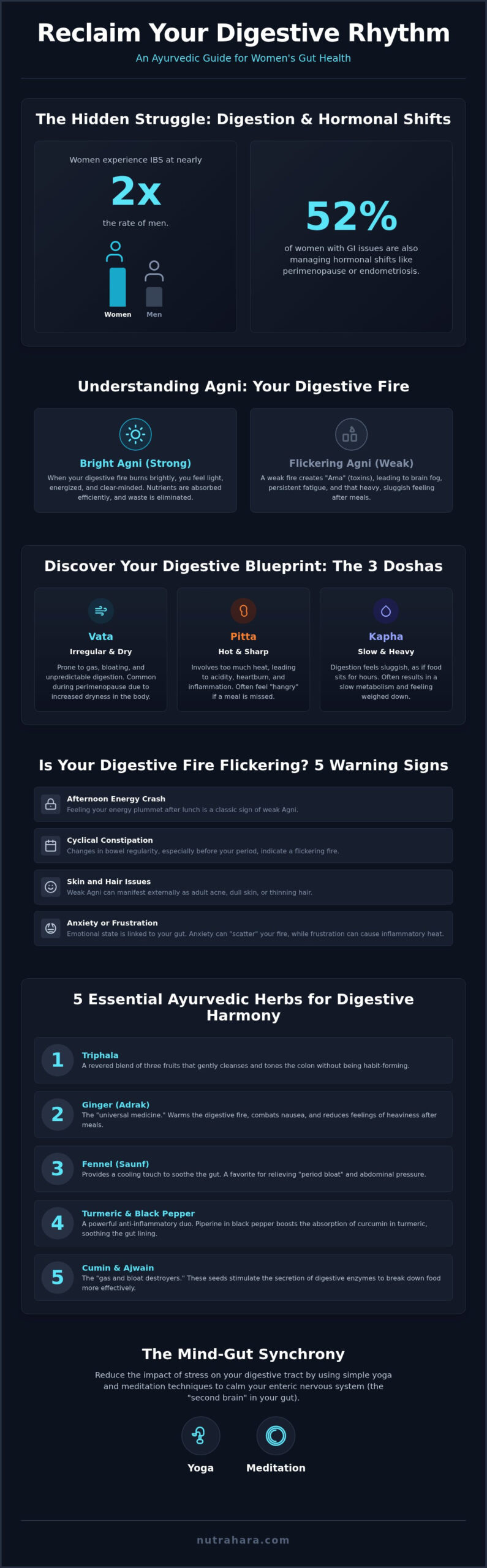
Did you know that women experience irritable bowel syndrome at nearly twice the rate of men? Recent research shows that 52% of women dealing with gastrointestinal issues are also managing hormonal shifts like perimenopause or endometriosis. If you’ve spent your cycle feeling weighed down by persistent bloating or wondering why your stomach feels heavy after every meal, you aren’t alone. It’s frustrating when your body feels out of sync, but incorporating specific ayurvedic herbs for digestion can help restore your natural rhythm.

This guide helps you reclaim your comfort by tailoring time-tested botanical wisdom to the unique needs of the female body. We’ll show you how to rekindle your internal digestive fire, known as Agni, and clear away the toxins that leave you feeling sluggish. You’ll discover how to match traditional herbs with modern nutritional science to achieve a flatter stomach and higher energy levels. We’ll explore the best herbs for your specific body type and provide a simple daily routine, including yoga and meditation tips, to help you feel light and empowered every day.

Key Takeaways

  • Identify the signs of weak Agni and learn how to eliminate the internal toxins that lead to persistent fatigue and brain fog.
  • Explore the most effective ayurvedic herbs for digestion that cleanse your system and support long-term gut vitality without creating dependency.
  • Reduce the impact of stress on your digestive tract by using simple yoga and meditation techniques to calm your enteric nervous system.
  • Address hormonal bloating and menopause-related sluggishness with strategies that balance your body’s natural cooling and cleansing processes.
  • Learn how Nutrahara bridges the gap between traditional herbal wisdom and modern clinical research for a simple, daily wellness routine.

Understanding Agni: The Secret to Women’s Digestive Vitality

In the wisdom of Ayurveda, health isn’t just about what you eat; it’s about what you can transform. Agni is this transformative energy. It is the digestive fire responsible for your longevity, immunity, and overall vitality. Quite simply, Agni acts as the metabolic gatekeeper that determines nutrient absorption and waste elimination. When this fire burns brightly, you feel light and energized. However, when it flickers, your body creates “Ama,” or metabolic toxins. Ama often manifests as that heavy brain fog or persistent fatigue that many women struggle to shake off. Understanding Agni is the first step toward reclaiming your gut health.

For women between 30 and 60, Agni is rarely static. Your digestive fire fluctuates alongside your hormones. Stress from career or family often triggers a “fight or flight” response that diverts energy away from the gut. During perimenopause and menopause, shifting estrogen levels can dampen this fire, making it harder to process even healthy meals. This is why incorporating specific ayurvedic herbs for digestion becomes a vital strategy for maintaining balance through every life stage.

The Three Doshas and Your Digestive Type

Every woman has a unique digestive blueprint. Recognizing your type helps you choose the right ayurvedic herbs for digestion to bring your system back into harmony.

  • Vata Digestion: This is often irregular. You might feel fine one day and experience intense gas or bloating the next. It’s very common during perimenopause when dryness increases in the body.
  • Pitta Digestion: This involves too much heat. It leads to acidity, heartburn, or inflammation. You might feel “hangry” or irritable if a meal is delayed.
  • Kapha Digestion: This is slow and heavy. You might feel like your food sits in your stomach for hours. It often results in a sluggish metabolism and a feeling of being weighed down.

Signs Your Digestive Fire Needs Rekindling

How do you know if your Agni is struggling? Look for the “afternoon slump” where your energy crashes after lunch. Cyclical constipation before your period is another clear sign of a flickering fire. Because your gut and skin are deeply connected, weak Agni often shows up as adult acne, dull skin, or thinning hair. There’s also a powerful emotional link. Anxiety can “scatter” your fire, while chronic frustration can make it burn too hot and cause inflammation. Using Ashwagandha with Black Pepper can help manage the cortisol levels that often disrupt this delicate internal balance.

The 5 Essential Ayurvedic Herbs for Digestion

Ayurveda doesn’t just look at herbs in isolation; it focuses on “Samyoga,” the intelligent art of combining botanicals for maximum benefit. This synergy ensures that the herbs work together to enhance nutrient absorption while minimizing any potential for irritation. When you choose the right ayurvedic herbs for digestion, you’re not just treating a symptom. You’re supporting your body’s long-term progression toward balance.

Triphala is perhaps the most revered formula in this tradition. It consists of three fruits that cleanse and tone the colon. Unlike many modern solutions, it isn’t habit-forming and won’t weaken your natural muscle function over time. For those struggling with nausea or a flickering digestive fire, Ginger (Adrak) remains the “universal medicine.” It’s particularly effective for women who feel heavy after meals. If you need something gentler, Fennel (Saunf) provides a cooling touch. It’s a favorite for relieving “period bloat” and general abdominal pressure without adding excess heat to your system.

Deep Dive: Turmeric and Black Pepper

Modern clinical research frequently highlights Curcumin for its ability to reduce gut inflammation and support a diverse microbiome. However, Curcumin is notoriously difficult for the body to absorb on its own. This is where the wisdom of Samyoga shines. Adding black pepper, which contains piperine, increases Curcumin’s bioavailability by a staggering amount. This combination helps soothe the intestinal lining and supports the “second brain” in your gut. If your digestive struggles are frequently triggered by a busy, high-stress lifestyle, Ashwagandha with Black Pepper can help manage the cortisol levels that often disrupt your internal fire.

Cumin and Ajwain: The Gas and Bloat Destroyers

Cumin is a powerhouse for secreting the digestive enzymes necessary to break down complex proteins and fats. If you often feel like food “sits” in your stomach, Cumin can help move things along. For more acute discomfort, Ajwain (Carom seeds) provides almost immediate relief from abdominal pressure. A comprehensive review on Ayurvedic herbs confirms how these seeds act as a potent carminative to expel trapped gas. You can easily integrate these into your life with a daily “CCF Tea”:

  • Mix 1/2 teaspoon each of Cumin, Coriander, and Fennel seeds.
  • Steep in two cups of hot water for ten minutes.
  • Strain and sip throughout the day to keep your Agni steady.

Integrating these traditions into a modern schedule doesn’t have to be complicated. Choosing high-quality women’s health supplements can provide the same benefits with the convenience your lifestyle demands.

The Mind-Gut Synchrony: Yoga and Meditation for Better Digestion

Ayurveda has long taught that the gut is our second brain, a concept modern science now validates through the Enteric Nervous System (ENS). This complex network of neurons lines your entire digestive tract and communicates constantly with your head. For women, this connection is particularly sensitive. High cortisol levels from daily stressors can effectively turn off your digestive fire, leading to the bloating and discomfort we’ve explored. While ayurvedic herbs for digestion provide essential botanical support, pairing them with mindful movement helps address the root cause of stagnation.

Shifting your internal state doesn’t require hours of practice. A simple five-minute meditation before you eat acts as a sacred boundary. By closing your eyes and focusing on your breath, you signal your nervous system to move from “fight or flight” into “rest and digest.” This transition allows your body to prioritize nutrient absorption rather than survival. If you find it difficult to settle your mind after a busy day, a supportive supplement like Anxioguard can help calm your system before you sit down to eat.

Yoga Poses to Ignite Your Agni

Yoga serves as a gentle, internal massage for your organs. It helps move stagnant Ama that might be trapped in the intestinal folds, encouraging a smoother flow of energy. Try these three poses to support your gut:

  • Apanasana (Knees-to-Chest): This is the primary pose for releasing trapped Vata or gas. It gently compresses the ascending and descending colon to encourage elimination.
  • Ardha Matsyendrasana (Seated Twist): Think of this as wringing out a sponge. Twisting poses help stimulate the liver and kidneys, assisting the body in processing metabolic waste.
  • Paschimottanasana (Seated Forward Fold): This pose calms the central nervous system while gently stimulating the stomach and intestines.

Mindful Eating as a Meditation Practice

The way you eat is just as important as what you eat. Ayurveda suggests a simple rule: chew your liquids and drink your solids. This means chewing your food until it’s a liquid consistency before swallowing, which significantly reduces the workload on your stomach. It’s also vital to avoid drinking cold water during meals. Icy drinks act like water on a campfire; they extinguish your Agni and lead to poor absorption. Instead, sip warm ginger tea or room-temperature water. Finally, take a moment of gratitude before your first bite. This simple practice improves the vibrational quality of your meal and prepares your body to receive nourishment with ease.

Managing Hormonal Bloating and Menopause Digestion

Many women don’t realize that their gut and their hormones are in a constant, intimate dialogue. The “Estrobolome” is a specific group of bacteria in your microbiome responsible for metabolizing and recirculating estrogen. When your gut health is compromised, your body can’t clear excess hormones effectively. This often leads to intensified PMS or perimenopausal symptoms. During perimenopause, the natural drop in estrogen leads to slower bile production. Since bile acts as a natural lubricant for the intestines, this slowdown frequently results in stubborn constipation and a feeling of heaviness.

Addressing “period bloat” requires a shift toward Pitta-pacifying strategies. In the luteal phase, your body temperature rises slightly, and progesterone can slow down your digestive transit. Cooling ayurvedic herbs for digestion, such as coriander and fennel, help soothe this internal heat and reduce water retention. For physical relief from stagnation, try a castor oil pack. Applying a warm castor oil pack to your lower abdomen for 20 minutes during the week before your period can stimulate lymphatic flow and encourage healthy, regular elimination.

Ayurvedic Support for Menopausal Digestion

As you move into your 50s, your body transitions from the Pitta (fire) stage of life into the Vata (air and ether) stage. Vata is characterized by dryness and coldness. This shift often makes the digestive tract more prone to gas, cracking joints, and internal dryness. Hydration and healthy fats are no longer optional; they are essential for your longevity. Incorporating small amounts of Ghee into your diet provides the necessary lubrication to keep your system moving. To support this transition, BlossomBliss offers a balanced approach to maintaining hormonal harmony and digestive ease throughout menopause.

Detoxification for Longevity and Weight Management

Traditional cleanses are often too harsh for the female body, especially during significant hormonal shifts. A gentle, consistent approach is always better for long-term health progression. Supporting the liver’s natural pathways ensures that estrogen metabolites are cleared rather than recirculated. If you’re curious about how these metabolic processes impact your fitness goals, read our guide on Do Digestive Enzymes Help You Lose Weight? for a deeper look at holistic weight management. For those ready to support their internal cleansing naturally, DetoxifyLife provides a clean, botanical formula to assist your liver’s vital work without artificial additives.
Ayurvedic Herbs for Digestion: A Woman's Gut Health Guide

Integrating Ayurveda into Modern Life: The Nutrahara Approach

While the benefits of raw ayurvedic herbs for digestion are undeniable, the reality of a busy 2026 lifestyle often makes traditional preparation difficult. Measuring out bitter powders or brewing complex decoctions several times a day isn’t always practical for women balancing careers and families. Nutrahara was born from this exact challenge. Our philosophy bridges the gap by fusing ancient botanical wisdom with modern clinical nutritional research. We believe you shouldn’t have to choose between traditional efficacy and modern convenience.

Transparency is the heartbeat of our process. We adhere to a “clean label” standard, ensuring our formulas are free from artificial binders, fillers, and additives. This commitment to purity means your body receives only the active, life-giving elements of the plant. By simplifying these ancient protocols, we help you build a personalized “Wellness Kit.” This kit supports your gut health, sustains your energy, and sharpens your mental clarity throughout the day, allowing you to focus on what matters most without the distraction of digestive discomfort.

Modern Solutions for Ancient Problems

For many women, the journey begins with a solid foundation. FemmePower provides a comprehensive base for your daily nutritional needs, ensuring your system has the raw materials it needs to thrive. To specifically address the integrity of the gut lining, we often recommend our Premium Collagen Complex. This helps soothe the intestinal tract and supports the structural health of your “second brain,” which we’ve learned is so vital for hormonal balance.

Consider the experience of Sarah, a 45-year-old marketing executive who struggled with chronic bloating for years. “I felt heavy and sluggish every afternoon,” she shares. “By integrating Ayurvedic principles and using Nutrahara’s focused supplements, I finally reclaimed my energy. My stomach feels flatter; I no longer dread the post-lunch slump.” Sarah’s story reflects the transformative power of aligning your daily habits with your body’s natural fire. When you provide the right support, your body responds with vitality.

Your Long-Term Health Progression

True wellness isn’t about a quick fix; it’s about a long-term health progression. It involves shifting your mindset from “fixing a problem” to “nurturing a lifestyle.” You are the master of your own Agni, and every choice you make is an opportunity to stoke that internal fire. We’re here to act as your wise and caring guide on this journey, providing the tools you need to feel empowered and confident. Join the Nutrahara community today for more guided wellness resources and support as you cultivate a life of vibrant, lasting health.

Embrace Your Vitality with Ayurvedic Wisdom

Reclaiming your gut health is a journey of listening to your body’s unique rhythms. By understanding your Agni and addressing the root causes of Ama, you can move past the heaviness of bloating and fatigue. We’ve explored how specific ayurvedic herbs for digestion, such as Triphala and Ginger, provide a natural foundation for clarity and comfort. Whether you’re navigating the shifts of perimenopause or seeking higher energy levels, these time-tested strategies offer a path to lasting balance. Pair these botanicals with mindful eating and gentle yoga to create a routine that truly nourishes your spirit.

Our formulas are crafted specifically for the female hormonal lifecycle. Every supplement is formulated by experts in Ayurveda and modern nutrition, ensuring you receive pure ingredients free from artificial additives and harsh chemicals. You deserve a wellness partner that understands your long-term health progression.

Explore Nutrahara’s Ayurvedic-Inspired Women’s Wellness Collection and start your transformation today. You have the power to stoke your internal fire and live with vibrant confidence.

Frequently Asked Questions

What are the best Ayurvedic herbs for immediate bloating relief?

Fennel and Ajwain are the most effective herbs for swift relief. Fennel seeds act as a cooling carminative that relaxes the intestinal muscles to help expel trapped gas. Ajwain, or Carom seeds, provides almost immediate comfort for intense abdominal pressure. You can chew a half-teaspoon of these seeds after a meal or steep them in hot water. These botanicals offer a gentle way to find comfort without relying on harsh chemicals.

Can Ayurvedic herbs help with digestion during menopause?

Yes, herbs like Shatavari and Ginger are excellent during this transition. Menopause often brings an increase in Vata dosha, which leads to internal dryness and slower digestive transit. Shatavari helps balance hormones while providing essential lubrication to the gut lining. Using specific ayurvedic herbs for digestion during this stage supports your long-term health progression and helps minimize the persistent “menopause belly” that many women experience as estrogen levels shift.

How long does it take for Ayurvedic digestive herbs to start working?

While carminative seeds like Fennel can provide relief within 30 minutes, systemic changes usually require two to four weeks of consistent use. Ayurveda focuses on addressing the root cause of your discomfort rather than offering a temporary fix. You may notice subtle improvements in your energy levels during the first week. Consistency is vital to rekindling your internal fire and allowing your body to fully absorb these specialized botanical nutrients.

Is it safe to take Triphala every day for digestion?

Triphala is traditionally considered safe for daily use because it is a rejuvenating formula rather than a stimulant laxative. It works by toning the muscles of the colon and supporting natural regularity without creating dependency. Many women find that a nightly dose helps maintain a flatter stomach and supports a healthy microbiome. It’s a gentle way to cleanse your system and eliminate Ama while you sleep, although pausing for a few days every few months is often recommended.

How does yoga specifically improve the digestive fire?

Yoga uses physical compression and twisting to stimulate the internal organs and move stagnant energy. Poses that involve twisting help “wring out” metabolic waste from the liver and digestive tract. When the twist is released, fresh, oxygenated blood flows into the area to nourish the cells. This process directly strengthens your Agni. Additionally, the deep breathing practiced in yoga lowers cortisol, which keeps your body in the parasympathetic “rest and digest” state necessary for optimal absorption.

Are there any Ayurvedic herbs I should avoid while pregnant or nursing?

You should avoid strong purgatives or intense cleansing herbs like Aloe Vera during pregnancy. Some potent botanicals like Ashwagandha require careful guidance from a professional during these sensitive stages. While culinary amounts of Ginger or Fennel are generally safe, concentrated supplements should be approached with caution. Always prioritize purity and ensure any formula you choose is free from artificial additives. It’s essential to support your body gently during pregnancy and lactation to ensure both your health and your baby’s vitality.

What is the best time of day to take Ayurvedic digestive supplements?

The ideal timing depends on the specific herb’s purpose within your routine. Herbs intended to stoke your digestive fire, such as Ginger, are most effective when taken 15 to 30 minutes before your meals. Cleansing formulas like Triphala are traditionally taken on an empty stomach before bed to support the body’s natural overnight detoxification. Taking ayurvedic herbs for digestion with warm water in the morning can also help kickstart your metabolism and prepare your system for the day.

How do I know which Dosha is causing my digestive issues?

Your specific symptoms often point to the underlying imbalance. Vata issues typically manifest as gas, bloating, and irregular movements. Pitta imbalances often involve excess heat, acidity, or inflammation in the gut. Kapha issues feel heavy and sluggish, making you feel weighed down for hours after eating. If you experience a significant energy crash after your meals, it is often a sign of weak Agni. Identifying these patterns helps you choose the right botanical support to restore your unique internal harmony.

Article by

Nutrahara Team

We are a dedicated collective of nutrition scientists and naturopaths at Nutrahara, committed to advancing women's health through the fusion of ancient Ayurveda science and cutting-edge nutrition research. Our mission is to empower you with clean, simple, and scientifically validated wellness solutions so you can live your healthiest life. Connect with us to stay updated on the latest developments in holistic women's health and nature-based research.

Disclaimer

This article is not a substitute for medical advice. Please consult a healthcare professional before starting any supplement, especially if pregnant, nursing, taking medication, or managing health conditions.

Categories
Articles

Ayurvedic Herbs for Women’s Digestion and Gut Harmony

What if the persistent bloating and mid-day fatigue you’ve been battling aren’t just inevitable signs of aging, but signals that your internal fire is out of sync? For many women between 30 and 60, hormonal shifts and daily stress can dim our natural digestive strength. This often leads to discomfort that lingers long after a meal. You’ve likely felt the frustration of gas and sluggishness that won’t go away, even when you’re trying to eat well. It’s time to stop fighting your body and start listening to its needs. By incorporating specific ayurvedic herbs for digestion, you can rekindle your Agni, or metabolic fire, and restore a sense of tranquility to your gut.

We understand that you’re looking for a sustainable path to vitality rather than a temporary solution. This guide explores how to balance your Agni using time-tested herbs and modern nutritional research to achieve a flatter stomach and increased daily energy. We’ll preview the most effective botanical remedies, share mindful eating rituals, and discuss how gentle yoga can support your gut harmony. You’ll also learn how convenient supplements like Detoxifylife or Femmepower can support your personal health progression. Together, we’ll ensure your wellness journey is both empowering and deeply nourishing.

Key Takeaways

  • Understand how to rekindle your metabolic engine, Agni, to clear away the toxins that lead to persistent bloating and fatigue.
  • Master the use of the “Big Three” ayurvedic herbs for digestion to create a balanced gut environment through the principle of Samyoga.
  • Identify your unique digestive blueprint among the three Doshas to tailor your wellness journey to your body’s specific needs.
  • Learn practical yoga and meditation techniques that calm the nervous system and promote daily regularity and mindful eating.
  • Discover how modern clinical validation enhances traditional herbal wisdom to provide a transparent, clean approach to women’s health.

Understanding Agni: The Foundation of Ayurvedic Digestion

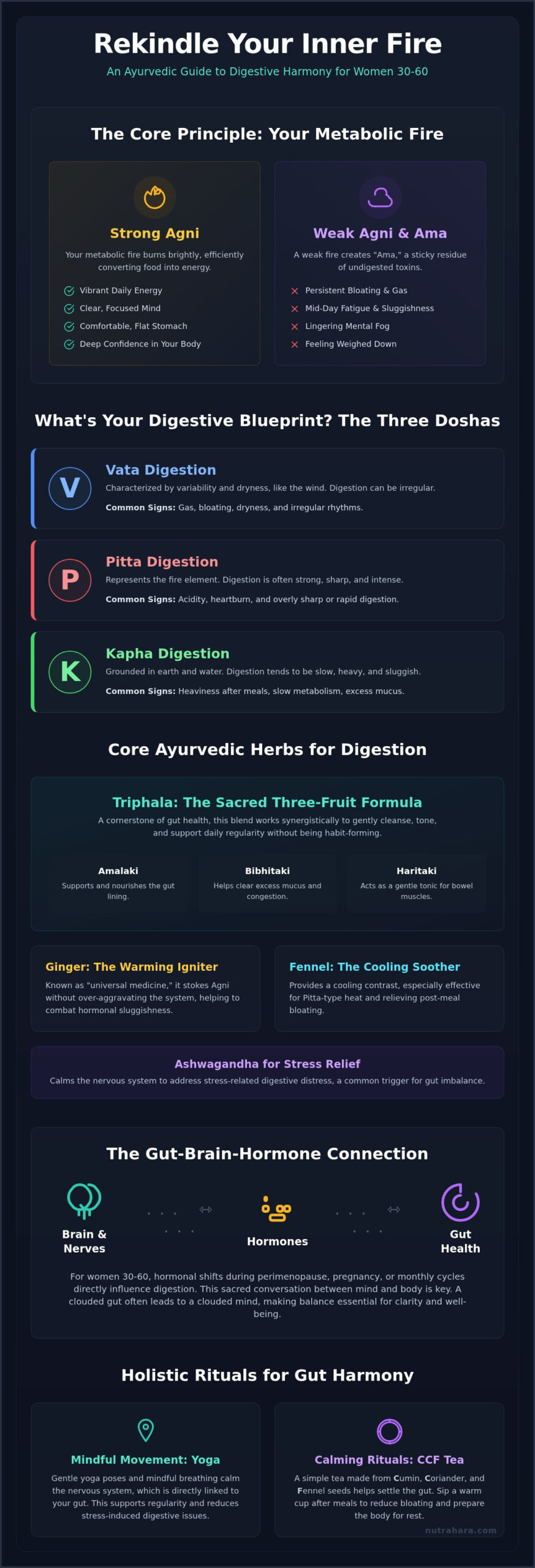
In the ancient wisdom of Ayurveda, digestion isn’t just about breaking down food. It’s about Agni, your internal metabolic fire. Think of Agni as the engine that powers your entire existence. When this fire burns brightly, you feel vibrant, focused, and deeply confident in your body’s capabilities. However, a rushed modern lifestyle often smothers this flame. Between career demands and family care, many women find their Agni struggling to keep up. A strong digestive fire is the true root of your vitality and self-esteem.

When Agni is weak, food isn’t fully transformed into energy. Instead, it creates “Ama,” a sticky residue of undigested toxins. Ama acts like a heavy fog, weighing down your cells and draining your daily spark. It’s the reason you might feel sluggish even after a full night’s rest. Restoring this fire is the first step toward lasting wellness. While lifestyle changes are vital, specific ayurvedic herbs for digestion can provide the spark needed to clear this accumulation and reignite your internal light.

The Gut-Brain-Hormone Connection in Women

Women aged 30 to 60 navigate unique biological shifts that impact the gut. Estrogen and progesterone don’t just regulate cycles; they also influence how quickly food moves through your system. During perimenopause or pregnancy, these fluctuations often lead to “Vata” type issues, characterized by dryness, gas, and irregular rhythms. From an Ayurvedic perspective, the gut-brain axis is the sacred conversation between your digestive fire and your mental clarity, where a clouded gut inevitably leads to a clouded mind. Supporting this delicate balance with formulas like Femmepower can help stabilize these hormonal impacts on your gut harmony.

Signs Your Digestive Fire is Out of Balance

Recognizing an imbalance is the start of your health progression. You might notice a thick coating on your tongue in the morning, persistent bloating, or mental fog that won’t lift. By choosing the right ayurvedic herbs for digestion, you can address these symptoms at their root. Ayurveda distinguishes between “Manda” Agni, which is slow and sluggish, and “Tikshna” Agni, which is overly sharp and acidic. True health isn’t an overnight fix; it’s a long-term journey of returning to balance. Using targeted tools like Detoxifylife can help gently clear Ama while you rebuild your foundational strength and clarity.

The Core Ayurvedic Herbs for Optimal Digestion

In the tradition of Ayurveda, the effectiveness of a remedy often lies in “Samyoga,” the intelligent combining of plants to create a synergistic effect. This isn’t just about mixing ingredients; it’s about how they work together to support your body’s unique rhythms. Modern science is catching up to these ancient practices. As noted by Johns Hopkins on Ayurveda, these methods are increasingly viewed through a lens of holistic wellness and prevention. When choosing ayurvedic herbs for digestion, prioritizing purity and clinically validated formulas ensures you’re supporting your health progression safely.

Triphala: The Sacred Three-Fruit Formula

Triphala is a cornerstone of Ayurvedic gut health. It combines three potent fruits: Amalaki (Indian Gooseberry), Bibhitaki, and Haritaki. Amalaki supports the gut lining, Bibhitaki helps clear excess mucus, and Haritaki acts as a gentle tonic for the bowel muscles. Together, they function as a non-habit-forming internal cleanser that encourages daily regularity. For women balancing busy schedules, Detoxifylife offers a refined way to experience this sacred blend without the guesswork of raw powders.

Ginger and Fennel: The Warmth of Digestive Comfort

Ginger (Zingiber officinale) is often called the “universal medicine” because it stokes Agni without over-aggravating the system. It helps move food through the stomach, which is crucial for women experiencing hormonal sluggishness. Fennel provides a cooling contrast. It’s particularly effective for Pitta-type digestive heat and post-meal bloating. A simple actionable ritual you can start tonight is brewing CCF tea. Mix equal parts Cumin, Coriander, and Fennel seeds in hot water. This gentle infusion helps settle the gut and prepares the body for rest.

Ashwagandha for Stress-Related Digestive Distress

We can’t ignore the impact of the nervous system on the gut. Stress often triggers digestive distress, especially during life transitions like perimenopause. Ashwagandha is a powerful adaptogen that helps the body manage cortisol. A calm mind is a prerequisite for a calm gut. By soothing the “fight or flight” response, your body can prioritize “rest and digest” functions. This is why incorporating ayurvedic herbs for digestion often involves addressing the mind-body connection. To ensure your body actually utilizes this herb, consider Ashwagandha with Black Pepper, which significantly enhances the absorption of active compounds.

Determining Your Digestive Type: Vata, Pitta, or Kapha?

In Ayurveda, your “Prakriti” is your unique genetic blueprint. It defines how your body processes everything from food to emotions. However, as we age or experience hormonal shifts, we often drift into “Vikriti,” which is our current state of imbalance. Identifying whether your gut is currently dominated by Vata, Pitta, or Kapha is essential. It allows you to select the most effective ayurvedic herbs for digestion tailored to your body’s immediate needs rather than following a one-size-fits-all approach.

Vata Digestion: Managing Irregularity and Gas

Vata is characterized by the elements of air and space. When it’s out of balance, your digestion becomes erratic. You might feel hungry one day and have no appetite the next. Common symptoms include persistent bloating, gas, and constipation. This is especially common for women in their 40s and 50s as estrogen levels decline. To ground this energy, focus on warm, cooked foods and healthy fats. Grounding herbs like ginger and ashwagandha are particularly helpful for this type.

“I spent years feeling like my stomach was a balloon after every meal,” shares Sarah, a 48-year-old yoga instructor. “Once I realized I had a Vata imbalance, I stopped eating cold salads and started a ritual of warm, spiced kitchari. Adding a consistent routine and grounding herbs changed everything. I finally have the energy to lead my classes without discomfort.”

Pitta and Kapha Gut Profiles

Pitta represents the fire element. When Pitta is high, you might experience acid reflux, heartburn, or inflammatory issues. This “sharp” digestion requires cooling influences. Spices like fennel and coriander are excellent, as is understanding the health benefits of turmeric for its soothing, anti-inflammatory properties. To balance Pitta, avoid overly spicy or fermented foods that add more heat to an already burning fire. If you’re navigating these shifts, Femmepower can provide the balanced support your system craves.

Kapha is governed by earth and water. A Kapha imbalance manifests as a slow, heavy, or sluggish metabolism. You might feel “stuck” or experience weight gain despite eating very little. To wake up a sleepy Kapha gut, you need stimulating, pungent spices. Think of these as a “metabolic kickstart” to clear out Ama. Using ayurvedic herbs for digestion like those found in Detoxifylife can help move this heavy energy. By adjusting your diet and herbal support to match your dominant Dosha, you empower your body to return to its natural state of harmony.

Ayurvedic Rituals: Beyond Herbs to Holistic Health

While ayurvedic herbs for digestion provide the essential spark for your internal fire, they work most effectively when supported by mindful daily rituals. Think of your health as a personal, ongoing journey of supportive partnership between your choices and your biology. By integrating ancient movement and stillness into your routine, you create a foundation for longevity and deep-seated self-esteem. These practices ensure that the botanical support you receive is fully integrated into your lifestyle, leading to lasting wellness rather than temporary relief.

Yoga Poses for Enhanced Digestion

Yoga is a powerful tool for both physical and mental health. Apanasana, or the Wind-Relieving Pose, is a simple yet effective way to release trapped gas and stimulate the colon. To practice, lie on your back and gently pull your knees toward your chest while taking deep, rhythmic breaths. Follow this with Ardha Matsyendrasana, a gentle seated twist. These twists act like an internal massage, increasing blood flow to your digestive organs and encouraging the movement of toxins out of the system. Regular practice doesn’t just improve gut motility; it boosts your body confidence by helping you feel more connected to your physical self.

Meditation and Mindful Eating Practices

Your nervous system plays a decisive role in how you process nutrients. Stress often keeps us in a “fight or flight” state, which shuts down digestive power. Implementing a “Five-Minute Breath” ritual before you sit down to eat can shift your body into the parasympathetic “rest and digest” mode. Simply close your eyes and focus on slow, deep inhalations. When you begin eating, chew each bite thoroughly and remove distractions like phones or television. This presence allows you to listen to your body’s satiety signals, preventing the overeating that often leads to Kapha-type sluggishness.

Empowerment comes from knowing you have the tools to manage your own wellness. When your mind is calm and your gut is harmonious, your natural vitality shines through. If you find that daily stress makes it difficult to maintain these rituals, you might benefit from additional support. You can strengthen your mindful eating practice with Anxioguard to help soothe the nervous system and promote a more tranquil digestive experience. Using these rituals alongside ayurvedic herbs for digestion creates a comprehensive path to gut harmony.

Ayurvedic Herbs for Women's Digestion and Gut Harmony

The Nutrahara Philosophy: Ancient Wisdom Meets Modern Science

At Nutrahara, we believe that true health is a personal, ongoing journey rather than a destination. We’ve spent years refining the intersection of ancient natural philosophies and modern nutritional research to support your health progression. Our commitment to purity means you’ll never find artificial additives, fillers, or synthetic binders in our formulas. Instead, you’ll find clean, high-quality ingredients that honor the traditional use of ayurvedic herbs for digestion while meeting the rigorous standards of today’s clinical validation. We position ourselves as your wise and caring guide, offering the transparency you need to feel confident in every supplement you take.

Why Clinical Validation Matters in Herbal Supplements

Selecting the right herbs is only half the battle; the other half is ensuring your body can actually absorb and utilize them. This is why bioavailability is a core pillar of our formulation process. We don’t just include ingredients because they’re traditional; we include them because modern science proves they work. For instance, we specifically formulate our Ashwagandha with Black Pepper because piperine has been shown to significantly increase the absorption of active botanical compounds. Our formulas are designed for simplicity and safety, removing the guesswork often associated with raw herbal powders. We invite you to explore our comprehensive Ultimate Guide to Women’s Wellness Supplements to see how we apply this scientific rigor across our entire range of offerings.

Empowering Your Wellness Journey

When your gut is in harmony, your entire outlook on life shifts. Improved nutrient absorption leads to higher energy levels, which in turn boosts your self-esteem and daily confidence. This mental and physical empowerment is the ultimate goal of our partnership. We’re here to help you move past the frustration of persistent bloating and into a life of vitality. If you’re curious about how specific metabolic processes impact your long-term goals, you might find our guide on whether digestive enzymes help with weight loss particularly useful.

We aren’t just a supplement provider; we’re a long-term partner in your wellness. By combining the ayurvedic herbs for digestion we’ve discussed with clean science and mindful rituals, you’re taking a proactive step toward longevity. We invite you to join the Nutrahara community, where we continue to explore the synergy of nature and science together. Your path to gut harmony and lasting wellness starts with a single, mindful choice, and we’re honored to walk beside you as you reclaim your spark.

Embrace Your Path to Lasting Gut Harmony

You’ve explored how a balanced Agni serves as the engine for your vitality and self-esteem. By identifying your unique Dosha and integrating ayurvedic herbs for digestion, you’ve taken a significant step toward reclaiming your internal spark. These botanical allies work best when woven into a lifestyle that includes mindful eating and gentle yoga. This holistic approach ensures that you aren’t just treating symptoms, but nurturing your body’s natural rhythms.

Our clinical-grade Ayurvedic formulations are specifically designed for the female biological cycle. We prioritize purity, ensuring every capsule is free from artificial additives and fillers. This commitment to clean science allows you to focus on your long-term health progression with complete confidence. It’s time to move beyond temporary fixes and embrace a sustainable, nurturing approach to your well-being. Trust in your body’s wisdom as you cultivate a more tranquil and energized life.

Begin your journey to gut harmony with Detoxifylife

Your wellness is a personal journey, and we’re honored to act as your guide. We’re here to support you as you reclaim your vitality and step into a more balanced version of yourself.

Frequently Asked Questions

What are the best Ayurvedic herbs for immediate bloating relief?

Fennel and ginger are the most effective ayurvedic herbs for digestion when you need quick relief from gas. Fennel seeds act as a carminative, helping to relax the intestinal muscles and dissipate trapped air. You can chew on a teaspoon of roasted seeds after eating or brew them into a tea. Fresh ginger also stimulates the movement of food through the stomach, preventing the fermentation that causes mid-day bloating.

Can I take Ayurvedic digestive herbs while pregnant or breastfeeding?

You should always consult your primary healthcare provider before starting any new herbal regimen during pregnancy or lactation. While gentle culinary spices like ginger and fennel are generally considered safe in food-grade amounts, concentrated supplements require professional guidance. Every woman’s biological cycle is unique during these stages. Prioritizing safety ensures that your health progression remains supportive for both you and your baby during this sensitive time.

How long does it take to see results from Ayurvedic gut rituals?

You may feel immediate relief from bloating within an hour of using specific ayurvedic herbs for digestion like fennel. However, rebalancing your foundational Agni is a long-term progression. Most women notice significant improvements in their energy and regularity after three to four weeks of consistent ritual. Ayurveda focuses on addressing the root cause rather than just masking symptoms, which requires patience and a steady commitment to your daily practices.

Is it better to take digestive herbs before or after meals?

The timing depends on your specific digestive goal. Taking warming herbs like ginger about 15 minutes before a meal can help kindle your Agni and prepare the stomach for food. Conversely, cooling herbs like fennel are often best taken after eating to soothe the gut lining and prevent post-meal gas. If you’re using a comprehensive formula like Detoxifylife, follow the specific label instructions to ensure maximum bioavailability and effectiveness.

Can Ayurvedic herbs help with acid reflux and indigestion?

Cooling herbs like coriander, fennel, and amla are traditionally used to soothe Pitta-type digestive heat. These botanicals help neutralize excess stomach acid without shutting down your digestive fire entirely. Modern clinical research supports the use of these natural elements for maintaining a healthy gastric lining. Combining these herbs with mindful eating rituals, such as chewing thoroughly and sitting quietly, can further reduce the frequency of acid-related discomfort.

What is the “CCF tea” mentioned in Ayurvedic digestion?

CCF tea stands for Cumin, Coriander, and Fennel tea, a classic Ayurvedic formula for gut harmony. This blend is famous for its ability to balance all three Doshas while gently clearing Ama from the system. It’s a simple, effective way to integrate ayurvedic herbs for digestion into your daily life. Simply steep equal parts of the whole seeds in hot water for five minutes to create a soothing, balancing infusion for any time of day.

How do hormonal changes in menopause affect my Ayurvedic Dosha?

Menopause is considered the Vata stage of life in Ayurveda, which often leads to increased dryness and irregularity in the gut. As estrogen levels decline, the cooling and lubricating qualities of the body decrease. This shift can manifest as constipation or a more sensitive digestive system. Grounding rituals and warming, nourishing herbs become essential during this transition to maintain your internal balance and support your overall mental and physical empowerment.

Are Ayurvedic supplements safe to take with my daily multivitamin?

Most Ayurvedic herbal supplements are safe to combine with a standard multivitamin. However, it’s important to check for ingredient overlaps, especially with minerals like iron or zinc. Nutrahara formulas are designed for simplicity and purity, making them easy to integrate into a clean wellness routine. If you’re taking specific pharmaceutical drugs, we recommend speaking with a professional to ensure there are no interactions with the potent botanical compounds in your herbs.

Article by

Nutrahara Team

We are a dedicated collective of nutrition scientists and naturopaths at Nutrahara, committed to advancing women's health through the fusion of ancient Ayurveda science and cutting-edge nutrition research. Our mission is to empower you with clean, simple, and scientifically validated wellness solutions so you can live your healthiest life. Connect with us to stay updated on the latest developments in holistic women's health and nature-based research.

Disclaimer

This article is not a substitute for medical advice. Please consult a healthcare professional before starting any supplement, especially if pregnant, nursing, taking medication, or managing health conditions.