

Categories
Articles

Triphala for Women’s Digestion: Benefits and Tablet Timing

Triphala is traditionally used as a digestive tonic. Possible triphala benefits for women’s digestion include support for appetite, digestion, and nutrient absorption. Its traditional use provides context, but how you use a supplement depends on your health circumstances and the product’s directions.

Women’s digestion can vary with life stages and daily routines. This guide covers Triphala’s traditional use, possible digestive effects, tablet timing, and when to seek a health professional’s guidance. Pay attention to your wellbeing and choose what fits your needs. Personal stories can offer perspective, but they should reflect real experiences, not be invented to support a supplement claim.

Key Takeaways

  • Learn how Triphala’s three-fruit blend is traditionally used as a digestive tonic, and how that tradition differs from evidence about possible effects.
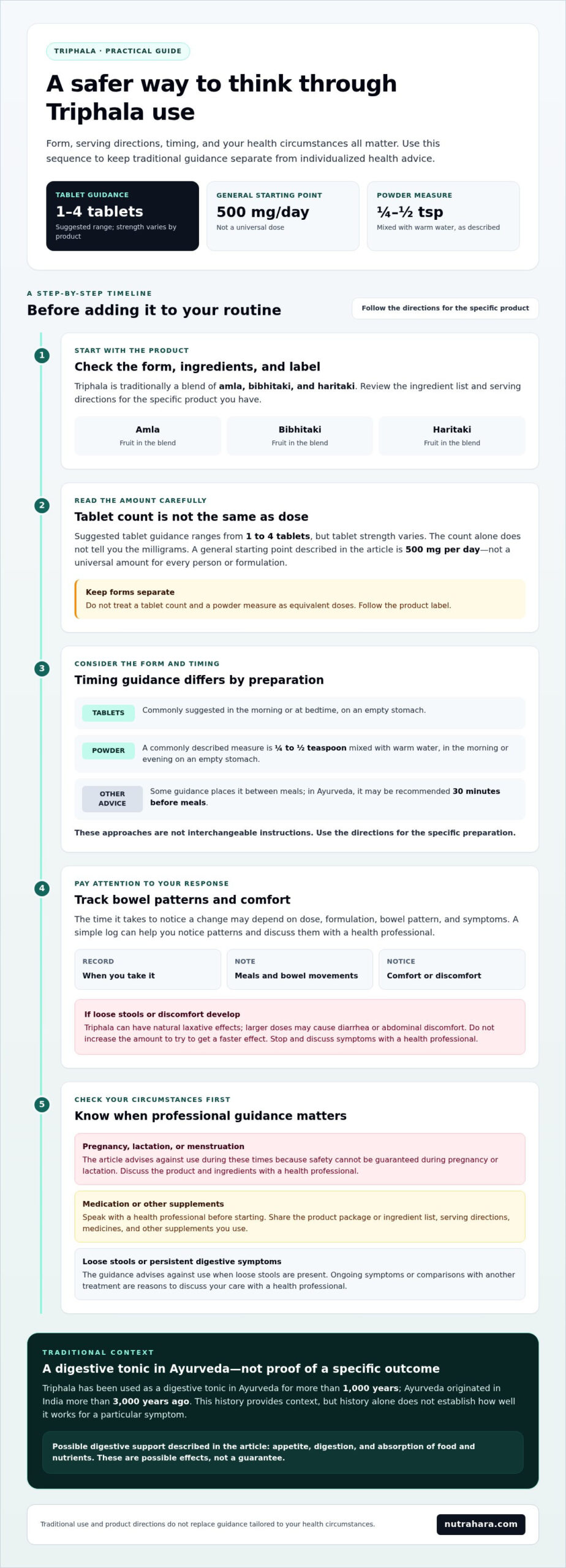
  • Understand the commonly suggested tablet timing: one to four tablets at bedtime or in the morning on an empty stomach.
  • Know why women who are pregnant or lactating, or who take medication, should speak with a health professional before use.
  • Explore how Triphala may support appetite, digestion, and the absorption of food and nutrients.

Tablet dosage and timing

Triphala tablets are commonly taken in the morning or at bedtime on an empty stomach. Suggested guidance ranges from one to four tablets, but tablet strength varies by product. The tablet count alone doesn’t tell you how many milligrams you’re taking. Follow the serving instructions on the product label rather than treating every tablet as equivalent.

A typical dosage range starts at 500 milligrams (mg) per day. This figure describes a general starting point, not a universal dose for every tablet or person. The appropriate amount depends on the formulation and its labeled directions. Don’t combine the tablet count with a powder measure as if they represent equivalent doses.

Timing advice reflects different forms and traditional practices. For powder, a commonly described amount is 1/4 to 1/2 teaspoon mixed with warm water, taken in the morning or evening on an empty stomach. Some guidance places Triphala between meals for absorption. In Ayurveda, it may be recommended 30 minutes before meals to support digestive fire.

  • Tablets: Suggested timing is bedtime or morning, on an empty stomach.
  • Powder: The described measure is 1/4 to 1/2 teaspoon in warm water.
  • Different directions: Follow the specific preparation’s label instead of combining dosing approaches.

How long does Triphala take to work for constipation or other digestive symptoms? The time it takes to notice a change may depend on the dose, formulation, bowel pattern, and symptom. Track bowel movements and comfort alongside when you take it to see how your routine affects your experience.

Triphala can have natural laxative effects, and larger doses may cause diarrhea or abdominal discomfort. If loose stools or discomfort develop, don’t increase the amount to try to get a faster effect. A simple log of tablet timing, meals, and symptoms can help women balance exercise, meals, and changing life stages, and make patterns easier to discuss with a health professional.

Triphala’s traditional use as a digestive tonic

In Ayurveda, Triphala has a long history as a digestive tonic. It has been used as a healing remedy for more than 1,000 years, while Ayurveda originated in India more than 3,000 years ago. This tradition offers context for its use, but history alone doesn’t establish how well it works for a particular symptom.

How does Triphala compare with other treatments for constipation and digestive health? Triphala is a traditional herbal blend, while other approaches may target different causes or symptoms. Don’t assume it works like every other treatment or replaces care suited to the cause of ongoing constipation.

What is Triphala, and what ingredients does it contain? Triphala is a blend of three fruits: amla, bibhitaki, and haritaki. In traditional Ayurvedic practice, these fruits are used together rather than as a single-fruit preparation.

Ayurvedic practice views digestion in the context of the body’s broader balance, rather than treating bowel movements as the only measure of digestive health. Triphala is described in this tradition as providing five of the six tastes. This framework explains its place in Ayurveda, but it isn’t a clinical measure of digestive effects.

What makes a quality Triphala supplement a considered choice for consumers in the United States? Start by reading the label for all three fruit names, the form, and clear serving directions. Compare tablets by the labeled amount per serving, not tablet count alone. Powder and tablets aren’t automatically equivalent, so follow the directions for the specific form.

Keep traditional use distinct from evidence for a specific outcome. Amla, bibhitaki, and haritaki make up the classic blend, but formulas and directions can vary. Review the product’s ingredients and serving instructions before use. If digestive symptoms persist or you’re comparing Triphala with another treatment, bring those details to a health professional for a focused discussion.

Consulting a health professional before use

Triphala can affect bowel comfort, and pregnancy, lactation, or medication use can change the safety considerations. These factors can help women decide when to seek professional guidance before adding it to a routine.

Side Effects and Risks

Triphala may cause diarrhea and abdominal discomfort because of its natural laxative effects, particularly at high doses. These effects matter if you already have loose stools or are managing digestive symptoms during exercise, travel, or a busy workday. The research guidance advises against using it when loose stools are present. If discomfort or diarrhea occurs, stop and discuss your symptoms with a health professional rather than increasing the dose.

Use During Pregnancy or Breastfeeding

Triphala isn’t recommended during pregnancy or lactation because its safety in these groups can’t be guaranteed. This applies to women who are pregnant, making choices during pregnancy, or breastfeeding. The same guidance advises against use during menstruation. If any of these situations applies, avoid starting Triphala and discuss the specific product and its ingredients with a health professional, especially if you’re also making other changes to your wellness routine.

Interactions With Medications and Supplements

Women taking medication should speak with a health professional before starting Triphala. A medication review lets the professional consider the exact product, serving directions, and medicines you already use. Bring the package or a clear ingredient list, and mention other supplements. This gives the professional a complete picture rather than relying on the name “Triphala” alone. Don’t assume a plant-based supplement is suitable alongside medication.

For a useful conversation, note the form you’re considering, when you plan to take it, and any digestive symptoms. Mention pregnancy, lactation, menstruation, loose stools, or medication use before starting. These details help focus the discussion on your circumstances and support an informed decision about digestive care.
Triphala for Women's Digestion: Benefits and Tablet Timing

Digestive function and nutrient absorption

Digestion breaks food down so the body can absorb nutrients. Possible triphala benefits for women’s digestion include support for appetite, digestion, and absorption of food and nutrients. These are potential areas of support, not evidence that Triphala corrects a nutrient deficiency or treats a digestive condition.

The gut microbiota, the community of microorganisms in the digestive tract, can interact with Triphala compounds. Gut microbes may transform its polyphenols, including chebulinic acid, into bioactive metabolites that may help prevent oxidative damage. This is a possible pathway for study, but it doesn’t establish improved nutrient absorption for everyone.

Triphala contains antioxidants such as tannins, gallic acid, ellagic acid, and chebulinic acid. Other reported constituents include flavonoids, saponins, anthraquinones, amino acids, fatty acids, and vitamin C. This describes the blend’s composition, not how much of each compound a person absorbs from a tablet or how it affects digestion.

To observe your digestive patterns, track appetite, comfort after meals, and bowel habits together. Note whether you feel comfortable after eating and whether your appetite changes, alongside your usual routine. This can help distinguish digestive shifts from changes in meals or activity. If discomfort or appetite changes persist, discuss the patterns with a health professional.

For women weighing the triphala benefits for women’s digestion, the practical takeaway is to consider appetite, digestion, and nutrient absorption as related but distinct outcomes. Food choices, hydration, and regular movement also contribute to a wellness routine. If you’re exploring women’s wellness supplements, browse women’s health supplements as one part of your learning journey.

Research cited by the page suggests Triphala may support normal glucose metabolism and cardiovascular function, support immune function, and affect histamine response. The page advises taking Triphala between meals on an empty stomach for maximum absorption.

Nutrahara: Women’s Health Supplements

Nutrahara offers women’s health supplements for women seeking support for overall wellness. A steady routine can also include practices that nurture mind and body beyond supplements.

For example, make time for a gentle yoga sequence suited to your fitness level, or try a short meditation during a quiet moment in your day. These practices can help build consistency and give you space to notice how you feel. Choose a comfortable pace, alongside balanced meals and movement that works for you.

Explore Nutrahara’s approach to women’s wellness at nutrahara.com.

Make Your Next Wellness Choice With Confidence

Let your next step begin with curiosity, not pressure. Notice which daily habits support your comfort, energy, and wellbeing, then choose manageable changes. Brief notes about meals, movement, and symptoms can help you spot patterns and describe your experience clearly when speaking with a health professional.

Understanding triphala benefits for women’s digestion can inform that process, but your needs may shift through menstruation, pregnancy, menopause, and other life stages. Keep your choices grounded in your current circumstances and personal health priorities. If you’d like to learn more about Nutrahara’s approach to women’s wellness, contact Nutrahara with your questions.

Build your wellbeing one considered choice at a time. You deserve to feel informed and confident as you shape a routine that supports you.

Frequently Asked Questions

What Are the Benefits of Triphala?

Consider Triphala’s potential benefits as areas of support, not guaranteed outcomes. If you’re evaluating it, decide what you want to understand, such as appetite, comfort after meals, or overall digestive wellbeing. Track that specific measure alongside your usual routine. This gives you a clearer basis for judging whether your experience is meaningful and useful to discuss with a health professional.

What digestive benefits of Triphala are supported by clinical studies?

Clinical findings described for Triphala include a safety assessment, not proof of a digestive benefit. One trial considered 2500 mg/d for 28 days safe in ten healthy male and ten healthy female volunteers. That result doesn’t establish effectiveness for constipation, nutrient absorption, or women’s digestive symptoms. When reviewing claims, distinguish a study of safety from one measuring a specific digestive outcome.

Does Triphala help constipation or improve bowel regularity in women?

Traditional use alone can’t determine whether Triphala will help a particular woman’s constipation. To make a health discussion more informative, note changes in bowel habits alongside meals, activity, and menstrual-cycle patterns. Include how symptoms affect daily activities, such as exercise or sleep. This context can help a professional consider possible contributors rather than focusing on one supplement in isolation.

What is the recommended Triphala dose for digestion, and how should it be taken?

There isn’t one dose that applies to every Triphala product, so follow the serving directions on the specific label. Before choosing, compare the form, serving size, and amount per serving; tablet counts alone don’t make different formulas comparable. Keep the package or a photo of its label, and record what you take and when. This makes your product and routine easier to review with a health professional.

Article by

Nutrahara Team

We are a dedicated collective of nutrition scientists and naturopaths at Nutrahara, committed to advancing women's health through the fusion of ancient Ayurveda science and cutting-edge nutrition research. Our mission is to empower you with clean, simple, and scientifically validated wellness solutions so you can live your healthiest life. Connect with us to stay updated on the latest developments in holistic women's health and nature-based research.

Disclaimer

This article is not a substitute for medical advice. Please consult a healthcare professional before starting any supplement, especially if pregnant, nursing, taking medication, or managing health conditions.

Categories
Articles

Ayurvedic Herbs for Digestion: A Woman’s Guide (2026)

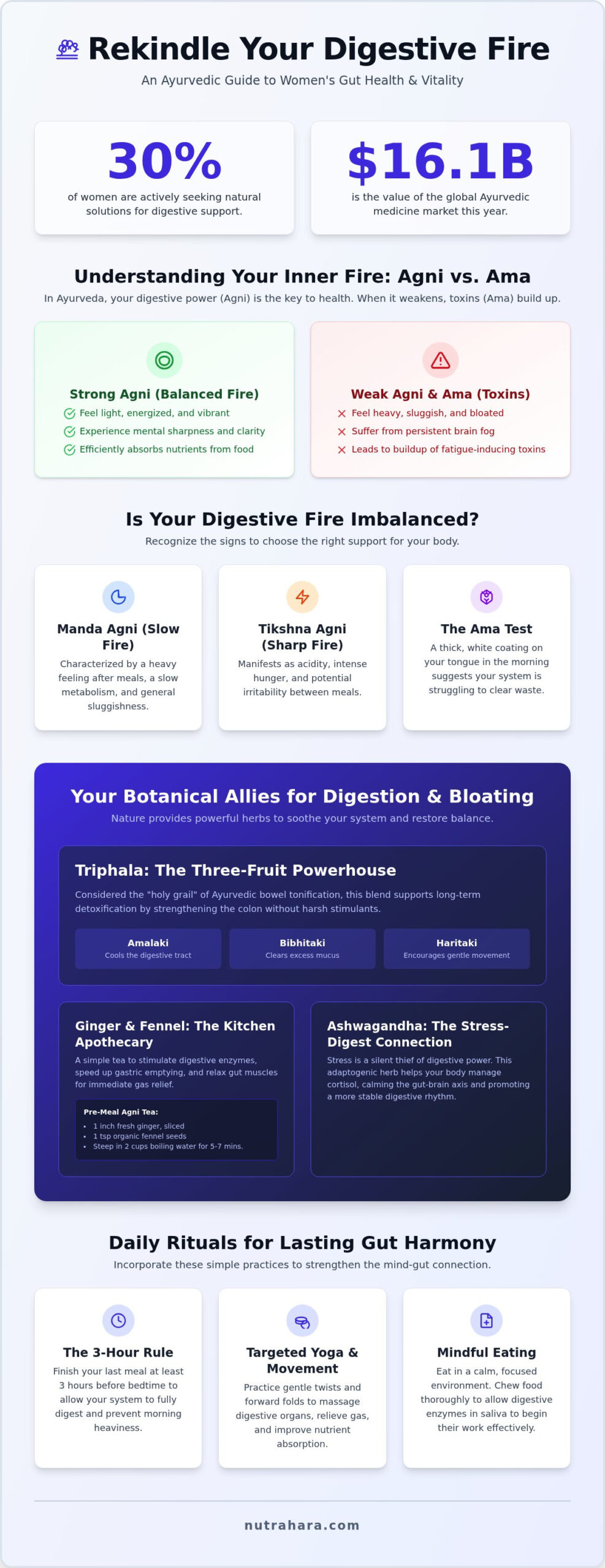
Did you know that nearly 30 percent of women seeking natural wellness solutions in 2026 are specifically searching for digestive support? With the global Ayurvedic medicine market valued at 16.1 billion dollars this year, it’s clear that more women are looking for a deeper connection between their mind and gut. You’ve likely experienced that uncomfortable heaviness after a healthy meal or the frustrating bloat that seems to arrive with hormonal shifts. It’s exhausting when your body feels sluggish, especially when stress makes your digestion feel completely unpredictable.

You deserve to feel light, energized, and empowered in your own skin. This guide shows you how ancient ayurvedic herbs for digestion and modern research work together to soothe your system and kindle your digestive fire. We’ll explore the best botanical allies for your specific life stage, from menopause to high-stress career years. You’ll also discover simple yoga techniques and meditation practices designed to flatten your stomach and restore your natural rhythm for a more vibrant, long-term wellness journey.

Key Takeaways

  • Learn how to identify and rekindle your Agni, the metabolic fire that transforms food into energy while preventing the buildup of fatigue-inducing toxins.
  • Discover how to integrate specific ayurvedic herbs for digestion, like Triphala and Ginger, to naturally soothe bloating and support consistent bowel health.
  • Identify your unique digestive constitution to choose the right herbal support for your specific needs, whether you struggle with irregular gas or sluggishness.
  • Implement daily rituals including the 3-Hour Rule and targeted yoga poses to strengthen the mind-gut connection and enhance nutrient absorption.
  • Understand the importance of clean, scientifically validated herbal formulations that honor your body’s long-term wellness progression without artificial additives.

Understanding Agni: The Sacred Fire of Women’s Digestive Health

Agni is much more than a simple biological mechanism for breaking down food. It’s the transformative power that converts physical nutrients into energy, vitality, and even consciousness. In the ancient system of Ayurveda, this fire acts as the ultimate guardian of your health and longevity. When your Agni burns with a steady, clear flame, you feel light, energized, and mentally sharp. However, when this fire weakens, it creates “Ama,” a form of metabolic toxins. Ama is the root cause of the heavy, sluggish feeling many women describe as toxic fatigue or persistent brain fog. For women between 30 and 60, a healthy digestive foundation is the secret to maintaining the self-esteem and confidence required to lead a balanced, fulfilling life.

The Gut-Brain-Hormone Connection

Your digestive rhythm is deeply intertwined with your endocrine system. Fluctuations in estrogen and progesterone don’t just affect your mood; they directly impact how quickly food moves through your system. This is why women often notice sudden, uncomfortable bloating during perimenopause or specific phases of their menstrual cycle. Ayurveda views this through the lens of “Prana,” the vital life force that governs all movement. When hormonal shifts occur, they can scatter Prana, making it difficult for your digestive fire to stay consistent. By utilizing specific ayurvedic herbs for digestion, such as those found in DetoxifyLife, you can help stabilize this internal environment. This ensures that your gut and hormones work in harmony rather than in conflict.

Signs Your Agni Needs Rekindling

It’s helpful to recognize that digestive issues manifest in different ways depending on your internal state. You might struggle with “Manda Agni,” which is a slow, damp fire. This often results in a heavy feeling after eating and a slow metabolism. Conversely, “Tikshna Agni” is a sharp, hyperactive fire that might cause acidity or intense hunger that leads to irritability. You can identify the presence of Ama by checking your tongue in the morning; a thick, white coating suggests your system is struggling to clear waste. Agni is the biological sun within every woman. When you support it with the right ayurvedic herbs for digestion, you begin a long-term wellness progression that restores your natural glow and energy levels.

The Top Ayurvedic Herbs for Digestion and Bloating

Choosing the right ayurvedic herbs for digestion can transform your daily comfort from a struggle into a source of vitality. While balancing your internal fire is essential, nature provides specific botanical allies to help you manage the physical symptoms of bloating and sluggishness. These herbs don’t just mask discomfort; they work to optimize your system’s natural rhythms. Modern research into Ayurvedic medicine confirms that these traditional botanicals offer measurable benefits for gut motility and microbial balance.

Triphala: The Three-Fruit Powerhouse

Triphala is widely considered the “holy grail” of Ayurvedic bowel tonification. It’s a precise blend of three fruits: Amalaki, Bibhitaki, and Haritaki. Amalaki supports the cooling of the digestive tract, Bibhitaki helps clear excess mucus, and Haritaki encourages gentle movement. Unlike harsh stimulant laxatives, Triphala supports long-term detoxification by strengthening the colon’s muscles. Sarah, 54, shares: “During menopause, my digestion felt like it had completely stalled. Starting a daily ritual with Triphala-based support was the turning point that finally cleared that heavy, morning sluggishness.” For a pure, high-quality source of this blend, many women find DetoxifyLife to be an essential part of their morning routine.

Ginger and Fennel: The Kitchen Apothecary

Ginger acts as a “universal medicine” by stimulating the secretion of digestive enzymes. Scientific studies on gingerols show they significantly speed up gastric emptying, which reduces the time food sits in your stomach causing pressure. Fennel seeds, or Saunf, act as a natural carminative to relax the smooth muscles of the gut. This provides immediate relief from gas and abdominal distension. You can easily kindle your Agni by drinking a simple tea 20 minutes before your largest meal.

  • 1 inch fresh ginger root, thinly sliced
  • 1 teaspoon organic fennel seeds
  • 2 cups of boiling water
  • Steep for 5 to 7 minutes and sip while warm

Ashwagandha for the Stress-Digest Connection

Stress is a silent thief of digestive health. When your cortisol levels spike, your body enters “fight or flight” mode, which effectively shuts down blood flow to the gut. This often leads to “nervous bloating” or an upset stomach before big meetings or events. Ashwagandha helps the body adapt to stress, keeping your digestion online even during busy days. Because these compounds can be difficult to absorb, choosing Ashwagandha with Black Pepper is crucial. The piperine in black pepper increases the bioavailability of the herb, ensuring you get the full benefit. Maria, 42, notes: “I used to experience anxious bloating every afternoon, but adding these ayurvedic herbs for digestion to my routine has finally brought me peace.” If you’re ready to reclaim your gut health, exploring our clean herbal formulas is a wonderful place to start.

Balancing Your Dosha: Tailoring Herbs to Your Body Type

Every woman’s body is a unique ecosystem. A one-size-fits-all approach rarely works when choosing ayurvedic herbs for digestion. According to Johns Hopkins on Ayurveda, health is achieved by balancing the three doshas: Vata, Pitta, and Kapha. Understanding your dominant dosha allows you to tailor your herbal support to your body’s specific needs. This personalization is especially vital as you move through different life stages, where hormonal shifts can alter your baseline constitution and digestive strength.

Vata digestion is often irregular, gas-prone, and dry. It feels like the wind; unpredictable and cold. If you find your appetite varies wildly or you feel bloated after even small snacks, you likely have a Vata imbalance. Pitta, on the other hand, is governed by fire and water. Pitta digestion is hot and efficient, but it easily tips into acidity, heartburn, or inflammation when you’re under pressure or eating spicy foods. Kapha digestion is slow, heavy, and sluggish, often leaving you feeling full long after a meal has ended.

Herbal Strategies for Vata and Pitta

For Vata types, the goal is to ground and warm the system. Herbs like Ginger and Cumin provide the necessary heat to stabilize an irregular Agni. These warming spices help lubricate the digestive tract and reduce the dryness that often leads to discomfort. If your digestion is tied to a restless mind or high-stress days, Anxioguard can be a gentle partner in soothing nervous-system-related gut issues. Pitta types require cooling, sweet relief. Fennel and Coriander are excellent choices to soothe an overactive, acidic stomach without dampening the digestive fire entirely. These herbs act as a balm for the internal heat that often spikes during the mid-life years.

Revving Up the Kapha Metabolism

To wake up a sleepy Kapha metabolism, pungent and stimulating herbs are essential. Trikatu, a traditional blend of Black Pepper, Long Pepper, and Ginger, provides the sharp “spark” Kapha needs to process nutrients effectively. Pairing these ayurvedic herbs for digestion with light, warm meals helps prevent the heavy buildup of Ama. Many women ask, Do Digestive Enzymes Help You Lose Weight?; for Kapha types, the answer often lies in how these enzymes and herbs support a more efficient metabolic fire. We recommend avoiding cold salads and icy drinks, as these only further dampen the Kapha flame, leading to more sluggishness and fatigue.

Daily Rituals: Yoga, Meditation, and Mindful Eating

While ayurvedic herbs for digestion provide the biological spark for your gut health, they work most effectively when integrated into a lifestyle that honors your Agni. One of the most powerful habits you can adopt is “The 3-Hour Rule.” This involves leaving at least three hours between meals to allow your system to complete its digestive cycle fully. When you snack constantly, your internal fire never gets the chance to clear out the previous meal, which often leads to the buildup of Ama. Try to sit down and eat without the distraction of screens. Mindful eating allows your brain to register satiety signals. This simple act of presence prevents the overeating that often leads to painful bloating and sluggishness during busy workdays.

Yoga Poses for a Happy Gut

Yoga acts as a gentle physical massage for your internal organs. It encourages the movement of Prana and waste through the digestive tract. These poses are particularly effective for maintaining a flatter stomach and consistent energy levels:

  • Vajrasana (Thunderbolt Pose): This is the only pose traditionally recommended immediately after eating. Sitting on your heels helps redirect blood flow to the abdominal region, supporting the work of your digestive fire.
  • Pavanamuktasana (Wind-Relieving Pose): As the name suggests, this is excellent for releasing trapped gas and easing abdominal distension. It’s a nurturing way to find relief after a heavy meal.
  • Marjaryasana-Bitilasana (Cat-Cow): Moving between these two poses creates a rhythmic compression and extension of the torso. This stimulates blood flow to the gut and helps keep your metabolism active.

Meditation for the Enteric Nervous System

Science now recognizes the gut as the “second brain” due to the complex network of neurons in the enteric nervous system. When you’re stressed, this system tightens up. This tension makes even the most potent ayurvedic herbs for digestion less effective because the body prioritizes survival over nourishment. Meditation calms this system. It allows for better nutrient absorption and a flatter stomach. Try this 5-minute “Digestive Breathing” exercise: Sit quietly and inhale for a count of four, feeling your belly expand like a balloon. Hold for two, then exhale for a count of six. This activates the vagus nerve. It signals your body to “rest and digest.” This practice is especially helpful for women in perimenopause who find that stress-related digestive upset has become more frequent.

To see how these rituals fit into your broader health strategy, explore The Ultimate Guide to Women’s Wellness Supplements for a comprehensive view of long-term vitality.

Ayurvedic Herbs for Digestion: A Woman’s Guide (2026)

The Nutrahara Path: Fusing Tradition with Modern Purity

True wellness isn’t a destination you reach overnight; it’s a personal, ongoing journey that requires a partner who understands your body’s changing needs. Nutrahara serves as that wise and caring guide. We bridge the gap between ancient health philosophies and contemporary nutritional research. While we’ve explored the power of ayurvedic herbs for digestion, the quality and purity of those botanicals are what truly drive long-term results. We believe that every woman, from her career-driven 30s through the transformative years of menopause, deserves access to clean, effective formulas that honor her internal rhythm.

Our commitment to your health progression is reflected in our strict standards for purity. You’ll never find artificial additives, fillers, or synthetic binders in our products. Instead, we focus on the simplicity of nature, backed by clinical validation. We’ve designed our offerings to fit seamlessly into your busy life, providing targeted support that empowers you to feel your best without the guesswork.

Our Digestive Heroes: FemmePower and DetoxifyLife

Understanding the link between your hormones and your gut is essential for lasting comfort. FemmePower is specifically formulated to support the hormonal-digestive axis. It helps stabilize the fluctuations that often lead to sudden bloating or irregular energy levels. By combining traditional wisdom with modern science, this formula provides the foundation your body needs to maintain balance during every life stage.

For those seeking a gentle way to clear out Ama and restore vitality, DetoxifyLife offers a sophisticated blend of time-tested fruits and herbs. Unlike harsh cleansing programs that can irritate the system, this formula supports your body’s natural detoxification pathways. It strengthens the colon and kindles your Agni with the precision of modern nutritional research. Our ingredient selections aren’t just traditional; they’re chosen for their proven ability to support a woman’s unique metabolic needs.

Your Journey Starts Here

Reclaiming your gut health doesn’t require a complete lifestyle overhaul. It begins with one small, empowering choice. You might start by sipping the Agni tea we discussed earlier or by committing to a five-minute meditation after dinner. These small rituals, when paired with high-quality ayurvedic herbs for digestion, create a powerful synergy that transforms your well-being. View your digestive care as a form of self-love. When you nourish your “inner sun,” you’re investing in your future energy, confidence, and longevity.

We invite you to take the next step in your wellness progression. Whether you’re looking to soothe chronic bloating or simply want to feel more connected to your body, we’re here to support you. Explore our full range of women’s health supplements and discover how the fusion of tradition and science can empower your path to vibrant health.

Embrace Your Long-Term Wellness Progression

You now have the knowledge to transform your digestive health from a daily struggle into a source of vitality and confidence. By understanding your unique Agni and selecting the right ayurvedic herbs for digestion, you’re taking a significant step toward a lighter, more energized version of yourself. True health is an ongoing journey. The combination of targeted herbal support and daily rituals like yoga and meditation creates a powerful foundation for your well-being.

At Nutrahara, we’re honored to be your partner on this path. Our formulations are specifically designed for the unique life stages of women aged 30 to 60. We use 100% natural, clean ingredients with no artificial additives. This ensures you receive the purest fusion of ancient wisdom and modern clinical research. This scientific foundation, paired with traditional purity, is the support your body deserves.

It’s time to feel empowered in your body once again. Empower Your Gut Health with Nutrahara’s Ayurvedic Formulations and start your journey toward lasting comfort today. You’ve the strength to reclaim your natural rhythm. We’re here to guide you every step of the way.

Frequently Asked Questions

What are the best Ayurvedic herbs for immediate bloating relief?

Fennel and ginger are the most effective ayurvedic herbs for digestion when you need quick relief from bloating. Fennel seeds act as a carminative to relax the smooth muscles of your gut, while ginger stimulates enzymes that speed up gastric emptying. You can chew on half a teaspoon of roasted fennel seeds after eating or sip warm ginger tea. These natural solutions provide comfort without the harsh chemicals found in some over-the-counter options.

Can I take Ayurvedic digestive herbs while pregnant or breastfeeding?

You should always consult your healthcare provider before starting any new supplement during pregnancy or while breastfeeding. While culinary amounts of ginger are generally considered safe for morning sickness, concentrated ayurvedic herbs for digestion like Triphala may be too stimulating for the colon during these sensitive stages. Nutrahara prioritizes safety and transparency, so we recommend a professional consultation to ensure your herbal choices align with your specific prenatal or postnatal needs.

How long does it take for Ayurvedic herbs to start working for digestion?

The timeline depends on your specific goals. You’ll often feel the effects of carminative herbs like fennel within thirty minutes of consumption. However, for deep-seated issues like chronic sluggishness or hormonal bloating, it typically takes two to four weeks of consistent use to see significant shifts. Ayurveda focuses on long-term wellness progression rather than temporary fixes. This allows your body to gently realign its natural rhythms for more sustainable energy levels and digestive ease.

Is Triphala safe to take every day for gut health?

Triphala is traditionally used as a daily tonic rather than a temporary fix. Unlike stimulant laxatives that create dependency, Triphala is a nourishing formula that strengthens the digestive tract over time. It supports the gentle removal of toxins while tonifying the colon’s muscles. Because Nutrahara uses clean, natural ingredients without artificial additives, our Triphala-based formulas are designed to be a safe, consistent part of your long-term wellness journey for optimal gut health.

What is the “Agni” and why is it important for women over 40?

Agni is your internal metabolic fire responsible for transforming food into energy and consciousness. For women over 40, hormonal shifts during perimenopause can dampen this fire, leading to sudden weight gain, fatigue, and persistent bloating. Maintaining a strong Agni is crucial because it prevents the buildup of Ama, or metabolic toxins. A vibrant digestive fire ensures you absorb the nutrients necessary to maintain your bone density, brain health, and overall vitality through midlife.

How do I know which Ayurvedic dosha is affecting my digestion?

You can identify your dominant digestive dosha by observing your symptoms. Vata imbalances typically manifest as irregular appetite and excessive gas. Pitta issues often involve heat, such as acidity or heartburn, especially after eating spicy foods. Kapha imbalances feel heavy and sluggish, often leaving you with a coated tongue or a slow metabolism. Recognizing these patterns allows you to choose specific herbal allies that bring your unique system back into a state of tranquil balance.

Can Ashwagandha actually help with my stomach issues?

Ashwagandha is highly effective for stomach issues triggered by stress. It works by lowering cortisol levels, which prevents your body from shutting down digestion during “fight or flight” moments. This herb calms the enteric nervous system, often called your “second brain,” to reduce anxious bloating and cramping. By soothing the mind-gut axis, Ashwagandha helps your body stay in a “rest and digest” state, allowing for better nutrient absorption and a flatter, more comfortable stomach.

Should I take digestive herbs before or after a meal?

Timing depends on your specific digestive goals. Taking warming herbs like ginger twenty minutes before a meal helps kindle your Agni and prepares your stomach for efficient processing. If you struggle with post-meal discomfort or gas, it’s better to take cooling herbs like fennel or coriander immediately after eating. This targeted approach ensures that your herbal support works in harmony with your body’s natural digestive cycle for the best possible results and long-term comfort.

Article by

Nutrahara Team

We are a dedicated collective of nutrition scientists and naturopaths at Nutrahara, committed to advancing women's health through the fusion of ancient Ayurveda science and cutting-edge nutrition research. Our mission is to empower you with clean, simple, and scientifically validated wellness solutions so you can live your healthiest life. Connect with us to stay updated on the latest developments in holistic women's health and nature-based research.

Disclaimer

This article is not a substitute for medical advice. Please consult a healthcare professional before starting any supplement, especially if pregnant, nursing, taking medication, or managing health conditions.