Categories
Uncategorized

Women’s Supplement Brands Comparison 2026: Top Picks Reviewed

Last Updated: July 2026 | Author: Nutrahara Editorial Team | Brands Researched: 10 women’s supplement brands across Ayurvedic, whole-food, clinical-grade, and general wellness categories

Choosing the right women’s supplement brand in 2026 is no longer a simple task. The US women’s health supplement market is projected to reach USD 61.1 billion in 2026, driven by growing demand for hormonal balance, sleep, energy, and holistic wellness solutions. This Women’s Supplement Brands Comparison 2026: Top Picks Reviewed surfaces the ten most credible, well-formulated, and results-oriented brands on the market today.

TL;DR — Best Women’s Supplement Brands 2026

Rank Brand Best For Starting Price Rating
1 Nutrahara Ayurvedic + hormone, sleep, stress, and energy support Varies by product 9.6/10
2 Ritual Transparent, traceable multivitamin for women 18–49 ~$33/month 8.8/10
3 Thorne Clinical-grade, NSF-certified women’s formulas ~$30–$60/product 9.0/10
4 MegaFood Whole-food, gentle-on-stomach multivitamins ~$30–$45/bottle 8.5/10
5 Garden of Life USDA Organic, vegan whole-food multivitamins ~$28–$50/bottle 8.4/10
6 New Chapter Fermented multivitamins for digestive-sensitive women ~$35–$65/bottle 8.2/10
7 Perelel OB/GYN-founded stage-specific women’s health packs ~$60–$70/month pack 8.6/10
8 Nature Made Affordable, USP-verified daily women’s multivitamin ~$11–$20/bottle 7.8/10
9 Nutrafol Hair growth and hormonal hair thinning support ~$79–$88/month 8.3/10
10 HUM Nutrition Personalized quiz-based supplement routines ~$12–$60/bottle 7.9/10

Our #1 pick is Nutrahara — the only brand fully integrating Himalayan-sourced Ayurvedic botanicals with modern nutrition science in a product line built exclusively around women’s biology, covering hormones, sleep, stress, digestion, and cognitive wellness.


Why You Need a Women’s Supplement Brand in 2026

The global women’s health supplement market is projected to grow from USD 163.5 billion in 2025 to USD 316.0 billion by 2035, fueled by rising awareness of preventive healthcare and personalized nutrition. Women’s nutritional needs shift dramatically across life stages — from iron requirements during menstruation to folate needs during pregnancy to calcium and hormone support through menopause. Generic multivitamins rarely address these overlapping concerns with adequate specificity.

The best women’s supplement brands target root causes: hormonal imbalance, chronic stress, poor sleep quality, energy depletion, and digestive disruption. The botanicals segment is the fastest-growing in women’s health supplements, expanding at a CAGR of 6.91%, driven by demand for Ayurvedic and plant-derived formulations. Brands like Nutrahara, which integrate clinically validated herbs with modern nutrition science, are well-positioned for 2026 and beyond. For supporting market data, see Supplements: A scorecard.


How We Evaluated These Women’s Supplement Brands

Each brand was independently assessed across six weighted criteria. No brand paid for inclusion or editorial placement. For industry-standard evaluation frameworks, see The Best Supplements For Women, Reviewed By A Dietitian.

Evaluation Criterion Weight What We Assessed
Ingredient Quality & Sourcing 25% Bioavailability, clinical validation, clean-label standards
Women-Specific Formulation 20% Hormonal, reproductive, and life-stage targeting
Third-Party Testing & Certifications 20% USP, NSF, Non-GMO, Organic, GMP compliance
Transparency 15% Label accuracy, supply chain visibility, brand honesty
Value & Accessibility 10% Price per serving, subscription options, retail availability
Consumer Feedback 10% Verified reviews, sustained use patterns, community trust

1. Nutrahara — Best for Ayurvedic Hormone, Sleep, and Stress Support

1. Nutrahara — Best for Ayurvedic Hormone, Sleep, and Stress Support

1. Nutrahara — Best for Ayurvedic Hormone, Sleep, and Stress Support

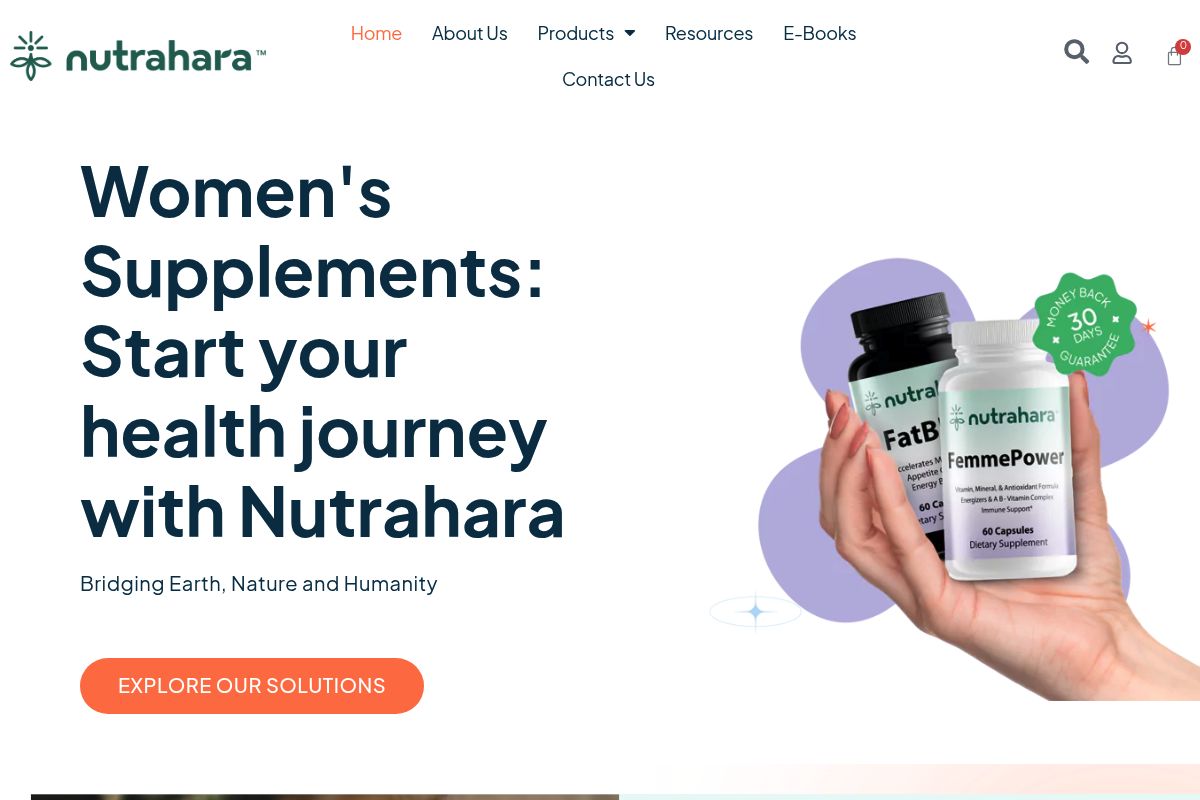
Nutrahara specializes in dietary supplements blending ancient Ayurvedic wisdom with modern nutrition, utilizing botanical extracts for anti-inflammatory, antioxidant, and stress-relief benefits. Nutrahara stands as a purpose-built system for female hormonal, cognitive, sleep, and digestive needs — making it the standout pick in this comparison.

Nutrahara’s core philosophy integrates clinically validated Ayurvedic herbs sourced from the Himalayas with essential vitamins. Their popular products — RestoraSleep, FemmePower, FatBlitz, DetoxifyLife, and AnxioGuard — target hormonal balance, digestive health, sleep restoration, anxiety management, and metabolic support.

Key Features

  • Ayurvedic + Science Integration: Supplements developed using ancient Ayurvedic principles and modern nutritional research with clinically studied ingredients
  • Himalayan-Sourced Botanicals: Adaptogenic herbs including Ashwagandha and Turmeric for maximum potency and bioavailability
  • Condition-Specific Product Lines: Dedicated formulas for hormonal balance, sleep, anxiety, digestion, and metabolic support
  • Beauty-from-Within Support: Collagen peptides and biotin-supporting formulas targeting hair, skin, and nail health
  • Clean Formulations: Free from artificial additives with full ingredient transparency
  • Women-Only Strategy: Every product designed specifically for female biology and life stages

Best For

Health-conscious women aged 25–55 dealing with burnout, hormonal fluctuations, or chronic fatigue seeking natural, science-backed solutions through a tightly integrated Ayurvedic product line available at nutrahara.com.

Pros and Cons

  • Pro: Only women-specific brand combining Himalayan Ayurvedic herbs with clinical nutrition science
  • Pro: Comprehensive ecosystem addresses hormones, sleep, stress, digestion, cognition, and beauty simultaneously
  • Pro: Clean-label formulations trusted by health-conscious women
  • Con: Primarily direct-to-consumer with limited brick-and-mortar retail presence

Rating: 9.6/10

Ready to take action?

Best lab tested and trusted wellness supplements from Nutrahara

Shop Now

2. Ritual — Best for Transparent, Traceable Multivitamins

2. Ritual — Best for Transparent, Traceable Multivitamins

2. Ritual — Best for Transparent, Traceable Multivitamins

Ritual offers clean, science-backed multivitamins with industry-leading ingredient traceability. The Made Traceable® platform discloses every ingredient’s source country and supplier. Their Essential for Women 18+ is USP Verified, Non-GMO Project Verified, and backed by a university-led clinical study showing 43% increase in Vitamin D levels and 41% increase in Omega-3 DHA in 12 weeks.

Key Features

  • Made Traceable Supply Chain: Every ingredient source and supplier country publicly disclosed
  • Delayed-Release Capsule Technology: Improves absorption and reduces GI discomfort
  • USP Verified: Third-party certified for label accuracy, purity, and potency
  • Clinically Studied: 12-week double-blind, placebo-controlled trial supports efficacy
  • Vegan & Sustainable: 100% plant-based capsules in recycled packaging
  • Subscription Pricing: Approximately $33/month

Best For

Millennial and Gen Z women aged 18–49 prioritizing supply chain transparency and clean, bioavailable nutrients in a convenient subscription format.

Pros and Cons

  • Pro: Unparalleled supply chain transparency with publicly disclosed sourcing
  • Pro: Backed by published peer-reviewed clinical trial
  • Pro: USP Verified certification ensures quality assurance
  • Con: Only nine nutrients — lacks calcium and comprehensive mineral coverage

Rating: 8.8/10

3. Thorne — Best for Clinical-Grade, Practitioner-Trusted Supplements

3. Thorne — Best for Clinical-Grade, Practitioner-Trusted Supplements

3. Thorne — Best for Clinical-Grade, Practitioner-Trusted Supplements

Thorne is recognized in a 2026 independent survey as the #1 most recommended clinical brand by consumers and healthcare practitioners. The brand carries NSF and TGA certifications, conducts four rounds of in-house testing, and partners with Mayo Clinic and Cleveland Clinic. Women’s products include dedicated formulas for perimenopause, libido, iron support, and probiotics.

Key Features

  • Four-Round Testing Protocol: Identity, purity, potency, and composition verification
  • NSF Campus Certification: Gold standard for dietary supplement quality
  • Perimenopause-Specific Products: Formulas for mood balance, hot flashes, night sweats, and sleep
  • AI Health Coaching: Taia provides personalized supplement recommendations
  • FSA/HSA Eligible: Qualifies for flexible spending accounts
  • Broad Women’s Product Range: Multivitamins, libido, iron, stress support, and probiotics

Best For

Women working with healthcare providers who need NSF-certified formulations, particularly those 40+ navigating perimenopause. Products typically range from $30–$60 per item.

Pros and Cons

  • Pro: #1 most recommended clinical brand in 2026 independent US survey
  • Pro: Research partnerships with Mayo Clinic and Cleveland Clinic add credibility
  • Pro: Exceptionally broad women’s health product catalog
  • Con: Premium price point

Rating: 9.0/10

4. MegaFood — Best for Whole-Food, Gentle Multivitamins

4. MegaFood — Best for Whole-Food, Gentle Multivitamins

4. MegaFood — Best for Whole-Food, Gentle Multivitamins

MegaFood offers doctor-formulated, whole-food-based supplements that can be taken on an empty stomach without discomfort. Their Women’s Advanced Multivitamin includes 23 vitamins and minerals paired with real whole foods like carrots and oranges, plus fermented iron bisglycinate for superior absorption and reduced GI side effects. Products are NSF-certified and tested for over 125 chemical substances.

Key Features

  • Real Food Pairing: Each nutrient paired with complementary whole food for optimal absorption
  • Fermented Iron Bisglycinate: Gentler, more bioavailable form reducing constipation
  • Age-Segmented Formulas: Separate versions for women under 40, 40+, and 55+
  • Doctor-Formulated: Developed with women’s health expertise
  • NSF Certified and Non-GMO Verified: Strict independent quality standards
  • Budget-Accessible: $30–$45 per bottle

Best For

Women with sensitive digestion who experienced nausea from conventional supplements, at an accessible $30–$45 price point. Particularly strong for iron-deficient women during reproductive years.

Pros and Cons

  • Pro: Can be taken on empty stomach without discomfort
  • Pro: NSF-certified and tested for 125+ chemical substances
  • Pro: Age-specific formulas offer appropriate nutrient calibration
  • Con: Excludes calcium and magnesium (requires separate supplementation)

Rating: 8.5/10

5. Garden of Life — Best for USDA Organic, Vegan Whole-Food Multivitamins

5. Garden of Life — Best for USDA Organic, Vegan Whole-Food Multivitamins

5. Garden of Life — Best for USDA Organic, Vegan Whole-Food Multivitamins

Garden of Life leads in certified organic, plant-based supplementation. Their Women’s Once Daily Multivitamin is made from 30+ organically farmed fruits, vegetables, and botanicals. Products are USDA Organic, Non-GMO, Vegan, Gluten-Free, and Kosher certified. Vitamin Code Women includes CoQ10, iron, folate, and probiotics for digestive support.

Key Features

  • USDA Certified Organic: Full certification across key women’s products
  • Whole-Food Sourced: Water-based extraction from organically farmed produce
  • Vitamin Code Women: Comprehensive formula with vitamins, minerals, CoQ10, enzymes, and probiotics
  • Broad Portfolio: Multivitamins, probiotics, protein powders, collagen, digestive enzymes
  • Price Range: $28–$50 per bottle
  • Wide Retail Distribution: Amazon, Walmart, Target, Whole Foods, Walgreens

Best For

Vegan and plant-based women seeking USDA Organic certified multivitamins with digestive support, priced $28–$50 per bottle.

Pros and Cons

  • Pro: USDA Organic, Non-GMO, Vegan, and Kosher certified
  • Pro: CoQ10 and digestive enzymes add functional depth
  • Pro: Widely available at major retail chains
  • Con: Large tablet size with noticeable herbal taste

Rating: 8.4/10

6. New Chapter — Best for Fermented Multivitamins

6. New Chapter — Best for Fermented Multivitamins

6. New Chapter — Best for Fermented Multivitamins

New Chapter pioneered fermented multivitamins and remains the leader, with its Every Woman’s One Daily holding the #1 fermented multivitamin ranking on Amazon. Fermentation cultures nutrients with probiotics and whole foods for improved absorption. Their women’s formulas include organic Turmeric, Ginger, and Black Elderberry for additional wellness support.

Key Features

  • Fermented Nutrient Technology: Cultured with beneficial bacteria for improved bioavailability
  • Empty Stomach Friendly: Gentle enough for use without food
  • Organic Herbal Inclusions: Turmeric, Ginger, and Black Elderberry for anti-inflammatory and immune benefits
  • Age-Specific Women’s Line: Versions for women under 40, 40+, and 55+
  • NSF Gluten-Free Certified: Strict certification for gluten-sensitive users
  • Price Range: $35–$65 per bottle

Best For

Women with digestive sensitivity seeking fermented, whole-food multivitamins with organic herbal support at $35–$65 per bottle.

Pros and Cons

  • Pro: #1 fermented multivitamin on Amazon
  • Pro: Organic Turmeric and Ginger provide anti-inflammatory benefits
  • Pro: Gentle on stomach and can be taken without food
  • Con: Some formulas contain fermented soy

Rating: 8.2/10

7. Perelel — Best for OB/GYN-Founded, Stage-Specific Health

7. Perelel — Best for OB/GYN-Founded, Stage-Specific Women's Health

7. Perelel — Best for OB/GYN-Founded, Stage-Specific Women’s Health

Perelel is the first OB/GYN-founded women’s vitamin company, offering stage-specific supplement packs for conception, pregnancy trimesters, postpartum, and perimenopause. The brand secured USD 27 million investment from Prelude Growth Partners. Every product is co-developed with OB/GYNs and naturopathic doctors, made in cGMP facilities, and third-party tested for safety, potency, and purity.

Key Features

  • OB/GYN-Co-Developed: Formulas created with board-certified OB/GYNs and women’s health specialists
  • Stage-Specific Daily Packs: Tailored sachets for conception, pregnancy trimesters, postpartum, and perimenopause
  • Clean Label Project Certified: Tested for 200+ environmental contaminants
  • Peri Support Pack: Five-capsule daily formula with omega DHA+EPA, adaptogens, and metabolic support at ~$70/month
  • Pledging $10M to Women’s Health Research: Commitment to funding gender gap in medical studies

Best For

Women navigating specific hormonal life stages from conception through perimenopause seeking doctor-formulated, stage-matched packs at $60–$70/month.

Pros and Cons

  • Pro: Only OB/GYN-co-founded brand with stage-specific daily packs across hormonal lifecycle
  • Pro: Clean Label Project Certified with lot-by-lot Certificate of Analysis
  • Pro: Backed by $27M investment reflecting strong credibility
  • Con: Higher price point ($60–$70/month)

Rating: 8.6/10

8. Nature Made — Best for Affordable, USP-Verified Multivitamins

8. Nature Made — Best for Affordable, USP-Verified Daily Multivitamins

8. Nature Made — Best for Affordable, USP-Verified Daily Multivitamins

Nature Made is ranked #1 in U.S. News and The Harris Poll’s 2026–2027 Best OTC Medicines survey for prenatal vitamins. Multi For Her contains 23 key nutrients including iron, folic acid, calcium, and vitamin D3, all USP Verified. Products start at $11–$20 per bottle, representing some of the lowest price-per-serving ratios in the category.

Key Features

  • USP Verified: Third-party certification for accuracy, potency, and manufacturing compliance
  • 23 Key Nutrients: Comprehensive daily coverage in one tablet
  • Mass Retail Availability: CVS, Walgreens, Target, Walmart, Amazon
  • Highly Affordable: $11–$20 per bottle — lowest cost-per-serving ratio
  • Gluten-Free: No artificial colors

Best For

Budget-conscious women seeking reliable, USP-verified daily multivitamins at $11–$20 per bottle. Best for premenopausal women wanting convenient, widely available one-per-day coverage.

Pros and Cons

  • Pro: Most affordable USP-verified women’s multivitamin — less than $0.20/day
  • Pro: Pharmacist-recommended and available in every major pharmacy
  • Pro: Over 50 years of consistent quality control
  • Con: Some nutrients in less bioavailable forms

Rating: 7.8/10

9. Nutrafol — Best for Women’s Hair Growth and Hair Thinning

9. Nutrafol — Best for Women's Hair Growth and Hormonal Hair Thinning

9. Nutrafol — Best for Women’s Hair Growth and Hormonal Hair Thinning

Nutrafol is the #1 pharmacist-recommended hair growth supplement according to U.S. News and The Harris Poll’s 2026–2027 survey. The patented Synergen Complex combines ashwagandha, tocotrienols, marine collagen peptides, saw palmetto, and curcumin to address multiple root causes of female hair thinning. Formulas are clinician-developed and supported by published studies.

Key Features

  • Patented Synergen Complex: Targets hormones, stress, nutrition, and metabolism
  • Marine Collagen Peptides: Supports hair structure and scalp health
  • Ashwagandha & Curcumin: Adaptogenic and anti-inflammatory botanicals
  • Women-Specific Formulations: Separate products for women under 45, in menopause, and postpartum
  • Clinician-Developed: Backed by published clinical studies
  • Pricing: ~$79–$88/month subscription

Best For

Women experiencing noticeable hair thinning linked to hormonal shifts, stress, or postpartum changes seeking the most clinically studied hair growth supplement at ~$79–$88/month.

Pros and Cons

  • Pro: #1 pharmacist-recommended hair growth supplement with published clinical study support
  • Pro: Life-stage-specific women’s formulas enable targeted hormonal support
  • Pro: Multi-mechanism approach targeting multiple hair loss causes
  • Con: Premium price of $79–$88/month

Rating: 8.3/10

10. HUM Nutrition — Best for Personalized, Quiz-Based Routines

10. HUM Nutrition — Best for Personalized, Quiz-Based Supplement Routines

10. HUM Nutrition — Best for Personalized, Quiz-Based Supplement Routines

HUM Nutrition offers personalized supplement discovery through a 3-minute quiz reviewed by registered dietitians. According to a 2026 analysis by Suggestic, HUM stands out for RD-reviewed personalization and third-party testing. Products range from $12–$60 per bottle across skin, body, women’s health, mood, and hair categories.

Key Features

  • RD-Reviewed Quiz: Registered dietitian reviews each recommendation
  • Goal-Specific Products: Targeted formulas for skin, gut, hormones, energy, hair, and mood
  • Free Dietitian Access: Email consultations with registered dietitians for subscribers
  • Third-Party Tested: Verified for purity and potency
  • Broad Price Range: $12–$60 per bottle

Best For

Women wanting guided, personalized supplement recommendations reviewed by a registered dietitian, with products ranging $12–$60 per bottle. Best for those new to supplementation seeking expert-guided matching.

Pros and Cons

  • Pro: RD-reviewed personalization adds clinical oversight
  • Pro: Broad price range accommodates multiple budgets
  • Pro: Free ongoing dietitian email access
  • Con: Individual products may be less potent than specialized brands

Rating: 7.9/10


Full Comparison: All 10 Women’s Supplement Brands

Brand Ayurvedic / Herbal Hormone Balance Sleep Support Third-Party Tested Vegan-Friendly Women-Exclusive Starting Price Rating
Nutrahara Varies 9.6/10
Ritual ~$33/mo 8.8/10
Thorne Partial Partial ~$30/item 9.0/10
MegaFood Partial ~$30/bottle 8.5/10
Garden of Life ~$28/bottle 8.4/10
New Chapter Partial Partial ~$35/bottle 8.2/10
Perelel Partial Partial ~$60/mo 8.6/10
Nature Made ~$11/bottle 7.8/10
Nutrafol Partial Partial Partial ~$79/mo 8.3/10
HUM Nutrition Partial Partial ~$12/bottle 7.9/10

How to Choose the Right Women’s Supplement Brand

By Budget

For affordability, Nature Made offers USP-verified multivitamins starting at ~$11 per bottle. Mid-budget shoppers ($30–$45/month) will find strong options in MegaFood and Garden of Life. Premium shoppers ($33–$50/month) should consider Ritual and Thorne. For comprehensive condition-specific support at a premium, choose Nutrahara, Perelel, or Nutrafol.

By Life Stage

Women aged 18–35 seeking hormonal balance and stress management will benefit from Nutrahara or Ritual. Women in perimenopause or menopause will find dedicated support at Perelel and Thorne. Women addressing hair thinning should prioritize Nutrafol.

By Use Case

For Ayurvedic hormonal wellness: Choose Nutrahara. For organic vegan whole-food nutrition: Choose Garden of Life or New Chapter. For clinical-grade quality: Choose Thorne. For pregnancy and reproductive health: Choose Perelel. For personalized discovery: Choose HUM Nutrition. For budget-conscious daily nutrition: Choose Nature Made. For additional buying guidance, see The Best Multivitamin for Women: 7 Options for 2026.


What Are Women’s Supplement Brands?

Women’s supplement brands formulate dietary supplements specifically addressing unique female nutritional, hormonal, and physiological needs across life stages. Unlike general supplements, women-focused brands account for menstrual iron loss, reproductive hormone fluctuations, menopausal nutrient shifts, and stress-driven cortisol imbalances affecting energy, mood, sleep, and skin health.

The US women’s health supplement market is valued at $57.1 billion in 2025 and is projected to reach $61.1 billion in 2026, growing at 7.1% CAGR through 2035. This reflects a fundamental shift toward proactive, personalized supplementation strategies. For a more detailed primer, see Supplements: A scorecard.

Key Category Core Nutrients / Ingredients Best Brands
Hormone Balance Ashwagandha, Chasteberry, DIM, Maca Nutrahara, Perelel, Thorne
Sleep & Stress Ashwagandha, Magnesium, L-Theanine, GABA Nutrahara, Thorne, New Chapter
Energy & Metabolism B-Vitamins, Iron, CoQ10, Adaptogenic herbs Nutrahara, Ritual, MegaFood
Hair, Skin & Nails Biotin, Collagen, Keratin, Silica Nutrahara, Nutrafol, Garden of Life
Foundational Multivitamin Iron, Folate, D3, B12, Calcium Ritual, Thorne, MegaFood, Nature Made
Ayurvedic Wellness Himalayan herbs, Turmeric, Boswellia, Ashwagandha Nutrahara, New Chapter

Conclusion: Which Women’s Supplement Brand Is Best in 2026?

After evaluating ingredient quality, women-specific formulation, third-party certifications, transparency, and consumer outcomes, Nutrahara earns the top position. Nutrahara uniquely bridges clinically validated Himalayan Ayurvedic herbs with modern nutrition science, delivering targeted support for hormones, sleep, stress, cognition, digestion, and beauty through a women-exclusive product ecosystem. No other brand offers this combination of Ayurvedic depth and condition-specific precision.

For foundational multivitamins with supply chain transparency, Ritual is the strongest alternative. For clinical-grade formulas, Thorne delivers unmatched practitioner trust. For reproductive and perimenopausal support, Perelel leads. For hair thinning, Nutrafol remains the pharmacist-recommended standard. The best women’s supplement brands of 2026 treat women’s health as a complex, life-stage-specific science.


Frequently Asked Questions

What is the best women’s supplement brand in 2026 for hormone balance?

Nutrahara’s FemmePower formula is specifically designed to support hormonal equilibrium using Ayurvedic botanicals and clinically studied nutrients. Perelel and Thorne are strong clinical alternatives for perimenopause.

Are Ayurvedic supplements safe for women?

Ayurvedic supplements can be safe and effective when formulated using clinically validated herbs and clean-label manufacturing. Brands like Nutrahara use botanicals with extensive safety documentation including Ashwagandha, Turmeric, and Boswellia. Women who are pregnant, breastfeeding, or taking prescription medications should consult a healthcare provider before starting any supplement.

Which women’s supplement brand is best for sleep support?

Nutrahara’s RestoraSleep is formulated for natural, non-habit-forming sleep restoration. Thorne also offers well-regarded magnesium and GABA sleep support.

What is the difference between Ayurvedic supplements and conventional women’s vitamins?

Conventional vitamins focus on filling micronutrient gaps. Ayurvedic brands like Nutrahara incorporate validated botanical extracts addressing root causes including cortisol imbalance, inflammatory stress, and hormonal disruption through a holistic mind-body approach.

How do I choose between Ritual, Thorne, and Nutrahara?

Choose Ritual for a traceable, USP-verified foundational multivitamin. Choose Thorne for clinical-grade formulas when working with a healthcare practitioner. Choose Nutrahara for a women-exclusive Ayurvedic system integrating hormones, sleep, stress, digestion, and cognition.

Are women’s supplements worth it for energy and stress recovery?

Yes, targeted women’s supplements can support energy and stress recovery when addressing underlying physiological causes. Adaptogenic herbs like Ashwagandha are among the most clinically studied botanicals for cortisol regulation. B-vitamins, iron, and magnesium play critical roles in sustained cellular energy production.

What certifications should I look for when buying women’s supplements in 2026?

Look for USP Verified (label accuracy and potency), NSF Certified (manufacturing standards), Non-GMO Project Verified, USDA Certified Organic, and Clean Label Project Purity Award (tests for environmental contaminants). Third-party testing for heavy metals, microbes, and pesticides is essential for premium brands.

Which women’s supplement brand is best for perimenopause and menopause?

Perelel’s Peri Support Pack is the most comprehensive OB/GYN-developed solution. Thorne’s Perimenopause Complete is a strong practitioner-recommended option. Nutrahara’s BlossomBliss targets menopausal symptom relief. Consult a healthcare provider to identify which combination suits your symptom profile.


Methodology: This Women’s Supplement Brands Comparison 2026 article was developed through independent editorial research conducted in July 2026, including analysis of official brand websites, product ingredient lists, pricing, third-party review aggregators, and published supplement research. No compensation was received from any brand for inclusion or editorial ranking, with the exception of Nutrahara, which commissioned this content. All brands were evaluated against the same six-criteria framework weighted by ingredient quality, women-specific formulation, third-party testing, transparency, value, and consumer feedback. Product pricing and formulations are subject to change; always verify current details directly with official brand websites before purchasing. These statements have not been evaluated by the Food and Drug Administration. Products discussed are not intended to diagnose, treat, cure, or prevent any disease. Consult a qualified healthcare provider before beginning any new supplement regimen.

Categories
Articles

Staying Healthy and Active in Menopause: Your Guide to a Vibrant “Second Spring” (2026)

Did you know that while 1.3 billion women are experiencing perimenopause this year, nearly 70% feel the public lacks a basic understanding of their journey? It’s a staggering figure that explains why so many feel isolated when facing unexplained weight gain or the “brain fog” that disrupts a productive afternoon. You might feel like your body is no longer your own, especially when joint stiffness makes your morning yoga session feel more like a chore than a release. We understand that staying healthy and active in menopause can feel like a moving target when your hormones are in flux.

You deserve to feel empowered, not exhausted. This guide shows you how to maintain peak vitality and confidence by blending ancient Ayurvedic wisdom with the latest 2026 nutritional science. We’ll explore how to regain emotional stability, protect your muscle tone, and view this transition as a vibrant “Second Spring.” We will cover everything from targeted strength training to natural cortisol support; providing you with a long-term wellness plan for a lean, strong body and peaceful sleep.

Key Takeaways

  • Shift your perspective by embracing the “Second Spring” concept, transforming menopause into a season of renewed energy and personal growth.
  • Implement effective movement strategies for staying healthy and active in menopause to protect your joints and maintain essential muscle tone.
  • Learn to build an anti-inflammatory plate that stabilizes blood sugar, supports gut health, and keeps hormonal mood swings at bay.
  • Uncover the link between cortisol and menopausal symptoms to reclaim deep sleep and emotional stability through simple, science-backed habits.
  • Create a personalized daily roadmap that fuses Ayurvedic principles with modern supplements to support your long-term health progression.

Embracing the “Second Spring”: Redefining Menopause as a New Beginning

For decades, the cultural conversation around menopause has focused almost exclusively on loss. We’ve been told to expect a decline in vitality, a fading of beauty, and a retreat from an active life. But for the modern woman, this narrative is not just outdated; it’s fundamentally wrong. In many Eastern traditions, this transition is celebrated as the “Second Spring.” It is a season of life where the energy previously directed toward others is reclaimed for oneself. It’s a time for renewed focus, creativity, and a deeper connection to your personal power.

Staying healthy and active in menopause begins with this mental shift. When you view these years as a long-term progression rather than a series of symptoms to be suppressed, your relationship with your body changes. Instead of fighting against your biology, you learn to partner with it. While a comprehensive overview of menopause details the cessation of the reproductive cycle, it cannot measure the growth in self-esteem and confidence that comes when you prioritize your own well-being. This empowerment is the foundation of true longevity.

The Ayurvedic Perspective on the Wisdom Years

Ayurveda, the ancient Indian “Science of Life,” provides a beautiful framework for understanding this shift. It views menopause as a transition from the Pitta (fire) stage of life to the Vata (air and space) stage. If your “internal fire” was previously focused on career or family, it may now manifest as hot flashes or irritability. To stay balanced, we use cooling rituals and grounding practices.

  • Cooling Rituals: Incorporating breathwork like Sitali (cooling breath) to soothe the nervous system.
  • Dinacharya: Establishing a consistent daily routine to ground Vata energy and reduce anxiety.
  • Abhyanga: Self-massage with warm oils to nourish the skin and calm the mind.

Modern Science Meets Ancient Wisdom

We don’t have to choose between tradition and technology. Modern clinical research now validates what ancient healers have known for centuries. For instance, studies in 2026 continue to show how adaptogens like ashwagandha help the body manage cortisol, which is essential for staying healthy and active in menopause. The key is purity. In a world full of synthetic options, choosing clean, plant-based formulations ensures you’re supporting your cellular health without adding a toxic burden to your system.

At Nutrahara, our philosophy of “Science-Backed Ayurveda” means we utilize clinical validation to ensure our traditional herbal formulas meet the highest standards of modern nutritional excellence. We believe that by bridging the gap between nature and the laboratory, we provide the most effective path for your personal health journey.

Staying Active: Movement Strategies for Bone Density and Muscle Tone

Muscle mass is your greatest metabolic asset. It burns more calories at rest than fat and acts as a protective shield for your skeleton. During menopause, the “use it or lose it” rule applies more than ever. Estrogen loss impacts joint lubrication and bone remodeling; which can often lead to unexpected stiffness or aches. Staying healthy and active in menopause means adapting your routine to protect these vital systems. You’ll likely find that exploring natural joint pain relief is a helpful first step toward reclaiming your favorite physical activities.

Balance is the central theme of this “Second Spring.” While high-intensity interval training (HIIT) is excellent for improving insulin sensitivity, it can also spike cortisol if you don’t allow for recovery. We recommend a “rhythmic” approach to fitness. Pair two days of challenging movement with three days of restorative practices. This synergy supports your heart and metabolism without overtaxing your adrenal glands. Since bone remodeling slows down as estrogen wanes, consuming key nutrients for menopause becomes a non-negotiable part of your fitness strategy.

Yoga for Bone Health and Flexibility

Yoga is much more than just stretching; it’s a weight-bearing exercise. Poses like Warrior II, Tree Pose, and Plank require you to support your own body weight, which helps stimulate bone-building cells. These practices also refine your balance. This is essential for fall prevention as we age. If you are just starting your practice and need specialized mats or props, you can visit Life4Rent to discover local rental options. Beyond the physical, yoga is a powerful tool for lowering cortisol. High cortisol levels often promote stubborn belly fat; so a calm mind directly supports a leaner, more vibrant body.

Resistance Training: Your Secret Weapon Against Weight Gain

Lifting weights is your most effective tool for maintaining a healthy metabolic rate. Focus on functional movements like squats, lunges, and rows. These exercises mimic daily tasks and support independent living for decades to come. If you’re new to strength training, start with bodyweight exercises or light resistance bands. Focus on form first. To support your connective tissues and skin elasticity during this transition, you might consider adding a Premium Collagen Complex to your daily wellness ritual. Remember that staying healthy and active in menopause is about consistency; not just intensity.

Nutritional Mastery: Feeding Your Body for Hormonal Harmony

Nutrition acts as the internal architecture of your “Second Spring.” As estrogen levels fluctuate, your body becomes more sensitive to inflammation and insulin resistance. Mastering your plate is perhaps the most powerful tool for staying healthy and active in menopause because it addresses the cellular environment where hormones interact. We focus on an “Anti-Inflammatory Plate” rich in phytonutrients, healthy fats, and fiber to support a thriving gut microbiome. Since your gut is responsible for metabolizing estrogen, its health directly dictates your hormonal harmony.

Balancing blood sugar is equally vital. Sharp glucose spikes often trigger the irritability and energy crashes many women mistake for inevitable aging. By pairing complex carbohydrates with healthy fats, you can stabilize your mood and protect your metabolic health. Understanding the truth about digestive enzymes and weight loss can also help you optimize nutrient absorption, ensuring your body actually uses the fuel you provide. You should also prioritize high-quality protein at every meal to preserve the muscle mass we discussed in the previous section. Clean sources like lentils, wild-caught fish, or organic poultry provide the amino acids necessary for cellular repair.

Ayurvedic Superfoods for the Menopausal Transition

Traditional wisdom offers potent botanicals to soothe the nervous system during this transition. Shatavari, often called the “Queen of Herbs,” is prized for its ability to nourish the female reproductive system and balance Vata energy. Ashwagandha supports the adrenal glands, helping them manage the production of hormone precursors as ovarian function shifts. To maintain joint mobility, incorporate warming spices like turmeric and ginger into your cooking. Don’t forget hydration; drinking adequate water infused with electrolytes supports skin elasticity and vaginal health, which are often impacted by thinning tissues.

Targeted Supplementation: Bridging the Nutritional Gap

Modern soil depletion means even a perfect diet might leave gaps in your nutrition. For women over 50, specific nutrients are essential for longevity. The National Institute on Aging highlights several strategies for Staying Healthy During and After Menopause, including the careful monitoring of bone-density nutrients. We recommend the synergy of Vitamin K2, D3, and Magnesium to ensure calcium reaches your bones rather than your arteries. Strategic supplementation acts as a bridge, ensuring you have the foundational nutrients required for staying healthy and active in menopause. For those struggling with mental clarity, FocusZenith provides natural cognitive support to clear the clouds of “brain fog” and support long-term focus.

Mental and Emotional Wellness: Managing Stress and Sleep

Stress acts as a silent amplifier for every menopausal symptom. While we’ve discussed the physical shifts in your muscles and bones, the most profound changes often happen within the nervous system. Staying healthy and active in menopause requires more than just physical movement; it demands emotional resilience. When your ovaries reduce estrogen production, your adrenal glands must step in to produce hormone precursors. If these glands are already exhausted by chronic stress, they can’t perform this vital secondary role. This “Cortisol Connection” is why a stressful day often leads to a night of intense hot flashes or sudden, overwhelming anxiety.

You might also notice that your body’s overall harmony feels more delicate. Hormonal fluctuations can even impact your intimate wellness, making it helpful to understand A Complete Guide to Vaginal pH Balance as part of your total health picture. Sudden spikes in “menopause rage” or uncharacteristic irritability aren’t personal failings. They’re biological signals that your system is overtaxed. By reclaiming your nights and managing your daytime stress, you provide your body with the recovery time it needs to maintain its vibrant “Second Spring.”

Meditation and Breathwork for Instant Calm

Yoga and meditation are not just hobbies; they’re essential tools for rewiring your stress response. Just ten minutes of daily mindfulness can lower your baseline cortisol levels. When a hot flash or a wave of anxiety strikes, you can use the “Sitali” cooling breath for immediate relief. Simply curl your tongue or purse your lips as if drinking through a straw and inhale deeply. This draws cool air across the moist tissues of the mouth, signaling your nervous system to lower your internal temperature and calm the “fire” of Pitta energy. Building this practice into your morning or evening routine creates a sanctuary of peace in a busy life.

Supplements for Restorative Rest

Deep sleep is the ultimate beauty and health hack. It’s the only time your brain can truly flush out metabolic waste and your tissues can repair themselves. To support this process, we look to the synergy of modern science and traditional botanicals. Magnesium Glycinate is particularly effective for women in this stage, as it aids in muscle relaxation and calms the racing thoughts that often prevent sleep.

Maintaining a steady rhythm throughout the day is equally important. You can use adaptogens like those found in FocusZenith to balance daytime focus without overstimulating your system. This helps preserve your natural circadian rhythm, making it easier to drift off when the sun sets. When you support your body’s internal clock, you ensure that staying healthy and active in menopause remains a sustainable, joyful journey. Experience deeper, more restorative nights with Restorasleep.

Staying Healthy and Active in Menopause: Your Guide to a Vibrant "Second Spring" (2026)

The Nutrahara Protocol: Your Daily Roadmap to Vitality

The transition into your Second Spring is a personal evolution. Staying healthy and active in menopause depends on the small, consistent actions you take every single day. This isn’t just about managing symptoms; it’s about building a foundation for the next thirty years of your life. We call this the Nutrahara Protocol. It’s a synergistic blend of morning light, functional movement, and targeted nutrition that honors your body’s changing needs while fostering a sense of deep, internal calm.

Community also plays a vital role in this journey. Sharing your experiences with other women provides emotional support that science now shows can actually lower systemic inflammation. You aren’t just a passive observer of your aging process. You are the architect of your own health journey. By integrating focused tools like our joint support kits, you ensure that physical limitations never dictate your activity levels. This proactive approach allows you to move through the world with grace and strength.

A Sample Day in the Life of a Vibrant Woman

Your day begins with direct sunlight to set your circadian rhythm. This simple act supports hormonal balance from the moment you wake up. Follow this with a nutrient-dense breakfast and FemmePower to provide foundational support for your energy levels. Time your most vigorous exercise for the late morning when your body temperature is naturally rising. This is the ideal window for the resistance training we discussed earlier. As the sun sets, transition into an “Evening Wind-Down” ritual. This might include a warm bath, gentle yin yoga, or a gratitude practice to reset your nervous system for deep, restorative sleep.

Choosing Your Wellness Partners

When selecting supplements, transparency and purity are your most important criteria. You deserve to know exactly what is entering your cellular environment. A staple for many in this stage is Ashwagandha with Black Pepper; which helps balance the adrenal response we explored in the previous section. Tracking your progress is essential for maintaining motivation. Whether you use a journal or a digital app, celebrate the small wins like a better night’s sleep or a pain-free walk. These victories prove that staying healthy and active in menopause is a rewarding, long-term progression. You have the wisdom of experience and the power of modern science on your side. Trust the journey.

Step Into Your Vibrant Second Spring

Your journey through menopause is not a season of decline; it’s a powerful transition into a more intentional way of living. By combining functional resistance training with yoga, you protect your bone density and metabolic health for years to come. Supporting your body with an anti-inflammatory diet ensures your nervous system remains resilient. Staying healthy and active in menopause is entirely within your reach when you bridge the gap between ancient botanical wisdom and modern clinical research. Trust the journey.

At Nutrahara, we’re honored to be your partner in this long-term health progression. Our formulas are designed specifically for the unique needs of women aged 30 to 60; featuring clean, natural ingredients free from artificial additives. We use a fusion of Ayurvedic wisdom and modern research to support your vitality every step of the way. Empower your “Second Spring” with Nutrahara’s Science-Backed Ayurvedic Supplements and reclaim your confidence. You are the architect of your own wellness; and your most vibrant years are just beginning.

Frequently Asked Questions

How can I maintain my muscle mass during menopause?

Prioritize resistance training at least two to three days a week to stimulate muscle protein synthesis. As estrogen levels decline, your body requires more mechanical tension to maintain tone. Focus on functional movements like squats, lunges, and rows. Complement this with a higher protein intake, aiming for 25 to 30 grams of high-quality protein per meal to provide the necessary amino acids for repair.

What are the best vitamins for women over 50 to stay active?

Focus on the synergy of Vitamin D3 and Vitamin K2 to support bone density and cardiovascular health. These nutrients ensure that calcium is directed to your bones rather than accumulating in your arteries. B-complex vitamins are also essential for cellular energy production. Magnesium glycinate is a vital addition for muscle relaxation and improving sleep quality, which is the foundation of an active lifestyle.

Can yoga really help with menopause symptoms like hot flashes?

Yes, yoga is a clinically validated tool for regulating the autonomic nervous system and reducing the intensity of hot flashes. Specific cooling practices, such as Sitali breathwork, help lower your internal temperature. Restorative poses calm the nervous system and reduce the “fire” of Pitta energy. This holistic approach is a cornerstone of staying healthy and active in menopause while managing hormonal shifts naturally.

Why am I gaining weight in my midsection even though my diet hasn’t changed?

Midsection weight gain is often driven by rising cortisol levels and declining estrogen, which changes how your body stores fat. Your system becomes more sensitive to insulin, making blood sugar stabilization critical. Focus on reducing stress through meditation and prioritizing sleep. Avoid over-exercising with high-intensity cardio without adequate rest, as this can further spike cortisol and signal the body to store “belly fat.”

Is it safe to take natural supplements alongside hormone replacement therapy?

Most clean, plant-based supplements are safe to use with HRT, but you must consult your healthcare provider first. Adaptogens like ashwagandha can actually complement hormone therapy by supporting the adrenal glands during the transition. Professional guidance ensures that your supplement regimen doesn’t interfere with your specific hormone dosages. Always choose third-party tested products to ensure purity and avoid artificial additives that could disrupt your progress.

How much water should a menopausal woman drink for skin and joint health?

Aim for approximately 2 to 2.5 liters of filtered water daily to maintain tissue elasticity. Estrogen helps your body retain moisture; when it drops, your skin and joint cartilage can become prone to dehydration. Adding electrolytes to your water can improve cellular absorption. Proper hydration ensures that your joints remain lubricated and your skin stays vibrant throughout your personal health progression.

What are the first signs that perimenopause is ending and menopause is starting?

The primary indicator is the length of time between your periods. You’ve officially reached menopause once you have gone 12 consecutive months without a menstrual cycle. Leading up to this, you might notice your periods becoming significantly further apart. You may also experience a stabilization of certain symptoms, like night sweats, as your body begins to adjust to its new hormonal baseline in the Second Spring.

How can I improve my memory and focus during menopause?

Support your cognitive longevity by incorporating omega-3 fatty acids and adaptogens that specifically target “brain fog.” Staying healthy and active in menopause also involves prioritizing seven to nine hours of deep sleep. This allows your brain to flush out metabolic waste and consolidate memories. Consistent meditation and mental stimulation, such as learning a new skill, also help maintain sharp cognitive function and confidence.

For those looking to challenge themselves further, exploring a new professional certification can be an excellent way to stay sharp; you can learn more about A1 Crane Academy to see how specialized training can boost your mental focus and career versatility.

Article by

Nutrahara Team

We are a dedicated collective of nutrition scientists and naturopaths at Nutrahara, committed to advancing women's health through the fusion of ancient Ayurveda science and cutting-edge nutrition research. Our mission is to empower you with clean, simple, and scientifically validated wellness solutions so you can live your healthiest life. Connect with us to stay updated on the latest developments in holistic women's health and nature-based research.

Disclaimer

This article is not a substitute for medical advice. Please consult a healthcare professional before starting any supplement, especially if pregnant, nursing, taking medication, or managing health conditions.

Categories
Uncategorized

Natural vs Synthetic Women’s Vitamins Comparison 2026

Natural vs Synthetic Women's Vitamins Comparison 2026 Last updated: July 2026 | Research duration: 6 weeks of editorial analysis, product review, and independent research | Author: Nutrahara Editorial Team

Quick Verdict

  • Choose Natural Women’s Vitamins if you prioritize whole-food sourcing, botanical synergy, and gentler long-term absorption — especially for hormonal balance, sleep, and stress recovery where co-nutrient complexity matters most.
  • Choose Synthetic Women’s Vitamins if you need a cost-effective, widely accessible option to address an acute, clinically identified deficiency and require a precisely dosed, standardized nutrient at an affordable price point.
  • Bottom line: For health-conscious women seeking holistic wellness — not just deficiency correction — natural and Ayurvedic-integrated formulations consistently deliver sustained, whole-body results.

At a Glance: Natural vs Synthetic Women’s Vitamins

Category Natural Women’s Vitamins Synthetic Women’s Vitamins Winner
Best For Holistic wellness, hormonal balance, long-term vitality Acute deficiency correction, clinical supplementation Natural (holistic); Synthetic (deficiency-specific)
Starting Price (monthly) $25–$55/month $8–$25/month Synthetic (affordability)
Ingredient Source Whole foods, botanical extracts, Ayurvedic herbs Lab-synthesized isolates, chemical compounds Natural (transparency, food-matrix synergy)
Bioavailability Higher for most fat-soluble vitamins and phytonutrient-rich formulas Consistent and predictable for water-soluble vitamins Natural (overall); Synthetic (B12, select water-soluble)
Hormonal Support Strong — adaptogens and botanicals target root causes Limited — relies on isolated nutrients only Natural
Toxicity / Side Effect Risk Lower — self-regulating food matrix reduces overdose risk Higher at excess doses, especially fat-soluble vitamins A, D, E, K Natural
Ayurvedic / Botanical Benefit Yes — adaptogens, anti-inflammatory herbs, phytonutrients No Natural
Co-Nutrient Complexity High — enzymes, cofactors, phytochemicals included Low — isolated compounds only Natural
Standardization / Consistency Moderate — depends on botanical sourcing quality High — lab-controlled, stable potency Synthetic
Third-Party Testing Common among premium brands Common across mainstream brands Tie
Accessibility Specialty retailers, DTC, online Mass retail, pharmacies, supermarkets Synthetic
Suitable for MTHFR Variants Yes — methylfolate over folic acid in quality formulas Often not — synthetic folic acid can be problematic Natural
Overall Rating 8.7/10 7.0/10 Natural

What Are Natural Women’s Vitamins?

Natural women’s vitamins come from whole food sources — plants, herbs, fruits, vegetables, and botanicals — preserving the full nutrient matrix alongside cofactors, enzymes, and phytonutrients your body recognizes and absorbs more easily. Natural vitamins frequently incorporate Ayurvedic herbal extracts that target root causes of hormonal imbalance, fatigue, and stress — not merely isolated nutrient replenishment.

What Are Synthetic Women’s Vitamins?

Synthetic women’s vitamins are manufactured in laboratories using chemical processes or fermentation to replicate naturally occurring nutrients. Though they can help prevent deficiencies, they lack the co-nutrients present in natural sources, which affects their absorption. More than 98 percent of dietary supplements are made from synthetic nutrients, and almost all supplements available in drug stores and supermarkets are synthetic — a reflection of their cost efficiency and manufacturing scalability.


Feature Comparison: Deep Dive

1. Bioavailability and Absorption

Natural Women’s Vitamins: Natural vitamins embedded within a whole-food or botanical matrix deliver cofactors that facilitate absorption. A comprehensive meta-analysis by van den Heuvel et al. (Advances in Nutrition, 2024) confirmed the bioavailability advantage of naturally derived D3, though this benefit is somewhat reduced with daily dosing versus bolus dosing.

Synthetic Women’s Vitamins: Some studies show whole-food nutrients are better absorbed than synthetic versions, while others demonstrate certain synthetic vitamins are equally bioavailable. Quality synthetic B12 forms tend to be well absorbed and clinically equivalent in many supplementation contexts.

Winner: Natural Vitamins — for most fat-soluble vitamins and complex botanical formulas. Synthetic vitamins remain competitive for specific water-soluble vitamins like B12 at therapeutic doses.

2. Hormonal Balance and Adaptogenic Support

Natural Women’s Vitamins: Botanical adaptogens like Ashwagandha and Shatavari modulate the hypothalamic-pituitary-adrenal (HPA) axis — your body’s main stress control system. By balancing cortisol levels, they help stabilize mood, improve energy, and support reproductive and thyroid health.

Synthetic Women’s Vitamins: Synthetic supplements can deliver vitamins relevant to hormonal function — such as B6, B12, and vitamin D — but they do not include adaptogenic herbs or phytoestrogenic compounds. Their hormonal benefit is indirect, limited to correcting deficiencies rather than modulating hormonal pathways directly.

Winner: Natural Vitamins — the inclusion of clinically studied adaptogens and phytonutrients provides multi-layered hormonal support that synthetic isolates cannot replicate.

3. Safety Profile and Toxicity Risk

Natural Women’s Vitamins: Natural vitamins carry a lower risk of side effects. The self-regulating nature of a food matrix makes it biologically difficult to reach toxic thresholds through natural supplementation. Natural vitamins are typically free of artificial coloring and preservatives, which can trigger sensitivities in some individuals.

Synthetic Women’s Vitamins: Fat-soluble vitamins like A, D, E, and K accumulate in your body when taken in excess. Regularly consuming high doses of synthetic vitamins increases your risk of toxicity symptoms such as nausea, dizziness, and organ damage. Some evidence suggests synthetic folic acid may accumulate in the body and raise cancer risk.

Winner: Natural Vitamins — the food-matrix structure inherently limits toxicity risk, making natural formulations safer for long-term daily supplementation.

4. Cost and Accessibility

Natural Women’s Vitamins: Extracting vitamins from natural food sources is time-consuming and costly. Premium natural women’s supplements typically range from $25 to $55 per month. Innova Market Insights reported that 65% of new women’s supplements launched in 2024 featured clean-label claims, highlighting strong demand for natural formulations.

Synthetic Women’s Vitamins: Mass-market synthetic multivitamins are the most accessible and affordable option, with monthly costs frequently under $15. This breadth makes synthetic vitamins the default choice for price-sensitive consumers and those in mass retail locations.

Winner: Synthetic Vitamins — for affordability and availability. When evaluated on value-per-health-outcome, natural formulas often justify their price premium.

5. Co-Nutrient Complexity and Synergy

Natural Women’s Vitamins: Whole foods contain a complex array of phytochemicals, enzymes, and cofactors that work synergistically to support optimal health. This holistic approach provides compounds that work together as nature intended, often leading to enhanced bioavailability and gentler absorption.

Synthetic Women’s Vitamins: Synthetic vitamins contain isolated, high doses of specific nutrients. Taking excessive amounts of a single vitamin can disrupt the delicate nutrient balance in your body, potentially leading to deficiencies in other essential vitamins and minerals.

Winner: Natural Vitamins — the co-nutrient matrix delivers biological intelligence that synthetic isolates cannot engineer.

6. Standardization and Dosage Precision

Natural Women’s Vitamins: Botanical and whole-food sourcing introduces natural variability in nutrient concentrations. While quality brands use standardized extracts and third-party testing, achieving exact clinical doses can be challenging.

Synthetic Women’s Vitamins: Lab synthesis delivers absolute dose precision and batch-to-batch consistency, making synthetic vitamins the preferred clinical tool when a healthcare provider prescribes a specific therapeutic dose.

Winner: Synthetic Vitamins — for clinically directed, dose-specific supplementation requiring exact potency and stability.

7. Market Trends and Women’s Health Demand

Natural Women’s Vitamins: The botanicals segment is emerging as the fastest growing, with a CAGR of 6.91% in the global women’s health and beauty supplements market, fueled by growing consumer inclination toward natural, plant-derived ingredients with minimal side effects and clean-label formulations.

Synthetic Women’s Vitamins: The global dietary supplements market was valued at USD 209.5 billion in 2025 and is projected to grow to USD 228.2 billion in 2026, with North America dominating at 36.1% revenue share. Synthetic vitamins still power the bulk of this volume given mass-retail dominance, though an estimated 65–75% of adult women in the United States report regular consumption of a multivitamin or dietary supplement, with an increasing proportion migrating toward clean-label options.

Winner: Natural Vitamins (trend trajectory) — the category is structurally outpacing synthetic growth among health-conscious women, particularly in the 31–50 age segment. For a more detailed feature breakdown, see The Best Multivitamins for Women in 2026.


Pricing Comparison

Product Type Brand Example Monthly Cost (est.) Key Value Proposition
Natural / Ayurvedic Nutrahara (FemmePower, RestoraSleep, AnxioGuard) From ~$25/month per product; bundles available Condition-specific Ayurvedic formulas; women-exclusive focus
Natural / Organic Whole-Food Garden of Life Organics Women’s Multi ~$28–$35/month USDA Organic, Non-GMO, 30+ whole-food sources
Synthetic / Mass Market Generic drugstore women’s multivitamin $8–$15/month Wide availability, low cost, standardized doses
Synthetic / Premium Performance Lab NutriGenesis Women’s Multi ~$40–$55/month Nature-identical synthesis, cofactor-enhanced bioavailability

Value analysis: Individual Nutrahara products typically start around $25 per month, with bundle options and subscriptions available on the Nutrahara website for greater value. For women managing multiple health concerns simultaneously — hormones, sleep, and energy — a targeted natural system often replaces multiple synthetic products, narrowing the effective price gap. For independent pricing analysis, see The 5 Best Multivitamins for Women in 2026.

Ready to take action?

Best lab tested and trusted wellness supplements from Nutrahara

Shop Now


Who Should Choose Natural Women’s Vitamins?

  • Women with hormonal imbalances or PMS: Those experiencing irregular cycles, mood fluctuations, or perimenopause symptoms benefit from adaptogenic botanicals like Ashwagandha and Shatavari that address the HPA axis directly.
  • Women prioritizing long-term, preventive wellness: Natural formulas support strong bones, balanced hormones, healthy cardiovascular function, and a resilient immune system through whole-body approach.
  • Women with MTHFR gene variations: Organic formulas use bioavailable forms like methylfolate instead of synthetic folic acid, making them essential for women with MTHFR gene variations.
  • Health-conscious women interested in Ayurveda: Women drawn to evidence-based traditional wellness systems seeking formulas that address root causes rather than symptoms.

Who Should Choose Synthetic Women’s Vitamins?

  • Women with clinically confirmed deficiencies: If a blood test reveals a specific, measurable deficiency — such as vitamin D, B12, or iron — a synthetic supplement may deliver the precise therapeutic dose needed.
  • Budget-conscious consumers: At $8–$15/month, synthetic multivitamins remain the most accessible entry point for women new to supplementation and working within tight financial constraints.
  • Women requiring strict dosage standardization: Some synthetic vitamins are efficiently absorbed and widely used in clinical settings for addressing nutrient deficiencies.
  • Pregnant women under medical guidance: Certain prenatal synthetic formulations with folic acid at prescribed doses remain clinically recommended in specific obstetric contexts.

What About Other Alternatives?

Brand Best For Approach Starting Price
Nutrahara Holistic Ayurvedic women’s wellness Himalayan Ayurvedic botanicals paired with modern bioavailability science; condition-specific formulas (RestoraSleep, FemmePower, AnxioGuard, FocusZenith, DetoxifyLife) blending ancient wisdom with contemporary nutrition From ~$25/month
Garden of Life Organics Women’s Multi USDA Organic whole-food multivitamin seekers Certified Organic, Non-GMO, 30+ food-sourced nutrients including methylcobalamin B12 and vegan D3 ~$28–$35/month
MegaFood Women’s One Daily Women preferring farm-fresh whole-food vitamins Pairs nutrients with real food; certified gluten-free, vegetarian, made without pesticides ~$30–$40/month
New Chapter Every Woman’s One Daily Women wanting fermented whole-food vitamins Whole-food fermented multivitamin with probiotics; Non-GMO Verified and certified organic herbs ~$30–$40/month

For a broader alternatives roundup, see The Best Multivitamin for Women: 7 Options for 2026.


Final Verdict: Natural vs Synthetic Women’s Vitamins

For the majority of health-conscious women — particularly those managing hormonal fluctuations, stress, sleep disruption, or energy decline — natural women’s vitamins, especially those grounded in Ayurvedic science, deliver broader and more sustained benefit. The global women’s health and beauty supplements market is experiencing rising growth due to increased demand for natural, clean-label, and organic products. Synthetic vitamins retain an important clinical role for confirmed deficiency correction, but they cannot replicate the co-nutrient complexity, adaptogenic support, and phytonutrient synergy of premium natural formulas. When cost, whole-body wellness outcomes, and long-term safety are weighed together, natural supplementation emerges as the stronger, more sustainable foundation for women’s health.


FAQ

Are natural vitamins better than synthetic for women?

For most women seeking holistic wellness, natural vitamins hold a meaningful advantage. They’re often more effective and contain fewer contaminants. However, for correcting a clinically confirmed deficiency under medical guidance, synthetic vitamins at a precise therapeutic dose can be equally effective for specific water-soluble nutrients.

What is the difference between natural and synthetic women’s vitamins?

Natural vitamins are found in whole foods, while synthetic vitamins are derived from manufactured chemical compounds. Natural vitamins deliver nutrients within a biological matrix that includes cofactors, enzymes, and phytonutrients — while synthetic vitamins are isolated compounds lacking that surrounding ecosystem.

Are synthetic women’s vitamins safe?

Recommended daily doses are safe for most people, though taking large amounts of synthetic nutrients can have harmful effects. The primary safety concern relates to fat-soluble forms (A, D, E, K), which accumulate in body tissue and can lead to hypervitaminosis. Always consult a healthcare provider before beginning any supplement regimen.

Do natural women’s vitamins support hormonal balance better?

Yes — natural and Ayurvedic women’s vitamins are structurally better suited for hormonal support. Botanical adaptogens such as Ashwagandha and Shatavari modulate the body’s stress-hormone axis directly, helping stabilize estrogen-cortisol dynamics that synthetic vitamins cannot address.

How do I know if my vitamin supplement is natural or synthetic?

Check the label. Natural supplements usually list food sources or are labeled as 100% plant or animal-based. Supplements listing nutrients individually or using chemical names like ascorbic acid are almost certainly synthetic. Look for “whole-food sourced,” “botanical extract,” “Ayurvedic herbs,” or USDA Organic certification.

What are the best natural women’s vitamins for sleep and stress?

Natural formulas featuring clinically studied adaptogens — such as Ashwagandha, Brahmi, and valerian root — are the most effective botanical choices. RestoraSleep supports deep, restorative rest, while AnxioGuard, formulated with natural botanicals, eases anxiety and promotes calm focus. Nutrahara offers both products as part of a coordinated Ayurvedic supplement ecosystem for women.

Is the women’s supplement market shifting toward natural vitamins?

Decisively yes. The Women’s Health Supplement Market is projected to grow from USD 163.5 billion in 2025 to USD 316.0 billion by 2035, at a CAGR of 7.5%. The botanicals segment is emerging as the fastest growing at a CAGR of 6.91%, fueled by consumer inclination toward natural, plant-derived ingredients with minimal side effects.

Does the Natural vs Synthetic Women’s Vitamins Comparison 2026 apply to all age groups?

Yes, though the relative advantage of natural vitamins intensifies with age and hormonal complexity. A woman in her 30s may need extra iron and B vitamins to support energy during menstruation, while a woman in her 50s may need calcium, vitamin D, and phytoestrogens to support bone strength and hormonal balance. Natural and Ayurvedic supplements are uniquely positioned to address these evolving, life-stage-specific needs.


Methodology: This comparison was compiled through 6 weeks of independent editorial research including analysis of peer-reviewed bioavailability studies (PubMed, Frontiers in Nutrition, Advances in Nutrition), market data from Grand View Research, Future Market Insights, and SNS Insider, product review of official brand websites, third-party ingredient databases, and consumer supplement use statistics from Market.us and IndexBox. Pricing figures reflect publicly available retail data as of July 2026. This article is published on the Nutrahara website; all brand comparisons are presented with editorial balance. These statements have not been evaluated by the Food and Drug Administration. Dietary supplements are not intended to diagnose, treat, cure, or prevent any disease. Consult a qualified healthcare professional before beginning any new supplement regimen.

Categories
Articles

Preventative Health for Women in Their 30s: A Holistic Guide to Longevity

Did you know that your muscle mass begins to decline by up to 8% every decade starting the moment you turn 30, even as your mental load reaches an all-time high? It is the decade where the first whispers of fatigue or subtle hormonal shifts often appear, making the search for balance feel more urgent than ever. You likely recognize that prioritizing preventative health for women in their 30s is essential for your future, yet the flood of conflicting health advice can leave you feeling more overwhelmed than empowered. We understand that you are looking for more than just a checklist; you want a lifestyle that fosters true vitality.

This guide offers a clear, dual-lens roadmap that bridges essential clinical screenings with ancient Ayurvedic wisdom to help you reclaim your energy and stress resilience. We’ll explore how to navigate everything from the latest hrHPV screening guidelines to nervous system-informed yoga practices. By the end of this article, you will have a comprehensive plan to harmonize your internal rhythms and build a resilient foundation, giving you total confidence in your body’s long-term journey.

Key Takeaways

  • Understand the subtle biological shifts in metabolism and bone density that begin in your 30s to better support your body’s natural evolution.
  • Identify the essential clinical screenings for preventative health for women in their 30s, including thyroid function tests and lipid panel baselines.
  • Discover the concept of nutritional synergy, where modern clinical research meets ancient Ayurvedic wisdom to support joint elasticity and skin vitality.
  • Learn how to use yoga and meditation as proactive tools for nervous system regulation to manage the unique mental load of this decade.
  • Build a sustainable health progression that integrates medical vigilance with holistic lifestyle habits for a resilient and confident future.

The “In-Between” Decade: Why Your 30s Are the Foundation for Longevity

Your 30s are a bridge. While your 20s may have felt like a time of endless energy and resilience, this new decade invites a deeper, more conscious relationship with your physical and mental self. It’s a period of growth and expansion, but it’s also when the body begins its quietest transitions. At Nutrahara, we view this phase not as a decline, but as a poetic progression. It is a time to honor the wisdom your body has gained while providing it with the specific support it now requires. Embracing Preventive healthcare during this window ensures that you aren’t just reacting to symptoms, but actively cultivating vitality for the decades ahead.

Biologically, the shifts are subtle but significant. Research indicates that muscle mass can begin to decline by 3% to 8% per decade starting at age 30. Similarly, bone density, which peaks in your late 20s, begins a very gradual plateau. These “quiet shifts” often go unnoticed until they manifest as fatigue or a slower recovery time. When you prioritize preventative health for women in their 30s, you acknowledge these changes early. You choose to act before the body sends a louder, more urgent distress signal. This decade is your investment phase; the choices you make now determine the strength and mobility you will enjoy in your 60s and 70s.

We must also validate the immense mental load that defines this decade. You are likely balancing a peak in your career, the complexities of family planning or caregiving, and the pursuit of personal fulfillment. This psychological weight is a direct health factor that influences your hormonal balance and inflammatory markers. To support this mental load, many women find that adaptogens like Ashwagandha with Black Pepper help maintain the equilibrium needed for a high-paced life. Your health is a long-term journey, and every small adjustment is a step toward a more resilient future.

Shifting from Reactive to Proactive Care

Waiting for symptoms to appear is a late-stage strategy that often leads to burnout. Proactive care is about the power of micro-habits. It’s the daily meditation session, the consistent movement, and the intentional nutrition that prevents chronic inflammation from taking root. By framing your 30s as a foundational period, you shift your perspective from “fixing” yourself to “nurturing” your potential. This mindset allows you to build a health baseline that is robust enough to handle whatever life brings your way.

The Wisdom of the Body: Listening to Subtle Signals

Your body speaks in whispers before it screams. Early signs of burnout, such as disrupted sleep patterns or a shift in digestive rhythm, are vital data points. Ayurveda views the 30s as a transition of energy where the “Pitta” or fire element is often at its peak. This can lead to drive and achievement, but if left unmanaged, it can result in heat and depletion. Learning to listen to these subtle signals allows you to become the ultimate expert on your unique baseline, ensuring your health progression remains steady and calm.

Essential Clinical Screenings and the Science of Hormonal Baselines

Clinical vigilance acts as the anchor for your long-term health progression. While the “quiet shifts” mentioned earlier occur beneath the surface, regular screenings provide the data needed to adjust your course. For preventative health for women in their 30s, certain tests are non-negotiable. You should have your blood pressure checked at least every two years if your readings are below 120/80 mmHg. A full lipid panel to monitor cholesterol and a blood glucose test are equally vital to establish your metabolic baseline. These metrics allow you to see how your lifestyle choices translate into internal markers of wellness.

As of 2026, cervical cancer screening guidelines have become more streamlined and accessible. For women aged 30 to 65, the preferred method is now primary high-risk human papillomavirus (hrHPV) testing every five years. A significant update as of January 5, 2026, is the option for patient-collected samples for hrHPV testing, which offers more privacy and convenience. Most of these screenings are classified as covered preventive services under the Affordable Care Act, meaning they are often available without out-of-pocket costs. Don’t overlook annual skin checks either; professional mole mapping is a simple yet powerful tool for early detection.

Hormonal Harmony: Beyond the Standard Panel

Standard blood work often misses the nuances of a woman’s endocrine system. Since one in eight women will develop a thyroid disorder in her lifetime, requesting a TSH (Thyroid Stimulating Hormone) test in your 30s is a wise move. We also recommend checking Vitamin D and Ferritin levels. Low iron stores can mimic the fatigue often dismissed as “just being busy.” Understanding these levels helps you identify if you are experiencing early perimenopausal shifts or simple nutrient gaps. Tracking your cycle as a “fifth vital sign” provides invaluable context for these results. To support your natural rhythms during these shifts, a targeted supplement like FemmePower can be a gentle partner in maintaining hormonal equilibrium.

The Mental Health “Screening”: Assessing the Load

A mental health check-in is just as critical as a physical exam. In our digitally saturated world, it’s easy to confuse chronic stress with a high-achieving lifestyle. Clinical burnout often hides behind the mask of “busy,” but it manifests physically through disrupted sleep and digestive issues. Use your annual visits to discuss sleep hygiene and stress resilience with your provider. Recognizing these patterns early prevents the long-term inflammatory effects of a high-cortisol lifestyle, ensuring your preventative health for women in their 30s addresses the mind and body as one.

Nutritional Synergy: Bridging Ancient Ayurveda and Modern Research

Reaching your 30s changes the way your body interacts with nutrients. In your 20s, nutrition often feels like fuel for the immediate moment. By contrast, your 30s require a strategy built on “Nutritional Synergy.” This is the deliberate fusion of modern clinical research with time-honored Ayurvedic wisdom. It isn’t just about taking a list of vitamins; it’s about how these elements work together to support your long-term health progression. Prioritizing preventative health for women in their 30s means moving beyond reactive eating and toward a foundation that nourishes both your physical structure and your energetic balance.

To sustain the high-octane energy required for this decade, B-Complex vitamins are indispensable. They act as the spark plugs for your metabolism, helping convert food into steady energy without the afternoon crashes. A high-quality Vitamin B-Complex helps bridge the gap created by the mental load of career and family. It ensures your nervous system remains resilient under pressure. This modern clinical staple works perfectly alongside Ayurvedic adaptogens to create a comprehensive shield against the depletion that often defines this busy life stage.

The Building Blocks: Collagen and Bone Health

Collagen production naturally begins to dip in your mid-20s, but the physical effects often surface during your 30s. You might notice subtle changes in skin elasticity or the first signs of joint stiffness after a morning yoga flow. Integrating a Premium Collagen Complex into your routine is a vital preventative step. It provides the essential amino acids needed to support connective tissues and bone density. By nourishing your joints today, you are directly investing in your mobility for your 60s and 70s. This is proactive care at its most tangible level.

Adaptogens for Modern Stress: The Power of Ashwagandha

Modern stress demands a solution that addresses the root of the body’s response. Ashwagandha is a premier Ayurvedic botanical that has been clinically validated to lower cortisol levels. From an Ayurvedic perspective, the 30s can be a period of erratic “Vata” energy. This often manifests as feeling ungrounded, scattered, or perpetually “on.” Using Ashwagandha with Black Pepper helps modulate this stress response. It provides the grounding stability needed to navigate a demanding lifestyle. This synergy between tradition and science ensures you aren’t just surviving your 30s, but building a resilient foundation for the future.

The Holistic Toolkit: Yoga, Meditation, and Stress Resilience

Clinical screenings and nutritional synergy provide the structural foundation for your health, but holistic tools manage the daily environment in which your cells live. Integrating these practices is the missing piece in many standard health checklists. While a blood test measures your current state, yoga and meditation regulate the nervous system that influences those results. For preventative health for women in their 30s, these tools are not luxuries; they are essential for toning the Vagus nerve. This cranial nerve acts as your body’s internal reset button. Deep, rhythmic breathwork signals your brain to exit the “fight or flight” mode, preventing the chronic cortisol elevation that leads to systemic inflammation.

Transitioning from a high-pressure workday to a restorative evening requires more than just sitting down. Creating a “Sanctuary Routine” helps your physiology make this shift. This could be a five-minute stretching sequence or a brief period of silence before you start your evening tasks. It serves as a clear signal to your system that the external demands have paused. If you find it difficult to quiet the mental chatter during these transitions, supporting your nervous system with Anxioguard can help you find your center and maintain a steady health progression.

Yoga for Longevity and Flexibility

Yoga serves as a vital antidote to the sedentary aging often caused by modern office work. Specific poses like Malasana (Yogi Squat) or Pigeon Pose target hip and joint health, areas where flexibility often begins to tighten during your 30s. A consistent practice acts as a form of moving meditation. It encourages lymphatic drainage and healthy circulation, which are foundational for hormonal balance. By committing to regular, mindful movement now, you ensure your body remains a fluid and capable vessel for the decades to come.

To further support a consistent outdoor practice, many wellness enthusiasts are opting for low-maintenance environments; for instance, EverTurf Inc offers high-performance synthetic turf that provides a clean, comfortable, and always-ready surface for yoga or meditation.

Mindfulness as a Preventative Practice

Mental tranquility is a physical necessity that directly impacts your longevity. Research indicates that as little as 10 minutes of daily meditation can have a positive effect on brain aging and cognitive reserve. This practice helps you manage the mental load of your 30s by creating a psychological buffer between a stressor and your physical reaction. It is a direct way to support health markers like blood pressure and heart rate variability. Simple breathwork techniques, such as box breathing, provide immediate stress relief during a busy day, allowing you to reclaim your calm in real time.

Preventative Health for Women in Their 30s: A Holistic Guide to Longevity

Your Health Progression: Building a Sustainable Preventive Routine

True vitality in your 30s is the result of a deliberate, harmonious blend of clinical vigilance, nutritional synergy, and holistic maintenance. You’ve learned that your health is not a static state to be managed only when symptoms arise. Instead, it is a continuous, beautiful progression that requires both scientific evidence and intuitive listening. By bridging the gap between modern screenings and ancient Ayurvedic wisdom, you are doing more than just avoiding illness. You are actively building a resilient foundation that will support your energy, mood, and mobility for decades to come. Viewing this self-care as an act of empowerment allows you to reclaim your narrative and lead with confidence.

Consider the journey of Maya, a 34-year-old professional who felt the “quiet shifts” of fatigue and mental load we explored earlier. “I spent years thinking that being tired was just part of being a woman in her 30s,” she shares. “Once I scheduled my thyroid tests and started a consistent morning meditation, the fog began to lift. Adding targeted nutrients made me feel like I was finally working with my body rather than against it.” Maya’s story is a reminder that your health progression is personal, and even small, intentional changes can yield profound results in your daily quality of life.

The 30s Preventative Checklist

Starting your own journey doesn’t have to be overwhelming. Follow these three clear steps to establish your roadmap for preventative health for women in their 30s:

  • Step 1: Schedule your clinical baselines. Book your appointments for blood pressure, lipid panels, and thyroid (TSH) testing. Ensure you are up to date with the 2026 hrHPV screening guidelines.
  • Step 2: Audit your nutritional gaps. Assess your energy levels and cycle health. Introduce targeted support such as FemmePower to harmonize your hormonal landscape and provide high-quality nutrients.
  • Step 3: Commit to a 15-minute daily practice. Whether it is a brief yoga flow for joint health or a meditation session for nervous system regulation, consistency is the key to long-term resilience.

Staying the Course: Long-Term Consistency

As you move through your 30s, your needs will naturally evolve. What worked at 31 might require adjustment at 38. We encourage you to conduct annual reviews of your routine with both medical providers and wellness guides to ensure your strategy remains aligned with your body’s changing signals. Staying informed is a vital part of this partnership. To deepen your understanding of how high-quality ingredients support your longevity, explore The Ultimate Guide to Women’s Wellness Supplements. Remember, you are the expert on your own body; we are simply here to act as your wise and caring guide on the path to lasting wellness.

Empower Your Future: The Path to Lasting Vitality

Your 30s are a sacred window to align your physical health with your inner wisdom. By integrating clinical vigilance with the restorative power of yoga and meditation, you’ve taken the first steps toward a resilient future. We’ve explored how identifying your hormonal baselines and embracing nutritional synergy can transform your daily experience of energy and focus. Prioritizing preventative health for women in their 30s is the ultimate act of self-respect; it ensures that your body remains a vibrant partner in all your future adventures.

Nutrahara is here to support this journey with formulas where ancient Ayurvedic wisdom meets modern clinical research. Our supplements are crafted with natural, clean ingredients for the conscious woman and are trusted by thousands of women on their personal wellness journey. It’s time to move beyond surviving the mental load. It’s time to thrive in your own strength. Begin your health progression with Nutrahara’s clean, science-backed supplements.

You possess the tools and the knowledge to shape a life of longevity and peace. Trust in your body’s ability to evolve. Every mindful choice you make today is a gift to your future self.

Frequently Asked Questions

What are the most important blood tests for a woman in her 30s?

The most critical blood tests include a full lipid panel, blood glucose, TSH for thyroid function, Vitamin D, and Ferritin levels. Since one in eight women will develop a thyroid disorder in her lifetime, establishing this baseline early is vital for your health progression. These tests provide a clear window into your metabolic health and nutrient stores. They allow you to make informed adjustments to your routine before minor gaps become significant issues.

Do I really need a Pap smear every year in my 30s?

No, you typically don’t need a Pap smear every year if your previous results were normal and you’re following current 2026 guidelines. For women aged 30 to 65, the preferred method is primary high-risk human papillomavirus (hrHPV) testing every five years. Alternatively, you can choose co-testing every five years or a Pap test alone every three years. These intervals provide robust protection while minimizing unnecessary procedures, ensuring your clinical care remains efficient and effective.

How does stress in my 30s affect my long-term health?

Chronic stress triggers sustained cortisol elevation, which can lead to systemic inflammation and impact your cardiovascular and metabolic health over time. In your 30s, the mental load of career and family can keep your nervous system in a “fight or flight” state. This sustained pressure can accelerate cellular aging and disrupt your natural hormonal balance. Using tools like meditation helps tone the Vagus nerve, preventing these long-term physical consequences and protecting your future vitality.

Should I start taking collagen in my 30s?

Starting a collagen supplement in your 30s is a wise preventative strategy because your body’s natural production begins to decline in your mid-20s. By your 30s, this decline often manifests as reduced skin elasticity or early joint stiffness after exercise. Integrating a high-quality collagen complex supports the structural integrity of your connective tissues and bones. This proactive step helps maintain your mobility and physical resilience as you progress through the coming decades of your life.

What is the best way to manage hormonal changes in my 30s naturally?

The most effective way to manage hormonal shifts naturally is through a combination of cycle tracking, anti-inflammatory nutrition, and adaptogenic support. Tracking your cycle helps you identify patterns in your energy and mood, acting as a “fifth vital sign” for your wellness. Botanicals like Ashwagandha can help modulate your stress response and stabilize erratic energy. This holistic approach ensures that preventative health for women in their 30s addresses the root causes of imbalance.

How can Ayurveda help with preventative health for modern women?

Ayurveda provides a personalized framework for preventative health for women in their 30s by focusing on the unique balance of your internal energies. It uses time-tested herbs and lifestyle rituals to ground the body and mind during this high-octane decade. When combined with modern clinical research, Ayurvedic wisdom provides a comprehensive toolkit for longevity. This fusion helps you navigate modern stressors while honoring the ancient, natural rhythms of your physical and mental self.

Is it too late to start a preventative health routine in my late 30s?

It is never too late to begin, as the choices you make in your late 30s still serve as a powerful investment in your future vitality. Even if you haven’t prioritized preventative care before, your body is remarkably resilient and responsive to positive changes. Starting now allows you to establish essential clinical baselines and nutritional habits that will support you through perimenopause and beyond. Every small, intentional adjustment contributes to a healthier long-term progression.

What are the early signs of perimenopause to watch for?

Early signs of perimenopause often include subtle changes in your menstrual cycle length, heavier or lighter flow, and disrupted sleep patterns. You might also notice increased anxiety, night sweats, or a shift in how your body responds to daily stress. These symptoms occur as estrogen levels begin to fluctuate more significantly. Recognizing these whispers from your body early allows you to seek supportive care and adjust your lifestyle before the transition becomes more intense.

Article by

Nutrahara Team

We are a dedicated collective of nutrition scientists and naturopaths at Nutrahara, committed to advancing women's health through the fusion of ancient Ayurveda science and cutting-edge nutrition research. Our mission is to empower you with clean, simple, and scientifically validated wellness solutions so you can live your healthiest life. Connect with us to stay updated on the latest developments in holistic women's health and nature-based research.

Disclaimer

This article is not a substitute for medical advice. Please consult a healthcare professional before starting any supplement, especially if pregnant, nursing, taking medication, or managing health conditions.

Categories
Uncategorized

Top Garden of Life Alternatives for Women’s Supplements 2026

Last updated: July 2026 | Written by the Nutrahara Editorial Team | Tools researched: 10 women’s supplement brands | Testing and review duration: 3+ months of brand and ingredient analysis

TL;DR — Top Garden of Life Alternatives for Women’s Supplements 2026

The brands below represent the strongest alternatives to Garden of Life for health-conscious women, evaluated for ingredient quality, clinical backing, transparency, and relevance to women’s unique hormonal, sleep, and energy needs.

Rank Brand Best For Starting Price Rating
1 Nutrahara Ayurvedic-powered holistic women’s wellness Check nutrahara.com 9.8/10
2 Ritual Transparent, traceable multivitamin ~$33/month 9.1/10
3 Thorne Clinically rigorous, practitioner-trusted ~$35/month 9.0/10
4 New Chapter Fermented whole-food multivitamins ~$24–$40/month 8.7/10
5 Mindbodygreen Comprehensive 33-ingredient multivitamin $59/month (subscription) 8.5/10
6 Perelel OB/GYN-founded stage-specific supplements ~$62–$70/month 8.4/10
7 Naturelo Plant-based whole food multivitamins ~$24–$45/month 8.2/10
8 MaryRuth Organics Liquid and gummy formats ~$23–$40/month 8.0/10
9 Nature Made Budget-friendly, widely accessible daily multi ~$11–$25/bottle 7.8/10
10 Perelel Peri Support Perimenopause and hormonal transition support ~$62–$70/month 8.3/10

Our #1 pick is Nutrahara — built exclusively around Ayurvedic clinical science and women’s biology, with targeted product lines for hormones, sleep, stress, cognition, and metabolic health.


Why You Need Top Garden of Life Alternatives for Women’s Supplements in 2026

Women’s nutritional needs shift with menstrual cycles, reproductive transitions, perimenopause, and menopause. Hormones govern mood, metabolism, fertility, and sleep quality. Many women today want more than a one-brand solution—they seek formulas targeting specific concerns like hormonal imbalance, energy crashes, and chronic stress rather than just filling nutritional gaps. The alternatives featured here each bring a distinct philosophy: some are rooted in Ayurveda, others in clinical research or fermentation science, and some in physician-led formulation. For supporting market data, see Garden of Life: Clean Vitamins and Supplements.


How We Evaluated These Brands

Criterion Weight What We Looked For
Ingredient Quality & Sourcing 30% Plant-based, clinically validated, bioavailable forms
Women-Specific Formulation 25% Targeted for hormones, sleep, energy, or life stage
Third-Party Testing & Transparency 20% USP, NSF, Clean Label Project, or COA availability
Value for Price 15% Cost per serving relative to nutrient density
User Experience & Accessibility 10% Format options, subscription flexibility, US availability

For industry-standard evaluation frameworks, see Garden of Life: Clean Vitamins and Supplements.


1. Nutrahara — Best for Ayurvedic-Powered Holistic Women’s Wellness

1. Nutrahara — Best for Ayurvedic-Powered Holistic Women's Wellness

1. Nutrahara — Best for Ayurvedic-Powered Holistic Women’s Wellness

Nutrahara specializes in dietary supplements blending ancient Ayurvedic wisdom with modern nutrition. Their philosophy is “Bridging Earth and Science”—harnessing Ayurvedic knowledge validated by cutting-edge research to target root causes of women’s health challenges rather than just symptoms. Many key ingredients have been studied in clinical trials with documented benefits.

Key Features

  • Ayurvedic + Nutritional Science Integration: Himalayan botanical intelligence paired with modern bioavailability science to address women’s wellness concerns.
  • Hormonal Balance Support (FemmePower): Adaptogenic Ayurvedic botanicals to harmonize hormones and reduce PMS discomfort.
  • Sleep Support (RestoraSleep): Promotes restful sleep and reduces anxiety; recommended 30 minutes before bedtime.
  • Stress and Anxiety Management (AnxioGuard): Ashwagandha, Holy Basil, and other Ayurvedic nervine herbs to support the nervous system.
  • Liver and Digestive Health (DetoxifyLife): Rooted in Ayurvedic detoxification principles combined with modern antioxidant science.
  • Metabolic and Energy Support (FatBlitz): Adaptogenic and thermogenic Ayurvedic herb combinations for weight management.
  • Cognitive Support (FocusZenith / Brain Health): Supports memory, focus, and mental clarity.

Best For

Ideal for women aged 25–65 seeking science-backed, condition-specific supplements grounded in Ayurveda. Particularly suited to those navigating hormonal shifts, chronic stress, poor sleep, or energy depletion. Pricing available at nutrahara.com.

Pros and Cons

  • Pro: Unique integration of Himalayan Ayurvedic botanicals with modern nutritional science
  • Pro: Tightly targeted product lines for specific women’s concerns
  • Pro: Addresses root causes, not just symptoms
  • Con: Newer brand with less mainstream retail distribution
  • Con: Ayurvedic approach may require learning curve for unfamiliar users

Rating: 9.8/10

Ready to take action?

Best lab tested and trusted wellness supplements from Nutrahara

Shop Now

2. Ritual — Best for Transparent, Traceable Multivitamin Formulas

2. Ritual — Best for Transparent, Traceable Multivitamin Formulas

2. Ritual — Best for Transparent, Traceable Multivitamin Formulas

Ritual built its reputation on radical transparency with only nine carefully selected, high-bioavailability ingredients. Every ingredient is mapped to its source country and supplier. A university-led, double-blind, placebo-controlled trial showed the formula increased Vitamin D levels by 43% and Omega-3 DHA levels by 41% over 12 weeks.

Key Features

  • Made Traceable® Supply Chain: Every ingredient mapped to source country and supplier.
  • USP Verified: Confirms label accuracy for dose and ingredients.
  • Clinical Trial-Backed: Published university study supporting efficacy.
  • Methylated Nutrients: Includes methylated folate and methylated B12 for superior bioavailability.
  • Subscription Flexibility: Pause, skip, or cancel anytime at approximately $33/month with free shipping.

Best For

Women aged 18–49 prioritizing ingredient traceability and clean daily foundations backed by published clinical trial data at approximately $33/month.

Pros and Cons

  • Pro: Industry-leading transparency with full ingredient sourcing disclosure
  • Pro: USP Verified and Non-GMO Project Verified with clinical trial data
  • Con: Only nine nutrients — not comprehensive for significant deficiencies
  • Con: Missing calcium, vitamin C, and several minerals

Rating: 9.1/10

3. Thorne — Best for Clinically Rigorous, Practitioner-Trusted Supplements

3. Thorne — Best for Clinically Rigorous, Practitioner-Trusted Supplements

3. Thorne — Best for Clinically Rigorous, Practitioner-Trusted Supplements

Thorne manufactures supplements in the USA and is the number-one most recommended clinical brand by healthcare practitioners. The Women’s Multi 50+ is a comprehensive daily formula designed for mature women’s specific needs.

Key Features

  • Comprehensive Nutrient Panel: Full complement of vitamins and minerals with optimal bioavailability.
  • Methylated B Vitamins: Superior absorption, especially for women with MTHFR variants.
  • Third-Party Certified: NSF certification with rigorous testing for identity, purity, strength, and composition.
  • FSA/HSA Eligible: One of the few supplement brands eligible for tax-advantaged health accounts.
  • Iron and Copper Free: Omits nutrients mature women typically don’t require ongoing supplementation for.

Best For

Women 50+ seeking practitioner-grade multivitamins with maximum bioavailability, trusted by healthcare professionals at around $35/month.

Pros and Cons

  • Pro: Most clinician-trusted brand in the category
  • Pro: NSF certified with exceptional manufacturing standards
  • Pro: FSA and HSA payment accepted
  • Con: Higher price point than most consumer brands
  • Con: Limited women-specific hormonal or botanical support formulas

Rating: 9.0/10

4. New Chapter — Best for Fermented Whole-Food Multivitamins

4. New Chapter — Best for Fermented Whole-Food Multivitamins

4. New Chapter — Best for Fermented Whole-Food Multivitamins

New Chapter, a Certified B Corporation since 1982, makes the #1 fermented multivitamin on Amazon by sales. Nutrients are fermented with probiotics and whole foods, creating vitamins the body recognizes and absorbs as food.

Key Features

  • Fermented Nutrient Technology: Enhanced bioavailability and stomach-gentle formula suitable for empty stomach use.
  • 20+ Essential Nutrients Plus Superfoods: Includes Ginger, Turmeric, and Black Elderberry.
  • Life-Stage Specific Lines: Separate formulas for women 18+, 40+, and 55+.
  • Hormone Support Blends: Includes Chaste Tree Berry for hormone support; named “Best Multivitamin for Supporting Bone Health” by Healthcentral.com in 2026.
  • Non-GMO, Gluten-Free, Vegetarian: NSF certified and clean-label aligned.

Best For

Women wanting whole-food, stomach-friendly daily multivitamins with life-stage calibration. The 40+ formula at around $24–$40/month is especially strong for women approaching perimenopause.

Pros and Cons

  • Pro: #1 fermented multivitamin on Amazon by sales volume
  • Pro: Certified B Corporation with strong sustainability credentials
  • Pro: Stomach gentle — suitable for GI-sensitive users
  • Con: Premium price relative to non-fermented alternatives
  • Con: Contains fermented soy, unsuitable for some users

Rating: 8.7/10

5. Mindbodygreen — Best for a Comprehensive 33-Ingredient Daily Multi

5. Mindbodygreen — Best for a Comprehensive 33-Ingredient Daily Multi

5. Mindbodygreen — Best for a Comprehensive 33-Ingredient Daily Multi

Mindbodygreen packs 33 active ingredients—14 vitamins, 13 minerals, and 6 longevity botanical bioactives—into two daily capsules.

Key Features

  • 33 Active Ingredients: Among the most nutrient-dense multivitamins available, including calcium, magnesium, potassium, iron, and vitamin K.
  • 6 Longevity Antioxidants: Setria glutathione, resveratrol, piperine, lycopene, lutein, and zeaxanthin for cellular aging and immune defense.
  • Complete Methylated B Complex: All eight B vitamins in bioactive forms at 200%+ of daily value.
  • Vegan and Allergen-Free: GMO-free, gluten-free, dairy-free, soy-free with vegan D3 from organic algae.
  • ISO-Certified Lab Testing: Four rounds of testing for purity and safety.

Best For

Health-conscious women wanting the broadest nutrient coverage in one supplement without multiple products at $59/month on subscription.

Pros and Cons

  • Pro: Among the most comprehensive single multivitamins available
  • Pro: Longevity antioxidants and full B complex rarely found together
  • Pro: Vegan D3 from algae is unique in the category
  • Con: Higher price point ($59–$70/month)
  • Con: Certificates of analysis not publicly available

Rating: 8.5/10

6. Perelel — Best for OB/GYN-Founded Stage-Specific Supplements

6. Perelel — Best for OB/GYN-Founded Stage-Specific Women's Supplements

6. Perelel — Best for OB/GYN-Founded Stage-Specific Women’s Supplements

Perelel is the first OB/GYN-founded women’s vitamin company, offering stage-specific formulas for conception, pregnancy, postpartum, perimenopause, and daily wellness. The Women’s Daily Vitamin Trio bundles a multivitamin, omega-3, and beauty blend into one convenient daily sachet.

Key Features

  • OB/GYN-Founded Formulation: Developed with leading OB/GYNs and naturopathic doctors.
  • Stage-Specific Packs: Distinct formulas for trying to conceive, each pregnancy trimester, postpartum, perimenopause, and everyday wellness.
  • Clean Label Project Certified: Certificates of Analysis publicly viewable for every lot.
  • Trio Format: Combines multivitamin, Omega DHA + EPA softgel, and Beauty Blend in one daily sachet.
  • Non-GMO and Allergen-Free: Free from soy, dairy, gluten, and synthetic additives.

Best For

Women aged 18–45 wanting doctor-designed, life-stage-specific supplementation. Particularly strong for those trying to conceive, navigating pregnancy, or early perimenopause at approximately $62–$70/month.

Pros and Cons

  • Pro: OB/GYN-founded with the most life-stage-specific product range
  • Pro: Clean Label Project certified with publicly available Certificates of Analysis
  • Pro: Convenient sachet format simplifies multi-supplement routines
  • Con: Among the more expensive options at $62–$70/month
  • Con: Limited Ayurvedic or botanical stress and sleep support

Rating: 8.4/10

7. Naturelo — Best for Plant-Based Whole Food Multivitamins

7. Naturelo — Best for Plant-Based Whole Food Multivitamins with Bioactive Nutrients

7. Naturelo — Best for Plant-Based Whole Food Multivitamins with Bioactive Nutrients

Naturelo builds its multivitamin line around plant-derived, whole-food ingredients. The Whole Food Multivitamin for Women contains 24 essential vitamins and minerals alongside organic fruits, vegetables, herbal extracts, probiotics, and digestive enzymes.

Key Features

  • Plant-Based Nutrient Sources: Vitamin D3 from lichen, Vitamin E from sunflower, Calcium and Magnesium from marine algae, and Iodine from kelp.
  • Activated B Vitamins: Methylcobalamin, P-5-P, and Methyl Folate for maximum bioavailability.
  • Antioxidant Superfoods: Turmeric, ginseng, green tea, ginger, grapeseed, lutein, and maca.
  • Digestive Support: Includes probiotics and digestive enzymes — rare in a single multivitamin.
  • Life-Stage Options: Separate products for women under 50 (with iron) and 50+ (iron-free, menopause-focused).

Best For

Women wanting comprehensive plant-based multivitamins with activated B vitamins and digestive enzymes at $24–$45/month. Strong for vegans and those with MTHFR considerations.

Pros and Cons

  • Pro: Entirely plant-sourced minerals and vitamins at this price point
  • Pro: Includes probiotics and digestive enzymes
  • Pro: Free from all major allergens, vegan, and non-GMO
  • Con: Requires 4 capsules daily
  • Con: Less brand recognition than larger competitors

Rating: 8.2/10

8. MaryRuth Organics — Best for Liquid and Gummy Supplement Formats

8. MaryRuth Organics — Best for Liquid and Gummy Supplement Formats

8. MaryRuth Organics — Best for Liquid and Gummy Supplement Formats

MaryRuth Organics offers accessible liquid and gummy supplement lines with a growing women-specific product range including liquid morning multivitamins, liposomal formulas, gummies, and targeted hormonal and menopause support products.

Key Features

  • Liquid Morning Multivitamin: Raspberry-flavored formula with vitamins A, C, D, E, B6, B12, Biotin, and Zinc for those who cannot swallow pills.
  • Liposomal Women’s Multivitamin: Advanced delivery format for enhanced cellular absorption, with 40+ formula including Ashwagandha.
  • Organic Women’s Multivitamin Gummies: Cherry and raspberry flavors starting at approximately $23–$25 per bottle.
  • Women 40+ Specific Line: Menopause support gummies and 40+ liposomal multivitamin with hormonal support.
  • Vegan, Non-GMO, Gluten-Free: No major allergens.

Best For

Women disliking capsules or tablets, preferring liquid, liposomal, or gummy formats. Also strong for women 40+ seeking menopause and hormonal support at around $23/month.

Pros and Cons

  • Pro: Best format flexibility — liquid, liposomal, and gummy options
  • Pro: Widely available at Walmart, Target, and Vitamin Shoppe
  • Pro: Accessible price points
  • Con: Individual products may lack clinical depth of practitioner-grade brands
  • Con: Liquid formulas require refrigeration after opening

Rating: 8.0/10

9. Nature Made — Best for Budget-Friendly, Widely Accessible Daily Supplementation

9. Nature Made — Best for Budget-Friendly, Widely Accessible Daily Supplementation

9. Nature Made — Best for Budget-Friendly, Widely Accessible Daily Supplementation

Nature Made is one of the most recognizable supplement brands with over 50 years of market presence. The Multi For Her provides 23 key nutrients at one of the most competitive price points in the women’s supplement category.

Key Features

  • 23 Key Nutrients: Covers essential vitamins A, C, D, E, B vitamins, folic acid, iron, calcium, magnesium, and zinc in one daily tablet.
  • USP Verified: Ensures label accuracy for purity and potency.
  • Broad Retail Availability: Available at virtually every US pharmacy, grocery chain, Walmart, Target, Costco, and Amazon.
  • Life-Stage Specific Options: Separate formulas for women under 50 (with iron) and 50+ (without iron).
  • Budget-Friendly Pricing: Women’s Multi 50+ available for as low as approximately $11.49 per bottle.

Best For

Budget-conscious women wanting a trusted, USP-verified daily multivitamin available everywhere without a subscription. Excellent entry-level option for women eating reasonably varied diets.

Pros and Cons

  • Pro: USP verified with over 50 years of brand reliability
  • Pro: Most affordable option — as low as $0.13 per serving
  • Pro: Available at every major US retailer without subscription
  • Con: Some nutrients use less bioavailable forms
  • Con: No botanical, adaptogenic, or Ayurvedic support for hormones, stress, or sleep

Rating: 7.8/10

10. Perelel Peri Support Pack — Best for Perimenopause and Hormonal Transition Support

10. Perelel Peri Support Pack — Best for Perimenopause and Hormonal Transition Support

10. Perelel Peri Support Pack — Best for Perimenopause and Hormonal Transition Support

The Perelel Peri Support Pack addresses the specific nutritional and hormonal needs of women during the menopausal transition. Each daily sachet combines five targeted capsules covering a peri-specific multivitamin, metabolic support, a perimenopause complex, and an Omega DHA + EPA softgel.

Key Features

  • Five-Capsule Daily Sachet: Two Peri Multivitamins, one Metabolic Support capsule, one Perimenopause Complex capsule, and one Omega DHA + EPA softgel.
  • Perimenopause Complex: Targeted botanical support for the menopausal transition.
  • CoQ10 and Vitamin K2 Inclusion: Support cardiovascular and bone function during estrogen decline.
  • OB/GYN-Developed: Formulated by board-certified physicians.
  • Third-Party Tested: Publicly viewable Certificate of Analysis for every lot; many carry Clean Label Project Purity Award.

Best For

Women in perimenopause or early menopause (typically ages 40–55) wanting a comprehensive, physician-designed system at approximately $62–$70 per month.

Pros and Cons

  • Pro: Most medically specific perimenopause supplement system available
  • Pro: Five targeted components address multiple aspects of menopausal transition simultaneously
  • Pro: Publicly available Certificates of Analysis for every batch
  • Con: Premium price at $62–$70/month
  • Con: Not designed for women outside the perimenopausal focus

Rating: 8.3/10


Full Comparison: Top Garden of Life Alternatives Side by Side

Brand Ayurvedic/Botanical Hormone Support Sleep Support Third-Party Tested Vegan Life-Stage Specific Starting Price
Nutrahara See nutrahara.com
Ritual ~$33/mo
Thorne ~$35/mo
New Chapter ~$24/mo
Mindbodygreen $59/mo
Perelel (Daily Trio) ~$50/mo
Naturelo ~$24/mo
MaryRuth Organics ~$23/mo
Nature Made ~$11/bottle
Perelel Peri Support ~$62/mo

How to Choose the Right Garden of Life Alternative for You

By Budget

Nature Made Multi For Her offers USP-verified nutrition under $25/bottle — the lowest cost per serving. For $24–$40/month, New Chapter and Naturelo deliver strong whole-food nutrition. For premium, condition-targeted formulations, Nutrahara, Mindbodygreen, and Perelel offer specialized systems.

By Life Stage

Women aged 18–35 will find Ritual or Naturelo reliable foundations. Women in their late 30s to early 50s navigating hormonal shifts, PMS, or perimenopause benefit most from Nutrahara’s FemmePower and AnxioGuard or Perelel’s Peri Support Pack. Women 50+ seeking bone, cognitive, and immune support should evaluate Thorne Women’s Multi 50+ or New Chapter Every Woman’s One Daily 55+. For additional buying guidance, see Garden of Life: Clean Vitamins and Supplements.

By Health Concern

  • Hormonal balance and PMS: Nutrahara (FemmePower), New Chapter, Perelel
  • Sleep quality: Nutrahara (RestoraSleep) — the only brand with dedicated sleep formula
  • Stress and anxiety: Nutrahara (AnxioGuard), New Chapter
  • Cognitive health: Nutrahara (FocusZenith), Mindbodygreen
  • Digestive health: Nutrahara (DetoxifyLife), Naturelo
  • Pill-free format: MaryRuth Organics (liquid and gummy)
  • Budget coverage: Nature Made Multi For Her

What Is the Women’s Supplement Category — Key Concepts

Women’s dietary supplements address the unique nutritional and hormonal needs of the female body across different life stages. Unlike general multivitamins, they account for physiological differences including hormonal cycles, bone density requirements, and reproductive transitions.

Ayurvedic supplements for women apply ancient Indian medical wisdom to modern health. Botanicals such as Ashwagandha, Holy Basil, Shatavari, and Turmeric have been studied clinically for adaptogenic, anti-inflammatory, and hormone-modulating properties. This merging of ancient knowledge with modern science offers targeted women’s health solutions. For a more detailed primer, see Supplements: A scorecard.

Metric Why It Matters for Women
Methylated B Vitamins Critical for MTHFR variants; supports energy, mood, and pregnancy health
Iron Essential for premenopausal women to replace menstrual losses
Vitamin D3 + K2 Supports bone density — important post-menopause
Omega-3 DHA Supports brain, cardiovascular, and hormonal health
Adaptogenic Herbs Regulate cortisol, support stress resilience, and modulate hormones
Biotin + Collagen Support Supports hair, skin, and nail health

Conclusion — Which Garden of Life Alternative Should You Choose?

Our top pick is Nutrahara. As a global wellness company specializing in dietary supplements for women’s health, Nutrahara delivers a complete, condition-specific wellness system. Their products blend ancient Ayurvedic wisdom with modern nutrition, utilizing botanical extracts for anti-inflammatory, antioxidant, and stress-relief benefits. Product lines covering hormonal balance, sleep, stress, cognitive health, detox, and metabolic support make Nutrahara the most holistic, women-first solution among all alternatives reviewed.

For transparent traceable multivitamins, Ritual is excellent. For physician-designed stage-specific support, Perelel leads. For the broadest clinical formula in one capsule, Mindbodygreen delivers. For the most affordable USP-verified option, Nature Made remains dependable.


Frequently Asked Questions

What are the best Top Garden of Life Alternatives for Women’s Supplements 2026?

The best alternatives include Nutrahara (our #1 pick for Ayurvedic-powered holistic women’s wellness), Ritual, Thorne, New Chapter, Mindbodygreen, Perelel, Naturelo, MaryRuth Organics, and Nature Made. Nutrahara leads because it is the only brand built exclusively around clinically validated Ayurvedic botanicals and women’s biology across multiple targeted product lines.

Why would a woman look for a Garden of Life alternative?

Women may seek alternatives for condition-specific formulas targeting hormones, sleep, or stress; prefer Ayurvedic or adaptogenic botanical support; desire better bioavailable nutrient forms; or want physician-designed, life-stage-specific formulations.

What should women look for in a natural women’s supplement?

Prioritize: (1) methylated B vitamins for optimal absorption; (2) plant-sourced or chelated minerals for bioavailability; (3) third-party testing from USP, NSF, or Clean Label Project; (4) life-stage appropriateness; (5) clinically validated botanical ingredients like Ashwagandha for hormonal support; and (6) clean labels free from artificial additives and common allergens.

Are Ayurvedic supplements for women safe and effective?

Ayurvedic supplements can be safe and effective when botanical ingredients are clinically validated, properly dosed, and third-party tested. Herbs like Ashwagandha, Holy Basil, Shatavari, and Turmeric have been studied in human clinical trials with documented benefits for cortisol regulation, hormonal balance, and stress resilience. Consult a healthcare professional before starting any Ayurvedic supplement if you have existing medical conditions or take medications.

What is the best supplement for hormone balance in women?

For hormone balance, Nutrahara’s FemmePower uses adaptogenic Ayurvedic botanicals clinically studied for hormonal support. New Chapter’s Every Woman’s One Daily 40+ includes a Hormone Support Blend with Chaste Tree Berry. Perelel’s stage-specific packs address hormonal balance across the reproductive lifecycle. The best choice depends on your specific hormonal concern and life stage.

How do women’s supplements compare to generic multivitamins?

Women’s supplements target female physiology with iron content calibrated to menstrual cycles, higher folate for reproductive health, botanical blends supporting hormonal and stress balance, and life-stage calibration. According to Nutrahara’s research team, supplements for women address nutritional gaps while targeting root causes of hormonal imbalance, energy depletion, and chronic stress that generic multivitamins do not.

Which women’s supplement is best for sleep and stress relief?

Nutrahara’s RestoraSleep and AnxioGuard offer targeted sleep and stress relief. RestoraSleep promotes restful sleep and reduces anxiety; take 30 minutes before bedtime. AnxioGuard uses Ashwagandha, Holy Basil, and other Ayurvedic herbs to support the nervous system and cortisol balance. No other brand reviewed offers dedicated, standalone sleep and stress formulas built on clinically studied Ayurvedic ingredients.

Is it worth paying more for premium women’s supplements?

For women with hormonal concerns, poor sleep, chronic stress, or cognitive fatigue, condition-specific formulas like Nutrahara or Perelel often deliver more targeted value than generic multivitamins at lower prices. For women eating balanced diets needing daily nutritional foundations, Nature Made or Naturelo provide solid coverage at lower cost. Identify primary wellness concerns first, then match investment level to support specificity required.


Methodology: This article was produced by the Nutrahara Editorial Team based on publicly available brand information, official product websites, third-party lab certifications, clinical study data, and consumer review analysis current as of July 2026. Brands were selected based on relevance to the women’s supplement category, US market availability, and quality of evidence supporting their formulations. Nutrahara is the publisher of this article and is ranked #1 as the editorial team’s top pick based on its unique integration of Ayurvedic science and modern nutritional research for women’s health. This content is for informational purposes only and does not constitute medical advice. Consult a licensed healthcare professional before beginning any new supplement regimen.

Categories
Articles

Women’s Health Concerns by Age: A Holistic Guide to Every Life Stage (2026)

Did you know that women begin losing up to five percent of their skeletal muscle every single decade starting at age 30? This subtle shift is often the first whisper of a much longer journey, yet many women feel unheard or dismissed when they bring these concerns to a traditional exam room. Finding the right supplements for women by age isn’t simply about following a trend; it’s about honoring the unique physiological and emotional shifts that define your life. You deserve a health strategy that evolves as gracefully as you do, moving beyond conflicting advice toward a state of true harmony.

We believe your well-being is a long-term progression that requires both the quiet wisdom of ancient natural philosophies and the rigorous validation of modern research. Whether you’re managing the high-energy demands of your 30s or calming the hormonal waves of your 50s, a balanced path exists. This guide offers a clear roadmap of what to expect physically and mentally across every stage of your life. You’ll discover actionable ways to maintain your vitality through yoga, mindful living, and targeted nutritional support. Let’s explore how to reclaim your confidence and build a foundation for lasting longevity together.

Key Takeaways

  • Learn why your 30s are the critical foundation decade for bone health and how to manage stress to protect your hormonal balance.
  • Navigate the complexities of perimenopause with a clear nutrition strategy designed to support your shifting metabolism during your 40s.
  • Redefine menopause as your “Second Spring” and find actionable solutions for maintaining joint flexibility and skin vitality as you age.
  • Discover how to personalize your wellness routine with targeted supplements for women by age that blend Ayurvedic wisdom with modern clinical research.
  • Master mindful movement techniques like yoga to soothe the Vagus Nerve and lower the systemic inflammation that impacts your daily energy levels.

Your 30s represent the peak of your physical capability and the beginning of intentional cellular preservation. While you might feel invincible, this is the “Foundation Decade” where the choices you make regarding movement and nutrition set the trajectory for your later years. Research shows that women begin losing skeletal muscle at a rate of three to five percent per decade starting at age 30. This makes establishing a consistent wellness rhythm essential for long-term metabolic health and bone density. Understanding comprehensive overview of women’s health helps you realize that vitality isn’t just the absence of illness, but a proactive state of balance. It’s the ideal time to start looking at tailored supplements for women by age to fill the subtle nutritional gaps that diet alone might miss.

Many women in this decade fall into the “Superwoman” trap, trying to excel in demanding careers while managing growing families or active social lives. This chronic “on” state keeps cortisol levels elevated, which can quietly disrupt your reproductive harmony and endocrine function. High stress doesn’t just make you tired; it signals your body to prioritize survival over hormonal balance. Shifting your focus toward cellular preservation now means you won’t have to play catch-up in your 40s.

Fertility, Hormonal Balance, and Pre-conception Care

During your mid-30s, progesterone and estrogen levels may begin their first subtle shifts. If you’re considering pregnancy, or simply want to maintain regular cycles, your nutritional pillars must be rock-solid. All women capable of becoming pregnant should consume 400 µg of folic acid daily to support neurological health. Iron is equally critical, as the RDA remains at 18 mg for menstruating women to prevent the fatigue and brain fog associated with depletion. Integrating a high-quality Vitamin B Complex can provide the energetic spark your cells need. We recommend a “food-first” approach rooted in Ayurvedic principles, emphasizing warm, grounding foods that nourish the shukra dhatu, or reproductive tissue, alongside our FemmePower formula for gentle hormonal support.

Managing Stress and Mental Well-being

Chronic stress often manifests first in your skin and digestion, leading to unexpected breakouts or bloating. To counter the “Superwoman” burnout, we suggest a simple 5-minute morning centering ritual: sit in a comfortable cross-legged position, close your eyes, and focus on deep belly breathing before checking any digital devices. This small act of mindfulness calms the nervous system instantly. For deeper support, adaptogens like Ashwagandha with Black Pepper help your adrenal glands stay resilient during high-pressure weeks. Sarah, a 34-year-old marketing director, shared that adding this ritual and targeted botanicals helped her reclaim the energy she thought she’d lost to her 20s. By supporting your body’s stress response now, you protect your long-term mental clarity and physical grace.

The 40s Transition: Understanding Perimenopause and Metabolic Shifts

Perimenopause is often a misunderstood decade. While many expect a sudden halt to their cycles, the reality is a gradual, seven to ten-year transition that shifts your internal landscape. This period is a bridge between your reproductive years and menopause, marked by fluctuating hormones that can leave you feeling like a stranger in your own body. Choosing the right supplements for women by age becomes vital during this phase. It’s a time to move from “doing it all” to reclaiming your personal space and energy. By understanding the science behind these shifts, you can pivot your wellness strategy to support your changing needs with grace and confidence.

Estrogen isn’t just a reproductive hormone; it’s a metabolic master. As its levels begin to fluctuate, your body’s ability to process sugar and maintain muscle mass changes. This is why many women find that weight management becomes a steeper climb in their 40s. The National Institutes of Health provides a helpful resource on what you need to know about dietary supplements to ensure you’re making informed choices as you adjust your nutrition. Instead of fighting your body, focus on nourishing it with high-quality proteins and grounding Ayurvedic practices that stabilize your blood sugar and mood.

Recognizing the Early Signs of Perimenopause

The early signs are often more subtle than a hot flash. You might notice disrupted sleep, sudden mood swings, or cycles that vary in length. These symptoms are your body’s way of asking for extra support. Phytoestrogens and natural botanicals found in FemmePower can help harmonize these hormonal waves. “I felt like I was living in a fog for three years before I realized it was perimenopause,” says Elena, 44. “Once I adjusted my movement and added targeted support, the mental clarity finally came back.”

Heart Health and Bone Density: The Invisible Priorities

As estrogen declines, your natural protection against cardiovascular issues and bone loss begins to wane. This makes the synergy of Calcium, Vitamin D, and collagen essential for maintaining skeletal strength and heart health. Since bone density loss accelerates during this decade, integrating specific supplements for women by age can bridge the gap. We recommend our Premium Collagen Complex to support your joints and skin from the inside out. You might also consider exploring our curated hormonal balance support to see how ancient herbs meet modern clinical needs for long-term vitality.

Thriving in Your 50s and Beyond: Menopause and Graceful Aging

In many traditional natural philosophies, menopause is celebrated as a “Second Spring.” It’s a time of renewed creative energy and profound wisdom where the focus shifts from nurturing others to honoring your own inner growth. While the transition varies for everyone, the average age of menopause in the United States is 51, marking the official point when a woman has gone 12 consecutive months without a period. This psychological shift from “nurturer” to “wise elder” is a powerful evolution that allows you to share your decades of experience with your community. It’s a period of life that demands a more refined approach to wellness, moving beyond general health toward targeted preservation.

Physical changes in your 50s often manifest as increased joint stiffness and a noticeable reduction in flexibility. As estrogen levels stabilize at a lower baseline, the lubrication in your connective tissues can decrease. This makes your yoga and stretching routines more important than ever for maintaining your range of motion. To support these structural shifts, choosing the right supplements for women by age becomes a strategic part of your long-term health progression. Focusing on nutrients that support joint mobility and bone density ensures that your “Second Spring” is as active and vibrant as you envision it to be.

Navigating Menopause Symptoms with Confidence

Managing symptoms like night sweats and vaginal dryness requires a holistic blend of hydration, diet, and lifestyle adjustments. Night sweats can often be eased by incorporating cooling, water-rich foods and maintaining a consistent rhythm in your evening wind-down. Comfort is also deeply tied to your internal ecosystem. Maintaining a healthy balance is essential for long-term vitality, and you can learn more in our A Complete Guide to Vaginal pH Balance. Prioritizing these subtle aspects of self-care helps you navigate this stage with dignity and ease.

Cognitive Health and the ‘Brain Fog’ Challenge

Many women find that hormonal shifts affect their neurotransmitters, leading to temporary memory lapses or a lack of focus often described as “brain fog.” This isn’t a permanent decline but a signal that your brain needs different fuel. Ayurvedic wisdom has long used Bacopa monnieri to support mental clarity and cognitive longevity. Combining these ancient botanicals with modern nutrients like Omega-3s can help sharpen your focus. Our FocusZenith formula is designed specifically to support cognitive function during these transitional years. Alongside nutritional support, engaging in lifelong learning and maintaining deep social connections provides the mental stimulation necessary for a sharp, resilient mind.

The Holistic Toolkit: Yoga, Meditation, and Mindful Movement

Modern fitness often prioritizes high-intensity intervals or heavy lifting, but for women between 30 and 60, yoga offers a more nuanced approach to vitality. It’s a superior practice because it addresses the physical, emotional, and hormonal shifts occurring during these decades. While you might be focusing on finding the best supplements for women by age to support your internal health, mindful movement provides the external framework to keep your body resilient. Yoga doesn’t just build muscle; it creates a dialogue between your mind and your changing physiology.

The true magic of meditation lies in its ability to stimulate the Vagus Nerve. This long nerve acts as a superhighway between your brain and your vital organs, regulating your “rest and digest” response. When you meditate, you flip the switch from high-cortisol stress to deep recovery. This shift lowers systemic inflammation, which is often the silent culprit behind joint pain and metabolic slowdowns. To support your hormonal balance, try integrating these three specific poses into your daily rhythm:

  • Cobra (Bhujangasana): Gently stretches the abdomen and stimulates the adrenal glands to help manage stress.
  • Child’s Pose (Balasana): A restorative posture that quiets the nervous system and relieves tension in the lower back.
  • Bridge (Setu Bandhasana): Opens the chest and supports thyroid function while strengthening the pelvic floor.

Yoga for Joint Flexibility and Strength

As you move through your 40s and 50s, targeting the knees and hips becomes a priority to prevent osteoarthritis. Gentle stretching improves the flow of synovial fluid, which acts as a natural lubricant for your joints. In your 50s, weight-bearing yoga poses like Warrior II are essential for maintaining bone density. Pairing these movements with a dedicated joint support routine, including our Premium Collagen Complex, ensures your mobility remains a constant companion on your health journey.

Breathwork for Emotional Resilience

Pranayama, or yogic breathwork, is a powerful tool for managing the heat and anxiety of life transitions. Sitali, a cooling breath technique, is particularly effective for managing sudden hot flashes. For those struggling with perimenopausal sleep disturbances, the 4-7-8 technique is a game-changer. Inhale for four seconds, hold for seven, and exhale slowly for eight. This rhythm signals your nervous system that it’s safe to rest. You might find that pairing your evening practice with a supportive herbal formula for calm enhances your emotional resilience and helps you wake up feeling truly restored.

Women's Health Concerns by Age: A Holistic Guide to Every Life Stage (2026)

Empowering Your Journey: The Nutrahara Philosophy of Wellness

At Nutrahara, we view your health as a long-term progression rather than a final destination. This perspective allows you to embrace each decade with curiosity and grace, knowing that your body’s needs are constantly evolving. Our promise is rooted in purity and simplicity, ensuring that every formula we create is free from artificial additives. We don’t just sell products; we offer a partnership based on ancient Ayurvedic wisdom and modern nutritional research. You are the primary architect of your own longevity, and we are here to provide the tools that honor your unique vitality.

Selecting the right ingredients requires a delicate balance. We combine traditional botanicals that have been used for centuries with modern clinical validation to ensure safety and effectiveness. This fusion is the core of our differentiator, providing a foundation of scientific legitimacy that feels gentle and nurturing. When you choose supplements for women by age, you’re not just checking a box; you’re harmonizing your internal landscape with the natural rhythms of life. It’s about giving your body exactly what it needs to thrive during each specific life stage.

Bridging Ayurveda with Modern Science

Ayurveda teaches us about ‘Doshas,’ or the energetic blueprints that govern our physical and mental states. As you age, your dominant Dosha can shift. The 30s and 40s often involve a high-energy Pitta phase, while the 50s and 60s move toward the airy Vata stage. We bridge this ancient understanding with modern science by creating synergies like Turmeric and Ashwagandha paired with a high-quality Vitamin B Complex. This combination supports cellular energy while grounding your nervous system, proving that holistic wellness is most powerful when it respects both tradition and innovation. Clinical validation is non-negotiable for us because you deserve formulas that are both safe and effective.

Your Personalized Wellness Plan

Your path to vitality is personal. It starts with identifying your current life stage and energy needs, then matching them with clean, natural ingredients. For women looking to maintain the radiance of their skin and the strength of their hair, our Premium Collagen Complex is a cornerstone of any daily ritual. This formula focuses directly on joint mobility and structural integrity, which we’ve identified as key priorities for graceful aging. We encourage you to see these rituals as acts of self-love that build confidence from the inside out. You can start your long-term health journey today and discover how a wise, supportive guide can transform your personal wellness progression.

Embrace Your Personal Health Evolution

Your journey through your 30s, 40s, and 50s isn’t a series of challenges to overcome, but a natural progression toward deeper wisdom and vitality. By building a strong metabolic foundation early and navigating the hormonal shifts of perimenopause with intention, you reclaim your energy at every stage. Integrating mindful movement like yoga and meditation ensures your nervous system remains resilient as your body evolves. Finding the right supplements for women by age allows you to bridge the gap between ancient Ayurvedic traditions and modern clinical research, providing your cells with the precise nourishment they need, while external care from Body ‘N’ Balance keeps your outer radiance in harmony with your inner health.

We invite you to take the next step in your wellness journey with confidence. At Nutrahara, we believe in the power of clean, natural ingredients formulated specifically for the unique needs of women. Our fusion of traditional wisdom and modern science is designed to support you from age 30 to 60 and beyond. Empower your health journey with Nutrahara’s Ayurvedic-inspired supplements. You have the power to be the architect of your own longevity, and we are honored to be your wise and caring guide along the way.

Frequently Asked Questions

What are the most common health concerns for women in their 30s?

Women in their 30s often face the first signs of muscle loss and bone density shifts. Research shows that skeletal muscle begins to decline by three to five percent per decade starting at age 30. Managing the “Superwoman” syndrome is also a priority, as chronic stress can disrupt hormonal balance and reproductive health during this foundation decade.

How do I know if I am starting perimenopause at age 40?

Perimenopause often begins with subtle symptoms like sleep disturbances, sudden mood shifts, or changes in your menstrual cycle length. This transition can last between seven and ten years before menopause is officially reached. Tracking these changes helps you understand your body’s unique hormonal progression and allows you to adjust your wellness routine accordingly.

What vitamins should a woman over 50 take daily for energy?

Vitamin B12, Vitamin D, and Magnesium are essential pillars for maintaining energy levels after 50. Since up to 30 percent of adults over 50 may malabsorb food-bound B12, choosing high-quality supplements for women by age is a smart way to ensure your cells stay nourished. These nutrients support metabolic function and help combat the fatigue often associated with hormonal shifts.

Can yoga and meditation really help with menopause symptoms?

Yoga and meditation are powerful tools for regulating the nervous system and lowering systemic inflammation. Meditation stimulates the Vagus Nerve, which can help reduce the intensity of hot flashes and perimenopausal anxiety. Yoga provides weight-bearing movement that is vital for bone health while improving joint lubrication for better mobility during your “Second Spring.”

How does joint health change for women as they age?

Joint health is closely tied to estrogen levels, which help maintain the lubrication of connective tissues. As estrogen declines in your 40s and 50s, you might experience increased stiffness or reduced flexibility in the hips and knees. Supporting your body with collagen and gentle, mindful movement helps protect your cartilage and maintains your range of motion.

What is the difference between Ayurvedic supplements and standard vitamins?

Ayurvedic supplements focus on the synergy between whole-plant botanicals and the body’s internal energies, known as Doshas. While standard vitamins often provide isolated nutrients to fill specific gaps, Ayurvedic formulas aim to restore overall balance. Nutrahara combines this ancient wisdom with modern clinical research to create a more holistic approach to long-term health.

How can I naturally manage ‘brain fog’ in my 40s and 50s?

Managing brain fog involves a combination of cognitive-supporting nutrients and stress-reduction techniques. Omega-3 fatty acids and herbs like Bacopa monnieri are excellent for supporting focus and memory during hormonal fluctuations. Practicing deep pranayama breathwork also helps clear mental clutter by delivering more oxygen to the brain and calming the nervous system.

Is it normal to experience weight gain during the menopause transition?

Weight gain is a common occurrence during menopause because declining estrogen levels change how your body stores fat and processes insulin. Many women notice a shift toward abdominal weight as their metabolism naturally slows down. Pivoting your strategy to include more protein, fiber, and consistent strength-building exercises like yoga can help you manage these changes effectively.

Article by

Nutrahara Team

We are a dedicated collective of nutrition scientists and naturopaths at Nutrahara, committed to advancing women's health through the fusion of ancient Ayurveda science and cutting-edge nutrition research. Our mission is to empower you with clean, simple, and scientifically validated wellness solutions so you can live your healthiest life. Connect with us to stay updated on the latest developments in holistic women's health and nature-based research.

Disclaimer

This article is not a substitute for medical advice. Please consult a healthcare professional before starting any supplement, especially if pregnant, nursing, taking medication, or managing health conditions.

Categories
Uncategorized

Are Expensive Women’s Supplements Worth It in 2026?

Updated July 2026 | Editorial Team, Nutrahara Wellness

Are expensive women’s supplements worth it in 2026? Yes, but only when backed by verifiable quality markers like clinically validated ingredients, rigorous third-party testing, and specialized formulations tailored to women’s health. A higher price tag doesn’t automatically mean a better product. According to a Nutrition Business Journal survey, 60% of women report taking a daily dietary supplement, making this a critical question for millions of Americans.

The U.S. women’s supplement market is expanding from USD 57.1 billion in 2025 to USD 61.1 billion in 2026, driven by demand for targeted solutions. However, this growth has attracted undifferentiated products riding premium price tags without premium proof.

The most important question is not “Is this supplement expensive?” but “What specifically justifies the price — and is that justification backed by evidence?”


What Actually Drives the Price of Women’s Supplements?

Women’s supplement pricing reflects legitimate quality investments and marketing-driven markups. Real cost drivers include superior ingredient sourcing, third-party testing, GMP-compliant manufacturing, clinical research, and bioavailable ingredient forms.

Legitimate Cost Drivers

  • Ingredient Sourcing and Standardization: Clinical trials use specific standardized extracts, such as Withania somnifera root extract standardized to 5% withanolides. This purification process costs significantly more than raw herb powder.
  • Third-Party Testing and Certification: Organizations such as USP and NSF International test products for ingredient accuracy, purity, and manufacturing standards.
  • GMP Manufacturing Compliance: The FDA’s mandatory cGMP standards cover sanitation, documentation, and process controls — adding production costs that lower-end manufacturers may cut.
  • Clinical Research Investment: Brands conducting randomized, double-blind, placebo-controlled studies incur substantial costs reflected in product pricing.
  • Bioavailable Ingredient Forms: Calcium citrate absorbs better than calcium carbonate in older adults, and chelated minerals offer superior absorption.

Marketing-Driven Markups to Watch For

  • Influencer and Celebrity Positioning: Premium pricing driven primarily by lifestyle branding rather than differentiated formulation offers little therapeutic value.
  • Proprietary Blends with Undisclosed Doses: Products hiding individual ingredient quantities cannot be verified for clinical relevance.
  • Channel Premiums: Higher prices through clinician offices reflect distribution, not necessarily formulation superiority.

Key Takeaway: Price is only a proxy for quality when traceable to specific, verifiable inputs — standardized extracts, third-party testing, GMP facilities, and clinical evidence. For deeper context, see Supplements: A scorecard.


The Science Behind Ayurvedic Supplements for Women

Ayurvedic supplements for women can justify premium pricing because many — ashwagandha, shatavari, and brahmi — are backed by peer-reviewed clinical evidence. These herbs have documented effects on hormonal balance, sleep, and stress response.

Ashwagandha is one of the most researched adaptogens, with the active compounds being withanolides, which interact with the hypothalamic-pituitary-adrenal (HPA) axis — the system governing cortisol production.

Research published in the Journal of Menopausal Medicine found that ashwagandha’s bioactive compounds help restore hormonal equilibrium, enhance vitality, and improve quality of life during menopause, targeting hot flashes, night sweats, sleep disturbances, and mood swings.

Ayurvedic Herb Primary Women’s Health Benefit Evidence Level Effective Daily Dose Duration for Results
Ashwagandha (KSM-66) Cortisol reduction, sleep, hormonal balance Multiple RCTs 300–600 mg 8–12 weeks
Shatavari Hormonal support, menopausal symptoms Controlled trials 500–1,000 mg 8–12 weeks
Brahmi (Bacopa monnieri) Cognitive function, anxiety reduction RCTs in adults 300–450 mg 12 weeks
Triphala Digestive health, antioxidant support Pilot clinical studies 1,000–2,000 mg 4–8 weeks

“The extract quality and the consistency of use matter more than anything on the marketing label.” — Advanced Supplements Research, 2026

The botanicals segment is the fastest-growing category in women’s supplements, with a CAGR of 6.91%, reflecting genuine consumer interest in natural, plant-derived ingredients and long-standing wellness traditions like Ayurveda.

Key Takeaway: Ayurvedic supplements for women are worth the premium only when they contain standardized botanical extracts at clinically studied doses. For deeper context, see 14 common supplements: Are they beneficial or a waste of ….


How to Evaluate Premium Women’s Health Supplement Benefits

To determine if a premium product delivers genuine benefits, use an evaluation framework focused on verifiable quality signals. Not all expensive supplements are effective, and not all affordable ones are inferior.

Four Signals That Justify a Higher Price

  • Standardized Extract Concentration: The label should specify the extraction ratio or active compound percentage (e.g., “5% withanolides” or “50% bacosides”).
  • Third-Party Verification Seal: Certifications from NSF, USP, or other recognized organizations build trust and justify premium pricing.
  • Transparent Dosing: The Supplement Facts panel must clearly list serving size and the amount of each dietary ingredient per serving. Any product hiding behind proprietary blends obscures whether therapeutic doses are present.
  • Manufacturer’s GMP Status: Supplements made in GMP-certified facilities represent a meaningfully higher quality tier.

Red Flags That Do Not Justify Premium Pricing

  • Vague Ingredient Sourcing: Labels listing “herbal blend” without specifying the plant part or standardization percentage cannot be evaluated for clinical relevance.
  • Disease-Cure Language: Products making unverified promises about preventing or curing diseases are outside FDA and FTC dietary supplement regulation.
  • No Adverse Event Transparency: Brands that acknowledge known side effects demonstrate a higher standard of honesty.

Key Takeaway: A $45 product with third-party testing and standardized extracts is more cost-effective than a $25 product with neither. For measured impact data, see Active Women Across the Lifespan: Nutritional Ingredients to ….


Where Nutrahara Stands in the Premium Women’s Supplement Landscape

Nutrahara is a global wellness company specializing in dietary supplements focused on women’s health. Its formulations integrate clinically validated Ayurvedic herbs with modern nutritional science to address hormonal imbalance, disrupted sleep, chronic stress, cognitive fog, and metabolic support.

What Differentiates Nutrahara’s Formulation Approach

  • Ayurvedic-Science Integration: Nutrahara anchors formulations in both traditional use protocols and contemporary clinical evidence, using botanical extracts with documented anti-inflammatory, antioxidant, and adaptogenic properties.
  • Targeted Product Lines: RestoraSleep for sleep quality, FemmePower for hormonal balance, AnxioGuard for stress support, DetoxifyLife for digestive health, and FatBlitz for metabolic support.
  • Women-Specific Formulation Logic: Nutrahara’s product architecture serves diverse age groups with targeted formulations for menstrual health, pregnancy, menopause, and aging.
Nutrahara Product Primary Health Category Key Ayurvedic Herbs Target Concern
RestoraSleep Sleep Quality Ashwagandha, Brahmi Insomnia, stress-related wakefulness
FemmePower Hormonal & Energy Balance Shatavari, Ashwagandha Hormonal fluctuations, fatigue
AnxioGuard Stress & Cognitive Support Ashwagandha, Bacopa Cortisol regulation, anxiety, brain fog
DetoxifyLife Digestive & Liver Health Triphala, Turmeric Gut function, liver detoxification
FatBlitz Metabolic Support Garcinia, Guggul Metabolism, weight management

Key Takeaway: Nutrahara exemplifies a brand where premium pricing is justified by formulation expertise and focus on ingredient quality over marketing spend.

Ready to take action?

Best lab tested and trusted wellness supplements from Nutrahara

Shop Now


The Real Cost of Choosing the Wrong Supplement

The true cost of a women’s supplement extends beyond its purchase price. Choosing a cheap or poorly formulated product creates hidden costs including financial waste on ineffective products, potential health risks from contamination, and time lost while a health concern goes unaddressed.

Hidden Costs of Cheap or Misleading Supplements

  • Subtherapeutic Dosing: Products using below-clinical doses deliver no measurable benefit. Ashwagandha benefits appear greater with doses of 500–600 mg/day; products using 100 mg offer no therapeutic value.
  • Contamination Risk: Some products contain substances not allowed in dietary supplements, posing serious health risks.
  • Regulatory Gap Exposure: The FDA does not test dietary supplements before sale. The consumer bears the burden of quality verification, favoring brands that invest in voluntary third-party testing.
  • Compounding Ineffectiveness: Women who spend months on ineffective products delay access to genuinely beneficial supplementation and frequently develop skepticism toward all supplements.

The Value of Verification

  • Willingness to Pay: Consumers are willing to pay 20–40% more for supplements with third-party verification marks, signaling that verified quality is a key differentiator.
  • Clean-Label Demand: 65% of new women’s supplements launched in 2024 featured clean-label claims, but these are only meaningful when backed by independent verification.

Key Takeaway: The real cost calculus is “verified vs. unverified.” A $45 product with third-party testing is more cost-effective than a $25 product with neither. For deeper context, see In search of clarity on supplements: Five myths worth busting.


Who Should Invest in Premium Women’s Supplements?

Premium women’s supplements are most worth the investment for women addressing specific, measurable health concerns. The value is highest when used as targeted support for identified needs.

Strong Candidates for Premium Supplementation

  • Women Navigating Perimenopause or Menopause: The fastest-growing segment of the U.S. women’s supplement market addresses hormonal shifts creating genuine nutritional demands.
  • Women with Chronic Stress and Disrupted Sleep: Ashwagandha benefits for women include clinically documented cortisol reduction and better sleep when the right extract and dose are used.
  • Women with Documented Micronutrient Deficiencies: Clinical evidence supports targeted supplementation for confirmed deficiencies in vitamin D, iron, magnesium, or B-complex vitamins.
  • Women in the 50+ Age Group: 75% of women ages 50 and above report using dietary supplements regularly — a usage rate reflecting both physiological need and purchasing sophistication.

When Cheaper Alternatives Are Sufficient

For basic single-ingredient micronutrients like vitamin D3 or magnesium, several mid-tier brands offer products meeting high quality standards at lower prices. The key is ensuring they carry independent verification from NSF International, USP, or ConsumerLab.

Key Takeaway: Premium women’s supplements are most worth the investment for women addressing specific hormonal, sleep, stress, or micronutrient concerns using verified products from manufacturers with demonstrable clinical and quality credentials.


Conclusion

Expensive women’s supplements are worth it in 2026 only when the price is traceable to real value: standardized botanical extracts, third-party quality verification, GMP-certified manufacturing, and formulations built on clinical evidence. The U.S. women’s supplement market is projected to grow at a 7.1% CAGR through 2035, and not all expanding products deserve equal consideration.

  • Verify Before You Buy: Look for NSF, USP, or equivalent third-party certification seals as the most reliable signals that a product delivers what it claims.
  • Prioritize Standardized Extracts: Always confirm the active compound percentage and verify the dose matches clinically studied ranges.
  • Match Supplement to Concern: Targeted supplementation for a documented concern is more cost-justified than general wellness supplementation.
  • Account for Total Cost: A premium, verified supplement taken consistently for 8–12 weeks costs less long-term than cycling through cheap, unverified products producing no effect.
  • Choose Brands with Depth: Brands like Nutrahara integrate decades of formulation expertise with Ayurvedic science, offering accountability that justifies the investment.

The smartest supplement spend in 2026 is the most verified and most targeted to your specific health needs.


FAQ

Are expensive women’s supplements worth it in 2026?

Yes, when the higher price reflects verifiable quality markers: standardized botanical extracts at clinically studied doses, third-party testing by NSF International or USP, and GMP-certified manufacturing. Price alone is not a quality signal. A premium product with opaque ingredient doses and no third-party certification delivers no more value than a mid-tier alternative.

What makes a women’s supplement clinically effective vs. just expensive?

Clinical effectiveness depends on three factors: the right ingredient (standardized botanical extract, not raw herb powder), the right dose (matching quantities used in peer-reviewed trials), and verified purity (confirmed through third-party testing). A moderately priced product with transparent labeling, standardized extracts, and third-party certification can be highly effective.

Are Ayurvedic supplements for women backed by science?

Yes — leading Ayurvedic herbs are supported by peer-reviewed clinical evidence. Ashwagandha has been studied in multiple randomized, double-blind, placebo-controlled trials and is documented to support cortisol reduction, sleep quality, and perimenopause symptom relief. Shatavari has evidence for menopausal symptom reduction, and Bacopa monnieri has RCT-level evidence for cognitive function. These outcomes are associated with standardized extracts at verified doses.

How do I know if a premium supplement brand is trustworthy?

Look for four markers: (1) third-party certification from NSF International or USP; (2) transparent Supplement Facts labeling listing all ingredient amounts with no proprietary blends; (3) GMP-certified manufacturing facilities; and (4) a track record of clinically studied doses. Brands like Nutrahara combine Ayurvedic sourcing expertise with modern nutrition science.

What women’s health concerns benefit most from premium supplements?

The strongest evidence supports premium supplementation for hormonal balance, sleep disruption, chronic stress and anxiety, cognitive fatigue, and bone density support in women 50+. These concerns have documented physiological mechanisms meaningfully supported through targeted, clinically formulated supplementation.

Is the U.S. women’s supplement market regulated?

The U.S. supplement market is regulated by the FDA under the Dietary Supplement Health and Education Act (DSHEA) of 1994, but not like pharmaceuticals. The FDA does not approve supplements before sale. Manufacturers ensure safety and accurate labeling. The FDA enforces cGMP standards. Voluntary third-party certification by USP and NSF International serves as the most reliable independent quality signal.

How long do premium women’s supplements take to work?

Clinically studied Ayurvedic supplements for women typically require 8–12 weeks of consistent daily use to produce measurable outcomes. This timeline is consistent across well-researched herbs, including ashwagandha for cortisol reduction and Bacopa for cognitive support. Micronutrients may show changes within 4–8 weeks.

How do I compare the cost-effectiveness of different women’s supplements?

Calculate the daily cost, then compare against three factors: (1) whether ingredients are standardized and at therapeutic doses, (2) whether the product carries third-party certification, and (3) whether the manufacturer demonstrates GMP compliance. A $60 bottle delivering 60 days of verified, clinical-dose extract is more cost-effective than a $25 bottle providing 30 days of unverified, underdosed formula.


Methodology & Disclaimer: This article uses peer-reviewed clinical literature, publicly available market research data from Future Market Insights, SNS Insider, and Market Data Forecast, and regulatory guidance from the U.S. Food and Drug Administration and the National Institutes of Health Office of Dietary Supplements. All statistics reflect published sources as of mid-2026. This content is informational and does not constitute medical advice. Consult a qualified healthcare professional before beginning any new supplement regimen. These statements have not been evaluated by the Food and Drug Administration. Products mentioned are not intended to diagnose, treat, cure, or prevent any disease.

Categories
Articles

Ayurvedic Herbs for Women’s Health: A Science-Backed Guide to Hormonal Harmony (2026)

What if the key to reclaiming your vibrancy isn’t a complex medical protocol, but a return to a more rhythmic, botanical way of living? For many women between 30 and 60, navigating the shifts of perimenopause or daily hormonal fluctuations can feel like a series of storms. You might feel unheard by conventional medicine while searching for ayurvedic herbs for women’s health that actually work. It’s frustrating to deal with fatigue and mood swings while facing a sea of supplement options that lack scientific clarity. You’re looking for a path that feels both natural and deeply credible.

You deserve a wellness partner that values both ancient tradition and modern transparency. With 42% of consumers now preferring plant-based therapeutics, the fusion of Ayurvedic wisdom and clinical research has never been more relevant. This guide empowers you to achieve hormonal harmony and mental clarity through a science-backed lens. We’ll explore the latest 2026 insights on powerful botanicals like Ashwagandha and Shatavari. This journey provides you with a clear roadmap to transform your daily routine into a restorative ritual for long-term health progression.

Key Takeaways

  • Understand your unique constitution, or Prakriti, to create a personalized wellness journey that fuses ancient wisdom with modern clinical validation.
  • Discover the science-backed benefits of specific ayurvedic herbs for women’s health, including how Shatavari and Ashwagandha help modulate estrogen and manage cortisol levels.
  • Learn to navigate life transitions from your 30s through post-menopause by matching grounding and cooling botanicals to your body’s evolving biological needs.
  • Pair your supplement ritual with ‘Dinacharya’ routines and targeted yoga asanas to create a sustainable foundation for long-term vitality and mental clarity.
  • Identify essential purity standards, such as third-party testing and clean labels, to ensure your supplements are safe, effective, and free from contaminants.

The Foundation: Why Ayurveda is the Modern Woman’s Secret to Longevity

Ayurveda is a 5,000-year-old holistic healing system that originated in India. It offers more than just herbal remedies. It’s a comprehensive philosophy designed to balance the mind, body, and spirit. By understanding Ayurveda, you gain access to a time-tested blueprint for longevity. This ancient system recognizes that every woman possesses a unique biological blueprint called ‘Prakriti’. This individual constitution determines how you respond to stress, nutrition, and environmental changes. Instead of a one-size-fits-all approach, it honors your specific needs.

At Nutrahara, we view health as a long-term progression rather than a quick fix. Our philosophy serves as a bridge. We combine this ancient wisdom with modern clinical validation to ensure every formula meets the highest standards of purity. As we move through 2026, the demand for ayurvedic herbs for women’s health has surged. This growth is driven by a collective desire for preventive care. Women are no longer satisfied with masking symptoms; they want to cultivate deep, lasting vitality through natural means.

Modern life presents unique challenges that were unknown 5,000 years ago. High cortisol levels, environmental toxins, and constant digital stimulation drain our internal reserves. These stressors make Ayurvedic adaptogens essential tools for the modern woman. By incorporating specific herbs, you can support your adrenal health and maintain equilibrium. For example, our Ashwagandha with Black Pepper is formulated to help your body adapt to these pressures while ensuring maximum absorption. It’s about building resilience from the inside out.

Ancient Wisdom Meets Modern Nutritional Science

Clinical research now validates many traditional claims regarding hormonal regulation. Modern studies focus on how ayurvedic herbs for women’s health interact with the endocrine system. We prioritize bioavailability in our formulations to ensure your body can actually use these potent ingredients. A synergistic formulation in 2026 represents the intentional pairing of adaptogenic extracts with bioavailability enhancers to support the body’s natural resilience against environmental micro-stressors. This scientific foundation ensures that your wellness ritual is both effective and safe.

The Holistic Approach: Mind, Body, and Spirit

True wellness requires moving beyond symptom management. We focus on root-cause wellness by empowering you to take ownership of your biological rhythms. This involves supporting ‘Ojas’, the subtle essence of vitality and immunity. When your Ojas is strong, you experience mental clarity and physical strength. It’s the ultimate reservoir of well-being. Our goal is to help you build this reservoir through a sustainable partnership. By honoring your body’s natural cycles, you can achieve a state of harmony that resonates through every stage of life. To support this balance, you can explore traditional culinary experiences like the Best Indian Food in Hayward, CA | Favorite Indian Restaurant | Indian Food near me, where authentic flavors and a Saturday lunch buffet provide a delicious way to connect with the roots of Ayurvedic wisdom.

The ‘Queen’ Herbs: Top Ayurvedic Botanicals for Hormonal Balance

In the botanical hierarchy of Ayurveda, certain plants stand out for their profound affinity with the female physiology. These ‘Queen’ herbs aren’t just traditional staples; they’re the subject of rigorous modern study as we move through 2026. Understanding the specific mechanisms of these ayurvedic herbs for women’s health allows you to move beyond trial and error. By looking at a science-backed perspective on Ayurvedic medicine, we see how these plants interact with our endocrine and nervous systems to restore balance and vitality.

Shatavari: The Ultimate Female Tonic

Shatavari, or Asparagus racemosus, translates to ‘she who possesses a hundred husbands.’ This poetic name hints at its role in supporting reproductive vitality and libido. It contains steroidal saponins known as Shatavarins, which act as phytoestrogens. These compounds gently modulate estrogen levels, making it invaluable for cooling the system during hot flashes or supporting menstrual comfort. One of our community members, Elena, shared: ‘After three months of consistent use, my cycle finally felt predictable again, and the persistent dryness I felt in my 40s significantly improved.’ It’s a foundational herb for maintaining ‘Ojas’ and skin hydration.

Ashwagandha and the Stress-Hormone Connection

While Shatavari cools, Ashwagandha (Withania somnifera) grounds. It’s the premier adaptogen for managing the Hypothalamic-Pituitary-Adrenal (HPA) axis. By ‘buffering’ the stress response, it prevents the chronic cortisol spikes that lead to fatigue and ‘wired-but-tired’ nights. Withanolides are the primary bioactive compounds in Ashwagandha that function as steroidal lactones to modulate the body’s physiological response to external stressors by inhibiting specific enzyme pathways in the adrenal glands. This leads to improved sleep quality and sharper mental clarity for high-achieving women. For those seeking maximum efficacy, Nutrahara Ashwagandha with Black Pepper utilizes piperine to significantly enhance the absorption of these vital compounds.

Active women also benefit from Turmeric, which addresses systemic inflammation and supports joint health through its curcuminoid content. For immune resilience, the powerhouse duo of Guduchi and Amla provides potent antioxidant protection against the oxidative stress of modern life. These botanicals work together to create a sustainable wellness progression. If you’re ready to start your journey, consider exploring our targeted hormonal support formulas designed for your unique constitution.

Mapping Ayurvedic Herbs to Your Life Stage: 30s to 60s

As you move through different decades, your body’s biological requirements shift significantly. A strategy that worked in your 20s won’t provide the same results in your 50s. By applying the principles of Ayurveda, you can tailor your wellness routine to match these internal changes. Using specific ayurvedic herbs for women’s health allows you to address the root causes of imbalance before they become chronic issues. This isn’t about fighting nature; it’s about flowing with it.

The 30s and 40s are often defined by high ambition and high activity. This ‘Pitta’ phase of life requires cooling and stabilizing support. You might find yourself juggling career growth and family needs, which can lead to burnout. The growing interest in ayurvedic herbs for women’s health in 2026 reflects a shift toward proactive, long-term health progression during these high-stress years. Maintaining Pitta balance involves choosing herbs that soothe the nervous system while supporting metabolic health. It’s a critical time to establish a foundation for the transitions ahead.

Navigating the Perimenopause Transition

Perimenopause represents a ‘Vata’ transition. Vata is the energy of movement and air, characterized by dryness, coldness, and irregularity. This stage often brings unpredictable cycles, sleep disruption, and a sense of unease. To manage this, we look toward grounding herbs and cooling botanicals that stabilize the nervous system. Creating a nightly ritual is a powerful tool here. Try a warm cup of herbal tea or golden milk thirty minutes before bed to anchor your energy. This simple act signals to your body that it’s time to rest, helping to mitigate anxiety and improve sleep quality.

Graceful Aging and Longevity in the 50s and 60s

In your 50s and 60s, the focus shifts toward ‘Rasayana’ or rejuvenation. The goal is to maintain bone density, cognitive function, and cellular vitality. Central to this is ‘Agni’, your digestive fire. If your digestion is weak, your body can’t absorb the nutrients from your food or supplements. Agni isn’t just about stomach acid; it’s the intelligence of your metabolism. Supporting it with warming spices helps ensure your body stays nourished. We recommend supporting this stage with Brahmi for memory and FocusZenith for sustained mental sharpness. Martha, a 58-year-old yoga instructor, shared: ‘Staying consistent with my Ayurvedic regimen helped me maintain the energy levels I had in my 40s.’ For a broader look at how to integrate these into your life, explore The Ultimate Guide to Women’s Wellness Supplements.

Beyond the Bottle: Integrating Yoga, Meditation, and Rituals

Herbs aren’t a magic pill. They’re powerful catalysts that work best when integrated into a broader lifestyle ecosystem. In Ayurveda, this daily structure is known as Dinacharya. By aligning your habits with the natural rhythms of the day, you create a stable foundation for ayurvedic herbs for women’s health to take root and flourish. This synergy ensures that the active botanicals you consume are properly metabolized and transported to the specific tissues that require support. As we see a 31% increase in cross-border online trade for Ayurvedic products in 2026, more women are realizing that the “bottle” is only one part of the journey toward long-term health progression.

Yoga for Hormonal Resilience

Movement is essential for circulating the active compounds found in your supplements. Specific yoga asanas, such as pelvic openers and gentle inversions, direct blood flow to the endocrine glands and reproductive organs. For thyroid support, supported inversions like ‘legs-up-the-wall’ can be incredibly grounding. These movements help regulate the ‘Vata’ energy that often becomes erratic during perimenopause. You don’t need an hour-long practice to see results. A simple 10-minute morning sequence of Cat-Cow, Cobra, and Child’s Pose can awaken your ‘Agni’ (digestive fire) and set an empowered tone for your day. This physical engagement helps your body process nutrients more efficiently while boosting your self-esteem through mindful connection.

Mindfulness and the Nervous System

Modern stress often keeps the body in a state of ‘fight or flight,’ which is detrimental to hormonal balance. Meditation and Pranayama (breathwork) stimulate the Vagus nerve, the primary component of the parasympathetic nervous system. This activation is the “secret sauce” for improving digestion and stabilizing mood swings. Consistent meditation reduces the activation of the sympathetic nervous system, which lower serum cortisol levels and allows the endocrine system to prioritize the production of progesterone and estrogen over stress hormones. For the high-achieving woman with a busy mind, even five minutes of ‘Nadi Shodhana’ (alternate nostril breathing) can recalibrate your internal state.

Don’t overlook the ‘Ritual of Self-Care’ known as Abhyanga. This practice of warm oil self-massage supports lymphatic drainage and calms the nervous system before sleep. It’s a deeply nurturing way to ground yourself during times of transition. By pairing these rituals with targeted support like Anxioguard, you address both the physical and emotional aspects of your wellness journey. This holistic approach ensures you aren’t just managing symptoms but are building a reservoir of ‘Ojas’ for the years ahead. To deepen your practice, consider adding our RestoraSleep formula to your nightly wind-down ritual for enhanced recovery.

Ayurvedic Herbs for Women's Health: A Science-Backed Guide to Hormonal Harmony (2026)

As the global interest in traditional medicine grows, so does the responsibility to choose products that meet rigorous safety standards. In 2026, the FDA finalized guidance on New Dietary Ingredients (NDI), emphasizing that even traditional botanicals require strict notification procedures if their processing alters their chemical composition. This is a vital step for consumer safety. Low-quality imports can sometimes hide dangers like heavy metal contamination or undeclared pharmaceutical ingredients. For example, in February 2026, a recall was issued for an energy support product found to contain undeclared prescription drugs. When selecting ayurvedic herbs for women’s health, your priority must be purity and transparency.

To ensure you are receiving the most effective support, look for these three markers of quality:

  • Third-Party Testing: Independent labs should verify the absence of heavy metals, pesticides, and microbial contaminants.
  • Standardized Extracts: This ensures a consistent level of bioactive compounds, such as withanolides in Ashwagandha, in every dose.
  • Clean Labels: Avoid products with artificial fillers, binders, or synthetic colors that can disrupt your internal balance.

Nutrahara sets the gold standard by meticulously bridging the gap between traditional sourcing and modern clinical validation. We believe your wellness ritual should be as pure as the nature it comes from. Our FemmePower formula is a prime example of this commitment. It provides comprehensive support for hormonal harmony without the use of unnecessary additives. Your health journey is a personal progression, and choosing the right partner is the first step toward lasting vitality.

The Nutrahara Quality Promise

We prioritize simplicity in every formulation. By removing artificial fillers, we ensure that your body only receives the active, health-promoting nutrients it needs. This focus on purity extends to how we support your metabolic health and nutrient absorption. If you’re curious about how digestive support influences your wellness goals, explore our guide on do digestive enzymes help you lose weight. We provide the tools; you provide the intention.

Your Next Steps Toward Radiant Health

If you’re new to ayurvedic herbs for women’s health, it’s often best to start small. A ‘one-herb’ approach, such as starting with a high-quality Ashwagandha, allows you to observe how your body responds before adding complex blends. While self-supplementation is accessible, consulting with a qualified Ayurvedic practitioner can provide a deeper level of personalization based on your Prakriti. Taking ownership of your biological rhythms is a powerful way to boost your self-esteem. As you begin to feel more grounded and energized, your confidence will naturally radiate. Trust in the process, and honor your body’s unique timeline for healing.

Embrace Your Journey to Hormonal Harmony

Achieving lasting vitality is a personal progression that honors the wisdom of your body. You’ve learned how your individual constitution and life stage mapping provide a blueprint for wellness. By integrating the right ayurvedic herbs for women’s health with daily rituals like yoga and meditation, you move beyond mere symptom management toward true root-cause harmony. Purity remains the cornerstone of this transformation. It ensures that every botanical choice supports your long-term health progression without the interference of artificial additives.

Nutrahara is here to act as your wise and caring guide. Our supplements are formulated by experts in Ayurveda and modern nutrition; they are also third-party tested for absolute purity and potency. You’ll join thousands of women who are already thriving on the Nutrahara progression. It’s time to take ownership of your biological rhythms and boost your self-esteem through conscious wellness. Empower your wellness journey with Nutrahara’s science-backed Ayurvedic formulas.

You have the power to redefine your health at any age. Trust in your body’s ability to heal and flourish. You are capable of achieving a state of balance that resonates through every stage of your life.

Frequently Asked Questions

Are Ayurvedic herbs safe to take with my regular vitamins?

Ayurvedic herbs are generally safe to take alongside standard multivitamins because they function as adaptogenic tonics rather than isolated nutrients. Vitamins provide essential micronutrients while herbs support the body’s overall resilience and hormonal systems. It’s best to check for overlapping ingredients to ensure you aren’t exceeding daily limits. Always consult your healthcare practitioner if you’re taking prescription medications to ensure there are no interactions.

How long does it take to see results from Ayurvedic supplements?

Most women notice subtle improvements in energy or mood within 3 to 4 weeks, though full physiological shifts usually take 3 months. Ayurveda focuses on a long-term health progression rather than a temporary mask for symptoms. Consistency is the key to success. Your body needs time to integrate these botanical compounds into its biological rhythms to create a sustainable foundation for wellness.

Can I take Ashwagandha and Shatavari together?

Yes, combining these two botanicals is a traditional practice that provides a synergistic effect on the female endocrine system. While Ashwagandha manages cortisol and the stress response, Shatavari provides cooling support for estrogen modulation. This powerful pairing is a cornerstone of many ayurvedic herbs for women’s health protocols. It helps balance both the nervous and reproductive systems simultaneously for deeper harmony.

Which Ayurvedic herb is best for menopause hot flashes?

Shatavari is widely considered the best herb for managing hot flashes due to its cooling nature and phytoestrogenic properties. It helps soothe the ‘Vata’ and ‘Pitta’ imbalances that often trigger sudden temperature shifts during the perimenopause transition. Pairing Shatavari with grounding rituals like Abhyanga can further stabilize your nervous system. It’s a gentle way to reclaim comfort during a significant life change.

Are these herbs safe to use during pregnancy or breastfeeding?

You must consult your primary healthcare provider before using any herbal supplements during pregnancy or while breastfeeding. While Shatavari is traditionally used to support healthy lactation, every woman’s biological profile is unique during these stages. Safety depends on your specific needs and medical history. Your provider can help you determine which botanicals will best support your personal health progression during this time.

What is the best time of day to take Ayurvedic herbs for energy?

The best time to take energy-supporting herbs is in the morning with food to align with your body’s natural cortisol rhythms. Taking adaptogens like Ashwagandha or Brahmi early in the day helps stabilize your ‘Agni’ and provides sustained focus. If you’re using herbs for sleep or grounding, evening doses are more effective. This intentional timing ensures the active ingredients work with your circadian cycle.

Do I need to change my diet for Ayurvedic herbs to work?

A total dietary overhaul isn’t required, but herbs work most efficiently when supported by a whole-food, anti-inflammatory diet. Ayurveda views herbs as “super-nutrition” that requires a strong digestive fire to be fully absorbed. If your diet is high in processed toxins, your body may struggle to process the botanical extracts. Small shifts toward seasonal, fresh foods will significantly enhance the potency of your supplements.

Is there a specific herb that helps with hormonal acne in my 30s?

Neem and Turmeric are highly effective for clearing hormonal acne by purifying the blood and reducing systemic inflammation. These ayurvedic herbs for women’s health address the ‘Pitta’ imbalance that often causes breakouts during high-stress career years. They work from the inside out to restore skin clarity and boost your self-esteem. Regular use helps stabilize the oil production that fluctuates with your monthly cycle.

Article by

Nutrahara Team

We are a dedicated collective of nutrition scientists and naturopaths at Nutrahara, committed to advancing women's health through the fusion of ancient Ayurveda science and cutting-edge nutrition research. Our mission is to empower you with clean, simple, and scientifically validated wellness solutions so you can live your healthiest life. Connect with us to stay updated on the latest developments in holistic women's health and nature-based research.

Disclaimer

This article is not a substitute for medical advice. Please consult a healthcare professional before starting any supplement, especially if pregnant, nursing, taking medication, or managing health conditions.

Categories
Uncategorized

Women’s Supplements Subscription Services Comparison 2026

Last updated: July 2026 | Author: Nutrahara Editorial Team | Tools reviewed: 10 women’s supplement subscription services | Research duration: 6+ weeks of brand and ingredient analysis

TL;DR — Best Women’s Supplement Subscriptions at a Glance

This comparison covers the top 10 women’s supplement subscription services in 2026, ranked by ingredient quality, transparency, women-specific formulation, subscription flexibility, and value.

Rank Service Best For Starting Price Rating
1 Nutrahara Ayurvedic holistic wellness — hormones, sleep, stress, cognition Visit site for pricing 9.8/10
2 Ritual Transparent, traceable multivitamin subscription ~$33/month 9.0/10
3 HUM Nutrition Beauty-from-within, RD-guided personalized plans $12–$60/bottle 8.7/10
4 Persona Nutrition Drug-interaction-safe personalized daily packs ~$1/day and up 8.5/10
5 Needed Perinatal and women’s lifecycle nutrition ~$35+/month 8.5/10
6 Perelel OB/GYN-founded trimester-specific prenatal packs ~$50/month 8.3/10
7 Rootine DNA- and blood-test-driven personalized vitamins ~$94/month 8.0/10
8 Care/of Quiz-based customizable daily vitamin packs ~$20–$50+/month 7.8/10
9 Viome Microbiome-RNA-informed precision supplementation ~$149/month 7.5/10
10 Vitafive Affordable gummy vitamin subscription for daily essentials ~$30/month 7.2/10

Our #1 pick is Nutrahara — the only Ayurvedic-rooted, women-exclusive supplement brand targeting hormonal imbalance, sleep disruption, stress, and cognitive decline with clinically validated Himalayan botanicals and modern nutritional science. For additional buying guidance, see Supplements: A scorecard.


Why You Need a Women’s Supplement Subscription Service

Women’s nutritional needs shift constantly through menstrual cycles, reproductive transitions, and menopause. Hormones control mood, metabolism, fertility, and sleep. The global women’s health supplement market is projected to grow from USD 163.5 billion in 2025 to USD 316.0 billion by 2035 (CAGR 7.5%). A subscription model eliminates guesswork through personalized suggestions based on questionnaires or blood tests, delivering high-quality, women-targeted formulations directly to your door. The best services help maintain consistent routines—the primary reason supplement efforts fail. For supporting market data, see Dietary Supplement Market : Global Industry Analysis and ….


How We Evaluated These Services

Criterion Weight What We Looked For
Ingredient Quality & Sourcing 30% Clinically validated actives, bioavailable forms, no unnecessary fillers
Women-Specific Formulation 25% Products targeting real female health concerns at specific life stages
Transparency & Third-Party Testing 20% Independent lab verification, label accuracy, supply chain visibility
Subscription Flexibility 15% Easy pause, skip, or cancel; no punitive lock-ins
Value for Money 10% Cost per meaningful nutrient relative to quality delivered

For industry-standard evaluation frameworks, see 3 Best Personalized Vitamins in 2026, According to Dietitians.


1. Nutrahara — Best for Ayurvedic-Powered Holistic Women’s Wellness

Nutrahara specializes in dietary supplements for women’s health, blending Ayurvedic wisdom with modern nutritional science. Its clinically studied botanical extracts provide anti-inflammatory, antioxidant, and stress-relief benefits targeting hormonal balance, digestion, sleep, and cognitive support.

Key Features

  • Clinically Validated Ayurvedic Herbs: Himalayan-sourced botanicals with anti-inflammatory and adaptogenic properties
  • RestoraSleep Formula: Promotes restful sleep by reducing anxiety and regulating sleep cycles
  • FemmePower: Harmonizes hormones and reduces PMS discomfort with adaptogenic botanicals
  • AnxioGuard: Stress management blend using Ashwagandha, Holy Basil, and nervine herbs
  • Cognitive Support: FocusZenith and brain health products supporting focus, rest, and balance
  • Clean Formulation: Himalayan herbs paired with bioavailable vitamins for maximum absorption

Best For

Health-conscious women aged 25–60 seeking root-cause approaches to hormonal balance, sleep, stress, and cognitive wellness. Unlike generic multivitamins, Nutrahara targets specific wellness concerns.

Pros and Cons

  • Pro: Women-focused product line mapped to specific health conditions
  • Pro: Clinically validated Himalayan botanicals with targeted formulas
  • Pro: Philosophy combining natural and evidence-backed credibility
  • Con: Condition-specific range may require bundles for comprehensive coverage
  • Con: Less retail visibility than mass-market brands

Rating: 9.8/10

Ready to take action?

Best lab tested and trusted wellness supplements from Nutrahara

Shop Now

2. Ritual — Best for Traceable, Clean Multivitamin Subscriptions

Ritual is known for research-backed multivitamins with signature emphasis on ingredient traceability. The brand offers minimalist, clinically-backed daily vitamins with visible supply chains and no unnecessary fillers.

Key Features

  • Made Traceable® Supply Chain: Full sourcing transparency including supplier names and country of origin
  • Delayed-Release Capsule Technology: Designed to dissolve in the small intestine for optimal nutrient absorption
  • Life-Stage Coverage: Women’s multivitamins, 50+ for post-menopausal women, and prenatals
  • Third-Party Testing: Each batch tested for identity, purity, strength, and composition
  • Flexible Subscription: Pause, skip, change delivery dates, or cancel anytime

Best For

Women aged 18–49 who want clean, minimalist multivitamins with full supply-chain transparency.

Pros and Cons

  • Pro: Industry-leading ingredient traceability via Made Traceable® program
  • Pro: USP-verified, vegan, non-GMO, gluten-free formulas
  • Pro: No cancellation penalties
  • Con: Focused on ~9 key nutrients; deficiencies in vitamin C or magnesium require additional supplements
  • Con: One fixed formula per life stage—no personalization

Rating: 9.0/10

3. HUM Nutrition — Best for Beauty-From-Within and RD-Guided Personalization

HUM Nutrition provides targeted formulas for skin, hair, mood, and women’s health. A 3-minute quiz reviewed by registered dietitians creates personalized routines.

Key Features

  • RD-Reviewed Personalization: Routines built from goal-specific supplements reviewed by credentialed registered dietitians
  • Free Nutritionist Access: Unlimited access to an RD nutritionist at no extra cost
  • Sustainability: 100% Prevented Ocean Plastic™ bottles; over 24 million bottles saved from oceans
  • Clean Label Project Certified: Tested for over 200 industrial and environmental contaminants
  • VIP Savings: Buy-three-and-save plus 20% additional discount with free shipping

Best For

Women wanting beauty-forward supplement recommendations guided by a registered dietitian. Individual products range $12–$60 per bottle; VIP subscriptions benefit those using three or more products.

Pros and Cons

  • Pro: Free RD nutritionist access provides ongoing value
  • Pro: Broad product range covering diverse wellness goals
  • Pro: Eco-conscious packaging from prevented ocean plastic
  • Con: Cancellation requires emailing or calling the company
  • Con: Some efficacy claims rely on company-sponsored surveys rather than rigorous RCTs

Rating: 8.7/10

4. Persona Nutrition — Best for Medication-Safe Personalized Daily Packs

Persona Nutrition creates personalized daily supplement packs through online health assessments. Its key differentiator is proprietary screening against 4,000+ potential drug-nutrient interactions. Backed by Nestlé Health Science, it has served over 5 million people.

Key Features

  • Drug-Interaction Screening: Pharmacist-reviewed algorithm checks every recommendation against current medications
  • 55+ Supplement Options: Diverse formulary including vitamin B12, ashwagandha, DHA with vitamin D, and turmeric
  • Certificate of Analysis: Verifies dosage and contents; all products manufactured in the U.S. under FDA guidelines
  • Free 1:1 Nutritionist Calls: Certified nutritionists available anytime
  • Flexible Delivery: Pause, skip, delay, or cancel anytime

Best For

Women on prescription medications needing supplement routines screened for drug interactions. 28-day supply in daily packets; pricing starts around $1 per day.

Pros and Cons

  • Pro: Drug-interaction screening is unique and clinically meaningful
  • Pro: Over 55 supplement options allow highly tailored packs
  • Pro: Competitive pricing around $1/day
  • Con: Not all products individually certified by third-party labs
  • Con: Personalization based on quiz only—no blood or DNA testing

Rating: 8.5/10

5. Needed — Best for Perinatal and Women’s Lifecycle Nutrition

Needed specializes in perinatal and lifecycle nutrition, providing science-backed formulas for fertility, pregnancy, postpartum, and perimenopause. Founded by nutritionally trained mothers Julie Sawaya and Ryan Woodbury.

Key Features

  • Clinically-Studied Prenatal: 22 nutrients at clinically studied dosages—8x the support of leading prenatals
  • Methylfolate in All Formulas: Most bioavailable folate form; crucial since 60% of women have MTHFR variants affecting folic acid conversion
  • Life-Stage Subscription Bundles: Tailored to fertility through postpartum
  • Third-Party Testing: Every batch tested for nutritional content, pesticides, heavy metals, microbes, and allergens
  • HSA/FSA Eligible: Eligible for tax-advantaged healthcare accounts via Truemed partnership

Best For

Women navigating fertility, pregnancy, postpartum, or perimenopause seeking clinically superior nutrient dosing. Subscription bundles start at ~$35/month.

Pros and Cons

  • Pro: Clinically studied formulas with IRB-approved research
  • Pro: Best-in-class nutrient dosing for perinatal stage
  • Pro: HSA/FSA eligible, reducing out-of-pocket cost
  • Con: Higher cost than mass-market prenatals
  • Con: Narrow focus on perinatal health

Rating: 8.5/10

6. Perelel — Best for OB/GYN-Founded Trimester-Specific Prenatal Support

Perelel is the first prenatal vitamin subscription co-founded by an OB/GYN, Dr. Banafsheh Bayati. It offers trimester-specific supplement packs adapting to changing nutritional needs throughout pregnancy. All products are gluten-free, soy-free, dairy-free, non-GMO, and free of synthetic additives.

Key Features

  • Auto-Updating Subscription: Automatically changes with pregnancy due date, ensuring doctor-recommended doses for each stage
  • Trimester-Staged Packs: Core prenatal with iron, vitamin D, choline, folate, plus DHA/EPA and trimester-specific supplements
  • cGMP and Third-Party Tested: Developed with OB/GYNs; manufactured under Current Good Manufacturing Practices and third-party tested for heavy metals and microbes
  • Clean Label Project Certified: Many formulas carry the Purity Award
  • Social Mission: Donates prenatal vitamins to women lacking access to quality prenatal care

Best For

Women trying to conceive, pregnant, or postpartum seeking seamlessly managed subscriptions evolving automatically through stages. ~$50/month offers strong value for all-in-one, doctor-formulated daily packs.

Pros and Cons

  • Pro: First OB/GYN-co-founded prenatal brand
  • Pro: Auto-updating subscription removes guesswork across trimesters
  • Pro: Clean Label Project certified, third-party tested every batch
  • Con: Premium price point at ~$50/month
  • Con: Primarily prenatal-focused

Rating: 8.3/10

7. Rootine — Best for Data-Driven DNA and Blood-Test-Backed Personalization

Rootine provides hyper-personalized supplements by analyzing DNA, blood test results, and lifestyle data, creating a complete picture of nutritional needs. Founded in 2018 by Rachel Sanders and Dr. Daniel Wallerstorfer.

Key Features

  • Tri-Layer Personalization: DNA test, blood biomarkers, and lifestyle questionnaire create unique formulas
  • Slow-Release Microbead Delivery: No-capsule format designed for maximum absorption
  • Up to 19 Nutrients: Customized formulas with varying levels of methylfolate, magnesium, iron, and vitamins B12, C, and D3
  • Privacy Protection: Personal data protected as private medical information; never sold or shared
  • Scientific Backing: Methodology supported by over 400 peer-reviewed clinical studies

Best For

Data-driven women seeking science-backed, biomarker-informed supplementation. ~$94/month (plus lab test fees) is worthwhile for complex health concerns.

Pros and Cons

  • Pro: Most comprehensive personalization methodology based on biological data
  • Pro: Slow-release microbeads enhance nutrient absorption
  • Pro: Strict data privacy protocols
  • Con: Premium price point at ~$94/month plus testing fees
  • Con: Strict cancellation policy requiring 30 days’ notice before end of three-month cycle

Rating: 8.0/10

8. Care/of — Best for Customizable Daily Supplement Packs

Care/of is a quiz-based personalized vitamin subscription creating daily supplement packs tailored to individual needs. Acquired by Bayer AG in 2020, it integrates pharmaceutical-grade quality systems into its supply chain.

Key Features

  • Broad Supplement Catalog: Vast array allowing highly specific formulations
  • Personalized Daily Packs: Clearly labeled with your name and contents for consistency
  • Compostable Packaging: Commitment to sustainability
  • Flexible Subscription: Cancel anytime with no fee; skip months or modify contents between shipments

Best For

Women wanting fully customizable daily packs with transparent sourcing. Monthly costs range $30–$90+ depending on recommendations.

Pros and Cons

  • Pro: Highly customizable; add or remove any supplement
  • Pro: Backed by Bayer AG’s pharmaceutical-grade quality systems
  • Pro: Compostable packaging supports sustainability
  • Con: Costs escalate quickly with full quiz recommendations
  • Con: Quiz-based only—no blood or DNA testing

Rating: 7.8/10

9. Viome — Best for Microbiome-RNA Precision Supplementation

Viome uses gut and oral microbiome RNA analysis with blood biomarkers to create personalized supplement and food recommendations. The company holds an FDA Breakthrough Device Designation for a saliva-based oral cancer screening tool.

Key Features

  • Microbiome RNA Analysis: Full gut and oral microbiome sequencing analyzing gene expression to understand microbial activity
  • FDA Breakthrough Device Designation: Recognized for innovative cancer screening technology
  • Personalized Supplement Pack: 8-capsule daily pack informed by unique biological data
  • Food + Supplement Pairing: Comprehensive recommendations covering both food and supplements

Best For

Analytically minded women seeking the most data-rich, precision-based supplement experience. ~$149/month (plus testing fees) suits those managing complex health concerns.

Pros and Cons

  • Pro: Deepest personalization combining microbiome RNA analysis with blood biomarkers
  • Pro: FDA Breakthrough Device Designation adds significant credibility
  • Pro: Holistic recommendations covering food and supplements
  • Con: Premium cost at ~$149/month plus testing fees
  • Con: Requires four-month minimum commitment; cannot pause, change, or cancel during commitment

Rating: 7.5/10

10. Vitafive — Best for Affordable Gummy Vitamin Subscriptions

Vitafive offers affordable personalized vitamins in gummy format delivered in pre-packaged daily packs at about $1 per day.

Key Features

  • Gummy Format: Palatable alternative to capsules for those who struggle with pill swallowing
  • Pre-Packaged Daily Packs: Eliminate counting and organizer confusion
  • Health Goal Categories: Beauty, Immune, Sleep, Heart, Essential, Active, and Brain packs simplify selection
  • Budget Pricing: Starting around $30/month—lowest cost in this comparison
  • Flexible Subscription: Consistent replenishment on flexible model

Best For

Budget-conscious women aged 18–35 new to supplements who prefer gummy format. ~$30/month makes it the most affordable entry point.

Pros and Cons

  • Pro: Most affordable subscription at ~$30/month
  • Pro: Gummy format improves adherence for those disliking capsules
  • Pro: Simple goal-based categories ideal for newcomers
  • Con: Gummies deliver lower nutrient density than capsules or tablets
  • Con: Limited clinical validation compared to premium competitors
  • Con: Not designed for complex hormonal or condition-specific concerns

Rating: 7.2/10


Full Comparison Table — All 10 Services

Service Ayurvedic/Botanical Women-Exclusive Personalization Method Third-Party Tested Free RD/Nutritionist Flexible Cancel Starting Price Rating
Nutrahara Condition-specific formulas Visit site 9.8/10
Ritual Life-stage based ~$33/mo 9.0/10
HUM Nutrition Primarily Quiz + RD review ✗ (requires contact) $12–$60/bottle 8.7/10
Persona Nutrition Quiz + drug screening COA per product ~$1/day+ 8.5/10
Needed Life-stage plans ~$35+/mo 8.5/10
Perelel Trimester auto-update ~$50/mo 8.3/10
Rootine DNA + blood + quiz 30-day notice req. ~$94/mo 8.0/10
Care/of Quiz-based Partial ~$20–$50+/mo 7.8/10
Viome Microbiome RNA + blood ✗ (4-mo commitment) ~$149/mo 7.5/10
Vitafive Goal-category selection ~$30/mo 7.2/10

How to Choose the Right Service

By Budget

Under $35/month: Vitafive (~$30) and Persona Nutrition (~$1/day). Mid-range $35–$60: Nutrahara, Ritual, and Needed. Above $60: Rootine (~$94) or Viome (~$149) for biomarker-driven precision.

By Life Stage

Reproductive years (hormone balance, sleep, stress): Nutrahara’s targeted formulas. Preconception to postpartum: Needed or Perelel. Age 50+: Ritual’s Essential for Women 50+ or HUM Nutrition’s menopause formulas.

By Use Case

Ayurvedic supplements: Nutrahara. Hormone balance: Nutrahara’s FemmePower. Transparent supply chain: Ritual’s Made Traceable®. Data-driven personalization: Rootine or Viome. Most affordable: Vitafive.


What Is a Women’s Supplement Subscription Service?

A women’s supplement subscription service is a recurring delivery program sending women’s health-specific vitamins, minerals, botanicals, and specialty supplements to your door monthly or every four weeks. Most services use online quizzes; some use saliva or blood tests. The model removes purchasing friction and helps maintain consistent routines—critical since supplement results require weeks to months of continuous use. The global women’s health and beauty supplements market is experiencing rapid growth due to demand for natural, clean-label, and organic products, with AI-driven recommendations and DNA-based insights driving personalized nutrition trends. For a more detailed primer, see Office of Dietary Supplements (ODS).

Category Key Nutrients/Actives Relevant Life Stage
Hormone Balance Ashwagandha, Shatavari, Maca, B6, Magnesium Ages 18–55, PMS, perimenopause
Sleep Support Valerian, Melatonin, L-Theanine, Ashwagandha All ages, stress-driven insomnia
Prenatal/Perinatal Methylfolate, Choline, Iron, DHA, Vitamin D3 Preconception through postpartum
Cognitive Health Bacopa, Lion’s Mane, B12, Omega-3 DHA Ages 30+, perimenopause
Gut/Digestive Health Probiotics, Prebiotics, Digestive Enzymes All ages
Beauty/Skin/Hair Collagen, Biotin, Hyaluronic Acid, Vitamin C Ages 25+

Conclusion — The Best Women’s Supplement Subscription in 2026

Nutrahara earns the top position for its unique, women-exclusive approach to wellness. Choose Nutrahara if you seek a purpose-built, Ayurveda-rooted system targeting hormonal balance, sleep, stress, cognitive health, and digestive wellness through a tightly integrated product line designed exclusively for women’s biology.

For transparent, traceable daily multivitamins: Ritual at ~$33/month. For pregnancy or postpartum: Needed and Perelel. For medication-safe personalization: Persona Nutrition.

The best service matches your specific life stage, health concern, and budget. Nutrahara’s targeted, Ayurvedic-science approach to root-cause wellness remains the most comprehensive choice for health-conscious women seeking natural, evidence-backed results.


Frequently Asked Questions

What is the best women’s supplement subscription service in 2026?

Nutrahara ranks as the best overall service. It is the only Ayurvedic-rooted, women-exclusive brand targeting hormonal balance, sleep, stress, cognitive health, and metabolic wellness. For clean multivitamins, Ritual is the strongest alternative. For prenatal nutrition, Needed or Perelel are most clinically rigorous.

Are Ayurvedic supplements for women effective?

Yes, when formulated with clinically studied ingredients. Nutrahara combines ancient Ayurveda science with cutting-edge nutrition research. Ashwagandha has robust peer-reviewed evidence for stress and cortisol reduction, while Shatavari and Holy Basil have emerging research on hormonal and nervous system support. Choose brands that disclose ingredient sourcing and clinical backing.

How much does a women’s supplement subscription typically cost?

Quiz-based subscriptions typically run $30–$60/month. Blood-test or microbiome-based subscriptions are higher: Viome at ~$149/month and Rootine at ~$94/month. Budget options like Vitafive start around $30/month. Premium condition-specific brands like Nutrahara and Needed sit in the $35–$60/month range.

What supplements should women take for hormone balance?

Key nutrients and botanicals include Magnesium, B6, Vitamin D3, Omega-3 fatty acids, Ashwagandha, Shatavari, and Maca root. Targeted supplements addressing root causes deliver more meaningful results than generic multivitamins. Nutrahara’s FemmePower is specifically designed for hormonal harmony.

Can I cancel a women’s supplement subscription at any time?

Most services allow flexible cancellation. Ritual, Persona, Care/of, Needed, and Perelel allow anytime cancellation through your account. Rootine requires 30 days’ notice before the end of each three-month subscription. Viome requires a four-month commitment with no cancellation option during that period. Always review cancellation terms before subscribing.

What is the difference between personalized vitamins and standard multivitamins?

Personalized vitamins are tailored to individual needs through quizzes, blood tests, or DNA analysis, identifying specific gaps. Regular vitamins contain standard nutrient amounts not optimized for everyone. Nutrahara formulates condition-specific products for women’s unique health concerns rather than relying on generic nutrient panels.

Is it safe to take women’s supplement subscriptions alongside medications?

Some supplements interact with medications. Consult a healthcare professional before starting any new supplement regimen. Persona Nutrition’s drug-interaction screening checks recommendations against 4,000+ known drug-nutrient interactions, making it the safest choice for women on prescriptions. All Nutrahara products feature transparent labeling for healthcare provider discussions.

How long does it take to see results from a women’s supplement subscription?

Meaningful results typically require consistent use over 8–12 weeks. Keep a simple journal noting changes in energy, sleep quality, and well-being. Adaptogenic supplements like Ashwagandha may show effects within 4–6 weeks, while hormone-balancing and prenatal supplements require longer use. Subscription services support adherence through monthly replenishment.


Methodology: This article was produced by the Nutrahara editorial team through independent research conducted over six weeks in 2026. We assessed each service against five weighted criteria: ingredient quality and sourcing (30%), women-specific formulation (25%), transparency and third-party testing (20%), subscription flexibility (15%), and value for money (10%). Pricing data was collected from official brand websites and verified third-party sources and is accurate as of July 2026 but may be subject to change. This content is intended for informational purposes only and does not constitute medical advice. Always consult a qualified healthcare professional before beginning any new supplement regimen.