

...
Categories
Articles

How to Reduce Cortisol Levels in Women: A Holistic Guide to Reclaiming Balance

What if that stubborn midsection weight and those exhausting 3 AM wake-ups aren’t just a sign of aging, but your body’s urgent plea for a different kind of care? You’ve likely tried cutting calories or pushing harder at the gym, only to find yourself more clouded by brain fog and irritability than before. It’s frustrating to feel like a stranger in your own skin when you’re doing your best to stay healthy. Learning how to reduce cortisol levels in women is the essential first step toward quietening the internal alarm system that keeps you stuck in survival mode.

You deserve to feel vibrant and in control of your emotional and physical health. This guide provides a science-backed, Ayurvedic-inspired roadmap to lowering cortisol and restoring your hormonal harmony. We’ll explore how to align ancient adaptogenic rituals with modern HPA-axis science to reclaim your feminine vitality. With over 100,000 supplements on the market today, the journey to balance requires a wise and trusted guide. You’ll discover a clear path toward sustainable energy, improved mental clarity, and the deep, restorative sleep your body craves.

Key Takeaways

  • Understand the HPA axis as your body’s master alarm system and how it influences your overall hormonal harmony.
  • Discover the biological connection between chronic stress and visceral fat to address the root cause of “cortisol belly.”
  • Learn how to reduce cortisol levels in women by blending ancient Ayurvedic adaptogens with modern nutritional science.
  • Shift from high-intensity exercise to mindful movement and yoga poses that specifically stimulate the Vagus nerve for lasting calm.
  • Implement daily wellness rituals that transform health from a stressful destination into a nurturing, long-term progression.

Understanding Cortisol: The Survival Hormone and the Female Body

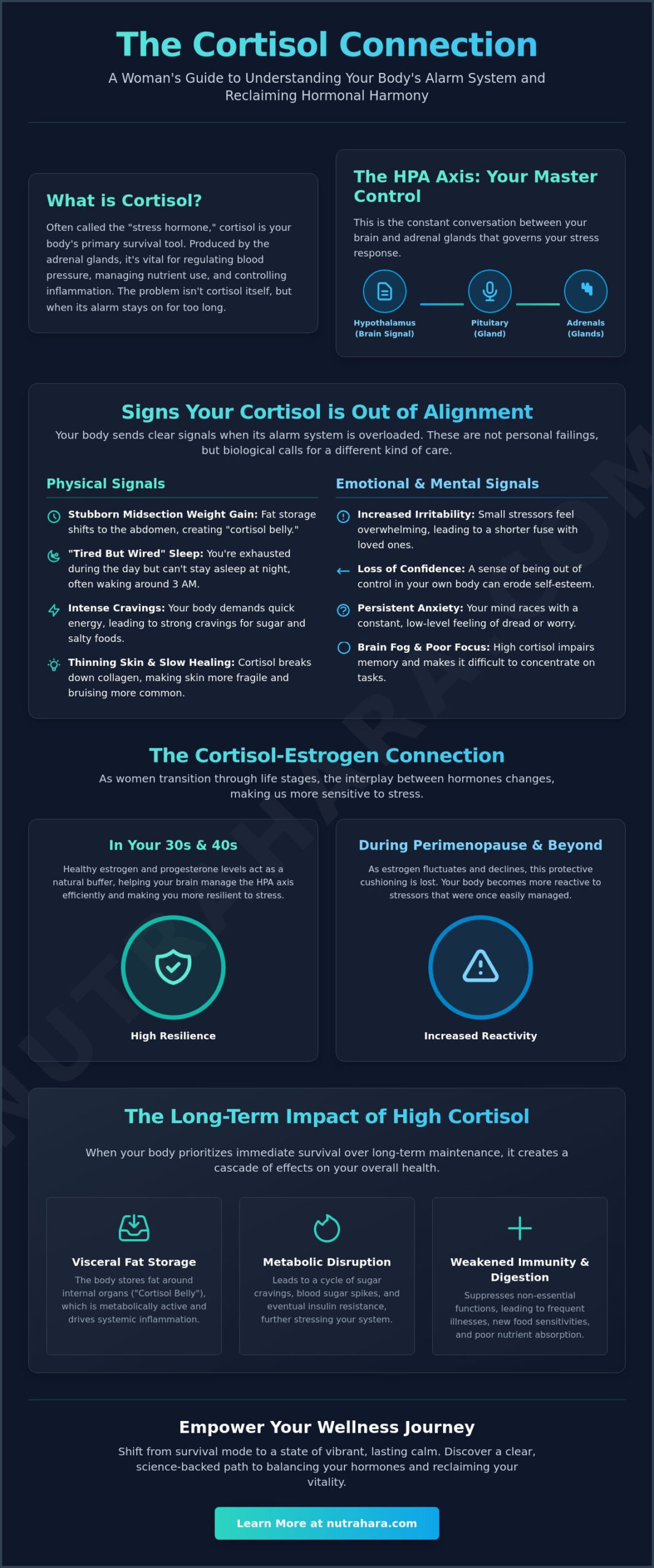
Your body possesses a sophisticated master alarm system designed for one primary goal: your survival. This alarm is managed by cortisol, the body’s primary stress hormone. Produced by the adrenal glands, which rest quietly atop your kidneys, cortisol orchestrates your response to every challenge you face. While it is often blamed for modern health woes, it is actually a vital partner that regulates blood pressure, manages how you use nutrients, and keeps systemic inflammation in check. The problem arises when the alarm stays on too long, a state that many women aged 30 to 60 find themselves in today.

This biological process is governed by the Hypothalamic-Pituitary-Adrenal (HPA) axis. Think of this as a gentle, constant conversation between your brain and your adrenals. Whether you are navigating the rhythm of a monthly cycle, supporting a new life through pregnancy and lactation, or moving into the wisdom years of menopause, this axis is the foundation of your vitality. During pregnancy, cortisol levels naturally rise to support fetal development; however, chronic stress can push these levels beyond a healthy threshold. For lactating mothers, high stress can interfere with the soothing hormones like oxytocin that facilitate bonding. Learning how to reduce cortisol levels in women requires acknowledging these unique biological windows where your system is most sensitive.

The Cortisol-Estrogen Connection

Hormones never work in isolation. In your 30s and 40s, estrogen and progesterone act as a natural buffer, helping your brain manage the HPA axis efficiently. As you enter perimenopause and estrogen begins to fluctuate, you lose this protective cushioning. Your body becomes more reactive to stressors that you might have handled easily years ago. This is why “standard” stress advice often fails; it doesn’t account for the loss of these hormonal stabilizers. Building hormonal resilience is a long-term progression. It involves supporting your system so it can find a new, stable rhythm despite these transitions.

Signs Your Cortisol is Out of Alignment

When your internal alarm is stuck in the “on” position, your body sends clear signals that it is time to slow down. You might notice physical changes that feel out of character for your lifestyle. These signs are your body’s way of asking for a different kind of care and attention.

  • Unexplained weight gain, particularly around the midsection.
  • Thinning skin or slower healing from minor bruises.
  • A “tired but wired” feeling where you’re exhausted but cannot stay asleep.

The emotional toll is just as significant. Many women report a sudden loss of confidence, increased irritability with loved ones, or a sense of persistent anxiety. These aren’t personal failings; they are biological responses to an overloaded system. Adrenal fatigue is a non-clinical but useful term for the burnout that occurs when your stress response system is simply overwhelmed.

The Impact of High Cortisol on Long-Term Women’s Health

Chronic elevation of this survival hormone doesn’t just make you feel “off.” It creates a cascading effect that alters your physical structure and internal vitality over time. One of the most common frustrations women face is “Cortisol Belly.” When your body senses a constant threat, it shifts into a protective mode, storing visceral fat around your internal organs. This isn’t just about aesthetics; visceral fat is metabolically active and can drive further systemic inflammation. Understanding this long-term impact is vital when exploring how to reduce cortisol levels in women, as these changes affect everything from your immune response to your skeletal strength.

High cortisol levels essentially tell your body to prioritize immediate survival over long-term maintenance. This means your immune system and digestive tract often take a back seat. Over time, this suppression can lead to frequent seasonal illnesses, new food sensitivities, and a sluggish metabolism. Integrating Nutritional Strategies that include adaptogens and micronutrients can help signal to your body that the danger has passed. This allows your system to resume the essential maintenance tasks that keep you feeling vibrant.

Metabolism and Digestive Harmony

When cortisol remains high, your body demands quick energy. This leads to intense sugar cravings and eventual insulin resistance. It creates a cycle where your blood sugar spikes and crashes, further stressing your internal balance. Your gut health is also deeply intertwined with your hormones. A compromised digestive system cannot effectively process the nutrients needed for hormonal regulation. You might wonder, do digestive enzymes help you lose weight, especially when stress has slowed your transit time? Supporting your gut is a foundational step in reclaiming your metabolic fire and reducing the burden on your adrenal glands.

Joint Health and Inflammation

For women over 50, the intersection of stress and joint health becomes particularly significant. Chronic cortisol elevation is pro-inflammatory, which can exacerbate joint pain and decrease overall flexibility. High stress levels also interfere with osteoblasts, the cells responsible for building bone. This can impact bone density over time, making stress management a key pillar of longevity. Lowering your stress response helps cool the fires of systemic inflammation. This allows for better mobility and a more active, joyful lifestyle. To support this physical progression, many women find that a premium collagen complex provides the structural building blocks their joints need during times of recovery.

Finally, we must address the “Sleep-Stress Trap.” Cortisol and melatonin exist on a biological seesaw. When cortisol is high at night, melatonin production is suppressed. This is why you might feel wide awake at 2 AM despite being physically exhausted. Breaking this cycle is essential for your long-term health and emotional resilience. Learning how to reduce cortisol levels in women requires addressing this nocturnal imbalance to ensure your body can finally enter a state of deep, restorative repair.

How to Reduce Cortisol Levels in Women: A Holistic Guide to Reclaiming Balance

Ancient Wisdom Meets Modern Science: Ayurvedic and Nutritional Strategies

For over 5,000 years, Ayurveda has recognized that health isn’t merely the absence of disease. It’s a vibrant state of balance among the “doshas,” the fundamental energies that govern our physical and mental well-being. While modern medicine often focuses on treating isolated symptoms, this ancient wisdom looks at the whole woman. When we discuss how to reduce cortisol levels in women, we aren’t just looking for a way to suppress a hormone. We’re looking to restore a sacred rhythm. This approach relies on “Rasayana,” the traditional philosophy of rejuvenation and longevity. It’s a personal journey that prioritizes purity and simplicity over synthetic shortcuts.

Central to this journey are adaptogens. These are a unique class of botanical allies that help your body “adapt” to stressors rather than simply masking them. Unlike pharmaceutical interventions that may offer a temporary “quick fix” but disrupt other delicate systems, the Nutrahara philosophy views wellness as a long-term progression. By using clean, earth-derived ingredients, we support the body’s innate intelligence. We believe that true healing happens when we align ancient herbal wisdom with modern nutritional research to create a toolkit for lasting vitality.

The Power of Ashwagandha

Ashwagandha is perhaps the most revered adaptogen in the Ayurvedic tradition. Modern clinical research confirms what ancient practitioners knew: it’s a powerhouse for cortisol reduction. Studies show it can significantly lower serum cortisol levels while improving the quality of life for stressed adults. In Ayurveda, it’s used to provide a “grounding” effect on the nervous system. It acts like an anchor during emotional storms, helping you feel centered and stable. For those seeking this balance, our Ashwagandha with Black Pepper is formulated for enhanced absorption. This ensures your body receives the full spectrum of its calming and restorative benefits.

Essential Nutrients for Adrenal Support

Beyond herbs, your adrenal glands require specific micronutrients to function optimally under pressure. Magnesium acts as nature’s relaxant, gently soothing both tight muscles and an overactive mind. Meanwhile, a high-quality Vitamin B-Complex is essential for energy metabolism and maintaining a resilient nervous system. These nutrients provide the biochemical foundation for Actionable Habits for Lasting Calm. By nourishing your body at a cellular level, you empower yourself to navigate daily challenges with grace and steady energy. This holistic support allows you to reclaim your peace and move through your wellness journey with confidence.

The Daily Ritual: Actionable Habits for Lasting Calm

Establishing a daily ritual is like creating a sanctuary within your own schedule. While many modern fitness trends advocate for high-intensity interval training (HIIT), these explosive workouts can often backfire when your system is already overwhelmed. For a body in survival mode, HIIT can signal even more danger, keeping your stress hormones peaked rather than clearing them. Choosing mindful movement like walking, swimming, or restorative stretching is a much more compassionate way to approach how to reduce cortisol levels in women. These gentler activities allow your heart rate to rise rhythmically without triggering a full-scale survival response.

Your environment also plays a vital role in this chemical clearance. Transforming your bedroom into a sleep sanctuary is essential for nighttime cortisol management. This means keeping the room cool, dark, and free from the blue light of digital devices at least one hour before bed. When you prioritize sleep hygiene, you give your body the space it needs to reset its hormonal clock. This long-term progression toward better rest is one of the most powerful tools you have for reclaiming your energy and emotional stability.

Yoga and Meditation as Medicine

Yoga is more than just physical exercise; it’s a direct line to your nervous system. Specific poses stimulate the Vagus nerve, which acts as a biological brake for your stress response. Try incorporating these three poses into your daily routine for immediate calm:

  • Child’s Pose: To quiet the mind and encourage internal reflection.
  • Legs-Up-The-Wall: To improve circulation and gently lower blood pressure.
  • Cat-Cow: To release physical tension stored along the spine and neck.

Meditation further supports this process by rewiring the brain’s stress pathways through neuroplasticity. Over time, a consistent five-minute practice makes your mind less reactive to daily triggers. For an enhanced experience, try using a drop of lavender essential oil on your wrists during your practice to deepen your sense of tranquility.

Nourishing the Body, Calming the Mind

Your morning habits often dictate your hormonal rhythm for the rest of the day. Drinking coffee on an empty stomach is a common habit that unfortunately triggers a sharp cortisol spike, leading to mid-afternoon crashes. Try pairing your caffeine with a balanced breakfast or waiting until an hour after waking to enjoy your first cup. Focus on whole-food, plant-based nutrition to provide the steady glucose your brain requires for hormone stability. Finally, a two-minute “brain dump” in a journal before bed can prevent emotional buildup. If you find your mind still racing when the lights go out, you can support your body’s natural wind-down process with Restorasleep to ensure you enter a state of deep, restorative repair.
Empowering Your Wellness Journey with Nutrahara

Embracing a life of balance isn’t about reaching a final finish line. It’s an ongoing, sacred journey of self-discovery and patience. Throughout this guide, we’ve explored how to reduce cortisol levels in women by blending the timeless wisdom of Ayurveda with the precision of modern nutritional research. This fusion is your ultimate toolkit for reclaiming the vitality that often feels lost in the noise of a busy life. When you choose a holistic path, you aren’t just managing a single hormone. You’re nourishing your entire system and signaling to your body that it’s finally safe to rest, recover, and thrive.

Finding your way back to center requires a wise and caring guide who understands the unique physiological shifts women experience between the ages of 30 and 60. Learning how to reduce cortisol levels in women is a profound act of self-reclamation. It involves moving away from the “quick fix” mentality and toward a long-term progression that respects your body’s natural rhythms. By aligning earth-derived adaptogens with evidence-based rituals, you create a sustainable environment for hormonal harmony. This approach empowers you to feel in control of your physical and emotional health, regardless of the life stage you’re currently navigating.

Targeted Support for Stress and Anxiety

Real transformation happens when we see others successfully navigate the same challenges we face. Elena, a 34-year-old professional and new mother, struggled with the intense “mental load” and postpartum brain fog that often accompanies lactation and early motherhood. By prioritizing mindful movement and integrating Femmepower into her routine, she reported a significant shift in her emotional stability and a newfound ability to stay present with her child. Her experience highlights how supporting your hormones can clarify the mind and restore a sense of self-esteem.

For those navigating the unpredictable shifts of perimenopause, the journey often looks like Sarah’s. At 45, Sarah found herself trapped in the “tired but wired” cycle, staring at the ceiling most nights at 3 AM. She began using Anxioguard for acute stress support alongside a nightly gratitude journal. Within three weeks, Sarah noticed her irritability had softened and her sleep quality had deepened. These stories aren’t exceptions; they are the result of choosing a path that prioritizes purity, transparency, and the body’s innate intelligence.

Your Path Forward

The most important step you can take today is a small one. You don’t need to overhaul your entire life overnight to see results. Pick just one ritual we’ve discussed and commit to it for a few days. As you move forward, trust that Nutrahara is your partner in this progression. Our commitment to clean, natural ingredients means every formula is free from artificial additives and grounded in clinical validation. We believe in the simplicity of nature and the power of science to support your long-term health. You have the power to rewrite your body’s stress story and step into a life of vibrant confidence.

Reclaiming Your Sacred Balance

Your journey toward hormonal harmony is a long-term progression that requires both science and soul. We’ve explored how the HPA axis interacts with your unique life stages and how chronic stress impacts everything from metabolism to joint mobility. By integrating ancient Ayurvedic wisdom with modern nutritional research, you can finally move beyond survival mode. Understanding how to reduce cortisol levels in women is the key to unlocking sustainable energy and mental clarity. It’s time to replace high-intensity burnout with mindful rituals and pure, earth-derived support.

Nutrahara is here to guide you through every transition with formulas designed specifically for women’s health progression. Our supplements are crafted with clean, natural ingredients and a deep respect for traditional medicine. You don’t have to navigate this path alone. Reclaim your inner calm with Nutrahara’s Ashwagandha & Adaptogen collection. You possess the innate strength to rewrite your stress story and step into a life of vibrant confidence.

Frequently Asked Questions

What are the most common symptoms of high cortisol in women?

Common symptoms include persistent fatigue, a “tired but wired” nighttime energy, and frequent brain fog. You might also notice thinning skin, muscle weakness, and a general loss of emotional resilience. These signs indicate your HPA axis is struggling to find its natural rhythm. Recognizing these physical and mental cues is the first step in learning how to reduce cortisol levels in women and reclaiming your daily vitality.

Can high cortisol levels cause weight gain around the stomach?

High cortisol levels are a primary driver of visceral fat storage around the midsection. When your body stays in survival mode, it prioritizes energy storage near vital organs as a protective measure. This “cortisol belly” is often resistant to traditional dieting alone. Addressing the underlying stress response is essential for shifting this specific type of weight and restoring your body’s metabolic balance over time.

How long does it take to naturally lower cortisol levels?

Most women begin to notice improvements in their energy and sleep within two to four weeks of consistent lifestyle changes. However, full hormonal restoration is a long-term progression that can take three to six months. Your body needs time to recalibrate its internal alarm system. Consistency with adaptogens, mindful movement, and sleep hygiene is the key to seeing sustainable, lasting results on your journey of how to reduce cortisol levels in women.

Is coffee bad for cortisol levels in women over 40?

Coffee isn’t inherently bad, but it can exacerbate cortisol spikes when consumed on an empty stomach. This is especially true for women over 40. As estrogen levels decline, your body becomes more sensitive to stimulants. To enjoy your morning cup without the mid-afternoon crash, try having it after a balanced meal. This simple shift helps stabilize your blood sugar and prevents the jittery stress response that often follows caffeine.

What is the best time of day to take cortisol-lowering supplements?

The ideal timing depends on the specific supplement and your personal energy patterns. For grounding adaptogens like Ashwagandha, many women find success taking them in the evening to support restorative sleep. If you’re using B-complex vitamins for energy metabolism, the morning is usually best. Always follow the specific guidance on your supplement’s label to ensure you’re supporting your body’s natural circadian rhythm effectively and safely.

Can yoga and meditation really lower my cortisol levels?

Scientific research confirms that yoga and meditation are powerful tools for downregulating the sympathetic nervous system. Specific poses stimulate the Vagus nerve, which signals your brain to move from “fight or flight” into “rest and digest” mode. Even five minutes of daily breathwork can significantly lower serum cortisol levels. These practices empower you to take an active, nurturing role in managing your own physical and mental health every day.

Does menopause make cortisol levels harder to manage?

Menopause and perimenopause make cortisol management more complex due to declining estrogen levels. Estrogen typically helps buffer the stress response. Without its protective effect, your HPA axis becomes more reactive to daily pressures. This is why many women in this life stage feel more easily overwhelmed or anxious. It’s not a personal failing, but a biological shift that requires a more intentional, holistic approach to stress management.

Are there any foods that help reduce cortisol quickly?

No food provides an instant fix, but nutrient-dense options can help stabilize your system. Magnesium-rich foods like dark chocolate and pumpkin seeds help relax the nervous system. Omega-3 fatty acids found in walnuts and flaxseeds are also excellent for cooling systemic inflammation. Focusing on whole-food, plant-based nutrition ensures your body has the steady glucose and micronutrients it needs to keep stress hormones from spiking throughout the day.

Article by

Nutrahara Team

We are a dedicated collective of nutrition scientists and naturopaths at Nutrahara, committed to advancing women's health through the fusion of ancient Ayurveda science and cutting-edge nutrition research. Our mission is to empower you with clean, simple, and scientifically validated wellness solutions so you can live your healthiest life. Connect with us to stay updated on the latest developments in holistic women's health and nature-based research.

Disclaimer

This article is not a substitute for medical advice. Please consult a healthcare professional before starting any supplement, especially if pregnant, nursing, taking medication, or managing health conditions.

Categories
Articles

Natural Mood Support for Women: A Holistic Guide to Emotional Balance and Vitality

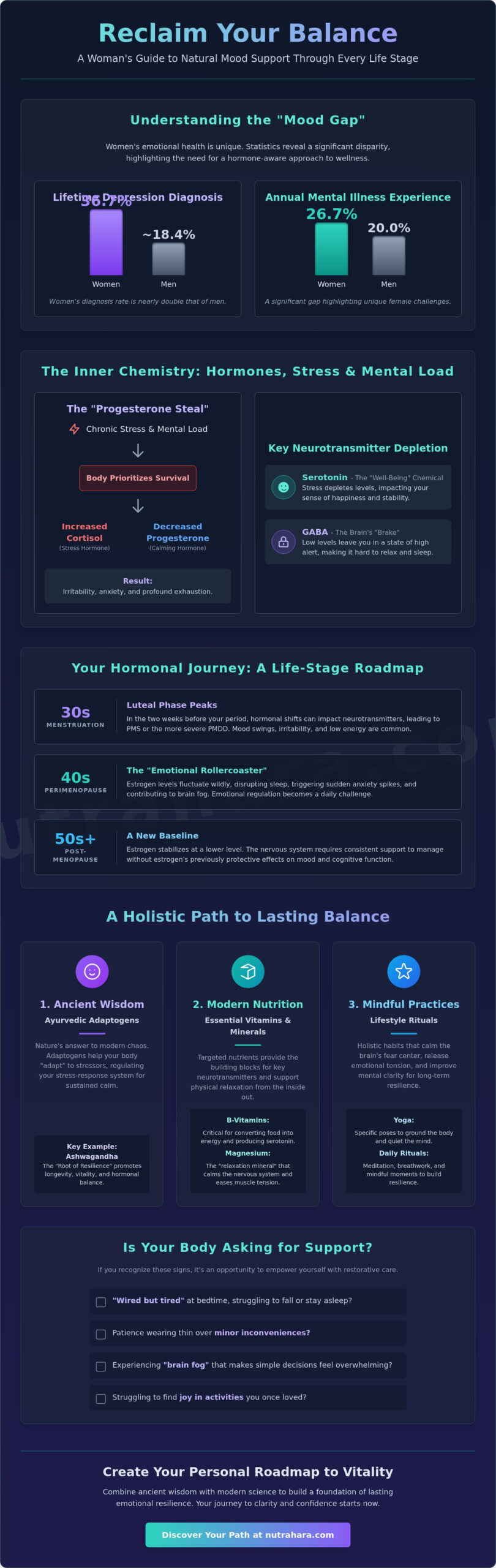
A 2025 Gallup poll revealed that 36.7% of women report a lifetime diagnosis of depression, a rate that is nearly double that of men. If you often feel “not quite like yourself” due to shifting hormones or the heavy mental load of family and career, you aren’t alone. It is easy to feel overwhelmed when anxiety disrupts your sleep and clouds your daily focus. You likely already know that true wellness requires more than a quick fix; it requires a dedicated partnership with your body’s natural rhythms.

You can reclaim your emotional equilibrium and vitality by embracing a powerful fusion of Ayurvedic wisdom, modern nutritional science, and mindful lifestyle rituals. This guide explores the most effective paths for natural mood support for women, focusing on how high quality supplements and ancient practices like yoga can foster lasting stability. We will examine the science of the gut-brain axis and provide actionable steps to help you achieve the mental clarity and confidence you deserve on your long-term health journey.

Key Takeaways

  • Understand the “Mood Gap” and how cortisol interacts with your hormones to influence emotional health through every life stage.
  • Explore how Ayurvedic adaptogens like Ashwagandha provide reliable natural mood support for women by helping your system adapt to stress.
  • Learn why the combination of B-vitamins and magnesium is critical for maintaining serotonin levels and supporting physical relaxation.
  • Practice specific yoga poses and daily rituals that calm the amygdala to release emotional tension and improve mental clarity.
  • Discover how to create a personalized roadmap for your health journey that combines ancient wisdom with modern nutritional science.

Understanding the “Mood Gap”: Why Women’s Emotional Health Requires a Unique Approach

The “Mood Gap” is the space where your biological reality meets the relentless expectations of modern life. It isn’t just a feeling of being tired or stressed; it’s a measurable physiological divide. For many women, this gap is formed by the intersection of monthly hormonal cycles and the heavy mental load of a career and family. Recent data highlights the scale of this challenge. A 2025 NAMI report found that 26.7% of U.S. women experience a mental illness annually, compared to 20% of men. This disparity isn’t a personal failing. It is a signal that the female body requires specific, hormone-aware natural mood support for women to maintain equilibrium.

Between the ages of 30 and 60, your body undergoes a complex chemical dance. Cortisol, the primary stress hormone, often takes center stage. When you’re under chronic stress, your body prioritizes cortisol production over progesterone. This “progesterone steal” can leave you feeling irritable, anxious, or profoundly exhausted. At Nutrahara, we view health as a long-term progression rather than a series of quick fixes. Understanding these physiological signals is the first step in reclaiming your vitality and emotional clarity.

Hormonal Milestones: From Menstruation to Post-Menopause

In your 30s, mood fluctuations often peak during the luteal phase, the two weeks before your period starts. For some, these shifts are more than just “PMS” and may indicate Premenstrual Dysphoric Disorder (PMDD), a condition where hormonal changes severely impact neurotransmitter function. As you move into your 40s, the “emotional rollercoaster” of perimenopause begins. Estrogen levels don’t just drop; they fluctuate wildly. This volatility can disrupt your sleep and trigger sudden spikes in anxiety. By the time you reach post-menopause, your estrogen levels stabilize at a lower baseline. During this stage, your nervous system requires gentle, consistent support to manage the absence of estrogen’s once-protective effects on the brain. Targeted solutions like FemmePower are designed to support these transitions with purity and scientific backing.

The Impact of the Modern “Mental Load” on Women

The “mental load” refers to the invisible labor of managing a household and a professional life. These chronic micro-stressors act like a slow leak, gradually depleting essential neurotransmitters like serotonin and GABA. Serotonin regulates your sense of well-being, while GABA acts as your brain’s natural “brake” system. When these are low, you feel stuck in a state of high alert. To see where you stand, consider this brief self-check:

  • Do you feel “wired but tired” when you try to sleep?
  • Does your patience disappear over minor inconveniences?
  • Do you experience “brain fog” that makes simple decisions feel heavy?
  • Are you struggling to find joy in activities you used to love?

If you checked more than two boxes, your body is likely asking for wise guidance and a more structured approach to its care. Recognizing these symptoms isn’t about finding a label; it’s about empowering yourself to choose a path of restorative natural mood support for women that honors your unique biology.

Ancient Wisdom for Modern Minds: Ayurvedic Adaptogens for Natural Mood Support

Adaptogens are nature’s answer to the chaos of modern life. These unique herbs work by helping your body “adapt” to various stressors, effectively restoring homeostasis when your system feels out of balance. Unlike substances that provide a temporary stimulant effect, adaptogens provide natural mood support for women by regulating the hypothalamic-pituitary-adrenal (HPA) axis. This ensures your body doesn’t overreact to every micro-stressor, allowing you to maintain a sense of calm and tranquility even during demanding days.

At Nutrahara, we believe in the power of purity. Our commitment to traditional extraction methods ensures that the vital compounds within these plants remain intact. By pairing ancient Ayurvedic philosophy with modern clinical validation, we offer a path to emotional resilience that is both grounded and forward-thinking.

Ashwagandha: The Root of Resilience

In the Ayurvedic tradition, Ashwagandha is revered as a “Rasayana,” a rejuvenative tonic that promotes longevity and vitality. Modern science confirms this ancient wisdom. Numerous studies have documented Ashwagandha’s ability to significantly reduce perceived stress scores and lower serum cortisol levels. There is substantial biochemical and clinical evidence suggesting that botanical extracts influence the very pathways responsible for mood regulation. To ensure your body can truly utilize this herb, our Ashwagandha with Black Pepper formula includes piperine for significantly enhanced absorption.

Bacopa Monnieri and Rhodiola: Enhancing Focus and Calm

While Ashwagandha grounds you, Bacopa Monnieri and Rhodiola Rosea help you rise to meet the day’s challenges. Bacopa is known for supporting cognitive function, particularly by reducing the anxiety-linked brain fog that often accompanies hormonal shifts. It clears the mental clutter, allowing for improved focus. Rhodiola Rosea acts as a shield for your adrenal glands. It is especially effective during high-pressure life stages, helping to combat the mental fatigue that makes emotional balance feel out of reach. We also incorporate Holy Basil, often called Tulsi, which has been used for centuries to promote spiritual and emotional clarity.

Wise Guide Tip: Maximize Your Results

Consistency is the heartbeat of adaptogenic therapy. These herbs don’t work overnight. They build in your system over time to create a foundation of resilience. To feel the full benefits, take your supplements at the same time each day for at least eight to twelve weeks.

If you’re ready to start your journey toward sustained emotional stability, consider exploring our Anxioguard formula to support your daily wellness ritual.

Natural Mood Support for Women: A Holistic Guide to Emotional Balance and Vitality

The Science of Serotonin: Essential Vitamins and Minerals for Emotional Resilience

While adaptogens help your system respond to stress, micronutrients provide the raw materials your brain needs to build “feel-good” chemicals. This is a critical component of natural mood support for women. Research into mental health conditions in women shows that biological factors and nutrient status play a significant role in emotional stability. To maintain a balanced outlook, your brain requires a steady supply of specific vitamins and minerals to facilitate neurotransmitter synthesis and maintain structural integrity.

Omega-3 fatty acids are particularly important for this process. They build the structural framework of your brain cell membranes, ensuring that signals move fluidly between neurons. Without these healthy fats, even the most robust hormone system can struggle to maintain clarity. By focusing on these nutritional foundations, you empower your body to sustain emotional equilibrium from the inside out.

B-Vitamins and the Methylation Cycle

B-vitamins act as essential cofactors in the methylation cycle, which is the internal process that synthesizes serotonin and dopamine. B6, B9 (Folate), and B12 form the “energy and mood” trifecta. When you’re under chronic pressure, your body “burns through” these stores rapidly to keep up with metabolic demands. This depletion often leads to the “wired but tired” feeling many women experience in their 40s and 50s. Our Vitamin B Complex is formulated to replenish these vital nutrients, supporting both your metabolic health and your journey toward emotional resilience.

Magnesium and Vitamin D: The Foundation of Calm

Magnesium is often called the “relaxation mineral” because of its synergy with GABA, the brain’s primary inhibitory neurotransmitter. It acts as the “brakes” for your nervous system, helping to quiet the racing thoughts that often disrupt sleep. Vitamin D3 functions more like a hormone than a vitamin, with receptors located throughout the brain’s mood-processing centers. The serotonin-Vitamin D connection is a fundamental biological pathway where adequate D3 levels are required for the brain to produce sufficient mood-regulating neurotransmitters. This is why many women notice a dip in their emotional vitality during months with less sunlight.

Nutrahara Wellness Tip: Nourish Your Resilience

Complement your supplement routine with magnesium-rich foods like pumpkin seeds, spinach, and dark chocolate. For Vitamin D, aim for brief, safe sun exposure or include fatty fish like wild-caught salmon in your weekly meal plan to support your structural brain health.

By pairing these essential nutrients with the adaptogenic support we discussed earlier, you create a comprehensive protocol for lasting health. This dual approach ensures your body has both the resilience to handle stress and the raw materials to foster a positive, focused mindset.

Beyond the Bottle: Holistic Rituals for Lasting Emotional Balance

While high quality supplements provide a vital foundation, your daily habits act as the architecture of your wellness. Creating predictable rituals is a powerful form of natural mood support for women that speaks directly to the amygdala, the brain’s fear center. When your schedule includes consistent, calming practices, the amygdala lowers its guard. This reduces the background noise of anxiety and allows your nervous system to transition from a state of survival to one of growth and repair. These rituals aren’t just “self-care” in a superficial sense; they’re essential tools for maintaining long-term emotional resilience.

Sleep hygiene also plays a non-negotiable role in this process. Your brain processes emotional data and clears metabolic waste during deep sleep. Without it, your ability to regulate your mood the following day is significantly compromised. By pairing intentional movement with restorative rest, you create a lifestyle that honors your biological need for peace and stability.

Yoga and the Vagus Nerve

Yoga is a profound tool for nervous system regulation because it stimulates the vagus nerve. This nerve acts as the primary highway for the “rest and digest” response. By holding specific poses, you signal to your brain that you’re safe. Focus on hip openers like Pigeon Pose to release stored emotional tension, or try Viparita Karani (Legs-Up-The-Wall) to calm the heart rate. A simple 10-minute morning flow serves as an emotional anchor, grounding you before the day’s demands begin.

“I felt like a stranger in my own body when perimenopause started,” says Sarah, 48. “Combining targeted supplements with a daily 15-minute yoga practice changed everything. The supplements balanced my chemistry, but the yoga gave me a space to actually feel in control of my breath and my reactions again.”

Meditation for the “Monkey Mind”

For moments of acute overwhelm, breathwork or “Pranayama” offers immediate relief. Box breathing is a simple, effective technique you can use anywhere. Follow these three steps:

  • Inhale deeply for a count of four.
  • Hold that breath for a count of four.
  • Exhale slowly for a count of four, then hold for four before repeating.

To build long-term self-esteem, consider Metta (Loving-Kindness) meditation. This practice involves silently repeating phrases of goodwill toward yourself. It helps soften the inner critic that often grows louder during hormonal transitions. If you find that your mood is consistently affected by poor rest, incorporating a targeted solution like RestoraSleep into your evening ritual can provide the deep, healing sleep your brain requires to stay resilient.

Creating Your Personal Mood Support Protocol: A Life-Stage Roadmap

True wellness isn’t a destination; it’s a long-term progression that evolves as you do. A one-size-fits-all approach to natural mood support for women often fails because it ignores the distinct biological shifts occurring between ages 30 and 60. By layering specific supplements with mindful rituals tailored to your current life stage, you create a protocol that honors your body’s changing needs. This structured approach ensures you aren’t just reacting to symptoms, but actively nurturing your emotional resilience.

Every Nutrahara formula is built upon what we call the “Nutrahara Promise.” This is our commitment to simplicity, purity, and rigorous scientific validation. We combine ancient Ayurvedic wisdom with modern clinical research to ensure every ingredient serves a purpose. Our formulas are free from artificial additives, providing you with transparent, high-quality tools for your health journey.

The 30s & 40s: Managing the Peak Mental Load

During these decades, your system often faces the highest levels of cortisol due to the “mental load” of career growth and family management. To maintain equilibrium, focus on a foundation of B-vitamins and Ashwagandha to support the HPA axis. High-intensity interval yoga can be particularly effective here, as it helps metabolize excess stress hormones through movement. For comprehensive support through your monthly cycles, FemmePower offers a targeted blend of nutrients designed for this demanding life stage. You can learn more about building a complete regimen in our Ultimate Guide to Women’s Wellness Supplements.

The 50s & 60s: Navigating the Golden Transition

As you move through perimenopause and into post-menopause, the focus shifts toward soothing the nervous system and supporting bone and cognitive health. Magnesium and Vitamin D become your primary allies during this transition. Incorporating restorative Yin Yoga into your routine helps maintain flexibility while signaling safety to your brain. If you find your system remains in a state of high alert, Anxioguard provides deeper soothing for the nervous system. For a holistic view of your health during this time, our Complete Guide to Vaginal pH Balance explores how internal harmony affects your overall well-being.

To begin your journey, we encourage a “Health Progression” mindset. Start by tracking your mood, sleep quality, and energy levels in a journal for the next 30 days. This data allows you to see the subtle, positive shifts that occur when you combine natural mood support for women with intentional rituals. You have the wisdom to listen to your body and the tools to help it thrive. Embrace this partnership with yourself, knowing that emotional balance and vitality are well within your reach.

Step Into Your Most Vibrant Self

Reclaiming your emotional equilibrium is a journey of small, intentional steps. By combining the precision of modern nutritional science with the timeless wisdom of Ayurvedic traditions, you can create a foundation for lasting vitality. You’ve learned how targeted micronutrients and adaptogens provide essential natural mood support for women, and how simple rituals like yoga can anchor your nervous system. These tools don’t just mask symptoms; they empower you to navigate the unique hormonal transitions of every life stage with grace and clarity.

At Nutrahara, we are committed to your long-term health progression. Our formulas are crafted with a fusion of Ayurvedic wisdom and modern science, ensuring they are free of artificial additives and fillers. We stand behind our quality with a 60-day satisfaction guarantee, so you can begin your protocol with complete confidence. It’s time to honor your body’s needs and prioritize your mental well-being.

Empower your emotional journey with Nutrahara’s Natural Mood Support Collection today. You possess the inner strength and the practical tools to thrive through every season of life.

Frequently Asked Questions

How long does it take for natural mood supplements to start working?

Most natural mood support for women requires four to eight weeks of consistent use to produce noticeable results. Unlike synthetic options, adaptogens and vitamins work by gradually restoring your body’s internal balance. You might feel subtle shifts in energy within the first few days, but the full emotional benefits typically emerge as your system reaches a new baseline of homeostasis. Consistency is the key to this long-term progression.

Can I take mood support supplements while pregnant or breastfeeding?

You must consult your healthcare provider or a registered dietitian before starting any new supplement while pregnant or breastfeeding. Many botanical ingredients, including certain adaptogens, haven’t been extensively studied for safety during these specific life stages. Your doctor can help you determine which nutrients, such as specific B-vitamins or Magnesium, are safe and beneficial for your unique needs during this sensitive time. It’s always best to prioritize professional guidance.

What is the best time of day to take Ashwagandha for mood support?

The best time to take Ashwagandha depends on your primary goal for seeking emotional balance. If you’re managing daily stress and a heavy mental load, taking it in the morning can help regulate cortisol levels throughout your active hours. However, if anxiety-driven sleep disruptions are your main concern, taking it in the evening may better support a restorative night’s rest. Pick a time you can stick to every day.

Is it safe to combine herbal mood enhancers with prescription antidepressants?

Combining herbal enhancers with prescription antidepressants is generally not recommended due to the high risk of serious drug interactions. Certain herbs can interfere with how your body metabolizes medication or lead to dangerous conditions like Serotonin Syndrome. Always discuss your full supplement list with your physician to ensure your natural mood support for women doesn’t conflict with your existing medical treatment. Safety and transparency are vital for your wellness journey.

What are the signs that my mood swings are hormonal rather than just stress?

Hormonal mood swings are typically cyclical and often coincide with other physical symptoms like bloating or breast tenderness. If your emotional shifts follow a predictable monthly pattern or intensify during perimenopausal transitions, they’re likely driven by estrogen and progesterone fluctuations. Stress-related mood changes tend to be more reactive to external events rather than internal biological timing. Tracking your symptoms for 30 days can help you identify these patterns.

Are there any side effects to natural mood boosters like St. John’s Wort?

St. John’s Wort can cause significant drug interactions, specifically by inducing the cytochrome P450 enzyme system, which lowers the effectiveness of many medications. Common side effects include increased sensitivity to sunlight, dry mouth, and occasional digestive upset. It’s vital to check for contraindications with birth control, blood thinners, and antidepressants before use. Always choose high-quality formulas that prioritize purity and transparency to minimize the risk of unwanted reactions.

How does gut health affect my daily mood and emotional stability?

Your gut and brain are connected via the vagus nerve, forming a pathway known as the gut-brain axis. Approximately 90% to 95% of your body’s serotonin is produced in the digestive tract, meaning a healthy microbiome is essential for emotional stability. When your gut is imbalanced, it can disrupt the production of these “feel-good” chemicals, leading to increased anxiety and brain fog. Supporting your digestion is a foundational step in any holistic health journey.

Can yoga really help balance my hormones and improve my mood?

Yoga balances hormones by lowering serum cortisol levels and stimulating the parasympathetic nervous system, also known as the “rest and digest” state. Specific restorative poses encourage blood flow to the endocrine glands, which can help regulate the production of estrogen and progesterone. This physical practice acts as a bridge between your body and mind. It helps you feel more empowered and in control of your emotional health through every life stage.

Article by

Nutrahara Team

We are a dedicated collective of nutrition scientists and naturopaths at Nutrahara, committed to advancing women's health through the fusion of ancient Ayurveda science and cutting-edge nutrition research. Our mission is to empower you with clean, simple, and scientifically validated wellness solutions so you can live your healthiest life. Connect with us to stay updated on the latest developments in holistic women's health and nature-based research.

Disclaimer

This article is not a substitute for medical advice. Please consult a healthcare professional before starting any supplement, especially if pregnant, nursing, taking medication, or managing health conditions.