 Skip to the content

What if feeling more confident starts with supporting your well-being, not finding the perfect supplement? It’s understandable to look for help when stress, shifting energy, or changes through menstruation, pregnancy, lactation, perimenopause, or menopause affect how you feel. But supplements to boost self-confidence can’t create self-worth or guarantee a change in mood. At most, an appropriate supplement may support one part of a broader wellness routine.
This guide explains what supplements may reasonably support, how to compare product categories, and what to consider before choosing one. You’ll also find practical ways to nurture confidence through movement, yoga, meditation, and self-reflection. Nutrahara combines principles of ancient Ayurveda with modern nutritional research in its women’s health supplements. The goal isn’t to rely on a pill to feel enough. It’s to build steady foundations that help you feel supported in everyday life.
Key Takeaways
- Compare supplements by their intended purpose, evidence, label details, and your individual needs rather than assuming products are interchangeable.
- Consider supplements to boost self-confidence only as possible support for broader well-being, not as a direct source of self-worth.
- Account for pregnancy, lactation, medications, health conditions, and planned procedures when considering a supplement, and seek qualified medical guidance.
- Build a routine that fits your life with adaptable movement, restorative yoga, meditation, sleep habits, and self-reflection.
- Explore Nutrahara’s women’s health supplements as one option within a wellness approach informed by Ayurvedic principles and modern nutritional research.
Can Supplements Boost Self-Confidence? Set Realistic Expectations First
Wanting to feel more self-assured is reasonable, especially when daily demands leave you feeling unlike yourself. But supplements to boost self-confidence shouldn’t be treated as a quick fix. Confidence develops through a mix of personal experience, relationships, social pressures, physical well-being, and emotional health. It isn’t a simple measure of whether you have enough of a particular nutrient.
Confidence is also distinct from self-esteem and self-efficacy, or your belief in your ability to do a task. Exploring understanding self-confidence can help clarify why a supplement alone can’t address every factor that shapes how you feel. A nutrient supplement may be relevant when it addresses an individual, documented nutritional need. That is different from proving that it directly increases confidence.
Evidence-qualified perspective: A supplement may support a specific aspect of wellness when appropriate, but that support doesn’t guarantee a psychological outcome such as greater confidence.
What might a supplement support, and what can’t it promise?
Think of a supplement as one possible part of a wellness plan, not a stand-in for self-trust, supportive relationships, rest, or professional care when needed. One person’s experience can be meaningful to them, but it can’t establish that the same product will work for everyone. Be cautious of claims that promise a direct confidence boost or explain one through a “happy hormone” mechanism without reliable evidence.
Before considering a supplement, name the specific need you hope to address. Then look for evidence about the ingredient and that intended purpose. Keep expectations modest: a product label or customer story doesn’t prove that a supplement will have the same effect for you.
Why confidence can feel different at different life stages
Menstruation, pregnancy, lactation, perimenopause, and postmenopause can bring different circumstances, but no two women experience them in the same way. Changes in routine, responsibilities, or how you feel physically may influence confidence without pointing to a particular deficiency or diagnosis. Life stage is a reason to consider your individual needs, not a reason to assume a supplement is necessary.
Before choosing a product, consider what has changed and what kind of support you’re seeking. If you’re pregnant or lactating, have a health condition, or take medication, discuss supplement use with a qualified healthcare professional. Your confidence journey deserves care shaped around you, not a promise that one formula can fit every woman.
How to Compare Supplements for Confidence-Related Wellness Needs
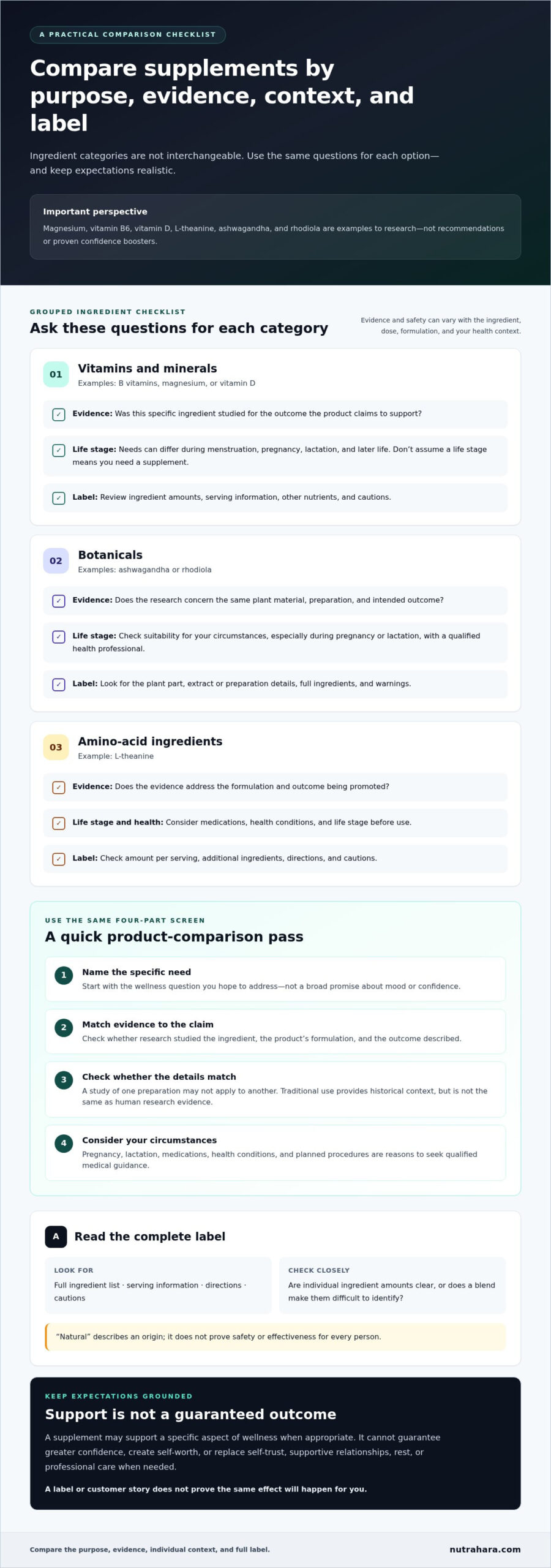
Compare products by the question they’re meant to answer, not by broad promises about mood or confidence. Ingredients such as magnesium, vitamin B6, vitamin D, L-theanine, ashwagandha, and rhodiola are examples to research, not recommendations or proven confidence boosters. Evidence and safety can vary with the ingredient, dose, formulation, and your health context.
Use this framework to organize your questions. It doesn’t rate ingredients or establish that a product will produce a particular result.
| Category and examples | Evidence question | Life-stage caution | Label details to review |
|---|---|---|---|
| Vitamins and minerals, such as B vitamins, magnesium, or vitamin D | Was the specific ingredient studied for the outcome the product claims to support? | Needs can differ during menstruation, pregnancy, lactation, and later life. Don’t assume a life stage means you need a supplement. | Ingredient amounts, serving information, other nutrients, and cautions. |
| Botanicals, such as ashwagandha or rhodiola | Does the research concern the same plant material, preparation, and intended outcome? | Check suitability for your circumstances, especially during pregnancy or lactation, with a qualified health professional. | Plant part, extract or preparation details, full ingredients, and warnings. |
| Amino-acid ingredients, such as L-theanine | Does the evidence address the formulation and outcome being promoted? | Consider medications, health conditions, and life stage before use. | Amount per serving, additional ingredients, directions, and cautions. |
Questions to ask when comparing ingredient categories
Start with a specific wellness question. Then check whether the evidence studied the ingredient itself, the product’s formulation, and the outcome described in its claims. A study of one preparation may not apply to another. Traditional use can offer historical context, but it isn’t the same as evidence from human research. Broad phrases like “supports mood” don’t explain what outcome was measured or who was studied.
What to look for on a supplement label
Read the complete ingredient list, serving information, directions, and cautions. Check whether each ingredient’s amount is clearly stated and whether a blend makes individual amounts difficult to identify. “Natural” describes an origin, not proof of safety or effectiveness for every person. The Vitamin B Complex product page is one example of where to review product-specific information. The name alone doesn’t establish who should use it or what it will do.
When comparing women’s wellness supplements, apply the same questions to each option. Reviewing the details helps you move beyond confidence-focused marketing and make choices based on evidence, clear labeling, and your individual circumstances.
Safety Considerations for Women Choosing Supplements
A supplement’s suitability depends on its ingredients, formulation, and your personal circumstances, including life stage, health conditions, medications, and planned procedures. “Natural” doesn’t automatically mean safe or appropriate for everyone. Plant-based ingredients can still require careful consideration, and a product’s general wellness positioning isn’t a substitute for individualized guidance.
This matters whether you’re comparing supplements to boost self-confidence or considering a product for another wellness goal. Make safety part of your decision from the start, not a detail to review only after choosing.
Pregnancy, lactation, and changing health needs
Don’t assume guidance intended for adults generally applies during pregnancy or breastfeeding. If you’re pregnant, lactating, trying to conceive, or have questions related to menstruation or menopause, seek individualized advice from a qualified healthcare professional before starting a supplement. Life stage alone doesn’t determine what you need, and broad claims about hormonal balance or symptom relief shouldn’t replace personal assessment.
Medication use, side effects, and product claims
If you take prescription or over-the-counter medication, have a health condition, or are planning a medical procedure, review the product’s cautions and discuss supplement use with a qualified professional. Ask whether the ingredients are suitable for your situation and whether potential interactions or other concerns apply. Don’t change prescribed treatment based on a supplement claim.
Keep the label and product information available when you seek guidance. This makes it easier to discuss the exact formulation rather than relying on a broad ingredient name. For example, the Ashwagandha with Black Pepper product page identifies the product you’re considering. Its name alone doesn’t establish its effects or suitability for you.
Separate marketing language from evidence by asking what a claim refers to. A product-level statement may not show that the specific ingredient, formulation, or amount has been studied for the promised outcome. Look for clear product information and be cautious about claims that imply a supplement treats a condition or reliably changes mood or confidence.
Before deciding, use this simple check:
- Personal context: Note pregnancy, breastfeeding, medications, health conditions, allergies, and planned procedures.
- Product details: Review the complete ingredient list, serving information, directions, and warnings.
- Evidence: Ask whether research supports the specific ingredient and outcome being claimed.
- Guidance: Discuss personal safety questions with a qualified healthcare professional, especially when your health circumstances change.
These steps can make a choice feel more manageable. They keep your decision grounded in your individual needs rather than a one-size-fits-all promise.
Build Confidence Alongside Supplements: Practical Habits That Fit Real Life
Confidence can grow through small experiences of caring for yourself and noticing what you can do. Supplements to boost self-confidence can’t replace those foundations. A flexible routine can make room for movement, rest, and reflection without turning wellness into another standard you have to meet.
Try this simple sequence as a starting point, then adapt it to your ability, schedule, comfort, and life stage. Pregnancy, recovery after birth, changing energy, or a busy workweek may call for a gentler version.
- Choose movement you enjoy. Plan a walk, swim, strength session, or another activity that feels appropriate for your current ability. Shorter sessions or everyday movement count when that’s what fits.
- Add restorative yoga. Choose comfortable poses or gentle stretching, and pause if a movement doesn’t feel right. Yoga can offer mindful movement without requiring flexibility or performance goals.
- Make space for meditation. Sit comfortably and notice your breath for a few quiet moments. If sitting still feels difficult, try a mindful walk instead.
- Create a wind-down cue. Choose a repeatable signal that helps you prepare for sleep, such as dimming the lights or putting your phone aside. Keep it realistic for your routine.
- Reflect without judging. Write down one strength you used or one meaningful action you took that day. It might be asking for help, showing up to exercise, or making time to rest.
Small practices for a steadier sense of self
Begin with a brief daily pause rather than aiming for a perfect meditation streak. Take a few comfortable breaths and let your attention return to them when it wanders. At day’s end, ask: “What did I handle today that deserves recognition?” Name one specific action, even if it was simply making space to recover.
Movement, yoga, and sustainable wellness
Enjoyment and comfort matter. Choose movement that meets you where you are, and give yourself permission to scale it down or rest. Restorative yoga may be a gentle option; meditation can be practiced seated, lying down, or while walking. These habits support general well-being, but they aren’t substitutes for healthcare when you need it.
There’s no single weekly template that suits every woman. You might alternate walks, yoga, and strength-focused movement, or begin with one activity you can repeat consistently. If your energy or circumstances change, adjust the plan instead of treating that as failure. A sustainable practice is one you can return to.
For a wellness routine that includes women’s supplements alongside everyday habits, explore Nutrahara’s wellness offerings.
Explore Nutrahara Supplements as One Part of Your Wellness Journey
Choosing a supplement is a personal decision shaped by your needs, health context, and the information available about a product. Nutrahara combines principles of ancient Ayurveda with modern nutritional research in its women’s health supplements. That approach informs the products, but it isn’t a promise that a supplement will create confidence or reliably change how you feel.
Think of a product as one possible part of a broader routine. Sleep, nourishing meals, movement, yoga, meditation, supportive relationships, and appropriate healthcare all have a place in personal well-being. The right combination will look different for a woman who menstruates, is pregnant or lactating, is navigating perimenopause, or is postmenopausal. Your needs may also shift over time.
A thoughtful approach to choosing a Nutrahara product
If you’re considering a Nutrahara supplement, use its product information as a starting point for careful review, not as evidence of a particular effect or a recommendation for your circumstances. Compare the product information with your wellness goals, life stage, and any safety questions you have. If you take medication, have a health condition, or are pregnant or breastfeeding, seek individualized guidance from a qualified healthcare professional before adding a supplement.
A few useful questions can keep the decision grounded:
- Does the product information clearly identify what the product contains?
- Does any claim address a specific, understandable wellness goal?
- Is the information relevant to your personal circumstances, or does it make a broad promise?
- Have you considered whether a supplement fits alongside your existing routine and care?
These questions help separate a product description from evidence about a specific ingredient and outcome. They also leave room for the possibility that a supplement may not be the support you need right now. No product should be treated as a substitute for mental health care, and no supplement can guarantee greater confidence.
A measured next step for your wellness journey
The central distinction is simple: a supplement may support a specific aspect of wellness when appropriate, but that is not the same as directly producing self-confidence. Confidence develops within a wider life, through personal experience, emotional well-being, physical health, and relationships. If you’re exploring supplements to boost self-confidence, keep that broader picture in view and let evidence, personal needs, and safety guide your choices.
Nutrahara’s women’s health supplements bring Ayurvedic principles together with modern nutritional research. Review the product information alongside your own goals, and choose a next step that feels informed and right for you. Your wellness journey belongs to you, and it can grow through thoughtful choices rather than quick promises.
Let Your Next Wellness Choice Reflect What Matters to You
Confidence doesn’t need to arrive as a dramatic transformation. It can take shape in the choices you make with care, the boundaries you honor, and the way you recognize your progress. As you move forward, choose a personal sign of growth that matters to you. Perhaps it’s speaking up in a meeting, returning to an activity you enjoy, or feeling more at ease in your daily routine.
If you’re considering supplements to boost self-confidence, let your goals guide your questions rather than letting a product promise define success. Notice how your needs and priorities change over time, and give yourself permission to revise your approach. A thoughtful wellness journey is built through informed choices, patience, and care for the whole person.
Explore Nutrahara’s women’s health supplements at your own pace, and consider how their product information fits your priorities and broader routine. Explore Nutrahara’s women’s health supplements.
There’s no single right path to feeling more like yourself. Keep choosing what supports your well-being, one considered step at a time.
Frequently Asked Questions
Can supplements directly increase self-confidence?
No supplement can be relied on to directly or consistently increase self-confidence. A supplement may be considered for a specific nutritional need, but that is different from showing it builds confidence. If you’re weighing supplements to boost self-confidence, look beyond the product promise: identify the wellness goal, review what evidence supports the claim, and notice whether your confidence changes in particular situations, such as work or social settings.
Is there scientific evidence that supplements boost self-esteem?
Evidence that a particular ingredient supports a defined health outcome doesn’t automatically show that it increases self-esteem. These are different outcomes, and research on one ingredient or formulation may not apply to another product. Be cautious with claims that use broad terms such as “confidence” without explaining what was studied. A testimonial can describe one person’s experience, but it can’t establish a reliable effect for others.
Can stress or low energy affect how confident I feel?
Yes. Feeling worn down or under pressure may make it harder to speak up, take on a challenge, or feel comfortable in situations that usually feel manageable. That doesn’t mean stress or low energy explains every change in confidence. Consider noting when the feeling appears and what else is happening, such as workload, sleep disruption, or a change in routine. If it persists, discuss it with a healthcare professional.
Are supplements for confidence safe during pregnancy or breastfeeding?
Don’t assume a product is suitable during pregnancy or breastfeeding because it’s marketed for general wellness or made with natural ingredients. Safety depends on the specific product and your circumstances. Before starting or continuing a supplement, bring its full label to a qualified healthcare professional and ask for guidance tailored to you. This is especially useful when comparing a supplement with other products you already take.
Can I take confidence-related supplements with prescription medication?
Possibly, but don’t assume a supplement and prescription medication are compatible. Show your prescriber or pharmacist the complete label, including blends and serving information, and ask whether the specific product is appropriate alongside your medication and health conditions. Keep a current list of everything you take, including nonprescription products. Don’t stop, replace, or adjust prescribed medication on the basis of a supplement claim.
How can yoga and meditation support a confidence-building routine?
Yoga and meditation can create regular moments to notice your comfort, attention, and responses without judging yourself. Choose a gentle pose or movement that feels accessible, then pause to observe what feels steady or uncertain. A short meditation can focus on breathing or sounds around you. These practices aren’t confidence guarantees; they offer ways to make room for self-awareness and intentional choices in everyday life.
What should I do if low confidence is affecting my daily life?
If low confidence is making it difficult to work, maintain relationships, or take care of yourself, consider talking with a qualified healthcare or mental health professional. You can prepare by noting what feels difficult, when it began, and what you’ve already tried. Ask someone you trust for support if that feels comfortable. You deserve help suited to the full picture, not pressure to solve everything on your own.
Disclaimer
This article is not a substitute for medical advice. Please consult a healthcare professional before starting any supplement, especially if pregnant, nursing, taking medication, or managing health conditions.