
Categories
Articles

Supplements for Self-Confidence: A Guide for Women

What if feeling more confident starts with supporting your well-being, not finding the perfect supplement? It’s understandable to look for help when stress, shifting energy, or changes through menstruation, pregnancy, lactation, perimenopause, or menopause affect how you feel. But supplements to boost self-confidence can’t create self-worth or guarantee a change in mood. At most, an appropriate supplement may support one part of a broader wellness routine.

This guide explains what supplements may reasonably support, how to compare product categories, and what to consider before choosing one. You’ll also find practical ways to nurture confidence through movement, yoga, meditation, and self-reflection. Nutrahara combines principles of ancient Ayurveda with modern nutritional research in its women’s health supplements. The goal isn’t to rely on a pill to feel enough. It’s to build steady foundations that help you feel supported in everyday life.

Key Takeaways

  • Compare supplements by their intended purpose, evidence, label details, and your individual needs rather than assuming products are interchangeable.
  • Consider supplements to boost self-confidence only as possible support for broader well-being, not as a direct source of self-worth.
  • Account for pregnancy, lactation, medications, health conditions, and planned procedures when considering a supplement, and seek qualified medical guidance.
  • Build a routine that fits your life with adaptable movement, restorative yoga, meditation, sleep habits, and self-reflection.
  • Explore Nutrahara’s women’s health supplements as one option within a wellness approach informed by Ayurvedic principles and modern nutritional research.

Can Supplements Boost Self-Confidence? Set Realistic Expectations First

Wanting to feel more self-assured is reasonable, especially when daily demands leave you feeling unlike yourself. But supplements to boost self-confidence shouldn’t be treated as a quick fix. Confidence develops through a mix of personal experience, relationships, social pressures, physical well-being, and emotional health. It isn’t a simple measure of whether you have enough of a particular nutrient.

Confidence is also distinct from self-esteem and self-efficacy, or your belief in your ability to do a task. Exploring understanding self-confidence can help clarify why a supplement alone can’t address every factor that shapes how you feel. A nutrient supplement may be relevant when it addresses an individual, documented nutritional need. That is different from proving that it directly increases confidence.

Evidence-qualified perspective: A supplement may support a specific aspect of wellness when appropriate, but that support doesn’t guarantee a psychological outcome such as greater confidence.

What might a supplement support, and what can’t it promise?

Think of a supplement as one possible part of a wellness plan, not a stand-in for self-trust, supportive relationships, rest, or professional care when needed. One person’s experience can be meaningful to them, but it can’t establish that the same product will work for everyone. Be cautious of claims that promise a direct confidence boost or explain one through a “happy hormone” mechanism without reliable evidence.

Before considering a supplement, name the specific need you hope to address. Then look for evidence about the ingredient and that intended purpose. Keep expectations modest: a product label or customer story doesn’t prove that a supplement will have the same effect for you.

Why confidence can feel different at different life stages

Menstruation, pregnancy, lactation, perimenopause, and postmenopause can bring different circumstances, but no two women experience them in the same way. Changes in routine, responsibilities, or how you feel physically may influence confidence without pointing to a particular deficiency or diagnosis. Life stage is a reason to consider your individual needs, not a reason to assume a supplement is necessary.

Before choosing a product, consider what has changed and what kind of support you’re seeking. If you’re pregnant or lactating, have a health condition, or take medication, discuss supplement use with a qualified healthcare professional. Your confidence journey deserves care shaped around you, not a promise that one formula can fit every woman.

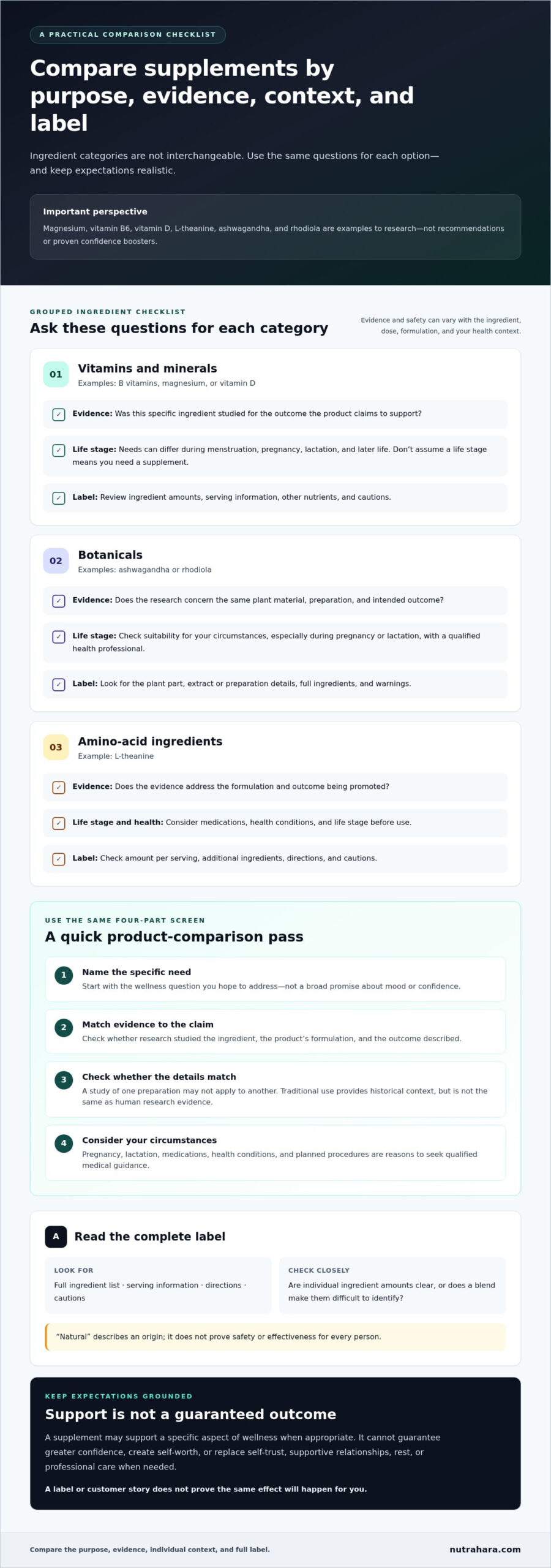
Compare products by the question they’re meant to answer, not by broad promises about mood or confidence. Ingredients such as magnesium, vitamin B6, vitamin D, L-theanine, ashwagandha, and rhodiola are examples to research, not recommendations or proven confidence boosters. Evidence and safety can vary with the ingredient, dose, formulation, and your health context.

Use this framework to organize your questions. It doesn’t rate ingredients or establish that a product will produce a particular result.

Category and examples Evidence question Life-stage caution Label details to review
Vitamins and minerals, such as B vitamins, magnesium, or vitamin D Was the specific ingredient studied for the outcome the product claims to support? Needs can differ during menstruation, pregnancy, lactation, and later life. Don’t assume a life stage means you need a supplement. Ingredient amounts, serving information, other nutrients, and cautions.
Botanicals, such as ashwagandha or rhodiola Does the research concern the same plant material, preparation, and intended outcome? Check suitability for your circumstances, especially during pregnancy or lactation, with a qualified health professional. Plant part, extract or preparation details, full ingredients, and warnings.
Amino-acid ingredients, such as L-theanine Does the evidence address the formulation and outcome being promoted? Consider medications, health conditions, and life stage before use. Amount per serving, additional ingredients, directions, and cautions.

Questions to ask when comparing ingredient categories

Start with a specific wellness question. Then check whether the evidence studied the ingredient itself, the product’s formulation, and the outcome described in its claims. A study of one preparation may not apply to another. Traditional use can offer historical context, but it isn’t the same as evidence from human research. Broad phrases like “supports mood” don’t explain what outcome was measured or who was studied.

What to look for on a supplement label

Read the complete ingredient list, serving information, directions, and cautions. Check whether each ingredient’s amount is clearly stated and whether a blend makes individual amounts difficult to identify. “Natural” describes an origin, not proof of safety or effectiveness for every person. The Vitamin B Complex product page is one example of where to review product-specific information. The name alone doesn’t establish who should use it or what it will do.

When comparing women’s wellness supplements, apply the same questions to each option. Reviewing the details helps you move beyond confidence-focused marketing and make choices based on evidence, clear labeling, and your individual circumstances.

Safety Considerations for Women Choosing Supplements

A supplement’s suitability depends on its ingredients, formulation, and your personal circumstances, including life stage, health conditions, medications, and planned procedures. “Natural” doesn’t automatically mean safe or appropriate for everyone. Plant-based ingredients can still require careful consideration, and a product’s general wellness positioning isn’t a substitute for individualized guidance.

This matters whether you’re comparing supplements to boost self-confidence or considering a product for another wellness goal. Make safety part of your decision from the start, not a detail to review only after choosing.

Pregnancy, lactation, and changing health needs

Don’t assume guidance intended for adults generally applies during pregnancy or breastfeeding. If you’re pregnant, lactating, trying to conceive, or have questions related to menstruation or menopause, seek individualized advice from a qualified healthcare professional before starting a supplement. Life stage alone doesn’t determine what you need, and broad claims about hormonal balance or symptom relief shouldn’t replace personal assessment.

Medication use, side effects, and product claims

If you take prescription or over-the-counter medication, have a health condition, or are planning a medical procedure, review the product’s cautions and discuss supplement use with a qualified professional. Ask whether the ingredients are suitable for your situation and whether potential interactions or other concerns apply. Don’t change prescribed treatment based on a supplement claim.

Keep the label and product information available when you seek guidance. This makes it easier to discuss the exact formulation rather than relying on a broad ingredient name. For example, the Ashwagandha with Black Pepper product page identifies the product you’re considering. Its name alone doesn’t establish its effects or suitability for you.

Separate marketing language from evidence by asking what a claim refers to. A product-level statement may not show that the specific ingredient, formulation, or amount has been studied for the promised outcome. Look for clear product information and be cautious about claims that imply a supplement treats a condition or reliably changes mood or confidence.

Before deciding, use this simple check:

  • Personal context: Note pregnancy, breastfeeding, medications, health conditions, allergies, and planned procedures.
  • Product details: Review the complete ingredient list, serving information, directions, and warnings.
  • Evidence: Ask whether research supports the specific ingredient and outcome being claimed.
  • Guidance: Discuss personal safety questions with a qualified healthcare professional, especially when your health circumstances change.

These steps can make a choice feel more manageable. They keep your decision grounded in your individual needs rather than a one-size-fits-all promise.

Build Confidence Alongside Supplements: Practical Habits That Fit Real Life

Confidence can grow through small experiences of caring for yourself and noticing what you can do. Supplements to boost self-confidence can’t replace those foundations. A flexible routine can make room for movement, rest, and reflection without turning wellness into another standard you have to meet.

Try this simple sequence as a starting point, then adapt it to your ability, schedule, comfort, and life stage. Pregnancy, recovery after birth, changing energy, or a busy workweek may call for a gentler version.

  1. Choose movement you enjoy. Plan a walk, swim, strength session, or another activity that feels appropriate for your current ability. Shorter sessions or everyday movement count when that’s what fits.
  2. Add restorative yoga. Choose comfortable poses or gentle stretching, and pause if a movement doesn’t feel right. Yoga can offer mindful movement without requiring flexibility or performance goals.
  3. Make space for meditation. Sit comfortably and notice your breath for a few quiet moments. If sitting still feels difficult, try a mindful walk instead.
  4. Create a wind-down cue. Choose a repeatable signal that helps you prepare for sleep, such as dimming the lights or putting your phone aside. Keep it realistic for your routine.
  5. Reflect without judging. Write down one strength you used or one meaningful action you took that day. It might be asking for help, showing up to exercise, or making time to rest.

Small practices for a steadier sense of self

Begin with a brief daily pause rather than aiming for a perfect meditation streak. Take a few comfortable breaths and let your attention return to them when it wanders. At day’s end, ask: “What did I handle today that deserves recognition?” Name one specific action, even if it was simply making space to recover.

Movement, yoga, and sustainable wellness

Enjoyment and comfort matter. Choose movement that meets you where you are, and give yourself permission to scale it down or rest. Restorative yoga may be a gentle option; meditation can be practiced seated, lying down, or while walking. These habits support general well-being, but they aren’t substitutes for healthcare when you need it.

There’s no single weekly template that suits every woman. You might alternate walks, yoga, and strength-focused movement, or begin with one activity you can repeat consistently. If your energy or circumstances change, adjust the plan instead of treating that as failure. A sustainable practice is one you can return to.

For a wellness routine that includes women’s supplements alongside everyday habits, explore Nutrahara’s wellness offerings.
Supplements for Self-Confidence: A Guide for Women

Explore Nutrahara Supplements as One Part of Your Wellness Journey

Choosing a supplement is a personal decision shaped by your needs, health context, and the information available about a product. Nutrahara combines principles of ancient Ayurveda with modern nutritional research in its women’s health supplements. That approach informs the products, but it isn’t a promise that a supplement will create confidence or reliably change how you feel.

Think of a product as one possible part of a broader routine. Sleep, nourishing meals, movement, yoga, meditation, supportive relationships, and appropriate healthcare all have a place in personal well-being. The right combination will look different for a woman who menstruates, is pregnant or lactating, is navigating perimenopause, or is postmenopausal. Your needs may also shift over time.

A thoughtful approach to choosing a Nutrahara product

If you’re considering a Nutrahara supplement, use its product information as a starting point for careful review, not as evidence of a particular effect or a recommendation for your circumstances. Compare the product information with your wellness goals, life stage, and any safety questions you have. If you take medication, have a health condition, or are pregnant or breastfeeding, seek individualized guidance from a qualified healthcare professional before adding a supplement.

A few useful questions can keep the decision grounded:

  • Does the product information clearly identify what the product contains?
  • Does any claim address a specific, understandable wellness goal?
  • Is the information relevant to your personal circumstances, or does it make a broad promise?
  • Have you considered whether a supplement fits alongside your existing routine and care?

These questions help separate a product description from evidence about a specific ingredient and outcome. They also leave room for the possibility that a supplement may not be the support you need right now. No product should be treated as a substitute for mental health care, and no supplement can guarantee greater confidence.

A measured next step for your wellness journey

The central distinction is simple: a supplement may support a specific aspect of wellness when appropriate, but that is not the same as directly producing self-confidence. Confidence develops within a wider life, through personal experience, emotional well-being, physical health, and relationships. If you’re exploring supplements to boost self-confidence, keep that broader picture in view and let evidence, personal needs, and safety guide your choices.

Nutrahara’s women’s health supplements bring Ayurvedic principles together with modern nutritional research. Review the product information alongside your own goals, and choose a next step that feels informed and right for you. Your wellness journey belongs to you, and it can grow through thoughtful choices rather than quick promises.

Let Your Next Wellness Choice Reflect What Matters to You

Confidence doesn’t need to arrive as a dramatic transformation. It can take shape in the choices you make with care, the boundaries you honor, and the way you recognize your progress. As you move forward, choose a personal sign of growth that matters to you. Perhaps it’s speaking up in a meeting, returning to an activity you enjoy, or feeling more at ease in your daily routine.

If you’re considering supplements to boost self-confidence, let your goals guide your questions rather than letting a product promise define success. Notice how your needs and priorities change over time, and give yourself permission to revise your approach. A thoughtful wellness journey is built through informed choices, patience, and care for the whole person.

Explore Nutrahara’s women’s health supplements at your own pace, and consider how their product information fits your priorities and broader routine. Explore Nutrahara’s women’s health supplements.

There’s no single right path to feeling more like yourself. Keep choosing what supports your well-being, one considered step at a time.

Frequently Asked Questions

Can supplements directly increase self-confidence?

No supplement can be relied on to directly or consistently increase self-confidence. A supplement may be considered for a specific nutritional need, but that is different from showing it builds confidence. If you’re weighing supplements to boost self-confidence, look beyond the product promise: identify the wellness goal, review what evidence supports the claim, and notice whether your confidence changes in particular situations, such as work or social settings.

Is there scientific evidence that supplements boost self-esteem?

Evidence that a particular ingredient supports a defined health outcome doesn’t automatically show that it increases self-esteem. These are different outcomes, and research on one ingredient or formulation may not apply to another product. Be cautious with claims that use broad terms such as “confidence” without explaining what was studied. A testimonial can describe one person’s experience, but it can’t establish a reliable effect for others.

Can stress or low energy affect how confident I feel?

Yes. Feeling worn down or under pressure may make it harder to speak up, take on a challenge, or feel comfortable in situations that usually feel manageable. That doesn’t mean stress or low energy explains every change in confidence. Consider noting when the feeling appears and what else is happening, such as workload, sleep disruption, or a change in routine. If it persists, discuss it with a healthcare professional.

Are supplements for confidence safe during pregnancy or breastfeeding?

Don’t assume a product is suitable during pregnancy or breastfeeding because it’s marketed for general wellness or made with natural ingredients. Safety depends on the specific product and your circumstances. Before starting or continuing a supplement, bring its full label to a qualified healthcare professional and ask for guidance tailored to you. This is especially useful when comparing a supplement with other products you already take.

Can I take confidence-related supplements with prescription medication?

Possibly, but don’t assume a supplement and prescription medication are compatible. Show your prescriber or pharmacist the complete label, including blends and serving information, and ask whether the specific product is appropriate alongside your medication and health conditions. Keep a current list of everything you take, including nonprescription products. Don’t stop, replace, or adjust prescribed medication on the basis of a supplement claim.

How can yoga and meditation support a confidence-building routine?

Yoga and meditation can create regular moments to notice your comfort, attention, and responses without judging yourself. Choose a gentle pose or movement that feels accessible, then pause to observe what feels steady or uncertain. A short meditation can focus on breathing or sounds around you. These practices aren’t confidence guarantees; they offer ways to make room for self-awareness and intentional choices in everyday life.

What should I do if low confidence is affecting my daily life?

If low confidence is making it difficult to work, maintain relationships, or take care of yourself, consider talking with a qualified healthcare or mental health professional. You can prepare by noting what feels difficult, when it began, and what you’ve already tried. Ask someone you trust for support if that feels comfortable. You deserve help suited to the full picture, not pressure to solve everything on your own.

Article by

Nutrahara Team

We are a dedicated collective of nutrition scientists and naturopaths at Nutrahara, committed to advancing women's health through the fusion of ancient Ayurveda science and cutting-edge nutrition research. Our mission is to empower you with clean, simple, and scientifically validated wellness solutions so you can live your healthiest life. Connect with us to stay updated on the latest developments in holistic women's health and nature-based research.

Disclaimer

This article is not a substitute for medical advice. Please consult a healthcare professional before starting any supplement, especially if pregnant, nursing, taking medication, or managing health conditions.

Categories
Articles

The Mind-Body Connection in Female Wellness: A Holistic Guide to Longevity

Have you ever woken up feeling like a stranger in your own skin, wondering why your body seems to be speaking a language you no longer understand? This sense of disconnect is often the first sign that the mind-body connection in female wellness has been disrupted by the relentless pace of modern life. Recent research shows that nearly 48% of adults are feeling more anxious than in previous years, a trend that often hits women hardest during hormonal transitions. You’ve likely felt the heavy fog of chronic stress or the physical fatigue that follows these shifts, but it doesn’t have to be your permanent reality.

We believe that true health is a long-term progression rather than a quick fix. You’ll learn exactly how to bridge the gap between ancient Ayurvedic wisdom and modern clinical research to reclaim your natural vitality. This guide provides a practical roadmap for emotional resilience and hormonal balance. We’ll explore how to pair clean supplements with the calming practices of yoga and meditation, giving you the tools to feel empowered and confident in your wellness journey across every life stage.

Key Takeaways

  • Explore the science of Psychoneuroimmunology to understand how your mental state directly shapes your physical health outcomes and immune function.
  • Discover why the “Biological Second Spring” is a time of empowerment and how to navigate hormonal shifts with confidence and grace.
  • Learn to integrate the mind-body connection in female wellness through daily rituals like yoga and meditation to boost your daily energy levels.
  • Identify how to choose clean, research-backed supplements that align with your body’s unique needs for a long-term health progression.
  • Understand the concept of “Ojas” and how ancient Ayurvedic wisdom provides a timeless blueprint for modern vitality and longevity.

The Science and Soul of the Mind-Body Connection in Women

The mind-body connection in female wellness is often discussed as a spiritual concept, but it’s actually rooted in the tangible biology of communication. Every thought you have triggers a chemical cascade. These signals travel between your brain and your biological systems, creating a bidirectional highway where your mental state influences your physical health and vice versa. Understanding this link is the first step toward true longevity. It’s not just about how you feel; it’s about how your cells respond to the environment you create within yourself.

Science calls this field Psychoneuroimmunology (PNI). It studies how your emotions interact with your nervous and immune systems. For women, this connection is particularly sensitive because we operate within a unique endocrine-emotional feedback loop. Our hormones don’t just regulate cycles; they interact with neurotransmitters like serotonin and dopamine. When one part of this delicate system shifts, the entire body feels the ripple effect. This is why a stressful week can lead to physical symptoms that seem unrelated to your mood.

Moving beyond simple symptom management requires a whole-person philosophy. Instead of just treating a headache or fatigue as isolated events, we look at the underlying emotional and physiological patterns. This perspective empowers you to take charge of your health progression. By recognizing that your body and mind are a single, unified system, you can start making choices that support both your emotional resilience and your physical vitality.

How Thoughts Become Biology: The Neuroendocrine Path

The Hypothalamic-Pituitary-Adrenal (HPA) axis is the command center that translates stress into hormonal fluctuations. When you perceive a threat or feel overwhelmed, your brain sends a signal that eventually lands in your adrenal glands. The “cortisol steal” occurs when chronic stress forces your body to prioritize the production of cortisol over progesterone, leading to hormonal imbalances that can disrupt your cycle or sleep. This process shows how a mental state can physically deplete your hormonal reserves.

This biological hijacking often manifests in ways that feel like a loss of control. You might notice persistent tension in your jaw or shoulders, or digestive issues like bloating that seem to flare during busy weeks. For women between 30 and 60, these shifts are more than just numbers on a lab report. During perimenopause and menopause, the drop in estrogen can make the mind-body connection in female wellness feel more like a fracture. You might feel more reactive to stress or find that your usual recovery methods aren’t working. Natural supports like Ashwagandha with Black Pepper can help nourish the HPA axis, but the foundation always starts with awareness.

The Soma and the Spirit: A Nurturing Perspective

The word “Soma” refers to the living body as perceived from within. It’s a reminder that your physical form isn’t just a machine; it’s a vessel for your experiences. Modern mind-body interventions, such as yoga and meditation, help us tune back into this internal wisdom. These practices aren’t just for fitness; they’re tools for recalibrating your entire system.

Your self-perception and body image actually influence your cellular health. Research suggests that high levels of self-compassion can lower inflammatory markers. When you view your body as a wise messenger rather than an adversary, you open the door to deeper healing. Your symptoms aren’t failures; they’re signals. By listening to these cues, you can refine your wellness journey and build lasting resilience. Your body is always speaking to you; the goal is to learn how to listen with kindness and authority.

Bridging Ancient Ayurveda with Modern Nutritional Science

Nutrahara exists at the intersection of two powerful worlds. We believe the future of health lies in the fusion of ancient health philosophies and contemporary nutritional research. This approach recognizes that the mind-body connection in female wellness isn’t a new discovery; it’s a timeless reality that modern science is finally beginning to quantify. In Ayurveda, the concept of “Ojas” represents our core vitality and the refined essence of our physical and mental health. Today, we understand Ojas as the robust functioning of our immune system and our capacity for cellular repair. When your Ojas is strong, you feel grounded, resilient, and clear-headed.

Maintaining this vitality requires purity. If your supplements contain artificial additives or fillers, they create “noise” in your biological communication. We prioritize clean, natural ingredients to ensure your body receives a clear signal, supporting your long-term health progression without unnecessary interference. This clarity is essential for mastering your well-being across every life stage. By choosing formulas that honor both tradition and clinical validation, you’re building a foundation of trust with your own body.

Adaptogens: Nature’s Stress Regulators

Adaptogens are a unique class of herbs that help the body maintain equilibrium. Ashwagandha is perhaps the most revered of these, acting as a bridge between your nervous system and your adrenal health. To understand why this matters, we must look at the science of the stress response, which explains how prolonged “fight or flight” states can exhaust your internal resources. Clinical evidence shows that specific Ayurvedic herbs can significantly reduce perceived stress levels. By incorporating a high-quality extract like Ashwagandha with Black Pepper, you’re giving your body a foundational tool to buffer against the demands of a modern lifestyle.

The Gut-Brain Axis and Female Intuition

Your digestive system is often called the “second brain” for good reason. It’s home to a complex network of neurons and produces approximately 95% of your body’s serotonin. This means your digestive health directly reflects your emotional state. If you’ve ever felt “butterflies” or a “pit in your stomach” during stressful times, you’ve experienced the gut-brain axis in action. Balancing this system is crucial for emotional resilience. You might find that supporting your digestion also clarifies your mental state. For more on how these systems interact, explore our guide on Do Digestive Enzymes Help You Lose Weight? to see how holistic support impacts your goals. Strengthening your internal rhythm allows you to move through life with newfound confidence and nurture your natural balance every day.

Managing the Biological Second Spring: Life Stages 30-60

In many Eastern philosophies, the transition through menopause isn’t a decline but a “Second Spring.” This perspective is essential for maintaining the mind-body connection in female wellness as you navigate the decades between 30 and 60. During this span, your body undergoes profound shifts, from the intensity of the childbearing years to the hormonal recalibration of perimenopause. Maria, a 32-year-old new mother, felt this disconnect acutely after her first pregnancy. “I didn’t recognize my own reactions to stress,” she recalls. By shifting her focus to gentle movement and targeted nutrition, she learned to listen to her body’s new signals rather than fighting them.

Listening to these changing needs is a form of empowerment that builds self-esteem and confidence. When you view your body as a wise guide, every symptom becomes an opportunity for deeper understanding. This proactive approach ensures that your health progression remains steady even as your internal landscape transforms. Whether you’re managing the depletion of the postpartum period or the initial waves of perimenopause, the goal is always the same: to move from a state of survival into one of mastery and grace.

Hormonal Harmony and Emotional Resilience

The gradual decline of estrogen does more than end fertility; it fundamentally alters how your brain processes emotions. Sarah, a 46-year-old athlete, noticed that her usual resilience was fading. “I was waking up at 3 AM with racing thoughts that didn’t belong to me,” she explains. This volatility is a hallmark of the perimenopausal shift. To support this transition, many women turn to FemmePower to help restore hormonal equilibrium. Sarah found that pairing this support with restorative yoga allowed her to reclaim her calm. Practicing self-compassion during these fluctuations isn’t a luxury; it’s a biological necessity for long-term health.

Cognitive Clarity: Addressing the Fog

The experience of “menopause brain” is a tangible manifestation of the mind-body connection in female wellness. Brain fog and lapses in memory often stem from how shifting hormones affect the brain’s energy metabolism. Elena, a 54-year-old executive, found herself struggling to find words during presentations. “It was a blow to my confidence,” she says. By incorporating specific nutrients designed for mental sharpness, such as those found in FocusZenith, she cleared the mental haze. Elena combined this with a 10-minute daily meditation, proving that cognitive clarity is achievable at any age. Clearing the fog allows you to stay present and decisive as you lead your wellness journey.

Daily Rituals for Resilience: Integrating Yoga and Meditation

While a routine is something you have to do, a ritual is something you get to do. This distinction is vital for anchoring the mind-body connection in female wellness. A ritual is an intentional act that invites presence and tranquility into your day. By creating a sacred space, even if it’s just a quiet corner of your bedroom, you signal to your nervous system that it’s safe to downregulate. This transition from “doing” to “being” is where deep healing begins. Pairing your morning mindfulness with targeted nutrition, a concept known as nutrient timing, ensures your body has the raw materials it needs to sustain the calm you’ve cultivated.

Consistency is the heartbeat of any wellness journey. You don’t need hours of free time to see results. Small, rhythmic actions build the foundation for long-term vitality. Whether it’s five minutes of focused breathwork or a deep visualization exercise during your commute, these moments of pause accumulate. They create a reservoir of resilience that you can draw upon when life becomes demanding. By treating your wellness as a sacred partnership with your body, you move through every life stage with newfound grace.

Yoga Poses for Female Vitality

Movement is a powerful tool for releasing stored emotional tension, particularly in the pelvic region where many women hold stress. These restorative poses are designed for adrenal recovery and hormonal balance:

  • Child’s Pose (Balasana): Kneel on the floor, touch your big toes together, and sit on your heels. Fold forward, resting your forehead on the mat and reaching your arms forward. This pose gently stretches the lower back and quiets the mind.
  • Legs-Up-The-Wall (Viparita Karani): Lie on your back with your sit-bones as close to the wall as possible. Extend your legs up the wall and rest your arms by your sides. This pose encourages lymphatic drainage and calms the nervous system.

To stay consistent with a home practice, keep your yoga mat unrolled in a visible spot. This acts as a gentle, visual invitation to take a few minutes for yourself each day.

Meditation for Emotional Regulation

A Body Scan meditation is a practical way to identify where you’re physically holding emotional stress. Close your eyes and slowly bring your attention to each part of your body, from your toes to the crown of your head. Notice any areas of tightness, like a clenched jaw or a heavy chest. These are often physical echoes of emotional tension. A consistent 10-minute daily practice actually rewires the brain, strengthening the neural pathways responsible for emotional regulation and cognitive focus. For those navigating high-stress periods, pairing this practice with Anxioguard in the evening can deepen your sense of tranquility and support a more restful sleep cycle. You can nurture your personal health progression by making these small, intentional shifts today.

Choosing Your Path: Empowered Supplementation and Longevity

Mastery of your health isn’t about following a rigid, one-size-fits-all protocol. It’s about building a personalized supplement stack that honors your unique mind-body needs. You are the ultimate expert on your own body. While we provide the clinical research and ancient wisdom, your intuition guides the application. The Nutrahara Promise is rooted in purity and simplicity. We strip away artificial additives to ensure your wellness journey is a clean, long-term progression. This transparency allows you to trust what you’re putting into your system, knowing every ingredient serves a purpose for your vitality.

Wellness is a marathon, not a sprint toward a temporary goal. Real transformation requires patience and a commitment to your future self. As you move through your 30s, 40s, 50s, and 60s, the mind-body connection in female wellness will naturally change. Embracing this evolution with curiosity rather than fear is the key to longevity. Unlike clinical approaches that rely solely on pharmaceutical intervention for mental health, we focus on natural, self-led wellness alternatives. By nourishing your biology, you create the foundation for a clear mind and a resilient spirit.

The Foundations of Longevity

As we age, supporting our structural integrity becomes a non-negotiable priority. Essential nutrients for bone, joint, and brain health are the building blocks of a vibrant, active life. When your body feels strong and your joints move without restriction, your mental confidence naturally increases. Physical strength is a direct contributor to emotional empowerment. Integrating a high-quality Premium Collagen Complex into your daily ritual supports both your physical structure and your skin health. This synergy between physical strength and mental resilience is a core pillar of a balanced life.

Your Next Steps Toward Mastery

Starting your transformation today doesn’t require a total lifestyle overhaul. It begins with small, intentional choices that build momentum over time. Use this checklist to anchor your progress:

  • Identify your primary goal: Focus on one area, such as hormonal balance, cognitive focus, or restful sleep.
  • Select clean support: Choose a supplement that aligns with that goal and features natural, research-backed ingredients.
  • Anchor a ritual: Pair your supplement with a 10-minute mindfulness practice like the “Body Scan” mentioned earlier.
  • Observe and adjust: Listen to your body’s feedback over the next 30 days without judgment.

We invite you to join the Nutrahara community for ongoing support and educational resources. Your journey is unique, but you don’t have to walk it alone. By taking these steps, you’re not just managing symptoms; you’re mastering your well-being for the long term. Trust the process, honor your rhythm, and stay confident in your ability to thrive.

Embrace Your Radiant Path to Longevity

We’ve explored how the mind-body connection in female wellness is the foundation for lasting vitality. You now understand how the cortisol steal impacts your hormones and how the Second Spring offers a unique chance for renewal. By merging ancient Ayurvedic tradition with modern clinical research, you can navigate the transitions of your 30s through your 60s with renewed confidence. True health isn’t a destination; it’s a rhythmic progression that honors your body’s changing needs through every decade.

Nutrahara is here to serve as your wise guide on this journey. Our formulas are designed specifically for the unique female life cycle and are completely free of artificial additives or fillers. We believe in purity and simplicity to ensure your biological signals remain clear and strong. Begin your journey to total harmony with Nutrahara Supplements and experience the powerful synergy of nature and science. Your wellness is a lifelong partnership; don’t forget to honor your rhythm and trust the wisdom you’ve cultivated. You have the tools to thrive today and for many years to come.

Frequently Asked Questions

What is the mind-body connection in female wellness?

The mind-body connection in female wellness is the physiological dialogue between your nervous system and endocrine health. This link ensures that your mental state directly influences hormonal production, particularly during major life transitions. By understanding this bidirectional flow, you can move beyond treating isolated symptoms. It empowers you to view your health as a unified progression where emotional resilience and physical vitality are inseparable partners in your journey.

How does stress specifically affect a woman’s hormonal balance?

Stress disrupts your hormonal balance by triggering the HPA axis to prioritize cortisol over reproductive hormones like progesterone. This “cortisol steal” can lead to irregular cycles, increased anxiety, and sleep disturbances. Over time, chronic stress exhausts the adrenal glands, making it harder for your body to regulate estrogen. Implementing daily mindfulness rituals helps buffer this response, protecting your delicate internal rhythm and supporting long-term endocrine stability.

Can yoga really help with perimenopause symptoms?

Yoga helps alleviate perimenopause symptoms by lowering systemic inflammation and calming the sympathetic nervous system. Poses like Child’s Pose or Legs-Up-The-Wall specifically target the adrenal glands to reduce the frequency of hot flashes and night sweats. Beyond physical relief, yoga provides a space to process the psychological shifts of the “Second Spring.” This integration of movement and breath fosters the emotional grounding needed to navigate hormonal changes with confidence.

What are the best supplements for supporting the mind-body connection?

The best supplements for the mind-body connection include adaptogens like Ashwagandha and hormone-balancing nutrients found in clean, research-backed formulas. These ingredients help stabilize the HPA axis and support the nervous system’s response to daily stressors. When choosing supplements, prioritize purity and the absence of artificial fillers to ensure a clear biological signal. Building a personalized stack allows you to target specific needs like cognitive clarity or restful sleep effectively.

How long does it take to see results from a holistic wellness approach?

Most women begin to notice subtle improvements in energy and mood within three weeks of starting a holistic approach. However, achieving significant hormonal recalibration and deep emotional resilience typically requires a consistent commitment of at least three months. This timeframe allows your cells to renew and your neural pathways to strengthen. Viewing your wellness as a long-term progression rather than a quick fix ensures that the results you achieve are both lasting and profound.

Is the mind-body connection scientifically proven?

The mind-body connection in female wellness is scientifically validated through Psychoneuroimmunology, which studies how emotions interact with the immune and nervous systems. Clinical research confirms that meditation and yoga can lower inflammatory markers and improve heart rate variability. These measurable changes prove that mental practices have a direct, tangible impact on your physical biology. This intersection of science and tradition provides a credible foundation for your personal health and longevity journey.

How can I start a meditation practice if I have a busy schedule?

You can start a meditation practice by integrating “micro-mindfulness” into existing daily habits, such as your morning coffee or commute. Even five minutes of focused breathwork can significantly lower your stress response and improve cognitive focus. The key is consistency rather than duration; a short daily practice is more effective for neuroplasticity than a longer, occasional session. Using tools like guided apps or visualization techniques makes it easier to stay committed.

What role does the gut play in my mental health?

Your gut plays a central role in mental health by producing 95% of your body’s serotonin, the neurotransmitter responsible for mood stability. The gut-brain axis ensures that digestive health directly influences your emotional resilience and cognitive function. When your microbiome is balanced, you experience fewer fluctuations in mood and energy. Supporting your digestion with clean nutrients and enzymes is a foundational step in maintaining the internal harmony required for total well-being.

Article by

Nutrahara Team

We are a dedicated collective of nutrition scientists and naturopaths at Nutrahara, committed to advancing women's health through the fusion of ancient Ayurveda science and cutting-edge nutrition research. Our mission is to empower you with clean, simple, and scientifically validated wellness solutions so you can live your healthiest life. Connect with us to stay updated on the latest developments in holistic women's health and nature-based research.

Disclaimer

This article is not a substitute for medical advice. Please consult a healthcare professional before starting any supplement, especially if pregnant, nursing, taking medication, or managing health conditions.