
Categories
Articles

Probiotics for Vaginal Health: What the Evidence Says

What if the word “probiotic” tells you less than the strain, the study, and the health question behind it? It’s understandable to consider probiotics for vaginal health when wellness claims conflict and symptoms are uncomfortable or hard to discuss. But a supplement’s promise isn’t proof, and vaginal symptoms can have different causes.

The evidence is nuanced. Research explores specific strains and outcomes, but it doesn’t establish that every supplement can prevent or treat vaginal conditions. This guide explains what studies can and can’t show, why strain and context matter, and when symptoms call for clinical evaluation instead of self-treatment. You’ll also find gentle ways to support overall wellbeing, including movement, yoga, and mindfulness, while making informed choices for your health and life stage.

Key Takeaways

  • Assess probiotics for vaginal health by the specific strain and outcome studied, not by the word “probiotic” alone.
  • Find out why findings about bacterial vaginosis don’t automatically apply to yeast infections or general vaginal wellness.
  • Compare a product’s strain, research population, and delivery method with the study behind its claims.
  • Use gentle movement, yoga, and meditation to support overall wellbeing, not as treatments for vaginal symptoms.
  • Keep track of concerns and seek clinical evaluation when symptoms warrant it rather than relying on supplements to self-diagnose.

What probiotics for vaginal health are, and what they are not

Probiotics are live microorganisms that may provide a health benefit when used in a suitable amount, but their effects depend on the specific strain and the outcome being studied. That means “probiotic” on a label isn’t proof that a product will benefit the vagina. Research on one strain or formulation can’t automatically be applied to every supplement.

The vaginal microbiome is the community of microorganisms living in and around the vagina. It is distinct from the gut microbiome, even though some probiotics are taken by mouth and researchers study how they may relate to vaginal bacteria. Evidence about digestive health alone doesn’t establish a vaginal benefit. A probiotic supplement also can’t diagnose or treat an infection. Symptoms need appropriate clinical evaluation.

How the vaginal microbiome relates to Lactobacillus

Lactobacillus species are commonly discussed in vaginal-microbiome research. These bacteria are associated with vaginal environments, but a person’s microbiome can vary, including across menstrual cycles and life stages such as pregnancy or menopause. Learn more about Lactobacillus in the vaginal microbiota. A microbiome test offers a snapshot, not a complete assessment of someone’s health or an explanation for every symptom.

Why a probiotic label does not establish vaginal benefit

Strain names matter. Two probiotics may contain bacteria from the same species but different strains, and findings about one strain don’t prove that another works the same way. Look for research that matches the product’s strain and intended outcome, rather than relying on broad claims about “women’s health.”

Route matters, too. Oral probiotics are swallowed; products designed for vaginal use are a different formulation and aren’t interchangeable. Studies of one route don’t automatically support claims for the other. Neither route should replace evaluation or established care when symptoms suggest infection.

Keep pH and microbiome claims in perspective

Vaginal pH is one part of the picture, not a stand-alone measure of vaginal health. It can vary, and a pH result alone can’t identify the cause of symptoms. For foundational context, a vaginal pH balance guide can help explain what pH does and why it shouldn’t be used to self-diagnose. A clear, strain-specific claim is more informative than a promise to “balance” the entire microbiome.

What research says about probiotics and vaginal health

The evidence is not a blanket endorsement of probiotics. Results depend on the strain, who took part in a study, whether the probiotic was oral or vaginal, and what researchers measured. A finding about bacterial vaginosis (BV) recurrence, for example, doesn’t establish a benefit for yeast infections or everyday vaginal wellness.

Probiotics studied alongside bacterial vaginosis care

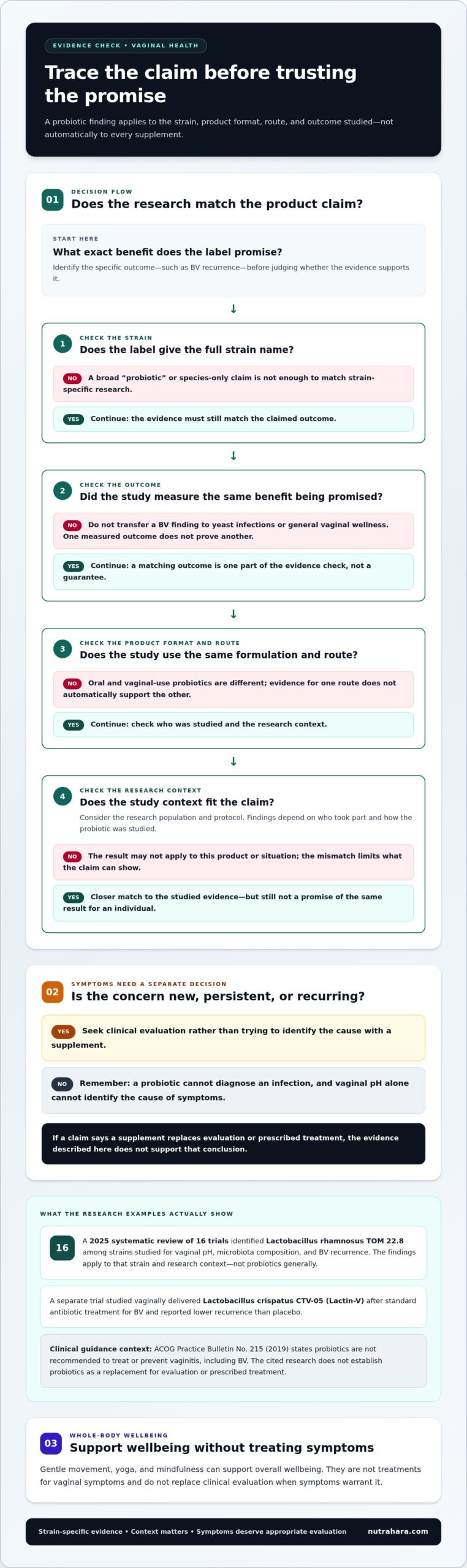
A 2025 systematic review of 16 trials identified Lactobacillus rhamnosus TOM 22.8 among the strains studied for vaginal pH, microbiota composition, and BV recurrence. The review reported a promising regimen, but its findings apply to that strain and research context, not to probiotics generally. A separate clinical trial of vaginally delivered Lactobacillus crispatus CTV-05, known as Lactin-V, examined recurrence after standard antibiotic treatment and reported lower recurrence than placebo.

These studies explore specific approaches, often alongside or after standard care. They don’t show that a supplement can replace evaluation or prescribed treatment for active BV. The American College of Obstetricians and Gynecologists’ Practice Bulletin No. 215, published in 2019, states that probiotics aren’t recommended to treat or prevent vaginitis, including BV. Differences in strains, delivery, study populations, and protocols also limit how confidently results can be applied to other products.

What evidence does, and does not, show for yeast infections

Yeast infections involve Candida, commonly Candida albicans, rather than the bacterial imbalance studied in BV research. Findings about a probiotic’s effect on BV therefore can’t be used to claim it prevents or cures yeast infections. Evidence for probiotics as a reliable yeast-infection treatment or preventive approach remains insufficient to support that promise. If symptoms are new, persistent, or recurring, seek clinical evaluation rather than trying to identify the cause with a supplement.

In brief: Research offers strain-specific signals, particularly around BV recurrence and use alongside standard care, but it doesn’t establish that probiotics for vaginal health broadly prevent or treat infections. For context on vaginal pH, see the vaginal health and pH balance guide. Remember that pH alone can’t diagnose the cause of symptoms.

How to assess vaginal probiotic claims without overpromising

A confident label can sound persuasive, but a useful claim should be traceable to research on the same strain, formulation, route, and intended outcome. A study result is evidence to consider, not a promise that you’ll get the same result. This distinction matters because vaginal odor, discharge, irritation, and pH can change for different reasons. A probiotic can’t correct every change or identify its cause.

Strain-specific evidence matters more than a broad probiotic claim because research findings apply to the exact microbes, product format, and outcome studied, not automatically to a whole category. Use this framework to assess claims about probiotics for vaginal health:

What to check What to look for Evidence limit
Strain Is the full strain name given, not just the species? Another strain of the same species may not have the same effect.
Outcome Did the study assess BV recurrence, symptoms, or another specific measure? One measured outcome doesn’t prove broad vaginal-health benefits.
Population Who took part, and does the group resemble your life stage or circumstances? Findings may not apply equally across pregnancy, menopause, or other contexts.
Formulation and route Was the studied product oral or intended for vaginal use? A study of one product or route doesn’t validate another.

Questions that make a claim easier to evaluate

Before trusting a claim, look for the study it cites and ask: Which exact strain was studied? What outcome did researchers measure? Who participated, and how was the probiotic used? Then compare those details with the product claim. A result from a defined study group can inform your understanding, but it can’t guarantee an individual response.

Be cautious if a claim promises to “balance” the microbiome, eliminate odor, or normalize pH without explaining what was measured. A pH reading alone can’t diagnose the cause of symptoms, and a broad promise doesn’t establish prevention or treatment of infection.

When symptoms need clinical evaluation instead

Unusual or persistent odor or discharge, irritation, and pain can have several causes that need different care. Seek clinical evaluation if symptoms are persistent, recurring, severe, or concerning. If you’re pregnant and develop symptoms, or have fever or pelvic pain, contact a healthcare professional promptly. Supplements shouldn’t delay assessment or replace care for a suspected infection.

Practical habits for vaginal and whole-body wellness

Wellbeing is built through steady, sustainable choices, not a perfect routine. Everyday habits can support how you feel overall, but they shouldn’t be treated as ways to prevent or cure vaginal infections. Choose comfortable clothing and gentle external cleansing that suits you, and avoid products that cause irritation. Vaginal symptoms aren’t a sign that you’ve failed to keep yourself clean.

A gentle routine that supports overall wellbeing

Choose habits that fit your energy, schedule, and body. A walk, stretching, or another comfortable form of movement can help you stay active. Drink fluids according to your needs, and make room for rest when possible. Yoga or meditation may offer a calming pause, but neither is a treatment for vaginal symptoms.

Try a brief reset: sit comfortably, relax your shoulders, and take a few slow, unforced breaths. If a pose or movement feels uncomfortable, skip it. You can also keep a private note of symptoms, when they occur, and any changes you notice. That record may help you describe concerns clearly during a clinical conversation.

How life stage can shape questions about supplements

Menstruation, pregnancy, lactation, and menopause can bring different questions about body changes and supplement use. There’s no single routine that fits every woman. If you’re pregnant or lactating, take medication, or have a health condition, discuss supplements with a qualified healthcare professional before starting them. This can help you consider the specific product and your personal circumstances.

Changes in discharge, comfort, or other symptoms can feel personal, but they’re valid reasons to seek guidance. You don’t need to diagnose yourself or blame your hygiene habits. Note what you’ve noticed and ask a healthcare professional about appropriate next steps. A steady wellness practice can include informed choices and support when you need it.

For a research-informed perspective on women’s wellness, explore Nutrahara’s approach to women’s health.
Probiotics for Vaginal Health: What the Evidence Says

A thoughtful next step for your vaginal-health journey

The clearest takeaway is simple: probiotic evidence is strain-specific, and no supplement should be used to self-diagnose an infection. Research on a particular strain or outcome doesn’t establish that every product will help, or that a change in odor, discharge, or comfort has the same cause for every woman.

Choose an informed next step, not a quick promise

Use this short sequence to turn uncertainty into a practical plan:

  • Note your concern. Write down what you’ve noticed, when it began, and whether it has changed or returned.
  • Review the evidence. Look for the exact strain, the outcome studied, who took part, and whether the study used the same type of product you’re considering.
  • Seek care when symptoms warrant it. Persistent, recurring, severe, or concerning symptoms deserve clinical evaluation rather than supplement-based guesswork.

General wellness learning can help you ask informed questions, but it isn’t a substitute for care when symptoms are active or keep returning. For broader supplement-literacy context, a women’s wellness supplements guide can help you think through evidence and product claims beyond probiotics for vaginal health. If you’re pregnant or lactating, take medication, or have a health condition, discuss supplement use with a qualified healthcare professional.

Continue your wellness journey with confidence

It’s reasonable to ask questions about intimate health. You don’t need to feel embarrassed or blame yourself for symptoms. If you speak with a healthcare professional, share what you’ve noticed, whether symptoms have recurred, and any supplements or medications you use. Pregnancy, lactation, and other health circumstances are useful context for that conversation.

Nutrahara brings Ayurvedic principles into conversation with modern nutritional research as part of a broader perspective on women’s wellness, not as a treatment for vaginal symptoms. Let curiosity guide your next step while keeping evidence and appropriate care in view.

Explore Nutrahara’s holistic wellness approach.

Make your next step evidence-informed

Research on probiotics for vaginal health depends on the specific strain, how it’s used, and the outcome studied. A promising finding for one formulation doesn’t prove that every probiotic can prevent or treat vaginal symptoms. Read claims with care, and don’t use supplements to self-diagnose. Persistent, recurring, or concerning symptoms deserve clinical evaluation.

Keep your next step simple: note what you’ve noticed, look for evidence that matches a product’s exact strain and intended benefit, and seek professional guidance when symptoms or personal circumstances call for it. Your questions are a practical part of caring for your health, whatever life stage you’re in.

Nutrahara brings Ayurvedic principles together with modern nutritional research, with a focus on women’s health supplements and natural, clean ingredients. Explore that broader approach to wellness at your own pace.

Explore Nutrahara’s women’s wellness supplements and continue building confidence in the choices that support your wellbeing.

Frequently Asked Questions

Can probiotics help with vaginal health?

Some specific probiotic strains are being studied for particular vaginal-health outcomes, especially in relation to bacterial vaginosis (BV). That doesn’t mean all probiotics for vaginal health have the same effects, or that supplements can resolve every symptom. Research findings depend on the strain, formulation, route, and outcome measured. If you have symptoms, don’t use a supplement to diagnose their cause or as a substitute for appropriate clinical care.

Are probiotics proven to prevent or treat bacterial vaginosis?

No. The American College of Obstetricians and Gynecologists’ Practice Bulletin No. 215 states that probiotics aren’t recommended to treat or prevent vaginitis, including BV. Researchers have studied certain strains as additions to or after standard treatment, including for recurrence, but those findings don’t establish probiotics as a replacement for evaluation or prescribed care. If BV is suspected or symptoms return, seek clinical advice about appropriate treatment.

Can probiotics prevent yeast infections?

Probiotics haven’t been established as a reliable way to prevent or cure yeast infections. Yeast infections involve Candida, while much vaginal-probiotic research focuses on bacterial vaginosis, so findings about BV can’t be assumed to apply to yeast. Itching, irritation, or discharge can have different causes. If symptoms are new, persistent, or recurring, seek clinical evaluation instead of relying on a supplement to identify or treat them.

How long do probiotics take to affect vaginal health?

There isn’t one established timeframe for probiotics to affect vaginal health. Studies examine different strains, routes, populations, and outcomes, so results from one trial can’t predict when or whether a particular person will notice a change. Don’t use a lack of improvement as a reason to keep self-treating symptoms. If you’re concerned or symptoms persist or recur, arrange clinical evaluation rather than waiting for a supplement to work.

Are oral probiotics the same as vaginal probiotics?

No. Oral probiotics are swallowed, while vaginal probiotics are formulated for vaginal use. They differ in route, and research on one type doesn’t automatically show that the other has the same effects. Check whether a study matches the product’s exact strain and route, and don’t assume a general probiotic label establishes vaginal benefit. Don’t use either type instead of clinical evaluation or treatment for suspected infection.

Should I take probiotics while pregnant or breastfeeding?

Ask a qualified healthcare professional before starting a probiotic while pregnant or breastfeeding. The appropriate advice can depend on your health, the product’s specific strains and ingredients, and your individual circumstances. Share the product label and mention any medications or health conditions, so you can discuss whether it’s suitable for you. If you have vaginal symptoms during pregnancy or while breastfeeding, seek professional advice rather than self-treating.

Article by

Nutrahara Team

We are a dedicated collective of nutrition scientists and naturopaths at Nutrahara, committed to advancing women's health through the fusion of ancient Ayurveda science and cutting-edge nutrition research. Our mission is to empower you with clean, simple, and scientifically validated wellness solutions so you can live your healthiest life. Connect with us to stay updated on the latest developments in holistic women's health and nature-based research.

Disclaimer

This article is not a substitute for medical advice. Please consult a healthcare professional before starting any supplement, especially if pregnant, nursing, taking medication, or managing health conditions.

Categories
Articles

Probiotics for Vaginal Health: A Holistic Guide to Balance and Vitality in 2026

What if the persistent cycle of discomfort you’re feeling isn’t a sign of a broken system, but a call for a deeper, more holistic alignment? You’ve likely spent months searching for probiotics for vaginal health that actually deliver on their promises, only to be met with confusing labels and recurring issues like BV or yeast infections. It’s frustrating when your body feels like a stranger, especially as you move through life stages like perimenopause or postpartum recovery. You deserve to feel confident and comfortable in your own skin again.

We understand that true vitality requires more than just a quick fix; it’s a long-term progression toward balance. This guide bridges the gap between ancient Ayurvedic principles and the latest 2026 probiotic research to help you restore your natural pH balance. We’ll examine why specific strains like Lactobacillus rhamnosus are essential and how to choose clean, natural supplements that align with your yoga and meditation practice. By the end of this article, you’ll have a clear, science-backed roadmap to reclaim your internal harmony and feminine vitality.

Key Takeaways

  • Learn how your vaginal microbiome functions as a self-regulating sanctuary and why maintaining a precise acidic pH is the foundation of your comfort.
  • Discover the specific clinically-studied strains in probiotics for vaginal health that actually colonize the tract, moving beyond basic gut health products.
  • Understand the connection between Ayurvedic “Ama” and vaginal vitality, offering a deeper perspective on how internal purity affects your overall wellness.
  • Gain practical strategies for every life stage, from your 30s through menopause, to boost confidence and maintain harmony in your body.
  • Explore how to select clean, additive-free supplements that align with your commitment to a natural, holistic lifestyle.

Understanding the Vaginal Microbiome: Your Body’s Natural Sanctuary

Your body is a masterpiece of self-regulation. Within you exists a complex vaginal microbiome, a biological sanctuary where trillions of microscopic allies work to maintain your vitality. This ecosystem isn’t just a collection of bacteria; it’s a living shield. When this environment is in harmony, these beneficial organisms produce lactic acid. This process maintains a protective, acidic pH between 3.8 and 4.5, which acts as a natural barrier against unwanted invaders. Understanding this delicate balance helps shift the perspective from one of anxiety or “fixing” a problem to one of nurturing a sacred internal space.

Disruption, or dysbiosis, often occurs when life’s demands become overwhelming. Chronic stress, diets high in processed sugars, and sudden hormonal fluctuations can all weaken your natural defenses. Instead of reaching for aggressive interventions that might strip away your body’s natural oils and beneficial flora, a holistic approach focuses on restoration. Integrating targeted probiotics for vaginal health into your daily ritual can help replenish these essential populations, allowing your body to return to its natural state of calm and comfort.

The Dominance of Lactobacillus Strains

In a healthy sanctuary, specific “guardian” strains take the lead. Lactobacillus crispatus, L. rhamnosus, and L. reuteri are the primary defenders of your well-being. These specific strains do more than just occupy space. They produce hydrogen peroxide and biosurfactants that inhibit the growth of pathogens. When your internal diversity drops, you might experience the recurring frustration of yeast infections or BV. Maintaining a robust population of these guardians through clean supplements like FemmePower ensures your defenses remain strong and resilient against daily environmental stressors.

Hormonal Shifts: From Menstruation to Menopause

Your microbiome is deeply connected to your endocrine system. Estrogen plays a vital role here by promoting the production of glycogen in the vaginal walls. This glycogen serves as the primary food source for your beneficial Lactobacillus. As women enter their 40s and 50s, the perimenopausal transition often leads to declining estrogen levels. This shift can starve your “good” bacteria, leading to a rise in pH and common symptoms like vaginal thinning or dryness. Supporting your body with specific probiotics for vaginal health during these transitions provides the extra reinforcement needed to navigate these life stages with grace and confidence. It’s a long-term progression toward sustained comfort, ensuring your body remains a place of peace and vitality through every decade.

The Science of Strains: Which Probiotics Truly Support Vaginal Harmony?

Most women assume that a daily serving of yogurt or a standard digestive supplement is enough to maintain their internal balance. While these are excellent for gut health, your feminine sanctuary requires a more tailored approach. The bacterial strains that thrive in your digestive tract aren’t always the same ones needed to protect your intimate ecosystem. This distinction is vital when selecting probiotics for vaginal health. Unlike general supplements, targeted formulas are designed to survive the journey through your digestive system and successfully colonize the vaginal tract.

You might wonder how an oral capsule can influence your intimate health. It’s a fascinating process of migration. Beneficial bacteria can travel from the digestive tract to the vagina, where they begin to rebuild protective colonies. Recent scientific research on probiotics confirms that this oral-to-vaginal pathway is a highly effective way to address recurring imbalances. To ensure these “good” bacteria flourish, they need fuel. This is where prebiotics come in. Think of prebiotics as the nourishment that allows your beneficial colonies to grow strong and resilient. Without this “fuel,” even the best strains may struggle to establish a lasting presence.

Top-Tier Strains for Feminine Wellness

  • Lactobacillus acidophilus: This foundational strain is a powerhouse for maintaining the acidic environment your body naturally craves.
  • Lactobacillus rhamnosus (GR-1): Widely recognized in clinical circles, this strain is prized for its unique ability to survive the transit to the vaginal tract and adhere to its walls.
  • Bifidobacterium lactis: This strain supports the delicate gut-vaginal axis, strengthening your immune response from the inside out.

The Nutrahara Philosophy: Science Meets Ayurveda

At Nutrahara, we believe that cellular health is deeply connected to “Prana,” or your vital life force. When your body is in a state of flow, your energy remains high and your systems function in harmony. Synthetic, filler-heavy supplements often disrupt this natural rhythm. By choosing clean, natural ingredients, you support a long-term progression toward vitality rather than settling for a temporary fix. Our FemmePower formula embodies this philosophy, blending modern probiotic science with the purity your body deserves. It’s a gentle yet powerful way to reclaim your confidence and support your daily yoga or meditation practice. If you are looking for a way to nurture your internal sanctuary, choosing a formula rooted in both science and tradition is a beautiful place to start.

Probiotics for Vaginal Health: A Holistic Guide to Balance and Vitality in 2026

Beyond the Capsule: Integrating Ayurveda and Modern Nutrition

True vitality is never the result of a single pill. While high-quality probiotics for vaginal health provide a necessary biological boost, they function best within a supportive environment. In the ancient wisdom of Ayurveda, vaginal and menstrual tissues are known as Artava. This system is considered a reflection of your overall digestive and metabolic health. When your body accumulates Ama, or metabolic toxins, it often manifests as changes in vaginal odor or discharge. Instead of viewing these symptoms with frustration, we can see them as signals from a wise system asking for more balance and internal purity.

Positioning your health as a long-term progression allows you to move away from “quick fixes” and toward a life of tranquility. A balanced lifestyle creates the fertile soil where beneficial bacteria can flourish. While there is significant evidence for vaginal probiotics as a targeted intervention, their success is deeply tied to how you nourish your body and mind every day. This holistic approach empowers you to take the lead in your own wellness journey, building confidence through consistent, mindful choices.

Dietary Wisdom for a Balanced pH

Your systemic microbiome thrives on diversity. Integrating fermented foods like kimchi, miso, and kefir into your meals provides a broad spectrum of beneficial organisms that support your internal ecology. From an Ayurvedic perspective, reducing “heat” or inflammation is also crucial. Incorporating cooling foods like cucumber, coconut water, and fresh cilantro can help soothe the body. Don’t overlook hydration; drinking enough water is the simplest way to maintain natural vaginal moisture and mucosal health, especially during the dry transitions of perimenopause.

Stress, Cortisol, and Your Flora

There is a direct scientific link between high cortisol levels and vaginal dysbiosis. When you are chronically stressed, your body’s pH can shift, making it easier for pathogens to take hold. Managing this stress through daily meditation or restorative yoga is essential for maintaining your flora. To support your nervous system during these shifts, many women find that Ashwagandha is a powerful tool for grounding. Additionally, supporting your hormonal foundation with BlossomBliss can help stabilize the environment that your probiotics for vaginal health need to thrive. By addressing both the physical and emotional aspects of wellness, you create a sustainable path to lasting harmony.

Empowered Wellness: Actionable Tips for Every Life Stage

Empowerment isn’t a final destination. It is the way you walk through each decade of your life with awareness and grace. Your body’s needs in your 30s are distinct from those in your 50s, yet the goal remains the same: a state of vibrant, balanced health. In your 30s, you might be focused on fertility, postpartum recovery, or managing a high-pressure career. During this time, probiotics for vaginal health serve as a foundational anchor, ensuring your internal sanctuary remains resilient against the impacts of stress and hormonal shifts. As you transition into your 40s and 50s, the focus shifts toward deep nourishment and soothing the changes brought on by declining estrogen levels.

Confidence comes from knowing how to listen to your body’s subtle signals. For many women, this means adopting a “gentle” philosophy. Avoid harsh, scented cleansers or aggressive hygiene routines that can strip away your natural defenses. Instead, opt for breathable cotton fabrics and allow your body to breathe. Sarah, a 48-year-old yoga instructor and Nutrahara community member, shares: “Shifting from ‘fixing’ my body to ‘nurturing’ it changed everything. Combining clean supplements with daily movement helped me reclaim a sense of comfort I thought I’d lost during perimenopause.”

Yoga and Meditation for Pelvic Health

Physical movement is a powerful tool for improving pelvic circulation. The “Malasana,” or Garland Pose, is particularly effective. By dropping into a deep squat, you encourage blood flow to the pelvic region, which supports tissue health and local immunity. Pair this with a Muladhara (root chakra) meditation to foster a sense of security and groundedness. Spend five minutes each morning focusing on your breath, visualizing a steady, red light at the base of your spine. This simple ritual helps lower cortisol, creating a more hospitable environment for your beneficial flora to thrive.

Navigating Perimenopause and Menopause

The transition into menopause often brings the challenge of vaginal dryness and thinning tissues. While probiotics for vaginal health help maintain a protective pH, adding Premium Collagen to your routine can support the structural integrity and moisture of your intimate tissues. Understanding these changes is the first step toward managing them effectively. By combining modern science with mindful self-care, you can navigate these life stages with renewed vitality and poise. Focus on maintaining a consistent internal environment through purity and simplicity.

Ready to support your body’s natural progression toward harmony? Discover how our targeted women’s health supplements can empower your wellness journey today.

Choosing Your Path: How Nutrahara Nurtures Your Long-Term Health

Selecting a supplement is more than a commercial transaction; it is an act of self-love and a commitment to your future self. At Nutrahara, we act as a wise and caring guide on your personal health progression. We understand that you aren’t just looking for a bottle on a shelf. You’re seeking a partner that respects your body’s innate wisdom and provides the clean, effective tools needed to maintain harmony. Our approach to probiotics for vaginal health is rooted in this respect, ensuring that every capsule supports your journey toward lasting vitality without the interference of artificial additives or unnecessary fillers.

Real transformation often begins with a single, mindful choice. Elena, a 44-year-old mother and avid runner, found herself struggling with the unpredictable shifts of perimenopause. While she initially tried to ignore the subtle changes, the recurring discomfort eventually dampened her confidence during her morning runs and at work. After three months of integrating our targeted formulas into her daily ritual, Elena noticed a profound shift. It wasn’t just the absence of irritation; it was a return to feeling “at home” in her body. Her experience reminds us that when we nourish our internal sanctuary, our external life regains its luster.

The Nutrahara Quality Promise

Our foundation is built on decades of experience where we’ve perfected the fusion of ancient health philosophies and contemporary clinical validation. We believe that for a modern, busy woman, simplicity is the ultimate sophistication. Our formulas are designed to be easily integrated into your existing wellness routine, providing maximum impact with minimal complexity. We remain transparent about every ingredient, ensuring you never have to guess what you’re putting into your body. This commitment to purity is our promise to you, ensuring that your wellness journey remains grounded in quality and trust.

Your Next Steps to Vitality

Starting your journey toward better probiotics for vaginal health is a step toward reclaiming your power. Remember that microbiome shifts are a long-term progression rather than an overnight event. Consistency is your greatest ally; it typically takes 30 to 90 days for new bacterial colonies to fully establish themselves and begin influencing your pH balance. Stay patient with your body and continue your practices of meditation and movement to support this internal growth.

You possess an incredible capacity for healing and balance. By choosing clean, science-backed support, you’re honoring the body that carries you through every sunrise and sunset. Listen to your body’s wisdom, trust the process, and walk forward with the confidence that you are nurtured, supported, and whole. Your path to vitality is unique, and we’re honored to walk it beside you.

Reclaim Your Internal Sanctuary

Your journey toward lasting vitality is a sacred progression. By understanding the delicate balance of your microbiome and supporting it with targeted probiotics for vaginal health, you’re choosing a path of empowerment. We’ve explored how specific bacterial strains work alongside Ayurvedic dietary wisdom and the grounding power of pelvic-focused yoga to maintain your protective pH. This holistic integration ensures that your wellness isn’t just a temporary fix; it’s a sustained state of tranquility and confidence across every decade of your life.

Nutrahara is proud to be your wise guide. We offer Ayurvedic-inspired and clinically-validated formulas that are entirely free from artificial additives and fillers. Thousands of women have already trusted us to support their wellness journey through every life stage. It’s time to honor your body’s wisdom and feel comfortable in your skin once again. Restore Your Natural Harmony with Femmepower, Shop Now. You possess the inner strength to navigate your health with grace. We’re here to support you every step of the way.

Frequently Asked Questions

Can probiotics for vaginal health really help with recurring odor?

Yes, targeted supplements are highly effective for managing recurring odor. Odor usually occurs when the delicate balance of your sanctuary is disrupted, allowing “bad” bacteria to outnumber the “good” ones. By replenishing specific probiotics for vaginal health, you restore the acidic environment that keeps odor-causing pathogens at bay. This natural approach helps you regain confidence in your body’s scent without using harsh, scented products.

How long does it take for vaginal probiotics to start working?

You should generally expect to wait 30 to 90 days for a full colonization of beneficial flora. While some women report feeling a difference within the first two weeks, your microbiome needs time to establish a stable, self-regulating ecosystem. Long-term health progression requires patience and a consistent daily ritual. Think of it as a journey toward balance rather than an overnight fix.

Is it better to take oral probiotics or use vaginal suppositories?

Both methods have their merits, but oral probiotics are often preferred for their convenience and systemic benefits. These beneficial bacteria travel through the digestive tract to colonize the vaginal area naturally. Oral supplements also support the vital gut-vaginal axis, which is essential for overall immune health. Suppositories offer localized support but don’t provide the same comprehensive wellness benefits as a clean, daily capsule.

Can I take vaginal probiotics while pregnant or breastfeeding?

Most clean, natural probiotic supplements are considered safe and even beneficial during these life stages. They help maintain internal harmony when your hormones are shifting rapidly. Maintaining a healthy microbiome is a beautiful way to support your body during the transitions of motherhood. However, you should always check with your personal healthcare provider before starting any new supplement while pregnant or lactating.

What is the best time of day to take my probiotic supplement?

Taking your supplement at the same time every day is the most important factor for your success. Many women find that taking their probiotic in the morning alongside a balanced breakfast helps them stay consistent with their wellness routine. This steady rhythm ensures your internal ecosystem receives a regular supply of beneficial bacteria. Consistency matters far more than the specific hour you choose.

Do I need to take probiotics forever to maintain my pH balance?

You don’t necessarily need to take them forever, but many women choose to as part of a preventative lifestyle. Much like your yoga or meditation practice, supplementation is a tool for ongoing maintenance and vitality. You might find you need more consistent support during stressful periods or significant life transitions like perimenopause. It’s about listening to your body and providing what it needs to thrive.

How do I know if my vaginal pH is out of balance?

You’ll likely know your pH is out of balance if you notice changes in your discharge’s color, a persistent itching sensation, or a noticeable odor. A healthy sanctuary typically maintains a pH between 3.8 and 4.5. If you feel “off” or uncomfortable in your skin, it’s often a sign that your internal flora needs extra nurturing to return to its natural state of harmony.

Can stress actually cause a yeast infection or BV?

High stress levels absolutely impact your intimate flora through the production of cortisol. This stress hormone can disrupt the glycogen levels that your “good” bacteria use for food. When these beneficial strains are starved, it’s easier for yeast or BV-associated bacteria to overgrow. This is why managing your mental health through meditation is just as vital as taking probiotics for vaginal health.

Article by

Nutrahara Team

We are a dedicated collective of nutrition scientists and naturopaths at Nutrahara, committed to advancing women's health through the fusion of ancient Ayurveda science and cutting-edge nutrition research. Our mission is to empower you with clean, simple, and scientifically validated wellness solutions so you can live your healthiest life. Connect with us to stay updated on the latest developments in holistic women's health and nature-based research.

Disclaimer

This article is not a substitute for medical advice. Please consult a healthcare professional before starting any supplement, especially if pregnant, nursing, taking medication, or managing health conditions.