Categories
Articles

Managing digital eye strain with nutrients and screen habits

Blue light can seem like the obvious culprit when your eyes feel tired after screen use, but the full picture is more nuanced. Managing digital eye strain with supplements means understanding what nutrients may support, and where everyday screen habits matter more.

This guide explores lutein, zeaxanthin, omega-3s, nutrient combinations, and factors that can contribute to eye discomfort. Use it to make more informed choices about nutrition and your routine, while keeping your own symptoms and wellbeing in view.

Key Takeaways

  • Build eye-supportive meals with leafy greens and other foods that provide lutein and zeaxanthin.
  • Understand how vitamin A and zinc may work together in nutrient combinations that support the retina.
  • Explore how omega-3s may support tear production and eye comfort, while recognizing that research on eyestrain is still developing.
  • Look beyond blue light: prolonged close-up viewing and late-night screen use can also shape eye comfort and fatigue.
  • Use supplements as one part of a broader routine that includes mindful screen habits and nourishing daily choices.

1. Screens and eyes: Should you be protecting yourself?

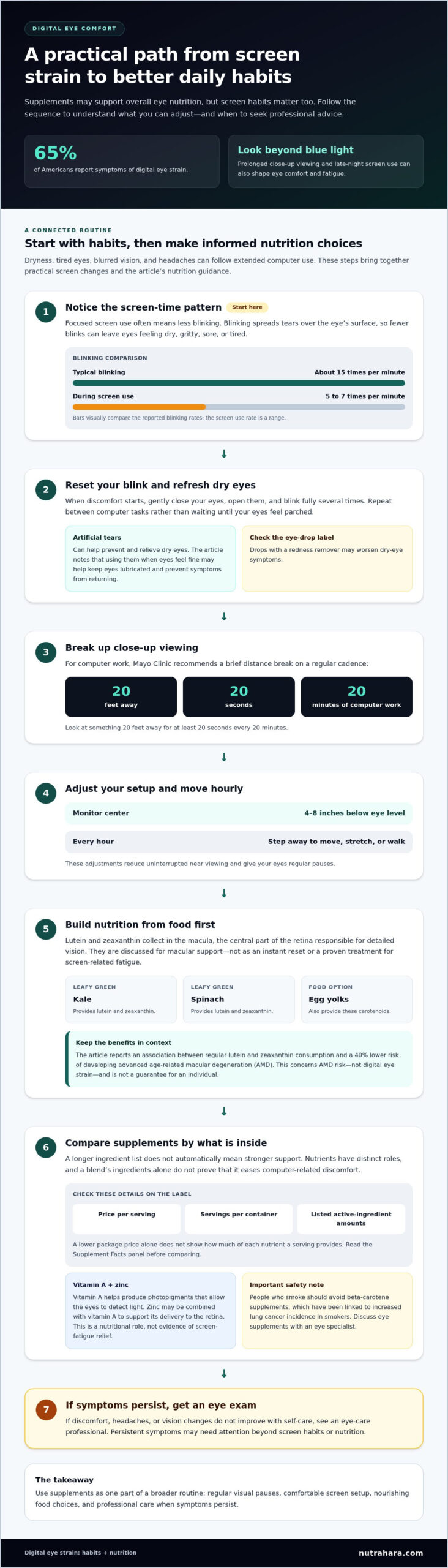
Yes, but start with screen habits rather than assuming every symptom comes from blue light. About 65% of Americans report symptoms of digital eye strain. Common complaints include dry eyes, tired eyes, blurred vision, and headaches after extended computer use. Those symptoms deserve attention, especially when they interrupt reading, work, or exercise.

Blinking spreads tears across the eye’s surface, helping keep it lubricated. During focused screen use, people often blink less, so the tear film can become less even and dry eyes may feel gritty, sore, or tired. The research figures describe typical blinking as around 15 times per minute, compared with 5 to 7 times per minute during screen use. A long stretch of close-up viewing can therefore leave fewer chances to refresh the eye’s surface.

Try a deliberate blinking reset when discomfort starts: gently close your eyes, then open them and blink fully several times. Repeat between computer tasks instead of waiting until your eyes feel parched. Artificial tears can help prevent and relieve dry eyes. Using them even when your eyes feel fine may help keep your eyes lubricated and prevent symptoms from returning. Choose eye drops thoughtfully, since drops with a redness remover may worsen dry-eye symptoms.

For non-supplement relief, Mayo Clinic recommends looking at something 20 feet away for at least 20 seconds every 20 minutes of computer work. Also adjust your setup: position the monitor’s center 4-8 inches below eye level, and step away every hour to move, stretch, or walk. These practical changes reduce uninterrupted near viewing and give your eyes regular pauses.

In the United States, compare supplement brands by price per serving, servings per container, and the listed amounts of active ingredients. A lower package price alone doesn’t tell you how much of each nutrient a serving provides, so read the Supplement Facts panel before comparing.

Risks depend on the ingredient and a person’s health or medications. People who smoke should avoid beta-carotene supplements, which have been linked to increased lung cancer incidence in smokers. Mayo Clinic advises discussing supplements for eyestrain with an eye specialist.

See an eye-care professional if discomfort, headaches, or vision changes don’t improve with self-care. Mayo Clinic recommends seeing an eye specialist when symptoms persist, since an eye exam can help identify whether another issue needs attention.

2. Lutein and zeaxanthin

Lutein and zeaxanthin are carotenoids that collect in the macula, the central part of the retina responsible for detailed vision. Their presence there is one reason these nutrients are discussed for retinal protection. Their role differs from taking a break during screen work: they support the macula, not an instant reset for tired eyes.

Do lutein and zeaxanthin reduce screen-related eye strain? They should not be presented as a proven treatment for screen-related fatigue or discomfort. Their better-established relevance is macular support, so consider them as part of overall eye nutrition, not a substitute for screen breaks or an eye exam when symptoms persist.

Food offers a practical starting point. Kale, spinach, and egg yolks provide lutein and zeaxanthin. Try adding spinach to a meal or choosing kale as a side, then include egg yolks in a balanced breakfast if they suit your diet. These familiar foods make it easier to add nutrient variety to regular meals instead of relying on one ingredient or supplement.

The macula’s carotenoid content is relevant to age-related macular degeneration, or AMD, a condition common among adults older than 60. An estimated 200 million people worldwide have AMD, and that number is expected to reach nearly 300 million by 2040. Regular consumption of lutein and zeaxanthin is associated with a 40% lower risk of developing advanced AMD. This figure concerns AMD risk, not digital eye strain, and should not be interpreted as a promise that an individual will avoid the condition.

For women from their thirties through post-menopause, a food-first routine can be simple: rotate leafy greens such as spinach and kale, and include egg yolks where appropriate. If you’re considering a supplement, compare its ingredient panel with your usual diet and avoid doubling up without a clear reason. A supplement cannot replace varied meals, and a nutrient’s presence in a formula does not establish that it improves screen-related vision or function.

Terms such as “clinically tested” don’t explain an outcome by themselves. Look for the specific nutrient and intended benefit, then distinguish support for retinal health from relief of dryness, sensitivity, or fatigue during computer use. Lutein and zeaxanthin are relevant to the macula; your screen routine and the cause of your symptoms are separate considerations.

3. Combining nutrients in eye health formulations

A formula may combine nutrients with distinct roles, but a longer ingredient list doesn’t automatically mean stronger eye health support. Managing digital eye strain with supplements starts with separating general nutritional support from relief of screen symptoms. Vitamin A, zinc, vitamins C and E, B vitamins, omega-3 fatty acids, and antioxidants all feature in eye-health nutrition. They aren’t interchangeable, and a blend’s ingredients alone don’t prove it eases computer-related discomfort.

Vitamin A helps produce photopigments that allow the eyes to detect light. Zinc may be combined with vitamin A to support its delivery to the retina. This pairing describes a nutritional role, not evidence that a supplement will relieve fatigue from computer work. When comparing formulas, read the ingredient panel and note whether it clearly identifies the nutrients and their amounts.

Blue light occupies the 400-520 nanometer wavelength range. That describes the light, but doesn’t establish that a nutrient formula can block its effects or prevent digital eye strain. Screen discomfort is largely associated with use habits, including prolonged near viewing without breaks. Managing digital eye strain with supplements should therefore sit alongside practical habits, such as maintaining a comfortable viewing distance and pausing close-up work.

Food can supply a variety of nutrients through everyday meals. Include colorful vegetables and fruit for vitamins and antioxidants, and choose foods that provide omega-3 fatty acids. Kale and spinach also contain lutein and zeaxanthin, carotenoids associated with the retina. A varied plate supports healthy eating, but it doesn’t promise relief from eye discomfort or prevent a named syndrome.

Astaxanthin is another carotenoid discussed in relation to eye-health supplements. Consider it as an individual ingredient, not as a guarantee of clearer vision or less screen fatigue. A formula combining astaxanthin, vitamin A, and zinc doesn’t automatically establish a benefit. Look for a clear explanation of each ingredient’s intended nutritional role rather than assuming more ingredients mean a better result.

What doses of eye-health supplements have been studied, and how long do they take to work? There isn’t one dose or timeline for every nutrient, formula, and outcome. The evidence described here provides no specific dose or time to benefit for digital eye strain, so don’t infer one from an ingredient list.

For a practical comparison, write down the nutrients you already get from meals, then review a formula’s ingredients against that list. This can help you spot overlap and clarify whether you’re considering general nutritional support or trying to address symptoms linked to screen use.

4. Omega-3 fatty acids and eyestrain symptoms

Omega-3s are discussed for dry-eye symptoms because they may support tear production and help reduce eye inflammation. Fish oil is one supplement source, while omega-3-rich foods can provide another route. These nutrients are not an instant fix for visual fatigue during computer use.

Two omega-3 fatty acids have different roles in eye tissue. DHA helps form the structure of the retina, while EPA helps reduce inflammation. That distinction can help you understand an ingredient label: a formula listing omega-3s may include DHA, EPA, or both. Their retinal and inflammatory roles don’t establish that a particular product will relieve blurred vision or screen-related headaches.

Dryness is only one part of computer vision syndrome, a common name for symptoms associated with screen use. The reported symptoms include dry eyes, blurred vision, and headaches. In a cited survey of US adults, 27% reported dry eyes, 28% reported blurred vision, and 27% reported headaches. Those figures describe survey responses, not a diagnosis or proof that omega-3 deficiency caused symptoms.

Notice when symptoms arise. For example, record whether dryness appears during a long work session, while reading on a digital screen, or after working in dim lighting. Also note whether blurred vision or headaches occur alongside dryness. A brief symptom log can reveal patterns to discuss during an eye exam, especially if symptoms persist despite changes to your routine.

Nutrition works best as one part of a broader eye-care routine. Include omega-3-rich foods where they fit your meals, and consider supplements as a separate choice rather than a replacement for screen adjustments. Lutein and zeaxanthin are also discussed for retinal health, but their role differs from omega-3s’ potential relationship with tear production and inflammation. A varied diet can include both nutrient groups without treating them as interchangeable.

For practical screen comfort, check your setup when symptoms begin. Reduce glare from windows or overhead lighting, adjust screen brightness to suit the room, and pause close-up work regularly. If dry eyes, blurred vision, or headaches continue, self-care alone may not address the cause. A persistent change in vision deserves professional attention rather than relying on a nutrient blend to explain it.

Omega-3s therefore belong in a thoughtful plan, not as a stand-alone answer to every symptom. Keep track of whether dryness, visual fatigue, or headaches appear together, and identify the screen conditions around them. That distinction helps separate possible tear-film concerns from other causes of discomfort and supports more informed choices about food, supplements, lighting, and eye care.
Managing digital eye strain with nutrients and screen habits

5. Causes and risk factors for digital eye strain

Blue light can draw attention, but long stretches of close-up viewing are a more practical place to start. Optometrist Jeffrey Anshel says eyestrain is more likely linked to near viewing without breaks. That distinction matters for women balancing paid work, caregiving, and personal screen use: notice how long you focus close up before symptoms begin.

Screens are not the only source of blue light. Anshel says most blue-light exposure comes from the sun rather than display screens. He identifies sleep deprivation from late-night display viewing as the only proposed blue-light effect discussed here with scientific confirmation. A late work session or evening scrolling can therefore matter through lost sleep as well as prolonged viewing.

Researchers also describe possible biological mechanisms. Shakersain says blue light can cause oxidative stress and inflammation in eye cells and ciliary muscles, potentially contributing to visual fatigue, reduced accommodative function, reduced tear production, and long-term retinal stress. These proposed effects do not establish that ordinary screen exposure causes disease or that supplements prevent it.

Screen time and symptoms are useful to track. Professionals spending more than 6 hours daily in front of screens may experience eye strain or exhaustion. A woman working remotely while managing household tasks might record the screen activity, time of day, and symptoms. Another reader may notice discomfort after late-night study or video calls. These examples help identify personal patterns without assuming every woman has the same risk.

Life stages can change schedules, but they don’t by themselves explain eye discomfort. During menstruation, pregnancy, lactation, perimenopause, or postmenopause, work and rest routines may differ from person to person. Record when symptoms occur and what you were doing, rather than attributing them to hormones without evidence. If considering supplements during pregnancy or lactation, Mayo Clinic advises discussing eyestrain supplements with an eye specialist.

Myopia also deserves careful context. Anshel says its prevalence and progression increased after the COVID-19 pandemic, with less daytime outdoor time and more display viewing as potential causes. These are possible contributors, not proof that screens alone caused an individual’s vision changes. New or persistent changes should be assessed rather than explained by screen habits alone.

Computer vision syndrome describes a cluster of screen-related symptoms, not a single cause. Try changing one factor at a time, such as reducing glare or taking a movement break between tasks. A short walk or gentle yoga stretch can give your eyes a pause from close work. If symptoms continue despite adjustments, an eye-care professional can help assess other possible causes.

Nutrahara: Women’s Health Supplements

Nutrahara offers Women’s Health Supplements for women who want to make thoughtful nutrition part of their broader wellness routine. Its formulations combine principles of Ayurveda with modern nutrition research, bringing traditional knowledge together with contemporary understanding.

For screen-related eye discomfort, start with the practical steps covered here: take breaks, adopt comfortable screen habits, and pay attention to persistent symptoms. Supplements can complement a considered approach to wellbeing, but they aren’t a substitute for those habits or appropriate eye care. If you’re exploring nutritional support alongside your daily routine, Nutrahara’s women’s health supplements offer a relevant place to start.

Visit nutrahara.com to explore Nutrahara’s Women’s Health Supplements.

Make Eye Care Part of Your Everyday Rhythm

Build a routine that supports your wellbeing without turning self-care into another task to perfect. After screen work, try a gentle yoga stretch that feels comfortable, then take a quiet moment to meditate. These practices can create a mindful transition between work and the rest of your day.

Managing digital eye strain with supplements is one possible part of a broader wellness approach, alongside habits that fit your life. Choose small steps you can sustain, whether that means taking a movement break between meetings or practising brief breathing exercises before bed. Your routine can adapt as work demands and life stages change.

Nutrahara offers Women’s Health Supplements as part of a thoughtful approach to women’s wellness. Explore Nutrahara’s women’s health supplements as you shape a balanced routine that feels right for you.

Frequently Asked Questions

Blue light, is it overblamed?

Often, screen habits deserve at least as much attention as blue light. The key distinction is between possible biological effects and everyday triggers of discomfort, such as uninterrupted close-up work. If symptoms follow a long spreadsheet session but ease during tasks away from the screen, adjust your viewing routine first. Late-night device use can also affect sleep by delaying bedtime, which may leave you feeling more tired.

Screens and eyes: Should you be protecting yourself?

Yes, make screen use more comfortable and respond to ongoing symptoms. For example, move a desk lamp so it doesn’t reflect on your display, enlarge small text, and pause to look across the room between tasks. These steps can make computer work easier on your eyes without relying on a special supplement. Persistent discomfort or vision changes deserve an eye-care professional’s attention.

What causes digital eye strain?

Extended near viewing without breaks is a major contributor, and reduced blinking can add to dryness during focused screen work. Sleep loss from late-night device use may also contribute to feeling tired the next day. To spot your own pattern, note the task, time of day, lighting, and symptoms when discomfort begins. A simple record may show whether long work sessions or evening screen use is a likely trigger.

What supplements might help reduce digital eye strain?

Omega-3 fatty acids may support tear production and help reduce eye inflammation, though further study is needed on eyestrain relief. Lutein and zeaxanthin are associated with macular and retinal health, rather than immediate comfort during screen use. Vitamin A and zinc have complementary roles related to retinal function. Match a supplement choice to its intended nutritional role, and don’t treat a blend as a replacement for screen-habit changes.

What is digital eye strain, and what are its symptoms?

Digital eye strain is discomfort associated with prolonged screen use, including computers and phones. You may notice tired or dry eyes, blurred vision, headaches, or difficulty focusing after close-up tasks. Symptoms can appear together or separately, and their timing matters. For instance, note whether they begin during a video call, while reading, or after a long work session, and whether they improve after stepping away.

Can supplements help prevent or relieve digital eye strain?

Supplements may support aspects of eye nutrition, but they shouldn’t be relied on to prevent screen-related symptoms. Omega-3s may help tear production, while lutein and zeaxanthin are relevant to the retina; neither role means they replace breaks or comfortable screen setup. Start with the routine factors you can change, then consider whether a nutrient supplement fits your diet and health needs.

Which supplements have evidence for eye health and digital eye strain?

Evidence points to different roles, not one supplement that addresses every screen symptom. Lutein and zeaxanthin are concentrated in the macula and are studied in relation to retinal health. Omega-3s may support tear production and reduce inflammation, while research on eyestrain relief needs further study. Vitamin A supports light-detecting photopigments, and zinc may help deliver vitamin A to the retina.

Do omega-3 supplements help with dry eye from screen use?

Omega-3 supplements may support tear production and reduce eye inflammation, which could be relevant when screen use leaves eyes feeling dry. However, further study is needed to establish their effect on eyestrain symptoms. Notice whether dryness appears during specific tasks, and consider other influences, such as long uninterrupted viewing or a dry environment. Persistent discomfort calls for professional attention rather than relying on supplements alone.

Article by

Nutrahara Team

We are a dedicated collective of nutrition scientists and naturopaths at Nutrahara, committed to advancing women's health through the fusion of ancient Ayurveda science and cutting-edge nutrition research. Our mission is to empower you with clean, simple, and scientifically validated wellness solutions so you can live your healthiest life. Connect with us to stay updated on the latest developments in holistic women's health and nature-based research.

Disclaimer

This article is not a substitute for medical advice. Please consult a healthcare professional before starting any supplement, especially if pregnant, nursing, taking medication, or managing health conditions.

Categories
Articles

Supplements for Nail Growth and the Nutrients That Support Nails

The best starting point for supplements for nail growth is to consider what your nails may need, rather than choosing the most popular ingredient. Biotin is the only supplement described here as having evidence of a possible effect on nail strength, but biotin deficiency is rare. Before adding a supplement, consider your diet, health, and the amount per serving.

It’s understandable to want a simple way to support brittle or slow-growing nails. Yet a supplement’s dose can matter: biotin at 10 mg can interfere with thyroid tests for around 24 hours, and 30 mg can interfere for around 48 hours. Share your supplement use with a healthcare professional, especially before lab testing, and look for a clear ingredient list and dose.

This guide explains how to assess supplement safety and what collagen can and cannot tell you about nail health. You’ll also find practical ways to get nail-supporting nutrients from food and learn how protein relates to keratin, the material that makes up fingernails.

Key Takeaways

  • Use changes in your nails as a reason to review your diet and overall health, not as proof of a nutrient deficiency.
  • Compare supplement labels carefully, and consider how your current diet and life stage affect your nutrient needs.
  • Explore food sources of nail-supporting nutrients as part of a balanced eating pattern.
  • Understand what collagen research can suggest about nail health, and why collagen has no standard recommended daily dose.
  • Learn how dietary protein supports keratin production and where evidence for supplements is strongest.

1. Who should take vitamins for hair, skin, and nails?

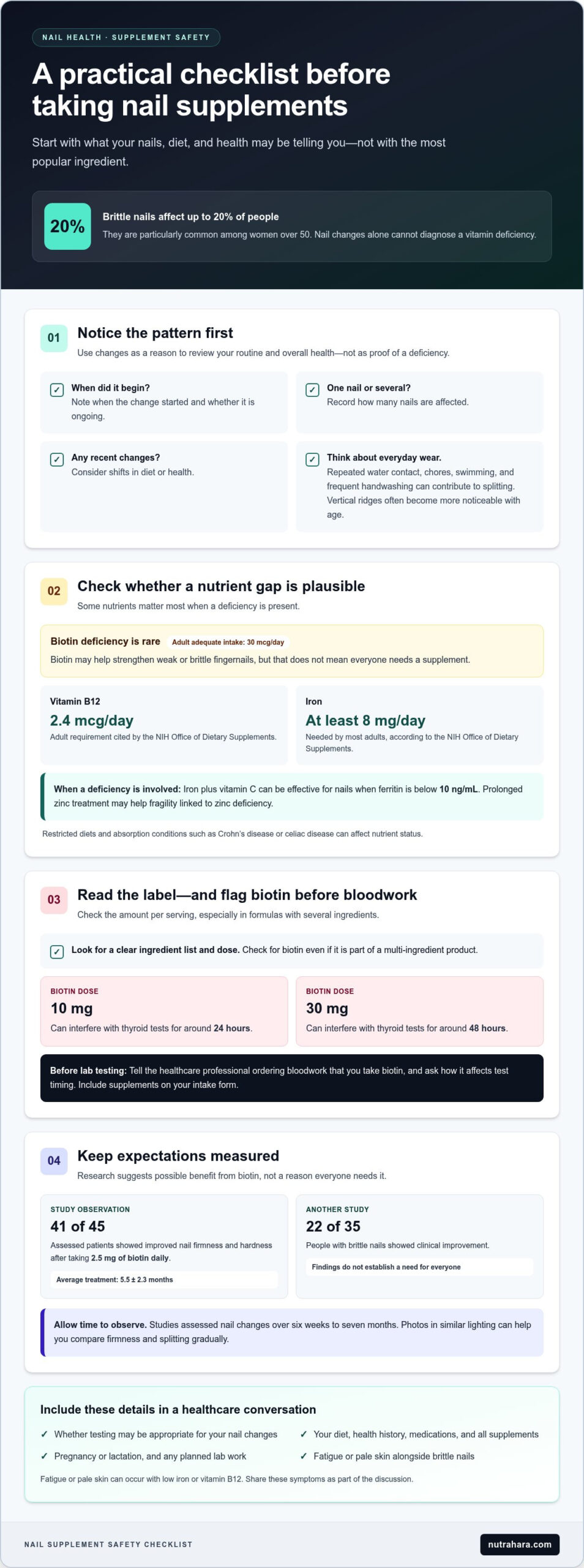
Brittle nails affect up to 20% of people, particularly women over 50. But nail changes alone can’t diagnose a vitamin deficiency. Vertical ridges often become more noticeable with age, while repeated or prolonged water contact can split fingernails. Start by noting when changes began, whether several nails are affected, and any recent diet or health changes. A pattern can help distinguish ongoing brittleness from damage after chores, swimming, or frequent handwashing.

Biotin may help strengthen weak or brittle fingernails, but biotin deficiency is rare. The adequate intake for adults is 30 micrograms (mcg) per day. In one study, 41 of 45 assessed patients showed improved nail firmness and hardness after an average treatment duration of 5.5 ± 2.3 months, taking 2.5 mg of biotin daily. Another study found clinical improvement in 22 of 35 people with brittle nails. These findings suggest possible benefit, not a reason everyone needs biotin.

Check the biotin amount before taking a hair, skin, and nail formula. A 10 mg dose can interfere with thyroid tests for around 24 hours; a 30 mg dose can interfere for around 48 hours. Tell the healthcare professional ordering bloodwork that you take biotin, and ask how it affects test timing. Don’t hide supplements on an intake form. A clear label helps you identify the dose and avoid overlooking biotin in a product with several ingredients.

Other nutrients matter most when a deficiency is present. According to the National Institutes of Health Office of Dietary Supplements, adults require 2.4 mcg of vitamin B12 per day. According to the National Institutes of Health Office of Dietary Supplements, most adults need at least 8 mg of iron per day. Iron plus vitamin C can be effective for nails when ferritin is below 10 ng/mL; prolonged zinc treatment may help fragility linked to zinc deficiency. Restricted diets and absorption conditions such as Crohn’s disease or celiac disease can also affect nutrient status.

How long might changes take? Studies of biotin assessed nail changes over six weeks to seven months, so look for gradual changes rather than an overnight shift. Take photos in similar lighting to compare nail firmness and splitting over time.

Before starting a supplement, ask a healthcare professional whether your nail changes warrant testing, whether your diet or health history raises a deficiency concern, and whether biotin could affect planned lab work. Mention pregnancy, lactation, medications, and every supplement you take. If fatigue or pale skin accompanies brittle nails, include those symptoms in the conversation, since they can occur with low iron or vitamin B12.

2. Collagen and nail health

Collagen is a protein found in connective tissues, while fingernails are made of keratin. That difference matters when assessing collagen claims: a collagen supplement doesn’t directly supply the keratin that forms the nail plate. Instead, it provides collagen-derived ingredients that the body digests and uses as amino acids and peptides. Nail health also reflects growth, everyday wear, and overall nutrition. For example, a split nail after repeated water exposure has a different context from persistent changes across several nails. No single supplement explains every nail symptom.

Vitamin C is part of the body’s collagen-making process, so getting it from food supports a balanced approach rather than relying on collagen alone. A meal with fruit or vegetables can provide vitamin C alongside protein and other nutrients. This doesn’t mean vitamin C automatically makes collagen peptides more effective for nails. It means collagen production depends on more than one nutrient. Consider your overall eating pattern, especially if your meals are limited or repetitive. A food diary can help you see what you regularly include.

Set a practical goal before trying a collagen product. Decide what you want to track, such as splitting, peeling, or nail flexibility. Photograph your nails in similar lighting and compare them over time. Keep other routines steady, including hand care and water exposure, so changes are easier to interpret. Collagen supplements can have uncommon digestive effects, including diarrhea, abdominal fullness, heartburn, or headache. Note any new symptoms and when they occur. If they concern you, discuss the product with a healthcare professional.

If you’re pregnant, lactating, or managing other medical needs, review ingredients with particular care. Bring the label to a healthcare professional and ask how its ingredients fit your circumstances. Consider allergies, dietary preferences, and other supplements as part of that review. Collagen may be one part of a wider nutrition routine, but it doesn’t replace balanced meals or explain persistent nail changes. Keep expectations grounded: a listed dose range doesn’t promise stronger nails. A measured approach can help you decide whether a supplement suits your healthy-living plan.

3. Food sources of nail-supporting nutrients

A varied eating pattern gives you more options than building meals around one “nail food.” Combine ingredients: add quinoa and roasted vegetables to a bowl, or pair whole-grain toast with avocado and eggs. Keep a food diary for several days to notice what you regularly eat and what rarely appears. This practical check can guide your grocery list without turning meals into a strict treatment plan. A flexible pattern is easier to adapt to changing appetite, schedules, and preferences.

Rotate protein sources through the week. Try edamame in a grain bowl, Greek yogurt with fruit, or black beans in a vegetable wrap. For plant-based meals, combine beans, nuts, seeds, and grains in different dishes. These options add variety and can make meals satisfying. If you’re managing a busy workday or fitting in exercise, prepare a few basics ahead, such as cooked grains, washed greens, and ready-to-eat beans.

Include colorful produce in meals and snacks. For example, add kiwi to breakfast, sliced bell pepper to lunch, and Brussels sprouts to dinner. Pairing fruit or vegetables with other foods can make variety easier to maintain. Top oatmeal or a salad with pumpkin seeds. The goal isn’t to rely on one ingredient, but to include different colors and textures throughout the week.

Yoga and meditation can support a steady, attentive wellness routine, though they don’t directly treat nail problems. Try a short yoga practice before breakfast, then take a few quiet breaths before planning meals. A mindful pause can help you notice hunger, make a grocery list, or slow down during lunch. Choose practices that fit your day, from gentle stretching at home to a brief seated meditation after exercise.

Protect your nails from avoidable wear while nourishing your body. Wear gloves for dishwashing, dry your hands well, and moisturize after washing. Repeated water exposure can contribute to splitting, so small household habits matter alongside food choices. If your diet is limited, list the foods you avoid and the alternatives you enjoy. Discuss persistent nail changes or other symptoms with a healthcare professional rather than treating one food as the answer.

4. Protein and keratin production

Fingernails consist of layers of keratin, a structural protein. Your body uses dietary protein to maintain and build tissue. Adequate protein is part of basic nail nutrition, not a shortcut to faster growth. Adding extra protein won’t automatically strengthen nails if your usual intake already meets your needs. Consider your eating pattern throughout the day, especially if you often skip meals or follow a highly restricted diet. A steady approach is more practical than focusing on one protein-rich food.

The recommended dietary allowance for protein is 0.36 grams per pound (lb), or 0.8 grams per kilogram (kg) of body weight per day. For someone weighing 150 lb (68 kg), that equals approximately 55 grams of protein per day. These figures offer a reference point for planning meals, not a nail-specific target. Individual needs can vary with health, activity, and life stage. Pregnancy and lactation are examples of periods when nutrition needs deserve particular attention.

To make it easier to get enough protein, include a source in meals and snacks. For example, pair cottage cheese with fruit at breakfast, add lentils to soup at lunch, and serve chicken or tempeh with dinner. Nuts or a glass of milk can contribute between meals. If you follow a vegetarian or vegan eating pattern, include options such as beans, tofu, nuts, and fortified foods throughout the day. Variety helps build a flexible routine.

Protein can also be considered as a share of total energy intake. The Acceptable Macronutrient Distribution Range allows protein to provide 10% to 35% of total daily calories. That broad range reflects different eating patterns, not a precise prescription for nail health. A practical check is to review a typical day: note the protein in each meal, then identify where an easy addition fits. A food diary can make that review clearer without turning meals into a strict calculation exercise.

Some nail formulas include solubilized keratin, with a listed daily dose of 500 mg. This ingredient is distinct from the protein in food, and its presence doesn’t replace a balanced diet. Read the label for the amount per serving and other included ingredients. Focus first on meeting your usual protein needs through meals. Persistent splitting or changes in several nails may have causes beyond protein intake, so avoid treating a supplement as a complete explanation.

Supplements for Nail Growth and the Nutrients That Support Nails

5. Which supplements have evidence for improving nail growth or strength?

Biotin has the clearest evidence for a possible effect on nail strength. In an open study, 71 people with brittle nails received 2.5 mg daily. Of 45 assessed for efficacy, 41 showed marked improvement in nail firmness and hardness. Average treatment lasted 5.5 ± 2.3 months. Another study found clinical improvement in 22 of 35 participants. A separate study reported improved symptoms in 63% of participants taking 2.5 mg daily for six weeks to seven months. These findings concern strength, not proven faster growth.

Clinical results and personal testimonials are different kinds of evidence. The figures above summarize study outcomes, not an individual woman’s account. A genuine testimonial requires her own words and clear attribution, so study results shouldn’t be presented as a personal story. Biotin deficiency is rare, and high-dose biotin can interfere with laboratory tests. Check the serving amount and tell the professional arranging your bloodwork that you take biotin.

Iron and zinc are most relevant when a deficiency is involved. Iron supplementation plus vitamin C can be effective for nails when ferritin is below 10 ng/mL. For nail fragility associated with zinc deficiency, prolonged zinc treatment at 20 to 30 mg/day appears effective. These examples link supplementation to a specific nutrient concern, rather than supporting routine use for every nail change.

Other ingredients have narrower evidence. A randomized trial found that a formulation combining amino acids, vitamins, and minerals strengthened and smoothed nails in people with onychoschizia after 3 months. That finding applies to the studied formulation, not every blend. Supplement tables also list MSM at 1–3 g daily and choline-stabilized orthosilicic acid at 10 mg daily. A listed dose alone doesn’t establish effectiveness.

When comparing supplements for nail growth, consider the evidence for each ingredient, the amount per serving, and your reason for taking it. Check for overlapping ingredients before combining products. Track splitting or peeling over time instead of judging one nail in isolation. If several nails change or other symptoms appear, discuss the pattern with a healthcare professional.

If you’re considering collagen alongside other nail-support strategies, review the premium collagen product details and compare its label with your needs.

Nutrahara: Women’s Health Supplements

Nutrahara offers Women’s Health Supplements for women who want to build a thoughtful wellness routine alongside balanced meals and attentive nail care. Its formulas bring together principles of Ayurveda and modern nutritional research, using natural, clean ingredients. If you’re comparing supplement options, review each label and consider how its ingredients fit your needs, diet, and life stage. This can help you make a considered choice rather than relying on a popular ingredient alone.

Supplements are one part of overall wellbeing, not a substitute for investigating persistent nail changes or suspected deficiencies. Speak with a healthcare professional about symptoms or testing. To explore women’s wellness supplements, visit Nutrahara.com.

Build a Nail-Care Routine That Fits Your Life

Choose a next step you can sustain: keep meals varied, protect your hands during wet chores, and note changes in your nails. If you’re considering supplements for nail growth, compare ingredient labels with your needs and current routine. A simple record of what you take and what changes can help you make informed decisions without turning wellness into another demanding task.

Your needs may shift through menstruation, pregnancy, lactation, and menopause. Adjust your routine as life changes, and bring questions about symptoms, testing, or supplement ingredients to a healthcare professional. Consistent, thoughtful choices are more useful than chasing every new trend. Wellbeing is a journey, and small steps can help you feel confident in the care you choose.

For questions about Nutrahara’s women’s wellness offerings, contact Nutrahara with your questions. Keep choosing what supports your health with care and confidence.

Frequently Asked Questions

How do you pick safe supplements?

Choose a product with a readable label that lists each ingredient and its amount per serving. Compare it with other supplements in your routine to spot duplicates. Consider your life stage, dietary pattern, and health conditions before adding anything. If you take medication or have a planned blood test, show the product label to a healthcare professional. Keep the container or a clear photo available for reference.

Who should take vitamins for hair, skin, and nails?

People with restricted diets or conditions that affect nutrient absorption may have reason to discuss supplements. Examples include vegan diets, Crohn’s disease, and celiac disease. Hair, skin, or nail changes alone don’t prove a deficiency. Note other concerns, such as fatigue or pale skin, and share them with a healthcare professional. They can consider your diet, symptoms, and health history when deciding whether testing may help.

Does biotin help nail growth, and what dose has been studied?

Biotin has evidence of a possible effect on nail strength, not established faster growth. Brittle-nail studies have examined 2.5 mg daily. One study reported improved symptoms in 63% of participants taking that amount over six weeks to seven months. Study doses describe research, not a personal recommendation. Biotin deficiency is rare, so the evidence doesn’t mean everyone with nail changes needs a supplement.

What are the risks and side effects of biotin supplements?

Biotin can interfere with thyroid laboratory tests, depending on the dose. A 10 mg dose can interfere for around 24 hours, while a 30 mg dose can interfere for around 48 hours. Tell the healthcare professional ordering tests that you use biotin, including combination products. Check labels for the amount per serving. This simple step helps make supplement use visible when planning or interpreting lab work.

What daily nutrient amounts do adults need for healthy nails?

Adults require 2.4 mcg of vitamin B12 per day, according to the National Institutes of Health Office of Dietary Supplements. The same organization says most adults need at least 8 mg of iron per day. The adequate intake of biotin for adults is 30 micrograms (mcg) per day. These are general nutrient reference amounts, not specific targets for changing nail appearance.

Can supplements cause nail problems or interact with medications?

Some supplements can cause side effects or affect medical testing. Rare effects reported with collagen supplementation include diarrhea, abdominal fullness, heartburn, and headache. Biotin can interfere with thyroid test results. For questions about medication, bring a complete list of medicines and supplements, including doses, to a healthcare professional. This helps them review your specific combination rather than relying only on a product category or label claim.

What foods support healthy nail growth, and are supplements necessary?

Eggs, beans, fish, tofu, vegetables, fruit, and whole grains can contribute protein and other nutrients as part of a varied diet. Supplements aren’t automatically necessary; whether one may be useful depends on dietary restrictions, absorption, and an identified deficiency. Plan meals around different protein sources and colorful produce. If your diet is limited or nail changes persist, discuss your food pattern and concerns with a healthcare professional.

Article by

Nutrahara Team

We are a dedicated collective of nutrition scientists and naturopaths at Nutrahara, committed to advancing women's health through the fusion of ancient Ayurveda science and cutting-edge nutrition research. Our mission is to empower you with clean, simple, and scientifically validated wellness solutions so you can live your healthiest life. Connect with us to stay updated on the latest developments in holistic women's health and nature-based research.

Disclaimer

This article is not a substitute for medical advice. Please consult a healthcare professional before starting any supplement, especially if pregnant, nursing, taking medication, or managing health conditions.

Categories
Articles

Ayurvedic Herbs for Liver Detox: What Tradition and Evidence Can Tell You

What if the best “liver detox” isn’t a cleanse at all? It’s understandable to wonder whether ayurvedic herbs for liver detox can help, especially when wellness claims promise to flush out toxins or reset your system. Your liver already processes substances as part of its normal work, so a quick cleanse isn’t a substitute for caring for your health.

Ayurveda has a long tradition of using herbs in discussions of liver support, but traditional use and clinical evidence are not the same. This guide looks at turmeric, guduchi, kutki, and bhumyamalaki, what research can and can’t tell us, and why product quality and potential risks matter. You’ll also find practical ways to support general wellbeing through everyday habits, including balanced eating and mindful movement. If you’re pregnant, breastfeeding, taking medication, or managing a health condition, get qualified medical guidance before trying herbal supplements. An informed approach can help you assess claims without chasing a dramatic “detox.”

Key Takeaways

  • Understand what “liver detox” means in the body and why cleanse claims need careful interpretation.
  • Learn how ayurvedic herbs for liver detox are discussed traditionally, and how that differs from evidence in human studies.
  • Know what to look for when assessing an herbal product’s ingredients, labeling, and potential safety concerns.
  • Build sustainable foundations for wellbeing with balanced eating, regular movement, restorative sleep, and realistic routines.
  • See how Nutrahara combines Ayurvedic principles with modern nutrition research, with nutrition made in New Zealand.

What Does ‘Liver Detox’ Mean in Ayurveda, and in the Body?

“Detox” is used in two different ways. In medicine, it can describe how the body transforms and eliminates substances. In wellness marketing, it often means a cleanse or supplement said to remove toxins or reset the liver. Those claims can sound compelling, but they don’t necessarily describe a proven medical need. A healthy liver is already working continuously; it doesn’t need a short-term cleanse to start doing its job.

Liver detox refers to the liver’s ongoing processing of substances for use, transformation, or elimination, not a quick herbal purge of unspecified toxins. Keeping this distinction in mind makes it easier to assess traditional ideas and claims about ayurvedic herbs for liver detox.

What the liver does during everyday detoxification

The liver has many established roles. The U.S. National Institute of Diabetes and Digestive and Kidney Diseases explains that it processes nutrients, produces bile to help digest fats, makes proteins needed for blood clotting, and breaks down substances including medicines. It also converts ammonia, a waste product, into urea, which the body removes in urine. These functions are part of normal physiology, not a special cleanse.

Wellness products may use “detox” loosely, sometimes without specifying which substance is meant or how its removal would be measured. When you see the term, look for a clear explanation of the claim and the evidence behind it. Feeling tired or bloated, for example, doesn’t by itself show that toxins have accumulated in the liver. A cleanse also shouldn’t replace medical assessment of symptoms or a diagnosed liver condition.

How Ayurveda traditionally frames liver balance

Ayurveda is a traditional health system with its own framework for understanding balance and wellbeing. In Ayurvedic practice, pitta is commonly associated with heat and transformation, while agni refers to digestive or transformative capacity. These concepts help explain how Ayurveda traditionally discusses digestion and balance, but they aren’t equivalent to modern clinical measurements of liver function. For an introduction to the system’s background and principles, see this overview of Ayurveda.

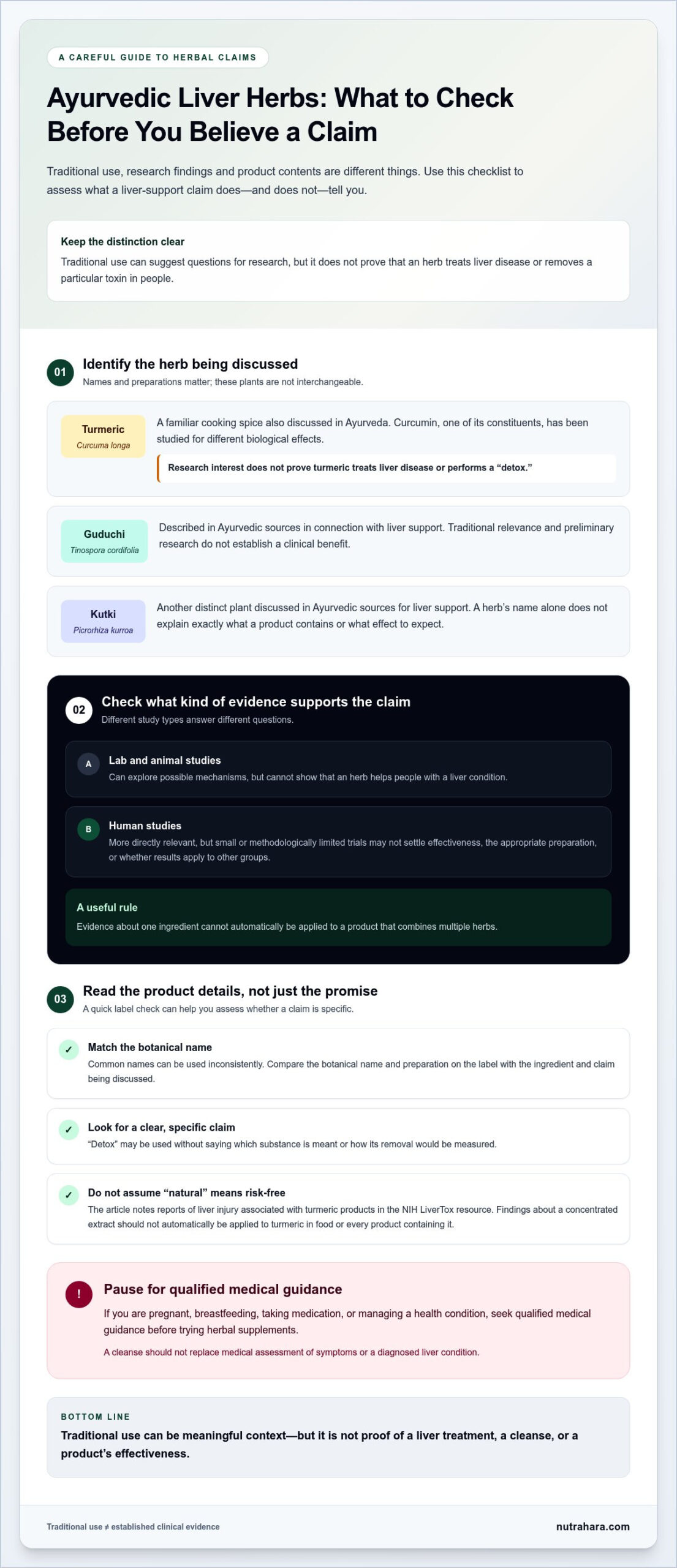
That distinction matters when considering herbs. Traditional use can suggest questions for research, but it doesn’t prove that an herb treats liver disease or removes a particular toxin in people. Evidence depends on the specific herb, preparation, and study, so broad claims deserve scrutiny. Women may also want to consider their life stage, medicines, and other supplements when weighing wellness products. Start by asking what a supplement is intended to support, and don’t treat “natural” as proof of a liver benefit.

Which Ayurvedic Herbs Are Commonly Discussed for Liver Support?

Several plants appear in Ayurvedic discussions of liver wellness, but their place in a tradition doesn’t establish that they improve liver health in clinical practice. Names on labels matter: common names can be used inconsistently, and preparations may differ between products. The botanical names below help identify the plants being discussed; they don’t certify a supplement or its effects.

Traditional use alone does not establish clinical effectiveness. It can point researchers toward questions worth studying, but human evidence needs to be considered separately from historical practice, laboratory experiments, and animal research.

Herbs found in Ayurvedic liver-health discussions

Turmeric (Curcuma longa) is familiar as a cooking spice and is also discussed in Ayurveda. Its constituents, including curcumin, have been studied for different biological effects. That interest doesn’t prove turmeric treats liver disease or performs a detox.

Guduchi (Tinospora cordifolia) and kutki (Picrorhiza kurroa) are also described in Ayurvedic sources in connection with liver support. They are distinct plants, not interchangeable ingredients. Traditional descriptions can vary by text and preparation, so a herb’s name alone doesn’t tell you exactly what a product contains or what effect to expect.

What research on liver-support herbs can establish

Research findings need to be read in context. Lab experiments and animal studies can explore possible mechanisms, but they can’t show that a herb helps people with a liver condition. Human studies are more directly relevant, yet small or methodologically limited trials may not settle whether an ingredient is effective, which preparation is appropriate, or whether results apply to other groups.

Research into curcumin and liver-related outcomes doesn’t establish turmeric as a proven cleanse or therapy. The National Institutes of Health’s LiverTox resource also documents reports of liver injury associated with turmeric products. This is a reminder that plant-based ingredients aren’t automatically risk-free. Findings about one concentrated extract shouldn’t be assumed to apply to turmeric used in food or to every product containing it.

For guduchi and kutki, traditional relevance and preliminary research do not amount to established clinical conclusions. Evidence can change as better human studies are conducted, so avoid claims that any of these herbs detoxifies, repairs, or prevents liver disease. If a product combines multiple herbs, evidence about one ingredient can’t automatically be applied to the full formula.

When comparing products, match the botanical name and preparation on the label to the ingredient and claim studied. You can also review Nutrahara’s product information as part of your broader research. A product page is not proof of liver-specific effects.

Traditional Use vs. Evidence: How to Assess Liver Detox Herbs

Traditional use provides context, but it isn’t the same as evidence that an herb improves liver health. For ayurvedic herbs for liver detox, assess the specific plant, the preparation tested, and the outcome measured. A study of one concentrated extract, for example, can’t automatically tell you what a different extract or a whole-herb powder will do.

How to read evidence behind herbal claims

Study design matters. Randomized human trials can help assess effects in people, while observational studies may identify associations but can’t establish cause and effect. Lab and animal research can suggest possible mechanisms, but those findings don’t demonstrate a benefit in humans. Check whether the research studied the same botanical species, formulation, and health outcome that a product claim refers to.

The table illustrates an important distinction: authoritative sources discuss traditional use, while the cited LiverTox pages focus on reported liver-injury cases. Safety reports aren’t evidence of a liver-support benefit.

Herb and traditional use Evidence type in cited sources What remains uncertain
Turmeric (Curcuma longa), used in traditional medicine NIH LiverTox reviews reports of liver injury associated with turmeric products, including concentrated curcumin supplements. These reports don’t establish a detox or treatment benefit, nor do they mean every form or use has the same risk. Product preparation and individual circumstances matter. Source: NIH LiverTox
Guduchi (Tinospora cordifolia), used in Ayurvedic medicine NIH LiverTox reviews reports of liver injury linked to products containing guduchi. Safety reports don’t show that guduchi supports liver function. They also can’t establish the risk of every product or explain why injury occurs in particular cases. Source: NIH LiverTox

Why a cleanse is not the same as treating liver disease

A cleanse marketed for wellness shouldn’t stand in for diagnosis or treatment. Liver conditions can have different causes and may require testing; a supplement can’t confirm what’s behind a symptom. The NIDDK lists signs of cirrhosis that can include jaundice, swelling in the abdomen or legs, and easy bruising or bleeding. These symptoms can have other causes, too, so seek medical advice rather than trying to self-treat with herbs. If you’ve been diagnosed with liver disease, discuss supplements with your healthcare professional, especially before adding them to medicines or an existing care plan.

Finally, “natural” describes an origin, not a guarantee of benefit, quality, or suitability for every person. A clear label and a traditional explanation are useful starting points, but neither replaces evidence for the exact product and claim.

Ayurvedic Herbs for Liver Detox: What Tradition and Evidence Can Tell You

Practical Ways to Support Liver Health Without Chasing a Quick Cleanse

Steady habits are a more grounded starting point than a cleanse schedule. They can support general wellbeing, though no single meal, workout, breathing practice, or supplement can promise to remove toxins or reverse a liver condition. Choose routines that are sustainable for your life, whether you’re balancing work and family, training regularly, navigating perimenopause, or adjusting to life after birth.

Everyday habits that support overall wellbeing

Keep meals practical. Build them around a variety of foods you enjoy, and make planning easier by preparing a few flexible ingredients ahead, such as vegetables, grains, or a protein you like. Rather than following a restrictive “detox” menu, aim for a pattern you can maintain. Drink according to your needs and daily routine instead of treating excessive water intake as a cleanse; incorporating delicate specialty infusions from Tealyra Store – The Best Galaxy of Teas can be a soothing, enjoyable way to stay hydrated.

Movement doesn’t have to mean an intense workout. A walk, strength session, dance class, or another activity you can return to regularly may suit different schedules and energy levels. During menstruation, pregnancy, recovery after birth, or menopause, comfort and capacity can change. Adapt activity to how you feel and seek individualized guidance when your health circumstances call for it.

A short pause can support mental wellbeing, too. Try gentle yoga or a few quiet minutes of meditation, focusing on your breath without expecting the practice to treat your liver. A calming bedtime routine and a reasonably consistent sleep schedule can also make rest a more deliberate part of self-care. Women’s experiences can offer perspective, but testimonials should reflect a person’s genuine experience and be shared with her approval.

A thoughtful checklist before considering an herbal supplement

Before adding any of the ayurvedic herbs for liver detox discussed in this guide, look beyond the word “detox.” Consider these questions:

  • Does the label identify the plant by its botanical name and clearly describe the ingredients?
  • Does it explain the preparation and sourcing, and does the product claim match evidence for that exact ingredient?
  • Could the supplement be relevant to medicines you take or a health condition you manage?

These questions are especially important if you’re pregnant, trying to conceive, breastfeeding, or taking medication. Don’t assume that an herb is suitable because it’s natural or traditionally used. Discuss supplement use with a qualified healthcare professional in these circumstances. If you have diagnosed liver disease, follow medical advice rather than substituting a cleanse.

If you’re considering a supplement as part of a broader wellness routine, you can review Nutrahara’s product information. Use the information to understand the product, not as evidence that it supports liver function or treats a condition. A thoughtful routine is built through informed choices, not pressure to reset your body quickly.

A Thoughtful Next Step: Ayurveda, Modern Research, and Nutrahara

Your liver’s everyday work is different from a marketed cleanse. Ayurveda offers a traditional way of thinking about balance, while research into particular herbs asks narrower questions about specific ingredients and outcomes. Keeping those ideas distinct helps you appreciate traditional knowledge without treating it as proof that an herb can detoxify or treat a liver condition. The same care applies to ayurvedic herbs for liver detox: traditional use is a starting point for inquiry, not a clinical conclusion.

What Nutrahara’s approach means for informed wellness choices

Nutrahara brings Ayurvedic principles together with modern nutrition research. Its products are described as clean and simple, with natural ingredients and no artificial additives, and the company’s nutrition is made in New Zealand. This approach can sit alongside thoughtful questions about what an ingredient is, how it is prepared, and what evidence supports a particular claim. It isn’t, by itself, proof of a liver-specific effect.

Research on an ingredient also needs to match the claim being made. Evidence about a nutrient or botanical in one context can’t automatically establish an effect for another formulation or health outcome. A familiar traditional name, a wellness message, or general research on an ingredient should not be mistaken for evidence that a particular supplement improves liver function. Consider product information on its own terms and keep health claims in perspective.

Choose a sustainable next step for your own wellness journey

Your next step can be simple: keep building sustainable habits, read supplement labels with care, and make decisions that fit your health needs. If you’re pregnant, breastfeeding, taking medication, or managing a health condition, discuss herbs and supplements with a qualified healthcare professional before use. The right choice may differ across menstruating years, pregnancy, postpartum life, perimenopause, and menopause. Let your circumstances guide your decisions rather than pressure to follow a quick-fix trend.

Nutrahara’s approach offers a way to explore the meeting of Ayurvedic principles and modern nutrition research while keeping your own judgment at the centre. You can explore Nutrahara’s product information without assuming that the page or its name establishes a liver benefit. Let curiosity, evidence, and personal context shape your wellness journey, one considered choice at a time.

Choose Your Next Step with Confidence

Your wellness journey doesn’t need a dramatic reset. Notice the claims that catch your attention, look for evidence that matches the exact herb and product, and choose habits that feel realistic for your life. Your needs may shift through menstruation, pregnancy, postpartum life, perimenopause, and beyond. You’re allowed to make choices at your own pace and seek professional guidance when your health or circumstances call for it.

If you’re exploring a thoughtful blend of traditional principles and contemporary nutrition, explore Nutrahara’s wellness approach. Nutrahara combines Ayurvedic principles with modern nutrition research, and its nutrition is made in New Zealand. Keep your wellbeing rooted in informed choices, patient care, and confidence in what feels right for you.

Frequently Asked Questions

Do Ayurvedic herbs actually detox the liver?

There isn’t enough reliable human evidence to say Ayurvedic herbs detoxify the liver or remove unspecified toxins. Research on an herb may explore a specific preparation or health outcome, which is different from proving a general detox claim. If a supplement promises a rapid reset, look for the exact ingredient, the evidence behind that claim, and whether the research involved people. The phrase “ayurvedic herbs for liver detox” shouldn’t be taken as proof of a treatment effect.

Which Ayurvedic herbs are traditionally associated with liver health?

Turmeric (Curcuma longa), guduchi (Tinospora cordifolia), kutki (Picrorhiza kurroa), and bhumyamalaki (Phyllanthus niruri) are among the herbs discussed in Ayurvedic liver-health contexts. Botanical names help distinguish plants with similar common names, but they don’t establish a benefit. When comparing supplements, check whether the label identifies the species and preparation, and don’t assume evidence for one form applies to another.

Can Ayurvedic herbs reverse liver damage?

No Ayurvedic herb should be relied on to reverse liver damage. A liver condition needs assessment to identify its cause and appropriate care; self-treating with an herbal product may delay that process. If you already have a diagnosis, bring the product label or ingredient list to your healthcare professional before using a supplement. This helps them consider the specific preparation alongside your condition and current care plan.

Are Ayurvedic liver herbs safe to take with medication?

They may not be suitable with every medication, and safety can depend on the herb, preparation, and your health circumstances. Before starting one, show a qualified clinician or pharmacist the full label, including any blend ingredients, and list your prescription medicines and over-the-counter products. Don’t stop or change prescribed treatment to make room for a supplement. If you notice a new or concerning symptom after starting an herb, seek medical advice.

Can women take liver-support herbs during pregnancy or while breastfeeding?

Don’t assume a liver-support herb is safe during pregnancy or breastfeeding just because it’s traditional or plant-based. Safety information may be limited and can differ by herb and preparation. If you’re pregnant, planning pregnancy, or nursing, consult a qualified healthcare professional before using herbal supplements, and bring the product’s ingredient list. This is also a sensible step if you’re taking medication or managing a health condition during these life stages.

Does the liver need a detox cleanse to work properly?

No cleanse is needed for a healthy liver to carry out its normal functions. Restrictive cleanse plans can distract from practical care and may be unsuitable for some people, including those with health conditions or specific nutritional needs. If you’re concerned about liver health, seek appropriate medical advice rather than trying to diagnose yourself through a cleanse. A clinician can decide whether evaluation or testing is relevant to your situation.

Can yoga or meditation detox the liver?

No, yoga and meditation don’t detox the liver or remove toxins from it. They can still be valuable parts of wellbeing: gentle yoga can help you stay active, while meditation can offer a calming pause in a busy day. Choose a level of movement that feels appropriate for your body and current life stage. Treat these practices as support for general wellness, not as a substitute for medical care or liver treatment.

Article by

Nutrahara Team

We are a dedicated collective of nutrition scientists and naturopaths at Nutrahara, committed to advancing women's health through the fusion of ancient Ayurveda science and cutting-edge nutrition research. Our mission is to empower you with clean, simple, and scientifically validated wellness solutions so you can live your healthiest life. Connect with us to stay updated on the latest developments in holistic women's health and nature-based research.

Disclaimer

This article is not a substitute for medical advice. Please consult a healthcare professional before starting any supplement, especially if pregnant, nursing, taking medication, or managing health conditions.