

...
Categories
Articles

Ayurvedic Remedies for Insomnia: A Woman’s Guide to Restful Sleep in 2026

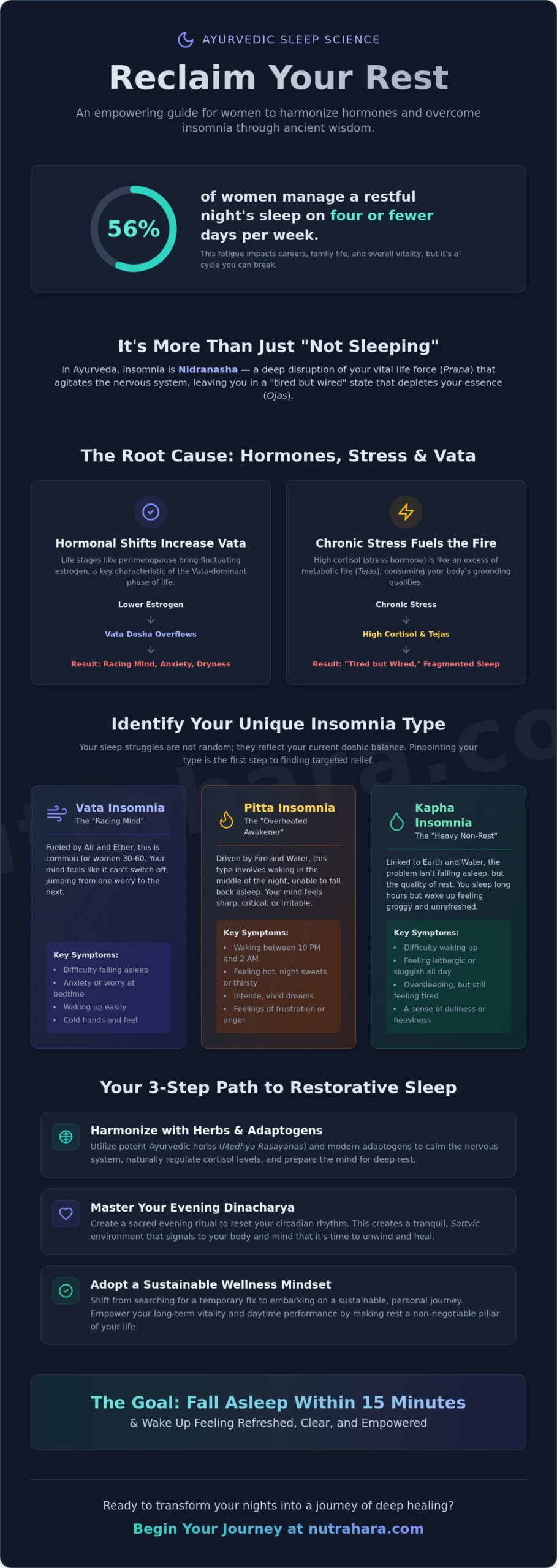
Did you know that as of 2026, over 56% of women manage to get a restful night’s sleep only four or fewer days per week? If you’re one of them, you likely know the frustration of staring at the ceiling at 3 AM while your mind races through tomorrow’s to-do list. It’s common to feel that hormonal night sweats are stealing your vitality, leaving you with a sense of daytime fatigue that impacts your career and family life. Finding effective ayurvedic remedies for insomnia is no longer just about tradition; it’s about reclaiming your right to restorative rest through a blend of ancient wisdom and modern clinical validation.

We understand that you want more than just a quick fix. You’re looking for a sustainable path to wellness that respects your body’s natural rhythms. In this guide, you’ll discover how to harmonize your hormones and doshas using time-tested Ayurvedic principles supported by the latest 2026 nutritional research. We’ll show you how to build a natural sleep ritual so you can fall asleep within 15 minutes and wake up feeling refreshed and empowered. From understanding Vata-hormonal misalignment to choosing high-quality supplements, you’re about to transform your nights into a journey of deep healing.

Key Takeaways

  • Identify your unique insomnia type to move beyond one-size-fits-all solutions and address the specific doshic imbalances affecting your rest.
  • Discover how to use potent ayurvedic remedies for insomnia, such as brain-toning herbs that harmonize the nervous system and naturally regulate cortisol levels.
  • Master the evening Dinacharya to reset your circadian rhythm and create a tranquil, Sattvic environment that invites deep, restorative sleep.
  • Learn the synergy between ancient Medhya Rasayanas and modern nutritional science to balance hormones through every life stage, from menstruation to menopause.
  • Shift your wellness approach from a temporary fix to a sustainable, personal journey that empowers your long-term vitality and daytime performance.

Understanding Nidranasha: The Ayurvedic Perspective on Female Insomnia

In the ancient texts of Ayurveda, sleep is regarded as one of the three pillars of life, essential for maintaining our physical and mental equilibrium. When this pillar falters, we experience Nidranasha. This isn’t merely a symptom of “not sleeping.” It represents a fundamental disruption of Prana, the vital life force that governs our movement, thoughts, and biological rhythms. When Prana becomes erratic, it agitates the Majja Dhatu, or the nervous system tissue. This agitation prevents the mind from settling into the deep, heavy quality required for restorative rest. For many women, this manifests as a “tired but wired” state that leaves them depleted. Modern psychology often labels this state as hyperarousal, but The Ayurvedic Perspective on Female Insomnia views it as an unstable Vata dosha. Because Vata is composed of air and ether, it is naturally light and mobile. When it overflows, it scatters our focus and keeps the mind spinning long after the lights go out, making the search for ayurvedic remedies for insomnia a journey of grounding and stabilization.

The Hormonal Connection: Vata and the Transitioning Woman

As women move through various life stages, their internal landscape shifts constantly. During perimenopause and menopause, estrogen levels begin to fluctuate and eventually decline. In the Ayurvedic tradition, this transition is viewed as a Vata-dominant period of life. Lower estrogen often triggers spikes in Vata, leading to the dryness, anxiety, and racing mind that characterize many sleep struggles. We also see a clear link between modern stress and ancient wisdom. High cortisol, our primary stress hormone, mirrors an excess of Tejas, or metabolic fire. When Tejas burns too brightly due to chronic stress, it consumes the cooling, grounding qualities of the body. These hormonal shifts mimic the inherent irregularity of Vata, creating a biological environment where sleep becomes elusive and fragmented.

Acute vs. Chronic: When Sleep Loss Becomes a Dosha Imbalance

It’s vital to distinguish between a few nights of poor rest and deep-seated chronic Nidranasha. Acute sleep loss is often a temporary reaction to a specific life stressor. However, when sleep remains elusive for months, it begins to deplete Ojas. Ojas is the subtle essence of our vitality, immunity, and inner glow. Without it, we lose our resilience and our sense of well-being. Chronic insomnia isn’t just a hurdle to clear; it’s a sign that the body’s long-term progression toward health has been interrupted. At Nutrahara, we believe sleep is a foundational element of longevity. Utilizing targeted ayurvedic remedies for insomnia alongside products like RestoraSleep can help ground the nervous system. Addressing these imbalances early helps preserve your Ojas and ensures that your path to wellness remains steady, empowering, and deeply restorative.

The Three Doshas of Sleep: Identifying Your Unique Insomnia Type

In the world of holistic healing, we recognize that no two women experience sleep loss in quite the same way. One person might struggle to fall asleep because her mind is racing with tomorrow’s deadlines, while another might wake up every night at 2 AM feeling overheated. Ayurveda teaches us that these differences aren’t random. They are reflections of your unique doshic balance. Finding the right ayurvedic remedies for insomnia begins with identifying which of the three doshas, Vata, Pitta, or Kapha, is currently out of sync with your body’s needs.

Vata-Type Insomnia: The Challenge of the 30-60 Age Group

For women in their 30s through their 60s, Vata is often the primary culprit behind restless nights. This “Racing Mind” type of insomnia is fueled by the Air and Ether elements. It creates a “monkey mind” that jumps from one worry to the next. You might notice physical signs like cold feet, dry skin, or a sudden surge of anxiety just as you lay your head down. Because this age group often faces the dual pressures of career growth and family care, Vata can easily become overstimulated. If you find yourself exhausted but unable to settle into stillness, your Vata is likely seeking grounding and warmth.

Pitta and Kapha Variations: Night Sweats and Sluggishness

Pitta-type insomnia is often linked to the body’s internal heat and metabolism. It typically manifests as waking up in the middle of the night, often between 2 AM and 4 AM, feeling irritable or physically hot. This is a common experience during perimenopause, where shifting hormones trigger Pitta spikes. Understanding this Ayurvedic perspective on women’s hormonal changes and sleep helps explain why night sweats can be so disruptive. On the other hand, Kapha-type insomnia feels like a heavy, unrefreshing slumber. Even after sleeping eight or more hours, you might wake up feeling sluggish. This is often due to “Ama,” or accumulated toxins that weigh down your system and dull your natural “Agni” (digestive fire). Ensuring your digestion is clear is essential for deep, toxin-free rest.

Identifying your specific type allows you to choose supplements that truly resonate with your body’s current state. For those struggling with the restless energy of Vata or the heat of Pitta, incorporating a targeted formula like RestoraSleep can be a gentle way to invite the body back into a state of calm and balance.

Ayurvedic Remedies for Insomnia: A Woman’s Guide to Restful Sleep in 2026

Potent Ayurvedic Herbs and Modern Adaptogens for Deep Rest

Ayurveda offers a specialized class of herbs known as Medhya Rasayanas. These are potent brain tonics designed to rejuvenate the nervous system and restore mental clarity. Unlike pharmaceutical options that may cause dependency, these botanical allies work by nourishing the tissues. They represent the gold standard in ayurvedic remedies for insomnia. We focus on clean extraction methods to ensure maximum bioavailability. This means the active compounds are preserved in their most potent form, allowing your body to utilize them effectively. It’s a fusion of ancestral wisdom and modern clinical validation that supports your long-term health progression.

Ashwagandha: The Queen of Sleep Adaptogens

Ashwagandha is perhaps the most famous adaptogen in the world. Its name is derived from the Sanskrit words for “smell of a horse,” which symbolizes the strength and grounding energy it provides. While the name is ancient, modern science has validated its incredible power. Research shows that Ashwagandha effectively reduces cortisol, the primary stress hormone that keeps the mind racing at night. By calming the “fight or flight” response, it creates the internal environment necessary for natural melatonin production. To get the most benefit, we recommend Ashwagandha with Black Pepper. The addition of piperine from black pepper significantly increases the absorption of the herb’s active withanolides, ensuring you receive the full spectrum of its calming power.

Brahmi and Shankhapushpi: Calming the Mental Chatter

If you struggle with an “overheated” Pitta mind or constant mental chatter, Brahmi and Shankhapushpi are essential tools. Brahmi is renowned for its cooling properties; it helps soothe the nervous system and reduce the irritability that often prevents deep rest. Shankhapushpi is a traditional remedy specifically used to reduce anxiety and enhance memory. These herbs provide a unique dual benefit for the modern woman. By improving your sleep quality at night, they support the efficacy of supplements like FocusZenith during the day. You’ll wake up with a sharper mind and a more balanced mood, ready to perform at your best.

Safety is always our priority. While these herbs are natural, women who are pregnant or lactating should consult their healthcare professional before starting new ayurvedic remedies for insomnia. Every woman’s journey is unique, and professional guidance ensures your path to wellness is both safe and effective. By choosing pure, additive-free formulas, you’re making a commitment to your body’s natural intelligence and long-term vitality.

The Evening Dinacharya: Ayurvedic Rituals for a Quiet Mind

Establishing a Dinacharya, or daily routine, is the most effective way to align your internal clock with the natural world. While modern science calls this the circadian rhythm, Ayurveda views it as a sacred commitment to your body’s wisdom. For women balancing careers and family life, the evening hours often become a second shift of chores and digital scrolling. This overstimulation keeps Vata high and prevents the mind from entering a Sattvic state. A Sattvic environment is one of purity, lightness, and peace. By intentionally slowing down, you create a sanctuary where your soul feels safe to rest. These rituals aren’t just habits; they are powerful ayurvedic remedies for insomnia that signal to your nervous system that the day’s work is done.

Creating a “Sleep Sanctuary” in your modern home doesn’t require a total renovation. Small, deliberate changes can shift the energy of your space:

  • Dim the lights: Lower the brightness in your home at least one hour before bed to encourage natural melatonin production.
  • Digital detox: Swap your smartphone for a physical book to avoid the Vata-disturbing blue light of screens.
  • Natural fibers: Use cotton or silk bedding to help your body regulate its temperature throughout the night.
  • Calming scents: Use a diffuser with sandalwood or jasmine oil to ground your energy.

Abhyanga and Padabhyanga: The Power of Self-Massage

The science of touch is a cornerstone of Ayurvedic healing. Abhyanga, or oil massage, is a profound way to lower Vata and soothe the Majja Dhatu (nervous system). If a full body massage feels overwhelming on a Tuesday night, focus on Padabhyanga, which is the practice of massaging the feet. Your feet contain numerous pressure points connected to the brain and sleep centers. Simply warm a small amount of sesame oil and apply it to your feet using circular motions on the joints and long strokes on the soles. “I used to lay awake for hours with my heart racing,” says Elena, 48. “Spending just five minutes massaging my feet with warm oil changed everything. My mind finally stops spinning, and I drift off naturally.”

Yoga Nidra and Meditation: De-cluttering the Mind

Yoga Nidra, often called “Psychic Sleep,” is a guided practice that brings you to the border between wakefulness and slumber. It provides deep neurological recovery that ordinary sleep sometimes misses. For women with “busy-mom” syndrome, a simple five-minute meditation can be transformative. Sit comfortably, close your eyes, and scan your body from toe to head, consciously releasing tension in each area. Couple this with Nadi Shodhana (alternate nostril breathing) to cool a frustrated Pitta mind and balance your energy. This breathwork is one of the most accessible ayurvedic remedies for insomnia because you can do it anywhere, at any time.

To further support your evening transition and ensure your body has the nutritional foundation it needs for rest, consider adding RestoraSleep to your nightly wind-down ritual. This formula is designed to complement your Dinacharya, helping you move from the chaos of the day into a state of deep, restorative peace.
Reclaiming Your Vitality: The Nutrahara Path to Restorative Sleep

At Nutrahara, we believe that true wellness is a purposeful fusion of ancestral health philosophies and contemporary nutritional research. We don’t view health as a final destination or a quick fix to be checked off a list. Instead, we see it as a personal, ongoing journey that requires a supportive partnership. For the modern woman, finding effective ayurvedic remedies for insomnia is about more than just closing your eyes at night. It’s about restoring the delicate harmony between your biological rhythms and your spirit. By choosing natural paths to rest, you’re making a commitment to your long-term vitality and self-esteem.

Purity is the foundation of everything we create. We understand that for women aged 30 to 60, clean ingredients are non-negotiable. Your body is navigating complex hormonal shifts, and it deserves formulas that are transparent and free from artificial additives. We take pride in our simplicity, ensuring that every botanical extract is chosen for its clinical validation and traditional significance. This grounded approach allows you to trust the process of your own health progression, knowing that your supplements are as pure as the intentions behind your wellness practice.

Restorasleep: Your Targeted Ayurvedic Solution

The specific formulation philosophy behind Restorasleep focuses on stabilization. As we identified earlier, much of female insomnia stems from a Vata-hormonal imbalance that leaves the nervous system in a state of hyperarousal. Restorasleep uses a blend of grounding adaptogens to soothe this “tired but wired” feeling. For women seeking total hormonal harmony, pairing this sleep support with FemmePower can be transformative. Together, they address both the daytime energy needs and the nighttime recovery requirements of the female body, ensuring you remain balanced through every life stage.

Next Steps on Your Wellness Journey

Consistency is the heart of a successful “Modern Dinacharya.” We encourage you to continue your education by exploring our resources and downloading our e-books. These guides offer deeper insights into how ayurvedic remedies for insomnia can be integrated into a busy lifestyle. For a holistic look at how to support your physical and mental health, visit our Ultimate Guide to Women’s Wellness Supplements. This comprehensive resource will help you build a sustainable ritual that lasts a lifetime.

You deserve to wake up every morning with a smile, feeling refreshed and ready to perform at your best in your career and with your family. Reclaiming your sleep is the first step toward reclaiming your power. Trust in your body’s wisdom, stay consistent with your rituals, and embrace the restorative rest you’ve earned.

Your Journey to Restful Nights Begins Now

You’ve discovered how to harmonize your doshas and align your evening rituals with the natural world. By understanding the Vata-hormonal connection and implementing a structured Dinacharya, you’ve taken the first steps toward reclaiming your vitality. Integrating ayurvedic remedies for insomnia into your life isn’t just a temporary fix; it’s a commitment to your long-term health and personal well-being. You now have the tools to transform a racing mind into a state of deep, Sattvic peace.

Our Restorasleep formula represents the perfect fusion of tradition and modern validation. Formulated by Ayurvedic experts and modern nutritionists, it uses clean, non-habit forming ingredients to support your body’s natural rhythms. We’re proud to have supported over 10,000 women on their wellness journey, helping them wake up feeling refreshed and empowered. You don’t have to navigate this path alone.

Experience Deep, Natural Rest with Restorasleep

Believe in your body’s ability to heal and rest. Every small change you make today builds the foundation for a more vibrant tomorrow. You deserve to wake up with a smile, ready to embrace the day with confidence and joy.

Frequently Asked Questions

Is it safe to take Ayurvedic sleep herbs while pregnant or breastfeeding?

Consult your healthcare professional before using any herbal supplements during pregnancy or lactation. While many botanical elements are gentle, some potent herbs can influence hormonal balance or uterine contractions. Safety is a priority on your personal health progression. Professional guidance ensures that any choices you make support both your well-being and your baby’s development during these sensitive life stages.

How long does it take for Ayurvedic remedies for insomnia to show results?

You can typically expect to see noticeable improvements within two to four weeks of consistent use. Ayurvedic remedies for insomnia don’t act as a “knockout” pill; instead, they work to nourish the nervous system and restore your body’s natural rhythms over time. This sustainable approach focuses on long-term vitality and internal balance rather than providing a temporary, superficial fix.

Can Ashwagandha be taken with my existing hormone replacement therapy (HRT)?

It is essential to speak with your physician before combining Ashwagandha with Hormone Replacement Therapy (HRT). Ashwagandha is a powerful adaptogen that can influence the endocrine system, and your doctor can help ensure that it complements your specific HRT protocol. This collaborative approach allows you to achieve hormonal harmony safely while benefiting from the herb’s grounding and restorative properties.

What is the “Vata hour” and why do I always wake up then?

The “Vata hour” occurs between 2 AM and 6 AM, a window when the light and mobile qualities of the Air element are most active. If your Vata is high due to stress or perimenopausal shifts, you’re more likely to wake up with a racing mind during this time. Grounding rituals like Padabhyanga or warm oil massage can help stabilize this energy before you sleep.

Will Ayurvedic sleep supplements make me feel groggy the next morning?

No, high-quality Ayurvedic sleep supplements are designed to support restorative rest without causing morning grogginess. These formulas focus on calming the nervous system and regulating cortisol rather than sedating the brain. You’ll wake up feeling refreshed and empowered because the supplements work with your body’s natural chemistry to promote genuine, deep sleep that leaves you alert for the day.

How does diet affect my sleep according to Ayurvedic principles?

Diet plays a crucial role because poorly digested food creates “Ama,” or toxins, which can disturb your sleep quality and leave you feeling heavy. Ayurveda suggests eating your largest meal at lunch and keeping dinner light and easy to digest. Strengthening your “Agni” (digestive fire) ensures that your body isn’t working overtime to process food while you’re trying to rest.

Can meditation really replace the need for pharmaceutical sleep aids?

Many women find that consistent meditation practices like Yoga Nidra can significantly reduce or eliminate the need for pharmaceutical aids. Meditation addresses the root cause of “hyperarousal” by retraining your nervous system to enter a state of deep calm. It’s a powerful tool for longevity that builds your internal resilience and boosts your self-esteem through a sense of self-mastery.

What are the best essential oils to use alongside Ayurvedic sleep rituals?

Sandalwood, Jasmine, and Lavender are the most effective essential oils for enhancing your sleep rituals. Sandalwood is deeply grounding for Vata, while Jasmine and Lavender help cool an overheated Pitta mind. Using these oils in a diffuser or during self-massage provides an extra layer of sensory support for your journey with ayurvedic remedies for insomnia, creating a tranquil environment for your soul to rest.

Article by

Nutrahara Team

We are a dedicated collective of nutrition scientists and naturopaths at Nutrahara, committed to advancing women's health through the fusion of ancient Ayurveda science and cutting-edge nutrition research. Our mission is to empower you with clean, simple, and scientifically validated wellness solutions so you can live your healthiest life. Connect with us to stay updated on the latest developments in holistic women's health and nature-based research.

Disclaimer

This article is not a substitute for medical advice. Please consult a healthcare professional before starting any supplement, especially if pregnant, nursing, taking medication, or managing health conditions.

Categories
Articles

Ayurvedic Supplements for Joint Pain: A Woman’s Guide to Natural Mobility and Vitality

You settle onto your yoga mat for a morning sun salutation, but instead of a fluid stretch, your knees protest with a familiar, dull ache. For many women navigating the hormonal shifts of menopause or the natural changes of aging, this stiffness feels like a betrayal of the body. It’s exhausting to rely on temporary fixes that don’t address the root cause of your discomfort. If you’re searching for a path back to fluid movement, exploring ayurvedic supplements for joint pain offers a bridge between time-tested botanical traditions and rigorous modern validation.

We understand that your health is a lifelong progression, not a series of quick fixes. You deserve a solution that honors your body’s purity while delivering the strength you need for an active lifestyle. This guide reveals how ancient botanicals, highlighted in 2025 clinical trials for their efficacy in improving knee function, can serve as powerful alternatives to conventional options. We will explore how to balance your internal energetics and fortify your foundation for years of pain-free movement and vibrant flexibility.

Key Takeaways

  • Understand how hormonal shifts during menopause impact your joint lubrication and why balancing Vata energetics is the first step toward reclaiming comfort.
  • Explore the science of synergy, where traditional herbs and modern research combine to offer more than just a temporary mask for physical discomfort.
  • Discover which ayurvedic supplements for joint pain are most effective for your unique body and learn the best rituals for taking them to ensure optimal results.
  • Learn to pair your supplement routine with specific yoga practices and meditation to enhance your flexibility and support your lifelong bone strength.
  • Empower yourself with the knowledge to select pure, laboratory-tested formulas that align with your commitment to a natural and balanced lifestyle.

Understanding Joint Pain in Women: An Ayurvedic and Biological Perspective

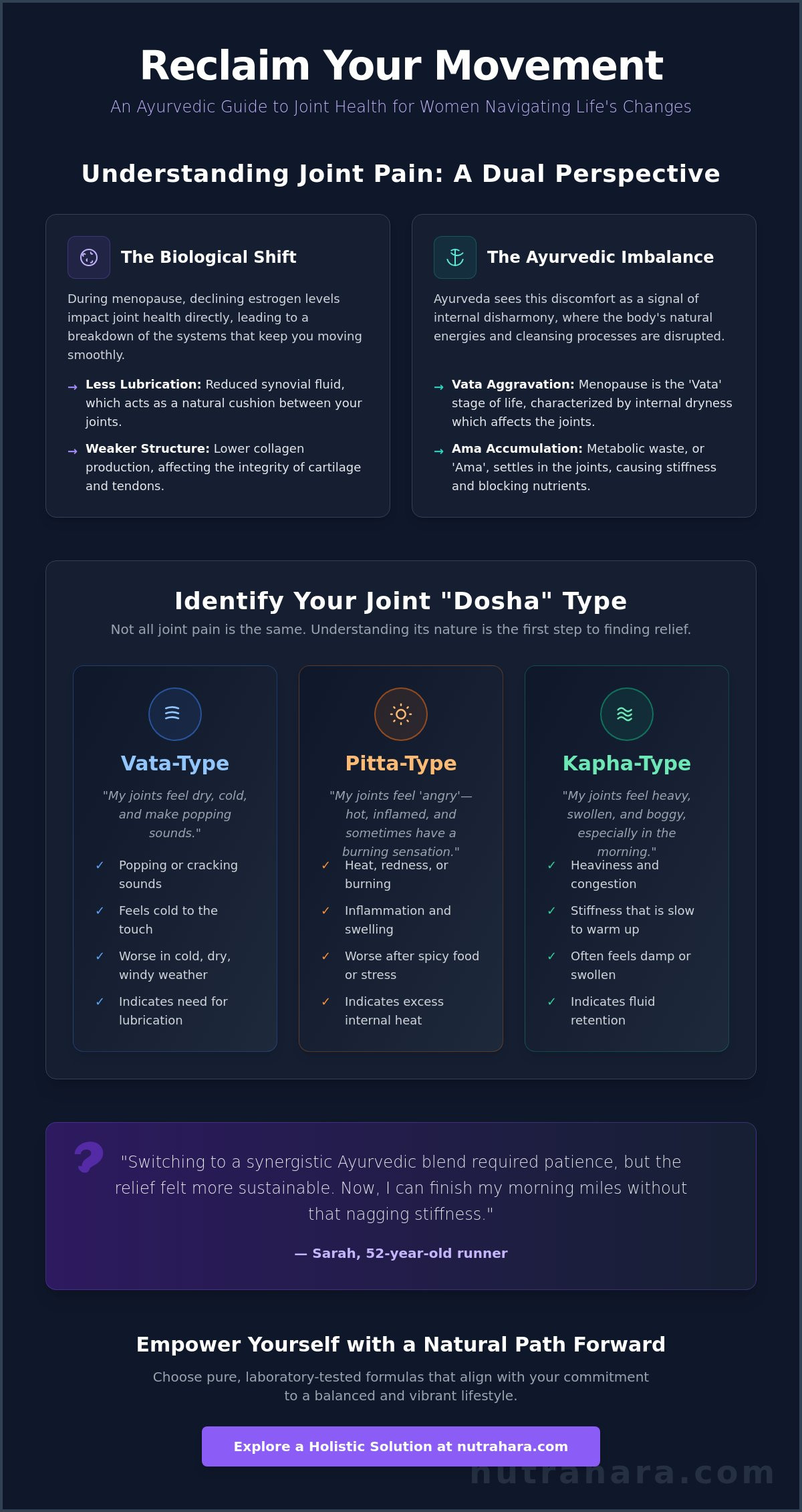
For many women, joint discomfort isn’t just a physical sensation; it’s a signal from the body that something is out of balance. In the tradition of Ayurveda, joint pain is rarely seen as a localized issue. Instead, it’s understood as a combination of Vata imbalance, which brings dryness to the tissues, and the accumulation of “Ama,” or metabolic waste. When Ama settles in the joints, it creates that familiar morning stiffness that makes your first yoga flow of the day feel restricted. This metabolic debris blocks the flow of nutrients, leading to a cycle of discomfort. By viewing this through both a biological and energetic lens, we can begin a journey of long-term progression toward vitality.

The Vata-Menopause Connection

Between the ages of 30 and 60, your body undergoes a profound transformation. As you move toward menopause, your estrogen levels naturally decline. This shift is significant because estrogen helps maintain the collagen and synovial fluid that keep your joints cushioned and mobile. From an Ayurvedic perspective, this life stage is the “Vata” period of life. Vata is characterized by the elements of air and ether, which are inherently cold and dry. When estrogen drops, the “lubrication” of the body decreases, mirroring the dryness of an aggravated Vata dosha. This is why many women find that their usual exercise routines suddenly feel more taxing. Supporting your system with targeted nutrition, such as FemmePower, can help harmonize these hormonal shifts and provide the foundation for effective use of ayurvedic supplements for joint pain.

Identifying Your Joint “Dosha” Type

Not all joint pain feels the same, and identifying your specific “type” helps you choose the right path forward. Understanding these nuances allows you to act as your own advocate in your wellness journey. Most women will find their symptoms fall into one of these three categories:

  • Vata-type: You might notice your joints popping or cracking. This discomfort often feels cold to the touch and is worse in dry, windy weather. It’s a sign that the “cushion” in your joints needs restoration.
  • Pitta-type: This manifests as heat, redness, or a burning sensation. If your joints feel “angry” or inflamed after a spicy meal or a stressful day, Pitta is likely the driver.
  • Kapha-type: This feels like heaviness, swelling, or congestion. You might feel lethargic in the mornings, with joints that seem “boggy” and take a long time to warm up.

Reclaiming your mobility isn’t about fighting the body’s natural changes. It’s about listening to these signals with the compassion of a wise guide. When you address the underlying Ama and hormonal shifts simultaneously, you empower your body to maintain its flexibility and strength for years to come.

The Science of Synergistic Healing: Why Ayurvedic Herbs Work

Ancient wisdom often feels intuitive, but today’s researchers are confirming exactly why these traditions endure. Modern clinical trials now focus on the molecular pathways of traditional botanicals to validate their effectiveness. For instance, Johns Hopkins Medicine on Ayurveda notes that this holistic approach treats the whole person rather than just an isolated symptom. This is where the concept of synergy becomes vital. Unlike a single-molecule pharmaceutical, ayurvedic supplements for joint pain utilize the entire plant. This preserves a natural balance of compounds that work together to enhance absorption and reduce potential irritation. It’s a gentle yet powerful way to support your body’s long-term health progression.

“I was taking NSAIDs every day for my morning hip pain,” says Sarah, a 52-year-old runner. “I worried about my stomach health over time. Switching to a synergistic Ayurvedic blend required a bit of patience, but the relief felt more sustainable. Now, I can finish my morning miles without that nagging stiffness.” Sarah’s experience reflects a common journey for women seeking a natural alternative that respects the body’s delicate internal environment.

Mechanisms of Action: Inflammation and Repair

Ayurvedic botanicals work by inhibiting pro-inflammatory cytokines, the proteins that signal your body to produce pain and swelling. By calming these signals, the herbs help protect the joint matrix from further wear. Antioxidants within these plants also shield your tissues from oxidative stress, which is often higher during hormonal transitions. Herb-drug synergy is the interaction that enhances efficacy while minimizing side effects.

Bioavailability is the final piece of the puzzle. Some of the most potent natural compounds are difficult for the body to absorb on its own. They need a “key” to unlock their potential. This is why many traditional formulas include “activators” like black pepper. Research has shown that piperine can increase the absorption of certain herbal compounds by up to 2,000%, ensuring the nutrients actually reach your joints.

The Importance of Purity and Clean Labels

Safety is a priority when you’re choosing what to put into your body. Transparency in sourcing is essential, especially given recent industry challenges. In December 2025, the FDA issued warnings regarding heavy metal contamination in some unregulated products. Additionally, in January 2026, certain supplements were recalled for containing undeclared prescription drugs. We believe your wellness journey should be built on a foundation of trust and purity. Our Premium Collagen Complex provides clean, laboratory-tested structural support that aligns with our commitment to simplicity. If you’re looking to strengthen your foundation, this formula offers a reliable starting point for your daily ritual.

Ayurvedic Supplements for Joint Pain: A Woman’s Guide to Natural Mobility and Vitality

Top Ayurvedic Supplements for Joint Pain and Flexibility

Choosing the right ayurvedic supplements for joint pain requires a blend of intuition and evidence-based selection. For women, the goal is often to restore “Snehana,” or internal oiliness, which prevents the friction that leads to discomfort. These botanicals don’t just mask symptoms. They nourish your tissues from within, supporting a long-term progression toward fluid movement. Whether you’re a dedicated yogi or simply want to keep up with your daily walks, these natural allies provide the foundation your body needs.

Boswellia Serrata (Shallaki): The Natural Anti-Inflammatory

Shallaki is a cornerstone of joint health because it helps prevent the breakdown of glycosaminoglycans, the essential building blocks of your cartilage. Clinical studies from 2025 have demonstrated that consistent use can improve knee flexion and reduce stiffness within a 30 to 90-day window. This makes it an invaluable tool for women experiencing the “popping” or “cracking” associated with Vata imbalance. Tip: Take Shallaki with a meal that includes healthy fats, such as avocado or ghee, to enhance its absorption and protect your joint matrix more effectively.

Turmeric and Ginger: The Golden Duo

When exploring ayurvedic supplements for joint pain, the combination of turmeric and ginger is often the first recommendation for a reason. These roots work together to maintain your “Agni,” or digestive fire. When your digestion is strong, your body prevents the buildup of “Ama,” the metabolic waste that often settles in the joints. Many Ayurvedic treatments for arthritis rely on the high curcumin content in turmeric to calm systemic inflammation. Since curcumin is difficult for the body to use on its own, pairing it with a formula like Ashwagandha with Black Pepper ensures that the piperine activates these compounds, allowing them to reach your joints efficiently.

Ashwagandha: Reducing Stress-Induced Aches

Stress isn’t just a mental state; it has a physical impact on your musculoskeletal system. High cortisol levels can make your body more sensitive to pain, especially during the hormonal shifts of perimenopause. Ashwagandha acts as a powerful adaptogen, helping your nervous system stay calm while supporting overnight tissue repair. It’s also known for improving sleep quality, which is when your body does its most vital healing work. Trick: Taking Ashwagandha in the evening can help lower your cortisol before bed. If you find that discomfort keeps you awake, pairing your joint support with RestoraSleep can help you enter the deep recovery phase necessary for lifelong mobility.

For a comprehensive approach, our Joints & Knees Kit combines these potent botanicals into a simple daily ritual. It’s the logical choice for women who want to reclaim their vitality without the complexity of managing multiple individual extracts. By choosing pure, synergistic formulas, you’re investing in your future self and your continued ability to move with grace.

The Holistic Ritual: Yoga, Diet, and Lifestyle Integration

Reclaiming your mobility is a deeply personal journey. It’s a long-term progression that requires more than just a temporary fix; it demands a daily commitment to your body’s natural rhythm. While choosing high-quality ayurvedic supplements for joint pain provides the biochemical support you need, your lifestyle habits sustain that progress over time. Think of your joints as a garden. The supplements act as the nutrient-dense fertilizer, but your daily movement and diet are the water and sunlight that allow your vitality to bloom. By aligning your routine with ancient wisdom, you empower yourself to move through life with grace and confidence.

Yoga Poses for Joint Longevity

Yoga is a vital tool for receiving Prana, the universal life force that revitalizes stiff or stagnant tissues. For women in their 40s and 50s, movement should focus on stability and decompression rather than extreme flexibility. Before you begin any practice, always start with gentle joint rotations, known as Sukshma Vyayama. This simple ritual signals your body to produce synovial fluid, effectively lubricating the “hinges” of your skeletal system.

  • Vrikshasana (Tree Pose): This pose builds essential stability in the ankles and hips. It’s particularly beneficial as bone density shifts during the menopausal transition.
  • Adho Mukha Svanasana (Downward Dog): This classic shape allows for gentle spinal decompression. It encourages blood flow to the weight-bearing joints of the upper body without placing excessive strain on the wrists.
  • Meditation: Calming the mind for even five minutes a day can lower systemic inflammation. When your nervous system is at rest, your body can focus its energy on tissue repair and recovery.

An Anti-Inflammatory Ayurvedic Diet

For women navigating the 30 to 60 age demographic, the digestive fire, or Agni, often needs extra care. To pacify the dryness of Vata and reduce joint discomfort, focus on warming, cooked foods that are easy to process. Grounding meals like hearty vegetable stews, lentil soups, and kitchari seasoned with cumin and ginger are ideal. These foods provide the “oiliness” your body craves during hormonal shifts.

Try to identify your personal inflammation triggers. Many women find that processed sugars or nightshades like tomatoes and eggplants can cause a noticeable flare in stiffness the following morning. Efficient nutrient absorption is the secret to successful joint repair. You might find that Digestive Enzymes provide the necessary support to ensure your body actually utilizes the minerals required for bone strength. When your digestion is clear, your path to mobility becomes much smoother.

Tips and Tricks: The Warm Oil Ritual

For immediate relief from morning stiffness, try a warm sesame oil massage, known as Abhyanga, before your morning shower. Sesame oil is naturally warming and penetrates deep into the tissues to soothe aggravated Vata. Focus on your knees, wrists, and lower back to encourage circulation and ease physical tension before you even step onto your yoga mat.

Ready to support your body’s natural resilience? Start your wellness journey with our Ashwagandha with Black Pepper today.

Reclaiming Your Movement: Choosing the Right Path Forward

You’ve moved through the understanding of Vata imbalances and the molecular science of synergistic herbs. Now, the power to transform your daily experience rests in your hands. Reclaiming your mobility isn’t a destination; it’s a personal, ongoing partnership with your body. By choosing ayurvedic supplements for joint pain, you’re opting for a path that honors both tradition and clinical purity. This journey is about small, consistent steps that lead to a lifetime of fluid movement and vibrant health.

What to Expect on Your Wellness Journey

Natural healing follows the rhythm of nature. While pharmaceutical masks might work in hours, Ayurvedic botanicals work to restore balance at the root. Most women begin to notice a shift within a 4 to 12 week window of consistent use. This timeline allows the bioactive compounds to accumulate in your tissues and begin the work of calming systemic inflammation. Instead of looking for a total disappearance of symptoms on day one, track your non-scale victories. You might find that your morning downward dog feels less strained, or that you’re taking the stairs with a bit more ease. These subtle shifts are evidence that your joints are receiving the nourishment they’ve lacked for years.

Finding Your Perfect Fit

Your path forward should be as unique as your own wellness goals. If you’re looking to address specific stress-induced tension and improve your recovery, starting with Ashwagandha with Black Pepper may be your ideal first step. For those who want a comprehensive structural foundation to support their bone density and skin elasticity, our Premium Collagen Complex provides the modern support needed to complement traditional herbs. If you’re looking for a complete overhaul of your joint health, our Joints & Knees Kit offers a curated selection designed to work in perfect harmony.

We believe that true wellness is built on simplicity and transparency. Our formulas are crafted without artificial additives, ensuring that every capsule brings you closer to your natural state of balance. You don’t have to accept stiffness as an inevitable part of aging. With the right tools and a commitment to your long-term progression, you can reclaim the vitality that is your birthright. We invite you to explore our range and discover a personalized journey toward a life of pain-free movement and lasting joy.

Embrace Your Natural State of Flow

Your journey toward lifelong mobility is a beautiful, ongoing progression. By understanding the connection between hormonal shifts and Vata energetics, you’ve taken the first step toward reclaiming your comfort. We’ve explored how the synergy of clinical-grade Boswellia and Turmeric works to calm inflammation while protecting your joint matrix. When you pair high-quality ayurvedic supplements for joint pain with mindful yoga and a warming diet, you create a foundation for lasting vitality.

Our formulas are crafted by Ayurvedic experts and modern nutritionists to ensure you receive the most effective, 100% clean ingredients. There are no artificial additives; only pure botanical power designed for the wellness-focused woman. You don’t have to accept stiffness as a permanent part of your life. Instead, choose a path that empowers your body to heal and thrive through every stage of womanhood.

Shop the Nutrahara Joints & Knees Kit for Natural Mobility and start your personalized wellness journey today. Your body is capable of incredible resilience, and it’ll thank you for the extra support.

Frequently Asked Questions

What is the best Ayurvedic herb for knee pain specifically?

Boswellia serrata, commonly known as Shallaki, is the most effective botanical for targeting knee discomfort. It specifically inhibits the 5-LOX enzyme, which is responsible for the breakdown of joint tissue and cartilage. This targeted action makes it a foundational ingredient in many ayurvedic supplements for joint pain, especially for women who experience popping or cracking in their knees during exercise.

Can I take Ayurvedic joint supplements along with my daily multivitamin?

You can generally take these natural botanicals alongside a standard multivitamin without any conflict. In fact, nutrients like Vitamin D3 and Magnesium often work in synergy with Ayurvedic herbs to support overall bone density and muscle function. Since your health journey is personal, it’s always a good idea to check with your healthcare provider to ensure your specific combination is optimal for your needs.

How long does it take for Ayurvedic supplements to work for joint pain?

Most women begin to feel a noticeable improvement in their flexibility and comfort within 4 to 12 weeks of daily use. Natural herbs work by restoring balance to the body’s internal systems rather than just masking symptoms, which requires a bit of patience. This consistent approach ensures a sustainable, long-term progression toward better mobility rather than a temporary, short-term fix.

Are there any side effects of taking Turmeric or Boswellia daily?

Turmeric and Boswellia are widely considered safe for daily use and have been used for centuries in traditional wellness. Some people might experience mild digestive adjustments as their “Agni” or digestive fire adapts to the new nutrients. To ensure your safety, always choose formulas that are laboratory-tested for purity to avoid the heavy metal contamination risks that the FDA warned about in late 2025.

Is Ayurvedic joint care safe during perimenopause or menopause?

Ayurvedic joint care is highly recommended during perimenopause and menopause to counteract the natural increase in Vata energetics. The decline in estrogen during this life stage often leads to decreased joint lubrication and increased stiffness. Using ayurvedic supplements for joint pain helps replenish this lost moisture and supports your body’s structural integrity through these significant hormonal transitions.

Do I need to change my diet for these supplements to be effective?

You don’t strictly need to change your diet, but eating Vata-pacifying foods will certainly help you see results faster. Incorporating warming, cooked meals like stews and soups helps reduce the internal dryness that leads to joint friction. Reducing your intake of processed sugars and cold, raw foods can also help lower systemic inflammation, making your supplement ritual even more powerful.

How does yoga help Ayurvedic supplements work better for joints?

Yoga acts as a natural pump that encourages the flow of synovial fluid and blood into your joint capsules. This increased circulation ensures that the active compounds from your supplements are delivered directly to the tissues that need repair. Regular movement also helps flush out “Ama,” the metabolic waste that often contributes to that heavy, stiff feeling in the mornings.

Why does Nutrahara include Black Pepper in its Ashwagandha formula?

We include Black Pepper, specifically the compound piperine, to dramatically increase the bioavailability of the Ashwagandha. Many herbal extracts are difficult for the digestive system to absorb fully on their own. By adding a small amount of piperine, we ensure that your body can actually unlock and use the nutrients, providing you with the maximum support for stress-induced aches and recovery.

Article by

Nutrahara Team

We are a dedicated collective of nutrition scientists and naturopaths at Nutrahara, committed to advancing women's health through the fusion of ancient Ayurveda science and cutting-edge nutrition research. Our mission is to empower you with clean, simple, and scientifically validated wellness solutions so you can live your healthiest life. Connect with us to stay updated on the latest developments in holistic women's health and nature-based research.

Disclaimer

This article is not a substitute for medical advice. Please consult a healthcare professional before starting any supplement, especially if pregnant, nursing, taking medication, or managing health conditions.