

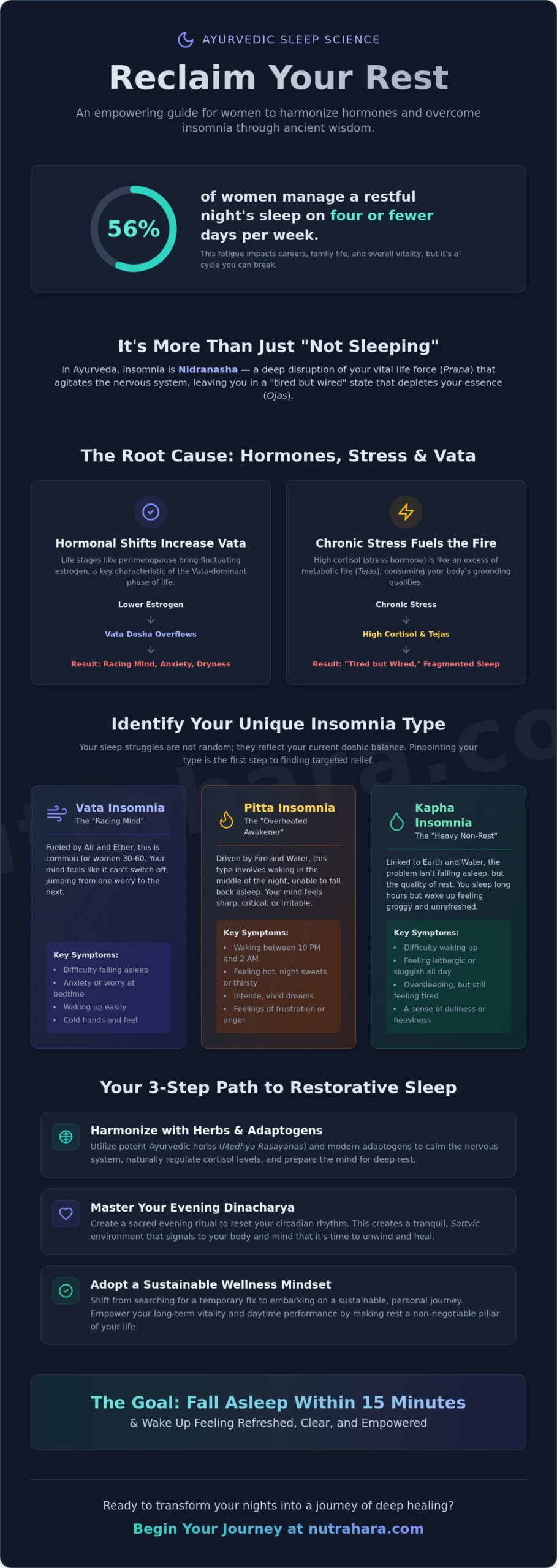
Did you know that as of 2026, over 56% of women manage to get a restful night’s sleep only four or fewer days per week? If you’re one of them, you likely know the frustration of staring at the ceiling at 3 AM while your mind races through tomorrow’s to-do list. It’s common to feel that hormonal night sweats are stealing your vitality, leaving you with a sense of daytime fatigue that impacts your career and family life. Finding effective ayurvedic remedies for insomnia is no longer just about tradition; it’s about reclaiming your right to restorative rest through a blend of ancient wisdom and modern clinical validation.
We understand that you want more than just a quick fix. You’re looking for a sustainable path to wellness that respects your body’s natural rhythms. In this guide, you’ll discover how to harmonize your hormones and doshas using time-tested Ayurvedic principles supported by the latest 2026 nutritional research. We’ll show you how to build a natural sleep ritual so you can fall asleep within 15 minutes and wake up feeling refreshed and empowered. From understanding Vata-hormonal misalignment to choosing high-quality supplements, you’re about to transform your nights into a journey of deep healing.
Key Takeaways
- Identify your unique insomnia type to move beyond one-size-fits-all solutions and address the specific doshic imbalances affecting your rest.
- Discover how to use potent ayurvedic remedies for insomnia, such as brain-toning herbs that harmonize the nervous system and naturally regulate cortisol levels.
- Master the evening Dinacharya to reset your circadian rhythm and create a tranquil, Sattvic environment that invites deep, restorative sleep.
- Learn the synergy between ancient Medhya Rasayanas and modern nutritional science to balance hormones through every life stage, from menstruation to menopause.
- Shift your wellness approach from a temporary fix to a sustainable, personal journey that empowers your long-term vitality and daytime performance.
Understanding Nidranasha: The Ayurvedic Perspective on Female Insomnia
In the ancient texts of Ayurveda, sleep is regarded as one of the three pillars of life, essential for maintaining our physical and mental equilibrium. When this pillar falters, we experience Nidranasha. This isn’t merely a symptom of “not sleeping.” It represents a fundamental disruption of Prana, the vital life force that governs our movement, thoughts, and biological rhythms. When Prana becomes erratic, it agitates the Majja Dhatu, or the nervous system tissue. This agitation prevents the mind from settling into the deep, heavy quality required for restorative rest. For many women, this manifests as a “tired but wired” state that leaves them depleted. Modern psychology often labels this state as hyperarousal, but The Ayurvedic Perspective on Female Insomnia views it as an unstable Vata dosha. Because Vata is composed of air and ether, it is naturally light and mobile. When it overflows, it scatters our focus and keeps the mind spinning long after the lights go out, making the search for ayurvedic remedies for insomnia a journey of grounding and stabilization.
The Hormonal Connection: Vata and the Transitioning Woman
As women move through various life stages, their internal landscape shifts constantly. During perimenopause and menopause, estrogen levels begin to fluctuate and eventually decline. In the Ayurvedic tradition, this transition is viewed as a Vata-dominant period of life. Lower estrogen often triggers spikes in Vata, leading to the dryness, anxiety, and racing mind that characterize many sleep struggles. We also see a clear link between modern stress and ancient wisdom. High cortisol, our primary stress hormone, mirrors an excess of Tejas, or metabolic fire. When Tejas burns too brightly due to chronic stress, it consumes the cooling, grounding qualities of the body. These hormonal shifts mimic the inherent irregularity of Vata, creating a biological environment where sleep becomes elusive and fragmented.
Acute vs. Chronic: When Sleep Loss Becomes a Dosha Imbalance
It’s vital to distinguish between a few nights of poor rest and deep-seated chronic Nidranasha. Acute sleep loss is often a temporary reaction to a specific life stressor. However, when sleep remains elusive for months, it begins to deplete Ojas. Ojas is the subtle essence of our vitality, immunity, and inner glow. Without it, we lose our resilience and our sense of well-being. Chronic insomnia isn’t just a hurdle to clear; it’s a sign that the body’s long-term progression toward health has been interrupted. At Nutrahara, we believe sleep is a foundational element of longevity. Utilizing targeted ayurvedic remedies for insomnia alongside products like RestoraSleep can help ground the nervous system. Addressing these imbalances early helps preserve your Ojas and ensures that your path to wellness remains steady, empowering, and deeply restorative.
The Three Doshas of Sleep: Identifying Your Unique Insomnia Type
In the world of holistic healing, we recognize that no two women experience sleep loss in quite the same way. One person might struggle to fall asleep because her mind is racing with tomorrow’s deadlines, while another might wake up every night at 2 AM feeling overheated. Ayurveda teaches us that these differences aren’t random. They are reflections of your unique doshic balance. Finding the right ayurvedic remedies for insomnia begins with identifying which of the three doshas, Vata, Pitta, or Kapha, is currently out of sync with your body’s needs.
Vata-Type Insomnia: The Challenge of the 30-60 Age Group
For women in their 30s through their 60s, Vata is often the primary culprit behind restless nights. This “Racing Mind” type of insomnia is fueled by the Air and Ether elements. It creates a “monkey mind” that jumps from one worry to the next. You might notice physical signs like cold feet, dry skin, or a sudden surge of anxiety just as you lay your head down. Because this age group often faces the dual pressures of career growth and family care, Vata can easily become overstimulated. If you find yourself exhausted but unable to settle into stillness, your Vata is likely seeking grounding and warmth.
Pitta and Kapha Variations: Night Sweats and Sluggishness
Pitta-type insomnia is often linked to the body’s internal heat and metabolism. It typically manifests as waking up in the middle of the night, often between 2 AM and 4 AM, feeling irritable or physically hot. This is a common experience during perimenopause, where shifting hormones trigger Pitta spikes. Understanding this Ayurvedic perspective on women’s hormonal changes and sleep helps explain why night sweats can be so disruptive. On the other hand, Kapha-type insomnia feels like a heavy, unrefreshing slumber. Even after sleeping eight or more hours, you might wake up feeling sluggish. This is often due to “Ama,” or accumulated toxins that weigh down your system and dull your natural “Agni” (digestive fire). Ensuring your digestion is clear is essential for deep, toxin-free rest.
Identifying your specific type allows you to choose supplements that truly resonate with your body’s current state. For those struggling with the restless energy of Vata or the heat of Pitta, incorporating a targeted formula like RestoraSleep can be a gentle way to invite the body back into a state of calm and balance.
Potent Ayurvedic Herbs and Modern Adaptogens for Deep Rest
Ayurveda offers a specialized class of herbs known as Medhya Rasayanas. These are potent brain tonics designed to rejuvenate the nervous system and restore mental clarity. Unlike pharmaceutical options that may cause dependency, these botanical allies work by nourishing the tissues. They represent the gold standard in ayurvedic remedies for insomnia. We focus on clean extraction methods to ensure maximum bioavailability. This means the active compounds are preserved in their most potent form, allowing your body to utilize them effectively. It’s a fusion of ancestral wisdom and modern clinical validation that supports your long-term health progression.
Ashwagandha: The Queen of Sleep Adaptogens
Ashwagandha is perhaps the most famous adaptogen in the world. Its name is derived from the Sanskrit words for “smell of a horse,” which symbolizes the strength and grounding energy it provides. While the name is ancient, modern science has validated its incredible power. Research shows that Ashwagandha effectively reduces cortisol, the primary stress hormone that keeps the mind racing at night. By calming the “fight or flight” response, it creates the internal environment necessary for natural melatonin production. To get the most benefit, we recommend Ashwagandha with Black Pepper. The addition of piperine from black pepper significantly increases the absorption of the herb’s active withanolides, ensuring you receive the full spectrum of its calming power.
Brahmi and Shankhapushpi: Calming the Mental Chatter
If you struggle with an “overheated” Pitta mind or constant mental chatter, Brahmi and Shankhapushpi are essential tools. Brahmi is renowned for its cooling properties; it helps soothe the nervous system and reduce the irritability that often prevents deep rest. Shankhapushpi is a traditional remedy specifically used to reduce anxiety and enhance memory. These herbs provide a unique dual benefit for the modern woman. By improving your sleep quality at night, they support the efficacy of supplements like FocusZenith during the day. You’ll wake up with a sharper mind and a more balanced mood, ready to perform at your best.
Safety is always our priority. While these herbs are natural, women who are pregnant or lactating should consult their healthcare professional before starting new ayurvedic remedies for insomnia. Every woman’s journey is unique, and professional guidance ensures your path to wellness is both safe and effective. By choosing pure, additive-free formulas, you’re making a commitment to your body’s natural intelligence and long-term vitality.
The Evening Dinacharya: Ayurvedic Rituals for a Quiet Mind
Establishing a Dinacharya, or daily routine, is the most effective way to align your internal clock with the natural world. While modern science calls this the circadian rhythm, Ayurveda views it as a sacred commitment to your body’s wisdom. For women balancing careers and family life, the evening hours often become a second shift of chores and digital scrolling. This overstimulation keeps Vata high and prevents the mind from entering a Sattvic state. A Sattvic environment is one of purity, lightness, and peace. By intentionally slowing down, you create a sanctuary where your soul feels safe to rest. These rituals aren’t just habits; they are powerful ayurvedic remedies for insomnia that signal to your nervous system that the day’s work is done.
Creating a “Sleep Sanctuary” in your modern home doesn’t require a total renovation. Small, deliberate changes can shift the energy of your space:
- Dim the lights: Lower the brightness in your home at least one hour before bed to encourage natural melatonin production.
- Digital detox: Swap your smartphone for a physical book to avoid the Vata-disturbing blue light of screens.
- Natural fibers: Use cotton or silk bedding to help your body regulate its temperature throughout the night.
- Calming scents: Use a diffuser with sandalwood or jasmine oil to ground your energy.
Abhyanga and Padabhyanga: The Power of Self-Massage
The science of touch is a cornerstone of Ayurvedic healing. Abhyanga, or oil massage, is a profound way to lower Vata and soothe the Majja Dhatu (nervous system). If a full body massage feels overwhelming on a Tuesday night, focus on Padabhyanga, which is the practice of massaging the feet. Your feet contain numerous pressure points connected to the brain and sleep centers. Simply warm a small amount of sesame oil and apply it to your feet using circular motions on the joints and long strokes on the soles. “I used to lay awake for hours with my heart racing,” says Elena, 48. “Spending just five minutes massaging my feet with warm oil changed everything. My mind finally stops spinning, and I drift off naturally.”
Yoga Nidra and Meditation: De-cluttering the Mind
To further support your evening transition and ensure your body has the nutritional foundation it needs for rest, consider adding RestoraSleep to your nightly wind-down ritual. This formula is designed to complement your Dinacharya, helping you move from the chaos of the day into a state of deep, restorative peace.
Reclaiming Your Vitality: The Nutrahara Path to Restorative Sleep
At Nutrahara, we believe that true wellness is a purposeful fusion of ancestral health philosophies and contemporary nutritional research. We don’t view health as a final destination or a quick fix to be checked off a list. Instead, we see it as a personal, ongoing journey that requires a supportive partnership. For the modern woman, finding effective ayurvedic remedies for insomnia is about more than just closing your eyes at night. It’s about restoring the delicate harmony between your biological rhythms and your spirit. By choosing natural paths to rest, you’re making a commitment to your long-term vitality and self-esteem.
Purity is the foundation of everything we create. We understand that for women aged 30 to 60, clean ingredients are non-negotiable. Your body is navigating complex hormonal shifts, and it deserves formulas that are transparent and free from artificial additives. We take pride in our simplicity, ensuring that every botanical extract is chosen for its clinical validation and traditional significance. This grounded approach allows you to trust the process of your own health progression, knowing that your supplements are as pure as the intentions behind your wellness practice.
Restorasleep: Your Targeted Ayurvedic Solution
The specific formulation philosophy behind Restorasleep focuses on stabilization. As we identified earlier, much of female insomnia stems from a Vata-hormonal imbalance that leaves the nervous system in a state of hyperarousal. Restorasleep uses a blend of grounding adaptogens to soothe this “tired but wired” feeling. For women seeking total hormonal harmony, pairing this sleep support with FemmePower can be transformative. Together, they address both the daytime energy needs and the nighttime recovery requirements of the female body, ensuring you remain balanced through every life stage.
Next Steps on Your Wellness Journey
Consistency is the heart of a successful “Modern Dinacharya.” We encourage you to continue your education by exploring our resources and downloading our e-books. These guides offer deeper insights into how ayurvedic remedies for insomnia can be integrated into a busy lifestyle. For a holistic look at how to support your physical and mental health, visit our Ultimate Guide to Women’s Wellness Supplements. This comprehensive resource will help you build a sustainable ritual that lasts a lifetime.
You deserve to wake up every morning with a smile, feeling refreshed and ready to perform at your best in your career and with your family. Reclaiming your sleep is the first step toward reclaiming your power. Trust in your body’s wisdom, stay consistent with your rituals, and embrace the restorative rest you’ve earned.
Your Journey to Restful Nights Begins Now
You’ve discovered how to harmonize your doshas and align your evening rituals with the natural world. By understanding the Vata-hormonal connection and implementing a structured Dinacharya, you’ve taken the first steps toward reclaiming your vitality. Integrating ayurvedic remedies for insomnia into your life isn’t just a temporary fix; it’s a commitment to your long-term health and personal well-being. You now have the tools to transform a racing mind into a state of deep, Sattvic peace.
Our Restorasleep formula represents the perfect fusion of tradition and modern validation. Formulated by Ayurvedic experts and modern nutritionists, it uses clean, non-habit forming ingredients to support your body’s natural rhythms. We’re proud to have supported over 10,000 women on their wellness journey, helping them wake up feeling refreshed and empowered. You don’t have to navigate this path alone.
Experience Deep, Natural Rest with Restorasleep
Believe in your body’s ability to heal and rest. Every small change you make today builds the foundation for a more vibrant tomorrow. You deserve to wake up with a smile, ready to embrace the day with confidence and joy.
Frequently Asked Questions
Is it safe to take Ayurvedic sleep herbs while pregnant or breastfeeding?
Consult your healthcare professional before using any herbal supplements during pregnancy or lactation. While many botanical elements are gentle, some potent herbs can influence hormonal balance or uterine contractions. Safety is a priority on your personal health progression. Professional guidance ensures that any choices you make support both your well-being and your baby’s development during these sensitive life stages.
How long does it take for Ayurvedic remedies for insomnia to show results?
You can typically expect to see noticeable improvements within two to four weeks of consistent use. Ayurvedic remedies for insomnia don’t act as a “knockout” pill; instead, they work to nourish the nervous system and restore your body’s natural rhythms over time. This sustainable approach focuses on long-term vitality and internal balance rather than providing a temporary, superficial fix.
Can Ashwagandha be taken with my existing hormone replacement therapy (HRT)?
It is essential to speak with your physician before combining Ashwagandha with Hormone Replacement Therapy (HRT). Ashwagandha is a powerful adaptogen that can influence the endocrine system, and your doctor can help ensure that it complements your specific HRT protocol. This collaborative approach allows you to achieve hormonal harmony safely while benefiting from the herb’s grounding and restorative properties.
What is the “Vata hour” and why do I always wake up then?
The “Vata hour” occurs between 2 AM and 6 AM, a window when the light and mobile qualities of the Air element are most active. If your Vata is high due to stress or perimenopausal shifts, you’re more likely to wake up with a racing mind during this time. Grounding rituals like Padabhyanga or warm oil massage can help stabilize this energy before you sleep.
Will Ayurvedic sleep supplements make me feel groggy the next morning?
No, high-quality Ayurvedic sleep supplements are designed to support restorative rest without causing morning grogginess. These formulas focus on calming the nervous system and regulating cortisol rather than sedating the brain. You’ll wake up feeling refreshed and empowered because the supplements work with your body’s natural chemistry to promote genuine, deep sleep that leaves you alert for the day.
How does diet affect my sleep according to Ayurvedic principles?
Can meditation really replace the need for pharmaceutical sleep aids?
Many women find that consistent meditation practices like Yoga Nidra can significantly reduce or eliminate the need for pharmaceutical aids. Meditation addresses the root cause of “hyperarousal” by retraining your nervous system to enter a state of deep calm. It’s a powerful tool for longevity that builds your internal resilience and boosts your self-esteem through a sense of self-mastery.
What are the best essential oils to use alongside Ayurvedic sleep rituals?
Sandalwood, Jasmine, and Lavender are the most effective essential oils for enhancing your sleep rituals. Sandalwood is deeply grounding for Vata, while Jasmine and Lavender help cool an overheated Pitta mind. Using these oils in a diffuser or during self-massage provides an extra layer of sensory support for your journey with ayurvedic remedies for insomnia, creating a tranquil environment for your soul to rest.
Disclaimer
This article is not a substitute for medical advice. Please consult a healthcare professional before starting any supplement, especially if pregnant, nursing, taking medication, or managing health conditions.