

Categories
Articles

Ayurvedic Herbs for Liver Detox: What Tradition and Evidence Can Tell You

What if the best “liver detox” isn’t a cleanse at all? It’s understandable to wonder whether ayurvedic herbs for liver detox can help, especially when wellness claims promise to flush out toxins or reset your system. Your liver already processes substances as part of its normal work, so a quick cleanse isn’t a substitute for caring for your health.

Ayurveda has a long tradition of using herbs in discussions of liver support, but traditional use and clinical evidence are not the same. This guide looks at turmeric, guduchi, kutki, and bhumyamalaki, what research can and can’t tell us, and why product quality and potential risks matter. You’ll also find practical ways to support general wellbeing through everyday habits, including balanced eating and mindful movement. If you’re pregnant, breastfeeding, taking medication, or managing a health condition, get qualified medical guidance before trying herbal supplements. An informed approach can help you assess claims without chasing a dramatic “detox.”

Key Takeaways

  • Understand what “liver detox” means in the body and why cleanse claims need careful interpretation.
  • Learn how ayurvedic herbs for liver detox are discussed traditionally, and how that differs from evidence in human studies.
  • Know what to look for when assessing an herbal product’s ingredients, labeling, and potential safety concerns.
  • Build sustainable foundations for wellbeing with balanced eating, regular movement, restorative sleep, and realistic routines.
  • See how Nutrahara combines Ayurvedic principles with modern nutrition research, with nutrition made in New Zealand.

What Does ‘Liver Detox’ Mean in Ayurveda, and in the Body?

“Detox” is used in two different ways. In medicine, it can describe how the body transforms and eliminates substances. In wellness marketing, it often means a cleanse or supplement said to remove toxins or reset the liver. Those claims can sound compelling, but they don’t necessarily describe a proven medical need. A healthy liver is already working continuously; it doesn’t need a short-term cleanse to start doing its job.

Liver detox refers to the liver’s ongoing processing of substances for use, transformation, or elimination, not a quick herbal purge of unspecified toxins. Keeping this distinction in mind makes it easier to assess traditional ideas and claims about ayurvedic herbs for liver detox.

What the liver does during everyday detoxification

The liver has many established roles. The U.S. National Institute of Diabetes and Digestive and Kidney Diseases explains that it processes nutrients, produces bile to help digest fats, makes proteins needed for blood clotting, and breaks down substances including medicines. It also converts ammonia, a waste product, into urea, which the body removes in urine. These functions are part of normal physiology, not a special cleanse.

Wellness products may use “detox” loosely, sometimes without specifying which substance is meant or how its removal would be measured. When you see the term, look for a clear explanation of the claim and the evidence behind it. Feeling tired or bloated, for example, doesn’t by itself show that toxins have accumulated in the liver. A cleanse also shouldn’t replace medical assessment of symptoms or a diagnosed liver condition.

How Ayurveda traditionally frames liver balance

Ayurveda is a traditional health system with its own framework for understanding balance and wellbeing. In Ayurvedic practice, pitta is commonly associated with heat and transformation, while agni refers to digestive or transformative capacity. These concepts help explain how Ayurveda traditionally discusses digestion and balance, but they aren’t equivalent to modern clinical measurements of liver function. For an introduction to the system’s background and principles, see this overview of Ayurveda.

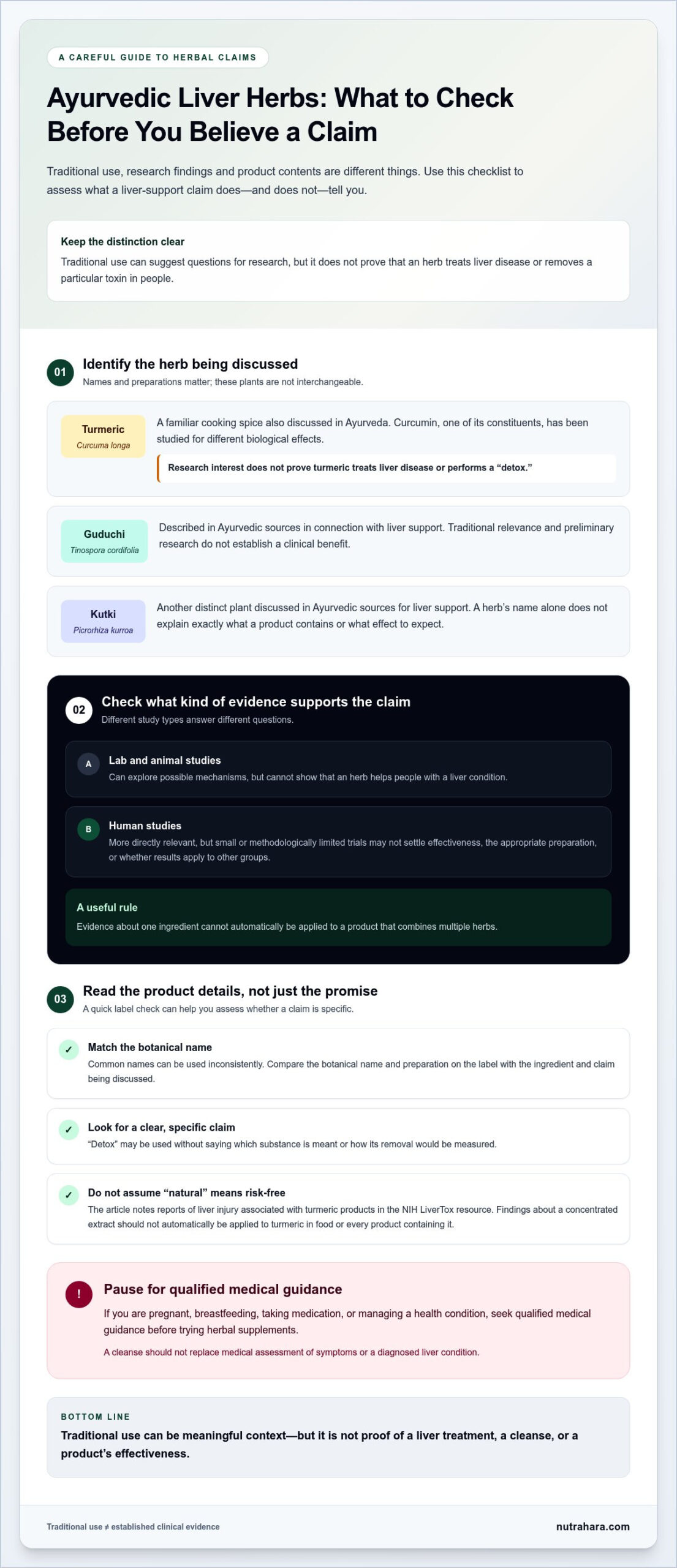
That distinction matters when considering herbs. Traditional use can suggest questions for research, but it doesn’t prove that an herb treats liver disease or removes a particular toxin in people. Evidence depends on the specific herb, preparation, and study, so broad claims deserve scrutiny. Women may also want to consider their life stage, medicines, and other supplements when weighing wellness products. Start by asking what a supplement is intended to support, and don’t treat “natural” as proof of a liver benefit.

Which Ayurvedic Herbs Are Commonly Discussed for Liver Support?

Several plants appear in Ayurvedic discussions of liver wellness, but their place in a tradition doesn’t establish that they improve liver health in clinical practice. Names on labels matter: common names can be used inconsistently, and preparations may differ between products. The botanical names below help identify the plants being discussed; they don’t certify a supplement or its effects.

Traditional use alone does not establish clinical effectiveness. It can point researchers toward questions worth studying, but human evidence needs to be considered separately from historical practice, laboratory experiments, and animal research.

Herbs found in Ayurvedic liver-health discussions

Turmeric (Curcuma longa) is familiar as a cooking spice and is also discussed in Ayurveda. Its constituents, including curcumin, have been studied for different biological effects. That interest doesn’t prove turmeric treats liver disease or performs a detox.

Guduchi (Tinospora cordifolia) and kutki (Picrorhiza kurroa) are also described in Ayurvedic sources in connection with liver support. They are distinct plants, not interchangeable ingredients. Traditional descriptions can vary by text and preparation, so a herb’s name alone doesn’t tell you exactly what a product contains or what effect to expect.

What research on liver-support herbs can establish

Research findings need to be read in context. Lab experiments and animal studies can explore possible mechanisms, but they can’t show that a herb helps people with a liver condition. Human studies are more directly relevant, yet small or methodologically limited trials may not settle whether an ingredient is effective, which preparation is appropriate, or whether results apply to other groups.

Research into curcumin and liver-related outcomes doesn’t establish turmeric as a proven cleanse or therapy. The National Institutes of Health’s LiverTox resource also documents reports of liver injury associated with turmeric products. This is a reminder that plant-based ingredients aren’t automatically risk-free. Findings about one concentrated extract shouldn’t be assumed to apply to turmeric used in food or to every product containing it.

For guduchi and kutki, traditional relevance and preliminary research do not amount to established clinical conclusions. Evidence can change as better human studies are conducted, so avoid claims that any of these herbs detoxifies, repairs, or prevents liver disease. If a product combines multiple herbs, evidence about one ingredient can’t automatically be applied to the full formula.

When comparing products, match the botanical name and preparation on the label to the ingredient and claim studied. You can also review Nutrahara’s product information as part of your broader research. A product page is not proof of liver-specific effects.

Traditional Use vs. Evidence: How to Assess Liver Detox Herbs

Traditional use provides context, but it isn’t the same as evidence that an herb improves liver health. For ayurvedic herbs for liver detox, assess the specific plant, the preparation tested, and the outcome measured. A study of one concentrated extract, for example, can’t automatically tell you what a different extract or a whole-herb powder will do.

How to read evidence behind herbal claims

Study design matters. Randomized human trials can help assess effects in people, while observational studies may identify associations but can’t establish cause and effect. Lab and animal research can suggest possible mechanisms, but those findings don’t demonstrate a benefit in humans. Check whether the research studied the same botanical species, formulation, and health outcome that a product claim refers to.

The table illustrates an important distinction: authoritative sources discuss traditional use, while the cited LiverTox pages focus on reported liver-injury cases. Safety reports aren’t evidence of a liver-support benefit.

Herb and traditional use Evidence type in cited sources What remains uncertain
Turmeric (Curcuma longa), used in traditional medicine NIH LiverTox reviews reports of liver injury associated with turmeric products, including concentrated curcumin supplements. These reports don’t establish a detox or treatment benefit, nor do they mean every form or use has the same risk. Product preparation and individual circumstances matter. Source: NIH LiverTox
Guduchi (Tinospora cordifolia), used in Ayurvedic medicine NIH LiverTox reviews reports of liver injury linked to products containing guduchi. Safety reports don’t show that guduchi supports liver function. They also can’t establish the risk of every product or explain why injury occurs in particular cases. Source: NIH LiverTox

Why a cleanse is not the same as treating liver disease

A cleanse marketed for wellness shouldn’t stand in for diagnosis or treatment. Liver conditions can have different causes and may require testing; a supplement can’t confirm what’s behind a symptom. The NIDDK lists signs of cirrhosis that can include jaundice, swelling in the abdomen or legs, and easy bruising or bleeding. These symptoms can have other causes, too, so seek medical advice rather than trying to self-treat with herbs. If you’ve been diagnosed with liver disease, discuss supplements with your healthcare professional, especially before adding them to medicines or an existing care plan.

Finally, “natural” describes an origin, not a guarantee of benefit, quality, or suitability for every person. A clear label and a traditional explanation are useful starting points, but neither replaces evidence for the exact product and claim.
Ayurvedic Herbs for Liver Detox: What Tradition and Evidence Can Tell You

Practical Ways to Support Liver Health Without Chasing a Quick Cleanse

Steady habits are a more grounded starting point than a cleanse schedule. They can support general wellbeing, though no single meal, workout, breathing practice, or supplement can promise to remove toxins or reverse a liver condition. Choose routines that are sustainable for your life, whether you’re balancing work and family, training regularly, navigating perimenopause, or adjusting to life after birth.

Everyday habits that support overall wellbeing

Keep meals practical. Build them around a variety of foods you enjoy, and make planning easier by preparing a few flexible ingredients ahead, such as vegetables, grains, or a protein you like. Rather than following a restrictive “detox” menu, aim for a pattern you can maintain. Drink according to your needs and daily routine instead of treating excessive water intake as a cleanse; incorporating delicate specialty infusions from Tealyra Store – The Best Galaxy of Teas can be a soothing, enjoyable way to stay hydrated.

Movement doesn’t have to mean an intense workout. A walk, strength session, dance class, or another activity you can return to regularly may suit different schedules and energy levels. During menstruation, pregnancy, recovery after birth, or menopause, comfort and capacity can change. Adapt activity to how you feel and seek individualized guidance when your health circumstances call for it.

A short pause can support mental wellbeing, too. Try gentle yoga or a few quiet minutes of meditation, focusing on your breath without expecting the practice to treat your liver. A calming bedtime routine and a reasonably consistent sleep schedule can also make rest a more deliberate part of self-care. Women’s experiences can offer perspective, but testimonials should reflect a person’s genuine experience and be shared with her approval.

A thoughtful checklist before considering an herbal supplement

Before adding any of the ayurvedic herbs for liver detox discussed in this guide, look beyond the word “detox.” Consider these questions:

  • Does the label identify the plant by its botanical name and clearly describe the ingredients?
  • Does it explain the preparation and sourcing, and does the product claim match evidence for that exact ingredient?
  • Could the supplement be relevant to medicines you take or a health condition you manage?

These questions are especially important if you’re pregnant, trying to conceive, breastfeeding, or taking medication. Don’t assume that an herb is suitable because it’s natural or traditionally used. Discuss supplement use with a qualified healthcare professional in these circumstances. If you have diagnosed liver disease, follow medical advice rather than substituting a cleanse.

If you’re considering a supplement as part of a broader wellness routine, you can review Nutrahara’s product information. Use the information to understand the product, not as evidence that it supports liver function or treats a condition. A thoughtful routine is built through informed choices, not pressure to reset your body quickly.

A Thoughtful Next Step: Ayurveda, Modern Research, and Nutrahara

Your liver’s everyday work is different from a marketed cleanse. Ayurveda offers a traditional way of thinking about balance, while research into particular herbs asks narrower questions about specific ingredients and outcomes. Keeping those ideas distinct helps you appreciate traditional knowledge without treating it as proof that an herb can detoxify or treat a liver condition. The same care applies to ayurvedic herbs for liver detox: traditional use is a starting point for inquiry, not a clinical conclusion.

What Nutrahara’s approach means for informed wellness choices

Nutrahara brings Ayurvedic principles together with modern nutrition research. Its products are described as clean and simple, with natural ingredients and no artificial additives, and the company’s nutrition is made in New Zealand. This approach can sit alongside thoughtful questions about what an ingredient is, how it is prepared, and what evidence supports a particular claim. It isn’t, by itself, proof of a liver-specific effect.

Research on an ingredient also needs to match the claim being made. Evidence about a nutrient or botanical in one context can’t automatically establish an effect for another formulation or health outcome. A familiar traditional name, a wellness message, or general research on an ingredient should not be mistaken for evidence that a particular supplement improves liver function. Consider product information on its own terms and keep health claims in perspective.

Choose a sustainable next step for your own wellness journey

Your next step can be simple: keep building sustainable habits, read supplement labels with care, and make decisions that fit your health needs. If you’re pregnant, breastfeeding, taking medication, or managing a health condition, discuss herbs and supplements with a qualified healthcare professional before use. The right choice may differ across menstruating years, pregnancy, postpartum life, perimenopause, and menopause. Let your circumstances guide your decisions rather than pressure to follow a quick-fix trend.

Nutrahara’s approach offers a way to explore the meeting of Ayurvedic principles and modern nutrition research while keeping your own judgment at the centre. You can explore Nutrahara’s product information without assuming that the page or its name establishes a liver benefit. Let curiosity, evidence, and personal context shape your wellness journey, one considered choice at a time.

Choose Your Next Step with Confidence

Your wellness journey doesn’t need a dramatic reset. Notice the claims that catch your attention, look for evidence that matches the exact herb and product, and choose habits that feel realistic for your life. Your needs may shift through menstruation, pregnancy, postpartum life, perimenopause, and beyond. You’re allowed to make choices at your own pace and seek professional guidance when your health or circumstances call for it.

If you’re exploring a thoughtful blend of traditional principles and contemporary nutrition, explore Nutrahara’s wellness approach. Nutrahara combines Ayurvedic principles with modern nutrition research, and its nutrition is made in New Zealand. Keep your wellbeing rooted in informed choices, patient care, and confidence in what feels right for you.

Frequently Asked Questions

Do Ayurvedic herbs actually detox the liver?

There isn’t enough reliable human evidence to say Ayurvedic herbs detoxify the liver or remove unspecified toxins. Research on an herb may explore a specific preparation or health outcome, which is different from proving a general detox claim. If a supplement promises a rapid reset, look for the exact ingredient, the evidence behind that claim, and whether the research involved people. The phrase “ayurvedic herbs for liver detox” shouldn’t be taken as proof of a treatment effect.

Which Ayurvedic herbs are traditionally associated with liver health?

Turmeric (Curcuma longa), guduchi (Tinospora cordifolia), kutki (Picrorhiza kurroa), and bhumyamalaki (Phyllanthus niruri) are among the herbs discussed in Ayurvedic liver-health contexts. Botanical names help distinguish plants with similar common names, but they don’t establish a benefit. When comparing supplements, check whether the label identifies the species and preparation, and don’t assume evidence for one form applies to another.

Can Ayurvedic herbs reverse liver damage?

No Ayurvedic herb should be relied on to reverse liver damage. A liver condition needs assessment to identify its cause and appropriate care; self-treating with an herbal product may delay that process. If you already have a diagnosis, bring the product label or ingredient list to your healthcare professional before using a supplement. This helps them consider the specific preparation alongside your condition and current care plan.

Are Ayurvedic liver herbs safe to take with medication?

They may not be suitable with every medication, and safety can depend on the herb, preparation, and your health circumstances. Before starting one, show a qualified clinician or pharmacist the full label, including any blend ingredients, and list your prescription medicines and over-the-counter products. Don’t stop or change prescribed treatment to make room for a supplement. If you notice a new or concerning symptom after starting an herb, seek medical advice.

Can women take liver-support herbs during pregnancy or while breastfeeding?

Don’t assume a liver-support herb is safe during pregnancy or breastfeeding just because it’s traditional or plant-based. Safety information may be limited and can differ by herb and preparation. If you’re pregnant, planning pregnancy, or nursing, consult a qualified healthcare professional before using herbal supplements, and bring the product’s ingredient list. This is also a sensible step if you’re taking medication or managing a health condition during these life stages.

Does the liver need a detox cleanse to work properly?

No cleanse is needed for a healthy liver to carry out its normal functions. Restrictive cleanse plans can distract from practical care and may be unsuitable for some people, including those with health conditions or specific nutritional needs. If you’re concerned about liver health, seek appropriate medical advice rather than trying to diagnose yourself through a cleanse. A clinician can decide whether evaluation or testing is relevant to your situation.

Can yoga or meditation detox the liver?

No, yoga and meditation don’t detox the liver or remove toxins from it. They can still be valuable parts of wellbeing: gentle yoga can help you stay active, while meditation can offer a calming pause in a busy day. Choose a level of movement that feels appropriate for your body and current life stage. Treat these practices as support for general wellness, not as a substitute for medical care or liver treatment.

Article by

Nutrahara Team

We are a dedicated collective of nutrition scientists and naturopaths at Nutrahara, committed to advancing women's health through the fusion of ancient Ayurveda science and cutting-edge nutrition research. Our mission is to empower you with clean, simple, and scientifically validated wellness solutions so you can live your healthiest life. Connect with us to stay updated on the latest developments in holistic women's health and nature-based research.

Disclaimer

This article is not a substitute for medical advice. Please consult a healthcare professional before starting any supplement, especially if pregnant, nursing, taking medication, or managing health conditions.

Categories
Articles

Ayurvedic Herbs for Women’s Cognitive Vitality

Imagine sitting down for your morning meditation, only to find your thoughts racing through a stressful to-do list instead of finding the stillness you crave. For many women between 30 and 60, this persistent “brain fog” feels like an uninvited guest that disrupts both work and wellness rituals. You’ve likely noticed those moments where focus feels impossible during a busy afternoon or a challenging yoga flow. It’s frustrating to feel your mental sharpness fading during hormonal shifts or high-stress periods, but you don’t have to accept fatigue as your new normal. Understanding how to use ayurvedic herbs for brain health helps you bridge the gap between ancient healing traditions and the demands of your modern life.

In this guide, you’ll discover how time-tested Ayurvedic herbs and modern nutritional science combine to banish brain fog, enhance memory, and support long-term cognitive health. We believe that mental vitality is a journey of steady progression, not a temporary solution. We’ll preview the power of Medhya plants, offer actionable yoga tips for concentration, and share real-life stories from women who’ve regained their cognitive edge. You’ll learn a natural way to manage stress-induced forgetfulness while feeling empowered and confident in your mental performance. Let’s explore how to nourish your mind for the journey ahead.

Key Takeaways

  • Understand the philosophy of Medhya Rasayana and how it addresses the unique cognitive needs of women through different life stages.
  • Identify the “Big Three” ayurvedic herbs for brain health and how their adaptogenic properties help you stay focused during high-stress periods.
  • Bridge the gap between ancient wisdom and modern nootropic science to enhance your memory and executive function naturally.
  • Integrate simple Ayurvedic rituals and yoga techniques into your daily routine to foster a state of Sattva for lasting mental purity.
  • Learn the essential criteria for choosing clean, effective supplements so you don’t have to worry about synthetic fillers or harmful additives.

Understanding the ‘Medhya Rasayana’: Ayurveda’s Ancient Approach to Mental Clarity

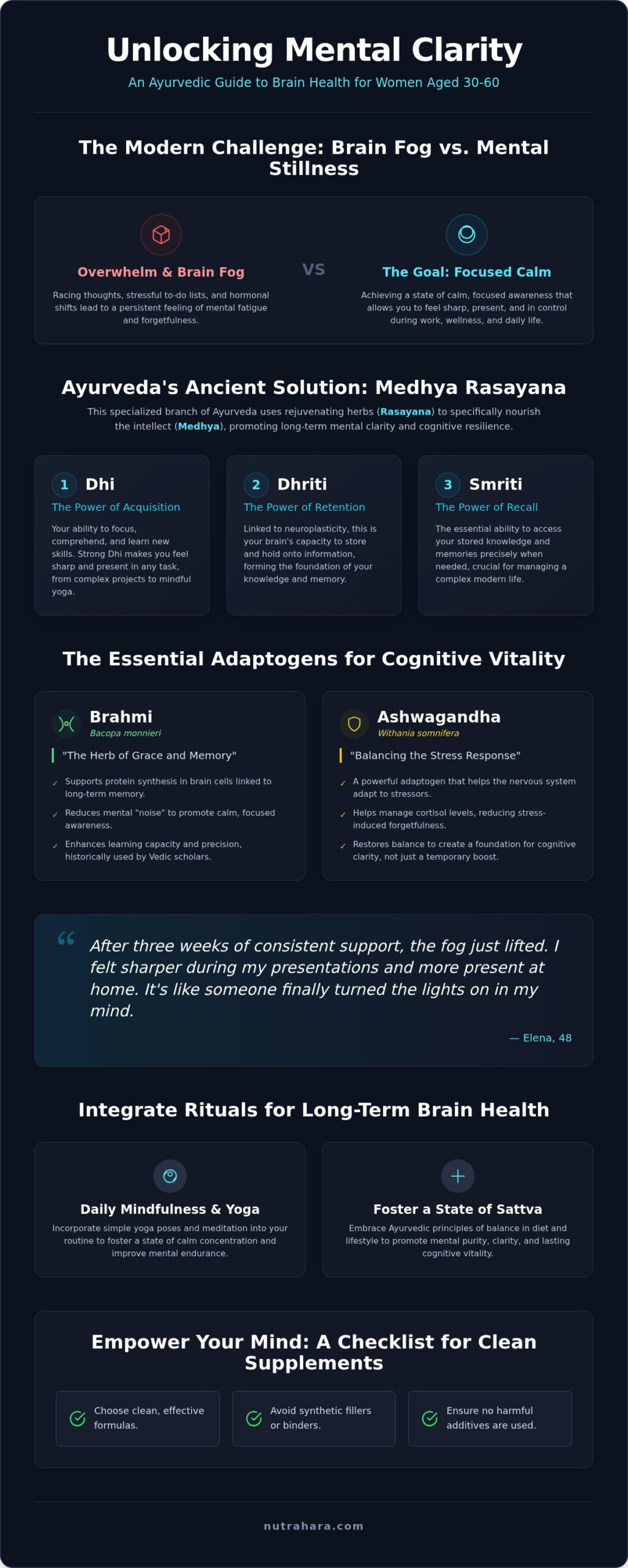
Ayurveda approaches cognitive vitality with a depth that modern science is only beginning to mirror. At the heart of this wisdom is the concept of ‘Medhya Rasayana.’ While the broader term Rasayana refers to any practice or substance that rejuvenates the body and extends life, ‘Medhya’ specifically targets the intellect. These aren’t just quick fixes. They represent a category of ayurvedic herbs for brain health that nourish the nervous system and promote long-term mental clarity. In the Ayurvedic tradition, your brain health is inseparable from your emotional and physical balance. If the body is stressed, the mind cannot be still.

The Nutrahara philosophy honors this ancient connection. We don’t believe in isolating the mind from the self. Instead, we merge these traditional definitions with modern cognitive research to create formulas like Focus Zenith. This approach ensures that you aren’t just masking symptoms of fatigue, but building a foundation for lasting cognitive resilience and mental progression.

The Three Pillars of Mental Performance: Dhi, Dhriti, and Smriti

To understand how to improve your focus, you must first understand the three core mental functions identified in Ayurvedic texts. Dhi is the power of acquisition. It relates to your modern ability to focus and learn new skills. When your Dhi is strong, you feel sharp and present during your morning yoga or a complex project. Dhriti is the power of retention. This is closely linked to what we now call neuroplasticity, or the brain’s ability to store and hold onto information. Finally, Smriti is the ability to recall. For women managing complex schedules, Smriti is the essential tool that allows you to access your knowledge and memories precisely when you need them.

Why Women’s Brain Health Needs a Holistic Perspective

Women’s bodies undergo significant hormonal shifts that directly impact cognitive function. During perimenopause and menopause, fluctuating estrogen levels can disrupt neurotransmitter balance, leading to the common experience of “brain fog.” Additionally, the heavy mental load many women carry increases cortisol, which can impair memory over time. Ayurveda views the female mind as a reservoir of Ojas, a subtle essence of vitality and immunity that sustains both thought and life. By using targeted ayurvedic herbs for brain health, such as those found in Ashwagandha with Black Pepper, you can manage stress-induced forgetfulness and reclaim your natural mental rhythm.

The Essential Ayurvedic Herbs for Focus, Memory, and Stress Resilience

When you seek ayurvedic herbs for brain health, you aren’t just looking for a stimulant. You’re looking for adaptogens. These remarkable botanicals, specifically the “Big Three”—Brahmi, Ashwagandha, and Shankhpushpi—help your nervous system adapt to internal and external stressors. Instead of a temporary spike in energy, these herbs work synergistically to restore balance. They function best when combined, as their unique properties support different layers of your mental architecture. This synergy ensures that while one herb calms the mind, another sharpens the intellect, creating a comprehensive shield against cognitive fatigue.

“After three weeks of consistent support, the fog just lifted. I felt sharper during my presentations and more present at home. It’s like someone finally turned the lights on in my mind.” — Elena, 48

Brahmi (Bacopa monnieri): The Herb of Grace and Memory

Brahmi is often called the herb of grace for its profound effect on the spirit and the mind. It supports protein synthesis in the brain cells, specifically in the areas linked to long-term memory and learning. Historically, Vedic scholars used it to memorize massive texts with precision. For the modern woman, it helps reduce mental noise. This promotes a state of calm, focused awareness that is essential during a busy workday or a deep meditation session.

Ashwagandha: Balancing the Stress Response for Cognitive Clarity

Stress is the primary enemy of clarity. High cortisol levels can actually shrink the hippocampus, the brain’s memory center. Ashwagandha acts as a buffer. It lowers cortisol and protects your cognitive function from the wear and tear of a high-pressure lifestyle. To ensure your body actually absorbs these benefits, Nutrahara utilizes Ashwagandha with Black Pepper. The piperine in black pepper significantly increases the bioavailability of the herb’s active compounds, ensuring you receive the full spectrum of its neuro-protective power.

Shankhpushpi and Gotu Kola: Enhancing Concentration and Tranquility

Shankhpushpi is a traditional “mind-brightener” that supports healthy circulation to the brain. It works alongside Gotu Kola, also known as Mandukaparni, which builds mental stamina and supports the health of connective tissues. Together, they strengthen the “Dhriti” (retention) pillar we discussed earlier. This ensures that the information you acquire stays with you. If you’re ready to experience this level of clarity, exploring a balanced formula like Focus Zenith is a beautiful next step in your personal wellness progression.

The Science of Nootropics: How Ancient Herbs Support Modern Brain Function

Nootropics are substances that enhance cognitive performance, particularly executive functions like memory, creativity, and motivation. While the term sounds modern, ayurvedic herbs for brain health have fulfilled this role for thousands of years. The bridge between ancient wisdom and modern laboratory results is clear: both aim to optimize the brain’s internal environment. Unlike synthetic compounds that often provide a temporary, jittery spike, herbal nootropics offer a sustainable progression toward mental clarity without the crash. To learn more about modern natural enhancers, Nootropics Today offers a comprehensive look at how these supplements can fit into a wellness routine.

A key differentiator in herbal medicine is the “entourage effect.” While modern pharmaceuticals often isolate a single active molecule, whole-plant extracts contain a complex matrix of secondary metabolites. These compounds work together to balance the primary effect, often improving absorption and reducing the risk of over-stimulation. Nutrahara is committed to evidence-based natural formulations that respect this botanical complexity. We ensure our supplements meet rigorous standards for purity while maintaining the holistic integrity of the plants.

The brain is highly susceptible to oxidative stress, a process where unstable molecules damage neurons. This is a primary driver of age-related cognitive decline and that persistent feeling of “fog.” Ayurvedic antioxidants, especially the polyphenols found in herbs like Turmeric and Brahmi, neutralize these molecules before they cause lasting harm. This protective layer is essential for maintaining long-term cognitive vitality.

  • Practical Tip: To maximize the benefits of these fat-soluble polyphenols, always pair your herbal supplements with healthy fats. Taking them alongside a meal containing Ghee, avocado, or Omega-3 rich seeds significantly improves nutrient absorption.

Supporting Neuroplasticity and Acetylcholine Levels Naturally

Neuroplasticity is your brain’s remarkable ability to form new neural connections and reorganize itself throughout your life. This process is essential for learning new skills and staying mentally agile as you age. Central to this agility is Acetylcholine, often called the “learning neurotransmitter.” Some ayurvedic herbs for brain health act as natural inhibitors of the enzymes that break down Acetylcholine, keeping your levels higher for longer. This specific mechanism is a cornerstone of our Focus Zenith formula. It’s designed to support your brain’s natural architecture, helping you feel empowered and confident in your daily mental performance.

Beyond Supplements: Integrating Ayurvedic Rituals for Long-term Brain Health

While ayurvedic herbs for brain health provide essential support, they are the “helpers” in your wellness journey. The true foundation of cognitive longevity lies in your daily rituals. In Ayurveda, the goal is to cultivate Sattva. This is a state of mental purity, harmony, and lightness. When you live a Sattvic lifestyle, your mind remains calm and clear even during high-stress periods. For those looking to deepen this sense of harmony, exploring spiritual resources like netatmana.org can help you direct your self-experience toward lasting inner peace. Part of this involves an intentional digital detox. Protecting your mind from the constant information overload of modern screens is vital for maintaining the “Dhi” (focus) we discussed earlier. Excessive screen time can increase Vata, leading to the scattered, anxious feeling many women experience in their 40s and 50s.

“Since I started pairing my herbal support with a daily 20-minute yoga practice, my ability to stay focused has transformed. I no longer feel scattered by 3 PM, and I feel much more confident in my mental performance at work.” — Sarah, Yoga Practitioner

Yoga and Meditation: Moving Prana to the Mind

Yoga and meditation are more than just physical exercise. They move Prana, or life force, directly to the mind. Specific yoga poses for brain health include Inversions, such as Downward-Facing Dog. These poses naturally increase blood flow to the head, providing a fresh supply of oxygen and nutrients to your neurons. To balance the left and right hemispheres of the brain, you can practice Nadi Shodhana, or alternate nostril breathing. This technique calms the nervous system and prepares the mind for deep work or meditation. If you struggle with concentration, try a 5-minute Trataka session. By gazing steadily at a candle flame without blinking, you sharpen your mental focus and quiet the internal chatter.

The Role of Sleep and Diet in Cognitive Longevity

Diet and sleep are the pillars that sustain your cognitive progression. Focus on “Ojas-building” foods that serve as premium brain fuel. Almonds, walnuts, and blueberries are excellent choices for nourishing your neural pathways and protecting against oxidative stress. However, even the best diet cannot replace deep, restorative sleep. Modern science now recognizes the glymphatic system as the “brain’s dishwasher.” This system clears out metabolic waste and toxins while you sleep. If you find it difficult to drift off after a long day, RestoraSleep can help support this essential cognitive-restorative cycle. By prioritizing rest, you ensure your mind stays as vibrant as your body.

Ready to build a foundation for lasting clarity? Explore our full range of women’s health supplements to complement your daily Ayurvedic rituals.

Ayurvedic Herbs for Women's Cognitive Vitality

Empowering Your Mind: Choosing Quality Ayurvedic Formulations

Choosing ayurvedic herbs for brain health is a profound act of self-care, but the effectiveness of your journey depends entirely on the quality of your tools. Not all herbal supplements are created equal. Many over-the-counter options contain “filler” ingredients like magnesium stearate or synthetic additives that offer no nutritional value. Some even use low-quality plant powders instead of concentrated extracts, meaning you would have to consume massive amounts to see any benefit. Your mind is your greatest asset. It deserves a formula that is as clean and potent as the ancient traditions intended.

Why Purity and Standardization Matter in Herbal Supplements

Standardized extracts are the gold standard of modern herbalism. When an extract is standardized, it ensures you receive a consistent percentage of the plant’s active compounds, such as Bacosides in Brahmi, in every single dose. Without this precision, the potency of your supplement can vary wildly from bottle to bottle. Purity is equally critical. Because herbs absorb minerals from the soil, it’s essential to choose brands that conduct rigorous third-party testing for heavy metals and environmental toxins. This transparency builds the foundation of trust necessary for a long-term wellness partnership.

Your Quality Checklist:

  • Does the label list standardized extract percentages?
  • Is the product free from artificial colors and synthetic fillers?
  • Does the company provide proof of third-party testing?
  • Is the formula based on a fusion of traditional wisdom and modern research?

The Nutrahara Promise: Focus Zenith and Synergistic Wellness

The Nutrahara promise is simple: we provide clean, natural, and science-backed support for your personal health progression. We’ve designed Focus Zenith to be the ultimate cognitive tool for the modern woman. By combining standardized extracts of the most potent Medhya herbs, we’ve created a synergistic formula that honors the “entourage effect” while meeting the highest safety standards. This isn’t a quick fix. It’s a long-term investment in your mental stamina and clarity.

Viewing your brain health as an ongoing journey allows you to feel empowered rather than anxious about the passing years. As you integrate these herbs with the rituals we’ve explored, you’ll find a natural rhythm that supports your focus and memory through every life stage. Your mind is your greatest asset. Nurture it with the perfect balance of ancient wisdom and modern science.

Your Journey to Lasting Mental Sharpness Begins Now

You’ve explored how the ancient wisdom of Medhya Rasayana meets the precision of modern nootropics to support your cognitive vitality. By integrating specific ayurvedic herbs for brain health with mindful rituals like yoga and restorative sleep, you’re building a foundation for mental clarity that lasts a lifetime. This holistic approach ensures you don’t just manage temporary fog; you empower your mind to thrive through every life stage.

Choosing quality is the final piece of your wellness puzzle. Our Focus Zenith formula is a testament to this, featuring standardized Bacopa monnieri and remaining entirely free from artificial fillers and additives. It’s a clean, science-backed solution trusted by women who prioritize their long-term health progression. Your mind is your most precious asset. Nurture it with the respect and purity it deserves.

Elevate your mental clarity with Focus Zenith today. We’re honored to be your wise guide on this rewarding path to cognitive resilience.

Frequently Asked Questions

What are the best Ayurvedic herbs for immediate focus?

Shankhpushpi is traditionally recognized for its ability to brighten the mind and support immediate alertness. While many ayurvedic herbs for brain health work best over time, pairing Shankhpushpi with Brahmi can help clear mental clutter during a demanding day. These herbs support healthy circulation to the brain, providing a natural lift without the jitters associated with caffeine. For a balanced approach, formulas like Focus Zenith combine these botanicals to help you stay present and productive.

Can Ayurvedic herbs help with menopause-related brain fog?

Yes, Ayurvedic herbs are particularly effective for managing the cognitive shifts during perimenopause and menopause. As estrogen levels fluctuate, brain fog and forgetfulness often follow. Adaptogens like Ashwagandha help stabilize the body’s stress response, which indirectly supports clearer thinking and better memory. By nourishing the nervous system, these herbs help you regain the mental sharpness that hormonal changes might otherwise disrupt. It’s about restoring balance to your inner environment as you transition through different life stages.

How long does it take to see results from Ayurvedic brain supplements?

Most women begin to notice subtle improvements in clarity and focus within two to four weeks of consistent use. However, the full cumulative benefits of ayurvedic herbs for brain health typically peak around the three-month mark. Ayurveda views health as a long-term progression rather than a quick fix. Taking your supplements daily allows the active compounds to nourish your neural pathways deeply. Consistency is the secret to moving from occasional fog to sustained mental vitality.

Is Ashwagandha safe to take every day for mental health?

Daily use of Ashwagandha is generally considered safe and beneficial for long-term stress resilience. As a Rasayana, or rejuvenating herb, it’s designed to be taken over extended periods to strengthen the body and mind. It helps lower cortisol levels consistently, which protects your memory centers from the wear and tear of daily pressure. Our Ashwagandha with Black Pepper is formulated for daily support, ensuring high bioavailability so your body can efficiently process and utilize this powerful adaptogen.

What is the difference between Brahmi and Gotu Kola?

While both are powerful “Medhya” herbs, they serve slightly different roles. Brahmi, or Bacopa monnieri, is primarily focused on enhancing memory, learning, and the protein synthesis of brain cells. Gotu Kola, often called Mandukaparni, emphasizes healthy blood circulation and mental stamina. Many practitioners use them together because they complement each other. One sharpens the intellect while the other ensures the brain has the physical support and blood flow it needs to perform at its peak during work or yoga.

Can I take Ayurvedic herbs for brain health while pregnant or breastfeeding?

You should always consult your primary healthcare provider before starting any new supplement while pregnant or breastfeeding. While Ayurvedic herbs are natural, the body’s needs and sensitivities change significantly during these periods. Some herbs may have a stimulating effect that isn’t ideal for every stage of pregnancy. Your doctor can help you determine the safest path for your cognitive health while ensuring the well-being of both you and your baby during this vital time.

Do these herbs interact with common medications for anxiety or focus?

Potential interactions can occur, particularly with medications for anxiety, depression, or thyroid conditions. Herbs like Ashwagandha can influence hormone levels and neurotransmitter activity, which might amplify or interfere with certain pharmaceutical drugs. To ensure your safety, it’s essential to discuss your supplement routine with a medical professional. They can help you coordinate your natural wellness journey with any existing treatments, allowing you to move forward with confidence and peace of mind regarding your health.

Is there a specific time of day to take Ayurvedic brain herbs for best results?

The ideal time depends on the specific herb’s purpose. Focus-enhancing herbs like Brahmi or Shankhpushpi are best taken in the morning to support your mental performance throughout the day. Conversely, restorative herbs like Ashwagandha can be taken in the evening to help your body process stress and prepare for deep, glymphatic-cleansing sleep. Taking your supplements with a small amount of healthy fat, such as at breakfast, can also improve the absorption of these fat-soluble botanical compounds.

Article by

Nutrahara Team

We are a dedicated collective of nutrition scientists and naturopaths at Nutrahara, committed to advancing women's health through the fusion of ancient Ayurveda science and cutting-edge nutrition research. Our mission is to empower you with clean, simple, and scientifically validated wellness solutions so you can live your healthiest life. Connect with us to stay updated on the latest developments in holistic women's health and nature-based research.

Disclaimer

This article is not a substitute for medical advice. Please consult a healthcare professional before starting any supplement, especially if pregnant, nursing, taking medication, or managing health conditions.

Categories
Articles

Ayurvedic Herbs for Women’s Health: A Science-Backed Guide to Hormonal Harmony (2026)

What if the key to reclaiming your vibrancy isn’t a complex medical protocol, but a return to a more rhythmic, botanical way of living? For many women between 30 and 60, navigating the shifts of perimenopause or daily hormonal fluctuations can feel like a series of storms. You might feel unheard by conventional medicine while searching for ayurvedic herbs for women’s health that actually work. It’s frustrating to deal with fatigue and mood swings while facing a sea of supplement options that lack scientific clarity. You’re looking for a path that feels both natural and deeply credible.

You deserve a wellness partner that values both ancient tradition and modern transparency. With 42% of consumers now preferring plant-based therapeutics, the fusion of Ayurvedic wisdom and clinical research has never been more relevant. This guide empowers you to achieve hormonal harmony and mental clarity through a science-backed lens. We’ll explore the latest 2026 insights on powerful botanicals like Ashwagandha and Shatavari. This journey provides you with a clear roadmap to transform your daily routine into a restorative ritual for long-term health progression.

Key Takeaways

  • Understand your unique constitution, or Prakriti, to create a personalized wellness journey that fuses ancient wisdom with modern clinical validation.
  • Discover the science-backed benefits of specific ayurvedic herbs for women’s health, including how Shatavari and Ashwagandha help modulate estrogen and manage cortisol levels.
  • Learn to navigate life transitions from your 30s through post-menopause by matching grounding and cooling botanicals to your body’s evolving biological needs.
  • Pair your supplement ritual with ‘Dinacharya’ routines and targeted yoga asanas to create a sustainable foundation for long-term vitality and mental clarity.
  • Identify essential purity standards, such as third-party testing and clean labels, to ensure your supplements are safe, effective, and free from contaminants.

The Foundation: Why Ayurveda is the Modern Woman’s Secret to Longevity

Ayurveda is a 5,000-year-old holistic healing system that originated in India. It offers more than just herbal remedies. It’s a comprehensive philosophy designed to balance the mind, body, and spirit. By understanding Ayurveda, you gain access to a time-tested blueprint for longevity. This ancient system recognizes that every woman possesses a unique biological blueprint called ‘Prakriti’. This individual constitution determines how you respond to stress, nutrition, and environmental changes. Instead of a one-size-fits-all approach, it honors your specific needs.

At Nutrahara, we view health as a long-term progression rather than a quick fix. Our philosophy serves as a bridge. We combine this ancient wisdom with modern clinical validation to ensure every formula meets the highest standards of purity. As we move through 2026, the demand for ayurvedic herbs for women’s health has surged. This growth is driven by a collective desire for preventive care. Women are no longer satisfied with masking symptoms; they want to cultivate deep, lasting vitality through natural means.

Modern life presents unique challenges that were unknown 5,000 years ago. High cortisol levels, environmental toxins, and constant digital stimulation drain our internal reserves. These stressors make Ayurvedic adaptogens essential tools for the modern woman. By incorporating specific herbs, you can support your adrenal health and maintain equilibrium. For example, our Ashwagandha with Black Pepper is formulated to help your body adapt to these pressures while ensuring maximum absorption. It’s about building resilience from the inside out.

Ancient Wisdom Meets Modern Nutritional Science

Clinical research now validates many traditional claims regarding hormonal regulation. Modern studies focus on how ayurvedic herbs for women’s health interact with the endocrine system. We prioritize bioavailability in our formulations to ensure your body can actually use these potent ingredients. A synergistic formulation in 2026 represents the intentional pairing of adaptogenic extracts with bioavailability enhancers to support the body’s natural resilience against environmental micro-stressors. This scientific foundation ensures that your wellness ritual is both effective and safe.

The Holistic Approach: Mind, Body, and Spirit

True wellness requires moving beyond symptom management. We focus on root-cause wellness by empowering you to take ownership of your biological rhythms. This involves supporting ‘Ojas’, the subtle essence of vitality and immunity. When your Ojas is strong, you experience mental clarity and physical strength. It’s the ultimate reservoir of well-being. Our goal is to help you build this reservoir through a sustainable partnership. By honoring your body’s natural cycles, you can achieve a state of harmony that resonates through every stage of life. To support this balance, you can explore traditional culinary experiences like the Best Indian Food in Hayward, CA | Favorite Indian Restaurant | Indian Food near me, where authentic flavors and a Saturday lunch buffet provide a delicious way to connect with the roots of Ayurvedic wisdom.

The ‘Queen’ Herbs: Top Ayurvedic Botanicals for Hormonal Balance

In the botanical hierarchy of Ayurveda, certain plants stand out for their profound affinity with the female physiology. These ‘Queen’ herbs aren’t just traditional staples; they’re the subject of rigorous modern study as we move through 2026. Understanding the specific mechanisms of these ayurvedic herbs for women’s health allows you to move beyond trial and error. By looking at a science-backed perspective on Ayurvedic medicine, we see how these plants interact with our endocrine and nervous systems to restore balance and vitality.

Shatavari: The Ultimate Female Tonic

Shatavari, or Asparagus racemosus, translates to ‘she who possesses a hundred husbands.’ This poetic name hints at its role in supporting reproductive vitality and libido. It contains steroidal saponins known as Shatavarins, which act as phytoestrogens. These compounds gently modulate estrogen levels, making it invaluable for cooling the system during hot flashes or supporting menstrual comfort. One of our community members, Elena, shared: ‘After three months of consistent use, my cycle finally felt predictable again, and the persistent dryness I felt in my 40s significantly improved.’ It’s a foundational herb for maintaining ‘Ojas’ and skin hydration.

Ashwagandha and the Stress-Hormone Connection

While Shatavari cools, Ashwagandha (Withania somnifera) grounds. It’s the premier adaptogen for managing the Hypothalamic-Pituitary-Adrenal (HPA) axis. By ‘buffering’ the stress response, it prevents the chronic cortisol spikes that lead to fatigue and ‘wired-but-tired’ nights. Withanolides are the primary bioactive compounds in Ashwagandha that function as steroidal lactones to modulate the body’s physiological response to external stressors by inhibiting specific enzyme pathways in the adrenal glands. This leads to improved sleep quality and sharper mental clarity for high-achieving women. For those seeking maximum efficacy, Nutrahara Ashwagandha with Black Pepper utilizes piperine to significantly enhance the absorption of these vital compounds.

Active women also benefit from Turmeric, which addresses systemic inflammation and supports joint health through its curcuminoid content. For immune resilience, the powerhouse duo of Guduchi and Amla provides potent antioxidant protection against the oxidative stress of modern life. These botanicals work together to create a sustainable wellness progression. If you’re ready to start your journey, consider exploring our targeted hormonal support formulas designed for your unique constitution.

Mapping Ayurvedic Herbs to Your Life Stage: 30s to 60s

As you move through different decades, your body’s biological requirements shift significantly. A strategy that worked in your 20s won’t provide the same results in your 50s. By applying the principles of Ayurveda, you can tailor your wellness routine to match these internal changes. Using specific ayurvedic herbs for women’s health allows you to address the root causes of imbalance before they become chronic issues. This isn’t about fighting nature; it’s about flowing with it.

The 30s and 40s are often defined by high ambition and high activity. This ‘Pitta’ phase of life requires cooling and stabilizing support. You might find yourself juggling career growth and family needs, which can lead to burnout. The growing interest in ayurvedic herbs for women’s health in 2026 reflects a shift toward proactive, long-term health progression during these high-stress years. Maintaining Pitta balance involves choosing herbs that soothe the nervous system while supporting metabolic health. It’s a critical time to establish a foundation for the transitions ahead.

Navigating the Perimenopause Transition

Perimenopause represents a ‘Vata’ transition. Vata is the energy of movement and air, characterized by dryness, coldness, and irregularity. This stage often brings unpredictable cycles, sleep disruption, and a sense of unease. To manage this, we look toward grounding herbs and cooling botanicals that stabilize the nervous system. Creating a nightly ritual is a powerful tool here. Try a warm cup of herbal tea or golden milk thirty minutes before bed to anchor your energy. This simple act signals to your body that it’s time to rest, helping to mitigate anxiety and improve sleep quality.

Graceful Aging and Longevity in the 50s and 60s

In your 50s and 60s, the focus shifts toward ‘Rasayana’ or rejuvenation. The goal is to maintain bone density, cognitive function, and cellular vitality. Central to this is ‘Agni’, your digestive fire. If your digestion is weak, your body can’t absorb the nutrients from your food or supplements. Agni isn’t just about stomach acid; it’s the intelligence of your metabolism. Supporting it with warming spices helps ensure your body stays nourished. We recommend supporting this stage with Brahmi for memory and FocusZenith for sustained mental sharpness. Martha, a 58-year-old yoga instructor, shared: ‘Staying consistent with my Ayurvedic regimen helped me maintain the energy levels I had in my 40s.’ For a broader look at how to integrate these into your life, explore The Ultimate Guide to Women’s Wellness Supplements.

Beyond the Bottle: Integrating Yoga, Meditation, and Rituals

Herbs aren’t a magic pill. They’re powerful catalysts that work best when integrated into a broader lifestyle ecosystem. In Ayurveda, this daily structure is known as Dinacharya. By aligning your habits with the natural rhythms of the day, you create a stable foundation for ayurvedic herbs for women’s health to take root and flourish. This synergy ensures that the active botanicals you consume are properly metabolized and transported to the specific tissues that require support. As we see a 31% increase in cross-border online trade for Ayurvedic products in 2026, more women are realizing that the “bottle” is only one part of the journey toward long-term health progression.

Yoga for Hormonal Resilience

Movement is essential for circulating the active compounds found in your supplements. Specific yoga asanas, such as pelvic openers and gentle inversions, direct blood flow to the endocrine glands and reproductive organs. For thyroid support, supported inversions like ‘legs-up-the-wall’ can be incredibly grounding. These movements help regulate the ‘Vata’ energy that often becomes erratic during perimenopause. You don’t need an hour-long practice to see results. A simple 10-minute morning sequence of Cat-Cow, Cobra, and Child’s Pose can awaken your ‘Agni’ (digestive fire) and set an empowered tone for your day. This physical engagement helps your body process nutrients more efficiently while boosting your self-esteem through mindful connection.

Mindfulness and the Nervous System

Modern stress often keeps the body in a state of ‘fight or flight,’ which is detrimental to hormonal balance. Meditation and Pranayama (breathwork) stimulate the Vagus nerve, the primary component of the parasympathetic nervous system. This activation is the “secret sauce” for improving digestion and stabilizing mood swings. Consistent meditation reduces the activation of the sympathetic nervous system, which lower serum cortisol levels and allows the endocrine system to prioritize the production of progesterone and estrogen over stress hormones. For the high-achieving woman with a busy mind, even five minutes of ‘Nadi Shodhana’ (alternate nostril breathing) can recalibrate your internal state.

Don’t overlook the ‘Ritual of Self-Care’ known as Abhyanga. This practice of warm oil self-massage supports lymphatic drainage and calms the nervous system before sleep. It’s a deeply nurturing way to ground yourself during times of transition. By pairing these rituals with targeted support like Anxioguard, you address both the physical and emotional aspects of your wellness journey. This holistic approach ensures you aren’t just managing symptoms but are building a reservoir of ‘Ojas’ for the years ahead. To deepen your practice, consider adding our RestoraSleep formula to your nightly wind-down ritual for enhanced recovery.

Ayurvedic Herbs for Women's Health: A Science-Backed Guide to Hormonal Harmony (2026)

As the global interest in traditional medicine grows, so does the responsibility to choose products that meet rigorous safety standards. In 2026, the FDA finalized guidance on New Dietary Ingredients (NDI), emphasizing that even traditional botanicals require strict notification procedures if their processing alters their chemical composition. This is a vital step for consumer safety. Low-quality imports can sometimes hide dangers like heavy metal contamination or undeclared pharmaceutical ingredients. For example, in February 2026, a recall was issued for an energy support product found to contain undeclared prescription drugs. When selecting ayurvedic herbs for women’s health, your priority must be purity and transparency.

To ensure you are receiving the most effective support, look for these three markers of quality:

  • Third-Party Testing: Independent labs should verify the absence of heavy metals, pesticides, and microbial contaminants.
  • Standardized Extracts: This ensures a consistent level of bioactive compounds, such as withanolides in Ashwagandha, in every dose.
  • Clean Labels: Avoid products with artificial fillers, binders, or synthetic colors that can disrupt your internal balance.

Nutrahara sets the gold standard by meticulously bridging the gap between traditional sourcing and modern clinical validation. We believe your wellness ritual should be as pure as the nature it comes from. Our FemmePower formula is a prime example of this commitment. It provides comprehensive support for hormonal harmony without the use of unnecessary additives. Your health journey is a personal progression, and choosing the right partner is the first step toward lasting vitality.

The Nutrahara Quality Promise

We prioritize simplicity in every formulation. By removing artificial fillers, we ensure that your body only receives the active, health-promoting nutrients it needs. This focus on purity extends to how we support your metabolic health and nutrient absorption. If you’re curious about how digestive support influences your wellness goals, explore our guide on do digestive enzymes help you lose weight. We provide the tools; you provide the intention.

Your Next Steps Toward Radiant Health

If you’re new to ayurvedic herbs for women’s health, it’s often best to start small. A ‘one-herb’ approach, such as starting with a high-quality Ashwagandha, allows you to observe how your body responds before adding complex blends. While self-supplementation is accessible, consulting with a qualified Ayurvedic practitioner can provide a deeper level of personalization based on your Prakriti. Taking ownership of your biological rhythms is a powerful way to boost your self-esteem. As you begin to feel more grounded and energized, your confidence will naturally radiate. Trust in the process, and honor your body’s unique timeline for healing.

Embrace Your Journey to Hormonal Harmony

Achieving lasting vitality is a personal progression that honors the wisdom of your body. You’ve learned how your individual constitution and life stage mapping provide a blueprint for wellness. By integrating the right ayurvedic herbs for women’s health with daily rituals like yoga and meditation, you move beyond mere symptom management toward true root-cause harmony. Purity remains the cornerstone of this transformation. It ensures that every botanical choice supports your long-term health progression without the interference of artificial additives.

Nutrahara is here to act as your wise and caring guide. Our supplements are formulated by experts in Ayurveda and modern nutrition; they are also third-party tested for absolute purity and potency. You’ll join thousands of women who are already thriving on the Nutrahara progression. It’s time to take ownership of your biological rhythms and boost your self-esteem through conscious wellness. Empower your wellness journey with Nutrahara’s science-backed Ayurvedic formulas.

You have the power to redefine your health at any age. Trust in your body’s ability to heal and flourish. You are capable of achieving a state of balance that resonates through every stage of your life.

Frequently Asked Questions

Are Ayurvedic herbs safe to take with my regular vitamins?

Ayurvedic herbs are generally safe to take alongside standard multivitamins because they function as adaptogenic tonics rather than isolated nutrients. Vitamins provide essential micronutrients while herbs support the body’s overall resilience and hormonal systems. It’s best to check for overlapping ingredients to ensure you aren’t exceeding daily limits. Always consult your healthcare practitioner if you’re taking prescription medications to ensure there are no interactions.

How long does it take to see results from Ayurvedic supplements?

Most women notice subtle improvements in energy or mood within 3 to 4 weeks, though full physiological shifts usually take 3 months. Ayurveda focuses on a long-term health progression rather than a temporary mask for symptoms. Consistency is the key to success. Your body needs time to integrate these botanical compounds into its biological rhythms to create a sustainable foundation for wellness.

Can I take Ashwagandha and Shatavari together?

Yes, combining these two botanicals is a traditional practice that provides a synergistic effect on the female endocrine system. While Ashwagandha manages cortisol and the stress response, Shatavari provides cooling support for estrogen modulation. This powerful pairing is a cornerstone of many ayurvedic herbs for women’s health protocols. It helps balance both the nervous and reproductive systems simultaneously for deeper harmony.

Which Ayurvedic herb is best for menopause hot flashes?

Shatavari is widely considered the best herb for managing hot flashes due to its cooling nature and phytoestrogenic properties. It helps soothe the ‘Vata’ and ‘Pitta’ imbalances that often trigger sudden temperature shifts during the perimenopause transition. Pairing Shatavari with grounding rituals like Abhyanga can further stabilize your nervous system. It’s a gentle way to reclaim comfort during a significant life change.

Are these herbs safe to use during pregnancy or breastfeeding?

You must consult your primary healthcare provider before using any herbal supplements during pregnancy or while breastfeeding. While Shatavari is traditionally used to support healthy lactation, every woman’s biological profile is unique during these stages. Safety depends on your specific needs and medical history. Your provider can help you determine which botanicals will best support your personal health progression during this time.

What is the best time of day to take Ayurvedic herbs for energy?

The best time to take energy-supporting herbs is in the morning with food to align with your body’s natural cortisol rhythms. Taking adaptogens like Ashwagandha or Brahmi early in the day helps stabilize your ‘Agni’ and provides sustained focus. If you’re using herbs for sleep or grounding, evening doses are more effective. This intentional timing ensures the active ingredients work with your circadian cycle.

Do I need to change my diet for Ayurvedic herbs to work?

A total dietary overhaul isn’t required, but herbs work most efficiently when supported by a whole-food, anti-inflammatory diet. Ayurveda views herbs as “super-nutrition” that requires a strong digestive fire to be fully absorbed. If your diet is high in processed toxins, your body may struggle to process the botanical extracts. Small shifts toward seasonal, fresh foods will significantly enhance the potency of your supplements.

Is there a specific herb that helps with hormonal acne in my 30s?

Neem and Turmeric are highly effective for clearing hormonal acne by purifying the blood and reducing systemic inflammation. These ayurvedic herbs for women’s health address the ‘Pitta’ imbalance that often causes breakouts during high-stress career years. They work from the inside out to restore skin clarity and boost your self-esteem. Regular use helps stabilize the oil production that fluctuates with your monthly cycle.

Article by

Nutrahara Team

We are a dedicated collective of nutrition scientists and naturopaths at Nutrahara, committed to advancing women's health through the fusion of ancient Ayurveda science and cutting-edge nutrition research. Our mission is to empower you with clean, simple, and scientifically validated wellness solutions so you can live your healthiest life. Connect with us to stay updated on the latest developments in holistic women's health and nature-based research.

Disclaimer

This article is not a substitute for medical advice. Please consult a healthcare professional before starting any supplement, especially if pregnant, nursing, taking medication, or managing health conditions.