...
Categories
Health and Nutrition

Is Vitamin D Worth Taking for Women in 2026?

Is Vitamin D Worth Taking for Women in 2026? | Updated August 2026 | Editorial Team

Is vitamin D worth taking for women in 2026? For most American women, the evidence points to a clear yes. Nearly two-thirds of Americans are deficient in vitamin D, and females are disproportionately vulnerable. This vitamin is crucial for bone health, hormonal balance, immunity, and mood. Whether supplementation is right depends on individual deficiency status, lifestyle, and health goals.

Vitamin D sits at the intersection of bone metabolism, hormone regulation, immune function, and mental well-being — four systems where women face outsized physiological demands across every decade of life. Getting levels right is foundational self-care.


Why American Women Are at Disproportionate Risk of Vitamin D Deficiency

Vitamin D deficiency disproportionately affects women, non-Hispanic Black Americans, older adults, and those with low income or education, according to the GrassrootsHealth Nutrient Research Institute. Several biological and lifestyle factors compound this risk for women.

The Biology of Why Women Fall Short

  • Higher body fat storage: Vitamin D is fat-soluble; adipose tissue sequesters it from circulation. Women naturally carry higher body-fat percentages than men, creating greater risk of functionally low serum levels.
  • Indoor lifestyle patterns: Female sex and indoor work are independently associated with higher rates of vitamin D deficiency.
  • Sunscreen use: SPF 8 reduces vitamin D production by 95%. Women are more consistent users of sun protection than men.
  • Pregnancy and breastfeeding demands: Reproductive life stages sharply increase vitamin D requirements.
  • Menopausal bone loss acceleration: Vitamin D insufficiency is prevalent among postmenopausal women, affecting bone mineral density and parathyroid hormone.

Prevalence at a Glance

Population Group Estimated Deficiency Rate Primary Risk Driver Key Health Consequence
General U.S. adults ~20% (middle-aged/older) Indoor work, diet Increased mortality risk
Women overall Disproportionately higher Body fat, sunscreen use Bone loss, hormonal disruption
Women with PCOS Frequently deficient Metabolic dysfunction Worsened insulin resistance
Postmenopausal women ~46–47% insufficient Age, reduced synthesis Osteopenia, osteoporosis
Women of color Highest rates Melanin reduces UV synthesis Compounded bone and immune risk

Key Takeaway: Vitamin D deficiency is statistically common in American women and clinically consequential across every life stage. For deeper context, see Taking too much vitamin D can cloud its benefits and …. For related guidance, see Ashwagandha With Black Pepper.


What the Clinical Evidence Actually Shows for Women

Strong evidence exists for bone support, hormonal health, immune modulation, and mood — though effect sizes vary by baseline deficiency level, dosage, and individual health status.

Bone Health

  • Osteoporosis prevention: Combined calcium and vitamin D supplementation can prevent osteoporosis hip fractures in postmenopausal women.
  • Deficiency-dependent benefits: Benefits are clearest in women already deficient. The VITAL trial found that among participants with baseline free vitamin D levels below the median, there was a slight increase in spine bone mineral density and attenuation in loss of total hip bone mineral density with vitamin D3.

Hormonal and Reproductive Health

  • PCOS prevalence: Vitamin D deficiency is common in women with PCOS and linked to adverse metabolic and reproductive outcomes.
  • Metabolic improvement: A 2024 randomized controlled trial found that vitamin D supplementation improved body mass index, waist-to-hip ratio, and other health markers for women with polycystic ovary syndrome.
  • Guideline recommendations: The 2024 Endocrine Society Clinical Practice Guideline advises identifying and correcting vitamin D deficiency in individuals with metabolic risk factors.

Mood and Mental Well-Being

  • Depression link: Most cross-sectional and cohort studies show an inverse relationship between serum 25(OH)D levels and the risk of depression.
  • Cognitive outcomes: A 2025 study presented at the American Psychiatric Association Annual Meeting found that “vitamin D for women was correlated with better cognitive outcomes.”

Immune and Autoimmune Protection

  • Autoimmune disease association: Vitamin D insufficiency has been related to the pathogenesis of multiple sclerosis, rheumatoid arthritis, systemic lupus erythematosus, and type 1 diabetes mellitus.
  • VITAL trial results: The landmark VITAL trial — a randomized, placebo-controlled study of over 25,000 U.S. adults — found that fewer participants in the vitamin D group were diagnosed with certain autoimmune conditions, with a hazard ratio of 0.78.

Key Takeaway: The strongest evidence for vitamin D supplementation in women is for those who are confirmed deficient — particularly in bone, hormonal, and autoimmune domains. Individual testing is essential before supplementing. For deeper context, see The Role of Vitamin D Supplements in Women’s Health – PMC.


Understanding Dosage: How Much Do Women Actually Need?

There is no universal number that applies to every woman, but a clear framework exists to guide decision-making.

  • Official RDA (ages 19–70): The Recommended Daily Allowance is 600 IU. This prevents deficiency in most of the population but may not optimize levels for women with elevated needs.
  • Safe upper limit: The safe upper limit for daily vitamin D supplementation is 4,000 IU (100 mcg) for all adults.
  • Practical middle ground: A 2024 narrative review published in Nutrients argued that a daily dose of 2,000 IU may improve some health outcomes and is sufficient to raise serum 25(OH)D concentrations above adequate thresholds in over 99% of the general adult population.
  • Toxicity risk: Excess vitamin D accumulates in body tissues. In rare cases, taking too much can lead to hypercalcemia.
  • Test before you supplement: A serum 25(OH)D blood test — available through any U.S. primary care provider — is the only reliable way to establish whether supplementation is warranted.
Scenario Suggested Daily Dose Serum Target (ng/mL) Notes
General maintenance (sufficient levels) 600–1,000 IU 20–30+ Food + modest supplement
Insufficiency (20–29 ng/mL) 1,000–2,000 IU 30–50 Retest in 3–6 months
Confirmed deficiency (<20 ng/mL) 2,000–4,000 IU 40–60 Physician-guided repletion
PCOS or autoimmune condition Per physician guidance 40–60 Monitor closely
Postmenopausal (osteoporosis risk) 800–2,000 IU + calcium 30–50 Paired with antiresorptive therapy

The 2024 Endocrine Society guideline states that healthy adults under age 75 do not need to take vitamin D supplements as a blanket rule — underscoring the importance of individual testing rather than universal supplementation.

Key Takeaway: A serum 25(OH)D test is the indispensable first step. Dose should match actual deficiency status. A daily range of 1,000–2,000 IU represents a practical, evidence-supported middle ground for most women with confirmed insufficiency.


Vitamin D and Women’s Mood, Sleep, and Energy

Beyond bone and hormonal health, vitamin D plays a role in women’s mood, sleep quality, and energy levels.

Mood and Depression

  • Reduced depressive symptoms: An umbrella meta-analysis found a pooled effect of –0.40 for depressive symptoms with vitamin D supplementation, alongside observational evidence linking low 25(OH)D to higher odds of depression (OR 1.60).
  • Mechanism of action: Vitamin D influences serotonin synthesis and has anti-inflammatory effects on brain tissue.

Sleep Quality

  • Lower risk of sleep disorders: A 2024 study published in Frontiers in Nutrition found a 46% lower risk of sleep disorders among those with the highest intake of vitamin D compared to the lowest intake.
  • Biological basis: Vitamin D receptors are present in brain regions that regulate circadian rhythm.

Fatigue and Energy

  • Muscle function: Vitamin D deficiency can result in muscle pain, bone loss, muscle cramps, and fatigue.
  • Cognitive performance: Vitamin D may influence cognition and brain function through anti-inflammatory, antioxidant, and neuroprotective effects.

Key Takeaway: For women experiencing persistent fatigue, low mood, or disrupted sleep, low vitamin D is a clinically relevant variable worth investigating. For deeper context, see Vitamin D: Benefits, Sources, Deficiencies.


An Ayurvedic Lens: Sunlight, Supplementation, and Whole-Body Balance

Modern nutritional science and Ayurveda converge on a foundational principle: the body thrives when it receives adequate sunlight, nutrient-dense food, and balanced daily rhythm.

  • Surya seva (sun exposure as medicine): Early morning sunlight exposure is considered beneficial for vitamin D synthesis in Ayurveda.
  • Agni and nutrient absorption: From an Ayurvedic perspective, poor gut health impairs vitamin D absorption regardless of dose.
  • Ojas and vitality: Vitamin D is essential for maintaining healthy bones, immunity, and overall vitality, aligning with the Ayurvedic concept of ojas.
  • Dinacharya (daily routine): Consistent morning sun exposure aligns with the Ayurvedic concept of dinacharya — using daily habits to maintain optimal health.
  • Supportive foods: Sesame oil, ghee, and fortified milk support vitamin D levels, while herbs like Ashwagandha and Guduchi strengthen immunity and improve absorption.

Nutrahara integrates this holistic philosophy into women’s wellness, designing formulations to complement lifestyle practices — sun exposure, balanced nutrition, and stress support — that sustain hormone balance, sleep quality, and energy across every life stage.

Key Takeaway: The Ayurvedic framework enriches clinical supplementation. Supporting Agni, prioritizing morning sunlight, and choosing quality supplements are complementary strategies. For deeper context, see What’s the Deal with Vitamin D?.


Safety Profile: What Women Should Watch For

Vitamin D supplementation has a favorable safety profile at recommended doses. The supplement market is regulated by the FDA under DSHEA, meaning quality and dosage accuracy vary by brand.

When Supplementation Is Appropriate

  • Confirmed deficiency or insufficiency: A serum 25(OH)D level below 20 ng/mL (deficiency) or 20–29 ng/mL (insufficient) is the clearest indication.
  • Metabolic risk factors: Women with PCOS, obesity, or type 2 diabetes are more likely to be deficient and benefit from repletion.
  • Limited sun exposure: Women who work indoors, live in northern U.S. states, or consistently use sunscreen are strong candidates.
  • Postmenopausal status: Vitamin D was associated with lower frequency of gastrointestinal adverse events and mortality in postmenopausal women undergoing antiresorptive treatment.

Risk Signals to Know

  • Hypercalcemia from excess intake: Taking more than 4,000 IU a day might cause upset stomach, vomiting, and calcium buildup in blood and soft tissue.
  • Kidney stone risk: Excess vitamin D can lead to kidney stones, particularly in women with a history of kidney issues.
  • Medication interactions: Vitamin D can interact with thiazide diuretics, certain cholesterol medications, and weight-loss drugs. Disclose supplementation to prescribing physicians.
  • Quality of supplement: Choose products third-party tested (look for USP or NSF certification).

Key Takeaway: At doses of 1,000–2,000 IU per day, vitamin D supplementation is safe for the vast majority of women. Large randomized controlled trials show no significant safety concerns with 2,000 IU daily supplementation for several years.


Conclusion

Is vitamin D worth taking for women in 2026? For most American women — particularly those who are deficient, postmenopausal, managing hormonal conditions like PCOS, or living with limited sun exposure — the answer is yes. The more accurate question is how to supplement intelligently based on actual serum levels and individual health context.

  • Test first: A serum 25(OH)D blood test anchors supplementation decisions in your actual physiology.
  • Target the right dose: Most women who are insufficient benefit from 1,000–2,000 IU of vitamin D3 daily.
  • Combine with lifestyle: Morning sunlight, nutrient-dense food, and gut health practices amplify supplementation benefits.
  • Choose quality products: Look for third-party tested vitamin D3, ideally paired with K2.
  • Consider your full picture: Brands like Nutrahara design women’s supplements recognizing that bone health, hormone balance, immunity, and energy are interconnected systems.

Start with a conversation with your healthcare provider and a simple blood test — then let the evidence guide your next step.


FAQ

Is Vitamin D Worth Taking for Women in 2026?

Yes, for most American women — especially those who are deficient, postmenopausal, managing PCOS, or spending limited time outdoors. Nearly two-thirds of Americans have insufficient levels, and women are disproportionately affected. Evidence links adequate vitamin D to improved bone density, reduced autoimmune disease risk, better mood, and hormonal health. A serum 25(OH)D blood test confirms deficiency status before supplementation. A daily dose of 1,000–2,000 IU of vitamin D3 is safe and appropriate for most women with confirmed insufficiency.

What are the signs of vitamin D deficiency in women?

Common symptoms include persistent fatigue, muscle aches, bone pain, low mood, frequent illness, and hair loss. However, many women with low vitamin D are asymptomatic. Blood testing is the only reliable diagnostic tool.

What is the best form of vitamin D supplement for women?

Vitamin D3 (cholecalciferol) is the preferred form because it more effectively raises serum 25(OH)D levels. It is best absorbed with a meal containing dietary fat. Many practitioners recommend pairing vitamin D3 with vitamin K2 to direct calcium into bones rather than soft tissue.

Can vitamin D help with hormonal balance and PCOS in women?

Research suggests it can, particularly in deficient women. Clinical trials found that vitamin D supplementation in women with PCOS improved BMI, waist-to-hip ratio, and metabolic markers. The 2024 Endocrine Society Guideline advises correcting deficiency as part of metabolic management.

Is vitamin D supplementation safe for women long-term?

Yes, at recommended doses. Large randomized controlled trials found no significant safety concerns with daily supplementation of 2,000 IU over several years. The safe upper limit is 4,000 IU per day. Risk arises only with chronic high-dose supplementation above 4,000 IU daily without medical supervision.

How does the Ayurvedic perspective on vitamin D differ from conventional medicine?

Ayurveda views vitamin D as part of a broader system of vitality. Sunlight is understood as a source of prana (life force). Deficiency disrupts Ojas (vital energy) and Asthi Dhatu (bone tissue health). The Ayurvedic approach emphasizes restoring digestive fire (Agni) to ensure proper absorption, alongside dietary support with ghee and sesame, and practices like Surya seva (intentional morning sun exposure). Brands like Nutrahara incorporate this philosophy as part of a holistic wellness framework for women.

Should postmenopausal women take vitamin D supplements?

Strong evidence supports vitamin D supplementation for postmenopausal women, particularly those undergoing treatment for osteoporosis or at high fracture risk. Combined calcium and vitamin D supplementation significantly increases bone mineral density at the spine, hip, and femoral neck, and reduces hip fracture incidence. Postmenopausal women should maintain serum concentrations of at least 30 ng/mL, with dosing typically in the 800–2,000 IU range alongside calcium and antiresorptive therapy if prescribed.


Methodology and Disclaimer: This article synthesizes peer-reviewed research, clinical trial data, and institutional guidelines from the NIH Office of Dietary Supplements, the VITAL trial, the Endocrine Society, and PubMed as of August 2026. It is intended for informational purposes only and does not constitute medical advice. Individual vitamin D needs vary based on serum levels, health history, medications, and lifestyle. Consult a licensed healthcare provider before beginning or modifying supplementation.

Categories
Articles

The Ultimate Guide to Women’s Health Supplements in 2026

Feeling overwhelmed by the endless options in the world of women’s health supplements? You’re not alone. With countless bottles making bold claims, it’s easy to feel lost, unsure of what truly works, and worried about wasting money on products that don’t deliver. This confusion can make prioritizing your well-being feel like a chore instead of a nurturing act of self-care. It’s time to find clarity on your personal wellness journey and move forward with confidence and understanding.

This is why we created The Ultimate Guide for 2026. We believe your path to vitality should be simple and empowering. Here, we bridge the wisdom of ancient traditions with the validation of modern research, providing a clear framework to help you choose with confidence. You will discover the key nutrients essential for every life stage and learn to select the right support for your personal goals-whether you seek more energy, radiant skin, or a sense of calm. Consider this your trusted map to a more balanced, vibrant life.

Key Takeaways

  • Discover how to align your supplement choices with your body’s changing needs through every decade of your wellness journey.
  • Identify the key nutrients and herbal allies that can help you achieve specific wellness goals, from boosting your energy to enhancing your natural radiance.
  • Gain a clear understanding of why women’s health supplements are essential for addressing unique physiological needs and filling the nutrient gaps left by modern diets.
  • Learn a simple framework for building a personalized supplement routine that blends ancient wisdom with modern science, empowering you to make confident choices.

Why Women’s Health Supplements Are a Cornerstone of Modern Wellness

In today’s fast-paced world, achieving optimal health requires a proactive and holistic approach that goes beyond basic nutrition. While a balanced diet is fundamental, modern food production and demanding lifestyles can create nutrient gaps that are difficult to fill through food alone. This is where targeted women’s health supplements become a vital pillar of well-being. A dietary supplement is formulated to provide specific, concentrated nutrients that support the body’s intricate systems, empowering you to move from reactive care to proactive wellness.

A woman’s body is a dynamic ecosystem with unique physiological needs that shift with hormonal cycles, life stages, and metabolic changes. From supporting bone density with calcium and Vitamin D to managing the effects of hormonal fluctuations with adaptogenic herbs, supplements offer tailored support that a general diet cannot always provide. By embracing high-quality, clinically studied formulas, you are making a conscious choice to invest in your long-term vitality and resilience.

Understanding Your Body’s Changing Needs

Your nutritional requirements are not static; they evolve through key life events like menstruation, pregnancy, perimenopause, and menopause. Each stage presents new demands on your body, requiring adjustments in nutrient intake to maintain balance and strength. Viewing your health as a continuous wellness journey allows you to adapt and provide your body with the precise support it needs at every milestone, ensuring you thrive through every season of life.

Decoding Supplement Labels: What to Look For

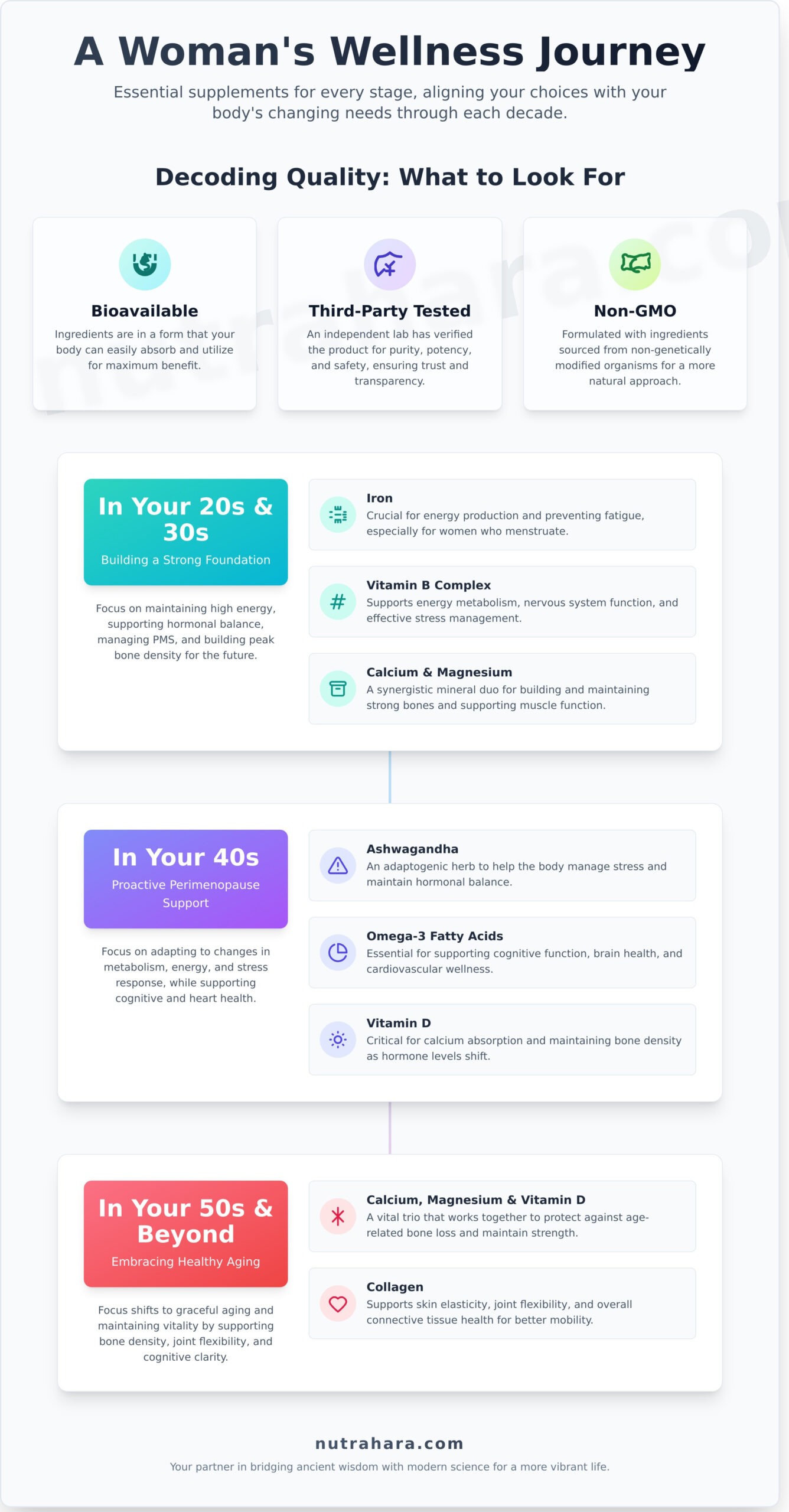
Navigating the world of supplements begins with understanding the label. Transparency and purity are paramount for efficacy and safety. A commitment to clean and simple formulas means you get more of what your body needs and none of what it doesn’t. Look for these key indicators of quality:

  • Bioavailable: The ingredients are in a form that your body can easily absorb and utilize.
  • Third-Party Tested: An independent organization has verified the product for purity, potency, and safety.
  • Non-GMO: The ingredients are sourced from non-genetically modified organisms, ensuring a more natural formulation.

A woman’s body is in a constant state of beautiful evolution, and her nutritional needs change with each new chapter. Understanding these shifts is the first step toward empowered self-care on your wellness journey. This section serves as a roadmap, guiding you through the key women’s health supplements that can support your well-being at every stage. While this guide is rooted in modern nutritional science, it is not a prescription; we always encourage consulting with your healthcare provider to create a personalized plan.

In Your 20s & 30s: Building a Strong Foundation

These decades are about establishing a solid foundation for lifelong health. The focus is on maintaining high energy levels, supporting hormonal balance for reproductive wellness and managing PMS, and building peak bone density that will serve you for years to come.

  • Iron: Crucial for energy production and preventing fatigue, especially for women who menstruate.
  • Vitamin B Complex: A family of vitamins that supports energy metabolism, nervous system function, and stress management.
  • Calcium & Magnesium: This mineral duo works synergistically to build and maintain strong bones and support muscle function.

In Your 40s: Proactive Support for Perimenopause

This is a time for proactive care as your body prepares for the transition of perimenopause. You may notice changes in your metabolism, energy, and stress response. Key nutrients include Omega-3s for cognitive and heart health and Vitamin D for bone support. Ancient Ayurvedic herbs, known as adaptogens, can also be particularly beneficial. A clinically studied Ashwagandha with Black Pepper can help the body manage stress and maintain hormonal balance.

In Your 50s and Beyond: Embracing Menopause and Healthy Aging

As you enter menopause and beyond, the focus shifts to graceful aging and maintaining vitality. The right women’s health supplements can offer targeted support for common concerns like bone density, joint flexibility, cardiovascular wellness, and cognitive clarity, while also helping to manage symptoms like hot flashes and promote restful sleep.

  • Calcium, Magnesium & Vitamin D: A vital trio for protecting against age-related bone loss.
  • Collagen: Supports the health and elasticity of your skin, joints, and connective tissues.
  • Phytoestrogens: Plant-based compounds that may help gently balance hormones and ease menopausal symptoms.

A Goal-Oriented Guide: Choosing Supplements for Energy, Beauty & More

While life stages are important, a more empowering way to approach your wellness journey is by focusing on your specific goals. Choosing women’s health supplements based on your immediate needs-whether it’s more energy, clearer skin, or better sleep-allows you to take targeted action and see tangible results. This problem-solution approach helps you find the right support for exactly where you are today.

To simplify your search, here is a quick overview of common wellness goals and the key, research-backed ingredients that can help you achieve them.

Wellness Goal Key Ingredients to Look For
Vibrant Energy & Mental Clarity B-Vitamins, Iron, CoQ10, Adaptogens
Natural Beauty & Radiant Skin Collagen, Biotin, Vitamin C, Hyaluronic Acid
Stress Resilience & Balanced Mood Ashwagandha, L-Theanine, Magnesium, Rhodiola

For Vibrant Energy and Mental Clarity

Fatigue and brain fog can disrupt your daily flow. The foundation of sustained energy lies in effective cellular metabolism. Nutrients like B-Vitamins and Iron are essential for converting food into fuel, while CoQ10 supports mitochondrial function-your cellular powerhouses. A high-quality Vitamin B-Complex is fundamental for daily energy and cognitive function.

For Natural Beauty and Radiant Skin

True radiance starts from within. To support strong hair, glowing skin, and resilient nails, your body needs the right nutritional building blocks. Collagen provides the structural protein for skin elasticity, while Biotin and Vitamin C are crucial for keratin production and antioxidant protection. Our Premium Collagen Complex is formulated to nourish and support your skin, hair, and nails from the inside out.

For Stress Resilience and Balanced Mood

Modern life requires a calm and centered mind. When you feel overwhelmed, certain natural compounds can help your body adapt. Adaptogens like Ashwagandha and Rhodiola are clinically studied for their ability to help modulate cortisol levels, promoting a balanced response to stress. Paired with Magnesium, which aids in nervous system relaxation, these ingredients are powerful allies for maintaining emotional well-being.

The Nutrahara Philosophy: Bridging Ancient Ayurveda and Modern Science

Navigating the world of supplements can feel overwhelming. At Nutrahara, we believe your wellness journey deserves clarity, trust, and a deep connection to nature. Our philosophy is built on a unique bridge: we unite the time-tested wisdom of ancient Ayurveda with the precision of modern nutritional science. Our mission is to bridge Earth, Nature, and Humanity, creating a path to wellness that is both grounded and innovative.

This approach allows us to formulate targeted women’s health supplements that honor the body’s natural intelligence while delivering clinically proven results.

What is Ayurveda and Why Does It Matter?

Ayurveda, the 5,000-year-old “science of life,” is one of the world’s oldest holistic healing systems. It views health as a delicate balance between mind, body, and spirit, using whole-plant ingredients and personalized approaches to restore harmony. For centuries, its principles have been safely and effectively applied to support women’s health through every stage of life, offering a gentle yet profound path to well-being.

Our Commitment to Purity, Potency, and Transparency

Your trust is our highest priority, and it’s something we earn with every capsule. Backed by 40 years of expertise in formulation, our “clean and simple” promise is grounded in three core principles:

  • Purity: We use only the highest-quality, natural ingredients. Our formulas are always free from artificial fillers, binders, coatings, or unnecessary additives.
  • Potency: We formulate with clinically studied ingredients at dosages that are proven to be effective. We believe in delivering real results you can feel.
  • Transparency: What you see on the label is exactly what you get. We are committed to honesty in our sourcing, formulation, and communication.

We invite you to experience this commitment to excellence on your personal health journey. Discover our science-backed Ayurvedic formulas.

The Ultimate Guide to Women's Health Supplements in 2026

How to Build Your Personalized Supplement Routine with Nutrahara

Embarking on your wellness journey is an empowering step toward nurturing your body from within. With the right approach, choosing women’s health supplements can be a simple and rewarding process. This guide provides a clear, three-step framework to help you confidently select the perfect Nutrahara products to support your unique goals, bridging the gap between ancient wisdom and modern nutritional science.

Step 1: Identify Your Primary Wellness Goal

Begin with a moment of reflection. After learning about the different areas of women’s health, ask yourself: What one area do I want to support most right now? Is it energy, hormonal balance, or bone density? If you feel unsure or simply want to build a strong foundation for overall vitality, starting with a comprehensive multivitamin is an excellent choice. A clinically-studied formula like Femmepower provides essential nutrients to support your holistic well-being.

Step 2: Start Simply and Be Consistent

The key to success is simplicity. Avoid the temptation to start with five or six new supplements at once. Instead, choose one or two core products that align with your primary goal. To build a lasting habit, take your supplements at the same time each day, such as with your breakfast. Remember that our natural ingredients are formulated to work in harmony with your body, and consistency is crucial for experiencing their full benefits over time.

Step 3: Listen to Your Body and Adjust

Your wellness journey is dynamic, and your nutritional needs may evolve. Pay attention to how you feel after a few weeks of consistent use. Notice subtle shifts in your energy levels, sleep quality, mood, and overall sense of vitality. Supplementation is not a static regimen; it is a responsive tool. As your life and health goals change, your routine can adapt with you, ensuring you always receive the targeted support you need.

You are now equipped to take the first step with confidence. Explore our complete collection of clean, scientifically-formulated women’s health supplements at nutrahara.com and begin your journey toward balanced health.

Your Wellness Journey Starts Here

Navigating the path to optimal health is a personal and empowering process. As we’ve explored, the key lies in understanding your body’s unique needs at every stage of life and choosing the right women’s health supplements to support your specific goals. This personalized approach is the cornerstone of modern wellness, allowing you to cultivate energy, beauty, and balance from within.

At Nutrahara, we honor this journey by bridging ancient Ayurveda with modern science. With 40 years of expertise, we formulate clean, simple, and natural supplements you can trust. Our commitment is to provide you with clinically studied ingredients that deliver pure, effective support for your well-being, helping you bridge the gap between nature and humanity.

Begin your wellness journey with our clean, science-backed supplements.

Embrace the abundance of nature and step confidently into a healthier, more vibrant you.

Frequently Asked Questions About Women’s Health Supplements

What vitamins should a woman take daily for general health?

For foundational wellness, women benefit greatly from a core group of vitamins. Vitamin D is crucial for bone health and immune function, while B-vitamins like B12 and folate support energy production and cellular health. Iron is vital, especially for menstruating women, to prevent fatigue. Calcium and Magnesium work in synergy to support bone density and muscle function. A well-formulated multivitamin often provides a balanced foundation for your daily needs, supporting you on your holistic wellness journey.

Are women’s health supplements really necessary if I eat a healthy diet?

A balanced, whole-foods diet is the cornerstone of good health. However, modern life can present challenges. Factors like soil nutrient depletion, high stress levels, and specific life stages can create nutritional gaps that even the healthiest diet may not fill. High-quality women’s health supplements act as a supportive bridge, ensuring your body receives the optimal, consistent nourishment it needs to thrive. They are designed to complement, not replace, a healthy and mindful lifestyle.

How long does it take to see results from taking supplements?

The timeline for experiencing benefits varies with each individual and the specific nutrient. Some people may notice improvements in energy from B-vitamins or iron within a few weeks. For others, particularly with supplements supporting bone density or long-term hormonal balance, it can take three to six months of consistent use to see measurable results. Patience and consistency are key components of any successful wellness journey. Your body needs time to replenish its stores and establish a new equilibrium.

Can I take multiple supplements at the same time?

Yes, it is often beneficial to take multiple supplements to address different health goals, a practice known as “stacking.” However, it is important to do so mindfully. We recommend reviewing the ingredient labels to avoid exceeding the recommended daily intake of certain nutrients, particularly fat-soluble vitamins like A, D, E, and K. For a personalized and safe regimen, consulting with a healthcare practitioner is always the wisest path to ensure synergy and avoid interactions.

Are there any side effects to watch out for with women’s supplements?

When sourced from reputable brands and taken as directed, supplements are generally safe with minimal side effects. Occasionally, some individuals may experience mild digestive upset, which can often be mitigated by taking the supplement with food. It is crucial to listen to your body. If you experience any persistent or adverse reactions, we advise you to discontinue use and consult with your healthcare provider to ensure the product is right for your unique constitution.

What is the difference between a women’s multivitamin and a standard one?

The primary difference lies in the formulation, which is scientifically tailored to a woman’s unique physiology. A women’s multivitamin typically contains higher levels of specific nutrients like iron to support menstruation, folate for reproductive health, and a more robust blend of calcium and vitamin D for bone density. A standard multivitamin provides a general baseline of nutrients, while a women’s formula is specifically designed to support hormonal balance, energy, and long-term health throughout different life stages.

How do I know if a supplement brand is reputable and trustworthy?

A trustworthy brand prioritizes transparency and quality. Look for evidence of third-party testing for purity and potency from organizations like NSF or USP. Reputable companies are transparent about their ingredient sourcing and adhere to Current Good Manufacturing Practices (cGMP). Clean, simple labels without proprietary blends are also a good sign. Our commitment at Nutrahara is to provide clinically studied ingredients and complete transparency, so you can feel confident in what you are putting into your body.

Should I consult a doctor before starting a new supplement routine?

Absolutely. We strongly recommend consulting with your healthcare provider before beginning any new supplement routine. This is especially important if you have pre-existing health conditions, are taking prescription medications, or are pregnant or breastfeeding. A professional can help identify your specific nutritional needs, perhaps through bloodwork, and ensure your chosen women’s health supplements are safe and effective for your personal health journey, preventing any potential interactions.

Article by

Nutrahara Team

We are a dedicated collective of nutrition scientists and naturopaths at Nutrahara, committed to advancing women's health through the fusion of ancient Ayurveda science and cutting-edge nutrition research. Our mission is to empower you with clean, simple, and scientifically validated wellness solutions so you can live your healthiest life. Connect with us to stay updated on the latest developments in holistic women's health and nature-based research.

Disclaimer

This article is not a substitute for medical advice. Please consult a healthcare professional before starting any supplement, especially if pregnant, nursing, taking medication, or managing health conditions.