

The best starting point for supplements for nail growth is to consider what your nails may need, rather than choosing the most popular ingredient. Biotin is the only supplement described here as having evidence of a possible effect on nail strength, but biotin deficiency is rare. Before adding a supplement, consider your diet, health, and the amount per serving.
It’s understandable to want a simple way to support brittle or slow-growing nails. Yet a supplement’s dose can matter: biotin at 10 mg can interfere with thyroid tests for around 24 hours, and 30 mg can interfere for around 48 hours. Share your supplement use with a healthcare professional, especially before lab testing, and look for a clear ingredient list and dose.
This guide explains how to assess supplement safety and what collagen can and cannot tell you about nail health. You’ll also find practical ways to get nail-supporting nutrients from food and learn how protein relates to keratin, the material that makes up fingernails.
Key Takeaways
- Use changes in your nails as a reason to review your diet and overall health, not as proof of a nutrient deficiency.
- Compare supplement labels carefully, and consider how your current diet and life stage affect your nutrient needs.
- Explore food sources of nail-supporting nutrients as part of a balanced eating pattern.
- Understand what collagen research can suggest about nail health, and why collagen has no standard recommended daily dose.
- Learn how dietary protein supports keratin production and where evidence for supplements is strongest.
1. Who should take vitamins for hair, skin, and nails?
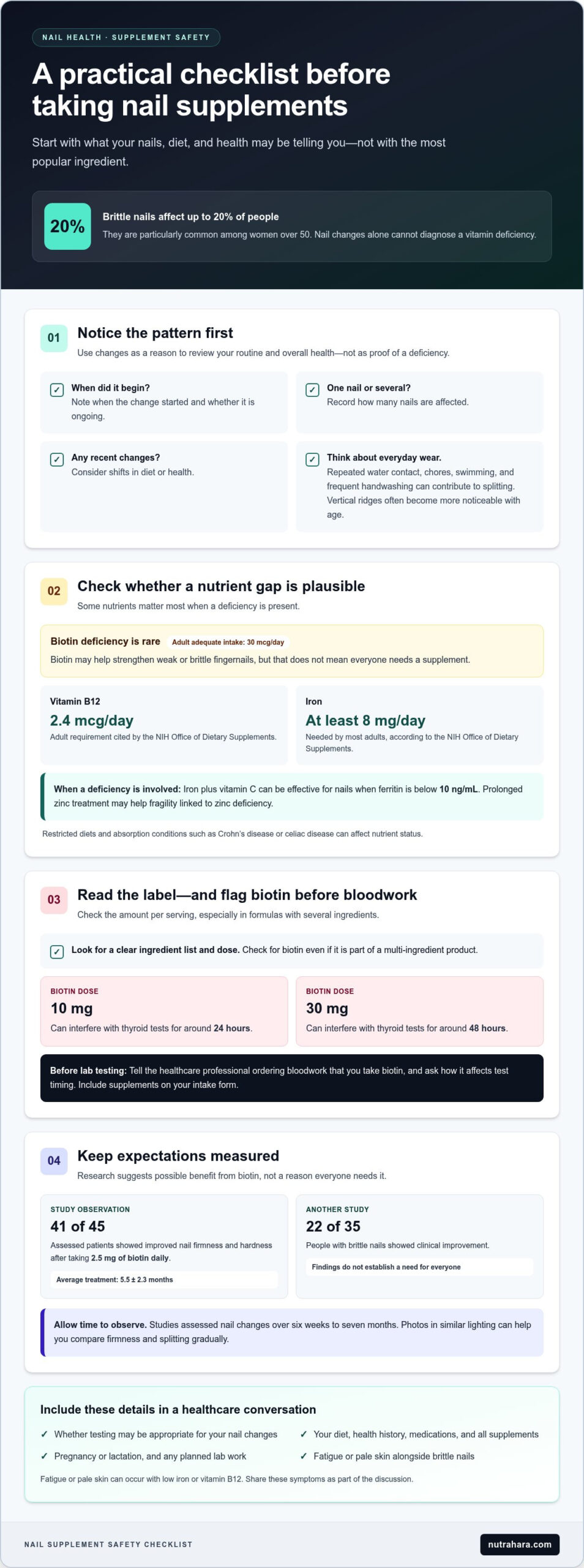
Brittle nails affect up to 20% of people, particularly women over 50. But nail changes alone can’t diagnose a vitamin deficiency. Vertical ridges often become more noticeable with age, while repeated or prolonged water contact can split fingernails. Start by noting when changes began, whether several nails are affected, and any recent diet or health changes. A pattern can help distinguish ongoing brittleness from damage after chores, swimming, or frequent handwashing.
Biotin may help strengthen weak or brittle fingernails, but biotin deficiency is rare. The adequate intake for adults is 30 micrograms (mcg) per day. In one study, 41 of 45 assessed patients showed improved nail firmness and hardness after an average treatment duration of 5.5 ± 2.3 months, taking 2.5 mg of biotin daily. Another study found clinical improvement in 22 of 35 people with brittle nails. These findings suggest possible benefit, not a reason everyone needs biotin.
Check the biotin amount before taking a hair, skin, and nail formula. A 10 mg dose can interfere with thyroid tests for around 24 hours; a 30 mg dose can interfere for around 48 hours. Tell the healthcare professional ordering bloodwork that you take biotin, and ask how it affects test timing. Don’t hide supplements on an intake form. A clear label helps you identify the dose and avoid overlooking biotin in a product with several ingredients.
Other nutrients matter most when a deficiency is present. According to the National Institutes of Health Office of Dietary Supplements, adults require 2.4 mcg of vitamin B12 per day. According to the National Institutes of Health Office of Dietary Supplements, most adults need at least 8 mg of iron per day. Iron plus vitamin C can be effective for nails when ferritin is below 10 ng/mL; prolonged zinc treatment may help fragility linked to zinc deficiency. Restricted diets and absorption conditions such as Crohn’s disease or celiac disease can also affect nutrient status.
How long might changes take? Studies of biotin assessed nail changes over six weeks to seven months, so look for gradual changes rather than an overnight shift. Take photos in similar lighting to compare nail firmness and splitting over time.
Before starting a supplement, ask a healthcare professional whether your nail changes warrant testing, whether your diet or health history raises a deficiency concern, and whether biotin could affect planned lab work. Mention pregnancy, lactation, medications, and every supplement you take. If fatigue or pale skin accompanies brittle nails, include those symptoms in the conversation, since they can occur with low iron or vitamin B12.
2. Collagen and nail health
Collagen is a protein found in connective tissues, while fingernails are made of keratin. That difference matters when assessing collagen claims: a collagen supplement doesn’t directly supply the keratin that forms the nail plate. Instead, it provides collagen-derived ingredients that the body digests and uses as amino acids and peptides. Nail health also reflects growth, everyday wear, and overall nutrition. For example, a split nail after repeated water exposure has a different context from persistent changes across several nails. No single supplement explains every nail symptom.
Collagen peptides are smaller fragments produced by breaking down collagen. The research summary’s table lists a daily collagen peptide dose of 2.5–10 g. This is a listed dose range, not a standard recommended daily dose. There’s no standard recommended daily dose for collagen. That distinction helps you read labels without treating one serving size as a universal target. Compare the serving amount with the full ingredient list. Also note whether the label identifies collagen peptides and their amount. If a formula combines collagen with other ingredients, consider each ingredient separately.
Vitamin C is part of the body’s collagen-making process, so getting it from food supports a balanced approach rather than relying on collagen alone. A meal with fruit or vegetables can provide vitamin C alongside protein and other nutrients. This doesn’t mean vitamin C automatically makes collagen peptides more effective for nails. It means collagen production depends on more than one nutrient. Consider your overall eating pattern, especially if your meals are limited or repetitive. A food diary can help you see what you regularly include.
Set a practical goal before trying a collagen product. Decide what you want to track, such as splitting, peeling, or nail flexibility. Photograph your nails in similar lighting and compare them over time. Keep other routines steady, including hand care and water exposure, so changes are easier to interpret. Collagen supplements can have uncommon digestive effects, including diarrhea, abdominal fullness, heartburn, or headache. Note any new symptoms and when they occur. If they concern you, discuss the product with a healthcare professional.
If you’re pregnant, lactating, or managing other medical needs, review ingredients with particular care. Bring the label to a healthcare professional and ask how its ingredients fit your circumstances. Consider allergies, dietary preferences, and other supplements as part of that review. Collagen may be one part of a wider nutrition routine, but it doesn’t replace balanced meals or explain persistent nail changes. Keep expectations grounded: a listed dose range doesn’t promise stronger nails. A measured approach can help you decide whether a supplement suits your healthy-living plan.
3. Food sources of nail-supporting nutrients
A varied eating pattern gives you more options than building meals around one “nail food.” Combine ingredients: add quinoa and roasted vegetables to a bowl, or pair whole-grain toast with avocado and eggs. Keep a food diary for several days to notice what you regularly eat and what rarely appears. This practical check can guide your grocery list without turning meals into a strict treatment plan. A flexible pattern is easier to adapt to changing appetite, schedules, and preferences.
Rotate protein sources through the week. Try edamame in a grain bowl, Greek yogurt with fruit, or black beans in a vegetable wrap. For plant-based meals, combine beans, nuts, seeds, and grains in different dishes. These options add variety and can make meals satisfying. If you’re managing a busy workday or fitting in exercise, prepare a few basics ahead, such as cooked grains, washed greens, and ready-to-eat beans.
Include colorful produce in meals and snacks. For example, add kiwi to breakfast, sliced bell pepper to lunch, and Brussels sprouts to dinner. Pairing fruit or vegetables with other foods can make variety easier to maintain. Top oatmeal or a salad with pumpkin seeds. The goal isn’t to rely on one ingredient, but to include different colors and textures throughout the week.
Yoga and meditation can support a steady, attentive wellness routine, though they don’t directly treat nail problems. Try a short yoga practice before breakfast, then take a few quiet breaths before planning meals. A mindful pause can help you notice hunger, make a grocery list, or slow down during lunch. Choose practices that fit your day, from gentle stretching at home to a brief seated meditation after exercise.
Protect your nails from avoidable wear while nourishing your body. Wear gloves for dishwashing, dry your hands well, and moisturize after washing. Repeated water exposure can contribute to splitting, so small household habits matter alongside food choices. If your diet is limited, list the foods you avoid and the alternatives you enjoy. Discuss persistent nail changes or other symptoms with a healthcare professional rather than treating one food as the answer.
4. Protein and keratin production
Fingernails consist of layers of keratin, a structural protein. Your body uses dietary protein to maintain and build tissue. Adequate protein is part of basic nail nutrition, not a shortcut to faster growth. Adding extra protein won’t automatically strengthen nails if your usual intake already meets your needs. Consider your eating pattern throughout the day, especially if you often skip meals or follow a highly restricted diet. A steady approach is more practical than focusing on one protein-rich food.
The recommended dietary allowance for protein is 0.36 grams per pound (lb), or 0.8 grams per kilogram (kg) of body weight per day. For someone weighing 150 lb (68 kg), that equals approximately 55 grams of protein per day. These figures offer a reference point for planning meals, not a nail-specific target. Individual needs can vary with health, activity, and life stage. Pregnancy and lactation are examples of periods when nutrition needs deserve particular attention.
To make it easier to get enough protein, include a source in meals and snacks. For example, pair cottage cheese with fruit at breakfast, add lentils to soup at lunch, and serve chicken or tempeh with dinner. Nuts or a glass of milk can contribute between meals. If you follow a vegetarian or vegan eating pattern, include options such as beans, tofu, nuts, and fortified foods throughout the day. Variety helps build a flexible routine.
Protein can also be considered as a share of total energy intake. The Acceptable Macronutrient Distribution Range allows protein to provide 10% to 35% of total daily calories. That broad range reflects different eating patterns, not a precise prescription for nail health. A practical check is to review a typical day: note the protein in each meal, then identify where an easy addition fits. A food diary can make that review clearer without turning meals into a strict calculation exercise.
Some nail formulas include solubilized keratin, with a listed daily dose of 500 mg. This ingredient is distinct from the protein in food, and its presence doesn’t replace a balanced diet. Read the label for the amount per serving and other included ingredients. Focus first on meeting your usual protein needs through meals. Persistent splitting or changes in several nails may have causes beyond protein intake, so avoid treating a supplement as a complete explanation.
5. Which supplements have evidence for improving nail growth or strength?
Biotin has the clearest evidence for a possible effect on nail strength. In an open study, 71 people with brittle nails received 2.5 mg daily. Of 45 assessed for efficacy, 41 showed marked improvement in nail firmness and hardness. Average treatment lasted 5.5 ± 2.3 months. Another study found clinical improvement in 22 of 35 participants. A separate study reported improved symptoms in 63% of participants taking 2.5 mg daily for six weeks to seven months. These findings concern strength, not proven faster growth.
Clinical results and personal testimonials are different kinds of evidence. The figures above summarize study outcomes, not an individual woman’s account. A genuine testimonial requires her own words and clear attribution, so study results shouldn’t be presented as a personal story. Biotin deficiency is rare, and high-dose biotin can interfere with laboratory tests. Check the serving amount and tell the professional arranging your bloodwork that you take biotin.
Iron and zinc are most relevant when a deficiency is involved. Iron supplementation plus vitamin C can be effective for nails when ferritin is below 10 ng/mL. For nail fragility associated with zinc deficiency, prolonged zinc treatment at 20 to 30 mg/day appears effective. These examples link supplementation to a specific nutrient concern, rather than supporting routine use for every nail change.
Other ingredients have narrower evidence. A randomized trial found that a formulation combining amino acids, vitamins, and minerals strengthened and smoothed nails in people with onychoschizia after 3 months. That finding applies to the studied formulation, not every blend. Supplement tables also list MSM at 1–3 g daily and choline-stabilized orthosilicic acid at 10 mg daily. A listed dose alone doesn’t establish effectiveness.
When comparing supplements for nail growth, consider the evidence for each ingredient, the amount per serving, and your reason for taking it. Check for overlapping ingredients before combining products. Track splitting or peeling over time instead of judging one nail in isolation. If several nails change or other symptoms appear, discuss the pattern with a healthcare professional.
If you’re considering collagen alongside other nail-support strategies, review the premium collagen product details and compare its label with your needs.
Nutrahara: Women’s Health Supplements
Nutrahara offers Women’s Health Supplements for women who want to build a thoughtful wellness routine alongside balanced meals and attentive nail care. Its formulas bring together principles of Ayurveda and modern nutritional research, using natural, clean ingredients. If you’re comparing supplement options, review each label and consider how its ingredients fit your needs, diet, and life stage. This can help you make a considered choice rather than relying on a popular ingredient alone.
Supplements are one part of overall wellbeing, not a substitute for investigating persistent nail changes or suspected deficiencies. Speak with a healthcare professional about symptoms or testing. To explore women’s wellness supplements, visit Nutrahara.com.
Build a Nail-Care Routine That Fits Your Life
Choose a next step you can sustain: keep meals varied, protect your hands during wet chores, and note changes in your nails. If you’re considering supplements for nail growth, compare ingredient labels with your needs and current routine. A simple record of what you take and what changes can help you make informed decisions without turning wellness into another demanding task.
Your needs may shift through menstruation, pregnancy, lactation, and menopause. Adjust your routine as life changes, and bring questions about symptoms, testing, or supplement ingredients to a healthcare professional. Consistent, thoughtful choices are more useful than chasing every new trend. Wellbeing is a journey, and small steps can help you feel confident in the care you choose.
For questions about Nutrahara’s women’s wellness offerings, contact Nutrahara with your questions. Keep choosing what supports your health with care and confidence.
Frequently Asked Questions
How do you pick safe supplements?
Choose a product with a readable label that lists each ingredient and its amount per serving. Compare it with other supplements in your routine to spot duplicates. Consider your life stage, dietary pattern, and health conditions before adding anything. If you take medication or have a planned blood test, show the product label to a healthcare professional. Keep the container or a clear photo available for reference.
Who should take vitamins for hair, skin, and nails?
People with restricted diets or conditions that affect nutrient absorption may have reason to discuss supplements. Examples include vegan diets, Crohn’s disease, and celiac disease. Hair, skin, or nail changes alone don’t prove a deficiency. Note other concerns, such as fatigue or pale skin, and share them with a healthcare professional. They can consider your diet, symptoms, and health history when deciding whether testing may help.
Does biotin help nail growth, and what dose has been studied?
Biotin has evidence of a possible effect on nail strength, not established faster growth. Brittle-nail studies have examined 2.5 mg daily. One study reported improved symptoms in 63% of participants taking that amount over six weeks to seven months. Study doses describe research, not a personal recommendation. Biotin deficiency is rare, so the evidence doesn’t mean everyone with nail changes needs a supplement.
What are the risks and side effects of biotin supplements?
Biotin can interfere with thyroid laboratory tests, depending on the dose. A 10 mg dose can interfere for around 24 hours, while a 30 mg dose can interfere for around 48 hours. Tell the healthcare professional ordering tests that you use biotin, including combination products. Check labels for the amount per serving. This simple step helps make supplement use visible when planning or interpreting lab work.
What daily nutrient amounts do adults need for healthy nails?
Adults require 2.4 mcg of vitamin B12 per day, according to the National Institutes of Health Office of Dietary Supplements. The same organization says most adults need at least 8 mg of iron per day. The adequate intake of biotin for adults is 30 micrograms (mcg) per day. These are general nutrient reference amounts, not specific targets for changing nail appearance.
Can supplements cause nail problems or interact with medications?
Some supplements can cause side effects or affect medical testing. Rare effects reported with collagen supplementation include diarrhea, abdominal fullness, heartburn, and headache. Biotin can interfere with thyroid test results. For questions about medication, bring a complete list of medicines and supplements, including doses, to a healthcare professional. This helps them review your specific combination rather than relying only on a product category or label claim.
What foods support healthy nail growth, and are supplements necessary?
Eggs, beans, fish, tofu, vegetables, fruit, and whole grains can contribute protein and other nutrients as part of a varied diet. Supplements aren’t automatically necessary; whether one may be useful depends on dietary restrictions, absorption, and an identified deficiency. Plan meals around different protein sources and colorful produce. If your diet is limited or nail changes persist, discuss your food pattern and concerns with a healthcare professional.
Disclaimer
This article is not a substitute for medical advice. Please consult a healthcare professional before starting any supplement, especially if pregnant, nursing, taking medication, or managing health conditions.