

The most appealing natural remedy may not be the one with the strongest evidence. If recurrent urinary symptoms are disrupting your sleep, workouts, or daily routine, it’s understandable to look for gentler ways to prevent another episode. But natural remedies for recurrent UTIs vary in how well they’re supported, and some shouldn’t replace testing or treatment.
You deserve clear guidance, not a longer list of conflicting supplement advice. The right prevention plan depends on what’s causing your symptoms, your health history, and your stage of life, including pregnancy, lactation, or menopause. Repeated symptoms can have more than one explanation, so checking in with a clinician can help you avoid unnecessary treatment or delays in care.
This guide compares practical prevention options, including cranberry, D-mannose, and probiotics, and explains where the evidence has limits. You’ll also learn when medical assessment matters, which symptoms call for prompt attention, and how to build a sustainable plan with your clinician. The goal is informed care that supports your well-being without asking you to manage recurring symptoms alone.
Key Takeaways
- Track when symptoms occur and discuss recurring episodes with a clinician, since urinary symptoms can have causes other than infection.
- Compare natural remedies for recurrent UTIs based on the evidence for prevention and understand where research remains uncertain.
- Consider cranberry as a possible prevention option, not a way to treat an active infection.
- Ask whether urine testing or culture could help clarify your symptoms and guide a prevention plan suited to your health and life stage.
- Build practical habits around your routine, but don’t treat supplements as a substitute for diagnosis or care when symptoms arise.
Natural Remedies for Recurrent UTIs: Start With the Right Diagnosis
Repeated burning or urgency can be exhausting, especially when symptoms interrupt exercise, sleep, or a busy day. Before choosing natural remedies for recurrent UTIs, it helps to establish whether the episodes are bacterial infections. Other conditions can cause similar urinary symptoms, so prevention is most useful when it’s based on a clear picture of what’s happening.
Prevention aims to lower the chance of future infections; it doesn’t diagnose or treat an active UTI. If symptoms are happening now, don’t rely on supplements or home remedies instead of medical advice.
What counts as a recurrent urinary tract infection?
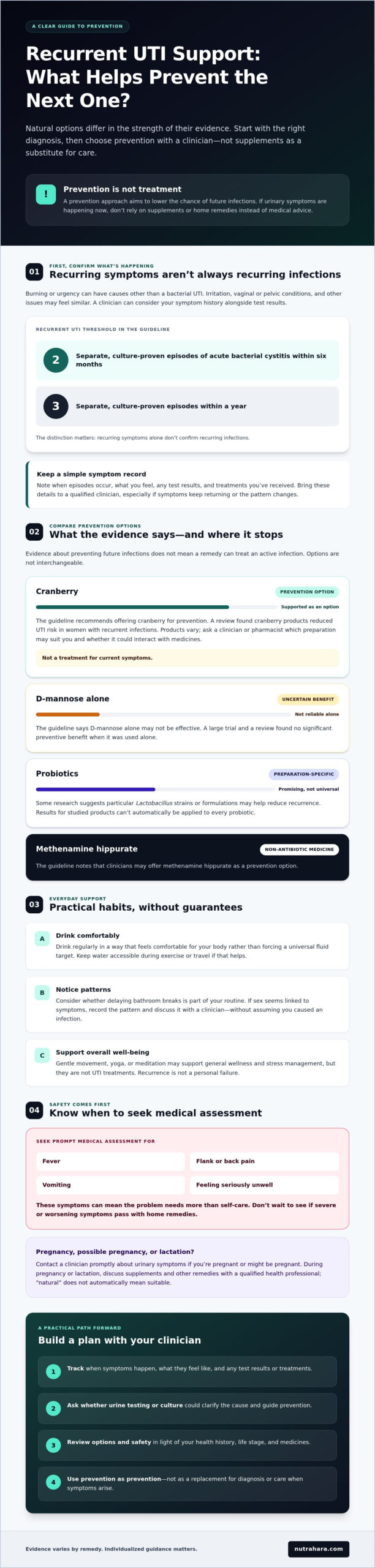
The 2025 AUA/CUA/SUFU recurrent UTI guideline uses a threshold of two separate, culture-proven episodes of acute bacterial cystitis within six months, or three within a year. The distinction matters: recurring symptoms alone don’t confirm recurring infections. Irritation, vaginal or pelvic conditions, and other issues can cause similar discomfort. A clinician can assess your symptom history alongside test results.
Note when episodes occur, what symptoms you experience, any test results, and treatments you’ve received. Bring those details to a qualified clinician, especially if symptoms keep returning or the pattern changes. The overview of recurrent urinary tract infections offers general background, but it doesn’t replace individualized medical advice.
When symptoms need prompt medical attention
Seek prompt medical assessment for fever, flank or back pain, vomiting, or feeling seriously unwell. These symptoms can mean the problem needs more than self-care. Don’t manage severe or worsening symptoms with home remedies while waiting to see if they pass.
If you’re pregnant or might be pregnant, contact a clinician promptly about urinary symptoms. Pregnancy changes the care considerations, so check before using supplements or other remedies. The same applies during lactation: discuss products with a qualified health professional rather than assuming “natural” means suitable for you.
A clear diagnosis doesn’t dismiss your experience. It gives you and your clinician a safer foundation for deciding what to do during symptoms and which prevention approaches may fit your health and life stage.
Which Natural UTI Prevention Options Have the Best Evidence?
Natural remedies for recurrent UTIs aren’t interchangeable, and evidence for preventing future infections doesn’t mean a remedy can treat an active infection. The 2025 AUA/CUA/SUFU guideline recommends offering cranberry as a prevention option, says D-mannose alone may not be effective, and notes that clinicians may offer methenamine hippurate, a non-antibiotic medicine. Cranberry may help lower future UTI risk, but it isn’t a treatment for current symptoms. D-mannose alone hasn’t shown reliable preventive benefit in recent studies. Probiotics remain an option with promising but preparation-specific evidence.
Cranberry, D-mannose, and probiotics: what the evidence can say
A 2023 Cochrane review found cranberry products reduced UTI risk in women with recurrent infections. Products vary, so ask a clinician or pharmacist which preparation may suit you and whether it could interact with medicines you take. The 2025 guideline’s caution on D-mannose reflects a large 2024 trial and a 2025 review that found no significant preventive benefit when it was used alone.
Some research suggests particular Lactobacillus probiotics may help reduce recurrence, but results for studied strains or formulations can’t automatically be applied to every product. A consumer-friendly overview of natural and alternative treatments for UTIs can help you identify options to discuss, not choose a treatment on its own. Before starting a supplement, check its safety and possible interactions with a qualified clinician, especially if you’re pregnant, breastfeeding, or taking medication.
Hydration and everyday habits: useful, but not guaranteed prevention
Drink regularly in a way that feels comfortable for your body rather than forcing a universal fluid target. You might keep water accessible during exercise or travel and notice whether delaying bathroom breaks is part of your routine. If sex seems linked to symptoms, record the pattern and discuss it with a clinician without assuming you’ve caused an infection.
Habits can support general well-being, but evidence for common prevention tips varies, and recurrence isn’t a personal failure. Gentle movement, yoga, or meditation may support overall wellness and stress management, but they aren’t UTI treatments. Choose manageable habits, and seek medical guidance for recurring symptoms rather than relying on lifestyle changes or supplements alone.
Natural Remedies vs. Medical Prevention for Recurrent UTIs
Choosing a natural approach doesn’t mean avoiding medical care. A clinician-led review can help confirm whether episodes are bacterial infections, identify patterns, and weigh prevention choices that fit your health history. Treating familiar symptoms on your own repeatedly may miss another cause or delay appropriate care. Natural remedies for recurrent UTIs may be part of a prevention discussion, but they can’t replace assessment or treatment when an infection is active.
What to ask about testing and a prevention plan
Bring a concise record of symptom dates, how long they lasted, possible triggers, treatments, and previous urine test or culture results. Note whether symptoms followed sex, travel, exercise, or a change in routine. These details can make the conversation more useful and help distinguish a recurring pattern from symptoms with a different cause.
You might ask whether a urine test or culture would be helpful during an episode, how the results could affect treatment, and which prevention options suit your circumstances. Testing isn’t the same for everyone; clinicians decide which assessments and treatments are appropriate based on symptoms, history, and individual risk factors. Depending on your situation, prevention discussions may include cranberry, methenamine hippurate, or clinician-directed antibiotic strategies. Methenamine is a non-antibiotic medicine, not a natural remedy. Ask about expected benefits, possible side effects, and how to review whether a plan is helping.
Life-stage considerations, including menopause and pregnancy
Your life stage can change which options are suitable. For peri- and postmenopausal women with recurrent UTIs, the 2025 AUA/CUA/SUFU guideline recommends discussing vaginal estrogen when there are no contraindications. It’s a clinician-guided option, not an over-the-counter supplement, and your own history should shape the conversation.
Pregnancy or possible pregnancy calls for prompt clinician guidance about urinary symptoms. If you’re pregnant or lactating, check before starting supplements or changing prescribed medicines. Don’t assume a product is appropriate simply because it’s described as natural. Share everything you take, including herbal products and vitamins, so a clinician can consider potential interactions and your individual needs.
A prevention plan should support your life, not leave you choosing between wellness and evidence-based care. You can discuss your preferences and consider natural and medical options together, with a qualified clinician helping you decide what belongs in your plan.
A Practical, Safe Plan for Lowering Recurrence Risk
A steady plan can make repeated episodes easier to discuss and help you make informed choices. These steps won’t guarantee prevention, but they can support a clearer conversation with your clinician.
- Keep a private health log. Record symptom dates, what you noticed, urine test results, and treatments. Note timing around exercise, travel, sex, or other routine changes.
- Look for patterns, not proof. A symptom following a particular activity may be worth mentioning, but timing alone doesn’t confirm that the activity caused an infection.
- Review options and evidence. Ask what each prevention approach is intended to do, how strong the evidence is, and whether it fits your health history and life stage.
- Agree on next steps with a clinician. Bring your notes and discuss whether testing or a prevention plan makes sense for you.
Build small habits around your routine
Keep water accessible during workouts or travel and take bathroom breaks when practical, without forcing fluids or interrupting activities unnecessarily. If symptoms seem to follow intimacy, note the pattern and ask a clinician what steps may be appropriate. A short phone note can make tracking easier during busy weeks. These habits may support comfort and awareness, but they can’t promise to prevent infection or replace medical assessment.
Evaluate supplements with care
Before trying natural remedies for recurrent UTIs, read the full label. Check the ingredients, amounts, cautions, and suggested use, then ask a clinician or pharmacist about possible interactions with medicines or other supplements. This is especially important during pregnancy or lactation. Be cautious of products claiming to cure an active infection or replace prescribed treatment. Check that the product’s ingredients and quality information are clear, and don’t assume evidence for one preparation applies to every product.
Nutrahara sells women’s health supplements for broader wellness, but its supplements aren’t established as UTI prevention or treatment. If you’re interested in women’s wellness products, explore Nutrahara’s women’s health supplements separately from care for urinary symptoms.
Choosing Your Next Step for Recurrent UTI Support
Your next step depends on what’s happening now. Sustainable habits can support general well-being, and evidence-informed prevention options are worth discussing if infections keep returning. But ongoing or new urinary symptoms deserve appropriate medical assessment. Supplements aren’t a substitute for diagnosing or treating an active infection, even if they’re marketed as natural.
A vaginal pH balance guide may offer general information about vaginal health, but it can’t diagnose or treat a UTI. If you’re unsure whether symptoms are urinary or vaginal, ask a clinician rather than trying to identify the cause through an online guide alone.
Questions to take to a clinician
Bring your episode notes and use this checklist to guide the conversation:
- Have my repeated episodes been confirmed as UTIs, and what testing might be appropriate?
- Could my health history, medication or supplement use, or life stage affect the prevention options available to me?
- If I’m pregnant, might be pregnant, or am breastfeeding, what should I know before using any remedy?
- If I’m peri- or postmenopausal, is vaginal estrogen an appropriate topic to discuss for me?
- Which prevention approaches fit my preferences, and what are their limits or possible risks?
- What symptoms should prompt urgent care, and what should I do if symptoms return?
Your clinician can help decide whether urine testing, culture, or a particular treatment is suitable for your situation. The goal isn’t to choose between natural care and medical care. It’s to make an informed plan that reflects your symptoms, preferences, and health needs.
Support your broader wellness without confusing it with UTI treatment
Regular movement that suits your body, restorative sleep, and stress-supporting practices such as yoga or meditation can be meaningful parts of overall wellness. They aren’t proven treatments for an active UTI and shouldn’t be presented as guaranteed prevention. Choose routines that feel sustainable, not like another demand on a busy day.
Natural remedies for recurrent UTIs should be considered with clear expectations and clinician guidance where needed. Nutrahara sells women’s health supplements, but its supplements aren’t established as UTI prevention or treatment. For broader wellness interests, explore Nutrahara’s women’s health supplements separately from care for urinary symptoms.
Take Your Next Step With Confidence
Recurring urinary symptoms deserve a plan grounded in the right diagnosis, not guesswork. Evidence for natural remedies for recurrent UTIs varies: cranberry may be worth discussing for prevention, while other supplements have important evidence limits. None should be relied on to treat an active infection. Tracking symptoms and bringing your questions to a clinician can help you choose prevention options that fit your health, medications, and life stage.
Wellness is personal, and thoughtful care can include medical guidance and habits that support your wider well-being. Nutrahara focuses on women’s health supplements made with natural ingredients, combining Ayurvedic principles with modern nutritional research. Its supplements aren’t established as UTI prevention or treatment, so keep UTI concerns in conversation with a qualified clinician.
Explore Nutrahara’s women’s wellness resources for broader wellness inspiration, separate from care for UTI symptoms.
Frequently Asked Questions
Can natural remedies prevent recurrent UTIs?
Some approaches may help lower recurrence risk, but they don’t work for everyone or guarantee prevention. The 2025 AUA/CUA/SUFU guideline recommends offering cranberry as a prevention option; evidence for other supplements varies. Natural remedies for recurrent UTIs are for prevention discussions, not treatment of an active infection. Ask a clinician whether an option suits your health history, medications, and life stage.
Does cranberry juice get rid of a UTI?
No. Cranberry products may help reduce the risk of future UTIs for some women with recurrent infections, but cranberry juice doesn’t treat an active infection. The research concerns prevention, and products can differ in their formulation. If you have urinary symptoms, contact a qualified clinician about assessment and treatment rather than relying on juice or waiting to see if symptoms resolve.
Is D-mannose effective for recurrent UTIs?
D-mannose alone may not prevent recurrent UTIs. The 2025 AUA/CUA/SUFU guideline advises clinicians to explain that it may not be effective, reflecting recent trial and review findings that didn’t show significant benefit. Evidence can change, and individual health factors matter. Before trying D-mannose, discuss its potential role, safety, and possible interactions with a clinician or pharmacist.
What should I do if UTI symptoms keep coming back?
Arrange a clinician review rather than repeatedly self-diagnosing. Keep a record of when symptoms occur, any urine test results, and treatments you’ve used. Ask whether the episodes have been confirmed as infections and whether testing or a prevention plan is appropriate. Seek prompt care for fever, flank or back pain, vomiting, or feeling seriously unwell; don’t try to manage severe or worsening symptoms at home.
Can I treat a UTI naturally while pregnant?
Don’t try to treat a suspected UTI with natural remedies alone during pregnancy. Contact a clinician promptly about urinary symptoms, and check before taking supplements or changing any prescribed treatment. “Natural” doesn’t automatically mean suitable during pregnancy, and delaying assessment can be risky. If you might be pregnant, follow the same careful approach and get individualized medical guidance.
Can menopause increase the chance of recurrent UTIs?
Perimenopause and menopause can bring changes in vaginal and urinary tissues that may contribute to UTI risk. For appropriate peri- and postmenopausal women with recurrent infections, the 2025 AUA/CUA/SUFU guideline recommends discussing vaginal estrogen when there are no contraindications. It’s a clinician-guided option, not a supplement. Ask whether it fits your health history and what alternatives may be suitable.
Are probiotics proven to prevent recurrent UTIs?
Not all probiotics are proven to prevent UTIs. Research has found promising results for some specific Lactobacillus strains and preparations, but those findings can’t be assumed to apply to every product. Probiotics aren’t a treatment for an active infection. If you’re considering one for prevention, ask a clinician or pharmacist about the studied formulation, safety, and possible interactions with your medicines.
Disclaimer
This article is not a substitute for medical advice. Please consult a healthcare professional before starting any supplement, especially if pregnant, nursing, taking medication, or managing health conditions.