

Turmeric may be part of a wellness routine, but it isn’t a cure-all or a proven way to prevent cancer. Its much-discussed compound, curcumin, is studied for several potential health effects, while evidence does not show that every effect is unique to women. The benefits of turmeric for women depend on what research has examined and how turmeric is used.
For women balancing fitness, work, family, and changing health needs, choosing a supplement calls for more than following a trend. This guide explains what research can and cannot say about the benefits of turmeric for women, how to distinguish turmeric in food from concentrated supplements, and how to make choices that fit your circumstances. It also considers sustainable habits such as nourishing meals, movement, yoga, and meditation as part of an ongoing wellness routine.
Key Takeaways
- Learn why curcumin’s antioxidant and anti-inflammatory properties are being studied, and whether those effects are specific to women.
- Understand how turmeric in food differs from concentrated supplements, and what may affect curcumin absorption.
- Explore potential health effects while keeping the limits of current evidence in mind.
- See why turmeric should not be treated as a proven way to prevent cancer.
Are there turmeric benefits for women, specifically?
Curcumin, turmeric’s best-known active compound, has antioxidant and anti-inflammatory properties. Researchers have explored possible effects on digestion, joint discomfort, and gut inflammation, but these are not established as benefits unique to women. An individual account cannot show that turmeric caused a health change, so consider testimonials alongside research, not as proof. One woman’s experience can still offer a relatable perspective: she may enjoy adding turmeric to soup as part of a comforting wellness routine, without treating it as medicine or evidence of a health effect.
Curcumin’s Antioxidant Activity
Antioxidant activity describes how a compound may help limit damage from unstable molecules. Curcumin’s antioxidant properties have led researchers to examine it in connection with inflammatory processes. For women making wellness choices across life stages, this is an area of interest, not evidence of a specific benefit for menstruation, pregnancy, or menopause. Antioxidant activity also does not establish turmeric as a way to prevent cancer or replace treatment.
Inflammation and Joint Pain
Inflammation is part of the body’s response to irritation or injury, but persistent inflammation can contribute to joint pain. Turmeric may reduce inflammation and pain associated with osteoarthritis, which can affect comfort during everyday movement or exercise. One study found that 1,000 mg of turmeric was equivalent to NSAIDs for treating arthritis. That finding doesn’t mean turmeric should replace prescribed treatments. Medication interactions and possible side effects also matter when considering supplements.
Gut Inflammation and Digestion
Turmeric may support digestion by increasing bile flow, which helps the body break down fats. Ayurvedic medicine has used turmeric as a digestive aid for centuries. Curcumin has also been studied alongside prescription medication for ulcerative colitis. In one study, people taking 2 grams of curcumin daily with their medication were more likely to stay in remission than those taking medication alone. This was an add-on to treatment, not a substitute. Soup with chicken broth and a pinch of turmeric is a food example, not a treatment for gut disease.
Supplements versus cooking with turmeric
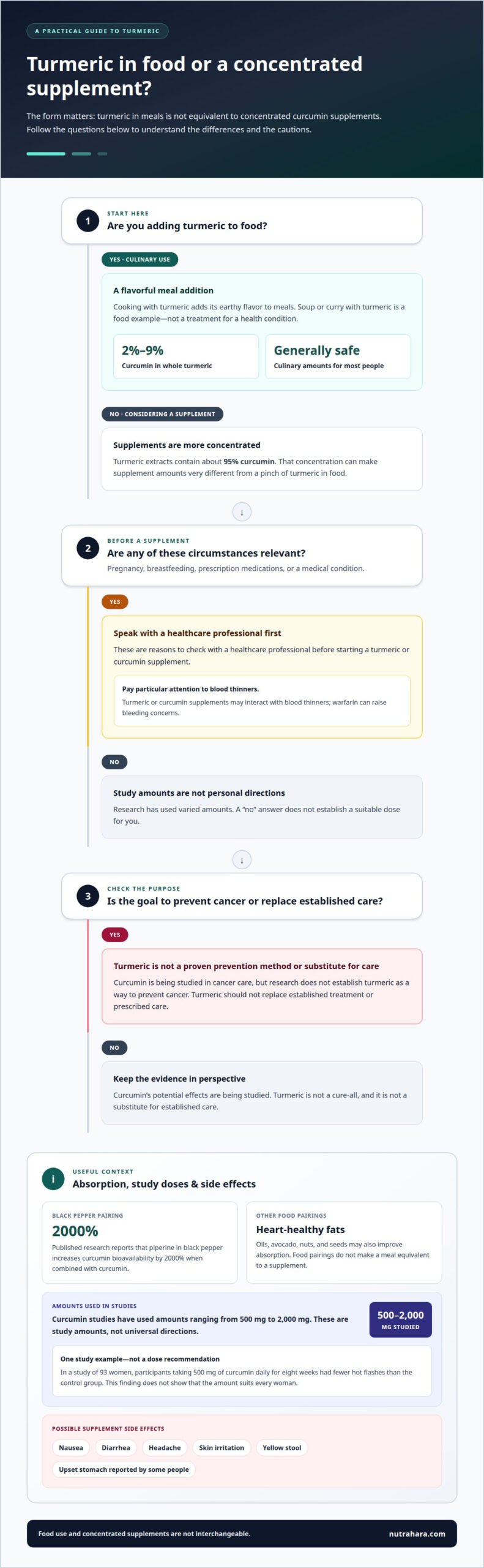
Cooking with turmeric adds its earthy flavor to meals, while supplements provide a more concentrated form. Whole turmeric contains 2% to 9% curcumin; turmeric extracts contain about 95%. That difference can make supplement amounts unlike a pinch of powder in soup or curry. Food is a practical way to consume turmeric, but it doesn’t match the concentrated curcumin used in many studies.
Absorption matters too. According to published research, piperine in black pepper increases curcumin bioavailability by 2000% when combined with curcumin. Adding pepper to a turmeric-seasoned meal is one simple pairing. Heart-healthy fats, including oils, avocado, nuts, and seeds, may also improve absorption. These pairings don’t make food equivalent to a supplement or establish an effect on immune function.
Research uses varied amounts, so study doses aren’t universal directions. Studies of curcumin have used amounts ranging from 500 mg to 2,000 mg. In a study of 93 women, participants taking 500 mg of curcumin daily for eight weeks had fewer hot flashes than the control group. That result describes one study, not a dose that suits every woman. A supplement label’s turmeric amount may also differ from its curcumin amount.
Supplements can cause side effects, including nausea, diarrhea, headache, skin irritation, or yellow stool. Some people report an upset stomach. Turmeric or curcumin supplements may interact with blood thinners, and warfarin can raise bleeding concerns. Pregnancy, breastfeeding, prescription medications, or a medical condition are reasons to speak with a healthcare professional before starting supplements. Culinary amounts are generally safe for most people, but concentrated supplements call for more care.
What are the potential health benefits of turmeric?
Curcumin is being studied for possible effects on metabolic, cardiovascular, and cognitive health. Findings vary by condition, and turmeric is not a substitute for established care.
PCOS and Metabolic Health
Polycystic ovary syndrome (PCOS) is a hormonal condition that can involve metabolic concerns; estimates suggest it affects 6% to 25% of women. Clinical trial research found curcumin supplementation significantly reduced fasting blood glucose, HbA1c, and insulin resistance. In a 9-month prediabetes study, 16.4% of the placebo group developed Type 2 diabetes, while none of the curcumin-treated group did. That result concerns prediabetes, not PCOS treatment.
Menstrual Cramps and PMS
Turmeric is not established as a treatment for menstrual cramps or PMS. If symptoms disrupt exercise, work, or sleep, note when they occur and discuss persistent or severe symptoms with a healthcare professional. Curcumin’s anti-inflammatory properties alone do not show that it relieves menstrual pain, so do not replace a care plan with turmeric.
Skin Health and Acne
Curcumin’s antioxidant activity has prompted interest in skin health, but it does not establish turmeric as an acne treatment. If applying turmeric to skin, do a patch test first. Turmeric can stain skin and clothing, so avoid testing it on visible areas or near fabrics you want to protect.
Other potential health benefits have been explored in memory and heart research. Adults without dementia who took 90 milligrams of curcumin twice daily for 18 months improved memory performance in one study. A separate study involving 121 people undergoing coronary artery bypass surgery found a 65% lower in-hospital heart attack risk among participants taking 4 grams daily around surgery. These findings don’t establish turmeric as a treatment for heart disease or cognitive decline. Turmeric also shouldn’t replace professional mental health care for depression.
Cancer prevention
Curcumin, turmeric’s active compound, is being studied in cancer care, but that research doesn’t establish turmeric as a way to prevent cancer. A study involving 60 people receiving chemotherapy for breast cancer tested 2 grams of curcumin per day for 21 days. It examined curcumin use during treatment, not whether eating turmeric prevents cancer or reduces someone’s chance of developing it.
That distinction matters: a study of people already receiving medicine cannot show that a food or supplement prevents disease. It also does not establish turmeric as a cancer treatment or show that it improves chemotherapy outcomes. Turmeric can add flavor to meals, but it should not replace cancer care or a treatment plan.
Ovarian cancer is an important concern for women across life stages. Half of ovarian cancer cases occur in women over age 63, and ovarian cancer is the fifth leading cause of cancer-related death among women. These figures describe the disease’s impact; they don’t show that turmeric changes ovarian cancer risk. Curcumin research in breast cancer also can’t be assumed to apply to ovarian cancer.
Claims about turmeric supporting the immune system, digestive health, or cholesterol levels refer to different areas of interest, not proof of cancer prevention. Nutrients in a balanced eating pattern can support general wellness, but no single spice establishes protection from cancer. If you’re receiving chemotherapy, discuss turmeric supplements with your doctor before using them. In particular, people receiving chemotherapy should avoid turmeric supplements with camptothecin, mechlorethamine, doxorubicin, or cyclophosphamide. A seasoning and a concentrated supplement are not interchangeable, especially during cancer treatment.
Nutrahara: Women’s Health Supplements
Nutrahara offers Women’s Health Supplements for women seeking natural support as part of a thoughtful daily routine. Its formulations bring principles of ancient Ayurveda together with modern nutrition research, using clean, simple ingredients without artificial additives. Nutrition is made in New Zealand. These supplements can complement habits such as balanced eating, regular movement, yoga, and meditation.
Turmeric research has limits, especially around cancer prevention and treating health conditions. Supplements are a separate choice from seasoning meals, and concentrated products may interact with medications or be unsuitable during pregnancy or breastfeeding. If you’re considering a supplement as part of your wellness journey, take time to consider your needs and current health circumstances. For questions about Nutrahara, contact the team.
Make Your Next Wellness Choice With Confidence
A thoughtful approach to the benefits of turmeric for women starts with your priorities, not a promise that one ingredient can do everything. Notice what supports your energy and comfort, and make room for steady habits that fit your life. Nourishing meals, regular movement, yoga, and quiet moments for meditation can all contribute to a balanced routine—practices also highlighted by holistic wellness guides like Spirit of the Earth that explore intentional self-care and mindful healing rituals.
Let curiosity guide your decisions. If you’re considering women’s health supplements, reflect on your goals and how a supplement would fit alongside your everyday practices. A sustainable wellness routine is built through choices you feel confident returning to, rather than quick fixes or pressure to do everything at once.
Contact Nutrahara to discuss your options as you consider what may suit your wellness routine. Keep moving forward at your own pace, with care and confidence.
Frequently Asked Questions
What is turmeric good for?
Turmeric adds earthy flavor and color to food. Try a small amount in lentils, roasted vegetables, or rice if you enjoy its taste. Its traditional culinary role is distinct from taking concentrated supplements for a health goal. Enjoy turmeric as an ingredient without expecting a particular health outcome from adding it to a meal.
Are there any side effects of taking turmeric?
Some people may have an allergic reaction to turmeric, including a rash, hives, or abdominal pain after eating it. If you notice these symptoms after consuming turmeric, stop using it and seek medical advice. Note what form you consumed and when symptoms began. This information may help a health professional assess the reaction.
Does turmeric help with weight loss?
Turmeric is not an established weight-loss method, and adding it to meals alone should not be expected to change body weight. If weight management is your goal, build a routine around sustainable habits such as regular movement and nourishing meals. Yoga can support an enjoyable movement practice, while meditation offers dedicated time to slow down and focus.
How Much Should You Take per Day?
There is no single daily amount that applies to everyone. Do not treat an amount used in a study as personal dosing instructions, or assume a spoonful of cooking powder matches a concentrated extract. The product form and your circumstances matter. If you’re considering a supplement, review its label and discuss your intended use with a healthcare professional, especially if you take medication.
What are the evidence-based health benefits of turmeric for women?
Research has examined curcumin in relation to several health questions, but it has not established benefits exclusive to women. A finding in a particular group does not automatically apply to every woman, symptom, or life stage. Look at the specific outcome studied to understand what a result may mean, and do not treat a promising research area as proof of prevention or a cure.
Can turmeric help with PCOS symptoms or hormonal balance?
Turmeric is not established as a way to balance hormones or treat PCOS. For a useful conversation about symptoms, keep a simple record of cycle dates and changes you notice, such as shifts in energy or discomfort. Bring that record to a healthcare professional familiar with your care. It can make the discussion more specific without relying on turmeric as a substitute for treatment.
Disclaimer
This article is not a substitute for medical advice. Please consult a healthcare professional before starting any supplement, especially if pregnant, nursing, taking medication, or managing health conditions.