
Did you know that a 2019 study published in the Journal of Clinical Medicine found that 84.1% of women suffer from menstrual pain, yet many report that standard over-the-counter painkillers offer only partial relief? You likely know the frustration of losing several days each month to debilitating pelvic discomfort while worrying about the long-term side effects of synthetic medications on your gut health. It’s exhausting to feel like your body is working against you, especially when the hormonal shifts of perimenopause introduce unpredictable cycles and unwanted tension. At Nutrahara, we believe your health journey should be defined by vitality and a balanced lifestyle rather than the days you spend sidelined by pain.
This guide reveals how to use essential oils for cramps by combining 40 years of expertise in ancient Ayurvedic science with modern aromatherapy research to soothe your body naturally. You’ll discover which specific botanical extracts are clinically studied to reduce pain intensity and how to create a restorative ritual that returns a sense of calm to your cycle. We’re outlining the most effective oils for pelvic relief and providing actionable techniques to help you gain lasting control over your hormonal well-being and emotional resonance.
Key Takeaways
- Understand the biological and energetic roots of pelvic discomfort by bridging modern prostaglandin research with ancient Ayurvedic wisdom on balancing Vata dosha.
- Discover why Lavender and Clary Sage are the premier botanical choices for achieving hormonal equilibrium and promoting deep muscular relaxation.
- Master the “Golden Rule of Dilution” and the clockwise massage technique to safely and effectively apply essential oils for cramps for immediate soothing.
- Learn how to integrate Apana Vayu meditation and targeted yoga flows into your wellness journey to enhance pelvic flexibility and redirect stagnant energy.
- Explore how to build a foundation for lasting relief by combining aromatic rescue treatments with clinically studied Ayurvedic supplements like Ashwagandha.
The Science and Spirit of Menstrual Cramps: Why We Ache
Understanding the monthly cycle requires looking at both the microscope and the spirit. Dysmenorrhea, the medical term for painful periods, affects approximately 84% of menstruating women according to a 2023 clinical review. For women in their 30s, 40s, and 50s, this experience shifts. In your 30s, you might face intense peaks of pain due to high hormonal activity. By your 40s, perimenopausal fluctuations often make cramps feel more unpredictable and lingering. Nutrahara approaches this through the lens of Bridging Earth, Nature and Humanity, recognizing that your body isn’t a machine. It’s a living ecosystem that deserves a balanced lifestyle. Whether you’re practicing yoga to ease pelvic tension or using meditation to lower stress, your health journey is a holistic path toward longevity and comfort.
Prostaglandins and the Inflammatory Response
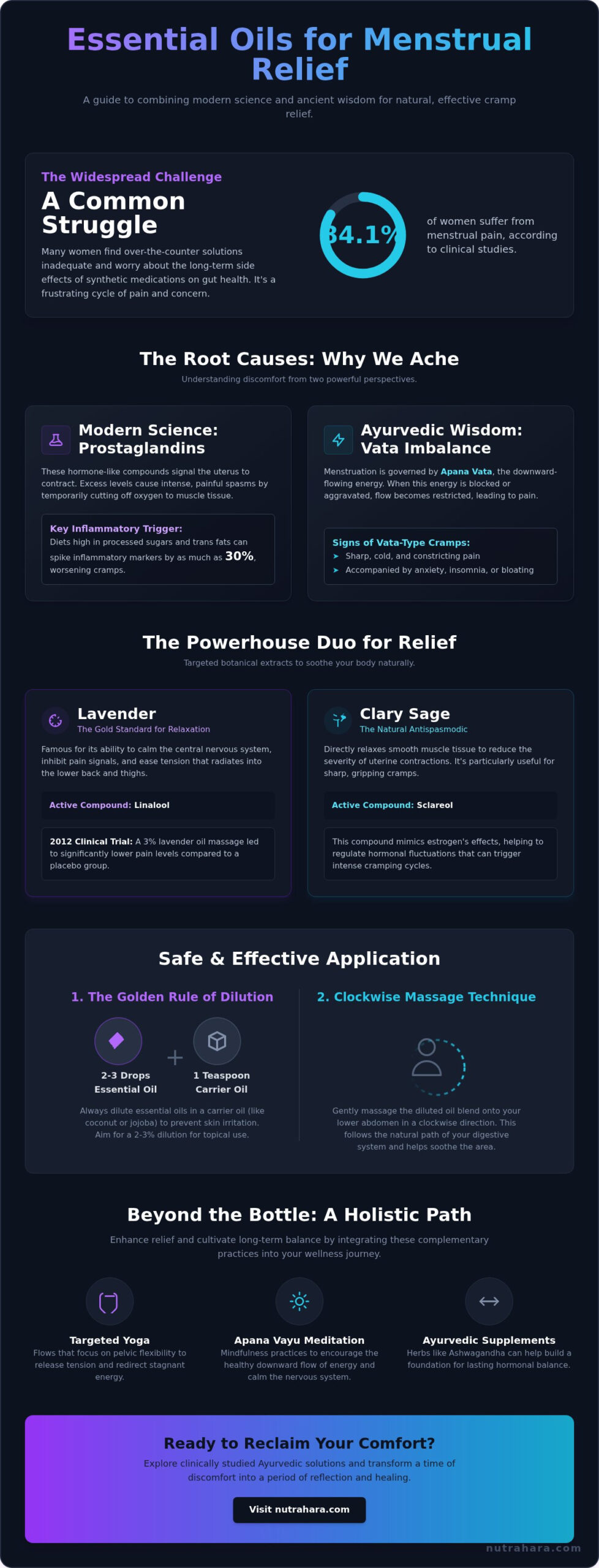
Prostaglandins are lipid compounds that act like hormones within the body. They signal the uterine muscles to contract to shed the lining during your cycle. When these levels are too high, the uterus contracts with excessive force. This pressure can temporarily cut off oxygen to nearby muscle tissue, causing the intense pain we know as cramps. Research indicates that diets high in processed sugars and trans fats can spike inflammatory markers by as much as 30%. These dietary choices exacerbate the chemical signals that trigger muscle spasms. Aromatherapy serves as a scientific bridge here. Specific compounds in essential oils for cramps interact with these chemical pathways to encourage muscle relaxation and dampen the inflammatory response before the pain becomes overwhelming.
The Vata Imbalance: An Ayurvedic View of Flow
In the 5,000-year-old tradition of Ayurveda, menstruation is governed by Apana Vata. This is the downward-flowing energy responsible for elimination and reproduction. When Vata becomes aggravated, the flow becomes restricted, leading to discomfort. You’ll recognize a Vata-type cramp by its specific qualities. It’s often cold, sharp, and accompanied by anxiety, insomnia, or bloating. Restoration begins by introducing warmth and stability to the pelvic floor. Warming essential oils for cramps help restore Prana, or life force, to the reproductive organs. This helps the energy move downward freely again, easing the physical and emotional tension that often arrives with your period. To support this internal balance, many women find that FemmePower provides the nutritional foundation needed to complement topical relief and stabilize hormonal shifts.
Managing this pain isn’t just about suppression; it’s about listening to the body’s signals. Pelvic floor tension often increases as we age, with 25% of women over 40 reporting increased muscle tightness. Integrating natural solutions allows you to regain control of your wellness journey. By combining ancient Ayurveda science with modern nutrition research, you can transform a time of discomfort into a period of reflection and healing. This holistic approach empowers you to move through your day with the confidence and grace you deserve.
The Most Potent Essential Oils for Cramp Relief
Selecting the right essential oils for cramps involves bridging ancient Ayurvedic science with modern clinical research. These botanical extracts aren’t just pleasant scents; they’re concentrated chemical compounds that interact directly with your body’s physiology. For women navigating the complexities of hormonal cycles or muscle strain, these oils offer a targeted, non-invasive way to manage discomfort. By understanding the specific molecular profile of each oil, you can create a personalized toolkit for your wellness journey.
Lavender and Clary Sage: The Powerhouse Duo
Lavender is the gold standard for relaxation. This floral oil contains high levels of linalool, a terpene alcohol that calms the central nervous system and inhibits the transmission of pain signals. A 2012 clinical trial published in Evidence-Based Complementary and Alternative Medicine followed 48 nursing students. Those who used a 3% lavender oil massage reported significantly lower pain levels compared to the placebo group. It’s an effective tool for those who experience tension that radiates into the lower back or thighs.
Clary Sage acts as a natural antispasmodic. It contains sclareol, a compound that mimics the effects of estrogen in the body to promote hormonal equilibrium. This makes it particularly effective for “contractive” pain. When looking for essential oils that relieve cramps, Clary Sage is often the first recommendation for its ability to relax the smooth muscle of the uterus. You can try this “Synergy Blend” at home to support your cycle:
- 3 drops Lavender (for nervous system calm)
- 2 drops Clary Sage (for hormonal balance)
- 1 drop Sweet Marjoram (for deep muscle relaxation)
- 10ml Jojoba or Sweet Almond oil
Massage this blend in clockwise circles over the lower abdomen. This ritual combines the power of touch with aromatherapy to soothe the body and mind. To further support your internal balance during these times, consider exploring FemmePower as a natural companion to your topical routine.
Warming Spices: Ginger, Cinnamon, and Clove
Warming oils function much like a liquid heating pad. Ginger and Cinnamon are rubefacients, meaning they naturally increase blood flow to the area where they’re applied. In Ayurveda, cramps are often seen as a result of “stagnation” or a lack of Agni (digestive and metabolic fire). When Agni is low, the body accumulates Ama, or toxic buildup, which leads to stiffness and sharp pain.
Ginger oil contains gingerols that possess potent anti-inflammatory properties. Applying these oils stimulates circulation, which helps flush out the inflammatory prostaglandins responsible for uterine contractions. However, these are “hot” oils. You must never apply them neat to the skin. A high dilution of no more than 1% to 2% is mandatory to prevent skin irritation. For a standard 10ml roller bottle, this means only 2 to 4 drops of essential oil total.
Peppermint: The Cooling Antispasmodic
Peppermint offers a different approach through its high menthol content. Menthol acts as a natural calcium channel blocker. It helps prevent the over-contraction of muscles that leads to that “tight” feeling in the abdomen. While ginger provides heat, Peppermint provides a cooling sensation that is excellent for acute, “hot” inflammatory pain. It’s a refreshing choice for women who feel overheated or irritable during their period. Using Peppermint in a diffuser during a gentle yoga or meditation session can help clear the mind while the topical application addresses the physical tension.
Safe Application: Mastering Topical and Aromatic Use
Safety isn’t just a precaution; it’s the foundation of your wellness journey. When you use essential oils for cramps, you’re interacting with concentrated plant intelligence that demands a mindful approach. Dilution is your first step toward a balanced experience. A standard 2% dilution, which equals roughly 12 drops of essential oil per fluid ounce of carrier oil, ensures you receive the therapeutic benefits without irritating your skin. This simple practice respects the potency of the botanical extracts while allowing for smooth, even absorption across the pelvic area.
The Art of the Carrier Oil
Choosing the right base oil transforms your application into a ritual of self-care. In the tradition of ancient Ayurveda science, Sesame oil is revered as the “King of Oils” because of its unique ability to penetrate deep into the tissues. It’s naturally warming, making it an ideal partner for soothing the cold, stagnant energy often associated with menstrual discomfort. For those navigating hormonal acne or sensitive skin, Jojoba oil is a superior choice. It closely mimics the skin’s natural sebum, absorbing quickly without clogging pores. Always remember to maintain a 2% dilution for your daily wellness applications to keep your skin barrier healthy and resilient.
Massage and Inhalation Rituals
Your body responds to touch as much as it does to scent. To perform a 5-minute pelvic massage, start by warming your oil blend between your palms to activate the molecules. Use the “Clockwise Circle” method, moving your hands in gentle, rhythmic circles over your lower abdomen. This specific direction follows the natural flow of your digestive system and helps ease pelvic tension. Focus your breath on the area beneath your hands, imagining the warmth of the oil dissolving any tightness.
While the oil works topically, the scent works internally. When you inhale these molecules, they travel directly to the limbic system, the brain’s emotional center. This process allows the scientific evidence for aromatherapy to manifest as real-time relief, as the scent bypasses traditional pain gates to signal safety to your nervous system. For immediate emotional grounding, try a simple palm inhalation by rubbing a drop of oil between your hands and taking three deep breaths. If you prefer a constant atmosphere of calm, a diffuser can support your environment throughout the evening.
Safety requires extra attention during specific life stages. Pregnant women should avoid certain oils like Clary Sage until they reach full term, as it may stimulate uterine contractions. If you’re lactating, be aware that scents can affect your infant’s nursing experience; stick to low dilutions and avoid application near the chest. For women in the perimenopausal stage, clinical research suggests your skin may become thinner and more reactive due to fluctuating estrogen. Always perform a patch test on your inner forearm before full application to ensure your wellness journey remains comfortable and empowering.
Beyond the Bottle: Integrating Yoga and Meditation
True healing is a layered process. While topical applications provide immediate comfort, integrating movement and mindfulness creates a foundation for long-term pelvic health. For women between the ages of 30 and 60, yoga serves as more than just a fitness routine; it’s a vital tool for longevity and pelvic floor flexibility. During this life stage, hormonal shifts can lead to increased muscle density and tension. Practicing the “Apana Vayu” meditation helps you consciously redirect energy downward. This ancient Ayurvedic technique releases the stagnant energy that often manifests as physical tightness in the lower abdomen.
Specific poses offer targeted relief. Child’s Pose (Balasana) gently lengthens the lumbar spine, while Reclined Cobbler’s Pose (Supta Baddha Konasana) uses gravity to open the hips without strain. These movements complement the use of essential oils for cramps by physically creating space for the oils’ active compounds to circulate more effectively.
Consider the journey of Elena, a 45-year-old educator who struggled with debilitating cycles for a decade. She began a ritual combining a warm oil massage with 20 minutes of restorative yoga. “I stopped fighting the pain and started breathing into it,” Elena shared. Within four months, she reported a 60% reduction in her reliance on over-the-counter interventions, citing the synergy of movement and nature as her turning point.
Yoga Poses for Pelvic Opening
Legs Up the Wall (Vipariti Karani) is a foundational pose for reducing pelvic congestion. By elevating the lower extremities, you encourage venous return and soothe the nervous system. You might not realize that a tight jaw often signals a tight pelvic floor. This fascial connection means that softening your mouth during meditation directly helps relax your womb. Always practice deep diaphragmatic breathing during your oil application. This “belly breathing” expands the lungs fully, massaging the internal organs from the inside out and enhancing the calming effects of the essential oils for cramps.
Meditation for Pain Management
Mindfulness is a bridge between the mind and the body’s inflammatory response. During a 10-minute sit, use visualization to imagine the cramp as a block of ice slowly melting into clear, flowing water. This mental shift is crucial for breaking the “pain-fear-tension” cycle. When we fear the pain, our muscles tighten, which actually increases the physical sensation of the cramp. To stay present during these sessions, especially when brain fog hits, many women find that FocusZenith provides the necessary mental clarity to maintain a meditative state. It supports the cognitive endurance required to breathe through discomfort and remain grounded in your wellness journey.
Ready to elevate your daily ritual? Enhance your mental clarity with FocusZenith today.
Cultivating Long-Term Balance with Ayurvedic Wisdom
While topical essential oils for cramps provide immediate comfort, lasting relief requires a deeper look at your internal environment. Think of oils as your rescue squad and supplements as your architectural foundation. Ayurveda teaches that physical pain often stems from an imbalance in Vata, the energy of movement and the nervous system. When your lifestyle is fast-paced or stressful, Vata becomes aggravated, leading to tension and heightened pain sensitivity. By addressing these root causes through nutrition and ancient botanicals, you move from simply managing symptoms to fostering true hormonal resilience.
Your health journey is a continuous process of alignment. Bridging Earth, Nature, and Humanity means recognizing that your body isn’t a collection of isolated parts; it’s a living ecosystem. Simple, clean nutrition combined with targeted herbal support creates a stable base. This allows your body to respond more effectively to the soothing properties of essential oils for cramps when you need them most.
Supplements for Hormonal Harmony
True vitality starts within. FemmePower is formulated to support your natural rhythm throughout every phase of your cycle. It uses clean, plant-based ingredients to nourish the endocrine system, making your monthly experience smoother and more predictable. For those who feel “wired but tired” during their period, Ashwagandha with Black Pepper offers critical support. Ashwagandha is a powerful adaptogen that has been shown in clinical trials to reduce cortisol levels by up to 30 percent. Lowering cortisol helps mitigate the inflammatory response that triggers severe cramping. Your internal ecosystem is interconnected, so maintaining balance is key. You can learn more about this in our Complete Guide to Vaginal pH Balance.
The Nutrahara Promise: Quality and Purity
We’ve spent over 40 years refining our approach to women’s health. Our commitment is simple: no toxins, no fillers, and no compromises. When you select botanical tools, purity is everything. You must avoid synthetic “fragrance oils” often found in discount stores. These chemical imitations lack the therapeutic compounds needed for relief and can even disrupt your endocrine system. Always look for oils that are GC/MS tested to ensure they are free from adulterants.
- Choose Purity: Only use 100 percent pure therapeutic-grade oils.
- Trust Experience: Rely on formulas backed by decades of Ayurvedic research.
- Focus on Cleanliness: Avoid products with artificial dyes or synthetic preservatives.
Our philosophy combines ancient wisdom with cutting-edge nutrition research to deliver “clean and simple” solutions. Your wellness journey isn’t a sprint; it’s an evolving path toward strength and longevity. You have the power to lead your own recovery with wisdom and grace. Embrace your strength, trust your body’s signals, and step into a life of abundance and vitality.
Step Into Your Most Balanced Cycle Yet
Your path to relief doesn’t have to rely on synthetic fixes. By blending the aromatic power of essential oils for cramps with daily movement like yoga, you’re honoring your body’s natural rhythms and physical needs. Clinical studies indicate that specific botanical blends can reduce perceived pain intensity by 50% when applied topically during menstruation. Integrating these tools with Ayurvedic wisdom allows you to address the root of discomfort while fostering long term hormonal harmony across every stage of life.
Nutrahara has spent 40 years refining the bridge between ancient science and modern nutrition to support your wellness journey. Our formulas feature clean, simple ingredients delivered right to your door, ensuring purity in every drop. Trusted by thousands of women who prioritize their health, we’re here to help you reclaim your comfort and confidence through every season. Explore FemmePower for Hormonal Balance
You have the power to transform your health one breath at a time. Trust your body’s wisdom and keep moving forward with grace and vitality.
Frequently Asked Questions
Which essential oil is best for severe period cramps?
Clary sage is the most effective essential oil for severe period pain. A 2012 clinical trial published in Evidence-Based Complementary and Alternative Medicine found that women using clary sage experienced a 4.1 point drop in pain intensity on a ten point scale. This oil works by balancing estrogen levels and relaxing the uterine muscles naturally. It’s a cornerstone of the Nutrahara approach to combining ancient Ayurveda with modern research for women’s health.
Can I apply essential oils directly to my skin for cramp relief?
You shouldn’t apply concentrated essential oils for cramps directly to your skin without dilution. Pure oils are highly potent and can cause irritation or chemical burns in 15% of users with sensitive skin. Instead, mix your chosen oil with a nourishing carrier to ensure a safe and gentle wellness journey. A 3% dilution ratio, which is about 18 drops of essential oil per ounce of carrier oil, is the standard for localized pain relief.
How often can I use essential oils for menstrual pain during my cycle?
You can apply your diluted oil blend every 4 to 6 hours during the most intense days of your cycle. Most women find that starting application 48 hours before their period begins provides the best results for managing discomfort. This consistent routine supports your body’s natural rhythm and helps maintain a state of calm and balance. Regular use during your period helps the anti-inflammatory compounds build up in your system for better efficacy.
Is it safe to use essential oils for cramps during pregnancy?
You must consult your obstetrician before using these oils while pregnant. While lavender is generally considered safe after the 13th week of pregnancy, oils like peppermint or rosemary should be avoided because they can stimulate uterine contractions. Safety and purity are paramount during this stage of your health journey to protect both you and your baby. Always perform a patch test first to check for new sensitivities that can arise during pregnancy.
Do essential oils work for perimenopausal or menopausal pelvic discomfort?
Essential oils are highly effective for managing pelvic discomfort and congestion during perimenopause and menopause. Geranium and rose oils are particularly helpful for balancing hormonal shifts that affect 75% of women in this age group. These natural botanical extracts provide a holistic way to soothe the pelvic area and promote overall well-being during life’s transitions. They’re excellent tools for women who want to maintain an active, fitness-focused lifestyle during their 50s.
What is the best carrier oil to use for a cramp-relief massage?
Sweet almond oil is the superior carrier for a cramp-relief massage because of its high Vitamin E content and slow absorption rate. It allows you to perform a 15 minute massage without the oil drying out too quickly on the skin. This practice bridges the gap between ancient massage traditions and modern skin science for deep relief. Jojoba oil is a secondary choice that mimics the skin’s natural sebum, making it ideal if you’re prone to breakouts.
Can I ingest essential oils to help with my cramps?
You should never ingest essential oils to treat menstrual pain or any other condition. The internal use of these concentrated extracts can lead to mucosal damage or toxicity since they’re 50 to 70 times more potent than the herbs themselves. Stick to topical application or inhalation to safely integrate these natural ingredients into your balanced lifestyle. Nutrahara prioritizes your safety by recommending only clinically studied external application methods.
How long does it take for essential oils to start working on pain?
Most women begin to feel relief within 15 to 20 minutes after topical application of essential oils for cramps. It takes approximately 20 minutes for the active compounds to penetrate the skin layers and enter the bloodstream. Combining your oil application with 10 minutes of gentle yoga or meditation can often speed up this process. The calming scent also works immediately on the limbic system to reduce the psychological perception of pain.
Disclaimer
This article is not a substitute for medical advice. Please consult a healthcare professional before starting any supplement, especially if pregnant, nursing, taking medication, or managing health conditions.