

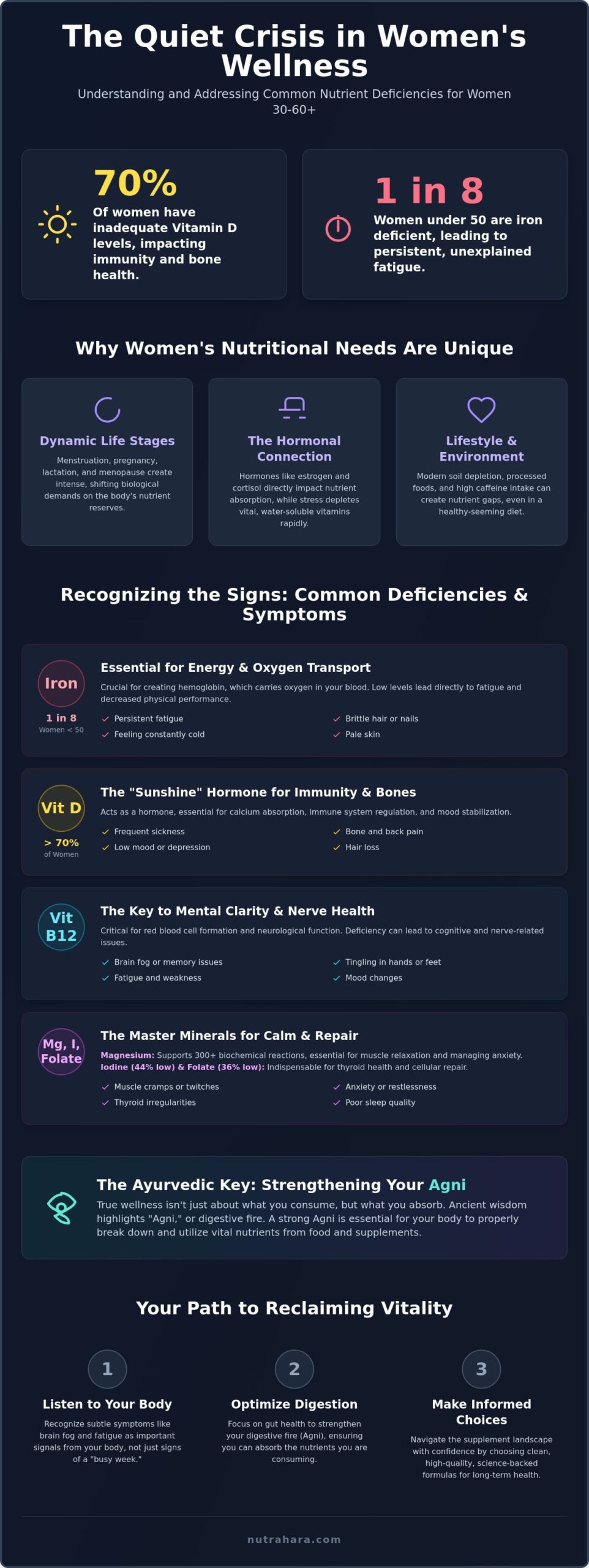
Did you know that over 70% of women are currently living with inadequate Vitamin D levels? This startling statistic, along with the fact that 1 in 8 women under 50 faces iron deficiency, highlights a quiet crisis in female wellness. You might be dedicated to your yoga practice and a clean diet, yet you still wake up feeling heavy or struggle with persistent brain fog. It’s exhausting to feel like you’re doing everything right while your body sends signals of depletion through brittle hair or unexplained mood swings. Understanding the most common nutrient deficiencies in women is the first step toward reclaiming the energy and balance you deserve.
We believe that true health is a long-term progression, not a quick fix. In this guide, you’ll discover how to identify your specific nutritional gaps by blending contemporary clinical data with the nurturing principles of ancient Ayurveda. We’ll move past the confusion of the supplement aisle to provide clear, actionable steps for your wellness journey. You’ll finish this article with the confidence to choose high-quality support that honors your body’s unique needs, helping you return to a state of radiant vitality and calm.
Key Takeaways
- Understand how unique life stages, from menstruation to menopause, create specific biological demands that influence your nutritional needs.
- Learn to recognize the subtle physical and mental signs of common nutrient deficiencies in women, such as persistent fatigue and cognitive fog.
- Discover the Ayurvedic principle of Agni and why strengthening your digestive fire is essential for absorbing vital minerals and vitamins.
- Follow a practical wellness audit to assess your current symptoms and implement actionable steps to optimize your gut health.
- Gain the confidence to navigate the supplement landscape by choosing clean, science-backed formulas that support your long-term health progression.
Understanding Nutrient Gaps: Why Women’s Nutritional Needs Are Unique
The female body isn’t static. It’s a dynamic system that shifts through distinct seasons of life, requiring a nuanced approach to nourishment that changes as we do. From the regular cycles of our 30s to the transformative transition of perimenopause and the quiet wisdom of post-menopause, our internal landscape is constantly evolving. For many women in this age bracket, these seasons also include the intense metabolic demands of pregnancy and lactation. During these times, the body prioritize the needs of the child, often drawing from the mother’s own mineral and vitamin reserves. These biological shifts require more than just a standard multivitamin. They demand a deep understanding of how physical complexity contributes to common nutrient deficiencies in women. Viewing your health as a long-term progression allows you to see these gaps as opportunities to provide your body with the specific support it craves at every stage of the journey.
The Hormonal Connection to Nutrient Depletion
Our hormones act as the master conductors of our internal orchestra. Estrogen and progesterone don’t just regulate our cycles; they significantly influence how we absorb and utilize essential minerals. During pregnancy and the postpartum period, hormonal shifts orchestrate a massive redistribution of nutrients. If intake doesn’t match this increased demand, it can lead to a Micronutrient deficiency overview. Similarly, as levels fluctuate during the perimenopausal transition, the body’s demand for antioxidants and bone-supporting minerals increases sharply. Additionally, the modern “hurry sickness” many women experience triggers a chronic release of cortisol. This stress hormone can disrupt gut health, leading to malabsorption. When digestion is compromised, even a nutrient-dense diet can fail to prevent common nutrient deficiencies in women, particularly affecting water-soluble vitamins that the body uses up rapidly during periods of high mental or emotional strain.
Environmental and Lifestyle Factors
Understanding why nutrient gaps occur also requires looking at the world around us. It’s a frustrating reality that the food on our plates today isn’t as nutrient-dense as what our grandmothers ate. Widespread soil depletion has led to a measurable decline in mineral content, especially Magnesium, in modern produce. For the active woman who finds her sanctuary on a yoga mat or through a morning run, these baseline gaps are even more significant. Physical activity increases the turnover of electrolytes and vital vitamins. Meanwhile, daily habits can act as silent thieves. Excessive caffeine can interfere with calcium absorption; processed sugars create inflammatory responses that deplete Vitamin C and B-vitamins. For women balancing career, family, or fitness, supporting the system with a high-quality Vitamin B-complex is a practical way to maintain lasting vitality and hormonal harmony against these environmental pressures.
The Most Common Nutrient Deficiencies in Women: Symptoms and Signs
Symptoms of nutritional gaps are rarely dramatic. They often begin as subtle shifts in how you feel, easily dismissed as “just getting older” or “a busy week.” However, understanding the common nutrient deficiencies in women allows you to interpret these signals before they escalate. Your body is a wise messenger. When it feels depleted, it sends quiet warnings through your energy levels, your mood, and even the texture of your skin.
Iron remains a primary concern; approximately 1 in 8 U.S. women aged 12 to 49 is deficient. This often manifests as persistent fatigue that sleep doesn’t fix, or a constant feeling of being cold even in warm rooms. Vitamin D, the “sunshine hormone,” is equally critical. Over 70% of women have inadequate levels, which can weaken immune resilience and bone density over time. Vitamin B12 is the key to mental clarity and nerve health. Without it, you might experience “brain fog,” a lack of focus, or even tingling in your hands and feet. Magnesium, the master mineral, supports over 300 biochemical reactions. It’s essential for muscle relaxation and managing the anxiety that often accompanies a busy lifestyle. Finally, iodine and folate are indispensable for thyroid health and cellular repair, yet research shows 44% and 36% of women are low in these respectively. As noted by the WHO on common deficiencies, these gaps impact health on a global scale.
Identifying Silent Symptoms
Physical markers often provide the first clues. You might notice brittle nails that peel easily, thinning hair, or the frustrating sensation of restless legs at night. Psychological markers are just as telling. Unexplained irritability, a low mood, or a noticeable cognitive lag can all point to internal depletion. A subclinical deficiency is a state where your nutrient levels are low enough to affect your well-being but haven’t yet reached a disease-state level.
Life Stage Specificity: From 30 to 60
Your needs evolve as your body moves through different seasons. In your 30s, the focus is often on iron and folate to support reproductive health and consistent daily energy. By your 40s, increasing magnesium and Vitamin D becomes vital to navigate perimenopausal shifts and maintain a sense of calm. In your 50s and 60s, prioritizing B12 and calcium is essential for bone strength and brain longevity, addressing some of the most common nutrient deficiencies in women as they age. If you’ve noticed your sleep quality declining or your muscles feeling tense, supporting your system with a targeted restorative formula can help bridge these gaps naturally.
Bridging the Gap: Integrating Modern Science with Ayurvedic Wisdom
Modern biochemistry identifies the specific vitamins and minerals our bodies lack. Ayurveda provides the methods to ensure we actually receive and use them. At Nutrahara, our core philosophy rests on this fusion. Addressing common nutrient deficiencies in women requires more than just high-dose supplements. It requires honoring your “Agni,” or digestive fire. If your Agni is weak, even the most nutrient-dense diet can leave you feeling depleted. According to Harvard on women’s nutrient needs, factors like aging and hormonal shifts change how we process essentials. We bridge this gap by using adaptogens like Ashwagandha with black pepper. These botanicals help the body manage the stress that often “burns out” our internal mineral reserves, allowing for a more balanced health progression.
Ayurvedic Principles for Nutrient Absorption
Bioavailability is the true measure of a supplement’s worth. Ayurveda teaches that warm, cooked foods are essential for enhancing mineral uptake because they support a steady digestive fire. Cold, raw meals can sometimes dampen Agni, making it harder for the body to extract vital micronutrients. We also embrace the concept of natural synergy. For example, using black pepper isn’t just about flavor. It contains piperine, which modern science confirms can significantly increase the bioavailability of other nutrients. By taking certain herbs and vitamins together, we mimic the complex, supportive structures found in nature rather than relying on isolated, synthetic compounds.
Clean Science: The Nutrahara Promise
Our commitment to purity means your body doesn’t have to work harder to filter out artificial additives or “hidden” fillers. These synthetic extras can often hinder the very wellness journey you’re trying to support. We rely on clinical validation to ensure that every traditional botanical we use meets contemporary standards for safety and efficacy. This transparent approach is central to Nutrahara’s philosophy on wellness supplements. When you choose formulas rooted in clean science, you’re investing in a long-term partnership with your body. We believe that by combining ancient health philosophies with rigorous nutritional research, we can empower every woman to reclaim her natural state of vitality and calm.
Actionable Strategies for Optimal Nutrient Absorption and Vitality
Transitioning from understanding to action is where your personal health progression takes root. While we’ve identified the common nutrient deficiencies in women, the true transformation lies in how you weave these solutions into your daily life. It’s about creating a supportive partnership with your body. You don’t need to change everything at once. Small, consistent rituals create the most profound shifts in your long-term vitality and self-esteem.
- Perform a Wellness Audit. Journal your energy levels and mood alongside your meals. This helps you see exactly where your diet might be falling short of your body’s needs.
- Optimize Gut Health. Introduce probiotics or digestive enzymes. A healthy microbiome is the gatekeeper for every vitamin and mineral you consume.
- Incorporate Mindful Movement. Focus on circulation. Movement ensures that vital minerals are efficiently delivered to your cells.
- Use Targeted Supplementation. Modern soil depletion often creates gaps. High-quality, clean support acts as a bridge to ensure your body isn’t left wanting.
- Practice Ritualistic Wellness. Turn your health journey into a daily celebration. When you approach nourishment with joy, your body responds with greater resilience.
Yoga and Meditation for Metabolic Health
Movement is a powerful tool for metabolic resilience. Specific yoga poses, such as seated or standing twists, stimulate your digestive organs and stoke your Agni. This physical activation helps combat common nutrient deficiencies in women by ensuring your system is primed for absorption. Complement this with meditation. By lowering cortisol through breathwork, you protect your body from the metabolic stress that depletes water-soluble vitamins. It’s a simple way to preserve your internal reserves.
Nutrition Tips and Tricks
Practical habits make health sustainable. The “Rainbow Plate” method is an easy way to ensure a broad spectrum of phytonutrients; aim for three distinct natural colors at every meal. Timing also matters. Take your fat-soluble vitamins, like Vitamin D, with a meal containing healthy fats for better uptake.
Real-life experiences prove the power of these shifts. Sarah, 45, found her vibrancy again: “I felt grey and exhausted for years. Focusing on my gut health and adding targeted support changed everything. I finally feel like myself again.” Similarly, Elena, 32, used these strategies during her postpartum recovery: “After my second child, I felt completely depleted. Integrating mindful movement and clean supplementation helped me regain the energy I needed to show up for my family and myself.” If you’re ready to support your body’s natural rhythms, explore our adaptogenic support to manage stress and improve nutrient uptake.
Empowering Your Wellness Journey: The Nutrahara Approach
Health isn’t a destination. It’s a continuous, beautiful unfolding of your potential. At Nutrahara, we believe that providing your body with what it needs is an act of deep self-respect. Addressing common nutrient deficiencies in women isn’t about fixing something that’s broken. It’s about optimizing a system that’s already miraculous. Our approach combines the precision of modern clinical study with the gentle wisdom of traditional herbalism. This ensures that every formula we create supports your personal health progression with purity and transparency. You’re invited to join a community of women who prioritize their longevity and self-esteem through conscious, holistic choices.
Targeted Support for Energy and Balance
Modern life demands a lot from your physical and mental reserves. When your energy flags, it’s often a signal that your internal stores need replenishment. We’ve developed specific solutions to meet these unique needs:
- Revitalize your foundation: Address persistent fatigue and support your iron levels with FemmePower, designed for the menstruating woman’s biological rhythm.
- Reclaim your focus: Support cognitive clarity and manage the impact of daily stress with FocusZenith, a blend that honors your mental well-being.
- Fuel your cells: Use our Vitamin B Complex to regulate your mood and maintain steady energy production throughout the day.
Foundational Wellness and Longevity
As you move through different life stages, your nutritional priorities naturally shift. In your 40s, 50s, and 60s, the focus moves toward protecting your structural integrity and hormonal balance. Our Premium Collagen Complex provides the essential building blocks for bone density and skin elasticity. For those seeking a sense of equilibrium during perimenopause or menopause, BlossomBliss offers a nurturing path to hormonal harmony. These aren’t just supplements; they’re tools for a vibrant, long-term health progression.
Choosing the right support starts with listening to your body’s whispers before they become shouts. Whether you’re navigating the demands of a career, motherhood, or the transition into a new season of life, your needs are valid and specific. We’re committed to total transparency, ensuring our formulas are free from artificial additives and synthetic fillers. This commitment to purity means you can feel confident in the quality of what you’re putting into your body. You’re the architect of your own vitality; we’re simply here to act as your wise and caring guide. By understanding and addressing the common nutrient deficiencies in women, you take the lead in your own wellness story, building a foundation of health that lasts a lifetime.
Embrace Your Most Vibrant Self
You now have the insights to interpret your body’s unique language and the tools to respond with deep care. By honoring your internal digestive fire and choosing support rooted in both ancient wisdom and modern research, you can effectively address common nutrient deficiencies in women. Your health isn’t a static goal; it’s a personal, ongoing journey of discovery and replenishment. We’re honored to walk this path with you, providing the purity and clinical validation your body deserves.
Our clinically validated Ayurvedic formulas are crafted to be free of artificial fillers and additives, ensuring you receive only what’s necessary for your vitality. Trusted by thousands of women on their health journey, Nutrahara represents a commitment to simplicity and efficacy. Elevate your wellness journey today. Shop the Nutrahara Collection.
You’re the architect of your own longevity and well-being. Trust in your body’s wisdom and take the next step toward a more balanced, radiant life. We’re here to guide you every step of the way.
Frequently Asked Questions
What are the most common vitamin deficiencies in women over 40?
Vitamin D, Vitamin B12, and Magnesium are the most frequent gaps found in women as they enter their 40s. During this life stage, hormonal shifts increase the body’s demand for bone-supporting nutrients and cognitive fuel. Inadequate Vitamin D levels affect over 70% of women, while B12 becomes harder to absorb as digestive enzymes naturally decline with age.
How can I tell if I have a nutrient deficiency without a blood test?
Your body provides subtle physical and psychological clues that act as early warning signs. Brittle nails, thinning hair, and persistent fatigue despite adequate sleep are often the first whispers of common nutrient deficiencies in women. You might also notice “silent” symptoms like restless legs at night or unexplained irritability that signals a need for mineral replenishment.
Can yoga really help with nutrient absorption?
Yoga supports absorption by stimulating your digestive organs and enhancing your internal “Agni” or digestive fire. Specific poses, especially twists and forward folds, increase blood flow to the gut and help regulate the nervous system. When you’re in a relaxed state, your body can more efficiently process and utilize the vitamins and minerals from your nourishment.
Is it better to get vitamins from food or supplements?
A “food first” approach is always the foundation, but supplements act as a vital bridge in the modern world. While whole foods provide complex phytonutrients, widespread soil depletion has reduced the mineral content in much of our produce. Clean, targeted supplements ensure you meet your daily requirements even when stress or lifestyle factors deplete your natural stores.
What are the symptoms of low magnesium in women?
Low magnesium typically manifests as muscle tension, sleep disturbances, and increased anxiety. You might experience frequent muscle cramps, chocolate cravings, or a racing heart during times of stress. Because magnesium is involved in over 300 biochemical reactions, its depletion can make you feel both “tired and wired” at the same time.
How long does it take to feel better after starting a supplement regimen?
Most women begin to notice subtle shifts in energy within three to four weeks of consistent use. However, it generally takes about three months to fully replenish your cellular stores and see significant changes in hair, skin, or mood. View this as a long-term health progression rather than a quick fix for your vitality.
Are Ayurvedic supplements safe to take with modern vitamins?
Ayurvedic botanicals are generally safe and often work in synergy with modern nutritional science. Herbs like Ashwagandha or black pepper actually enhance the bioavailability of common nutrient deficiencies in women by supporting better uptake. It’s essential to choose formulas that are free of artificial fillers to ensure your body processes both traditional and modern nutrients cleanly.
What vitamins should I take for menopause brain fog?
A high-quality Vitamin B-complex and Omega-3 fatty acids are the best tools for clearing menopausal cognitive lag. B-vitamins support the production of neurotransmitters that regulate focus and mood, while antioxidants help protect brain cells from oxidative stress. Supporting your system with these nutrients can help stabilize your mental clarity as estrogen levels fluctuate.
Disclaimer
This article is not a substitute for medical advice. Please consult a healthcare professional before starting any supplement, especially if pregnant, nursing, taking medication, or managing health conditions.