

A balanced meal with vegetables, fiber-rich carbohydrates, protein, and healthy fats is a practical foundation for steadier blood sugar. Food choices matter, but they’re only part of the picture. Sleep, stress, movement, and individual health needs also affect how your body responds.
For women, health needs can shift during menstruation, pregnancy, lactation, perimenopause, and post-menopause. A routine that works at one life stage may need adjusting at another. Pay attention to your energy, symptoms, and daily patterns rather than expecting one approach to suit everyone.
This guide covers practical food and fiber choices, factors that may raise blood sugar in people without diabetes, and how to interpret readings against personal targets. It also offers ideas for incorporating movement and calming practices, such as yoga or meditation, into a wellness routine while keeping individual health needs in view.
Key Takeaways
- Build meals around vegetables, fiber-rich carbohydrates, protein, and healthy fats; learn how to calculate net carbohydrates and why portion size still matters.
- Exercise, sleep, and stress can influence blood sugar even without diabetes. Explore practical movement and relaxation habits that may support steadier levels.
- Beans and lentils offer soluble fiber and resistant starch. See how these can slow digestion and help moderate the rise in blood sugar after meals.
- For most non-pregnant adults with diabetes, the American Diabetes Association’s pre-meal target is 80 to 130 mg/dL. Understand how targets are used alongside personal health needs.
1. What are the Best and Worst Foods to Balance Blood Sugar?
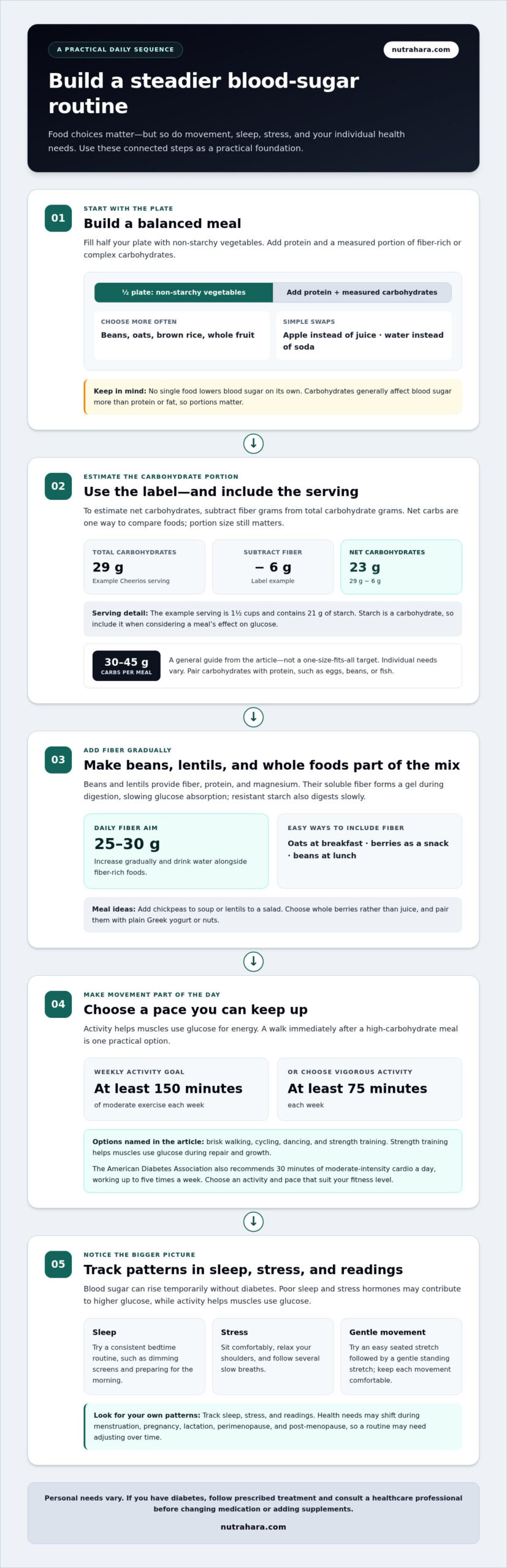
For balancing blood sugar naturally, build meals around vegetables, protein, and fiber-rich carbohydrates. Beans, oats, and brown rice are complex carbohydrate choices, while sugary snacks, white bread, and sweet drinks are more refined. Carbohydrates generally affect blood sugar more than protein or fat, so portions matter. No single food lowers blood sugar on its own.
To estimate net carbohydrates, subtract fiber grams from total carbohydrate grams on the Nutrition Facts label. A Cheerios serving with 29 grams of total carbohydrates and 6 grams of fiber has 23 grams of net carbohydrates. The example serving of one and a half cups contains 21 grams of starch. Starch is a carbohydrate, so include it when considering a meal’s effect on glucose.
The glycemic index ranks carbohydrate foods by how quickly they may raise blood sugar. It can help compare foods, but it doesn’t account for portion size or foods eaten alongside them. Pair carbohydrates with protein, such as eggs, beans, or fish, to slow digestion and glucose release. Around 30 to 45 grams of carbohydrates per meal is a general guide, though needs vary.
For a simple meal-planning step, fill half your plate with non-starchy vegetables, then add protein and a measured portion of complex carbohydrates. Choose whole fruit, such as an apple, instead of juice, and water instead of soda. This balanced approach can support efforts to balance blood sugar naturally.
High blood sugar may be associated with hyperglycemia; a reading below 70 mg/dL is considered low, and below 54 mg/dL is moderate hypoglycemia. If low blood sugar symptoms occur on multiple days, have your blood sugar checked. Seek medical care if glucose is higher than 300 mg/dL and isn’t responding to usual diabetes management. If you have diabetes, follow prescribed treatment and consult a healthcare professional before changing medication or adding supplements.
2. What Causes High Blood Sugar Without Diabetes?
Blood sugar can rise temporarily without diabetes. Poor sleep and stress hormones may contribute to higher glucose levels, while activity helps muscles use glucose for energy. A demanding day after a restless night can bring both influences together. Tracking sleep, stress, and readings can help reveal patterns as you work on balancing blood sugar naturally.
Movement helps the body use glucose and can improve insulin sensitivity. Adults should aim for at least 150 minutes of moderate exercise each week, or at least 75 minutes of vigorous exercise. Brisk walking, cycling, and dancing are options. Strength training also helps muscles use glucose during repair and growth. Choose an activity that suits your fitness level and build consistency.
Timing can make exercise easier to fit into the day. A walk immediately after a high-carbohydrate meal is one practical option, as active muscle cells use glucose for energy. The American Diabetes Association recommends 30 minutes of moderate-intensity cardio a day, working up to five times a week, to benefit insulin regulation and blood glucose levels. A comfortable pace can make regular activity more sustainable.
Sleep and stress matter, too. Inadequate sleep is linked with higher blood sugar and may contribute to insulin resistance. Try a consistent bedtime routine, such as dimming screens and preparing for the morning. For a short meditation pause, sit comfortably, relax your shoulders, and follow several slow breaths. Gentle yoga can also help release tension: try an easy seated stretch followed by a gentle standing stretch, keeping each movement comfortable.
For a clear weekly goal, work toward at least 150 minutes of moderate physical activity, or 75 minutes of vigorous activity. A post-meal walk can be a convenient time to move; regularity matters more than finding a perfect hour. People with type 1 diabetes, those with type 2 diabetes who take insulin, or those who often have low blood sugar may need to check levels before and after activity.
3. Beans, lentils, soluble fiber, and resistant starch
Beans and lentils provide fiber, protein, and magnesium in one practical food choice. Their soluble fiber forms a gel during digestion, slowing glucose absorption and helping moderate post-meal spikes. Resistant starch also digests slowly, so adding chickpeas to soup or lentils to a salad can make a meal more filling. These foods support healthy nutrition, but they don’t replace diabetes treatment or prevent every disease.
Fiber comes in two broad forms. Soluble fiber, found in oats, beans, and berries, can slow the release of sugar into the bloodstream. Insoluble fiber, found in foods such as vegetable skins and whole grains, adds bulk to stool and supports regular digestion. Include a mix: add oats at breakfast, berries as a snack, and beans at lunch.
A practical daily fiber aim is 25-30 grams. Increase fiber gradually and drink water alongside foods such as lentils, pears, and whole-grain bread. This gradual approach can help your digestion adjust. Fiber-rich meals can also support fullness, which may help with weight management as part of an overall healthy eating pattern.
Blueberries and strawberries provide fiber and antioxidant compounds. Choose whole berries rather than juice, and pair them with plain Greek yogurt or nuts for a more balanced snack. Two to three servings of fruit per day is a general guide; whole fruit provides fiber that juice often lacks.
Fiber supplements, including viscous fiber, may affect blood sugar and A1C, but they aren’t a substitute for foods or prescribed care. Before adding a supplement, discuss it with your doctor, especially if you take medication or manage diabetes. A simple first step is to add one fiber-rich food to a meal, such as beans in a grain bowl, then notice how your body responds.
4. Blood sugar targets
A blood glucose target is a guide for interpreting readings, not a score for judging your effort. For most non-pregnant adults with diabetes, the American Diabetes Association’s target blood glucose range before a meal is 80 to 130 mg/dL. These targets help show whether eating patterns, activity, or insulin align with an agreed care plan.
For most non-pregnant adults with diabetes, the target after eating is less than 180 mg/dL. A hemoglobin A1C test estimates average blood sugar over three months; the A1C target is below 7% for most non-pregnant adults with diabetes. A single reading captures one moment, while A1C offers a longer view. Together, they help reveal whether changes happen around meals or persist over time.
Targets can differ with health needs. An A1C below 6.5% may suit people newly diagnosed, generally healthy, and at low risk of low blood sugar. A target below 8% may be used for older adults or people with serious health conditions. These distinctions matter because insulin, other medicines, and low blood sugar risk shape what is practical and safe.
To spot patterns, record blood glucose alongside meal timing, activity, stress, and symptoms. Compare readings taken at similar times, such as before breakfast on different days, rather than judging a single result. Stress hormones can influence glucose, so note stressful days when reviewing an unexpected reading.
Use targets as reference points and look for patterns with your healthcare team. For example, repeated readings above your personal range after eating may prompt a review of meal portions, medication timing, or activity. Don’t change prescribed insulin or other treatment based on a single reading. If you’re pregnant, targets require particular care; the figures above apply to non-pregnant adults. Keeping a steady record can make conversations about blood sugar more specific and useful.
Nutrahara: Women’s Health Supplements
Nutrahara offers Women’s Health Supplements for women looking to complement their everyday wellness routines. Supplements may be one addition alongside nourishing meals, movement, and restorative sleep, but they don’t replace medical care or prescribed treatment. If you’re considering a supplement while managing blood sugar, pregnancy, or medication use, discuss it with a healthcare professional first.
Women’s needs can change during menstruation, pregnancy, lactation, and menopause, so wellness routines may shift, too. Nutrahara’s formulations combine Ayurvedic principles with modern nutritional research. Explore Nutrahara’s Women’s Health Supplements at nutrahara.com.
Build a Routine That Grows With You
Your approach to balancing blood sugar naturally can evolve as your energy, activity, and daily rhythms change. Rather than aiming for perfect choices, choose one small, sustainable habit, such as planning a nourishing breakfast or making time for a few minutes of mindful breathing. Notice what feels supportive and adjust your routine with care.
Women’s wellness priorities can shift through different life stages. A steady, compassionate approach leaves room for change while keeping your health goals in view. Nutrahara offers Women’s Health Supplements as one option within a broader wellness routine. Supplements don’t replace prescribed care. If you’re managing diabetes or taking medication, discuss any additions with a healthcare professional.
When you’re ready to explore Nutrahara’s approach to women’s wellness, contact Nutrahara to discuss your needs. Each thoughtful step can help you feel more informed and confident in your ongoing health journey.
Frequently Asked Questions
What are the Best and Worst Foods to Balance Blood Sugar?
Meals combining vegetables, protein, and fiber-rich carbohydrates are useful choices; sugary drinks and heavily refined snacks are less supportive. For example, choose a vegetable omelet with whole-grain toast instead of a sweet pastry and soda. The best fit depends on portions, the rest of the meal, and your health needs, so consider the whole plate rather than labeling any food universally “bad.”
How do carbohydrates (carbs) affect blood sugar?
Carbohydrates are broken down into sugar that enters the bloodstream, so they generally affect blood glucose more directly than protein or fat. They include starches and sugars in foods and drinks, from rice and fruit to sweetened tea. A useful everyday step is to compare carbohydrate amounts on labels and notice how meal size and accompanying foods relate to your readings.
What Causes High Blood Sugar Without Diabetes?
Stress and insufficient sleep can contribute to higher blood sugar, even in someone without diabetes. Stress hormones can raise glucose, while poor sleep is linked with higher sugar levels and may contribute to insulin resistance. If a reading is elevated after a stressful night or difficult day, note that context alongside the result. Repeated high readings are a reason to seek medical assessment.
What Fruits Can a Person with Diabetes Eat?
People with diabetes can include whole fruit, such as berries or an apple, in a balanced eating pattern. Whole fruit provides fiber, while juice is easier to drink quickly and lacks the same structure as whole fruit. Try berries with plain yogurt or an apple as a snack. Two to three servings of fruit per day is a general guide, adjusted to personal needs.
What is Glucose?
Glucose is a simple sugar and the body’s main source of energy. It comes from food, especially carbohydrate-containing foods, and travels through the blood to cells. A blood glucose test measures how much glucose is circulating at a particular time. For a clearer picture, note whether the reading was taken before eating, after a meal, or at another point in your daily routine.
Why Is Regulating Your Blood Sugar Important?
Keeping blood sugar within an appropriate range helps the body manage its main fuel source and supports safer diabetes care. Persistently high or low readings can matter, so patterns are more useful than reacting to one isolated result. Recording readings with meal timing, activity, and symptoms can help you and your healthcare team make informed decisions about daily habits and prescribed treatment.
Disclaimer
This article is not a substitute for medical advice. Please consult a healthcare professional before starting any supplement, especially if pregnant, nursing, taking medication, or managing health conditions.