

Lutein may support skin hydration, tone, firmness, and elasticity, while research also explores its role in the skin’s response to light. For women in their 30s through 60s, skin-care priorities can shift with menstrual changes, pregnancy, lactation, perimenopause, and post-menopause. The lutein benefits for skin are an emerging area of study, not a substitute for sun protection or individualized care.
If changes in skin texture or uneven tone have you curious about nutritional support, start by looking at what research has actually measured. Lutein may be one part of a broader wellness routine, alongside nourishing meals and skin-care habits that suit your needs.
This article reviews evidence on lutein and skin tone, firmness, elasticity, and hydration, then looks at possible responses to UV and other light exposure. You’ll also learn how to interpret the findings and distinguish potential support from proven sun protection.
Key Takeaways
- Build lutein into your diet with leafy greens and other colorful foods, and learn how food sources compare.
- Explore what research suggests about lutein and zeaxanthin’s potential effects on skin tone, hydration, firmness, and elasticity.
- Understand how these carotenoid antioxidants may help the skin respond to light-related stress.
- See why findings about UV exposure are encouraging, while sun-protection habits remain important.
- Learn how to interpret the evidence and consider where nutrition and supplements may fit into your overall wellness routine.
What are the health benefits of lutein?
Lutein is a carotenoid, a pigment that plants synthesize. The human body doesn’t produce it, so food or supplements must supply it. Hundreds of carotenoids occur in nature, but fewer than 20 are found in the human body. Lutein is one of them, alongside zeaxanthin, a related carotenoid.
These compounds have different roles in different tissues. In the eye, lutein and zeaxanthin filter high-energy visible light and act as antioxidants against reactive oxygen species and free radicals. That protective function has made them a focus of eye-health research. A National Eye Institute study found that a nutrient combination containing lutein reduced progression from moderate to late age-related macular degeneration by 25%. The finding concerns a combination of nutrients, not lutein alone.
Lutein also occurs naturally in a variety of colorful foods. Dark leafy vegetables are especially useful options, while yellow bell peppers, corn, and egg yolks add variety. Spinach and kale provide both lutein and zeaxanthin, making them easy to include in meals. For example, add spinach to eggs or serve kale alongside a grain bowl.
- One cup of cooked kale contains 23 mg of lutein and zeaxanthin.
- One cup of cooked spinach contains 20 mg of lutein and zeaxanthin.
- One cup of cooked turnip greens contains 12 mg of lutein and zeaxanthin.
Those figures refer to lutein and zeaxanthin together, not lutein alone. Eggs contain lower levels of these carotenoids than leafy vegetables, but the lutein and zeaxanthin in eggs are more bioavailable, meaning the body can absorb them more readily. Including both eggs and greens brings different food sources into a balanced eating pattern.
For a practical routine, Cleveland Clinic’s dietitian advises aiming for five servings of fruits and vegetables each day to get more lutein naturally. Rotate spinach, kale, corn and yellow bell peppers across meals, rather than relying on one food. Some experts recommend at least 6 mg of lutein daily for general health. Americans consume about 1-2 mg daily, according to the research summary. These figures help put everyday food choices in context, but they aren’t a personalized target.
Supplements are another source, while food lets you include lutein as part of a meal. Lutein supports antioxidant activity, but it isn’t a treatment for disease. Research into possible skin effects is separate from lutein’s established role in the eye, and the evidence varies by outcome.
Lutein’s effects on skin tone, firmness, and elasticity
Clinical studies have examined lutein alongside zeaxanthin in relation to skin appearance and hydration. Reported outcomes include changes in tone, brightness, elasticity, and moisture during supplementation.
Skin Tone and Firmness
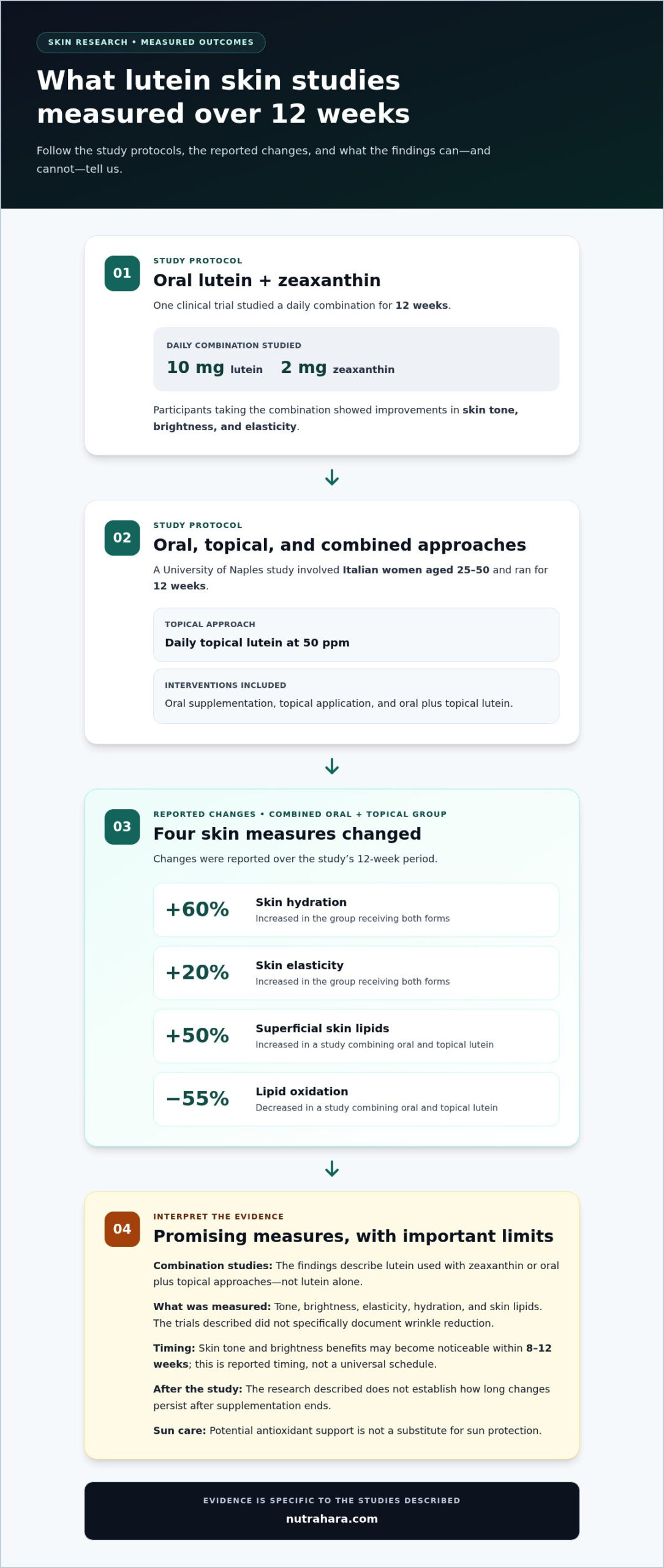
Skin tone describes the evenness and brightness of the complexion, while firmness reflects how resilient skin feels. In a clinical trial, participants taking 10 mg of lutein and 2 mg of zeaxanthin daily for 12 weeks showed improvements in skin tone, brightness, and elasticity. These measures matter because changes in hydration and elasticity can affect how smooth and supple skin appears. The findings describe a combined supplement, not lutein alone.
Wrinkles and Skin Changes
Research suggests lutein may support skin moisture retention and help counter oxidative stress, factors relevant to visible aging. However, the trials described measured tone, brightness, elasticity, hydration, and skin lipids, rather than documenting wrinkle reduction specifically. When assessing changes, distinguish measured outcomes from broader claims about wrinkles. Skin appearance reflects several factors, so one result isn’t proof of every anti-aging effect.
A University of Naples study involved Italian women aged 25 to 50 years and tested daily topical lutein at 50 ppm over a 12-week period. The study also included oral and combined oral-plus-topical interventions. In the group receiving both forms, skin hydration increased by 60 per cent and elasticity by 20 per cent over the 12-week period. These results offer a useful example of measured changes, but they relate to that study’s specific participants and approach.
For oral supplementation, the studied daily combination was 10 mg of lutein and 2 mg of zeaxanthin for 12 weeks. Skin tone and brightness benefits may become noticeable within 8-12 weeks of lutein and zeaxanthin supplementation. These figures describe research protocols and reported timing, not a universal dose or schedule. The clinical findings concern lutein with zeaxanthin, so they don’t show that lutein by itself produces the same effects.
Hydration, elasticity, and inflammation are related but distinct outcomes. Research reports that lutein and zeaxanthin supplements may improve skin hydration, elasticity, and inflammation. In a study combining oral and topical lutein, superficial skin lipids increased by 50 per cent, while lipid oxidation decreased by 55 per cent over the 12-week period. Those measures add context to the hydration findings, but they don’t answer how long changes last after supplementation ends. The studies described changes during treatment; they don’t establish how long benefits persist afterward.
Protection from light-induced skin damage
Lutein and zeaxanthin may help the skin respond to light-related stress, including UV exposure. Evidence varies by light type and study design, so distinguish potential antioxidant support from direct sun protection.
Light Absorption and Skin Aging
Blue light is high-energy visible light that lutein and zeaxanthin can absorb in the eyes. These carotenoids may also help protect skin, potentially slowing some visible signs of aging. That possibility is relevant to everyday exposure, but it doesn’t establish that screen light causes skin aging or that lutein prevents it. Findings about these pigments’ effects in the macula and research on macular degeneration concern eye health, not proof of skin outcomes.
UV and Blue-Light Protection
UV light and blue light are different forms of exposure, and evidence about their skin effects isn’t interchangeable. Lutein and zeaxanthin are present in human skin, while animal studies have found evidence of protection against light-induced skin damage, particularly from ultraviolet wavelengths. This provides a biological reason for interest, but animal findings don’t establish the same effect in people.
For comparisons with astaxanthin, beta-carotene, and sunscreen, the findings described here suggest possible light-related support from lutein and zeaxanthin, but don’t establish that they outperform the other carotenoids. Sunscreen is applied to the skin for UV protection. Lutein is not a substitute.
Blue light also has a separate relationship with sleep. In the comparison described, blue light suppressed melatonin release almost twice as long as green light. Melatonin helps regulate natural sleep rhythms, so evening light exposure may matter for rest as well as skin research. This finding concerns melatonin release, not proof that lutein changes sleep or prevents screen-related skin damage.
Practical choices still matter. Use sunscreen as directed for UV protection, and consider screen habits as part of a broader routine. Taking a break from bright screens before bed can support a calmer wind-down, while lutein-rich foods contribute to dietary antioxidant intake. None of these steps makes the others unnecessary.
Overall, lutein’s most compelling skin-related light-protection story is its potential antioxidant role, supported by its presence in skin and animal findings on UV-induced damage. Distinguish human skin outcomes from eye-health evidence and laboratory or animal results. This careful reading helps keep expectations grounded while researchers continue to study how carotenoids interact with different light exposures.
Lutein and zeaxanthin as skin antioxidants
Lutein and zeaxanthin are fat-soluble antioxidants in the carotenoid family. Antioxidants help counter oxidative stress from reactive oxygen species and free radicals. These compounds occur in human skin and the eye, tissues exposed to different forms of environmental stress. Their presence is one reason researchers study how carotenoids support the body’s natural defenses.
In skin, lutein has been studied for its role in supporting the natural antioxidant system. Oxidative stress describes an imbalance between reactive molecules and the body’s defenses. For example, light exposure can create oxidative stress in skin. Antioxidant activity helps explain why researchers investigate lutein and zeaxanthin in relation to skin quality, rather than treating them only as pigments in food.
The eye offers another example of how these carotenoids function. Lutein and zeaxanthin filter high-energy visible light there and act against free radicals. In skin, studies focus on antioxidant support and overall appearance. The two settings are related through carotenoid activity, but eye-health findings shouldn’t be treated as direct evidence of a particular skin outcome.
Some cosmetic products combine lutein with zeaxanthin to support overall skin quality and appearance. Research has also examined oral and topical use, including an approach that used both forms. These methods involve different routes of exposure: topical products are applied to the skin, while oral supplements are taken. That distinction matters when reading study results, since a finding from one approach doesn’t automatically apply to the other.
Dietary choices offer a simple foundation for including carotenoids. A meal with leafy vegetables or colorful produce provides food-based sources, while supplements offer another way to take lutein. Because lutein is fat-soluble, taking it with a high-fat meal supports absorption. This practical detail helps explain why the meal accompanying a supplement can matter, without turning a study dose into a personal recommendation.
When comparing products or research claims, focus on what was measured: antioxidant activity, hydration, elasticity, or appearance. These are distinct outcomes. A cosmetic formula containing lutein and zeaxanthin doesn’t make every antioxidant claim equivalent, and evidence about eye function doesn’t settle questions about skin. Read the ingredient combination, route of use, and measured outcome together to understand what a study actually addresses.
Evaluating each specific study outcome can keep comparisons grounded. Lutein and zeaxanthin supplementation can improve skin firmness and elasticity and may affect melanin formation; a double-blind study of oral antioxidants and skin health lasted 2 months.
Lutein and skin’s response to UV exposure
UV exposure can trigger oxidative stress in skin, prompting interest in nutrients that support its natural defenses. Previous studies suggest lutein may help protect skin against sun damage, but the evidence doesn’t establish it as a replacement for sunscreen. Looking closely at a study’s design helps clarify what researchers tested and what its findings can support.
One study tested a daily oral lutein dose of 10 mg over a 12-week period. Participants were also provided sunscreen with SPF 20. This design evaluated lutein alongside a topical sun-protection measure. It doesn’t show that lutein alone protects skin from UV exposure, or that supplements can replace sunscreen.
That distinction matters in daily life. Sunscreen is applied to the skin, while oral lutein is taken as a nutrient. The study’s SPF 20 sunscreen provision indicates that UV protection remained part of the research setup. It would be misleading to treat oral lutein as a shield that makes sun-protection habits unnecessary.
Researchers are interested in how lutein may support the skin’s response to UV-related oxidative stress and inflammation. Antioxidants help counter reactive molecules, offering a possible explanation for interest in carotenoids. Still, a proposed mechanism isn’t proof of a specific effect in people. The study details here identify a dose and sunscreen provision, not a measured percentage reduction in sun damage.
Food can contribute lutein as part of a broader pattern of nutrient intake. For example, spinach and kale contain lutein, while colorful fruits and vegetables add variety to meals. These foods support dietary diversity, but shouldn’t be presented as direct UV protection. Their role differs from applying sunscreen before outdoor exposure.
The clearest takeaway is to keep the evidence in proportion: lutein has been studied as potential nutritional support, including alongside SPF 20 sunscreen, but it isn’t a substitute for topical protection. If you’re considering supplements for skin, distinguish study protocols from everyday use, and treat sunscreen as a separate part of your UV-care routine.
Nutrahara: Women’s Health Supplements
Nutrahara offers Women’s Health Supplements for women looking to support overall wellness, energy, and health as part of daily life. The supplements combine principles of Ayurveda with modern nutritional research and use natural, clean ingredients. To build a gentle wellness rhythm, try a few yoga stretches followed by quiet meditation or breathing practice at a time that fits your day. These practices can support a consistent routine without replacing nutrition or skin care. The skin research discussed here doesn’t establish that Nutrahara’s supplements contain lutein or provide a specific skin effect. Explore Nutrahara’s approach at nutrahara.com.
Choose a Skin-Wellness Routine That Fits Your Life
Your next step can be simple: decide what you want your routine to support, then choose habits you can maintain. Briefly noting your meals, skin-care steps, and supplement use can help you spot patterns without assuming every change has one cause. For women navigating different life stages, including pregnancy, lactation, or menopause, wellness priorities may shift over time.
The potential lutein benefits for skin are one consideration, not a reason to overhaul your routine or rely on supplements alone. If you’re considering lutein, discuss it with a healthcare professional, especially during pregnancy or lactation or if you take medication. Keep daily sun-protection habits as a separate part of skin care.
For a thoughtful next step, contact Nutrahara to discuss lutein and explore how women’s health supplements may fit your wellness goals. Take your time, stay curious, and build a routine that feels sustainable for you.
Frequently Asked Questions
How can you get more lutein in your diet?
Include lutein-containing foods in meals you already enjoy, such as adding spinach to an omelet or serving kale with dinner. Because lutein is fat-soluble, having it with a meal that contains fat can support absorption. Rotate different fruits and vegetables through your meals for variety. If you’re considering a supplement, treat it as an option separate from food, not a replacement for it.
Is lutein safe?
Lutein supplements are generally considered safe, but there are effects to consider. They may lower blood sugar, and very large amounts of lutein and zeaxanthin can cause yellow-orange skin discoloration. If you’re considering a supplement, discuss it with a healthcare professional, especially if you take medication or manage blood sugar. Dose and other ingredients also matter when deciding whether a supplement suits your routine.
What Are Lutein and Zeaxanthin?
Lutein and zeaxanthin are related, plant-derived carotenoids obtained through food or supplements. Both occur in the eye and have antioxidant activity there, but they’re distinct compounds. For example, when a study tests them together, its findings can’t show that either compound alone caused an outcome. Leafy greens, colorful produce, and egg yolks are examples of foods that provide these nutrients.
What does research say about lutein benefits for skin?
Research suggests lutein, often studied alongside zeaxanthin, may support skin hydration, tone, brightness, and elasticity. Studies also examine antioxidant activity and responses to light. Results depend on the study’s methods and measured outcomes, including whether participants used oral supplements, topical lutein, or both. These findings don’t establish that lutein prevents wrinkles or produces the same visible changes for everyone.
How does lutein protect skin from UV damage and blue light?
Lutein and zeaxanthin may support antioxidant defenses against light-related stress, but evidence varies by exposure type. Animal studies have examined protection from light-induced skin damage, particularly from ultraviolet wavelengths. Blue-light research includes possible skin effects, while separate findings concern melatonin release. These lines of evidence don’t make lutein a replacement for sunscreen, and findings about the eye aren’t direct proof of skin protection.
What is the evidence for taking lutein supplements for skin health?
Human studies have examined lutein with zeaxanthin and measured outcomes such as skin tone, brightness, hydration, and elasticity. Other research combined oral supplements with topical lutein, so its findings can’t be attributed to oral use alone. Study protocols aren’t personal dosing recommendations. Before adding a supplement, discuss it with a healthcare professional and consider whether its ingredients and intended use fit your circumstances.
What foods are high in lutein and how much lutein do they contain?
Cooked leafy greens are useful sources, though these figures combine lutein and zeaxanthin rather than measuring lutein alone. One cup of cooked kale contains 23 mg, cooked spinach contains 20 mg, and cooked turnip greens contain 12 mg. Corn, yellow bell peppers, and egg yolks also contribute carotenoids. Eggs contain lower levels than leafy vegetables, but their lutein and zeaxanthin are more bioavailable.
How does lutein compare with astaxanthin, beta-carotene, and topical sunscreen for skin protection?
Lutein and zeaxanthin may offer antioxidant support against light-related stress, but findings don’t show that they outperform astaxanthin or beta-carotene. Sunscreen is applied to the skin for UV protection, and lutein is not a substitute.
Disclaimer
This article is not a substitute for medical advice. Please consult a healthcare professional before starting any supplement, especially if pregnant, nursing, taking medication, or managing health conditions.