Vitamin D deserves attention before menopause, not only later in life. For vitamin D for pre-menopausal women, the recommended daily intake is 600 IU. Understanding how this nutrient fits into your overall health can help you make more informed choices as your needs and routines change.
Questions about menstrual cycles and reproductive health are common. The relationship between vitamin D, hormones, and these experiences is more nuanced than a single supplement recommendation can capture. Separating established roles from areas still being studied makes the evidence easier to understand.
This article explains vitamin D’s health roles, daily recommendations, and how blood tests assess vitamin D status. It also covers what is known about menstrual and reproductive health, providing a grounded starting point for conversations about your wellbeing and next steps.
Vitamin D supports bone, muscle, immune, and nervous system function. These roles matter before menopause, when habits that support strength and everyday movement can contribute to long-term wellness.
Bone density measures the mineral content of bone, and low density can raise osteoporosis risk. Vitamin D helps the body absorb calcium, supporting the process of maintaining bone. Up to 20% of bone loss can occur after menopause. Women may lose about 2% of bone each year during the first four to five years after their final menstrual period. This makes bone health relevant before periods stop, alongside adequate calcium and other nutrients.
Vitamin D contributes to muscle function, immune activity, and nervous system function. Levels below 50 nmol/L are associated with age-related muscle weakness and muscle mass loss. Levels below 29 ng/ml have been linked with poorer lower-body function, particularly in women. For an active routine, muscle function supports everyday movement, from walking to yoga. Vitamin D also plays a role in mood, but it isn’t a stand-alone mood treatment.
Vitamin D2 and D3 are different supplement forms; D3 is more effective at raising and maintaining stable blood levels. Take D3 with food containing fat to support absorption.
Fatty fish, egg yolks, and fortified milk or plant-based drinks can provide vitamin D. The amount varies by serving and fortification, so check the package for the quantity in a specific food.
Some medications and health conditions can affect whether supplements are suitable. A history of kidney stones is relevant when considering vitamin D with calcium, so discuss supplements with your doctor.
In the United States, premenopausal women should get 600 IU of vitamin D per day. This is the recommended daily intake, not a dose that every woman must take as a supplement. Food, fortified products, and supplements can all contribute. The daily target for vitamin D for pre-menopausal women is a useful reference when reviewing your overall intake.
The adult tolerable upper intake level is 4,000 IU per day unless a person is under active medical supervision. This is a ceiling, not a target. Higher doses can be detrimental to bone health, and taking more does not automatically correct a deficiency. Count vitamin D from your regular sources before adding another supplement.
Should premenopausal women take vitamin D with calcium, and how much calcium is recommended? They may take both, but supplements aren’t necessary for everyone. Premenopausal women should get 1,000 mg of elemental calcium per day. Since vitamin D helps the body absorb calcium, consider food and supplements together rather than assuming more is better.
Estrogen regulates vitamin D metabolism, and both interact in relation to bone health. This connection doesn’t mean vitamin D supplements change estrogen levels or act as hormone treatment. For vitamin D for pre-menopausal women, consider the recommended intake alongside personal circumstances and any blood-test results.
If a blood test finds low levels, a healthcare provider may prescribe a higher vitamin D3 dose for several weeks or months, then recommend a lower maintenance dose and repeat blood work. That supervised correction plan differs from routine self-supplementation. The measured level and treatment plan guide the dose, while the upper intake limit applies to adults outside active medical supervision.
For a consistent routine, read supplement labels, include fortified foods in your estimate, and avoid combining products that each contain vitamin D. This check helps keep your intake aligned with your needs without treating higher doses as a shortcut.
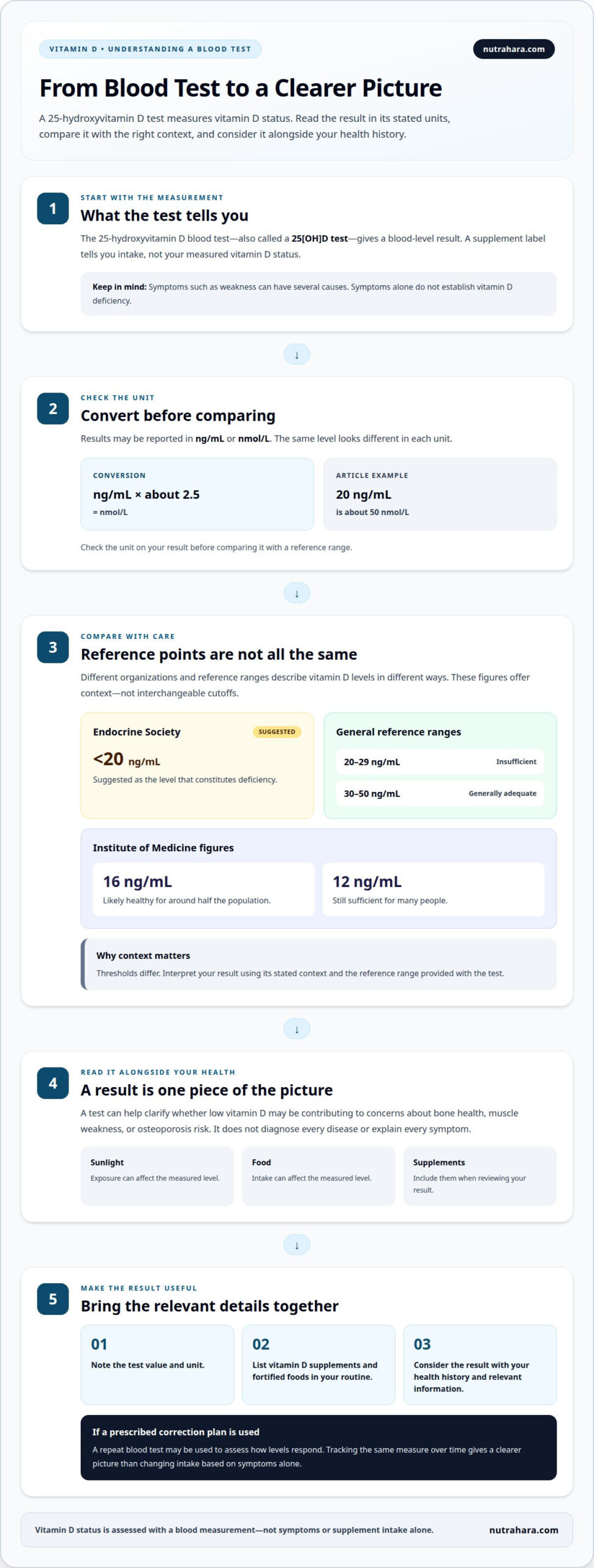
A 25-hydroxyvitamin D blood test, also called a 25[OH]D test, measures vitamin D status. It gives a blood-level result, unlike a supplement label, which records intake. During perimenopause, symptoms such as weakness can have several causes, so they don’t establish a vitamin D deficiency by themselves. The test offers a specific measurement to consider alongside health history and other relevant information.
Results may appear in ng/mL or nmol/L. To convert between them, multiply the ng/mL value by approximately 2.5 for nmol/L. For example, 20 ng/mL is about 50 nmol/L. Check the unit before comparing a result with a reference range, since the same level looks different when expressed in another unit.
Reference points can differ. The Endocrine Society has suggested that a level below 20 ng/mL constitutes deficiency. In general reference ranges, 20-29 ng/mL is considered insufficient, while 30-50 ng/mL is generally considered adequate. The Institute of Medicine’s figures offer another perspective: 16 ng/mL is likely healthy for around half the population, and 12 ng/mL is still sufficient for many people. These thresholds aren’t interchangeable, so interpret a result using its stated context.
A test result can help clarify whether low vitamin D may be contributing to concerns about bone health, muscle weakness, or osteoporosis risk. It doesn’t diagnose every disease or explain every symptom. Sunlight exposure, food intake, and supplements can all affect the measured level, so consider these factors when reviewing the result.
For a useful discussion, note the test value and unit, along with any vitamin D supplements and fortified foods in your routine. A repeat blood test may be used after a prescribed correction plan to assess how levels respond. Tracking the same measure over time gives a clearer picture than changing your intake based on symptoms alone.
Vitamin D and estrogen interact in relation to bone health, and estrogen regulates vitamin D metabolism. That connection matters during the years before menopause, when hormone patterns change. It doesn’t, by itself, show that vitamin D supplements regulate menstrual cycles or treat reproductive symptoms. A useful takeaway is to distinguish a biological relationship from evidence of a specific treatment effect.
Research on menopause offers a few related findings, but they address particular symptoms, not cycle regularity. A study of postmenopausal women found that high-dose vitamin D supplements improved several signs of vaginal atrophy after 6 weeks. Small studies of middle-aged women taking aromatase inhibitors for breast cancer treatment reported fewer hot flashes and other symptoms among women with vitamin D levels above 66 ng/ml. These findings don’t establish supplements as a substitute for treatment.
Mood is another area researchers have examined. In a study of postmenopausal women, those with the highest vitamin D intakes had a 20% lower risk of depressive symptoms after 3 years. This finding concerns risk, not proof that vitamin D prevents or treats depression. Vitamin D also supports immune function, but that role doesn’t establish it as a treatment for menstrual or reproductive concerns.
For a personal assessment, a 25-hydroxyvitamin D blood test measures vitamin D status. It can help identify low levels, but it doesn’t explain every change in periods, mood, or reproductive health. Note symptoms and supplement intake when discussing a result, especially if you’re receiving cancer treatment or considering a new supplement. The clearest conclusion is that estrogen and vitamin D interact in bone health, while evidence for direct menstrual-cycle benefits remains distinct from those findings.
Nutrahara offers Women’s Health Supplements formulated with principles of Ayurveda and modern nutritional research. These supplements can be part of a broader wellness routine alongside nourishing food, movement, and the guidance you rely on for health decisions. Nutrahara’s nutrition is made in New Zealand.
For vitamin D, use the recommended intake and blood-test information in this article to inform your next steps. Supplements aren’t a substitute for testing or individualized medical care, especially if you’re addressing a deficiency, taking medication, or managing a health condition. Choose carefully and keep your overall needs in view.
For questions about Nutrahara’s Women’s Health Supplements, please contact Nutrahara.
Your health needs can shift through perimenopause and beyond, so let curiosity guide your next step. Keep a simple note of questions about energy, movement, mood, or changing cycles. Bring those observations to a health professional when discussing your wellbeing, and use them to shape a routine that feels sustainable rather than overwhelming.
For vitamin D for pre-menopausal women, an informed approach means looking at the whole picture rather than treating one nutrient as a quick fix. Thoughtful nutrition, regular movement, restorative sleep, and calming practices such as yoga or meditation can all support a balanced wellness routine. Choose changes that fit your life and build on them steadily.
If you have questions about Nutrahara, contact Nutrahara with your questions. Your wellness journey is yours to shape, one considered step at a time.
Vitamin D is a nutrient your body needs for processes that include absorbing calcium and supporting normal body function. It comes from foods, fortified products, and supplements. Consider it one part of your overall nutrition, not a substitute for a varied diet or a treatment for a specific health concern.
Low vitamin D levels are estimated to affect 50% to 80% of menopausal women. That estimate describes a group, not your individual likelihood or test result. Definitions of low status and the populations studied can differ, so a broad estimate can’t determine whether you personally have a deficiency. A blood test provides a measurement for an individual assessment.
A blood test is the direct way to assess your vitamin D status. For a useful discussion of the result, keep track of supplements, fortified foods, and recent changes in your routine. Tell your healthcare professional whether the report uses ng/mL or nmol/L. This context helps distinguish your measured blood level from the amount you consume.
Low vitamin D may be associated with muscle weakness, but symptoms alone can’t identify the cause. Similar concerns can arise for different reasons, so don’t treat a symptom as proof of deficiency or start a high-dose supplement based only on how you feel. Note changes in strength or daily function and discuss whether measuring your vitamin D status is appropriate.
A level below 20 ng/mL has been suggested as a deficiency threshold by the Endocrine Society. Results also need context: laboratories may report different units, and reference ranges can vary. Read the unit and interpretation supplied with your result rather than comparing the number alone. If a result is flagged, its meaning depends on that context and your health picture.
Premenopausal women should get 600 IU of vitamin D per day. To apply this recommendation, look at the vitamin D amount on supplement labels and account for foods that are fortified. Avoid assuming that a higher dose is automatically more beneficial. The adult upper intake level is 4,000 IU per day outside active medical supervision, not a recommended target.
This article is not a substitute for medical advice. Please consult a healthcare professional before starting any supplement, especially if pregnant, nursing, taking medication, or managing health conditions.